The Founder Truth No One Tells You

When I co-founded FAVORIOT, I thought the most significant milestones would define me.
The first product launch.
The first government pitch.
The first international partnership.

But what I didn’t expect was how much the mistakes would shape me.

We once lost a tender even though our platform was MySTI certified.
We thought the badge would speak for itself.
It didn’t.
That mistake taught me that credibility means nothing without persistence.

We built features no one used.
We learned that listening to customers is more valuable than perfecting technology in isolation.

We expanded too fast into areas we weren’t ready for.
It humbled us to narrow focus, to build depth before breadth.

Every scar carried a lesson.
Every stumble forced me to shed arrogance and grow resilience.

Achievements bring applause.
But mistakes bring wisdom.
And in the long run, wisdom is what keeps a startup alive.

FAVORIOT isn’t standing today because of my victories.
It’s standing because the mistakes taught me how to rebuild stronger.

A mistake that humbles a founder will always be worth more than an achievement that blinds him with arrogance.

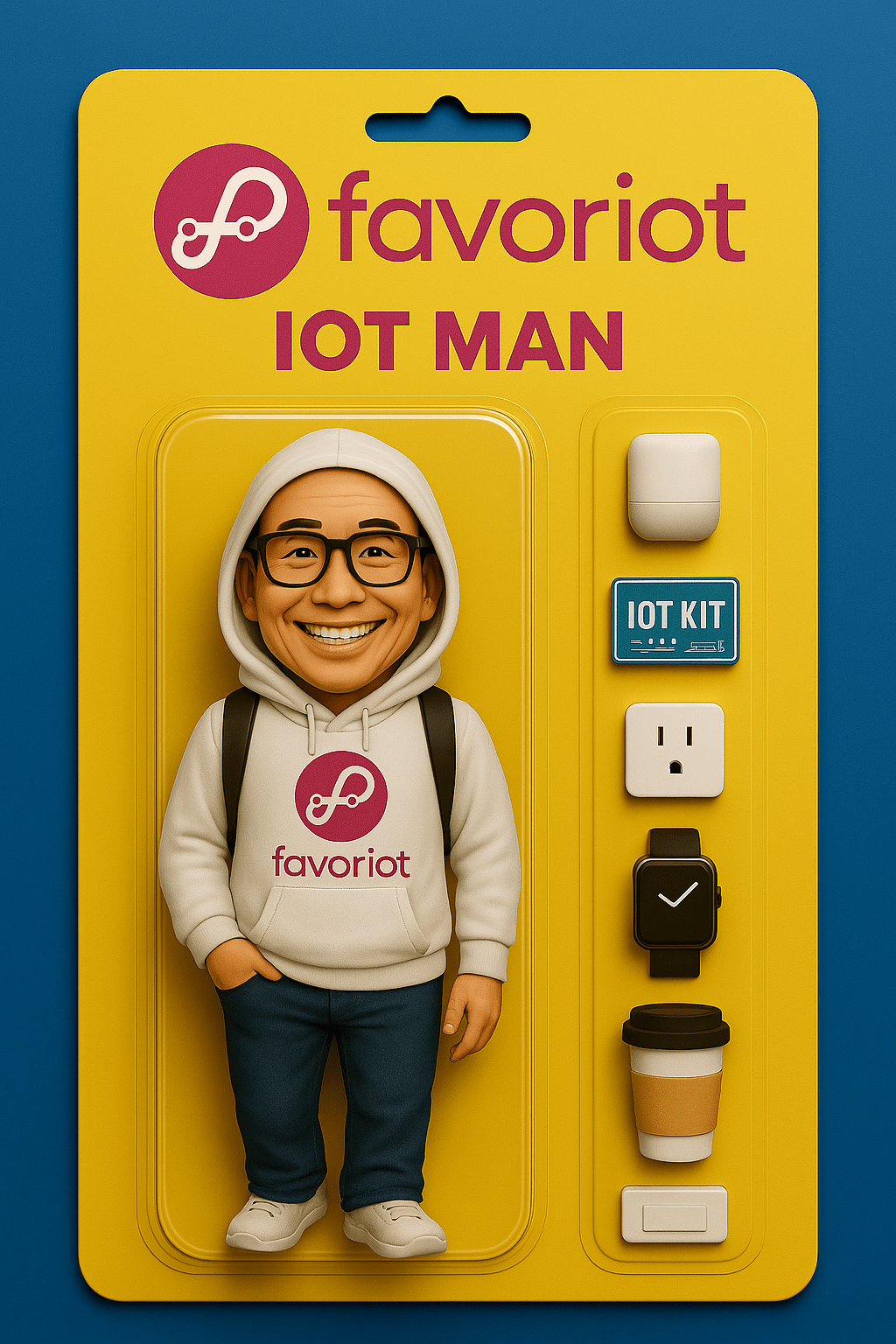
That’s the truth I carry as IoT Man.

What was the one mistake that humbled you but transformed your journey?

The Birth of “IoT Man”: Why the Name Means More Than Just a Title

“You can call me IoT Man.”

That was the casual yet defining moment when I embraced the name—not just as a label but as a symbol of everything I’ve poured into it.

But before that nickname ever stuck, before anyone even recognized my face or my voice in the realm of smart cities and connected devices, I was just a curious kampung boy who loved science fiction, obsessed with The Jetsons, and dreamt of a future where machines talked to each other.

I didn’t know it then, but that fantasy would eventually become my destiny.

The Spark That Ignited It All

In the 70s, I grew up with dusty comics, DC superheroes, and futuristic cartoons that seemed out of reach. I was always asking questions: “How does that work?”, “What if buildings could talk?”, “Why can’t my bicycle tell me when its tire is flat?” You know… typical “crazy kid” questions no one took seriously.

But I took them seriously.

Years later, that same boy became an engineer, researcher, and executive, hopping across universities, government agencies, and corporate towers. I had the titles and the recognition—and yet, I felt something was missing.

I wasn’t building the future I dreamed about.

Until I stumbled upon three letters that changed everything: IoT.

To me, the Internet of Things wasn’t just a buzzword. It was the missing puzzle piece. It was like someone finally handed me the blueprint of the world I used to imagine as a child.

I dove headfirst into it. It became an obsession. No, scratch that — it became a mission.

Why the Name “IoT Man” Chose Me

People often ask me, “Did you give yourself that name?” No, I didn’t. It started as a whisper on social media.

I was posting daily. Articles, LinkedIn updates, tweets, TikToks — all about IoT. I shared failures, ideas, insights, and case studies. Some people rolled their eyes. “Dia ni tak habis-habis cerita pasal IoT.”

Others started to notice.

One day, someone tagged me in a post and wrote, “Here comes the IoT Man again.” At first, I chuckled. “Macam superhero pulak.”

But then it stuck. People started calling me that — students, entrepreneurs, CEOs, even strangers at conferences. I would introduce myself, and they’d say, “Oh! You’re the IoT Man!”

And honestly?

It warmed my heart every single time.

Because it meant they saw me, they saw what I stood for, and they recognized the fire I carried.

Why It’s More Than Just a Nickname

You see, “IoT Man” isn’t just a personal brand.

It’s a reminder that in a world flooded with noise, consistency still matters. If you keep showing up, keeping writing, and keeping sharing, people will notice.

It’s a tribute to every sleepless night I spent building FAVORIOT from scratch with a small team and big dreams, to every time I was told, “Malaysia’s not ready for IoT,” or “Smart Cities won’t work here.”

It’s a badge earned through trials, through countless rejections, postponed projects, budget cuts, technical failures, and platform bugs, and through restarting when others gave up.

“But what if this doesn’t work?” I often asked myself during those quiet, lonely moments.

“Then I’ll try again tomorrow,” I’d reply.

The name “IoT Man” represents that spirit.

The Responsibility That Comes With It

Being known as the “IoT Man” also means people expect answers, solutions, and inspiration.

And that’s not something I take lightly.

That’s why I started sharing knowledge for free through podcasts like Jom Pakai IoT, articles, TikTok videos, and books. I also train others, mentor startups, and advise universities.

Because I’m not just building a company. I’m building a movement.

A movement to make IoT accessible. To make Malaysia a global hub of smart innovations. To show the kampung boy in every corner of the country that yes, you can shape the future too.

Legacy Over Popularity

I don’t want to be remembered just as a CEO or engineer.

I want to be remembered as the guy who sparked a generation.

The one who didn’t just talk about the future — but built it.

The one who lifted others along the way, who simplified the complex, who wore the “IoT Man” cape not for show but to carry the hopes of students, makers, entrepreneurs, and dreamers.

Because at the end of the day, all I ever wanted was to make a difference.

Final Reflection: A Name, A Mission

Sometimes, I look in the mirror and ask myself, “Are you still worthy of that name?”

Some days, I feel I’ve done enough, and most days, I feel like I’m just getting started.

So, if you see me online or bump into me at a café or tech event, don’t hesitate to say hi. Just say, “Hey, IoT Man!”

I’ll smile. And I’ll know that the journey — every twist, every fall, every leap — has been worth it.

Because that name is no longer just about me.

It belongs to the mission.

And the mission still burns bright.

Mazlan Abbas, your friendly neighborhood IoT Man. Let’s transform the world together!

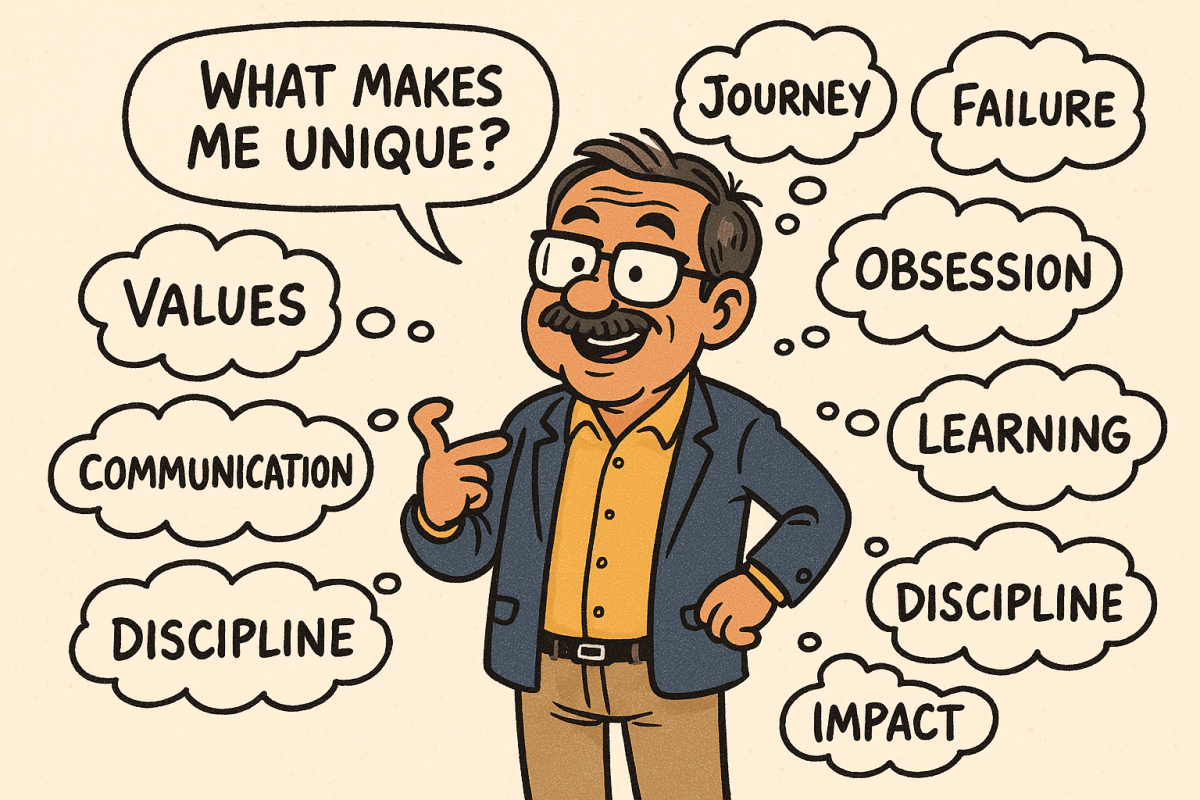
What Makes a Person Truly Unique?

As someone who has spent decades navigating the academic world, corporate boardrooms, government agencies, and startup trenches, I’ve come to realise that what makes a person truly unique is not just one defining trait but a combination of mindset, experience, and passion.

It’s the signature blend of your past, values, and vision for the future.

Let me break it down through my own lens—through personal stories, reflections, and the questions I’ve asked myself.

1. The Journey You Choose (or Endure)

“Why did I move from academia to government, then to corporate, and finally to building my startup?”

Many thought I was indecisive. But I saw it differently. Each step gave me a new superpower.

  • In academia, I learned how to think deeply and teach simply.
  • In government, I saw how policy can impact innovation nationally.
  • In corporate, I experienced the pace of execution and the demand for ROI.
  • In startup life, I learned humility, agility, and how to survive with little but dream big.

Not everyone chooses this “multiverse” path, but embracing it made me unique. I carried lessons from each world into the next.

2. How You React to Failure

“Mazlan, you left a comfortable job to start something uncertain?”

Yes—and I failed more times than I can count. But here’s the thing: I never let failure define me. Instead, I documented, reflected, and shared.

Every rejection, every “no,” became fuel for the next attempt.

What’s unique is not that you fail but how you rise from it—with clarity, grace, and a story others can learn from.

3. Your Obsession

“You’re still talking about IoT after all these years?”

Absolutely. I eat, sleep, and breathe IoT—not because it’s trendy but because I believe it can change lives. Even now, I run FAVORIOT to democratise IoT and make it accessible for students, startups, and governments.

Obsession—when combined with purpose—is what sets someone apart. It’s the thing you can’t shut off. You read about it, dream about it, and keep pushing the boundaries.

That’s the heartbeat of uniqueness.

4. The Way You Communicate

I once blogged about gadgets. Then, I pivoted to writing about technology, leadership, and storytelling. Today, I use WordPress, LinkedIn, podcasts, and even TikTok to reach different audiences.

Why?

I realised that what makes my voice unique isn’t just my technical knowledge but how I simplify it, narrate it, and humanise it.

People don’t remember jargon. They remember stories, analogies, and emotions. If you can make someone say, “Now I get it,” you’ve done something special.

5. The Values You Don’t Compromise

I’ve had opportunities that promised more famemoney, or power throughout my career. But I always asked myself:

“Is this aligned with what I believe?”

I don’t play politics. I don’t sell out. I don’t cut corners. I treat my team like family, and I lead with empathy.

In a world of copy-paste personalities, your principles become your fingerprint.

6. What You Do When No One’s Watching

In my quiet moments, I read articles from new writers, reply to comments, and refine my writing. I write even when no one reads because consistency builds credibility.

“But no one reads your articles.”

I kept writing anyway. Until one day—people did.

Your uniqueness is often born in the shadows, when no one claps, shares, or notices.

And still—you show up.

7. How You Inspire Others

I don’t just want to build a business. I want to develop people.

That’s why I mentor students, share my lessons, and give talks—even to small audiences. That’s why I created FAVORIOT Academy—to train the next generation of IoT professionals.

You become unique by climbing the ladder and extending your hand to those below you.

8. Your Curiosity and Lifelong Learning

Even today, I explore new platforms, write new articles, and learn from people much younger than me.

“Why are you still experimenting?”

Curiosity is a fire that never retires. The moment you stop learning, you become static. I choose to evolve—even at 64.

Uniqueness comes from the courage to keep updating yourself and stay relevant not by age but by adaptability.

9. Your Ability to Connect Across Generations

I often speak to university students, young engineers, and even teenagers on TikTok. Some are surprised—“Dr. Mazlan, you’re on TikTok?”

Yes, and I love it.

If you can speak every generation’s language, whether through blog posts or memes, you become a bridge. That connection—not just knowledge—is what makes someone unforgettable.

10. How You Turn Passion Into Impact

I don’t work on IoT just to build cool gadgets. I do it to solve real problems, from smart agriculture to healthcare, education, and even energy management.

Passion becomes power when you channel it into something greater than yourself.

When your work serves others, your uniqueness becomes your legacy.

A Personal Formula

If you ask me to define what makes a person unique, I’d say:

Uniqueness = (Journey + Failure + Obsession + Voice + Values + Discipline + Impact + Curiosity + Communication + Empathy) x Authenticity

You don’t need to be the smartest or the loudest in the room.
You just need to be the most you.

So, find your intersection.
Share your scars.
Own your quirks.
Speak your truth.

The world doesn’t need another replica.
It needs your story—told your way.

“Mazlan, what makes you unique?”

I’d say it’s because I’m still learning, experimenting, and daring to dream… even after all these years.

What Would I Want Named After Me? I Never Asked for a Title, But They Gave Me One Anyway

“Do you want something named after you, Dr. Mazlan?”

That question caught me off guard.

Not because it was unexpected — people love giving names to legacies, buildings, awards, even algorithms. But because deep inside, I never asked for any of it.

You see, I’m just a man who fell in love with technology. Not for fame. Not for glory. But because I truly believed it could make lives better.

Yet, along the way… names started sticking.

From “Dial-a-Coke” to Global Conferences

Let me rewind to the early 2000s.

I worked in the telecommunications industry back then—CELCOM Axiata, to be specific. This was long before the word “IoT” entered mainstream vocabulary. Yet even then, we were already experimenting with early machine-to-machine (M2M) communication forms.

One of our most exciting innovations at the time was a Coke vending machine that could be triggered by SMS.

“Wait… you mean you can buy a drink just by texting a number?”

Yes, precisely that. The concept was called “Dial-a-Coke.” You send a text, and it deducts the amount from your mobile credit. Voila, a cold can drop out of the machine.

Was it revolutionary? For that time — absolutely.

But to me, it wasn’t about being revolutionary. It was about solving problems in simple ways using connectivity. That mindset never left me.

IoT: A Journey of Passion, Not Titles

Fast-forward to 2013. That’s when I began immersing myself even more seriously into IoT—this time not just as a technologist but also as a speaker, writer, researcher, and eventually, entrepreneur.

Everywhere I went, I would talk about IoT.

At conferences. In classrooms. On stage. Off stage. At coffee shops. In boardrooms.

The energy never ran out. In fact, it grew stronger every time I saw someone’s eyes light up with an “Aha!” when they understood what IoT could do for their lives or business.

Radio interviews followed, then television. Podcasts. Newspapers. Magazines. Even my children rolled their eyes when I’d go into another “IoT monologue” during dinner.

Then came the birth of FAVORIOT — a company built to democratise IoT for developers, enterprises, and even students.

It wasn’t just business. It was my passion translated into a platform.

And Then, They Started Calling Me…

One day after a seminar, someone walked up to me and said,

“Dr. Mazlan, you’re like the Father of IoT in Malaysia.”

I laughed. A little awkwardly, I must admit.

Because if anyone deserves that title globally, it’s Kevin Ashton — the man who coined the term the “Internet of Things. I’ve always credited him for that.

But the person insisted,

“You’ve been advocating this in Malaysia longer than anyone I know. You make people understand IoT in a simple, practical way. That’s a gift.”

And slowly… it started spreading.

Father of IoT Malaysia.

Was it official? No.
Was it universally agreed? Probably not.
Was it something I asked for? Never.

But I accepted it—not for the ego—but for what it represents: a shared belief that maybe, just maybe, I had helped lay some of the digital foundations in this country’s IoT journey.

TikTok, Branding, and a Name That Stuck

In 2022, I did something unexpected — I joined TikTok.

Yup, at the age when most people would be watching TikTok videos, I started making them.

My handle? @iotman2030.

Why 2030? People often ask.

Simple. Because I wanted the technology I championed to be relevant by then.

“What if you just used @iotman2022 or 2023?”

Well, that would age too quickly, wouldn’t it? Who wants to be known by a handle that feels like it expired with last year’s tech trends?

Since then, “IoT Man” has become another name people have started calling me. Some jokingly, some with admiration, but it stuck.

I never corrected anyone. Because, in a way, it perfectly captured who I was and what I stood for.

So, If I Could Name Something After Me…

Honestly? I wouldn’t.

I believe names should be earned by impact, not intent.

But if someone else names something after me—maybe a scholarship, an award, or a lab—I just hope it’s for the right reasons.

That it inspires young minds to build the next generation of connected solutions.
That it reminds people how persistence, curiosity, and belief can shape an entire career.
That it stands for passion without ego.

And maybe it helps a few dreamers realize that technology isn’t just about wires and sensors. It’s about people.

A Legacy Beyond the Name

I never started this journey wanting to be known as anything.

Not the Father of IoT.
Not IoT Man.
Not even Dr. Mazlan the Technologist.

But I did want to make a difference.

And if making a difference earns me a name, then so be it.

Let it not be a pedestal but a platform.
Let it not be a brand but a bridge.

Because names will fade, but impact — that lingers.

So, if you ever hear someone call me Father of IoT Malaysia or IoT Man, just know —
It’s not about me.
It’s about the mission.

And that mission? Still going strong.

Even in 2030.

Everyone Wants the Spotlight. Few Are Willing to Wait for It

What’s Something Most People Don’t Understand?

Most people don’t understand how long it takes to build something meaningful.

Even after all these years, people still think things happen overnight.
They see the highlight reels. They see the LinkedIn success stories. They see the awards, the recognition, the partnerships. And they say— “Wow, you’re lucky.”

But they don’t see what happens behind the scenes.

When I co-founded FAVORIOT, I wasn’t stepping into a shiny, ready-made startup with capital pouring in and clients lining up at the door. No, it was the opposite. I entered a tiny room with big dreams, minimal funding, and zero guarantees.

I had to reset my ego.
After holding senior positions at MIMOS and CELCOM, I was now doing everything—research, customer support, marketing, writing blog posts, uploading YouTube videos, conducting training, chasing potential clients, and even troubleshooting hardware late at night. I was a CEO, but I was also the janitor.

That’s what most people don’t understand.

They think success is linear.
They think you just launch a product and are suddenly on a TED stage.
They don’t see the years of trial and error, the failed pitches, the near-burnouts, and the countless self-doubts.

I still remember attending an international Smart Cities conference years ago. Delegates were surprised when I told them we were a small team from Malaysia, building our own IoT platform. Some of them didn’t even believe it. They asked, “But how did you build it? Don’t you need a huge team? Venture capital?” I smiled and said, “No. We built it because we believed we could.”

Belief is underrated. And persistence—even more so.

People underestimate how long you must persist when nothing seems to work.

I wrote blog after blog when no one was reading.
I spoke at conferences when no one knew my name.
I kept talking about IoT and Smart Cities when the market didn’t understand IoT.

Even on Medium, when I started writing actively in 2023, I wasn’t writing for an audience. I was writing because I had something to say, something to teach, something to reflect on.

Some articles flopped. Others resonated deeply. But most people only see the few that succeeded—they don’t see the hundred others that didn’t.

They don’t understand the patience it takes to outlast the silence.

Let’s talk about time.
People think one or two years is enough time to build a company, an audience, or a movement.

But FAVORIOT has been around since 2017.
We didn’t become known overnight.
We had to win trust, prove our value, build case studies, make mistakes, recover from them, and try again. Again. And again.

It’s like planting a seed. You don’t dig it up every week to check if it’s growing. You water it, give it sunlight, and trust that one day it will break through the soil. But that trust? That takes faith. That’s the part most people struggle with.

“Why isn’t it growing yet?”
“Why is no one noticing me?”
“Maybe I’m not good enough.”

Believe me—I’ve had those thoughts, too.
I’ve looked at competitors with massive followings and felt small.
I doubted whether I was too old to do this startup thing.
I’ve wondered if people even cared about what I was trying to build.

But each time, I returned to the same answer:
Because I care.

I care about helping people learn about IoT.
I care about giving Malaysians a home-grown IoT platform.
I care about empowering universities, cities, and entrepreneurs with technology that works.

I realized that most people don’t need motivation. They need understanding.
Understanding that the journey will be extended.
It’s okay to feel invisible at first.
That mastery takes years.
Most “overnight successes” are 10 years in the making.

So here’s what I want you to remember:

  • You don’t need everyone to understand your journey.
  • You just need to understand it yourself.
  • And you need to commit to showing up, even when no one’s clapping.

Because one day, someone will ask you, “How did you do it?”
And you’ll smile, knowing they won’t really understand until they walk the same path.

But maybe, just maybe, they’ll listen a little closer.
And perhaps that will inspire them to start their own long, messy, beautiful journey.

And that’s enough.

Now, back to work. The journey continues.

The Best Compliment I’ve Ever Received

What was the best compliment you’ve received?

I’ve received many compliments throughout my career, but there’s one that has stayed with me for a long time. It wasn’t about my technical skills, my achievements, or my titles. It was about the impact of my words.

One day, I received a message from someone I had never met in person. He wrote:

“Dr. Mazlan, your journey from corporate to entrepreneurship gave me the courage to start my own company. I’ve been following your content, and it feels like having a mentor I’ve never met.”

At first, I read the message, smiled, and moved on with my day. But something about it lingered in my mind. Later that evening, as I sat down to reflect, I realized why it had affected me so deeply.

The Power of Words

I never thought that simply sharing my experiences could have such an impact. When I left my corporate job to start FAVORIOT, I was venturing into the unknown. I had spent decades in the telecommunications industry, working with structured teams, clear job roles, and established business models. Moving into the world of entrepreneurship was like stepping into a storm without an umbrella.

I shared my struggles—the uncertainty, the sleepless nights, the financial risks. I shared the lessons I learned along the way. Some of my posts were about business strategies, while others were about personal resilience. I wasn’t writing to impress anyone; I was simply documenting my journey.

But I never truly knew who was reading, or how my words might resonate with someone.

A Mentor Without Knowing It

The message I received made me realize something important: People are always watching and learning, even when we don’t see them.

This person had been following my journey for months, maybe even years. He had absorbed my words, reflected on them, and eventually, they gave him the push he needed to take action. And what struck me the most was the part where he said, “It feels like having a mentor I’ve never met.”

I sat back and thought about that for a long time. How many people in my own life had inspired me from afar? How many books, articles, or talks had influenced my decisions without the author ever knowing?

We often think of mentorship as something formal—scheduled meetings, structured advice, step-by-step guidance. But sometimes, the best mentorship happens when someone shares their journey openly, allowing others to learn from their successes and failures.

More Than Just a Compliment

This message wasn’t just a compliment—it was a responsibility. It reminded me why I write, why I share, and why I keep pushing forward even when things get tough. It’s easy to get caught up in the numbers—followers, likes, shares—but at the end of the day, what truly matters is whether we make a difference.

That message changed how I viewed my content. I no longer saw it as just writing or speaking; I saw it as a way to give back. If my journey could help even one person take a step toward their dreams, then every word I wrote was worth it.

The Ripple Effect

What’s fascinating about sharing knowledge is that it creates a ripple effect. That person who started his company because of my story might one day inspire someone else. And the cycle continues.

I sometimes wonder—what if I had never shared my journey? What if I had kept my struggles and experiences to myself, thinking that no one would care? How many people hesitate to take action because they think no one is listening?

The truth is, there’s always someone listening. Even if they never comment, never like, never send a message—people absorb what we share.

Paying It Forward

That message reinforced my belief in the importance of sharing knowledge and experiences. Today, whenever I speak at conferences, write articles, or post on social media, I remind myself that somewhere out there, someone might need to hear exactly what I’m about to say.

We never know who we might be inspiring. And sometimes, the greatest impact happens silently, without us ever realizing it.

So if you ever wonder whether your words matter, remember this—someone, somewhere, might be reading them and finding the courage to take the first step toward their dreams.

If Money Was No Object, This is Where I’d Go on the Ultimate Tech Shopping Spree!

Where would you go on a shopping spree?

If I had the chance to go on a shopping spree, there’s no doubt where I’d be heading. It wouldn’t be a luxury clothing store, a high-end jewelry shop, or even an expensive car showroom. No, my ultimate shopping spree destination would be somewhere packed with the latest gadgets, smart devices, and cutting-edge tech accessories.

A Tech Enthusiast’s Paradise

Whenever I think about a shopping spree, my mind immediately jumps to tech stores—those magical places where the latest innovations are displayed, waiting to be explored. I have always been fascinated by gadgets, from smartphones to smart home devices, and everything in between. The thrill of unboxing a new device, feeling its sleek design, and setting it up for the first time is an experience like no other.

So, where exactly would I go if I had an unlimited budget to indulge in my passion? Well, let’s break it down.

1. Akihabara, Tokyo: The Mecca of Electronics

If there’s one place in the world that’s heaven for tech lovers, it’s Akihabara in Tokyo. Known as the “Electric Town,” this district is filled with multi-story electronic stores selling everything from smartphones and gaming consoles to rare tech accessories and futuristic gadgets.

I imagine myself walking into Yodobashi Camera, one of the largest electronic stores in Japan. With multiple floors dedicated to different types of gadgets, I could spend hours browsing the latest smartphones, smartwatches, and high-end laptops. The Japanese market often gets exclusive tech releases before the rest of the world, so I’d be on the lookout for something unique—maybe a Japan-exclusive Sony Xperia or a high-tech AI-powered robot assistant for my smart home.

Then, I’d explore the smaller, independent stores in Akihabara that sell niche and experimental gadgets. These are the places where you find rare accessories, quirky IoT devices, and even DIY smart home components. Imagine coming across a device that lets me automate my entire home in a way no standard smart home brand offers yet. That’s the beauty of Akihabara—it’s where the future of consumer electronics is born.

2. Apple Store, Fifth Avenue, New York

As much as I love discovering new brands and unique gadgets, there’s something about Apple products that I can’t resist. Walking into the Apple Store on Fifth Avenue in New York is like stepping into a futuristic world. The glass cube design, the minimalistic yet sophisticated setup—it’s an experience in itself.

Of course, I’d grab the latest iPhone Pro Max, fully spec’d out with the highest storage capacity. But my shopping spree wouldn’t stop there. I’d also get the latest iPad Pro with the Apple Pencil, perfect for jotting down notes and ideas on the go. Then there’s the MacBook Pro with M-series chips, a beast for multitasking, content creation, and managing my IoT-related projects.

And let’s not forget Apple accessories—AirPods Max for high-fidelity music, MagSafe chargers, and maybe even a few extra Apple Watches to match different outfits.

3. Dubai Mall: The Future of Smart Homes

If there’s one place where I’d upgrade my entire smart home setup, it’s Dubai Mall. This mall isn’t just about fashion and luxury; it has one of the most impressive selections of smart home tech. Stores like Virgin Megastore, Sharaf DG, and the official Samsung Experience Store have entire sections dedicated to IoT products.

I’d start with a Samsung Smart Fridge, which has a touchscreen panel that syncs with my smartphone and suggests recipes based on what’s inside. Then, I’d move on to a complete home automation system, upgrading my house with smart lighting, security cameras, and voice-controlled blinds.

Dubai is known for pushing tech to the limits, so I’d also check out smart mirrors that function as fitness coaches, AI-driven home assistants that make real-time recommendations, and maybe even a robot vacuum with built-in home surveillance.

4. Shenzhen, China: The Birthplace of Innovation

If I had to pick one last destination, it would be Shenzhen, China. This city is where the world’s best tech products are born before they hit global markets. I’d visit Huaqiangbei Electronics Market, the world’s largest electronics market, to hunt for prototype devices, future smart gadgets, and accessories that are yet to reach mainstream retail.

Imagine finding a foldable smartphone concept that no one has seen yet, an ultra-fast GaN charger that isn’t available outside China, or a wearable health sensor that detects early signs of illness using AI. That’s the beauty of Shenzhen—if it exists, you’ll find it here first.

The Joy of a Tech Shopping Spree

For me, a shopping spree isn’t about fashion, luxury brands, or expensive watches—it’s about gadgets, technology, and innovation. Whether it’s a flagship smartphone, a next-gen smart home setup, or experimental IoT devices, these are the things that excite me.

If I could, I’d spend days exploring Akihabara’s hidden tech stores, Apple’s latest innovations, Dubai’s futuristic smart home setups, and Shenzhen’s cutting-edge electronics markets. That would be my ultimate shopping spree—a journey through the most advanced and exciting tech hubs in the world.

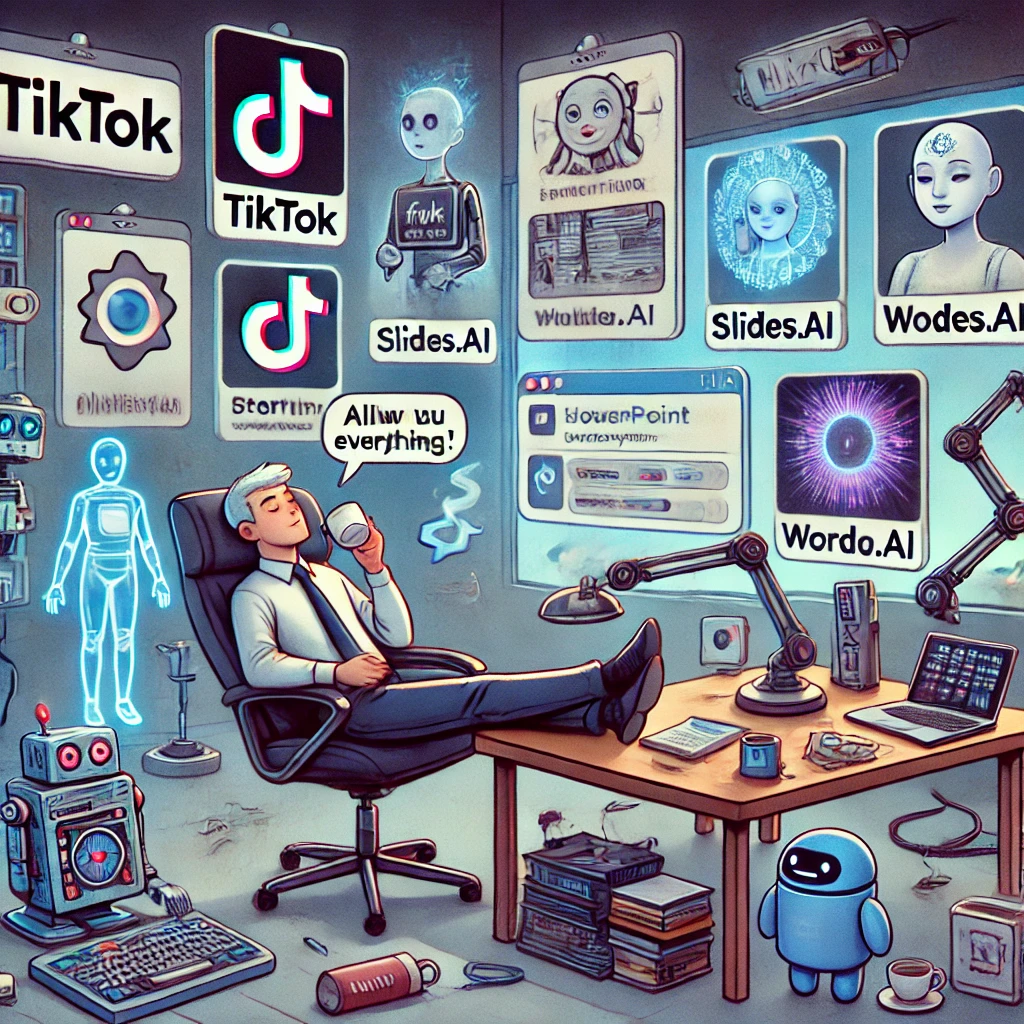
12 AI Tools You Need to Try in 2025

  1. Fliki.ai (generates TikTok)
  2. Starry.ai (generates avatars)
  3. SlidesAI.io (generates PPTs)
  4. Remini.ai (edit pictures)
  5. Pictory.ai (edit videos)
  6. Wordtune.com (summarize notes)
  7. ChatGPT.com (solves anything)
  8. Writesonic.com (writes anything)
  9. MidJourney.com (generates art)
  10. Replit.com (generates code)
  11. Synthesia.ai (generates video)
  12. Soundraw.io (generates music)

Steal This Ultimate DeepSeek + SEO Cheatsheet

The Top 5 Types of Articles I Wrote in 2024

ASPIRING WRITER’S STORIES

Reflecting on my Medium Writings in 2024

Photo by Joanna Kosinska on Unsplash

Reflecting on my journey as a Medium writer in 2024, I noticed recurring themes and categories in my published pieces.

These patterns reveal what I focused on, what resonated with my readers, and how I evolved as a writer.

Below is a breakdown of the five main types of articles I wrote and insights into why they mattered to me and my audience.

1. The Aspiring Writer’s Journey

stARPhoto by Jack Anstey on Unsplash

This category captures my reflections on writing as an art and a discipline. Articles like Why I Felt That Writing is an Adventure and Why Writing on Medium is Similar to Mountain Hiking explore how writing mirrors life’s challenges, requiring persistence, creativity, and self-discovery.

I also delved into practical advice for writers, such as How New Writers Can Attract More Readers and The Art of Consistency for an Entrepreneur,” offering insights gained from my struggles and triumphs. Through these articles, I aimed to inspire budding writers to embrace their unique voices, overcome self-doubt, and find joy in the process rather than just the outcome.

Why It Matters:
Writing is a deeply personal journey, and sharing my experiences helps others realise they’re not alone. Whether tackling writer’s block or celebrating small wins, these stories resonate with those seeking encouragement and guidance.

2. Startup Survival Stories

iPhoto by Marvin Meyer on Unsplash

As the CEO of Favoriot, I’ve faced numerous challenges in building a startup from scratch. Writing about these experiences helped me document and share key lessons with aspiring entrepreneurs. Articles like Favoriot and PT Lima Dua Satu Indonesia Join Forces to Boost Indonesia’s 100 Smart Cities Movement showcased real-world applications of Favoriot’s work. At the same time, About Favoriot — Part 12: The Dream of M&A Exit highlighted strategic growth milestones.

Additionally, pieces like How Favoriot Became the Top IoT Platform in Malaysia provided a behind-the-scenes look at the grit and strategy of scaling a tech business. My accounts, such as The Day I Overcame the Fear of Public Speaking and Became a Keynote Speaker,” blended entrepreneurial lessons with personal growth narratives.

Why It Matters:
These stories offer a transparent look at the highs and lows of entrepreneurship. They resonate with readers building their businesses or navigating professional challenges.

3. IoT and Technology Insights

Photo by Clint Patterson on Unsplash

As an IoT enthusiast and thought leader, I wrote extensively about the Internet of Things and its transformative potential. Articles like Understanding Industry 4.0 and Industrial Revolution 4.0 and The Crucial Role of IoT in Environmental Measurement aimed to simplify complex topics for a broader audience.

In addition to educational content, I shared practical applications of IoT, such as How IoT Projects in Universities Can Become a Commercial Success and How Favoriot Caters to Different IoT Developer Needs.” These pieces catered to both tech professionals and curious readers looking to understand the role of IoT in everyday life.

Why It Matters:
Technology can seem intimidating, but breaking it into relatable concepts makes it accessible. These articles helped bridge the gap between innovation and application, inspiring readers to explore IoT’s possibilities.

4. Influencer’s Journey

Photo by Alexander Shatov on Unsplash

As someone who actively engages on social media and other digital platforms, I explored the challenges and opportunities of being an influencer in the tech and writing spheres. Articles like The Art of Growing on X and How My Medium Followers Are 3X Lower but Earned 200X Than My TikTok reflected my efforts to balance authenticity with growth strategies.

In this category, I also touched on broader topics like the ethical dilemmas of social media (How Influencers Fake Their Way to the Top) and personal struggles, such as managing online fatigue (How to Overcome Social Media Fatigue).

Why It Matters:
Navigating the digital world is a universal challenge. By sharing my experiences, I provided readers with relatable insights into building an online presence while staying true to their values.

5. Personal Reflections and Motivational Pieces

Photo by Drew Beamer on Unsplash

Some of my most heartfelt articles were rooted in personal stories and life lessons. Pieces like The Silent Struggles of Researchers and The Power of Personal Stories captured moments of vulnerability and growth.

I also wrote motivational articles like Why You Should Write From the Heart and Every Failure Was a Step Towards Your Success. These were intended to uplift readers and encourage them to persevere through their challenges.

Why It Matters:
Personal reflections have a universal appeal. They allow readers to connect with the writer on a deeper level, finding comfort and inspiration in shared human experiences.

Key Takeaways from My Writing Themes

  1. Diverse Interests Drive Engagement:
    My articles covered various topics, from writing and IoT to entrepreneurship and personal growth. This diversity kept my content fresh and appealing to different audience segments.
  2. Authenticity Resonates:
    Authenticity was at the heart of my writing, whether sharing technical knowledge or personal anecdotes. Readers appreciate honesty and relatability, which I strived to bring to every piece.
  3. Consistency is Crucial:
    Publishing regularly helped me maintain a steady presence on Medium. This consistency improved my writing skills and strengthened my connection with readers.
  4. Storytelling Enhances Impact:
    Weaving narratives into my articles, whether about Favoriot’s journey or my struggles, made them more engaging. Stories create emotional connections that facts alone cannot.
  5. Reflection Fuels Growth:
    Writing about my experiences forced me to reflect on my journey, learn from mistakes, and celebrate progress. This process was as rewarding for me as it was valuable to my readers.

Conclusion

Writing on Medium in 2024 was more than just a creative outlet; it was a journey of self-discovery, connection, and growth.

By exploring themes of writing, entrepreneurship, technology, influence, and personal reflection, I enriched my understanding and touched the lives of readers worldwide.

Looking ahead, I aim to deepen these connections and continue sharing stories that inform, inspire, and ignite change.

After all, every word written is a step forward in an endless adventure.