When Writing Free eBooks Still Feels Like Shouting Into the Void

I did not expect this feeling to arrive so quietly.

No dramatic moment.
No emotional breakdown.
Just a soft question that kept returning while I stared at my screen.

Should I stop writing eBooks about IoT, startups, and entrepreneurship?

I have written several eBooks over the years. Some came from years of experience building platforms. Some from scars earned while running a startup. Some from observing founders struggle with the same blind spots again and again.

I made them free.
No paywall.
No upsell tricks.
Just knowledge, stories, and lessons shared openly.

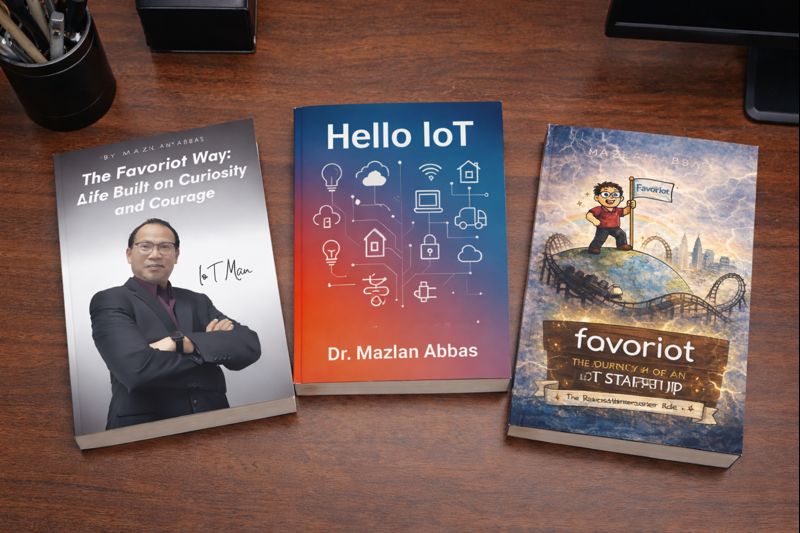
Yet after my last three books (Hello IoT, The Favoriot Way: A Life Built on Curiosity and Courage, Favoriot : The Journey of an IoT Startup), something felt off.

Downloads slowed.
Shares dropped.
The quiet became louder.

At first, I blamed myself.

Maybe the topics are stale.
Maybe I am repeating myself.
Maybe people are tired of hearing from me.

Then another thought crept in.

Or maybe the world has changed.

The Moment I Could No Longer Ignore

I noticed something about my own habits before blaming anyone else.

I no longer Google as much.
I open ChatGPT.
I type a question.
I get an answer.

Direct.
Fast.
Clean.

And here is the uncomfortable truth.

I am guilty too.

I ask AI to summarise books.
I ask for key takeaways.
I skim instead of sitting with pages.

Who am I to complain when I do the same thing?

That realisation stung.

Because I used to love reading slowly. Highlighting sentences. Rereading paragraphs. Letting ideas sit for days.

Now, time feels compressed. Attention feels borrowed. Everything competes for mental space.

The Silent Shift No One Talks About

This is not about AI replacing writers.

It is about AI changing readers.

People no longer want to search.
They want answers.

They no longer want ten blog posts.
They want one response.

They no longer want to explore.
They want to arrive.

Why buy a book when a prompt gives you a clean summary?

Why spend hours reading when minutes feel enough?

That question hurts writers, but it is not wrong.

Books were once a journey.
Now they are treated like databases.

Tell me what matters. Skip the rest.

Short Attention Is Not a Moral Failure

I hear people complain about attention spans all the time.

But I do not think it is laziness.
I think it is survival.

We are flooded with inputs. Messages. Alerts. Updates. Noise.

Reading a 150-page eBook feels heavy when your mind is already full.

The new generation did not lose patience.
They adapted to overload.

They want clarity, not volume.
Direction, not depth.

At least not by default.

When Free Still Feels Expensive

Making my eBooks free was supposed to remove friction.

Yet free does not mean easy.

Reading still costs time.
Thinking still costs energy.

AI removed that cost.

One prompt feels cheaper than one chapter.

So why am I surprised?

The Hard Question I Keep Avoiding

I keep asking myself something uncomfortable.

Am I writing for impact, or am I writing out of habit?

In the past, writing eBooks felt like leaving a trail behind. Something lasting. Something searchable. Something meaningful.

Now it feels like throwing paper planes into a sky full of drones.

They fly faster.
They reach further.
They respond instantly.

Paper planes still matter.
But fewer people look up.

Books Versus Conversations

AI feels like a conversation.

Books feel like a lecture.

That difference matters.

People want interaction. They want follow-up questions. They want context tailored to their situation.

A book cannot ask back.

AI can.

And that changes expectations.

What Writing Used to Give Me

I did not write eBooks just for readers.

I wrote to think.

Writing forced clarity.
It slowed my thoughts.
It made experiences visible.

If I stop writing books, what replaces that?

Blogs?
Short posts?
Conversations?
Voice notes?

I do not know yet.

That uncertainty is unsettling.

Maybe Books Are No Longer the First Door

Here is a thought I am still wrestling with.

Books may no longer be entry points.
They may become reference points.

Not where people start, but where they return when they want depth.

AI gives direction.
Books give texture.

AI answers questions.
Books explain why the questions matter.

But fewer people reach that stage.

The Ego Check I Needed

Another truth I had to face.

I assumed free meant valuable.
I assumed experience meant relevance.

Neither guarantees attention.

The world does not owe writers readers.

Attention is earned every day.

Even by those who have written before.

Am I Really Stopping?

When I say I feel like stopping, I am not quitting writing.

I am questioning the format.

Maybe eBooks are not where my thoughts want to live anymore.

Maybe ideas want to breathe in smaller spaces.
Or in stories.
Or in conversations.

Or maybe fewer books, written slower, with deeper intent.

I am not sure yet.

What I Do Know

AI has changed how we read.
AI has changed why we read.
AI has changed when we read.

That shift is real. It is not a phase.

Fighting it feels pointless.

Understanding it feels necessary.

The Choice In Front of Me

I can keep writing eBooks and accept fewer readers.

I can stop writing books and find new ways to share ideas.

Or I can redefine what a book means in a world that no longer reads the same way.

Right now, I am sitting with the discomfort.

No dramatic announcement.
No final decision.

Just honesty.

A Quiet Ending With an Open Question

I still believe ideas matter.
I still believe stories shape thinking.
I still believe writing is worth doing.

But I no longer believe format guarantees relevance.

Maybe the real question is not whether I stop writing eBooks.

Maybe it is whether I am brave enough to write differently.

If you are a writer, a reader, or someone who quietly stopped reading books, I would love to hear your thoughts.

Have you felt this shift too?

How Constraints Sharpen Judgment Over Time

Early in my career, I saw constraints as obstacles.

Not enough budget.
Not enough people.
Not enough time.

I thought freedom would make better decisions easier.

The opposite turned out to be true.

Constraints force clarity. They strip away fantasy. They demand prioritization. When resources are limited, you cannot afford vague thinking.

Some of my best decisions were made under pressure, not comfort.

Constraints taught me what truly matters and what merely looks good in presentations.

The Hidden Weight of Being the One Who Must Decide

There is a weight that comes with being the final decision-maker.

Not the glamorous kind people imagine.
The quiet kind.

Decisions that affect people’s time.
Their income.
Their confidence.

You learn that delay is sometimes a decision. So is saying no. So is choosing not to chase something shiny.

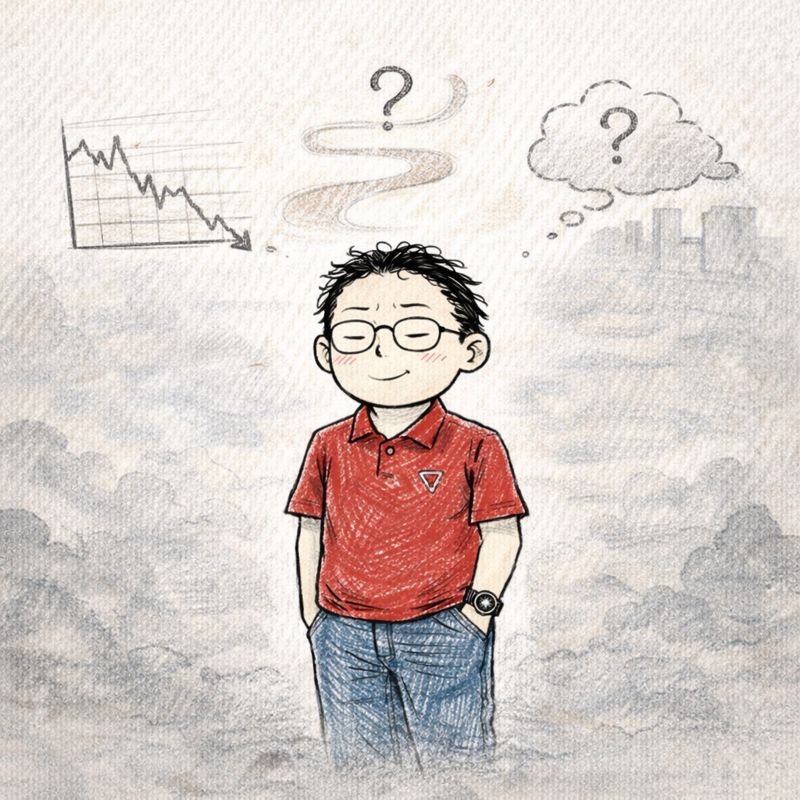
The doodle character stands still here. Hands by the side. No drama. Just responsibility.

This weight never disappears.
You simply learn how to carry it better.

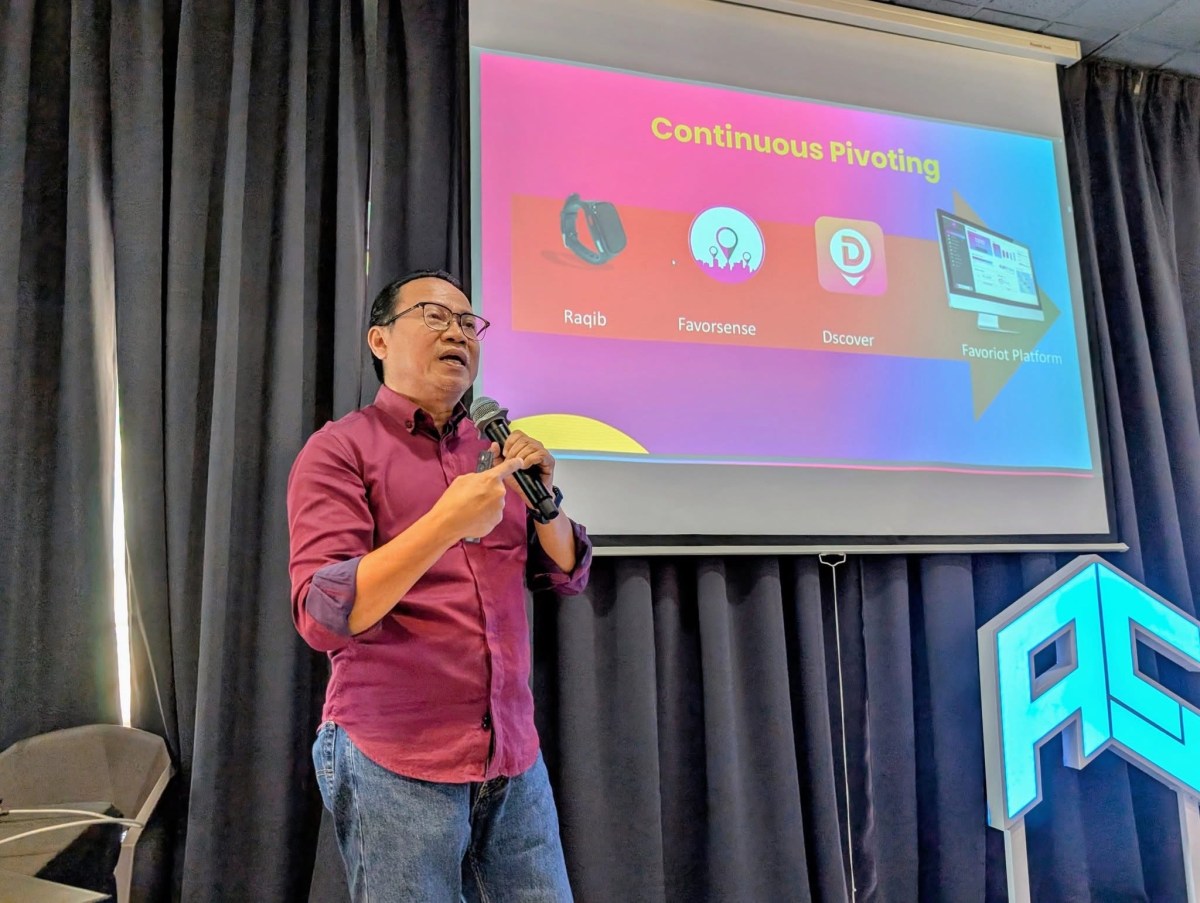
Favoriot’s Journey: Lessons from Lord of the Rings

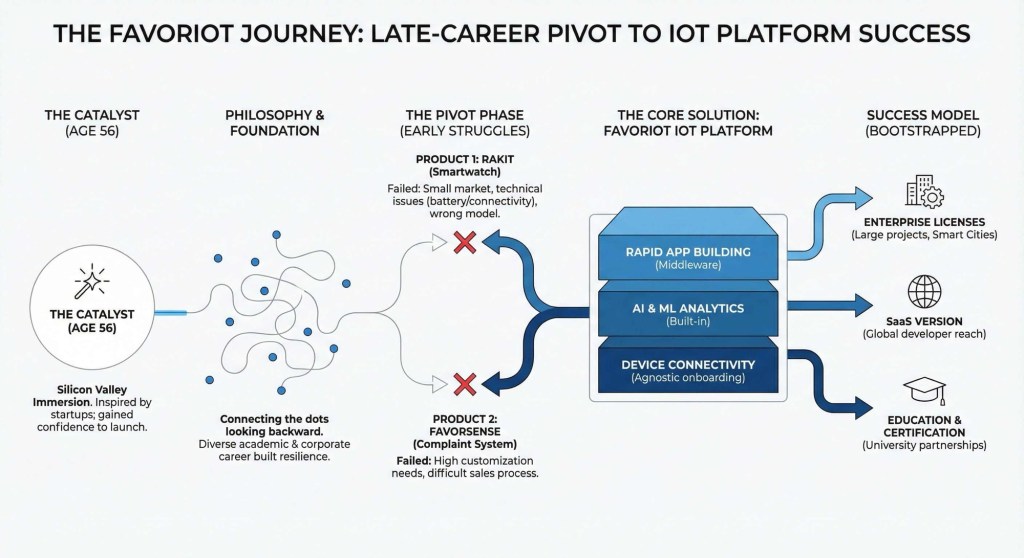
The journey of Favoriot, from its earliest days to where it stands today, mirrors The Lord of the Rings Trilogy in a way that feels less like fantasy and more like lived experience.

Not because of epic battles or dramatic villains, but because both stories are really about endurance, pivots, and choosing to continue when the original plan no longer fits the road ahead.

A Journey That Did Not Start With a Grand Map

When Frodo left the Shire, there was no detailed map to Mount Doom. Gandalf did not hand him a ten-year plan. The mission evolved as dangers revealed themselves.

Favoriot began the same way.

The early vision was simple. Build an IoT platform that works. One that local engineers, researchers, and institutions could rely on. What came next was not a straight line. The platform did not arrive fully formed. It grew through experiments, false starts, and product decisions that looked right at the time but later needed rethinking.

Like Middle-earth, the terrain kept changing.

Products as Paths, Not Destinations

In The Lord of the Rings, the Fellowship does not walk a single road. They split. They detour. Some paths fail. Others reveal their purpose much later.

Favoriot’s products followed the same rhythm.

Early versions focused heavily on basic device connectivity and dashboards. That was the Shire phase. Simple. Familiar. Necessary.

As real customers arrived, the needs shifted. Monitoring alone was not enough. Scale introduced complexity. Rules became more complicated to manage. Alerts became noisy. What worked for a pilot did not hold up in production.

That forced pivots.

  • From simple dashboards to structured data models
  • From manual rules to more intelligent behaviour detection
  • From pure IoT to AI-assisted decision support
  • From cloud-only thinking to edge-aware architectures

Each pivot felt like leaving a known path and stepping into uncertainty. Some features were retired quietly. Others were reshaped instead of discarded. Just as characters outgrow their early roles, products evolve because the journey demands it.

The Cost of Carrying Too Much

Frodo’s burden was not the distance. It was the Ring.

For Favoriot, the “Ring” often took the form of technical debt, early assumptions, and customer expectations set too soon. Decisions made for speed later demanded patience to untangle. Features built for one market created friction in another. Supporting early users while reworking the core tested both systems and people.

Letting go was hard.

Just as Frodo struggled to release the Ring, teams struggle to let go of products they worked hard to build. Yet progress required accepting that not everything belongs in the final version.

Splitting the Fellowship to Survive

The Fellowship did not stay together because it looked nice. It split because survival required it.

Favoriot’s journey did the same. Engineering focused on stability, while product teams listened closely to users. Business teams dealt with timing, cash flow, and long sales cycles. Partnerships opened doors while internal teams strengthened the foundation.

At times, it felt fragmented. In reality, it was a focus.

Each group carried a different part of the burden. No single team saw the whole picture at all times. Trust became the glue.

Long Stretches Without Applause

Middle-earth did not pause to celebrate milestones. Neither did the market.

There were long periods where progress was invisible from the outside. No launches. No announcements. Just refactoring, rewriting, rebuilding. Customers rarely see this phase, yet it defines whether a platform survives.

Favoriot lived in this space for years.

Quiet work. Fewer shortcuts. Many trade-offs. The kind of progress that feels slow until one day it becomes evident that the platform is stronger, calmer, and more reliable than before.

When the Mission Changes the People

By the end of the trilogy, Frodo was not chasing adventure. He was carrying wisdom earned through pain and persistence.

Favoriot’s journey shaped its people the same way.

Engineers learned restraint, not just speed. Product teams learned when to say no. Leaders learned that timing matters as much as vision. The company knew that building trust outlasts chasing trends.

The platform today is not just more capable; it is also more capable. It is more deliberate.

Not Glory, But Completion

Destroying the Ring was not a victory parade. It was relief. Completion.

Favoriot’s goal has never been to build everything or to shout the loudest. It has been to finish what was started. A platform that can grow with its users. A system that learns instead of overwhelming. A foundation that can support the next chapter without collapsing under its own weight.

That goal shaped every pivot.

The Quiet Parallel

Frodo was not the strongest.
Favoriot did not have the most significant budget.
Neither took the shortest route.

Yet both stories prove the same point.

Lasting impact rarely comes from perfect plans. It comes from adjusting without losing purpose, letting go without giving up, and continuing to walk when turning back feels easier.

That is the shared truth between Middle-earth and Favoriot’s journey.
A long road.
Many pivots.
One mission that refused to be abandoned.

What Long-Term Builders Notice That Others Overlook

Short-term thinkers chase milestones.

Launch dates.
User numbers.
Announcements.
Visibility.

Long-term builders notice different things.

They notice small inefficiencies repeating themselves.
They notice how energy shifts during meetings.
They notice who stays engaged when progress slows.

They care less about applause and more about durability.

I have learned that the most important signals rarely appear on dashboards. They appear in behavior. In how teams react under pressure. In how customers behave when no one is prompting them.

Time reveals what speed hides.

Favoriot: AI Agents Not Needed Now

Do Favoriot need to develop an AI Agent feature?

Short answer? No, Favoriot does not need full AI Agent automation right now.

And yes, what you have today is more than enough for the market you are serving.

Let me explain this the way I usually reason with myself.

I asked myself this quietly

“Do customers really want systems that act on their own…

or do they want systems they can trust?”

When I sit with city operators, facility managers, engineers, or even researchers, one thing keeps coming up.

They are not asking for autonomy.

They are asking for clarity.

They want fewer surprises.

They want earlier signals.

They want confidence before taking action.

That matters.

What Favoriot already does well

Right now, Favoriot Intelligence does something very important and very rare.

It learns patterns from real operational data

It surfaces what looks unusual

It feeds those insights into a Rule Engine

And then… it stops

That stopping point is not a weakness.

It is a design choice.

The system says,

“Here is what changed.

Here is why it matters.

You decide what to do next.”

That is precisely where trust is built.

Rule Engine + ML is not a compromise

Some people frame this as:

“Rule Engine now, AI Agents later.”

I don’t see it that way.

I see it as:

ML decides what deserves attention

Rules decide what action is allowed

This separation is powerful.

Why?

Because rules are:

  • Auditable
  • Explainable
  • Governable
  • Aligned with SOPs and regulations

And ML is:

  • Adaptive
  • Pattern-driven
  • Good at spotting drift and anomalies

Together, they form a human-in-the-loop intelligence system, not a black box.

That is exactly what enterprises and public sector teams are comfortable with today.

Do customers actually want AI Agents?

Here’s the uncomfortable truth.

Most organisations say they want AI to “automate everything”.

But when you ask one more question…

“Are you okay if the system shuts down equipment on its own?”

“Are you okay if it triggers evacuation automatically?”

“Are you okay if it changes operating parameters without approval?”

The room goes quiet.

What they really want is:

  • Earlier warnings
  • Better recommendations
  • Fewer false alarms
  • Less manual rule tuning

Favoriot Intelligence already delivers that.

Where AI Agents actually make sense later

I’m not against AI Agents. Not at all.

But their place is conditional, not universal.

AI Agents make sense when:

  • Policies are mature
  • Actions are reversible
  • Risk is low
  • Trust has been earned over time

For example:

  • Automated report generation
  • Recommendation ranking
  • Suggesting rule adjustments
  • Proposing actions for approval

Notice the word: suggesting, not executing.

That is a natural evolution path.

Not a starting point.

Strategically, Favoriot is in the right place.

By keeping:

  • ML for learning and insight
  • Rules for control and action

Favoriot positions itself as:

  • Reliable
  • Safe
  • Deployable today
  • Acceptable to conservative sectors

Smart cities.

Utilities.

Campuses.

Critical infrastructure.

These sectors do not reward “full autonomy” first.

They reward predictability and confidence.

My honest conclusion

If I had to answer this as simply as possible:

Favoriot does not need AI Agents to be valuable.

Favoriot Intelligence with ML-driven rules is already the right solution for today.

AI Agents can come later, carefully, selectively, and with guardrails.

Right now, Favoriot is doing something more important than automation.

It is helping people think earlier, not react later.

And that, in my book, is real intelligence.

Favoriot – The Journey of an IoT Startup: A Free eBook for Thoughtful Makers, Thinkers, and Doers by Mazlan Abbas

Today (1 January 2026), I’m thrilled to share something that’s been quietly taking shape over the past year. My latest eBook titled “Favoriot – The Journey of an IoT Startup” is now officially released and available for free download. You can get your copy right here: https://payhip.com/b/GbOyo

Writing this book was not a sprint. It was more like those slow early mornings when you sit with a cup of coffee before the world wakes up and try to make sense of what you’ve learned, what you’ve unlearned, and what still puzzles you.

“What if I just write this down now before I forget how it felt?” I asked myself more times than I can count.

That question became this book.

Why This eBook Exists

I didn’t set out to write an eBook that checks all the “how to succeed” boxes. I wrote something more honest. More personal. More reflective of real work and real life.

This is a piece of writing that came from:

  • Conversations I had with founders and students
  • Moments when I wasn’t sure if something would work
  • Times when a quiet insight changed my view more than any big announcement ever could

Some parts feel calm and clear. Some parts feel messy and uncertain. In all of them, you’ll find reflections that resonate with the kinds of questions we all silently carry with us.

If you’ve ever asked yourself, “Am I doing this right?” or “What truly matters here?” then this book was written with you in mind.

What You’ll Find Inside

This eBook isn’t a step-by-step guide or a list of formulas that promise success. You won’t find shortcuts here. What you will find are reflections rooted in real experience:

  • How clarity often arrives slowly
  • Why patience matters more than speed
  • What it really takes to think long term
  • Why credibility beats noise
  • How do you navigate uncertainty when the path ahead isn’t clear

These are not theories. They came from living through questions that didn’t have neat answers.

“Oh… so this is what that moment was really teaching me,” I found myself saying as I shaped these chapters.

A Free Book for the Curious Mind

You might wonder why this eBook is free. There are reasons.

Most books you see are behind paywalls. You sign up. You subscribe. You unlock. All of that has its place.

But I wanted this one to be different.

I wanted it to be reachable by anyone who might benefit from it — no barriers. No barriers, no hoops, no strings attached.

Just download it, read it at your pace, and keep what matters to you.

Who Should Read This

This is a book for people who:

  • Are you building something without a clear path
  • I’m thinking about the next step, but don’t know exactly what it is
  • Feel the tension between urgency and patience
  • Need space to reflect instead of being told what to do

If you’re looking for hype or fast answers, this may not be a perfect match.

If you’re looking for thoughtful reflections that support your own thinking, then this book might feel like a companion for that journey.

Grab Your Copy

Here’s the link again:

👉 https://payhip.com/b/GbOyo

Download it, read it, and then take a moment to reflect on one question:

Which part stayed with me the longest after I closed it?

If you feel like sharing what that was, I’d really like to hear it. Drop a comment. Send a message. Pass the link to someone else who might need it.

Because sometimes the meaning of a book only shows up after you’ve walked a few steps beyond the last page.

Thank you for being here. I’d love to hear your thoughts.

Let’s continue the conversation.

Why Most Advice Sounds Good but Fails on the Ground

Advice is often clean. Reality is not.

Advice does not account for context.
Or timing.
Or people.
Or fatigue.

I have learned to listen for patterns, not prescriptions.

What worked for someone else may collapse under a different set of constraints. And that does not mean anyone is wrong.

The doodle character keeps walking through uneven ground. Same pace. Same posture.

Good judgment is not borrowed.
It is built.

Reflecting on 2025: A Year of Growth, Connection and Insights

This year felt like a ride that neither my coffee nor my journal could have prepared me for. When I looked at the blog stats for 2025, I couldn’t help but smile and go “Wait… we actually did that?” The numbers tell a story of momentum, curiosity, and growing engagement from readers all over the world.

Let’s take a step back together and walk through what happened with the blog this year, what content resonated most with you, and where we’re heading next.

The Big Picture: Numbers that Tell a Story

Over the whole year from January to December 26, 2025, the blog registered about 14,000 views, a massive increase compared to last year. The number of visitors hit around 9,400, and social engagement soared. We saw 4,300 likes and 163 comments across posts, both reflecting the highest interaction we’ve ever seen.

The month charts tell the same story of rising interest. February kicked off strong, March sustained momentum, and December wrapped up with one of the highest monthly view counts, a clear sign that this year’s topics connected with many of you.

These milestones are something I literally paused and said to myself, “This isn’t small potatoes… this is real.”

Where You’re Reading From

Geographically, the audience is truly global. The top countries by views were:

  1. United States – 3,376 views
  2. India – 2,117 views
  3. China – 1,785 views
  4. Malaysia – 1,715 views
  5. United Kingdom – 514 views
  6. Canada – 356 views
  7. Pakistan – 299 views
  8. Bangladesh – 257 views
  9. Philippines – 252 views
  10. Nigeria – 244 views

That spread tells me two things: your interests are diverse, and the need for thoughtful tech and life content spans borders and cultures.

That made me think: “One idea sparked by one person can travel around the globe faster than I can make coffee.”

The Top 10 Articles of 2025

Here are the posts that stood out this year, ranked by views and engagement, each with a link so you can revisit or share them easily.

1. Stories
👉 This is a composite link on the blog showing curated standout posts.
https://mazlanabbas.com/tag/stories

2. ChatGPT, CoPilot, Gemini, Grok, Perplexity, Claude & DeepSeek: Which One Should You Choose?
👉 https://mazlanabbas.com/2025/01/30/chatgpt-copilot-gemini-grok-perplexity-claude-deepseek-which-one-should-you-choose/ (Dr. Mazlan Abbas)

This article became a go-to breakdown for people curious about how all these popular AI platforms compare.

3. How Influencers Fake Their Way to the Top: The Dark Side of Social Media Fame
👉 https://mazlanabbas.com/2025/02/09/how-influencers-fake-their-way-to-the-top-the-dark-side-of-social-media-fame/ (Dr. Mazlan Abbas)

This one struck a chord far beyond tech circles, showing how online behavior impacts identity and trust.

4. Why I’m Leaving Medium: A Writer’s Journey to Rediscovering Joy
👉 https://mazlanabbas.com/?s=Why+I%E2%80%99m+Leaving+Medium

A personal reflection on why creative freedom matters more than platform popularity.

5. About
👉 https://mazlanabbas.com/about

A quieter favorite: many of you wanted to know who I am before jumping into ideas.

6. How AI Democratization by Alibaba is Changing the World—And Why It Matters to You
👉 https://mazlanabbas.com/2025/01/31/how-ai-democratization-by-alibaba-is-changing-the-world-and-why-it-matters-to-you/ (Dr. Mazlan Abbas)

This explores how AI access is shifting and why it matters in real life, especially outside big tech hubs.

7. My Dream Home: Where Innovation Meets Nature
👉 https://mazlanabbas.com/?s=My+Dream+Home

A more personal piece that blended tech, design and what “home” means.

8. Understanding the Difference Between AI Agents and Agentic AI
👉 https://mazlanabbas.com/?s=Understanding+the+Difference+Between+AI+Agents+and+Agentic+AI

A deep dive that many readers used to clarify a tricky topic in AI.

9. Why I’ve Been Quiet Here: My Journey with Medium
👉 https://mazlanabbas.com/?s=Why+I%27ve+Been+Quiet+Here

An honest update that resonated with folks navigating their own creative blocks.

10. Leading LLMs of August 2025: Who’s Winning the AI Race?
👉 https://mazlanabbas.com/2025/08/25/leading-llms-of-august-2025-whos-winning-the-ai-race/ (Dr. Mazlan Abbas)

A timely survey of where AI large language models stood mid-year, and why the future was already wide open.

What This Means to Me (and Why It Matters)

When I look at these stats and see your comments, your likes, and the way you shared ideas with others, it reminds me that blogging isn’t just about articles… it’s about connection.

When I first started writing here, I thought to myself “Who’s really going to read this?” And then you showed up from the US, India, China, Malaysia, and all over — and that response was humbling.

Each comment wasn’t just a number. Each share wasn’t just a count. They were reminders that ideas matter when they’re read by real people thinking in real worlds.

And that’s what made 2025 unique.

What’s Next

Going into 2026, I want to keep telling stories — about tech, about how we live with technology, and about how our personal and professional worlds interact. I want to explore more questions like:

  • What comes after AI ubiquity?
  • How might IoT change how we feel about cities and communities?
  • Where do we balance innovation with humanity?

I invite you to be part of that conversation.

Drop a comment below and tell me which article you connected with most this year and what you want to explore next.

Let’s write 2026 together.

Download eBooks from Mazlan Abbas

  1. Favoriot – The Journey of an IoT Startup
  2. The Favoriot Way – Life of Curiosity and Courage
  3. Hello IoT
  4. Mastering IoT with Favoriot: A Comprehensive Guide for Business and Educational Institutions
  5. Internet of Things (IoT): A Beginner’s Guide
  6. Startup Survival: The Journey of a Tech Entrepreneur
  7. Your IoT Journey
  8. IoT Notes

How Experience Changes the Way You Think

Early on, every opportunity felt loud.

Emails marked urgent.
Meetings framed as once-in-a-lifetime.
Partnerships dressed up with big names and bigger promises.

Back then, speed felt like wisdom. If something moved fast, it must be important.

Experience slowly rewired that instinct.

Today, when an opportunity appears, I don’t react immediately. I read it. I reread it. I sit with the discomfort if something feels off. And very often, what initially looked exciting begins to lose its shine.

Experience does not eliminate opportunity.
It filters it.

The doodle character walks forward here, eyes open, not rushing, not stopping. Just observing.