An Open Letter to All Mayors in Malaysia

Dear Mayors of Malaysia,

I write this letter not just as an advocate for Smart Cities but as someone who has spent decades witnessing the evolution of technology and its potential to transform urban living. Malaysia stands at a crossroads—our cities are growing, our infrastructure is aging, and the demands of a digital economy are pressing upon us. The question is: Are we ready to build smarter, more livable, and sustainable cities?

I have worked in telecommunications, IoT, and Smart Cities for years, advising governments, corporations, and startups on technology adoption. As the CEO of FAVORIOT and a frequent speaker on global Smart City platforms, I have seen what works and what doesn’t. With this letter, I hope to share practical insights on how we can make Malaysian cities truly smart.

Why Smart Cities Are No Longer a Luxury—They Are a Necessity

Urbanization is accelerating across Malaysia. Congestion, pollution, inefficient public services, and security concerns are increasing challenges. The world is shifting towards data-driven, tech-enabled cities where efficiency, sustainability, and connectivity define urban living. Yet, many Malaysian Smart City projects fail to deliver because they lack coordination, funding, and long-term planning.

We must move beyond pilot projects and fragmented initiatives and instead focus on a holistic, integrated transformation strategy that aligns with the global shift towards the Fourth Industrial Revolution.

Here’s how Malaysian cities can take the proper steps toward Smart City success.

1. Develop a Smart City Master Plan for Long-Term Sustainability

One of the cities’ most significant mistakes is implementing standalone Smart City projects without a clear roadmap. This results in wasted budgets, incompatible systems, and stalled progress. Every Malaysian city should have a Smart City Master Plan that outlines:

✅ Clear objectives (e.g., improving mobility, security, sustainability, governance).

✅ A phased approach to implementation.

✅ A public-private partnership (PPP) model for funding and collaboration.

✅ A governance structure for managing cross-department initiatives.

A well-crafted Smart City Master Plan ensures that efforts are aligned, reducing inefficiencies and maximizing impact.

2. Implement an Integrated IoT Platform for Real-Time Data & Decision-Making

A city cannot be smart if its data is locked in silos. One department might collect traffic data, another manages waste collection, and another monitors air quality—but if these systems don’t talk to each other, decision-making is slow and inefficient.

Malaysia needs a centralized Smart City IoT platform that:

✅ Collects real-time data from sensors deployed across the city.

✅ Provides a single dashboard for city administrators to monitor key urban metrics.

It automates traffic flow optimization, waste management, and energy efficiency.

At FAVORIOT, we’ve seen how cities using a unified IoT platform experience smoother operations, better planning, and enhanced citizen engagement.

3. Solve Traffic Congestion with Smart Mobility Solutions

Every Malaysian city struggles with traffic. The solution isn’t just building more roads but using technology to optimize movement. Here’s how:

🚦 AI-powered traffic lights that adjust based on real-time congestion.

🅿️ Smart parking systems that guide drivers to empty spots, reducing unnecessary idling.

🚍 Public transport optimization through real-time tracking and mobile app integration.

Cities like Seoul and Singapore have successfully reduced traffic congestion by implementing these solutions—Malaysia can and should do the same.

4. Enhance Public Safety Through AI-Driven Surveillance & Emergency Response

Urban safety is a top priority, yet traditional surveillance methods react to crime rather than prevent it. A Smart City integrates:

🔍 AI-powered CCTV cameras with facial recognition and anomaly detection.

🚔 Automated emergency response systems that connect law enforcement, medical teams, and city management.

📊 Predictive analytics to anticipate security threats and deploy resources efficiently.

With an AI-driven security infrastructure, our cities can become safer, ensuring better citizen and business protection.

5. Embrace Green and Sustainable Solutions

A Smart City isn’t just about technology—it’s also about sustainability. Malaysian cities should adopt:

♻️ Smart waste management with sensor-enabled bins that notify collection teams when full.

💡 Energy-efficient smart lighting that adjusts brightness based on pedestrian movement.

🌿 Air and water quality monitoring using IoT sensors to detect pollution levels.

By integrating green technologies, we can reduce waste, save costs, and improve urban health for future generations.

6. Improve Citizen Engagement Through Digital Governance

A truly Smart City is citizen-centric. People should feel empowered to report issues, provide feedback, and participate in governance. Cities should implement:

📲 Mobile apps for residents to report potholes, broken streetlights, or illegal dumping.

🌐 Smart City Citizen Portals to access city services seamlessly.

💬 AI-powered chatbots for real-time responses to public inquiries.

By digitizing citizen engagement, we increase transparency, trust, and participation in urban governance.

7. Establish a Smart City Project Management Office (PMO)

One of the biggest reasons Smart Cities fail is because they lack proper oversight. Many cities start initiatives without tracking progress, resolving roadblocks, or aligning stakeholders.

Every city needs a Smart City PMO to:

📊 Ensure all projects align with the Smart City Master Plan.

🔄 Coordinate between different city departments and agencies.

🤝 Facilitate partnerships with private sector players and universities.

Projects will remain disjointed, unfunded, or abandoned midway without a dedicated Smart City Office.

The Future of Malaysia’s Cities

Malaysia has the talent, resources, and ambition to become a global leader in Smart Cities—but only if we take bold, coordinated action.

📌 Are we ready to transition from pilot projects to full-scale Smart City implementation?

📌 Can we break down silos and integrate smart solutions across all urban services?

📌 Will we prioritize sustainability, digital governance, and real-time data for better decision-making?

As someone deeply passionate about Smart Cities, I would be honored to collaborate with Malaysian municipalities, offering expertise and technology solutions that can accelerate our urban transformation.

Let’s make Malaysian cities smarter—not just for today but for future generations.

Are you ready to build the city of tomorrow?

I welcome discussions and partnerships—please feel free to reach out.

Sincerely,

Dr. Mazlan Abbas

CEO & Co-Founder,

FAVORIOT Sdn Bhd

Why I See Myself as an Eagle: Vision, Resilience, and Soaring Above Challenges

If I had to compare myself to an animal, I would say I am like an eagle—soaring high, always looking ahead, and never losing sight of my vision.

I’ve always admired the eagle’s sharp focus, resilience, and ability to fly above storms. It doesn’t get distracted by the noise below; it rides the wind, using even strong currents to propel itself higher. That’s how I see my journey—whether in IoT, entrepreneurship, or writing.

But let me take a step back.

“Mazlan, why not a lion? Aren’t lions supposed to be the king of the jungle?”

That thought did cross my mind. The lion is strong, fearless, and commands respect. But a lion operates within a pack, a pride. It leads, yes, but it is also bound by its territory. I’ve always felt more like an eagle—independent, strategic, and always searching for new horizons.

The Eagle’s Vision

Eagles can spot a rabbit from miles away. I strive for that kind of clarity in everything I do—whether it’s running FAVORIOT, mentoring startups, or sharing my thoughts on IoT and smart cities. The ability to anticipate trends, recognize opportunities, and act swiftly is critical in the fast-moving tech world.

I remember when IoT was still a buzzword in Malaysia. Many doubted its potential. But I saw what was coming. I knew IoT would transform industries, and I wanted to be at the forefront. Like an eagle scouting the landscape, I positioned myself early—writing, speaking, and building an ecosystem before many even realized its impact.

Rising Above the Storm

One of my favorite things about eagles is how they react to storms. Instead of seeking shelter, they spread their wings and let the wind lift them higher.

Entrepreneurship is full of storms—failed pitches, slow adoption, and financial struggles. There were days when I questioned if building FAVORIOT was the right decision. “Maybe I should have stayed in a corporate job, enjoyed stability.” But then, I’d remind myself—eagles don’t retreat. They rise. They adapt. They push forward.

When COVID-19 hit, many businesses struggled. We could have paused and waited for things to settle. Instead, we pivoted—offering online IoT training, expanding our platform’s capabilities, and forging new partnerships. We didn’t just survive; we found new ways to thrive.

Independence & Leadership

Unlike birds that fly in flocks, eagles often soar alone. They don’t wait for permission; they take the lead.

That’s something I relate to deeply. I’ve had to make difficult decisions throughout my career—leaving a stable job, starting a company, challenging industry norms. I’ve never been one to follow the crowd. If I see a better way, I take it, even if it means flying solo for a while.

The Lesson of the Eagle

Eagles don’t just fly; they inspire. Through my work, my writing, and my mentorship, I hope to inspire others to see beyond immediate obstacles, think long-term, and rise above challenges.

So, if I were an animal, I’d be an eagle—sharp, relentless, and always looking for the next great opportunity in the vast sky of possibilities.

And if you had to choose, which animal are you?

A Letter to My 100-Year-Old Self

Dear Mazlan,

I hope this letter finds you in good health—though, at 100, I imagine your definition of “good health” is quite different from what I know now at 64. Have you finally achieved the balance of wisdom, patience, and acceptance that I am still working on? Or are you still chasing new ideas, thinking about the next innovation, the next disruption, the next frontier?

I sit here today, reflecting on the years that have passed, and I wonder—what has changed?

Did You Finally Slow Down?

Let’s be honest, slowing down was never in your nature. Even now, people tell me to “take it easy,” to “relax,” but that’s just not who I am. You were always restless, always looking for something to build, something to improve. You loved the feeling of being in the middle of things—whether it was pioneering IoT solutions, pushing smart city initiatives, or mentoring young entrepreneurs.

Did you ever truly retire? Or did you redefine retirement in your own way, turning it into just another phase of productivity? Did you ever stop writing, stop speaking at conferences, stop brainstorming new projects? I doubt it. The fire to create has been in you since childhood—remember those early days when you imagined futuristic worlds after watching The Jetsons? Did you ever outgrow that curiosity?

I sincerely hope not.

Did FAVORIOT Become the Legacy You Dreamed Of?

I need to ask—what happened to FAVORIOT? In my time, it is still growing, still making an impact in the world of IoT. We have expanded to multiple countries, partnered with great companies, and empowered countless developers, businesses, and cities to leverage IoT for a better future. But where is it now, at 100?

Did it grow beyond expectations? Did it become an industry leader, a force to be reckoned with in the global IoT landscape? Or did it evolve into something unexpected, something I can’t yet imagine?

I hope you nurtured it well. I hope you surrounded yourself with the right people—the kind who believe in the vision as much as you do. Because ideas are nothing without the right execution, and a company is nothing without the right people.

Did you finally see Malaysia fully embrace smart cities, powered by IoT in ways we once dreamed about? Or are we still lagging behind, still dealing with bureaucracy, still convincing people of the importance of innovation? I wonder if you are reading this with a knowing smile, shaking your head at how impatient I was.

What Lessons Did You Learn?

If you could talk to me now, what would you tell me? What mistakes should I avoid in the years ahead? What regrets did you accumulate along the way? I know myself—I will always be driven by ambition, always thinking of what’s next. But did I ever pause enough to appreciate the now?

Did I spend enough time with family? Did I express my gratitude to those who helped me along the way? Did I leave behind a legacy of knowledge, inspiration, and kindness, or did I get too caught up in the chase for success?

I hope you learned to let go of unnecessary worries. Right now, I stress over things that perhaps, in the grand scheme of life, don’t really matter. Did all those small worries fade into irrelevance with time?

Did the World Change the Way You Hoped?

Technology is moving fast—AI, IoT, robotics, quantum computing. At 64, I see the world changing, but at 100, how much more has it evolved? Did humanity finally master AI in a way that benefits all of society, or did we lose ourselves in our creations?

Is technology still something we control, or did it end up controlling us?

And what about space exploration? Have humans finally set foot on Mars? Did Elon Musk’s vision become a reality? Or did the world get too distracted with its own problems to look beyond Earth?

More importantly, did people become kinder? Did society learn from its mistakes? Did we finally find a way to balance progress with humanity, innovation with ethics? Or are we still making the same mistakes, just with more advanced technology?

I hope we got it right.

Are You at Peace?

At 100, what do you think about when you wake up? Do you still carry the same fire in your heart, or have you finally learned the art of contentment? Do you smile more often, laugh more freely, appreciate the simple things more deeply?

I hope you’ve come to terms with the things you couldn’t change, the dreams that didn’t materialize, and the roads you didn’t take. I hope you have no regrets about the things you did pursue, the risks you took, and the people you chose to keep close.

I hope you’ve forgiven yourself for the mistakes of the past and have found joy in the memories that remain.

Final Thoughts

Mazlan, if there’s one thing I want you to remember, even at 100, it’s this—life was never just about achievements, numbers, or titles. It was always about the people you touched, the lessons you shared, and the passion you lived with every day.

So, if you’re reading this with tired eyes but a heart full of stories, then I know you lived well.

And if by some miracle you still have the energy to pick up a pen, write back to me. Tell me what I got right. Tell me what I was wrong about. But most importantly—tell me that you’re happy.

With admiration,

Mazlan (the 64-year-old version of you)

If Money Was No Object, This is Where I’d Go on the Ultimate Tech Shopping Spree!

Where would you go on a shopping spree?

If I had the chance to go on a shopping spree, there’s no doubt where I’d be heading. It wouldn’t be a luxury clothing store, a high-end jewelry shop, or even an expensive car showroom. No, my ultimate shopping spree destination would be somewhere packed with the latest gadgets, smart devices, and cutting-edge tech accessories.

A Tech Enthusiast’s Paradise

Whenever I think about a shopping spree, my mind immediately jumps to tech stores—those magical places where the latest innovations are displayed, waiting to be explored. I have always been fascinated by gadgets, from smartphones to smart home devices, and everything in between. The thrill of unboxing a new device, feeling its sleek design, and setting it up for the first time is an experience like no other.

So, where exactly would I go if I had an unlimited budget to indulge in my passion? Well, let’s break it down.

1. Akihabara, Tokyo: The Mecca of Electronics

If there’s one place in the world that’s heaven for tech lovers, it’s Akihabara in Tokyo. Known as the “Electric Town,” this district is filled with multi-story electronic stores selling everything from smartphones and gaming consoles to rare tech accessories and futuristic gadgets.

I imagine myself walking into Yodobashi Camera, one of the largest electronic stores in Japan. With multiple floors dedicated to different types of gadgets, I could spend hours browsing the latest smartphones, smartwatches, and high-end laptops. The Japanese market often gets exclusive tech releases before the rest of the world, so I’d be on the lookout for something unique—maybe a Japan-exclusive Sony Xperia or a high-tech AI-powered robot assistant for my smart home.

Then, I’d explore the smaller, independent stores in Akihabara that sell niche and experimental gadgets. These are the places where you find rare accessories, quirky IoT devices, and even DIY smart home components. Imagine coming across a device that lets me automate my entire home in a way no standard smart home brand offers yet. That’s the beauty of Akihabara—it’s where the future of consumer electronics is born.

2. Apple Store, Fifth Avenue, New York

As much as I love discovering new brands and unique gadgets, there’s something about Apple products that I can’t resist. Walking into the Apple Store on Fifth Avenue in New York is like stepping into a futuristic world. The glass cube design, the minimalistic yet sophisticated setup—it’s an experience in itself.

Of course, I’d grab the latest iPhone Pro Max, fully spec’d out with the highest storage capacity. But my shopping spree wouldn’t stop there. I’d also get the latest iPad Pro with the Apple Pencil, perfect for jotting down notes and ideas on the go. Then there’s the MacBook Pro with M-series chips, a beast for multitasking, content creation, and managing my IoT-related projects.

And let’s not forget Apple accessories—AirPods Max for high-fidelity music, MagSafe chargers, and maybe even a few extra Apple Watches to match different outfits.

3. Dubai Mall: The Future of Smart Homes

If there’s one place where I’d upgrade my entire smart home setup, it’s Dubai Mall. This mall isn’t just about fashion and luxury; it has one of the most impressive selections of smart home tech. Stores like Virgin Megastore, Sharaf DG, and the official Samsung Experience Store have entire sections dedicated to IoT products.

I’d start with a Samsung Smart Fridge, which has a touchscreen panel that syncs with my smartphone and suggests recipes based on what’s inside. Then, I’d move on to a complete home automation system, upgrading my house with smart lighting, security cameras, and voice-controlled blinds.

Dubai is known for pushing tech to the limits, so I’d also check out smart mirrors that function as fitness coaches, AI-driven home assistants that make real-time recommendations, and maybe even a robot vacuum with built-in home surveillance.

4. Shenzhen, China: The Birthplace of Innovation

If I had to pick one last destination, it would be Shenzhen, China. This city is where the world’s best tech products are born before they hit global markets. I’d visit Huaqiangbei Electronics Market, the world’s largest electronics market, to hunt for prototype devices, future smart gadgets, and accessories that are yet to reach mainstream retail.

Imagine finding a foldable smartphone concept that no one has seen yet, an ultra-fast GaN charger that isn’t available outside China, or a wearable health sensor that detects early signs of illness using AI. That’s the beauty of Shenzhen—if it exists, you’ll find it here first.

The Joy of a Tech Shopping Spree

For me, a shopping spree isn’t about fashion, luxury brands, or expensive watches—it’s about gadgets, technology, and innovation. Whether it’s a flagship smartphone, a next-gen smart home setup, or experimental IoT devices, these are the things that excite me.

If I could, I’d spend days exploring Akihabara’s hidden tech stores, Apple’s latest innovations, Dubai’s futuristic smart home setups, and Shenzhen’s cutting-edge electronics markets. That would be my ultimate shopping spree—a journey through the most advanced and exciting tech hubs in the world.

How “The Jetsons” Sparked My Lifelong Passion for Technology

“Can you imagine living in a world where cars fly, robots prepare your breakfast, and your boss talks to you through a giant video screen? Wait a minute…that sounds oddly familiar!”

As a young boy in the 1960s, glued to our old family television, watching The Jetsons was more than entertainment—it was my window into the future. Back then, it was nothing short of magical. A futuristic family living in Orbit City, navigating daily life with technologies that, to me, seemed pure fantasy. Fast-forward to today, and I realize how incredibly prophetic this cartoon actually was.

My First Encounter with the Future

“Eh, takkan lah manusia boleh cipta robot yang pandai masak sarapan?” I often asked myself skeptically.

In my childhood, my weekend routine revolved around television shows and comic books. Among the Batman comics and Superman TV series, The Jetsons stood out for a specific reason: it painted the future as something exciting, fun, and incredibly convenient. Unlike many dystopian or overly complicated portrayals of technology, The Jetsons gave me hope and wonder.

I would sit cross-legged in front of our bulky black-and-white TV set, amazed by flying cars, robots like Rosie, and video conversations that seemed impossibly futuristic. I remember vividly telling my mother:

“Mak, suatu hari nanti, orang mesti ada telefon yang boleh nampak muka orang lain!” She just laughed, probably thinking it was an impossible dream. Yet, here we are today, with video calls as common as a glass of water.

Predicting Technologies That Didn’t Yet Exist

“Biar betul? Cartoonists ni boleh ramal masa depan ke?”

What fascinated me most about The Jetsons wasn’t just the sleek aesthetics or the witty dialogues but how eerily accurate their predictions were. The cartoon first aired in 1962—decades before the internet, smartphones, or even personal computers became mainstream. Yet, astonishingly, they showcased technologies that closely mirror today’s innovations:

1. Drones and Autonomous Vehicles

I distinctly remember the excitement of seeing George Jetson commute to work in a flying autonomous vehicle. It seemed impossibly futuristic—no steering wheels, no pilots, just smooth automated flights. Fast-forward to now, and autonomous vehicles and drones are rapidly becoming mainstream. Companies like Tesla, Waymo, and countless drone startups are turning the once-cartoonish concept into reality.

2. Video Conferencing and Teleworking

Who could forget George Jetson’s daily arguments with his boss, Mr. Spacely, via a giant video screen? Even as a child, I wondered how amazing it would be to talk to someone face-to-face from afar. Decades later, platforms like Zoom, Microsoft Teams, and Google Meet have made this our everyday reality.

3. Smartwatches and Wearable Tech

One of my favorite gadgets from the cartoon was the smartwatch. George Jetson regularly spoke into his wristwatch, something I emulated with a toy watch. Today, devices like the Apple Watch enable voice communication and monitor health, provide notifications, and manage daily activities effortlessly. It feels surreal, like I’ve stepped straight into George Jetson’s life.

Robots in Daily Life: From Rosie to Reality

“Wow, imagine having a Rosie at home… I’d never have to clean my room again!”

Perhaps one of the most beloved elements of The Jetsons was Rosie, their family robot. Rosie wasn’t just a tool; she was part of the family, intelligent, helpful, and capable of conversation. Today, we see early glimpses of Rosie through voice assistants like Siri, Alexa, and Google Assistant. Companies like Boston Dynamics and Samsung are pushing boundaries even further, creating humanoid robots capable of performing household chores, providing care, and interacting with humans meaningfully.

I distinctly remember asking my mother, “Mak, one day kita boleh cakap dengan robot macam ni tak?” Again, it seemed impossible, but now, conversational AI is an integral part of our lives.

How The Jetsons Influenced My Career Path

“Mazlan, tengok cartoon je dah nak jadi saintis?” my parents chuckled when I expressed dreams of a technology-driven future.

Looking back, I realize how significantly this cartoon shaped my path. The whimsical portrayal of technology in The Jetsons not only inspired my interest in science fiction but also subtly guided me toward my career in telecommunications, IoT, and smart cities. I pursued electrical engineering and telecommunications and eventually became deeply involved in building smart cities—environments not unlike Orbit City, where IoT devices, smart transportation, and digital assistants simplify life.

When I founded FAVORIOT, a platform designed to empower IoT applications, the spirit of innovation and imagination instilled by The Jetsons was always at the forefront. I saw clearly how dreams from animated fiction could fuel real-world technological advancements.

A Visionary Cartoon That Still Inspires Today

“Tak sangka, cartoon yang aku tonton masa kecil dulu betul-betul jadi kenyataan hari ni.”

Revisiting the show today makes me marvel at its creators’ visionary minds. How did they manage to foresee so accurately? Was it pure creativity or a deeper understanding of technological trajectories?

In my opinion, The Jetsons succeeded because it tapped into universal human desires: convenience, connectivity, and curiosity. These remain consistent through decades, guiding technologists, innovators, and entrepreneurs alike. The show taught us to dream boldly and envision beyond current limitations.

Imagining Tomorrow’s Technologies Today

“Apakah lagi teknologi yang kita belum capai? Apa lagi yang boleh aku wujudkan?”

As a technologist deeply involved in IoT and smart cities, I often reflect on how fiction shapes reality. Today, when developing smart city initiatives or mentoring young innovators, I remind them how important imagination is. Every groundbreaking technology begins as a seemingly impossible idea.

What about the technologies from The Jetsons that we haven’t fully realized yet? The cartoon showed cities elevated above the clouds due to environmental challenges on Earth. Given the increasing urgency of climate change, such imaginative solutions might not remain fictional forever. Maybe vertical, sustainable cities aren’t as far-fetched as we once believed.

Encouraging the Next Generation to Dream Big

“Kalau cartoon pun boleh predict future, kenapa kita tak boleh cipta teknologi baru lagi hebat?”

To inspire today’s youth—just as The Jetsons inspired me—I constantly share this simple message: imagination has no limits. I challenge them to envision solutions for future problems because what is imagined today is tomorrow’s reality. My journey, from a fascinated kid sitting on the living room floor watching George Jetson to an IoT entrepreneur and technologist, is proof of this.

Now, every time I make a video call, glance at my smartwatch, or see news about autonomous vehicles, I smile silently.

It all started with a cartoon.

Who knew? Maybe Hanna-Barbera creators were the real visionaries.

What futuristic cartoon today will become the blueprint for tomorrow’s innovations? Until then, I’ll continue watching, imagining, and building the future inspired by The Jetsons.

Why I Felt That Writing is an Adventure

WRITER’S STORIES

The Call to Adventure

Photo by Holly Mandarich on Unsplash

I’ve always been fascinated by the idea of being an adventurer, exploring uncharted territories and uncovering hidden treasures.

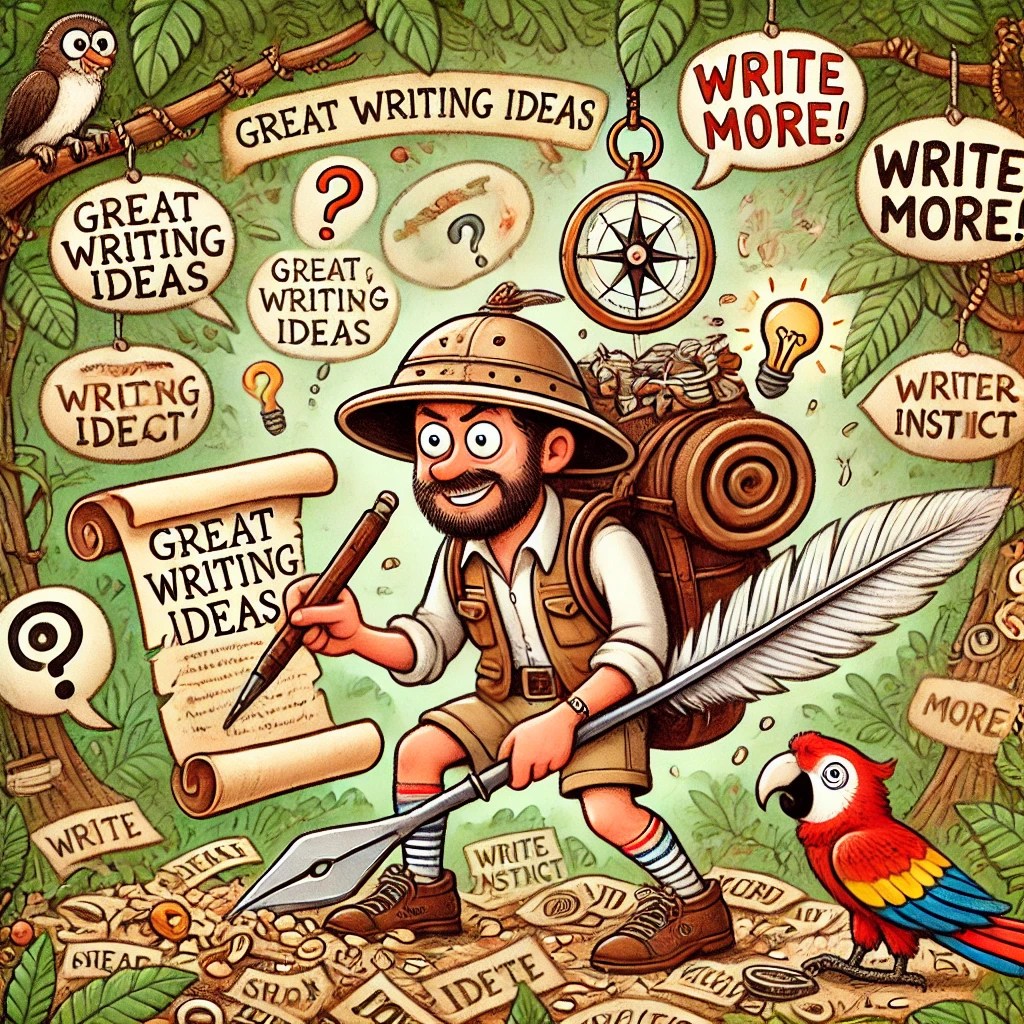
While I don’t carry a compass or a backpack, I’ve realised that my journey as a writer on Medium mirrors the life of an explorer.

Every article I write feels like stepping into the unknown, like embarking on a new expedition.

The journey began with a single question: What should I write about? It was as if I stood at the edge of a dense forest, staring at countless paths ahead. The possibilities felt thrilling yet intimidating.

Should I write about IoT? Entrepreneurship? Or something completely different?” I wondered. It was like being a novice explorer, equipped with no map and only a vague sense of direction.

But I knew one thing: staying put was not an option.

The First Step

Photo by Andrew Neel on Unsplash

Taking that first step was the hardest.

I decided to write about something close to my heart — IoT.

The words felt clunky as I typed, like trudging through a thick jungle. Doubts crept in: Is this good enough? Will anyone read this?

It’s not about perfection,” I reminded myself, echoing a lesson I’d read about explorers. “It’s about taking the journey.

When I published my first article, it felt like finding a small clearing in the forest. It wasn’t groundbreaking, but it was progress. “You did it,” I told myself. “What’s next?

Navigating New Terrain

Photo by NEOM on Unsplash

With each article, I ventured deeper into the unknown.

Some topics were like familiar trails that were easy to navigate. Others felt like steep mountains, daunting and full of uncertainty.

The first time I attempted to write about a personal experience, stepping outside my usual IoT expertise.

Will anyone care about this story?” I hesitated, staring at the screen.

It felt like standing at the base of a towering peak.

But as I wrote, I discovered something powerful: authenticity and vulnerability were like ropes and harnesses, helping me climb those intimidating heights.

When readers commented, “This resonated with me,” it felt like reaching the summit.

The view from the top was worth every moment of doubt.

Facing Setbacks

Photo by NEOM on Unsplash

Not every journey went as planned.

I remember pouring my energy into an article about smart cities, only to see it receive minimal views.

What went wrong?” I asked myself, frustrated.

It felt like wandering through a desert, searching for water but finding none. But even in those moments, I learned valuable lessons.

Like an adventurer adapting to the terrain, I realised I needed to experiment with different topics and perspectives.

Every setback became an opportunity to recalibrate my compass.

Discovering Hidden Treasures

Photo by Scott Goodwill on Unsplash

One of the most rewarding aspects of being an adventurer is stumbling upon hidden treasures, and writing offers plenty.

Sometimes, it was an unexpected idea that turned into a well-received article.

Other times, it was a connection with a reader who shared how my words impacted them.

I recall writing about how IoT could revolutionise agriculture, thinking the topic was too niche.

To my surprise, it became one of my most-read pieces. “This is your treasure,” I told myself. “Even the smallest ideas can hold immense value.

Finding Fellow Travellers

Photo by krakenimages on Unsplash

Every adventurer needs a tribe, and the Medium community became mine. Fellow writers shared tips, encouragement, and camaraderie.

I remember a comment on one of my articles: “Your story gave me the courage to share my own.

It felt like meeting another traveller at a campfire, exchanging stories that inspire and uplift. “Keep going,” they said. “You’re on the right path.

Embracing Risks

Photo by NEOM on Unsplash

What’s an adventure without risks?

Sometimes I stepped far outside my comfort zone, tackling controversial topics or experimenting with new styles.

It felt like crossing a rickety bridge over a canyon.

What if this fails?” I often asked myself. However, I knew that growth required pushing boundaries. Even when I stumbled, the experience taught me resilience and courage.

The Journey, Not the Destination

Photo by Danka & Peter on Unsplash

Over time, I realised that writing, like adventuring, isn’t about reaching a final destination.

It’s about the discoveries, challenges, and growth along the way. Each article became a chapter in my story, marking where I’d been and how far I’d come.

One day, someone asked, “Why do you keep writing?

I smiled and replied, “Because I’m not done exploring.

Looking Ahead

Photo by NEOM on Unsplash

Writing has shown me that the world of ideas is vast and limitless.

There’s always another path to take, another treasure to find, another story to tell.

Each article is a new expedition filled with twists, turns, and surprises.

As an adventurer of words, I’ve learned this: the journey is far from over.

The horizon stretches endlessly, and I can’t wait to see what lies beyond.

The Lonely Struggles of a Founder: The Silent Battle No One Sees

Another sleepless night. The clock shows 3:47 AM, but my mind is far from resting. I stare at the ceiling, watching shadows move with the passing headlights outside. My thoughts? A never-ending loop of problems, solutions, ideas, and fears. Will FAVORIOT make it? Are we moving fast enough? What if we fail?

If you’re a founder, you know this feeling too well. The burden of running a startup never leaves. Whether it’s a weekend, a public holiday, or a late-night teh tarik session with friends, the weight of the company is always there. There’s no “off switch.”

People from the outside might admire the entrepreneurial journey, imagining it as glamorous—being your own boss, calling the shots, making a difference. But behind closed doors, it’s a battle of survival.

And the most challenging part? The loneliness.

The Invisible Weight of Leadership

When you’re a founder, everything falls on your shoulders. The revenue, the product roadmap, the team’s morale, customer satisfaction, partnerships, investments—everything. And if things go wrong, there’s no one else to blame.

Employees can leave if things get tough. Investors only care about numbers. Customers just want their problems solved. But the founder? We have no escape. Even if we take a break, our minds never do.

I’ve had nights where I wake up from a nightmare, heart pounding because I dreamt of something going wrong—losing a big deal, a major system failure, running out of funds. And the worst part? Sometimes, these nightmares become reality.

Who do I talk to about this? My team? No, they look up to me for guidance. My spouse? She listens, but she will never truly feel the weight I carry. My friends? Most of them are in corporate jobs with steady paychecks. They don’t understand what it’s like to wake up daily with the responsibility of keeping a company alive.

Sometimes, I sit alone in my office, staring at my laptop screen, but my mind is elsewhere. Not thinking, just… lost. It’s a strange kind of exhaustion that words can’t describe.

The Illusion of Support

Yes, we have networking sessions. We meet other founders over coffee or teh tarik, exchange war stories, and laugh about our struggles. But deep inside, we all know that some things remain unspoken.

The real fears, the moments of doubt, the decisions we make in the dead of night that no one will ever hear about.

Sometimes, I sit in a room full of people, nodding and smiling, but my mind is stuck in a spiral of “What’s next?” Because while others can relax, I cannot. The company’s survival is my responsibility.

Investors don’t want to hear struggles; they want results. Employees need direction, not a leader who doubts. Customers wish to stability, not uncertainty.

So, where do founders turn to?

Breaking the Cycle of Isolation

Over time, I realized that dealing with loneliness as a founder is not about removing the burden but managing it better. Here’s what has helped me stay sane on this lonely journey:

1. Finding a Trusted Inner Circle

Not everyone will understand, but having one or two people who truly understand can make a difference. Whether it’s a mentor, a fellow entrepreneur, or a long-time friend who knows your journey, having someone to share raw, unfiltered thoughts with is crucial.

It was inspiring to meet founders who were a few steps ahead in their journey. They’ve been through what I’m facing now, and their insights are invaluable.

2. Practicing Strategic Detachment

A startup is like a baby—it needs care, attention, and sleepless nights. But over time, I learned to detach my self-worth from the company’s success or failure. It’s hard but necessary.

I remind myself that I am not my startup.

If FAVORIOT fails, it doesn’t mean I am a failure. And if it succeeds, I should not let it consume my identity entirely.

3. Scheduling Mind Breaks

Taking breaks doesn’t mean we don’t care. It means we’re making space for better decision-making. Some of my best ideas have come when I stepped away from my desk.

A short trip, an evening walk, even just sitting at a café without checking emails—these small breaks help reset my mind.

4. Writing as Therapy

I started writing down my thoughts, not for anyone else but myself. It’s like talking to a friend who doesn’t judge. It helps me process emotions, clear my head, and sometimes even discover solutions hidden in my words.

5. Embracing the Unknown

The truth is, no founder has it all figured out. Even the most successful entrepreneurs had moments of doubt. The difference is that they kept going despite the uncertainty.

Instead of fearing the unknown, I try to embrace it. Every problem is a puzzle, every challenge a lesson.

Final Thoughts: You Are Not Alone

To all the founders out there—know you are not alone if you feel lonely. I understand the silent battles you fight, the sleepless nights, the weight on your shoulders.

No easy fix exists, but you can make the journey less heavy. Find people who understand, step away when needed, and remind yourself that you are more than your startup.

And on those nights when your mind won’t stop racing, remember: This struggle is part of the journey. One day, you’ll look back and realize that these lonely, difficult, exhausting moments shaped you into the leader you were meant to be.

For now, take a deep breath.

The battle continues, but you are not alone.

Building a Loyal Newsletter Subscriber Base

Image created using Picsart

I still picture the days when I was just getting started with writing.

I poured hours into crafting articles that I thought were insightful, valuable, and even entertaining.

But when I hit publish, it often felt like shouting into a void. The engagement was minimal, and the metrics barely moved.

I used to wonder, What am I doing wrong?

“Maybe people don’t care about what I have to say,” I thought to myself. It’s disheartening to invest so much effort and get little in return.

But here’s the thing: I learned that this phase is natural.

Every writer, every creator starts here. The audience won’t magically appear overnight.

It’s part of the process.

This phase taught me resilience, patience, and the value of consistently showing up.

I told myself, Keep writing, Mazlan. There’s something to learn in every step of the way.

The Mindset Shift

It wasn’t until much later that I realised something fundamental needed to change: my mindset.

I was so focused on being “impressive” that I forgot the most important thing — being real.

I remember one night staring at a blank screen, frustrated, thinking, Why am I trying so hard to sound perfect?

That’s when it hit me.

I needed to let go of this facade and write as the real Mazlan Abbas.

The next time I sat down to write, I approached it differently.

Instead of trying to impress or win approval, I decided to be honest. I shared the struggles I’d faced, the doubts I’d wrestled with, and the lessons I’d learned.

It felt vulnerable at first, but it also felt right.

“Just be yourself,” I told myself, “That’s what people connect with.”

And guess what? It worked.

The more authentic I was, the more people started to engage.

Authenticity Resonates

One of the biggest lessons I’ve learned is that authenticity resonates.

People don’t want to hear about how great you are. They want to hear about your journey, your challenges, and your transformations.

When I started sharing my real-life experiences, I noticed something incredible happening.

Readers began commenting, sharing their own stories, and even thanking me for being open.

I realised that people relate to humanity, not perfection.

They connect with the messy, chaotic parts of life because that’s what we all experience.

When you write from a place of authenticity, you build trust.

And trust is the foundation of any loyal community.

Your Stories Are Their Stories

Your stories are not just about you,” I remind myself every time I write.

They’re also about the reader.

When you share a personal struggle or a lesson learned, you’re giving the reader a mirror to see their own life.

For instance, when I wrote about my initial struggles with building FAVORIOT, people resonated.

They saw themselves in my position, facing their own challenges of starting something new.

It wasn’t about me being an expert; it was about me being relatable.

This is the power of storytelling.

It creates a bridge between you and your audience.

When readers see that you’ve faced similar challenges and come out stronger, they’re inspired. They feel connected.

And they want to be part of your journey.

Building Community Through Authenticity

There’s a myth that you need to be highly charismatic or entertaining to build a loyal audience.

I’m here to tell you that’s not true. What you really need is authenticity.

When I stopped trying to impress and started being honest, writing became therapeutic.

It stopped feeling like a chore and started feeling like a conversation. I began to look forward to it because it allowed me to express myself fully.

Mazlan,” I often remind myself, “just write as if you’re talking to a friend.” And it’s amazing how much more engaging my writing became.

People can sense when you’re being real. It draws them in.

Growing Your Audience with Purpose

Once I found my authentic voice, the next step was to write with purpose.

I started asking myself, What value can I provide? How can I make this article helpful or inspiring for my readers?

Instead of aiming for perfection, I focused on consistency and connection.

Each piece of content became an opportunity to share a story, a lesson, or an insight.

And with each post, I could feel my audience growing — not just in numbers but in loyalty.

It’s not about writing for everyone,” I reminded myself. “It’s about writing for the right people.

That’s how you attract your ideal audience — by being clear about who you are and what you stand for.

Actionable Takeaways

So, what can you do to build a loyal subscriber base? Here are the key takeaways from my journey:

  1. Be Honest and Vulnerable: Share your real experiences, even the struggles. This builds trust and relatability.
  2. Focus on Connection, Not Perfection: People don’t want perfect; they want real. Show them your humanity.
  3. Tell Stories with Depth: Use your challenges and growth as the foundation for your stories.
  4. Write Consistently: It’s not about writing a masterpiece every time. It’s about showing up and sharing your voice regularly.
  5. Have a Clear Purpose: Always ask yourself how your content can serve your readers.

Final Thoughts

Building a loyal newsletter subscriber base isn’t about being the best writer or having the flashiest content.

It’s about being authentic, consistent, and purposeful.

When you write with honesty and vulnerability, you create a space where people feel seen, heard, and connected.

For me, this journey has been as much about personal growth as it has been about building a community.

And that’s what makes it so rewarding.

So, if you’re ready to start your own newsletter or blog, remember: your voice matters, and your stories can make a difference.

Just be yourself,” I remind myself every day. “That’s all it takes.

The Story Behind Favoriot – Part 17: How I Learned to Share Favoriot’s Story Without Overdoing It

The Fine Line Between Inspiration and Bragging

Should I share, or should I stay silent?

This question has haunted me since the early days of Favoriot.

Building a startup isn’t just about technology, funding, or business strategy—it’s also about storytelling. But where do we draw the line between sharing our journey to inspire others and coming across as boastful?

I’ve wrestled with this dilemma more times than I can count. Some people say, “Just let your work speak for itself.” Others insist, “People need to see your progress. They want to learn from your story.”

So, which one is it?

Let’s dive into the delicate balance of sharing our startup journey—without overdoing it.

The Early Days: A Team Fueled by Passion and Uncertainty

When we first started Favoriot, we were a small team with big dreams. We believed IoT had the power to change industries, improve lives, and create new opportunities.

But passion alone wasn’t enough.

We faced countless obstacles, including funding challenges, product-market fit struggles, and the ever-present fear of failure. We worked tirelessly behind the scenes, developing our platform and engaging with potential customers.

Then came the big question:

Should we share our struggles and milestones with the world or keep everything under wraps until we have something massive to announce?

I was torn.

“Maybe we should just stay quiet and let the results speak for themselves,” I thought. “What if we share too much, and it backfires?”

At the same time, I knew that people don’t just buy products—they buy into stories. They connect with a brand that feels human.

That’s when I realized the power of storytelling.

The Power of Storytelling in Startups

I’ve always believed that stories are what bring people together. They make businesses feel real, not just faceless corporations.

I started to ask myself:

“Wouldn’t sharing our small wins show others we’re genuine and making real progress?”

Momentum is everything in a startup. People want to know your journey—not just the polished version, but the raw and real struggles.

A few trusted advisors encouraged me:

“Mazlan, people want to see how a company grows. They want to learn from your experience, the ups and downs. Your story can inspire them.”

That made sense. After all, I’ve been inspired by others who openly shared their startup journeys. So why not do the same?

That was the moment I decided—we would share Favoriot’s story.

But little did I know that decision came with its own challenges.

The Doubts: Criticism and the Fear of Overexposure

The moment we started sharing our journey, the doubts crept in.

What if people thought we were just showing off?

What if our small wins were misinterpreted as arrogance?

I knew that no matter how genuine our intent was, some people would see it differently. Not everyone would cheer for our progress. Some might even root for us to fail.

That fear of inviting negativity was real.

A friend cautioned me, “Mazlan if you keep celebrating every little milestone, people might think you’re just making noise. Be careful.”

That struck a chord. I didn’t want Favoriot to be seen as all talk with no substance.

I had to find the right balance—sharing enough to inspire but not so much that it felt forced or unnecessary.

Finding the Right Balance: Authenticity Over Hype

I came to a realization:

It’s not about choosing between complete silence or constant broadcasting. The key is authenticity.

People can tell when a story is real. They can sense when you share because it’s meaningful, not because you want attention.

So, instead of treating every minor update as a big achievement, we focused on:

  1. Telling the whole story – Not just the victories but the challenges, failures, and lessons learned.
  2. Showing our human side – The sleepless nights, the difficult decisions, and the little moments that keep us going.
  3. Engaging, not boasting – Encouraging discussions rather than just making announcements.

The goal wasn’t to impress but to connect.

Emotion vs. Success Stories: Striking the Right Mix

So, how do we balance sharing emotions with business success?

I realized that while people love to hear about wins, they also appreciate honesty.

It wouldn’t be relatable if all we did was talk about how great we were doing. But if we only focused on struggles, it might seem like we were always in crisis mode.

We had to share both our progress and the hard lessons we were learning along the way.

A startup journey isn’t just about achievements. It’s about persistence, the small breakthroughs that lead to bigger ones, and the human experience behind the business.

Dealing with Criticism: Staying True to Our Mission

No matter how carefully we shared our story, there would always be critics.

Some would call it bragging. Others would question our decisions.

At first, this got to me. I second-guessed whether we should continue sharing at all.

But then I reminded myself:

Not everyone will root for you, and that’s okay.

The key is how you share. If you want to genuinely document your journey and help others, the right people will appreciate it.

It’s not about boasting—it’s about showing what it takes to build something from the ground up.

If someone sees that as bragging, that’s their perspective. But that shouldn’t stop us from telling our story.

Lessons Learned from Sharing the FAVORIOT Journey

Looking back, I’m glad we shared parts of our journey.

It helped us:

✅ Build a community that believes in our mission.
✅ Establish trust with partners and customers.
✅ Inspire other entrepreneurs who are going through the same struggles.

But we also learned to be mindful of how we share.

We don’t need to post every minor update. We don’t need to be overly polished. But we also don’t need to stay silent.

It’s all about balance—giving people a window into our world while staying true to our values.

The Importance of Authenticity in Business

At the end of the day, what matters most is staying authentic.

Favoriot isn’t just a company—we’re a team with a vision.

And that vision isn’t just about technology. It’s about building relationships, creating impact, and helping others understand the potential of IoT.

That’s why we continue sharing our story—not to show off but to invite others to share in our journey.

If there’s one lesson I’ve learned, it’s this:

People don’t connect with success. They connect with the story behind it.

And as long as we stay true to that, we’ll always have something meaningful to share.

Favoriot Entrepreneurship Stories

  1. The Story Behind Favoriot – Part 16: Why Favoriot Must Look Beyond Malaysia for Success
  2. The Story Behind Favoriot – Part 15: From Lecture Halls to Investor Pitches
  3. The Story Behind Favoriot – Part 14: To Exit or Not to Exit?
  4. The Story Behind Favoriot – Part 13: Does Winning Awards Help a Startup Succeed?
  5. The Story Behind Favoriot – Part 12: The Dream of M&A Exit
  6. The Story Behind Favoriot – Part 11: The Rocky Road of Smart Cities
  7. The Story Behind Favoriot — Part 10: Age Does Not Matter in Business
  8. The Story Behind Favoriot — Part 9: Leaving the Comfort Zone
  9. The Story Behind Favoriot – Part 8: The Frustration of Unanswered Emails and Missed Opportunities
  10. The Story Behind Favoriot – Part 7: The Task of Finding Favoriot’s First 10 Customers
  11. The Story Behind Favoriot – Part 6: Expanding The Business Models
  12. The Story Behind Favoriot – Part 5: Finding the Right Fit
  13. The Story Behind Favoriot – Part 4: How Favoriot Became More Than Just an IoT Platform
  14. The Story Behind Favoriot – Part 3: Why No One Wanted Our IoT Platform—And How We Turned It Around
  15. The Story Behind Favoriot – Part 2: Turning Failures into Milestones
  16. The Story Behind Favoriot – Part I: The Humble Beginnings of Favoriot

A Recognition That Reflects the Journey: Named Among Thinkers360’s Top 100 B2B Thought Leaders in 2025

I stared at my screen, re-reading the email. Was this real? Thinkers360 had just named me one of the Top 100 B2B Thought Leaders, Analysts & Influencers to Work With in 2025 (APAC).

I leaned back in my chair, letting the weight of those words sink in. A flood of memories rushed through my mind—moments of self-doubt, nights spent refining ideas, countless speaking engagements, and articles written with the hope that someone, somewhere, would find them valuable.

This wasn’t just about me. It was about the power of consistency, the impact of sharing knowledge, and the importance of staying true to a vision.

The Journey to This Moment

When I co-founded FAVORIOT, I had one missionto make IoT accessible, understandable, and impactful for businesses and societies. I wasn’t just building a company but creating an ecosystem, a movement, and a voice for IoT adoption.

It wasn’t always easy.

  • Sometimes, IoT felt like an uphill battle, trying to convince organizations of its potential.
  • There were moments when my writings, podcasts, and speeches seemed to go unnoticed.
  • There were days when I wondered if my efforts were making any real impact.

Yet, I kept going.

I wrote articles when I felt uninspired.
I delivered speeches when I was exhausted from travelling.
I mentored startups when I barely had time for myself.

Because I believed in the power of sharing knowledge.

Beyond Social Media Influence: Thought Leadership with Purpose

What makes this recognition by Thinkers360 truly meaningful is its holistic approach to thought leadership. Unlike many influencer lists focusing purely on social media metrics, Thinkers360 looks deeper—at the ideas shared, the conversations sparked, and the tangible impact created.

Thought leadership isn’t just about posting viral tweets or LinkedIn updates. It’s about:

  • Writing articles that challenge conventional thinking.
  • Delivering keynotes that shift perspectives.
  • Mentoring the next generation of innovators.
  • Contributing to industry policies that shape the future.

And that’s what I’ve strived to do, not just as an IoT advocate but as someone who believes in building smarter cities, empowering businesses, and fostering innovation.

Why This Matters for the IoT & Smart City Ecosystem

This recognition isn’t just a personal milestone—it’s a signal that IoT and digital transformation are no longer just buzzwords.

They are critical forces shaping the future of industries, economies, and societies.

From smart agriculture to intelligent traffic management, from AI-driven automation to predictive analytics—IoT is no longer a “nice-to-have” but a necessity.

This award reminds me that our work—whether through FAVORIOT, industry collaborations, or global partnerships—is making a difference.

It also reaffirms my belief that sharing knowledge is the most powerful way to accelerate innovation.

What’s Next? The Mission Continues

Recognition is a moment.
Impact is a lifetime journey.

This award doesn’t end my thought leadership journey—it fuels the next chapter.

I’m more committed than ever to:

  • Bringing IoT education to more businesses and policymakers
  • Expanding the FAVORIOT ecosystem through strategic global partnerships
  • Mentoring and inspiring young professionals to enter the tech industry
  • Driving real, measurable impact in smart city development

Thank you to everyone who has followed my journey, read my articles, attended my talks, or engaged with my content. Your support, feedback, and discussions have been invaluable.

This recognition belongs to everyone working tirelessly in the IoT and digital transformation.

Let’s continue building the future—one idea, one conversation, and one innovation at a time.

Final Thoughts

As I close my laptop, I take a deep breath. This recognition was unexpected, but perhaps it was always on the horizon. When you consistently show up, share your knowledge, and contribute with genuine passion, the world eventually takes notice.

For more on my journey, visit mazlanabbas.com and favoriot.com.