The Story Behind Favoriot – Part 19: How the Law of Attraction Shapes Favoriot’s Future

The Imagination That Built Favoriot

Imagination is often dismissed as a whimsical exercise, yet it’s the spark that ignites progress. The world we live in today was once imagined by someone who dared to think beyond what was possible. Reflecting on Favoriot’s journey, I realize how important it is to dream about the future we want to create.

I believe in the Law of Attraction—the idea that what we think and visualize with intent can manifest into reality. When we first started Favoriot, we imagined a future where our platform would power smart cities, empower students, and become a global name in IoT. Some might have called it wishful thinking. But imagination, when combined with action and persistence, can shape reality.

Let me take you on a journey through an imagined future where Favoriot’s influence has transcended borders, industries, and expectations. This is not just a daydream. It’s a vision we are working tirelessly to turn into reality.

A Vision of Favoriot’s Future

I close my eyes and transport myself into the future. I enter a massive IoT trade exhibition akin to CES or the World Smart City Expo. The atmosphere is electric with innovation. Companies from around the world have gathered to showcase their latest technologies. As I navigate the exhibition hall, one thing becomes apparent: the Favoriot logo is everywhere.

Booth after booth, exhibitors proudly display their demos powered by the Favoriot IoT platform. Startups with groundbreaking hardware solutions, companies showcasing futuristic smart city concepts, and AI-driven IoT applications are all seamlessly connected through Favoriot.

But why? Why did they choose Favoriot? It’s not just a platform. It has become the trusted backbone for innovation, synonymous with reliability and scalability. I feel an overwhelming sense of pride in seeing this unfold in real time. This is the world we imagined when we first built Favoriot: a world where our platform is the silent enabler of extraordinary solutions.

The Power of Favoriot in Education

My next stop in this imagined world is a university. Favoriot has become a standard name here—not just a tool but a core part of the curriculum.

In lecture halls, professors discuss real-world IoT case studies, and students dive deep into hands-on learning, exploring the potential of IoT using the Favoriot platform. I peek into a lab where students are working on their final-year projects. A team is developing a smart agriculture solution, leveraging Favoriot to monitor soil conditions and automate irrigation. Another group is focused on smart health, creating wearable devices for chronic disease management and using Favoriot’s analytics features to visualize patient data.

It’s exhilarating to see how a tool we created has become the foundation for nurturing the next generation of IoT innovators. Universities nationwide and internationally now teach IoT through Favoriot. Their labs are equipped with pre-configured dashboards, APIs, and datasets, making it easy for students to start building. What was once a platform we envisioned for businesses has become an educational cornerstone. Students graduate not only with degrees but as skilled Favoriot-certified IoT professionals.

This didn’t happen by accident. It was imagined, desired, and, through our efforts, made a reality.

Transforming Cities with IoT

As I step into a local council’s command centre, I see a vibrant dashboard powered by Favoriot. The screen displays real-time data from various IoT solutions deployed throughout the city: smart streetlights, waste management sensors, flood detection systems, and air quality monitors.

This isn’t just a collection of disconnected systems—it’s an integrated platform that combines everything under one roof.

The mayor stands beside me, explaining how this has revolutionized the council’s operations.

“Favoriot has helped us move from reactive to proactive,” she says. “We no longer wait for complaints; we solve problems before they arise.”

I imagined this when we spoke about smart cities years ago—a city where data drives decision-making, not just to improve efficiency but to genuinely enhance the quality of life for its citizens.

Favoriot isn’t just another vendor in this ecosystem—it’s the platform that local councils trust to aggregate and analyze IoT data, bridging the gap between diverse solutions and actionable insights.

Again, this was once a dream, an idea that many doubted. But here it is, functioning as imagined, because we believed in its possibility.

The Future of IoT Businesses

IoT product companies no longer struggle to create end-to-end solutions. Instead, they focus on what they do best—building world-class hardware or cutting-edge AI applications. Favoriot fills the gap by providing a robust platform to manage data collection and analysis.

Imagine a company specializing in healthcare sensors. Instead of spending years developing its own platform, it uses Favoriot to connect its devices. This shortens its time-to-market, and its customers benefit from a complete solution that’s both scalable and user-friendly.

The same goes for system integrators who rely on Favoriot to simplify IoT deployments for their clients. Some have taken this even further by offering managed IoT services. With Favoriot, they provide their clients with dashboards, analytics, and customized solutions without the technical headache of building everything from scratch.

It’s a win-win: the integrators expand their business offerings, and Favoriot becomes the go-to platform for IoT scalability.

Expanding Globally Through the Law of Attraction

The most exciting part of this imagined future is Favoriot’s global footprint. We have partnered with system integrators and distributors across continents, allowing us to enter new markets quickly.

In Indonesia, a partner uses Favoriot to enable advanced agriculture systems. In Europe, we’re powering smart transportation initiatives. In Africa, Favoriot is the backbone of rural healthcare IoT solutions.

These partnerships aren’t just transactional; they’re built on a shared vision of what IoT can achieve. By empowering local players in each market, Favoriot has become a global name synonymous with IoT excellence.

How did we reach this level? By first believing in it. The Law of Attraction teaches that whatever we focus on grows. We visualized this expansion, worked towards it, and attracted the right people and opportunities to make it happen.

A Dream Becoming Reality

I close my eyes and imagine standing on a stage at a significant IoT event. The lights dim, and a video showcases real-world success stories of Favoriot-powered solutions. The impact is tangible, from smart cities to healthcare and agriculture to education.

As I speak, I’m reminded of how far we’ve come—as a company and as a community of dreamers and doers. Favoriot’s success wasn’t just about technology but about believing in the power of imagination.

We imagined a world where IoT could truly transform lives when we started. Today, in this envisioned future, that world has come alive.

So, is it wrong to imagine? Absolutely not.

Imagination is where dreams take shape, and the seeds of innovation are planted. As I look at Favoriot’s journey—from a small startup to a global IoT leader—I know that it all started with a simple yet powerful idea: to imagine the impossible and make it real.

Will this vision come true? I believe it will. Because imagination, when paired with hard work, resilience, and the right team, can achieve wonders.

So, let’s keep imagining, dreaming, and building the future—one step at a time.

The Story Behind Favoriot – Part 18: The Unspoken Truth About Startup Success

The Illusion of Overnight Success

Starting a business is exhilarating. There’s a rush of energy, an overwhelming sense of purpose, and a firm belief that what you’re building will change the world. When we launched FAVORIOT, that excitement fueled us. We poured countless hours into developing our product, refining its features, and dreaming of when it would hit the market and create a ripple effect.

I imagined a scenario where people would immediately recognize our innovation, show us praise, and, most importantly, place orders. It was a beautiful vision.

But reality had other plans.

The product launch was met with an eerie silence. There was no flood of inquiries, no immediate purchase orders—just a deafening void. It was as if we had shouted into an empty room, expecting applause but hearing only echoes of our voices.

I remember sitting in my office, staring at my phone, waiting for it to ring. Did we make the right decision? Was there even a market for what we had built? These questions haunted me. I had read about this phase before—the quiet period after launch where entrepreneurs either push through or give up.

For me, giving up was never an option.

The Harsh Reality: No One Cares Until You Make Them Care

Early on, the biggest lesson I learned was that having a great product isn’t enough. People needed to know about it. Marketing, which I had once seen as a secondary task, suddenly became our lifeline.

I had to shift my mindset from being just a product developer to becoming a marketer, a salesman, and sometimes even a storyteller. I repeatedly asked myself: How do we make people care?

We started reaching out, setting up demos, and pitching to potential clients. Slowly, the response trickled in. Companies showed interest. They asked for presentations. They nodded in agreement, smiled, and said, “This looks promising.”

But promises don’t pay the bills.

For a while, it felt like we were stuck in an endless loop of meetings that never turned into real business. Then came the first request for a quotation. I remember the excitement. Finally! This is it! I thought. We prepared the quotation, sent it over, and waited.

And waited.

Nothing happened.

I had assumed that a quotation would naturally lead to a purchase order. But in reality, sending a quote was just another step in a much longer process. It wasn’t a commitment—it was merely an indication of interest. And interest, I realized, didn’t always translate to action.

The First Purchase Order: A Moment of Validation

Then, one day, it happened. We received our first purchase order (PO).

I still remember the overwhelming sense of relief. It wasn’t just about the money. It was validation. Someone believed in what we had built enough to pay for it.

That moment changed everything. If one customer believed in us, surely more would follow. And they did—slowly but surely.

But business success isn’t just about making a sale. It’s about ensuring that sale turns into cash in your bank account. And that’s where another harsh reality set in.

Chasing Payments: The Least Glamorous Part of Business

You’d think that the hardest part is over once a client agrees to buy. That’s what I believed—until I had to chase down payments.

Sending invoices, following up, reminding, and sometimes even begging for payment became a routine. It was frustrating. We had delivered the product, and the clients were using it. So why were payments delayed?

I quickly learned that delayed payments are part of the business game. Cash flow is king; sometimes, even if you’re owed money, it doesn’t mean you’ll receive it on time.

The Trap of Empty Promises

In the early days, I was easily swayed by big promises. Potential clients would tell me, “This is exactly what we need! We can roll this out across multiple projects.”

It all sounded so promising. Some even asked for discounts or free Proof of Concept (PoC) trials, dangling the possibility of future large-scale deployments.

I wanted to believe them. But more often than not, those promises led nowhere.

Eventually, I learned a simple rule: No purchase order, no deal.

If someone truly values your product, they’ll invest in it. Otherwise, it’s just talk.

Beware of the Middlemen and Brokers

Another lesson came in the form of self-proclaimed “brokers.” These individuals claimed to have the right connections to land us big contracts. “Just trust us,” they would say. “We’ll make sure you get into the right hands.”

It was tempting. They spoke about million-dollar deals, high-profile clients, and game-changing opportunities. But over time, I realized that real business doesn’t work that way.

Genuine clients don’t need middlemen. They buy because they see value in your offer, not because someone else convinced them to.

Success is More Than Just Selling

Looking back, these experiences shaped me as an entrepreneur. Building a business isn’t just about creating a product—it’s about navigating relationships, earning trust, and filtering out distractions.

It’s easy to get caught up in the excitement of what could be. But real success comes when you turn those possibilities into tangible results. And at the end of the day, the only thing that truly matters is this:

Do your customers see value in what you offer? And are they willing to pay for it?

That’s the accurate measure of success.

A Letter to My Younger Self

JOURNEY OF MY LIFE

What advice would I give? What warnings, insights, or words of encouragement would I offer?

Photo by Scott Graham on Unsplash

This story is inspired by Lamberton Conservatory/Jessie’s article “Love Letter from My Younger Self.”

I’ve often wondered what I would say if I could write a letter to my younger self. What advice would I give? What warnings, insights, or words of encouragement would I offer?

As I sit down to pen this “love letter,” I imagine a dialogue between the person I am today—Dr. Mazlan Abbas, with years of experience in IoT and telecommunications—and the young man I once was, full of dreams and uncertainties.

Photo by Mediamodifier on Unsplash

Dear Young Mazlan,

As I sit down to write this letter, memories of our younger days flood back with affectionate clarity. It’s a peculiar feeling — writing to oneself across the expanse of years. Each word I pen is infused with the wisdom of experiences you have yet to encounter, and each pause is filled with the echo of lessons learned.

Follow Your Curiosity

You have always been driven by a deep-seated curiosity about the world, how it works, and how you can contribute to its mechanics. Never lose that. Let your curiosity be the compass that guides you through the complexities of life and career. Each interest and question you pursue will open new doors—some will lead to dead ends, but others will open up vast realms of opportunity and knowledge. Our path into the world of technology and innovation was paved by this very curiosity.

Embrace Change and Challenges

I know you worry about failure, about paths not taken or dreams not realized. Let me ease your mind: you will fail, more than once. But with each failure, you will learn and grow. These are not endpoints but part of a larger journey. Each setback and each challenge is an opportunity to learn and to recalibrate. Embrace them. They are invaluable teachers.

Value Your Relationships

In the pursuit of your dreams, do not overlook the people who walk beside you. The support of family, the camaraderie of friends, and the alliances with colleagues will be your greatest treasures. Make time for them. When shared, the successes will feel sweeter, and the failures less bitter. Remember, no achievement is worth the neglect of those you love.

Stay Humble and Keep Learning

The world of technology and telecommunications, the arenas of your professional battles, evolve rapidly. To stay relevant, you must remain a perpetual student. Attend seminars, engage with your peers, read voraciously, and always be prepared to admit that there is more to learn. Complacency is the enemy of innovation. Keep your mind open and your knowledge base ever-expanding.

Give Back to the Community

You often wonder about the mark you’ll leave on the world. Remember that every small contribution counts. Whether mentoring young professionals, speaking at industry conferences, or contributing to technological innovations, each effort contributes to a larger good. Our work is not just about personal success but about improving lives and empowering communities.

Enjoy the Journey

Lastly, I want you to savor each moment of this journey. The late nights, the breakthroughs, even the uncertainties — they are all the jigsaw puzzles that you need to solve. Do not be so focused on the destination that you forget to enjoy the path you are traveling.

Young Mazlan, as you stand on the edge of many adventures and achievements, know that the journey is worth every challenge. Love each part of it, even the struggles, for they will shape you into the person you are destined to become.

With all the love and wisdom I can offer,

Dr. Mazlan Abbas

The Story Behind Favoriot – Part 17: How I Learned to Share Favoriot’s Story Without Overdoing It

The Fine Line Between Inspiration and Bragging

Should I share, or should I stay silent?

This question has haunted me since the early days of Favoriot.

Building a startup isn’t just about technology, funding, or business strategy—it’s also about storytelling. But where do we draw the line between sharing our journey to inspire others and coming across as boastful?

I’ve wrestled with this dilemma more times than I can count. Some people say, “Just let your work speak for itself.” Others insist, “People need to see your progress. They want to learn from your story.”

So, which one is it?

Let’s dive into the delicate balance of sharing our startup journey—without overdoing it.

The Early Days: A Team Fueled by Passion and Uncertainty

When we first started Favoriot, we were a small team with big dreams. We believed IoT had the power to change industries, improve lives, and create new opportunities.

But passion alone wasn’t enough.

We faced countless obstacles, including funding challenges, product-market fit struggles, and the ever-present fear of failure. We worked tirelessly behind the scenes, developing our platform and engaging with potential customers.

Then came the big question:

Should we share our struggles and milestones with the world or keep everything under wraps until we have something massive to announce?

I was torn.

“Maybe we should just stay quiet and let the results speak for themselves,” I thought. “What if we share too much, and it backfires?”

At the same time, I knew that people don’t just buy products—they buy into stories. They connect with a brand that feels human.

That’s when I realized the power of storytelling.

The Power of Storytelling in Startups

I’ve always believed that stories are what bring people together. They make businesses feel real, not just faceless corporations.

I started to ask myself:

“Wouldn’t sharing our small wins show others we’re genuine and making real progress?”

Momentum is everything in a startup. People want to know your journey—not just the polished version, but the raw and real struggles.

A few trusted advisors encouraged me:

“Mazlan, people want to see how a company grows. They want to learn from your experience, the ups and downs. Your story can inspire them.”

That made sense. After all, I’ve been inspired by others who openly shared their startup journeys. So why not do the same?

That was the moment I decided—we would share Favoriot’s story.

But little did I know that decision came with its own challenges.

The Doubts: Criticism and the Fear of Overexposure

The moment we started sharing our journey, the doubts crept in.

What if people thought we were just showing off?

What if our small wins were misinterpreted as arrogance?

I knew that no matter how genuine our intent was, some people would see it differently. Not everyone would cheer for our progress. Some might even root for us to fail.

That fear of inviting negativity was real.

A friend cautioned me, “Mazlan if you keep celebrating every little milestone, people might think you’re just making noise. Be careful.”

That struck a chord. I didn’t want Favoriot to be seen as all talk with no substance.

I had to find the right balance—sharing enough to inspire but not so much that it felt forced or unnecessary.

Finding the Right Balance: Authenticity Over Hype

I came to a realization:

It’s not about choosing between complete silence or constant broadcasting. The key is authenticity.

People can tell when a story is real. They can sense when you share because it’s meaningful, not because you want attention.

So, instead of treating every minor update as a big achievement, we focused on:

  1. Telling the whole story – Not just the victories but the challenges, failures, and lessons learned.
  2. Showing our human side – The sleepless nights, the difficult decisions, and the little moments that keep us going.
  3. Engaging, not boasting – Encouraging discussions rather than just making announcements.

The goal wasn’t to impress but to connect.

Emotion vs. Success Stories: Striking the Right Mix

So, how do we balance sharing emotions with business success?

I realized that while people love to hear about wins, they also appreciate honesty.

It wouldn’t be relatable if all we did was talk about how great we were doing. But if we only focused on struggles, it might seem like we were always in crisis mode.

We had to share both our progress and the hard lessons we were learning along the way.

A startup journey isn’t just about achievements. It’s about persistence, the small breakthroughs that lead to bigger ones, and the human experience behind the business.

Dealing with Criticism: Staying True to Our Mission

No matter how carefully we shared our story, there would always be critics.

Some would call it bragging. Others would question our decisions.

At first, this got to me. I second-guessed whether we should continue sharing at all.

But then I reminded myself:

Not everyone will root for you, and that’s okay.

The key is how you share. If you want to genuinely document your journey and help others, the right people will appreciate it.

It’s not about boasting—it’s about showing what it takes to build something from the ground up.

If someone sees that as bragging, that’s their perspective. But that shouldn’t stop us from telling our story.

Lessons Learned from Sharing the FAVORIOT Journey

Looking back, I’m glad we shared parts of our journey.

It helped us:

✅ Build a community that believes in our mission.
✅ Establish trust with partners and customers.
✅ Inspire other entrepreneurs who are going through the same struggles.

But we also learned to be mindful of how we share.

We don’t need to post every minor update. We don’t need to be overly polished. But we also don’t need to stay silent.

It’s all about balance—giving people a window into our world while staying true to our values.

The Importance of Authenticity in Business

At the end of the day, what matters most is staying authentic.

Favoriot isn’t just a company—we’re a team with a vision.

And that vision isn’t just about technology. It’s about building relationships, creating impact, and helping others understand the potential of IoT.

That’s why we continue sharing our story—not to show off but to invite others to share in our journey.

If there’s one lesson I’ve learned, it’s this:

People don’t connect with success. They connect with the story behind it.

And as long as we stay true to that, we’ll always have something meaningful to share.

Favoriot Entrepreneurship Stories

  1. The Story Behind Favoriot – Part 16: Why Favoriot Must Look Beyond Malaysia for Success
  2. The Story Behind Favoriot – Part 15: From Lecture Halls to Investor Pitches
  3. The Story Behind Favoriot – Part 14: To Exit or Not to Exit?
  4. The Story Behind Favoriot – Part 13: Does Winning Awards Help a Startup Succeed?
  5. The Story Behind Favoriot – Part 12: The Dream of M&A Exit
  6. The Story Behind Favoriot – Part 11: The Rocky Road of Smart Cities
  7. The Story Behind Favoriot — Part 10: Age Does Not Matter in Business
  8. The Story Behind Favoriot — Part 9: Leaving the Comfort Zone
  9. The Story Behind Favoriot – Part 8: The Frustration of Unanswered Emails and Missed Opportunities
  10. The Story Behind Favoriot – Part 7: The Task of Finding Favoriot’s First 10 Customers
  11. The Story Behind Favoriot – Part 6: Expanding The Business Models
  12. The Story Behind Favoriot – Part 5: Finding the Right Fit
  13. The Story Behind Favoriot – Part 4: How Favoriot Became More Than Just an IoT Platform
  14. The Story Behind Favoriot – Part 3: Why No One Wanted Our IoT Platform—And How We Turned It Around
  15. The Story Behind Favoriot – Part 2: Turning Failures into Milestones
  16. The Story Behind Favoriot – Part I: The Humble Beginnings of Favoriot

The Story Behind Favoriot – Part 16: Why Favoriot Must Look Beyond Malaysia for Success

The Frustration of a Homegrown Startup

Reflecting on Favoriot’s journey, I can’t help but feel a deep sense of frustration. Not because we haven’t done the work but because our technology isn’t good enough. In fact, we’ve built a robust Internet of Things (IoT) platform designed to make real and lasting impacts in industries that need it most.

Yet, despite our dedication, our struggle isn’t about technology. It’s about something deeper, something more challenging to fix—acceptance.

I’ve lost count of how often I’ve sat in meetings with potential Malaysian clients, passionately pitching the benefits of Favoriot’s IoT platform. The pitch is solid, and our solution is tailor-made for local industries, but there is indifference, hesitation, and, more often than not, a preference for foreign products.

I’ve asked myself this question countless times: Why do local businesses hesitate to trust homegrown solutions, even when they are just as good—if not better—than foreign options?

The Reluctance to Trust Local Innovations

It didn’t take long to realize the harsh truth—many local businesses lack confidence in Malaysian-made technology. There is an ingrained belief that foreign products are superior. Whether it’s a smartphone, a software platform, or an IoT solution, many decision-makers seem convinced that if it’s made overseas, it must be more reliable, advanced, and worthy of investment.

It’s not an isolated incident. I’ve spoken to many fellow entrepreneurs, and they share similar frustrations. We have world-class solutions, yet the market is slow to recognize them.

And why? Because the absence of a big international brand name automatically places us in a secondary category.

I understand how this mindset developed. We grew up with foreign brands dominating the market, from cars to consumer electronics, and we were conditioned to trust those familiar names. But the world has changed. Malaysian companies like Favoriot are now fully capable of competing globally. Yet, this deep-seated preference for foreign solutions persists.

The Branding Struggle

Another challenge I’ve faced is branding.

Favoriot is still a young company compared to established international giants. Building brand recognition takes time, and in a world where first impressions matter, a well-known logo can often make or break a deal.

It’s not that our technology is lacking—far from it. In fact, our solutions are designed explicitly for Malaysia’s unique industrial challenges. But when our brand is lesser-known, it sometimes feels like our innovations don’t get the fair consideration they deserve.

I hate to admit it, but perhaps some of the fault lies with us. Have our marketing efforts been polished enough? Have we communicated our value as effectively as we should? Could our messaging be more powerful?

As a technical person, I’ve always been more comfortable with the innovation side of things than the marketing side. But I’ve realised that having a great product isn’t enough. The story behind it, the way we communicate its impact—those elements are just as crucial.

A Harsh Reality: The Global Perception Problem

Interestingly, I’ve noticed that this issue isn’t unique to Malaysia. When we’ve pitched Favoriot overseas, we often encounter the same scepticism—just in reverse.

Some countries take strong nationalistic pride in supporting local solutions. You’re automatically viewed as an outsider if you’re not one of their own, which is ironic. In Malaysia, businesses prefer international brands. In other countries, they choose their own homegrown solutions.

So where does that leave Favoriot? How do we break this cycle?

The Lack of Support for Local Tech Startups

Another challenge that cannot be ignored is the lack of strong support systems for local startups.

We hear a lot about innovation in Malaysia. Government agencies hold conferences, initiatives, and startup accelerator programs. But when it comes to actual adoption, corporations or government bodies still lean towards foreign tech providers when they choose a solution.

This is discouraging, to say the least. We don’t need just moral support—we need tangible action. More businesses need to take a chance on local innovations. More government agencies need to lead by example and implement local solutions. That’s how an ecosystem of innovation thrives.

Looking Beyond Malaysia: Breaking Barriers

Given these obstacles, I’ve realized that while Malaysia will always be home, Favoriot cannot afford to limit itself to local borders.

I’ve had more success pitching Favoriot overseas than I have within Malaysia. Many international clients are more open to exploring new solutions and less influenced by branding. If the technology meets their needs, they will give it a chance.

Going global isn’t just an option; it’s a necessity.

By expanding internationally, we position Favoriot as a global player. Ironically, this global recognition could make us more attractive to Malaysian clients. It’s unfortunate, but gaining international credibility is sometimes the only way to be taken seriously at home.

Overcoming Challenges at Home

Despite everything, I remain hopeful. There are several steps we need to take to overcome the challenges in Malaysia:

  1. Changing Mindsets – We need to keep pushing the narrative that Malaysian innovations are just as good as, if not better than, foreign solutions.
  2. Strengthening Our Brand – This means investing in marketing and ensuring our branding is powerful and persuasive.
  3. Improving Our Messaging – We must communicate our value proposition clearly and convincingly.
  4. Advocating for Local Adoption – The government and corporate sectors need to step up in supporting local startups.

These aren’t easy battles. But they are necessary ones.

A Final Thought

Favoriot’s journey has been far from easy. There have been moments of frustration when I wondered if it was worth the fight. But I refuse to let these challenges define us.

We are more than a local startup. We are a global company with the potential to change industries, make a real impact in IoT, and prove that Malaysian-made solutions can compete on the world stage.

Yes, the path forward is full of obstacles. But obstacles are meant to be overcome.

Favoriot will not just survive. We will thrive.

Favoriot Entrepreneurship Stories

  1. The Story Behind Favoriot – Part 16: Why Favoriot Must Look Beyond Malaysia for Success
  2. The Story Behind Favoriot – Part 15: From Lecture Halls to Investor Pitches
  3. The Story Behind Favoriot – Part 14: To Exit or Not to Exit?
  4. The Story Behind Favoriot – Part 13: Does Winning Awards Help a Startup Succeed?
  5. The Story Behind Favoriot – Part 12: The Dream of M&A Exit
  6. The Story Behind Favoriot – Part 11: The Rocky Road of Smart Cities
  7. The Story Behind Favoriot — Part 10: Age Does Not Matter in Business
  8. The Story Behind Favoriot — Part 9: Leaving the Comfort Zone
  9. The Story Behind Favoriot – Part 8: The Frustration of Unanswered Emails and Missed Opportunities
  10. The Story Behind Favoriot – Part 7: The Task of Finding Favoriot’s First 10 Customers
  11. The Story Behind Favoriot – Part 6: Expanding The Business Models
  12. The Story Behind Favoriot – Part 5: Finding the Right Fit
  13. The Story Behind Favoriot – Part 4: How Favoriot Became More Than Just an IoT Platform
  14. The Story Behind Favoriot – Part 3: Why No One Wanted Our IoT Platform—And How We Turned It Around
  15. The Story Behind Favoriot – Part 2: Turning Failures into Milestones
  16. The Story Behind Favoriot – Part I: The Humble Beginnings of Favoriot

The Story Behind Favoriot – Part 15: From Lecture Halls to Investor Pitches

I never imagined public speaking would become such a big part of my life. Yet, I stand before audiences—students, industry experts, corporate executives, and even investors—sharing ideas, teaching, and sometimes convincing people to believe in what I say.

Public speaking was never something I actively sought out. It was more of an expectation that grew into a skill and eventually became a passion. But it wasn’t always smooth sailing. There were moments of doubt, nervousness, and even outright fear.

Let me take you on this journey—from my early days as a nervous lecturer to confidently pitching my company’s vision to investors.

The Classroom as My First Stage

My journey into public speaking began in the most unexpected place—a classroom. As a lecturer, I stood before students daily, speaking for an hour or two.

What if they don’t understand what I’m saying? What if they get bored? These thoughts constantly ran through my mind.

At first, I took the traditional approach—delivering information and expecting students to absorb it like sponges. But I quickly realized that wasn’t how learning worked. Students needed engagement, real-world examples, and, most importantly, a connection with their lecturer.

I started tweaking my delivery and experimenting with storytelling, analogies, and humour. Some things worked; some didn’t, but each lecture became a lesson for me as much as it was for them.

I realized that a good speaker doesn’t just present facts; they make the audience feel the knowledge.

From Lecture Halls to Global Stages

After years of teaching, I received invitations to speak at conferences and seminars. This was an entirely different ball game. Instead of students, my audience now consisted of professionals—industry experts, business leaders, and even government officials.

Unlike in a classroom, where I had hours to explain a concept, I was given at most 15 to 40 minutes.

How do I compress years of knowledge into a short presentation, and how do I keep a diverse audience engaged?

I discovered that the opening of a speech is everything. You’ve lost them if you don’t capture attention in the first minute. I began experimenting with provocative questions, compelling anecdotes, or surprising facts. And it worked. The engagement level skyrocketed.

One of my favorite moments was being invited to speak about IoT at an international conference. Instead of diving straight into technical jargon, I started with a simple yet relatable question: “Have you ever lost your keys?”

That one question had the audience hooked. From there, I smoothly transitioned into how IoT can solve everyday problems. The feedback was overwhelming.

That’s when I learned an important lesson: It’s not about how much you know but how well you can make others understand.

The Marathon of Workshops

Then came the next challenge—workshops. Unlike seminars, which last under an hour, workshops stretched for a full day or even two days.

How do I keep people engaged for that long?

A one-way lecture wouldn’t work. No one wants to sit through hours of someone talking non-stop. I had to make workshops interactive. I incorporated discussions, real-life problem-solving, and case studies. I encouraged participants to share their thoughts and experiences.

And something magical happened—I started learning from my audience.

Workshops became two-way learning sessions. I realized that every room I entered was filled with people who had valuable insights. The key was to tap into that collective knowledge.

Selling a Vision: From Knowledge Sharing to Persuasion

As I transitioned into the corporate and technology world, my role in public speaking shifted. It was no longer just about teaching; it was about persuasion.

This is where Product Talks came in—presentations where I had to sell the vision and benefits of our products.

How do I convince people without sounding like a salesperson?

I quickly learned that the secret wasn’t selling but solving. People don’t want to hear about product features; they want to know how a product can solve their problems. So, I stopped listing specifications and started telling stories—stories of businesses that faced struggles and how our solutions helped them overcome challenges.

One time, during a client meeting, instead of presenting slides full of technical details, I told the story of a small business that lost thousands of dollars due to equipment failures and how our IoT solution helped prevent future losses.

The result? The client was more engaged and convinced than they would have been with any technical presentation.

That’s when I realized that people remember stories, not bullet points.

The Ultimate Test: Pitching to Investors

The biggest challenge of all? Investor pitches.

Unlike lectures or product talks, where I had at least 15 minutes, investor pitches often had a brutal time limit—sometimes as short as three to five minutes.

Imagine summarising an entire business, its potential, market opportunity, and financial projections in just a few minutes. It felt impossible.

How do I say everything that matters in such a short time?

I learned three crucial lessons:

  1. Clarity is everything. Investors don’t have time for fluff. Every sentence must add value.
  2. Confidence matters more than words. If you don’t believe in your own vision, why should they?
  3. The slides must be minimalist but powerful. Too much text? They’ll stop listening. Too few details? They won’t take you seriously. Every slide must serve a clear purpose.

I remember one particular pitch where I had only five minutes. Instead of panicking, I focused on three key points: the problem, the solution, and the impact.

That day, at least, we secured interest from investors. That’s when I understood that investors don’t just invest in businesses but in people who clearly communicate a vision.

The Lessons from a Life of Speaking

After years of standing in front of audiences, I’ve come to realize a few things:

  1. Public speaking isn’t about what you say but how you make people feel. If they feel connected, they will remember your message.
  2. Engagement is everything. Whether it’s a lecture, a workshop, or a pitch, if people aren’t engaged, they aren’t listening.
  3. Every speech is a chance to improve. Even after all these years, I still analyze every talk I give, asking myself, What could I have done better?

Now, every time I step onto a stage, whether in a lecture hall, a corporate boardroom, or an investor pitch, I remind myself of one thing:

Speaking is not about impressing people with knowledge; it’s about making them care about what you’re saying.

And if you can do that—you’ve already won.

What About You?

Are you afraid of public speaking? Have you ever struggled to communicate an idea effectively? Or maybe you’re already an experienced speaker looking to improve?

Whatever stage you’re at, just remember: public speaking is a skill that can be mastered. The more you do it, the better you’ll get.

And who knows? Maybe one day, you’ll be the one standing on a stage, inspiring others with your words.

FAVORIOT: 8 Years of Dreams, Struggles, and Triumphs

Eight years. It feels like a blink of an eye, yet when I reflect on the journey, every moment is etched in my memory like a battle scar.

It all started with an idea that many dismissed as too ambitious for a small startup in Malaysia. The Internet of Things (IoT) was gaining traction globally, but here? People barely understood its potential. I remember sitting with early team members, sketching out what would eventually become the blueprint of FAVORIOT.

“Will this work?” I asked myself.

“Will people even care?”

Doubt is a funny thing. It whispers in your ear, making you question every step. But the fire inside me was more substantial. I had spent decades in telecommunications and technology, seeing trends come and go. But IoT? It wasn’t just a trend—it was the future. And I wanted to be part of shaping that future.

The Birth of FAVORIOT (2017-2018): A Leap of Faith

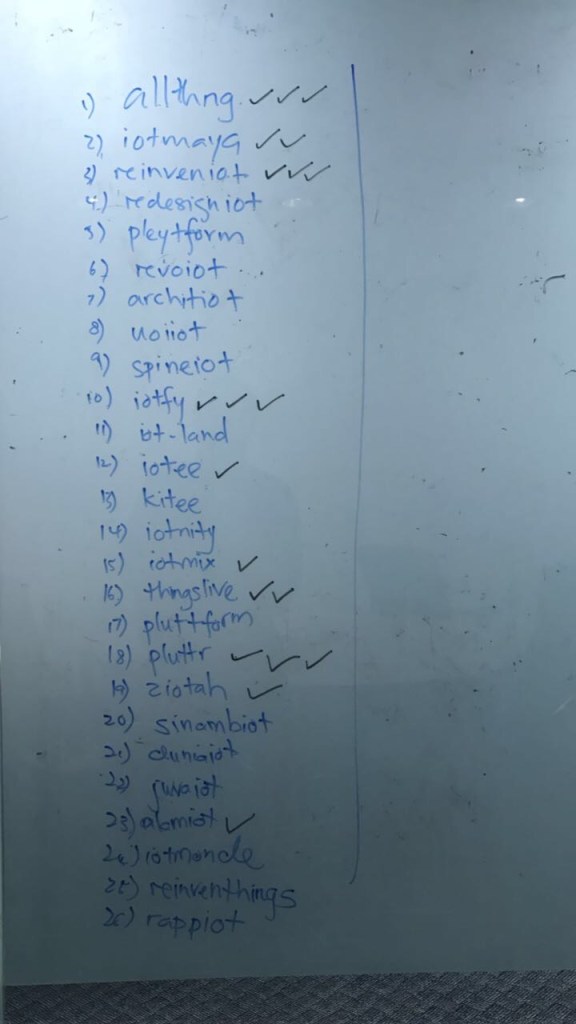
In 2017, FAVORIOT was officially born. The name carried a mission—a combination of “Favour” (or “Favor”) and “IoT.” But it was pronounced like “Favourite”. Our vision was to help businesses and cities adopt IoT with ease. We weren’t just another tech company; we were a company built on the belief that technology should serve people, not the other way around.

I still kept the list of suggested names for the company and we insist to have the word “IoT” in it. It was funny to look back at the way we come out with the names

“Let’s build something that matters.” That was the mantra.

But building something from scratch? That was no walk in the park.

The early days were filled with sleepless nights, countless meetings, and an uphill battle convincing clients that IoT was more than just a buzzword. We had to prove ourselves. The first version of the FAVORIOT platform was launched, allowing businesses to connect and manage IoT devices seamlessly. The first product that used the FAVORIOT platform is “Raqib,” a senior care IoT solution.

The Struggle for Recognition (2019-2021): A Fight Against the Odds

If I said everything went smoothly, I’d be lying.

We faced rejections. So many rejections.

“We’re not ready for IoT.”

“We’ll consider it in the future.”

“Maybe if you were a bigger company, we’d trust your solution.”

Every “no” felt like a dagger. I had seen this before—how innovation is often met with resistance. But I also knew that persistence was key.

2019 was a turning point. We secured our first major clients, IoT developers started using FAVORIOT to build their IoT projects, and universities integrated our platform into their curricula. The momentum was building.

Then, 2020 happened. The world shut down.

The pandemic tested every business, including ours, for resilience. Projects were delayed, budgets were cut, and people were uncertain.

“Is this the end?” I wondered.

But if there’s one thing I’ve learned, crises often lead to opportunities. The demand for remote monitoring solutions skyrocketed. Suddenly, IoT wasn’t a luxury—it was a necessity. Businesses needed to track assets, monitor environments, and ensure safety without physical presence.

FAVORIOT became more relevant than ever.

Scaling Up (2022-2023): The Rise of the Global Partner Program

By 2022, we knew we had something special. Our IoT platform had matured. Companies across different industries—smart cities, agriculture, healthcare—were integrating our technology.

But one question remained: How do we scale?

The answer? Partnerships.

We launched the FAVORIOT Global Partner Program in 2024. Instead of knocking on doors one by one, we empowered system integrators worldwide to bring FAVORIOT into their markets. We started building an international presence from Canada to the Philippines, Indonesia to India.

Each new partner wasn’t just a business deal but a validation that what we built mattered beyond Malaysia.

2024-2025: A Vision for the Future

And now, here we are. Eight years in.

I look back and realize how far we’ve come—from a tiny startup with big dreams to an IoT platform trusted worldwide. But this is just the beginning.

The future of IoT is evolving, and so are we. AI-driven automation, advanced analytics, and even more seamless integrations are on the horizon.

FAVORIOT’s vision remains To make IoT accessible, scalable, and impactful.

Lessons from 8 Years of Favoriot

Eight years in business teaches you a lot. Some lessons were painful. Some were enlightening. But all were necessary.

1. Innovation Alone Isn’t Enough—You Need Grit

Having a great product means nothing if you give up too soon. The world doesn’t hand you success on a silver platter. You fight for it.

2. Relationships Matter More Than Sales

A business isn’t just about transactions. It’s about trust. Every client, partner, and investor who believed in us contributed to our success.

3. Adapt or Die

The pandemic taught us this the hard way. If we had been rigid in our approach, FAVORIOT wouldn’t have survived. Being flexible and embracing change is non-negotiable.

4. The Right Team Makes the Difference

A startup isn’t just about the founder. It’s about the people who share the vision and push through the most challenging days. I’m grateful for every team member who’s been part of this journey.

A Heartfelt Thank You

FAVORIOT’s journey isn’t just my story—it’s ours.

To the team, thank you for believing in this vision.

To our clients, thank you for trusting us.

To our partners, thank you for helping us expand.

To those who doubted us, thank you for pushing us to be better.

This anniversary isn’t just about celebrating the past—it’s about gearing up for the future. FAVORIOT is here to stay, and the best is yet to come.

Here’s to the next 8 years. And beyond.

A Recognition That Reflects the Journey: Named Among Thinkers360’s Top 100 B2B Thought Leaders in 2025

I stared at my screen, re-reading the email. Was this real? Thinkers360 had just named me one of the Top 100 B2B Thought Leaders, Analysts & Influencers to Work With in 2025 (APAC).

I leaned back in my chair, letting the weight of those words sink in. A flood of memories rushed through my mind—moments of self-doubt, nights spent refining ideas, countless speaking engagements, and articles written with the hope that someone, somewhere, would find them valuable.

This wasn’t just about me. It was about the power of consistency, the impact of sharing knowledge, and the importance of staying true to a vision.

The Journey to This Moment

When I co-founded FAVORIOT, I had one missionto make IoT accessible, understandable, and impactful for businesses and societies. I wasn’t just building a company but creating an ecosystem, a movement, and a voice for IoT adoption.

It wasn’t always easy.

  • Sometimes, IoT felt like an uphill battle, trying to convince organizations of its potential.
  • There were moments when my writings, podcasts, and speeches seemed to go unnoticed.
  • There were days when I wondered if my efforts were making any real impact.

Yet, I kept going.

I wrote articles when I felt uninspired.
I delivered speeches when I was exhausted from travelling.
I mentored startups when I barely had time for myself.

Because I believed in the power of sharing knowledge.

Beyond Social Media Influence: Thought Leadership with Purpose

What makes this recognition by Thinkers360 truly meaningful is its holistic approach to thought leadership. Unlike many influencer lists focusing purely on social media metrics, Thinkers360 looks deeper—at the ideas shared, the conversations sparked, and the tangible impact created.

Thought leadership isn’t just about posting viral tweets or LinkedIn updates. It’s about:

  • Writing articles that challenge conventional thinking.
  • Delivering keynotes that shift perspectives.
  • Mentoring the next generation of innovators.
  • Contributing to industry policies that shape the future.

And that’s what I’ve strived to do, not just as an IoT advocate but as someone who believes in building smarter cities, empowering businesses, and fostering innovation.

Why This Matters for the IoT & Smart City Ecosystem

This recognition isn’t just a personal milestone—it’s a signal that IoT and digital transformation are no longer just buzzwords.

They are critical forces shaping the future of industries, economies, and societies.

From smart agriculture to intelligent traffic management, from AI-driven automation to predictive analytics—IoT is no longer a “nice-to-have” but a necessity.

This award reminds me that our work—whether through FAVORIOT, industry collaborations, or global partnerships—is making a difference.

It also reaffirms my belief that sharing knowledge is the most powerful way to accelerate innovation.

What’s Next? The Mission Continues

Recognition is a moment.
Impact is a lifetime journey.

This award doesn’t end my thought leadership journey—it fuels the next chapter.

I’m more committed than ever to:

  • Bringing IoT education to more businesses and policymakers
  • Expanding the FAVORIOT ecosystem through strategic global partnerships
  • Mentoring and inspiring young professionals to enter the tech industry
  • Driving real, measurable impact in smart city development

Thank you to everyone who has followed my journey, read my articles, attended my talks, or engaged with my content. Your support, feedback, and discussions have been invaluable.

This recognition belongs to everyone working tirelessly in the IoT and digital transformation.

Let’s continue building the future—one idea, one conversation, and one innovation at a time.

Final Thoughts

As I close my laptop, I take a deep breath. This recognition was unexpected, but perhaps it was always on the horizon. When you consistently show up, share your knowledge, and contribute with genuine passion, the world eventually takes notice.

For more on my journey, visit mazlanabbas.com and favoriot.com.

The Story of Favoriot and the Chinese Bamboo Tree: A Lesson in Patience and Growth

“Why is this taking so long?”

That thought echoed in my mind many times during the early days of Favoriot. When we first launched our IoT platform, the excitement was immense. We envisioned businesses lining up to integrate IoT solutions into their operations. We saw a future where smart cities would flourish with our technology.

But reality?

Reality hit us like a storm.

For years, it felt like we were speaking to an audience that wasn’t ready to listen. Meetings after meetings, presentations after presentations, yet the market response was lukewarm. Are we doing something wrong? Is the world just not ready for IoT? Should we pivot?

Then, I stumbled upon the story of the Chinese bamboo tree.

And everything made sense.

The Chinese Bamboo Tree and Favoriot’s Journey

The Chinese bamboo tree is an extraordinary plant. When the seed is planted, nothing happens for the first year. Nothing.

The second year? Still nothing.

Third year? No growth.

By the fourth year, frustration sets in. Is the seed even alive? But the farmer keeps watering and nurturing it.

Then, in the fifth year, something incredible happens.

Within just six weeks, the bamboo tree grows nearly 90 feet!

From seemingly invisible growth to towering above the rest. But did it really grow in just six weeks? No. It was growing beneath the surface, building a strong root system that would support its rapid ascent.

Favoriot’s journey was precisely like that bamboo seed.

The First Few Years: Watering the Seed

When we started Favoriot, we knew IoT was the future. However, the industry in Malaysia and many other regions was still catching up.

Our first challenge? Convincing businesses why they needed IoT.

The problem wasn’t our technology. The problem was market readiness. Companies had legacy systems, decision-makers were sceptical, and budgets were tight. We were trying to sell a future that many couldn’t yet envision.

We knocked on doors, spoke at conferences, and educated the market, but it often felt like we were talking to an empty room. Was all this effort going to waste?

But just like the bamboo tree, we kept nurturing our roots.

  • We kept building the Favoriot platform, refining it, and making it more user-friendly.
  • We engaged with universities because we knew students would become the future IoT leaders.
  • We formed partnerships, even if immediate returns were unclear.

For the longest time, we saw no “visible” growth. But under the surface, Favoriot was taking root.

The Year of Growth: The Bamboo Shoots Appear

Then, suddenly, things started shifting.

Companies that ignored IoT years ago began calling us. Universities started incorporating Favoriot into their courses. The ecosystem matured, and governments began pushing for digital transformation.

After all those years of patience and groundwork, we finally saw the results.

When people saw Favoriot’s success, many thought it happened “overnight.”

They saw the bamboo tree but not the years spent watering an empty patch of soil.

Lessons from the Bamboo Tree for Entrepreneurs

Looking back, the parallels between the Chinese bamboo tree and Favoriot’s journey are undeniable. And if you’re an entrepreneur, a startup founder, or someone chasing a vision, here’s what this story teaches us:

1. Growth Happens Beneath the Surface

Just because you don’t see immediate results doesn’t mean progress isn’t happening. The most crucial work—building systems, forming relationships, learning—happens before success becomes visible.

Favoriot didn’t become an IoT leader overnight. It took years of unseen work.

2. Patience and Consistency Are Everything

Imagine if the farmer gave up watering the bamboo tree in year four. The seed would never grow.

How many startups give up just before their breakthrough?

We were tempted to quit many times. The market was slow to respond, funding was challenging, and doubts crept in. But patience and consistency kept us going.

3. Build the Right Foundation

A bamboo tree grows 90 feet fast, but only because it developed strong roots first.

Startups must do the same. Too many rush into scaling before they are ready. Favoriot spent years refining our platform, understanding the market, and nurturing relationships before our exponential growth phase.

4. Trust the Process

Success isn’t always logical or linear. It doesn’t happen step by step in predictable ways. Sometimes, you work for years with little to show—until suddenly, everything aligns.

If you believe in your vision, keep going.

Favoriot’s Future: Reaching New Heights

Now that Favoriot’s bamboo tree has sprouted, does that mean the work is over?

Not at all.

If anything, this is just the beginning.

A 90-foot-tall bamboo tree also faces strong winds and storms. Our challenge now is to sustain our growth, expand internationally, and continue innovating.

But one thing is sure—our roots are strong.

We’ve weathered the most challenging years. We’ve proven our resilience. And just like the bamboo tree, Favoriot will keep rising, stronger than ever.

Final Thoughts: Water Your Own Bamboo Tree

Whatever you’re building—whether it’s a business, a career, or a dream—remember the Chinese bamboo tree.

Growth takes time. Patience is a must.

Water your vision every day. Even when you see no results. Even when doubts creep in.

Because one day, when the time is right, your bamboo tree will rise. And the world will wonder how you grew so fast.

They won’t see the years of struggle.

But you will know.

And you will know it was worth it.

The Story Behind Favoriot – Part 14: To Exit or Not to Exit?

As a startup founder, one of the most thought-provoking questions that lingers is: Should we exit through an acquisition? It’s not just a financial decision—it’s about the vision, legacy, and future of the company you’ve built from the ground up.

The journey of building Favoriot, an IoT platform designed to help businesses and communities seamlessly integrate IoT solutions, has been filled with excitement and challenges. Every stage of growth brought new considerations, and at several junctures, the prospect of an acquisition seemed like a viable path.

But is it the right path?

For any startup, the decision to sell or continue growing independently is rarely straightforward. Expansion often requires bringing in investors or forming strategic partnerships, and sometimes, an acquisition can be the best way to scale and bring value to stakeholders. However, not all acquisition opportunities are created equal. The challenge lies in finding the right acquirer that aligns with your startup’s vision, culture, and market focus.

Understanding Potential Acquirers: Who’s the Right Fit?

The first step in positioning your startup for acquisition is identifying who might be interested in acquiring your company. This process isn’t just about finding businesses with deep pockets—it’s about understanding their strategic goals and whether your startup can complement them.

A successful acquisition should enhance the startup’s vision, not derail it. Ensuring that the acquiring company’s strategy complements your own is crucial to making the right decision.

Aligning Your Product with Strategic Needs

To make your startup an attractive acquisition target, you must align your product or service with potential acquirers’ needs. This doesn’t mean changing your core offerings but instead developing them to add value to the acquiring company’s portfolio.

At Favoriot, we deliberately focused on building modular IoT solutions that could integrate seamlessly with other platforms. This made our platform more versatile and, in turn, more appealing to companies looking for quick and efficient integration solutions.

What if our platform could fill a critical gap in their product line? This question shaped many of our strategic decisions.

Rather than focusing solely on innovation, we emphasized compatibility and complementarity. The easier it is for an acquiring company to integrate your product into its existing ecosystem, the more attractive your startup becomes.

Serving the Same Customer Base: The Market Synergy Factor

Another crucial factor is whether your startup shares the same customer base as a potential acquirer. If both companies target similar industries or market segments, the acquisition can result in an immediate expansion of market share, making the deal more compelling.

For Favoriot, this meant expanding our reach into industries that were already on the radar of potential acquirers. We analyzed which sectors adopted IoT aggressively and tailored our marketing efforts to attract customers within those industries.

Could our customers benefit from the additional services of a larger company? This was a key question we repeatedly asked.

By aligning our target market with that of potential acquirers, we strengthened our strategic fit and increased our value proposition.

Technological Compatibility: Making Integration Seamless

In today’s digital landscape, technological compatibility is a major consideration for acquisitions. Companies prefer to acquire startups whose technology can be easily integrated into their existing infrastructure, reducing costs and complexity post-acquisition.

At Favoriot, we prioritized open standards and flexible APIs, ensuring our platform could integrate smoothly with other enterprise systems.

What if we could make the transition process as smooth as possible? This thought influenced many of our technical choices, from software architecture to protocol selection.

We positioned ourselves as an attractive acquisition target by reducing friction in the integration process.

Cultural Fit: The Often-Overlooked Factor

One of the most underestimated aspects of acquisitions is cultural alignment. I’ve witnessed acquisitions fail—not because the financials didn’t make sense, but because the companies involved had completely different values and work cultures.

At Favoriot, we cultivated a culture of innovation and collaboration. We knew that any acquiring company must share these values to ensure a successful transition.

Can we thrive in a different corporate culture? I asked myself during one particularly intense negotiation.

The answer was no, so we walked away from the deal.

An acquisition should not strip a company of its identity. Instead, it should build upon its strengths while aligning with the acquiring company’s broader vision.

Addressing Market Gaps: Positioning Yourself as an Irreplaceable Asset

One of the best ways to make your startup attractive for acquisition is to solve a problem that a potential acquirer cannot currently address. Whether it’s a unique technology, a specific market niche, or an innovative business model, filling a critical gap increases your strategic value.

For Favoriot, the industrial IoT sector was our niche. While many large corporations focused on smart homes and wearables, we concentrated on industrial automation and smart city solutions—areas where we saw a significant gap.

What if we could offer something that no one else could? This question drove our product development and market expansion strategy.

By creating unique value, we became a desirable acquisition target for companies seeking to expand into industrial IoT.

Providing Strategic Advantages: Why You Should Be the “Must-Have” Startup

Beyond product-market fit and technological compatibility, an acquirer must see your startup as providing a competitive advantage. This can come in many forms—substantial intellectual property, a dominant market presence, key partnerships, or a well-established brand.

At Favoriot, we focused heavily on forging strong partnerships within the IoT ecosystem. These collaborations not only helped us grow but also increased our attractiveness to larger companies looking to strengthen their foothold in the IoT space.

How can we position ourselves as an essential part of their ecosystem? This was a driving question behind our strategic partnerships and branding efforts.

The True Value of an Acquisition: Beyond the Financials

At the end of the day, a great acquisition isn’t just about merging businesses—it’s about unlocking new possibilities. The best acquisitions create synergy, allowing both companies to scale, innovate, and make a greater impact.

Can we create something bigger than ourselves? This is the ultimate question I ask myself when evaluating acquisition opportunities.

For Favoriot, the journey continues. We’ve had acquisition offers, but none have been the perfect fit—yet. However, when the time is right, and we find a partner who shares our vision, values, and market strategy, the acquisition will be a strategic move, not just a financial transaction.

Until then, we continue to build, innovate, and strengthen our position in the IoT ecosystem.

An acquisition isn’t about losing your identity—it’s about amplifying your strengths and reaching new heights.

And that, to me, is the ultimate goal of any acquisition journey.