The Difference Between Being Busy and Building Something That Lasts

I have asked myself this question more times than I care to admit.

Why am I so busy, yet some days it feels like nothing truly moved forward?

There were periods in my life when my calendar was full, my inbox overflowing, my phone buzzing nonstop. Meetings stacked on meetings. Slides prepared. Emails replied. Deadlines chased. I went home tired. Sometimes proud. Sometimes just numb.

And yet, deep down, something felt off.

Busy, yes. But was I building anything that would still matter a year from now? Five years from now?

That question changed how I work, how I decide, and how I say no.

This is not an article against hard work. I believe deeply in effort, discipline, and showing up even when it is uncomfortable. But there is a subtle trap many of us fall into, especially founders, leaders, and builders.

We confuse motion with progress.

Busy Feels Productive. Building Often Feels Slow.

Being busy gives instant feedback.

You reply to an email, it disappears from your inbox. You attend a meeting, you check it off your calendar. You fix a small issue, you feel useful. There is a small hit of satisfaction. Almost addictive.

Building something that lasts is different.

It is quiet. Often lonely. Sometimes boring. There are long stretches where no one claps. No one notices. No one even knows what you are doing.

I remember days when I questioned myself.

Why am I spending hours refining a system that only a handful of users see today?
Why am I writing articles that do not get many likes?
Why am I investing time in documentation, processes, and foundations instead of chasing quick wins?

Busy work would have given me faster validation. Building required patience.

The Illusion of Progress

One of the most dangerous things about being busy is how convincing it feels.

You can spend an entire week reacting.

Responding to messages. Joining calls. Fixing urgent issues. Saying yes because it feels responsible. By Friday, you are exhausted, yet if someone asked, “What changed because of your work this week?” the answer might be unclear.

I have lived that cycle.

It feels responsible. It looks professional. It impresses people around you. But it rarely compounds.

Building something that lasts forces a different question.

If I stop doing this today, will anything break tomorrow?
If I stop doing this for a month, will anything truly be lost?

If the answer is no, then perhaps it was just noise.

Builders Think in Foundations, Not Firefighting

Firefighting makes you look important.

Foundations make you invisible.

When you are constantly solving minor problems manually, people come to depend on you. That feels good for the ego. It feels like you matter. But it also means the system is weak.

I learned this the hard way.

There were moments when everything depended on me. Decisions, approvals, fixes, explanations. If I took a day off, things slowed down. If I went quiet, people panicked.

That is not leadership. That is fragility.

Building something that lasts means working on things that reduce dependency on you.

Clear processes.
Simple architecture.
Repeatable methods.
Documentation that outlives memory.
Teams that can decide without waiting for permission.

Ironically, when you do this well, people may think you are less busy.

That is a good sign.

Busy Work Is Loud. Real Progress Is Often Silent.

Social media does not help.

We see people announcing milestones, launches, and achievements. It creates pressure to always appear active, visible, and moving fast.

But many of the most important decisions I made were invisible.

Choosing not to chase specific markets.
Choosing not to overpromise.
Choosing to say no to partnerships that looked attractive but felt wrong.
Choosing to slow down and fix fundamentals instead of scaling prematurely.

No post went viral for those decisions. No applause followed.

Yet years later, those quiet choices mattered more than many of the loud wins.

I reminded myself often, “Noise fades. Structure stays.”

The Long Game Requires Boredom Tolerance

This may sound strange, but building something that lasts requires the ability to tolerate boredom.

Not excitement. Not adrenaline. Boredom.

Reviewing the same assumptions again and again.
Improving a product by small percentages.
Writing and rewriting until clarity emerges.
Teaching the same concepts repeatedly until others truly get it.

Busy people chase novelty.
Builders chase consistency.

I have rewritten the same ideas across talks, articles, and discussions countless times. Not because I lack new ideas, but because clarity takes repetition.

The world rewards novelty. Reality rewards reliability.

Being Busy Makes You Reactive. Building Makes You Intentional.

When you are busy, your day is shaped by others.

Other people’s requests.
Other people’s timelines.
Other people’s urgency.

When you are building, you reclaim your agency.

You decide what deserves time.
You decide what can wait.
You decide what does not matter, even if it feels urgent.

This is uncomfortable at first.

Saying no feels rude.
Delaying responses feels risky.
Working on things without immediate payoff feels irresponsible.

But over time, you realise something important.

Urgent is not the same as important.
Fast is not the same as far.
Busy is not the same as meaningful.

What Lasts Is Often Unsexy

Let me be honest.

Scalable architecture is not sexy.
Good governance is not trendy.
Testing edge cases is not glamorous.
Writing documentation is not exciting.

But these are the things that survive stress.

When systems scale.
When people leave.
When markets shift.
When crises hit.

Busy work collapses under pressure.
Well built foundations hold.

I have seen projects fail not because the idea was bad, but because the basics were ignored. Everyone was busy. No one was building.

A Simple Test I Use Now

Over time, I developed a simple habit.

At the end of the day, I ask myself one question.

Did I spend today maintaining motion, or strengthening the foundation?

Some days, firefighting is unavoidable. Reality does not disappear because we want to build quietly. But if every day becomes reactive, something is wrong.

Building something that lasts means deliberately carving out time for deep work, even when it feels less urgent than the noise around you.

Patience Is a Strategy, Not a Personality Trait

People often describe patience as a personality trait. I disagree.

Patience is a decision.

It is choosing delayed outcomes over immediate validation.
It is choosing structure over applause.
It is choosing to grow roots before branches.

I was not born patient. I learned patience because the alternative was exhaustion without progress.

I told myself once, “I would rather be underestimated today than irrelevant tomorrow.”

The Quiet Satisfaction of Building

Here is the part people do not talk about enough.

Building something that lasts brings a different kind of satisfaction.

It is quieter.
Deeper.
More personal.

It shows up when someone uses what you built without needing you.
When systems run without drama.
When new people onboard smoothly.
When growth feels earned, not forced.

No fireworks. Just stability.

And in a world obsessed with speed, stability is a rare achievement.

Final Thought

If you are feeling constantly busy but strangely unfulfilled, pause.

Not to quit.
Not to escape.
But to reflect.

Ask yourself whether your effort is compounding or evaporating.

Being busy can fill your days.
Building something that lasts can shape your life.

Both require work.
Only one leaves a legacy.

I would love to hear from you.

Where do you find yourself right now, busy or building?
Share your thoughts in the comments.

Book Review by a Young Founder: How The Favoriot Way Sparked New Fire in Me

I picked up The Favoriot Way: A Life Built on Curiosity and Courage by Mazlan Abbas at a time when I felt stuck between ambition and uncertainty. The title alone sounded like something a seasoned founder might write after years of success. What I didn’t expect was how personal, honest, and relatable this book would feel from the very first page.

Right away, I could sense this wasn’t a typical business book full of polished charts and bright promises about overnight success. It felt like sitting down with someone a few steps ahead of me on a road I’m still trying to map out. I could almost hear his voice explaining how curiosity pushed him forward in ways no strategy ever could.

Curiosity as a Compass

What hit me first was how Mazlan traced his journey back to childhood curiosity, fiddling with broken radios, wanting to know how things worked. It made me reflect on my own early curiosities. For me, it was taking apart gadgets as a kid, even though I rarely put them back together. Reading that made me laugh and nod at the same time.

As a young entrepreneur, it’s easy to look at seasoned founders and assume they had some secret formula from the start. This book reminded me that the real engine behind growth is simple curiosity showing up with questions and staying with them even when answers aren’t obvious.

Real Talk About Real Challenges

The book moves through Mazlan’s life from student days to corporate leadership and into entrepreneurship with Favoriot. But it doesn’t boast or brag. What stood out most were the honest moments where he wasn’t sure what came next. That was refreshing. I often worry that not knowing the next step means I’m failing. Reading about someone I respect being uncertain and still moving forward felt like a permission slip.

There was one part where he talked about choosing entrepreneurship at an age when many people are thinking about stability. That hit me hard. I’ve always wondered if my dreams make sense in the real world. His reflections made me rethink that fear and see it as part of the journey, not a detour.

Lessons That Feel Personal

What I appreciated most about this book is that it doesn’t give you a checklist of things to do. There are no fluff headlines about “10 steps to success.” Instead, Mazlan shares what he learned about being patient, thinking clearly, and trusting that consistent effort compounds over time. As someone building something from scratch, that perspective felt grounding.

I highlighted lines about:

  • Taking time to think clearly
  • Putting curiosity ahead of shortcuts
  • Treating failure not as a dead end but as data

Every time I paused on a passage, I found myself thinking “Yes, that’s exactly how it feels.” It was like someone had put into words things I’d been feeling but couldn’t articulate.

Accessible and Encouraging

The writing style is simple but powerful. Some moments felt like candid conversations instead of formal text. If you’re like me, juggling ideas and doubts, this tone makes the content feel accessible and encouraging rather than intimidating.

I’ve read business books that left me motivated for a day, only to be forgotten. This one stayed with me at the end of each chapter. It made me reflect on why I’m building what I’m building and how I want to show up for it.

Why This Book Matters for Young Founders

As someone forging my own path, I didn’t need another blueprint. What I needed was perspective. Someone to remind me that uncertainty isn’t a flaw, but part of the startup journey. Someone to say that curiosity will keep me going long after hype fades.

The Favoriot Way gave me that.

It’s short, easy to read, and packed with real insights that feel like they came from lived experience. Whether you are just starting a venture or trying to find clarity in your direction, this book gives you something many other business books don’t: emotional resonance with your struggles.

Final Thoughts

Reading this book felt like a conversation with a mentor who doesn’t sugarcoat but still believes in your potential. For young entrepreneurs like me who sometimes doubt whether we’re on the right track, this was precisely the kind of perspective we need.

It doesn’t tell you what your next move should be. It gives you the confidence to make that move yourself.

If you’re chasing ideas, navigating doubt, or building something that matters to you, The Favoriot Way deserves a spot in your reading list.

Rating: 4.5 out of 5 stars

And if you’ve read it too, I’d love to hear which part spoke to you most. Drop a comment and let’s talk about it.

[Book review: A Young Entrepreneur in the Making]

Download eBooks from Mazlan Abbas

  1. Favoriot – The Journey of an IoT Startup
  2. The Favoriot Way – Life of Curiosity and Courage
  3. Hello IoT
  4. Mastering IoT with Favoriot: A Comprehensive Guide for Business and Educational Institutions
  5. Internet of Things (IoT): A Beginner’s Guide
  6. Startup Survival: The Journey of a Tech Entrepreneur
  7. Your IoT Journey
  8. IoT Notes

Favoriot’s Journey: Lessons from Lord of the Rings

The journey of Favoriot, from its earliest days to where it stands today, mirrors The Lord of the Rings Trilogy in a way that feels less like fantasy and more like lived experience.

Not because of epic battles or dramatic villains, but because both stories are really about endurance, pivots, and choosing to continue when the original plan no longer fits the road ahead.

A Journey That Did Not Start With a Grand Map

When Frodo left the Shire, there was no detailed map to Mount Doom. Gandalf did not hand him a ten-year plan. The mission evolved as dangers revealed themselves.

Favoriot began the same way.

The early vision was simple. Build an IoT platform that works. One that local engineers, researchers, and institutions could rely on. What came next was not a straight line. The platform did not arrive fully formed. It grew through experiments, false starts, and product decisions that looked right at the time but later needed rethinking.

Like Middle-earth, the terrain kept changing.

Products as Paths, Not Destinations

In The Lord of the Rings, the Fellowship does not walk a single road. They split. They detour. Some paths fail. Others reveal their purpose much later.

Favoriot’s products followed the same rhythm.

Early versions focused heavily on basic device connectivity and dashboards. That was the Shire phase. Simple. Familiar. Necessary.

As real customers arrived, the needs shifted. Monitoring alone was not enough. Scale introduced complexity. Rules became more complicated to manage. Alerts became noisy. What worked for a pilot did not hold up in production.

That forced pivots.

  • From simple dashboards to structured data models
  • From manual rules to more intelligent behaviour detection
  • From pure IoT to AI-assisted decision support
  • From cloud-only thinking to edge-aware architectures

Each pivot felt like leaving a known path and stepping into uncertainty. Some features were retired quietly. Others were reshaped instead of discarded. Just as characters outgrow their early roles, products evolve because the journey demands it.

The Cost of Carrying Too Much

Frodo’s burden was not the distance. It was the Ring.

For Favoriot, the “Ring” often took the form of technical debt, early assumptions, and customer expectations set too soon. Decisions made for speed later demanded patience to untangle. Features built for one market created friction in another. Supporting early users while reworking the core tested both systems and people.

Letting go was hard.

Just as Frodo struggled to release the Ring, teams struggle to let go of products they worked hard to build. Yet progress required accepting that not everything belongs in the final version.

Splitting the Fellowship to Survive

The Fellowship did not stay together because it looked nice. It split because survival required it.

Favoriot’s journey did the same. Engineering focused on stability, while product teams listened closely to users. Business teams dealt with timing, cash flow, and long sales cycles. Partnerships opened doors while internal teams strengthened the foundation.

At times, it felt fragmented. In reality, it was a focus.

Each group carried a different part of the burden. No single team saw the whole picture at all times. Trust became the glue.

Long Stretches Without Applause

Middle-earth did not pause to celebrate milestones. Neither did the market.

There were long periods where progress was invisible from the outside. No launches. No announcements. Just refactoring, rewriting, rebuilding. Customers rarely see this phase, yet it defines whether a platform survives.

Favoriot lived in this space for years.

Quiet work. Fewer shortcuts. Many trade-offs. The kind of progress that feels slow until one day it becomes evident that the platform is stronger, calmer, and more reliable than before.

When the Mission Changes the People

By the end of the trilogy, Frodo was not chasing adventure. He was carrying wisdom earned through pain and persistence.

Favoriot’s journey shaped its people the same way.

Engineers learned restraint, not just speed. Product teams learned when to say no. Leaders learned that timing matters as much as vision. The company knew that building trust outlasts chasing trends.

The platform today is not just more capable; it is also more capable. It is more deliberate.

Not Glory, But Completion

Destroying the Ring was not a victory parade. It was relief. Completion.

Favoriot’s goal has never been to build everything or to shout the loudest. It has been to finish what was started. A platform that can grow with its users. A system that learns instead of overwhelming. A foundation that can support the next chapter without collapsing under its own weight.

That goal shaped every pivot.

The Quiet Parallel

Frodo was not the strongest.
Favoriot did not have the most significant budget.
Neither took the shortest route.

Yet both stories prove the same point.

Lasting impact rarely comes from perfect plans. It comes from adjusting without losing purpose, letting go without giving up, and continuing to walk when turning back feels easier.

That is the shared truth between Middle-earth and Favoriot’s journey.
A long road.
Many pivots.
One mission that refused to be abandoned.

What Long-Term Builders Notice That Others Overlook

Short-term thinkers chase milestones.

Launch dates.
User numbers.
Announcements.
Visibility.

Long-term builders notice different things.

They notice small inefficiencies repeating themselves.
They notice how energy shifts during meetings.
They notice who stays engaged when progress slows.

They care less about applause and more about durability.

I have learned that the most important signals rarely appear on dashboards. They appear in behavior. In how teams react under pressure. In how customers behave when no one is prompting them.

Time reveals what speed hides.

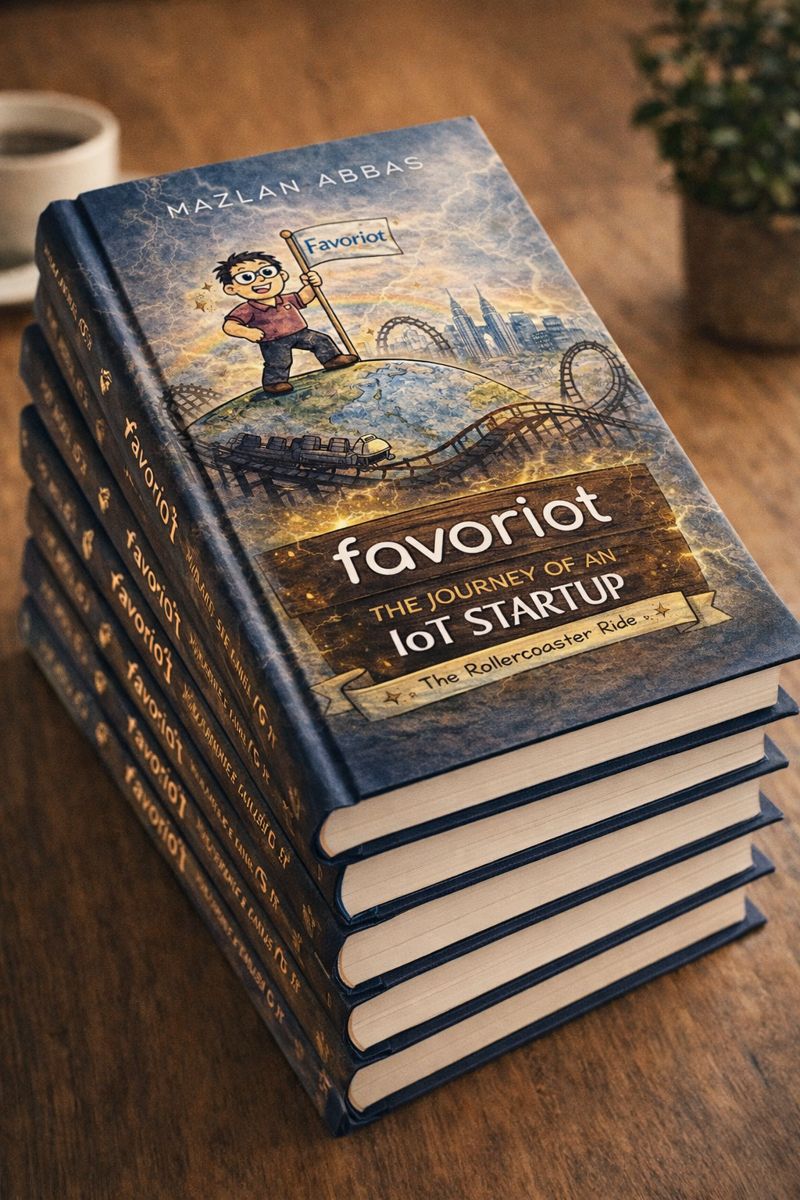
Favoriot – The Journey of an IoT Startup: A Free eBook for Thoughtful Makers, Thinkers, and Doers by Mazlan Abbas

Today (1 January 2026), I’m thrilled to share something that’s been quietly taking shape over the past year. My latest eBook titled “Favoriot – The Journey of an IoT Startup” is now officially released and available for free download. You can get your copy right here: https://payhip.com/b/GbOyo

Writing this book was not a sprint. It was more like those slow early mornings when you sit with a cup of coffee before the world wakes up and try to make sense of what you’ve learned, what you’ve unlearned, and what still puzzles you.

“What if I just write this down now before I forget how it felt?” I asked myself more times than I can count.

That question became this book.

Why This eBook Exists

I didn’t set out to write an eBook that checks all the “how to succeed” boxes. I wrote something more honest. More personal. More reflective of real work and real life.

This is a piece of writing that came from:

  • Conversations I had with founders and students
  • Moments when I wasn’t sure if something would work
  • Times when a quiet insight changed my view more than any big announcement ever could

Some parts feel calm and clear. Some parts feel messy and uncertain. In all of them, you’ll find reflections that resonate with the kinds of questions we all silently carry with us.

If you’ve ever asked yourself, “Am I doing this right?” or “What truly matters here?” then this book was written with you in mind.

What You’ll Find Inside

This eBook isn’t a step-by-step guide or a list of formulas that promise success. You won’t find shortcuts here. What you will find are reflections rooted in real experience:

  • How clarity often arrives slowly
  • Why patience matters more than speed
  • What it really takes to think long term
  • Why credibility beats noise
  • How do you navigate uncertainty when the path ahead isn’t clear

These are not theories. They came from living through questions that didn’t have neat answers.

“Oh… so this is what that moment was really teaching me,” I found myself saying as I shaped these chapters.

A Free Book for the Curious Mind

You might wonder why this eBook is free. There are reasons.

Most books you see are behind paywalls. You sign up. You subscribe. You unlock. All of that has its place.

But I wanted this one to be different.

I wanted it to be reachable by anyone who might benefit from it — no barriers. No barriers, no hoops, no strings attached.

Just download it, read it at your pace, and keep what matters to you.

Who Should Read This

This is a book for people who:

  • Are you building something without a clear path
  • I’m thinking about the next step, but don’t know exactly what it is
  • Feel the tension between urgency and patience
  • Need space to reflect instead of being told what to do

If you’re looking for hype or fast answers, this may not be a perfect match.

If you’re looking for thoughtful reflections that support your own thinking, then this book might feel like a companion for that journey.

Grab Your Copy

Here’s the link again:

👉 https://payhip.com/b/GbOyo

Download it, read it, and then take a moment to reflect on one question:

Which part stayed with me the longest after I closed it?

If you feel like sharing what that was, I’d really like to hear it. Drop a comment. Send a message. Pass the link to someone else who might need it.

Because sometimes the meaning of a book only shows up after you’ve walked a few steps beyond the last page.

Thank you for being here. I’d love to hear your thoughts.

Let’s continue the conversation.

Why Most Advice Sounds Good but Fails on the Ground

Advice is often clean. Reality is not.

Advice does not account for context.
Or timing.
Or people.
Or fatigue.

I have learned to listen for patterns, not prescriptions.

What worked for someone else may collapse under a different set of constraints. And that does not mean anyone is wrong.

The doodle character keeps walking through uneven ground. Same pace. Same posture.

Good judgment is not borrowed.
It is built.

Reflecting on 2025: A Year of Growth, Connection and Insights

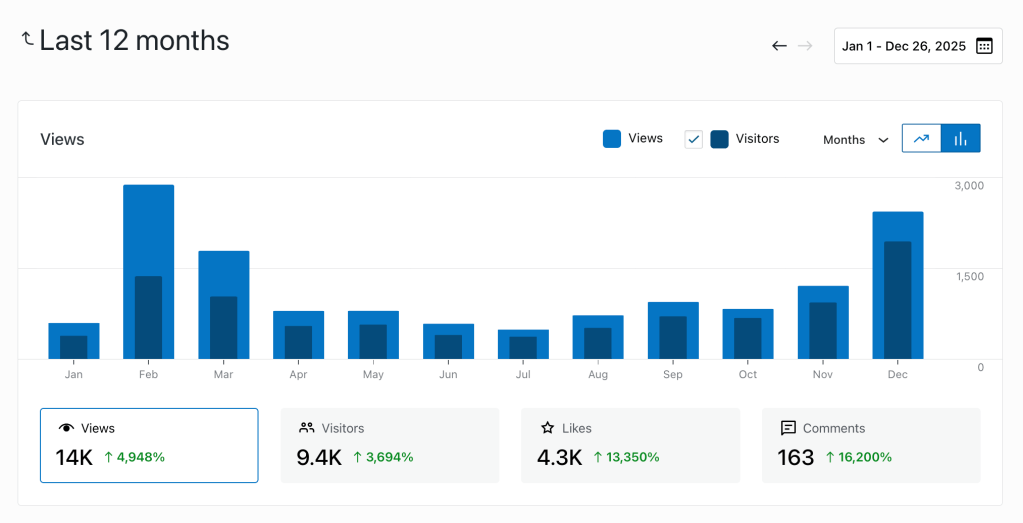
This year felt like a ride that neither my coffee nor my journal could have prepared me for. When I looked at the blog stats for 2025, I couldn’t help but smile and go “Wait… we actually did that?” The numbers tell a story of momentum, curiosity, and growing engagement from readers all over the world.

Let’s take a step back together and walk through what happened with the blog this year, what content resonated most with you, and where we’re heading next.

The Big Picture: Numbers that Tell a Story

Over the whole year from January to December 26, 2025, the blog registered about 14,000 viewsa massive increase compared to last year. The number of visitors hit around 9,400, and social engagement soared. We saw 4,300 likes and 163 comments across posts, both reflecting the highest interaction we’ve ever seen.

The month charts tell the same story of rising interest. February kicked off strong, March sustained momentum, and December wrapped up with one of the highest monthly view counts, a clear sign that this year’s topics connected with many of you.

These milestones are something I literally paused and said to myself, “This isn’t small potatoes… this is real.”

Where You’re Reading From

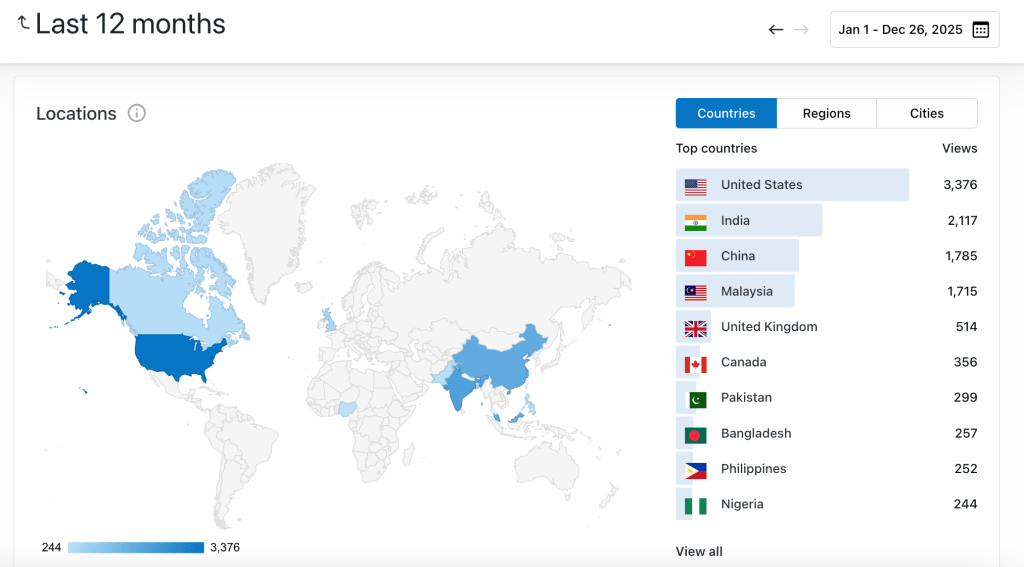
Geographically, the audience is truly global. The top countries by views were:

  1. United States – 3,376 views
  2. India – 2,117 views
  3. China – 1,785 views
  4. Malaysia – 1,715 views
  5. United Kingdom – 514 views
  6. Canada – 356 views
  7. Pakistan – 299 views
  8. Bangladesh – 257 views
  9. Philippines – 252 views
  10. Nigeria – 244 views

That spread tells me two things: your interests are diverse, and the need for thoughtful tech and life content spans borders and cultures.

That made me think: “One idea sparked by one person can travel around the globe faster than I can make coffee.”

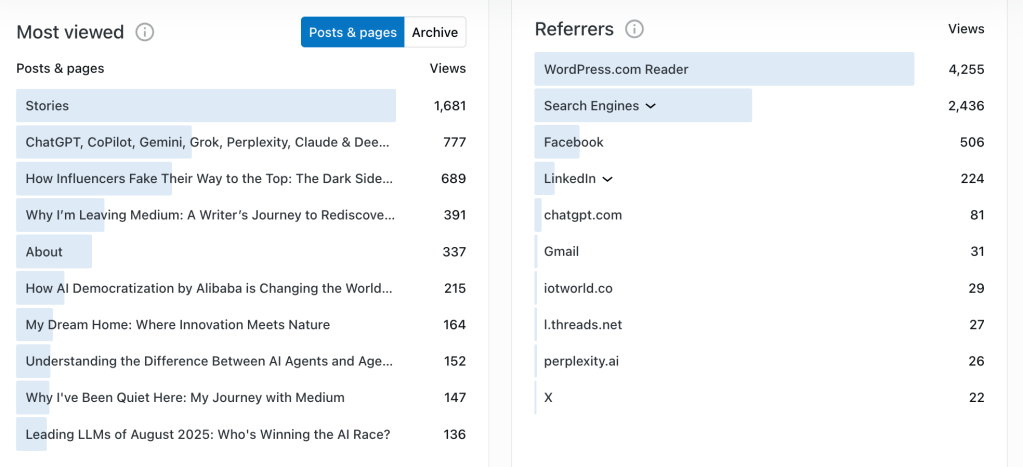
The Top 10 Articles of 2025

Here are the posts that stood out this year, ranked by views and engagement, each with a link so you can revisit or share them easily.

1. Stories
👉 This is a composite link on the blog showing curated standout posts.
https://mazlanabbas.com/tag/stories

2. ChatGPT, CoPilot, Gemini, Grok, Perplexity, Claude & DeepSeek: Which One Should You Choose?
👉 https://mazlanabbas.com/2025/01/30/chatgpt-copilot-gemini-grok-perplexity-claude-deepseek-which-one-should-you-choose/ (Dr. Mazlan Abbas)

This article became a go-to breakdown for people curious about how all these popular AI platforms compare.

3. How Influencers Fake Their Way to the Top: The Dark Side of Social Media Fame
👉 https://mazlanabbas.com/2025/02/09/how-influencers-fake-their-way-to-the-top-the-dark-side-of-social-media-fame/ (Dr. Mazlan Abbas)

This one struck a chord far beyond tech circles, showing how online behavior impacts identity and trust.

4. Why I’m Leaving Medium: A Writer’s Journey to Rediscovering Joy
👉 https://mazlanabbas.com/?s=Why+I%E2%80%99m+Leaving+Medium

A personal reflection on why creative freedom matters more than platform popularity.

5. About
👉 https://mazlanabbas.com/about

A quieter favorite: many of you wanted to know who I am before jumping into ideas.

6. How AI Democratization by Alibaba is Changing the World—And Why It Matters to You
👉 https://mazlanabbas.com/2025/01/31/how-ai-democratization-by-alibaba-is-changing-the-world-and-why-it-matters-to-you/ (Dr. Mazlan Abbas)

This explores how AI access is shifting and why it matters in real life, especially outside big tech hubs.

7. My Dream Home: Where Innovation Meets Nature
👉 https://mazlanabbas.com/?s=My+Dream+Home

A more personal piece that blended tech, design and what “home” means.

8. Understanding the Difference Between AI Agents and Agentic AI
👉 https://mazlanabbas.com/?s=Understanding+the+Difference+Between+AI+Agents+and+Agentic+AI

A deep dive that many readers used to clarify a tricky topic in AI.

9. Why I’ve Been Quiet Here: My Journey with Medium
👉 https://mazlanabbas.com/?s=Why+I%27ve+Been+Quiet+Here

An honest update that resonated with folks navigating their own creative blocks.

10. Leading LLMs of August 2025: Who’s Winning the AI Race?
👉 https://mazlanabbas.com/2025/08/25/leading-llms-of-august-2025-whos-winning-the-ai-race/ (Dr. Mazlan Abbas)

A timely survey of where AI large language models stood mid-year, and why the future was already wide open.

What This Means to Me (and Why It Matters)

When I look at these stats and see your comments, your likes, and the way you shared ideas with others, it reminds me that blogging isn’t just about articles… it’s about connection.

When I first started writing here, I thought to myself “Who’s really going to read this?” And then you showed up from the US, India, China, Malaysia, and all over — and that response was humbling.

Each comment wasn’t just a number. Each share wasn’t just a count. They were reminders that ideas matter when they’re read by real people thinking in real worlds.

And that’s what made 2025 unique.

What’s Next

Going into 2026, I want to keep telling stories — about tech, about how we live with technology, and about how our personal and professional worlds interact. I want to explore more questions like:

  • What comes after AI ubiquity?
  • How might IoT change how we feel about cities and communities?
  • Where do we balance innovation with humanity?

I invite you to be part of that conversation.

Drop a comment below and tell me which article you connected with most this year and what you want to explore next.

Let’s write 2026 together.

Download eBooks from Mazlan Abbas

  1. Favoriot – The Journey of an IoT Startup
  2. The Favoriot Way – Life of Curiosity and Courage
  3. Hello IoT
  4. Mastering IoT with Favoriot: A Comprehensive Guide for Business and Educational Institutions
  5. Internet of Things (IoT): A Beginner’s Guide
  6. Startup Survival: The Journey of a Tech Entrepreneur
  7. Your IoT Journey
  8. IoT Notes

How Experience Changes the Way You Think

Early on, every opportunity felt loud.

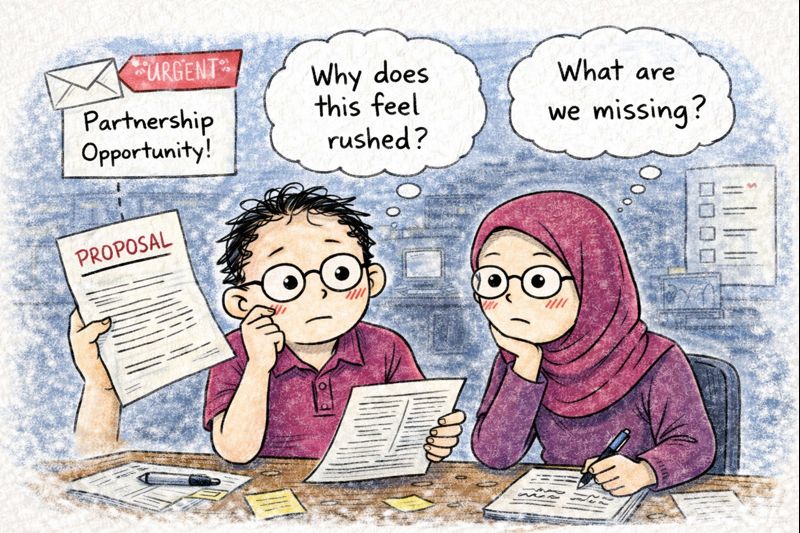
Emails marked urgent.
Meetings framed as once-in-a-lifetime.
Partnerships dressed up with big names and bigger promises.

Back then, speed felt like wisdom. If something moved fast, it must be important.

Experience slowly rewired that instinct.

Today, when an opportunity appears, I don’t react immediately. I read it. I reread it. I sit with the discomfort if something feels off. And very often, what initially looked exciting begins to lose its shine.

Experience does not eliminate opportunity.
It filters it.

The doodle character walks forward here, eyes open, not rushing, not stopping. Just observing.

How Experience Changes the Way You Read Opportunities

I still remember a time when every opportunity felt loud.

Emails with subject lines screaming “URGENT”. Invitations packed with promises. Partnerships that sounded big just because the logos looked familiar. If something moved fast, talked fast, and felt urgent, I assumed it must be important.

Back then, my instinct was simple. Say yes first. Figure it out later.

These days, my reaction is quieter.

Sometimes an opportunity lands in my inbox and I do nothing. I reread it. I sit with it. I let it breathe. And often, after a few days, the excitement fades. Or something else surfaces.

Why am I uneasy about this?
Why does this feel rushed?
Why am I being pulled, instead of invited?

That shift did not come from books or frameworks. It came from experience. From years of building, stalling, restarting, and learning the hard way.

Experience does not make you smarter.
It makes you calmer.

And calm changes the way you read opportunities.

When Everything Looks Like an Opportunity

Early in my career, opportunities looked like doors. Open doors everywhere. Each one felt like progress. Each one felt like movement.

Speaking slot? Yes.
New market? Yes.
Custom feature request? Yes.
Side project? Yes.

Saying yes felt productive. It felt brave. It felt like momentum.

But there is a hidden cost to saying yes too easily.

You spread yourself thin.
Your focus fractures.
Your core work slows down.

I did not notice it immediately. Work was happening. Meetings were full. Calendars were packed.

I told myself, this must be growth.

It was not.

It was motion without direction.

Experience teaches you that not all movement is forward. Some movement is just energy leaking out in every direction.

The Difference Between Noise and Signal

One of the biggest changes experience brings is pattern recognition.

You start noticing familiar shapes in new offers.

The vague partnership that wants commitment before clarity.
The pilot project with no real owner.
The “strategic collaboration” that quietly becomes unpaid consulting.
The customer who wants everything customised but avoids long-term commitment.

I have seen these shapes before. Many times.

So when they appear again, my body reacts before my mind does. A small pause. A slight discomfort.

This feels familiar.

Experience trains your intuition, not through talent, but through repetition. Through scars. Through outcomes you wish had gone differently.

You stop being impressed by presentation.
You start listening for intent.

Noise sounds exciting. Signal sounds simple.

Urgency Used to Excite Me. Now It Warns Me.

There was a time when urgency felt flattering.

“We need an answer by tomorrow.”
“This window won’t stay open.”
“Others are waiting.”

It felt like being chosen.

Now, urgency makes me slow down.

Real opportunities do not pressure you into rushed decisions. They respect timing. They allow questions. They survive scrutiny.

False urgency often hides uncertainty, weak planning, or someone else’s panic.

Why must this be decided now?
What happens if I say no today?
Will this still make sense next month?

Experience turns urgency into a test. Not of speed, but of substance.

Experience Teaches You to Ask Different Questions

Earlier, my questions were external.

How big is this?
Who else is involved?
What can I gain?

Now my questions are internal.

Does this strengthen what we are already building?
Does this pull us away from our core?
Do I want to be solving this problem for the next three years?

That last question matters more than people realise.

Opportunities do not just take time. They take mental space. They shape what you think about when you wake up. They decide what problems you will be carrying in your head.

Experience makes you protective of your attention.

Do I really want this problem?

The Quiet Opportunities Are Often the Real Ones

Some of the most meaningful opportunities in my journey did not arrive with fanfare.

They arrived quietly.

A conversation that kept returning.
A customer who stayed, even when things were slow.
A niche problem that refused to go away.
A small project that kept compounding.

At the time, they looked ordinary.

Experience teaches you that quiet consistency often beats loud potential.

Big promises fade.
Small traction compounds.

When you have lived through cycles, you stop chasing fireworks. You start valuing steady flames.

You Learn the Cost of “Almost Right”

Another lesson experience drills into you is the cost of misalignment.

An opportunity can be good and still be wrong for you.

Wrong timing.
Wrong focus.
Wrong energy.

Earlier, I believed any good opportunity could be bent into place. With effort. With late nights. With sacrifice.

Now I know better.

Forcing alignment costs more than walking away.

I have learned that saying no early is cheaper than fixing misalignment later.

This is interesting, but it is not us.

That sentence used to be hard to say. Now it feels respectful. To both sides.

Experience Changes How You Read People

Opportunities come through people. And experience sharpens how you listen to them.

Not just what they say, but how they say it.

Do they listen, or only wait to speak?
Do they ask about your constraints, or only their goals?
Do they talk about shared outcomes, or only personal wins?

Experience trains your ear.

You notice when someone avoids specifics.
You notice when accountability is vague.
You notice when enthusiasm disappears after the first obstacle.

These are not red flags you learn from slides. You learn them from being burned.

The Role of Timing Becomes Clearer

One thing I underestimated earlier was timing.

I thought good ideas succeed anytime.
I thought readiness could be rushed.

Experience corrects that illusion.

The same opportunity can be wrong today and right two years later.

The same partnership can fail early and thrive later.

Experience teaches patience. Not passive waiting, but active readiness.

We are not there yet.

That sentence used to feel like failure. Now it feels honest.

You Stop Confusing Opportunity With Validation

This one is subtle.

In the early days, opportunities felt like proof. Proof that we mattered. Proof that we were seen.

Every invite felt personal.

With experience, you stop outsourcing validation to external signals.

You build internal confidence. From shipping. From surviving. From solving real problems.

So when an opportunity arrives, you no longer ask, What does this say about me?

You ask, What does this ask of me?

That changes everything.

Experience Slows You Down in a Good Way

From the outside, it may look like hesitation. Or caution.

From the inside, it feels like clarity.

I still say yes. Often.
But I say yes with open eyes.
With fewer illusions.
With clearer boundaries.

Experience does not kill ambition. It sharpens it.

You stop chasing everything.
You start choosing deliberately.

And that choice is quiet. Grounded. Intentional.

Reading Between the Lines

Today, when I read an opportunity, I read the spaces between the words.

What is not being said?
What assumptions are hidden?
Who carries the real risk?
Who holds the long-term responsibility?

These questions come naturally now.

Not because I am smarter.
Because I have been there before.

Experience does not shout.
It whispers.

And if you listen closely, it usually tells you exactly what you need to know.

If you are earlier in your journey, saying yes is part of learning. It is how you collect data. It is how you build instinct.

If you are further along, discernment becomes the work.

Both phases matter.

I am curious how your relationship with opportunities has changed over time. What do you read differently now compared to before?

Share your thoughts. I would love to hear your story.

When Saying “Not Yet” Is Better Than Saying “Yes”

There was a time when I thought saying “yes” was the mark of progress.

Yes to meetings.
Yes to collaborations.
Yes to pilot projects.
Yes to opportunities that sounded exciting on paper.

I told myself this is how momentum works. You say yes, doors open, things move.

Then one quiet evening, after another long day, I stared at my notebook. It was full. Pages packed with ideas, arrows, half plans. And yet, nothing felt complete.

Why does being busy feel so hollow right now? I asked myself.

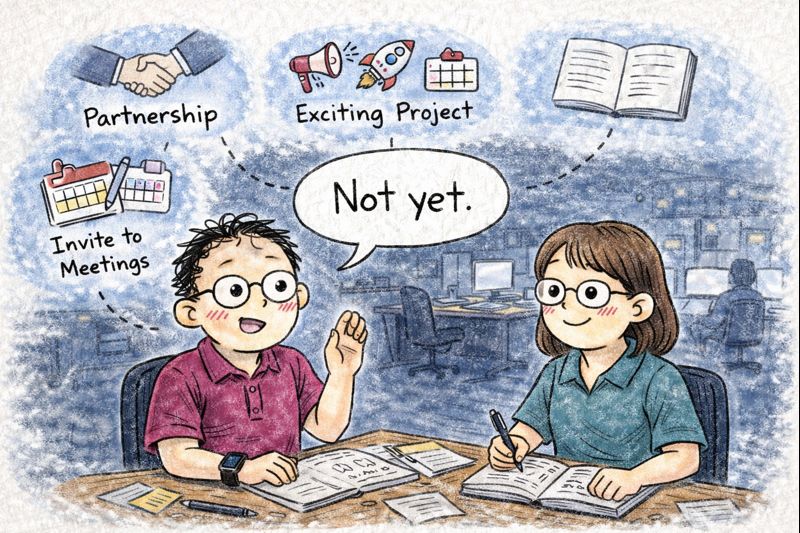
That was the moment I began to respect the power of “not yet”.

Not no.
Not rejection.
Just not yet.

The Hidden Cost of Saying Yes Too Quickly

Early in my career, and even during the early years of building Favoriot, I treated every opportunity like a rare train that might never come back. If I missed it, I feared regret.

So I boarded many trains.

Some took me forward.
Some took me sideways.
A few quietly took me backwards.

Each “yes” came with invisible baggage. Time. Energy. Attention. Emotional load. Once you say yes, you owe something. A reply. A follow-up. A delivery. A meeting. Another meeting.

One day I caught myself replying to emails at midnight, agreeing to things I barely remembered discussing.

This isn’t growth, I muttered. This is drift.

Saying yes too fast often means borrowing time from the future. And the interest rate is brutal.

Why “Not Yet” Is Not a Weak Answer

Many people hear “not yet” and assume hesitation or fear.

That couldn’t be further from the truth.

“Not yet” is clarity without arrogance.
It is patience without laziness.
It is confidence that does not need applause.

When I say “not yet” today, it usually means one of three things.

I have not thought this through deeply enough.
My current priorities would suffer.
The timing is wrong even if the idea is right.

Why rush something that deserves care? I often ask myself.

In a world addicted to speed, restraint feels radical.

Timing Is a Strategy, Not an Excuse

I have seen great ideas fail not because they were flawed, but because they arrived at the wrong time.

Too early and the ecosystem is not ready.
Too late and the window has closed.

I learned this the hard way.

There were moments when partnerships looked perfect. Strong names. Good intentions. Big promises. On paper, it all made sense.

But something inside me hesitated.

Can we execute this properly right now?
Do we have the mental space to do this well?

When I ignored that inner voice and said yes anyway, the result was often messy. Delays. Frustration. Quiet disappointment on both sides.

Now I treat timing as a first-class decision variable.

A good idea at the wrong time is still the wrong move.

The Discipline of Protecting Focus

Focus is fragile.

Once broken, it takes far longer to restore than we admit.

Every “yes” competes with what you are already building. It steals attention in small, almost polite ways. One extra call. One more document. One more thread to keep in your head.

I used to pride myself on juggling many things. Then I realised juggling means nothing ever truly rests in your hands.

What if fewer things, appropriately done, are the real advantage?

Saying “not yet” protects the work that matters most. It keeps the main thing the main thing.

Relationships Respect Honest Timing

Here is something I learned with age and a few scars.

Serious people respect honesty more than enthusiasm.

When you say yes too quickly and later underdeliver, trust erodes quietly. No drama. No argument. Just a subtle shift.

When you say “not yet” with clarity and respect, something else happens.

People listen.

They know you are not chasing noise. They sense you are playing a longer game.

I have had conversations where a simple “not yet, let me come back to this in a few months” led to stronger partnerships later.

Good relationships survive patience. Weak ones do not.

Saying “Not Yet” to Protect Your Future Self

There is a version of you six months from now who will inherit today’s decisions.

That future self will deal with the consequences. The deadlines. The stress. The regret.

I try to picture him often.

Tired? Calm? Proud? Frustrated?

When I say yes impulsively, I am often being unfair to that future version of myself.

“Not yet” is a gift to him.

It buys space.
It buys clarity.
It buys better decisions.

When “Yes” Becomes a Reflex

Reflexive yes is dangerous.

It feels polite. Productive. Cooperative.

But reflexes bypass thinking.

I noticed this pattern during periods of pressure. When things feel uncertain, the instinct is to grab everything. To say yes to feel safe.

Ironically, that is when restraint matters most.

What am I trying to compensate for? I ask myself now.

Scarcity mindset whispers lies. It tells you this is your last chance. Those opportunities are rare.

Experience teaches otherwise.

The right opportunities return. Often better prepared. Often clearer.

The Confidence to Wait

Waiting is uncomfortable.

Silence feels awkward.
Unanswered emails create tension.
Pauses invite doubt.

Yet waiting is where conviction forms.

Some of my best decisions were made slowly. They survived weeks of thinking, rewriting, second-guessing, and walking away before returning.

The bad decisions? They were fast. Exciting. Urgent.

Confidence is not loud. Sometimes it looks like waiting calmly while the world rushes.

What “Not Yet” Sounds Like in Practice

It does not need drama.

It can be simple.

“Let me revisit this after we complete our current milestone.”
“This deserves more thought. Can we talk again later?”
“I like the direction, but the timing isn’t right for us now.”

Clear. Respectful. Honest.

No long explanations. No guilt.

You do not owe the world your exhaustion.

Building Things That Last Requires Patience

Startups. Products. Careers. Even personal growth.

They all punish haste.

I have come to believe that longevity favours those who can delay gratification. Those who can sit with incomplete answers. Those who can say “not yet” without anxiety.

Am I building momentum or just motion? That question guides me now.

Motion looks busy. Momentum compounds quietly.

The Quiet Strength of Saying “Not Yet”

There is a strange calm that comes with this shift.

Fewer meetings.
Clearer priorities.
Deeper work.

And when I finally say yes, it means something.

It means I am ready.
It means I can commit fully.
It means the answer has weight.

Not yet creates space for better, yes.

A Question for You

Where in your life are you saying yes out of habit rather than intention?

What would happen if you replaced one of those yeses with a calm, honest “not yet”?

You might find that nothing collapses.
You might find respect grows.
You might find your focus returning.

I am curious to hear your thoughts.

Have you ever said “not yet” and later realised it was the right move?

Share your story in the comments.

Download eBooks from Mazlan Abbas

  1. Favoriot – The Journey of an IoT Startup
  2. The Favoriot Way – Life of Curiosity and Courage
  3. Hello IoT
  4. Mastering IoT with Favoriot: A Comprehensive Guide for Business and Educational Institutions
  5. Internet of Things (IoT): A Beginner’s Guide
  6. Startup Survival: The Journey of a Tech Entrepreneur
  7. Your IoT Journey
  8. IoT Notes