When Writing Free eBooks Still Feels Like Shouting Into the Void

I did not expect this feeling to arrive so quietly.

No dramatic moment.
No emotional breakdown.
Just a soft question that kept returning while I stared at my screen.

Should I stop writing eBooks about IoT, startups, and entrepreneurship?

I have written several eBooks over the years. Some came from years of experience building platforms. Some from scars earned while running a startup. Some from observing founders struggle with the same blind spots again and again.

I made them free.
No paywall.
No upsell tricks.
Just knowledge, stories, and lessons shared openly.

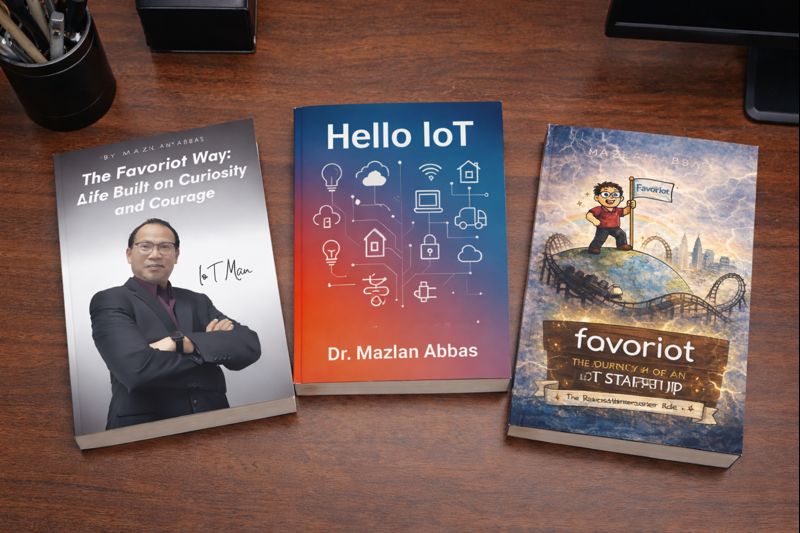
Yet after my last three books (Hello IoT, The Favoriot Way: A Life Built on Curiosity and Courage, Favoriot : The Journey of an IoT Startup), something felt off.

Downloads slowed.
Shares dropped.
The quiet became louder.

At first, I blamed myself.

Maybe the topics are stale.
Maybe I am repeating myself.
Maybe people are tired of hearing from me.

Then another thought crept in.

Or maybe the world has changed.

The Moment I Could No Longer Ignore

I noticed something about my own habits before blaming anyone else.

I no longer Google as much.
I open ChatGPT.
I type a question.
I get an answer.

Direct.
Fast.
Clean.

And here is the uncomfortable truth.

I am guilty too.

I ask AI to summarise books.
I ask for key takeaways.
I skim instead of sitting with pages.

Who am I to complain when I do the same thing?

That realisation stung.

Because I used to love reading slowly. Highlighting sentences. Rereading paragraphs. Letting ideas sit for days.

Now, time feels compressed. Attention feels borrowed. Everything competes for mental space.

The Silent Shift No One Talks About

This is not about AI replacing writers.

It is about AI changing readers.

People no longer want to search.
They want answers.

They no longer want ten blog posts.
They want one response.

They no longer want to explore.
They want to arrive.

Why buy a book when a prompt gives you a clean summary?

Why spend hours reading when minutes feel enough?

That question hurts writers, but it is not wrong.

Books were once a journey.
Now they are treated like databases.

Tell me what matters. Skip the rest.

Short Attention Is Not a Moral Failure

I hear people complain about attention spans all the time.

But I do not think it is laziness.
I think it is survival.

We are flooded with inputs. Messages. Alerts. Updates. Noise.

Reading a 150-page eBook feels heavy when your mind is already full.

The new generation did not lose patience.
They adapted to overload.

They want clarity, not volume.
Direction, not depth.

At least not by default.

When Free Still Feels Expensive

Making my eBooks free was supposed to remove friction.

Yet free does not mean easy.

Reading still costs time.
Thinking still costs energy.

AI removed that cost.

One prompt feels cheaper than one chapter.

So why am I surprised?

The Hard Question I Keep Avoiding

I keep asking myself something uncomfortable.

Am I writing for impact, or am I writing out of habit?

In the past, writing eBooks felt like leaving a trail behind. Something lasting. Something searchable. Something meaningful.

Now it feels like throwing paper planes into a sky full of drones.

They fly faster.
They reach further.
They respond instantly.

Paper planes still matter.
But fewer people look up.

Books Versus Conversations

AI feels like a conversation.

Books feel like a lecture.

That difference matters.

People want interaction. They want follow-up questions. They want context tailored to their situation.

A book cannot ask back.

AI can.

And that changes expectations.

What Writing Used to Give Me

I did not write eBooks just for readers.

I wrote to think.

Writing forced clarity.
It slowed my thoughts.
It made experiences visible.

If I stop writing books, what replaces that?

Blogs?
Short posts?
Conversations?
Voice notes?

I do not know yet.

That uncertainty is unsettling.

Maybe Books Are No Longer the First Door

Here is a thought I am still wrestling with.

Books may no longer be entry points.
They may become reference points.

Not where people start, but where they return when they want depth.

AI gives direction.
Books give texture.

AI answers questions.
Books explain why the questions matter.

But fewer people reach that stage.

The Ego Check I Needed

Another truth I had to face.

I assumed free meant valuable.
I assumed experience meant relevance.

Neither guarantees attention.

The world does not owe writers readers.

Attention is earned every day.

Even by those who have written before.

Am I Really Stopping?

When I say I feel like stopping, I am not quitting writing.

I am questioning the format.

Maybe eBooks are not where my thoughts want to live anymore.

Maybe ideas want to breathe in smaller spaces.
Or in stories.
Or in conversations.

Or maybe fewer books, written slower, with deeper intent.

I am not sure yet.

What I Do Know

AI has changed how we read.
AI has changed why we read.
AI has changed when we read.

That shift is real. It is not a phase.

Fighting it feels pointless.

Understanding it feels necessary.

The Choice In Front of Me

I can keep writing eBooks and accept fewer readers.

I can stop writing books and find new ways to share ideas.

Or I can redefine what a book means in a world that no longer reads the same way.

Right now, I am sitting with the discomfort.

No dramatic announcement.
No final decision.

Just honesty.

A Quiet Ending With an Open Question

I still believe ideas matter.
I still believe stories shape thinking.
I still believe writing is worth doing.

But I no longer believe format guarantees relevance.

Maybe the real question is not whether I stop writing eBooks.

Maybe it is whether I am brave enough to write differently.

If you are a writer, a reader, or someone who quietly stopped reading books, I would love to hear your thoughts.

Have you felt this shift too?

Why is IoT Growing Now?

IOT NOTES

Lecture Notes

Based on eBook — IoT Notes by Mazlan Abbas

Today, let’s explore why the Internet of Things (IoT) is experiencing a surge in awareness and adoption in recent years. The diagram provides five apparent factors driving this growth, so let’s walk through each step.

1. Hardware Advancements

The first driver of IoT adoption is the rapid development of hardware. Devices are now:

  • Cheaper: The cost of sensors, processors, and connectivity modules has dropped significantly.
  • More Powerful: Today’s smartphones, for instance, are as powerful as the computers that send astronauts to the moon.
  • Smaller: Miniaturisation has made it easier to embed technology into all sorts of devices, from wearable health trackers to smart home appliances.

These advancements make IoT devices accessible to more people and industries.

2. Network Expansion

IoT depends on connectivity, and networks have become more pervasive and diverse:

  • We now have Wi-Fi, 4G/5G, LoRa, NFC, and even satellite networks connecting devices across the globe.
  • This widespread coverage ensures that IoT devices can communicate, no matter where they are located.

Imagine this: You can monitor a sensor in a remote farm or track a shipping container in the middle of the ocean because of this pervasive network infrastructure.

3. Easier and Faster Software Development

Creating IoT solutions has become simpler because:

  • Software tools and platforms are now more user-friendly.
  • Developers can build and deploy solutions quickly with pre-built frameworks, cloud computing, and open-source libraries.

What used to take months or years to program can now be done in days or weeks, speeding up innovation in IoT.

4. Moore’s Law: The Power of Computation

You may have heard of Moore’s Law, which states that the number of transistors on a chip doubles approximately every two years. This leads to:

  • Higher computational power: Devices can handle more complex tasks, such as AI and data processing, on smaller chips.
  • Lower costs over time: IoT solutions can scale quickly with more powerful chips becoming affordable.

This exponential growth in computing power has made IoT a reality.

5. The Network Effect

The network effect explains how IoT becomes more valuable as more connected devices. Here’s why:

  • Everything is connected: Sensors, devices, and systems communicate and generate data.
  • Data generation: The more devices there are, the more data we have. This data can be analysed to gain insights, optimise processes, and improve decision-making.

For example, a smart city network with connected traffic lights, sensors, and cameras can reduce congestion and improve safety by analysing real-time data.

Historical Context

  • The term “IoT” was first coined by Kevin Ashton in 1999.
  • It took years of technological progress for IoT to become mainstream. By 2020, IoT reached a tipping point, integrating with industries worldwide.

Why Now?

The convergence of cheaper hardware, pervasive networks, faster software development, computational power (thanks to Moore’s Law), and the network effect have created the perfect environment for IoT to flourish.

IoT is no longer a futuristic concept — it’s a reality shaping industries like agriculture, healthcare, and manufacturing.


Let’s discuss: Which of these factors do you think has had the biggest impact on IoT adoption? How can we use these advancements to innovate further in our fields?

[Note: Download full IoT Notes eBook]

Understanding Data Ownership and Big Data

Today, we’ll discuss two critical topics in the digital age: data ownership and the 4 V’s of Big Data.

This diagram simplifies these concepts, so let’s break them down for better understanding.

Based on eBook — IoT Notes by Mazlan Abbas

1. Data Ownership

Data ownership refers to who has the rights and responsibilities over data. There are four main categories:

1. Personal/Household

  • This includes data generated from your personal devices, like your smartphone, fitness tracker, or smart home systems.
  • Example: Steps tracked by your smartwatch, or usage data from your smart TV.
  • You, as the owner of the device, own this data and can decide how it is used or shared.

2. Private

  • This is data collected and owned by companies or enterprises.
  • Example: A company’s internal data about its operations, such as sales performance or employee attendance.
  • Organisations use this data to improve their services, products, or strategies.

3. Public

  • Public data is owned by the government and shared for the benefit of society.
  • Example: Data from weather sensors, air quality monitors, or river level gauges.
  • This data is often accessible to the public for research, awareness, or planning purposes.

4. Commercial Sensor Provider

  • These are entities that deploy, own, and sell data collected from their sensors.
  • Example: A telecommunications company selling location data collected from its network.
  • They monetise the data by providing it to third parties, such as businesses or governments.

2. The 4 V’s of Big Data

Big Data refers to the massive volumes of data generated by digital devices and systems. It is characterised by the 4 V’s:

Volume

  • This is the amount of data, which can be massive in scale.
  • Example: Social media platforms generate terabytes of data every day from user interactions.

Velocity

  • This refers to how fast or slow data is generated and processed.
  • Example: Real-time data from stock markets or traffic monitoring systems must be processed quickly to be useful.

Variety

  • Data comes in different formats, such as text, audio, video, or images.
  • Example: An IoT platform may process data from sensors (numeric values), surveillance cameras (video), and voice commands (audio).

Veracity

  • This addresses the uncertainty or trustworthiness of the data.
  • Example: Ensuring the accuracy of user-generated reviews on e-commerce platforms can be challenging.

Why is This Important?

Understanding data ownership and the nature of Big Data is essential for:

  • Privacy and Security: Knowing who owns and controls your data helps protect your rights.
  • Decision-Making: Leveraging the 4 V’s effectively enables organisations to make informed decisions.
  • Innovation: Big Data drives advancements in fields like healthcare, transportation, and smart cities.

Final Thoughts

Data is the fuel of the digital economy, but with it comes the responsibility to manage it ethically and effectively. Whether it’s your personal data or public data shared by governments, understanding ownership and the dynamics of Big Data is crucial.

Let’s discuss: How can individuals and organisations ensure ethical data usage while maximising its potential? Share your thoughts!

[Note: Download the full eBook IoT Notes by Mazlan Abbas]

Climbing the Wisdom Pyramid: Mastering the Stages of Data Transformation (DIKIW)

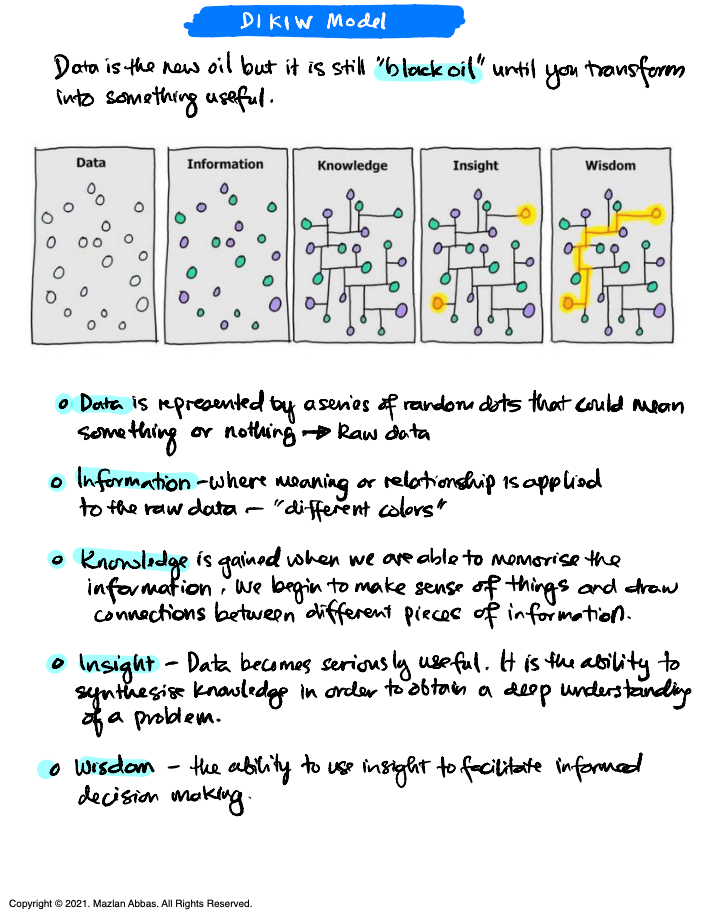
Today, we’re going to explore a framework called the DIKIW Model. It helps us understand how raw data transforms into valuable wisdom.

The diagram here breaks this journey into five stages: Data, Information, Knowledge, Insight, and Wisdom (DIKIW). Let’s dive into each stage step by step.

1. Data

Data is at the base of the model.

  • Data is like raw material — a series of random dots or unprocessed facts.
  • By itself, it has no meaning. It’s just numbers, words, or measurements.
  • Example: Imagine you have a list of temperatures recorded throughout the day. Without context, it doesn’t tell you much.

Data is “block oil” — it’s valuable, but only when refined.

2. Information

When meaning or relationships are applied to raw data, it becomes information.

  • At this stage, we start to see patterns or groupings.
  • Example: If you organise the temperature readings by time, you’ll see when it’s hottest and coolest during the day.
  • Information provides context and is often visualised using charts, tables, or colour coding.

This is like colouring the dots in the diagram to highlight differences or relationships.

3. Knowledge

Knowledge comes when we make sense of the information and see connections.

  • At this stage, we begin to understand why things happen.
  • Example: Analysing the temperature data might reveal that it’s hottest at noon and coolest at dawn.
  • Knowledge connects the dots and helps us understand patterns or causes.

This is where we start to see the bigger picture, as the diagram shows interconnected lines.

4. Insight

Insight is where things get seriously useful.

  • It’s synthesising knowledge and gaining a deeper understanding of a problem.
  • Example: From the temperature data, you might infer that noon is the best time for solar energy collection, while early morning is ideal for outdoor activities.
  • Insights are actionable. They guide decisions and strategies.

In the diagram, the highlighted paths represent key insights that stand out from the broader connections.

5. Wisdom

At the top of the model is wisdom, the most refined stage.

  • Wisdom is using insights to make informed decisions and act purposefully.
  • Example: Based on your insights, you decide to schedule outdoor activities early in the morning and optimise solar panels to maximise energy collection at noon.
  • Wisdom combines all the previous stages to guide strategic, long-term thinking.

In the diagram, wisdom is depicted as a clear path that guides decision-making.

Why is This Important?

  • In today’s world, data is everywhere, but it’s useless unless transformed into actionable wisdom.
  • The DIKW model helps us understand step-by-step how to extract value from data.

Final Thoughts

Data is the new oil, but it’s only valuable when refined into wisdom. Following the DIKW model, we can move from collecting raw data to making intelligent, informed decisions.

Let’s discuss: How can you apply this model in your work or personal life? Share an example of how you’ve turned data into actionable insights!

[Download eBook IoT Notes to complement these lecture notes]

Examples of IoT Applications and Their Benefits

Today, look at some real-world examples of IoT applications and their benefits.

This diagram focuses on two industries—transportation and logistics and Oil and gas —to illustrate how IoT solutions can reduce costs and improve efficiency. Let’s examine each example in detail.

Based on the eBook — IoT Notes by Mazlan Abbas

1. Transportation & Logistics

In this industry, IoT solutions are used to improve the management of vehicles and delivery systems.

IoT Solution:

  • Sensors are installed in vehicles to provide real-time data on their state and performance.
  • These sensors report on engine health, location, and delivery progress.

Benefits (Payback):

Cost Savings:

  • Reduces truck operation and delivery costs by identifying and addressing maintenance issues early.
  • Minimises fuel consumption by optimising delivery routes.

Improved Efficiency:

  • Reduces delivery disruptions and delays.
  • Ensures on-time deliveries and improves overall logistics system performance.

Example in Action: A logistics company uses IoT-enabled fleet management to track delivery vehicles and proactively schedule maintenance, avoiding breakdowns and saving costs.

2. Oil & Gas

The Oil & Gas industry faces unique challenges that IoT can address by enhancing safety and efficiency.

IoT Solution:

  • Sensors are deployed throughout an oil rig to monitor critical components.
  • These sensors detect potential issues and provide operators with real-time alerts.

Benefits (Payback):

Cost Savings:

  • Increases safety by providing early and reliable warnings of potential equipment failures.
  • Prevents costly shutdowns by identifying problems before they escalate.

Improved Efficiency:

  • Real-time alerts enable quicker responses, reducing downtime and improving time-to-revenue.
  • Enhances asset utilisation by ensuring equipment operates optimally (4x improvement).
  • Complete data analysis allows for near real-time decision-making and operational adjustments.

Example in Action: An oil rig uses IoT sensors to monitor drill performance and prevent malfunctions, ensuring smoother operations and faster oil extraction.

Key Takeaways

IoT in Transportation & Logistics:

  • Reduces costs and enhances delivery efficiency through real-time monitoring of vehicles.

IoT in Oil & Gas:

  • Improves safety, reduces downtime, and maximises asset utilisation with real-time alerts and analysis.

Final Thought:
IoT transforms industries by providing actionable data that saves money and improves efficiency. These examples show how IoT can adapt to specific industry needs and bring measurable benefits.

Discussion Question: Which other industries do you think can benefit from similar IoT solutions? Let’s brainstorm together!

[Download IoT Notes eBook for FREE]

Reasons to Consider IoT

IOT NOTES

Lecture Notes

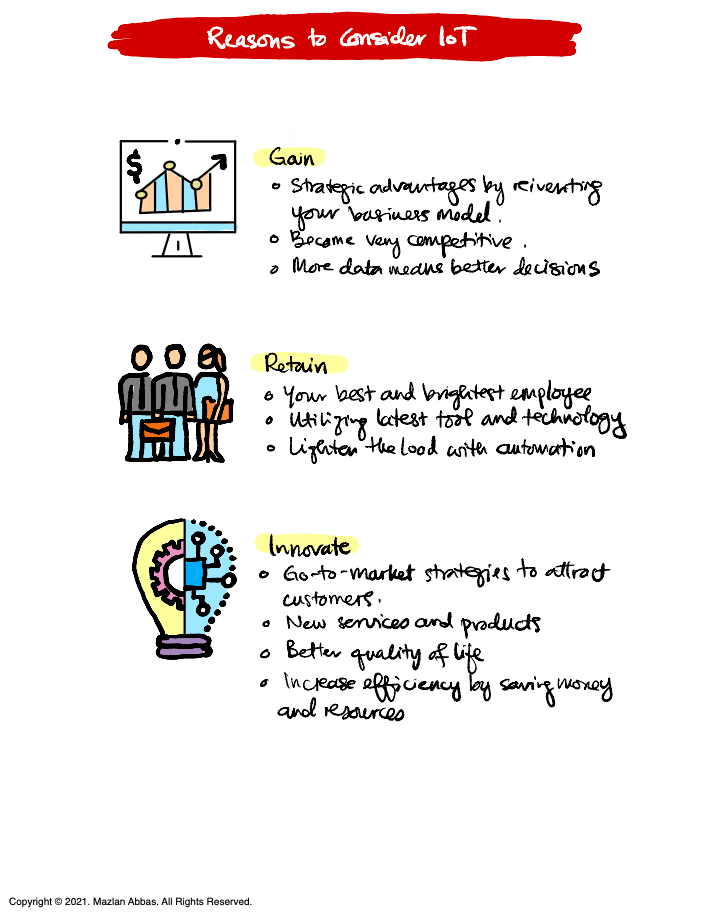
Today, we’re going to discuss the key reasons why organisations should consider adopting IoT (Internet of Things).

The diagram highlights three main benefits: Gain, Retain, and Innovate. Let’s go through each of these in a simple and structured way.

1. Gain

The first reason to consider IoT is the opportunity to gain strategic advantages and stay competitive in the market.

Strategic Advantages: IoT allows businesses to reinvent their business models, offering smarter, data-driven services.

  • Example: A retail store using IoT to track customer preferences and improve in-store experiences.

Become Competitive: By adopting IoT, businesses can stay ahead of competitors who are slow to embrace technology.

  • Example: A logistics company using IoT sensors to optimise delivery routes.

Data-Driven Decisions: IoT provides real-time data, which helps in making better decisions faster.

  • Example: A manufacturer monitoring equipment performance to reduce downtime.

2. Retain

The second reason is about retaining the best employees and maintaining operational efficiency.

Attract and Retain Talent: Employees prefer organisations that use the latest tools and technology to make their work easier and more efficient.

  • Example: Providing engineers with IoT-enabled tools to monitor and control operations remotely.

Ease Workloads with Automation: IoT automates repetitive tasks, allowing employees to focus on higher-value activities.

  • Example: Smart systems in a factory automatically managing inventory levels.

When employees feel supported by modern technology, they are more likely to stay with the organisation.

3. Innovate

The third and perhaps most exciting reason is the ability to innovate with IoT.

Go-to-Market Strategies: IoT enables businesses to develop new strategies to attract and retain customers.

  • Example: A car rental company using IoT for keyless entry and real-time vehicle tracking.

New Products and Services: IoT opens doors to create entirely new offerings that improve the customer experience.

  • Example: Wearable health trackers offering personalised fitness insights.

Better Quality of Life: For individuals and society, IoT can enhance convenience, safety, and overall well-being.

  • Example: Smart homes with automated lighting and security systems.

Efficiency and Savings: IoT reduces costs by optimising resources and processes.

  • Example: Smart irrigation systems saving water in agriculture.

Key Takeaway

The main takeaway is simple: IoT is not just about adopting technology — it’s about creating value by:

  1. Gaining a competitive edge.
  2. Retaining top talent and improving efficiency.
  3. Innovating to improve products, services, and quality of life.

IoT is the key to staying relevant in today’s fast-changing world.


Let’s discuss: Which of these reasons resonates most with your business or personal goals? How can IoT help you achieve them? Let’s explore together!

[Download the FREE eBook— IoT Notes by Mazlan Abbas]

Building IoT Using the 3-Question Approach

Today, we will explore a structured way to implement IoT projects called the 3-Question Approach (W-W-H). This approach revolves around asking three key questions: What? Why? How?

Let’s review each step to understand how this framework ensures clarity and direction for IoT solutions.

Based on the eBook — IoT Notes by Mazlan Abbas

1. What? (Problem Statement)

The first question is What? which helps us identify the problem we’re trying to solve.

Purpose: To uncover the actual pain points or gaps in current processes.

Steps:

  • Look for inefficiencies or challenges in operations.
  • Identify areas where IoT can provide value.

Examples:

  • Low production rates in a factory.
  • Increasing operational costs.
  • Poor quality control leads to defects.
  • Safety incidents in a workplace.
  • Intermittent services in logistics or delivery.

Understanding the problem is the foundation of any successful IoT project.

2. Why? (Objective & End Goal)

Next, we ask Why?, which focuses on the objective and the end goal of the IoT implementation.

Purpose: Clearly define what you want to achieve and align everyone toward that goal.

Steps:

  • Get buy-in from stakeholders by explaining the benefits.
  • Ensure the outcome can be monitored and measured effectively.

Examples of Objectives:

  • Improve logistics and delivery efficiency.
  • Reduce operational costs.
  • Enhance asset utilisation and reduce errors.
  • Boost overall safety and performance.

Defining the “why” ensures a clear purpose behind the IoT deployment.

3. How? (Solutions)

The final question is How? which focuses on the solutions to address the problem and achieve the goals.

Steps:

Use the DNA approach:

  • D — Device: Identify the right sensors to collect the required data.
  • N — Network: Choose a suitable network for connectivity (e.g., Wi-Fi, LoRa, 5G).
  • A — Applications: Develop platforms (mobile or web) to process and display the data.
  • Decide on an implementation strategy:
  • Build in-house.
  • Operate internally.
  • Outsource to a third party.
  • Collaborate with partners.

Examples of Solutions:

  • Install sensors to monitor production lines in real time.
  • Ensure the network has sufficient coverage and can handle the amount of data.
  • Develop mobile or web applications to provide actionable insights.

The “how” ensures the project is feasible and actionable.

Key Takeaway

The 3-Question Approach provides a clear path for implementing IoT solutions:

  1. What? — Define the problem.
  2. Why? — Establish the objective.
  3. How? — Develop the solution.

This framework ensures every IoT project is focused, aligned, and effective. Think big, but start small.


Let’s discuss: Can you think of an example where this approach could be applied in your industry or daily life? What “What-Why-How” steps would you take? Share your thoughts!

[Download FREE IoT Notes by Mazlan Abbas]

Building IoT with the 3-Step Approach

Lecture Notes

Today, we will explore a simple and practical framework for implementing IoT projects: the 3-Step Approach.

This method ensures a smooth and effective rollout by focusing on small steps, integration, and innovation. Let’s break it down step by step.

Step 1: Think Big, Start Small

The first step is to start with a clear vision (think big) but begin with a small, focused project to gain momentum.

Develop a Small Application: Identify one specific problem and build a targeted solution.

  • Example: A smart thermostat to monitor energy usage in one building rather than an entire campus.

Deliver Immediate Impact: The solution should show quick results to build confidence in IoT’s value.

Mindset Transformation: This small success shifts how people perceive IoT and its potential.

Get Buy-In from Leadership: Demonstrating early results helps secure support from decision-makers like the C-suite executives for future projects.

Step 2: Integrate

Once the initial IoT solution proves its value, it is integrated into the broader system.

Connect to Legacy Systems: Ensure the new IoT solution works seamlessly with existing infrastructure, such as ERP systems or older databases.

  • Example: Integrating smart sensors into a factory’s traditional production line.

Seamless Workflow: Avoid disrupting operations by designing smooth processes between old and new systems.

Break Silos: Encourage collaboration between departments to maximise the benefits of IoT across the organisation.

This step ensures that IoT doesn’t operate in isolation but becomes a part of the larger ecosystem.

Step 3: Innovate

The final step is to use IoT to drive innovation and create new opportunities.

Create New Workflows: Leverage IoT to optimise or redesign how work is done.

  • Example: Using real-time data from IoT sensors to automate maintenance schedules.

Test New Business Models: Experiment with different ways to generate revenue using IoT solutions.

  • Example: Offering predictive maintenance as a subscription service for customers.

Better Analytics and AI: Use advanced analytics and AI to unlock deeper insights from IoT data and automate decision-making.

This stage transforms IoT from a problem-solving tool into a driver for long-term growth and innovation.

Key Takeaway: Think Big, Start Small

The overall lesson is simple:

  1. Start with a big vision, but focus on small, impactful projects to get started.
  2. Build on early successes by integrating solutions into larger systems.
  3. Use IoT to innovate and create new opportunities.

This approach minimises risk, builds momentum, and ensures sustainable growth.


Let’s discuss: What small IoT applications can you think of to start with? How would you scale and integrate them into a more extensive system? Let’s brainstorm together!

[FREE IoT Notes to Download]

Simplest Reasons Why We Need IoT

Lecture Notes

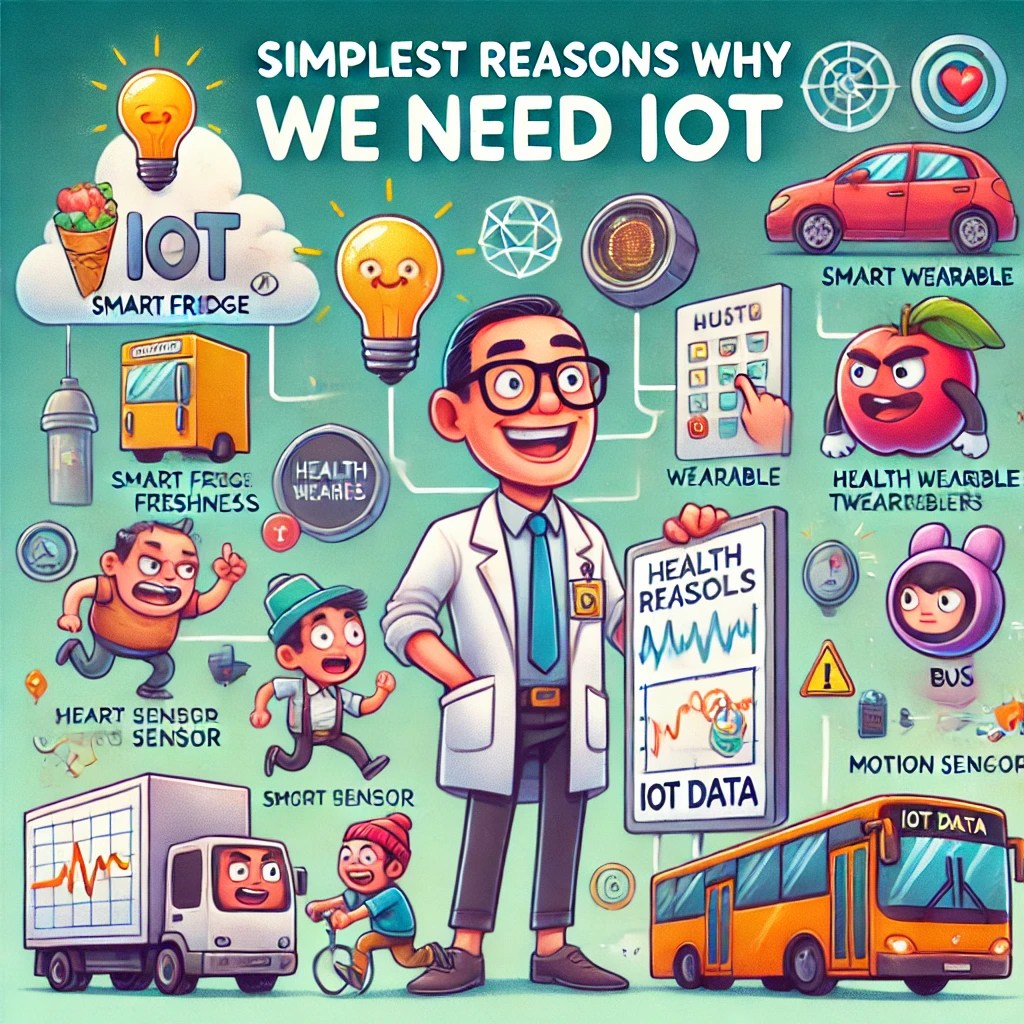
Today, we’ll discuss why the Internet of Things (IoT) is becoming essential in our daily lives.

The diagram simplifies this concept by focusing on assets, how we connect them, and why sensing the environment is so important. Let’s break it down step by step.

1. What Are Assets?

Let’s start with a question: What do you consider as assets?
We value and want to monitor, track, or protect assets. These could include:

Goods:

  • We would like to know their location (e.g., where is my delivery?)
  • Or their quality (e.g., is the food shipment fresh?)

Health:

  • Monitoring our condition and ensuring safety are critical.
  • Example: A health wearable that tracks your heart rate and connects to a mobile app.

Transport:

  • Vehicles and public transportation must be tracked for location, routes, and utilisation.
  • Example: A bus fleet monitored for efficient route planning.

House Security:

  • Ensuring homes are safe by monitoring for intrusions or emergencies.
  • Example: A motion sensor that alerts you if there’s unusual activity.

2. The Core Need: Connecting Assets and Sensing the Environment

Why do we need IoT for these assets?
The key lies in sensing and connecting the environment around these assets.

  • In the past, we relied on manual monitoring and human input.
  • Today, we use sensors and applications to gather real-time data and automate processes.

3. How IoT Works

Sensors: Devices attached to assets to sense environmental factors like temperature or humidity.

  • Example: A sensor measuring the humidity in a storage facility for sensitive goods.

Communication: Sensors send this data to an IoT platform for processing and action.

  • Example: A sensor alerts the homeowner if the temperature inside the house drops below a certain threshold.

4. Examples of Other Assets

IoT can be applied to monitor a wide variety of assets, such as:

  • Machines: For predictive maintenance in factories.
  • Plants: To ensure optimal growth conditions in agriculture.
  • Water and Rivers: These are used to monitor pollution or water levels.
  • Environment: For tracking air quality and weather changes.
  • Buildings and Tunnels: For structural safety and efficiency.

5. Why IoT Is Essential

IoT provides us with the ability to:

  • Monitor assets in real time without human intervention.
  • Ensure safety and quality by automating alerts and responses.
  • Improve efficiency by making data-driven decisions.

Final Thoughts

The most straightforward reason we need IoT is to connect our assets and sense the environment effectively.

By doing so, we make life easier and ensure safety, efficiency, and better decision-making.

Let’s discuss: What assets in your life or work could benefit from IoT? How would you use sensors to improve them? Share your thoughts!

[FREE Download IoT Notes]

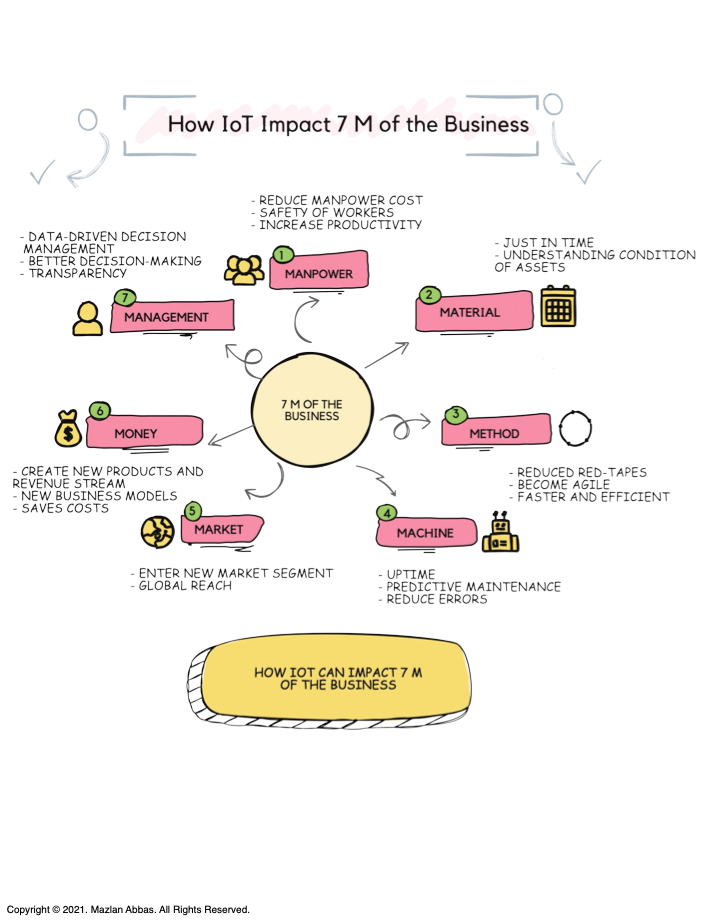
How IoT Impacts the 7 M’s of Business

Today, we’ll explore how the Internet of Things (IoT) transforms the 7 M’s of business — key elements that drive an organisation’s operations and strategy.

These 7 M’s are Manpower, Material, Method, Machine, Market, Money, and Management. Let’s break down each one and see how IoT impacts them.

Based on the eBook — IoT Notes by Mazlan Abbas

1. Manpower

IoT helps businesses optimise human resources by reducing costs, improving safety, and increasing productivity.

Impact of IoT:

  • Cost Reduction: Automating repetitive tasks reduces the need for manual labour.
  • Worker Safety: IoT devices, such as wearables, can monitor health and alert workers to potential hazards.
  • Productivity: By enabling remote work and real-time communication, IoT allows employees to focus on high-value tasks.

Example: A construction company using wearables to monitor worker fatigue and ensure safety.

2. Material

IoT ensures better management of materials, improving supply chain efficiency and reducing waste.

Impact of IoT:

  • Just-In-Time Delivery: Sensors track inventory levels and automatically reorder materials when needed.
  • Asset Condition Monitoring: IoT devices monitor the condition of materials, ensuring quality and preventing spoilage.

Example: A warehouse using IoT sensors to track stock levels and ensure optimal storage conditions.

3. Method

IoT makes business processes more agile and efficient by simplifying methods.

Impact of IoT:

  • Reduce Red Tape: Automating workflows eliminates unnecessary administrative steps.
  • Agility: IoT enables businesses to respond quickly to changing conditions.
  • Efficiency: Processes become faster and more streamlined with IoT integration.

Example: A manufacturing plant automating quality checks with IoT sensors to speed up production.

4. Machine

IoT maximises the performance of machines, ensuring reliability and reducing downtime.

Impact of IoT:

  • Uptime: Predictive maintenance ensures machines are operational when needed.
  • Predictive Maintenance: IoT sensors detect issues before they become critical, preventing failures.
  • Error Reduction: Machines can self-correct or alert operators when errors occur.

Example: A factory using IoT-enabled machinery to monitor performance and schedule maintenance.

5. Market

IoT helps businesses expand into new markets and improve their customer reach.

Impact of IoT:

  • New Market Segments: IoT enables innovative products and services, opening new revenue streams.
  • Global Reach: Businesses can monitor and manage operations worldwide through IoT platforms.

Example: An IoT-enabled home security company entering international markets with smart security systems.

6. Money

IoT creates new revenue opportunities and reduces costs.

Impact of IoT:

  • New Revenue Streams: IoT drives innovation, leading to new services and products.
  • Cost Savings: Automating processes and improving efficiency reduces expenses.

Example: A logistics company saving fuel costs by using IoT to optimise delivery routes.

7. Management

IoT improves decision-making through data-driven insights.

  • Impact of IoT:
  • Data-Driven Decisions: Real-time data helps managers make informed choices.
  • Transparency: IoT provides visibility into all areas of the business.
  • Better Decision-Making: Analytics from IoT systems offer actionable insights.

Example: A retail chain using IoT to monitor sales trends and optimise inventory.

Key Takeaways

IoT has a transformative impact on the 7 M’s of business:

  1. Manpower: Reduces costs and improves safety.
  2. Material: Ensures quality and efficiency.
  3. Method: Simplifies workflows and increases agility.
  4. Machine: Enhances reliability and performance.
  5. Market: Expands opportunities globally.
  6. Money: Generates new revenue and reduces costs.
  7. Management: Improves decisions with real-time insights.

Discussion Question: Which of the 7 M’s most benefits from IoT in your industry? Let’s share ideas and examples!

{You can download the FREE eBook IoT Notes by Mazlan Abbas]