Why Writing in a Storytelling Manner Resonates with Most People: A Personal Reflection

Have you ever noticed how your eyes light up and your ears perk when someone begins a sentence with, “Let me tell you a story…”? I’ve seen this countless times — in conferences, casual chats over coffee, and even in my blog’s comment section. There’s something magical about stories. And over the years, I’ve discovered that writing in a storytelling manner doesn’t just make my articles more enjoyable to write — it makes them more impactful, relatable, and memorable to readers.

But why? I asked myself this question many times, especially when I first started blogging. I thought, Isn’t it enough to just present the facts? Why bother weaving them into stories? What I’ve learned might surprise you — and it might just change the way you approach your own writing.

Let me share my journey with you.

The Human Brain is Wired for Stories

I remember reading somewhere that long before we had books, slides, or YouTube videos, we had storytellers sitting around fires. Storytelling wasn’t a hobby; it was a way to pass down knowledge, warn about dangers, and preserve culture. It’s deeply embedded in us.

When I began writing technical articles — especially about IoT, smart cities, or AI — I noticed that readers often skimmed through data-heavy sections. But when I shared a personal anecdote, like the time our prototype failed during a big demo, and how we scrambled to fix it before the client noticed, people paid attention. They messaged me. They shared the post.

Ah, I thought, it’s not the technology that draws them in. It’s the people behind the technology. It’s the struggle, the triumph, the humor, the heart.

Stories give context. Facts tell you what’s happening, but stories help you feel why it matters.

People Remember Feelings, Not Just Facts

I can’t count how many times I’ve given talks where I presented both data and a simple story. Months later, people would come up to me and say, “I still remember that story you told about building Favoriot in your small apartment!” But they rarely remembered the numbers or charts.

Why? Because stories tap into emotion. And emotion is the glue that helps information stick in our minds.

When you tell a story about a challenge you overcame, or a moment that changed your perspective, people see themselves in it. They feel the fear, the hope, the relief. And when they feel, they remember.

I often picture writing like planting seeds. If you scatter plain facts, they might sprout here and there. But if you wrap those facts in a story, it’s like planting seeds in rich, fertile soil — they’re far more likely to grow in the reader’s mind.

Storytelling Builds Trust and Connection

Okay Mazlan, I asked myself one day, why do I enjoy reading certain writers more than others? The answer came quickly: I feel like I know them.

When we write in a storytelling manner, we let readers into our world. We share a piece of ourselves — our doubts, our failures, our little victories. It humanizes us. And in this noisy digital world, where everyone is trying to shout louder, what people crave most is authenticity.

I’ve noticed that when I tell stories — whether about my early days juggling work and family, or about navigating the uncertain waters of startup life — readers open up too. They share their own stories in return. Suddenly, it’s not just a one-way broadcast. It’s a conversation.

Isn’t that what we really want? To connect, to feel heard, to know we’re not alone?

Stories Make Complex Ideas Simple

One of the biggest challenges I face in writing about IoT or AI is explaining complex ideas in ways that people can understand. I could talk about protocols, sensors, cloud architecture… or I could say:

“Imagine you’re a farmer with a chili plantation. You wake up, check your phone, and see that your soil sensors say the land’s too dry. Before the sun’s up, you’ve turned on the irrigation — no guesswork, no wasted water.”

Which one would you rather read?

Stories create mental pictures. And mental pictures help us grasp ideas faster and deeper. Whenever I see a puzzled face in the audience during a talk, I know it’s time to switch from facts to story mode. And almost always, I see that Aha! moment light up their eyes.

Storytelling Gives Your Writing Rhythm

I’ve read many articles that feel like chewing on dry crackers — all facts, no flavor. But storytelling adds rhythm. You can slow down at the emotional parts, speed up during the action, pause for effect, or even surprise your reader with an unexpected twist.

When I write, I sometimes imagine I’m telling the story aloud — like I’m sitting with a friend at a kopitiam, sipping teh tarik. Would I really say it like this? Or would I add a little humor, a dramatic pause, a knowing smile?

This rhythm keeps readers hooked. They want to know what happens next.

But What If I’m Not a “Natural” Storyteller?

I used to think that too. Mazlan, you’re an engineer, not a novelist! I’d tell myself. But storytelling isn’t about fancy language or perfect plots. It’s about honesty. It’s about sharing what you saw, what you felt, what you learned.

Start small. Instead of just stating, “Our project was delayed by two weeks,” tell what happened: “We thought we had it all figured out, until the sensor shipments got stuck at the port. I remember standing in the warehouse, staring at the empty shelves, wondering how I’d explain this to the client.”

See? Same fact — but now it’s alive.

My Final Reflection: Stories Are What Make Us Human

In my journey as a writer, technologist, and entrepreneur, I’ve come to see storytelling as not just a tool, but a responsibility. If I can make my readers feel, imagine, and connect — even for a few minutes — then I’ve done more than just write. I’ve reached across the digital void and touched a fellow human.

So, the next time you write — whether it’s a blog, an email, or even a product description — pause and ask yourself: What’s the story here?

Because in the end, we don’t just read to gather facts. We read to find ourselves in someone else’s tale. And that, my friend, is the power of writing in a storytelling manner.

I thought to myself as I finished this piece, “If even one reader smiles, nods, or feels inspired to tell their own story, then this was worth writing.”

Let’s keep telling stories — the world needs them more than ever.

If I Could Be a Character from a Book or Film, I Would Be Professor Charles Xavier — Here’s Why

“Mazlan, of all the characters in the literary and cinematic universe, why would you choose someone in a wheelchair?”

That’s the first question that popped into my head. And honestly, it’s the kind of self-interrogation I often indulge in when I stumble upon a simple question with unexpectedly deep layers.

Yes. If I could be a character from a book or film, I would be Professor Charles Xavier — the founder of the X-Men, the brilliant mind behind the Cerebro machine, and the one who saw potential in those whom the world feared. Not Iron Man with his billions. Not Batman with his vengeance. Not even the charming Sherlock Holmes. But Charles Xavier, the bald telepath who sat in a wheelchair and built a school that became a sanctuary.

Let me tell you why.

The Power to Influence Minds — Not Control, But Guide

Professor X didn’t just read minds. He empathized. He understood. And he used his powers not to dominate but to educate and elevate others.

Isn’t that what I’ve been doing all my life?

When I was lecturing in universities, building IoT platforms, or even writing these articles, I was not here to force ideas. I’m here to plant seeds. Maybe even open doors that others didn’t realize existed. Much like Charles Xavier did for hiding, scared, or rejected mutants.

He never wanted them to suppress their uniqueness — he wanted them to harness it.

I thought this sounded a bit like how I feel when someone discovers the magic of IoT for the first time.

The Leader Who Built Others to Lead

Something about Charles Xavier’s leadership style has always resonated with me. He wasn’t the one on the front lines throwing punches. He was the strategist, the mentor, and the visionary who built an environment where others could thrive.

When I started FAVORIOT, I didn’t want to build a business myself. I wanted to build a platform—literally and metaphorically—a place where startups, students, and developers could create, innovate, and solve real-world problems using IoT.

That dream wasn’t just about tech. It was about empowerment.

Like the Xavier Institute for Gifted Youngsters, FAVORIOT became a space for hidden talents to shine. Not everyone sees themselves as a hero, but with the proper guidance, they could become one.

Yes, Xavier didn’t fight every battle but enabled others to win wars.

Living with Limitations, Thriving Despite Them

Let’s talk about the wheelchair. It’s not a weakness. It’s a symbol. Of resilience. Of a man who, despite his physical limitations, carried the weight of the world’s rejected children on his shoulders.

“Would you really choose a character who’s paralyzed?”

Yes. Because strength isn’t in the limbs — it’s in the will.

I’ve also faced moments where I felt limited. Whether by corporate bureaucracy, academic red tape, or just plain disbelief from others who didn’t see the future I saw, there were many days when it felt like I was rolling uphill. But I kept moving forward.

I learned to surround myself with others who believed in the mission — just like Xavier did.

The Struggle Between Hope and Realism

What makes Xavier compelling is his constant moral dilemma. He believes in peaceful coexistence between mutants and humans. But he also knows that the world isn’t always ready to change. His long-time friend-turned-nemesis, Magneto, is a living reminder of what happens when hope turns into cynicism.

Have I ever been Magneto? I ask myself.

Maybe. In the moments when I felt the system failed us—when smart city projects were abandoned halfway or when innovation was stifled by bureaucracy—I felt rage, but I always pulled myself back.

Because I still believe in dialogue over domination and in partnerships over power plays.

Xavier always believed people could change. And so do I.

The Legacy of a Teacher

If there’s one thing that makes Xavier immortal, it’s not his telepathy. It’s his students. Cyclops. Jean Grey. Storm. Wolverine. Nightcrawler. Every one of them carried a piece of him, not just in their tactics, but in their principles.

I remember my students, too—the ones who now work in top tech firms, the ones who built startups, and the ones who still message me to say, “Dr. Mazlan, your IoT class changed my life.”

Isn’t that what every teacher lives for?

A legacy not built with bricks or code but with minds inspired and hearts ignited.

Why Not Someone Else?

I could’ve picked Tony Stark — he’s got the gadgets and flair. Or maybe Bruce Wayne — the detective with a moral code. Or even Gandalf, with his wisdom and beard.

But they didn’t build people. They didn’t create platforms that empowered others to grow beyond their shadows.

Charles Xavier did.

And that’s what I want to be remembered for.

A Fictional Character with a Real-World Impact

Do you know what’s funny? Charles Xavier might be fictional, but his spirit lives in every mentor, every teacher, every visionary who sees beyond the surface.

He lives in school principals who believe in troubled students, leaders who nurture instead of command, engineers who share knowledge freely, and writers who plant thoughts like time bombs in the reader’s mind.

Maybe even in me.

Final Thoughts from the Cerebro Room

If I had Cerebro, I wouldn’t use it to invade minds. I’d use it to listen.

I want to find the girl in Penang who wants to solve traffic with smart sensors but doesn’t know where to start.

I want to find the boy in Johor who thinks coding is challenging but could build the next big IoT solution with a little nudge.

To amplify the unheard and guide the uncertain.

That’s the Professor X I admire.

That’s the character I’d choose to be.

Not because he’s the most powerful.

But because he made others powerful.

How “The Jetsons” Sparked My Lifelong Passion for Technology

“Can you imagine living in a world where cars fly, robots prepare your breakfast, and your boss talks to you through a giant video screen? Wait a minute…that sounds oddly familiar!”

As a young boy in the 1960s, glued to our old family television, watching The Jetsons was more than entertainment—it was my window into the future. Back then, it was nothing short of magical. A futuristic family living in Orbit City, navigating daily life with technologies that, to me, seemed pure fantasy. Fast-forward to today, and I realize how incredibly prophetic this cartoon actually was.

My First Encounter with the Future

“Eh, takkan lah manusia boleh cipta robot yang pandai masak sarapan?” I often asked myself skeptically.

In my childhood, my weekend routine revolved around television shows and comic books. Among the Batman comics and Superman TV series, The Jetsons stood out for a specific reason: it painted the future as something exciting, fun, and incredibly convenient. Unlike many dystopian or overly complicated portrayals of technology, The Jetsons gave me hope and wonder.

I would sit cross-legged in front of our bulky black-and-white TV set, amazed by flying cars, robots like Rosie, and video conversations that seemed impossibly futuristic. I remember vividly telling my mother:

“Mak, suatu hari nanti, orang mesti ada telefon yang boleh nampak muka orang lain!” She just laughed, probably thinking it was an impossible dream. Yet, here we are today, with video calls as common as a glass of water.

Predicting Technologies That Didn’t Yet Exist

“Biar betul? Cartoonists ni boleh ramal masa depan ke?”

What fascinated me most about The Jetsons wasn’t just the sleek aesthetics or the witty dialogues but how eerily accurate their predictions were. The cartoon first aired in 1962—decades before the internet, smartphones, or even personal computers became mainstream. Yet, astonishingly, they showcased technologies that closely mirror today’s innovations:

1. Drones and Autonomous Vehicles

I distinctly remember the excitement of seeing George Jetson commute to work in a flying autonomous vehicle. It seemed impossibly futuristic—no steering wheels, no pilots, just smooth automated flights. Fast-forward to now, and autonomous vehicles and drones are rapidly becoming mainstream. Companies like Tesla, Waymo, and countless drone startups are turning the once-cartoonish concept into reality.

2. Video Conferencing and Teleworking

Who could forget George Jetson’s daily arguments with his boss, Mr. Spacely, via a giant video screen? Even as a child, I wondered how amazing it would be to talk to someone face-to-face from afar. Decades later, platforms like Zoom, Microsoft Teams, and Google Meet have made this our everyday reality.

3. Smartwatches and Wearable Tech

One of my favorite gadgets from the cartoon was the smartwatch. George Jetson regularly spoke into his wristwatch, something I emulated with a toy watch. Today, devices like the Apple Watch enable voice communication and monitor health, provide notifications, and manage daily activities effortlessly. It feels surreal, like I’ve stepped straight into George Jetson’s life.

Robots in Daily Life: From Rosie to Reality

“Wow, imagine having a Rosie at home… I’d never have to clean my room again!”

Perhaps one of the most beloved elements of The Jetsons was Rosie, their family robot. Rosie wasn’t just a tool; she was part of the family, intelligent, helpful, and capable of conversation. Today, we see early glimpses of Rosie through voice assistants like Siri, Alexa, and Google Assistant. Companies like Boston Dynamics and Samsung are pushing boundaries even further, creating humanoid robots capable of performing household chores, providing care, and interacting with humans meaningfully.

I distinctly remember asking my mother, “Mak, one day kita boleh cakap dengan robot macam ni tak?” Again, it seemed impossible, but now, conversational AI is an integral part of our lives.

How The Jetsons Influenced My Career Path

“Mazlan, tengok cartoon je dah nak jadi saintis?” my parents chuckled when I expressed dreams of a technology-driven future.

Looking back, I realize how significantly this cartoon shaped my path. The whimsical portrayal of technology in The Jetsons not only inspired my interest in science fiction but also subtly guided me toward my career in telecommunications, IoT, and smart cities. I pursued electrical engineering and telecommunications and eventually became deeply involved in building smart cities—environments not unlike Orbit City, where IoT devices, smart transportation, and digital assistants simplify life.

When I founded FAVORIOT, a platform designed to empower IoT applications, the spirit of innovation and imagination instilled by The Jetsons was always at the forefront. I saw clearly how dreams from animated fiction could fuel real-world technological advancements.

A Visionary Cartoon That Still Inspires Today

“Tak sangka, cartoon yang aku tonton masa kecil dulu betul-betul jadi kenyataan hari ni.”

Revisiting the show today makes me marvel at its creators’ visionary minds. How did they manage to foresee so accurately? Was it pure creativity or a deeper understanding of technological trajectories?

In my opinion, The Jetsons succeeded because it tapped into universal human desires: convenience, connectivity, and curiosity. These remain consistent through decades, guiding technologists, innovators, and entrepreneurs alike. The show taught us to dream boldly and envision beyond current limitations.

Imagining Tomorrow’s Technologies Today

“Apakah lagi teknologi yang kita belum capai? Apa lagi yang boleh aku wujudkan?”

As a technologist deeply involved in IoT and smart cities, I often reflect on how fiction shapes reality. Today, when developing smart city initiatives or mentoring young innovators, I remind them how important imagination is. Every groundbreaking technology begins as a seemingly impossible idea.

What about the technologies from The Jetsons that we haven’t fully realized yet? The cartoon showed cities elevated above the clouds due to environmental challenges on Earth. Given the increasing urgency of climate change, such imaginative solutions might not remain fictional forever. Maybe vertical, sustainable cities aren’t as far-fetched as we once believed.

Encouraging the Next Generation to Dream Big

“Kalau cartoon pun boleh predict future, kenapa kita tak boleh cipta teknologi baru lagi hebat?”

To inspire today’s youth—just as The Jetsons inspired me—I constantly share this simple message: imagination has no limits. I challenge them to envision solutions for future problems because what is imagined today is tomorrow’s reality. My journey, from a fascinated kid sitting on the living room floor watching George Jetson to an IoT entrepreneur and technologist, is proof of this.

Now, every time I make a video call, glance at my smartwatch, or see news about autonomous vehicles, I smile silently.

It all started with a cartoon.

Who knew? Maybe Hanna-Barbera creators were the real visionaries.

What futuristic cartoon today will become the blueprint for tomorrow’s innovations? Until then, I’ll continue watching, imagining, and building the future inspired by The Jetsons.

The Story Behind Favoriot – Part 17: How I Learned to Share Favoriot’s Story Without Overdoing It

The Fine Line Between Inspiration and Bragging

Should I share, or should I stay silent?

This question has haunted me since the early days of Favoriot.

Building a startup isn’t just about technology, funding, or business strategy—it’s also about storytelling. But where do we draw the line between sharing our journey to inspire others and coming across as boastful?

I’ve wrestled with this dilemma more times than I can count. Some people say, “Just let your work speak for itself.” Others insist, “People need to see your progress. They want to learn from your story.”

So, which one is it?

Let’s dive into the delicate balance of sharing our startup journey—without overdoing it.

The Early Days: A Team Fueled by Passion and Uncertainty

When we first started Favoriot, we were a small team with big dreams. We believed IoT had the power to change industries, improve lives, and create new opportunities.

But passion alone wasn’t enough.

We faced countless obstacles, including funding challenges, product-market fit struggles, and the ever-present fear of failure. We worked tirelessly behind the scenes, developing our platform and engaging with potential customers.

Then came the big question:

Should we share our struggles and milestones with the world or keep everything under wraps until we have something massive to announce?

I was torn.

“Maybe we should just stay quiet and let the results speak for themselves,” I thought. “What if we share too much, and it backfires?”

At the same time, I knew that people don’t just buy products—they buy into stories. They connect with a brand that feels human.

That’s when I realized the power of storytelling.

The Power of Storytelling in Startups

I’ve always believed that stories are what bring people together. They make businesses feel real, not just faceless corporations.

I started to ask myself:

“Wouldn’t sharing our small wins show others we’re genuine and making real progress?”

Momentum is everything in a startup. People want to know your journey—not just the polished version, but the raw and real struggles.

A few trusted advisors encouraged me:

“Mazlan, people want to see how a company grows. They want to learn from your experience, the ups and downs. Your story can inspire them.”

That made sense. After all, I’ve been inspired by others who openly shared their startup journeys. So why not do the same?

That was the moment I decided—we would share Favoriot’s story.

But little did I know that decision came with its own challenges.

The Doubts: Criticism and the Fear of Overexposure

The moment we started sharing our journey, the doubts crept in.

What if people thought we were just showing off?

What if our small wins were misinterpreted as arrogance?

I knew that no matter how genuine our intent was, some people would see it differently. Not everyone would cheer for our progress. Some might even root for us to fail.

That fear of inviting negativity was real.

A friend cautioned me, “Mazlan if you keep celebrating every little milestone, people might think you’re just making noise. Be careful.”

That struck a chord. I didn’t want Favoriot to be seen as all talk with no substance.

I had to find the right balance—sharing enough to inspire but not so much that it felt forced or unnecessary.

Finding the Right Balance: Authenticity Over Hype

I came to a realization:

It’s not about choosing between complete silence or constant broadcasting. The key is authenticity.

People can tell when a story is real. They can sense when you share because it’s meaningful, not because you want attention.

So, instead of treating every minor update as a big achievement, we focused on:

  1. Telling the whole story – Not just the victories but the challenges, failures, and lessons learned.
  2. Showing our human side – The sleepless nights, the difficult decisions, and the little moments that keep us going.
  3. Engaging, not boasting – Encouraging discussions rather than just making announcements.

The goal wasn’t to impress but to connect.

Emotion vs. Success Stories: Striking the Right Mix

So, how do we balance sharing emotions with business success?

I realized that while people love to hear about wins, they also appreciate honesty.

It wouldn’t be relatable if all we did was talk about how great we were doing. But if we only focused on struggles, it might seem like we were always in crisis mode.

We had to share both our progress and the hard lessons we were learning along the way.

A startup journey isn’t just about achievements. It’s about persistence, the small breakthroughs that lead to bigger ones, and the human experience behind the business.

Dealing with Criticism: Staying True to Our Mission

No matter how carefully we shared our story, there would always be critics.

Some would call it bragging. Others would question our decisions.

At first, this got to me. I second-guessed whether we should continue sharing at all.

But then I reminded myself:

Not everyone will root for you, and that’s okay.

The key is how you share. If you want to genuinely document your journey and help others, the right people will appreciate it.

It’s not about boasting—it’s about showing what it takes to build something from the ground up.

If someone sees that as bragging, that’s their perspective. But that shouldn’t stop us from telling our story.

Lessons Learned from Sharing the FAVORIOT Journey

Looking back, I’m glad we shared parts of our journey.

It helped us:

✅ Build a community that believes in our mission.
✅ Establish trust with partners and customers.
✅ Inspire other entrepreneurs who are going through the same struggles.

But we also learned to be mindful of how we share.

We don’t need to post every minor update. We don’t need to be overly polished. But we also don’t need to stay silent.

It’s all about balance—giving people a window into our world while staying true to our values.

The Importance of Authenticity in Business

At the end of the day, what matters most is staying authentic.

Favoriot isn’t just a company—we’re a team with a vision.

And that vision isn’t just about technology. It’s about building relationships, creating impact, and helping others understand the potential of IoT.

That’s why we continue sharing our story—not to show off but to invite others to share in our journey.

If there’s one lesson I’ve learned, it’s this:

People don’t connect with success. They connect with the story behind it.

And as long as we stay true to that, we’ll always have something meaningful to share.

Favoriot Entrepreneurship Stories

  1. The Story Behind Favoriot – Part 16: Why Favoriot Must Look Beyond Malaysia for Success
  2. The Story Behind Favoriot – Part 15: From Lecture Halls to Investor Pitches
  3. The Story Behind Favoriot – Part 14: To Exit or Not to Exit?
  4. The Story Behind Favoriot – Part 13: Does Winning Awards Help a Startup Succeed?
  5. The Story Behind Favoriot – Part 12: The Dream of M&A Exit
  6. The Story Behind Favoriot – Part 11: The Rocky Road of Smart Cities
  7. The Story Behind Favoriot — Part 10: Age Does Not Matter in Business
  8. The Story Behind Favoriot — Part 9: Leaving the Comfort Zone
  9. The Story Behind Favoriot – Part 8: The Frustration of Unanswered Emails and Missed Opportunities
  10. The Story Behind Favoriot – Part 7: The Task of Finding Favoriot’s First 10 Customers
  11. The Story Behind Favoriot – Part 6: Expanding The Business Models
  12. The Story Behind Favoriot – Part 5: Finding the Right Fit
  13. The Story Behind Favoriot – Part 4: How Favoriot Became More Than Just an IoT Platform
  14. The Story Behind Favoriot – Part 3: Why No One Wanted Our IoT Platform—And How We Turned It Around
  15. The Story Behind Favoriot – Part 2: Turning Failures into Milestones
  16. The Story Behind Favoriot – Part I: The Humble Beginnings of Favoriot

Lessons from My eBooks Sales

Someone asked me whether downloadable guides are a good lead generator for your business.

I never expected my eBooks to reach thousands of readers, let alone generate meaningful engagement. But looking at the numbers on my Payhip dashboard, I realise that writing and sharing knowledge can have a far-reaching impact.

The Journey of Sharing Knowledge

When I started publishing eBooks, my goal was simple: to document my experiences in IoT, entrepreneurship, and emerging technologies. I wanted to provide insights, guides, and frameworks that others could use, whether beginners or seasoned professionals.

Some books were offered for free to encourage accessibility, while others were priced modestly to reflect the value they provided. The result? A mix of high engagement and steady sales across different topics.

What the Numbers Reveal

Here’s a quick breakdown of how my eBooks have performed:

  • Most Popular Titles:

These two books clearly stand out. They focus on IoT, a topic I’ve been deeply involved with for years. It confirms that readers are eager to learn about IoT from a practical perspective. (Note: Initially, I sold these eBooks but now have made it for free)

These free resources were downloaded hundreds of times, proving that people appreciate concise and visual learning materials. Even though they didn’t generate direct revenue, they helped establish credibility and expand my reach.

These books didn’t attract huge numbers, but those who did purchase them found value in the content. It shows that niche topics may have a smaller audience but can still be monetised effectively. However, I have significantly reduced the prices of these eBooks.

Lessons from This Experience

  1. Free Resources Create Awareness
    Many downloads came from free materials, proving that giving knowledge away can be a powerful strategy. It builds trust and increases the likelihood of people exploring paid content later.
  2. IoT is a Strong Niche
    Books related to IoT consistently performed well. This reinforces that IoT remains a hot topic, and people actively seek structured knowledge.
  3. Engagement Doesn’t Always Mean Revenue
    Some books had high views but few orders, while others had lower views but better conversion rates. Pricing, perceived value, and the topic’s urgency significantly influence an eBook’s performance.
  4. Presentation Matters
    The success of IoT Notes and Your IoT Journey suggests that readers appreciate structured, well-organised content with clear takeaways.

What’s Next?

Seeing these numbers has given me new ideas. I plan to refine my offerings, update content, and possibly bundle resources to increase value. I’m also considering interactive formats like video courses based on my books.

Publishing these eBooks has been a rewarding experience—not just in sales but in the connections and conversations they have sparked. If you’re thinking of writing your own eBook, go for it. You never know who might find value in your words.

Check out my eBooks here: Payhip Store.

What do you think makes an eBook successful? Let’s discuss it!

How AI Sees My Writing Style – And What It Means for 2025

“Do I really have a writing style?”

That question kept bouncing in my head as I stared at the AI analysis of my articles. I’ve always written instinctively—pouring out thoughts, reflecting on experiences, and hoping they resonate with someone out there. But now, with a year’s worth of writing analyzed, I can’t help but smile.

The verdict?

I’m a storyteller at heart. I thrive on conversations. Most importantly, I write for impact.

So, let’s break it down. What makes my writing style uniquely mine?

1. Storytelling is My Foundation

“You should start with a story.”

I remember hearing that advice long ago. At first, it felt unnecessary—why not just get straight to the point? But over time, I realized that stories bridge the gap between knowledge and understanding.

When I write about IoT, I don’t just list facts. I take readers on a journey, whether they’re entrepreneurs struggling to deploy smart city solutions or university students trying to commercialize an IoT project.

Take “Why Writing Is Like Running a Marathon” or “The Silent Struggles of Researchers”—I don’t just talk about endurance and challenges. I live through them in my writing.

Why it matters: Stories stick. They make abstract ideas tangible and personal.

2. Conversational and Relatable Tone

“Write as if you’re talking to a friend over coffee.”

That’s how I approach my articles. No stiff, robotic sentences. No excessive jargon. Just me, having a conversation with you.

Whether I’m sharing “How Medium Shaped My Voice” or “Why You Should Write From the Heart,” my goal is simple: I want you to feel like we’re just sitting together, chatting about life and ideas.

Why it matters: Readers don’t want to be lectured. They want a dialogue.

3. First-Person Perspective Brings Depth

“Why do you always write in first person?”

Because it’s real. Because it’s personal. Because I believe the best way to inspire is by showing—not just telling.

If I write about IoT projects in universities or my journey in the corporate world, I’m not giving a third-person analysis. I’m sharing my experiences, lessons, and mistakes.

Why it matters: It builds trust. Readers connect with people, not abstract ideas.

4. Structure Matters – A Lot

“Make it easy to read.”

Long, unbroken paragraphs? No thanks. My articles are structured with clear sections, subheadings, and logical flow.

If I’m explaining “5 Lessons I Learned About Writing” or “How Favoriot Empowers IoT System Integrators”, I want you to get value fast.

Why it matters: Clarity keeps people reading. A good article doesn’t feel like work—it flows effortlessly.

5. Motivation and Inspiration Are My Hidden Ingredients

“People don’t just read for information. They read for inspiration.”

When I wrote “Why Persistence in Writing Matters” or “Every Failure Was a Step Toward Success”, I wasn’t just telling stories. I was giving hope.

I know what it’s like to feel stuck. To feel like no one is listening. To wonder if your efforts are even worth it. But every challenge I’ve faced has led me somewhere better. That’s the message I want to leave behind.

Why it matters: Inspiration fuels action.

6. Versatility Without Losing Identity

“Do you only write about IoT?”

No. And I never will.

My interests are broad—entrepreneurship, technology, personal growth, writing—but my voice remains the same. Whether discussing IoT’s future or writing a letter to my future self, it still feels like me.

Why it matters: A consistent voice makes a writer memorable.

7. Emotion and Logic Go Hand in Hand

“Facts alone don’t convince people. Emotions do.”

When I wrote “How Responding to Comments Boosted My Writing Output,” I didn’t just provide statistics. I also shared how engaging with readers felt —the excitement, the connections, the motivation.

Then, I supported my argument with logic—why engagement matters, how it impacts visibility, and what writers can do to grow.

Why it matters: The best articles engage both heart and mind.

8. Analogies and Metaphors Make Everything Click

“Explain it like they’re five.”

If I say, “Writing is like running a marathon,” you immediately understand endurance is key. If I say, “A Medium writer is like a badminton player,” you get that consistency and technique matter.

I use analogies because they simplify complexity. IoT, AI, writing—whatever the topic, if I can compare it to something familiar, it becomes easier to grasp.

Why it matters: Analogies make learning fun and effortless.

9. Audience-Centric Writing

“Who am I writing for?”

Every article I write answers a question or solves a problem.

Whether it’s “Why You Should Not Give Up Writing” or “How Favoriot Empowers IoT System Integrators”, my focus is always: How can this help the reader?

Why it matters: Readers stay loyal when they feel seen and understood.

10. Learning and Growing Through Writing

“Writing is my best teacher.”

I reflect a lot in my articles.

From “Lessons Learned in My 13-Year Telco Career” to “My Journey of Writing 550 Articles on Medium”, I use my past as a learning tool. I talk about mistakes, breakthroughs, and the evolution of my thoughts.

Why it matters: Growth is relatable. Readers appreciate honesty.

What This Means for 2025

Seeing this breakdown made me realize one thing—I love writing.

And in 2025, I’ll write even more.

✔ More stories that resonate.
✔ More conversations that connect.
✔ More insights that inspire.

If AI says my writing has an impact, I owe it to myself (and my readers) to keep going.

Because at the end of the day, writing isn’t just about putting words on a page.

It’s about sharing experiences, shaping perspectives, and leaving a legacy.

Here’s to another year of storytelling.

You’re a Verified Book Author on Medium!

The Blue Badge.

Join the thousands of Verified Book Authors on Medium.

Photo by Fallon Michael on Unsplash

Not a member? Click here to read the full story for free.

When I received the email notification and the blue badge on my profile, I felt I was on top of the world!

I always wondered what the blue badge was about until I learned it was meant for a verified book author with an ISBN number.

Then, yesterday I decided to submit my application and voila! A day later, Medium emailed the approval!

This is not my latest book; it was an old book that a colleague and I translated into Malay during my academic days in 1997.

Other than writing my Degree, Master’s, and Ph.D. thesis, I wrote several journal papers.

Later, I only focused on building presentation slides due to the nature of my work as an entrepreneur.

Then, I began to blog and write many articles about technology and entrepreneurship.

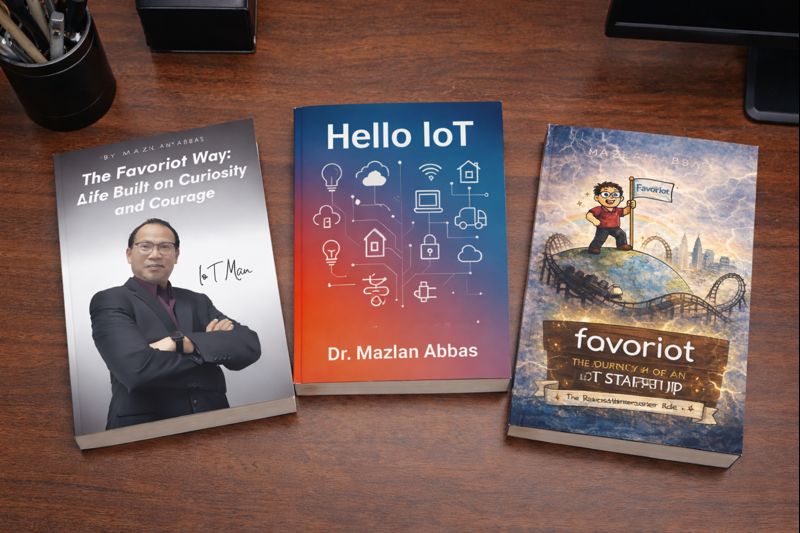
Only recently, I decided to compile my blog articles and publish them in eBooks below:


Join more than 8,100 subscribers and receive email notifications whenever I publish.

https://mazlanabbas.com/subscribe

Startup Way – Book Review

Great Startup Tips – A Book Review by Mazlan Abbas

How Entrepreneurial Management Transforms Culture and Drives Growth

The Startup Way: How Modern Companies Use Entrepreneurial Management to Transform Culture and Drive Long-Term Growth

[Note: Click here to have FREE access to this member-only story]

Reading “The Startup Way: How Modern Companies Use Entrepreneurial Management to Transform Culture and Drive Long-Term Growth” opened my eyes to the cutting-edge management strategies that are revolutionizing the corporate world.

The author’s deep dive into the essence of entrepreneurial thinking struck me, illustrating how pivotal such an approach can be for traditional firms in today’s rapid market.

The book resonated deeply, highlighting the critical role of agility, innovation, and a customer-centric outlook for enduring success.

As I pored over the pages, I was particularly captivated by the practical blueprint for weaving entrepreneurial practices into the fabric of established companies.

The stories and case studies were compelling and enlightening, showcasing how varied organizations have embraced innovation and adaptability.

The advice on nurturing a culture open to experimentation and learning from missteps inspired me, reinforcing my belief in these principles as key drivers for any leader keen on cultivating a vibrant and forward-thinking business culture.

The Startup Way: How Modern Companies Use Entrepreneurial Management to Transform Culture and Drive Long-Term Growth

Tackling the book’s exploration of potential obstacles was also enlightening for me.

The author’s frank discussion about the resistance and hurdles that might crop up when transitioning to this innovative management style was invaluable.

The pragmatic strategies for navigating these issues and an emphasis on enduring growth and creativity broadened my perspective.

Finishing the book, I felt armed with richer insights into how entrenched companies can flourish by integrating the dynamism of startup culture, making “The Startup Way” an invaluable read for anyone determined to steer their organization toward a more inventive and prosperous horizon.


Grab this book, “The Startup Way: How Modern Companies Use Entrepreneurial Management to Transform Culture and Drive Long-Term Growth,” from Amazon.


Other Startup Books Review by Mazlan Abbas:

1 — The Lean Startup

https://mazlanabbas.com/the-lean-startup-a-book-review-91b457b1a4ce

2 — The Science of Growth

https://mazlanabbas.com/the-lean-startup-a-book-review-91b457b1a4ce

3 — The Samsung Way

https://mazlanabbas.com/the-lean-startup-a-book-review-91b457b1a4ce

Why Audible Books Changed the Way I Read My Collection of Books

Unread Towers: Chronicles of a Book Collector

From Shelves to Speakers

The Author has a problem finishing all the books.

As someone who has cherished purchasing books for many years, I find a unique satisfaction in beholding the stacks of books lined up on my bookshelves.

The sight of them, standing there with their spines boasting a spectrum of colors and titles, offers a peculiar sense of accomplishment and anticipation.

Yet, paradoxically, my relationship with these books is tinged with a hint of failure — the failure to read them to completion.

Many of these books remain untouched after the initial excitement wears off, their contents partially explored or, in some cases, entirely undiscovered.

This narrative is a candid exploration of my love for acquiring books, the struggle to finish them, and an unexpected solution that rekindled my hope of conquering my ever-growing reading list.

The Joy of Collecting Books

Many remained on the bookshelf.

There’s an undeniable thrill in acquiring a new book — its fresh pages, the crispness of the cover, the promise of new knowledge, stories, and ideas within.

Buying books has always been more than a mere transaction; it’s a ritual.

Each book I purchase is a testament to my curiosity and never-ending quest for learning and entertainment.

The stacked books in my home are not just decor; they represent aspirational images of myself as someone who is well-read and informed.

However, this accumulation of books comes with its challenges.

Despite my initial enthusiasm, the reality of time constraints and diminishing attention spans often means that these books remain partially read or, even more dishearteningly, untouched.

The Struggle with Unfinished Books

Struggle to finish reading all of them

The pattern is all too familiar – I eagerly start a book, only to find it abandoned after a few chapters.

The reasons vary — a loss of interest, the lure of a new title, or simply the demands of daily life.

This cycle of unfulfilled reading endeavors leaves me with a sense of guilt and frustration.

The books I was once excited to dive into became silent reminders of my inability to follow through.

This pattern persisted until a serendipitous encounter with an Audible subscription, which arrived as a free perk with a book I purchased from Amazon. Initially overlooked, this subscription unwittingly became the key to a new world of ‘reading.’

The Audible Revelation

Amazon Audible

The discovery that I had been charged for an unused Audible subscription for three months initially annoyed me.

However, it prompted me to explore the service I had been unwittingly paying for.

With a wealth of credits, I downloaded various titles, wondering whether this new format would resonate with me.

Surprisingly, integrating Audible into my daily commute transformed my reading habits.

The hours spent driving, previously filled with podcasts and music, became my new reading time.

Realizing that I could complete a book in just a few days was exhilarating.

Listening to audiobooks became a ritual that allowed me to consume books at an unprecedented pace.

The feature to speed up the narration further optimized my listening experience, enabling me to absorb content even more efficiently.

Embracing a New Form of Reading

Though I have since unsubscribed from Audible to prioritize listening to the titles I already own, the impact of this experience has been profound.

Audiobooks have allowed me to enjoy literature that fits my lifestyle, turning wasted time into productive and enjoyable moments.

The sense of accomplishment in finishing these books has reinvigorated my love for reading in all its forms.

Now, as I balance my time between physical books and their auditory counterparts, the piles on my shelves no longer represent unfinished business but opportunities for exploration, whether through the turn of a page or the press of a play button.

Just as I have navigated the evolving landscapes of IoT and smart cities, I have found a way to navigate my challenge of reading through technological means.

Audiobooks, like the advancements in my professional field, represent progress and adaptation.

They remind me that there are always new ways to learn, grow, and enjoy books’ wealth of knowledge and stories, even when traditional methods fall short.

In conclusion, while the stacks of unread books in my home might once have symbolized a failure to commit, they now represent a diverse array of possibilities waiting to be explored in whichever format suits me best.

My love for books remains undimmed, but now it is complemented by a practical approach to enjoying them fully, regardless of the medium.


Try Audible Premium Plus and Get Up to Two Free Audiobooks


https://mazlanabbas.com/subscribe

Starting a Tech Business – Book Review

Product Development Guide – A Book Review by Mazlan Abbas

This is for anyone interested in building applications or software.

[Note: Click here to have FREE access to this member-only story]

Starting a Tech Business” by Alex Cowan emerges as an indispensable guide, meticulously demystifying the journey of initiating a technology-enabled enterprise.

This book is an invaluable resource for individuals keen on navigating the tech industry without the prerequisite of profound technical expertise.

Cowan elucidates the foundational steps essential for those aspiring to venture into or amplify their presence in the technological domain, irrespective of their coding proficiency.

Cowan adeptly elucidates the process of conceptualizing and validating innovative ideas, transforming them into tangible frameworks that resonate with technical teams.

He offers an in-depth understanding of crucial tech concepts, facilitating enhanced communication and collaboration with technical personnel.

The narrative extends beyond theoretical exposition, providing a comprehensive suite of practical tools, methodologies, and frameworks that readers can actively implement.

It is a pragmatic toolkit with strategies to translate visionary ideas into viable tech solutions.

A significant aspect covered by Cowan is the integration into agile or lean development teams, emphasizing the role of non-technical members as pivotal advocates for customer perspectives.

He encourages readers to explore programming if they are inclined, yet he underscores the utility of foundational tech knowledge for informed decision-making.

The book encapsulates the paradigm shift in today’s technological landscape, highlighting the lowered barriers to entry and the democratization of tech entrepreneurship.

Cowan delineates strategies for effective product development, judicious technology selection, and efficient resource allocation, all while fostering innovation.

Detailed checklists and frameworks are presented to avert prevalent pitfalls, ensuring a structured approach to tech business formulation.

The text delves into effective communication strategies, team composition, and reconciling business and technical objectives.

Moreover, Cowan discusses harmonizing process design with creative innovation, advocating a balanced approach that nurtures creativity while ensuring disciplined execution.


In summary, “Starting a Tech Business” is a critical read for individuals poised to enter the tech industry or augment their technological acumen.

It provides a thorough, insightful guide through the complexities of establishing and nurturing a tech-enabled business in an era brimming with opportunities.

Cowan’s book offers a comprehensive roadmap for entrepreneurs, professionals, or any tech-curious individuals, enabling them to translate tech business concepts into successful, tangible outcomes.

Get this book, “Starting a Tech Business,” from Amazon. (Note: Affiliate link)


Try Audible Premium Plus and Get Up to Two Free Audiobooks


Check out other Book Reviews by Mazlan Abbas:

https://mazlanabbas.com/ready-to-be-a-thought-leader-a-book-review-ec6869f0d523https://mazlanabbas.com/ready-to-be-a-thought-leader-a-book-review-ec6869f0d523https://mazlanabbas.com/ready-to-be-a-thought-leader-a-book-review-ec6869f0d523https://mazlanabbas.com/ready-to-be-a-thought-leader-a-book-review-ec6869f0d523


https://mazlanabbas.com/ready-to-be-a-thought-leader-a-book-review-ec6869f0d523