Book Review by a Young Founder: How The Favoriot Way Sparked New Fire in Me

I picked up The Favoriot Way: A Life Built on Curiosity and Courage by Mazlan Abbas at a time when I felt stuck between ambition and uncertainty. The title alone sounded like something a seasoned founder might write after years of success. What I didn’t expect was how personal, honest, and relatable this book would feel from the very first page.

Right away, I could sense this wasn’t a typical business book full of polished charts and bright promises about overnight success. It felt like sitting down with someone a few steps ahead of me on a road I’m still trying to map out. I could almost hear his voice explaining how curiosity pushed him forward in ways no strategy ever could.

Curiosity as a Compass

What hit me first was how Mazlan traced his journey back to childhood curiosity, fiddling with broken radios, wanting to know how things worked. It made me reflect on my own early curiosities. For me, it was taking apart gadgets as a kid, even though I rarely put them back together. Reading that made me laugh and nod at the same time.

As a young entrepreneur, it’s easy to look at seasoned founders and assume they had some secret formula from the start. This book reminded me that the real engine behind growth is simple curiosity showing up with questions and staying with them even when answers aren’t obvious.

Real Talk About Real Challenges

The book moves through Mazlan’s life from student days to corporate leadership and into entrepreneurship with Favoriot. But it doesn’t boast or brag. What stood out most were the honest moments where he wasn’t sure what came next. That was refreshing. I often worry that not knowing the next step means I’m failing. Reading about someone I respect being uncertain and still moving forward felt like a permission slip.

There was one part where he talked about choosing entrepreneurship at an age when many people are thinking about stability. That hit me hard. I’ve always wondered if my dreams make sense in the real world. His reflections made me rethink that fear and see it as part of the journey, not a detour.

Lessons That Feel Personal

What I appreciated most about this book is that it doesn’t give you a checklist of things to do. There are no fluff headlines about “10 steps to success.” Instead, Mazlan shares what he learned about being patient, thinking clearly, and trusting that consistent effort compounds over time. As someone building something from scratch, that perspective felt grounding.

I highlighted lines about:

  • Taking time to think clearly
  • Putting curiosity ahead of shortcuts
  • Treating failure not as a dead end but as data

Every time I paused on a passage, I found myself thinking “Yes, that’s exactly how it feels.” It was like someone had put into words things I’d been feeling but couldn’t articulate.

Accessible and Encouraging

The writing style is simple but powerful. Some moments felt like candid conversations instead of formal text. If you’re like me, juggling ideas and doubts, this tone makes the content feel accessible and encouraging rather than intimidating.

I’ve read business books that left me motivated for a day, only to be forgotten. This one stayed with me at the end of each chapter. It made me reflect on why I’m building what I’m building and how I want to show up for it.

Why This Book Matters for Young Founders

As someone forging my own path, I didn’t need another blueprint. What I needed was perspective. Someone to remind me that uncertainty isn’t a flaw, but part of the startup journey. Someone to say that curiosity will keep me going long after hype fades.

The Favoriot Way gave me that.

It’s short, easy to read, and packed with real insights that feel like they came from lived experience. Whether you are just starting a venture or trying to find clarity in your direction, this book gives you something many other business books don’t: emotional resonance with your struggles.

Final Thoughts

Reading this book felt like a conversation with a mentor who doesn’t sugarcoat but still believes in your potential. For young entrepreneurs like me who sometimes doubt whether we’re on the right track, this was precisely the kind of perspective we need.

It doesn’t tell you what your next move should be. It gives you the confidence to make that move yourself.

If you’re chasing ideas, navigating doubt, or building something that matters to you, The Favoriot Way deserves a spot in your reading list.

Rating: 4.5 out of 5 stars

And if you’ve read it too, I’d love to hear which part spoke to you most. Drop a comment and let’s talk about it.

[Book review: A Young Entrepreneur in the Making]

Download eBooks from Mazlan Abbas

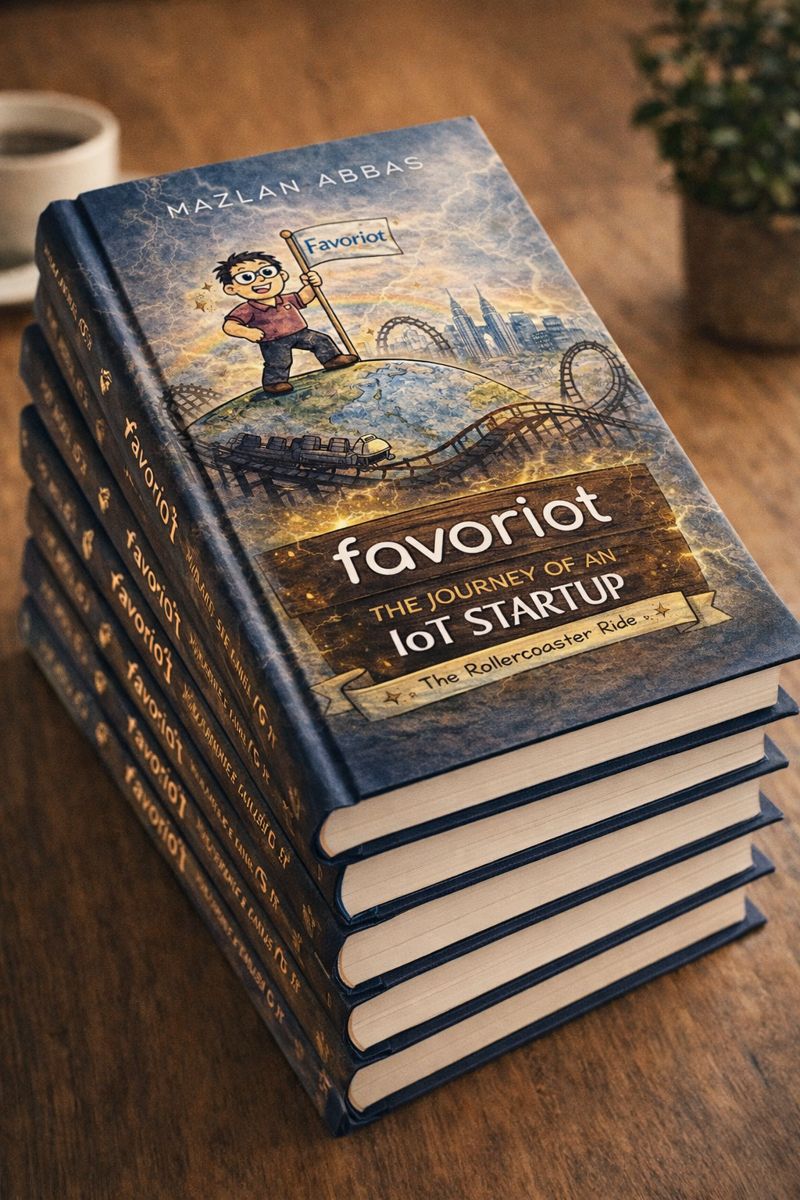
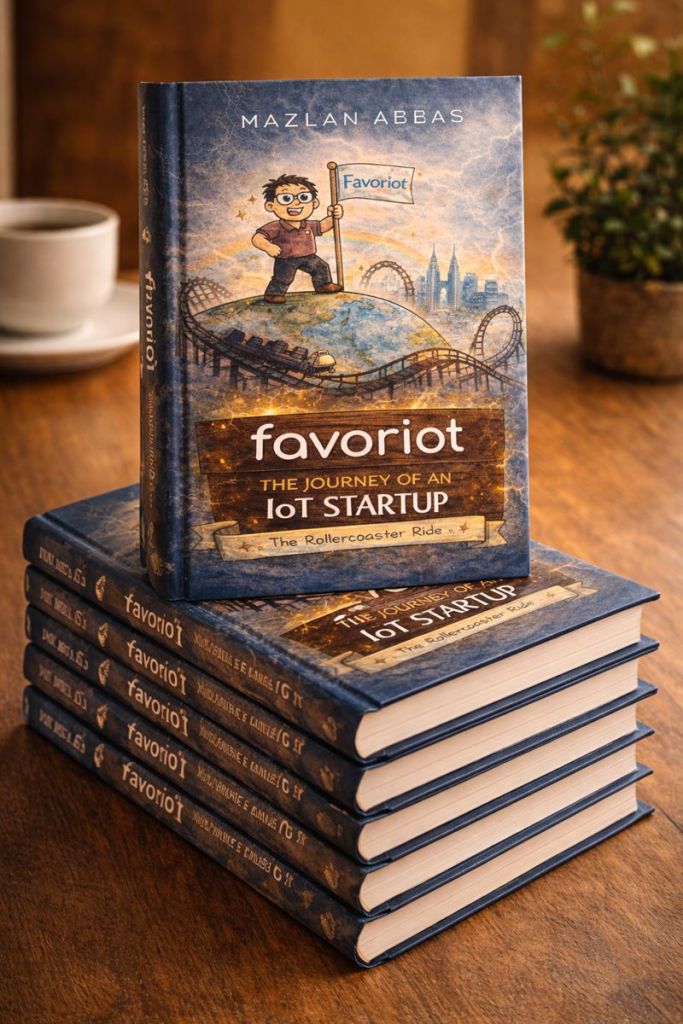
  1. Favoriot – The Journey of an IoT Startup
  2. The Favoriot Way – Life of Curiosity and Courage
  3. Hello IoT
  4. Mastering IoT with Favoriot: A Comprehensive Guide for Business and Educational Institutions
  5. Internet of Things (IoT): A Beginner’s Guide
  6. Startup Survival: The Journey of a Tech Entrepreneur
  7. Your IoT Journey
  8. IoT Notes

Favoriot – The Journey of an IoT Startup: A Free eBook for Thoughtful Makers, Thinkers, and Doers by Mazlan Abbas

Today (1 January 2026), I’m thrilled to share something that’s been quietly taking shape over the past year. My latest eBook titled “Favoriot – The Journey of an IoT Startup” is now officially released and available for free download. You can get your copy right here: https://payhip.com/b/GbOyo

Writing this book was not a sprint. It was more like those slow early mornings when you sit with a cup of coffee before the world wakes up and try to make sense of what you’ve learned, what you’ve unlearned, and what still puzzles you.

“What if I just write this down now before I forget how it felt?” I asked myself more times than I can count.

That question became this book.

Why This eBook Exists

I didn’t set out to write an eBook that checks all the “how to succeed” boxes. I wrote something more honest. More personal. More reflective of real work and real life.

This is a piece of writing that came from:

  • Conversations I had with founders and students
  • Moments when I wasn’t sure if something would work
  • Times when a quiet insight changed my view more than any big announcement ever could

Some parts feel calm and clear. Some parts feel messy and uncertain. In all of them, you’ll find reflections that resonate with the kinds of questions we all silently carry with us.

If you’ve ever asked yourself, “Am I doing this right?” or “What truly matters here?” then this book was written with you in mind.

What You’ll Find Inside

This eBook isn’t a step-by-step guide or a list of formulas that promise success. You won’t find shortcuts here. What you will find are reflections rooted in real experience:

  • How clarity often arrives slowly
  • Why patience matters more than speed
  • What it really takes to think long term
  • Why credibility beats noise
  • How do you navigate uncertainty when the path ahead isn’t clear

These are not theories. They came from living through questions that didn’t have neat answers.

“Oh… so this is what that moment was really teaching me,” I found myself saying as I shaped these chapters.

A Free Book for the Curious Mind

You might wonder why this eBook is free. There are reasons.

Most books you see are behind paywalls. You sign up. You subscribe. You unlock. All of that has its place.

But I wanted this one to be different.

I wanted it to be reachable by anyone who might benefit from it — no barriers. No barriers, no hoops, no strings attached.

Just download it, read it at your pace, and keep what matters to you.

Who Should Read This

This is a book for people who:

  • Are you building something without a clear path
  • I’m thinking about the next step, but don’t know exactly what it is
  • Feel the tension between urgency and patience
  • Need space to reflect instead of being told what to do

If you’re looking for hype or fast answers, this may not be a perfect match.

If you’re looking for thoughtful reflections that support your own thinking, then this book might feel like a companion for that journey.

Grab Your Copy

Here’s the link again:

👉 https://payhip.com/b/GbOyo

Download it, read it, and then take a moment to reflect on one question:

Which part stayed with me the longest after I closed it?

If you feel like sharing what that was, I’d really like to hear it. Drop a comment. Send a message. Pass the link to someone else who might need it.

Because sometimes the meaning of a book only shows up after you’ve walked a few steps beyond the last page.

Thank you for being here. I’d love to hear your thoughts.

Let’s continue the conversation.

Books Written by Dr. Mazlan Abbas

The Book That Finally Told the Truth About IoT

For years, I’ve watched the Internet of Things evolve—promises, pilots, platforms, and… silence.

We were told IoT would change everything. And yet, here we are. Smart cities still look like science projects. Predictive maintenance rarely gets past a demo. Even in conferences, IoT is the quiet cousin, while AI receives the spotlight.

So when I read IoT: The Hype No One Knows About by Afzal Mangal, I didn’t just read it—I felt it.

This wasn’t another technical deep dive. It wasn’t a glossy case study collection either. It was something rare: an honest book written by someone who’s actually done the work, faced the resistance, and survived the grind.

It’s Not the Technology That’s Broken

The core message? IoT works. That’s not the problem. The issue is that no one knows or sees it, and often, no one asks for it.

IoT doesn’t fail in the lab. It fails in the boardroom. It fails when:

  • Decision-makers don’t know what problem IoT solves
  • Internal champions give up after the pilot
  • Sales teams can’t explain it without five slides and a PhD

This hit hard. I’ve seen excellent IoT projects—solid tech, measurable impact—die quietly because there was no momentum to take them further.

Meanwhile, AI Took the Stage

Mangal makes a bold (and fair) comparison: AI and IoT were both hyped. But only one became mainstream.

Why?

Because AI built a tribe, it became aspirational. It had influencers, evangelists, podcasts, and memes. It was everywhere. IoT, on the other hand, stayed niche. It stayed quiet. It stayed technical.

It didn’t show off its wins. It didn’t shout. And that’s where we lost the game.

The Book Offers Solutions, Not Just Complaints

The best part isn’t just the diagnosis. It’s the prescription.

Mangal outlines 70 actions—from marketing to product strategy—that are refreshingly doable. No jargon. Just real advice:

  • Put “IoT” in your product name
  • Sell small and scale later
  • Educate the market like a campaign
  • Speak in stories, not specs
  • Make IoT visible in daily life

It sounds simple, but when did we last do any of that?

My Honest Take

This book isn’t for those looking for another buzzword to pitch. It’s for those tired of being invisible. It speaks to the founders, engineers, salespeople, and educators who want IoT to finally get the recognition it deserves, technically and publicly.

It made me reflect deeply on how I present, pitch, and teach IoT.

We can keep building great tech. But until we start creating awareness, IoT will remain a background actor in a play it should lead.

My Final Thoughts

Afzal Mangal didn’t just write a book—he wrote a mirror. If you’ve ever been frustrated with the slow progress of IoT adoption, this book gives you clarity—and a plan.

I highly recommend it to anyone in the IoT space, especially:

  • Startup founders
  • Product managers
  • Policy-makers
  • Tech educators
  • Marketers are trying to position IoT solutions

The industry doesn’t need more hype. It needs truth, clarity, and action.

This book delivers all three.

Lessons from My eBooks Sales

Someone asked me whether downloadable guides are a good lead generator for your business.

I never expected my eBooks to reach thousands of readers, let alone generate meaningful engagement. But looking at the numbers on my Payhip dashboard, I realise that writing and sharing knowledge can have a far-reaching impact.

The Journey of Sharing Knowledge

When I started publishing eBooks, my goal was simple: to document my experiences in IoT, entrepreneurship, and emerging technologies. I wanted to provide insights, guides, and frameworks that others could use, whether beginners or seasoned professionals.

Some books were offered for free to encourage accessibility, while others were priced modestly to reflect the value they provided. The result? A mix of high engagement and steady sales across different topics.

What the Numbers Reveal

Here’s a quick breakdown of how my eBooks have performed:

  • Most Popular Titles:

These two books clearly stand out. They focus on IoT, a topic I’ve been deeply involved with for years. It confirms that readers are eager to learn about IoT from a practical perspective. (Note: Initially, I sold these eBooks but now have made it for free)

These free resources were downloaded hundreds of times, proving that people appreciate concise and visual learning materials. Even though they didn’t generate direct revenue, they helped establish credibility and expand my reach.

These books didn’t attract huge numbers, but those who did purchase them found value in the content. It shows that niche topics may have a smaller audience but can still be monetised effectively. However, I have significantly reduced the prices of these eBooks.

Lessons from This Experience

  1. Free Resources Create Awareness
    Many downloads came from free materials, proving that giving knowledge away can be a powerful strategy. It builds trust and increases the likelihood of people exploring paid content later.
  2. IoT is a Strong Niche
    Books related to IoT consistently performed well. This reinforces that IoT remains a hot topic, and people actively seek structured knowledge.
  3. Engagement Doesn’t Always Mean Revenue
    Some books had high views but few orders, while others had lower views but better conversion rates. Pricing, perceived value, and the topic’s urgency significantly influence an eBook’s performance.
  4. Presentation Matters
    The success of IoT Notes and Your IoT Journey suggests that readers appreciate structured, well-organised content with clear takeaways.

What’s Next?

Seeing these numbers has given me new ideas. I plan to refine my offerings, update content, and possibly bundle resources to increase value. I’m also considering interactive formats like video courses based on my books.

Publishing these eBooks has been a rewarding experience—not just in sales but in the connections and conversations they have sparked. If you’re thinking of writing your own eBook, go for it. You never know who might find value in your words.

Check out my eBooks here: Payhip Store.

What do you think makes an eBook successful? Let’s discuss it!

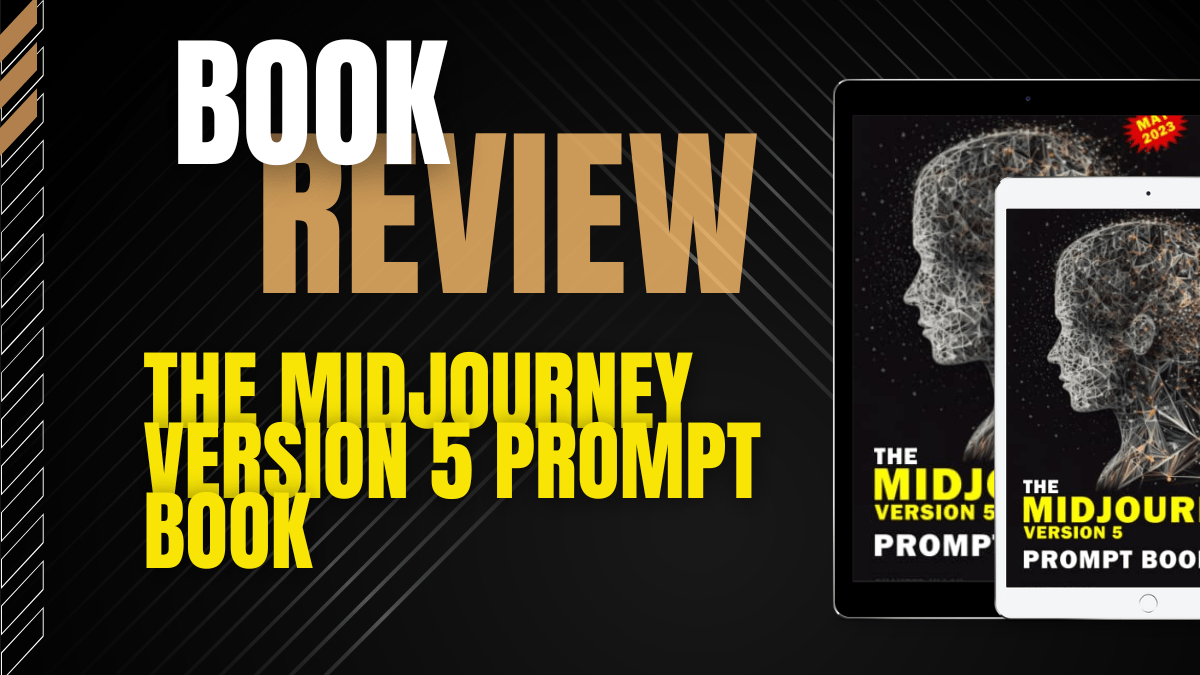
Book Review: The Midjourney Version 5 Prompt Book

  • Title: The Midjourney Version 5 Prompt Book: Transforming Words into Stunning Visuals with Midjourney Version Five
  • Author: Shaheed Ullah
  • Publisher: N/A Publication
  • Date: March 19, 2023
  • Rating: 4.6 out of 5 stars

The world of AI-generated art is evolving rapidly, and Shaheed Ullah’s “The Midjourney Version 5 Prompt Book” stands as a testament to the potential of this technology in transforming words into stunning visuals. This comprehensive guide, updated on May 1, 2023, is designed to help artists, photographers, designers, and enthusiasts in mastering the use of Midjourney prompts, offering insights into everything from basic to advanced commands and parameters.

Ullah’s book is organized into eight easy-to-understand chapters that cover various topics related to Midjourney prompts. The author delves into the different versions of Midjourney, including the newly released Version 5, and provides a detailed explanation of Niji V5, released in April. The chapters cover various aspects of Midjourney prompts, including upscale, commands, parameters, photorealism, architecture and interior designs, logo design, web design, UX/UI, art and anime prompts, and more.

A standout feature of the book is the wealth of practical, step-by-step instructions accompanied by over 1,000 prompts and generated images. Additionally, Ullah includes hundreds of bonus prompts in each category, showcasing mind-blowing and out-of-the-box ideas. The new edition also features over 250 unique t-shirt design prompts catering to diverse artistic interests.

“The Midjourney Version 5 Prompt Book” has broad appeal, catering to both beginners and advanced users. For those new to Midjourney, the book offers detailed information on the platform’s various versions and how to use them effectively. Experienced users will appreciate the 28 Midjourney prompts to copy and paste and “Midjourney Prompt Secret 101 Marcus,” a valuable resource for further exploration.

Ullah’s previous book, “Prompt Engineering: Writing Effective Prompts to Unlock AI Potentials,” discussed ChatGPT and Midjourney Prompts alongside Prompts for DALL-E 2 and Stable Diffusion. In this latest offering, the author digs deeper into the basic and advanced prompts of Midjourney, providing readers with invaluable information to harness the full potential of Midjourney AI art.

However, the book does have its shortcomings. For instance, there is little discussion of the ethical considerations surrounding AI-generated art, which is increasingly essential in today’s rapidly changing technological landscape. The book’s focus on Midjourney might also limit its appeal to those interested in other AI-driven art platforms.

Despite these limitations, “The Midjourney Version 5 Prompt Book” is a valuable resource for anyone looking to explore the world of AI-generated art through Midjourney prompts. The book’s comprehensive coverage, practical tips, and extensive prompts make it a must-have for artists and designers who want to take their creativity to the next level.

In conclusion, Shaheed Ullah’s “The Midjourney Version 5 Prompt Book” is a practical and in-depth guide to mastering Midjourney prompts, making it an essential resource for those interested in AI-generated art. Its well-structured format, wealth of examples, and broad appeal make it an excellent addition to the literature on this subject. While it may not address every facet of AI-generated art, the book is a valuable contribution to the field and is sure to inspire and educate its readers.

Midjourney Tips

  1. Step-by-Step How to Use Midjourney with ChatGPT and AIPRM
  2. Same Prompt Different Output: Midjourney vs. Bing Image Creator vs. DALL-E
  3. Revolutionizing Visual Content Creation with Midjourney and ChatGPT
  4. Transform Your Social Media Content with the Power of Midjourney Prompts
  5. Midjourney Prompt Tips: Create Images Based on the Title of the Poster

IoT eBooks by Mazlan Abbas

Here’re the list of eBooks which I have written.

(1) IoT Notes

Download IoT Notes – HERE

IoT Notes: Learning Outcomes

  1. Comprehensive Understanding of IoT and its Applications: Upon completing the ebook, readers will gain a solid understanding of the Internet of Things (IoT), its components, and applications. This knowledge will extend to the IoT inflection point and the reasons behind its significance in the current technological climate.
  2. Profound Insights into the Fourth Industrial Revolution and Industry 4.0: Readers will develop a strong grasp of the concepts of the Fourth Industrial Revolution and Industry 4.0, including their differences and their interconnectedness. They will also gain an understanding of how technology is creating ripples throughout various aspects of society and business.
  3. IoT Business Models and Impact on Businesses: The ebook will equip readers with an understanding of seven IoT business models, their key success factors, challenges, and potential effects on businesses. This knowledge will help them assess and navigate the rapidly changing IoT landscape.
  4. Understanding IoT Protocols, Architectures, and Networks: Readers will gain insights into the differences between MQTT and HTTP protocols, as well as an understanding of IoT architecture, including the 7-layer OSI model and the 7-layer IoT model. The ebook will also cover various network options and provide comparisons between LPWAN solutions.
  5. Proficiency in IoT Tools, Platforms, and Programming Languages: The ebook will help readers understand the advantages of using Arduino in IoT projects, explore popular programming languages within the IoT domain, and learn about IoT platforms, such as the Favoriot IoT Platform. This knowledge will enable them to make informed decisions when selecting tools and platforms for their IoT projects.
  6. Skills in System Integration and IoT Engineering: By the end of the ebook, readers will have a solid understanding of system integration in the context of both the Fourth Industrial Revolution and IoT. They will learn how to implement system integration, and gain insights into the top 10 skills required to become a successful IoT engineer.

(2) Your IoT Journey

Download Your IoT Journey eBook – HERE

Your IoT Journey: Learning Outcomes

  1. Addressing IoT Challenges and Market Segmentation: Readers will gain insights into the main challenges faced by IoT service providers, as well as an understanding of IoT target markets, including consumer (B2C) and enterprise (B2B) segments. This knowledge will help them make informed decisions in their IoT ventures.
  2. IoT Cloud Services and Monetization: The ebook will introduce learners to the concept of “Sensing-as-a-Service” as a new IoT cloud service and guide them on how to monetize IoT data to become commercial sensor service providers. This understanding will enable readers to explore new business opportunities and revenue streams in the IoT domain.
  3. IoT Adoption and Industry Trends: Readers will be equipped with the knowledge of the factors influencing IoT adoption rates, the early adopters of IoT, and the trends and predictions for IoT in Malaysia. This information will help them stay informed about the IoT landscape and make strategic decisions in this rapidly evolving field.
  4. Leveraging IoT for Smart Cities and Citizen Engagement: The ebook will discuss various ways IoT can be applied to smart city development, from flood prevention to building citizen engagement solutions. This understanding will enable readers to explore innovative applications of IoT for improving urban life.
  5. IoT and Job Market Implications: Readers will gain insights into the potential impact of IoT on the job market, including job creation and displacement. This knowledge will help them understand the changing dynamics of the workforce and identify opportunities and challenges in a world increasingly shaped by IoT.
  6. IoT in the Context of Industry 4.0 and National Strategies: The ebook will discuss the connection between IoT, Industry 4.0, and Malaysia’s National IoT Strategic Roadmap. Understanding this context will allow readers to better grasp the broader implications of IoT on national and global scales and its potential to drive future development.

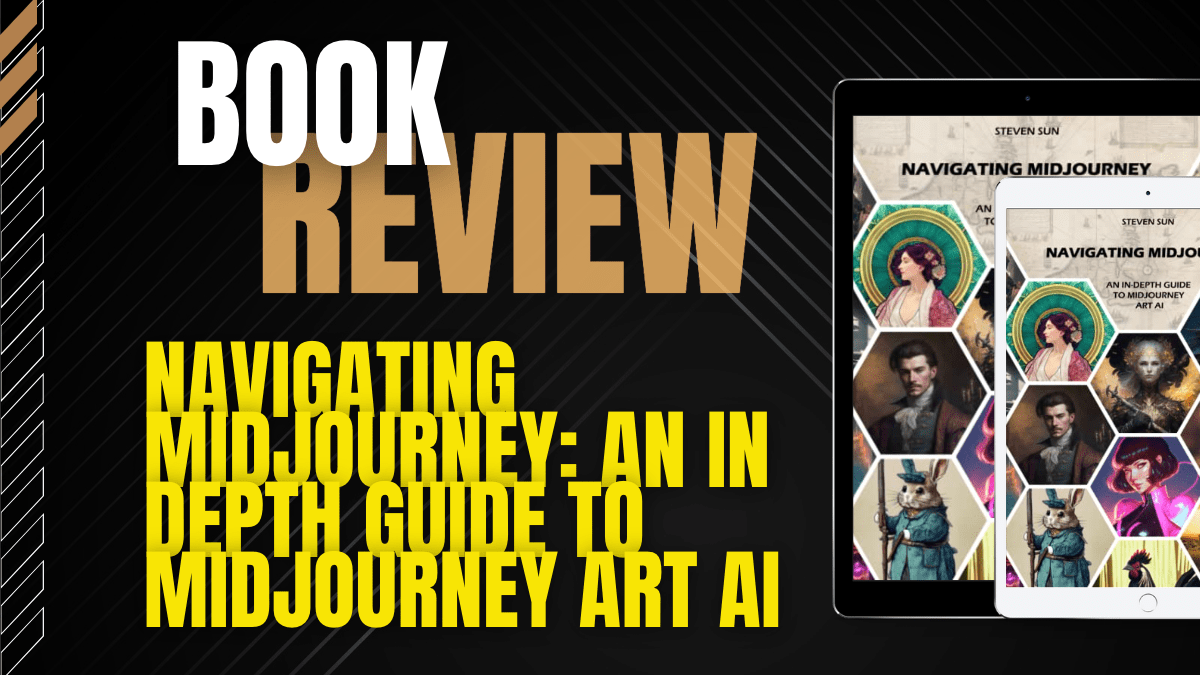
Book Review: Navigating Midjourney: An In Depth Guide to Midjourney Art AI

The rapidly evolving world of AI-generated art has captured the imagination of artists, designers, and creative enthusiasts alike. Midjourney Art AI is a powerful tool, allows users to create stunning art, conceptual designs, character designs, architectural prototypes, and even maintain a graphical dream journal. However, navigating this complex AI and harnessing its full potential can be challenging. Steven Shih-Shuan Sun’s “Navigating Midjourney” is an invaluable resource for users, guiding them through every step of using Midjourney effectively.

Sun’s in-depth guide delves into various aspects of Midjourney, including setting up an account, structuring prompts, understanding upscale types, comparing algorithm versions, controlling noise seeds, and exploring the effects of switch commands. The book is written in easy-to-understand language, making it accessible for both beginners and experienced artists. The inclusion of over 476 Midjourney-generated images crafted by the author, along with detailed prompts and tips, provides readers with a comprehensive understanding of how to use Midjourney to its fullest potential.

One of the strengths of “Navigating Midjourney” is its thorough examination of the strengths and limitations of different algorithm versions. Sun provides valuable insights into structuring prompt weights for optimal results and offers guidance on working around developer-banned words. This information equips readers with the knowledge and techniques to produce high-quality art and designs using Midjourney Art AI.

Chapter Four of the book is dedicated to using other AIs and free image editing tools to enhance images further. This chapter offers practical advice on repairing facial flaws and touching up details to easily perfect creations. The author’s focus on integrating other tools and resources demonstrates a holistic approach to AI-generated art, enabling readers to create exceptional works.

Another notable feature is the book’s use of instructional images and side-by-side comparisons. These visual aids help readers grasp the concepts and techniques more effectively, allowing them to apply what they’ve learned to their Midjourney-generated art. Including these images enhances the reader’s understanding and serves as a source of inspiration and motivation for aspiring artists.

While “Navigating Midjourney” is a comprehensive and informative guide, it does have a few limitations. For instance, the book does not delve into the ethical implications surrounding AI-generated art, an increasingly important topic in today’s rapidly changing technological landscape. Additionally, the focus on Midjourney Art AI may limit its appeal for those interested in exploring other AI-driven art platforms.

Despite these limitations, “Navigating Midjourney” is an essential resource for anyone looking to explore the world of AI-generated art through Midjourney. The book’s well-structured content, accessible language, and extensive use of visual aids make it an excellent guide for artists at all levels of experience. By providing detailed prompts, tips, and techniques, Sun equips readers with the knowledge and tools necessary to greatly enhance their creative capabilities and bring their dreams to life.

In conclusion, Steven Shih-Shuan Sun’s “Navigating Midjourney” is an invaluable guide for mastering the powerful tool of Midjourney Art AI. Its comprehensive coverage, easy-to-understand language, and plethora of instructional images make it a must-read for beginners and experienced artists looking to expand their skills and explore new creative avenues. While it may not cover every aspect of AI-generated art, the book remains valuable to the growing body of literature on the subject. It is sure to inspire and educate its readers.

Midjourney Tips and Tutorials

  1. Step-by-Step How to Use Midjourney with ChatGPT and AIPRM
  2. Same Prompt Different Output: Midjourney vs. Bing Image Creator vs. DALL-E
  3. Revolutionizing Visual Content Creation with Midjourney and ChatGPT
  4. Transform Your Social Media Content with the Power of Midjourney Prompts
  5. Midjourney Prompt Tips: Create Images Based on the Title of the Poster

Book Review: The Art of Prompts for Artificial Intelligence: Make art with DALL-E, Midjourney and Livebook AI (Awesome AI)

In an era where artificial intelligence (AI) is rapidly advancing and transforming various sectors, the digital art domain is no exception. Kevin Ashley’s book, “The Art of Prompts for Artificial Intelligence: Make art with DALL-E, Midjourney and Livebook AI (Awesome AI)” is an outstanding resource for artists, hobbyists, and even professionals seeking to explore the world of digital art through AI.

The book delves into AI-driven artwork using powerful tools like Midjourney and DALL-E, providing readers with a comprehensive understanding of how prompts can create visually stunning and diverse content. Ashley meticulously discusses various artistic genres and styles, including illustrations, portraits, landscapes, sketches, infographics, industrial and architectural design, 3D modeling, science fiction, and fantasy.

One of the most commendable aspects of this book is its well-structured format, which makes it easy for readers to locate their preferred genre or style quickly. Ashley provides a detailed step-by-step guide for creating the perfect prompts, accompanied by examples and explanations that are easy to follow, even for those who are new to AI-generated art.

The author emphasizes the importance of mastering the art of prompt creation, comparing it to the art of conversation. This analogy is particularly apt, as the effectiveness of the AI-generated artwork is directly linked to the clarity and precision of the prompts given. By mastering this skill, readers can expect outstanding results from AI-driven tools like Midjourney and DALL-E.

Another key strength of the book is its focus on saving time and providing best practices for artists. As creating AI-generated artwork can be time-consuming, Ashley shares tested prompts that can help readers get started quickly. This practical approach is beneficial not only for beginners but also for experienced artists who are keen on exploring new techniques and ideas.

The book also includes an impressive gallery of over 200 illustrations made with prompts, which provides inspiration and guidance for readers. This gallery showcases the immense potential of AI-generated art, encouraging readers to experiment and push the boundaries of their creativity.

Despite its many strengths, the book has a few shortcomings. For instance, it lacks a comprehensive analysis of the ethical implications surrounding the use of AI in digital art. Additionally, some readers might find the content too focused on specific AI tools like Midjourney and DALL-E, limiting its applicability to other emerging AI-driven art platforms.

Nonetheless, “The Art of Prompts for Artificial Intelligence” is a valuable resource for anyone interested in the intersection of digital art and AI. The book provides a solid foundation for understanding the principles behind AI-generated art and practical guidance for creating unique and captivating artwork using prompts.

In conclusion, Kevin Ashley’s “The Art of Prompts for Artificial Intelligence” is an enlightening and practical guide for anyone looking to delve into the world of AI-driven digital art. Its well-structured format, focus on best practices, and extensive gallery make it a must-read for beginners and experienced artists seeking to expand their skills and explore new creative avenues. While it may not cover every aspect of AI-generated art, this book is valuable to the growing body of literature on the subject. It is sure to inspire and educate its readers.

Midjourney Tips

  1. Step-by-Step How to Use Midjourney with ChatGPT and AIPRM
  2. Same Prompt Different Output: Midjourney vs. Bing Image Creator vs. DALL-E
  3. Revolutionizing Visual Content Creation with Midjourney and ChatGPT
  4. Transform Your Social Media Content with the Power of Midjourney Prompts