“Retirement? I’m Just Getting Started!” – Why I Hate Being Asked This Question

What is one question you hate to be asked? Explain.

One question I absolutely hate being asked is: “Why are you still working so hard at your age?”

It’s a question that, at first, seems harmless—maybe even well-intentioned. But every time I hear it, I feel a strange mix of frustration, disbelief, and sometimes even amusement. Why do people assume that age dictates when you should stop pursuing your passions?

The Assumption Behind the Question

I know where this question comes from. Society has conditioned us to believe that there’s a timeline for everything:

• Get a degree in your 20s.

• Build a career in your 30s.

• Reach the peak in your 40s.

• Start slowing down in your 50s.

• Retire and relax in your 60s.

By this logic, someone like me—who has already spent decades in the industry—should be sitting on a beach somewhere, sipping coconut water, and watching the sunset.

But that’s not who I am.

I’ve spent my life immersed in technology, innovation, and entrepreneurship. Why would I stop now, when I have so much more to contribute?

Passion Doesn’t Have an Expiry Date

People who ask this question seem to believe that work is just about earning a living. They don’t understand that for some of us, work is an extension of who we are.

I don’t see myself as “working hard” in the traditional sense. I see myself as constantly learning, innovating, and sharing my knowledge. Every project, every challenge, and every new development in IoT or AI excites me. The moment I stop engaging with these ideas is the moment I stop growing.

For me, stopping would feel like an early death—at least intellectually.

The Fear of Irrelevance

Another reason I continue pushing forward is the fear of irrelevance. Technology moves at an incredible speed. If you step back, even for a few years, the industry moves on without you. I’ve seen brilliant minds fade away simply because they decided to “take it easy.”

That’s not going to be me.

I want to remain at the forefront of IoT, AI, and Smart Cities. I want to contribute to the discussions, shape the industry, and mentor the next generation of innovators. If that means working just as hard (or even harder) as I did 20 years ago, then so be it.

What People Don’t See

What people don’t see is the fulfillment that comes from what I do. They see the long hours, the constant travel, and the seemingly endless meetings. But they don’t see the joy of watching a startup thrive because of the guidance I provided.

They don’t see the excitement I feel when Favoriot partners with companies across the globe, expanding our impact.

They don’t see the pride in helping universities build IoT curriculums or the satisfaction of watching my ideas take shape in real-world applications.

This isn’t about money. It’s about legacy. It’s about impact.

Redefining “Retirement”

The traditional idea of retirement—where you stop working and just “relax”—doesn’t appeal to me. I would rather redefine retirement as a stage where I have the freedom to choose the projects I want to work on, without financial pressure.

And that’s exactly what I’m doing now.

If retirement means I get to write, teach, mentor, innovate, and continue shaping the future of IoT—then I guess I’m “retired” in my own way.

The Next Time Someone Asks…

The next time someone asks me, “Why are you still working so hard?” I might just smile and say:

“Because I love what I do. And because I’m not done yet.”

Why I Felt That Writing is an Adventure

WRITER’S STORIES

The Call to Adventure

Photo by Holly Mandarich on Unsplash

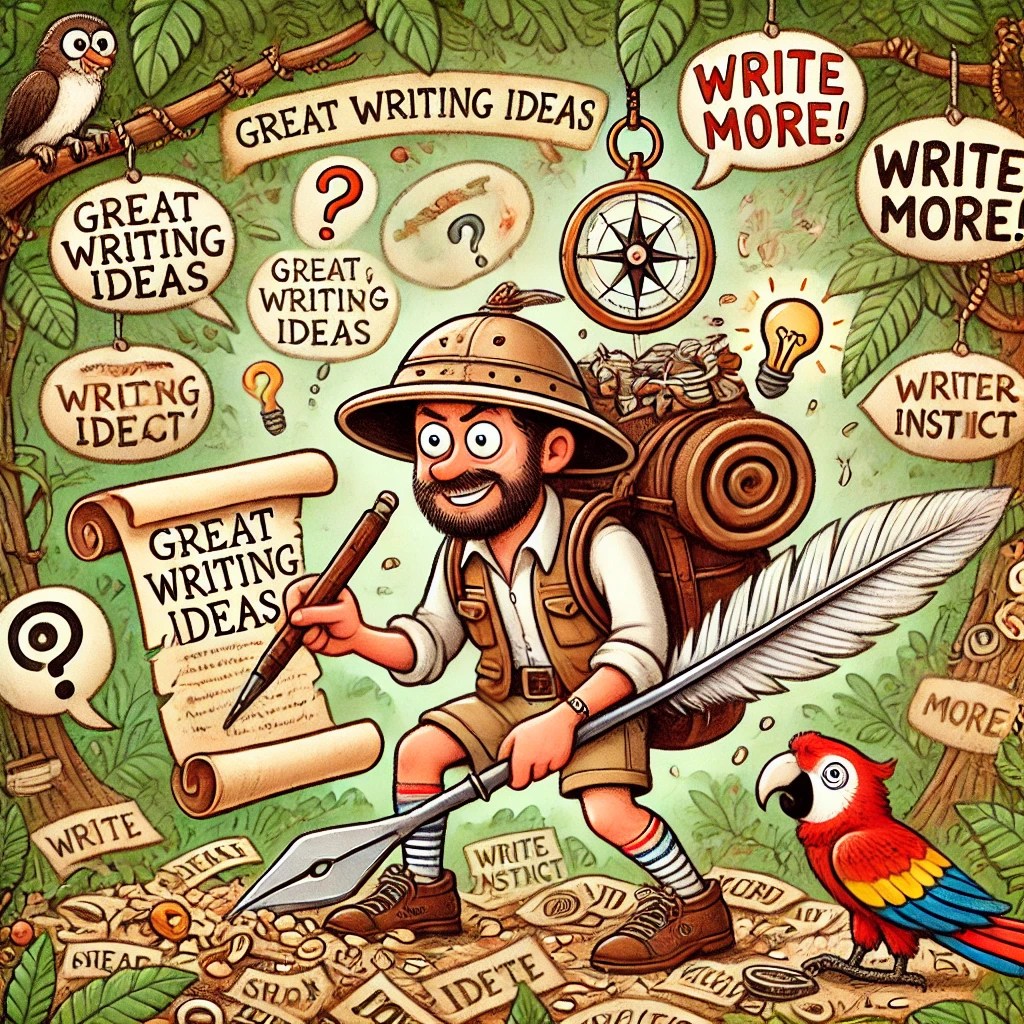
I’ve always been fascinated by the idea of being an adventurer, exploring uncharted territories and uncovering hidden treasures.

While I don’t carry a compass or a backpack, I’ve realised that my journey as a writer on Medium mirrors the life of an explorer.

Every article I write feels like stepping into the unknown, like embarking on a new expedition.

The journey began with a single question: What should I write about? It was as if I stood at the edge of a dense forest, staring at countless paths ahead. The possibilities felt thrilling yet intimidating.

Should I write about IoT? Entrepreneurship? Or something completely different?” I wondered. It was like being a novice explorer, equipped with no map and only a vague sense of direction.

But I knew one thing: staying put was not an option.

The First Step

Photo by Andrew Neel on Unsplash

Taking that first step was the hardest.

I decided to write about something close to my heart — IoT.

The words felt clunky as I typed, like trudging through a thick jungle. Doubts crept in: Is this good enough? Will anyone read this?

It’s not about perfection,” I reminded myself, echoing a lesson I’d read about explorers. “It’s about taking the journey.

When I published my first article, it felt like finding a small clearing in the forest. It wasn’t groundbreaking, but it was progress. “You did it,” I told myself. “What’s next?

Navigating New Terrain

Photo by NEOM on Unsplash

With each article, I ventured deeper into the unknown.

Some topics were like familiar trails that were easy to navigate. Others felt like steep mountains, daunting and full of uncertainty.

The first time I attempted to write about a personal experience, stepping outside my usual IoT expertise.

Will anyone care about this story?” I hesitated, staring at the screen.

It felt like standing at the base of a towering peak.

But as I wrote, I discovered something powerful: authenticity and vulnerability were like ropes and harnesses, helping me climb those intimidating heights.

When readers commented, “This resonated with me,” it felt like reaching the summit.

The view from the top was worth every moment of doubt.

Facing Setbacks

Photo by NEOM on Unsplash

Not every journey went as planned.

I remember pouring my energy into an article about smart cities, only to see it receive minimal views.

What went wrong?” I asked myself, frustrated.

It felt like wandering through a desert, searching for water but finding none. But even in those moments, I learned valuable lessons.

Like an adventurer adapting to the terrain, I realised I needed to experiment with different topics and perspectives.

Every setback became an opportunity to recalibrate my compass.

Discovering Hidden Treasures

Photo by Scott Goodwill on Unsplash

One of the most rewarding aspects of being an adventurer is stumbling upon hidden treasures, and writing offers plenty.

Sometimes, it was an unexpected idea that turned into a well-received article.

Other times, it was a connection with a reader who shared how my words impacted them.

I recall writing about how IoT could revolutionise agriculture, thinking the topic was too niche.

To my surprise, it became one of my most-read pieces. “This is your treasure,” I told myself. “Even the smallest ideas can hold immense value.

Finding Fellow Travellers

Photo by krakenimages on Unsplash

Every adventurer needs a tribe, and the Medium community became mine. Fellow writers shared tips, encouragement, and camaraderie.

I remember a comment on one of my articles: “Your story gave me the courage to share my own.

It felt like meeting another traveller at a campfire, exchanging stories that inspire and uplift. “Keep going,” they said. “You’re on the right path.

Embracing Risks

Photo by NEOM on Unsplash

What’s an adventure without risks?

Sometimes I stepped far outside my comfort zone, tackling controversial topics or experimenting with new styles.

It felt like crossing a rickety bridge over a canyon.

What if this fails?” I often asked myself. However, I knew that growth required pushing boundaries. Even when I stumbled, the experience taught me resilience and courage.

The Journey, Not the Destination

Photo by Danka & Peter on Unsplash

Over time, I realised that writing, like adventuring, isn’t about reaching a final destination.

It’s about the discoveries, challenges, and growth along the way. Each article became a chapter in my story, marking where I’d been and how far I’d come.

One day, someone asked, “Why do you keep writing?

I smiled and replied, “Because I’m not done exploring.

Looking Ahead

Photo by NEOM on Unsplash

Writing has shown me that the world of ideas is vast and limitless.

There’s always another path to take, another treasure to find, another story to tell.

Each article is a new expedition filled with twists, turns, and surprises.

As an adventurer of words, I’ve learned this: the journey is far from over.

The horizon stretches endlessly, and I can’t wait to see what lies beyond.

Dr. Mazlan Abbas: A Visionary in IoT and Smart Cities

It’s often said that great leaders are not born but made through years of experience, innovation, and unwavering determination. Dr. Mazlan Abbas is a living testament to this philosophy. His journey—from academia to telecommunications, research, and eventually, entrepreneurship—paints the story of a man driven by a relentless pursuit of knowledge and the desire to transform the world through technology.

A Passion for Technology from the Start

Born on January 23, 1961, in Malaysia, Dr. Mazlan Abbas demonstrated an early interest in science and technology. His academic pursuits set the foundation for what would become an extraordinary career. He graduated with a Bachelor of Electrical Engineering (First-Class Honors) from Universiti Teknologi Malaysia (UTM) in 1984, followed by a Master of Science in Telematics from the University of Essex, UK, in 1986. Not stopping there, he went on to complete his Ph.D. in Telecommunications at UTM in 1993. His thirst for knowledge and understanding of communications engineering would soon propel him into the telecommunications industry.

An Academic Start: Nurturing Minds at UTM

Before stepping into the corporate world, Dr. Mazlan spent 10 years at UTM, where he served as a Lecturer (1986-1993) and later as an Associate Professor (1993-1994) in the Faculty of Electrical Engineering. It was here that he developed his passion for research and innovation, particularly in data communications and network technologies.

A Pioneering Force in Telecommunications

Dr. Mazlan made a decisive career move into the telecommunications industry, joining Celcom Axiata in 1994, where he held multiple leadership roles over 13 years. His tenure at Celcom saw him rise through the ranks, taking on various Vice President roles, including:

  • Vice President of R&D (1997-2001) – He was responsible for developing and driving Celcom’s research initiatives, shaping the company’s technological advancements.
  • Vice President of Billing Operations (1999-2001) – Successfully led the migration from Celcom’s old billing system to a new convergent billing platform.
  • Vice President of Network Management & Administration (2002-2004) – Ensured the efficient operation of Celcom’s nationwide network, integrating systems after the TMTouch and Celcom merger.
  • Vice President of Mobility Solutions (2005-2006) – Spearheaded the development of mobile data services, laying the groundwork for the future of mobile connectivity.

Bridging Research and Industry at MIMOS

After over a decade at Celcom, Dr. Mazlan transitioned into a research-intensive role as Senior Director of the Wireless Communications Cluster at MIMOS Berhad (2006-2014). Here, he led groundbreaking projects in IPv6, WiMAX, IoT, Cognitive Radio, and Wireless Sensor Networks, contributing to Malaysia’s national broadband initiatives. Under his leadership, MIMOS developed 39 research prototypes and secured over 27 patents, a testament to his relentless push for innovation.

At MIMOS, he also conceptualized WiWi, a patented wireless technology that was successfully commercialized in various deployments, including Melaka Smart City and River Thames, London.

REDtone IoT and the Path to Entrepreneurship

With a vision to drive IoT adoption in Malaysia, Dr. Mazlan co-founded REDtone IoT Sdn Bhd, serving as CEO from 2014 to 2017. Here, he led initiatives in smart city solutions, IoT middleware, and enterprise IoT adoption. His ability to foresee the digital transformation needs of businesses and municipalities placed him among the pioneers of IoT in the ASEAN region.

FAVORIOT: Revolutionizing the IoT Landscape

In 2017, Dr. Mazlan took his biggest leap yet—founding FAVORIOT Sdn Bhd, an IoT-focused company aimed at simplifying the development and deployment of IoT solutions. As CEO and Co-Founder, he envisioned FAVORIOT as a platform for businesses to accelerate their IoT journey without the complexities of hardware and software integration.

FAVORIOT quickly gained recognition as one of Malaysia’s most innovative startups. The company won multiple accolades, including:

  • Best IoT Startup (Malaysia) at the ASEAN Rice Bowl Startup Awards in 2019
  • Merit Awards at the MSC Malaysia APICTA 2018 for Health and Wellbeing Solutions
  • The 10 Most Innovative Startups to Watch by Insights Success Magazine in 2018

His work with FAVORIOT reflects a core belief: IoT is not just about technology but about transforming lives, businesses, and cities. The company’s platform is now used across smart agriculture, smart healthcare, industrial IoT, and smart city applications.

A Global Thought Leader in IoT

Dr. Mazlan’s contributions to IoT and smart cities have been recognized globally. He has been listed in:

  • Onalytica’s “Who’s Who in IoT” (2022)
  • Top 50 Global Thought Leaders on IoT (2019)
  • Top 50 Most Impactful Smart Cities Leaders (2017)
  • Top 10 IoT Influencers by Postscapes (2017, 2018)

An Educator, Mentor, and Advisor

Despite his extensive corporate and entrepreneurial journey, Dr. Mazlan never lost touch with academia. He has served as an Adjunct Professor at multiple universities, including:

  • UTM (2008-2013)
  • UTHM (2004-2005, 2013-2016)
  • Universiti Teknologi Petronas (2018-2019)
  • MMU (2022-2024)

He has also been a Board Member of Multimedia University (MMU) and a mentor in various startup accelerator programs like MaGIC Amplify.

A Speaker and Influencer in Smart Cities and IoT

Dr. Mazlan is a sought-after keynote speaker, frequently presenting at IoT, IR 4.0, and Smart Cities conferences worldwide. His expertise has been featured on:

  • TEDx
  • Astro Awani
  • BERNAMA Radio
  • Niaga Awani

His speeches focus not just on the technical aspects of IoT but on how technology can drive economic growth and improve quality of life.

Honors and Awards

Beyond industry accolades, Dr. Mazlan has been recognized for his contributions to technology and education. In 2017, he was awarded an Honorary Doctorate in Electrical Engineering by UTHM. His alma mater, UTM, named him the UTM Alumni Industry Personality in 2016, celebrating his impact on the telecommunications and IoT sectors.

The Legacy Continues

As CEO of FAVORIOT, Dr. Mazlan remains dedicated to expanding IoT adoption across businesses and cities. His latest initiative, the FAVORIOT Partner Network Program, aims to establish IoT partnerships in 25 countries by 2025, solidifying his vision for a connected world.

Despite his vast achievements, Dr. Mazlan remains humble and passionate about mentoring the next generation. Through his books, articles, and social media engagement, he continues to share knowledge, inspire innovators, and shape the future of IoT.

Final Thoughts

Dr. Mazlan Abbas’s career is not just a story of professional success—it is a lesson in perseverance, vision, and the power of technology to create a better future. From an academic researcher to a corporate leader and now a pioneering entrepreneur, his journey exemplifies what it means to embrace change, lead with innovation, and build a legacy that lasts.

Dr. Mazlan Abbas’ Achievements in IoT Talks and Publications: A Global Influence

Dr. Mazlan Abbas has established himself as a thought leader in IoT, Smart Cities, Industry 4.0, and emerging technologies through his extensive talks, keynote speeches, panel discussions, and academic publications. His contributions have spanned academia, industry, and policymaking, covering diverse topics related to IoT development, smart cities transformation, 5G, AI, and digital disruption.

Below is a categorization of his achievements, presentations, and places he has traveled to share his expertise.


1. Talks and Keynote Speeches on IoT & Smart Cities

Dr. Mazlan has delivered hundreds of talks worldwide, discussing IoT adoption, smart cities strategies, business digitalization, and technological trends. His key areas of focus include:

A. IoT for Smart Cities and Public Sector

  • Smart Infrastructure and IoT Integration – Future Cities, MITEC, KL (Oct. 2024)
  • Harnessing the Power of IoT-Digital Innovations in the Public Sector – INTAN Talk, Malaysia (Sept. 2023)
  • IoT in Action- How Smart City Observatories Drive Data-Driven Decision-Making – National Technology Sensor Forum, Malaysia (July 2023)
  • Smart City Concept in Real-World Case Studies – SEKOPI UKM, Malaysia (March 2023)
  • IoT for Smart Cities: Lessons from Malaysia – IoT Asia, Singapore (2019)
  • How Smart Cities Can Improve Citizen Engagement with IoT – TM Forum Live! Asia, Singapore (2016)

B. Industrial IoT and Business Digitalization

  • Industry Insights – Winning Strategies for IoT Implementation – UMPSA, Pekan (Nov. 2023)
  • The Entrepreneurship Journey of Pre & Post Covid-19 – Humanizing Innovation @MMU Webinar (2021)
  • Developing a Digital Framework for Manufacturing in Malaysia – Manufacturing Seminar, Malaysia (Jan. 2023)
  • IoT – The Core Technology for IR 4.0 and How It Benefits SMEs – MPC Chemical Productivity Nexus (2021)
  • The Role of Fintech in IR 4.0 – ESTCON, Kuala Lumpur (2018)

C. AI & IoT Integration for Future Technologies

  • Artificial Intelligence of Things (AIoT) – The Next Human Generation – MRANTI, Malaysia (Nov. 2022)
  • 5G and AI: The Next Wave in Digital Transformation – Digital Outlook Series, Putrajaya (2019)
  • AI and IoT – A New Frontier – Learning Pal Webinar (July 2020)

D. IoT in Energy and Sustainability

  • Academia and Industry Leading the Way in Energy Sustainability – ICSEIE, Le Meridien Putrajaya (Oct. 2024)
  • IoT and IR 4.0 – Revolutionizing the Energy Sector – Distributed Network Technical Conference, DCON (Nov. 2023)
  • The Future of Sustainable Cities – Climate Adaptation and Resilience – The Energy Transition Conference, KLCC (Aug. 2023)

2. International Conferences & Summits

Dr. Mazlan has presented at various international conferences covering IoT advancements, digital transformation, AI adoption, and smart city innovations. His global influence is reflected in his participation in:

A. Asia-Pacific Region

  • IoT Asia – Singapore
  • CommunicAsia – Singapore
  • World Smart Cities Expo – South Korea
  • Smart Cities Asia – Kuala Lumpur
  • Industrial IoT Conference – Penang, Malaysia
  • TechTrend Conference – APU, Kuala Lumpur
  • APAN 48 – Malaysia

B. Middle East & South Asia

  • LEAP 2022 – Riyadh, Saudi Arabia
  • IoT Kuwait 2017 – Kuwait
  • Gulf Digital Future Summit – UAE

C. Europe & North America

  • IOT Global Innovation Forum – Dallas, USA
  • International Wireless and Telecommunications Symposium – Germany
  • CeBIT 2009 – Hannover, Germany

3. Publications and Research Contributions

Dr. Mazlan’s work in wireless communications, IoT middleware, network management, and smart city solutions has led to numerous academic and industry publications.

A. IoT and Smart Cities

  • “IoT Middleware – The Critical Missing Component in the IoT Value Chain” – INTI International University Symposium, Malaysia (2021)
  • “Internet of Things – Building a Smarter World” – Taylor’s University, Malaysia (2015)
  • “IoT-based Technology in the Era of IR 4.0” – ConFIG 2019, Kuala Lumpur

B. Telecommunications and Network Infrastructure

  • “Wireless Broadband – Building the Ecosystem for Emerging Markets” – Dubai (2011)
  • “Mobile WiMAX – Will it Stand on its Own to Be Successful?” – MIMOS Technology Forum, Malaysia (2007)
  • “Ensuring ATM Network Quality” – Telekom Journal (1994)

C. AI and Emerging Technologies

  • “Humanizing IoT – Placing People at the Centre of Technology” – ICoICT 2023, Malaysia
  • “AI and IoT – Get Ready for Jobs That Don’t Exist Yet” – UTeM Lecture (2019)

4. Advisory & Industry Panel Engagements

Dr. Mazlan has served as an advisor, mentor, and industry panelist for multiple organizations, helping shape IoT policies, smart city strategies, and digital transformation roadmaps.

  • Panel Expert for Malaysia’s National IoT Framework – MOSTI
  • Judge for Maxis IoT Challenge 2020
  • Panel Member for Malaysia Digital Economy Corporation (MDEC) PCF Evaluation Committee
  • Board Member of Multimedia University (MMU) 2020-2022

Conclusion: A Global Leader in IoT Innovation

Dr. Mazlan Abbas has dedicated his career to IoT research, development, and implementation, impacting businesses, governments, and academia worldwide. His talks, keynote addresses, and publications have positioned him as one of the leading voices in IoT, Smart Cities, and Industry 4.0.

His contributions continue to shape the future of digital transformation, smart infrastructure, and AI-driven IoT solutions, making him a pioneer in the field.

Dr. Mazlan Abbas’ Industry Advisory Panel Roles and Academic Contributions

Dr. Mazlan Abbas has been actively involved in shaping academic curriculums and research directions across multiple universities. His Industry Advisory Panel (IAP) and Board of Studies roles highlight his commitment to bridging the gap between academia and industry, ensuring that graduates are industry-ready in the fields of IoT, telecommunications, AI, and smart cities.


1. Industry Advisory Panel (IAP) Roles

Dr. Mazlan has served as an Industry Advisory Panel (IAP) member across various universities and institutions, focusing on IoT, AI, telecommunications, and emerging technologies.

A. Recent & Ongoing IAP Roles (2024 – Present)

  • Panel Penasihat Industri, Program Sarjana Muda Teknologi Kejuruteraan Elektronik (Sistem Pintar Elektronik) dengan KepujianUiTM Cawangan Terengganu (Nov 2024 – Oct 2026)
  • Industry Advisor Panel for Bachelor of Information Technology (Hons.) in Internet of ThingsKolej Universiti Islam Perlis (KUIPs) (Nov 2024 – Oct 2026)
  • External Industry Advisor, Faculty of Technology, Design and ManagementUCYP University (Sept 2024 – Aug 2026)
  • Ahli Jawatankuasa Penasihat Kurikulum Program Ijazah Sarjana Muda Teknologi Kejuruteraan Komputer (BCE) Dengan KepujianJabatan Pendidikan Politeknik dan Kolej Komuniti, KPT (2024-2025)
  • Ahli Jawatankuasa Pengajian Program Akademik Doktor Kejuruteraan FTKEKUTeM (July 2024 – July 2027)
  • Industry Advisor, Faculty of Business Technology (FBT)Smart College (April 2024 – Present)
  • Industry Advisor, Program DiplomaKolej Antarabangsa Mighty Skills (KAMS) (Jan 2024 – Present)

B. Previous IAP Roles (2020 – 2023)

  • Industry Advisory Panel (IAP), Bachelor of Computer Engineering Technology (Computer Systems)UniKL-MIIT (2023 – 2028)
  • Ahli Jawatankuasa Penasihat Kurikulum Program Diploma Teknologi Maklumat (Teknologi Digital) – DDTJabatan Pendidikan Politeknik dan Kolej Komuniti, KPT (2022 – 2025)
  • Industry Advisory Panel (IAP), Faculty of Electrical and Electronic EngineeringUTHM (2021 – 2023)
  • Industry Advisory Board MemberUNIMY (2020 – 2022)

C. Previous IAP Roles (2010 – 2019)

  • Industrial Advisory Panel (IAP), School of Electrical EngineeringUTM (2021 – 2022)
  • Industry Advisor Panel for Bachelor of Information Technology (Hons.) in Internet of ThingsKUIPs (2021 – 2022)
  • Industrial Advisory Panel (IAP), Department of Electrical and Computer Engineering (Communications)IIUM (2018 – 2022)
  • Penasihat Akademik, Program Sarjana Muda Sains Komputer (Komputeran Mudah Alih)Universiti Malaysia Terengganu (UMT) (2021 – 2022)
  • Industrial Advisory Panel (IAP), Bachelor of Computer Science (Systems and Networking) (Hons.)UNITEN (2017 – 2019)
  • Industry Advisory Panel (IAP), Faculty of Information Communication & TechnologyKUIPs (2018 – 2020)
  • Industry Advisory Panel, Faculty of Computing, Engineering & TechnologyAPU (2017 – 2020)
  • Industrial Advisory Panel (IAP), School of Computer Engineering and CommunicationsUNIMAP (2016 – 2020)
  • Industry Advisory Panel (IAP), Bachelor of Electronic Engineering TechnologyUniKL-BMI (2015 – 2020)

2. Member of Board of Studies & Curriculum Development

Dr. Mazlan has also contributed to academic program development and evaluation as a Board of Studies member across multiple universities and institutions.

A. Board of Studies Memberships

  • Board of Studies, Doctor of Philosophy (Computer Science & IT) and Master of ITIIUM (2019 – 2021)
  • Board of Studies, Bachelor of Computer Engineering (Hons.)UTeM (2017 – 2019)
  • Board of Studies, Master of Science (Computer & Information Engineering)IIUM (2012 – 2016)
  • Board of Studies, Bachelor of Engineering (Communication)IIUM (2009 – 2013)

B. Program & Curriculum Advisory

  • UTMSPACE Integrated Professional Digital Programs (IPDP)UTM (2021 – 2025)
  • Program Master Kejuruteraan Komunikasi, Fakulti KejuruteraanUPM (2021 – 2024)
  • Program Master Kejuruteraan Komputer dengan Keusahawanan Teknologi, Fakulti KejuruteraanUPM (2020 – 2023)
  • Bachelor of Science (Data Analytics), Centre of Informatics and Applied MathematicsUMT (2018 – 2021)
  • Bachelor of IT (Hons) Data Communications and NetworkingMMU (2015 – 2019)
  • Diploma in Information Technology (DIIT), Academic & Industry Advisory Board (AIAB)Sunway College (2018 – 2020)

3. Universities & Institutions Associated with Dr. Mazlan Abbas

Dr. Mazlan has lectured, advised, or collaborated with several higher education institutions across Malaysia. His contributions span lecturing, adjunct professor roles, industry advisory, and research collaborations.

A. Universities Where He Served as an Adjunct Professor

  1. Universiti Teknologi Malaysia (UTM) (2008 – 2013)
  2. Universiti Tun Hussein Onn Malaysia (UTHM) (2004-2005, 2013-2016)
  3. Universiti Teknologi Petronas (UTP) (2018 – 2019)
  4. Universiti Sultan Zainal Abidin (UniSZA) (2017 – 2018)
  5. Malaysia-Japan International Institute of Technology (MJIIT, UTM KL) (2020 – 2022)
  6. Multimedia University (MMU) (2022 – 2024)
  7. University Malaysia of Computer Science and Engineering (UNIMY) (2017 – 2019)

B. Universities Where He Served in Industry Advisory & Research Collaboration

  1. Universiti Putra Malaysia (UPM)
  2. Universiti Kebangsaan Malaysia (UKM)
  3. International Islamic University Malaysia (IIUM)
  4. Universiti Malaysia Terengganu (UMT)
  5. Universiti Kuala Lumpur (UniKL-MIIT, UniKL-BMI)
  6. Universiti Teknikal Malaysia Melaka (UTeM)
  7. Universiti Sains Islam Malaysia (USIM)
  8. Asia Pacific University (APU)
  9. Sunway University
  10. Taylor’s University
  11. Wawasan Open University (WOU)

Conclusion

Dr. Mazlan Abbas has played a pivotal role in shaping IoT and telecommunications education in Malaysia through curriculum development, research collaborations, and industry advisory. His efforts ensure that students are well-prepared for careers in IoT, AI, and smart cities, bridging the gap between academia and industry.

His association with more than 15 universities and technical institutions demonstrates his commitment to education, research, and innovation, making him a respected leader in academia and industry alike.

Building a Stronger Ecosystem: Entrepreneurs Supporting Entrepreneurs

“Why look elsewhere when we have everything we need right here?” This thought often crosses my mind when I see local entrepreneurs opting for foreign solutions instead of tapping into the innovation happening in their own backyard.

Entrepreneurship isn’t just about building a business—it’s about contributing to a thriving ecosystem where companies grow together. Shouldn’t we start by supporting each other if we expect others to help our ventures?

1. The Foundation of a Thriving Ecosystem

Entrepreneurship education should teach students not just how to start businesses but also how to sustain them within a supportive ecosystem. Every successful startup is part of a larger network—whether they realise it or not.

If we continue to rely on foreign products and solutions while expecting our businesses to thrive, we are working against ourselves. We need to shift the mindset from competition to collaboration.

2. Why Not Build on Local Strengths?

If we build a local product, why not use supporting tools or technology developed by our innovators? The biggest irony is when a startup seeks government funding to create a product but then spends that money on foreign services.

Take IoT projects, for example—why use a foreign IoT platform when Favoriot offers a local alternative? Whenever we choose a local solution, we strengthen the foundation for future entrepreneurs, creating more opportunities within our ecosystem.

3. Overcoming Challenges Together

Starting a business is tough. Every entrepreneur struggles to find the right tools, market, and funding. But these challenges become easier when we work together.

Universities, startups, and industry leaders must collaborate to create an environment where new businesses can succeed. Education should go beyond just theories—it should teach students how to leverage local resources and networks. No entrepreneur succeeds alone.

4. Choosing Local: More Than Just Patriotism

Supporting local businesses isn’t just about national pride but sustainability. If we don’t create demand for our own products, who will? Entrepreneurs need customers to survive, and the best place to start is within our ecosystem.

The tech industry, in particular, is an area where local startups can and should work together. From software to hardware, we have the talent and expertise—what we need is trust in our own capabilities.

5. Building for the Future

An ecosystem doesn’t thrive by accident. It requires conscious effort, continuous collaboration, and a willingness to support one another. Universities need to instil this mindset early—teaching students to be entrepreneurs and ecosystem builders.

When startups work together, share resources, and choose local solutions, they create a self-sustaining environment that benefits everyone.

Final Thoughts

We must start by supporting our own ecosystem to see our startups succeed. That means choosing local technology, forming partnerships with local businesses, and believing in our capabilities.

A thriving ecosystem doesn’t just help today’s entrepreneurs—it lays the groundwork for future generations. So the next time you build something, ask yourself: “Am I helping the ecosystem grow, or am I just taking from it?”

What Experiences in Life Helped Me Grow the Most?

I often ask myself—what were the turning points in my life that shaped who I am today? Were they the moments of success, or the times I stumbled and fell?

Life is a constant journey of growth, and the experiences that shape us the most aren’t always the easiest. In my case, several key moments in my life helped me evolve—not just as a professional in the tech industry but as a person. These experiences range from my childhood curiosity about science fiction to my transition from academia to entrepreneurship. Every phase brought new lessons, unexpected challenges, and growth that I could never have predicted.

1. Childhood Curiosity: The Seed of Exploration

I grew up fascinated by science fiction. The Jetsons, Land of the Giants, DC Comics—these weren’t just entertainment for me. They were glimpses into the future I wanted to be part of. I was obsessed with technology before I even understood what it really meant. My love for science fiction wasn’t just about flying cars and futuristic cities; it was about the endless possibilities that technology could offer.

This curiosity led me to engineering. I wanted to understand how things worked, how technology evolved, and how it could shape the world. Looking back, my childhood fascination with futuristic gadgets planted the seed of exploration in me. It taught me the value of imagination—a crucial skill that would later help me innovate in the IoT industry.

2. My First Job: The Reality Check

Like most fresh graduates, I entered my first job with excitement and idealism. I was eager to prove myself. My first major role was in CELCOM Axiata, a leading telecom company. I thought I knew a lot. I thought my academic knowledge would be enough. But within the first few months, I realized something—university had only given me theories, not the reality of working in a corporate environment.

I had to deal with deadlines, decision-making under pressure, and—most importantly—people. I had to learn how to navigate office politics, how to communicate my ideas effectively, and how to handle failure. This experience was humbling. It was a reality check that forced me to become adaptable, resilient, and willing to learn from mistakes. It was during this phase that I realized—growth comes when you’re uncomfortable.

3. Moving into the Government Sector: A Shift in Perspective

After years in the corporate world, I transitioned into MIMOS Berhad, a government research agency. If working in a telco was fast-paced and business-driven, MIMOS was the opposite—it was about long-term innovation, research, and policies. I suddenly found myself in a world of bureaucracy, funding approvals, and national development plans.

At first, it frustrated me. Why was everything so slow? Why did decision-making take so long? But then I understood—the stakes were different. In the corporate world, time was money. In the government sector, time was strategy. Every project had to align with national goals and long-term sustainability.

This experience taught me patience and strategic thinking. I learned to see the bigger picture. It also gave me insights into how governments operate—a lesson that would later prove invaluable when working on smart city projects.

4. Academia: The Teacher Becomes the Student

Becoming an Adjunct Professor was an entirely different challenge. I was used to being an industry leader, but now, I had to teach and mentor students. How do I translate real-world experience into something a classroom full of young minds can absorb?

Academia forced me to simplify complex concepts, to make technology accessible. It also reminded me of the importance of curiosity. Students asked questions that I never thought about. They challenged my assumptions. They pushed me to rethink what I thought I knew.

Teaching wasn’t just about giving knowledge—it was about learning from fresh perspectives. This role helped me refine my ability to communicate complex ideas in a way that made sense to people outside the industry. This skill became crucial when I started writing and giving keynote speeches.

5. The Entrepreneurial Leap: Starting FAVORIOT

Nothing in my life tested my resilience more than starting my own company, FAVORIOT. I had spent years working in large organizations with stable salaries and structured environments. But when I stepped into the world of entrepreneurship, I realized something—no one tells you how hard it really is.

Starting FAVORIOT meant wearing multiple hats—CEO, marketer, salesperson, product manager, and sometimes even customer support. It meant dealing with financial uncertainty, pitching to investors, and convincing clients to trust a new brand.

The biggest lesson? Failure is part of the journey.

There were months when we struggled to get traction. There were moments when I questioned my decision—Did I make a mistake leaving my stable career? Will this ever work? But every setback forced me to adapt, to innovate, and to push forward.

Entrepreneurship taught me that growth isn’t about avoiding failure—it’s about learning how to get back up, over and over again.

6. Public Speaking and Writing: The Unexpected Growth

I never considered myself a writer or a speaker. Yet, as I built my brand, I found myself on global stages, delivering keynote speeches on IoT, smart cities, and entrepreneurship. I started writing articles, sharing my experiences, and engaging with audiences online.

At first, it was uncomfortable. What if no one reads my articles? What if my talks aren’t engaging? But I soon realized that sharing knowledge is one of the best ways to grow. Writing helped me refine my thoughts. Speaking helped me build confidence. And both helped me connect with people from around the world.

I learned that growth often happens when you step outside your comfort zone and do things you never imagined yourself doing.

7. The Personal Lessons: Family and Balance

Through all these professional experiences, the biggest lessons came from my personal life. Balancing work, family, and personal aspirations is never easy. There were times when I was too focused on my career, neglecting the people who mattered most.

It took me years to realize that success means nothing if you don’t have people to share it with. Learning to prioritize family, to make time for moments that truly matter—that was one of the hardest but most important lessons of all.

Final Thoughts: Growth Never Stops

Looking back, the experiences that helped me grow the most weren’t the easy ones. They were the challenges, the failures, and the uncomfortable transitions. They were the moments that pushed me to adapt, to question myself, and to keep moving forward even when I felt like giving up.

Growth is not about reaching a final destination. It’s a continuous journey. And if there’s one thing I’ve learned, it’s this—the best way to grow is to keep challenging yourself, keep learning, and never stop exploring new possibilities.

Elon Musk’s xAI Unveils Grok-3: A Leap in AI Capabilities

February 2025 – Elon Musk’s artificial intelligence venture, xAI, has launched Grok-3, a significant upgrade to its predecessor, Grok-2. The latest iteration promises improved reasoning abilities, expanded processing power, and advanced search functionalities, positioning it as a formidable competitor in the AI industry.

Major Advancements in Grok-3

Grok-3 substantially increases computational efficiency, processing capabilities, and feature enhancements. Key differences between Grok-2 and Grok-3 include:

FeatureGrok-2Grok-3
Computational PowerStandard AI processing.10–15x more powerful, trained on xAI’s Memphis supercomputer with 200,000 Nvidia H100 GPUs.
Context WindowUp to 128,000 tokens.Extended to 1,000,000 tokens for improved comprehension.
Reasoning AbilitiesBasic reasoning capabilities.Advanced reasoning, self-correction, and complex problem-solving.
DeepSearch FeatureNot available.Allows AI to analyze multiple sources and articulate reasoning in real-time.
Big Brain ModeNot available.Allocates additional processing resources for intricate tasks, improving accuracy.
Supported ModalitiesText processing.Expanded support for both text and video.
Release DateAugust 2024.February 2025.
Open SourceNo.No.
Knowledge Cut-off DateUnknown.February 2025.

What Makes Grok-3 Stand Out?

One of Grok-3’s most significant features is its DeepSearch capability, which enables it to analyze vast amounts of real-time information, including sources across the Internet and social media platforms such as X (formerly Twitter). This feature makes it particularly effective for summarizing breaking news, analyzing trends, and responding to queries with up-to-date insights.

Another notable upgrade is Big Brain Mode, which allows the AI to dedicate additional processing resources for more complex computations, resulting in more precise and insightful responses.

Grok-2 Goes Open Source

While Grok-3 is being positioned as xAI’s flagship model, Musk has confirmed that Grok-2 will be made open-source, allowing developers and researchers worldwide to access and modify the code. This move is expected to drive innovation and foster community-driven enhancements in AI development.

The Future of xAI’s Grok Models

The introduction of Grok-3 signals xAI’s ambition to challenge industry leaders like OpenAI’s GPT-4o. With its increased computational power, deeper reasoning capabilities, and real-time search functionalities, Grok-3 is shaping up to be a major player in AI-driven business automation, data analysis, and research.

As AI continues to evolve, xAI’s latest release highlights the rapid advancements in machine learning and natural language processing, raising the bar for future developments in the industry.

Get Your FREE IoT eBook Now – Limited Time Offer!

Want to start an IoT project but don’t know where to begin?

I get it. IoT is exciting yet overwhelming—so many components, protocols, architectures, and business models. You’ve probably asked yourself:

“Where do I even start?”
“Which IoT platform should I use?”
“How do I build a scalable solution?”

That’s precisely why I wrote “IoT Notes”—a simple, structured, and no-nonsense guide to help you kickstart your IoT journey without confusion.

Why This eBook is Essential for IoT Beginners & Professionals

The Internet of Things is not the future—it’s NOW. Businesses, industries, and even everyday life are being revolutionized by IoT. If you don’t learn about it today, you risk falling behind.

📖 “IoT Notes” covers everything you need to understand, plan, and implement IoT solutions:

What is IoT? (Explained simply, without the tech jargon)
How IoT helps fight COVID-19 (Real-world case studies)
IoT & the Fourth Industrial Revolution – Why now is the best time to get involved
How IoT impacts businesses – Key success factors and challenges
7 IoT Business Models – How to monetize IoT solutions
Comparing IoT protocols – MQTT vs HTTP, LPWAN, and network choices
IoT architecture & system integration – How everything connects
Top 10 skills to become an IoT Engineer
Favoriot IoT Platform – How to get started for free!
And much more! (Subscribers get free future updates!)

📥 Download “IoT Notes” for FREE – Limited Time Only!

Yes, you read that right. It’s FREE! But if you find it valuable, you can choose to support future content with a small contribution.

🔗 Click here to grab your free copy now!

IoT is shaping the world—don’t get left behind. Download the eBook now and take your first step into the IoT revolution! 🚀

See you inside!

Dr. Mazlan Abbas
IoT Evangelist | Favoriot Co-Founder

Favoriot and PT Lima Dua Satu Indonesia Join Forces to Boost Indonesia’s 100 Smart Cities Movement

FAVORIOT NEWS

FAVORIOT GLOBAL PARTNER

Jakarta, Indonesia — Favoriot, a prominent IoT platform provider, has signed a strategic Memorandum of Understanding (MOU) with PT Lima Dua Satu Indonesia on October 7, 2024, to support Indonesia’s ambitious 100 Smart Cities Movement.

This collaboration underscores their commitment to driving technological innovation and sustainable urban development in Indonesia.

Aligning with the 100 Smart Cities Movement

Indonesia’s 100 Smart Cities Movement, initiated in 2017, aims to transform 100 cities into smart, sustainable urban centres by 2045. The initiative addresses key urban challenges such as traffic congestion, inefficient waste management, and limited access to public services by integrating advanced technologies.

Favoriot’s partnership with PT Lima Dua Satu Indonesia directly supports this vision by introducing scalable IoT solutions tailored to the unique needs of Indonesian cities.

Dr. Mazlan Abbas, CEO of Favoriot, expressed optimism about the partnership’s impact: “This collaboration with PT Lima Dua Satu Indonesia represents a shared vision of leveraging IoT to solve urban challenges. Together, we aim to empower city administrators with real-time data and insights to make informed decisions that improve citizens’ quality of life.

IoT Solutions for Urban Transformation

Through this partnership, Favoriot’s robust IoT platform will be deployed to address core areas identified in the smart city framework:

  • Traffic Management: IoT sensors and analytics tools will monitor traffic patterns, helping city officials manage congestion and plan better transportation networks.
  • Waste Management: Smart waste bins with IoT sensors will optimise waste collection routes, reducing costs and environmental impact.
  • Energy Efficiency: IoT-enabled energy monitoring systems will support smart grid implementations, ensuring efficient use of energy resources.
  • Public Safety: IoT devices such as smart cameras and motion sensors will enhance security and emergency response systems.

PT Lima Dua Satu Indonesia’s local expertise will facilitate the seamless implementation of these solutions, ensuring they align with each city’s specific requirements.

Supporting Smart City Initiatives in Jatinangor

The collaboration also aims to complement smart city initiatives like the development of Jatinangor in Sumedang Regency.

Favoriot’s IoT platform can support these initiatives by:

  • Enhancing Connectivity: Providing IoT solutions to integrate data from different urban systems for better decision-making.
  • Improving Resource Management: Offering tools to optimise the use of energy, water, and waste management in growing urban areas like Jatinangor.
  • Encouraging Collaborative Efforts: Bridging government and private sector cooperation to accelerate the realisation of smart city goals.

With PT Lima Dua Satu Indonesia’s local knowledge and Favoriot’s technological expertise, this partnership can strengthen the foundation of smart city projects in smaller yet strategic areas like Jatinangor, further contributing to the nationwide 100 Smart Cities Movement.

Supporting Indonesia’s Digital Transformation Goals

The MOU aligns with the broader goals of “Making Indonesia 4.0,” a national roadmap that prioritises digital transformation as a key driver of economic growth.

The partnership also aims to build a skilled workforce capable of managing and innovating within the IoT ecosystem by providing training programs and workshops.

This collaborative effort will foster a vibrant digital economy while addressing urbanisation challenges.

Accelerating Smart City Adoption

One of the critical success factors for the 100 Smart Cities Movement is the integration of advanced technologies to create citizen-centric solutions. Favoriot’s IoT platform, combined with PT Lima Dua Satu Indonesia’s local insights, will:

  • Empower city governments with data-driven tools for decision-making.
  • Enable seamless collaboration between public and private stakeholders.
  • Deliver innovative applications that enhance urban living standards.

By focusing on practical and scalable IoT applications, this partnership can accelerate the adoption of smart city initiatives and inspire confidence in the feasibility of achieving Indonesia’s goal of 100 smart cities by 2045.

Looking Ahead

As Indonesia pushes forward with its smart city agenda, collaborations like this MOU are pivotal in transforming urban areas into sustainable and digitally connected communities.

Favoriot and PT Lima Dua Satu Indonesia’s joint efforts are poised to set a benchmark for how IoT can address real-world challenges, making the dream of 100 smart cities a reality.

Ripples of Technology and the Tsunami of Disruption

IOT NOTES

Lecture Notes

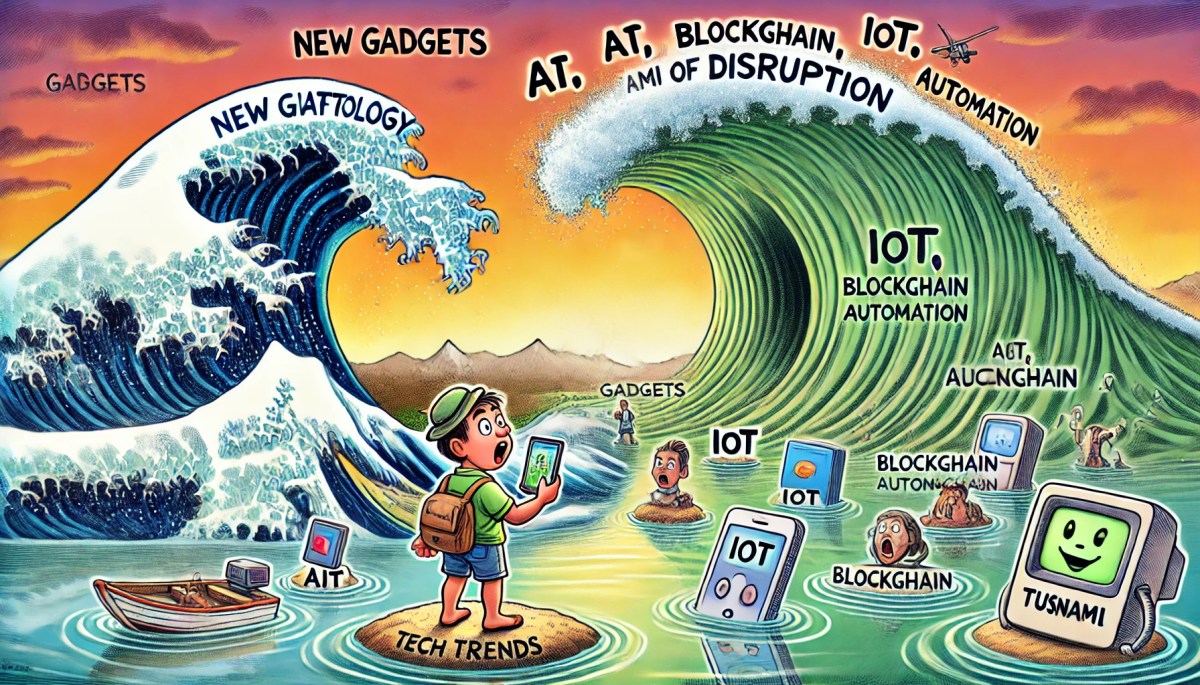
Today, let’s explore a fascinating analogy between technology waves and a tsunami and what it teaches us about embracing disruptive innovation.

This diagram gives us a vivid understanding of how small technological changes can lead to massive transformations. Let’s break it down step by step.

Based on eBook — IoT Notes by Mazlan Abbas

1. Ripples of Technology

Imagine a drop of water falling into a still pond. That single drop creates ripples that spread outward. Similarly, a single new technology creates small ripples of change. But what happens when multiple waves combine?

  • Small Waves: These represent individual technologies making minor changes.
  • Combining Waves: When multiple small technologies integrate and interact, they create larger impact waves.
  • Tsunami Effect: When these waves grow in size and momentum, they lead to a disruption — a sudden and massive transformation.

Key takeaway: New technologies don’t disrupt on their own; the integration of technologies drives large-scale changes.

2. What Happens Before a Tsunami Hits?

The analogy becomes even more powerful when we think about the moments before a tsunami strikes:

  • Sudden Signs: The beach suddenly empties of water, creating a sense of calm before the storm.
  • White Waves Appear: The signs of disruption become visible, but people often don’t take them seriously.
  • Silence: There’s an eerie pause before the massive wave crashes.
  • Unpreparedness: People on the beach are caught off guard and unable to escape.

This is a perfect metaphor for technological revolutions. They often come suddenly, fast, and disastrously for those who are unprepared.

Characteristics of a Revolution:

  • Sudden: Changes happen quickly, often without warning.
  • Disruptive: Entire industries and systems are transformed.
  • Radical Change: Traditional ways of doing things are replaced.
  • Complete: The change impacts everyone, leaving no sector untouched.

3. Surfing the IoT Waves

Let’s bring this analogy to life with the Internet of Things (IoT). Imagine you’re a surfer facing the waves of IoT innovation. How do you ride them instead of being overwhelmed?

  1. Ride the Waves: Stay updated with the latest technological trends. Learn how IoT, AI, and other advancements are shaping industries.
  2. Be Aware of the Next Wave: Just as a surfer looks for the next big wave, keep an eye on emerging technologies that could disrupt your field.
  3. Be the Innovator, Not the Laggard: Take action early. Innovate and adapt before the waves of disruption leave you behind.

4. Key Lessons from the Tsunami Analogy

  • Disruption is Inevitable: Whether you’re ready or not, technological waves will crash onto the shore of your industry.
  • Integration Drives Change: It’s not just one technology but the combination of many that create a tsunami effect.
  • Prepare, Don’t React: Those who prepare for change will thrive, while those who wait to react will struggle to keep up.

Final Thoughts

The tsunami analogy reminds us that we can’t stop the waves of technology, but we can learn to ride them. Whether IoT, AI, or another innovation, the key is to stay proactive, informed, and adaptable. Are you ready to surf the waves of change?

Let’s open the floor for questions or reflections on how you can prepare for the next big wave in your industry.

[Download full eBook IoT Notes for free]

The Top 5 Types of Articles I Wrote in 2024

ASPIRING WRITER’S STORIES

Reflecting on my Medium Writings in 2024

Photo by Joanna Kosinska on Unsplash

Reflecting on my journey as a Medium writer in 2024, I noticed recurring themes and categories in my published pieces.

These patterns reveal what I focused on, what resonated with my readers, and how I evolved as a writer.

Below is a breakdown of the five main types of articles I wrote and insights into why they mattered to me and my audience.

1. The Aspiring Writer’s Journey

stARPhoto by Jack Anstey on Unsplash

This category captures my reflections on writing as an art and a discipline. Articles like Why I Felt That Writing is an Adventure and Why Writing on Medium is Similar to Mountain Hiking explore how writing mirrors life’s challenges, requiring persistence, creativity, and self-discovery.

I also delved into practical advice for writers, such as How New Writers Can Attract More Readers and The Art of Consistency for an Entrepreneur,” offering insights gained from my struggles and triumphs. Through these articles, I aimed to inspire budding writers to embrace their unique voices, overcome self-doubt, and find joy in the process rather than just the outcome.

Why It Matters:
Writing is a deeply personal journey, and sharing my experiences helps others realise they’re not alone. Whether tackling writer’s block or celebrating small wins, these stories resonate with those seeking encouragement and guidance.

2. Startup Survival Stories

iPhoto by Marvin Meyer on Unsplash

As the CEO of Favoriot, I’ve faced numerous challenges in building a startup from scratch. Writing about these experiences helped me document and share key lessons with aspiring entrepreneurs. Articles like Favoriot and PT Lima Dua Satu Indonesia Join Forces to Boost Indonesia’s 100 Smart Cities Movement showcased real-world applications of Favoriot’s work. At the same time, About Favoriot — Part 12: The Dream of M&A Exit highlighted strategic growth milestones.

Additionally, pieces like How Favoriot Became the Top IoT Platform in Malaysia provided a behind-the-scenes look at the grit and strategy of scaling a tech business. My accounts, such as The Day I Overcame the Fear of Public Speaking and Became a Keynote Speaker,” blended entrepreneurial lessons with personal growth narratives.

Why It Matters:
These stories offer a transparent look at the highs and lows of entrepreneurship. They resonate with readers building their businesses or navigating professional challenges.

3. IoT and Technology Insights

Photo by Clint Patterson on Unsplash

As an IoT enthusiast and thought leader, I wrote extensively about the Internet of Things and its transformative potential. Articles like Understanding Industry 4.0 and Industrial Revolution 4.0 and The Crucial Role of IoT in Environmental Measurement aimed to simplify complex topics for a broader audience.

In addition to educational content, I shared practical applications of IoT, such as How IoT Projects in Universities Can Become a Commercial Success and How Favoriot Caters to Different IoT Developer Needs.” These pieces catered to both tech professionals and curious readers looking to understand the role of IoT in everyday life.

Why It Matters:
Technology can seem intimidating, but breaking it into relatable concepts makes it accessible. These articles helped bridge the gap between innovation and application, inspiring readers to explore IoT’s possibilities.

4. Influencer’s Journey

Photo by Alexander Shatov on Unsplash

As someone who actively engages on social media and other digital platforms, I explored the challenges and opportunities of being an influencer in the tech and writing spheres. Articles like The Art of Growing on X and How My Medium Followers Are 3X Lower but Earned 200X Than My TikTok reflected my efforts to balance authenticity with growth strategies.

In this category, I also touched on broader topics like the ethical dilemmas of social media (How Influencers Fake Their Way to the Top) and personal struggles, such as managing online fatigue (How to Overcome Social Media Fatigue).

Why It Matters:
Navigating the digital world is a universal challenge. By sharing my experiences, I provided readers with relatable insights into building an online presence while staying true to their values.

5. Personal Reflections and Motivational Pieces

Photo by Drew Beamer on Unsplash

Some of my most heartfelt articles were rooted in personal stories and life lessons. Pieces like The Silent Struggles of Researchers and The Power of Personal Stories captured moments of vulnerability and growth.

I also wrote motivational articles like Why You Should Write From the Heart and Every Failure Was a Step Towards Your Success. These were intended to uplift readers and encourage them to persevere through their challenges.

Why It Matters:
Personal reflections have a universal appeal. They allow readers to connect with the writer on a deeper level, finding comfort and inspiration in shared human experiences.

Key Takeaways from My Writing Themes

  1. Diverse Interests Drive Engagement:
    My articles covered various topics, from writing and IoT to entrepreneurship and personal growth. This diversity kept my content fresh and appealing to different audience segments.
  2. Authenticity Resonates:
    Authenticity was at the heart of my writing, whether sharing technical knowledge or personal anecdotes. Readers appreciate honesty and relatability, which I strived to bring to every piece.
  3. Consistency is Crucial:
    Publishing regularly helped me maintain a steady presence on Medium. This consistency improved my writing skills and strengthened my connection with readers.
  4. Storytelling Enhances Impact:
    Weaving narratives into my articles, whether about Favoriot’s journey or my struggles, made them more engaging. Stories create emotional connections that facts alone cannot.
  5. Reflection Fuels Growth:
    Writing about my experiences forced me to reflect on my journey, learn from mistakes, and celebrate progress. This process was as rewarding for me as it was valuable to my readers.

Conclusion

Writing on Medium in 2024 was more than just a creative outlet; it was a journey of self-discovery, connection, and growth.

By exploring themes of writing, entrepreneurship, technology, influence, and personal reflection, I enriched my understanding and touched the lives of readers worldwide.

Looking ahead, I aim to deepen these connections and continue sharing stories that inform, inspire, and ignite change.

After all, every word written is a step forward in an endless adventure.