How We Monetise Our IoT Product: The Odyssey of Our Third IoT Creation

Embarking on the Favoriot journey wasn’t just about developing another IoT product; it was a pivotal moment, a turning point steering us towards our dream: embedding IoT into every business’s essence.

The Birth of Raqib: A Learning Curve

Raqib, our first IoT product, didn’t come easy. It was two years of relentless work, learning, and adapting to the entrepreneurial challenges of the IoT space.

Raqib was envisioned as a comprehensive solution; hence, we meticulously searched for the perfect hardware partner, as manufacturing wearables wasn’t our forte.

This end-to-end solution also demanded a robust IoT platform for data communication, a user-friendly mobile app, and a CRM system to manage customer relationships smoothly.

Favorsense: Rapid Execution, Valuable Insights

Then came Favorsense, our second brainchild.

The market witnessed its arrival within a year, a testament to our evolved skills and understanding of the IoT terrain. The feedback was invaluable, serving as the cornerstone for refining and enhancing Favorsense to meet user expectations better.

Favorsense

The Unplanned Masterpiece: Favoriot

In the grand tapestry of product development, Favoriot emerged almost stealthily. Initially conceptualized as middleware while developing other products, it soon dawned upon us that Favoriot held immense potential as a standalone solution.

A free trial period provided crucial user insights until we introduced a pricing model in March 2019.

Navigating Through Challenges

Every product brought challenges, draining resources, time, and capital.

The country, we presumed, had abundant IoT talent to collaborate with, but reality painted a different picture.

With my association with local universities as an advisory member, it was evident that while students were eager to explore IoT, the lack of structured IoT education and an acute talent shortage hindered progress.

A Market of Untapped Potential

In the shadows of challenges, opportunities often hide.

With the IoT market expected to burgeon to a whopping $1.39 trillion by 2026 and Malaysia just beginning to embrace IoT since its official introduction in 2014, Favoriot could be the critical enabler for commercial IoT deployment and education.

Favoriot: More Than Just a Product

With every IoT deployment requiring a platform component, Favoriot was positioned as a cost-effective, cloud-based solution accessible to students for their projects and feasible for lab experiments.

It promised security, user-friendly APIs, and protocol support, offered as a Platform-as-a-Service to encourage innovation while ensuring user data ownership.

Different subscription plans, a cohesive community for shared learning, and extensive documentation and tutorials completed the package.

Learning, Adapting, Growing

However, initial responses were lukewarm, with many users gravitating towards more familiar platforms.

The tide turned as we compiled use cases and tutorials and actively promoted Favoriot through various channels, widening our user base to over 5300 across 115 countries.

Unleashing a New Wave of Talent

Now, universities are producing graduates well-versed in building IoT projects, with practical knowledge of Favoriot, ready to be the torchbearers of IoT growth in Malaysia and beyond.

Five Startup Tips from Our Journey

  1. Persistence: The entrepreneurial journey is arduous; brace yourself and persist through challenges.
  2. Continuous Learning: Absorb feedback and learn continually to refine your product and services.
  3. Invest in Talent: Recognize and nurture talent; they are the building blocks of your startup’s success.
  4. Spot Opportunities Amidst Challenges: Every problem presents an opportunity; it’s imperative to identify and leverage it.
  5. Foster a Community: Building a supportive and engaged community can be a game-changer; shared success and collective learning are invaluable.

Embark on your journey armed with these insights, and may your startup thrive and inspire!


Remember to Subscribe to receive email updates on every post I publish.

You can also follow my Medium Publications Aspiring Writer’s Journey, Influencer’s Journey, Startup Survival Journey, and IoT World.

Crafting Favorsense: Our Second IoT Endeavor Aimed at Smart Cities

Photo by Artem Beliaikin on Unsplash

Introduction

In this reflection, we’ll delve into the journey of crafting Favorsense, the second IoT product by Favoriot, designed with Smart Cities in mind.

Favorsense is a successor to our inaugural IoT product, Raqib (originally named Favorwatch), which we explored in a prior article.

The Inception: Addressing Urban Challenges

Living in the city, one must recognize the daily challenges urban infrastructure and services pose.

These range from the commonplace, like unattended garbage and potholes, to critical issues, like burst pipes and fallen trees.

Often, citizens resort to traditional complaint mechanisms — phone calls or emails to the local councils — but these reports sometimes vanish into administrative black holes, leaving the complainants frustrated and in the dark about the status of their concerns.

The Solution: Empowering Citizens Through Favorsense

Favorsense is a mobile application that is somewhat divergent from conventional IoT products as it incorporates human interaction.

It leverages the capabilities of smartphones, utilizing the camera, GPS, and sensors to gather and transmit data.

We drew inspiration from our previous experience crafting similar solutions but decided to seize this opportunity to develop an enhanced version.

Favorsense at a Glance

The application is user-friendly.

Once a city resident identifies an issue, they open Favorsense and capture a photo, which is then automatically geotagged and time-stamped, providing an accurate report of the problem’s location and time of occurrence.

This process not only facilitates ease of reporting but also aids in maintaining the integrity of the reports by preventing fraudulent complaints.

However, the app isn’t the only player in this innovative solution; it’s part of a trio. The other components include a Crowdsensing Management Platform (CMP) and a Field-Force module.

The CMP is where the appointed admin handles and escalates complaints, tracking the status and timeline of each report.

Meanwhile, the Field-Force module is where assignments are dispatched to contractors or internal teams for resolution, providing them with crucial information like the location and image of the reported issue.

The Market Potential

With over 150 councils across Malaysia, a population nearing 32.37 million, and some cities boasting populations over 500,000, the potential for Favorsense is substantial in our home country alone.

This potential is even more pronounced globally, considering there are over 10,000 cities worldwide, many of which lack a streamlined platform for citizen complaints.

Go-to-Market Strategy

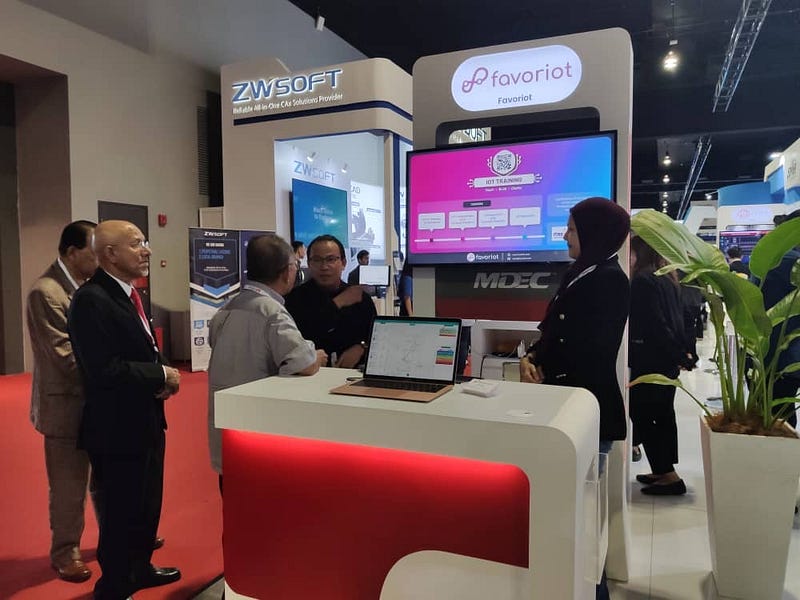
Engaging the councils directly, we pitched Favorsense through presentations and proposals, making our presence felt at Smart City conferences.

However, we adjusted our approach due to the extended sales cycles and procurement processes encountered with councils. Currently, we collaborate with the Malaysia Smart City Alliance (MSCA), sharing our proposals for various Smart City initiatives.

Valuable Lessons for Startups

Launching a product like Favorsense has been a journey filled with insights and lessons. For other startups looking to navigate the intricate IoT landscape, here are three key takeaways from our experience:

  1. Understand Your Audience: Identify and understand your target audience. Knowing the councils’ needs and pain points helped us design a product offering genuine solutions, making pitching and selling Favorsense easier.
  2. Iterate and Improve: Drawing from past experiences and products is invaluable. However, always be open to enhancing and iterating your products to meet the market’s needs better. The creation of Favorsense was grounded in our past work, but we didn’t hesitate to innovate and improve where necessary.
  3. Flexibility in Approach: Sometimes, the initial go-to-market strategy won’t yield the expected results due to unforeseen challenges. Being flexible and willing to adjust your approach, like our engagement strategy pivot is crucial to overcoming hurdles and ultimately achieving success.

Conclusion

Favorsense is a testament to Favoriot’s commitment to creating innovative IoT products and contributing positively to the functioning and management of Smart Cities.

Through this application, we envision a future where city councils and citizens collaborate efficiently, fostering urban environments that are responsive, accountable, and truly smart.

For startups embarking on a similar journey, understanding your audience, iterating, and being flexible are cardinal rules to guide your way to success.


Remember to Subscribe to receive email updates on every post I publish.

You can also follow my Medium Publications Aspiring Writer’s Journey, Influencer’s Journey, Startup Survival Journey, and IoT World.

The Power of Public Speaking: From Thought Leadership to Business Opportunities

In the bustling landscape of startups, public speaking is often perceived as just another marketing strategy. However, my journey with my startup, Favoriot, taught me that it’s much more than that. Here’s how public speaking not only established me as a thought leader in IoT, Smart Cities, and IR 4.0 but also subtly paved the way for business opportunities.

The Early Days: Building a Personal Brand

When I started out, I was often invited to share my knowledge on various tech topics. And I did, wholeheartedly. These engagements were purely knowledge-based, leaving out any mention of Favoriot. This approach was intentional, aiming to build trust and credibility without appearing overly promotional. Over time, these efforts earned me a reputation as an IoT thought leader. But while this title brought recognition and esteem, it failed to translate into tangible business leads for Favoriot.

The Pivot: Injecting Favoriot into the Narrative

I soon realized that while being recognized as an expert is rewarding, it wasn’t fulfilling my ultimate goal – to get Favoriot known in the industry. I needed a new strategy.

Instead of keeping my talks strictly academic, I began to subtly incorporate elements of Favoriot’s products and services. I showcased real-world examples of how IoT platforms, especially like ours, can build effective IoT solutions. A couple of slides bearing the Favoriot product logo turned out to be enough to sow the seeds of brand awareness.

The Impact: From Awareness to Business

Gradually, the narrative began to shift. The moment of epiphany would often come during networking sessions or casual interactions when someone would say, “Oh, you’re from Favoriot? We’ve heard of you.” That statement epitomized the change.

While turning awareness into paying customers wasn’t instantaneous, it certainly laid the groundwork. Over time, some of those who had a mere awareness of Favoriot became interested parties, and eventually, paying customers.

Conclusion: A Strategy Worth Investing In

Public speaking is a long game, especially when it’s used as a business promotion tool. However, its effects can be long-lasting and profound. By transitioning from pure knowledge-sharing to subtle brand promotion, I found a sweet spot that not only solidified my position as a thought leader but also carved out a niche for Favoriot in a crowded market.

So, to all startup enthusiasts and entrepreneurs, remember: Public speaking is not just about sharing what you know; it’s also about weaving in who you are and what you offer. That blend can be a game-changer.

Bridging Malaysia’s IoT Talent Gap: The Favoriot Way

In the expanding universe of the Internet of Things (IoT), Favoriot has carved its niche with a clear focus — IoT training. But why the emphasis on training? The answer lies in the challenges posed by offering an IoT platform-as-a-service.

1. The Reality Check of an Empty Platform

An IoT platform’s potential remains untapped if there are no takers. When Favoriot first ventured into offering its IoT platform service, the uptake was dishearteningly minimal. A dominant reason? The brand ‘Favoriot’ was a new kid on the block, unfamiliar to the tech-savvy crowd and students who leaned towards platforms they recognized like ThingSpeak, ThingsBoard, Blynk, or Azure.

2. Identifying the Gap in the Market

We noticed a pattern. The Malaysian market had more resellers of IoT products than genuine product creators. For a nation aspiring to transition from a consumer to a producer, this spelled stagnancy. There’s a gaping chasm between importing technology and producing it. To bridge this gap, the nation needed talents capable of pioneering their own IoT innovations.

3. The Favoriot Pivot to Training

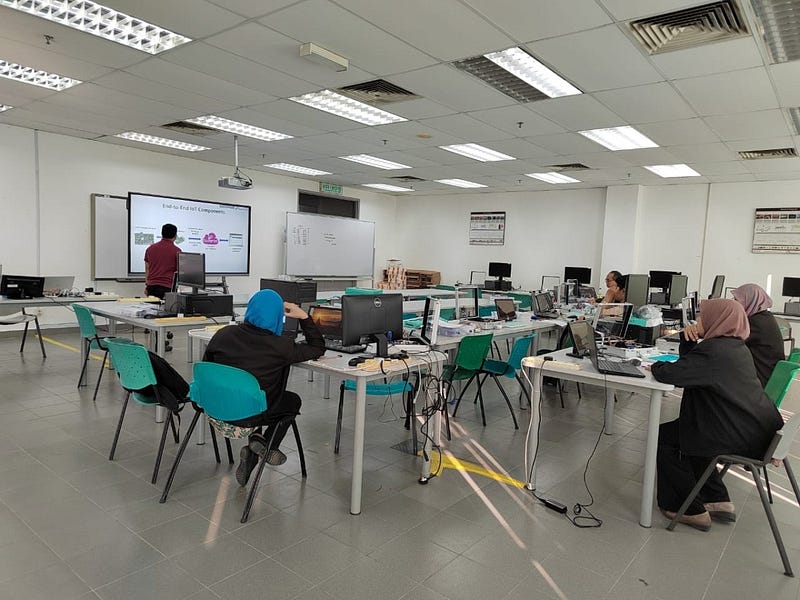
Recognizing this void, Favoriot decided to channel its energies into IoT training. From basic tenets to advanced nuances and IoT data analytics, we designed a comprehensive training regimen. The introduction of Professional Certificates was a game-changer, amplifying the professional credibility of participants.

Today, over 15 Malaysian universities have integrated the Favoriot IoT platform into their curriculum, predominantly in final year projects. Some institutions are even contemplating introducing Favoriot’s Professional Certificates, testament to its industry relevance.

4. Expanding Beyond Training

Does Favoriot’s vision culminate with training? Emphatically, no! Our IoT platform has been embraced by diverse sectors, from manufacturing and agriculture to smart cities. The training was the catalyst, the spark that ignited IoT adoption across Malaysia.

In Conclusion

Our journey at Favoriot is characterized by adaptability. We saw a need, recalibrated our strategy, and are now playing a pivotal role in Malaysia’s IoT talent evolution. As we look ahead, our commitment remains unchanged: empowering the nation through state-of-the-art IoT solutions and training.


Originally published at https://mazlanabbas.com on September 18, 2023.

The Myth of Overnight Success: The Inspirational Story of Colonel Sanders and KFC

In our society, there’s a pervasive belief that if you haven’t achieved your dreams by a certain age, you’ve missed your chance. We often hear tales of prodigies and young entrepreneurs, creating a skewed perception of success. However, the story of Colonel Harland Sanders, the founder of KFC, busts this myth wide open. At 62, an age when most people think of retiring, Sanders started what would become a global fast-food empire. But is the story as straightforward as it seems?

Colonel Sanders: Behind The Age Number

It’s tempting to see Sanders’ journey as an overnight success story that happened late in life. Yet, to fully appreciate it, one must delve into the details. From a young age, Sanders took on various jobs and faced his share of challenges. By 40, he ran a restaurant, which means he had two decades of experience in the food business before KFC became a household name. This was not a sudden leap into the unknown but a culmination of life-long learning, grit, and passion.

The Secret Recipe and Building from Scratch

Sanders’ secret chicken recipe was renowned among locals and travelers long before the brand KFC existed. This gave him a unique advantage. In contrast, many entrepreneurs, like myself with Favoriot, have to start with a blank slate, forging a brand identity and customer base from scratch.

Yet, this difference is precisely what makes the entrepreneurial journey so fascinating. Each story is unique. Every path is its own, filled with its own set of challenges, risks, and rewards. Some entrepreneurs may find smooth sailing, while others brave tumultuous storms. Some have a well-laid roadmap, while others venture through uncharted territory.

Entrepreneurship: A Journey of Resilience

The tale of Colonel Sanders is not one of immediate success but of persistence. He faced numerous rejections before his recipe was accepted. The narrative underscores that it’s not about when you start but how you persevere.

For those of us in the entrepreneurial world, these stories resonate deeply. Our journeys may differ in detail, but the underlying themes remain consistent. Determination, resilience, and adaptability are paramount.

In Conclusion

Colonel Sanders’ story with KFC is not just about age but about resilience, experience, and the value of never giving up. For budding entrepreneurs, his journey is a beacon of hope and a testament to the fact that it’s never too late to chase your dreams. Every journey is unique, and while not all paths will lead to global success, they all provide lessons that shape and enrich us.

Remember, entrepreneurship is less about the destination and more about the journey, the lessons learned, and the passion that drives you.

Facing the Fear: My Reluctant Leap into the Startup World

Building a startup is no small feat. But sometimes, it isn’t the practical challenges that seem insurmountable – it’s the mental barriers we impose on ourselves. My journey from dreaming of robots to hesitating at the brink of entrepreneurship, and finally taking the plunge, is a testament to this very sentiment.

Childhood Ambitions: A Different Kind of Dream

As a child, the allure of science was undeniable. The ambition was singular: become a scientist, create robots, and make a dent in the technological world. Entrepreneurship was a path I’d never considered. In my eyes, it belonged to a different breed of dreamers.

Career Evolutions: The Safe Harbor

Life led me from the academic hallways of a university to the structured realms of the corporate world. My aspirations, while ambitious, were safely nested within known territories. The title of a Chief Technology Officer was my North Star. The CEO’s chair? That felt like an aspiration for someone else, someone more daring.

A Glimpse into Possibilities: Silicon Valley

2016 brought with it a paradigm shift. Silicon Valley was an eye-opener. Everywhere I looked, there were pioneers building their dreams, undeterred by age, background, or experience. The air was thick with innovation and courage. But despite this inspiration, my internal battles raged on. Could someone in their 50s, with no experience in building a company from the ground up, truly become a founder?

Confronting My Fears: The Realization

The hurdles seemed endless: no product, no team, no market understanding, and certainly no revenue. Yet, beneath these tangible concerns was an underlying fear of the unknown. I had built a narrative that entrepreneurship was a young person’s game, and my time had passed. But as the adage goes, “Better late than never.” I took a leap of faith.

The Entrepreneurial Grind: A Journey of Discovery

Embarking on this journey has reshaped my perspective. While books offer wisdom, it’s the lived experiences – the tough calls, the sleepless nights, the highs and lows – that truly illuminate the entrepreneurial path. It’s a road less traveled, filled with challenges but also unmatched learning and growth.

Conclusion: A Tribute to the Fearless

Today, as a founder, my respect has deepened for those who dare to dream and act, regardless of the odds. It’s a tough journey, but to every entrepreneur out there, know that you’re not alone. And for those hesitating on the brink due to self-imposed limitations, remember: the best time to start was yesterday, the next best time is now.

Multiple Revenue Streams from a Single Product: The Favoriot IoT Platform Experience

In today’s business landscape, diversifying revenue streams is not just a strategy; it’s a necessity. When we initially introduced the Favoriot IoT platform as a service, our vision was singular – a subscription model. Yet, the journey unfolded layers of potential we hadn’t initially perceived.

1. Subscription: The Starting Point

Our journey began with the primary notion that users would subscribe to our platform for consistent access and updates. It was a straightforward revenue model, and it worked.

2. IoT Training & Certification: Leveraging Expertise

Soon, we realized the potential of intertwining education with our product. The IoT domain was booming, and a knowledge gap existed. We stepped in to offer IoT training, capitalizing on the platform itself as the main tool. This approach gave users hands-on experience. Furthermore, with the Favoriot professional certificates, we created a brand-centric credibility in the IoT sector.

3. On-Premise Licensing: Meeting Diverse Needs

Recognizing the diverse needs of different businesses, we shifted from solely an online subscription model. Some firms desired the reliability and control that came with on-premise solutions. So, we offered a perpetual licensing model, catering to those who wanted the platform within their infrastructural bounds.

4. Hardware Bundling: Enhancing Product Value

As the IoT universe expanded, we saw manufacturers eager to streamline their user experience by bundling their hardware with reliable software. By integrating their hardware with the Favoriot platform subscription, we achieved a synergy, creating a more comprehensive product for the end-user.

5. Tailored IoT Solutions: Expanding Horizons

Our final eureka moment was identifying the need for industry-specific IoT solutions. Companies approached us with unique challenges, and we saw the opportunity to tailor our platform to fit diverse verticals. This not only opened new revenue channels but also positioned Favoriot as a versatile, adaptive, and solution-centric platform.

Conclusion: The Core and the Expansions

Favoriot started as a singular platform but evolved into a nucleus around which myriad revenue streams revolved. From IoT education to product development and solution deployment, Favoriot became synonymous with versatility in the IoT domain. Our journey is testament to the fact that a single product, when viewed with an innovative lens, can sprout multiple avenues of income and value creation.

Why ‘Picking My Brain’ Isn’t Free Anymore: A Business Perspective

Back in the day, the question “Can I pick your brain?” was music to my ears. As someone eager to impart knowledge and share experiences, I always took these requests as compliments. I believed it was a testament to the value others saw in my insights.

The Early Days: Open Arms and Open Doors

In the beginning, I was a beacon of assistance. Why? Primarily, I had the luxury of time. I could afford to spare an hour or two to discuss ideas, provide feedback, or simply share my perspective on things. It was immensely gratifying, knowing that people saw me as a source of valuable information. Moreover, I genuinely enjoyed sharing. After all, isn’t knowledge most valuable when it’s shared?

The Middle Phase: The Emergence of Doubt

However, as time went on and my calendar started to bulge at the seams, a new sentiment started to creep in. Each “Can I pick your brain?” began to feel less like an innocent request and more like an intrusion into my already packed schedule. The intention behind the question also began to blur. Was it truly about seeking knowledge, or was there an underlying motive? Was I inadvertently feeding potential competitors? Were these sessions providing equal value to my business, or was I merely acting as a free consultancy service?

The Reality Check: Quantifying the ROI

After countless coffee dates, luncheons, and brainstorming sessions, I took a moment to reflect. How many of these interactions led to tangible opportunities for my company? Unfortunately, the answer was: very few. It seemed that the balance of value had tipped. While I was pouring out insights, expertise, and time, there wasn’t much trickling back in.

The Present: A More Guarded Approach

Nowadays, my approach to these requests has matured. My time, just like anyone’s, is finite and valuable. I’ve become more discerning. It’s not about being unapproachable or stingy with knowledge. Instead, it’s about ensuring that any interaction is mutually beneficial. The objective isn’t to shut doors but to ensure that both parties walk away feeling enriched.

To those who genuinely seek knowledge and collaboration, my door remains open. However, the days of one-sided “brain-picking” are firmly in the rearview mirror. The ultimate lesson? Time is a resource, and like any resource, it needs to be managed wisely. As much as I love to help, it’s essential to remember that every professional interaction should be a two-way street.

Building the Favoriot Brand: My Journey Through Alternative Media Channels

Starting a small startup like Favoriot comes with its own set of challenges, one of the biggest being visibility. When traditional media channels like TV and radio are often too costly or selective, it’s time to get creative. Here’s my personal account of how we used alternative mediums, primarily social media channels, to build and promote the Favoriot brand.

The Dilemma: Traditional Media vs. Budget Constraints

Getting featured on mainstream media is a dream for many startups, but the reality is harsh. Either you’re compelling enough to get picked up organically, or you pay a premium to make it happen. For a small startup, both options are challenging. This is why we turned to the more budget-friendly and engaging world of social media for our marketing needs.

Our Alternative Media Arsenal

We realized that for every traditional media channel that seemed out of reach, there was an alternative platform online that could be just as effective:

  • Podcasts Instead of Radio: We started our own podcast series, sharing industry insights, interviewing experts, and discussing our journey. It’s a fantastic way to create a more personal connection with our audience.
  • YouTube Instead of TV: We launched a YouTube channel, using it as a platform to showcase product demos, customer testimonials, and behind-the-scenes footage of life at Favoriot.
  • Digital Posters: We replaced expensive billboards with visually striking digital posters on platforms like Instagram and Pinterest.
  • Blogs Instead of Newspapers: Our blog serves as a hub for sharing valuable content, from how-to guides to industry trends, keeping our audience informed and engaged.

Zeroing In: Focusing on High-Impact Channels

We started by casting a wide net across various platforms, but soon noticed that some channels yielded better results in terms of engagement and followers. After some analysis, we narrowed our focus to TikTok, YouTube, Facebook, and LinkedIn. These platforms provided the right audience and the engagement metrics we were looking for.

More Than Just Sales: Building Trust and Brand Recognition

Our goal was not just to drive sales, but to create a brand that people could know and trust. We are continuously sharing updates, celebrating milestones, and telling stories that resonate with our audience. Whether they make a purchase now or later is secondary; we want Favoriot to be a brand that people remember and recommend.

Lessons Learned

  • Be Adaptable: Not all channels will work for you. Don’t hesitate to pivot when needed.
  • Content is King: Good quality content can make a significant difference in engagement.
  • Consistency is Key: Keeping a consistent posting schedule helps keep the brand fresh in the minds of the public.

Conclusion

Building the Favoriot brand using alternative media channels has been an enlightening journey. It has taught us that you don’t need a big budget to make a big impact. By using the resources available to us wisely and focusing on building a strong, trustworthy brand, we’ve succeeded in carving out our own space in the market. And this is just the beginning.