Building a Stronger Ecosystem: Entrepreneurs Supporting Entrepreneurs

“Why look elsewhere when we have everything we need right here?” This thought often crosses my mind when I see local entrepreneurs opting for foreign solutions instead of tapping into the innovation happening in their own backyard.

Entrepreneurship isn’t just about building a business—it’s about contributing to a thriving ecosystem where companies grow together. Shouldn’t we start by supporting each other if we expect others to help our ventures?

1. The Foundation of a Thriving Ecosystem

Entrepreneurship education should teach students not just how to start businesses but also how to sustain them within a supportive ecosystem. Every successful startup is part of a larger network—whether they realise it or not.

If we continue to rely on foreign products and solutions while expecting our businesses to thrive, we are working against ourselves. We need to shift the mindset from competition to collaboration.

2. Why Not Build on Local Strengths?

If we build a local product, why not use supporting tools or technology developed by our innovators? The biggest irony is when a startup seeks government funding to create a product but then spends that money on foreign services.

Take IoT projects, for example—why use a foreign IoT platform when Favoriot offers a local alternative? Whenever we choose a local solution, we strengthen the foundation for future entrepreneurs, creating more opportunities within our ecosystem.

3. Overcoming Challenges Together

Starting a business is tough. Every entrepreneur struggles to find the right tools, market, and funding. But these challenges become easier when we work together.

Universities, startups, and industry leaders must collaborate to create an environment where new businesses can succeed. Education should go beyond just theories—it should teach students how to leverage local resources and networks. No entrepreneur succeeds alone.

4. Choosing Local: More Than Just Patriotism

Supporting local businesses isn’t just about national pride but sustainability. If we don’t create demand for our own products, who will? Entrepreneurs need customers to survive, and the best place to start is within our ecosystem.

The tech industry, in particular, is an area where local startups can and should work together. From software to hardware, we have the talent and expertise—what we need is trust in our own capabilities.

5. Building for the Future

An ecosystem doesn’t thrive by accident. It requires conscious effort, continuous collaboration, and a willingness to support one another. Universities need to instil this mindset early—teaching students to be entrepreneurs and ecosystem builders.

When startups work together, share resources, and choose local solutions, they create a self-sustaining environment that benefits everyone.

Final Thoughts

We must start by supporting our own ecosystem to see our startups succeed. That means choosing local technology, forming partnerships with local businesses, and believing in our capabilities.

A thriving ecosystem doesn’t just help today’s entrepreneurs—it lays the groundwork for future generations. So the next time you build something, ask yourself: “Am I helping the ecosystem grow, or am I just taking from it?”

What Experiences in Life Helped Me Grow the Most?

I often ask myself—what were the turning points in my life that shaped who I am today? Were they the moments of success, or the times I stumbled and fell?

Life is a constant journey of growth, and the experiences that shape us the most aren’t always the easiest. In my case, several key moments in my life helped me evolve—not just as a professional in the tech industry but as a person. These experiences range from my childhood curiosity about science fiction to my transition from academia to entrepreneurship. Every phase brought new lessons, unexpected challenges, and growth that I could never have predicted.

1. Childhood Curiosity: The Seed of Exploration

I grew up fascinated by science fiction. The Jetsons, Land of the Giants, DC Comics—these weren’t just entertainment for me. They were glimpses into the future I wanted to be part of. I was obsessed with technology before I even understood what it really meant. My love for science fiction wasn’t just about flying cars and futuristic cities; it was about the endless possibilities that technology could offer.

This curiosity led me to engineering. I wanted to understand how things worked, how technology evolved, and how it could shape the world. Looking back, my childhood fascination with futuristic gadgets planted the seed of exploration in me. It taught me the value of imagination—a crucial skill that would later help me innovate in the IoT industry.

2. My First Job: The Reality Check

Like most fresh graduates, I entered my first job with excitement and idealism. I was eager to prove myself. My first major role was in CELCOM Axiata, a leading telecom company. I thought I knew a lot. I thought my academic knowledge would be enough. But within the first few months, I realized something—university had only given me theories, not the reality of working in a corporate environment.

I had to deal with deadlines, decision-making under pressure, and—most importantly—people. I had to learn how to navigate office politics, how to communicate my ideas effectively, and how to handle failure. This experience was humbling. It was a reality check that forced me to become adaptable, resilient, and willing to learn from mistakes. It was during this phase that I realized—growth comes when you’re uncomfortable.

3. Moving into the Government Sector: A Shift in Perspective

After years in the corporate world, I transitioned into MIMOS Berhad, a government research agency. If working in a telco was fast-paced and business-driven, MIMOS was the opposite—it was about long-term innovation, research, and policies. I suddenly found myself in a world of bureaucracy, funding approvals, and national development plans.

At first, it frustrated me. Why was everything so slow? Why did decision-making take so long? But then I understood—the stakes were different. In the corporate world, time was money. In the government sector, time was strategy. Every project had to align with national goals and long-term sustainability.

This experience taught me patience and strategic thinking. I learned to see the bigger picture. It also gave me insights into how governments operate—a lesson that would later prove invaluable when working on smart city projects.

4. Academia: The Teacher Becomes the Student

Becoming an Adjunct Professor was an entirely different challenge. I was used to being an industry leader, but now, I had to teach and mentor students. How do I translate real-world experience into something a classroom full of young minds can absorb?

Academia forced me to simplify complex concepts, to make technology accessible. It also reminded me of the importance of curiosity. Students asked questions that I never thought about. They challenged my assumptions. They pushed me to rethink what I thought I knew.

Teaching wasn’t just about giving knowledge—it was about learning from fresh perspectives. This role helped me refine my ability to communicate complex ideas in a way that made sense to people outside the industry. This skill became crucial when I started writing and giving keynote speeches.

5. The Entrepreneurial Leap: Starting FAVORIOT

Nothing in my life tested my resilience more than starting my own company, FAVORIOT. I had spent years working in large organizations with stable salaries and structured environments. But when I stepped into the world of entrepreneurship, I realized something—no one tells you how hard it really is.

Starting FAVORIOT meant wearing multiple hats—CEO, marketer, salesperson, product manager, and sometimes even customer support. It meant dealing with financial uncertainty, pitching to investors, and convincing clients to trust a new brand.

The biggest lesson? Failure is part of the journey.

There were months when we struggled to get traction. There were moments when I questioned my decision—Did I make a mistake leaving my stable career? Will this ever work? But every setback forced me to adapt, to innovate, and to push forward.

Entrepreneurship taught me that growth isn’t about avoiding failure—it’s about learning how to get back up, over and over again.

6. Public Speaking and Writing: The Unexpected Growth

I never considered myself a writer or a speaker. Yet, as I built my brand, I found myself on global stages, delivering keynote speeches on IoT, smart cities, and entrepreneurship. I started writing articles, sharing my experiences, and engaging with audiences online.

At first, it was uncomfortable. What if no one reads my articles? What if my talks aren’t engaging? But I soon realized that sharing knowledge is one of the best ways to grow. Writing helped me refine my thoughts. Speaking helped me build confidence. And both helped me connect with people from around the world.

I learned that growth often happens when you step outside your comfort zone and do things you never imagined yourself doing.

7. The Personal Lessons: Family and Balance

Through all these professional experiences, the biggest lessons came from my personal life. Balancing work, family, and personal aspirations is never easy. There were times when I was too focused on my career, neglecting the people who mattered most.

It took me years to realize that success means nothing if you don’t have people to share it with. Learning to prioritize family, to make time for moments that truly matter—that was one of the hardest but most important lessons of all.

Final Thoughts: Growth Never Stops

Looking back, the experiences that helped me grow the most weren’t the easy ones. They were the challenges, the failures, and the uncomfortable transitions. They were the moments that pushed me to adapt, to question myself, and to keep moving forward even when I felt like giving up.

Growth is not about reaching a final destination. It’s a continuous journey. And if there’s one thing I’ve learned, it’s this—the best way to grow is to keep challenging yourself, keep learning, and never stop exploring new possibilities.

Get Your FREE IoT eBook Now – Limited Time Offer!

Want to start an IoT project but don’t know where to begin?

I get it. IoT is exciting yet overwhelming—so many components, protocols, architectures, and business models. You’ve probably asked yourself:

“Where do I even start?”
“Which IoT platform should I use?”
“How do I build a scalable solution?”

That’s precisely why I wrote “IoT Notes”—a simple, structured, and no-nonsense guide to help you kickstart your IoT journey without confusion.

Why This eBook is Essential for IoT Beginners & Professionals

The Internet of Things is not the future—it’s NOW. Businesses, industries, and even everyday life are being revolutionized by IoT. If you don’t learn about it today, you risk falling behind.

📖 “IoT Notes” covers everything you need to understand, plan, and implement IoT solutions:

What is IoT? (Explained simply, without the tech jargon)
How IoT helps fight COVID-19 (Real-world case studies)
IoT & the Fourth Industrial Revolution – Why now is the best time to get involved
How IoT impacts businesses – Key success factors and challenges
7 IoT Business Models – How to monetize IoT solutions
Comparing IoT protocols – MQTT vs HTTP, LPWAN, and network choices
IoT architecture & system integration – How everything connects
Top 10 skills to become an IoT Engineer
Favoriot IoT Platform – How to get started for free!
And much more! (Subscribers get free future updates!)

📥 Download “IoT Notes” for FREE – Limited Time Only!

Yes, you read that right. It’s FREE! But if you find it valuable, you can choose to support future content with a small contribution.

🔗 Click here to grab your free copy now!

IoT is shaping the world—don’t get left behind. Download the eBook now and take your first step into the IoT revolution! 🚀

See you inside!

Dr. Mazlan Abbas
IoT Evangelist | Favoriot Co-Founder

Ripples of Technology and the Tsunami of Disruption

IOT NOTES

Lecture Notes

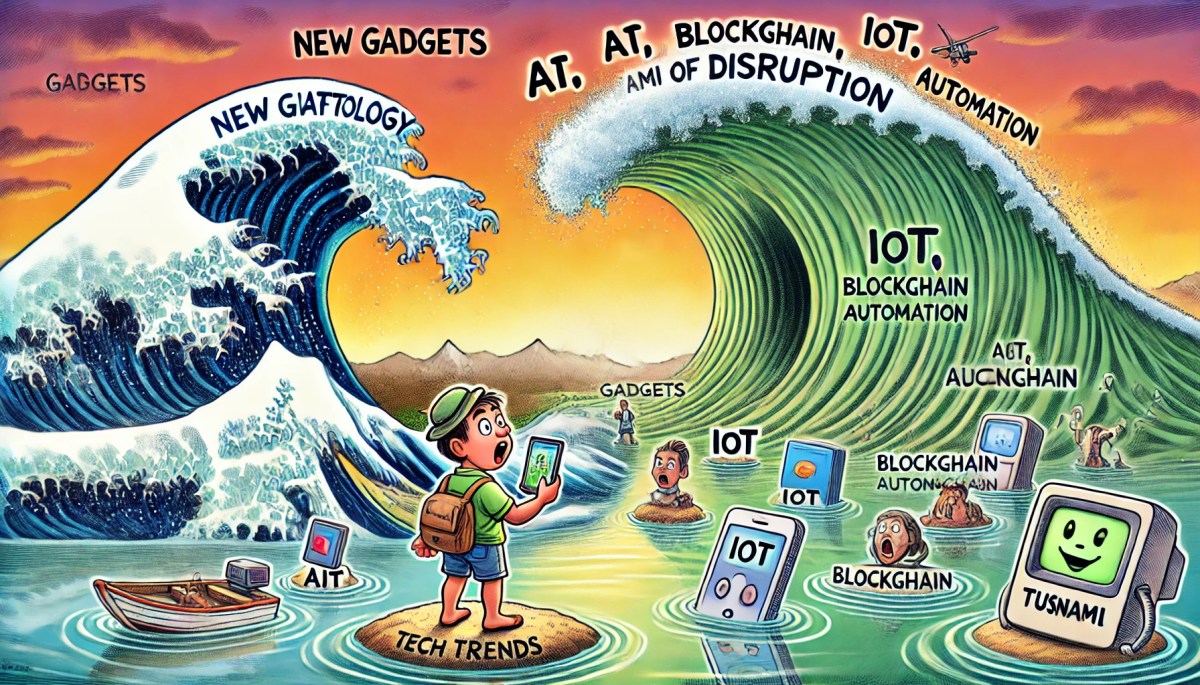
Today, let’s explore a fascinating analogy between technology waves and a tsunami and what it teaches us about embracing disruptive innovation.

This diagram gives us a vivid understanding of how small technological changes can lead to massive transformations. Let’s break it down step by step.

Based on eBook — IoT Notes by Mazlan Abbas

1. Ripples of Technology

Imagine a drop of water falling into a still pond. That single drop creates ripples that spread outward. Similarly, a single new technology creates small ripples of change. But what happens when multiple waves combine?

  • Small Waves: These represent individual technologies making minor changes.
  • Combining Waves: When multiple small technologies integrate and interact, they create larger impact waves.
  • Tsunami Effect: When these waves grow in size and momentum, they lead to a disruption — a sudden and massive transformation.

Key takeaway: New technologies don’t disrupt on their own; the integration of technologies drives large-scale changes.

2. What Happens Before a Tsunami Hits?

The analogy becomes even more powerful when we think about the moments before a tsunami strikes:

  • Sudden Signs: The beach suddenly empties of water, creating a sense of calm before the storm.
  • White Waves Appear: The signs of disruption become visible, but people often don’t take them seriously.
  • Silence: There’s an eerie pause before the massive wave crashes.
  • Unpreparedness: People on the beach are caught off guard and unable to escape.

This is a perfect metaphor for technological revolutions. They often come suddenly, fast, and disastrously for those who are unprepared.

Characteristics of a Revolution:

  • Sudden: Changes happen quickly, often without warning.
  • Disruptive: Entire industries and systems are transformed.
  • Radical Change: Traditional ways of doing things are replaced.
  • Complete: The change impacts everyone, leaving no sector untouched.

3. Surfing the IoT Waves

Let’s bring this analogy to life with the Internet of Things (IoT). Imagine you’re a surfer facing the waves of IoT innovation. How do you ride them instead of being overwhelmed?

  1. Ride the Waves: Stay updated with the latest technological trends. Learn how IoT, AI, and other advancements are shaping industries.
  2. Be Aware of the Next Wave: Just as a surfer looks for the next big wave, keep an eye on emerging technologies that could disrupt your field.
  3. Be the Innovator, Not the Laggard: Take action early. Innovate and adapt before the waves of disruption leave you behind.

4. Key Lessons from the Tsunami Analogy

  • Disruption is Inevitable: Whether you’re ready or not, technological waves will crash onto the shore of your industry.
  • Integration Drives Change: It’s not just one technology but the combination of many that create a tsunami effect.
  • Prepare, Don’t React: Those who prepare for change will thrive, while those who wait to react will struggle to keep up.

Final Thoughts

The tsunami analogy reminds us that we can’t stop the waves of technology, but we can learn to ride them. Whether IoT, AI, or another innovation, the key is to stay proactive, informed, and adaptable. Are you ready to surf the waves of change?

Let’s open the floor for questions or reflections on how you can prepare for the next big wave in your industry.

[Download full eBook IoT Notes for free]

The Top 5 Types of Articles I Wrote in 2024

ASPIRING WRITER’S STORIES

Reflecting on my Medium Writings in 2024

Photo by Joanna Kosinska on Unsplash

Reflecting on my journey as a Medium writer in 2024, I noticed recurring themes and categories in my published pieces.

These patterns reveal what I focused on, what resonated with my readers, and how I evolved as a writer.

Below is a breakdown of the five main types of articles I wrote and insights into why they mattered to me and my audience.

1. The Aspiring Writer’s Journey

stARPhoto by Jack Anstey on Unsplash

This category captures my reflections on writing as an art and a discipline. Articles like Why I Felt That Writing is an Adventure and Why Writing on Medium is Similar to Mountain Hiking explore how writing mirrors life’s challenges, requiring persistence, creativity, and self-discovery.

I also delved into practical advice for writers, such as How New Writers Can Attract More Readers and The Art of Consistency for an Entrepreneur,” offering insights gained from my struggles and triumphs. Through these articles, I aimed to inspire budding writers to embrace their unique voices, overcome self-doubt, and find joy in the process rather than just the outcome.

Why It Matters:
Writing is a deeply personal journey, and sharing my experiences helps others realise they’re not alone. Whether tackling writer’s block or celebrating small wins, these stories resonate with those seeking encouragement and guidance.

2. Startup Survival Stories

iPhoto by Marvin Meyer on Unsplash

As the CEO of Favoriot, I’ve faced numerous challenges in building a startup from scratch. Writing about these experiences helped me document and share key lessons with aspiring entrepreneurs. Articles like Favoriot and PT Lima Dua Satu Indonesia Join Forces to Boost Indonesia’s 100 Smart Cities Movement showcased real-world applications of Favoriot’s work. At the same time, About Favoriot — Part 12: The Dream of M&A Exit highlighted strategic growth milestones.

Additionally, pieces like How Favoriot Became the Top IoT Platform in Malaysia provided a behind-the-scenes look at the grit and strategy of scaling a tech business. My accounts, such as The Day I Overcame the Fear of Public Speaking and Became a Keynote Speaker,” blended entrepreneurial lessons with personal growth narratives.

Why It Matters:
These stories offer a transparent look at the highs and lows of entrepreneurship. They resonate with readers building their businesses or navigating professional challenges.

3. IoT and Technology Insights

Photo by Clint Patterson on Unsplash

As an IoT enthusiast and thought leader, I wrote extensively about the Internet of Things and its transformative potential. Articles like Understanding Industry 4.0 and Industrial Revolution 4.0 and The Crucial Role of IoT in Environmental Measurement aimed to simplify complex topics for a broader audience.

In addition to educational content, I shared practical applications of IoT, such as How IoT Projects in Universities Can Become a Commercial Success and How Favoriot Caters to Different IoT Developer Needs.” These pieces catered to both tech professionals and curious readers looking to understand the role of IoT in everyday life.

Why It Matters:
Technology can seem intimidating, but breaking it into relatable concepts makes it accessible. These articles helped bridge the gap between innovation and application, inspiring readers to explore IoT’s possibilities.

4. Influencer’s Journey

Photo by Alexander Shatov on Unsplash

As someone who actively engages on social media and other digital platforms, I explored the challenges and opportunities of being an influencer in the tech and writing spheres. Articles like The Art of Growing on X and How My Medium Followers Are 3X Lower but Earned 200X Than My TikTok reflected my efforts to balance authenticity with growth strategies.

In this category, I also touched on broader topics like the ethical dilemmas of social media (How Influencers Fake Their Way to the Top) and personal struggles, such as managing online fatigue (How to Overcome Social Media Fatigue).

Why It Matters:
Navigating the digital world is a universal challenge. By sharing my experiences, I provided readers with relatable insights into building an online presence while staying true to their values.

5. Personal Reflections and Motivational Pieces

Photo by Drew Beamer on Unsplash

Some of my most heartfelt articles were rooted in personal stories and life lessons. Pieces like The Silent Struggles of Researchers and The Power of Personal Stories captured moments of vulnerability and growth.

I also wrote motivational articles like Why You Should Write From the Heart and Every Failure Was a Step Towards Your Success. These were intended to uplift readers and encourage them to persevere through their challenges.

Why It Matters:
Personal reflections have a universal appeal. They allow readers to connect with the writer on a deeper level, finding comfort and inspiration in shared human experiences.

Key Takeaways from My Writing Themes

  1. Diverse Interests Drive Engagement:
    My articles covered various topics, from writing and IoT to entrepreneurship and personal growth. This diversity kept my content fresh and appealing to different audience segments.
  2. Authenticity Resonates:
    Authenticity was at the heart of my writing, whether sharing technical knowledge or personal anecdotes. Readers appreciate honesty and relatability, which I strived to bring to every piece.
  3. Consistency is Crucial:
    Publishing regularly helped me maintain a steady presence on Medium. This consistency improved my writing skills and strengthened my connection with readers.
  4. Storytelling Enhances Impact:
    Weaving narratives into my articles, whether about Favoriot’s journey or my struggles, made them more engaging. Stories create emotional connections that facts alone cannot.
  5. Reflection Fuels Growth:
    Writing about my experiences forced me to reflect on my journey, learn from mistakes, and celebrate progress. This process was as rewarding for me as it was valuable to my readers.

Conclusion

Writing on Medium in 2024 was more than just a creative outlet; it was a journey of self-discovery, connection, and growth.

By exploring themes of writing, entrepreneurship, technology, influence, and personal reflection, I enriched my understanding and touched the lives of readers worldwide.

Looking ahead, I aim to deepen these connections and continue sharing stories that inform, inspire, and ignite change.

After all, every word written is a step forward in an endless adventure.

The Illusion of Support: When So-Called Friends Disappear After the First Meeting

“Wah! Your company is doing great things! We should collaborate.”

“I love your work! Let’s find a way to work together.”

“This is amazing. We should set up a meeting and explore synergies.”

Sounds familiar? Suppose you’ve been in business long enough. In that case, you’ve probably encountered these so-called friends—people who seem enthusiastic about your work, promise collaborations, and show support on social media but never follow through. They say all the right things, but when the time comes for real action, they are nowhere to be found.

I’ve had my fair share of these experiences, and if you’re reading this, chances are you have, too. The question is, how do we deal with them?

The False Promises and Vanishing Acts

I can’t count the number of times people have approached me, full of excitement, praising my work and proposing collaborations.

“We should do something together! Let’s schedule a meeting.”

We meet. The discussion is excellent. Ideas flow. There is a sense of excitement as if something big is about to happen.

“Let’s catch up again over teh tarik next week!”

Next week? Nothing.

The week after? Silence.

I follow up—no reply.

Then, I saw them making moves and giving presentations where they should have mentioned our partnership. But they don’t. I see them securing deals and projects that align with what we discussed. Do they call me? No.

But wait—on social media, they are my biggest cheerleaders.

“Congratulations! Keep it up!”

“Awesome work! Proud of you!”

Likes, comments, claps, emojis. But that’s where their support ends.

Why Do People Behave This Way?

I used to ask myself, Why do people do this? Why show so much interest but never act on it?

1. They Love the Idea of Association

Some people like to associate themselves with successful projects and companies. Being seen as connected to an industry leader or an innovative startup makes them look good.

They enjoyed the first meeting and maybe even took a photo to post online (“Great discussion with XYZ company today! Exciting things ahead!”), but they were never serious about working together.

2. They Want to Keep the Door Open—Just in Case

They may not need your business today, but they don’t want to completely burn the bridge. So, they keep engaging, liking, and commenting—just enough to maintain the connection.

If they ever need something from you in the future, they want to be able to reach out without feeling awkward.

3. They Are Just Buying Time

Some individuals make promises without knowing how to execute them. They might not have the decision-making power or are waiting to see if something better comes along.

Meanwhile, you’re waiting, thinking something will materialize—until you realize they were never serious in the first place.

4. They Are Just Looking for Attention

Many people engage with businesses not to support them but to boost their own visibility. They comment and congratulate you not because they genuinely care but because they want to be seen as part of your network.

It’s a branding strategy for them.

Recognizing the Patterns

Over time, I started recognizing the patterns.

  1. The Over-Enthusiastic Starters
    • They hype you up but disappear after the first meeting.
    • You never hear from them again unless you chase them.
  2. The Serial Promisers
    • They say, “We must work together!” whenever they meet you.
    • Nothing ever materializes.
  3. The Silent Opportunists
    • They borrow ideas from your discussions and execute them elsewhere.
    • They never credit you or include you in the project.
  4. The Social Media Supporters
    • They engage with your posts, leaving congratulatory comments.
    • But when they have opportunities, they never involve you.

How to Overcome This Challenge?

It took me a while to figure out how to navigate these situations. Here’s what I’ve learned:

1. Filter Out the Noise

Not everyone who says they want to collaborate actually means it. Learn to differentiate between real potential partners and those who just like the idea of working with you.

Look for actions, not words.

If someone repeatedly makes promises but never follows through, stop wasting time waiting for them.

2. Set Clear Expectations from the Start

When someone approaches you with an opportunity, be direct.

“That sounds great. What’s the next step?”

If they are serious, they will have an answer. If they hesitate or keep it vague, take it as a sign.

3. Limit Follow-Ups

I used to chase people, sending reminders and follow-ups. Not anymore.

A simple message like, “Hey, just checking in on our discussion. Let me know if you’re still keen.”

If they don’t respond, move on. Don’t waste your energy.

4. Protect Your Ideas

Be mindful of what you share in meetings. Some people just want to extract valuable insights and apply them elsewhere.

Be cautious if you sense that someone is fishing for ideas rather than genuinely wanting to collaborate.

5. Build a Stronger Network of Genuine Supporters

It’s easy to focus on the people who let us down, but the truth is—there are real supporters out there.

Find and nurture relationships with people who genuinely believe in your work and are willing to take action.

6. Focus on Those Who Show Up

Rather than worrying about those who never follow through, give your time and energy to those who do.

The best partnerships happen with people who:
✔ Keep their commitments.
✔ Follow up without being chased.
✔ Include you in opportunities without hesitation.

Final Thoughts: It’s Just Part of the Game

It’s easy to get frustrated with these so-called friends, but the reality is—it’s just part of the game.

People will always say things they don’t mean. They will engage with you for their own reasons, and not all will be genuine.

But that’s okay.

Because once you recognize these patterns, you stop expecting too much. You learn to focus on real opportunities and avoid unnecessary disappointments.

So, the next time someone says, “Let’s work together!”—just smile and think to yourself:

“Let’s see if you mean it.”

The Story of Favoriot – Part 20: The Power of Belief in a Startup Journey

The Law of Attraction: How It Brought FAVORIOT to Life

Sitting in my quiet office one evening, I stared at the stack of notebooks on my desk. Each page held scribbles of ideas, lessons learned, and reflections on my journey. I leaned back in my chair and thought about how it all began.

How did a fleeting idea become FAVORIOT, a company now empowering businesses with IoT solutions?

I realized it wasn’t just my technical expertise or industry experience that made this happen—it was something more profound. It was belief. More specifically, it was the Law of Attraction at play.

Planting the Seed of Belief

Years ago, before FAVORIOT even existed, I questioned my purpose. I have worked in corporate environments, government agencies, and universities. Each role taught me valuable lessons, but something was missing—a sense of fulfilment. I wasn’t creating something of my own.

While reading about entrepreneurs who transformed their dreams into reality one evening, a question struck me.

“What if I could build something that truly impacts the world?”

The thought lingered in my mind. I started visualizing it.

I pictured a company that would simplify IoT for businesses, a platform to bring value to the community, and a name that resonated with our mission.

At that moment, FAVORIOT was born—not in reality, but in my mind.

From Visualization to Reality

The Law of Attraction isn’t magic—it requires action.

I knew that merely dreaming about FAVORIOT wouldn’t bring it to life. But I also knew that every action begins with a belief.

I started writing down ideas, sketching business models, listing potential collaborators, and outlining the challenges ahead.

“Can I do this?” I often asked myself, battling self-doubt.

Each time doubt crept in, I countered it with positivity.

“Yes, you can. You have the knowledge, the experience, and most importantly, the passion.”

I repeated these words to myself daily, like a mantra. The more I believed in FAVORIOT, the more the universe conspired to make it happen.

Attracting the Right People and Opportunities

As I laid the groundwork for FAVORIOT, I noticed something remarkable: Opportunities started presenting themselves.

I met people who resonated with my vision. Some became mentors, others collaborators. Doors that seemed closed before suddenly opened.

“Why do these connections feel so effortless?” I asked myself during one of our early meetings.

The answer was clear: My energy was aligning with my goals.

By focusing on what I wanted to achieve, I attracted individuals and circumstances that supported my mission. It wasn’t a coincidence; it was clarity. When your vision is sharp, and your belief unwavering, the right resources find their way to you.

Overcoming Challenges with Positivity

Building FAVORIOT wasn’t without its challenges.

There were days when nothing seemed to go right—delays in development, scepticism from potential partners, and financial hurdles.

On one particularly tough day, I sat staring at a rejection email at my desk.

“Maybe this isn’t meant to be,” I muttered, feeling uncertain.

But deep down, I knew I couldn’t give up.

I closed my eyes and revisited my vision.

I imagined FAVORIOT thriving, helping businesses, and making an impact. That mental image reignited my determination.

“This is just a small setback,” I told myself. “The universe is testing your resolve.”

True enough, solutions appeared. A new client came on board. A delayed project suddenly gained momentum. Each challenge reinforced my belief in the Law of Attraction.

It wasn’t about avoiding problems but maintaining a positive outlook to find solutions.

Celebrating Small Wins

One of the most important lessons I’ve learned is to celebrate every milestone, no matter how small.

The first time FAVORIOT onboarded a customer, I remember smiling to myself.

“This is just the beginning,” I said, feeling both excitement and gratitude.

Each achievement was proof that the vision I had nurtured was taking shape.

Gratitude played a huge role in this journey.

Every morning, I took a moment to thank God for my successes and challenges.

They shaped me, strengthened my resolve, and brought FAVORIOT closer to its purpose.

Manifesting the Future

Today, as I look at FAVORIOT, I see more than just a company.

I see a dream realized.

I know the power of belief, visualization, and action. The Law of Attraction isn’t just about thinking positively; it’s about aligning your thoughts, actions, and energy toward your goals. It’s about turning abstract ideas into tangible outcomes through focus and persistence.

“Where will FAVORIOT go from here?” I often ask myself.

The answer lies in the same principles that brought us this far.

I continue to visualize our growth, the impact we’ll create, and the lives we’ll touch. The journey is ongoing, and the Law of Attraction remains my guide.

A Testament to the Power of Belief

As I close my notebook for the day, I feel grateful.

FAVORIOT is more than a business—it’s a testament to the power of belief.

If there’s one thing I’ve learned, it’s this:

“When you align your thoughts, actions, and energy, the universe listens. And when the universe hears, anything is possible.”

More Entrepreneurship Stories About Favoriot

  1. The Story Behind Favoriot – Part 19: How the Law of Attraction Shapes Favoriot’s Future
  2. The Story Behind Favoriot – Part 18: The Unspoken Truth About Startup Success
  3. The Story Behind Favoriot – Part 17: How I Learned to Share Favoriot’s Story Without Overdoing It
  4. The Story Behind Favoriot – Part 16: Why Favoriot Must Look Beyond Malaysia for Success
  5. The Story Behind Favoriot – Part 15: From Lecture Halls to Investor Pitches
  6. The Story Behind Favoriot – Part 14: To Exit or Not to Exit?
  7. The Story Behind Favoriot – Part 13: Does Winning Awards Help a Startup Succeed?
  8. The Story Behind Favoriot – Part 12: The Dream of M&A Exit
  9. The Story Behind Favoriot – Part 11: The Rocky Road of Smart Cities
  10. The Story Behind Favoriot — Part 10: Age Does Not Matter in Business
  11. The Story Behind Favoriot — Part 9: Leaving the Comfort Zone
  12. The Story Behind Favoriot – Part 8: The Frustration of Unanswered Emails and Missed Opportunities
  13. The Story Behind Favoriot – Part 7: The Task of Finding Favoriot’s First 10 Customers
  14. The Story Behind Favoriot – Part 6: Expanding The Business Models
  15. The Story Behind Favoriot – Part 5: Finding the Right Fit
  16. The Story Behind Favoriot – Part 4: How Favoriot Became More Than Just an IoT Platform
  17. The Story Behind Favoriot – Part 3: Why No One Wanted Our IoT Platform—And How We Turned It Around
  18. The Story Behind Favoriot – Part 2: Turning Failures into Milestones
  19. The Story Behind Favoriot – Part I: The Humble Beginnings of Favoriot

Lessons Learned in 2024: A Writer’s Perspective

YEAR-END 2024 ROUNDUP

The results encourage me to write more in 2025!

Photo by Andrea De Santis on Unsplash

Your writing style reflects a unique blend of authenticity, thoughtfulness, and versatility, making it relatable and impactful.

It’s full of personal experiences, professional insights, and motivational undertones that connect deeply with a diverse audience.

Below, I’ll break down the key aspects of your writing style:


1. Storytelling as the Core

  • How You Use It:
    Storytelling is the foundation of your writing. You often begin with a personal anecdote, a relatable scenario, or a reflective question that draws readers into your world. These stories serve as a gateway to broader lessons or insights.
  • Example:
    In articles like “Why Writing Is Like Running a Marathon” or “The Silent Struggles of Researchers,” you use your journey to frame more significant concepts, making complex or abstract ideas tangible.
  • Impact on Readers:
    Storytelling helps readers see themselves in your words. It evokes emotions, making your writing not just informational but also memorable.

2. Conversational and Relatable Tone

  • How You Use It:
    Your tone is conversational, almost as if speaking directly to the reader. This makes your articles accessible to a broad audience, from seasoned professionals to aspiring beginners.
  • Example:
    In pieces like “How Medium Shaped My Voice” or “Why You Should Write From the Heart,” you employ a direct, friendly tone that invites readers into a dialogue rather than a monologue.
  • Impact on Readers:
    The conversational tone breaks down barriers, making even technical or complex topics approachable. It fosters a sense of connection and trust.

3. Use of First-Person Perspective

  • How You Use It:
    Writing in the first person is a hallmark of your style. It allows you to infuse articles with personal reflections, experiences, and insights, adding depth and credibility.
  • Example:
    Articles like “About Me — Part XII: The Dream of M&A Exit” or “How IoT Projects in Universities Can Become a Commercial Success” showcase your lived experiences and lessons learned.
  • Impact on Readers:
    This perspective personalizes your writing, creating an intimate connection with the reader. It also establishes you as a trustworthy and relatable figure.

4. Structured and Organised Approach

  • How You Use It:
    Your articles are well-structured, with clear sections, subheadings, and logical progression. This organisation helps readers easily follow your arguments or narratives.
  • Example:
    In “5 Lessons I Learned About Writing” or “How Favoriot Empowers IoT System Integrators,” you break down key points into digestible sections, ensuring clarity.
  • Impact on Readers:
    This structured approach appeals to readers who value efficiency and clarity. It allows them to quickly grasp your main ideas without feeling overwhelmed.

5. Motivational and Inspirational Undertones

  • How You Use It:
    Many of your articles aim to inspire or motivate. You often include uplifting messages or practical advice encouraging readers to overcome challenges and achieve their goals.
  • Example:
    In pieces like “Why Persistence in Writing Matters” or “Every Failure Was a Step Toward Success,” you share personal stories of resilience and perseverance.
  • Impact on Readers:
    These undertones resonate with readers on an emotional level, providing not just knowledge but also encouragement and hope.

6. Versatility Across Themes

  • How You Use It:
    Your writing spans diverse topics, including IoT, writing, entrepreneurship, and personal growth. Despite this variety, you maintain a consistent voice and style.
  • Example:
    Articles like “Components of IoT” contrast with reflective pieces such as “A Letter to My Future Self,” yet both feel authentically yours.
  • Impact on Readers:
    This versatility allows you to reach different audiences while showcasing your interests and expertise.

7. Blend of Emotion and Logic

  • How You Use It:
    Your writing balances emotional resonance with logical reasoning. You often begin with a story or feeling and then back it up with facts, examples, or practical steps.
  • Example:
    In “How Responding to Comments Boosted My Writing Output,” you share a personal anecdote about engagement, followed by actionable advice on fostering connections with readers.
  • Impact on Readers:
    This blend appeals to the heart and the mind, making your articles engaging and informative.

8. Use of Analogies and Metaphors

  • How You Use It:
    Analogies and metaphors are tools you frequently employ to simplify complex ideas or add depth to your narratives.
  • Example:
    In “Why Writing Is Like Running a Marathon” or “A Medium Writer Is Like a Badminton Player,” you use relatable comparisons to make your points more vivid and understandable.
  • Impact on Readers:
    These literary devices make your writing more engaging and help readers grasp abstract or technical concepts effortlessly.

9. Audience-Centric Approach

  • How You Use It:
    You write with your readers in mind, often addressing their pain points, questions, or aspirations. Your articles aim to provide value, whether through insights, advice, or inspiration.
  • Example:
    In “Why You Should Not Give Up Writing When No One Is Reading Your Articles” or “How Favoriot Empowers IoT System Integrators,” you speak directly to your audience’s needs and challenges.
  • Impact on Readers:
    This approach builds loyalty and engagement, as readers feel understood and valued.

10. Iterative Reflection and Learning

  • How You Use It:
    Your writing often reflects a process of continuous learning and self-improvement. You openly discuss past mistakes, lessons learned, and how you’ve grown as a writer, entrepreneur, or individual.
  • Example:
    Articles like “Lessons Learned During My 13-Year Stint at One of the Biggest Telcos in Malaysia” or “My Journey of Writing 550 Articles on Medium” highlight this reflective quality.
  • Impact on Readers:
    This transparency makes your journey relatable and inspiring, encouraging readers to embrace their learning curves.

Summary

Your writing style is a harmonious blend of authenticity, storytelling, and structured thought. It’s designed to inform, inspire, and connect, resonating with a broad audience.

Whether sharing entrepreneurial lessons, IoT insights, or personal reflections, your articles reflect a genuine desire to uplift and educate.

This unique combination of emotional depth and intellectual rigour makes your voice compelling and memorable.

Why is IoT Growing Now?

IOT NOTES

Lecture Notes

Based on eBook — IoT Notes by Mazlan Abbas

Today, let’s explore why the Internet of Things (IoT) is experiencing a surge in awareness and adoption in recent years. The diagram provides five apparent factors driving this growth, so let’s walk through each step.

1. Hardware Advancements

The first driver of IoT adoption is the rapid development of hardware. Devices are now:

  • Cheaper: The cost of sensors, processors, and connectivity modules has dropped significantly.
  • More Powerful: Today’s smartphones, for instance, are as powerful as the computers that send astronauts to the moon.
  • Smaller: Miniaturisation has made it easier to embed technology into all sorts of devices, from wearable health trackers to smart home appliances.

These advancements make IoT devices accessible to more people and industries.

2. Network Expansion

IoT depends on connectivity, and networks have become more pervasive and diverse:

  • We now have Wi-Fi, 4G/5G, LoRa, NFC, and even satellite networks connecting devices across the globe.
  • This widespread coverage ensures that IoT devices can communicate, no matter where they are located.

Imagine this: You can monitor a sensor in a remote farm or track a shipping container in the middle of the ocean because of this pervasive network infrastructure.

3. Easier and Faster Software Development

Creating IoT solutions has become simpler because:

  • Software tools and platforms are now more user-friendly.
  • Developers can build and deploy solutions quickly with pre-built frameworks, cloud computing, and open-source libraries.

What used to take months or years to program can now be done in days or weeks, speeding up innovation in IoT.

4. Moore’s Law: The Power of Computation

You may have heard of Moore’s Law, which states that the number of transistors on a chip doubles approximately every two years. This leads to:

  • Higher computational power: Devices can handle more complex tasks, such as AI and data processing, on smaller chips.
  • Lower costs over time: IoT solutions can scale quickly with more powerful chips becoming affordable.

This exponential growth in computing power has made IoT a reality.

5. The Network Effect

The network effect explains how IoT becomes more valuable as more connected devices. Here’s why:

  • Everything is connected: Sensors, devices, and systems communicate and generate data.
  • Data generation: The more devices there are, the more data we have. This data can be analysed to gain insights, optimise processes, and improve decision-making.

For example, a smart city network with connected traffic lights, sensors, and cameras can reduce congestion and improve safety by analysing real-time data.

Historical Context

  • The term “IoT” was first coined by Kevin Ashton in 1999.
  • It took years of technological progress for IoT to become mainstream. By 2020, IoT reached a tipping point, integrating with industries worldwide.

Why Now?

The convergence of cheaper hardware, pervasive networks, faster software development, computational power (thanks to Moore’s Law), and the network effect have created the perfect environment for IoT to flourish.

IoT is no longer a futuristic concept — it’s a reality shaping industries like agriculture, healthcare, and manufacturing.


Let’s discuss: Which of these factors do you think has had the biggest impact on IoT adoption? How can we use these advancements to innovate further in our fields?

[Note: Download full IoT Notes eBook]

The Lonely Struggles of a Founder: The Silent Battle No One Sees

Another sleepless night. The clock shows 3:47 AM, but my mind is far from resting. I stare at the ceiling, watching shadows move with the passing headlights outside. My thoughts? A never-ending loop of problems, solutions, ideas, and fears. Will FAVORIOT make it? Are we moving fast enough? What if we fail?

If you’re a founder, you know this feeling too well. The burden of running a startup never leaves. Whether it’s a weekend, a public holiday, or a late-night teh tarik session with friends, the weight of the company is always there. There’s no “off switch.”

People from the outside might admire the entrepreneurial journey, imagining it as glamorous—being your own boss, calling the shots, making a difference. But behind closed doors, it’s a battle of survival.

And the most challenging part? The loneliness.

The Invisible Weight of Leadership

When you’re a founder, everything falls on your shoulders. The revenue, the product roadmap, the team’s morale, customer satisfaction, partnerships, investments—everything. And if things go wrong, there’s no one else to blame.

Employees can leave if things get tough. Investors only care about numbers. Customers just want their problems solved. But the founder? We have no escape. Even if we take a break, our minds never do.

I’ve had nights where I wake up from a nightmare, heart pounding because I dreamt of something going wrong—losing a big deal, a major system failure, running out of funds. And the worst part? Sometimes, these nightmares become reality.

Who do I talk to about this? My team? No, they look up to me for guidance. My spouse? She listens, but she will never truly feel the weight I carry. My friends? Most of them are in corporate jobs with steady paychecks. They don’t understand what it’s like to wake up daily with the responsibility of keeping a company alive.

Sometimes, I sit alone in my office, staring at my laptop screen, but my mind is elsewhere. Not thinking, just… lost. It’s a strange kind of exhaustion that words can’t describe.

The Illusion of Support

Yes, we have networking sessions. We meet other founders over coffee or teh tarik, exchange war stories, and laugh about our struggles. But deep inside, we all know that some things remain unspoken.

The real fears, the moments of doubt, the decisions we make in the dead of night that no one will ever hear about.

Sometimes, I sit in a room full of people, nodding and smiling, but my mind is stuck in a spiral of “What’s next?” Because while others can relax, I cannot. The company’s survival is my responsibility.

Investors don’t want to hear struggles; they want results. Employees need direction, not a leader who doubts. Customers wish to stability, not uncertainty.

So, where do founders turn to?

Breaking the Cycle of Isolation

Over time, I realized that dealing with loneliness as a founder is not about removing the burden but managing it better. Here’s what has helped me stay sane on this lonely journey:

1. Finding a Trusted Inner Circle

Not everyone will understand, but having one or two people who truly understand can make a difference. Whether it’s a mentor, a fellow entrepreneur, or a long-time friend who knows your journey, having someone to share raw, unfiltered thoughts with is crucial.

It was inspiring to meet founders who were a few steps ahead in their journey. They’ve been through what I’m facing now, and their insights are invaluable.

2. Practicing Strategic Detachment

A startup is like a baby—it needs care, attention, and sleepless nights. But over time, I learned to detach my self-worth from the company’s success or failure. It’s hard but necessary.

I remind myself that I am not my startup.

If FAVORIOT fails, it doesn’t mean I am a failure. And if it succeeds, I should not let it consume my identity entirely.

3. Scheduling Mind Breaks

Taking breaks doesn’t mean we don’t care. It means we’re making space for better decision-making. Some of my best ideas have come when I stepped away from my desk.

A short trip, an evening walk, even just sitting at a café without checking emails—these small breaks help reset my mind.

4. Writing as Therapy

I started writing down my thoughts, not for anyone else but myself. It’s like talking to a friend who doesn’t judge. It helps me process emotions, clear my head, and sometimes even discover solutions hidden in my words.

5. Embracing the Unknown

The truth is, no founder has it all figured out. Even the most successful entrepreneurs had moments of doubt. The difference is that they kept going despite the uncertainty.

Instead of fearing the unknown, I try to embrace it. Every problem is a puzzle, every challenge a lesson.

Final Thoughts: You Are Not Alone

To all the founders out there—know you are not alone if you feel lonely. I understand the silent battles you fight, the sleepless nights, the weight on your shoulders.

No easy fix exists, but you can make the journey less heavy. Find people who understand, step away when needed, and remind yourself that you are more than your startup.

And on those nights when your mind won’t stop racing, remember: This struggle is part of the journey. One day, you’ll look back and realize that these lonely, difficult, exhausting moments shaped you into the leader you were meant to be.

For now, take a deep breath.

The battle continues, but you are not alone.