Why Writing in a Storytelling Manner Resonates with Most People: A Personal Reflection

Have you ever noticed how your eyes light up and your ears perk when someone begins a sentence with, “Let me tell you a story…”? I’ve seen this countless times — in conferences, casual chats over coffee, and even in my blog’s comment section. There’s something magical about stories. And over the years, I’ve discovered that writing in a storytelling manner doesn’t just make my articles more enjoyable to write — it makes them more impactful, relatable, and memorable to readers.

But why? I asked myself this question many times, especially when I first started blogging. I thought, Isn’t it enough to just present the facts? Why bother weaving them into stories? What I’ve learned might surprise you — and it might just change the way you approach your own writing.

Let me share my journey with you.

The Human Brain is Wired for Stories

I remember reading somewhere that long before we had books, slides, or YouTube videos, we had storytellers sitting around fires. Storytelling wasn’t a hobby; it was a way to pass down knowledge, warn about dangers, and preserve culture. It’s deeply embedded in us.

When I began writing technical articles — especially about IoT, smart cities, or AI — I noticed that readers often skimmed through data-heavy sections. But when I shared a personal anecdote, like the time our prototype failed during a big demo, and how we scrambled to fix it before the client noticed, people paid attention. They messaged me. They shared the post.

Ah, I thought, it’s not the technology that draws them in. It’s the people behind the technology. It’s the struggle, the triumph, the humor, the heart.

Stories give context. Facts tell you what’s happening, but stories help you feel why it matters.

People Remember Feelings, Not Just Facts

I can’t count how many times I’ve given talks where I presented both data and a simple story. Months later, people would come up to me and say, “I still remember that story you told about building Favoriot in your small apartment!” But they rarely remembered the numbers or charts.

Why? Because stories tap into emotion. And emotion is the glue that helps information stick in our minds.

When you tell a story about a challenge you overcame, or a moment that changed your perspective, people see themselves in it. They feel the fear, the hope, the relief. And when they feel, they remember.

I often picture writing like planting seeds. If you scatter plain facts, they might sprout here and there. But if you wrap those facts in a story, it’s like planting seeds in rich, fertile soil — they’re far more likely to grow in the reader’s mind.

Storytelling Builds Trust and Connection

Okay Mazlan, I asked myself one day, why do I enjoy reading certain writers more than others? The answer came quickly: I feel like I know them.

When we write in a storytelling manner, we let readers into our world. We share a piece of ourselves — our doubts, our failures, our little victories. It humanizes us. And in this noisy digital world, where everyone is trying to shout louder, what people crave most is authenticity.

I’ve noticed that when I tell stories — whether about my early days juggling work and family, or about navigating the uncertain waters of startup life — readers open up too. They share their own stories in return. Suddenly, it’s not just a one-way broadcast. It’s a conversation.

Isn’t that what we really want? To connect, to feel heard, to know we’re not alone?

Stories Make Complex Ideas Simple

One of the biggest challenges I face in writing about IoT or AI is explaining complex ideas in ways that people can understand. I could talk about protocols, sensors, cloud architecture… or I could say:

“Imagine you’re a farmer with a chili plantation. You wake up, check your phone, and see that your soil sensors say the land’s too dry. Before the sun’s up, you’ve turned on the irrigation — no guesswork, no wasted water.”

Which one would you rather read?

Stories create mental pictures. And mental pictures help us grasp ideas faster and deeper. Whenever I see a puzzled face in the audience during a talk, I know it’s time to switch from facts to story mode. And almost always, I see that Aha! moment light up their eyes.

Storytelling Gives Your Writing Rhythm

I’ve read many articles that feel like chewing on dry crackers — all facts, no flavor. But storytelling adds rhythm. You can slow down at the emotional parts, speed up during the action, pause for effect, or even surprise your reader with an unexpected twist.

When I write, I sometimes imagine I’m telling the story aloud — like I’m sitting with a friend at a kopitiam, sipping teh tarik. Would I really say it like this? Or would I add a little humor, a dramatic pause, a knowing smile?

This rhythm keeps readers hooked. They want to know what happens next.

But What If I’m Not a “Natural” Storyteller?

I used to think that too. Mazlan, you’re an engineer, not a novelist! I’d tell myself. But storytelling isn’t about fancy language or perfect plots. It’s about honesty. It’s about sharing what you saw, what you felt, what you learned.

Start small. Instead of just stating, “Our project was delayed by two weeks,” tell what happened: “We thought we had it all figured out, until the sensor shipments got stuck at the port. I remember standing in the warehouse, staring at the empty shelves, wondering how I’d explain this to the client.”

See? Same fact — but now it’s alive.

My Final Reflection: Stories Are What Make Us Human

In my journey as a writer, technologist, and entrepreneur, I’ve come to see storytelling as not just a tool, but a responsibility. If I can make my readers feel, imagine, and connect — even for a few minutes — then I’ve done more than just write. I’ve reached across the digital void and touched a fellow human.

So, the next time you write — whether it’s a blog, an email, or even a product description — pause and ask yourself: What’s the story here?

Because in the end, we don’t just read to gather facts. We read to find ourselves in someone else’s tale. And that, my friend, is the power of writing in a storytelling manner.

I thought to myself as I finished this piece, “If even one reader smiles, nods, or feels inspired to tell their own story, then this was worth writing.”

Let’s keep telling stories — the world needs them more than ever.

The Birth of “IoT Man”: Why the Name Means More Than Just a Title

“You can call me IoT Man.”

That was the casual yet defining moment when I embraced the name—not just as a label but as a symbol of everything I’ve poured into it.

But before that nickname ever stuck, before anyone even recognized my face or my voice in the realm of smart cities and connected devices, I was just a curious kampung boy who loved science fiction, obsessed with The Jetsons, and dreamt of a future where machines talked to each other.

I didn’t know it then, but that fantasy would eventually become my destiny.

The Spark That Ignited It All

In the 70s, I grew up with dusty comics, DC superheroes, and futuristic cartoons that seemed out of reach. I was always asking questions: “How does that work?”, “What if buildings could talk?”, “Why can’t my bicycle tell me when its tire is flat?” You know… typical “crazy kid” questions no one took seriously.

But I took them seriously.

Years later, that same boy became an engineer, researcher, and executive, hopping across universities, government agencies, and corporate towers. I had the titles and the recognition—and yet, I felt something was missing.

I wasn’t building the future I dreamed about.

Until I stumbled upon three letters that changed everything: IoT.

To me, the Internet of Things wasn’t just a buzzword. It was the missing puzzle piece. It was like someone finally handed me the blueprint of the world I used to imagine as a child.

I dove headfirst into it. It became an obsession. No, scratch that — it became a mission.

Why the Name “IoT Man” Chose Me

People often ask me, “Did you give yourself that name?” No, I didn’t. It started as a whisper on social media.

I was posting daily. Articles, LinkedIn updates, tweets, TikToks — all about IoT. I shared failures, ideas, insights, and case studies. Some people rolled their eyes. “Dia ni tak habis-habis cerita pasal IoT.”

Others started to notice.

One day, someone tagged me in a post and wrote, “Here comes the IoT Man again.” At first, I chuckled. “Macam superhero pulak.”

But then it stuck. People started calling me that — students, entrepreneurs, CEOs, even strangers at conferences. I would introduce myself, and they’d say, “Oh! You’re the IoT Man!”

And honestly?

It warmed my heart every single time.

Because it meant they saw me, they saw what I stood for, and they recognized the fire I carried.

Why It’s More Than Just a Nickname

You see, “IoT Man” isn’t just a personal brand.

It’s a reminder that in a world flooded with noise, consistency still matters. If you keep showing up, keeping writing, and keeping sharing, people will notice.

It’s a tribute to every sleepless night I spent building FAVORIOT from scratch with a small team and big dreams, to every time I was told, “Malaysia’s not ready for IoT,” or “Smart Cities won’t work here.”

It’s a badge earned through trials, through countless rejections, postponed projects, budget cuts, technical failures, and platform bugs, and through restarting when others gave up.

“But what if this doesn’t work?” I often asked myself during those quiet, lonely moments.

“Then I’ll try again tomorrow,” I’d reply.

The name “IoT Man” represents that spirit.

The Responsibility That Comes With It

Being known as the “IoT Man” also means people expect answers, solutions, and inspiration.

And that’s not something I take lightly.

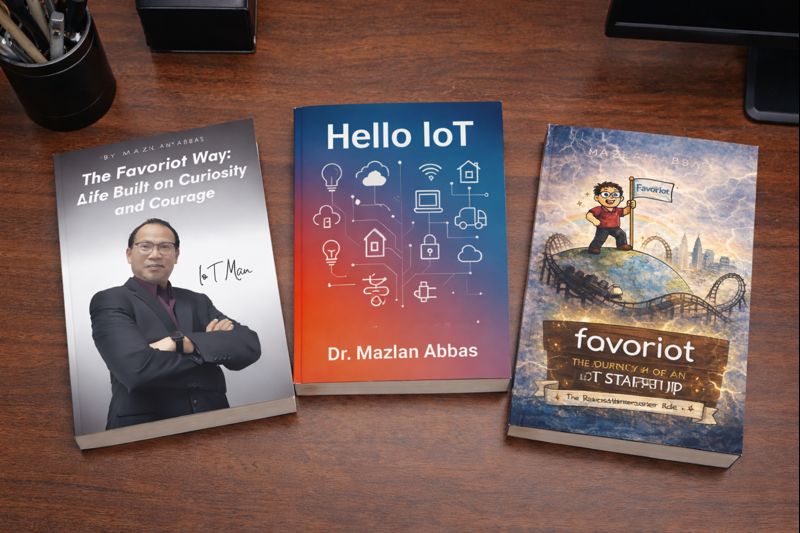
That’s why I started sharing knowledge for free through podcasts like Jom Pakai IoT, articles, TikTok videos, and books. I also train others, mentor startups, and advise universities.

Because I’m not just building a company. I’m building a movement.

A movement to make IoT accessible. To make Malaysia a global hub of smart innovations. To show the kampung boy in every corner of the country that yes, you can shape the future too.

Legacy Over Popularity

I don’t want to be remembered just as a CEO or engineer.

I want to be remembered as the guy who sparked a generation.

The one who didn’t just talk about the future — but built it.

The one who lifted others along the way, who simplified the complex, who wore the “IoT Man” cape not for show but to carry the hopes of students, makers, entrepreneurs, and dreamers.

Because at the end of the day, all I ever wanted was to make a difference.

Final Reflection: A Name, A Mission

Sometimes, I look in the mirror and ask myself, “Are you still worthy of that name?”

Some days, I feel I’ve done enough, and most days, I feel like I’m just getting started.

So, if you see me online or bump into me at a café or tech event, don’t hesitate to say hi. Just say, “Hey, IoT Man!”

I’ll smile. And I’ll know that the journey — every twist, every fall, every leap — has been worth it.

Because that name is no longer just about me.

It belongs to the mission.

And the mission still burns bright.

Mazlan Abbas, your friendly neighborhood IoT Man. Let’s transform the world together!

How “The Jetsons” Sparked My Lifelong Passion for Technology

“Can you imagine living in a world where cars fly, robots prepare your breakfast, and your boss talks to you through a giant video screen? Wait a minute…that sounds oddly familiar!”

As a young boy in the 1960s, glued to our old family television, watching The Jetsons was more than entertainment—it was my window into the future. Back then, it was nothing short of magical. A futuristic family living in Orbit City, navigating daily life with technologies that, to me, seemed pure fantasy. Fast-forward to today, and I realize how incredibly prophetic this cartoon actually was.

My First Encounter with the Future

“Eh, takkan lah manusia boleh cipta robot yang pandai masak sarapan?” I often asked myself skeptically.

In my childhood, my weekend routine revolved around television shows and comic books. Among the Batman comics and Superman TV series, The Jetsons stood out for a specific reason: it painted the future as something exciting, fun, and incredibly convenient. Unlike many dystopian or overly complicated portrayals of technology, The Jetsons gave me hope and wonder.

I would sit cross-legged in front of our bulky black-and-white TV set, amazed by flying cars, robots like Rosie, and video conversations that seemed impossibly futuristic. I remember vividly telling my mother:

“Mak, suatu hari nanti, orang mesti ada telefon yang boleh nampak muka orang lain!” She just laughed, probably thinking it was an impossible dream. Yet, here we are today, with video calls as common as a glass of water.

Predicting Technologies That Didn’t Yet Exist

“Biar betul? Cartoonists ni boleh ramal masa depan ke?”

What fascinated me most about The Jetsons wasn’t just the sleek aesthetics or the witty dialogues but how eerily accurate their predictions were. The cartoon first aired in 1962—decades before the internet, smartphones, or even personal computers became mainstream. Yet, astonishingly, they showcased technologies that closely mirror today’s innovations:

1. Drones and Autonomous Vehicles

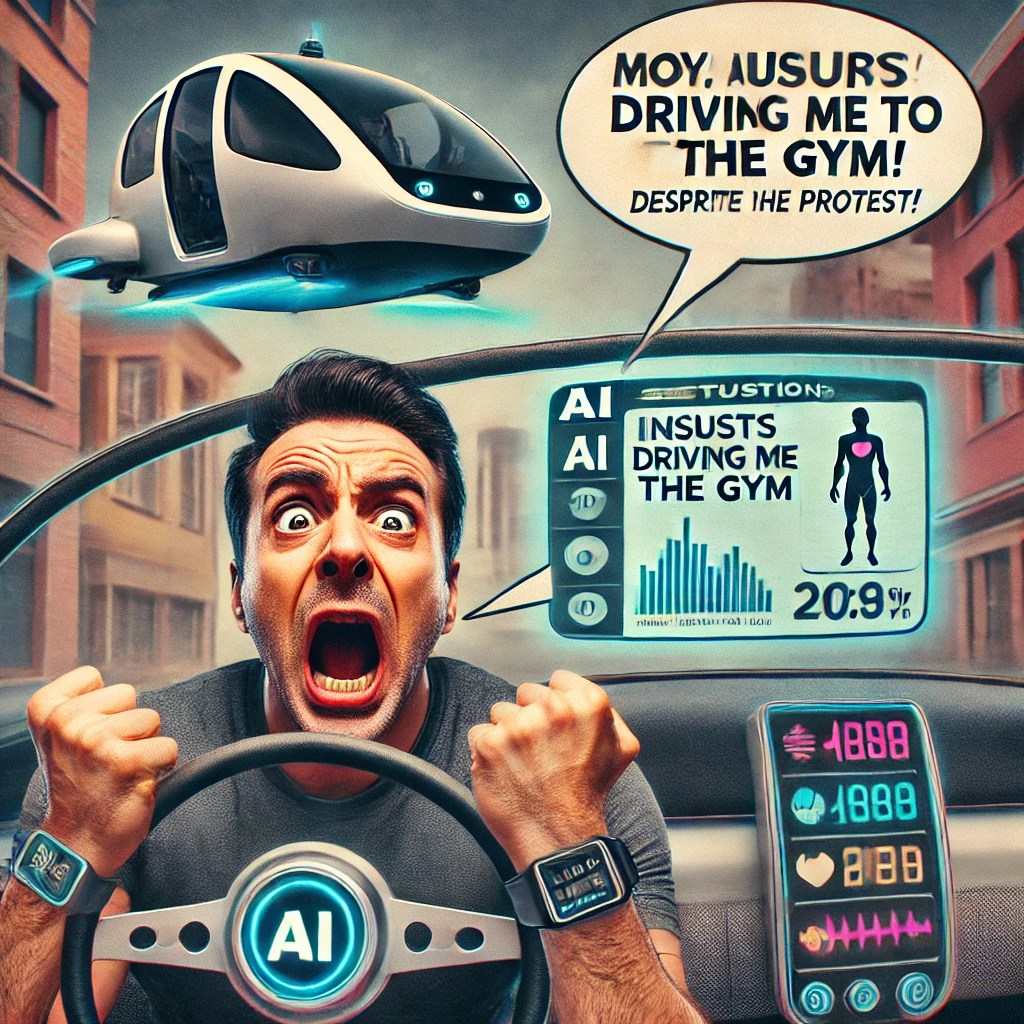
I distinctly remember the excitement of seeing George Jetson commute to work in a flying autonomous vehicle. It seemed impossibly futuristic—no steering wheels, no pilots, just smooth automated flights. Fast-forward to now, and autonomous vehicles and drones are rapidly becoming mainstream. Companies like Tesla, Waymo, and countless drone startups are turning the once-cartoonish concept into reality.

2. Video Conferencing and Teleworking

Who could forget George Jetson’s daily arguments with his boss, Mr. Spacely, via a giant video screen? Even as a child, I wondered how amazing it would be to talk to someone face-to-face from afar. Decades later, platforms like Zoom, Microsoft Teams, and Google Meet have made this our everyday reality.

3. Smartwatches and Wearable Tech

One of my favorite gadgets from the cartoon was the smartwatch. George Jetson regularly spoke into his wristwatch, something I emulated with a toy watch. Today, devices like the Apple Watch enable voice communication and monitor health, provide notifications, and manage daily activities effortlessly. It feels surreal, like I’ve stepped straight into George Jetson’s life.

Robots in Daily Life: From Rosie to Reality

“Wow, imagine having a Rosie at home… I’d never have to clean my room again!”

Perhaps one of the most beloved elements of The Jetsons was Rosie, their family robot. Rosie wasn’t just a tool; she was part of the family, intelligent, helpful, and capable of conversation. Today, we see early glimpses of Rosie through voice assistants like Siri, Alexa, and Google Assistant. Companies like Boston Dynamics and Samsung are pushing boundaries even further, creating humanoid robots capable of performing household chores, providing care, and interacting with humans meaningfully.

I distinctly remember asking my mother, “Mak, one day kita boleh cakap dengan robot macam ni tak?” Again, it seemed impossible, but now, conversational AI is an integral part of our lives.

How The Jetsons Influenced My Career Path

“Mazlan, tengok cartoon je dah nak jadi saintis?” my parents chuckled when I expressed dreams of a technology-driven future.

Looking back, I realize how significantly this cartoon shaped my path. The whimsical portrayal of technology in The Jetsons not only inspired my interest in science fiction but also subtly guided me toward my career in telecommunications, IoT, and smart cities. I pursued electrical engineering and telecommunications and eventually became deeply involved in building smart cities—environments not unlike Orbit City, where IoT devices, smart transportation, and digital assistants simplify life.

When I founded FAVORIOT, a platform designed to empower IoT applications, the spirit of innovation and imagination instilled by The Jetsons was always at the forefront. I saw clearly how dreams from animated fiction could fuel real-world technological advancements.

A Visionary Cartoon That Still Inspires Today

“Tak sangka, cartoon yang aku tonton masa kecil dulu betul-betul jadi kenyataan hari ni.”

Revisiting the show today makes me marvel at its creators’ visionary minds. How did they manage to foresee so accurately? Was it pure creativity or a deeper understanding of technological trajectories?

In my opinion, The Jetsons succeeded because it tapped into universal human desires: convenience, connectivity, and curiosity. These remain consistent through decades, guiding technologists, innovators, and entrepreneurs alike. The show taught us to dream boldly and envision beyond current limitations.

Imagining Tomorrow’s Technologies Today

“Apakah lagi teknologi yang kita belum capai? Apa lagi yang boleh aku wujudkan?”

As a technologist deeply involved in IoT and smart cities, I often reflect on how fiction shapes reality. Today, when developing smart city initiatives or mentoring young innovators, I remind them how important imagination is. Every groundbreaking technology begins as a seemingly impossible idea.

What about the technologies from The Jetsons that we haven’t fully realized yet? The cartoon showed cities elevated above the clouds due to environmental challenges on Earth. Given the increasing urgency of climate change, such imaginative solutions might not remain fictional forever. Maybe vertical, sustainable cities aren’t as far-fetched as we once believed.

Encouraging the Next Generation to Dream Big

“Kalau cartoon pun boleh predict future, kenapa kita tak boleh cipta teknologi baru lagi hebat?”

To inspire today’s youth—just as The Jetsons inspired me—I constantly share this simple message: imagination has no limits. I challenge them to envision solutions for future problems because what is imagined today is tomorrow’s reality. My journey, from a fascinated kid sitting on the living room floor watching George Jetson to an IoT entrepreneur and technologist, is proof of this.

Now, every time I make a video call, glance at my smartwatch, or see news about autonomous vehicles, I smile silently.

It all started with a cartoon.

Who knew? Maybe Hanna-Barbera creators were the real visionaries.

What futuristic cartoon today will become the blueprint for tomorrow’s innovations? Until then, I’ll continue watching, imagining, and building the future inspired by The Jetsons.