I Almost Quit—Until This One Question Reignited Everything

There was a morning I’ll never forget.

I sat in front of my laptop, staring at the screen. No emails. No new sign-ups. No traction.
Nothing.
Just silence.

“What am I even doing this for?” I whispered to myself.

I had poured years into this vision—this crazy dream of building something that could help others. And yet, there I was, running on fumes, trying to convince the world that IoT could actually change lives.

The doubt crept in like a fog.
I questioned everything—my choices, my career, my sanity.

But then, like a stubborn heartbeat, a question echoed back:

“Why did you start?”

It hit me harder than any investor rejection or platform bug.

I didn’t start for money. I didn’t start for fame.
I started because I believed in purpose-driven tech. Because I saw students struggling with theory and no tools. Because I saw cities disconnected, businesses stuck, and potential wasted.

I started because I knew I could help.

That’s what gives me direction—purpose. Not some fluffy motivational poster, but a raw, burning clarity that says, “Even if no one claps today, build anyway.”

Direction isn’t something you stumble upon in a fortune cookie.
It’s something you forge—through trial, reflection, and doing the work even when it’s hard.

It’s your “why” that pulls you forward when everything else tries to drag you down.

And now, whenever I hit a rough patch, I don’t panic.

I pause.

I ask again: Why did I start?

And the answer—every single time—points me exactly where I need to go.

Now your turn.
What question brings you back to your direction when you feel lost?

A New Chapter Begins: My Heartfelt Mission for Malaysia’s IoT Future

Alhamdulillah.
There are moments in life that make you pause. Not because you’re unsure—but because you feel the weight of something bigger than yourself. Being appointed as the Deputy Chairman of the Malaysia IoT Association is one of those moments for me.

I didn’t chase this title. It found me after years of walking the path—failing, building, sharing, writing, and dreaming about how technology could transform our nation. And now, I’ve been entrusted with a greater purpose: to carry the hopes of a growing community of changemakers and to help shape a future that belongs to every Malaysian.

This isn’t just a new role. It’s a calling.

This Land is Full of Potential

Malaysia is not short of talent. We are not short of ideas. But for far too long, we’ve been stuck in wait mode—waiting for foreign platforms, waiting for permission, waiting for funding. We must break that cycle. We must choose action.

Because Malaysia doesn’t need to follow trends anymore.
We have what it takes to create them.

The Role of IoT in Our Nation’s Story

Let’s get one thing straight—IoT is no longer about devices.

It’s about connecting hearts and systems.
It’s about bridging rural and urban, old and new, human and machine.
It’s about giving our nation eyes that can see in real time and ears that can listen before disaster strikes.

From the farms of FELDA to the traffic lights of KL…
From lecture halls to factory floors…
IoT is not just a tool. It’s a lifeline.

And what many don’t realise is—AI needs data.
But not just any data. It needs real-world, real-time, reliable data.
And IoT is the only way we can feed that intelligence.

A Personal Mission, A National Cause

So what do I see ahead?

I see a Malaysia that no longer depends on imported systems we don’t control.
I see homegrown platforms like FAVORIOT becoming the national backbone.
I see students graduating not with theoretical knowledge—but with hands-on IoT skills, certified and industry-ready.
Every Majlis Perbandaran has its own IoT dashboard, managing waste, lighting, traffic, and water in real-time.
I see SMEs embracing smart automation—not fearing it.

But more than anything…

I see people—living safer, healthier, and more connected lives.

The Time is Now

Some say we’re not ready yet.
But if we keep waiting for perfect conditions, we’ll never move.
Neither was Korea ready in the 1980s. Or China in the 1990s. But they moved.
And now the world watches them.

It’s our turn.
Let’s start messy. Let’s start small.
But most importantly—let’s start now.

To the Silent Fighters

To every young innovator quietly coding in a dorm room.
To every lecturer who buys sensors out of pocket to teach their students.
To every entrepreneur who builds despite rejection after rejection.

I see you.
And in this new role, I carry your hopes with me.

Let us walk this path together—not because it’s easy. But because it matters.

A Final Word from the Heart

This journey is no longer mine alone. It belongs to all of us who believe in a better digital Malaysia.

To those who built the foundation before me—thank you.
To my peers in MyIoTA and the wider tech community—I’m ready to stand with you.
And to the next generation—we’re building this for you.

Let’s make IoT not just a technology—but a legacy.
Let’s make Malaysia not just relevant—but revolutionary.

The future doesn’t wait.
And neither should we.

Bismillah. We begin.

Where Do I See Myself in 10 Years?

Where Do I See Myself in 10 Years?Reflections of a 64-Year-Old Dreamer Who Still Believes

“Ten years from now? That’s 74… You sure you want to think that far ahead?”
That was the first voice in my head when I read the question.
“Come on, Mazlan. You’re 64. Isn’t it time to slow down?”

But that voice didn’t last long.

Another voice — louder, bolder, more familiar — gently whispered,
“Slow down? You’ve just started walking your true path.”

That, my friend, is the voice I’ve listened to all my life.

The Clock Doesn’t Define Me

I’ve always seen age as numbers, not limits. The world might call me a “senior,” but my dreams don’t carry wrinkles, and my purpose doesn’t need walking sticks.

Yes, the body is slower — I’ll admit that. Knees creak more than they used to, and climbing stairs feels like a mini leg day. But the fire in me? It burns as fiercely as it did when I was 24, maybe even brighter now.

If anything, I’ve become more dangerous — not because of youth, but because of clarity. I know what matters. I know what I can ignore. I know who I am. That took decades to earn.

In 10 Years, I See…

1. Myself Still Creating
I don’t want to retire into silence. I want to retire into purpose.
“But Mazlan, what will you still be creating?”
Stories. Ideas. Opportunities. A legacy.

I see myself writing more — maybe a book that finally captures the full arc of my journey. Maybe I’ll title it “The IoT Man Who Never Gave Up.”
I want to write not just for entrepreneurs or engineers… but for anyone standing at the edge of doubt, wondering if it’s too late to start. I want them to know — it’s never too late. I’m proof.

And beyond writing? I’ll still be creating ecosystems. Platforms. Programs. Things that last longer than I do.

2. A Nation of Young Dreamers Trained by My Hands
I dream of walking into a university lab and seeing students working on real-world IoT systems — not because they were told to, but because they were inspired to.

Some of those students might call me “Professor,” or maybe just “Sifu.”
Some of them will know my name from stories their lecturers told.
Some might even come up and say,
“Dr. Mazlan, it was your video, your talk, your comic that made me believe I could do this.”

That… That would mean everything.

3. Favoriot Becoming a Global Force
In 10 years, I want Favoriot to stand not just as a Malaysian platform, but as the ASEAN reference for democratizing IoT.

Not because we had the biggest investors. Not because we built the fanciest dashboards.
But because we stayed consistent. Because we believed in building from within.

I want to see partners from 25, 30, 40 countries — each with their own IoT academies, each training their youth through Favoriot’s platform.

I want the world to know:
“This came from Malaysia.”

4. My Grandchildren Teaching Me New Tricks
Yes, I see myself as a grandfather of ideas and technology. But also — hopefully — a real grandfather.

I imagine a small hand tugging at mine,
“Tok Bak, how did you build all this?”
I’ll smile. “With time, failure, and this old stubborn heart.”

They’ll be digital natives, perhaps building with AI, robotics, or tools I can’t even imagine now. But I want to remain curious.
To listen.
To learn.
To laugh with them when I get it wrong.
To beam with pride when they surpass me.

Because the only thing better than building your dream… is seeing the next generation build bigger ones.

My Days Will Be Quieter, But My Impact Louder

In 10 years, I won’t be racing from meeting to meeting.
But I might still wake up at 5:30 AM. Sit by the window with my mug of kopi o, pen in one hand, thoughts in another.

I’ll be reflecting more than running.
Speaking less, but with more weight.
I might appear less on stage, but more in hearts.

I’ll write more love letters to this beautiful world that gave me chances.
Letters disguised as blog posts, talks, podcasts, maybe even a comic strip here and there.
One titled “The Last Adventure of IoT Man.”
(But don’t worry, he always comes back for a sequel.)

If I’m Lucky… I’ll Still Have Time

“Mazlan, do you think you’ll still have the energy?”

That question used to scare me.

But I’ve learned — energy doesn’t come from the body.
It comes from the heart. From purpose. From waking up with something worth fighting for.

If I still have the energy to smile at the sunrise,
to mentor a young founder,
to write one more idea that outlives me,
then yes — I’ll still be in the arena.

My Final Decade of Legacy

The next 10 years may be my most meaningful yet.

Not the flashiest.
Not the fastest.
But the most authentic.
The most connected.
The most fulfilled.

I won’t measure success by income charts or social media stats.
I’ll measure it by how many lives I’ve helped ignite.
By how many students I’ve believed in.
By how many said, “Because of you, I didn’t quit.”

So where do I see myself in 10 years?

Right where I need to be.
Still serving.
Still dreaming.
Still building.

And perhaps, finally, resting — but only after I’ve passed the torch.
With a smile. With peace. And with the unshakable belief that I’ve done what I was born to do.

“I see a 74-year-old man… not slowing down, but rising. A man who looks back with pride and forward with grace. A man who lives not in the shadow of his youth, but in the light of his impact.”

Yes, that’s where I’ll be.

InshaaAllah.

Why Do Students Hire Outsiders to Do Their Projects?

A Response from an Educator, Entrepreneur, and Tech Education Advocate

“Why are students willing to pay outsiders to do their projects? What’s the root cause? Where did we go wrong?”

This question isn’t new. It has been raised many times in discussions between academics, industry players, and the tech maker community. But this time, it was addressed with raw honesty by a trainer who truly understands students — someone who has taught students, trained lecturers, and now works with industry professionals. I found the four points he raised very insightful, and I’d like to unpack them — not to dispute, but to build on the conversation with my own experience.

1. University Syllabi Don’t Offer Enough Hands-On Experience?

“Is this really true, or are we not seeing the bigger picture?”

I’ll admit — there’s some truth to this. Many students who’ve come to me for consultation, especially on IoT or Favoriot training, often complain that their final year projects had to rely on self-learning via YouTube because they lacked deep technical guidance.

“But… surely not all universities are like that?”

Exactly. Some universities have moved towards hands-on learning, especially polytechnics, vocational colleges, and certain engineering faculties that actively collaborate with industry. The real problem is inconsistency. Some still rely heavily on simulation — and in fields like IoT, AI, or robotics, learning without touching hardware is like trying to learn swimming on dry land.

When I trained university lecturers through our Train the Trainers program for IoT, I saw firsthand how much they wanted to shift to practical methods — but were sometimes constrained by equipment, budget, or institutional policies. That’s reality.

This is why platforms like Favoriot are designed to break those barriers — offering affordable, easy-to-access platforms that can be embedded into courses, enabling students and lecturers to work from basic projects to advanced real-time data integration.

2. Lecturers Can’t Identify Student Talents?

“Are we too busy to notice the potential blooming right in front of us?”

As a former lecturer, I understand the pressure — full lecture schedules, endless meetings, research deadlines, and admin tasks. It becomes almost impossible to personally assess each student’s potential — unless they step forward.

But that’s not an excuse.

I’ve learned something through running smaller classes. “When the group is small, it’s easier to spot who’s struggling, who’s excelling. But in a lecture hall with 100 students?” We need a system.

Some suggestions:

  • Use mini-projects at the beginning of the semester to diagnose technical aptitude.
  • Bring in industry mentors (like us at Favoriot) to support project work.
  • Offer microlearning platforms like IoT Academy as supplements, not just stick to lecture notes.

Talent has to be discovered — not waited on.

3. Students Chase Paper Qualifications Only?

“Grades matter. But is that the ultimate goal?”

Many students believe excellent CGPAs equal great jobs. But times have changed. Employers now care more about your portfolio than your transcript.

I’ve met students with perfect grades who can’t troubleshoot a sensor. But I’ve also seen average students who build working temperature-monitoring systems with Telegram alerts using Favoriot — and are now working with real IoT startups.

This isn’t about who’s smarter, it’s about who’s brave enough to learn on their own.

That’s why we always encourage students to start with mini-projects early in the semester. Better to fail early and learn fast. We must build a culture of “learn by doing, fail fast, recover faster.”

4. Universities Are Slow to Update the Syllabus?

I fully agree here. Technology evolves every six months — yet syllabi may only change every six years. Changing a curriculum isn’t easy — it requires senate approvals, academic committees, MQA validation, and more.

But I applaud technical institutions like TVET, polytechnics, and certain private colleges that quickly adopt new tech. Some don’t just teach “how to use,” but also “how to think.”

However, we can’t just create skilled workers. We need thinkers, problem-solvers, and future tech leaders — those who can build solutions, not just follow instructions.

That’s why Favoriot is more than just a data platform. It’s a thinking tool. A place where students ask:

  • How can I solve a real-world problem?
  • How does data help decision-making?
  • How can tech integration impact communities?

So… Is It Wrong for Students to Hire Outsiders?

I asked myself the same thing — is it the students’ fault or the system’s?

I don’t fully blame the students. Sometimes they panic, lack support, and just want to pass. I also don’t blame those who offer project services — sometimes that’s the only indirect way a student learns something.

“But… if a student pays and learns nothing — that’s the real problem.”

We need to change the narrative:

  • From “doing it just to pass” to “doing it to learn.”
  • From “copying projects” to “creating value.”

From Training Students to Training Lecturers to Training Industry

I understand what the original author meant when he said:

“I used to train students, then lecturers, and now industry staff…”

That’s the cycle. When students and lecturers reach a certain capability, they don’t need you anymore. And that’s not a loss — that’s a win.

I’ve experienced the same. When IoT becomes embedded in campus life, when the Favoriot dashboard becomes an official teaching tool — I know my mission is progressing. Even if I’m no longer invited, I quietly smile inside.

“Opportunities will always come — maybe not from the same place, but from the impact you’ve already planted.”

To close:

  • Students need more hands-on guidance.
  • Lecturers need time and tools to identify talent.
  • Universities need the courage to match industry demands.
  • And all of us must see education as more than just passing — it’s about living, contributing, and growing.

For those who help students — do it with the heart to teach, not just to earn. Let them learn — even if it’s through you.

One day, they will thank you — not for finishing their project, but for making them someone who can stand on their own and create value.

“That’s the real purpose of education. And that’s the legacy we should all strive to leave behind.”

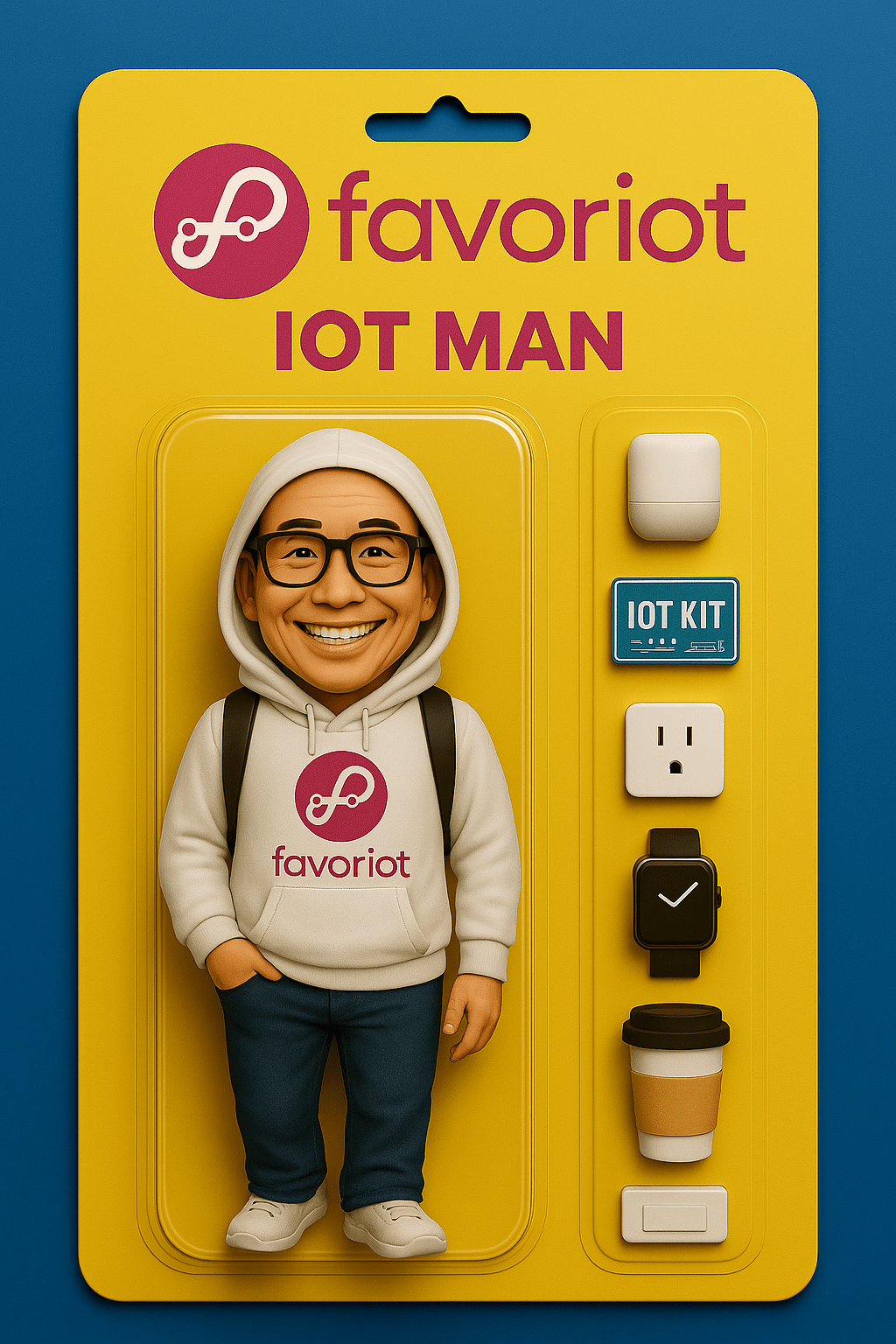
The Birth of “IoT Man”: Why the Name Means More Than Just a Title

“You can call me IoT Man.”

That was the casual yet defining moment when I embraced the name—not just as a label but as a symbol of everything I’ve poured into it.

But before that nickname ever stuck, before anyone even recognized my face or my voice in the realm of smart cities and connected devices, I was just a curious kampung boy who loved science fiction, obsessed with The Jetsons, and dreamt of a future where machines talked to each other.

I didn’t know it then, but that fantasy would eventually become my destiny.

The Spark That Ignited It All

In the 70s, I grew up with dusty comics, DC superheroes, and futuristic cartoons that seemed out of reach. I was always asking questions: “How does that work?”, “What if buildings could talk?”, “Why can’t my bicycle tell me when its tire is flat?” You know… typical “crazy kid” questions no one took seriously.

But I took them seriously.

Years later, that same boy became an engineer, researcher, and executive, hopping across universities, government agencies, and corporate towers. I had the titles and the recognition—and yet, I felt something was missing.

I wasn’t building the future I dreamed about.

Until I stumbled upon three letters that changed everything: IoT.

To me, the Internet of Things wasn’t just a buzzword. It was the missing puzzle piece. It was like someone finally handed me the blueprint of the world I used to imagine as a child.

I dove headfirst into it. It became an obsession. No, scratch that — it became a mission.

Why the Name “IoT Man” Chose Me

People often ask me, “Did you give yourself that name?” No, I didn’t. It started as a whisper on social media.

I was posting daily. Articles, LinkedIn updates, tweets, TikToks — all about IoT. I shared failures, ideas, insights, and case studies. Some people rolled their eyes. “Dia ni tak habis-habis cerita pasal IoT.”

Others started to notice.

One day, someone tagged me in a post and wrote, “Here comes the IoT Man again.” At first, I chuckled. “Macam superhero pulak.”

But then it stuck. People started calling me that — students, entrepreneurs, CEOs, even strangers at conferences. I would introduce myself, and they’d say, “Oh! You’re the IoT Man!”

And honestly?

It warmed my heart every single time.

Because it meant they saw me, they saw what I stood for, and they recognized the fire I carried.

Why It’s More Than Just a Nickname

You see, “IoT Man” isn’t just a personal brand.

It’s a reminder that in a world flooded with noise, consistency still matters. If you keep showing up, keeping writing, and keeping sharing, people will notice.

It’s a tribute to every sleepless night I spent building FAVORIOT from scratch with a small team and big dreams, to every time I was told, “Malaysia’s not ready for IoT,” or “Smart Cities won’t work here.”

It’s a badge earned through trials, through countless rejections, postponed projects, budget cuts, technical failures, and platform bugs, and through restarting when others gave up.

“But what if this doesn’t work?” I often asked myself during those quiet, lonely moments.

“Then I’ll try again tomorrow,” I’d reply.

The name “IoT Man” represents that spirit.

The Responsibility That Comes With It

Being known as the “IoT Man” also means people expect answers, solutions, and inspiration.

And that’s not something I take lightly.

That’s why I started sharing knowledge for free through podcasts like Jom Pakai IoT, articles, TikTok videos, and books. I also train others, mentor startups, and advise universities.

Because I’m not just building a company. I’m building a movement.

A movement to make IoT accessible. To make Malaysia a global hub of smart innovations. To show the kampung boy in every corner of the country that yes, you can shape the future too.

Legacy Over Popularity

I don’t want to be remembered just as a CEO or engineer.

I want to be remembered as the guy who sparked a generation.

The one who didn’t just talk about the future — but built it.

The one who lifted others along the way, who simplified the complex, who wore the “IoT Man” cape not for show but to carry the hopes of students, makers, entrepreneurs, and dreamers.

Because at the end of the day, all I ever wanted was to make a difference.

Final Reflection: A Name, A Mission

Sometimes, I look in the mirror and ask myself, “Are you still worthy of that name?”

Some days, I feel I’ve done enough, and most days, I feel like I’m just getting started.

So, if you see me online or bump into me at a café or tech event, don’t hesitate to say hi. Just say, “Hey, IoT Man!”

I’ll smile. And I’ll know that the journey — every twist, every fall, every leap — has been worth it.

Because that name is no longer just about me.

It belongs to the mission.

And the mission still burns bright.

Mazlan Abbas, your friendly neighborhood IoT Man. Let’s transform the world together!

Transform Your Day: The Power of Early Morning Habits

Every morning at 5:30 a.m., without fail, my eyes flutter open—not to an alarm, but to an internal clock that has been fine-tuned through decades of habit, discipline, and a desire to live each day intentionally.

“Let’s go. Time to wake the soul before the world does.”

That’s the first self-reminder that echoes in my mind.

As a 63-year-old who has gone through the different chapters of life—academia, government service, the corporate world, and now the startup scene with FAVORIOT—I’ve come to learn that how I start my morning sets the tone for everything that follows. You don’t command a smart city, build an IoT platform, or inspire others without conquering the first hour of your day.

5.30 AM: The Awakening

I rise from my bed with quiet intention. The world outside is still cloaked in darkness, and it’s in that serenity that I find my strength. The first thing I do is perform wudhu’ (ablution). It’s a spiritual reset button. A symbolic and literal cleansing — not just of the body, but of the mind and soul.

Then, I perform the Subuh prayers. These early morning prayers are more than just a ritual for me. They’re my grounding force.

“Ya Allah, guide me today to inspire, write, build, and serve.”

Some mornings, I sit in reflection a bit longer, especially when I feel the weight of a decision coming. Running a startup like FAVORIOT and juggling multiple commitments as an adjunct professor and speaker means my days can get chaotic. But those few moments after Subuh are sacred. They keep me anchored.

6.00 AM – 7.00 AM: My Creative Hour

The house is quiet. No distractions. No emails. No phone calls. Just me and my thoughts.

This is when I do something that surprises many people — I write.

Yes, every day, I try to write for at least an hour — whether it’s a blog article on mazlanabbas.com, an update on IoT for the FAVORIOT community, or even just scribbles for future social media posts.

Don’t get me wrong — there are days when I sit in front of the laptop and…

“Nothing. Not a single idea. Writer’s block? Again?”

On days like these, I don’t force it. Instead, I use Jetpack’s Prompts from WordPress. They’re like sparks that ignite the dormant corners of my mind. Sometimes, a simple question like, “What is one lesson you’ve learned the hard way?” leads me to unearth a memory from my early days at MIMOS or CELCOM or a lesson learned from building FAVORIOT with limited resources.

These prompts aren’t just writing cues. They’re invitations to reflect, connect, and document a life of learning and leadership.

6.45 AM: Engaging with My Digital Circle

Once the writing juices slow, I turn to my social media platforms, especially Facebook.

This might sound like the opposite of focus, but for me, it’s strategic. Over the years, I’ve built a strong and engaged community — professionals, students, fellow entrepreneurs, and tech enthusiasts. These aren’t just followers. They’re part of my extended family.

I check comments, reply to messages, and share new thoughts. Sometimes, I post a new blog entry, and sometimes, I respond to an interesting article someone tagged me in.

“Should I post this now? Or will it do better later?”

Sometimes, I overthink it. But more often than not, I remind myself — just share. Be real. Be consistent. It’s not about chasing likes. It’s about building trust and leaving digital footprints that matter.

Social media, for me, isn’t entertainment. It’s a way to educate, inspire, and connect. And it’s the perfect way to warm up before I switch into business mode.

7.00 AM Onwards: Preparing for the Day’s Battles

By this time, my mind is vigilant. I feel like I’ve already accomplished something — prayed, reflected, created, engaged.

Now it’s time to get ready for the workday.

Depending on the day, I might be:

  • Reviewing IoT platform updates with the tech team at FAVORIOT
  • Preparing slides for a keynote at an IoT or Smart Cities conference
  • Conducting an online training session via FAVORIOT Academy
  • Planning strategic calls with our global partners from the FAVORIOT Partner Network

Before I leave the house, I double-check my notebook (yes, I still use a physical one)—a habit from my CELCOM and MIMOS days. I jot down key priorities for the day—three things max.

“Mazlan, don’t try to do everything. Just do these three things really well.”

And with that, I’m ready.

Why My Morning Rituals Matter

Over the years, I’ve learned that rituals are more powerful than motivation. Motivation comes and goes, but habits—especially morning habits—are what carry us through uncertainty.

There was a time when my days were filled with back-to-back meetings, long commutes, and firefighting urgent issues. But even back then, I protected my mornings. That first hour is mine — no matter where I am.

It’s the hour when I’m not CEO Mazlan, Professor Mazlan, or even the guy people tag in IoT discussions. I’m just me—a man with thoughts, reflections, faith, and words to share.

My Advice to You?

Build your morning around what truly matters.

  • Maybe it’s prayer.
  • Maybe it’s writing.
  • Maybe it’s exercise, journaling, or reading.
  • Maybe it’s just sitting in silence with your coffee.

But own that hour. Make it yours. Protect it like your most valuable asset — because it is.

You don’t need a 15-step productivity routine. Just a small, consistent rhythm that aligns with your purpose.

For me? Subuh. Writing. Connecting.

That’s more than enough.

“Let’s begin the day. The world awaits. But I’ve already won the morning.”

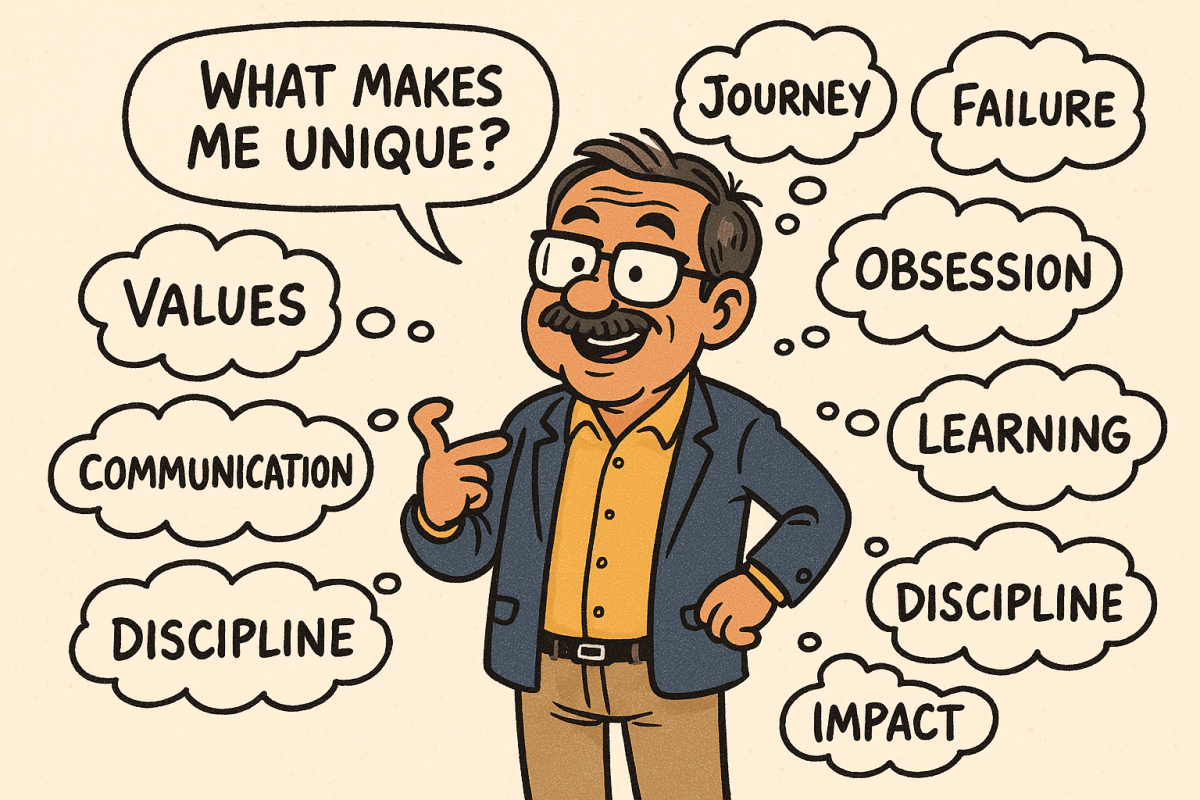
What Makes a Person Truly Unique?

As someone who has spent decades navigating the academic world, corporate boardrooms, government agencies, and startup trenches, I’ve come to realise that what makes a person truly unique is not just one defining trait but a combination of mindset, experience, and passion.

It’s the signature blend of your past, values, and vision for the future.

Let me break it down through my own lens—through personal stories, reflections, and the questions I’ve asked myself.

1. The Journey You Choose (or Endure)

“Why did I move from academia to government, then to corporate, and finally to building my startup?”

Many thought I was indecisive. But I saw it differently. Each step gave me a new superpower.

  • In academia, I learned how to think deeply and teach simply.
  • In government, I saw how policy can impact innovation nationally.
  • In corporate, I experienced the pace of execution and the demand for ROI.
  • In startup life, I learned humility, agility, and how to survive with little but dream big.

Not everyone chooses this “multiverse” path, but embracing it made me unique. I carried lessons from each world into the next.

2. How You React to Failure

“Mazlan, you left a comfortable job to start something uncertain?”

Yes—and I failed more times than I can count. But here’s the thing: I never let failure define me. Instead, I documented, reflected, and shared.

Every rejection, every “no,” became fuel for the next attempt.

What’s unique is not that you fail but how you rise from it—with clarity, grace, and a story others can learn from.

3. Your Obsession

“You’re still talking about IoT after all these years?”

Absolutely. I eat, sleep, and breathe IoT—not because it’s trendy but because I believe it can change lives. Even now, I run FAVORIOT to democratise IoT and make it accessible for students, startups, and governments.

Obsession—when combined with purpose—is what sets someone apart. It’s the thing you can’t shut off. You read about it, dream about it, and keep pushing the boundaries.

That’s the heartbeat of uniqueness.

4. The Way You Communicate

I once blogged about gadgets. Then, I pivoted to writing about technology, leadership, and storytelling. Today, I use WordPress, LinkedIn, podcasts, and even TikTok to reach different audiences.

Why?

I realised that what makes my voice unique isn’t just my technical knowledge but how I simplify it, narrate it, and humanise it.

People don’t remember jargon. They remember stories, analogies, and emotions. If you can make someone say, “Now I get it,” you’ve done something special.

5. The Values You Don’t Compromise

I’ve had opportunities that promised more famemoney, or power throughout my career. But I always asked myself:

“Is this aligned with what I believe?”

I don’t play politics. I don’t sell out. I don’t cut corners. I treat my team like family, and I lead with empathy.

In a world of copy-paste personalities, your principles become your fingerprint.

6. What You Do When No One’s Watching

In my quiet moments, I read articles from new writers, reply to comments, and refine my writing. I write even when no one reads because consistency builds credibility.

“But no one reads your articles.”

I kept writing anyway. Until one day—people did.

Your uniqueness is often born in the shadows, when no one claps, shares, or notices.

And still—you show up.

7. How You Inspire Others

I don’t just want to build a business. I want to develop people.

That’s why I mentor students, share my lessons, and give talks—even to small audiences. That’s why I created FAVORIOT Academy—to train the next generation of IoT professionals.

You become unique by climbing the ladder and extending your hand to those below you.

8. Your Curiosity and Lifelong Learning

Even today, I explore new platforms, write new articles, and learn from people much younger than me.

“Why are you still experimenting?”

Curiosity is a fire that never retires. The moment you stop learning, you become static. I choose to evolve—even at 64.

Uniqueness comes from the courage to keep updating yourself and stay relevant not by age but by adaptability.

9. Your Ability to Connect Across Generations

I often speak to university students, young engineers, and even teenagers on TikTok. Some are surprised—“Dr. Mazlan, you’re on TikTok?”

Yes, and I love it.

If you can speak every generation’s language, whether through blog posts or memes, you become a bridge. That connection—not just knowledge—is what makes someone unforgettable.

10. How You Turn Passion Into Impact

I don’t work on IoT just to build cool gadgets. I do it to solve real problems, from smart agriculture to healthcare, education, and even energy management.

Passion becomes power when you channel it into something greater than yourself.

When your work serves others, your uniqueness becomes your legacy.

A Personal Formula

If you ask me to define what makes a person unique, I’d say:

Uniqueness = (Journey + Failure + Obsession + Voice + Values + Discipline + Impact + Curiosity + Communication + Empathy) x Authenticity

You don’t need to be the smartest or the loudest in the room.
You just need to be the most you.

So, find your intersection.
Share your scars.
Own your quirks.
Speak your truth.

The world doesn’t need another replica.
It needs your story—told your way.

“Mazlan, what makes you unique?”

I’d say it’s because I’m still learning, experimenting, and daring to dream… even after all these years.

What Would I Want Named After Me? I Never Asked for a Title, But They Gave Me One Anyway

“Do you want something named after you, Dr. Mazlan?”

That question caught me off guard.

Not because it was unexpected — people love giving names to legacies, buildings, awards, even algorithms. But because deep inside, I never asked for any of it.

You see, I’m just a man who fell in love with technology. Not for fame. Not for glory. But because I truly believed it could make lives better.

Yet, along the way… names started sticking.

From “Dial-a-Coke” to Global Conferences

Let me rewind to the early 2000s.

I worked in the telecommunications industry back then—CELCOM Axiata, to be specific. This was long before the word “IoT” entered mainstream vocabulary. Yet even then, we were already experimenting with early machine-to-machine (M2M) communication forms.

One of our most exciting innovations at the time was a Coke vending machine that could be triggered by SMS.

“Wait… you mean you can buy a drink just by texting a number?”

Yes, precisely that. The concept was called “Dial-a-Coke.” You send a text, and it deducts the amount from your mobile credit. Voila, a cold can drop out of the machine.

Was it revolutionary? For that time — absolutely.

But to me, it wasn’t about being revolutionary. It was about solving problems in simple ways using connectivity. That mindset never left me.

IoT: A Journey of Passion, Not Titles

Fast-forward to 2013. That’s when I began immersing myself even more seriously into IoT—this time not just as a technologist but also as a speaker, writer, researcher, and eventually, entrepreneur.

Everywhere I went, I would talk about IoT.

At conferences. In classrooms. On stage. Off stage. At coffee shops. In boardrooms.

The energy never ran out. In fact, it grew stronger every time I saw someone’s eyes light up with an “Aha!” when they understood what IoT could do for their lives or business.

Radio interviews followed, then television. Podcasts. Newspapers. Magazines. Even my children rolled their eyes when I’d go into another “IoT monologue” during dinner.

Then came the birth of FAVORIOT — a company built to democratise IoT for developers, enterprises, and even students.

It wasn’t just business. It was my passion translated into a platform.

And Then, They Started Calling Me…

One day after a seminar, someone walked up to me and said,

“Dr. Mazlan, you’re like the Father of IoT in Malaysia.”

I laughed. A little awkwardly, I must admit.

Because if anyone deserves that title globally, it’s Kevin Ashton — the man who coined the term the “Internet of Things. I’ve always credited him for that.

But the person insisted,

“You’ve been advocating this in Malaysia longer than anyone I know. You make people understand IoT in a simple, practical way. That’s a gift.”

And slowly… it started spreading.

Father of IoT Malaysia.

Was it official? No.
Was it universally agreed? Probably not.
Was it something I asked for? Never.

But I accepted it—not for the ego—but for what it represents: a shared belief that maybe, just maybe, I had helped lay some of the digital foundations in this country’s IoT journey.

TikTok, Branding, and a Name That Stuck

In 2022, I did something unexpected — I joined TikTok.

Yup, at the age when most people would be watching TikTok videos, I started making them.

My handle? @iotman2030.

Why 2030? People often ask.

Simple. Because I wanted the technology I championed to be relevant by then.

“What if you just used @iotman2022 or 2023?”

Well, that would age too quickly, wouldn’t it? Who wants to be known by a handle that feels like it expired with last year’s tech trends?

Since then, “IoT Man” has become another name people have started calling me. Some jokingly, some with admiration, but it stuck.

I never corrected anyone. Because, in a way, it perfectly captured who I was and what I stood for.

So, If I Could Name Something After Me…

Honestly? I wouldn’t.

I believe names should be earned by impact, not intent.

But if someone else names something after me—maybe a scholarship, an award, or a lab—I just hope it’s for the right reasons.

That it inspires young minds to build the next generation of connected solutions.
That it reminds people how persistence, curiosity, and belief can shape an entire career.
That it stands for passion without ego.

And maybe it helps a few dreamers realize that technology isn’t just about wires and sensors. It’s about people.

A Legacy Beyond the Name

I never started this journey wanting to be known as anything.

Not the Father of IoT.
Not IoT Man.
Not even Dr. Mazlan the Technologist.

But I did want to make a difference.

And if making a difference earns me a name, then so be it.

Let it not be a pedestal but a platform.
Let it not be a brand but a bridge.

Because names will fade, but impact — that lingers.

So, if you ever hear someone call me Father of IoT Malaysia or IoT Man, just know —
It’s not about me.
It’s about the mission.

And that mission? Still going strong.

Even in 2030.

Everyone Wants the Spotlight. Few Are Willing to Wait for It

What’s Something Most People Don’t Understand?

Most people don’t understand how long it takes to build something meaningful.

Even after all these years, people still think things happen overnight.
They see the highlight reels. They see the LinkedIn success stories. They see the awards, the recognition, the partnerships. And they say— “Wow, you’re lucky.”

But they don’t see what happens behind the scenes.

When I co-founded FAVORIOT, I wasn’t stepping into a shiny, ready-made startup with capital pouring in and clients lining up at the door. No, it was the opposite. I entered a tiny room with big dreams, minimal funding, and zero guarantees.

I had to reset my ego.
After holding senior positions at MIMOS and CELCOM, I was now doing everything—research, customer support, marketing, writing blog posts, uploading YouTube videos, conducting training, chasing potential clients, and even troubleshooting hardware late at night. I was a CEO, but I was also the janitor.

That’s what most people don’t understand.

They think success is linear.
They think you just launch a product and are suddenly on a TED stage.
They don’t see the years of trial and error, the failed pitches, the near-burnouts, and the countless self-doubts.

I still remember attending an international Smart Cities conference years ago. Delegates were surprised when I told them we were a small team from Malaysia, building our own IoT platform. Some of them didn’t even believe it. They asked, “But how did you build it? Don’t you need a huge team? Venture capital?” I smiled and said, “No. We built it because we believed we could.”

Belief is underrated. And persistence—even more so.

People underestimate how long you must persist when nothing seems to work.

I wrote blog after blog when no one was reading.
I spoke at conferences when no one knew my name.
I kept talking about IoT and Smart Cities when the market didn’t understand IoT.

Even on Medium, when I started writing actively in 2023, I wasn’t writing for an audience. I was writing because I had something to say, something to teach, something to reflect on.

Some articles flopped. Others resonated deeply. But most people only see the few that succeeded—they don’t see the hundred others that didn’t.

They don’t understand the patience it takes to outlast the silence.

Let’s talk about time.
People think one or two years is enough time to build a company, an audience, or a movement.

But FAVORIOT has been around since 2017.
We didn’t become known overnight.
We had to win trust, prove our value, build case studies, make mistakes, recover from them, and try again. Again. And again.

It’s like planting a seed. You don’t dig it up every week to check if it’s growing. You water it, give it sunlight, and trust that one day it will break through the soil. But that trust? That takes faith. That’s the part most people struggle with.

“Why isn’t it growing yet?”
“Why is no one noticing me?”
“Maybe I’m not good enough.”

Believe me—I’ve had those thoughts, too.
I’ve looked at competitors with massive followings and felt small.
I doubted whether I was too old to do this startup thing.
I’ve wondered if people even cared about what I was trying to build.

But each time, I returned to the same answer:
Because I care.

I care about helping people learn about IoT.
I care about giving Malaysians a home-grown IoT platform.
I care about empowering universities, cities, and entrepreneurs with technology that works.

I realized that most people don’t need motivation. They need understanding.
Understanding that the journey will be extended.
It’s okay to feel invisible at first.
That mastery takes years.
Most “overnight successes” are 10 years in the making.

So here’s what I want you to remember:

  • You don’t need everyone to understand your journey.
  • You just need to understand it yourself.
  • And you need to commit to showing up, even when no one’s clapping.

Because one day, someone will ask you, “How did you do it?”
And you’ll smile, knowing they won’t really understand until they walk the same path.

But maybe, just maybe, they’ll listen a little closer.
And perhaps that will inspire them to start their own long, messy, beautiful journey.

And that’s enough.

Now, back to work. The journey continues.