My Journey Through Academia, Telco, and Startup Mayhem — And Why I’d Do It Again

From Signals to Sensing: The Early Spark

Every time I look back at where this whole adventure began, I’m reminded of how simple the starting point was. I was just a young engineer obsessed with how things connected. My academic path shaped the first chapter — electrical engineering, telematics, and finally a doctoral dive into telecommunications.

Those years were filled with long nights, dense textbooks, and moments where I quietly wondered, “Is this really the road I want to stay on?” But something about networks — the way invisible signals could connect lives — kept pulling me forward.

My early years in academia gave me a grounding that I still rely on today. Teaching forced me to explain ideas clearly, question assumptions, and stay curious. It was the first real test of whether I understood the world of connectivity or was just reciting formulas.

Into the Telco Trenches

Eventually, the classroom walls felt too small. I wanted to see how these theories behaved under real pressure. That shift took me deep into the telecommunications industry.

Those years were intense: real customers, real failures, real deadlines. It wasn’t just about making a system work; it was about keeping it alive when the world depended on it.

Later, I moved to a national research agency, where I led teams working on early broadband, wireless sensor networks, and technologies that today fall neatly under the label of IoT. Back then, it felt like tinkering with the future. Testing prototypes in rural villages, deploying sensors in unfamiliar places, experimenting with wireless technologies that many considered too early or too ambitious.

Yet I couldn’t shake the thought: “What if this tech leaves the labs and enters daily life?” That question lingered for years.

The Entrepreneurial Leap

Eventually, that question grew too loud to ignore. I left the comfort of corporate structures and returned to the raw, unknown world of startup life.

First came a role in shaping a national IoT initiative. Then came the big leap: building a company from scratch.

That company was REDtone IoT. Running it taught me one of the toughest lessons — great tech means nothing if people can’t use it easily. Every client wanted IoT, but most didn’t know where to start. They struggled with device integration, cloud setups, dashboards, maintenance, and the countless hidden complexities that IoT quietly hides behind its shiny promise.

That frustration became the seed for something bigger.

The Birth of FAVORIOT

By 2017, the vision crystallised: create a platform that removes the chaos and gives everyone — students, SMEs, city councils, engineers — a simple way to bring IoT ideas to life.

FAVORIOT wasn’t built to be fancy. It was built to be practical.

I wanted a platform where a lecturer could run a complete IoT project without having to manage 10 different systems. Where a hardware company didn’t need to customise dashboards endlessly. Where a city council could monitor sensors without drowning in integration nightmares.

FAVORIOT was designed for inclusion. For accessibility. For the everyday builder, not just the big spender.

And every year since, that vision has deepened.

Wearing Many Hats

Even as FAVORIOT was growing, I continued teaching and speaking. These weren’t side gigs. They kept me grounded. They reminded me why I started.

Standing in front of students made me rethink complexity. Speaking to industry leaders challenged my ideas. Engaging with smart city stakeholders, founders, and device makers kept me aware of the real obstacles people face.

Sometimes I’d walk out of a lecture hall thinking, “This feedback is better than any consultancy report.”

Sometimes a conversation with a frustrated engineer made me go back and tweak the platform design.

Those experiences shaped FAVORIOT as much as any technology roadmap ever did.

Recognition and Reality Checks

Over time, things began to click. FAVORIOT earned recognition. My own work in IoT and smart cities gained global visibility. Industry groups listed me among the top influencers. Conferences kept inviting me to speak.

But none of that ever felt like a trophy finish. If anything, it reminded me that the journey had only just reached a new checkpoint.

“Alright, Mazlan, now don’t get comfortable,” I’d quietly tell myself.

The pressure increased. Expectations rose. The work became heavier… but also more meaningful.

Why the Story Still Matters

When I piece the chapters together, it becomes clear that every phase — the student, the professor, the telco engineer, the researcher, the entrepreneur — served a purpose.

  • Academia taught discipline.
  • Telco taught scale.
  • Research taught imagination.
  • Entrepreneurship taught resilience.
  • Teaching and speaking taught clarity.

FAVORIOT stands today as more than a platform. It’s a symbol of what happens when technology is shaped around people — their pains, their limitations, their hopes.

I’ve always believed IoT should be accessible. Not something locked behind expensive teams or giant corporations. Not something only “experts” can touch.

If we can empower everyday builders, we’re doing something right.

A Note to My Younger Self

If I could sit with the younger version of me — the one carrying textbooks thicker than his arm — I’d probably smile and say:

“Every jump you make will make sense one day. Every detour, every frustration, every late night… you’re collecting tools. Don’t rush the process.”

And maybe I’d add:

“When you build for people, not systems, that’s when the real magic happens.”

If you’ve read this far, I’m curious — which part of this journey speaks to you the most? Drop your thoughts. Let’s connect through stories.

Lessons Learned in Building FAVORIOT’s IoT Ecosystem

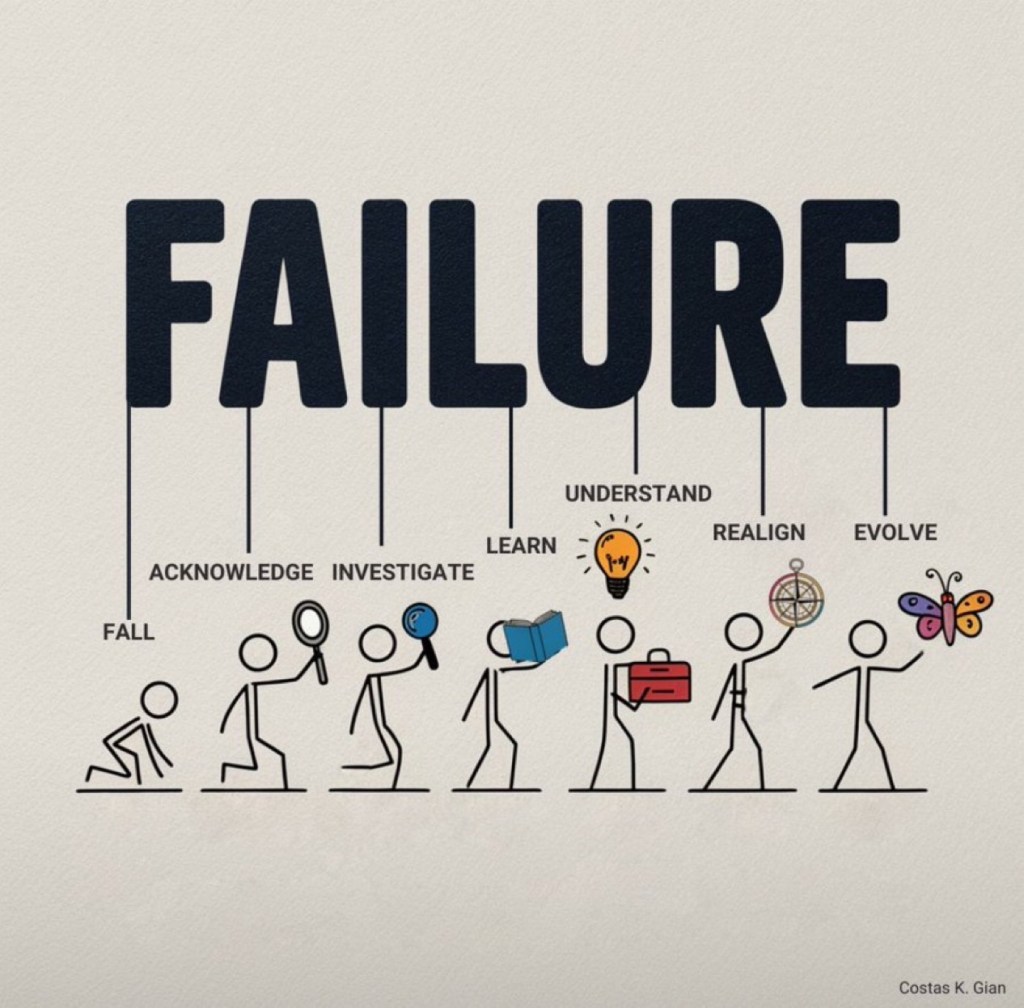
The story of FAVORIOT mirrors the word in that image, FAILURE, not as an end but as a teacher.

It began with a fall.
When FAVORIOT was first founded, the dream was bold — to make Malaysia a producer of IoT technology, not just a consumer. But reality was harsh. Funding was scarce, and few believed that a local IoT platform could compete with global giants like AWS or Azure. There were moments when the lights almost went out.

Then came acknowledgement.
The team looked in the mirror and admitted that building a platform alone was not enough. They needed to build an ecosystem. An IoT movement. Training, community, developers, partners, the entire value chain. It was not about selling software anymore. It was about empowering people.

Next was investigation.
What went wrong in those early pilots? Why were customers hesitant? FAVORIOT analysed every feedback, every failed proof of concept, and every lost deal. They realised the issue was not the technology but trust, awareness, and readiness.

So they began to learn.
They turned lessons into playbooks, products, and courses. They trained universities, upskilled engineers, and worked hand in hand with students and enterprises to show that IoT was not rocket science. Every workshop, every certification, every hands-on project became a step towards mastery.

Then came understanding.
The mission became clearer. Build Malaysia’s own IoT backbone for data sovereignty and local innovation. FAVORIOT was not just a platform; it was a bridge between learning and real-world application, between local talent and global opportunity.

With clarity, they began to realign.
FAVORIOT expanded globally, partnering with system integrators from Indonesia, the Philippines, India, and Canada. The vision grew into “25 countries by 2025.” They built the Fayverse, a galaxy of innovators orbiting the same belief that local technology can shine on the world stage.

And finally, they evolved.
FAVORIOT became more than a company. It became a story of resilience. A proof that falling is not failure. Staying down is. Every setback became a stepping stone. Every obstacle, a teacher.

From falling to flying, that is the real story of FAVORIOT.

Why Do Students Hire Outsiders to Do Their Projects?

A Response from an Educator, Entrepreneur, and Tech Education Advocate

“Why are students willing to pay outsiders to do their projects? What’s the root cause? Where did we go wrong?”

This question isn’t new. It has been raised many times in discussions between academics, industry players, and the tech maker community. But this time, it was addressed with raw honesty by a trainer who truly understands students — someone who has taught students, trained lecturers, and now works with industry professionals. I found the four points he raised very insightful, and I’d like to unpack them — not to dispute, but to build on the conversation with my own experience.

1. University Syllabi Don’t Offer Enough Hands-On Experience?

“Is this really true, or are we not seeing the bigger picture?”

I’ll admit — there’s some truth to this. Many students who’ve come to me for consultation, especially on IoT or Favoriot training, often complain that their final year projects had to rely on self-learning via YouTube because they lacked deep technical guidance.

“But… surely not all universities are like that?”

Exactly. Some universities have moved towards hands-on learning, especially polytechnics, vocational colleges, and certain engineering faculties that actively collaborate with industry. The real problem is inconsistency. Some still rely heavily on simulation — and in fields like IoT, AI, or robotics, learning without touching hardware is like trying to learn swimming on dry land.

When I trained university lecturers through our Train the Trainers program for IoT, I saw firsthand how much they wanted to shift to practical methods — but were sometimes constrained by equipment, budget, or institutional policies. That’s reality.

This is why platforms like Favoriot are designed to break those barriers — offering affordable, easy-to-access platforms that can be embedded into courses, enabling students and lecturers to work from basic projects to advanced real-time data integration.

2. Lecturers Can’t Identify Student Talents?

“Are we too busy to notice the potential blooming right in front of us?”

As a former lecturer, I understand the pressure — full lecture schedules, endless meetings, research deadlines, and admin tasks. It becomes almost impossible to personally assess each student’s potential — unless they step forward.

But that’s not an excuse.

I’ve learned something through running smaller classes. “When the group is small, it’s easier to spot who’s struggling, who’s excelling. But in a lecture hall with 100 students?” We need a system.

Some suggestions:

  • Use mini-projects at the beginning of the semester to diagnose technical aptitude.
  • Bring in industry mentors (like us at Favoriot) to support project work.
  • Offer microlearning platforms like IoT Academy as supplements, not just stick to lecture notes.

Talent has to be discovered — not waited on.

3. Students Chase Paper Qualifications Only?

“Grades matter. But is that the ultimate goal?”

Many students believe excellent CGPAs equal great jobs. But times have changed. Employers now care more about your portfolio than your transcript.

I’ve met students with perfect grades who can’t troubleshoot a sensor. But I’ve also seen average students who build working temperature-monitoring systems with Telegram alerts using Favoriot — and are now working with real IoT startups.

This isn’t about who’s smarter, it’s about who’s brave enough to learn on their own.

That’s why we always encourage students to start with mini-projects early in the semester. Better to fail early and learn fast. We must build a culture of “learn by doing, fail fast, recover faster.”

4. Universities Are Slow to Update the Syllabus?

I fully agree here. Technology evolves every six months — yet syllabi may only change every six years. Changing a curriculum isn’t easy — it requires senate approvals, academic committees, MQA validation, and more.

But I applaud technical institutions like TVET, polytechnics, and certain private colleges that quickly adopt new tech. Some don’t just teach “how to use,” but also “how to think.”

However, we can’t just create skilled workers. We need thinkers, problem-solvers, and future tech leaders — those who can build solutions, not just follow instructions.

That’s why Favoriot is more than just a data platform. It’s a thinking tool. A place where students ask:

  • How can I solve a real-world problem?
  • How does data help decision-making?
  • How can tech integration impact communities?

So… Is It Wrong for Students to Hire Outsiders?

I asked myself the same thing — is it the students’ fault or the system’s?

I don’t fully blame the students. Sometimes they panic, lack support, and just want to pass. I also don’t blame those who offer project services — sometimes that’s the only indirect way a student learns something.

“But… if a student pays and learns nothing — that’s the real problem.”

We need to change the narrative:

  • From “doing it just to pass” to “doing it to learn.”
  • From “copying projects” to “creating value.”

From Training Students to Training Lecturers to Training Industry

I understand what the original author meant when he said:

“I used to train students, then lecturers, and now industry staff…”

That’s the cycle. When students and lecturers reach a certain capability, they don’t need you anymore. And that’s not a loss — that’s a win.

I’ve experienced the same. When IoT becomes embedded in campus life, when the Favoriot dashboard becomes an official teaching tool — I know my mission is progressing. Even if I’m no longer invited, I quietly smile inside.

“Opportunities will always come — maybe not from the same place, but from the impact you’ve already planted.”

To close:

  • Students need more hands-on guidance.
  • Lecturers need time and tools to identify talent.
  • Universities need the courage to match industry demands.
  • And all of us must see education as more than just passing — it’s about living, contributing, and growing.

For those who help students — do it with the heart to teach, not just to earn. Let them learn — even if it’s through you.

One day, they will thank you — not for finishing their project, but for making them someone who can stand on their own and create value.

“That’s the real purpose of education. And that’s the legacy we should all strive to leave behind.”

The Story Behind Favoriot – Part 15: From Lecture Halls to Investor Pitches

I never imagined public speaking would become such a big part of my life. Yet, I stand before audiences—students, industry experts, corporate executives, and even investors—sharing ideas, teaching, and sometimes convincing people to believe in what I say.

Public speaking was never something I actively sought out. It was more of an expectation that grew into a skill and eventually became a passion. But it wasn’t always smooth sailing. There were moments of doubt, nervousness, and even outright fear.

Let me take you on this journey—from my early days as a nervous lecturer to confidently pitching my company’s vision to investors.

The Classroom as My First Stage

My journey into public speaking began in the most unexpected place—a classroom. As a lecturer, I stood before students daily, speaking for an hour or two.

What if they don’t understand what I’m saying? What if they get bored? These thoughts constantly ran through my mind.

At first, I took the traditional approach—delivering information and expecting students to absorb it like sponges. But I quickly realized that wasn’t how learning worked. Students needed engagement, real-world examples, and, most importantly, a connection with their lecturer.

I started tweaking my delivery and experimenting with storytelling, analogies, and humour. Some things worked; some didn’t, but each lecture became a lesson for me as much as it was for them.

I realized that a good speaker doesn’t just present facts; they make the audience feel the knowledge.

From Lecture Halls to Global Stages

After years of teaching, I received invitations to speak at conferences and seminars. This was an entirely different ball game. Instead of students, my audience now consisted of professionals—industry experts, business leaders, and even government officials.

Unlike in a classroom, where I had hours to explain a concept, I was given at most 15 to 40 minutes.

How do I compress years of knowledge into a short presentation, and how do I keep a diverse audience engaged?

I discovered that the opening of a speech is everything. You’ve lost them if you don’t capture attention in the first minute. I began experimenting with provocative questions, compelling anecdotes, or surprising facts. And it worked. The engagement level skyrocketed.

One of my favorite moments was being invited to speak about IoT at an international conference. Instead of diving straight into technical jargon, I started with a simple yet relatable question: “Have you ever lost your keys?”

That one question had the audience hooked. From there, I smoothly transitioned into how IoT can solve everyday problems. The feedback was overwhelming.

That’s when I learned an important lesson: It’s not about how much you know but how well you can make others understand.

The Marathon of Workshops

Then came the next challenge—workshops. Unlike seminars, which last under an hour, workshops stretched for a full day or even two days.

How do I keep people engaged for that long?

A one-way lecture wouldn’t work. No one wants to sit through hours of someone talking non-stop. I had to make workshops interactive. I incorporated discussions, real-life problem-solving, and case studies. I encouraged participants to share their thoughts and experiences.

And something magical happened—I started learning from my audience.

Workshops became two-way learning sessions. I realized that every room I entered was filled with people who had valuable insights. The key was to tap into that collective knowledge.

Selling a Vision: From Knowledge Sharing to Persuasion

As I transitioned into the corporate and technology world, my role in public speaking shifted. It was no longer just about teaching; it was about persuasion.

This is where Product Talks came in—presentations where I had to sell the vision and benefits of our products.

How do I convince people without sounding like a salesperson?

I quickly learned that the secret wasn’t selling but solving. People don’t want to hear about product features; they want to know how a product can solve their problems. So, I stopped listing specifications and started telling stories—stories of businesses that faced struggles and how our solutions helped them overcome challenges.

One time, during a client meeting, instead of presenting slides full of technical details, I told the story of a small business that lost thousands of dollars due to equipment failures and how our IoT solution helped prevent future losses.

The result? The client was more engaged and convinced than they would have been with any technical presentation.

That’s when I realized that people remember stories, not bullet points.

The Ultimate Test: Pitching to Investors

The biggest challenge of all? Investor pitches.

Unlike lectures or product talks, where I had at least 15 minutes, investor pitches often had a brutal time limit—sometimes as short as three to five minutes.

Imagine summarising an entire business, its potential, market opportunity, and financial projections in just a few minutes. It felt impossible.

How do I say everything that matters in such a short time?

I learned three crucial lessons:

  1. Clarity is everything. Investors don’t have time for fluff. Every sentence must add value.
  2. Confidence matters more than words. If you don’t believe in your own vision, why should they?
  3. The slides must be minimalist but powerful. Too much text? They’ll stop listening. Too few details? They won’t take you seriously. Every slide must serve a clear purpose.

I remember one particular pitch where I had only five minutes. Instead of panicking, I focused on three key points: the problem, the solution, and the impact.

That day, at least, we secured interest from investors. That’s when I understood that investors don’t just invest in businesses but in people who clearly communicate a vision.

The Lessons from a Life of Speaking

After years of standing in front of audiences, I’ve come to realize a few things:

  1. Public speaking isn’t about what you say but how you make people feel. If they feel connected, they will remember your message.
  2. Engagement is everything. Whether it’s a lecture, a workshop, or a pitch, if people aren’t engaged, they aren’t listening.
  3. Every speech is a chance to improve. Even after all these years, I still analyze every talk I give, asking myself, What could I have done better?

Now, every time I step onto a stage, whether in a lecture hall, a corporate boardroom, or an investor pitch, I remind myself of one thing:

Speaking is not about impressing people with knowledge; it’s about making them care about what you’re saying.

And if you can do that—you’ve already won.

What About You?

Are you afraid of public speaking? Have you ever struggled to communicate an idea effectively? Or maybe you’re already an experienced speaker looking to improve?

Whatever stage you’re at, just remember: public speaking is a skill that can be mastered. The more you do it, the better you’ll get.

And who knows? Maybe one day, you’ll be the one standing on a stage, inspiring others with your words.

The Story Behind Favoriot – Part 4: How Favoriot Became More Than Just an IoT Platform

I never planned for Favoriot to be more than just an internal tool.

Back when we first started developing the platform, it was purely out of necessity. We weren’t thinking about commercializing it. We just needed a reliable way to manage IoT data, and the existing platforms? They just didn’t cut it. Too rigid, too limited, and definitely not built with our specific needs in mind.

So, we decided to build our own.

I still remember that moment vividly—one of those late-night discussions with my team, fueled by frustration and too much coffee.

“Why are we wasting time forcing a square peg into a round hole?” I said. “Let’s just create something that actually works for us.”

And just like that, Favoriot was born.

At first, it was just for us—a solution to our own headaches. We never imagined it would one day be used by universities, students, or businesses. That wasn’t even on our radar. But then, something kept bothering me.

The Eye-Opener: Why Are We Using Foreign Platforms?

Every time I gave an IoT lecture at a university, I saw the same thing. Students were using foreign platforms like ThingSpeak and Blynk.

At first, I brushed it off. But then, it hit me—why were we relying so much on platforms from outside Malaysia? Didn’t we have something just as good, if not better?

That thought gnawed at me for weeks.

“We have this amazing platform,” I told my team. “Why aren’t we making it available to students and researchers here?”

The more I thought about it, the more sense it made. If we could offer Favoriot as a local alternative, students wouldn’t have to rely on foreign tools. So, I started introducing it in my lectures, offering free access to encourage students to use it in their projects.

I was optimistic. Maybe a little too optimistic.

The Harsh Reality: No One Was Interested

Despite our efforts, students weren’t biting. They continued using ThingSpeak and Blynk. I couldn’t figure it out.

“What are we doing wrong?” I asked myself.

Then it hit me—content.

Those platforms had an overwhelming amount of learning resources. Tutorials, YouTube videos, step-by-step guides. Everything a beginner needed was right at their fingertips.

Favoriot? Not so much.

It wasn’t that students didn’t want to use our platform; they just didn’t know how. Without accessible tutorials, they naturally gravitated toward platforms with a smoother learning curve.

That realization stung.

Taking Matters Into My Own Hands

At first, I thought, Maybe I can get students to create tutorial videos.

Wrong.

Most weren’t comfortable putting themselves out there as content creators. And honestly, I understood. It’s not easy to create educational content, especially when you’re just starting.

So, I made a decision.

“If no one else is going to do it, then I will.”

We started producing our own YouTube tutorials, pushing Favoriot on TikTok, and making the platform more accessible. It wasn’t easy, and it took time, but I knew it was the only way forward.

At first, progress was slow.

I had my doubts.

Is this even worth it? Are we just shouting into the void?

But I held on. If I’ve learned anything from this journey, it’s that persistence pays off.

The Turning Point: From Struggle to Recognition

Bit by bit, Favoriot started gaining traction. More students began using it, and word started to spread. But the real breakthrough? That came when external organizations started noticing us.

Suddenly, Favoriot wasn’t just an educational tool—it was being used in agriculture, industry, smart cities, and security systems.

I remember watching it all unfold, feeling both humbled and proud.

“Alhamdulillah,” I whispered. But deep down, I knew—this was just the beginning.

We didn’t stop there. We worked on differentiating Favoriot, adding unique features that platforms like ThingSpeak and Blynk didn’t offer. We weren’t just another IoT platform anymore. We were a better IoT platform.

What’s Next?

The journey hasn’t been easy. We’ve faced rejection, setbacks, and moments of self-doubt. But every challenge has taught us something valuable.

And this story? It’s far from over.

In Part 5, I’ll dive deeper into the specific challenges we faced, the roadblocks we overcame, and the key moments that shaped Favoriot into what it is today.

The best is yet to come.

More Stories About Entrepreneurship

  1. The Story Behind Favoriot – Part 6: Expanding The Business Models
  2. The Story Behind Favoriot – Part 5: Finding the Right Fit
  3. The Story Behind Favoriot – Part 4: How Favoriot Became More Than Just an IoT Platform
  4. The Story Behind Favoriot – Part 3: Why No One Wanted Our IoT Platform—And How We Turned It Around
  5. The Story Behind Favoriot – Part 2: Turning Failures into Milestones
  6. The Story Behind Favoriot – Part I: The Humble Beginnings of Favoriot
  7. Building My Personal Brand: The Stepping Stone to Favoriot’s Success
  8. From Research Lab Critiques to Startup Pitches: My Slide Story
  9. The Illusion of RFPs in the IoT World: Managing Expectations as a Startup
  10. Favoriot’s Odyssey: Navigating the Rough Waters of Early Revenue

The Impact of IoT Platforms on Student Innovation

Future-Proofing Higher Education

The IoT Campus: How Universities Are Becoming Living Labs for Smart Technology

From Theory to Tech: How IoT Platforms Are Making Education More Interactive and Engaging

On-Premise IoT Platform from Favoriot — benefits all parties in the Universities.

[Note: Click here to have FREE access to member-only story]

The hype around IoT (Internet of Things) in universities gets me all fired up!

You see when we talk about integrating an on-premise IoT platform like Favoriot into university settings, we’re not just talking tech.

We’re talking about a revolution in how education is delivered, research is conducted, and students are introduced to real-world applications.

Let me break it down for you, nice and easy, why this stuff is game-changing.

Kicking Things Off in the Labs

Imagine this: you’re a student in a lab, surrounded by gadgets, sensors, and all sorts of techie goodies.

It’s not just about reading from textbooks or watching simulations.

With IoT devices at your fingertips, learning becomes a whole new ball game.

You get to tinker with real IoT applications, seeing firsthand how data is collected, analyzed, and transformed into actionable insights.

It’s one thing to learn about sensor dynamics in theory, but when you’re actually deploying these sensors, watching them interact, and analyzing the data they produce?

That’s where the magic happens.

It’s active learning on steroids, pushing students to think critically, solve problems on the fly, and get a deep, intuitive understanding of complex concepts.

And let’s be honest, it’s just way more fun.

Livening Up Lectures with Favoriot

Now, let’s wander over to the lecture hall.

Imagine a lecturer armed not just with a PowerPoint but with a live IoT platform like Favoriot.

This is where lectures come alive.

Students aren’t just passive listeners; they’re engaged observers, watching real-time data flow, seeing IoT systems in action, and getting a grasp of the nitty-gritty of IoT architecture.

Using Favoriot, educators can demonstrate live scenarios, break down the workings of IoT systems, and even allow students to interact with the platform themselves.

It’s a dynamic way to keep the curriculum fresh, relevant, and in step with the latest in tech.

Plus, it demystifies a lot of the tech jargon, making these concepts accessible and, dare I say, exciting!

Boosting R&D with IoT and AI

The research angle is where things get really juicy.

By integrating IoT into their research environment, universities can supercharge their R&D, especially in hot areas like IoT and AI.

Think about it: IoT devices churn out massive datasets, ripe for analysis, modeling, and innovation.

This opens doors for faculty and students to dive into cutting-edge research, exploring how to harness IoT data to advance AI, improve machine learning algorithms, and much more.

It’s a fertile ground for interdisciplinary work, too, bridging departments and pooling expertise to tackle complex, real-world challenges.

And when these projects bear fruit?

The implications extend far beyond academia, influencing industries, shaping tech evolution, and even informing policy.

Empowering Final Year Projects

When final year students embark on their capstone projects, having an IoT platform like Favoriot at their disposal is like hitting the jackpot.

They can design, test, and refine IoT solutions, applying everything they’ve learned to create something tangible, innovative, and potentially impactful.

Whether it’s smart home tech, urban IoT applications, or something completely out of left field, these projects are their launchpad into the tech industry.

They’re not just proving they can think critically and innovate; they’re gaining hands-on experience with the tools and technologies that will define their careers.

From PoC to Real-World Implementation on Campus

Now, imagine a campus that doesn’t just teach IoT but lives it.

Universities can use their campuses as testing grounds for IoT solutions, moving from proof of concept to actual deployment.

This not only gives students a front-row seat to the lifecycle of IoT projects but also transforms the campus into a smarter, more efficient, and more sustainable environment.

It’s one thing to talk about smart buildings or energy efficiency in the abstract. It’s quite another to see those concepts in action, reducing costs, enhancing safety, and improving campus life in real-time.

Plus, it’s a fantastic way for the university to showcase its commitment to innovation and sustainability.

A Cross-Disciplinary Bonanza

One of the things I love most about IoT is how it transcends traditional academic boundaries.

It’s not just for the tech geeks in engineering or computer science.

Whether you’re studying environmental science, health care, business, or even the arts, there’s an IoT angle relevant to your field.

By adopting an IoT platform university-wide, we’re not just equipping students with tech skills.

We’re fostering a culture of collaboration, where knowledge and ideas flow freely between disciplines, sparking innovation that’s rooted in diverse perspectives and expertise.


In summary, the case for universities to get on board with an on-premise IoT platform like Favoriot is compelling.

It’s not just about staying current with tech trends.

It’s about transforming education, energizing research, and preparing students for a future where IoT will touch nearly every aspect of our lives.

And honestly?

I think it’s one of the most exciting opportunities on the horizon for higher education.

So here’s to the universities that are ready to lead the charge, embracing IoT to educate, innovate, and inspire.

Cheers to that!

Advising Higher Institutions as an Industry Panel (Tech)

The Role of Industry Panel

Offering guidance to the academic sector

Image created using Canva by Author

[Note: Click here to have FREE access to this member-only story]

“The journey of education and technology is not about equipping with the past, but empowering for the future. It’s a commitment to ‘Innovate, iterate, integrate!’ in every aspect of learning.”

Over the last decade, I have assumed the role of an industrial expert offering guidance to the academic sector.

Envision this scenario: universities and colleges are genuine in their desire to spearhead technological advancements.

However, the practicalities of revising curricula and acquiring appropriate technological tools often present unexpected hurdles.

It appears they are keen to progress yet find themselves unprepared for the journey ahead.

Year after year, I sit at the table with esteemed academics, divulging industry insights, endeavoring to harmonize their educational offerings with the pulsating demands of the commercial sphere.

The mantra I mentally chant is “Innovate, iterate, integrate!

The real triumph emerges when the concepts resonate with them, illuminating new possibilities.

“Empowering education with the latest technology is not just an investment in tools, but a pledge to future generations, ensuring they are not merely seekers of jobs but creators of opportunities.”

Nevertheless, the path is not without its challenges.

Funding does not always reach the necessary departments.

At times, entering some laboratories feels akin to traveling back to a bygone era, a stark reminder of the rapid pace at which technology evolves.

Propelling faculty to the forefront of modern technology is often a lofty aspiration, hampered by financial constraints.

The realm of IoT, for instance, is multifaceted, encompassing hardware, software, telecommunications, middleware, and application development.

Students require access to contemporary tools to engage meaningfully with their studies and not be left grappling with outdated equipment.

The pressure of final year projects can lead to a temptation to seek alternative means to complete their theses, a route that could compromise the integrity of their education.

The ultimate concern is the risk of producing graduates who are not viable candidates for employment within the industry. This outcome is precisely what we aim to avoid.

Thus, it is imperative that we elevate our efforts to ensure that the graduates we nurture are both competent and sought after in the professional world.

“Facing the rapid pace of technological evolution, the academic world must not only keep pace but leap ahead, ensuring graduates are not just prepared but are pioneers of the future.”

Comparison Between the Beginner and IoT Ecosystem Plans for IoT Development Using Favoriot Platform

Choosing a plan that aligns perfectly with your development requirements is essential.

Image created using Canva by Author

[Note: Click here to have FREE access to member-only story]

This article aims to draw a comparison between two unique plans: the Beginner Plan and the IoT Ecosystem Plan.

Each plan has features designed to suit various user groups ranging from solo IoT hobbyists to larger educational institutions.

Overview of Plans

  1. Beginner Plan: Priced at MYR 15/month, MYR 100/year, or MYR 240 for the Beginner Bundle, this plan is designed for individuals embarking on their IoT journey.
  2. IoT Ecosystem Plan: At MYR 3,000/year, this plan targets universities, colleges, and training centers, offering a comprehensive package for educational purposes.

Feature Comparison

  1. Number of Accounts: Beginner Plan: Single account. IoT Ecosystem Plan: 30 Beginner Accounts plus one System Admin.
  2. Number of Devices Supported: Both Plans Support unlimited devices.
  3. Number of APIs per Day: Beginner Plan: 10,000 APIs. IoT Ecosystem Plan: 10,000 APIs per day for each Beginner Account.
  4. Import and Export Data: Both Plans Offer data export capabilities.
  5. Dashboard: Both Plans have up to 20 dashboards.
  6. Dashboard Sharing: Both Plans: Private and public sharing.
  7. Widgets: Both Plans: 20 widgets per dashboard.
  8. Widget Types: Both Plans: Include Graph, Text, Clock, Button, Slider, Switch, and Map.
  9. Notification Channel: Both Plans: Email and Telegram, with SMS as an add-on.
  10. 3rd Party Integration: Both Plans: Not available.
  11. Control: Both Plans: Offer manual control through RPC (Remote Procedure Call).
  12. Analytics: Both Plans: Do not include advanced analytics.
  13. Analytic Widgets and Categories: Both Plans: Not applicable as neither plan includes analytic widgets.
  14. End-customer: Both Plans: No specific features for end-customers.
  15. Support: Both Plans: Email support with a “Best Effort” level.
  16. Data Retention: Both Plans: 1 year of data retention.

Ideal Users for Each Plan

Beginner Plan:

  • Ideal for individual IoT enthusiasts or small-scale developers.
  • Suitable for hobbyists or professionals starting in IoT.
  • Great for small businesses exploring IoT applications.

IoT Ecosystem Plan:

  • Perfect for educational institutions like universities and training centers.
  • Ideal for facilitating large-scale student access to IoT development tools.
  • It is beneficial for educators looking to incorporate IoT into their curriculum.
Favoriot IoT Platform Subscription Plans

How do you compare with other Plans?

1 — Comparison Between the Free and Beginner Plans for IoT Development Using the Favoriot Platform

View at Medium.com

2 — Comparison Between the Beginner and Developer Plans for IoT Development Using the Favoriot Platform

View at Medium.com

Conclusion

When deciding between the Beginner Plan and the IoT Ecosystem Plan, consider the scale and scope of your IoT endeavors.

For individual developers or small teams, the Beginner Plan offers robust features tailored to personal or small-scale projects.

In contrast, the IoT Ecosystem Plan is specifically designed to cater to the educational sector, providing a broad platform for teaching and learning IoT across a larger group of users.

This plan is precious for institutions aiming to offer multiple learners comprehensive, hands-on IoT experiences simultaneously.

The choice depends on your specific needs — whether you’re an individual starting your IoT journey or an educational institution aiming to equip many students with IoT skills.

Each plan has its strengths and is designed to meet different requirements in the exciting and evolving world of IoT development.

IoT Education in Universities: The Favoriot Solution

The image was created using Midjourney by the Author of Startup Journey

Universities globally are racing to stay abreast of the latest advancements in tech education.

A critical focal point in this pursuit is the Internet of Things (IoT), a revolutionary field reshaping industries and everyday life.

Yet, there’s a burgeoning challenge in IoT education in many academic institutions.

Let’s delve into the complexities of this issue and the unique struggles students and lecturers face and introduce Favoriot — a cutting-edge IoT platform poised to transform IoT learning.

The Challenge in IoT Learning

Imagine a world where IoT education is no longer confined to textbooks and lectures but is a hands-on, interactive experience.

Unfortunately, this is not the reality in many universities.

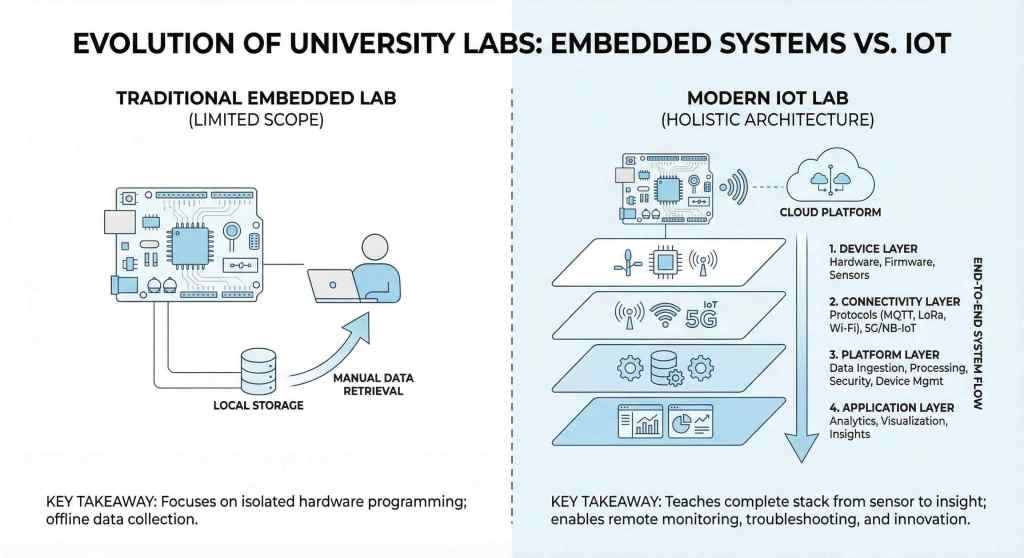
The core of the problem lies in inadequate IoT lab setups, particularly the absence of an IoT middleware or platform.

This gap severely limits students’ ability to effectively comprehend and apply IoT concepts.

Student Struggles Without Proper Tools

Students, the primary learners of IoT, are often left navigating a maze of theoretical knowledge with no practical outlet to apply these concepts.

Their curriculum’s lack of a dedicated IoT platform leads to a superficial understanding of IoT’s potential and applications.

They face the challenge of accessing suitable project platforms, which is crucial for a more profound, experiential learning process.

Lecturers’ Dilemmas with Incomplete Syllabi

Conversely, lecturers grapple with delivering comprehensive IoT education without the proper infrastructure.

An incomplete IoT syllabus, lacking practical tools, hampers their ability to provide a holistic learning experience.

This shortfall affects the quality of teaching and stifles innovation and research in the IoT field within academic circles.

The Conundrum of External IoT Platforms

Many students turn to free versions of external IoT platforms to bridge this gap.

However, these platforms often need improved features, and the advanced functionalities crucial for in-depth projects are locked behind paywalls.

This arrangement could be better, especially for students working on Capstone projects or those exploring IoT as a career path.

The Role of Universities in IoT Infrastructure

Universities have a crucial role in addressing these challenges.

They can significantly enhance the learning experience by implementing on-campus IoT platforms.

These platforms, hosted within the university’s IT center or IoT labs, could offer students comprehensive features necessary for diverse IoT projects, ranging from lab exercises to commercial IoT initiatives.

Introducing Favoriot: A Tailored IoT Solution

Recognizing this educational gap, Favoriot has developed an on-premise IoT platform solution specifically designed for academic institutions.

This platform circumvents the need for students to rely on external, often inadequate, services.

Favoriot’s IoT platform offers a robust, feature-rich middleware that students and lecturers can access throughout the campus.

The Comprehensive Benefits of Favoriot

  1. Hands-on Experience: Favoriot provides a real-world IoT platform, giving students hands-on experience with the tools and technologies prevalent in the industry.
  2. Empowering Educators: Lecturers can offer a more comprehensive syllabus incorporating practical IoT skills and theoretical knowledge.
  3. Innovation and Research: With Favoriot, universities can foster an environment conducive to IoT innovation and research, enabling students and faculty to undertake groundbreaking projects.
  4. Campus-wide Implementation: The platform can be used for educational purposes and for implementing smart IoT solutions across the campus, serving as a live testbed for IoT applications.
  5. Cost-Effective Learning: By using an on-campus platform like Favoriot, universities eliminate the need for costly subscriptions to external platforms, making IoT education more accessible.

Empowering Students with the Right Tools

By integrating Favoriot’s IoT platform into its infrastructure, universities can significantly elevate the quality of their IoT education.

Students access comprehensive tools necessary for in-depth learning and project development.

This practical experience prepares them for real-world IoT challenges and opportunities.

A New Era of IoT Education

Integrating Favoriot’s platform in university labs marks a pivotal step towards future-ready IoT education.

It bridges the gap between theoretical learning and practical application, equipping students with the tools and experience needed to excel in IoT.

Conclusion: Shaping the Future of IoT Learning

In summary, introducing a dedicated IoT platform like Favoriot in academic settings is a game-changer for IoT education.

It enhances students’ learning experience and empowers lecturers to deliver a more rounded curriculum.

This approach is essential for preparing the next generation of IoT professionals and researchers.


For universities looking to advance their IoT education and infrastructure, Favoriot offers a tailored, comprehensive solution.

To explore how Favoriot can transform your IoT education and campus projects, contact info@favoriot.com.

Let’s embark on a journey to reshape IoT learning and make it more accessible, practical, and impactful for students and educators.


Remember to Subscribe to receive email updates on every post I publish.

A Decade of Teaching at a University and How It Has Evolved Me as An Individual and Educator

Image created using Midjourney by Author of Startup Journey

For the first ten years of my career, my role as a lecturer at Universiti Teknologi Malaysia (UTM) has offered me a treasure trove of experiences, deeply enriching my understanding of education and student engagement.

This period has refined my professional abilities and spurred significant personal development, transforming me into an educator of greater influence and confidence.

Grasping the True Essence of Student Needs

In my early days, I viewed teaching primarily as imparting knowledge.

It didn’t take long to recognize that students sought something more profound – a blend of motivation, engagement, and practical knowledge application.

Recognizing and adapting to these needs marked a pivotal transformation in my teaching approach.

Strategies to Engage and Inspire

Capturing the interest of students requires an innovative approach.

I turned to interactive methods, using group discussions, real-life scenarios, and digital technology integration to make my lectures more dynamic and relevant.

These techniques made learning more enjoyable and deepened students’ comprehension and interest.

The Power of Knowledge and Earning Respect

One vital realization was the necessity of thorough preparation and expertise in my field.

Students naturally gravitate towards and respect lecturers who demonstrate comprehensive subject knowledge.

Earning this respect was instrumental in creating an environment conducive to learning and engagement.

Cultivating Confidence Through Public Speaking

Delivering regular lectures became a foundation for honing my public speaking skills.

Over time, this consistent practice significantly boosted my confidence, equipping me to present with poise and clarity at international conferences.

The skill of effective communication, garnered through my teaching experiences, has been invaluable.

View at Medium.com

Beyond Teaching: Research and Development

My responsibilities extended far beyond the lecture hall, involving rigorous research and academic paper publication.

Staying at the cutting edge of my field advanced my professional development and offered tangible benefits to my students.

This aspect of my career has been particularly gratifying, contributing to the broader academic sphere.

Fostering Enduring Connections

One of the most fulfilling outcomes of my tenure at UTM has been the lasting relationships established with students.

Many of them have evolved into friendships, professional relationships, or even client connections, often reminding me of my positive influence during their academic journey.

This has underscored the enduring impact that educators can have on their students’ lives.

Image created using Midjourney by Author of Startup Journey

Reflecting on this decade-long journey, it’s evident that my experiences at UTM have been as much about personal learning and growth as they have been about imparting knowledge.

I am very thankful. The lessons learned have enhanced my capabilities as a lecturer and enriched my life in numerous ways.

My tenure at UTM underscored that being an educator transcends teaching; it’s about inspiring, connecting, and continually evolving personally and professionally.


The story of my second job in a corporate organization (telco):

View at Medium.com

The story of my third job as a Research Director:

View at Medium.com


You can also check out my personal Blog here or the latest eBooks I have recently published — here.