If They Don’t Trust You, They’ll Never Buy From You

Why Trust is the Real Product You’re Selling (and How Marketing Builds I

Let’s cut straight to it.

You could have the best solution on the planet. The smartest AI. The most beautiful dashboard. A deal they’d be crazy to ignore.

But if they don’t trust you?

Game over.

That’s the truth most salespeople and founders don’t want to hear. You don’t lose sales because your product lacks features. You lose because your buyer doesn’t feel safe saying “yes.”

Let that sink in.

You’re Not Selling a Product — You’re Selling Trust

Every time someone signs on the dotted line, they’re taking a leap of faith. Into the unknown. Into the hands of your promises.

And that leap?

It only happens when trust is strong.

If you’re struggling to close deals, here’s your wake-up call — it might not be your price. It’s your credibility.

So how do you fix it?

Let’s start by understanding how trust works across the entire sales cycle.

1. Trust Speeds Everything Up

Without trust, every step in your sales process feels like a slow crawl. Every email takes longer to reply to. Every objection drags on. Every meeting ends with “We’ll think about it.”

But with trust?

Things move fast.

Buyers stop nitpicking. They start nodding. They say “yes” before you finish the pitch. Why? Because they’re not just buying what you do — they’re buying who you are.

You’re not just another vendor anymore. You’re the one they believe in.

2. Trust Makes You the Safe Bet

Let’s be real — nobody understands your tech as much as you do. Most buyers don’t get how your backend system works or what your AI algorithm is doing behind the scenes.

They’re not buying your code. They’re buying confidence.

“I don’t fully get what this does… but I trust you’ll make it work for us.”

That right there? That’s the golden ticket.

If you can be the trusted guide — the one who explains things clearly, sets real expectations, and never overpromises — you become the safest decision they’ve ever made.

3. Trust Wins the Long Game

Deals don’t end at the sale.

What happens after is what builds your reputation.

When things go sideways — and they will — your response matters more than your roadmap. When customers trust you, they stay even when things get tough. They refer others. They become evangelists.

And that kind of loyalty?

It’s not bought with discounts. It’s earned with integrity.

So, Where Does Trust Begin?

It doesn’t start in the pitch deck.

It starts way earlier — with your marketing.

Yes, marketing builds trust before sales even says hello.

Here’s how.

4. Marketing Sets the Tone Before You Even Enter the Room

Think about the last time you Googled a company. What made you stay? A clean website? Great reviews? A few helpful blogs?

Or did you bounce the second you saw a clunky layout and an outdated logo?

Exactly.

Your prospects are doing the same.

Marketing is your first handshake — your first “hello.” And it better say:
“We know what we’re doing. We’ve done this before. You’re in good hands.”

That’s not just branding. That’s trust-building.

5. Content Builds Trust at Scale

You don’t need to be everywhere. But you do need to show up where it counts.

Every blog post. Every case study. Every video tutorial. Every helpful LinkedIn post.

They all add bricks to your trust wall.

Even if someone’s not ready to buy today, they’re watching. And when the time comes? They’ll remember you as the one who actually cared to educate them, not just sell to them.

6. Your Personal Brand is a Trust Magnet

People don’t trust logos.

They trust people.

You showing up as a thought leader — on LinkedIn, podcasts, panels — makes all the difference. Share your journey. Your failures. Your honest thoughts about the industry.

Don’t try to be a polished robot.

Be human.

When you do, people will say:
“I don’t just want the product — I want to work with YOU.”

That’s when you’ve won.

7. Great Marketing Shows, Not Tells

Stop saying, “We care about our customers.”

Start proving it.

Give value before you ask for anything:

  • Share insights your competitors gate behind forms
  • Run webinars that teach, not just pitch
  • Respond to DMs with care and speed
  • Celebrate your customers’ success more than your own

Because when your marketing is rooted in generosity, trust becomes your default currency.

Sales and Marketing: One Team, One Mission

If your sales team is hustling but the leads are cold, there’s a disconnect.

Marketing should be paving the road before sales even shows up.

That means:

  • Sharing real customer success stories
  • Addressing objections through blog posts and videos
  • Keeping your message consistent across every touchpoint
  • Making sure your promises match your delivery

When both teams work together to build trust, magic happens.

Your Competitive Advantage? Trust.

At the end of the day, buyers will always ask themselves:

“Can I trust this person with my time, money, and reputation?”

If the answer’s no — they walk.

If the answer’s yes — they buy.

So don’t just optimise your sales funnel.
Don’t just build a smarter chatbot or a flashier website.

Build trust.

And do it in every word you say, every promise you make, every story you share.

Because trust isn’t just part of the sales cycle.

It is the sales cycle.

Now go earn it.

From Manual Logins to a Global Force: This is Favoriot 4.5

“Dr. Mazlan, I didn’t receive my password—boleh email balik?”

I still remember that message. One of our earliest users. Back when onboarding meant me, personally, typing out usernames and passwords… and emailing them. One. By. One.

No dashboard.
No billing.
No automation.
Just a dream—and a lot of copy-pasting.

Was it messy? Yes.
Was it worth it? Absolutely.

That’s where Favoriot was born—not in a boardroom, but in a Gmail inbox at midnight.

We Built It The Hard Way

Every support ticket? A lesson.
Every bug? A wake-up call.
Every confused user? A chance to rethink.

We didn’t have “customer personas.”
We had real people telling us, “This part tak faham…”
And that direct feedback shaped everything.

So we added what mattered:
✅ Visual dashboards
✅ Auto device creation
✅ Better user controls
✅ A real self-service platform

Eventually, we stopped emailing passwords.

And Then… We Grew

By version 3.0, Favoriot wasn’t a scrappy prototype anymore. It was real.

Today?
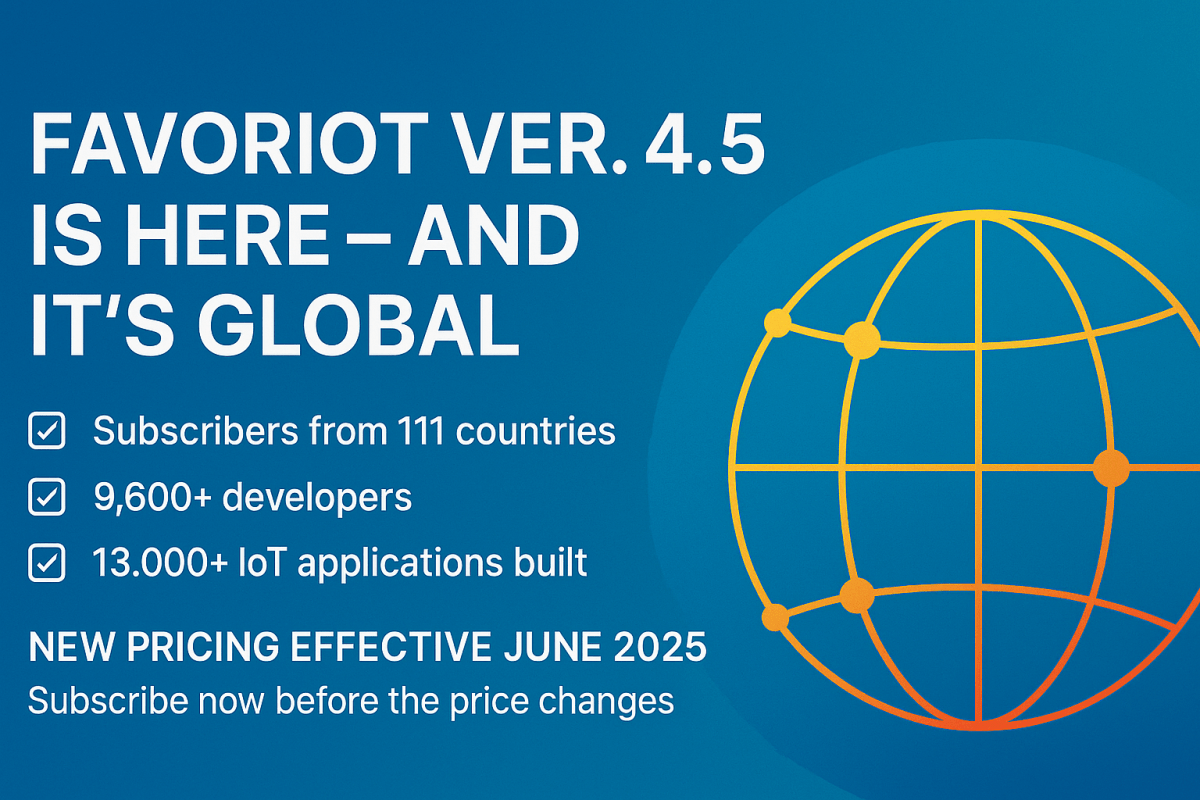
🌍 111 countries
👨‍💻 9,600+ developers
📱 13,000+ IoT apps

What’s wild? We have no idea what most users are building.
And you know what? We love that.

Favoriot is flexible enough for developers to use it their way—without us needing to micromanage or interfere. That’s the magic of a true IoT platform-as-a-service.

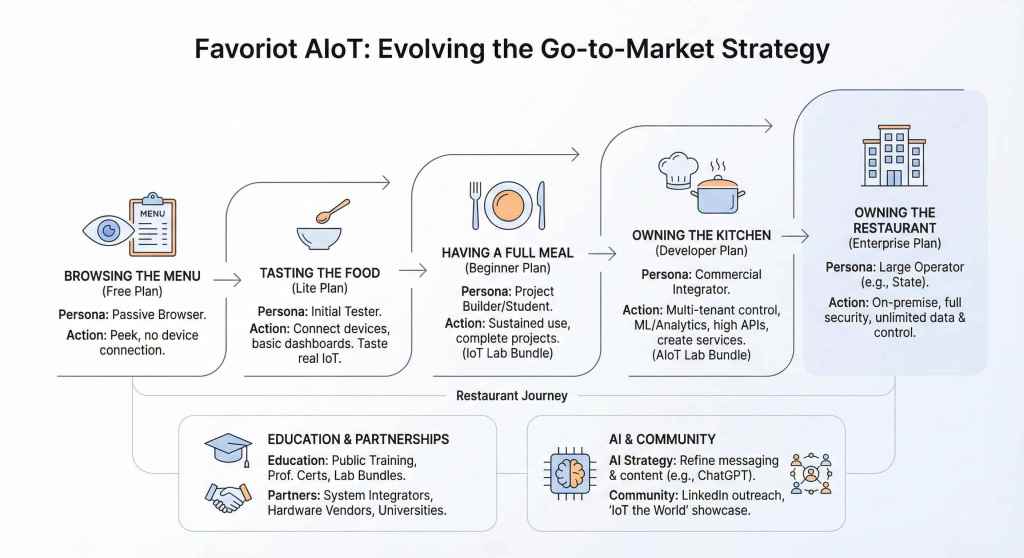
We Kept It Cheap—On Purpose

We priced it low. Dirt cheap, some said.

Because back then, IoT wasn’t mainstream.
We wanted students, hobbyists, and young startups to try.
To explore. To fail. To learn.
Without worrying about subscription fees.

That strategy worked.
It built trust. It built momentum.
And it got Favoriot where it is today.

But Let’s Be Real—It’s Time

Favoriot 4.5 isn’t a toy.
It’s a world-class platform.

We’ve benchmarked ourselves against the global giants.
We’ve made it faster, stronger, smarter.
And yes—it’s time the subscription reflects that.

Starting June 2025, our prices will change.

Why?
Because we’ve earned that seat at the table.
And we want to keep delivering the value you deserve.

But Here’s The Deal

If you subscribe before June—
You lock in the current price.
No surprises. No sudden hike.
Your loyalty gets rewarded.

To the Early Believers

If you’ve been with us since the manual days…
If you ever waited for your login in your inbox…
If you clicked “refresh” hoping we’d fix the bug…

Thank you.

Favoriot 4.5 carries your fingerprints.
We wouldn’t be here without you.

And we’re just getting started.

Let’s keep building the future of IoT—together.

Get Your FREE IoT eBook Now – Limited Time Offer!

Want to start an IoT project but don’t know where to begin?

I get it. IoT is exciting yet overwhelming—so many components, protocols, architectures, and business models. You’ve probably asked yourself:

“Where do I even start?”
“Which IoT platform should I use?”
“How do I build a scalable solution?”

That’s precisely why I wrote “IoT Notes”—a simple, structured, and no-nonsense guide to help you kickstart your IoT journey without confusion.

Why This eBook is Essential for IoT Beginners & Professionals

The Internet of Things is not the future—it’s NOW. Businesses, industries, and even everyday life are being revolutionized by IoT. If you don’t learn about it today, you risk falling behind.

📖 “IoT Notes” covers everything you need to understand, plan, and implement IoT solutions:

What is IoT? (Explained simply, without the tech jargon)
How IoT helps fight COVID-19 (Real-world case studies)
IoT & the Fourth Industrial Revolution – Why now is the best time to get involved
How IoT impacts businesses – Key success factors and challenges
7 IoT Business Models – How to monetize IoT solutions
Comparing IoT protocols – MQTT vs HTTP, LPWAN, and network choices
IoT architecture & system integration – How everything connects
Top 10 skills to become an IoT Engineer
Favoriot IoT Platform – How to get started for free!
And much more! (Subscribers get free future updates!)

📥 Download “IoT Notes” for FREE – Limited Time Only!

Yes, you read that right. It’s FREE! But if you find it valuable, you can choose to support future content with a small contribution.

🔗 Click here to grab your free copy now!

IoT is shaping the world—don’t get left behind. Download the eBook now and take your first step into the IoT revolution! 🚀

See you inside!

Dr. Mazlan Abbas
IoT Evangelist | Favoriot Co-Founder

The Story Behind Favoriot – Part 18: The Unspoken Truth About Startup Success

The Illusion of Overnight Success

Starting a business is exhilarating. There’s a rush of energy, an overwhelming sense of purpose, and a firm belief that what you’re building will change the world. When we launched FAVORIOT, that excitement fueled us. We poured countless hours into developing our product, refining its features, and dreaming of when it would hit the market and create a ripple effect.

I imagined a scenario where people would immediately recognize our innovation, show us praise, and, most importantly, place orders. It was a beautiful vision.

But reality had other plans.

The product launch was met with an eerie silence. There was no flood of inquiries, no immediate purchase orders—just a deafening void. It was as if we had shouted into an empty room, expecting applause but hearing only echoes of our voices.

I remember sitting in my office, staring at my phone, waiting for it to ring. Did we make the right decision? Was there even a market for what we had built? These questions haunted me. I had read about this phase before—the quiet period after launch where entrepreneurs either push through or give up.

For me, giving up was never an option.

The Harsh Reality: No One Cares Until You Make Them Care

Early on, the biggest lesson I learned was that having a great product isn’t enough. People needed to know about it. Marketing, which I had once seen as a secondary task, suddenly became our lifeline.

I had to shift my mindset from being just a product developer to becoming a marketer, a salesman, and sometimes even a storyteller. I repeatedly asked myself: How do we make people care?

We started reaching out, setting up demos, and pitching to potential clients. Slowly, the response trickled in. Companies showed interest. They asked for presentations. They nodded in agreement, smiled, and said, “This looks promising.”

But promises don’t pay the bills.

For a while, it felt like we were stuck in an endless loop of meetings that never turned into real business. Then came the first request for a quotation. I remember the excitement. Finally! This is it! I thought. We prepared the quotation, sent it over, and waited.

And waited.

Nothing happened.

I had assumed that a quotation would naturally lead to a purchase order. But in reality, sending a quote was just another step in a much longer process. It wasn’t a commitment—it was merely an indication of interest. And interest, I realized, didn’t always translate to action.

The First Purchase Order: A Moment of Validation

Then, one day, it happened. We received our first purchase order (PO).

I still remember the overwhelming sense of relief. It wasn’t just about the money. It was validation. Someone believed in what we had built enough to pay for it.

That moment changed everything. If one customer believed in us, surely more would follow. And they did—slowly but surely.

But business success isn’t just about making a sale. It’s about ensuring that sale turns into cash in your bank account. And that’s where another harsh reality set in.

Chasing Payments: The Least Glamorous Part of Business

You’d think that the hardest part is over once a client agrees to buy. That’s what I believed—until I had to chase down payments.

Sending invoices, following up, reminding, and sometimes even begging for payment became a routine. It was frustrating. We had delivered the product, and the clients were using it. So why were payments delayed?

I quickly learned that delayed payments are part of the business game. Cash flow is king; sometimes, even if you’re owed money, it doesn’t mean you’ll receive it on time.

The Trap of Empty Promises

In the early days, I was easily swayed by big promises. Potential clients would tell me, “This is exactly what we need! We can roll this out across multiple projects.”

It all sounded so promising. Some even asked for discounts or free Proof of Concept (PoC) trials, dangling the possibility of future large-scale deployments.

I wanted to believe them. But more often than not, those promises led nowhere.

Eventually, I learned a simple rule: No purchase order, no deal.

If someone truly values your product, they’ll invest in it. Otherwise, it’s just talk.

Beware of the Middlemen and Brokers

Another lesson came in the form of self-proclaimed “brokers.” These individuals claimed to have the right connections to land us big contracts. “Just trust us,” they would say. “We’ll make sure you get into the right hands.”

It was tempting. They spoke about million-dollar deals, high-profile clients, and game-changing opportunities. But over time, I realized that real business doesn’t work that way.

Genuine clients don’t need middlemen. They buy because they see value in your offer, not because someone else convinced them to.

Success is More Than Just Selling

Looking back, these experiences shaped me as an entrepreneur. Building a business isn’t just about creating a product—it’s about navigating relationships, earning trust, and filtering out distractions.

It’s easy to get caught up in the excitement of what could be. But real success comes when you turn those possibilities into tangible results. And at the end of the day, the only thing that truly matters is this:

Do your customers see value in what you offer? And are they willing to pay for it?

That’s the accurate measure of success.

How I’m Improving My Blog Writing in 2025

Lessons from My 2024 Mistakes

As I sit back and reflect on my blogging journey throughout 2024, I realize it’s been a mixed bag. There were moments of triumph where I felt proud of my work and other times where I couldn’t shake off the feeling that I could’ve done better. Isn’t that how it always is with personal projects? You start with high hopes and grand plans, only to learn some hard lessons along the way.

2024 has been a year full of such lessons for me. After analyzing my blog posts and feedback, I’ve identified five key mistakes that held me back. In 2025, I’m determined to turn things around. It’s time for a fresh start and a more thoughtful strategy. Here’s my plan to improve my writing and connect more meaningfully with my readers.

1. Cutting Out the Complicated Stuff

Where I Went Wrong in 2024

I have a confession: I fell into the trap of using too much jargon in my blog. Being in the IoT industry for so long, getting carried away with technical terms and buzzwords is easy. In my head, it sounded impressive, but I probably ended up confusing—or worse—boring my readers. Words like “data ingestion” and “end-to-end connectivity” may roll off my tongue effortlessly, but they can feel like stumbling blocks for someone outside my field.

What I’m Doing Differently in 2025

This year, I’m embracing simplicity. If I don’t say a term in a casual conversation, it won’t show up in my blog. Instead of “data ingestion,” I’ll simply say “how data is processed.” It’s all about being reader-friendly. Before hitting publish, I’ll ask myself: Would this make sense to someone who knows nothing about IoT? If not, I’ll rewrite it.
My new mantra: Every post should feel like a friendly chat over coffee, not a technical lecture.

2. Giving My Articles a Clear Path

Where I Went Wrong in 2024

Some of my blog posts felt like wandering through a maze without a map. I’d start with a big idea, but somewhere along the way, I’d get sidetracked. Before I knew it, the article would lose focus, and the conclusion didn’t even tie back to the opening idea.

What I’m Doing Differently in 2025

This year, outlines will be my best friends. Before writing, I’ll map out the structure of each post. A solid introduction to hook the reader, clear subheadings to guide them through the article, and a concise conclusion to tie everything together. No more messy articles that feel like a random stream of thoughts.

I’ll also check if someone can skim my article and understand the main points. If it feels confusing or jumps around too much, it’s time to rework it. A well-structured article should feel effortless, like a story unfolding naturally.

3. Putting Readers First

Where I Went Wrong in 2024

I love sharing personal stories—it’s one of the reasons I started blogging. But last year, I got too focused on my experiences without always connecting them back to something useful for my readers. Storytelling is powerful, but without a takeaway, it can feel self-indulgent.

What I’m Doing Differently in 2025

This year, I’ll make sure every personal story is tied to a lesson or takeaway for the reader. If I’m writing about my IoT journey, I’ll include tips for others—like how they can start their own IoT project or solve a real-life problem with technology. It’s all about balance.


I also plan to engage more with my audience. Responding to comments and understanding what my readers want will help me create content that matters to them. Writing isn’t just about what I want to say—it’s about what they want to read.

4. Nailing Headlines and Adding Visual Appeal

Where I Went Wrong in 2024

I’ll admit—some of my headlines were dull. They didn’t grab attention or give a clear idea of what the article was about. Worse, a few posts lacked visuals altogether. A wall of text without any visual relief? Even I wouldn’t want to read that!

What I’m Doing Differently in 2025

I will focus on headlines this year. Instead of vague titles, I’ll aim for clear, intriguing ones. For example, “How IoT Can Help Businesses” will become “5 Practical Ways IoT Can Transform Your Business in 2025.” It’s more specific and promises real value.

Visuals will also play a more significant role. Whether it’s a chart, an infographic, or a relevant photo, every post will have something to break up the text and make it more engaging. I’ll use tools like Canva to create custom graphics that complement my content.

5. Engaging with Readers More

Where I Went Wrong in 2024

One of my biggest regrets from last year is not engaging enough with my readers. I didn’t spend enough time replying to comments or interacting with the people who read my work. It felt like a missed opportunity to build connections and learn from their feedback.

What I’m Doing Differently in 2025

Engagement is a top priority this year. If someone leaves a comment, I’ll reply thoughtfully. I want my blog to feel like a conversation, not a monologue.

I also plan to write more based on readers’ questions or suggestions. For example, if someone asks how IoT can be applied in agriculture, I’ll turn that into a complete article. The more interactive my blog feels, the more valuable it will be for everyone involved.

Looking Ahead

2025 is going to be the year I write with purpose. I’m leaving behind the jargon, messy structures, and one-sided stories. Instead, I’ll create clear, engaging, and reader-centric content.

The beauty of blogging is that it’s a continuous journey. There’s always something new to learn and room to grow. By reflecting on my mistakes in 2024, I’m excited to see how far I can take my writing in 2025.

Will it be perfect? No. But it’ll be better. And that’s what matters.

Let’s make 2025 a great year for writing!

The Story Behind Favoriot – Part 6: Expanding The Business Models

The Birth of an Idea: Favoriot’s B2C Beginning

When I first launched the Favoriot IoT platform, I had a simple vision: to create a platform that anyone could use—students, hobbyists, tinkerers—you name it. The idea was to make IoT accessible to the masses, a B2C service that would ignite curiosity and inspire innovation.

I thought, “If we can get people talking about Favoriot, the rest will follow.” That belief fueled our early strategy. We dove headfirst into social media, the digital town square where everyone seemed to gather. Facebook was buzzing, YouTube was the tutorial hub and TikTok? Well, that was the wild frontier—so, of course, I gave it a shot.

The Social Media Experiment

I became the face of our promotions, posting updates on Facebook, creating YouTube videos, writing blog articles, and yes, even attempting TikTok. It was thrilling at first—seeing those likes, shares, and comments roll in. People were curious, intrigued by what Favoriot could do.

But soon, a nagging question crept in: “Why isn’t this translating into actual platform usage?” The buzz was there, but the conversions weren’t. It hit me—generating interest is one thing, but sustaining it requires more than social media posts.

The eBook Revelation

That’s when an old passion of mine resurfaced: writing. “What if I wrote an eBook?” I wondered. It would not be just any technical manual but something that painted the bigger picture—how IoT could transform industries and shape the future, and yes, how Favoriot fits into all of this.

I poured my heart into that eBook. It wasn’t just about IoT protocols or sensor networks; it was a narrative about the power of connected technologies. Subtly, I wove Favoriot into the storyline, highlighting its features and potential. Once it was done, we decided to offer it for free.

The Breakthrough: Global Reach

And guess what? It worked. The eBook spread like wildfire. I remember staring at the download stats, thinking, “This is it. This is the breakthrough.”

But success has a way of revealing new challenges. With global interest came diverse expectations. Users wanted more—advanced features, scalability, and enterprise-grade security. It became clear: our B2C model had hit a ceiling.

Pivoting to B2B: A Bold Decision

Cue the sleepless nights. “Should we pivot to B2B? What if it doesn’t work out?” The questions were relentless. But growth demands evolution. After countless discussions with my team, we made the leap.

We transitioned Favoriot into a B2B platform, offering on-premise and private cloud installations. This shift opened doors to system integrators and organizations who handled complex IoT projects with high data demands. We even introduced a game-changing perpetual license—a one-time purchase granting lifetime access. “This could be a game-changer,” I thought. And it was.

The Impact of the B2B Model

The B2B model didn’t just diversify our revenue; it solidified our market position. We provided a ready-made, scalable IoT solution, eliminating the need for companies to build platforms from scratch.

Since 2017, Favoriot has evolved dramatically from a humble B2C platform to a versatile solution serving both individual developers and large enterprises. A defining moment? MOSTI officially recognized Favoriot as a Malaysian local product by awarding it the MySTI certification. It was more than a certification—it was validation.

Reflecting on the Journey

Looking back, I see a journey marked by resilience, adaptability, and an unwavering belief in our vision. But this isn’t the end. In Part VII, I’ll delve into the challenges we face as we aim to deepen our footprint in Malaysia.

The road ahead is long, but with the lessons we’ve learned and the incredible team by my side, I’m confident Favoriot will continue to thrive.

Stay tuned. Favoriot’s journey is far from over.

More Stories About Entrepreneurship

  1. The Story Behind Favoriot – Part 6: Expanding The Business Models
  2. The Story Behind Favoriot – Part 5: Finding the Right Fit
  3. The Story Behind Favoriot – Part 4: How Favoriot Became More Than Just an IoT Platform
  4. The Story Behind Favoriot – Part 3: Why No One Wanted Our IoT Platform—And How We Turned It Around
  5. The Story Behind Favoriot – Part 2: Turning Failures into Milestones
  6. The Story Behind Favoriot – Part I: The Humble Beginnings of Favoriot
  7. Building My Personal Brand: The Stepping Stone to Favoriot’s Success
  8. From Research Lab Critiques to Startup Pitches: My Slide Story
  9. The Illusion of RFPs in the IoT World: Managing Expectations as a Startup
  10. Favoriot’s Odyssey: Navigating the Rough Waters of Early Revenue

The Story Behind Favoriot – Part 5: Finding the Right Product Market Fit (PMF)

The Struggles No One Sees

I still remember how challenging it was to secure our first ten customers. Ironically, even though we initially offered the Favoriot Platform for free, it wasn’t easy to attract interest. Free should be irresistible, right? But it wasn’t.

I often sat at my desk, staring at my laptop late into the night, asking myself questions that gnawed at my confidence:

“Is all this effort going to be in vain?”
“What if the market doesn’t embrace the product we’ve poured our hearts into?”

These thoughts weren’t fleeting. They lingered, casting shadows over my team’s tireless days and nights dedicated to building Favoriot. I knew I couldn’t let them down. Their belief in this mission was unwavering, and as their leader, failure felt personal.

The Search for Traction

Market traction — a simple phrase with monumental weight. For startups, it’s the lifeline. Without it, even the most brilliant products fade into obscurity.

Our first strategy was to target individuals—university students, freelancers, and tech enthusiasts. I thought, “Surely, they’d be eager to experiment with our platform.” But reality hit hard. The response was underwhelming, to say the least.

So, we pivoted. “Maybe university lecturers will see the value,” I thought. They supervise students working on IoT projects; surely, Favoriot could be an asset in their toolkit.

Again, disappointment. The traction we hoped for didn’t materialize. That nagging anxiety crept back in. “What else can we do?” I kept asking myself.

Shifting Focus: From Individuals to Enterprises

Determined not to give up, we shifted our strategy. Instead of individuals, we approached companies and organizations directly. Businesses must see the potential, right?

Wrong.

Another hurdle emerged — most companies didn’t know how to utilize the platform effectively. It was as if we were speaking a language they hadn’t learned yet. “Are we too early to the market?” I wondered. Maybe the IoT landscape wasn’t mature enough in Malaysia at that time.

In the startup world, there’s a term: Product-Market Fit (PMF). It’s the sweet spot where your product perfectly aligns with market needs. Without PMF, even the best ideas crumble.

I knew this. And the pressure was immense.

The Breakthrough: Finding Our True Customers

But giving up wasn’t an option. We kept refining our approach, learning from every failed pitch and cold response.

Eventually, the breakthrough came.

We discovered that IoT System Integrators were our ideal customers. These were companies and individuals already offering IoT solutions to their clients. They didn’t just understand the value of our platform; they needed it to build scalable, customized IoT applications.

It felt like finding the missing piece of a puzzle. Suddenly, the conversations flowed more naturally, the demonstrations clicked, and the value proposition was crystal clear.

Tailoring the Offering: Cloud vs. Enterprise Models

With clarity came strategy. We introduced two models for the Favoriot Platform:

  1. Cloud-Based Model
    • Perfect for customers seeking flexibility and remote accessibility.
  2. Enterprise-Based Model
    • Designed for System Integrators wanting full control over their platforms, this model comes with a perpetual license and unlimited API access, eliminating the worry of high API costs that platforms like AWS or Azure often impose.

This dual approach worked. Favoriot finally carved out its space in the IoT ecosystem.

A Glimpse of Relief, A Promise to Evolve

I’d be lying if I said I didn’t feel relieved. But this wasn’t the finish line — far from it. The tech landscape evolves rapidly, and staying relevant requires continuous innovation.

Yet, this breakthrough gave me something invaluable: confidence. I felt confident that Favoriot had a future and that our journey, filled with detours and lessons, was leading somewhere meaningful.

What’s Next?

This isn’t the end of the story. Not even close.

In the next part, I’ll share how we expanded our customer base, the unexpected sectors that embraced Favoriot, and the strategies we used to win their hearts.

So, stay with me on this journey. Every step we take has a story—a story that might inspire those who are walking the challenging path of building something from nothing.

See you in the next chapter.

More Stories About Entrepreneurship

  1. The Story Behind Favoriot – Part 6: Expanding The Business Models
  2. The Story Behind Favoriot – Part 5: Finding the Right Fit
  3. The Story Behind Favoriot – Part 4: How Favoriot Became More Than Just an IoT Platform
  4. The Story Behind Favoriot – Part 3: Why No One Wanted Our IoT Platform—And How We Turned It Around
  5. The Story Behind Favoriot – Part 2: Turning Failures into Milestones
  6. The Story Behind Favoriot – Part I: The Humble Beginnings of Favoriot
  7. Building My Personal Brand: The Stepping Stone to Favoriot’s Success
  8. From Research Lab Critiques to Startup Pitches: My Slide Story
  9. The Illusion of RFPs in the IoT World: Managing Expectations as a Startup
  10. Favoriot’s Odyssey: Navigating the Rough Waters of Early Revenue

Top AI Tools for 2025: Boosting Efficiency Across Various Domains

AI tools have become essential to personal and professional workflows, helping automate tasks, enhance creativity, and improve productivity. Here’s a breakdown of some of the most valuable AI tools for 2025 across different categories and why they matter:

[Credit to Pradeep]

1. YouTube Tools

Tools like Steve AI, TubeBuddy, and Eighthify assist content creators with video editing, optimisation, and analytics. These are crucial for streamlining content production and boosting audience engagement on YouTube.

2. Sales Tools

Platforms such as Lavendar, Twain, and Simplified make sales outreach more personalised and efficient. They provide insights and automation to close deals faster and enhance customer relationships.

3. Productivity Tools

Apps like Bardeen AI, ChartGPT, and Scholarly help manage tasks, conduct research, and increase overall efficiency. These tools are essential for individuals juggling multiple responsibilities.

4. Music Tools

AI tools like Amper, Jukedeck, and Boomy enable music creation and editing, making them valuable for artists, content creators, and marketers looking for custom soundtracks.

5. Writing Tools

Jasper AI, Writesonic, and Quillbot simplify content creation with grammar corrections, paraphrasing, and idea generation, making them indispensable for writers and bloggers.

6. Coding Tools

Platforms such as GitHub Copilot, Deepcode, and Replit help developers write and debug code efficiently. These tools save time and improve code quality for software engineers.

7. Chatbot Tools

Tools like Cohere, Yatterplus, and GPTBuddy enable businesses to create intelligent chatbots for improved customer service and engagement.

8. Daily Life Tools

Apps like Notion AI and Taskade simplify task management and daily organisation, helping individuals stay on top of their schedules and projects.

9. Content Creation Tools

Tools like Tome AI and Beautiful AI aid in creating visually appealing presentations and multimedia content, which is crucial for marketing and storytelling.

10. Twitter Tools

Platforms such as Postwise, Tweet Hunter, and TribeScaler are designed to optimise Twitter engagement, making them perfect for influencers and marketers.

11. Image Tools

Tools like StockIMG, MidJourney, and Microsoft Designer offer quick and creative solutions for generating and editing images, perfect for designers and marketers.

12. Chrome Extensions

Extensions, like Compose AIVoila AI, and FinalScout, add functionalities like email drafting and lead generation, directly improving browser productivity.

Why These Tools Matter

AI tools transform our work by automating repetitive tasks, offering creative assistance, and optimising productivity. Whether you’re a content creator, developer, or entrepreneur, integrating these tools into your workflow can save time, enhance quality, and give you a competitive edge.

These tools showcase how AI continues to bridge the gap between manual effort and technological innovation, making 2025 a promising year for leveraging AI-driven solutions.