FAVORIOT: 8 Years of Dreams, Struggles, and Triumphs

Eight years. It feels like a blink of an eye, yet when I reflect on the journey, every moment is etched in my memory like a battle scar.

It all started with an idea that many dismissed as too ambitious for a small startup in Malaysia. The Internet of Things (IoT) was gaining traction globally, but here? People barely understood its potential. I remember sitting with early team members, sketching out what would eventually become the blueprint of FAVORIOT.

“Will this work?” I asked myself.

“Will people even care?”

Doubt is a funny thing. It whispers in your ear, making you question every step. But the fire inside me was more substantial. I had spent decades in telecommunications and technology, seeing trends come and go. But IoT? It wasn’t just a trend—it was the future. And I wanted to be part of shaping that future.

The Birth of FAVORIOT (2017-2018): A Leap of Faith

In 2017, FAVORIOT was officially born. The name carried a mission—a combination of “Favour” (or “Favor”) and “IoT.” But it was pronounced like “Favourite”. Our vision was to help businesses and cities adopt IoT with ease. We weren’t just another tech company; we were a company built on the belief that technology should serve people, not the other way around.

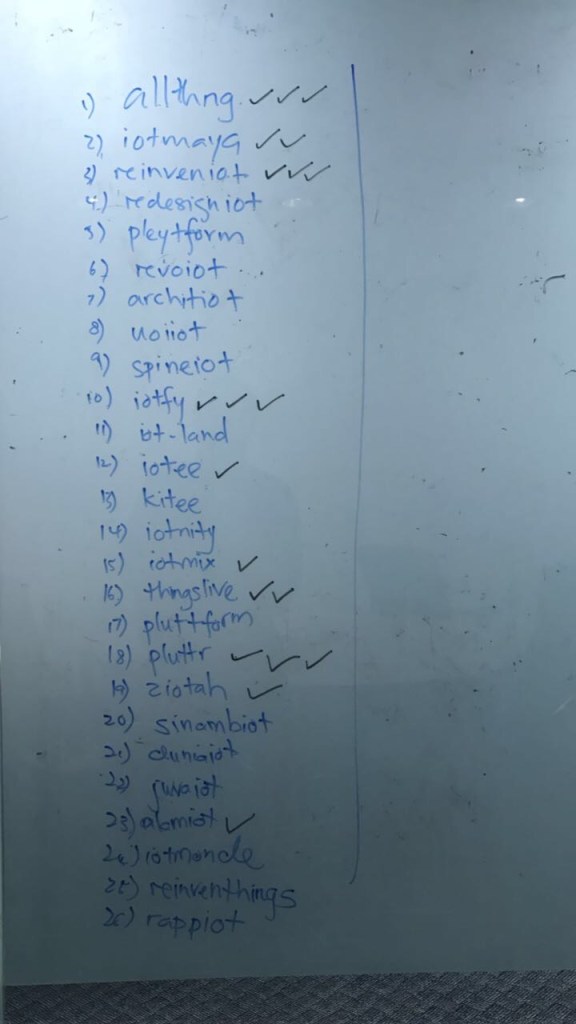
I still kept the list of suggested names for the company and we insist to have the word “IoT” in it. It was funny to look back at the way we come out with the names
“Let’s build something that matters.” That was the mantra.

But building something from scratch? That was no walk in the park.

The early days were filled with sleepless nights, countless meetings, and an uphill battle convincing clients that IoT was more than just a buzzword. We had to prove ourselves. The first version of the FAVORIOT platform was launched, allowing businesses to connect and manage IoT devices seamlessly. The first product that used the FAVORIOT platform is “Raqib,” a senior care IoT solution.

The Struggle for Recognition (2019-2021): A Fight Against the Odds

If I said everything went smoothly, I’d be lying.

We faced rejections. So many rejections.

“We’re not ready for IoT.”

“We’ll consider it in the future.”

“Maybe if you were a bigger company, we’d trust your solution.”

Every “no” felt like a dagger. I had seen this before—how innovation is often met with resistance. But I also knew that persistence was key.

2019 was a turning point. We secured our first major clients, IoT developers started using FAVORIOT to build their IoT projects, and universities integrated our platform into their curricula. The momentum was building.

Then, 2020 happened. The world shut down.

The pandemic tested every business, including ours, for resilience. Projects were delayed, budgets were cut, and people were uncertain.

“Is this the end?” I wondered.

But if there’s one thing I’ve learned, crises often lead to opportunities. The demand for remote monitoring solutions skyrocketed. Suddenly, IoT wasn’t a luxury—it was a necessity. Businesses needed to track assets, monitor environments, and ensure safety without physical presence.

FAVORIOT became more relevant than ever.

Scaling Up (2022-2023): The Rise of the Global Partner Program

By 2022, we knew we had something special. Our IoT platform had matured. Companies across different industries—smart cities, agriculture, healthcare—were integrating our technology.

But one question remained: How do we scale?

The answer? Partnerships.

We launched the FAVORIOT Global Partner Program in 2024. Instead of knocking on doors one by one, we empowered system integrators worldwide to bring FAVORIOT into their markets. We started building an international presence from Canada to the Philippines, Indonesia to India.

Each new partner wasn’t just a business deal but a validation that what we built mattered beyond Malaysia.

2024-2025: A Vision for the Future

And now, here we are. Eight years in.

I look back and realize how far we’ve come—from a tiny startup with big dreams to an IoT platform trusted worldwide. But this is just the beginning.

The future of IoT is evolving, and so are we. AI-driven automation, advanced analytics, and even more seamless integrations are on the horizon.

FAVORIOT’s vision remains To make IoT accessible, scalable, and impactful.

Lessons from 8 Years of Favoriot

Eight years in business teaches you a lot. Some lessons were painful. Some were enlightening. But all were necessary.

1. Innovation Alone Isn’t Enough—You Need Grit

Having a great product means nothing if you give up too soon. The world doesn’t hand you success on a silver platter. You fight for it.

2. Relationships Matter More Than Sales

A business isn’t just about transactions. It’s about trust. Every client, partner, and investor who believed in us contributed to our success.

3. Adapt or Die

The pandemic taught us this the hard way. If we had been rigid in our approach, FAVORIOT wouldn’t have survived. Being flexible and embracing change is non-negotiable.

4. The Right Team Makes the Difference

A startup isn’t just about the founder. It’s about the people who share the vision and push through the most challenging days. I’m grateful for every team member who’s been part of this journey.

A Heartfelt Thank You

FAVORIOT’s journey isn’t just my story—it’s ours.

To the team, thank you for believing in this vision.

To our clients, thank you for trusting us.

To our partners, thank you for helping us expand.

To those who doubted us, thank you for pushing us to be better.

This anniversary isn’t just about celebrating the past—it’s about gearing up for the future. FAVORIOT is here to stay, and the best is yet to come.

Here’s to the next 8 years. And beyond.

A Deeper Dive into My Journey

If we were sitting down for coffee, I’d probably tell you that my story isn’t linear. It’s full of shifts, experiments, and surprises—each decision shapes who I’ve become. It’s not just about IoT, entrepreneurship, or blogging; it’s about finding my voice and figuring out where it belongs.

Let me take you back to the beginning, where curiosity sparked everything.

My First Affair with Technology

It all started long before technology became mainstream. I was that kid who loved tinkering with radios and gadgets, often dismantling them to see how they worked. Sometimes I managed to put them back together successfully—other times… not so much. But the thrill of discovery always kept me going.

Then came the blogging era. I stumbled upon Blogspot in the early 2000s, and it became my playground. Back then, I blogged about technology and gadgets, sharing tips and experiences with anyone willing to read. It was simple, but it gave me a voice.

“Imagine if YouTube had been around,” I often muse. My tech reviews would’ve been so much more engaging on video.

Beyond Tech Reviews: A New Perspective

Over time, my interests began to shift. I wanted to write about more than just gadgets. So, I expanded the topics—some posts were written in English, others in Malay, reflecting my bilingual journey. I found joy in writing about life experiences, challenges, and even personal reflections.

Each post was a piece of my evolving identity. Writing wasn’t just about sharing knowledge anymore—it became a way to connect, reflect, and grow.

The Birth of the IoT World

By the mid-2010s, IoT (Internet of Things) captured my attention like no other. This is the future, I thought. I launched IoT World, a focused platform dedicated to exploring and discussing IoT’s endless possibilities.

It became my canvas for explaining complex IoT concepts in simple terms, sharing case studies, and inspiring others to join this exciting field. I wrote with passion, knowing that IoT was more than just a trend—it was a revolution.

But, as always, my curiosity nudged me to broaden my horizons again. My inner voice said there’s more to share beyond IoT. Why not explore it?

Embracing Medium

In 2016, I discovered Medium—a place that felt like home for writers, thinkers, and storytellers. It was where creativity met community, and I knew I had to be a part of it.

Still, I was hesitant at first. I posted sporadically but was unsure if my content fit the platform’s audience. That all changed in September 2023 when I joined the Medium Partner Program. Suddenly, writing became a serious business. I decided to commit fully and see where it would take me.

On Medium, I explored different niches—IoT, entrepreneurship, social media strategies, poetry, and book reviews. Surprisingly, the candid posts about writing on Medium resonated the most. They taught me the value of niche-focused content while leaving room for exploration.

I began to love Medium’s dynamic energy. I constantly experimented with different formats and topics, learning what worked and what didn’t.

The Big Move: Back to WordPress in 2025

But then, in January 2025, something changed again. Medium felt crowded, I thought. I missed the creative freedom of building something that felt uniquely mine.

So, I decided to return to WordPress (which is this Mazlan Abbas Blog that you are reading). It felt like returning to my roots with a fresh perspective. This time, it wasn’t just about personal blogs or tech reviews. I wanted to create a digital space that combined all aspects of my journey—IoT, entrepreneurship, personal stories, and writing tips—all under one roof.

It was more than just a platform change. It was a symbolic return to independence and creativity. WordPress allowed me to build my site exactly how I wanted, without style, structure, or content restrictions.

It felt like home again.

My Professional Odyssey

Outside of blogging and writing, my professional journey has been equally dynamic. I’ve worn many hats over the years:

  • Associate Professor at Universiti Teknologi Malaysia, where I discovered the joy of teaching and mentoring young minds.
  • Senior Director at MIMOS Berhad, where I delved deep into technology research.
  • CEO of REDtone IoT, leading projects that transformed businesses through IoT solutions.
  • Co-Founder and CEO of FAVORIOT, a startup that’s been a rollercoaster ride of challenges, breakthroughs, and growth.

Each role added new dimensions to my story, giving me unique insights into technology, leadership, and the startup ecosystem. It’s been quite the journey.

The Magic of Storytelling

One of the unexpected joys of this journey has been the opportunity to speak at global conferences and share my experiences with others. Whether discussing smart cities, IoT, or entrepreneurship, I’ve learned that storytelling is the secret ingredient.

It’s not just about data or facts—it’s about making a connection. Sharing real stories—about successes, failures, and lessons learned—resonates more deeply than any PowerPoint slide ever could.

Looking Forward: The Unwritten Chapters

So, what’s next?

The truth is, I’m not entirely sure—and that’s exciting. Life has a funny way of surprising you. Maybe I’ll write a book, start a new podcast, or create more TikTok videos about IoT. Perhaps I’ll discover an entirely new passion and dive headfirst into it.

For now, I’m focusing on building mazlanabbas.com into a platform that reflects every facet of my journey. A space where I can share knowledge, connect with others, and continue to evolve as a writer and storyteller.

This journey is far from over.

The unwritten chapters are waiting, and I’m ready to explore them.

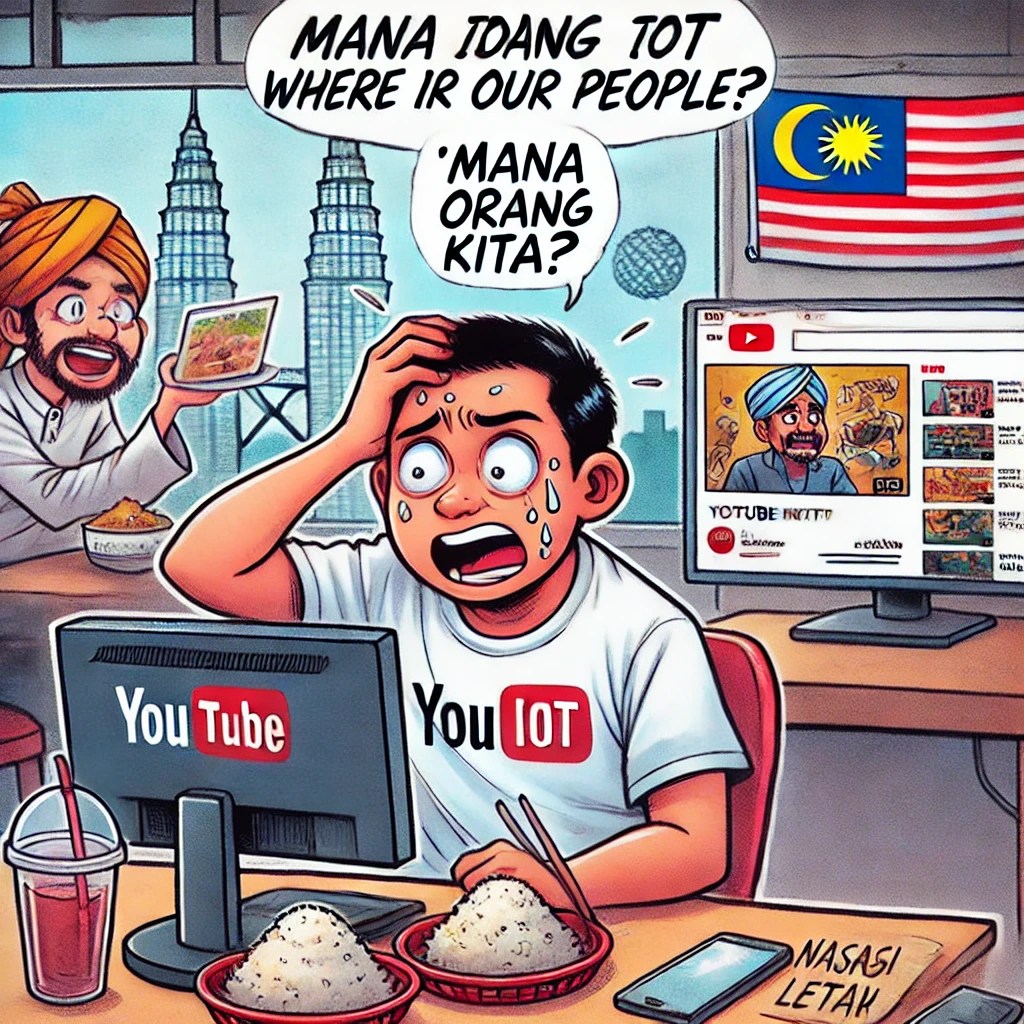
Why Are Malaysians Not Creating IoT Content on YouTube?

I was scrolling through my social media and came across an interesting observation—very few Malaysians create IoT tutorial content on YouTube. The majority of these tutorials come from India. Why is that?

So, I threw the question out there, hoping to spark some discussion. And wow, did people have opinions!

“Malaysia is Small Compared to India.”

One of the first responses I got was, “Malaysia is much smaller compared to India. If you compare us with our ASEAN neighbours, maybe it makes more sense.”

Okay, I get it. India has a massive population and a thriving tech ecosystem. But does that mean we just accept that we aren’t producing enough content? Shouldn’t our ambition go beyond just comparing ourselves with our neighbours?

“Sharing Knowledge Isn’t Our Culture.”

Another comment caught my attention: “India suka sharing knowledge kali.

That hit me hard. Is it true that we don’t have a strong culture of sharing technical knowledge? I know plenty of Malaysian engineers and tech enthusiasts who are brilliant at what they do, but why aren’t they making educational content? Are we too protective of what we know? Are we afraid that sharing our expertise might somehow put us at a disadvantage?

One person even admitted, “Source code aku, aku yang susah-susah buat, aku punya, tak nak share dengan orang lain. Kongsi je lah.” That made me chuckle, but deep down, I felt a little sad. If we all think this way, how do we expect to build a community of learning?

“People Prefer Entertainment Over Education.”

Another perspective: “Expertise tak ramai compared to India + audience sukakan content hiburan compared to education.

This one stings. It’s no secret that entertainment content dominates YouTube in Malaysia. Food reviews, travel vlogs, comedy skits—they all get millions of views. But educational content, such as IoT tutorials, barely gets any traction.

Does this mean Malaysians aren’t interested in learning tech? Or is it because no one is making content that makes tech exciting? Maybe we need to find a way to blend education with entertainment. After all, if a cooking channel can get millions of views, surely a well-presented IoT tutorial can capture some attention, right?

“Technology Isn’t in Our DNA.”

Then came a comment that really made me pause: “Sembang technology bukan budaya dalam masyarakat kita. Tengok industri filem saja lah. Teknologi dalam filem kita hanyalah fiksyen sains yang entah apa-apa. Cuma bezakan dengan filem Bollywood macam Three Idiots… Bapa kat kampung pun nak anaknya jadi engineer dan kerja di multinational kat Silicon Valley.

Ouch.

I don’t want to believe this, but there’s some truth to it. In India, engineering and technology are deeply embedded in their aspirations. Parents push their kids towards STEM careers. In Malaysia, how many parents encourage their children to be engineers, developers, or IoT experts? Not many. And if we don’t nurture this mindset early, how can we expect a surge of local content creators in technical fields?

“Go Where the Grass is Greener.”

Then someone simply commented: “Go for greener grass.

Is that the answer? Just abandon hope and move to a place where IoT content is more appreciated? I refuse to believe that. There’s potential here. There’s talent here. The problem is that we haven’t created a culture where sharing knowledge is normal, where technical education is valued, and where engineers feel motivated to teach others.

What’s the Solution?

I don’t want to just sit here and complain. I want to do something about it. So, here’s my plan:

  1. Start Creating More IoT Content – If no one else is doing it, I’ll do it. I’ll make IoT tutorials, I’ll share what I know, and I’ll make it accessible to everyone.
  2. Encourage More People to Share – If you’re an engineer, a tech enthusiast, or anyone with IoT knowledge, start sharing. Even if it’s a short video, a blog post, or a simple explainer—put it out there!
  3. Make IoT Fun and Engaging – If entertainment dominates, let’s make IoT entertaining. Let’s present it in a way that captures attention and excites people.
  4. Build a Community – Let’s create a space where Malaysians who are passionate about IoT can exchange ideas, support each other, and grow together.

I refuse to accept that Malaysia can’t be a hub for IoT education.

It starts with us, with sharing, and it starts today.

Why IoT and AI Are the Backbone of a Nation’s Technological Sovereignty

I often wonder what truly defines a nation’s strength in today’s digital world. Is it the size of its economy, its military prowess, or the natural resources it possesses? While all these play a role, I believe that a country’s real power lies in its ability to control and innovate its own technology. At the heart of this technological sovereignty are two game-changing forces: the Internet of Things (IoT) and Artificial Intelligence (AI).

We are entering an era where data is the new oil and intelligence is the new currency. Nations that fail to embrace AI and IoT risk becoming mere consumers rather than leaders in the global tech race. The question is: Will we take charge of our technological destiny, or will we remain dependent on foreign players for our critical infrastructure? Let’s explore why IoT and AI are not just smart devices and automation but also securing our future.

1. The Battle for Data Control and National Security

Technology is no longer just about convenience; it’s about sovereignty. The more we rely on foreign AI models and IoT infrastructures, the more we expose our data, businesses, and government operations to external threats.

Owning Our Data: The First Step to Sovereignty

I’ve always believed that data is a nation’s most valuable resource. Just like oil fueled the Industrial Revolution, data is fueling the digital revolution. But imagine if a country had to depend on foreign companies to extract, refine, and distribute its oil. It would be at the mercy of external forces. The same applies to data.

With AI and IoT, we can take charge of our data. Local data centres, secure cloud computing infrastructures, and homegrown AI models ensure that our national data stays within our borders and is protected from cyber threats and foreign surveillance.

Preventing Foreign Surveillance and Cyber Threats

Cybersecurity threats are real. We risk exposing sensitive information to external parties whenever we use a foreign AI-powered application or cloud-based IoT system. Governments, businesses, and even individuals can become targets of cyber espionage. Malaysia’s Cyber Security Act 2024 is a step in the right direction, ensuring our digital assets remain protected. But laws alone are insufficient—we need the technological infrastructure to support these policies.

Investing in sovereign AI and IoT solutions ensures that our government, military, and critical industries are shielded from external interference.

2. Economic Growth and Global Competitiveness

Technological sovereignty is not just about security—it’s about economic independence. The nations that control their AI and IoT ecosystems will shape the future of global industries.

Job Creation and Economic Empowerment

One of the most inspiring developments in Malaysia has been the influx of tech investments to build local AI and IoT capabilities. Companies like Google and Oracle are pumping billions into Malaysia’s digital economy. Google’s $2 billion investment in a new cloud and AI region will create over 26,500 jobs and contribute $3.2 billion to the country’s GDP by 2030. On the other hand, Oracle is investing $6.5 billion to establish its cloud region in Malaysia.

These aren’t just numbers. They represent real opportunities—high-paying jobs for our youth, local innovation hubs, and a digital economy that doesn’t rely on foreign tech dominance.

Building Our Own Technology Ecosystem

Relying on foreign technologies means giving control of our economic future to external entities. But when we develop our AI-powered IoT systems, we create an ecosystem that is resilient, self-sustaining, and globally competitive.

Take the example of Malaysia’s AI Park—a $1 billion investment by India’s Eros Investments. It’s not just about developing AI models; it’s about setting up an entire industry that will support local entrepreneurs, researchers, and businesses in the AI and IoT space.

3. AI-Driven National Decision-Making

AI isn’t just about robots and automation—it’s about making intelligent decisions at a national level. From predicting economic trends to managing city infrastructures, AI allows governments to plan with precision.

Smart Governance and Public Services

Imagine a government where AI can predict and manage traffic congestion, optimize public transport, and even analyze healthcare trends to prevent disease outbreaks before they happen. With IoT sensors collecting real-time data and AI models processing it, governments can make data-driven, efficient, and responsive policies.

Malaysia’s National AI Office is a significant step in this direction. By creating an AI-first policy framework, we are moving towards an intelligent, proactive, and future-ready governance model.

4. Strategic Autonomy in Emerging Technologies

AI and IoT in Smart Cities and Agriculture

One of the most exciting applications of IoT and AI is in smart cities and agriculture. A self-reliant nation must feed itself, sustain itself, and protect itself. IoT-driven precision farming can help Malaysia ensure food security by monitoring soil quality, automating irrigation, and predicting weather patterns to maximize crop yields.

Smart city projects powered by AI can reduce energy consumption, improve waste management, and even prevent crime through intelligent surveillance systems. The less we depend on foreign companies to build these infrastructures, the more control we have over our cities and resources.

5. Resilience Against Geopolitical Risks

Avoiding Foreign Tech Restrictions

What happens when a country suddenly loses access to a critical technology because of geopolitical tensions? We’ve seen how trade restrictions can cripple industries overnight. Countries that are overly dependent on foreign technologies risk sudden disruptions in essential services and infrastructure.

Take AI chips, for example. The US-China tech war has shown us how a simple export restriction can paralyze entire industries. If Malaysia or any other country wants to future-proof its technological capabilities, it must invest in developing its own AI chips, cloud services, and IoT ecosystems.

A Self-Reliant Digital Economy

A nation’s strength is measured by its ability to stand independently. AI and IoT empower countries to build a self-reliant digital economy not easily shaken by external forces. By controlling our own cloud platforms, AI models, and IoT networks, we reduce our vulnerability to external trade wars and policy shifts.

Final Thoughts: The Road to True Digital Independence

The future belongs to those who control their own technology. AI and IoT are not just tools but the foundation of a nation’s economic, security, and governance infrastructure.

If Malaysia continues on this path—investing in local AI research, securing its IoT infrastructure, and building sovereign digital policies—we will not only compete in the global tech race but also lead it.

We are at a crossroads. Should we take charge of our future or allow others to dictate our technological destiny? The choice is ours.