The Birth of “IoT Man”: Why the Name Means More Than Just a Title

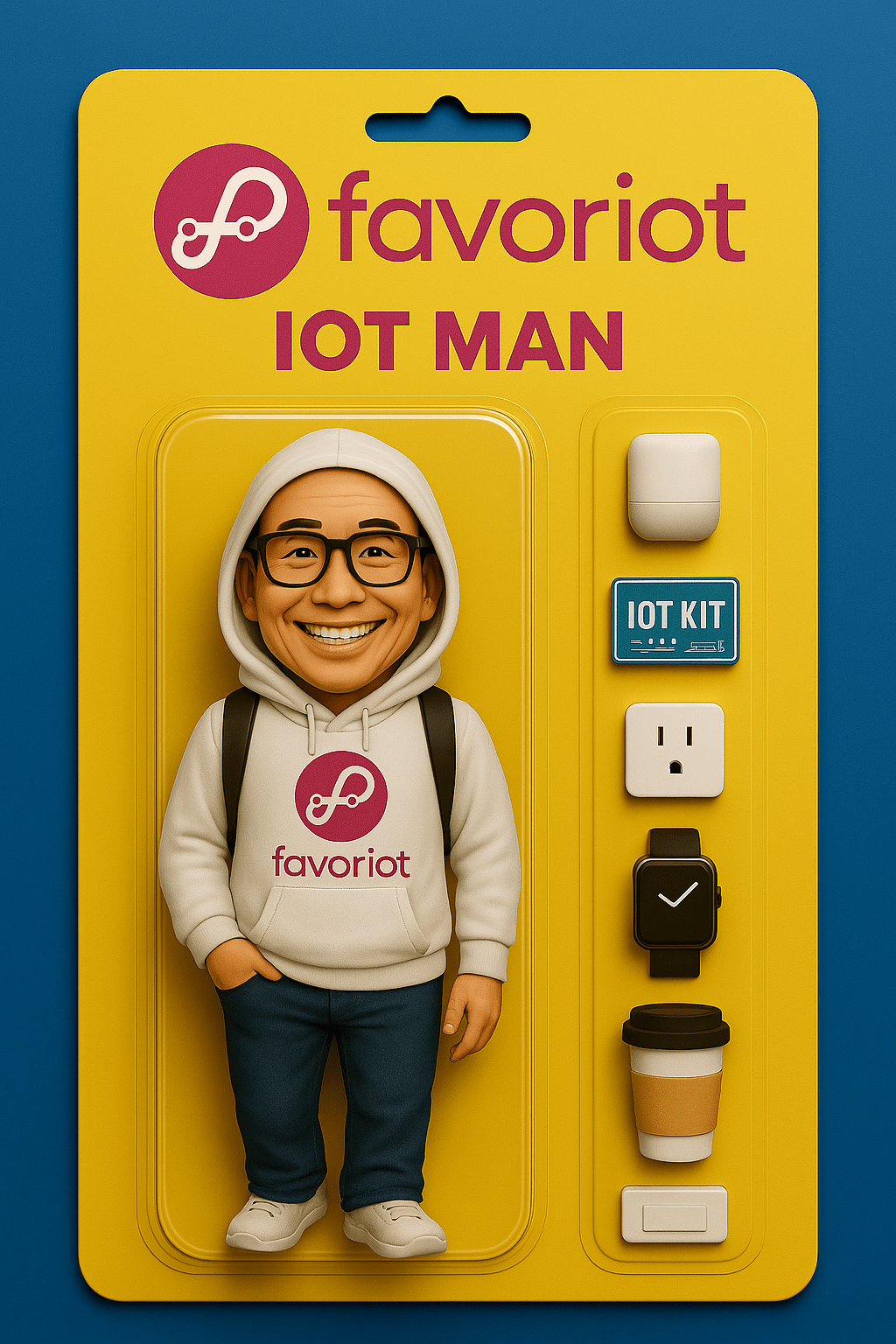
“You can call me IoT Man.”

That was the casual yet defining moment when I embraced the name—not just as a label but as a symbol of everything I’ve poured into it.

But before that nickname ever stuck, before anyone even recognized my face or my voice in the realm of smart cities and connected devices, I was just a curious kampung boy who loved science fiction, obsessed with The Jetsons, and dreamt of a future where machines talked to each other.

I didn’t know it then, but that fantasy would eventually become my destiny.

The Spark That Ignited It All

In the 70s, I grew up with dusty comics, DC superheroes, and futuristic cartoons that seemed out of reach. I was always asking questions: “How does that work?”, “What if buildings could talk?”, “Why can’t my bicycle tell me when its tire is flat?” You know… typical “crazy kid” questions no one took seriously.

But I took them seriously.

Years later, that same boy became an engineer, researcher, and executive, hopping across universities, government agencies, and corporate towers. I had the titles and the recognition—and yet, I felt something was missing.

I wasn’t building the future I dreamed about.

Until I stumbled upon three letters that changed everything: IoT.

To me, the Internet of Things wasn’t just a buzzword. It was the missing puzzle piece. It was like someone finally handed me the blueprint of the world I used to imagine as a child.

I dove headfirst into it. It became an obsession. No, scratch that — it became a mission.

Why the Name “IoT Man” Chose Me

People often ask me, “Did you give yourself that name?” No, I didn’t. It started as a whisper on social media.

I was posting daily. Articles, LinkedIn updates, tweets, TikToks — all about IoT. I shared failures, ideas, insights, and case studies. Some people rolled their eyes. “Dia ni tak habis-habis cerita pasal IoT.”

Others started to notice.

One day, someone tagged me in a post and wrote, “Here comes the IoT Man again.” At first, I chuckled. “Macam superhero pulak.”

But then it stuck. People started calling me that — students, entrepreneurs, CEOs, even strangers at conferences. I would introduce myself, and they’d say, “Oh! You’re the IoT Man!”

And honestly?

It warmed my heart every single time.

Because it meant they saw me, they saw what I stood for, and they recognized the fire I carried.

Why It’s More Than Just a Nickname

You see, “IoT Man” isn’t just a personal brand.

It’s a reminder that in a world flooded with noise, consistency still matters. If you keep showing up, keeping writing, and keeping sharing, people will notice.

It’s a tribute to every sleepless night I spent building FAVORIOT from scratch with a small team and big dreams, to every time I was told, “Malaysia’s not ready for IoT,” or “Smart Cities won’t work here.”

It’s a badge earned through trials, through countless rejections, postponed projects, budget cuts, technical failures, and platform bugs, and through restarting when others gave up.

“But what if this doesn’t work?” I often asked myself during those quiet, lonely moments.

“Then I’ll try again tomorrow,” I’d reply.

The name “IoT Man” represents that spirit.

The Responsibility That Comes With It

Being known as the “IoT Man” also means people expect answers, solutions, and inspiration.

And that’s not something I take lightly.

That’s why I started sharing knowledge for free through podcasts like Jom Pakai IoT, articles, TikTok videos, and books. I also train others, mentor startups, and advise universities.

Because I’m not just building a company. I’m building a movement.

A movement to make IoT accessible. To make Malaysia a global hub of smart innovations. To show the kampung boy in every corner of the country that yes, you can shape the future too.

Legacy Over Popularity

I don’t want to be remembered just as a CEO or engineer.

I want to be remembered as the guy who sparked a generation.

The one who didn’t just talk about the future — but built it.

The one who lifted others along the way, who simplified the complex, who wore the “IoT Man” cape not for show but to carry the hopes of students, makers, entrepreneurs, and dreamers.

Because at the end of the day, all I ever wanted was to make a difference.

Final Reflection: A Name, A Mission

Sometimes, I look in the mirror and ask myself, “Are you still worthy of that name?”

Some days, I feel I’ve done enough, and most days, I feel like I’m just getting started.

So, if you see me online or bump into me at a café or tech event, don’t hesitate to say hi. Just say, “Hey, IoT Man!”

I’ll smile. And I’ll know that the journey — every twist, every fall, every leap — has been worth it.

Because that name is no longer just about me.

It belongs to the mission.

And the mission still burns bright.

Mazlan Abbas, your friendly neighborhood IoT Man. Let’s transform the world together!
What Makes a Person Truly Unique?

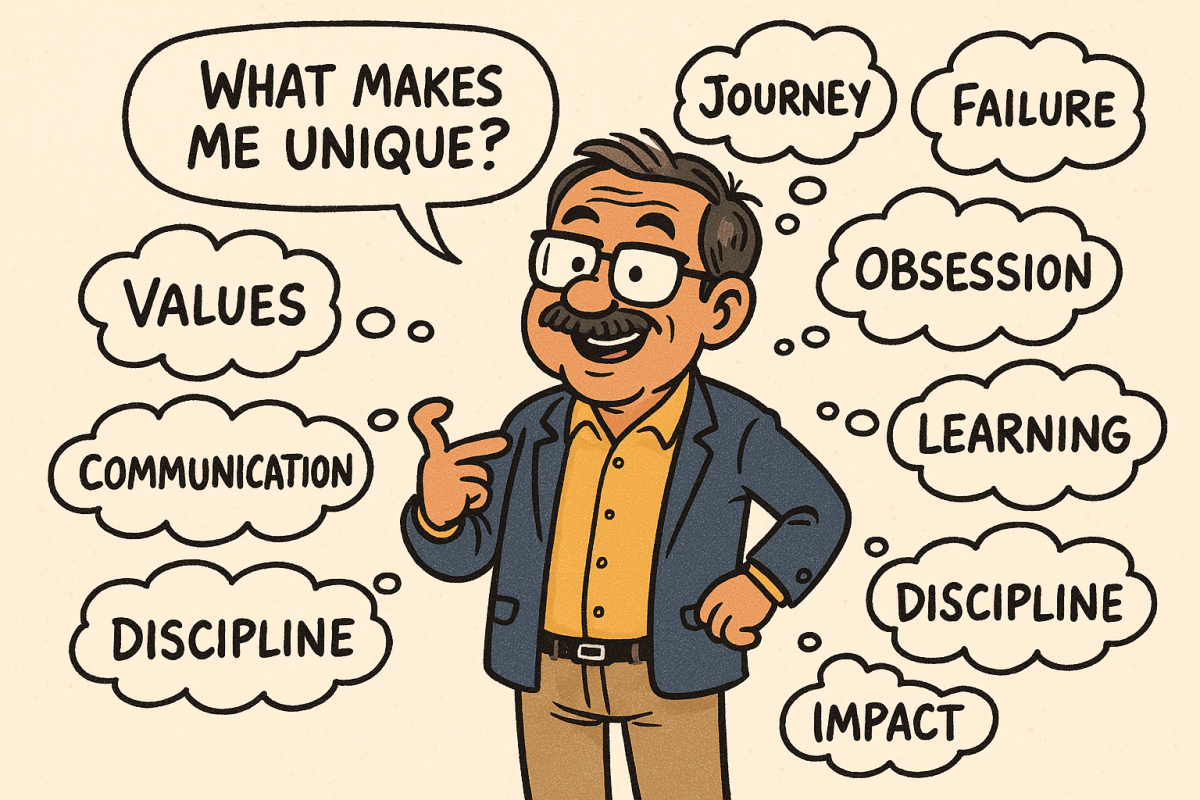
As someone who has spent decades navigating the academic world, corporate boardrooms, government agencies, and startup trenches, I’ve come to realise that what makes a person truly unique is not just one defining trait but a combination of mindset, experience, and passion.

It’s the signature blend of your past, values, and vision for the future.

Let me break it down through my own lens—through personal stories, reflections, and the questions I’ve asked myself.

1. The Journey You Choose (or Endure)

“Why did I move from academia to government, then to corporate, and finally to building my startup?”

Many thought I was indecisive. But I saw it differently. Each step gave me a new superpower.

  • In academia, I learned how to think deeply and teach simply.
  • In government, I saw how policy can impact innovation nationally.
  • In corporate, I experienced the pace of execution and the demand for ROI.
  • In startup life, I learned humility, agility, and how to survive with little but dream big.

Not everyone chooses this “multiverse” path, but embracing it made me unique. I carried lessons from each world into the next.

2. How You React to Failure

“Mazlan, you left a comfortable job to start something uncertain?”

Yes—and I failed more times than I can count. But here’s the thing: I never let failure define me. Instead, I documented, reflected, and shared.

Every rejection, every “no,” became fuel for the next attempt.

What’s unique is not that you fail but how you rise from it—with clarity, grace, and a story others can learn from.

3. Your Obsession

“You’re still talking about IoT after all these years?”

Absolutely. I eat, sleep, and breathe IoT—not because it’s trendy but because I believe it can change lives. Even now, I run FAVORIOT to democratise IoT and make it accessible for students, startups, and governments.

Obsession—when combined with purpose—is what sets someone apart. It’s the thing you can’t shut off. You read about it, dream about it, and keep pushing the boundaries.

That’s the heartbeat of uniqueness.

4. The Way You Communicate

I once blogged about gadgets. Then, I pivoted to writing about technology, leadership, and storytelling. Today, I use WordPress, LinkedIn, podcasts, and even TikTok to reach different audiences.

Why?

I realised that what makes my voice unique isn’t just my technical knowledge but how I simplify it, narrate it, and humanise it.

People don’t remember jargon. They remember stories, analogies, and emotions. If you can make someone say, “Now I get it,” you’ve done something special.

5. The Values You Don’t Compromise

I’ve had opportunities that promised more famemoney, or power throughout my career. But I always asked myself:

“Is this aligned with what I believe?”

I don’t play politics. I don’t sell out. I don’t cut corners. I treat my team like family, and I lead with empathy.

In a world of copy-paste personalities, your principles become your fingerprint.

6. What You Do When No One’s Watching

In my quiet moments, I read articles from new writers, reply to comments, and refine my writing. I write even when no one reads because consistency builds credibility.

“But no one reads your articles.”

I kept writing anyway. Until one day—people did.

Your uniqueness is often born in the shadows, when no one claps, shares, or notices.

And still—you show up.

7. How You Inspire Others

I don’t just want to build a business. I want to develop people.

That’s why I mentor students, share my lessons, and give talks—even to small audiences. That’s why I created FAVORIOT Academy—to train the next generation of IoT professionals.

You become unique by climbing the ladder and extending your hand to those below you.

8. Your Curiosity and Lifelong Learning

Even today, I explore new platforms, write new articles, and learn from people much younger than me.

“Why are you still experimenting?”

Curiosity is a fire that never retires. The moment you stop learning, you become static. I choose to evolve—even at 64.

Uniqueness comes from the courage to keep updating yourself and stay relevant not by age but by adaptability.

9. Your Ability to Connect Across Generations

I often speak to university students, young engineers, and even teenagers on TikTok. Some are surprised—“Dr. Mazlan, you’re on TikTok?”

Yes, and I love it.

If you can speak every generation’s language, whether through blog posts or memes, you become a bridge. That connection—not just knowledge—is what makes someone unforgettable.

10. How You Turn Passion Into Impact

I don’t work on IoT just to build cool gadgets. I do it to solve real problems, from smart agriculture to healthcare, education, and even energy management.

Passion becomes power when you channel it into something greater than yourself.

When your work serves others, your uniqueness becomes your legacy.

A Personal Formula

If you ask me to define what makes a person unique, I’d say:

Uniqueness = (Journey + Failure + Obsession + Voice + Values + Discipline + Impact + Curiosity + Communication + Empathy) x Authenticity

You don’t need to be the smartest or the loudest in the room.
You just need to be the most you.

So, find your intersection.
Share your scars.
Own your quirks.
Speak your truth.

The world doesn’t need another replica.
It needs your story—told your way.

“Mazlan, what makes you unique?”

I’d say it’s because I’m still learning, experimenting, and daring to dream… even after all these years.

Everyone Wants the Spotlight. Few Are Willing to Wait for It

What’s Something Most People Don’t Understand?

Most people don’t understand how long it takes to build something meaningful.

Even after all these years, people still think things happen overnight.
They see the highlight reels. They see the LinkedIn success stories. They see the awards, the recognition, the partnerships. And they say— “Wow, you’re lucky.”

But they don’t see what happens behind the scenes.

When I co-founded FAVORIOT, I wasn’t stepping into a shiny, ready-made startup with capital pouring in and clients lining up at the door. No, it was the opposite. I entered a tiny room with big dreams, minimal funding, and zero guarantees.

I had to reset my ego.
After holding senior positions at MIMOS and CELCOM, I was now doing everything—research, customer support, marketing, writing blog posts, uploading YouTube videos, conducting training, chasing potential clients, and even troubleshooting hardware late at night. I was a CEO, but I was also the janitor.

That’s what most people don’t understand.

They think success is linear.
They think you just launch a product and are suddenly on a TED stage.
They don’t see the years of trial and error, the failed pitches, the near-burnouts, and the countless self-doubts.

I still remember attending an international Smart Cities conference years ago. Delegates were surprised when I told them we were a small team from Malaysia, building our own IoT platform. Some of them didn’t even believe it. They asked, “But how did you build it? Don’t you need a huge team? Venture capital?” I smiled and said, “No. We built it because we believed we could.”

Belief is underrated. And persistence—even more so.

People underestimate how long you must persist when nothing seems to work.

I wrote blog after blog when no one was reading.
I spoke at conferences when no one knew my name.
I kept talking about IoT and Smart Cities when the market didn’t understand IoT.

Even on Medium, when I started writing actively in 2023, I wasn’t writing for an audience. I was writing because I had something to say, something to teach, something to reflect on.

Some articles flopped. Others resonated deeply. But most people only see the few that succeeded—they don’t see the hundred others that didn’t.

They don’t understand the patience it takes to outlast the silence.

Let’s talk about time.
People think one or two years is enough time to build a company, an audience, or a movement.

But FAVORIOT has been around since 2017.
We didn’t become known overnight.
We had to win trust, prove our value, build case studies, make mistakes, recover from them, and try again. Again. And again.

It’s like planting a seed. You don’t dig it up every week to check if it’s growing. You water it, give it sunlight, and trust that one day it will break through the soil. But that trust? That takes faith. That’s the part most people struggle with.

“Why isn’t it growing yet?”
“Why is no one noticing me?”
“Maybe I’m not good enough.”

Believe me—I’ve had those thoughts, too.
I’ve looked at competitors with massive followings and felt small.
I doubted whether I was too old to do this startup thing.
I’ve wondered if people even cared about what I was trying to build.

But each time, I returned to the same answer:
Because I care.

I care about helping people learn about IoT.
I care about giving Malaysians a home-grown IoT platform.
I care about empowering universities, cities, and entrepreneurs with technology that works.

I realized that most people don’t need motivation. They need understanding.
Understanding that the journey will be extended.
It’s okay to feel invisible at first.
That mastery takes years.
Most “overnight successes” are 10 years in the making.

So here’s what I want you to remember:

  • You don’t need everyone to understand your journey.
  • You just need to understand it yourself.
  • And you need to commit to showing up, even when no one’s clapping.

Because one day, someone will ask you, “How did you do it?”
And you’ll smile, knowing they won’t really understand until they walk the same path.

But maybe, just maybe, they’ll listen a little closer.
And perhaps that will inspire them to start their own long, messy, beautiful journey.

And that’s enough.

Now, back to work. The journey continues.

The Activities That Make Me Lose Track of Time

Have you ever been so deeply immersed in something that time slips away? One moment, it’s morning, and the next, the sun has set, and you wonder where the hours have gone. That happens to me a lot. It’s both fascinating and dangerous because it shows how much I love what I do, and it’s dangerous because I often forget to eat or even take a break. But that’s the beauty of passion, isn’t it?

Writing – My Deepest Escape

If there’s one thing that consistently makes me lose track of time, it’s writing. Not just any kind of writing, but the kind where I pour my thoughts, experiences, and reflections onto the page. The kind where I engage in self-dialogue, asking myself questions, debating perspectives, and exploring ideas in a way that feels as natural as breathing.

When I sit down to write, I enter a different world. The cursor blinks, waiting for my thoughts to flow, and I’m suddenly conversing with myself. Does this make sense? Will people relate to this? Should I add more storytelling? The words come in waves—sometimes a flood, sometimes a trickle—but it’s hard to stop once I start.

It’s in these moments that I feel the most alive. Writing isn’t just about putting words on a page; it’s about expression, connection, and discovery. I often write about IoT, smart cities, and technology, but sometimes, I delve into entrepreneurship, personal development, and even poetry. The topic doesn’t matter—as long as I’m writing, I’m in my element.

IoT and Smart Cities – The Intellectual Adventure

Another realm where I lose myself completely is in discussions about IoT and smart cities. This isn’t just a job for me—it’s a mission, a vision, and an endless source of curiosity.

I can spend hours analyzing the latest trends, researching new use cases, and discussing the future of connected technology. Whether I’m preparing for a keynote speech, mentoring startups, or brainstorming ideas for the FAVORIOT platform, I get absorbed in the possibilities.

The more I think about it, the more I realize IoT is an ever-expanding puzzle. Every city, every business, and every individual has different needs, and IoT provides the tools to create smarter, more efficient solutions. The challenge of making technology work for real-world problems is what keeps me hooked.

How can we make smart cities more inclusive? What’s stopping IoT adoption in developing nations? How do we ensure data security while enabling innovation? These questions excite me, and before I know it, I’ve spent an entire day buried in research, discussions, and problem-solving.

Reading – A Gateway to New Worlds

Reading is another activity where I lose myself, often without realizing how much time has passed. Reading opens doors to new perspectives, whether it’s articles on Medium, books on entrepreneurship, or science fiction novels.

There’s something magical about immersing yourself in a well-written piece. It could be a thought-provoking article that challenges my assumptions or a book that takes me through time and space. The written word has the power to transport me, to make me feel as if I’m living a hundred different lives all at once.

I remember reading about the early pioneers of technology—the visionaries who built the foundations of the digital age. Their stories inspire me because they remind me that innovation isn’t just about having a great idea; it’s about persistence, resilience, and an unshakable belief in the future.

Deep Conversations – The Art of Meaningful Exchange

I love conversations that challenge me and make me pause and rethink my assumptions. Whether it’s discussing the impact of AI on society, debating business strategies, or exploring philosophical ideas, I can get completely lost in the dialogue.

Some of the best discussions happen over coffee with like-minded individuals—entrepreneurs, researchers, students, or anyone with a curiosity for the world. I find that talking about ideas, sharing experiences, and learning from others keeps my mind sharp and my perspectives fresh.

One of my favorite aspects of mentoring young entrepreneurs is seeing the spark in their eyes when they realize a new possibility. It reminds me of my own journey, of the moments when someone’s advice changed my trajectory. These interactions fuel my passion and make me forget about time.

Creating and Building – Turning Ideas into Reality

There’s nothing quite like the thrill of creating something new. Whether it’s developing a new feature for the FAVORIOT platform, designing a training module, or working on a business strategy, I get completely absorbed in the process.

It’s one thing to talk about ideas but another to bring them to life. I truly excites myself when I see the process of building—from concept to execution—go from an abstract thought to a tangible reality.

Some nights, I self-brainstorm solutions long after the workday has ended. The challenge of problem-solving and figuring out how to improve something keeps me engaged. It’s in these moments that I realize this isn’t just work for me—it’s a passion.

Final Thoughts

It’s interesting to reflect on what makes us lose track of time. They reveal what truly matters to us, what excites us, and what gives us a sense of purpose.

For me, it’s writing, IoT, reading, deep conversations, and building new things. These aren’t just activities; they’re the fabric of my life, which keeps me energized and driven.

What about you? What activities make you forget the world around you?

Science Says Superstitions Are Nonsense—But Why Am I Still Avoiding That Ladder?

Are you superstitious?

Am I superstitious? Hmm…

I pause for a moment, letting the question linger in my mind. It’s a simple one, yet complex in its implications. Superstition—an age-old belief system passed down through generations, often defying logic and science. Do I subscribe to it?

I grew up in a society where superstitions were woven into daily life. “Jangan duduk atas bantal, nanti bisul!” (Don’t sit on a pillow, or you’ll get boils!). “Jangan menyapu waktu malam, nanti rezeki lari!” (Don’t sweep the floor at night, or you’ll lose your fortune!). These warnings were given with such conviction that, as a child, I hesitated before dismissing them outright.

But then, science happened. Education happened. My logical mind took over. I pursued engineering, a field built on precision, facts, and repeatable results. Superstition had no place in an oscilloscope reading or a circuit analysis. It was either true or false, 1 or 0.

And yet…

I find myself occasionally hesitating when opening an umbrella indoors. I still feel a slight unease when someone breaks a mirror. Not because I truly believe in bad luck, but because the echoes of cultural conditioning run deep.

So, am I superstitious?

Not in the strictest sense. I don’t believe black cats bring misfortune, and I certainly don’t arrange my meetings based on astrology. But I do respect traditions, even the irrational ones, because they are part of our history, our upbringing, and sometimes, they bring comfort in an unpredictable world.

Maybe it’s not about belief, but about understanding why such beliefs exist. And in that sense, I suppose I am not superstitious—but I acknowledge the power that superstition holds over the human mind.

How I’m Improving My Blog Writing in 2025

Lessons from My 2024 Mistakes

As I sit back and reflect on my blogging journey throughout 2024, I realize it’s been a mixed bag. There were moments of triumph where I felt proud of my work and other times where I couldn’t shake off the feeling that I could’ve done better. Isn’t that how it always is with personal projects? You start with high hopes and grand plans, only to learn some hard lessons along the way.

2024 has been a year full of such lessons for me. After analyzing my blog posts and feedback, I’ve identified five key mistakes that held me back. In 2025, I’m determined to turn things around. It’s time for a fresh start and a more thoughtful strategy. Here’s my plan to improve my writing and connect more meaningfully with my readers.

1. Cutting Out the Complicated Stuff

Where I Went Wrong in 2024

I have a confession: I fell into the trap of using too much jargon in my blog. Being in the IoT industry for so long, getting carried away with technical terms and buzzwords is easy. In my head, it sounded impressive, but I probably ended up confusing—or worse—boring my readers. Words like “data ingestion” and “end-to-end connectivity” may roll off my tongue effortlessly, but they can feel like stumbling blocks for someone outside my field.

What I’m Doing Differently in 2025

This year, I’m embracing simplicity. If I don’t say a term in a casual conversation, it won’t show up in my blog. Instead of “data ingestion,” I’ll simply say “how data is processed.” It’s all about being reader-friendly. Before hitting publish, I’ll ask myself: Would this make sense to someone who knows nothing about IoT? If not, I’ll rewrite it.
My new mantra: Every post should feel like a friendly chat over coffee, not a technical lecture.

2. Giving My Articles a Clear Path

Where I Went Wrong in 2024

Some of my blog posts felt like wandering through a maze without a map. I’d start with a big idea, but somewhere along the way, I’d get sidetracked. Before I knew it, the article would lose focus, and the conclusion didn’t even tie back to the opening idea.

What I’m Doing Differently in 2025

This year, outlines will be my best friends. Before writing, I’ll map out the structure of each post. A solid introduction to hook the reader, clear subheadings to guide them through the article, and a concise conclusion to tie everything together. No more messy articles that feel like a random stream of thoughts.

I’ll also check if someone can skim my article and understand the main points. If it feels confusing or jumps around too much, it’s time to rework it. A well-structured article should feel effortless, like a story unfolding naturally.

3. Putting Readers First

Where I Went Wrong in 2024

I love sharing personal stories—it’s one of the reasons I started blogging. But last year, I got too focused on my experiences without always connecting them back to something useful for my readers. Storytelling is powerful, but without a takeaway, it can feel self-indulgent.

What I’m Doing Differently in 2025

This year, I’ll make sure every personal story is tied to a lesson or takeaway for the reader. If I’m writing about my IoT journey, I’ll include tips for others—like how they can start their own IoT project or solve a real-life problem with technology. It’s all about balance.


I also plan to engage more with my audience. Responding to comments and understanding what my readers want will help me create content that matters to them. Writing isn’t just about what I want to say—it’s about what they want to read.

4. Nailing Headlines and Adding Visual Appeal

Where I Went Wrong in 2024

I’ll admit—some of my headlines were dull. They didn’t grab attention or give a clear idea of what the article was about. Worse, a few posts lacked visuals altogether. A wall of text without any visual relief? Even I wouldn’t want to read that!

What I’m Doing Differently in 2025

I will focus on headlines this year. Instead of vague titles, I’ll aim for clear, intriguing ones. For example, “How IoT Can Help Businesses” will become “5 Practical Ways IoT Can Transform Your Business in 2025.” It’s more specific and promises real value.

Visuals will also play a more significant role. Whether it’s a chart, an infographic, or a relevant photo, every post will have something to break up the text and make it more engaging. I’ll use tools like Canva to create custom graphics that complement my content.

5. Engaging with Readers More

Where I Went Wrong in 2024

One of my biggest regrets from last year is not engaging enough with my readers. I didn’t spend enough time replying to comments or interacting with the people who read my work. It felt like a missed opportunity to build connections and learn from their feedback.

What I’m Doing Differently in 2025

Engagement is a top priority this year. If someone leaves a comment, I’ll reply thoughtfully. I want my blog to feel like a conversation, not a monologue.

I also plan to write more based on readers’ questions or suggestions. For example, if someone asks how IoT can be applied in agriculture, I’ll turn that into a complete article. The more interactive my blog feels, the more valuable it will be for everyone involved.

Looking Ahead

2025 is going to be the year I write with purpose. I’m leaving behind the jargon, messy structures, and one-sided stories. Instead, I’ll create clear, engaging, and reader-centric content.

The beauty of blogging is that it’s a continuous journey. There’s always something new to learn and room to grow. By reflecting on my mistakes in 2024, I’m excited to see how far I can take my writing in 2025.

Will it be perfect? No. But it’ll be better. And that’s what matters.

Let’s make 2025 a great year for writing!

5 Lessons I Learned About Writing (The Hard Way)

When I started writing, I was like an overexcited kid given the keys to a candy store—brimming with enthusiasm but absolutely clueless about what I was doing. I devoured every piece of writing advice I could find, hoping to fast-track my journey to becoming a better writer.

Some tips helped, sure, but a lot of it? Pure noise.

Looking back, I realize I could’ve saved myself from much frustration if I had learned these lessons sooner. But that’s the beauty of growth—you stumble, fall, and eventually figure things out.

I discovered five hard-earned lessons through trial and error and a fair share of facepalms.

1. Write Often, But Fix Your Mistakes

When I first dipped my toes into the writing world, I kept hearing this mantra: “Just write as much as you can. Quantity over quality.” So, I did precisely that. I wrote. A lot. Blog posts, social media updates, random thoughts jotted in the middle of the night—you name it.

But here’s the catch: I wasn’t getting any better.

“Why isn’t this working? I’m writing so much, but nothing feels right.”

One day, curiosity (or maybe self-torture) made me reread my older pieces. I cringed. I mean, really cringed. My sentences felt awkward, and my ideas scattered like puzzle pieces from different boxes. That’s when the lightbulb flickered on. Writing isn’t just about pouring words onto a page; it’s about learning from those words.

Now, I treat writing like a conversation with my past self. I write, but I also pause, reread, and reflect. I ask, “What was I trying to say here? Could I say it better?” Mistakes? Oh, they’re inevitable. But fixing them? That’s where growth lives.

2. Read What Interests You, Not Just to Impress Others

There was a phase when I believed that I needed to read everything under the sun to be a great writer. Self-help books I didn’t care for? Check. Academic articles that felt like decoding alien scripts? Double-check.

But guess what? None of it stuck.

“Am I even absorbing any of this? Or just pretending to?”

I was reading to tick boxes, not to learn. I’d skim through articles, drop a “Great piece!” comment, and move on—thinking I was building connections. Spoiler alert: I wasn’t.

Eventually, I realized that meaningful reading comes from genuine curiosity. Now, I read what sparks my interest. Whether it’s a thought-provoking essay, an IoT case study, or even a quirky poem, I take my time. I underline sentences, jot down notes, and let the words marinate.

Reading this way doesn’t just fill my brain; it fuels my writing.

3. Comment Like You Mean It

Ah, the “comment-for-engagement” strategy. Been there, done that.

In the early days, I thought leaving many comments would make me visible. So, I plastered generic lines like, “Nice post!” or “Interesting thoughts!” across articles.

But here’s the thing—writers can smell insincerity from a mile away.

“Why isn’t anyone responding to my comments? Aren’t I engaging enough?”

One day, I received a heartfelt comment on one of my posts. It wasn’t long, but it was thoughtful. The reader shared how my words resonated with their experience. That comment? It stayed with me.

I realized genuine connections aren’t built on autopilot responses. Now, when I comment, I pause. “Did something in the article make me think differently? Did it remind me of a personal story?” I share that. Authenticity might not flood your notifications, but it builds lasting bridges.

4. Don’t Play the Follow-for-Follow Game

Ah, the seductive trap of the “follow-for-follow” game. In my eagerness to grow my audience, I followed anyone and everyone, thinking they’d return the favour. For a while, it worked. My follower count climbed, but my engagement? Crickets.

“Why do I have so many followers but no real interactions?”

I had an audience, but not a community.

One day, it hit me: “Why am I following people whose work doesn’t inspire me? Why am I chasing numbers instead of connections?”

So, I hit the reset button. I started following writers whose words I genuinely enjoyed and whose thoughts challenged me. The growth became slower, but it felt real. When someone follows me today, I know it’s because they value my voice, not because of an unspoken social contract.

5. Write When You Have Something to Say

“Write every day, no matter what.”

I took that advice to heart. Even on days when inspiration was as dry as the Sahara, I forced myself to write. The result? Words that felt forced, soulless, and frankly, forgettable.

“Why does my writing feel empty even though I’m consistent?”

Then I had an epiphany: Writing isn’t just about writing. It’s about sharing—sharing an idea, a lesson, or a story that matters—even if it’s just for you.

Now, I write when something stirs within me. It could be a fleeting thought, a conversation, or an article that sparked an idea. Writing from that place? It flows. It feels alive. And more often than not, it resonates with readers.

Final Thoughts

Writing isn’t a race. It’s a journey filled with detours, pit stops, and occasional breakdowns.

I’ve stumbled, cringed at my past mistakes, and learned lessons the hard way, but each misstep has shaped my growth.

If you’re starting your writing journey, here’s my two cents: Don’t chase perfection. “Chase authenticity.” Write, reflect, connect genuinely, and let your voice evolve.

After all, the most powerful stories aren’t the ones polished to perfection—they’re the ones that come from the heart.

Writing a Blog and Building a Startup: Two Journeys, One Spirit

I never thought I’d say this, but here it goes: writing a blog—like mine—and building a startup—like FAVORIOT—feel like two sides of the same coin. Strange, isn’t it? At first glance, they seem worlds apart. One requires you to pour your thoughts onto a blank screen, while the other demands strategic planning, pitching ideas, managing teams, and scaling businesses.

But as I look back on both journeys, I see an uncanny resemblance. It’s like déjà vu but in different dimensions.

The Blank Page vs. The Blank Canvas

I remember when writing my first blog post. The blank page felt like it was mocking me—”So, what’s your big idea, Mazlan?” No audience, no followers, just me and my thoughts.

Now, compare that to the early days of FAVORIOT. We had a big dream: to simplify IoT adoption. But dreams are just dreams until you take that terrifying first step. No customers, no revenue, just a vision and an empty business plan.

Starting both felt like standing at the edge of a cliff. Do you jump? Or do you hesitate? I jumped. Twice.

Defining Your “Why”

Here’s the thing about starting anything meaningful—you need a “why.” Without it, you’ll burn out faster than a cheap lightbulb.

For FAVORIOT, my “why” was crystal clear: help businesses and cities leverage IoT for smarter operations. For my blog, it was about sharing my journey, my thoughts, my lessons—hoping they’d resonate with someone out there.

When challenges hit—and trust me, they did—my “why” kept me grounded. It’s like having an internal GPS when the road ahead gets foggy.

The MVP (Minimum Viable Product): Perfection Can Wait

Every startup guru talks about the MVP. It’s your rough draft—a version that works but isn’t perfect. FAVORIOT’s first platform wasn’t a masterpiece. It had bugs, limited features, and a UI that would make today’s designers cringe. But it solved a problem, and that’s what mattered.

Guess what? My early blog posts were my MVPs. Not polished, not viral-worthy, but raw and honest. Some articles were barely 500 words, rushed between meetings, but filled with genuine insights.

You don’t wait for perfection. You launch, you learn, you iterate.

Audience vs. Customers: The Art of Connection

In startups, they say, “If you build it, they will come.” Lies. They won’t come unless you hustle.

At FAVORIOT, we had to identify our target market, pitch relentlessly, and prove our value. Blogging? Same game, different players. I had to find my niche—IoT, smart cities, entrepreneurship—and consistently write content that mattered.

But it wasn’t just about publishing and hoping for the best. Engagement was key. Responding to comments, sharing posts on LinkedIn, having meaningful discussions—these were my “sales calls” in the blogging world.

Consistency: The Unsung Hero

Let me be brutally honest—there were days I felt like giving up. Some months, FAVORIOT saw zero growth. Some weeks, my blog had views I could count on one hand.

But here’s the secret sauce: consistency. Not motivation. Not talent. Just showing up, day after day.

At FAVORIOT, we kept refining our platform, talking to clients, and pivoting when needed. On my blog, I kept writing—even when no one was reading. Over time, both grew. Not overnight, but gradually. Like watering a plant, wondering if it’ll ever sprout. Then one day—it does.

Feedback: The Mirror You Didn’t Ask For

Feedback can sting. Whether it’s a customer pointing out a flaw in FAVORIOT’s platform or a reader criticizing my writing style, it’s tough.

But it’s gold.

At FAVORIOT, customer feedback shaped our roadmap. What to improve, what to drop, what to double down on. My blog? Comments, shares, even silent metrics like “read time”—they told me what resonated.

Criticism isn’t an attack; it’s a compass.

Scaling: Doing More of What Works

Once FAVORIOT found its footing, it was time to scale. New markets, more features, global partnerships. But scaling isn’t just about doing more. It’s about doing more of what works.

I learned that lesson the hard way with my blog. I tried writing about everything—tech trends, personal growth, productivity hacks. Some of it flopped. I realized I needed to double down on my strengths: IoT, entrepreneurship, storytelling.

Passion: The Invisible Fuel

No passion? No progress.

I’m obsessed with IoT—not just as a technology, but as a force that’s reshaping our world. That passion fuels FAVORIOT. It also bleeds into my writing.

You can’t fake passion. Readers sense it. Customers sense it. It’s what keeps you going when logic says, “Quit.”

The Payoff: Beyond Metrics

Today, FAVORIOT has global partners. My blog reaches thousands of readers. But the real payoff? It’s not the numbers.

It’s the email from a reader who says, “Your article inspired me to start my own business.” It’s the client who says, “FAVORIOT helped us transform our operations.”

Impact. That’s the real currency.

Final Thoughts: Start. Just Start.

Whether you’re building a startup or a blog, the rules are surprisingly similar:

  • Start before you’re ready.
  • Find your ‘why.’
  • Launch imperfectly.
  • Engage with your audience.
  • Stay consistent, even when it’s hard.
  • Embrace feedback.
  • Scale smartly.
  • Fuel it with passion.

Looking back, both journeys shaped me. They taught me resilience, humility, and the art of storytelling—whether through code or words.

So, if you’re hesitating to start that blog or launch that business, let me leave you with this:

The best time to start was yesterday. The second-best time? Today.

Why I’m Leaving Medium: A Writer’s Journey to Rediscovering Joy

The Allure of Writing on Medium

I’ve always loved writing.

It’s been my escape, my way of sharing thoughts, ideas, and dreams with the world. And for a while, Medium was the perfect platform for that. It wasn’t just about the money – although, let’s be honest, the earnings did provide a nice boost of motivation.

But more than that, the sense of community drew me in.

The idea that my words could resonate with readers from all walks of life was exhilarating.

At its best, Medium felt like a writer’s haven, where effort and creativity were rewarded.

The Golden Days: When Writing Felt Rewarding

I was making a comfortable three-digit monthly income on Medium for a time. It wasn’t a fortune, but enough to validate the hours I spent crafting my pieces.

That three-digit figure felt like a pat from the universe, acknowledging that what I was doing mattered. I would eagerly check my earnings dashboard, and even when the numbers weren’t astronomical, they were steady.

They were enough to keep me going.

The Harsh Reality: Declining Earnings

But here we are in January 2025, and everything’s different now. My earnings have plummeted to a single digit. Yes, you read that correctly – single digit. I’ve earned just about a dollar with only five days left in the month.

A dollar! It feels almost laughable, doesn’t it?

I can’t buy a decent cup of coffee with my earnings any longer. And it’s not just me; this seems to be the collective frustration of countless writers on the platform.

Writers in Frustration: What Went Wrong?

Over the past year, conversations about declining earnings on Medium have surged across forums and social media.

Writers share their disappointment, confusion, and anger. Some blame the algorithm; others point fingers at changes in the Partner Program.

Whatever the root cause, one thing is certain: the joy of writing on Medium has been overshadowed by an air of disillusionment.

My Breaking Point: January 2025

For me, January 2025 has officially been the breaking point. It’s not just the earnings, though they have been a significant factor.

It’s the feeling of constantly being let down by a platform I once believed in.

Each time I check my dashboard this month, it reminds me how far things have fallen. And frankly, it’s exhausting.

The Decision to Move On

After much thought, I’ve decided that it’s time to move on.

I won’t be renewing my Medium subscription. Instead, I’ll be redirecting my custom domain to WordPress.

It feels like the right move for now – a fresh start on a platform where I can control my content completely.

On WordPress, I won’t have to worry about algorithms or earnings reports dictating my writing journey. I can write freely without the weight of disappointment looming over me.

A Bittersweet Goodbye to Medium

Saying goodbye to Medium isn’t easy.

There was a time when this platform felt like home, a space where my voice could thrive. But the frustration has peaked, and I refuse to let it drain my energy.

Life is too short to cling to something that no longer brings joy or fulfilment.

Rediscovering the Joy of Writing

As I enter this new chapter, I’m filled with sadness and hope.

I’m sad about what Medium once was and could have continued to be. I hope for what lies ahead, for the opportunities that come with a fresh start.

I’m ready to rediscover the joy of creating, to write without constraints, and to build something meaningful on my own terms.

A Message to Fellow Writers

If you’re reading this and feeling a similar frustration, know you’re not alone. Letting go isn’t easy, especially when something once meant so much.

But sometimes, a fresh start is precisely what we need to rediscover our passion.

Whether moving to a new platform, exploring a different medium, or simply taking a break, it’s okay to pivot. It’s okay to prioritize your happiness and your creative spirit.

Here’s to New Beginnings

So here’s to new beginnings—writing freely, passionately, and without the weight of algorithms or earnings reports—to rediscover the pure joy of storytelling, sharing ideas, and connecting with others.

Goodbye, Medium.

You’ll always be a part of my past, but you won’t define my future.

The Day I Decided to Move My IoT World Publication (Medium) Back to WordPress

SELF PUBLICATION

Why did I make this drastic decision?

Not a paid member? Click here to read the full story for free.

It has been a Yo-Yo decision. Back and forth, back and forth.

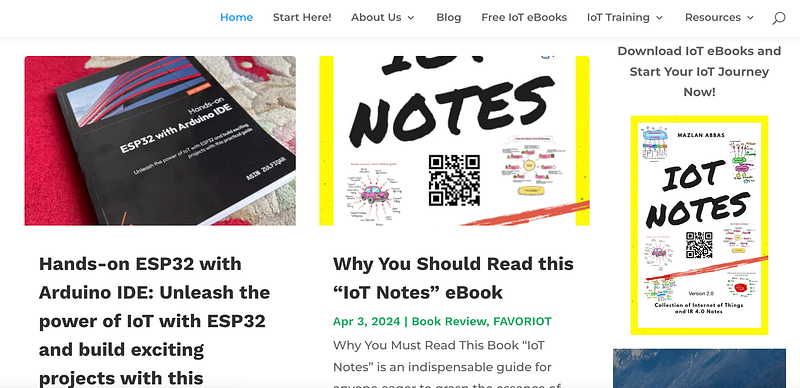
I have created a blog called “IoT World” and hosted at WordPress since 2016.

It focused on my Internet of Things (IoT) journey and my passion for blogging on this topic for many years.

It covers the basics of the Internet of Things, challenges, issues, applications, trends, tips, smart cities, IR 4.0, and digital transformation.

I have put a lot of effort into it, and it has gained quite traction in the early years.

However, I must consistently post and share my articles on different social media channels to maintain their traction.

Thus, I did a lot of hard work and sometimes got burnt out. I need to find a way to make it easier.

This IoT World blog has maintained a low Domain Authority of 12 for almost eight years. I need to do something to improve.

Initially, I republished all my IoT World articles on Medium, but it did not gain any traction.

I am unsure what went wrong, but I lack engagement with the Medium community. Maybe that’s the main reason.

I created an “IoT World” publication on Medium sometime early this year to replace my IoT World blog hosted on WordPress.

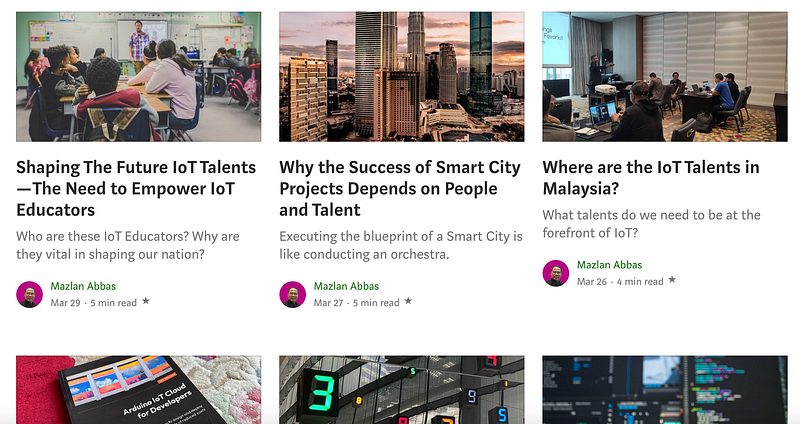
IoT World Publication on Medium

I read comments saying that if we hosted our publications on Medium, we could leverage the high Domain Authority of Medium at 96.

Thus, I stopped or reduced my posting on my IoT World website and focused on IoT World publication on Medium.

IoT World Publication on Medium

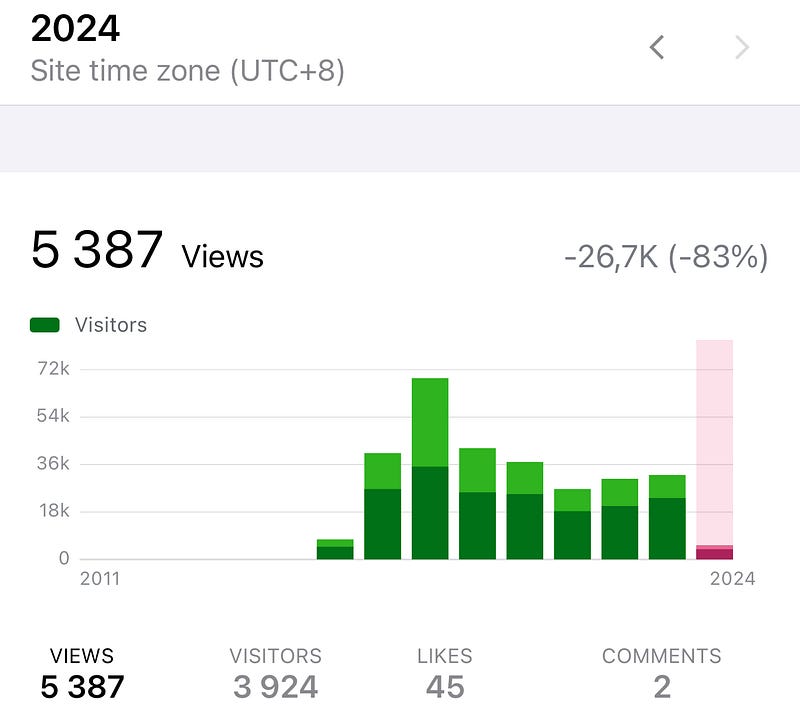
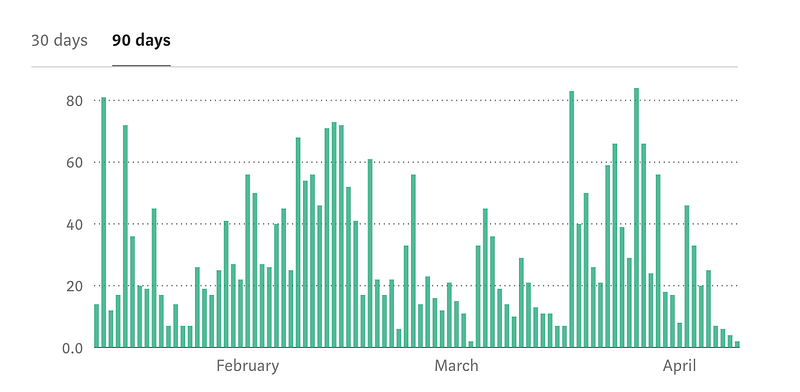
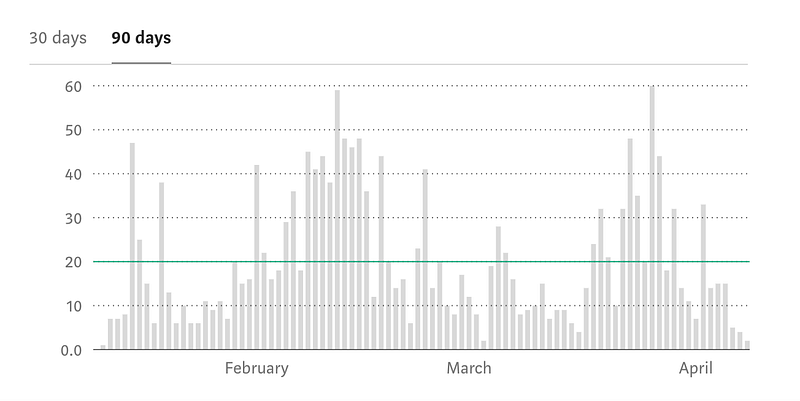
It received some traction, as shown below.

Number of Views
Number of Visitors

Visitors and views are lower than on my IoT World website.

It keeps decreasing because I have made all the articles behind the paywall. This might be why non-members don’t prefer to click to read the full article.

I have a decision: Should I monetize my IoT articles or allow anyone to read them?

Finally, I decided to focus back on posting to my old IoT World website and republish the article on Medium (and hopefully monetize them).

This way, I can put less effort into maintaining two different contents, which is tiring.

In the next few months, let’s see how this strategy will help me gain better eyeballs on my website.

What do you think? Will this strategy work?


But for those who might need clarification about why my domain (mazlanabbas.com) is now hosted on Medium from WordPress.

View at Medium.com

This is a different story. I am separating two domains (personal and business) hosted at two different places.

I prefer to host my domain on Medium because I prefer the UI/UX and the friendly community of writers.

The readers in my personal domain are mainly from Medium, whereas those in my business domain are external (non-members).

Quite confusing, eh?

(Note: Furthermore, I recently renewed the hosting subscription of IoT World at WordPress at the end of last year. )