The Fourth Industrial Revolution: The Future is Already Here!

“Are we ready for this transformation?”

I still remember the first time I heard the term “Fourth Industrial Revolution” or more commonly known as Industry 4.0. It sounded futuristic, like something straight out of a sci-fi movie—where robots rule the world, artificial intelligence (AI) makes all decisions, and automation is everywhere.

But the reality? We are already living in that era!

Before we panic and imagine ourselves being chased by rogue robots, let’s take a step back and understand how industrial revolutions have shaped the world.

From the First to the Fourth: The Evolution That Changed the World

History has witnessed four major industrial revolutions, each transforming human life in unimaginable ways:

  1. First Industrial Revolution (18th – 19th Century)
    • The invention of the steam engine changed everything. Factories replaced manual labor, and transportation improved dramatically. It was the birth of modern industry.
  2. Second Industrial Revolution (Late 19th – Early 20th Century)
    • Electricity became the new king. Assembly lines and mass production made goods cheaper and more accessible. Henry Ford’s automobile factories were the poster children of this era.
  3. Third Industrial Revolution (Mid-20th Century – Early 21st Century)
    • Computers, automation, and the internet revolutionized the workplace. Suddenly, information was just a click away, and digital transformation began.
  4. Fourth Industrial Revolution (Now!)
    • AI, the Internet of Things (IoT), 5G, blockchain, quantum computing—you name it. Machines are getting smarter, and decision-making is shifting from humans to algorithms.

Wait… Does This Mean Robots Will Take Over My Job?

This is the million-dollar question. The short answer: Yes and No.

Yes, because many repetitive manual tasks will be automated. If a machine can do it faster and better, why pay a human to do it?

No, because new jobs will emerge—roles we never imagined before. Who would have thought that “TikTok Content Strategist” or “Metaverse Architect” would be actual job titles?

The key here is adaptability. Those who embrace technology will thrive, while those who resist will struggle. It’s like complaining that smartphones are ruining society while using one to rant on social media.

How Industry 4.0 Affects Our Daily Lives

If you think Industry 4.0 only affects tech companies, think again. It’s already changing our everyday lives:

  • Smart Homes: Your fridge tells you when you’re out of milk, and your lights turn on when you enter the room. It’s like living in a sci-fi movie!
  • Healthcare – AI can detect diseases earlier than doctors, and robotic surgeries are becoming more common. Imagine getting medical advice from a chatbot instead of waiting hours in a clinic.
  • Education – Online learning, AI tutors, and personalized lessons replace traditional classrooms. No more boring lectures (hopefully).
  • Shopping—AI-driven recommendations make your online shopping ads feel creepily accurate. “How does it know I was thinking about buying a new phone?!

The Funny Side of Industry 4.0

Despite all the advancements, some things about Industry 4.0 are just plain hilarious.

  1. The Smart Home Fiasco
    • Me: “Hey Alexa, turn off the lights.”
    • Alexa: “Turning off all the lights.”
    • Me: “Wait, not the WiFi—” (Everything shuts down, including my will to live.)
  2. AI Assistants That Are Not So Smart
    • Me: “Siri, what’s the weather like today?”
    • Siri: “I found some information about dinosaurs.”
    • Me: “…”

Are We Ready for This Future?

Industry 4.0 is not coming—it’s already here. The question is, how do we prepare for it?

  1. Learn New Skills – Coding, AI, data analytics, cybersecurity. The more you know, the better.
  2. Embrace Change – Don’t resist technology. Learn how to use it to your advantage.
  3. Be Creative – Machines can replace repetitive jobs but can’t replace human creativity.

Remember, the future belongs to those willing to adapt and evolve. So, are you ready?

Or are you still waiting for your smart fridge to stop judging your midnight snacks?
Elon Musk’s xAI Unveils Grok-3: A Leap in AI Capabilities

February 2025 – Elon Musk’s artificial intelligence venture, xAI, has launched Grok-3, a significant upgrade to its predecessor, Grok-2. The latest iteration promises improved reasoning abilities, expanded processing power, and advanced search functionalities, positioning it as a formidable competitor in the AI industry.

Major Advancements in Grok-3

Grok-3 substantially increases computational efficiency, processing capabilities, and feature enhancements. Key differences between Grok-2 and Grok-3 include:

FeatureGrok-2Grok-3
Computational PowerStandard AI processing.10–15x more powerful, trained on xAI’s Memphis supercomputer with 200,000 Nvidia H100 GPUs.
Context WindowUp to 128,000 tokens.Extended to 1,000,000 tokens for improved comprehension.
Reasoning AbilitiesBasic reasoning capabilities.Advanced reasoning, self-correction, and complex problem-solving.
DeepSearch FeatureNot available.Allows AI to analyze multiple sources and articulate reasoning in real-time.
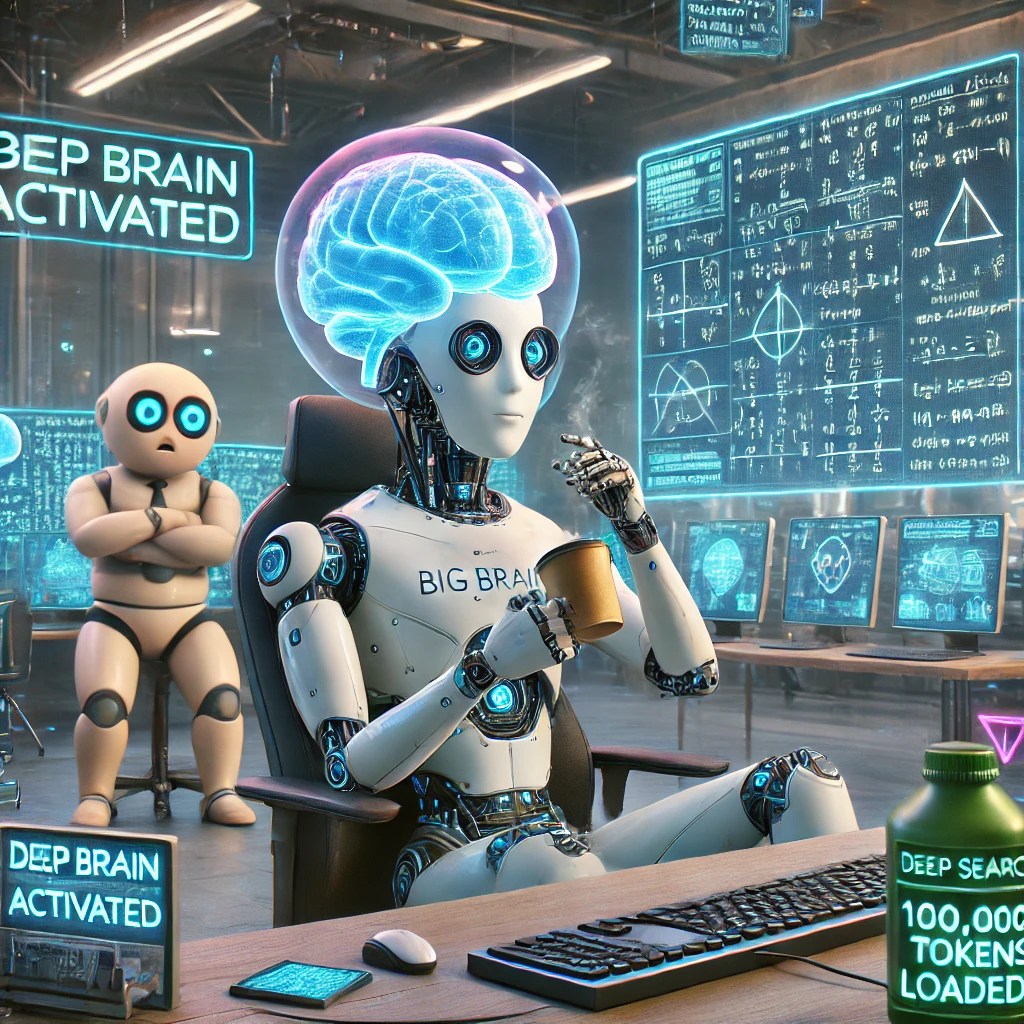
Big Brain ModeNot available.Allocates additional processing resources for intricate tasks, improving accuracy.
Supported ModalitiesText processing.Expanded support for both text and video.
Release DateAugust 2024.February 2025.
Open SourceNo.No.
Knowledge Cut-off DateUnknown.February 2025.

What Makes Grok-3 Stand Out?

One of Grok-3’s most significant features is its DeepSearch capability, which enables it to analyze vast amounts of real-time information, including sources across the Internet and social media platforms such as X (formerly Twitter). This feature makes it particularly effective for summarizing breaking news, analyzing trends, and responding to queries with up-to-date insights.

Another notable upgrade is Big Brain Mode, which allows the AI to dedicate additional processing resources for more complex computations, resulting in more precise and insightful responses.

Grok-2 Goes Open Source

While Grok-3 is being positioned as xAI’s flagship model, Musk has confirmed that Grok-2 will be made open-source, allowing developers and researchers worldwide to access and modify the code. This move is expected to drive innovation and foster community-driven enhancements in AI development.

The Future of xAI’s Grok Models

The introduction of Grok-3 signals xAI’s ambition to challenge industry leaders like OpenAI’s GPT-4o. With its increased computational power, deeper reasoning capabilities, and real-time search functionalities, Grok-3 is shaping up to be a major player in AI-driven business automation, data analysis, and research.

As AI continues to evolve, xAI’s latest release highlights the rapid advancements in machine learning and natural language processing, raising the bar for future developments in the industry.

Get Your FREE IoT eBook Now – Limited Time Offer!

Want to start an IoT project but don’t know where to begin?

I get it. IoT is exciting yet overwhelming—so many components, protocols, architectures, and business models. You’ve probably asked yourself:

“Where do I even start?”
“Which IoT platform should I use?”
“How do I build a scalable solution?”

That’s precisely why I wrote “IoT Notes”—a simple, structured, and no-nonsense guide to help you kickstart your IoT journey without confusion.

Why This eBook is Essential for IoT Beginners & Professionals

The Internet of Things is not the future—it’s NOW. Businesses, industries, and even everyday life are being revolutionized by IoT. If you don’t learn about it today, you risk falling behind.

📖 “IoT Notes” covers everything you need to understand, plan, and implement IoT solutions:

What is IoT? (Explained simply, without the tech jargon)
How IoT helps fight COVID-19 (Real-world case studies)
IoT & the Fourth Industrial Revolution – Why now is the best time to get involved
How IoT impacts businesses – Key success factors and challenges
7 IoT Business Models – How to monetize IoT solutions
Comparing IoT protocols – MQTT vs HTTP, LPWAN, and network choices
IoT architecture & system integration – How everything connects
Top 10 skills to become an IoT Engineer
Favoriot IoT Platform – How to get started for free!
And much more! (Subscribers get free future updates!)

📥 Download “IoT Notes” for FREE – Limited Time Only!

Yes, you read that right. It’s FREE! But if you find it valuable, you can choose to support future content with a small contribution.

🔗 Click here to grab your free copy now!

IoT is shaping the world—don’t get left behind. Download the eBook now and take your first step into the IoT revolution! 🚀

See you inside!

Dr. Mazlan Abbas
IoT Evangelist | Favoriot Co-Founder

The Story Behind Favoriot – Part 19: How the Law of Attraction Shapes Favoriot’s Future

The Imagination That Built Favoriot

Imagination is often dismissed as a whimsical exercise, yet it’s the spark that ignites progress. The world we live in today was once imagined by someone who dared to think beyond what was possible. Reflecting on Favoriot’s journey, I realize how important it is to dream about the future we want to create.

I believe in the Law of Attraction—the idea that what we think and visualize with intent can manifest into reality. When we first started Favoriot, we imagined a future where our platform would power smart cities, empower students, and become a global name in IoT. Some might have called it wishful thinking. But imagination, when combined with action and persistence, can shape reality.

Let me take you on a journey through an imagined future where Favoriot’s influence has transcended borders, industries, and expectations. This is not just a daydream. It’s a vision we are working tirelessly to turn into reality.

A Vision of Favoriot’s Future

I close my eyes and transport myself into the future. I enter a massive IoT trade exhibition akin to CES or the World Smart City Expo. The atmosphere is electric with innovation. Companies from around the world have gathered to showcase their latest technologies. As I navigate the exhibition hall, one thing becomes apparent: the Favoriot logo is everywhere.

Booth after booth, exhibitors proudly display their demos powered by the Favoriot IoT platform. Startups with groundbreaking hardware solutions, companies showcasing futuristic smart city concepts, and AI-driven IoT applications are all seamlessly connected through Favoriot.

But why? Why did they choose Favoriot? It’s not just a platform. It has become the trusted backbone for innovation, synonymous with reliability and scalability. I feel an overwhelming sense of pride in seeing this unfold in real time. This is the world we imagined when we first built Favoriot: a world where our platform is the silent enabler of extraordinary solutions.

The Power of Favoriot in Education

My next stop in this imagined world is a university. Favoriot has become a standard name here—not just a tool but a core part of the curriculum.

In lecture halls, professors discuss real-world IoT case studies, and students dive deep into hands-on learning, exploring the potential of IoT using the Favoriot platform. I peek into a lab where students are working on their final-year projects. A team is developing a smart agriculture solution, leveraging Favoriot to monitor soil conditions and automate irrigation. Another group is focused on smart health, creating wearable devices for chronic disease management and using Favoriot’s analytics features to visualize patient data.

It’s exhilarating to see how a tool we created has become the foundation for nurturing the next generation of IoT innovators. Universities nationwide and internationally now teach IoT through Favoriot. Their labs are equipped with pre-configured dashboards, APIs, and datasets, making it easy for students to start building. What was once a platform we envisioned for businesses has become an educational cornerstone. Students graduate not only with degrees but as skilled Favoriot-certified IoT professionals.

This didn’t happen by accident. It was imagined, desired, and, through our efforts, made a reality.

Transforming Cities with IoT

As I step into a local council’s command centre, I see a vibrant dashboard powered by Favoriot. The screen displays real-time data from various IoT solutions deployed throughout the city: smart streetlights, waste management sensors, flood detection systems, and air quality monitors.

This isn’t just a collection of disconnected systems—it’s an integrated platform that combines everything under one roof.

The mayor stands beside me, explaining how this has revolutionized the council’s operations.

“Favoriot has helped us move from reactive to proactive,” she says. “We no longer wait for complaints; we solve problems before they arise.”

I imagined this when we spoke about smart cities years ago—a city where data drives decision-making, not just to improve efficiency but to genuinely enhance the quality of life for its citizens.

Favoriot isn’t just another vendor in this ecosystem—it’s the platform that local councils trust to aggregate and analyze IoT data, bridging the gap between diverse solutions and actionable insights.

Again, this was once a dream, an idea that many doubted. But here it is, functioning as imagined, because we believed in its possibility.

The Future of IoT Businesses

IoT product companies no longer struggle to create end-to-end solutions. Instead, they focus on what they do best—building world-class hardware or cutting-edge AI applications. Favoriot fills the gap by providing a robust platform to manage data collection and analysis.

Imagine a company specializing in healthcare sensors. Instead of spending years developing its own platform, it uses Favoriot to connect its devices. This shortens its time-to-market, and its customers benefit from a complete solution that’s both scalable and user-friendly.

The same goes for system integrators who rely on Favoriot to simplify IoT deployments for their clients. Some have taken this even further by offering managed IoT services. With Favoriot, they provide their clients with dashboards, analytics, and customized solutions without the technical headache of building everything from scratch.

It’s a win-win: the integrators expand their business offerings, and Favoriot becomes the go-to platform for IoT scalability.

Expanding Globally Through the Law of Attraction

The most exciting part of this imagined future is Favoriot’s global footprint. We have partnered with system integrators and distributors across continents, allowing us to enter new markets quickly.

In Indonesia, a partner uses Favoriot to enable advanced agriculture systems. In Europe, we’re powering smart transportation initiatives. In Africa, Favoriot is the backbone of rural healthcare IoT solutions.

These partnerships aren’t just transactional; they’re built on a shared vision of what IoT can achieve. By empowering local players in each market, Favoriot has become a global name synonymous with IoT excellence.

How did we reach this level? By first believing in it. The Law of Attraction teaches that whatever we focus on grows. We visualized this expansion, worked towards it, and attracted the right people and opportunities to make it happen.

A Dream Becoming Reality

I close my eyes and imagine standing on a stage at a significant IoT event. The lights dim, and a video showcases real-world success stories of Favoriot-powered solutions. The impact is tangible, from smart cities to healthcare and agriculture to education.

As I speak, I’m reminded of how far we’ve come—as a company and as a community of dreamers and doers. Favoriot’s success wasn’t just about technology but about believing in the power of imagination.

We imagined a world where IoT could truly transform lives when we started. Today, in this envisioned future, that world has come alive.

So, is it wrong to imagine? Absolutely not.

Imagination is where dreams take shape, and the seeds of innovation are planted. As I look at Favoriot’s journey—from a small startup to a global IoT leader—I know that it all started with a simple yet powerful idea: to imagine the impossible and make it real.

Will this vision come true? I believe it will. Because imagination, when paired with hard work, resilience, and the right team, can achieve wonders.

So, let’s keep imagining, dreaming, and building the future—one step at a time.

FAVORIOT: 8 Years of Dreams, Struggles, and Triumphs

Eight years. It feels like a blink of an eye, yet when I reflect on the journey, every moment is etched in my memory like a battle scar.

It all started with an idea that many dismissed as too ambitious for a small startup in Malaysia. The Internet of Things (IoT) was gaining traction globally, but here? People barely understood its potential. I remember sitting with early team members, sketching out what would eventually become the blueprint of FAVORIOT.

“Will this work?” I asked myself.

“Will people even care?”

Doubt is a funny thing. It whispers in your ear, making you question every step. But the fire inside me was more substantial. I had spent decades in telecommunications and technology, seeing trends come and go. But IoT? It wasn’t just a trend—it was the future. And I wanted to be part of shaping that future.

The Birth of FAVORIOT (2017-2018): A Leap of Faith

In 2017, FAVORIOT was officially born. The name carried a mission—a combination of “Favour” (or “Favor”) and “IoT.” But it was pronounced like “Favourite”. Our vision was to help businesses and cities adopt IoT with ease. We weren’t just another tech company; we were a company built on the belief that technology should serve people, not the other way around.

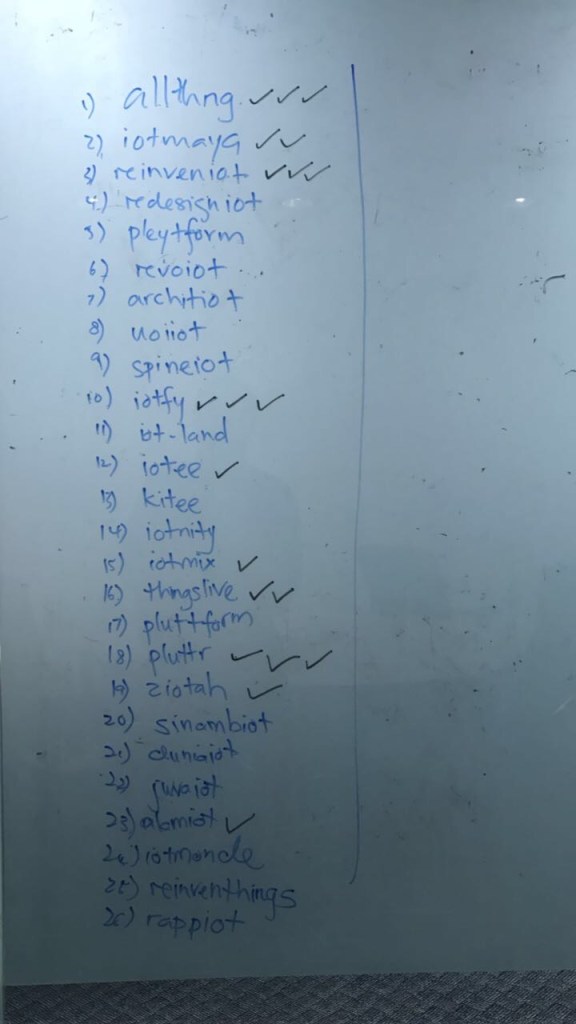
I still kept the list of suggested names for the company and we insist to have the word “IoT” in it. It was funny to look back at the way we come out with the names

“Let’s build something that matters.” That was the mantra.

But building something from scratch? That was no walk in the park.

The early days were filled with sleepless nights, countless meetings, and an uphill battle convincing clients that IoT was more than just a buzzword. We had to prove ourselves. The first version of the FAVORIOT platform was launched, allowing businesses to connect and manage IoT devices seamlessly. The first product that used the FAVORIOT platform is “Raqib,” a senior care IoT solution.

The Struggle for Recognition (2019-2021): A Fight Against the Odds

If I said everything went smoothly, I’d be lying.

We faced rejections. So many rejections.

“We’re not ready for IoT.”

“We’ll consider it in the future.”

“Maybe if you were a bigger company, we’d trust your solution.”

Every “no” felt like a dagger. I had seen this before—how innovation is often met with resistance. But I also knew that persistence was key.

2019 was a turning point. We secured our first major clients, IoT developers started using FAVORIOT to build their IoT projects, and universities integrated our platform into their curricula. The momentum was building.

Then, 2020 happened. The world shut down.

The pandemic tested every business, including ours, for resilience. Projects were delayed, budgets were cut, and people were uncertain.

“Is this the end?” I wondered.

But if there’s one thing I’ve learned, crises often lead to opportunities. The demand for remote monitoring solutions skyrocketed. Suddenly, IoT wasn’t a luxury—it was a necessity. Businesses needed to track assets, monitor environments, and ensure safety without physical presence.

FAVORIOT became more relevant than ever.

Scaling Up (2022-2023): The Rise of the Global Partner Program

By 2022, we knew we had something special. Our IoT platform had matured. Companies across different industries—smart cities, agriculture, healthcare—were integrating our technology.

But one question remained: How do we scale?

The answer? Partnerships.

We launched the FAVORIOT Global Partner Program in 2024. Instead of knocking on doors one by one, we empowered system integrators worldwide to bring FAVORIOT into their markets. We started building an international presence from Canada to the Philippines, Indonesia to India.

Each new partner wasn’t just a business deal but a validation that what we built mattered beyond Malaysia.

2024-2025: A Vision for the Future

And now, here we are. Eight years in.

I look back and realize how far we’ve come—from a tiny startup with big dreams to an IoT platform trusted worldwide. But this is just the beginning.

The future of IoT is evolving, and so are we. AI-driven automation, advanced analytics, and even more seamless integrations are on the horizon.

FAVORIOT’s vision remains To make IoT accessible, scalable, and impactful.

Lessons from 8 Years of Favoriot

Eight years in business teaches you a lot. Some lessons were painful. Some were enlightening. But all were necessary.

1. Innovation Alone Isn’t Enough—You Need Grit

Having a great product means nothing if you give up too soon. The world doesn’t hand you success on a silver platter. You fight for it.

2. Relationships Matter More Than Sales

A business isn’t just about transactions. It’s about trust. Every client, partner, and investor who believed in us contributed to our success.

3. Adapt or Die

The pandemic taught us this the hard way. If we had been rigid in our approach, FAVORIOT wouldn’t have survived. Being flexible and embracing change is non-negotiable.

4. The Right Team Makes the Difference

A startup isn’t just about the founder. It’s about the people who share the vision and push through the most challenging days. I’m grateful for every team member who’s been part of this journey.

A Heartfelt Thank You

FAVORIOT’s journey isn’t just my story—it’s ours.

To the team, thank you for believing in this vision.

To our clients, thank you for trusting us.

To our partners, thank you for helping us expand.

To those who doubted us, thank you for pushing us to be better.

This anniversary isn’t just about celebrating the past—it’s about gearing up for the future. FAVORIOT is here to stay, and the best is yet to come.

Here’s to the next 8 years. And beyond.

A Recognition That Reflects the Journey: Named Among Thinkers360’s Top 100 B2B Thought Leaders in 2025

I stared at my screen, re-reading the email. Was this real? Thinkers360 had just named me one of the Top 100 B2B Thought Leaders, Analysts & Influencers to Work With in 2025 (APAC).

I leaned back in my chair, letting the weight of those words sink in. A flood of memories rushed through my mind—moments of self-doubt, nights spent refining ideas, countless speaking engagements, and articles written with the hope that someone, somewhere, would find them valuable.

This wasn’t just about me. It was about the power of consistency, the impact of sharing knowledge, and the importance of staying true to a vision.

The Journey to This Moment

When I co-founded FAVORIOT, I had one missionto make IoT accessible, understandable, and impactful for businesses and societies. I wasn’t just building a company but creating an ecosystem, a movement, and a voice for IoT adoption.

It wasn’t always easy.

  • Sometimes, IoT felt like an uphill battle, trying to convince organizations of its potential.
  • There were moments when my writings, podcasts, and speeches seemed to go unnoticed.
  • There were days when I wondered if my efforts were making any real impact.

Yet, I kept going.

I wrote articles when I felt uninspired.
I delivered speeches when I was exhausted from travelling.
I mentored startups when I barely had time for myself.

Because I believed in the power of sharing knowledge.

Beyond Social Media Influence: Thought Leadership with Purpose

What makes this recognition by Thinkers360 truly meaningful is its holistic approach to thought leadership. Unlike many influencer lists focusing purely on social media metrics, Thinkers360 looks deeper—at the ideas shared, the conversations sparked, and the tangible impact created.

Thought leadership isn’t just about posting viral tweets or LinkedIn updates. It’s about:

  • Writing articles that challenge conventional thinking.
  • Delivering keynotes that shift perspectives.
  • Mentoring the next generation of innovators.
  • Contributing to industry policies that shape the future.

And that’s what I’ve strived to do, not just as an IoT advocate but as someone who believes in building smarter cities, empowering businesses, and fostering innovation.

Why This Matters for the IoT & Smart City Ecosystem

This recognition isn’t just a personal milestone—it’s a signal that IoT and digital transformation are no longer just buzzwords.

They are critical forces shaping the future of industries, economies, and societies.

From smart agriculture to intelligent traffic management, from AI-driven automation to predictive analytics—IoT is no longer a “nice-to-have” but a necessity.

This award reminds me that our work—whether through FAVORIOT, industry collaborations, or global partnerships—is making a difference.

It also reaffirms my belief that sharing knowledge is the most powerful way to accelerate innovation.

What’s Next? The Mission Continues

Recognition is a moment.
Impact is a lifetime journey.

This award doesn’t end my thought leadership journey—it fuels the next chapter.

I’m more committed than ever to:

  • Bringing IoT education to more businesses and policymakers
  • Expanding the FAVORIOT ecosystem through strategic global partnerships
  • Mentoring and inspiring young professionals to enter the tech industry
  • Driving real, measurable impact in smart city development

Thank you to everyone who has followed my journey, read my articles, attended my talks, or engaged with my content. Your support, feedback, and discussions have been invaluable.

This recognition belongs to everyone working tirelessly in the IoT and digital transformation.

Let’s continue building the future—one idea, one conversation, and one innovation at a time.

Final Thoughts

As I close my laptop, I take a deep breath. This recognition was unexpected, but perhaps it was always on the horizon. When you consistently show up, share your knowledge, and contribute with genuine passion, the world eventually takes notice.

For more on my journey, visit mazlanabbas.com and favoriot.com.

Letting Go: How I Outgrew Jailbreaking and Badminton

It’s funny how our interests and hobbies evolve over time. What once fueled our passion eventually fades, replaced by new priorities and pursuits. When I reflect on my own journey, two activities stand out—jailbreaking my iPhone and playing badminton. Both were integral parts of my life for years, but as time passed, I slowly outgrew them. Here’s how it happened.

The Early Days of Jailbreaking: Freedom at My Fingertips

When the iPhone first hit the market, it was revolutionary, but it came with limitations. The devices were locked to specific telcos, meaning if you bought an iPhone from overseas, it wouldn’t work with a local SIM card. I experienced this firsthand when I purchased my first iPhone from abroad.

Holding that sleek device in my hands, I felt excited and frustrated. I couldn’t use it with my local telco—unless I jailbroke it. That’s when my passion for jailbreaking began.

The Thrill of the Hack

I spent countless hours exploring forums, following guides, and experimenting with jailbreak tools. Each successful jailbreak was like a small victory. Suddenly, my iPhone was no longer constrained by Apple’s rules. I could install apps that weren’t available on the App Store, customize the interface, and unlock hidden features.

It wasn’t just about functionality—it was about freedom. Jailbreaking turned my iPhone into a personalized device that reflected my preferences, not Apple’s restrictions.

Creating “The Future is Here” Blog

As my interest grew, I wanted to share what I learned. That’s how my blog, The Future is Here, was born. It became a place where I documented everything—step-by-step guides on jailbreaking, tips for customizing iPhones, and recommendations for third-party apps.

What started as a small hobby quickly gained traction. My blog became a popular resource for people in the jailbreaking community. Comments and questions poured in:

“How do I unlock my iPhone 3G?”
“What’s the best jailbreak tool for iOS 4?”

I loved helping others. The excitement of solving problems and connecting with like-minded people fueled my passion even more.

The End of an Era

But like all good things, the jailbreaking craze eventually slowed down. Apple started releasing unlocked versions of the iPhone, and the App Store grew, offering a wide variety of apps that met most users’ needs. Jailbreaking was no longer necessary—or exciting.

My blog traffic dwindled as fewer people needed jailbreak solutions. I found myself losing interest. It felt bittersweet, but I knew it was time to move on. The blog that once consumed my time and energy quietly faded into the background.

My Love for Badminton

While jailbreaking was my intellectual passion, badminton was my physical outlet. It wasn’t just a sport—it was part of my identity. I loved the fast-paced rallies, the mental strategy, and the sheer thrill of smashing the shuttlecock across the court. Every week, I would hit the badminton court, pushing myself to improve and enjoying the camaraderie with friends.

The Signs of Change

For years, badminton kept me fit and competitive. But one day, something changed. I noticed my stamina wasn’t what it used to be. At first, I thought it was just a bad day. Maybe I didn’t sleep well last night, I told myself. But it happened again and again.

Then came the moment of realization—my grip started slipping. The racquet no longer felt secure in my hand. My shots lost power, and no amount of rest seemed to restore my strength.

Letting Go

It was hard to admit, but I had to face the truth. Maybe it’s time to let go.

Hanging up the racquet wasn’t easy. Badminton had been a big part of my life, and giving it up felt like losing a piece of myself. But over time, I realized it wasn’t about failure but evolution. My body told me to slow down, and I had to listen.

Lessons Learned

Looking back, both jailbreaking and badminton taught me invaluable lessons. Jailbreaking sparked my curiosity, pushed me to solve problems creatively, and introduced me to online communities and blogging. Badminton taught me discipline, resilience, and the importance of staying active.

Even though these hobbies are no longer part of my life, the memories remain. They remind me of how life is constantly changing, how our interests shift, and how it’s okay to let go of what no longer serves us.

Embracing New Chapters

Letting go doesn’t mean forgetting. It simply means making space for new passions and adventures. Jailbreaking and badminton will always be a part of my story, but they’ve paved the way for new pursuits.

Who knows what the next chapter will bring? The beauty of life lies in its unpredictability.

All we can do is keep evolving, learning, and remaining open to whatever comes next.

And that’s the real adventure, isn’t it?

A Deeper Dive into My Journey

If we were sitting down for coffee, I’d probably tell you that my story isn’t linear. It’s full of shifts, experiments, and surprises—each decision shapes who I’ve become. It’s not just about IoT, entrepreneurship, or blogging; it’s about finding my voice and figuring out where it belongs.

Let me take you back to the beginning, where curiosity sparked everything.

My First Affair with Technology

It all started long before technology became mainstream. I was that kid who loved tinkering with radios and gadgets, often dismantling them to see how they worked. Sometimes I managed to put them back together successfully—other times… not so much. But the thrill of discovery always kept me going.

Then came the blogging era. I stumbled upon Blogspot in the early 2000s, and it became my playground. Back then, I blogged about technology and gadgets, sharing tips and experiences with anyone willing to read. It was simple, but it gave me a voice.

“Imagine if YouTube had been around,” I often muse. My tech reviews would’ve been so much more engaging on video.

Beyond Tech Reviews: A New Perspective

Over time, my interests began to shift. I wanted to write about more than just gadgets. So, I expanded the topics—some posts were written in English, others in Malay, reflecting my bilingual journey. I found joy in writing about life experiences, challenges, and even personal reflections.

Each post was a piece of my evolving identity. Writing wasn’t just about sharing knowledge anymore—it became a way to connect, reflect, and grow.

The Birth of the IoT World

By the mid-2010s, IoT (Internet of Things) captured my attention like no other. This is the future, I thought. I launched IoT World, a focused platform dedicated to exploring and discussing IoT’s endless possibilities.

It became my canvas for explaining complex IoT concepts in simple terms, sharing case studies, and inspiring others to join this exciting field. I wrote with passion, knowing that IoT was more than just a trend—it was a revolution.

But, as always, my curiosity nudged me to broaden my horizons again. My inner voice said there’s more to share beyond IoT. Why not explore it?

Embracing Medium

In 2016, I discovered Medium—a place that felt like home for writers, thinkers, and storytellers. It was where creativity met community, and I knew I had to be a part of it.

Still, I was hesitant at first. I posted sporadically but was unsure if my content fit the platform’s audience. That all changed in September 2023 when I joined the Medium Partner Program. Suddenly, writing became a serious business. I decided to commit fully and see where it would take me.

On Medium, I explored different niches—IoT, entrepreneurship, social media strategies, poetry, and book reviews. Surprisingly, the candid posts about writing on Medium resonated the most. They taught me the value of niche-focused content while leaving room for exploration.

I began to love Medium’s dynamic energy. I constantly experimented with different formats and topics, learning what worked and what didn’t.

The Big Move: Back to WordPress in 2025

But then, in January 2025, something changed again. Medium felt crowded, I thought. I missed the creative freedom of building something that felt uniquely mine.

So, I decided to return to WordPress (which is this Mazlan Abbas Blog that you are reading). It felt like returning to my roots with a fresh perspective. This time, it wasn’t just about personal blogs or tech reviews. I wanted to create a digital space that combined all aspects of my journey—IoT, entrepreneurship, personal stories, and writing tips—all under one roof.

It was more than just a platform change. It was a symbolic return to independence and creativity. WordPress allowed me to build my site exactly how I wanted, without style, structure, or content restrictions.

It felt like home again.

My Professional Odyssey

Outside of blogging and writing, my professional journey has been equally dynamic. I’ve worn many hats over the years:

  • Associate Professor at Universiti Teknologi Malaysia, where I discovered the joy of teaching and mentoring young minds.
  • Senior Director at MIMOS Berhad, where I delved deep into technology research.
  • CEO of REDtone IoT, leading projects that transformed businesses through IoT solutions.
  • Co-Founder and CEO of FAVORIOT, a startup that’s been a rollercoaster ride of challenges, breakthroughs, and growth.

Each role added new dimensions to my story, giving me unique insights into technology, leadership, and the startup ecosystem. It’s been quite the journey.

The Magic of Storytelling

One of the unexpected joys of this journey has been the opportunity to speak at global conferences and share my experiences with others. Whether discussing smart cities, IoT, or entrepreneurship, I’ve learned that storytelling is the secret ingredient.

It’s not just about data or facts—it’s about making a connection. Sharing real stories—about successes, failures, and lessons learned—resonates more deeply than any PowerPoint slide ever could.

Looking Forward: The Unwritten Chapters

So, what’s next?

The truth is, I’m not entirely sure—and that’s exciting. Life has a funny way of surprising you. Maybe I’ll write a book, start a new podcast, or create more TikTok videos about IoT. Perhaps I’ll discover an entirely new passion and dive headfirst into it.

For now, I’m focusing on building mazlanabbas.com into a platform that reflects every facet of my journey. A space where I can share knowledge, connect with others, and continue to evolve as a writer and storyteller.

This journey is far from over.

The unwritten chapters are waiting, and I’m ready to explore them.

Lessons from My eBooks Sales

Someone asked me whether downloadable guides are a good lead generator for your business.

I never expected my eBooks to reach thousands of readers, let alone generate meaningful engagement. But looking at the numbers on my Payhip dashboard, I realise that writing and sharing knowledge can have a far-reaching impact.

The Journey of Sharing Knowledge

When I started publishing eBooks, my goal was simple: to document my experiences in IoT, entrepreneurship, and emerging technologies. I wanted to provide insights, guides, and frameworks that others could use, whether beginners or seasoned professionals.

Some books were offered for free to encourage accessibility, while others were priced modestly to reflect the value they provided. The result? A mix of high engagement and steady sales across different topics.

What the Numbers Reveal

Here’s a quick breakdown of how my eBooks have performed:

  • Most Popular Titles:

These two books clearly stand out. They focus on IoT, a topic I’ve been deeply involved with for years. It confirms that readers are eager to learn about IoT from a practical perspective. (Note: Initially, I sold these eBooks but now have made it for free)

These free resources were downloaded hundreds of times, proving that people appreciate concise and visual learning materials. Even though they didn’t generate direct revenue, they helped establish credibility and expand my reach.

These books didn’t attract huge numbers, but those who did purchase them found value in the content. It shows that niche topics may have a smaller audience but can still be monetised effectively. However, I have significantly reduced the prices of these eBooks.

Lessons from This Experience

  1. Free Resources Create Awareness
    Many downloads came from free materials, proving that giving knowledge away can be a powerful strategy. It builds trust and increases the likelihood of people exploring paid content later.
  2. IoT is a Strong Niche
    Books related to IoT consistently performed well. This reinforces that IoT remains a hot topic, and people actively seek structured knowledge.
  3. Engagement Doesn’t Always Mean Revenue
    Some books had high views but few orders, while others had lower views but better conversion rates. Pricing, perceived value, and the topic’s urgency significantly influence an eBook’s performance.
  4. Presentation Matters
    The success of IoT Notes and Your IoT Journey suggests that readers appreciate structured, well-organised content with clear takeaways.

What’s Next?

Seeing these numbers has given me new ideas. I plan to refine my offerings, update content, and possibly bundle resources to increase value. I’m also considering interactive formats like video courses based on my books.

Publishing these eBooks has been a rewarding experience—not just in sales but in the connections and conversations they have sparked. If you’re thinking of writing your own eBook, go for it. You never know who might find value in your words.

Check out my eBooks here: Payhip Store.

What do you think makes an eBook successful? Let’s discuss it!

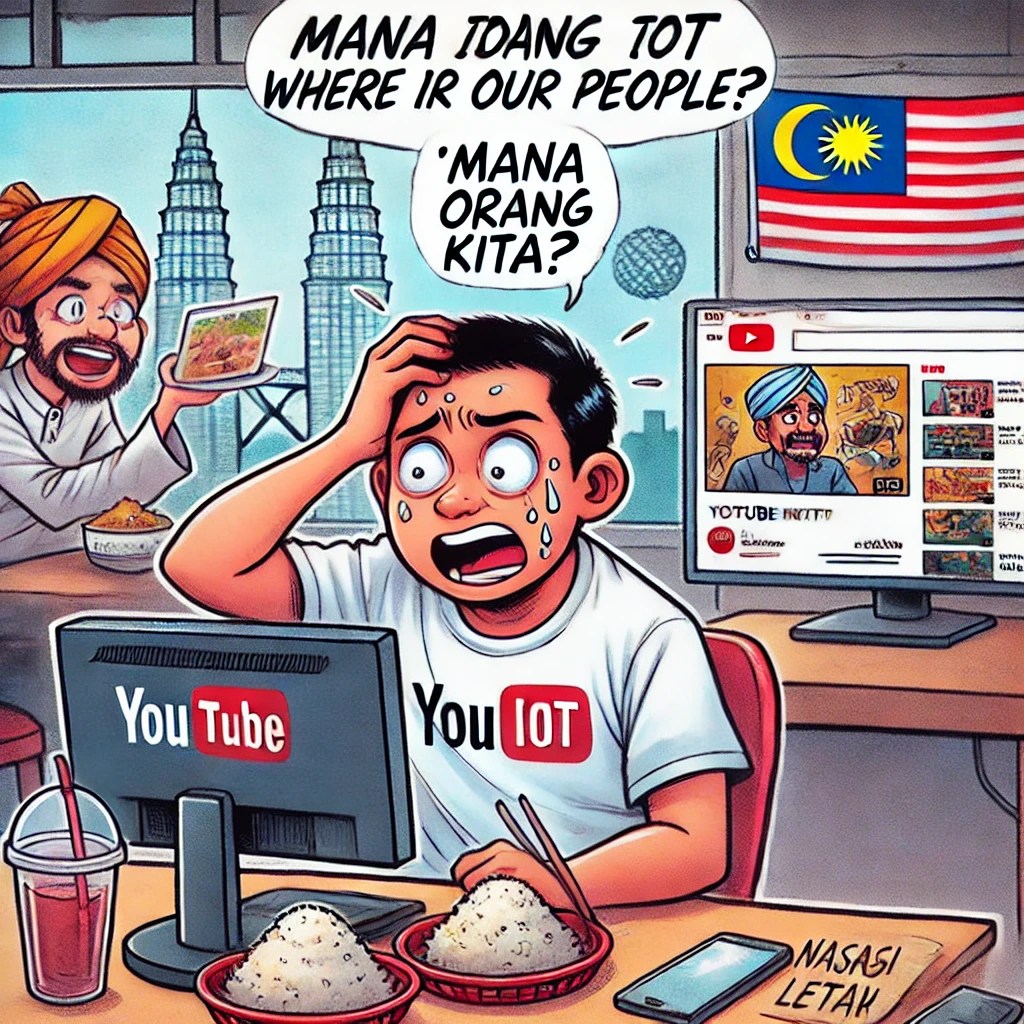
Why Are Malaysians Not Creating IoT Content on YouTube?

I was scrolling through my social media and came across an interesting observation—very few Malaysians create IoT tutorial content on YouTube. The majority of these tutorials come from India. Why is that?

So, I threw the question out there, hoping to spark some discussion. And wow, did people have opinions!

“Malaysia is Small Compared to India.”

One of the first responses I got was, “Malaysia is much smaller compared to India. If you compare us with our ASEAN neighbours, maybe it makes more sense.”

Okay, I get it. India has a massive population and a thriving tech ecosystem. But does that mean we just accept that we aren’t producing enough content? Shouldn’t our ambition go beyond just comparing ourselves with our neighbours?

“Sharing Knowledge Isn’t Our Culture.”

Another comment caught my attention: “India suka sharing knowledge kali.

That hit me hard. Is it true that we don’t have a strong culture of sharing technical knowledge? I know plenty of Malaysian engineers and tech enthusiasts who are brilliant at what they do, but why aren’t they making educational content? Are we too protective of what we know? Are we afraid that sharing our expertise might somehow put us at a disadvantage?

One person even admitted, “Source code aku, aku yang susah-susah buat, aku punya, tak nak share dengan orang lain. Kongsi je lah.” That made me chuckle, but deep down, I felt a little sad. If we all think this way, how do we expect to build a community of learning?

“People Prefer Entertainment Over Education.”

Another perspective: “Expertise tak ramai compared to India + audience sukakan content hiburan compared to education.

This one stings. It’s no secret that entertainment content dominates YouTube in Malaysia. Food reviews, travel vlogs, comedy skits—they all get millions of views. But educational content, such as IoT tutorials, barely gets any traction.

Does this mean Malaysians aren’t interested in learning tech? Or is it because no one is making content that makes tech exciting? Maybe we need to find a way to blend education with entertainment. After all, if a cooking channel can get millions of views, surely a well-presented IoT tutorial can capture some attention, right?

“Technology Isn’t in Our DNA.”

Then came a comment that really made me pause: “Sembang technology bukan budaya dalam masyarakat kita. Tengok industri filem saja lah. Teknologi dalam filem kita hanyalah fiksyen sains yang entah apa-apa. Cuma bezakan dengan filem Bollywood macam Three Idiots… Bapa kat kampung pun nak anaknya jadi engineer dan kerja di multinational kat Silicon Valley.

Ouch.

I don’t want to believe this, but there’s some truth to it. In India, engineering and technology are deeply embedded in their aspirations. Parents push their kids towards STEM careers. In Malaysia, how many parents encourage their children to be engineers, developers, or IoT experts? Not many. And if we don’t nurture this mindset early, how can we expect a surge of local content creators in technical fields?

“Go Where the Grass is Greener.”

Then someone simply commented: “Go for greener grass.

Is that the answer? Just abandon hope and move to a place where IoT content is more appreciated? I refuse to believe that. There’s potential here. There’s talent here. The problem is that we haven’t created a culture where sharing knowledge is normal, where technical education is valued, and where engineers feel motivated to teach others.

What’s the Solution?

I don’t want to just sit here and complain. I want to do something about it. So, here’s my plan:

  1. Start Creating More IoT Content – If no one else is doing it, I’ll do it. I’ll make IoT tutorials, I’ll share what I know, and I’ll make it accessible to everyone.
  2. Encourage More People to Share – If you’re an engineer, a tech enthusiast, or anyone with IoT knowledge, start sharing. Even if it’s a short video, a blog post, or a simple explainer—put it out there!
  3. Make IoT Fun and Engaging – If entertainment dominates, let’s make IoT entertaining. Let’s present it in a way that captures attention and excites people.
  4. Build a Community – Let’s create a space where Malaysians who are passionate about IoT can exchange ideas, support each other, and grow together.

I refuse to accept that Malaysia can’t be a hub for IoT education.

It starts with us, with sharing, and it starts today.