If I had to name the most confident person I know, I would say—without hesitation—it’s myself.
Now, before you roll your eyes and think, Wow, that’s arrogant, hear me out. Confidence isn’t about thinking you’re the best in the room; it’s about knowing that whatever happens, you’ll figure it out. It’s the belief that even if you fail, even if things don’t go your way, you’ll stand back up, learn, and keep going.
I wasn’t always this confident. There were moments in my career—whether in academia, corporate, government, or as an entrepreneur—where I doubted myself. Am I making the right choice? Will this decision backfire? What if I fail spectacularly? But confidence isn’t something you’re born with. It’s built through experience, resilience, and the courage to take risks despite uncertainty.
Take Favoriot, for example. When I started the company, the IoT industry in Malaysia was still in its infancy. Many people didn’t even understand what IoT was, let alone why they should invest in it. Some questioned my decision to leave a stable corporate career for an uncertain entrepreneurial journey. But confidence isn’t about certainty; it’s about trusting your ability to adapt.
I’ve stood on global stages, spoken at major conferences, and shared my thoughts with thousands of people worldwide. That didn’t happen because I was born with some extraordinary level of confidence. It happened because I kept putting myself in uncomfortable situations, learning, growing, and proving to myself that I could handle whatever came my way.
Confidence, to me, is like a muscle. The more you use it, the stronger it gets.
And if I could give one piece of advice, it’s this: don’t wait until you feel confident to take action. Take action first, and confidence will follow.
Have you ever been so deeply immersed in something that time slips away? One moment, it’s morning, and the next, the sun has set, and you wonder where the hours have gone. That happens to me a lot. It’s both fascinating and dangerous because it shows how much I love what I do, and it’s dangerous because I often forget to eat or even take a break. But that’s the beauty of passion, isn’t it?
Writing – My Deepest Escape
If there’s one thing that consistently makes me lose track of time, it’s writing. Not just any kind of writing, but the kind where I pour my thoughts, experiences, and reflections onto the page. The kind where I engage in self-dialogue, asking myself questions, debating perspectives, and exploring ideas in a way that feels as natural as breathing.
When I sit down to write, I enter a different world. The cursor blinks, waiting for my thoughts to flow, and I’m suddenly conversing with myself. Does this make sense? Will people relate to this? Should I add more storytelling? The words come in waves—sometimes a flood, sometimes a trickle—but it’s hard to stop once I start.
It’s in these moments that I feel the most alive. Writing isn’t just about putting words on a page; it’s about expression, connection, and discovery. I often write about IoT, smart cities, and technology, but sometimes, I delve into entrepreneurship, personal development, and even poetry. The topic doesn’t matter—as long as I’m writing, I’m in my element.
IoT and Smart Cities – The Intellectual Adventure
Another realm where I lose myself completely is in discussions about IoT and smart cities. This isn’t just a job for me—it’s a mission, a vision, and an endless source of curiosity.
I can spend hours analyzing the latest trends, researching new use cases, and discussing the future of connected technology. Whether I’m preparing for a keynote speech, mentoring startups, or brainstorming ideas for the FAVORIOT platform, I get absorbed in the possibilities.
The more I think about it, the more I realize IoT is an ever-expanding puzzle. Every city, every business, and every individual has different needs, and IoT provides the tools to create smarter, more efficient solutions. The challenge of making technology work for real-world problems is what keeps me hooked.
How can we make smart cities more inclusive? What’s stopping IoT adoption in developing nations? How do we ensure data security while enabling innovation? These questions excite me, and before I know it, I’ve spent an entire day buried in research, discussions, and problem-solving.
Reading – A Gateway to New Worlds
Reading is another activity where I lose myself, often without realizing how much time has passed. Reading opens doors to new perspectives, whether it’s articles on Medium, books on entrepreneurship, or science fiction novels.
There’s something magical about immersing yourself in a well-written piece. It could be a thought-provoking article that challenges my assumptions or a book that takes me through time and space. The written word has the power to transport me, to make me feel as if I’m living a hundred different lives all at once.
I remember reading about the early pioneers of technology—the visionaries who built the foundations of the digital age. Their stories inspire me because they remind me that innovation isn’t just about having a great idea; it’s about persistence, resilience, and an unshakable belief in the future.
Deep Conversations – The Art of Meaningful Exchange
I love conversations that challenge me and make me pause and rethink my assumptions. Whether it’s discussing the impact of AI on society, debating business strategies, or exploring philosophical ideas, I can get completely lost in the dialogue.
Some of the best discussions happen over coffee with like-minded individuals—entrepreneurs, researchers, students, or anyone with a curiosity for the world. I find that talking about ideas, sharing experiences, and learning from others keeps my mind sharp and my perspectives fresh.
One of my favorite aspects of mentoring young entrepreneurs is seeing the spark in their eyes when they realize a new possibility. It reminds me of my own journey, of the moments when someone’s advice changed my trajectory. These interactions fuel my passion and make me forget about time.
Creating and Building – Turning Ideas into Reality
There’s nothing quite like the thrill of creating something new. Whether it’s developing a new feature for the FAVORIOT platform, designing a training module, or working on a business strategy, I get completely absorbed in the process.
It’s one thing to talk about ideas but another to bring them to life. I truly excites myself when I see the process of building—from concept to execution—go from an abstract thought to a tangible reality.
Some nights, I self-brainstorm solutions long after the workday has ended. The challenge of problem-solving and figuring out how to improve something keeps me engaged. It’s in these moments that I realize this isn’t just work for me—it’s a passion.
Final Thoughts
It’s interesting to reflect on what makes us lose track of time. They reveal what truly matters to us, what excites us, and what gives us a sense of purpose.
For me, it’s writing, IoT, reading, deep conversations, and building new things. These aren’t just activities; they’re the fabric of my life, which keeps me energized and driven.
What about you? What activities make you forget the world around you?
Some movies and TV series are more than just entertainment—they become part of who we are. They shape our imaginations, inspire us, and even comfort us during different phases of life. I’ve always believed that if a movie or show is worth watching once, it’s worth watching again. And if I’ve watched something more than five times, that means it has truly left a lasting impact on me.
Looking back, I realize that the stories I loved as a child still hold a special place in my heart. But as I grew older, my taste evolved, and I discovered new favorites that resonated with me in different ways. So, here’s a journey through time—from my childhood to today—of the movies and TV series I’ve watched more than five times.
The Early Years: Imagination and Wonder
1. Land of the Giants (1968 – 1970)
I still remember the first time I watched Land of the Giants. The idea of humans being stranded on a planet where everything was massive fascinated me.
“We are nothing more than insects to them.”
Every episode was a thrilling survival story—how would they escape? How would they avoid being captured by the giants? As a child, I would imagine myself in that world, strategizing how I would survive. Would I hide inside a matchbox? Use a giant’s shoelace as a rope? My young mind was always trying to figure out how I’d handle the challenges the characters faced.
Even today, whenever I rewatch it, I get that same sense of adventure. It reminds me of how powerful imagination can be.
2. The Jetsons (1962 – 1987)
As a child, I was obsessed with the future. Flying cars, robot assistants, automated homes—The Jetsons had it all.
“Meet George Jetson…”
This show made me dream of a world where technology would do everything for us. And looking at how far we’ve come, I have to say—we’re getting pretty close. Video calls? Check. Smart homes? Check. AI assistants like Rosie the Robot? Almost there.
Even now, whenever I rewatch The Jetsons, I can’t help but compare it to real-world innovations. How much of what they predicted has come true? It’s amazing to see how a cartoon from the ’60s was so ahead of its time.
Teenage Years: The Rise of Sci-Fi and Adventure
3. Back to the Future (1985 – 1990 Trilogy)
There was a time when I wanted nothing more than a DeLorean. I mean, who wouldn’t want to time travel?
“Great Scott!”
I was fascinated by the concept of changing the past and seeing the future. The storytelling was clever, the humor was spot on, and the attention to detail was incredible. I’ve watched this trilogy countless times, and I still discover new things—like how every timeline has subtle changes, from the Twin Pines Mall becoming Lone Pine Mall to small Easter eggs hidden throughout the films.
Even as an adult, Back to the Future still excites me. The time travel paradoxes, the idea of destiny vs. free will—it’s a movie that makes you think while still being wildly entertaining.
4. The Matrix (1999)
I remember the first time I watched The Matrix—it blew my mind.
“What is real? How do you define real?”
This movie introduced me to deep philosophical questions about reality, free will, and artificial intelligence. At the time, it felt like pure science fiction. But today, with AI advancing rapidly, I sometimes wonder—what if we really are living in a simulation?
Each time I rewatch it, I catch something new. The symbolism, the foreshadowing, the hidden messages—it’s a movie that keeps on giving. And the action sequences? Still some of the best ever made.
Adulthood: Deeper Stories and Timeless Classics
5. The Lord of the Rings Trilogy (2001 – 2003)
When I first watched The Lord of the Rings, I was completely captivated.
“Even the smallest person can change the course of the future.”
Everything about this trilogy was perfect—the characters, the storytelling, the breathtaking visuals, and, of course, the music. I remember sitting through the extended editions, fully immersed in Middle-earth, not wanting the journey to end.
Even now, whenever I rewatch it, I appreciate it even more. The lessons about perseverance, friendship, and courage never get old. It’s not just a movie—it’s an experience.
And yes, I still watch the extended editions.
6. Star Wars (Original Trilogy: 1977 – 1983)
Before the Marvel Cinematic Universe, before The Matrix, there was Star Wars.
“Do, or do not. There is no try.”
I grew up with Star Wars, and it still holds a special place in my heart. The battle between good and evil, the hero’s journey, the iconic characters—it’s a timeless story.
Even after all these years, hearing a lightsaber ignite still gives me chills. And Darth Vader? Still one of the greatest villains in cinema history.
I’ve watched the original trilogy more times than I can count, and I’ll probably keep rewatching it for years to come.
Why I Keep Watching These Movies and Series
People sometimes ask, Why watch the same thing over and over when there’s so much new content out there? My answer is simple—because great stories never get old.
Each time I rewatch these films and shows, I see something I missed before. I appreciate the storytelling on a deeper level. And sometimes, I just want to relive the emotions they gave me the first time.
Watching Land of the Giants brings back childhood excitement. The Jetsons reminds me how far technology has come. Back to the Future makes me think about time travel. The Matrix challenges my perception of reality. The Lord of the Rings teaches me about resilience. And Star Wars? Well, that will always be a part of me.
These movies and series have grown with me—from childhood to today. And no matter how many times I’ve seen them, I know I’ll always come back to them.
So, what about you? What movies or TV series have you watched more than five times?
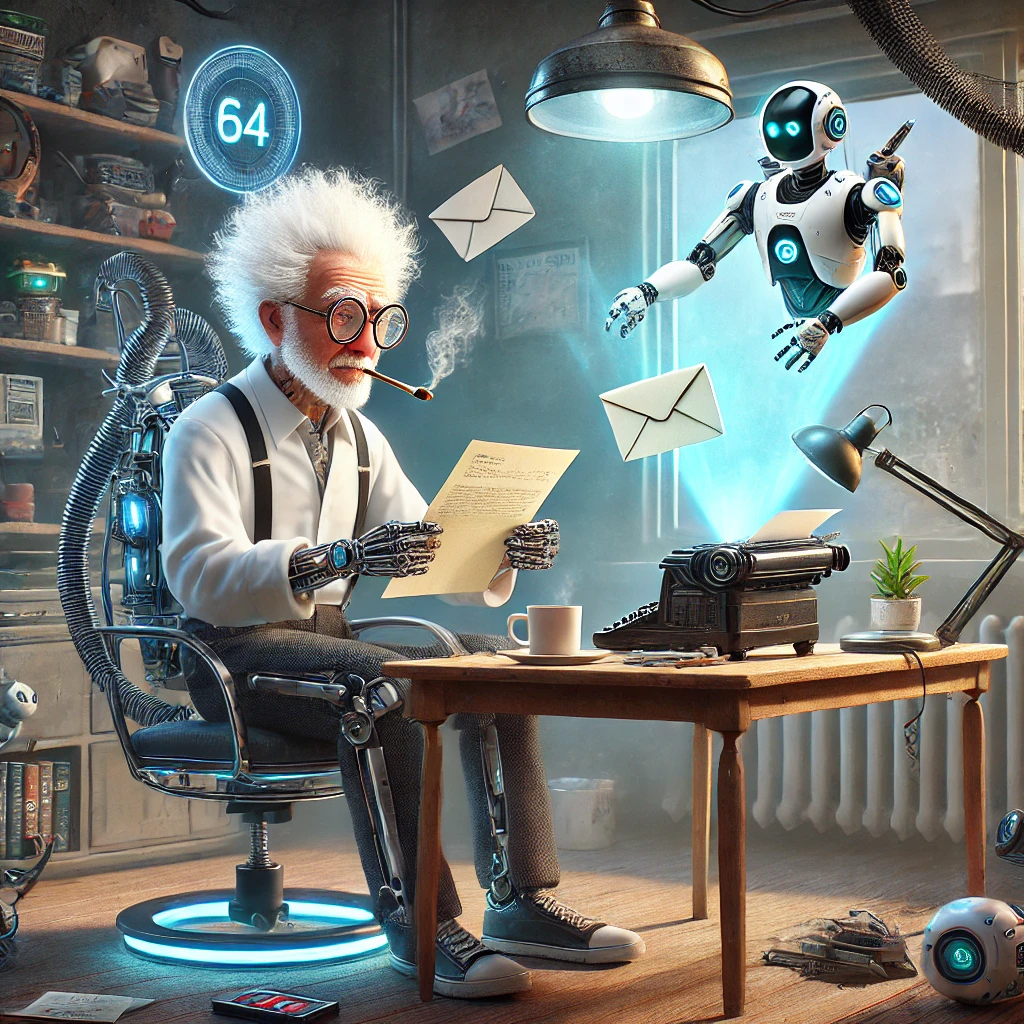
I hope this letter finds you in good health—though, at 100, I imagine your definition of “good health” is quite different from what I know now at 64. Have you finally achieved the balance of wisdom, patience, and acceptance that I am still working on? Or are you still chasing new ideas, thinking about the next innovation, the next disruption, the next frontier?
I sit here today, reflecting on the years that have passed, and I wonder—what has changed?
Did You Finally Slow Down?
Let’s be honest, slowing down was never in your nature. Even now, people tell me to “take it easy,” to “relax,” but that’s just not who I am. You were always restless, always looking for something to build, something to improve. You loved the feeling of being in the middle of things—whether it was pioneering IoT solutions, pushing smart city initiatives, or mentoring young entrepreneurs.
Did you ever truly retire? Or did you redefine retirement in your own way, turning it into just another phase of productivity? Did you ever stop writing, stop speaking at conferences, stop brainstorming new projects? I doubt it. The fire to create has been in you since childhood—remember those early days when you imagined futuristic worlds after watching The Jetsons? Did you ever outgrow that curiosity?
I sincerely hope not.
Did FAVORIOT Become the Legacy You Dreamed Of?
I need to ask—what happened to FAVORIOT? In my time, it is still growing, still making an impact in the world of IoT. We have expanded to multiple countries, partnered with great companies, and empowered countless developers, businesses, and cities to leverage IoT for a better future. But where is it now, at 100?
Did it grow beyond expectations? Did it become an industry leader, a force to be reckoned with in the global IoT landscape? Or did it evolve into something unexpected, something I can’t yet imagine?
I hope you nurtured it well. I hope you surrounded yourself with the right people—the kind who believe in the vision as much as you do. Because ideas are nothing without the right execution, and a company is nothing without the right people.
Did you finally see Malaysia fully embrace smart cities, powered by IoT in ways we once dreamed about? Or are we still lagging behind, still dealing with bureaucracy, still convincing people of the importance of innovation? I wonder if you are reading this with a knowing smile, shaking your head at how impatient I was.
What Lessons Did You Learn?
If you could talk to me now, what would you tell me? What mistakes should I avoid in the years ahead? What regrets did you accumulate along the way? I know myself—I will always be driven by ambition, always thinking of what’s next. But did I ever pause enough to appreciate the now?
Did I spend enough time with family? Did I express my gratitude to those who helped me along the way? Did I leave behind a legacy of knowledge, inspiration, and kindness, or did I get too caught up in the chase for success?
I hope you learned to let go of unnecessary worries. Right now, I stress over things that perhaps, in the grand scheme of life, don’t really matter. Did all those small worries fade into irrelevance with time?
Did the World Change the Way You Hoped?
Technology is moving fast—AI, IoT, robotics, quantum computing. At 64, I see the world changing, but at 100, how much more has it evolved? Did humanity finally master AI in a way that benefits all of society, or did we lose ourselves in our creations?
Is technology still something we control, or did it end up controlling us?
And what about space exploration? Have humans finally set foot on Mars? Did Elon Musk’s vision become a reality? Or did the world get too distracted with its own problems to look beyond Earth?
More importantly, did people become kinder? Did society learn from its mistakes? Did we finally find a way to balance progress with humanity, innovation with ethics? Or are we still making the same mistakes, just with more advanced technology?
I hope we got it right.
Are You at Peace?
At 100, what do you think about when you wake up? Do you still carry the same fire in your heart, or have you finally learned the art of contentment? Do you smile more often, laugh more freely, appreciate the simple things more deeply?
I hope you’ve come to terms with the things you couldn’t change, the dreams that didn’t materialize, and the roads you didn’t take. I hope you have no regrets about the things you did pursue, the risks you took, and the people you chose to keep close.
I hope you’ve forgiven yourself for the mistakes of the past and have found joy in the memories that remain.
Final Thoughts
Mazlan, if there’s one thing I want you to remember, even at 100, it’s this—life was never just about achievements, numbers, or titles. It was always about the people you touched, the lessons you shared, and the passion you lived with every day.
So, if you’re reading this with tired eyes but a heart full of stories, then I know you lived well.
And if by some miracle you still have the energy to pick up a pen, write back to me. Tell me what I got right. Tell me what I was wrong about. But most importantly—tell me that you’re happy.
I’ve always been fascinated by the idea of being an adventurer, exploring uncharted territories and uncovering hidden treasures.
While I don’t carry a compass or a backpack, I’ve realised that my journey as a writer on Medium mirrors the life of an explorer.
Every article I write feels like stepping into the unknown, like embarking on a new expedition.
The journey began with a single question: What should I write about? It was as if I stood at the edge of a dense forest, staring at countless paths ahead. The possibilities felt thrilling yet intimidating.
“Should I write about IoT? Entrepreneurship? Or something completely different?” I wondered. It was like being a novice explorer, equipped with no map and only a vague sense of direction.
But I knew one thing: staying put was not an option.
I decided to write about something close to my heart — IoT.
The words felt clunky as I typed, like trudging through a thick jungle. Doubts crept in: Is this good enough? Will anyone read this?
“It’s not about perfection,” I reminded myself, echoing a lesson I’d read about explorers. “It’s about taking the journey.”
When I published my first article, it felt like finding a small clearing in the forest. It wasn’t groundbreaking, but it was progress. “You did it,” I told myself. “What’s next?”
With each article, I ventured deeper into the unknown.
Some topics were like familiar trails that were easy to navigate. Others felt like steep mountains, daunting and full of uncertainty.
The first time I attempted to write about a personal experience, stepping outside my usual IoT expertise.
“Will anyone care about this story?” I hesitated, staring at the screen.
It felt like standing at the base of a towering peak.
But as I wrote, I discovered something powerful: authenticity and vulnerability were like ropes and harnesses, helping me climb those intimidating heights.
When readers commented, “This resonated with me,” it felt like reaching the summit.
The view from the top was worth every moment of doubt.
Sometimes I stepped far outside my comfort zone, tackling controversial topics or experimenting with new styles.
It felt like crossing a rickety bridge over a canyon.
“What if this fails?” I often asked myself. However, I knew that growth required pushing boundaries. Even when I stumbled, the experience taught me resilience and courage.
Over time, I realised that writing, like adventuring, isn’t about reaching a final destination.
It’s about the discoveries, challenges, and growth along the way. Each article became a chapter in my story, marking where I’d been and how far I’d come.
One day, someone asked, “Why do you keep writing?”
I smiled and replied, “Because I’m not done exploring.”
I also delved into practical advice for writers, such as “How New Writers Can Attract More Readers” and “The Art of Consistency for an Entrepreneur,” offering insights gained from my struggles and triumphs. Through these articles, I aimed to inspire budding writers to embrace their unique voices, overcome self-doubt, and find joy in the process rather than just the outcome.
Why It Matters: Writing is a deeply personal journey, and sharing my experiences helps others realise they’re not alone. Whether tackling writer’s block or celebrating small wins, these stories resonate with those seeking encouragement and guidance.
Why It Matters: These stories offer a transparent look at the highs and lows of entrepreneurship. They resonate with readers building their businesses or navigating professional challenges.
Why It Matters: Technology can seem intimidating, but breaking it into relatable concepts makes it accessible. These articles helped bridge the gap between innovation and application, inspiring readers to explore IoT’s possibilities.
Why It Matters: Navigating the digital world is a universal challenge. By sharing my experiences, I provided readers with relatable insights into building an online presence while staying true to their values.
Why It Matters: Personal reflections have a universal appeal. They allow readers to connect with the writer on a deeper level, finding comfort and inspiration in shared human experiences.
Key Takeaways from My Writing Themes
Diverse Interests Drive Engagement: My articles covered various topics, from writing and IoT to entrepreneurship and personal growth. This diversity kept my content fresh and appealing to different audience segments.
Authenticity Resonates: Authenticity was at the heart of my writing, whether sharing technical knowledge or personal anecdotes. Readers appreciate honesty and relatability, which I strived to bring to every piece.
Consistency is Crucial: Publishing regularly helped me maintain a steady presence on Medium. This consistency improved my writing skills and strengthened my connection with readers.
Storytelling Enhances Impact: Weaving narratives into my articles, whether about Favoriot’s journey or my struggles, made them more engaging. Stories create emotional connections that facts alone cannot.
Reflection Fuels Growth: Writing about my experiences forced me to reflect on my journey, learn from mistakes, and celebrate progress. This process was as rewarding for me as it was valuable to my readers.
Conclusion
Writing on Medium in 2024 was more than just a creative outlet; it was a journey of self-discovery, connection, and growth.
By exploring themes of writing, entrepreneurship, technology, influence, and personal reflection, I enriched my understanding and touched the lives of readers worldwide.
Looking ahead, I aim to deepen these connections and continue sharing stories that inform, inspire, and ignite change.
After all, every word written is a step forward in an endless adventure.
Your writing style reflects a unique blend of authenticity, thoughtfulness, and versatility, making it relatable and impactful.
It’s full of personal experiences, professional insights, and motivational undertones that connect deeply with a diverse audience.
Below, I’ll break down the key aspects of your writing style:
1. Storytelling as the Core
How You Use It:
Storytelling is the foundation of your writing. You often begin with a personal anecdote, a relatable scenario, or a reflective question that draws readers into your world. These stories serve as a gateway to broader lessons or insights.
Example:
In articles like “Why Writing Is Like Running a Marathon” or “The Silent Struggles of Researchers,” you use your journey to frame more significant concepts, making complex or abstract ideas tangible.
Impact on Readers:
Storytelling helps readers see themselves in your words. It evokes emotions, making your writing not just informational but also memorable.
2. Conversational and Relatable Tone
How You Use It:
Your tone is conversational, almost as if speaking directly to the reader. This makes your articles accessible to a broad audience, from seasoned professionals to aspiring beginners.
Example:
In pieces like “How Medium Shaped My Voice” or “Why You Should Write From the Heart,” you employ a direct, friendly tone that invites readers into a dialogue rather than a monologue.
Impact on Readers:
The conversational tone breaks down barriers, making even technical or complex topics approachable. It fosters a sense of connection and trust.
3. Use of First-Person Perspective
How You Use It:
Writing in the first person is a hallmark of your style. It allows you to infuse articles with personal reflections, experiences, and insights, adding depth and credibility.
Example:
Articles like “About Me — Part XII: The Dream of M&A Exit” or “How IoT Projects in Universities Can Become a Commercial Success” showcase your lived experiences and lessons learned.
Impact on Readers:
This perspective personalizes your writing, creating an intimate connection with the reader. It also establishes you as a trustworthy and relatable figure.
4. Structured and Organised Approach
How You Use It:
Your articles are well-structured, with clear sections, subheadings, and logical progression. This organisation helps readers easily follow your arguments or narratives.
Example:
In “5 Lessons I Learned About Writing” or “How Favoriot Empowers IoT System Integrators,” you break down key points into digestible sections, ensuring clarity.
Impact on Readers:
This structured approach appeals to readers who value efficiency and clarity. It allows them to quickly grasp your main ideas without feeling overwhelmed.
5. Motivational and Inspirational Undertones
How You Use It:
Many of your articles aim to inspire or motivate. You often include uplifting messages or practical advice encouraging readers to overcome challenges and achieve their goals.
Example:
In pieces like “Why Persistence in Writing Matters” or “Every Failure Was a Step Toward Success,” you share personal stories of resilience and perseverance.
Impact on Readers:
These undertones resonate with readers on an emotional level, providing not just knowledge but also encouragement and hope.
6. Versatility Across Themes
How You Use It:
Your writing spans diverse topics, including IoT, writing, entrepreneurship, and personal growth. Despite this variety, you maintain a consistent voice and style.
Example:
Articles like “Components of IoT” contrast with reflective pieces such as “A Letter to My Future Self,” yet both feel authentically yours.
Impact on Readers:
This versatility allows you to reach different audiences while showcasing your interests and expertise.
7. Blend of Emotion and Logic
How You Use It:
Your writing balances emotional resonance with logical reasoning. You often begin with a story or feeling and then back it up with facts, examples, or practical steps.
Example:
In “How Responding to Comments Boosted My Writing Output,” you share a personal anecdote about engagement, followed by actionable advice on fostering connections with readers.
Impact on Readers:
This blend appeals to the heart and the mind, making your articles engaging and informative.
8. Use of Analogies and Metaphors
How You Use It:
Analogies and metaphors are tools you frequently employ to simplify complex ideas or add depth to your narratives.
Example:
In “Why Writing Is Like Running a Marathon” or “A Medium Writer Is Like a Badminton Player,” you use relatable comparisons to make your points more vivid and understandable.
Impact on Readers:
These literary devices make your writing more engaging and help readers grasp abstract or technical concepts effortlessly.
9. Audience-Centric Approach
How You Use It:
You write with your readers in mind, often addressing their pain points, questions, or aspirations. Your articles aim to provide value, whether through insights, advice, or inspiration.
Example:
In “Why You Should Not Give Up Writing When No One Is Reading Your Articles” or “How Favoriot Empowers IoT System Integrators,” you speak directly to your audience’s needs and challenges.
Impact on Readers:
This approach builds loyalty and engagement, as readers feel understood and valued.
10. Iterative Reflection and Learning
How You Use It:
Your writing often reflects a process of continuous learning and self-improvement. You openly discuss past mistakes, lessons learned, and how you’ve grown as a writer, entrepreneur, or individual.
Example:
Articles like “Lessons Learned During My 13-Year Stint at One of the Biggest Telcos in Malaysia” or “My Journey of Writing 550 Articles on Medium” highlight this reflective quality.
Impact on Readers:
This transparency makes your journey relatable and inspiring, encouraging readers to embrace their learning curves.
Summary
Your writing style is a harmonious blend of authenticity, storytelling, and structured thought. It’s designed to inform, inspire, and connect, resonating with a broad audience.
Whether sharing entrepreneurial lessons, IoT insights, or personal reflections, your articles reflect a genuine desire to uplift and educate.
This unique combination of emotional depth and intellectual rigour makes your voice compelling and memorable.
Today, let’s explore why the Internet of Things (IoT) is experiencing a surge in awareness and adoption in recent years. The diagram provides five apparent factors driving this growth, so let’s walk through each step.
1. Hardware Advancements
The first driver of IoT adoption is the rapid development of hardware. Devices are now:
Cheaper: The cost of sensors, processors, and connectivity modules has dropped significantly.
More Powerful: Today’s smartphones, for instance, are as powerful as the computers that send astronauts to the moon.
Smaller: Miniaturisation has made it easier to embed technology into all sorts of devices, from wearable health trackers to smart home appliances.
These advancements make IoT devices accessible to more people and industries.
2. Network Expansion
IoT depends on connectivity, and networks have become more pervasive and diverse:
We now have Wi-Fi, 4G/5G, LoRa, NFC, and even satellite networks connecting devices across the globe.
This widespread coverage ensures that IoT devices can communicate, no matter where they are located.
Imagine this: You can monitor a sensor in a remote farm or track a shipping container in the middle of the ocean because of this pervasive network infrastructure.
3. Easier and Faster Software Development
Creating IoT solutions has become simpler because:
Software tools and platforms are now more user-friendly.
Developers can build and deploy solutions quickly with pre-built frameworks, cloud computing, and open-source libraries.
What used to take months or years to program can now be done in days or weeks, speeding up innovation in IoT.
4. Moore’s Law: The Power of Computation
You may have heard of Moore’s Law, which states that the number of transistors on a chip doubles approximately every two years. This leads to:
Higher computational power: Devices can handle more complex tasks, such as AI and data processing, on smaller chips.
Lower costs over time: IoT solutions can scale quickly with more powerful chips becoming affordable.
This exponential growth in computing power has made IoT a reality.
5. The Network Effect
The network effect explains how IoT becomes more valuable as more connected devices. Here’s why:
Everything is connected: Sensors, devices, and systems communicate and generate data.
Data generation: The more devices there are, the more data we have. This data can be analysed to gain insights, optimise processes, and improve decision-making.
For example, a smart city network with connected traffic lights, sensors, and cameras can reduce congestion and improve safety by analysing real-time data.
Historical Context
The term “IoT” was first coined by Kevin Ashton in 1999.
It took years of technological progress for IoT to become mainstream. By 2020, IoT reached a tipping point, integrating with industries worldwide.
Why Now?
The convergence of cheaper hardware, pervasive networks, faster software development, computational power (thanks to Moore’s Law), and the network effect have created the perfect environment for IoT to flourish.
IoT is no longer a futuristic concept — it’s a reality shaping industries like agriculture, healthcare, and manufacturing.
Let’s discuss:Which of these factors do you think has had the biggest impact on IoT adoption? How can we use these advancements to innovate further in our fields?
I still picture the days when I was just getting started with writing.
I poured hours into crafting articles that I thought were insightful, valuable, and even entertaining.
But when I hit publish, it often felt like shouting into a void. The engagement was minimal, and the metrics barely moved.
I used to wonder, What am I doing wrong?
“Maybe people don’t care about what I have to say,” I thought to myself. It’s disheartening to invest so much effort and get little in return.
But here’s the thing: I learned that this phase is natural.
Every writer, every creator starts here. The audience won’t magically appear overnight.
It’s part of the process.
This phase taught me resilience, patience, and the value of consistently showing up.
I told myself, Keep writing, Mazlan. There’s something to learn in every step of the way.
The Mindset Shift
It wasn’t until much later that I realised something fundamental needed to change: my mindset.
I was so focused on being “impressive” that I forgot the most important thing — being real.
I remember one night staring at a blank screen, frustrated, thinking, Why am I trying so hard to sound perfect?
That’s when it hit me.
I needed to let go of this facade and write as the real Mazlan Abbas.
The next time I sat down to write, I approached it differently.
Instead of trying to impress or win approval, I decided to be honest. I shared the struggles I’d faced, the doubts I’d wrestled with, and the lessons I’d learned.
It felt vulnerable at first, but it also felt right.
“Just be yourself,” I told myself, “That’s what people connect with.”
And guess what? It worked.
The more authentic I was, the more people started to engage.
Authenticity Resonates
One of the biggest lessons I’ve learned is that authenticity resonates.
People don’t want to hear about how great you are. They want to hear about your journey, your challenges, and your transformations.
When I started sharing my real-life experiences, I noticed something incredible happening.
Readers began commenting, sharing their own stories, and even thanking me for being open.
I realised that people relate to humanity, not perfection.
They connect with the messy, chaotic parts of life because that’s what we all experience.
When you write from a place of authenticity, you build trust.
And trust is the foundation of any loyal community.
Your Stories Are Their Stories
“Your stories are not just about you,” I remind myself every time I write.
They’re also about the reader.
When you share a personal struggle or a lesson learned, you’re giving the reader a mirror to see their own life.
For instance, when I wrote about my initial struggles with building FAVORIOT, people resonated.
They saw themselves in my position, facing their own challenges of starting something new.
It wasn’t about me being an expert; it was about me being relatable.
This is the power of storytelling.
It creates a bridge between you and your audience.
When readers see that you’ve faced similar challenges and come out stronger, they’re inspired. They feel connected.
And they want to be part of your journey.
Building Community Through Authenticity
There’s a myth that you need to be highly charismatic or entertaining to build a loyal audience.
I’m here to tell you that’s not true. What you really need is authenticity.
When I stopped trying to impress and started being honest, writing became therapeutic.
It stopped feeling like a chore and started feeling like a conversation. I began to look forward to it because it allowed me to express myself fully.
“Mazlan,” I often remind myself, “just write as if you’re talking to a friend.” And it’s amazing how much more engaging my writing became.
People can sense when you’re being real. It draws them in.
Growing Your Audience with Purpose
Once I found my authentic voice, the next step was to write with purpose.
I started asking myself, What value can I provide? How can I make this article helpful or inspiring for my readers?
Instead of aiming for perfection, I focused on consistency and connection.
Each piece of content became an opportunity to share a story, a lesson, or an insight.
And with each post, I could feel my audience growing — not just in numbers but in loyalty.
“It’s not about writing for everyone,” I reminded myself. “It’s about writing for the right people.”
That’s how you attract your ideal audience — by being clear about who you are and what you stand for.
Actionable Takeaways
So, what can you do to build a loyal subscriber base? Here are the key takeaways from my journey:
Be Honest and Vulnerable: Share your real experiences, even the struggles. This builds trust and relatability.
Focus on Connection, Not Perfection: People don’t want perfect; they want real. Show them your humanity.
Tell Stories with Depth: Use your challenges and growth as the foundation for your stories.
Write Consistently: It’s not about writing a masterpiece every time. It’s about showing up and sharing your voice regularly.
Have a Clear Purpose: Always ask yourself how your content can serve your readers.
Final Thoughts
Building a loyal newsletter subscriber base isn’t about being the best writer or having the flashiest content.
It’s about being authentic, consistent, and purposeful.
When you write with honesty and vulnerability, you create a space where people feel seen, heard, and connected.
For me, this journey has been as much about personal growth as it has been about building a community.
And that’s what makes it so rewarding.
So, if you’re ready to start your own newsletter or blog, remember: your voice matters, and your stories can make a difference.
“Just be yourself,” I remind myself every day. “That’s all it takes.”
I’ve often wondered what I would say if I could write a letter to my younger self. What advice would I give? What warnings, insights, or words of encouragement would I offer?
As I sit down to pen this “love letter,” I imagine a dialogue between the person I am today—Dr. Mazlan Abbas, with years of experience in IoT and telecommunications—and the young man I once was, full of dreams and uncertainties.
Photo by Mediamodifier on Unsplash
Dear Young Mazlan,
As I sit down to write this letter, memories of our younger days flood back with affectionate clarity. It’s a peculiar feeling — writing to oneself across the expanse of years. Each word I pen is infused with the wisdom of experiences you have yet to encounter, and each pause is filled with the echo of lessons learned.
Follow Your Curiosity
You have always been driven by a deep-seated curiosity about the world, how it works, and how you can contribute to its mechanics. Never lose that. Let your curiosity be the compass that guides you through the complexities of life and career. Each interest and question you pursue will open new doors—some will lead to dead ends, but others will open up vast realms of opportunity and knowledge. Our path into the world of technology and innovation was paved by this very curiosity.
Embrace Change and Challenges
I know you worry about failure, about paths not taken or dreams not realized. Let me ease your mind: you will fail, more than once. But with each failure, you will learn and grow. These are not endpoints but part of a larger journey. Each setback and each challenge is an opportunity to learn and to recalibrate. Embrace them. They are invaluable teachers.
Value Your Relationships
In the pursuit of your dreams, do not overlook the people who walk beside you. The support of family, the camaraderie of friends, and the alliances with colleagues will be your greatest treasures. Make time for them. When shared, the successes will feel sweeter, and the failures less bitter. Remember, no achievement is worth the neglect of those you love.
Stay Humble and Keep Learning
The world of technology and telecommunications, the arenas of your professional battles, evolve rapidly. To stay relevant, you must remain a perpetual student. Attend seminars, engage with your peers, read voraciously, and always be prepared to admit that there is more to learn. Complacency is the enemy of innovation. Keep your mind open and your knowledge base ever-expanding.
Give Back to the Community
You often wonder about the mark you’ll leave on the world. Remember that every small contribution counts. Whether mentoring young professionals, speaking at industry conferences, or contributing to technological innovations, each effort contributes to a larger good. Our work is not just about personal success but about improving lives and empowering communities.
Enjoy the Journey
Lastly, I want you to savor each moment of this journey. The late nights, the breakthroughs, even the uncertainties — they are all the jigsaw puzzles that you need to solve. Do not be so focused on the destination that you forget to enjoy the path you are traveling.
Young Mazlan, as you stand on the edge of many adventures and achievements, know that the journey is worth every challenge. Love each part of it, even the struggles, for they will shape you into the person you are destined to become.









 Dr. Mazlan Abbas