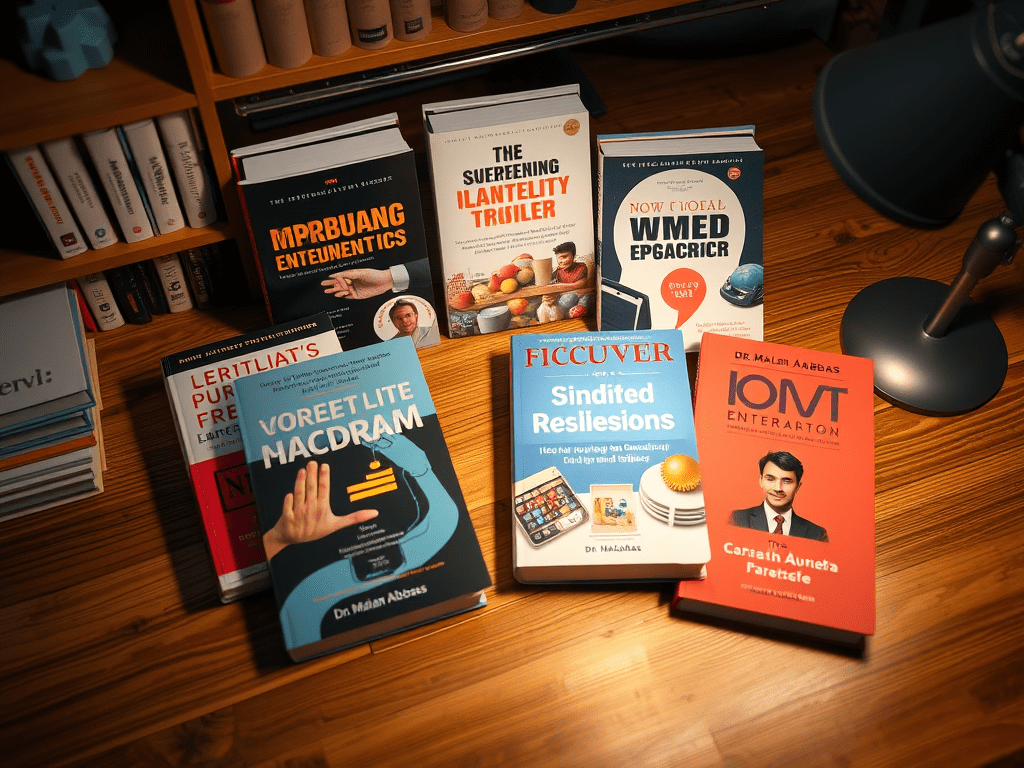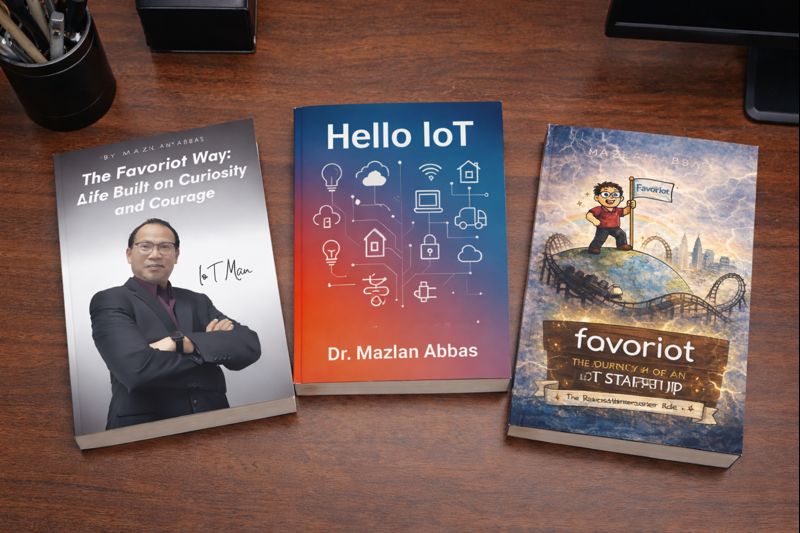
Books Written by Dr. Mazlan Abbas

Start Before You Feel Ready

Some people wait for the perfect moment.
I learned that the moment never comes.

Most goals fail not because they are impossible, but because we whisper to ourselves, “When I’m ready, I’ll start.”

I used to wait too.

Wait for the right timing.
Wait for the right support.
Wait for fear to disappear.

But fear never disappears.
It only shrinks when you walk toward it.

One small step at a time.

Write the first paragraph even if it feels awkward.
Record the first video even if your voice shakes.
Launch the project even if you are still figuring things out.

Progress grows when you stop negotiating with doubt.

The world rewards people who start before they feel ready.
The world remembers the ones who dared to begin.

So if your heart keeps pulling you toward something, listen.

Move.
Try.
Begin.

Your future self is waiting for you on the other side of courage.

Why Writing in a Storytelling Manner Resonates with Most People: A Personal Reflection

Have you ever noticed how your eyes light up and your ears perk when someone begins a sentence with, “Let me tell you a story…”? I’ve seen this countless times — in conferences, casual chats over coffee, and even in my blog’s comment section. There’s something magical about stories. And over the years, I’ve discovered that writing in a storytelling manner doesn’t just make my articles more enjoyable to write — it makes them more impactful, relatable, and memorable to readers.

But why? I asked myself this question many times, especially when I first started blogging. I thought, Isn’t it enough to just present the facts? Why bother weaving them into stories? What I’ve learned might surprise you — and it might just change the way you approach your own writing.

Let me share my journey with you.

The Human Brain is Wired for Stories

I remember reading somewhere that long before we had books, slides, or YouTube videos, we had storytellers sitting around fires. Storytelling wasn’t a hobby; it was a way to pass down knowledge, warn about dangers, and preserve culture. It’s deeply embedded in us.

When I began writing technical articles — especially about IoT, smart cities, or AI — I noticed that readers often skimmed through data-heavy sections. But when I shared a personal anecdote, like the time our prototype failed during a big demo, and how we scrambled to fix it before the client noticed, people paid attention. They messaged me. They shared the post.

Ah, I thought, it’s not the technology that draws them in. It’s the people behind the technology. It’s the struggle, the triumph, the humor, the heart.

Stories give context. Facts tell you what’s happening, but stories help you feel why it matters.

People Remember Feelings, Not Just Facts

I can’t count how many times I’ve given talks where I presented both data and a simple story. Months later, people would come up to me and say, “I still remember that story you told about building Favoriot in your small apartment!” But they rarely remembered the numbers or charts.

Why? Because stories tap into emotion. And emotion is the glue that helps information stick in our minds.

When you tell a story about a challenge you overcame, or a moment that changed your perspective, people see themselves in it. They feel the fear, the hope, the relief. And when they feel, they remember.

I often picture writing like planting seeds. If you scatter plain facts, they might sprout here and there. But if you wrap those facts in a story, it’s like planting seeds in rich, fertile soil — they’re far more likely to grow in the reader’s mind.

Storytelling Builds Trust and Connection

Okay Mazlan, I asked myself one day, why do I enjoy reading certain writers more than others? The answer came quickly: I feel like I know them.

When we write in a storytelling manner, we let readers into our world. We share a piece of ourselves — our doubts, our failures, our little victories. It humanizes us. And in this noisy digital world, where everyone is trying to shout louder, what people crave most is authenticity.

I’ve noticed that when I tell stories — whether about my early days juggling work and family, or about navigating the uncertain waters of startup life — readers open up too. They share their own stories in return. Suddenly, it’s not just a one-way broadcast. It’s a conversation.

Isn’t that what we really want? To connect, to feel heard, to know we’re not alone?

Stories Make Complex Ideas Simple

One of the biggest challenges I face in writing about IoT or AI is explaining complex ideas in ways that people can understand. I could talk about protocols, sensors, cloud architecture… or I could say:

“Imagine you’re a farmer with a chili plantation. You wake up, check your phone, and see that your soil sensors say the land’s too dry. Before the sun’s up, you’ve turned on the irrigation — no guesswork, no wasted water.”

Which one would you rather read?

Stories create mental pictures. And mental pictures help us grasp ideas faster and deeper. Whenever I see a puzzled face in the audience during a talk, I know it’s time to switch from facts to story mode. And almost always, I see that Aha! moment light up their eyes.

Storytelling Gives Your Writing Rhythm

I’ve read many articles that feel like chewing on dry crackers — all facts, no flavor. But storytelling adds rhythm. You can slow down at the emotional parts, speed up during the action, pause for effect, or even surprise your reader with an unexpected twist.

When I write, I sometimes imagine I’m telling the story aloud — like I’m sitting with a friend at a kopitiam, sipping teh tarik. Would I really say it like this? Or would I add a little humor, a dramatic pause, a knowing smile?

This rhythm keeps readers hooked. They want to know what happens next.

But What If I’m Not a “Natural” Storyteller?

I used to think that too. Mazlan, you’re an engineer, not a novelist! I’d tell myself. But storytelling isn’t about fancy language or perfect plots. It’s about honesty. It’s about sharing what you saw, what you felt, what you learned.

Start small. Instead of just stating, “Our project was delayed by two weeks,” tell what happened: “We thought we had it all figured out, until the sensor shipments got stuck at the port. I remember standing in the warehouse, staring at the empty shelves, wondering how I’d explain this to the client.”

See? Same fact — but now it’s alive.

My Final Reflection: Stories Are What Make Us Human

In my journey as a writer, technologist, and entrepreneur, I’ve come to see storytelling as not just a tool, but a responsibility. If I can make my readers feel, imagine, and connect — even for a few minutes — then I’ve done more than just write. I’ve reached across the digital void and touched a fellow human.

So, the next time you write — whether it’s a blog, an email, or even a product description — pause and ask yourself: What’s the story here?

Because in the end, we don’t just read to gather facts. We read to find ourselves in someone else’s tale. And that, my friend, is the power of writing in a storytelling manner.

I thought to myself as I finished this piece, “If even one reader smiles, nods, or feels inspired to tell their own story, then this was worth writing.”

Let’s keep telling stories — the world needs them more than ever.

If I Could Be a Character from a Book or Film, I Would Be Professor Charles Xavier — Here’s Why

“Mazlan, of all the characters in the literary and cinematic universe, why would you choose someone in a wheelchair?”

That’s the first question that popped into my head. And honestly, it’s the kind of self-interrogation I often indulge in when I stumble upon a simple question with unexpectedly deep layers.

Yes. If I could be a character from a book or film, I would be Professor Charles Xavier — the founder of the X-Men, the brilliant mind behind the Cerebro machine, and the one who saw potential in those whom the world feared. Not Iron Man with his billions. Not Batman with his vengeance. Not even the charming Sherlock Holmes. But Charles Xavier, the bald telepath who sat in a wheelchair and built a school that became a sanctuary.

Let me tell you why.

The Power to Influence Minds — Not Control, But Guide

Professor X didn’t just read minds. He empathized. He understood. And he used his powers not to dominate but to educate and elevate others.

Isn’t that what I’ve been doing all my life?

When I was lecturing in universities, building IoT platforms, or even writing these articles, I was not here to force ideas. I’m here to plant seeds. Maybe even open doors that others didn’t realize existed. Much like Charles Xavier did for hiding, scared, or rejected mutants.

He never wanted them to suppress their uniqueness — he wanted them to harness it.

I thought this sounded a bit like how I feel when someone discovers the magic of IoT for the first time.

The Leader Who Built Others to Lead

Something about Charles Xavier’s leadership style has always resonated with me. He wasn’t the one on the front lines throwing punches. He was the strategist, the mentor, and the visionary who built an environment where others could thrive.

When I started FAVORIOT, I didn’t want to build a business myself. I wanted to build a platform—literally and metaphorically—a place where startups, students, and developers could create, innovate, and solve real-world problems using IoT.

That dream wasn’t just about tech. It was about empowerment.

Like the Xavier Institute for Gifted Youngsters, FAVORIOT became a space for hidden talents to shine. Not everyone sees themselves as a hero, but with the proper guidance, they could become one.

Yes, Xavier didn’t fight every battle but enabled others to win wars.

Living with Limitations, Thriving Despite Them

Let’s talk about the wheelchair. It’s not a weakness. It’s a symbol. Of resilience. Of a man who, despite his physical limitations, carried the weight of the world’s rejected children on his shoulders.

“Would you really choose a character who’s paralyzed?”

Yes. Because strength isn’t in the limbs — it’s in the will.

I’ve also faced moments where I felt limited. Whether by corporate bureaucracy, academic red tape, or just plain disbelief from others who didn’t see the future I saw, there were many days when it felt like I was rolling uphill. But I kept moving forward.

I learned to surround myself with others who believed in the mission — just like Xavier did.

The Struggle Between Hope and Realism

What makes Xavier compelling is his constant moral dilemma. He believes in peaceful coexistence between mutants and humans. But he also knows that the world isn’t always ready to change. His long-time friend-turned-nemesis, Magneto, is a living reminder of what happens when hope turns into cynicism.

Have I ever been Magneto? I ask myself.

Maybe. In the moments when I felt the system failed us—when smart city projects were abandoned halfway or when innovation was stifled by bureaucracy—I felt rage, but I always pulled myself back.

Because I still believe in dialogue over domination and in partnerships over power plays.

Xavier always believed people could change. And so do I.

The Legacy of a Teacher

If there’s one thing that makes Xavier immortal, it’s not his telepathy. It’s his students. Cyclops. Jean Grey. Storm. Wolverine. Nightcrawler. Every one of them carried a piece of him, not just in their tactics, but in their principles.

I remember my students, too—the ones who now work in top tech firms, the ones who built startups, and the ones who still message me to say, “Dr. Mazlan, your IoT class changed my life.”

Isn’t that what every teacher lives for?

A legacy not built with bricks or code but with minds inspired and hearts ignited.

Why Not Someone Else?

I could’ve picked Tony Stark — he’s got the gadgets and flair. Or maybe Bruce Wayne — the detective with a moral code. Or even Gandalf, with his wisdom and beard.

But they didn’t build people. They didn’t create platforms that empowered others to grow beyond their shadows.

Charles Xavier did.

And that’s what I want to be remembered for.

A Fictional Character with a Real-World Impact

Do you know what’s funny? Charles Xavier might be fictional, but his spirit lives in every mentor, every teacher, every visionary who sees beyond the surface.

He lives in school principals who believe in troubled students, leaders who nurture instead of command, engineers who share knowledge freely, and writers who plant thoughts like time bombs in the reader’s mind.

Maybe even in me.

Final Thoughts from the Cerebro Room

If I had Cerebro, I wouldn’t use it to invade minds. I’d use it to listen.

I want to find the girl in Penang who wants to solve traffic with smart sensors but doesn’t know where to start.

I want to find the boy in Johor who thinks coding is challenging but could build the next big IoT solution with a little nudge.

To amplify the unheard and guide the uncertain.

That’s the Professor X I admire.

That’s the character I’d choose to be.

Not because he’s the most powerful.

But because he made others powerful.

Transform Your Day: The Power of Early Morning Habits

Every morning at 5:30 a.m., without fail, my eyes flutter open—not to an alarm, but to an internal clock that has been fine-tuned through decades of habit, discipline, and a desire to live each day intentionally.

“Let’s go. Time to wake the soul before the world does.”

That’s the first self-reminder that echoes in my mind.

As a 63-year-old who has gone through the different chapters of life—academia, government service, the corporate world, and now the startup scene with FAVORIOT—I’ve come to learn that how I start my morning sets the tone for everything that follows. You don’t command a smart city, build an IoT platform, or inspire others without conquering the first hour of your day.

5.30 AM: The Awakening

I rise from my bed with quiet intention. The world outside is still cloaked in darkness, and it’s in that serenity that I find my strength. The first thing I do is perform wudhu’ (ablution). It’s a spiritual reset button. A symbolic and literal cleansing — not just of the body, but of the mind and soul.

Then, I perform the Subuh prayers. These early morning prayers are more than just a ritual for me. They’re my grounding force.

“Ya Allah, guide me today to inspire, write, build, and serve.”

Some mornings, I sit in reflection a bit longer, especially when I feel the weight of a decision coming. Running a startup like FAVORIOT and juggling multiple commitments as an adjunct professor and speaker means my days can get chaotic. But those few moments after Subuh are sacred. They keep me anchored.

6.00 AM – 7.00 AM: My Creative Hour

The house is quiet. No distractions. No emails. No phone calls. Just me and my thoughts.

This is when I do something that surprises many people — I write.

Yes, every day, I try to write for at least an hour — whether it’s a blog article on mazlanabbas.com, an update on IoT for the FAVORIOT community, or even just scribbles for future social media posts.

Don’t get me wrong — there are days when I sit in front of the laptop and…

“Nothing. Not a single idea. Writer’s block? Again?”

On days like these, I don’t force it. Instead, I use Jetpack’s Prompts from WordPress. They’re like sparks that ignite the dormant corners of my mind. Sometimes, a simple question like, “What is one lesson you’ve learned the hard way?” leads me to unearth a memory from my early days at MIMOS or CELCOM or a lesson learned from building FAVORIOT with limited resources.

These prompts aren’t just writing cues. They’re invitations to reflect, connect, and document a life of learning and leadership.

6.45 AM: Engaging with My Digital Circle

Once the writing juices slow, I turn to my social media platforms, especially Facebook.

This might sound like the opposite of focus, but for me, it’s strategic. Over the years, I’ve built a strong and engaged community — professionals, students, fellow entrepreneurs, and tech enthusiasts. These aren’t just followers. They’re part of my extended family.

I check comments, reply to messages, and share new thoughts. Sometimes, I post a new blog entry, and sometimes, I respond to an interesting article someone tagged me in.

“Should I post this now? Or will it do better later?”

Sometimes, I overthink it. But more often than not, I remind myself — just share. Be real. Be consistent. It’s not about chasing likes. It’s about building trust and leaving digital footprints that matter.

Social media, for me, isn’t entertainment. It’s a way to educate, inspire, and connect. And it’s the perfect way to warm up before I switch into business mode.

7.00 AM Onwards: Preparing for the Day’s Battles

By this time, my mind is vigilant. I feel like I’ve already accomplished something — prayed, reflected, created, engaged.

Now it’s time to get ready for the workday.

Depending on the day, I might be:

  • Reviewing IoT platform updates with the tech team at FAVORIOT
  • Preparing slides for a keynote at an IoT or Smart Cities conference
  • Conducting an online training session via FAVORIOT Academy
  • Planning strategic calls with our global partners from the FAVORIOT Partner Network

Before I leave the house, I double-check my notebook (yes, I still use a physical one)—a habit from my CELCOM and MIMOS days. I jot down key priorities for the day—three things max.

“Mazlan, don’t try to do everything. Just do these three things really well.”

And with that, I’m ready.

Why My Morning Rituals Matter

Over the years, I’ve learned that rituals are more powerful than motivation. Motivation comes and goes, but habits—especially morning habits—are what carry us through uncertainty.

There was a time when my days were filled with back-to-back meetings, long commutes, and firefighting urgent issues. But even back then, I protected my mornings. That first hour is mine — no matter where I am.

It’s the hour when I’m not CEO Mazlan, Professor Mazlan, or even the guy people tag in IoT discussions. I’m just me—a man with thoughts, reflections, faith, and words to share.

My Advice to You?

Build your morning around what truly matters.

  • Maybe it’s prayer.
  • Maybe it’s writing.
  • Maybe it’s exercise, journaling, or reading.
  • Maybe it’s just sitting in silence with your coffee.

But own that hour. Make it yours. Protect it like your most valuable asset — because it is.

You don’t need a 15-step productivity routine. Just a small, consistent rhythm that aligns with your purpose.

For me? Subuh. Writing. Connecting.

That’s more than enough.

“Let’s begin the day. The world awaits. But I’ve already won the morning.”

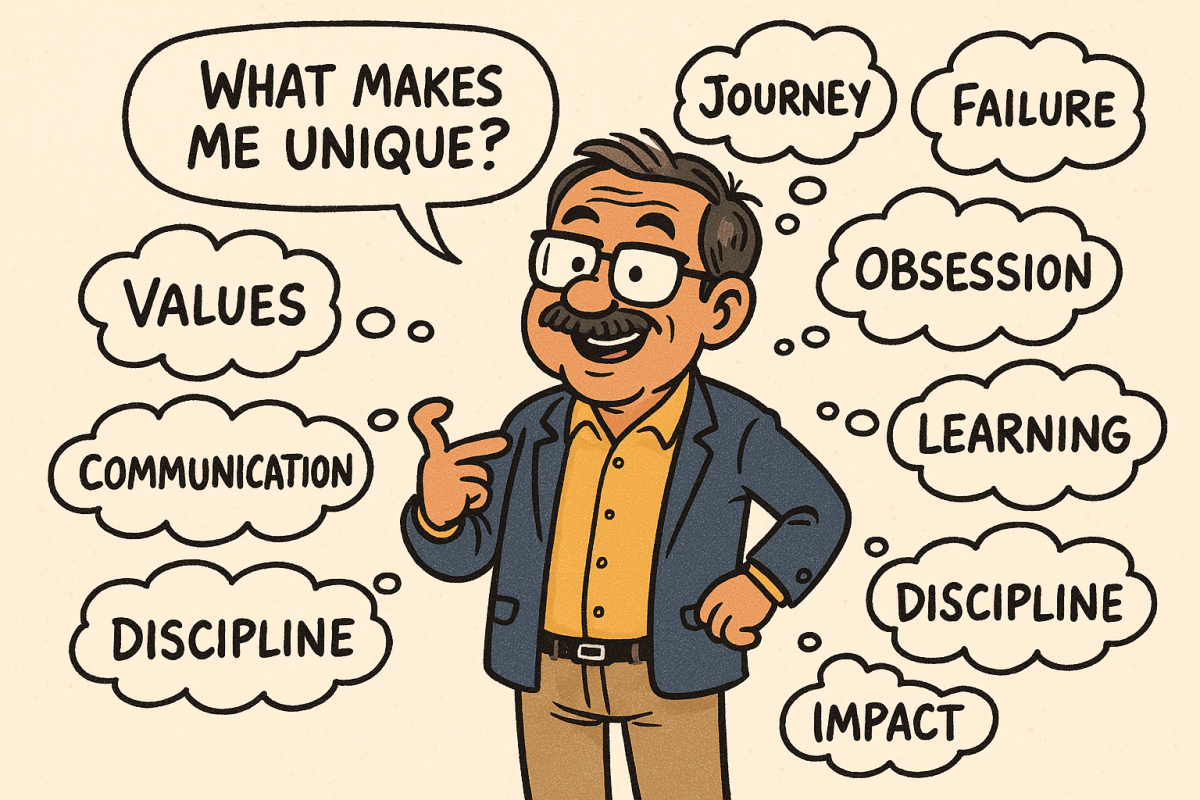
What Makes a Person Truly Unique?

As someone who has spent decades navigating the academic world, corporate boardrooms, government agencies, and startup trenches, I’ve come to realise that what makes a person truly unique is not just one defining trait but a combination of mindset, experience, and passion.

It’s the signature blend of your past, values, and vision for the future.

Let me break it down through my own lens—through personal stories, reflections, and the questions I’ve asked myself.

1. The Journey You Choose (or Endure)

“Why did I move from academia to government, then to corporate, and finally to building my startup?”

Many thought I was indecisive. But I saw it differently. Each step gave me a new superpower.

  • In academia, I learned how to think deeply and teach simply.
  • In government, I saw how policy can impact innovation nationally.
  • In corporate, I experienced the pace of execution and the demand for ROI.
  • In startup life, I learned humility, agility, and how to survive with little but dream big.

Not everyone chooses this “multiverse” path, but embracing it made me unique. I carried lessons from each world into the next.

2. How You React to Failure

“Mazlan, you left a comfortable job to start something uncertain?”

Yes—and I failed more times than I can count. But here’s the thing: I never let failure define me. Instead, I documented, reflected, and shared.

Every rejection, every “no,” became fuel for the next attempt.

What’s unique is not that you fail but how you rise from it—with clarity, grace, and a story others can learn from.

3. Your Obsession

“You’re still talking about IoT after all these years?”

Absolutely. I eat, sleep, and breathe IoT—not because it’s trendy but because I believe it can change lives. Even now, I run FAVORIOT to democratise IoT and make it accessible for students, startups, and governments.

Obsession—when combined with purpose—is what sets someone apart. It’s the thing you can’t shut off. You read about it, dream about it, and keep pushing the boundaries.

That’s the heartbeat of uniqueness.

4. The Way You Communicate

I once blogged about gadgets. Then, I pivoted to writing about technology, leadership, and storytelling. Today, I use WordPress, LinkedIn, podcasts, and even TikTok to reach different audiences.

Why?

I realised that what makes my voice unique isn’t just my technical knowledge but how I simplify it, narrate it, and humanise it.

People don’t remember jargon. They remember stories, analogies, and emotions. If you can make someone say, “Now I get it,” you’ve done something special.

5. The Values You Don’t Compromise

I’ve had opportunities that promised more famemoney, or power throughout my career. But I always asked myself:

“Is this aligned with what I believe?”

I don’t play politics. I don’t sell out. I don’t cut corners. I treat my team like family, and I lead with empathy.

In a world of copy-paste personalities, your principles become your fingerprint.

6. What You Do When No One’s Watching

In my quiet moments, I read articles from new writers, reply to comments, and refine my writing. I write even when no one reads because consistency builds credibility.

“But no one reads your articles.”

I kept writing anyway. Until one day—people did.

Your uniqueness is often born in the shadows, when no one claps, shares, or notices.

And still—you show up.

7. How You Inspire Others

I don’t just want to build a business. I want to develop people.

That’s why I mentor students, share my lessons, and give talks—even to small audiences. That’s why I created FAVORIOT Academy—to train the next generation of IoT professionals.

You become unique by climbing the ladder and extending your hand to those below you.

8. Your Curiosity and Lifelong Learning

Even today, I explore new platforms, write new articles, and learn from people much younger than me.

“Why are you still experimenting?”

Curiosity is a fire that never retires. The moment you stop learning, you become static. I choose to evolve—even at 64.

Uniqueness comes from the courage to keep updating yourself and stay relevant not by age but by adaptability.

9. Your Ability to Connect Across Generations

I often speak to university students, young engineers, and even teenagers on TikTok. Some are surprised—“Dr. Mazlan, you’re on TikTok?”

Yes, and I love it.

If you can speak every generation’s language, whether through blog posts or memes, you become a bridge. That connection—not just knowledge—is what makes someone unforgettable.

10. How You Turn Passion Into Impact

I don’t work on IoT just to build cool gadgets. I do it to solve real problems, from smart agriculture to healthcare, education, and even energy management.

Passion becomes power when you channel it into something greater than yourself.

When your work serves others, your uniqueness becomes your legacy.

A Personal Formula

If you ask me to define what makes a person unique, I’d say:

Uniqueness = (Journey + Failure + Obsession + Voice + Values + Discipline + Impact + Curiosity + Communication + Empathy) x Authenticity

You don’t need to be the smartest or the loudest in the room.
You just need to be the most you.

So, find your intersection.
Share your scars.
Own your quirks.
Speak your truth.

The world doesn’t need another replica.
It needs your story—told your way.

“Mazlan, what makes you unique?”

I’d say it’s because I’m still learning, experimenting, and daring to dream… even after all these years.

If Only I Had More Time: A Reflection on What Truly Matters

What do you wish you could do more every day?

If you had asked me this question a decade ago, my answer might have been different. Back then, I was juggling corporate responsibilities, managing large teams, and ensuring projects met tight deadlines. My days were structured around meetings, strategic planning, and execution. But now, as an entrepreneur, educator, and writer, my perspective has shifted. I have greater control over my schedule, yet I still find myself wishing for more time to do certain things.

There are many things I wish I could do more of daily—writing, learning, exercising, and engaging in deep, meaningful conversations. But if I had to choose one thing above all, it would be reflection.

The Power of Reflection

We live in a world that values action over contemplation. The modern hustle culture glorifies productivity, but it often neglects the power of stepping back and thinking deeply about what we are doing and why we are doing it.

I wish I had more time to sit down, free from distractions, and truly reflect on my experiences—both personal and professional. In my younger years, I rarely did this. There was always another project, another deadline, another goal to achieve. But as I get older, I realize that reflection is not a luxury; it’s a necessity.

Every day, I experience moments—some small, some significant—that shape my perspective. A conversation with a friend, an article I read, an interaction with a student, or even a simple observation from my daily commute—each of these holds potential lessons. But unless I take the time to reflect, these moments slip away unnoticed.

Writing as a Form of Reflection

One way I practice reflection is through writing. In fact, many of my articles stem from moments of deep introspection. When I write, I am not just sharing information; I am engaging in a dialogue with myself. I ask myself questions, challenge my assumptions, and explore new perspectives.

There have been times when I sat down to write about a specific topic, only to realize mid-way that my own thoughts were evolving. It’s fascinating how writing forces me to articulate what I truly believe. It’s one thing to have ideas floating in my mind, but another to put them into words. Writing makes my thoughts tangible, allowing me to refine and improve them.

I wish I had more time to write without constraints—to explore ideas without worrying about deadlines or audience expectations. I want to write purely for the sake of self-discovery.

Learning and Expanding Horizons

Another thing I wish I could do more every day is learning. I have always been curious about new technologies, especially in IoT and AI. But beyond my professional interests, I am fascinated by history, philosophy, and human psychology.

There’s so much knowledge available today—books, podcasts, online courses—but the challenge is finding the time to consume it meaningfully. I don’t just want to skim articles or watch short videos; I want to deeply engage with the material, take notes, and apply what I learn.

One of my biggest realizations is that learning should not just be about acquiring information; it should be about understanding connections. How does AI impact ethics? How does history shape modern technological policies? How can IoT be used to solve societal problems? These are the kinds of questions that excite me.

I often tell myself, If only I had an extra two hours a day just to read and think…

Meaningful Conversations

With the rise of social media, communication has become easier but often more superficial. While I engage with many people online, I miss deep, face-to-face conversations—conversations where ideas flow naturally, where there’s no rush, and where both parties are truly present.

I wish I could have more of these conversations every day—whether with friends, colleagues, or even strangers. Some of my best insights have come from unexpected discussions. It’s amazing how much we can learn when we listen without judgment.

I sometimes wonder, What if we all spent more time having thoughtful conversations instead of quick exchanges? How different would our relationships be? How much more would we understand one another?

Physical and Mental Well-being

Exercise is another area I wish I could dedicate more time to daily. I try to stay active, but some days, work takes over. Yet, every time I go for a walk or a workout, I feel more energized and focused.

Similarly, mental well-being is just as important. Meditation, mindfulness, and simply taking breaks throughout the day help in reducing stress. But in our busy schedules, these often get neglected.

I remind myself constantly: Taking care of my health is not a distraction from work; it’s an investment in my long-term productivity and happiness.

The Balance Between Doing and Being

At the core of all these desires—reflection, writing, learning, deep conversations, and well-being—is a fundamental question: How do we balance “doing” with “being”?

The world pushes us to always be doing something, achieving something, proving something. But sometimes, the most valuable thing we can do is simply be—to pause, to breathe, and to appreciate the present moment.

I wish I could do more of that every day.

Perhaps the real challenge is not finding more time but making a conscious choice to prioritize what truly matters.

Confidence Through Experience

Who is the most confident person you know?

If I had to name the most confident person I know, I would say—without hesitation—it’s myself.

Now, before you roll your eyes and think, Wow, that’s arrogant, hear me out. Confidence isn’t about thinking you’re the best in the room; it’s about knowing that whatever happens, you’ll figure it out. It’s the belief that even if you fail, even if things don’t go your way, you’ll stand back up, learn, and keep going.

I wasn’t always this confident. There were moments in my career—whether in academia, corporate, government, or as an entrepreneur—where I doubted myself. Am I making the right choice? Will this decision backfire? What if I fail spectacularly? But confidence isn’t something you’re born with. It’s built through experience, resilience, and the courage to take risks despite uncertainty.

Take Favoriot, for example. When I started the company, the IoT industry in Malaysia was still in its infancy. Many people didn’t even understand what IoT was, let alone why they should invest in it. Some questioned my decision to leave a stable corporate career for an uncertain entrepreneurial journey. But confidence isn’t about certainty; it’s about trusting your ability to adapt.

I’ve stood on global stages, spoken at major conferences, and shared my thoughts with thousands of people worldwide. That didn’t happen because I was born with some extraordinary level of confidence. It happened because I kept putting myself in uncomfortable situations, learning, growing, and proving to myself that I could handle whatever came my way.

Confidence, to me, is like a muscle. The more you use it, the stronger it gets.

And if I could give one piece of advice, it’s this: don’t wait until you feel confident to take action. Take action first, and confidence will follow.

The Activities That Make Me Lose Track of Time

Have you ever been so deeply immersed in something that time slips away? One moment, it’s morning, and the next, the sun has set, and you wonder where the hours have gone. That happens to me a lot. It’s both fascinating and dangerous because it shows how much I love what I do, and it’s dangerous because I often forget to eat or even take a break. But that’s the beauty of passion, isn’t it?

Writing – My Deepest Escape

If there’s one thing that consistently makes me lose track of time, it’s writing. Not just any kind of writing, but the kind where I pour my thoughts, experiences, and reflections onto the page. The kind where I engage in self-dialogue, asking myself questions, debating perspectives, and exploring ideas in a way that feels as natural as breathing.

When I sit down to write, I enter a different world. The cursor blinks, waiting for my thoughts to flow, and I’m suddenly conversing with myself. Does this make sense? Will people relate to this? Should I add more storytelling? The words come in waves—sometimes a flood, sometimes a trickle—but it’s hard to stop once I start.

It’s in these moments that I feel the most alive. Writing isn’t just about putting words on a page; it’s about expression, connection, and discovery. I often write about IoT, smart cities, and technology, but sometimes, I delve into entrepreneurship, personal development, and even poetry. The topic doesn’t matter—as long as I’m writing, I’m in my element.

IoT and Smart Cities – The Intellectual Adventure

Another realm where I lose myself completely is in discussions about IoT and smart cities. This isn’t just a job for me—it’s a mission, a vision, and an endless source of curiosity.

I can spend hours analyzing the latest trends, researching new use cases, and discussing the future of connected technology. Whether I’m preparing for a keynote speech, mentoring startups, or brainstorming ideas for the FAVORIOT platform, I get absorbed in the possibilities.

The more I think about it, the more I realize IoT is an ever-expanding puzzle. Every city, every business, and every individual has different needs, and IoT provides the tools to create smarter, more efficient solutions. The challenge of making technology work for real-world problems is what keeps me hooked.

How can we make smart cities more inclusive? What’s stopping IoT adoption in developing nations? How do we ensure data security while enabling innovation? These questions excite me, and before I know it, I’ve spent an entire day buried in research, discussions, and problem-solving.

Reading – A Gateway to New Worlds

Reading is another activity where I lose myself, often without realizing how much time has passed. Reading opens doors to new perspectives, whether it’s articles on Medium, books on entrepreneurship, or science fiction novels.

There’s something magical about immersing yourself in a well-written piece. It could be a thought-provoking article that challenges my assumptions or a book that takes me through time and space. The written word has the power to transport me, to make me feel as if I’m living a hundred different lives all at once.

I remember reading about the early pioneers of technology—the visionaries who built the foundations of the digital age. Their stories inspire me because they remind me that innovation isn’t just about having a great idea; it’s about persistence, resilience, and an unshakable belief in the future.

Deep Conversations – The Art of Meaningful Exchange

I love conversations that challenge me and make me pause and rethink my assumptions. Whether it’s discussing the impact of AI on society, debating business strategies, or exploring philosophical ideas, I can get completely lost in the dialogue.

Some of the best discussions happen over coffee with like-minded individuals—entrepreneurs, researchers, students, or anyone with a curiosity for the world. I find that talking about ideas, sharing experiences, and learning from others keeps my mind sharp and my perspectives fresh.

One of my favorite aspects of mentoring young entrepreneurs is seeing the spark in their eyes when they realize a new possibility. It reminds me of my own journey, of the moments when someone’s advice changed my trajectory. These interactions fuel my passion and make me forget about time.

Creating and Building – Turning Ideas into Reality

There’s nothing quite like the thrill of creating something new. Whether it’s developing a new feature for the FAVORIOT platform, designing a training module, or working on a business strategy, I get completely absorbed in the process.

It’s one thing to talk about ideas but another to bring them to life. I truly excites myself when I see the process of building—from concept to execution—go from an abstract thought to a tangible reality.

Some nights, I self-brainstorm solutions long after the workday has ended. The challenge of problem-solving and figuring out how to improve something keeps me engaged. It’s in these moments that I realize this isn’t just work for me—it’s a passion.

Final Thoughts

It’s interesting to reflect on what makes us lose track of time. They reveal what truly matters to us, what excites us, and what gives us a sense of purpose.

For me, it’s writing, IoT, reading, deep conversations, and building new things. These aren’t just activities; they’re the fabric of my life, which keeps me energized and driven.

What about you? What activities make you forget the world around you?