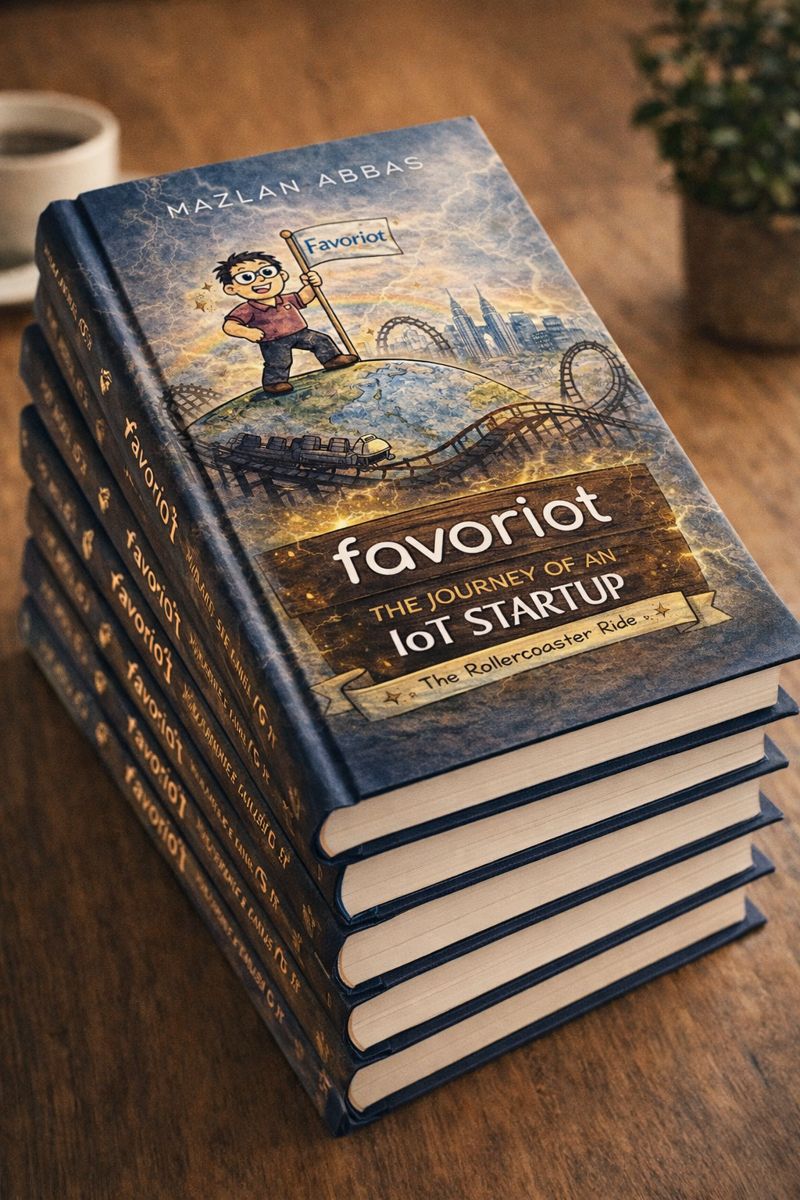
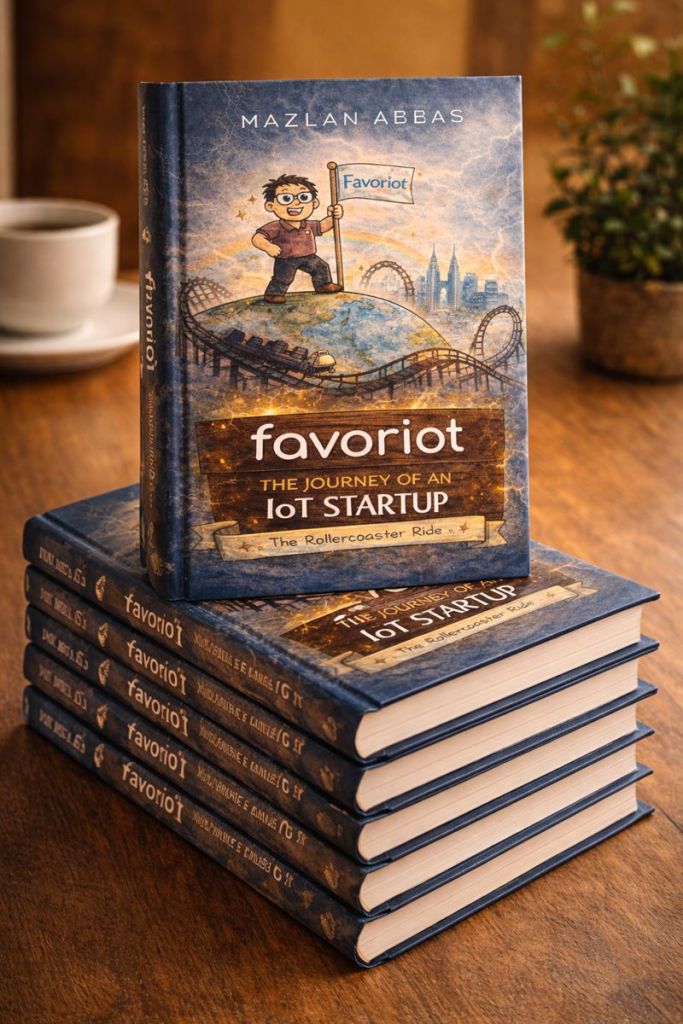
Favoriot – The Journey of an IoT Startup
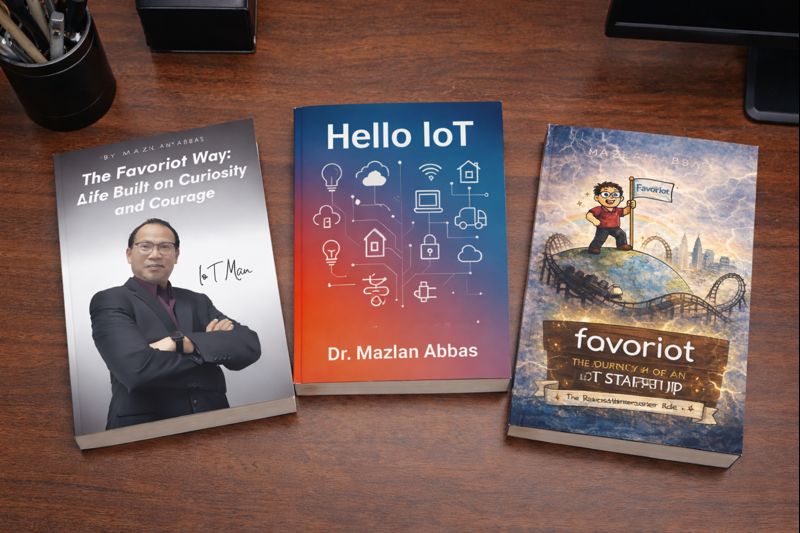
The Favoriot Way: A Life Built on Curiosity and Courage
Hello IoT
Mastering IoT with Favoriot: A Comprehensive Guide
Internet of Things (IoT): A Beginner’s Guide
Startup Survival: The Journey of a Tech Entrepreneur
IoT Infographics – Your IoT Journey Guide
Your IoT Journey
IoT Notes
Category: Book
Get Your FREE IoT eBook Now – Limited Time Offer!
Want to start an IoT project but don’t know where to begin?
I get it. IoT is exciting yet overwhelming—so many components, protocols, architectures, and business models. You’ve probably asked yourself:
“Where do I even start?”
“Which IoT platform should I use?”
“How do I build a scalable solution?”
That’s precisely why I wrote “IoT Notes”—a simple, structured, and no-nonsense guide to help you kickstart your IoT journey without confusion.
Why This eBook is Essential for IoT Beginners & Professionals
The Internet of Things is not the future—it’s NOW. Businesses, industries, and even everyday life are being revolutionized by IoT. If you don’t learn about it today, you risk falling behind.
📖 “IoT Notes” covers everything you need to understand, plan, and implement IoT solutions:
✔ What is IoT? (Explained simply, without the tech jargon)
✔ How IoT helps fight COVID-19 (Real-world case studies)
✔ IoT & the Fourth Industrial Revolution – Why now is the best time to get involved
✔ How IoT impacts businesses – Key success factors and challenges
✔ 7 IoT Business Models – How to monetize IoT solutions
✔ Comparing IoT protocols – MQTT vs HTTP, LPWAN, and network choices
✔ IoT architecture & system integration – How everything connects
✔ Top 10 skills to become an IoT Engineer
✔ Favoriot IoT Platform – How to get started for free!
✔ And much more! (Subscribers get free future updates!)
📥 Download “IoT Notes” for FREE – Limited Time Only!
Yes, you read that right. It’s FREE! But if you find it valuable, you can choose to support future content with a small contribution.
🔗 Click here to grab your free copy now!
IoT is shaping the world—don’t get left behind. Download the eBook now and take your first step into the IoT revolution! 🚀
See you inside!
Dr. Mazlan Abbas
IoT Evangelist | Favoriot Co-Founder

Ripples of Technology and the Tsunami of Disruption
IOT NOTES
Lecture Notes
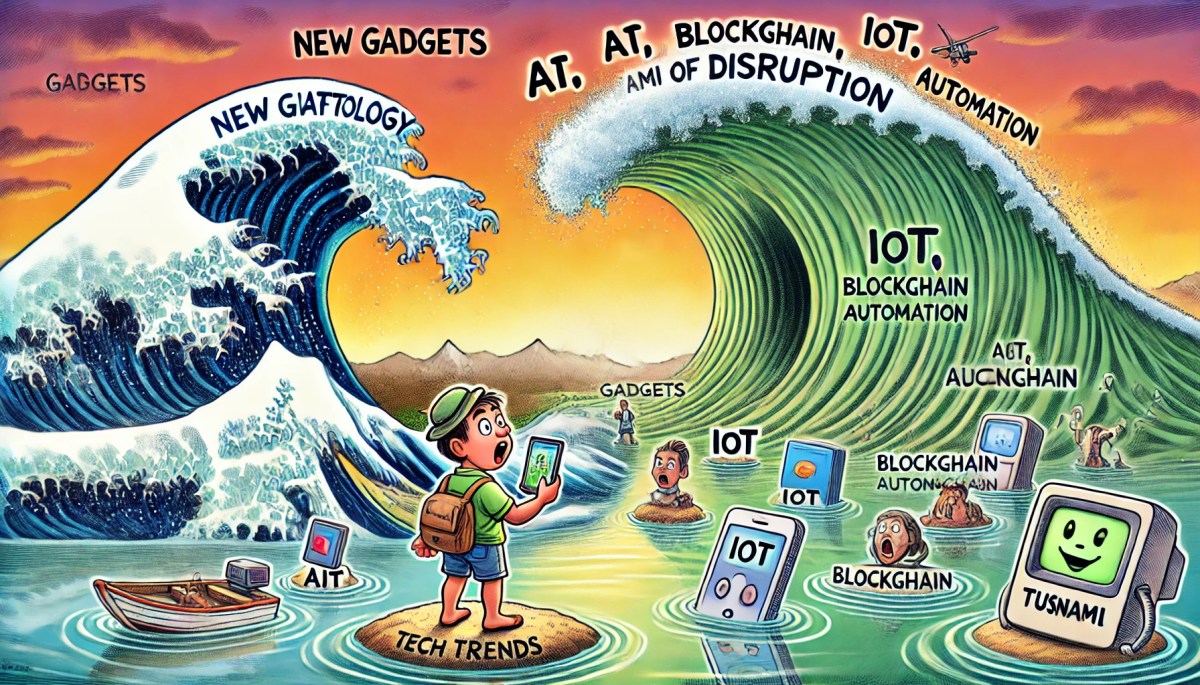
Today, let’s explore a fascinating analogy between technology waves and a tsunami and what it teaches us about embracing disruptive innovation.
This diagram gives us a vivid understanding of how small technological changes can lead to massive transformations. Let’s break it down step by step.

1. Ripples of Technology
Imagine a drop of water falling into a still pond. That single drop creates ripples that spread outward. Similarly, a single new technology creates small ripples of change. But what happens when multiple waves combine?
- Small Waves: These represent individual technologies making minor changes.
- Combining Waves: When multiple small technologies integrate and interact, they create larger impact waves.
- Tsunami Effect: When these waves grow in size and momentum, they lead to a disruption — a sudden and massive transformation.
Key takeaway: New technologies don’t disrupt on their own; the integration of technologies drives large-scale changes.
2. What Happens Before a Tsunami Hits?
The analogy becomes even more powerful when we think about the moments before a tsunami strikes:
- Sudden Signs: The beach suddenly empties of water, creating a sense of calm before the storm.
- White Waves Appear: The signs of disruption become visible, but people often don’t take them seriously.
- Silence: There’s an eerie pause before the massive wave crashes.
- Unpreparedness: People on the beach are caught off guard and unable to escape.
This is a perfect metaphor for technological revolutions. They often come suddenly, fast, and disastrously for those who are unprepared.
Characteristics of a Revolution:
- Sudden: Changes happen quickly, often without warning.
- Disruptive: Entire industries and systems are transformed.
- Radical Change: Traditional ways of doing things are replaced.
- Complete: The change impacts everyone, leaving no sector untouched.
3. Surfing the IoT Waves
Let’s bring this analogy to life with the Internet of Things (IoT). Imagine you’re a surfer facing the waves of IoT innovation. How do you ride them instead of being overwhelmed?
- Ride the Waves: Stay updated with the latest technological trends. Learn how IoT, AI, and other advancements are shaping industries.
- Be Aware of the Next Wave: Just as a surfer looks for the next big wave, keep an eye on emerging technologies that could disrupt your field.
- Be the Innovator, Not the Laggard: Take action early. Innovate and adapt before the waves of disruption leave you behind.
4. Key Lessons from the Tsunami Analogy
- Disruption is Inevitable: Whether you’re ready or not, technological waves will crash onto the shore of your industry.
- Integration Drives Change: It’s not just one technology but the combination of many that create a tsunami effect.
- Prepare, Don’t React: Those who prepare for change will thrive, while those who wait to react will struggle to keep up.
Final Thoughts
The tsunami analogy reminds us that we can’t stop the waves of technology, but we can learn to ride them. Whether IoT, AI, or another innovation, the key is to stay proactive, informed, and adaptable. Are you ready to surf the waves of change?
Let’s open the floor for questions or reflections on how you can prepare for the next big wave in your industry.
[Download full eBook IoT Notes for free]
Why is IoT Growing Now?
IOT NOTES
Lecture Notes

Today, let’s explore why the Internet of Things (IoT) is experiencing a surge in awareness and adoption in recent years. The diagram provides five apparent factors driving this growth, so let’s walk through each step.
1. Hardware Advancements
The first driver of IoT adoption is the rapid development of hardware. Devices are now:
- Cheaper: The cost of sensors, processors, and connectivity modules has dropped significantly.
- More Powerful: Today’s smartphones, for instance, are as powerful as the computers that send astronauts to the moon.
- Smaller: Miniaturisation has made it easier to embed technology into all sorts of devices, from wearable health trackers to smart home appliances.
These advancements make IoT devices accessible to more people and industries.
2. Network Expansion
IoT depends on connectivity, and networks have become more pervasive and diverse:
- We now have Wi-Fi, 4G/5G, LoRa, NFC, and even satellite networks connecting devices across the globe.
- This widespread coverage ensures that IoT devices can communicate, no matter where they are located.
Imagine this: You can monitor a sensor in a remote farm or track a shipping container in the middle of the ocean because of this pervasive network infrastructure.
3. Easier and Faster Software Development
Creating IoT solutions has become simpler because:
- Software tools and platforms are now more user-friendly.
- Developers can build and deploy solutions quickly with pre-built frameworks, cloud computing, and open-source libraries.
What used to take months or years to program can now be done in days or weeks, speeding up innovation in IoT.
4. Moore’s Law: The Power of Computation
You may have heard of Moore’s Law, which states that the number of transistors on a chip doubles approximately every two years. This leads to:
- Higher computational power: Devices can handle more complex tasks, such as AI and data processing, on smaller chips.
- Lower costs over time: IoT solutions can scale quickly with more powerful chips becoming affordable.
This exponential growth in computing power has made IoT a reality.
5. The Network Effect
The network effect explains how IoT becomes more valuable as more connected devices. Here’s why:
- Everything is connected: Sensors, devices, and systems communicate and generate data.
- Data generation: The more devices there are, the more data we have. This data can be analysed to gain insights, optimise processes, and improve decision-making.
For example, a smart city network with connected traffic lights, sensors, and cameras can reduce congestion and improve safety by analysing real-time data.
Historical Context
- The term “IoT” was first coined by Kevin Ashton in 1999.
- It took years of technological progress for IoT to become mainstream. By 2020, IoT reached a tipping point, integrating with industries worldwide.
Why Now?
The convergence of cheaper hardware, pervasive networks, faster software development, computational power (thanks to Moore’s Law), and the network effect have created the perfect environment for IoT to flourish.
IoT is no longer a futuristic concept — it’s a reality shaping industries like agriculture, healthcare, and manufacturing.
Let’s discuss: Which of these factors do you think has had the biggest impact on IoT adoption? How can we use these advancements to innovate further in our fields?
[Note: Download full IoT Notes eBook]
Lessons from My eBooks Sales
Someone asked me whether downloadable guides are a good lead generator for your business.
I never expected my eBooks to reach thousands of readers, let alone generate meaningful engagement. But looking at the numbers on my Payhip dashboard, I realise that writing and sharing knowledge can have a far-reaching impact.
The Journey of Sharing Knowledge
When I started publishing eBooks, my goal was simple: to document my experiences in IoT, entrepreneurship, and emerging technologies. I wanted to provide insights, guides, and frameworks that others could use, whether beginners or seasoned professionals.
Some books were offered for free to encourage accessibility, while others were priced modestly to reflect the value they provided. The result? A mix of high engagement and steady sales across different topics.
What the Numbers Reveal
Here’s a quick breakdown of how my eBooks have performed:
- Most Popular Titles:
- IoT Notes – 42,846 views, 2,745 orders, $153.57 sales
- Your IoT Journey – 32,767 views, 1,277 orders, $96.12 sales
These two books clearly stand out. They focus on IoT, a topic I’ve been deeply involved with for years. It confirms that readers are eager to learn about IoT from a practical perspective. (Note: Initially, I sold these eBooks but now have made it for free)
- High Engagement, Low Revenue:
- The Ultimate ChatGPT Cheat Sheet – 529 views, 139 orders, $0.00 sales
- IoT Infographics – Your IoT Journey Guide – 1,680 views, 298 orders, $0.00 sales
These free resources were downloaded hundreds of times, proving that people appreciate concise and visual learning materials. Even though they didn’t generate direct revenue, they helped establish credibility and expand my reach.
- Niche Interest but Willing to Pay:
- Internet of Things (IoT): A Beginner’s Guide – 651 views, 3 orders, $17.47 sales
- Startup Survival: The Journey of a Tech Entrepreneur – 691 views, 5 orders, $20.95 sales
These books didn’t attract huge numbers, but those who did purchase them found value in the content. It shows that niche topics may have a smaller audience but can still be monetised effectively. However, I have significantly reduced the prices of these eBooks.
Lessons from This Experience
- Free Resources Create Awareness
Many downloads came from free materials, proving that giving knowledge away can be a powerful strategy. It builds trust and increases the likelihood of people exploring paid content later. - IoT is a Strong Niche
Books related to IoT consistently performed well. This reinforces that IoT remains a hot topic, and people actively seek structured knowledge. - Engagement Doesn’t Always Mean Revenue
Some books had high views but few orders, while others had lower views but better conversion rates. Pricing, perceived value, and the topic’s urgency significantly influence an eBook’s performance. - Presentation Matters
The success of IoT Notes and Your IoT Journey suggests that readers appreciate structured, well-organised content with clear takeaways.
What’s Next?
Seeing these numbers has given me new ideas. I plan to refine my offerings, update content, and possibly bundle resources to increase value. I’m also considering interactive formats like video courses based on my books.
Publishing these eBooks has been a rewarding experience—not just in sales but in the connections and conversations they have sparked. If you’re thinking of writing your own eBook, go for it. You never know who might find value in your words.
Check out my eBooks here: Payhip Store.
What do you think makes an eBook successful? Let’s discuss it!
How IoT Impacts the 7 M’s of Business
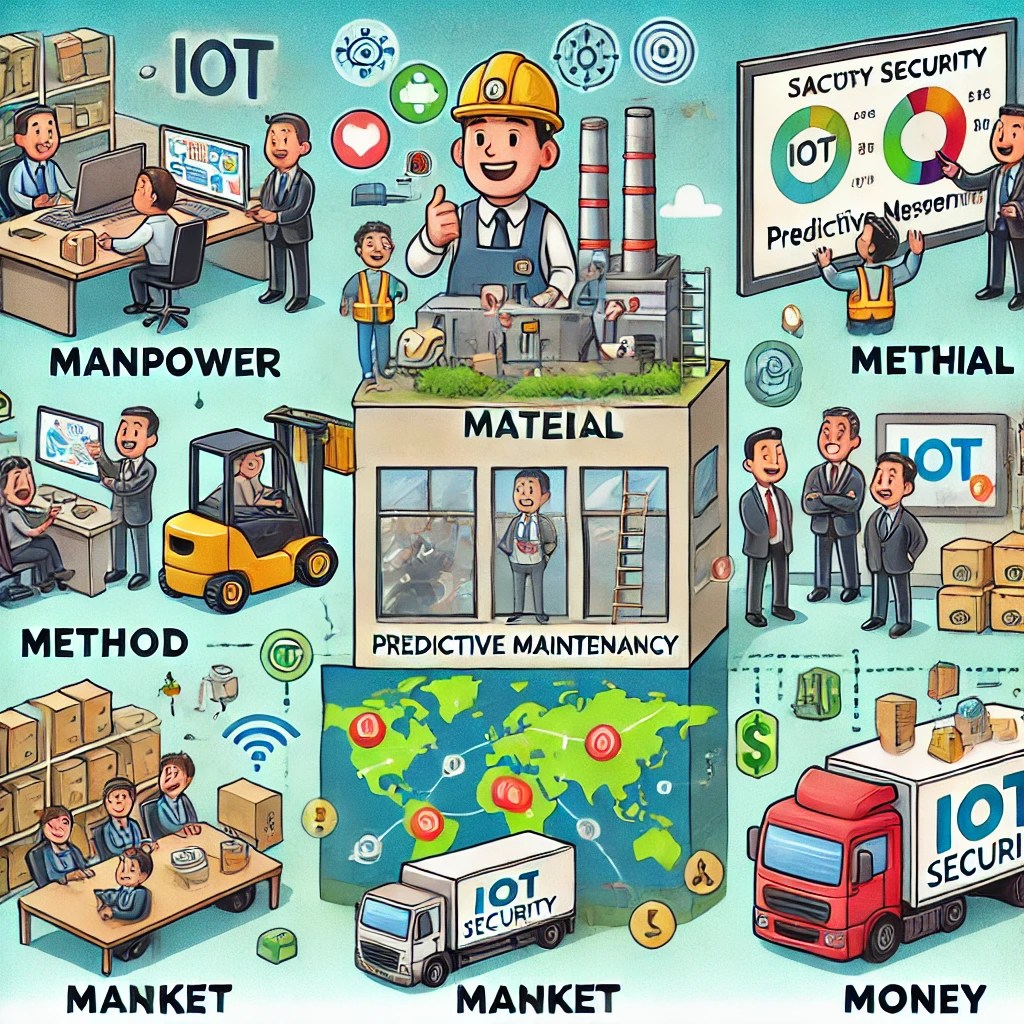
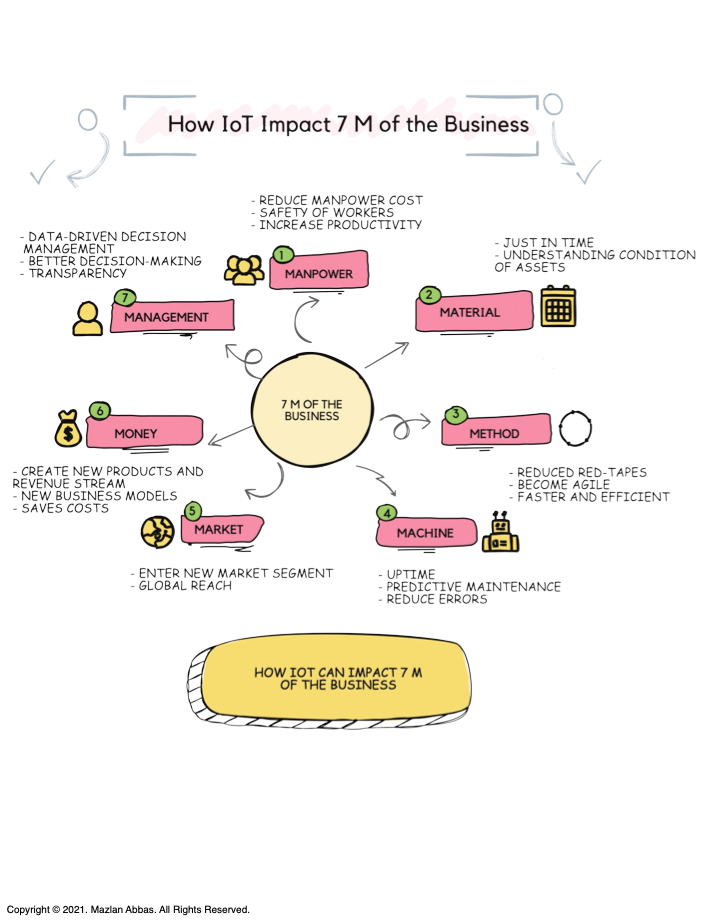
Today, we’ll explore how the Internet of Things (IoT) transforms the 7 M’s of business — key elements that drive an organisation’s operations and strategy.
These 7 M’s are Manpower, Material, Method, Machine, Market, Money, and Management. Let’s break down each one and see how IoT impacts them.

1. Manpower
IoT helps businesses optimise human resources by reducing costs, improving safety, and increasing productivity.
Impact of IoT:
- Cost Reduction: Automating repetitive tasks reduces the need for manual labour.
- Worker Safety: IoT devices, such as wearables, can monitor health and alert workers to potential hazards.
- Productivity: By enabling remote work and real-time communication, IoT allows employees to focus on high-value tasks.
Example: A construction company using wearables to monitor worker fatigue and ensure safety.
2. Material
IoT ensures better management of materials, improving supply chain efficiency and reducing waste.
Impact of IoT:
- Just-In-Time Delivery: Sensors track inventory levels and automatically reorder materials when needed.
- Asset Condition Monitoring: IoT devices monitor the condition of materials, ensuring quality and preventing spoilage.
Example: A warehouse using IoT sensors to track stock levels and ensure optimal storage conditions.
3. Method
IoT makes business processes more agile and efficient by simplifying methods.
Impact of IoT:
- Reduce Red Tape: Automating workflows eliminates unnecessary administrative steps.
- Agility: IoT enables businesses to respond quickly to changing conditions.
- Efficiency: Processes become faster and more streamlined with IoT integration.
Example: A manufacturing plant automating quality checks with IoT sensors to speed up production.
4. Machine
IoT maximises the performance of machines, ensuring reliability and reducing downtime.
Impact of IoT:
- Uptime: Predictive maintenance ensures machines are operational when needed.
- Predictive Maintenance: IoT sensors detect issues before they become critical, preventing failures.
- Error Reduction: Machines can self-correct or alert operators when errors occur.
Example: A factory using IoT-enabled machinery to monitor performance and schedule maintenance.
5. Market
IoT helps businesses expand into new markets and improve their customer reach.
Impact of IoT:
- New Market Segments: IoT enables innovative products and services, opening new revenue streams.
- Global Reach: Businesses can monitor and manage operations worldwide through IoT platforms.
Example: An IoT-enabled home security company entering international markets with smart security systems.
6. Money
IoT creates new revenue opportunities and reduces costs.
Impact of IoT:
- New Revenue Streams: IoT drives innovation, leading to new services and products.
- Cost Savings: Automating processes and improving efficiency reduces expenses.
Example: A logistics company saving fuel costs by using IoT to optimise delivery routes.
7. Management
IoT improves decision-making through data-driven insights.
- Impact of IoT:
- Data-Driven Decisions: Real-time data helps managers make informed choices.
- Transparency: IoT provides visibility into all areas of the business.
- Better Decision-Making: Analytics from IoT systems offer actionable insights.
Example: A retail chain using IoT to monitor sales trends and optimise inventory.
Key Takeaways
IoT has a transformative impact on the 7 M’s of business:
- Manpower: Reduces costs and improves safety.
- Material: Ensures quality and efficiency.
- Method: Simplifies workflows and increases agility.
- Machine: Enhances reliability and performance.
- Market: Expands opportunities globally.
- Money: Generates new revenue and reduces costs.
- Management: Improves decisions with real-time insights.
Discussion Question: Which of the 7 M’s most benefits from IoT in your industry? Let’s share ideas and examples!
Types of Analytics
Today, we’ll discuss types of analytics and their importance in turning raw data into actionable insights.
This diagram shows four types of analytics, ranked by their difficulty level and the value they provide. Let’s go through them step by step.

1. Descriptive Analytics: What Happened?
At the base of the analytics hierarchy is descriptive analytics. This is the simplest form of analytics and helps us understand what happened by interpreting historical data.
- Purpose: To summarise past events and identify patterns.
- Example: A smart thermostat that shows last week’s energy usage patterns.
- Methods: Charts, graphs, and dashboards that clearly show past performance.
This type of analytics is great for reviewing the past, but it doesn’t tell us why something happened or what will happen next.
2. Diagnostic Analytics: Why Did It Happen?
Moving up, we have diagnostic analytics, which looks at why something happened. It’s more complex than descriptive analytics because it requires diving deeper into the data.
- Purpose: To discover relationships and identify the causes behind past events.
- Example: Analysing why a specific day’s energy usage was higher than average by correlating data with external factors like weather.
- Methods: Data discovery, drill-down techniques, and correlation analysis.
This stage helps us make sense of the past by understanding the root causes of trends and anomalies.
3. Predictive Analytics: What Will Happen?
Next is predictive analytics, which focuses on forecasting future outcomes. This is where analytics becomes proactive rather than reactive.
- Purpose: To predict what might happen based on current and historical data.
- Example: A smart thermostat forecasting energy usage for the upcoming week based on weather patterns and past behaviour.
- Methods: Statistical modelling and simulations.
By identifying trends and patterns, predictive analytics helps us make informed predictions.
4. Prescriptive Analytics: How Can We Make It Happen?
At the top is prescriptive analytics, the most advanced type. This involves predicting outcomes and recommending actions to achieve desired results.
- Purpose: To decide the best course of action based on predictions.
- Example: A smart thermostat automatically adjusting settings to save energy while maintaining comfort.
- Methods: Machine learning and AI to analyse probabilities and make decisions.
Prescriptive analytics provides the highest value by enabling automated and data-driven decisions.
IoT and Analytics
This diagram also highlights how analytics works in an IoT platform:
- Sensors: Collect data from various sources like temperature, humidity, or movement.
- IoT Platform: Acts as a central hub to process and store the data.
- Analytics Engine: Applies these four types of analytics to generate insights and drive decisions.
Final Thoughts
Each type of analytics builds on the previous one, moving from simple data interpretation to actionable decisions. The value increases as we move up the hierarchy, as does the complexity.
Question to consider: Which type of analytics is most valuable in your industry, and how can you implement it effectively? Let’s discuss it!
[Note: Download IoT Notes by Mazlan Abbas ]
“Mastering IoT with Favoriot” – My Third eBook Within One Month
Never in my wildest dreams did I think I’d become an author of multiple eBooks, let alone publish three in just a month. My latest journey in writing has been nothing short of a whirlwind, and I’m here to tell you how I managed it — and how you can follow suit.
Let me pull back the curtain on my writing process. It’s surprisingly straightforward and something you can replicate. My strategy was simple: I curated the best articles from my blog and transformed them into eBooks. No magic, just a bit of hard work and smart repurposing of content I already had.
The first eBook I launched was “My Startup Survival,” a personal narrative about my foray into entrepreneurship. The cover was a simple Canva creation, but it conveyed the essence of my startup journey. This book was a labor of love, a reflection on the trials and triumphs of building something from the ground up.
The second was “IoT: A Beginner’s Guide,” initially titled “IoT Frontier.” It took me two years to overcome my procrastination and finally get it out there. This eBook was a deep dive into the Internet of Things, written to demystify the field for newcomers.
But the third, “Mastering IoT with Favoriot: A Comprehensive Guide for Businesses and Educational Institutions,” is the one I’m most proud of. I decided to offer it for free, a gesture to share knowledge and empower others.
This book isn’t just a guide; it’s an expedition into the world of IoT platforms. It starts with the basics, explaining why on-premise IoT platforms are critical for deployments. Then, it compares various IoT platforms to help decision-makers choose the right one for their needs.
The heart of the book is the in-depth exploration of the Favoriot IoT Platform. I break down its plans, capabilities, and how businesses and developers can leverage it for their IoT projects. But I don’t stop there. The book also offers practical guidance on crafting IoT solutions, reducing development time, and tailoring platforms to specific verticals.
I delve into the role of IoT in education, arguing for its integration into university curriculums to prepare future developers. Case studies sprinkle the book, bringing the theories to life with real-world applications.
By the end, I hope to leave readers with a clear understanding of IoT’s transformative power across various sectors, championed by platforms like Favoriot.
So, if you’re a business leader, an IoT developer, or an educator, “Mastering IoT with Favoriot” is penned for you. It’s a blend of theoretical insights and actionable advice, all aimed at harnessing the potential of IoT.
And there you have it, the story of how I published three eBooks in a month. If I’ve sparked a curiosity in you about IoT or writing, I invite you to read my guide. It’s more than just a book; it’s a blueprint for innovation in the IoT landscape.

I Changed My Book Title Twice – Here’s Why It Happened

Why I Changed the Title of My eBook: From “IoT Adventure” to “IoT Frontier” and Finally to “IoT: A Beginner’s Guide”?
A Reflection on the Power of SEO and Keywords in Book Titles
When I first launched my eBook on the intriguing world of the Internet of Things (IoT), I titled it “IoT Adventure.”
It seemed fitting at the time, a title that conveyed the excitement and exploration in the burgeoning field of IoT.
However, not long after, I made a decision to rename it to “IoT Frontier.” The shift was subtle yet significant, representing a more pioneering spirit. But then, a crucial realization dawned on me: the power of SEO and the right keywords in a book title.
In the digital age, where eBooks compete in a vast ocean of online content, the right title can be the difference between being discovered or remaining invisible.
This understanding led me to reevaluate my choice. “IoT Adventure” was catchy, and “IoT Frontier” had a ring of innovation, but did they encapsulate the essence of the book in a way that would resonate with potential readers searching online?
It was then that I decided to change the title again, this time to “IoT: A Beginner’s Guide.”
This title wasn’t just a label; it was a strategic choice.
The term “Beginner’s Guide” is widely searched by novices in any field, and incorporating it into the title immediately made the book more discoverable to my target audience.
It was a lesson in SEO – Search Engine Optimization – and the importance of keywords.
Choosing “IoT: A Beginner’s Guide” wasn’t just about tapping into popular search keywords.
It was a deliberate move to align the book’s title with what it truly offers – a comprehensive, accessible introduction to IoT for beginners.
This title clearly defines the book’s target audience and content, making it more likely to reach those seeking a starting point in their IoT journey.
In retrospect, the evolution of my book’s title reflects a deeper understanding of the digital marketplace.
While “IoT Adventure” and “IoT Frontier” were titles I was emotionally attached to, “IoT: A Beginner’s Guide” was a decision driven by pragmatism and a clear vision of my audience’s needs.
This journey in renaming my eBook taught me a vital lesson about digital content strategy.
It’s not just about what you write; it’s also about how you present it to the world.
The right title acts as a beacon, guiding the right readers to your work. It’s a blend of art and science, creativity and analytics.
To other authors and content creators, my advice is this: consider not only what your title says about your content but also how it will perform in the vast, competitive world of online search.
Your title is more than a name; it’s your first, and perhaps most crucial, marketing tool.
[eBook] IoT Frontier: Insights and Innovations in Malaysia and Beyond by Mazlan Abbas
Why You Should Read This eBook
“IoT Frontier: Insights and Innovations in Malaysia and Beyond” serves as a seminal exploration of the interplay between technology and daily life, placing special emphasis on the Internet of Things (IoT) — a cornerstone of contemporary innovation reshaping global industries, urban landscapes, and day-to-day living.
Entering the year 2024, the book captures the essence of an ongoing digital renaissance, primarily propelled by IoT advancements. It offers an in-depth look at these developments, particularly highlighting Malaysia’s role in the narrative, which acts as a crucial case study for IoT’s influence in emerging economies.
In the first section, “IoT Foundations and Future Visions,” the book establishes a baseline understanding of IoT’s present status and its expansive future potential. It delves into the skills necessary for capitalizing on IoT and scrutinizes its integral role in the Fourth Industrial Revolution. Furthermore, it addresses the burgeoning ethical considerations in AI, pivotal as we progress towards increasingly intelligent solutions.
The second section provides a comprehensive analysis of Malaysia’s IoT sector, enriched with case studies and broader trend insights. It showcases how IoT solutions have been effectively applied in real-world scenarios, such as managing the Ammonia Gas Leak at the PJ Ice Factory, thereby illustrating IoT’s practical utility.
The third section focuses on the intricacies of IoT platforms, with a particular lens on Favoriot, a leading name in the IoT industry. This part is crafted to aid enthusiasts, developers, and enterprises in making informed choices about IoT platform selection and use.
Sections IV and V take the reader through IoT’s transformative effects in specific fields such as industry, agriculture, and city planning, highlighting the revolution brought about by IoT in these sectors through groundbreaking solutions and smart technologies.
The book then expands its scope in Sections VI to VIII, exploring IoT’s applications in consumer and health markets, confronting the challenges in IoT deployment, and emphasizing the importance of IoT education and training. These chapters underline the versatility of IoT applications and the hurdles encountered in their implementation.
In Sections IX and X, the book delves into the synergy between IoT and AI and offers strategic business insights within the IoT sphere, providing a foresight into a future shaped by these interwoven technologies.
The penultimate section presents exclusive interviews with industry leaders, offering rare insights, while the final section takes a global perspective, examining worldwide IoT initiatives and their implications.
“IoT Frontier: Insights and Innovations in Malaysia and Beyond” is not merely a book; it is an extensive expedition through the IoT landscape. It aims to provide a holistic understanding of IoT’s potential, challenges, and future direction, catering to students, professionals, entrepreneurs, and IoT aficionados alike.

You can download the preview/sample ebook – HERE.