The Silent Test of Friendship

Some truths hurt more than lies.

Most of your friends aren’t really your friends.

They show up when it’s fun.

When you’re winning.

When you’re useful.

But when the music stops, and the room goes quiet, you suddenly see how empty it really is.

Real friends are not measured by convenience.

They’re measured by sacrifice.

By the calls they make when you’ve gone silent.

By the seat they pull up when everyone else has walked away.

I’ve learned this the hard way.

You can lose status, money, health, or direction—and watch the crowd scatter.

But the few who remain, those are your people.

Find them.

Hold onto them.

Be that kind of friend to someone else.

Because in a world full of masks, true friendship is the rarest kind of wealth.

What’s the hardest lesson you’ve learned about friendship?

The Founder Truth No One Tells You

When I co-founded FAVORIOT, I thought the most significant milestones would define me.
The first product launch.
The first government pitch.
The first international partnership.

But what I didn’t expect was how much the mistakes would shape me.

We once lost a tender even though our platform was MySTI certified.
We thought the badge would speak for itself.
It didn’t.
That mistake taught me that credibility means nothing without persistence.

We built features no one used.
We learned that listening to customers is more valuable than perfecting technology in isolation.

We expanded too fast into areas we weren’t ready for.
It humbled us to narrow focus, to build depth before breadth.

Every scar carried a lesson.
Every stumble forced me to shed arrogance and grow resilience.

Achievements bring applause.
But mistakes bring wisdom.
And in the long run, wisdom is what keeps a startup alive.

FAVORIOT isn’t standing today because of my victories.
It’s standing because the mistakes taught me how to rebuild stronger.

A mistake that humbles a founder will always be worth more than an achievement that blinds him with arrogance.

That’s the truth I carry as IoT Man.

What was the one mistake that humbled you but transformed your journey?

Builders Talk Ideas, Not People

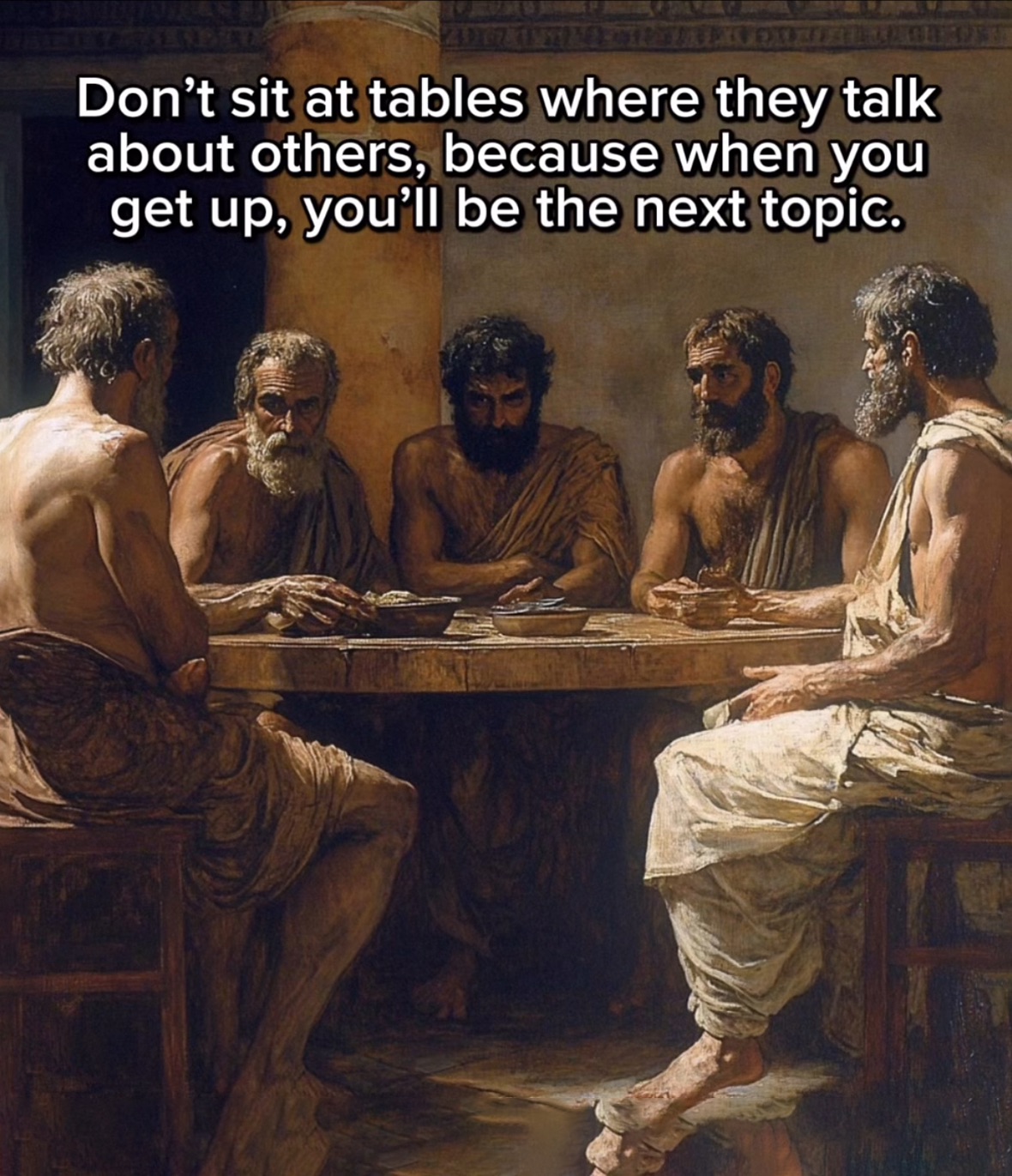
Some tables are not worth sitting at.

If the main dish is gossip, you will eventually be served too.

I’ve learned this the hard way.
The moment you join conversations built on tearing others down, you’ve already handed people permission to do the same to you.

Today they whisper about someone else.
Tomorrow, when you leave, it will be your name on their lips.

The truth is, people who thrive on gossip are not builders.
They don’t lift others.
They don’t create value.
They survive by dragging others down to their level.

And here’s the danger.
If you spend long enough at that table, you start to become one of them.
You start confusing cynicism for wisdom.
You start thinking that mocking others makes you smarter.

But leadership is not about joining the noise.
It’s about rising above it.

The best leaders I’ve met don’t waste energy dissecting people.
They invest energy in developing people.
They don’t talk behind backs.
They speak face-to-face with honesty.

So choose your tables wisely.
Sit with those who challenge you to grow.
Sit with those who speak of ideas, of visions, of solutions.
Sit with those who make you leave the table feeling bigger, not smaller.

Because who you surround yourself with will either shape your future
or slowly poison it.

My advice is simple.
Walk away from the gossip table.
Find the builders.

That’s where the real conversations are.

Why Favoriot’s Vision to Democratize IoT Matters

What if the future of technology wasn’t just controlled by a handful of giants, but built by thousands of creators everywhere?

That’s the vision we carry at Favoriot. Not a future where IoT is locked away in labs, hidden behind paywalls, or restricted to enterprises with deep pockets. But a world where every student, every startup, every dreamer with an idea can create, test, and scale their own IoT solutions.

I often ask myself, why should the power of IoT belong to only a few?

The truth is that IoT has the potential to transform every aspect of our lives, from smart cities that breathe with data, to farms that thrive with precision, to factories that learn and improve with every machine cycle. However, the doors to building IoT are often closed by complexity, cost, and exclusivity.

That’s why Favoriot exists.

IoT Shouldn’t Be an Exclusive Club

I’ve been in the tech industry long enough to know this: many brilliant ideas die before they even take their first breath. Why? Because the entry barrier is too high.

I’ve seen students with incredible IoT project ideas get stuck because they couldn’t afford expensive platforms. I’ve watched startups burn months trying to stitch together incompatible systems, only to give up before their product reached the market.

I thought to myself, what if we could change that narrative? What if we could open the gate wider?

Favoriot’s vision is simple yet powerful — to democratize IoT. To build a platform that doesn’t intimidate but empowers. One that invites creators instead of scaring them off.

Building More Creators, Not Just More Users

Most platforms are designed to create more users. But Favoriot is designed to generate more creators.

That difference matters.

Being a user means consuming what someone else has built. Being a creator means shaping the future, solving your own problems, and building solutions that matter to your community.

At Favoriot, we want a high school student in Johor to build a smart agriculture project that could feed her village. We want a startup in Manila to prototype a healthcare monitoring device without relying on investors for funding. We want universities in Africa to launch IoT labs that not only teach theory but also create real projects that positively impact lives.

This is not about numbers. This is about empowerment.

The Favoriot Platform: More Than Just Tech

Yes, Favoriot is a platform. It’s a cloud-based IoT engine that connects devices, collects data, and helps you make sense of it. But to me, it’s more than that.

It’s a bridge.

A bridge between ideas and reality. Between imagination and execution. Between a world where IoT is for the privileged few and a future where IoT belongs to everyone.

When we built Favoriot, we made a conscious choice: simplicity, openness, and accessibility. No vendor lock-ins. No hidden traps. Just a space where your IoT journey can grow from blinking an LED to managing a smart city.

I smiled when one of our users once told me, “Favoriot is like training wheels for IoT — it helps us ride until we’re ready to pedal on our own.”

That’s exactly how I see it.

A Vision Rooted in Humanity

For me, democratising IoT is not just about technology; it’s also about empowering people. It’s about humanity.

Imagine if every farmer could monitor their crops in real time. Imagine if every doctor in rural areas had access to patient data at their fingertips. Imagine if every student, regardless of their location, could create something that addresses real-world problems.

That’s the kind of future I want to see.

I know it won’t be easy. Change never is. There will always be resistance from those who benefit from keeping technology closed, complicated, and expensive. But I also know this — the world has always moved forward when ordinary people were given extraordinary tools.

Why Now?

Because the world cannot wait.

IoT is no longer a buzzword; it’s the nervous system of modern life. From the cars we drive to the homes we live in, from the energy grids that power us to the health systems that save us, IoT is everywhere.

But here’s the catch: if only a few can create, then only a few will shape that future. And that, to me, is unacceptable.

We need diversity. We need creativity. We need more voices, more perspectives, more hands building solutions. And that only happens when IoT is democratized.

Closing the Gap Between Dream and Reality

Every time I see a young innovator upload their first data stream into Favoriot, I feel a surge of hope. It’s not just data flowing into the cloud — it’s dreams taking shape.

Every time a small business uses Favoriot to track their machines and reduce downtime, I see a glimpse of the future economy.

Every time a teacher tells me their students used Favoriot to complete a project that once felt impossible, I’m reminded of why we started this journey.

The gap between dream and reality doesn’t have to be wide. Favoriot is here to close it.

The Future We Want to Build

I don’t just want to build a successful company. I want to create an ecosystem. A movement. A community of creators who believe that IoT is not just for the rich, the powerful, or the technically elite.

I want Favoriot to be remembered not just as a platform, but as a turning point. The moment when IoT stopped being a privilege and began to become a right.

I thought to myself, maybe the true legacy of Favoriot isn’t the platform we built — but the creators we inspired.

And that’s a future worth fighting for.

Leading LLMs of August 2025: Who’s Winning the AI Race?

If AI progress felt like a sprint in 2023, by 2025, it looks more like a rocket launch. Models aren’t just improving year by year—they’re leaping ahead month by month. What we thought was “cutting edge” last quarter is already yesterday’s news.

Here’s the reality: the global LLM market is surging toward $105.5 billion in North America by 2030. That’s not a forecast—it’s a signal. AI is no longer a novelty; it’s infrastructure.

But with so many options, which models actually matter right now? Which ones are shaping the way businesses, developers, and researchers use AI today?

I’ve rounded up the 10 large language models making the most significant impact in August 2025. Each one has its own unique personality, strengths, and trade-offs.

1. OpenAI – GPT-5

ChatGPT 5 is the next step in OpenAI’s journey, moving beyond GPT-4.5’s strengths to deliver a model that feels sharper, more adaptive, and more transparent in its reasoning. Where GPT-4.5 leaned heavily on pattern recognition, ChatGPT 5 combines that fluency with stronger deliberate reasoning, giving it the ability to break down problems with more structure and clarity.

It is also built to integrate more smoothly into real workflows. From handling long-form context with greater accuracy to providing clearer explanations of its answers, ChatGPT 5 is less about simply generating text and more about acting as a reliable partner. The model handles multimodal input—text, images, audio, and video—with greater fluidity, making it useful across industries from education to enterprise automation.

Like its predecessor, ChatGPT 5 remains proprietary, available through subscriptions or enterprise licensing. But for teams that want both conversational polish and deeper reasoning ability in one package, ChatGPT 5 has quickly become the new reference point.

2. DeepSeek – The Open-Source Challenger

China’s DeepSeek R1 took the AI world by storm with 671B parameters in a Mixture-of-Experts setup. By May 2025, their DeepSeek-V3 was leading the open-source leaderboard, proving that open models can compete head-to-head with proprietary giants.

The magic? 30 times cheaper than OpenAI’s o1 and 5 times faster. It thrives in reasoning-heavy tasks like math, coding, and scientific simulations. And with RAG integration, enterprises can plug it into sensitive datasets while maintaining control.

If you want open-source power with enterprise-level results, DeepSeek is redefining the game.

3. Qwen – Alibaba’s Efficiency Master

Alibaba’s Qwen 3 family is quietly powering industries across Asia. Their standout, QwQ-32B, rivals GPT-4o and DeepSeek in reasoning and coding while requiring far less compute.

With 32K context windows, Apache 2.0 licensing, and a parameter range from 1.8B to 72B, Qwen has become one of the most accessible and widely adopted LLM ecosystems. Already, over 90,000 businesses use it for gaming, consumer electronics, and enterprise workflows.

Qwen proves you don’t need hyperscale resources to compete at the highest level.

4. Grok – Elon Musk’s Conversational Rebel

Built by xAI and integrated into the X platform, Grok 3 feels different. It’s witty, fast, and plugged into real-time information.

With Think, Big Brain, and DeepSearch modes, it breaks down problems and pulls fresh data directly from the web and social feeds. Trained with 10x the compute of Grok 2, it’s designed for speed and trend awareness.

If your world demands live analysis, news tracking, or instant customer interaction, Grok brings something truly unique.

5. Llama – Meta’s Open-Weight Titan

Meta’s Llama 4 arrived in April with two flagship versions: Scout and Maverick. Both are natively multimodal, handling text, images, and short video, and they boast 256K token context windows.

The openness of Llama remains its secret weapon. Businesses and researchers can run it on their own terms, tune it to specific workflows, and avoid vendor lock-in.

If freedom and flexibility matter most, Llama is the open-source heavyweight to trust.

6. Claude – Anthropic’s Reflective Thinker

Anthropic’s Claude 4 Sonnet is like the careful colleague who always double-checks their work. Its extended thinking mode allows the model to pause, reflect, and refine outputs before committing.

With a 200K-token context window, it handles long documents with ease, making it a natural fit for legal analysis, compliance-heavy industries, and coding projects that need extra accuracy.

If reliability is more important than speed, Claude delivers consistency and thoughtfulness.

7. Mistral – Small but Mighty

Sometimes you don’t need a massive model—you need one that’s fast and affordable. Enter Mistral Small 3.

With 24B parameters, Apache 2.0 licensing, and speeds up to 150 tokens per second, it’s optimised for low-latency applications. The kicker? You can run it on a single GPU or even a MacBook.

For startups and lean businesses, Mistral proves that small models can pack a punch.

8. Gemini – Google’s Reasoning Powerhouse

Google’s Gemini 2.5 is pushing boundaries with a 1M-token context window. That means it can process entire books or databases in one shot.

It’s multimodal, handling text, images, and code, and comes with self-fact-checking to reduce hallucinations.

It’s proprietary, so data compliance matters, but if you want enterprise-grade multimodality and serious reasoning, Gemini is one of the most advanced options on the market.

For those preferring open weights, Google’s Gemma 3 (1B–27B) brings much of the same reasoning strength in a lighter package.

9. Command R – Cohere’s Enterprise Specialist

Cohere isn’t trying to win the hype war—it’s focused on enterprise workflows. Their Command R+ offers 128K context windows, built-in citations, multilingual coverage, and retrieval-augmented generation.

It excels at policy manuals, compliance-heavy industries, and multilingual customer service. And for companies needing control, Command A is open-sourced at 111B parameters with 256K context support.

For enterprises where accuracy and compliance come first, Cohere is a trusted partner.

10. Falcon – The Middle Eastern Power Play

From the Technology Innovation Institute (TII) in Abu Dhabi, Falcon has emerged as one of the strongest open-weight LLMs outside the US, China, or Europe.

The latest version, Falcon 2, boasts multilingual capabilities, optimised efficiency, and open-access licensing. It’s trained on a diverse dataset with an emphasis on global inclusivity, making it particularly strong in Arabic and other underrepresented languages.

What makes Falcon stand out is its mission: bringing AI sovereignty to regions that often depend on Western or Chinese tech. By providing a robust open-source model, Falcon gives governments, universities, and enterprises across the Middle East a homegrown alternative.

If AI diversity and regional sovereignty are important to you, Falcon is an LLM worth watching closely.

Closing Thoughts

Ten models. Ten different approaches to the future of AI.

  • OpenAI and Gemini lead with polished, proprietary power.
  • DeepSeek, Qwen, Llama, and Falcon prove open-source can compete and even outpace.
  • Claude and Cohere focus on reliability and compliance.
  • Mistral and Grok carve out niches in speed, agility, and personality.

The bigger question isn’t “Which is the best?” but “Which one is the best fit for you?”

AI in 2025 is not a single path—it’s a crossroads with ten directions. And whichever road you choose, the destination is changing how we work, build, and think.

Now I’d love to hear from you. Which of these ten models do you think will dominate the AI race by 2030—and why? Share your thoughts in the comments.

Persistence: The Fuel That Turns Vision Into Reality

Have you ever stood at the edge of giving up?

That suffocating moment when the dream feels too heavy, the journey too long, and the silence around you too loud. I’ve been there more times than I can count.

And yet, here I am, still standing, still pushing after more than eight years of building a vision that most people would have abandoned years ago.

Sometimes people ask me, “Dr. Mazlan, why didn’t you quit when things got so tough?”

The truth? The answer isn’t glamorous. It’s one word—persistence.

But persistence isn’t about being stubborn for the sake of it. It’s about believing when no one else does. It’s about showing up when there’s no applause. It’s about carrying your vision through the storms until the sun finally breaks through.

The Myth of Overnight Success

When I co-founded Favoriot, I thought we’d take off quickly. IoT was the future, and I believed Malaysia deserved its own platform—not just to use what others built, but to create something we could own.

“Don’t worry,” I told my co-founders, full of fire. “We’ll get traction quickly. People are waiting for this.”

But reality humbled me. Months passed, and the inbox stayed quiet. Investors questioned, “Why should we use you when AWS or Azure already exist?” Potential partners replied, “Maybe in two years, but not now.”

It was then I learned a hard truth—success doesn’t show up just because you have passion.

I held onto the analogy of the Chinese bamboo tree. For five years, nothing grows above the soil. You water, you nurture, but it looks like failure. Then, in the fifth year, it shoots 80 feet in six weeks. Did it grow in six weeks? No. It grew all along, underground.

I told myself, “Mazlan, your roots are forming. Keep watering. Don’t stop now.”

Climbing the Mountain: The Payroll Nights

Building a startup is like climbing a mountain with a backpack full of rocks. At first, it feels exciting, the summit visible in the distance. But the higher you climb, the thinner the air gets, the heavier your steps feel, and the more your mind whispers, “Why are you doing this to yourself?”

I remember one night, staring at the payroll deadline. The numbers didn’t add up. My wife looked at me, concerned.

“Will you be okay?” she asked softly.

“I’ll make sure the team is paid first,” I told her. “I can delay mine.”

And I did. Many times. I told my team, “Don’t worry, your salaries are safe.” What I didn’t tell them was that I had already decided not to take mine.

Alone in the car one evening, I gripped the steering wheel and asked out loud, “Mazlan, are you crazy? Should you just walk away?”

But then I thought of the students already building their first IoT dashboards on Favoriot. They believed in us. And if they could, how could I not?

So I kept climbing.

The One-Inch-to-Gold Fear

In those early days, Favoriot didn’t have slick onboarding or automation. Every time a customer signed up, I personally emailed them their password. Manually. One by one. At midnight.

I muttered to myself, “Mazlan, you’re the CEO and you’re sending passwords? Really?”

But then another voice inside answered, “This is what it takes. One day, this story will remind you how far you’ve come.”

I was terrified of quitting one inch too soon. What if the next signup was the one that led to a breakthrough? That fear kept me going.

The Sweet Breakthroughs

And persistence began to pay off.

The first time a university adopted Favoriot into its syllabus, I stood in front of students who proudly showed me their projects built on our platform.

“Sir, I built this using Favoriot,” one student said, his eyes glowing.

I smiled, swallowing the lump in my throat. Mazlan, this is why you never gave up.

Then the calls came—from the Philippines, Indonesia, Canada. Partners wanted to represent Favoriot in their countries. One told me, “We believe in what you’re building. Malaysia deserves its own IoT platform.”

That day, I thought, The world is finally starting to see what you’ve been watering all along.

The Loneliness of the Journey

But let’s be real. Persistence is often lonely.

I watched friends climb corporate ladders with stable incomes and shiny titles while I kept chasing an uncertain dream. Some nights, after a string of rejections, I sat in the empty office and asked aloud, “Why am I doing this?”

And in the silence, a voice answered, “Because ordinary is not your path. You chose extraordinary.”

Holding On at the Cliff’s Edge

At times, running Favoriot felt like hanging from a cliff by a single branch.

“Hold on, Mazlan. Just a little longer,” I told myself, arms trembling.

And many times, just before I thought I couldn’t hold on anymore, something appeared. A small deal. A partner. A media feature. Each was like a hand pulling me up just enough to keep going.

Those moments only came because I didn’t let go too soon.

The Magic of Persistence

Over time, I’ve realized persistence is like compound interest. It doesn’t look like much in the short term, but every small action adds up until one day the results are undeniable.

One night, after yet another long day, I told my team:

“We may not see results tomorrow or next month. But every single effort is stacking up. When the breakthrough comes, people will call us lucky. But we’ll know—it wasn’t luck. It was persistence.”

The Beauty of Endurance

Persistence doesn’t just take you to your dream. It transforms you into someone capable of carrying it.

Rejections toughened me. Delays humbled me. Small wins filled me with gratitude.

Now when people ask, “Why didn’t you quit?” I smile and say, “Because persistence made me the person who could carry the vision.”

3 Lessons on Persistence That Changed My Life

After years of walking this road, I’ve realized persistence isn’t just mindset—it’s practice. Here are the three lessons I’ve carried with me:

1. Success Grows Underground Before It Shows Above

Like the bamboo tree, most growth is invisible. Don’t mistake silence for failure. The roots are strengthening.

2. Persistence Is Built One Small Action at a Time

It’s not the grand gestures, but the daily grind. For me, it was manually emailing passwords or pitching after a hundred rejections. Each small action compounds.

3. The Breakthrough Always Comes After the Breaking Point

The darkest nights often come just before the dawn. If it feels impossible, you’re probably closer than you think.

Your Turn

So let me ask you: are you on the verge of giving up? Does your mountain feel endless, your gold unreachable, your cliff too high?

Maybe this is your reminder. You might be one step away. One email away. One inch away.

Don’t stop now. Keep digging. Keep climbing. Keep holding on.

Because persistence might just be the key that turns your vision into reality.

And now I’d love to hear from you. Have you ever had a moment where persistence finally paid off? Or maybe you’re still watering your own bamboo tree, waiting for the breakthrough? Share your story in the comments—I’d love to walk this journey with you.

If They Don’t Trust You, They’ll Never Buy From You

Why Trust is the Real Product You’re Selling (and How Marketing Builds I

Let’s cut straight to it.

You could have the best solution on the planet. The smartest AI. The most beautiful dashboard. A deal they’d be crazy to ignore.

But if they don’t trust you?

Game over.

That’s the truth most salespeople and founders don’t want to hear. You don’t lose sales because your product lacks features. You lose because your buyer doesn’t feel safe saying “yes.”

Let that sink in.

You’re Not Selling a Product — You’re Selling Trust

Every time someone signs on the dotted line, they’re taking a leap of faith. Into the unknown. Into the hands of your promises.

And that leap?

It only happens when trust is strong.

If you’re struggling to close deals, here’s your wake-up call — it might not be your price. It’s your credibility.

So how do you fix it?

Let’s start by understanding how trust works across the entire sales cycle.

1. Trust Speeds Everything Up

Without trust, every step in your sales process feels like a slow crawl. Every email takes longer to reply to. Every objection drags on. Every meeting ends with “We’ll think about it.”

But with trust?

Things move fast.

Buyers stop nitpicking. They start nodding. They say “yes” before you finish the pitch. Why? Because they’re not just buying what you do — they’re buying who you are.

You’re not just another vendor anymore. You’re the one they believe in.

2. Trust Makes You the Safe Bet

Let’s be real — nobody understands your tech as much as you do. Most buyers don’t get how your backend system works or what your AI algorithm is doing behind the scenes.

They’re not buying your code. They’re buying confidence.

“I don’t fully get what this does… but I trust you’ll make it work for us.”

That right there? That’s the golden ticket.

If you can be the trusted guide — the one who explains things clearly, sets real expectations, and never overpromises — you become the safest decision they’ve ever made.

3. Trust Wins the Long Game

Deals don’t end at the sale.

What happens after is what builds your reputation.

When things go sideways — and they will — your response matters more than your roadmap. When customers trust you, they stay even when things get tough. They refer others. They become evangelists.

And that kind of loyalty?

It’s not bought with discounts. It’s earned with integrity.

So, Where Does Trust Begin?

It doesn’t start in the pitch deck.

It starts way earlier — with your marketing.

Yes, marketing builds trust before sales even says hello.

Here’s how.

4. Marketing Sets the Tone Before You Even Enter the Room

Think about the last time you Googled a company. What made you stay? A clean website? Great reviews? A few helpful blogs?

Or did you bounce the second you saw a clunky layout and an outdated logo?

Exactly.

Your prospects are doing the same.

Marketing is your first handshake — your first “hello.” And it better say:
“We know what we’re doing. We’ve done this before. You’re in good hands.”

That’s not just branding. That’s trust-building.

5. Content Builds Trust at Scale

You don’t need to be everywhere. But you do need to show up where it counts.

Every blog post. Every case study. Every video tutorial. Every helpful LinkedIn post.

They all add bricks to your trust wall.

Even if someone’s not ready to buy today, they’re watching. And when the time comes? They’ll remember you as the one who actually cared to educate them, not just sell to them.

6. Your Personal Brand is a Trust Magnet

People don’t trust logos.

They trust people.

You showing up as a thought leader — on LinkedIn, podcasts, panels — makes all the difference. Share your journey. Your failures. Your honest thoughts about the industry.

Don’t try to be a polished robot.

Be human.

When you do, people will say:
“I don’t just want the product — I want to work with YOU.”

That’s when you’ve won.

7. Great Marketing Shows, Not Tells

Stop saying, “We care about our customers.”

Start proving it.

Give value before you ask for anything:

  • Share insights your competitors gate behind forms
  • Run webinars that teach, not just pitch
  • Respond to DMs with care and speed
  • Celebrate your customers’ success more than your own

Because when your marketing is rooted in generosity, trust becomes your default currency.

Sales and Marketing: One Team, One Mission

If your sales team is hustling but the leads are cold, there’s a disconnect.

Marketing should be paving the road before sales even shows up.

That means:

  • Sharing real customer success stories
  • Addressing objections through blog posts and videos
  • Keeping your message consistent across every touchpoint
  • Making sure your promises match your delivery

When both teams work together to build trust, magic happens.

Your Competitive Advantage? Trust.

At the end of the day, buyers will always ask themselves:

“Can I trust this person with my time, money, and reputation?”

If the answer’s no — they walk.

If the answer’s yes — they buy.

So don’t just optimise your sales funnel.
Don’t just build a smarter chatbot or a flashier website.

Build trust.

And do it in every word you say, every promise you make, every story you share.

Because trust isn’t just part of the sales cycle.

It is the sales cycle.

Now go earn it.

Why Writing in a Storytelling Manner Resonates with Most People: A Personal Reflection

Have you ever noticed how your eyes light up and your ears perk when someone begins a sentence with, “Let me tell you a story…”? I’ve seen this countless times — in conferences, casual chats over coffee, and even in my blog’s comment section. There’s something magical about stories. And over the years, I’ve discovered that writing in a storytelling manner doesn’t just make my articles more enjoyable to write — it makes them more impactful, relatable, and memorable to readers.

But why? I asked myself this question many times, especially when I first started blogging. I thought, Isn’t it enough to just present the facts? Why bother weaving them into stories? What I’ve learned might surprise you — and it might just change the way you approach your own writing.

Let me share my journey with you.

The Human Brain is Wired for Stories

I remember reading somewhere that long before we had books, slides, or YouTube videos, we had storytellers sitting around fires. Storytelling wasn’t a hobby; it was a way to pass down knowledge, warn about dangers, and preserve culture. It’s deeply embedded in us.

When I began writing technical articles — especially about IoT, smart cities, or AI — I noticed that readers often skimmed through data-heavy sections. But when I shared a personal anecdote, like the time our prototype failed during a big demo, and how we scrambled to fix it before the client noticed, people paid attention. They messaged me. They shared the post.

Ah, I thought, it’s not the technology that draws them in. It’s the people behind the technology. It’s the struggle, the triumph, the humor, the heart.

Stories give context. Facts tell you what’s happening, but stories help you feel why it matters.

People Remember Feelings, Not Just Facts

I can’t count how many times I’ve given talks where I presented both data and a simple story. Months later, people would come up to me and say, “I still remember that story you told about building Favoriot in your small apartment!” But they rarely remembered the numbers or charts.

Why? Because stories tap into emotion. And emotion is the glue that helps information stick in our minds.

When you tell a story about a challenge you overcame, or a moment that changed your perspective, people see themselves in it. They feel the fear, the hope, the relief. And when they feel, they remember.

I often picture writing like planting seeds. If you scatter plain facts, they might sprout here and there. But if you wrap those facts in a story, it’s like planting seeds in rich, fertile soil — they’re far more likely to grow in the reader’s mind.

Storytelling Builds Trust and Connection

Okay Mazlan, I asked myself one day, why do I enjoy reading certain writers more than others? The answer came quickly: I feel like I know them.

When we write in a storytelling manner, we let readers into our world. We share a piece of ourselves — our doubts, our failures, our little victories. It humanizes us. And in this noisy digital world, where everyone is trying to shout louder, what people crave most is authenticity.

I’ve noticed that when I tell stories — whether about my early days juggling work and family, or about navigating the uncertain waters of startup life — readers open up too. They share their own stories in return. Suddenly, it’s not just a one-way broadcast. It’s a conversation.

Isn’t that what we really want? To connect, to feel heard, to know we’re not alone?

Stories Make Complex Ideas Simple

One of the biggest challenges I face in writing about IoT or AI is explaining complex ideas in ways that people can understand. I could talk about protocols, sensors, cloud architecture… or I could say:

“Imagine you’re a farmer with a chili plantation. You wake up, check your phone, and see that your soil sensors say the land’s too dry. Before the sun’s up, you’ve turned on the irrigation — no guesswork, no wasted water.”

Which one would you rather read?

Stories create mental pictures. And mental pictures help us grasp ideas faster and deeper. Whenever I see a puzzled face in the audience during a talk, I know it’s time to switch from facts to story mode. And almost always, I see that Aha! moment light up their eyes.

Storytelling Gives Your Writing Rhythm

I’ve read many articles that feel like chewing on dry crackers — all facts, no flavor. But storytelling adds rhythm. You can slow down at the emotional parts, speed up during the action, pause for effect, or even surprise your reader with an unexpected twist.

When I write, I sometimes imagine I’m telling the story aloud — like I’m sitting with a friend at a kopitiam, sipping teh tarik. Would I really say it like this? Or would I add a little humor, a dramatic pause, a knowing smile?

This rhythm keeps readers hooked. They want to know what happens next.

But What If I’m Not a “Natural” Storyteller?

I used to think that too. Mazlan, you’re an engineer, not a novelist! I’d tell myself. But storytelling isn’t about fancy language or perfect plots. It’s about honesty. It’s about sharing what you saw, what you felt, what you learned.

Start small. Instead of just stating, “Our project was delayed by two weeks,” tell what happened: “We thought we had it all figured out, until the sensor shipments got stuck at the port. I remember standing in the warehouse, staring at the empty shelves, wondering how I’d explain this to the client.”

See? Same fact — but now it’s alive.

My Final Reflection: Stories Are What Make Us Human

In my journey as a writer, technologist, and entrepreneur, I’ve come to see storytelling as not just a tool, but a responsibility. If I can make my readers feel, imagine, and connect — even for a few minutes — then I’ve done more than just write. I’ve reached across the digital void and touched a fellow human.

So, the next time you write — whether it’s a blog, an email, or even a product description — pause and ask yourself: What’s the story here?

Because in the end, we don’t just read to gather facts. We read to find ourselves in someone else’s tale. And that, my friend, is the power of writing in a storytelling manner.

I thought to myself as I finished this piece, “If even one reader smiles, nods, or feels inspired to tell their own story, then this was worth writing.”

Let’s keep telling stories — the world needs them more than ever.

We’re Not Just a Startup Anymore

Sometimes, people still introduce us like this:

“Oh, Favoriot? That IoT startup from Malaysia, right?”

And I pause for a second.

Yes, we were.

But are we still?

Let me rewind a bit.

Back in 2017, when we launched Favoriot, it was exactly that — a startup.

A handful of us.

One platform.

A dream to make IoT more accessible, especially for Southeast Asia.

Everything was lean, experimental, unpredictable.

Sometimes the server was more fragile than our optimism.

We pitched, we demoed, we chased leads — and celebrated every small win like it was a moon landing.

But today?

We’re in a different phase.

What Changed?

We’ve got paying customers.

Real ones.

Not just POCs or demos — but full deployments across smart cities, smart agriculture, education, and industry.

We’ve entered partnerships in Indonesia, the Philippines, Canada, India — and we’re not stopping there.

Our platform?

It’s no longer a prototype we hope works when someone opens their laptop.

It’s stable, scalable, and trusted by universities, enterprises, and city councils.

We even built Favoriot Academy — an education arm training hundreds (soon, thousands) of IoT-ready talents.

So, here’s the honest question I asked myself:

“Are we still a startup if we’re already delivering impact at scale?”

What We’ve Outgrown

The “startup” label carries a certain image.

You’re small. You’re scrappy. You’re still figuring things out.

But some things at Favoriot are no longer up for debate:

We know what we do best. We know who we serve. We know what pain points we solve.

We’re not constantly pivoting.

We’re focused on scaling what already works.

What We Still Keep

That said — we haven’t gone corporate.

We’re still fast.

We’re still experimenting.

We still believe in bold ideas and building things that matter.

We don’t have a long chain of decision-making.

You’ll still find me answering messages at odd hours, jumping into customer calls, and reviewing platform feedback with the team.

And we still have that fire — the same one we had when we first started.

So maybe we’re not a startup anymore…

But we’re not slowing down either.

So What Are We Now?

Some call this stage a scale-up.

Some say we’re an emerging tech company.

Others might call us a maturing platform player.

Me?

I say we’re still building.

Still growing.

Still proving that a Malaysian-born IoT platform can stand tall — and go global.

If you’re looking to partner with a company that’s lean enough to care but strong enough to deliver — we might be the right fit.

Not a startup.

Not a giant.

Just real people building real tech — one IoT solution at a time.

Let’s build the future together.

Why FAVORIOT Exists: The Deeper Purpose Behind Our IoT Mission

“Why do you do what you do?”

It’s a simple question — but one that hit me like a lightning bolt the first time I heard it posed by Simon Sinek in his book “Start With Why.” I thought I had the answer years ago when we founded FAVORIOT. We wanted to build an IoT platform. We wanted to be part of the Fourth Industrial Revolution. We wanted to make Malaysia proud.

But after reading Find Your Why, I realized I had only scratched the surface.

So I decided to go deeper. To strip away the features, the dashboards, the data streams — and ask myself, what is our true reason for being?

The Early Sparks: Frustration as Fuel

I spent decades in various ecosystems — from academia to government, corporates to startups. In every world, I saw the same problem repeat like a broken record: brilliant people with smart ideas were stuck because the technology was either too expensive, too complicated, or too foreign.

“Why are we importing tech for things we can build locally?”

“Why can’t our students graduate with real IoT skills, not just theories?”

“Why does every ‘Smart City’ pilot end with a press release but no long-term sustainability?”

Each “why” turned into fuel.

And that’s how FAVORIOT was born. Not from a business plan, but from frustration. From the belief that things should be simpler. That IoT shouldn’t be reserved for tech giants. That a kampung farmer, a Form 5 student, and a municipal engineer all deserve access to the same tools of transformation.

Understanding Our WHY

According to Find Your Why, every organization must uncover its purpose through reflection, story, and the impact it wants to make. It isn’t about what you do — it’s about why you do it.

And the format is simple yet powerful:

TO [your contribution] SO THAT [your impact].

So I asked myself:

  • What do we do when we’re at our best?
  • What makes us proud?
  • What kind of future do we want to build — not just for us, but for others?

Our WHY Statement

To empower people and organizations with accessible IoT technology, so that they can build smarter, connected futures on their own terms.

Let me unpack that for you.

“To Empower People and Organizations…”

We don’t just provide a dashboard.

We empower students to build their final year projects with confidence. We empower lecturers to teach IoT without needing an AWS certification. We empower entrepreneurs to launch sensor-based services. We empower city councils to detect flood risks, monitor waste bins, and receive alerts directly on Telegram — without vendor lock-ins or complex coding.

This empowerment comes in the form of:

  • A local, developer-friendly IoT platform (FAVORIOT Cloud)
  • Training and certifications via FAVORIOT Academy
  • Partnerships that build ecosystems, not just transactions

We’ve seen it firsthand — the moment someone realizes “Hey, I can build this myself” — that’s where our real work begins.

“…with Accessible IoT Technology…”

IoT is often wrapped in buzzwords: LPWAN, edge computing, mesh networks. But in truth, most users don’t need to know all that.

What they need is:

  • A clean dashboard
  • A reliable API
  • A simple setup guide
  • Local support, not just chatbot replies from time zones away

We built FAVORIOT with accessibility in mind. Not “dumbed down,” but demystified. So that even if you’re a high school student or a small-town official, you can say, “Yes, I understand this.”

We’re proudly Made in Malaysia, but we’re built for global adoption — especially in regions where digital transformation is often a PowerPoint slide, not a daily tool.

“…So That They Can Build Smarter, Connected Futures…”

This is the impact. The soul of our mission.

It’s not about selling more subscriptions or deploying more gateways. It’s about helping others take control of their own digital transformation.

A university that trains 500 certified IoT graduates per year?
That’s a smarter future.

A logistics company that reduces vehicle downtime with sensor data?
That’s a smarter future.

A kampung that uses IoT to monitor river levels and avoid flooding?
That’s not a Silicon Valley fantasy. That’s reality. And it’s happening.

Because we gave them the tools — and more importantly, the confidence — to build it on their own terms.

What Favoriot Is Not

We’re not trying to compete with AWS or Azure on scale.

We’re not just another smart city vendor with flashy mockups and no follow-through.

And we’re definitely not in it for vanity metrics.

What we are building is a platform that:

  • Trains the next generation of engineers and technologists
  • Supports local system integrators with ready-to-deploy tools
  • Strengthens national resilience by owning our tech stack
  • Connects the dots between ambition and execution

Why This Matters — Especially Now

Everyone’s talking about AI. And yes, AI is exciting.

But here’s the truth: AI needs data. And data comes from IoT.

Without sensors, there are no predictions. Without real-time input, there’s no intelligent decision-making. IoT is the nervous system — AI is the brain. You can’t build a smarter future with just one.

Yet IoT is often the unsung hero.

FAVORIOT exists to make that hero visible — to give it a platform, a purpose, and most importantly, a presence in our communities.

Closing Thoughts: Why I’m Still Here

People sometimes ask me, “After all these years, what keeps you going?”

And honestly, it’s not the tech.

It’s the message I got from a student who said, “Dr., because of the Favoriot certification, I got hired immediately after graduation.”

It’s the local council officer who said, “We prevented a flood this year — because of your alerts.”

It’s the partner in Indonesia who said, “We never thought we could build our own IoT solution — until Favoriot.”

That is our WHY.

That is why we exist.

And that is why we’ll keep building.

Your Turn

If you’re a student, a policymaker, a developer, or an entrepreneur — and you’ve ever thought “IoT is too complex” — I invite you to rethink that.

Because with the right platform, the right support, and the right purpose — you’re closer to a smarter future than you think.

And we, at Favoriot, are here to help you build it.

Let’s democratize IoT. Together.