Small Beginnings. Big Futures.

Some dreams look small at the start.
Almost invisible. Almost forgettable.
Just like seeds sitting quietly in the soil.

But silence never means failure.
It means preparation.
It means something is gathering strength out of sight.

Your dream isn’t late.
Your moment just hasn’t arrived yet.

Keep planting.
Keep watering.
Keep showing up.

When the season is right, the world will finally see what you’ve been building in the dark.

Your time will come.

Leading LLMs of August 2025: Who’s Winning the AI Race?

If AI progress felt like a sprint in 2023, by 2025, it looks more like a rocket launch. Models aren’t just improving year by year—they’re leaping ahead month by month. What we thought was “cutting edge” last quarter is already yesterday’s news.

Here’s the reality: the global LLM market is surging toward $105.5 billion in North America by 2030. That’s not a forecast—it’s a signal. AI is no longer a novelty; it’s infrastructure.

But with so many options, which models actually matter right now? Which ones are shaping the way businesses, developers, and researchers use AI today?

I’ve rounded up the 10 large language models making the most significant impact in August 2025. Each one has its own unique personality, strengths, and trade-offs.

1. OpenAI – GPT-5

ChatGPT 5 is the next step in OpenAI’s journey, moving beyond GPT-4.5’s strengths to deliver a model that feels sharper, more adaptive, and more transparent in its reasoning. Where GPT-4.5 leaned heavily on pattern recognition, ChatGPT 5 combines that fluency with stronger deliberate reasoning, giving it the ability to break down problems with more structure and clarity.

It is also built to integrate more smoothly into real workflows. From handling long-form context with greater accuracy to providing clearer explanations of its answers, ChatGPT 5 is less about simply generating text and more about acting as a reliable partner. The model handles multimodal input—text, images, audio, and video—with greater fluidity, making it useful across industries from education to enterprise automation.

Like its predecessor, ChatGPT 5 remains proprietary, available through subscriptions or enterprise licensing. But for teams that want both conversational polish and deeper reasoning ability in one package, ChatGPT 5 has quickly become the new reference point.

2. DeepSeek – The Open-Source Challenger

China’s DeepSeek R1 took the AI world by storm with 671B parameters in a Mixture-of-Experts setup. By May 2025, their DeepSeek-V3 was leading the open-source leaderboard, proving that open models can compete head-to-head with proprietary giants.

The magic? 30 times cheaper than OpenAI’s o1 and 5 times faster. It thrives in reasoning-heavy tasks like math, coding, and scientific simulations. And with RAG integration, enterprises can plug it into sensitive datasets while maintaining control.

If you want open-source power with enterprise-level results, DeepSeek is redefining the game.

3. Qwen – Alibaba’s Efficiency Master

Alibaba’s Qwen 3 family is quietly powering industries across Asia. Their standout, QwQ-32B, rivals GPT-4o and DeepSeek in reasoning and coding while requiring far less compute.

With 32K context windows, Apache 2.0 licensing, and a parameter range from 1.8B to 72B, Qwen has become one of the most accessible and widely adopted LLM ecosystems. Already, over 90,000 businesses use it for gaming, consumer electronics, and enterprise workflows.

Qwen proves you don’t need hyperscale resources to compete at the highest level.

4. Grok – Elon Musk’s Conversational Rebel

Built by xAI and integrated into the X platform, Grok 3 feels different. It’s witty, fast, and plugged into real-time information.

With Think, Big Brain, and DeepSearch modes, it breaks down problems and pulls fresh data directly from the web and social feeds. Trained with 10x the compute of Grok 2, it’s designed for speed and trend awareness.

If your world demands live analysis, news tracking, or instant customer interaction, Grok brings something truly unique.

5. Llama – Meta’s Open-Weight Titan

Meta’s Llama 4 arrived in April with two flagship versions: Scout and Maverick. Both are natively multimodal, handling text, images, and short video, and they boast 256K token context windows.

The openness of Llama remains its secret weapon. Businesses and researchers can run it on their own terms, tune it to specific workflows, and avoid vendor lock-in.

If freedom and flexibility matter most, Llama is the open-source heavyweight to trust.

6. Claude – Anthropic’s Reflective Thinker

Anthropic’s Claude 4 Sonnet is like the careful colleague who always double-checks their work. Its extended thinking mode allows the model to pause, reflect, and refine outputs before committing.

With a 200K-token context window, it handles long documents with ease, making it a natural fit for legal analysis, compliance-heavy industries, and coding projects that need extra accuracy.

If reliability is more important than speed, Claude delivers consistency and thoughtfulness.

7. Mistral – Small but Mighty

Sometimes you don’t need a massive model—you need one that’s fast and affordable. Enter Mistral Small 3.

With 24B parameters, Apache 2.0 licensing, and speeds up to 150 tokens per second, it’s optimised for low-latency applications. The kicker? You can run it on a single GPU or even a MacBook.

For startups and lean businesses, Mistral proves that small models can pack a punch.

8. Gemini – Google’s Reasoning Powerhouse

Google’s Gemini 2.5 is pushing boundaries with a 1M-token context window. That means it can process entire books or databases in one shot.

It’s multimodal, handling text, images, and code, and comes with self-fact-checking to reduce hallucinations.

It’s proprietary, so data compliance matters, but if you want enterprise-grade multimodality and serious reasoning, Gemini is one of the most advanced options on the market.

For those preferring open weights, Google’s Gemma 3 (1B–27B) brings much of the same reasoning strength in a lighter package.

9. Command R – Cohere’s Enterprise Specialist

Cohere isn’t trying to win the hype war—it’s focused on enterprise workflows. Their Command R+ offers 128K context windows, built-in citations, multilingual coverage, and retrieval-augmented generation.

It excels at policy manuals, compliance-heavy industries, and multilingual customer service. And for companies needing control, Command A is open-sourced at 111B parameters with 256K context support.

For enterprises where accuracy and compliance come first, Cohere is a trusted partner.

10. Falcon – The Middle Eastern Power Play

From the Technology Innovation Institute (TII) in Abu Dhabi, Falcon has emerged as one of the strongest open-weight LLMs outside the US, China, or Europe.

The latest version, Falcon 2, boasts multilingual capabilities, optimised efficiency, and open-access licensing. It’s trained on a diverse dataset with an emphasis on global inclusivity, making it particularly strong in Arabic and other underrepresented languages.

What makes Falcon stand out is its mission: bringing AI sovereignty to regions that often depend on Western or Chinese tech. By providing a robust open-source model, Falcon gives governments, universities, and enterprises across the Middle East a homegrown alternative.

If AI diversity and regional sovereignty are important to you, Falcon is an LLM worth watching closely.

Closing Thoughts

Ten models. Ten different approaches to the future of AI.

  • OpenAI and Gemini lead with polished, proprietary power.
  • DeepSeek, Qwen, Llama, and Falcon prove open-source can compete and even outpace.
  • Claude and Cohere focus on reliability and compliance.
  • Mistral and Grok carve out niches in speed, agility, and personality.

The bigger question isn’t “Which is the best?” but “Which one is the best fit for you?”

AI in 2025 is not a single path—it’s a crossroads with ten directions. And whichever road you choose, the destination is changing how we work, build, and think.

Now I’d love to hear from you. Which of these ten models do you think will dominate the AI race by 2030—and why? Share your thoughts in the comments.

Why FAVORIOT Exists: The Deeper Purpose Behind Our IoT Mission

“Why do you do what you do?”

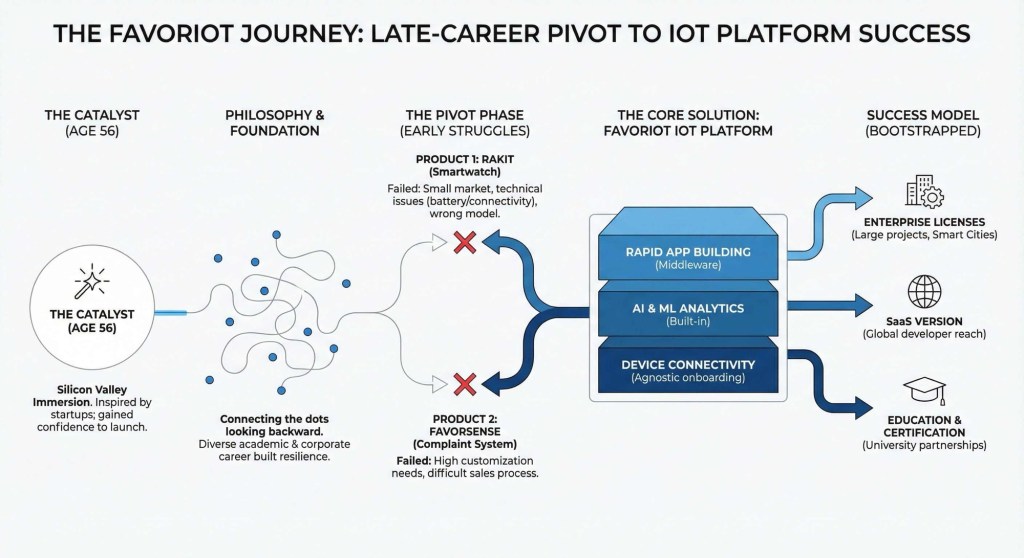
It’s a simple question — but one that hit me like a lightning bolt the first time I heard it posed by Simon Sinek in his book “Start With Why.” I thought I had the answer years ago when we founded FAVORIOT. We wanted to build an IoT platform. We wanted to be part of the Fourth Industrial Revolution. We wanted to make Malaysia proud.

But after reading Find Your Why, I realized I had only scratched the surface.

So I decided to go deeper. To strip away the features, the dashboards, the data streams — and ask myself, what is our true reason for being?

The Early Sparks: Frustration as Fuel

I spent decades in various ecosystems — from academia to government, corporates to startups. In every world, I saw the same problem repeat like a broken record: brilliant people with smart ideas were stuck because the technology was either too expensive, too complicated, or too foreign.

“Why are we importing tech for things we can build locally?”

“Why can’t our students graduate with real IoT skills, not just theories?”

“Why does every ‘Smart City’ pilot end with a press release but no long-term sustainability?”

Each “why” turned into fuel.

And that’s how FAVORIOT was born. Not from a business plan, but from frustration. From the belief that things should be simpler. That IoT shouldn’t be reserved for tech giants. That a kampung farmer, a Form 5 student, and a municipal engineer all deserve access to the same tools of transformation.

Understanding Our WHY

According to Find Your Why, every organization must uncover its purpose through reflection, story, and the impact it wants to make. It isn’t about what you do — it’s about why you do it.

And the format is simple yet powerful:

TO [your contribution] SO THAT [your impact].

So I asked myself:

  • What do we do when we’re at our best?
  • What makes us proud?
  • What kind of future do we want to build — not just for us, but for others?

Our WHY Statement

To empower people and organizations with accessible IoT technology, so that they can build smarter, connected futures on their own terms.

Let me unpack that for you.

“To Empower People and Organizations…”

We don’t just provide a dashboard.

We empower students to build their final year projects with confidence. We empower lecturers to teach IoT without needing an AWS certification. We empower entrepreneurs to launch sensor-based services. We empower city councils to detect flood risks, monitor waste bins, and receive alerts directly on Telegram — without vendor lock-ins or complex coding.

This empowerment comes in the form of:

  • A local, developer-friendly IoT platform (FAVORIOT Cloud)
  • Training and certifications via FAVORIOT Academy
  • Partnerships that build ecosystems, not just transactions

We’ve seen it firsthand — the moment someone realizes “Hey, I can build this myself” — that’s where our real work begins.

“…with Accessible IoT Technology…”

IoT is often wrapped in buzzwords: LPWAN, edge computing, mesh networks. But in truth, most users don’t need to know all that.

What they need is:

  • A clean dashboard
  • A reliable API
  • A simple setup guide
  • Local support, not just chatbot replies from time zones away

We built FAVORIOT with accessibility in mind. Not “dumbed down,” but demystified. So that even if you’re a high school student or a small-town official, you can say, “Yes, I understand this.”

We’re proudly Made in Malaysia, but we’re built for global adoption — especially in regions where digital transformation is often a PowerPoint slide, not a daily tool.

“…So That They Can Build Smarter, Connected Futures…”

This is the impact. The soul of our mission.

It’s not about selling more subscriptions or deploying more gateways. It’s about helping others take control of their own digital transformation.

A university that trains 500 certified IoT graduates per year?
That’s a smarter future.

A logistics company that reduces vehicle downtime with sensor data?
That’s a smarter future.

A kampung that uses IoT to monitor river levels and avoid flooding?
That’s not a Silicon Valley fantasy. That’s reality. And it’s happening.

Because we gave them the tools — and more importantly, the confidence — to build it on their own terms.

What Favoriot Is Not

We’re not trying to compete with AWS or Azure on scale.

We’re not just another smart city vendor with flashy mockups and no follow-through.

And we’re definitely not in it for vanity metrics.

What we are building is a platform that:

  • Trains the next generation of engineers and technologists
  • Supports local system integrators with ready-to-deploy tools
  • Strengthens national resilience by owning our tech stack
  • Connects the dots between ambition and execution

Why This Matters — Especially Now

Everyone’s talking about AI. And yes, AI is exciting.

But here’s the truth: AI needs data. And data comes from IoT.

Without sensors, there are no predictions. Without real-time input, there’s no intelligent decision-making. IoT is the nervous system — AI is the brain. You can’t build a smarter future with just one.

Yet IoT is often the unsung hero.

FAVORIOT exists to make that hero visible — to give it a platform, a purpose, and most importantly, a presence in our communities.

Closing Thoughts: Why I’m Still Here

People sometimes ask me, “After all these years, what keeps you going?”

And honestly, it’s not the tech.

It’s the message I got from a student who said, “Dr., because of the Favoriot certification, I got hired immediately after graduation.”

It’s the local council officer who said, “We prevented a flood this year — because of your alerts.”

It’s the partner in Indonesia who said, “We never thought we could build our own IoT solution — until Favoriot.”

That is our WHY.

That is why we exist.

And that is why we’ll keep building.

Your Turn

If you’re a student, a policymaker, a developer, or an entrepreneur — and you’ve ever thought “IoT is too complex” — I invite you to rethink that.

Because with the right platform, the right support, and the right purpose — you’re closer to a smarter future than you think.

And we, at Favoriot, are here to help you build it.

Let’s democratize IoT. Together.

Let’s Make IoT Great Again — The Malaysian Comeback We’ve Been Waiting For

“Malaysia’s not ready yet…”

You’ve heard that line, haven’t you?
I’ve heard it in government meetings, corporate pitches, startup huddles, even in university halls.

“Let’s wait for the right timing.”
“Let’s see if the budget gets approved.”
“Let’s hold until the talent pool matures.”

Enough waiting. Seriously.

Because if we keep hitting pause, someone else is going to press play — and leave us behind in the dust.

South Korea Didn’t Wait. China Didn’t Either.

In the 1980s, South Korea was still recovering and rebuilding.
In the 1990s, China was just finding its footing on the world stage.

They weren’t “ready” either.

But they moved.
They dared.
They started.

And now? The world watches them. Learns from them. Competes with them.

Malaysia, it’s our turn. But only if we dare to move — even if it’s messy.

Whatever Happened to IoT?

I still remember when IoT was the darling of tech conferences.

Smart cities.
Smart farming.
Smart industries.
Smart everything.

IoT was the buzzword. The future.

But slowly, it faded. AI came in with a bang — and now even school kids are doing AI projects. Meanwhile, IoT became the forgotten tech. The backup dancer.

But guess what? IoT never went away. It just stopped trending.

And that’s not fair — because IoT is the foundation.
No IoT, no data.
No data, no AI.
No AI, no “smart” anything.

We’ve been cheering for AI, but forgot where AI gets its brain food — real-world data from IoT devices.

So let’s bring IoT back to the main stage.

Waiting for a Masterplan? Here’s the Truth.

Malaysia loves blueprints. Loves roadmaps. Loves waiting for official green lights.

But progress rarely comes from the top. It starts in the cracks.
In university labs.
In garage workshops.
In kopitiam brainstorms.
In “I-don’t-know-coding-but-I’ll-try” kinda attitude.

You don’t need to be a coding wizard.
You don’t need RM100,000.
You just need the guts to start.

Platforms like FAVORIOT make it ridiculously easy to test, build, and learn. Plug and play. Create a dashboard. Get alerts. It’s not rocket science anymore.

And you don’t need permission to innovate.

Here’s My Challenge to You

I’m not asking you to build Malaysia’s next unicorn startup tomorrow.

I’m asking you to:

  • Build a small IoT project with your kids.
  • Monitor your home’s electricity using sensors.
  • Start a DIY smart farm with friends.
  • Teach students how to send data to the cloud.
  • Connect a temperature sensor to a dashboard just because you can.

Each small project creates momentum.
Each momentum builds confidence.
Each confidence turns into a movement.

Imagine hundreds — no, thousands — of these projects happening across Malaysia. That’s not hype. That’s ecosystem-building.

Start Small. Start Messy. But Please—Start Now.

Let’s stop worrying if it’ll fail. Let’s stop doubting ourselves.

Failure is part of the story.

Every successful nation, every great tech innovation — it all started with people trying, failing, adjusting, and trying again.

If we want Malaysia to lead in IoT, we need to stop talking and start doing.

Because:

  • The technology is already here.
  • The talent is growing.
  • The platforms are local and ready.
  • The excuses are tired.

The Revival Starts Here — and With Us

I’m writing this not just as someone in the IoT industry, but as a Malaysian who’s tired of hearing “We’re not ready.”

What if we stopped asking for permission?
What if we trusted ourselves to build something great from the ground up?
What if our “small” becomes the next big thing in Southeast Asia?

This isn’t a government-only mission. This isn’t a corporate-only opportunity.

This is everyone’s movement.

If we wait for perfect conditions, we’ll never move.

So let’s stop waiting. Let’s start building.

Malaysia, This Is Your IoT Moment

It’s not about who’s ahead now. It’s about who dares to start — and keeps going.

We’ve got what it takes.

Let’s build the sensors.
Let’s write the code.
Let’s run the dashboards.
Let’s fix the bugs.
Let’s train the students.
Let’s test the ideas.
Let’s MAKE MISTAKES.

And let’s make IoT great again — in our own Malaysian way.

Not by following others, but by leading with bold, messy action.

Are you in?

The Book That Finally Told the Truth About IoT

For years, I’ve watched the Internet of Things evolve—promises, pilots, platforms, and… silence.

We were told IoT would change everything. And yet, here we are. Smart cities still look like science projects. Predictive maintenance rarely gets past a demo. Even in conferences, IoT is the quiet cousin, while AI receives the spotlight.

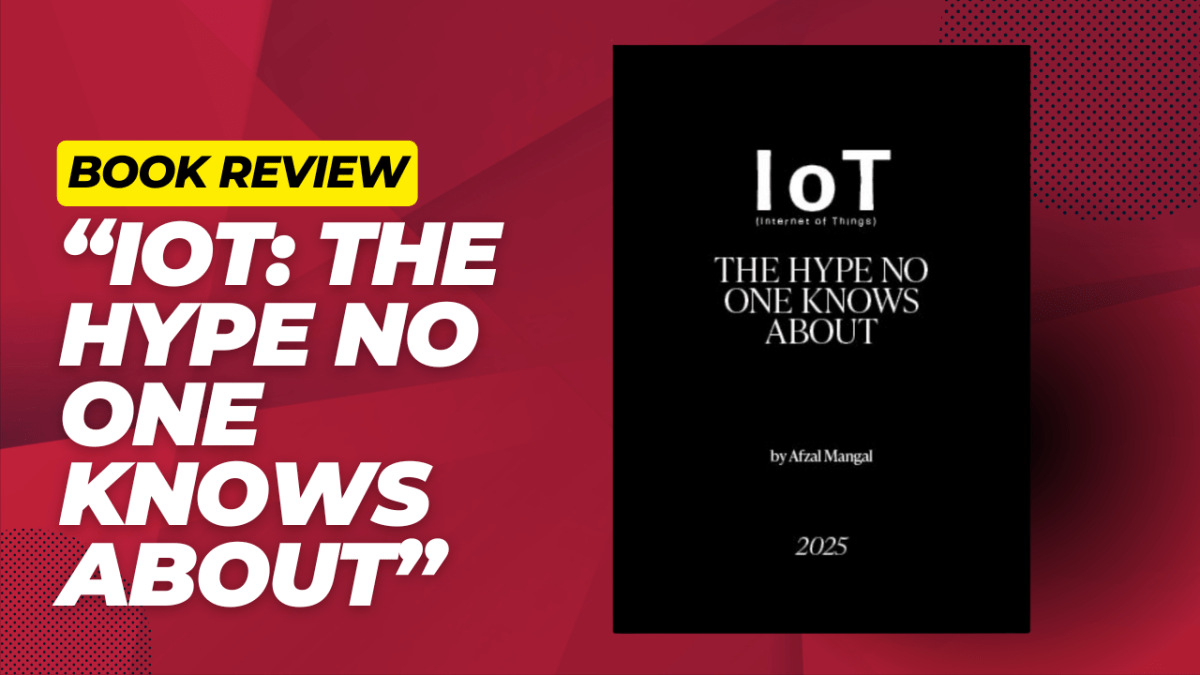
So when I read IoT: The Hype No One Knows About by Afzal Mangal, I didn’t just read it—I felt it.

This wasn’t another technical deep dive. It wasn’t a glossy case study collection either. It was something rare: an honest book written by someone who’s actually done the work, faced the resistance, and survived the grind.

It’s Not the Technology That’s Broken

The core message? IoT works. That’s not the problem. The issue is that no one knows or sees it, and often, no one asks for it.

IoT doesn’t fail in the lab. It fails in the boardroom. It fails when:

  • Decision-makers don’t know what problem IoT solves
  • Internal champions give up after the pilot
  • Sales teams can’t explain it without five slides and a PhD

This hit hard. I’ve seen excellent IoT projects—solid tech, measurable impact—die quietly because there was no momentum to take them further.

Meanwhile, AI Took the Stage

Mangal makes a bold (and fair) comparison: AI and IoT were both hyped. But only one became mainstream.

Why?

Because AI built a tribe, it became aspirational. It had influencers, evangelists, podcasts, and memes. It was everywhere. IoT, on the other hand, stayed niche. It stayed quiet. It stayed technical.

It didn’t show off its wins. It didn’t shout. And that’s where we lost the game.

The Book Offers Solutions, Not Just Complaints

The best part isn’t just the diagnosis. It’s the prescription.

Mangal outlines 70 actions—from marketing to product strategy—that are refreshingly doable. No jargon. Just real advice:

  • Put “IoT” in your product name
  • Sell small and scale later
  • Educate the market like a campaign
  • Speak in stories, not specs
  • Make IoT visible in daily life

It sounds simple, but when did we last do any of that?

My Honest Take

This book isn’t for those looking for another buzzword to pitch. It’s for those tired of being invisible. It speaks to the founders, engineers, salespeople, and educators who want IoT to finally get the recognition it deserves, technically and publicly.

It made me reflect deeply on how I present, pitch, and teach IoT.

We can keep building great tech. But until we start creating awareness, IoT will remain a background actor in a play it should lead.

My Final Thoughts

Afzal Mangal didn’t just write a book—he wrote a mirror. If you’ve ever been frustrated with the slow progress of IoT adoption, this book gives you clarity—and a plan.

I highly recommend it to anyone in the IoT space, especially:

  • Startup founders
  • Product managers
  • Policy-makers
  • Tech educators
  • Marketers are trying to position IoT solutions

The industry doesn’t need more hype. It needs truth, clarity, and action.

This book delivers all three.

The Fourth Industrial Revolution: The Future is Already Here!

“Are we ready for this transformation?”

I still remember the first time I heard the term “Fourth Industrial Revolution” or more commonly known as Industry 4.0. It sounded futuristic, like something straight out of a sci-fi movie—where robots rule the world, artificial intelligence (AI) makes all decisions, and automation is everywhere.

But the reality? We are already living in that era!

Before we panic and imagine ourselves being chased by rogue robots, let’s take a step back and understand how industrial revolutions have shaped the world.

From the First to the Fourth: The Evolution That Changed the World

History has witnessed four major industrial revolutions, each transforming human life in unimaginable ways:

  1. First Industrial Revolution (18th – 19th Century)
    • The invention of the steam engine changed everything. Factories replaced manual labor, and transportation improved dramatically. It was the birth of modern industry.
  2. Second Industrial Revolution (Late 19th – Early 20th Century)
    • Electricity became the new king. Assembly lines and mass production made goods cheaper and more accessible. Henry Ford’s automobile factories were the poster children of this era.
  3. Third Industrial Revolution (Mid-20th Century – Early 21st Century)
    • Computers, automation, and the internet revolutionized the workplace. Suddenly, information was just a click away, and digital transformation began.
  4. Fourth Industrial Revolution (Now!)
    • AI, the Internet of Things (IoT), 5G, blockchain, quantum computing—you name it. Machines are getting smarter, and decision-making is shifting from humans to algorithms.

Wait… Does This Mean Robots Will Take Over My Job?

This is the million-dollar question. The short answer: Yes and No.

Yes, because many repetitive manual tasks will be automated. If a machine can do it faster and better, why pay a human to do it?

No, because new jobs will emerge—roles we never imagined before. Who would have thought that “TikTok Content Strategist” or “Metaverse Architect” would be actual job titles?

The key here is adaptability. Those who embrace technology will thrive, while those who resist will struggle. It’s like complaining that smartphones are ruining society while using one to rant on social media.

How Industry 4.0 Affects Our Daily Lives

If you think Industry 4.0 only affects tech companies, think again. It’s already changing our everyday lives:

  • Smart Homes: Your fridge tells you when you’re out of milk, and your lights turn on when you enter the room. It’s like living in a sci-fi movie!
  • Healthcare – AI can detect diseases earlier than doctors, and robotic surgeries are becoming more common. Imagine getting medical advice from a chatbot instead of waiting hours in a clinic.
  • Education – Online learning, AI tutors, and personalized lessons replace traditional classrooms. No more boring lectures (hopefully).
  • Shopping—AI-driven recommendations make your online shopping ads feel creepily accurate. “How does it know I was thinking about buying a new phone?!

The Funny Side of Industry 4.0

Despite all the advancements, some things about Industry 4.0 are just plain hilarious.

  1. The Smart Home Fiasco
    • Me: “Hey Alexa, turn off the lights.”
    • Alexa: “Turning off all the lights.”
    • Me: “Wait, not the WiFi—” (Everything shuts down, including my will to live.)
  2. AI Assistants That Are Not So Smart
    • Me: “Siri, what’s the weather like today?”
    • Siri: “I found some information about dinosaurs.”
    • Me: “…”

Are We Ready for This Future?

Industry 4.0 is not coming—it’s already here. The question is, how do we prepare for it?

  1. Learn New Skills – Coding, AI, data analytics, cybersecurity. The more you know, the better.
  2. Embrace Change – Don’t resist technology. Learn how to use it to your advantage.
  3. Be Creative – Machines can replace repetitive jobs but can’t replace human creativity.

Remember, the future belongs to those willing to adapt and evolve. So, are you ready?

Or are you still waiting for your smart fridge to stop judging your midnight snacks?

A Letter to My 100-Year-Old Self

Dear Mazlan,

I hope this letter finds you in good health—though, at 100, I imagine your definition of “good health” is quite different from what I know now at 64. Have you finally achieved the balance of wisdom, patience, and acceptance that I am still working on? Or are you still chasing new ideas, thinking about the next innovation, the next disruption, the next frontier?

I sit here today, reflecting on the years that have passed, and I wonder—what has changed?

Did You Finally Slow Down?

Let’s be honest, slowing down was never in your nature. Even now, people tell me to “take it easy,” to “relax,” but that’s just not who I am. You were always restless, always looking for something to build, something to improve. You loved the feeling of being in the middle of things—whether it was pioneering IoT solutions, pushing smart city initiatives, or mentoring young entrepreneurs.

Did you ever truly retire? Or did you redefine retirement in your own way, turning it into just another phase of productivity? Did you ever stop writing, stop speaking at conferences, stop brainstorming new projects? I doubt it. The fire to create has been in you since childhood—remember those early days when you imagined futuristic worlds after watching The Jetsons? Did you ever outgrow that curiosity?

I sincerely hope not.

Did FAVORIOT Become the Legacy You Dreamed Of?

I need to ask—what happened to FAVORIOT? In my time, it is still growing, still making an impact in the world of IoT. We have expanded to multiple countries, partnered with great companies, and empowered countless developers, businesses, and cities to leverage IoT for a better future. But where is it now, at 100?

Did it grow beyond expectations? Did it become an industry leader, a force to be reckoned with in the global IoT landscape? Or did it evolve into something unexpected, something I can’t yet imagine?

I hope you nurtured it well. I hope you surrounded yourself with the right people—the kind who believe in the vision as much as you do. Because ideas are nothing without the right execution, and a company is nothing without the right people.

Did you finally see Malaysia fully embrace smart cities, powered by IoT in ways we once dreamed about? Or are we still lagging behind, still dealing with bureaucracy, still convincing people of the importance of innovation? I wonder if you are reading this with a knowing smile, shaking your head at how impatient I was.

What Lessons Did You Learn?

If you could talk to me now, what would you tell me? What mistakes should I avoid in the years ahead? What regrets did you accumulate along the way? I know myself—I will always be driven by ambition, always thinking of what’s next. But did I ever pause enough to appreciate the now?

Did I spend enough time with family? Did I express my gratitude to those who helped me along the way? Did I leave behind a legacy of knowledge, inspiration, and kindness, or did I get too caught up in the chase for success?

I hope you learned to let go of unnecessary worries. Right now, I stress over things that perhaps, in the grand scheme of life, don’t really matter. Did all those small worries fade into irrelevance with time?

Did the World Change the Way You Hoped?

Technology is moving fast—AI, IoT, robotics, quantum computing. At 64, I see the world changing, but at 100, how much more has it evolved? Did humanity finally master AI in a way that benefits all of society, or did we lose ourselves in our creations?

Is technology still something we control, or did it end up controlling us?

And what about space exploration? Have humans finally set foot on Mars? Did Elon Musk’s vision become a reality? Or did the world get too distracted with its own problems to look beyond Earth?

More importantly, did people become kinder? Did society learn from its mistakes? Did we finally find a way to balance progress with humanity, innovation with ethics? Or are we still making the same mistakes, just with more advanced technology?

I hope we got it right.

Are You at Peace?

At 100, what do you think about when you wake up? Do you still carry the same fire in your heart, or have you finally learned the art of contentment? Do you smile more often, laugh more freely, appreciate the simple things more deeply?

I hope you’ve come to terms with the things you couldn’t change, the dreams that didn’t materialize, and the roads you didn’t take. I hope you have no regrets about the things you did pursue, the risks you took, and the people you chose to keep close.

I hope you’ve forgiven yourself for the mistakes of the past and have found joy in the memories that remain.

Final Thoughts

Mazlan, if there’s one thing I want you to remember, even at 100, it’s this—life was never just about achievements, numbers, or titles. It was always about the people you touched, the lessons you shared, and the passion you lived with every day.

So, if you’re reading this with tired eyes but a heart full of stories, then I know you lived well.

And if by some miracle you still have the energy to pick up a pen, write back to me. Tell me what I got right. Tell me what I was wrong about. But most importantly—tell me that you’re happy.

With admiration,

Mazlan (the 64-year-old version of you)

12 AI Tools You Need to Try in 2025

  1. Fliki.ai (generates TikTok)
  2. Starry.ai (generates avatars)
  3. SlidesAI.io (generates PPTs)
  4. Remini.ai (edit pictures)
  5. Pictory.ai (edit videos)
  6. Wordtune.com (summarize notes)
  7. ChatGPT.com (solves anything)
  8. Writesonic.com (writes anything)
  9. MidJourney.com (generates art)
  10. Replit.com (generates code)
  11. Synthesia.ai (generates video)
  12. Soundraw.io (generates music)

Steal This Ultimate DeepSeek + SEO Cheatsheet

How “The Jetsons” Sparked My Lifelong Passion for Technology

“Can you imagine living in a world where cars fly, robots prepare your breakfast, and your boss talks to you through a giant video screen? Wait a minute…that sounds oddly familiar!”

As a young boy in the 1960s, glued to our old family television, watching The Jetsons was more than entertainment—it was my window into the future. Back then, it was nothing short of magical. A futuristic family living in Orbit City, navigating daily life with technologies that, to me, seemed pure fantasy. Fast-forward to today, and I realize how incredibly prophetic this cartoon actually was.

My First Encounter with the Future

“Eh, takkan lah manusia boleh cipta robot yang pandai masak sarapan?” I often asked myself skeptically.

In my childhood, my weekend routine revolved around television shows and comic books. Among the Batman comics and Superman TV series, The Jetsons stood out for a specific reason: it painted the future as something exciting, fun, and incredibly convenient. Unlike many dystopian or overly complicated portrayals of technology, The Jetsons gave me hope and wonder.

I would sit cross-legged in front of our bulky black-and-white TV set, amazed by flying cars, robots like Rosie, and video conversations that seemed impossibly futuristic. I remember vividly telling my mother:

“Mak, suatu hari nanti, orang mesti ada telefon yang boleh nampak muka orang lain!” She just laughed, probably thinking it was an impossible dream. Yet, here we are today, with video calls as common as a glass of water.

Predicting Technologies That Didn’t Yet Exist

“Biar betul? Cartoonists ni boleh ramal masa depan ke?”

What fascinated me most about The Jetsons wasn’t just the sleek aesthetics or the witty dialogues but how eerily accurate their predictions were. The cartoon first aired in 1962—decades before the internet, smartphones, or even personal computers became mainstream. Yet, astonishingly, they showcased technologies that closely mirror today’s innovations:

1. Drones and Autonomous Vehicles

I distinctly remember the excitement of seeing George Jetson commute to work in a flying autonomous vehicle. It seemed impossibly futuristic—no steering wheels, no pilots, just smooth automated flights. Fast-forward to now, and autonomous vehicles and drones are rapidly becoming mainstream. Companies like Tesla, Waymo, and countless drone startups are turning the once-cartoonish concept into reality.

2. Video Conferencing and Teleworking

Who could forget George Jetson’s daily arguments with his boss, Mr. Spacely, via a giant video screen? Even as a child, I wondered how amazing it would be to talk to someone face-to-face from afar. Decades later, platforms like Zoom, Microsoft Teams, and Google Meet have made this our everyday reality.

3. Smartwatches and Wearable Tech

One of my favorite gadgets from the cartoon was the smartwatch. George Jetson regularly spoke into his wristwatch, something I emulated with a toy watch. Today, devices like the Apple Watch enable voice communication and monitor health, provide notifications, and manage daily activities effortlessly. It feels surreal, like I’ve stepped straight into George Jetson’s life.

Robots in Daily Life: From Rosie to Reality

“Wow, imagine having a Rosie at home… I’d never have to clean my room again!”

Perhaps one of the most beloved elements of The Jetsons was Rosie, their family robot. Rosie wasn’t just a tool; she was part of the family, intelligent, helpful, and capable of conversation. Today, we see early glimpses of Rosie through voice assistants like Siri, Alexa, and Google Assistant. Companies like Boston Dynamics and Samsung are pushing boundaries even further, creating humanoid robots capable of performing household chores, providing care, and interacting with humans meaningfully.

I distinctly remember asking my mother, “Mak, one day kita boleh cakap dengan robot macam ni tak?” Again, it seemed impossible, but now, conversational AI is an integral part of our lives.

How The Jetsons Influenced My Career Path

“Mazlan, tengok cartoon je dah nak jadi saintis?” my parents chuckled when I expressed dreams of a technology-driven future.

Looking back, I realize how significantly this cartoon shaped my path. The whimsical portrayal of technology in The Jetsons not only inspired my interest in science fiction but also subtly guided me toward my career in telecommunications, IoT, and smart cities. I pursued electrical engineering and telecommunications and eventually became deeply involved in building smart cities—environments not unlike Orbit City, where IoT devices, smart transportation, and digital assistants simplify life.

When I founded FAVORIOT, a platform designed to empower IoT applications, the spirit of innovation and imagination instilled by The Jetsons was always at the forefront. I saw clearly how dreams from animated fiction could fuel real-world technological advancements.

A Visionary Cartoon That Still Inspires Today

“Tak sangka, cartoon yang aku tonton masa kecil dulu betul-betul jadi kenyataan hari ni.”

Revisiting the show today makes me marvel at its creators’ visionary minds. How did they manage to foresee so accurately? Was it pure creativity or a deeper understanding of technological trajectories?

In my opinion, The Jetsons succeeded because it tapped into universal human desires: convenience, connectivity, and curiosity. These remain consistent through decades, guiding technologists, innovators, and entrepreneurs alike. The show taught us to dream boldly and envision beyond current limitations.

Imagining Tomorrow’s Technologies Today

“Apakah lagi teknologi yang kita belum capai? Apa lagi yang boleh aku wujudkan?”

As a technologist deeply involved in IoT and smart cities, I often reflect on how fiction shapes reality. Today, when developing smart city initiatives or mentoring young innovators, I remind them how important imagination is. Every groundbreaking technology begins as a seemingly impossible idea.

What about the technologies from The Jetsons that we haven’t fully realized yet? The cartoon showed cities elevated above the clouds due to environmental challenges on Earth. Given the increasing urgency of climate change, such imaginative solutions might not remain fictional forever. Maybe vertical, sustainable cities aren’t as far-fetched as we once believed.

Encouraging the Next Generation to Dream Big

“Kalau cartoon pun boleh predict future, kenapa kita tak boleh cipta teknologi baru lagi hebat?”

To inspire today’s youth—just as The Jetsons inspired me—I constantly share this simple message: imagination has no limits. I challenge them to envision solutions for future problems because what is imagined today is tomorrow’s reality. My journey, from a fascinated kid sitting on the living room floor watching George Jetson to an IoT entrepreneur and technologist, is proof of this.

Now, every time I make a video call, glance at my smartwatch, or see news about autonomous vehicles, I smile silently.

It all started with a cartoon.

Who knew? Maybe Hanna-Barbera creators were the real visionaries.

What futuristic cartoon today will become the blueprint for tomorrow’s innovations? Until then, I’ll continue watching, imagining, and building the future inspired by The Jetsons.