
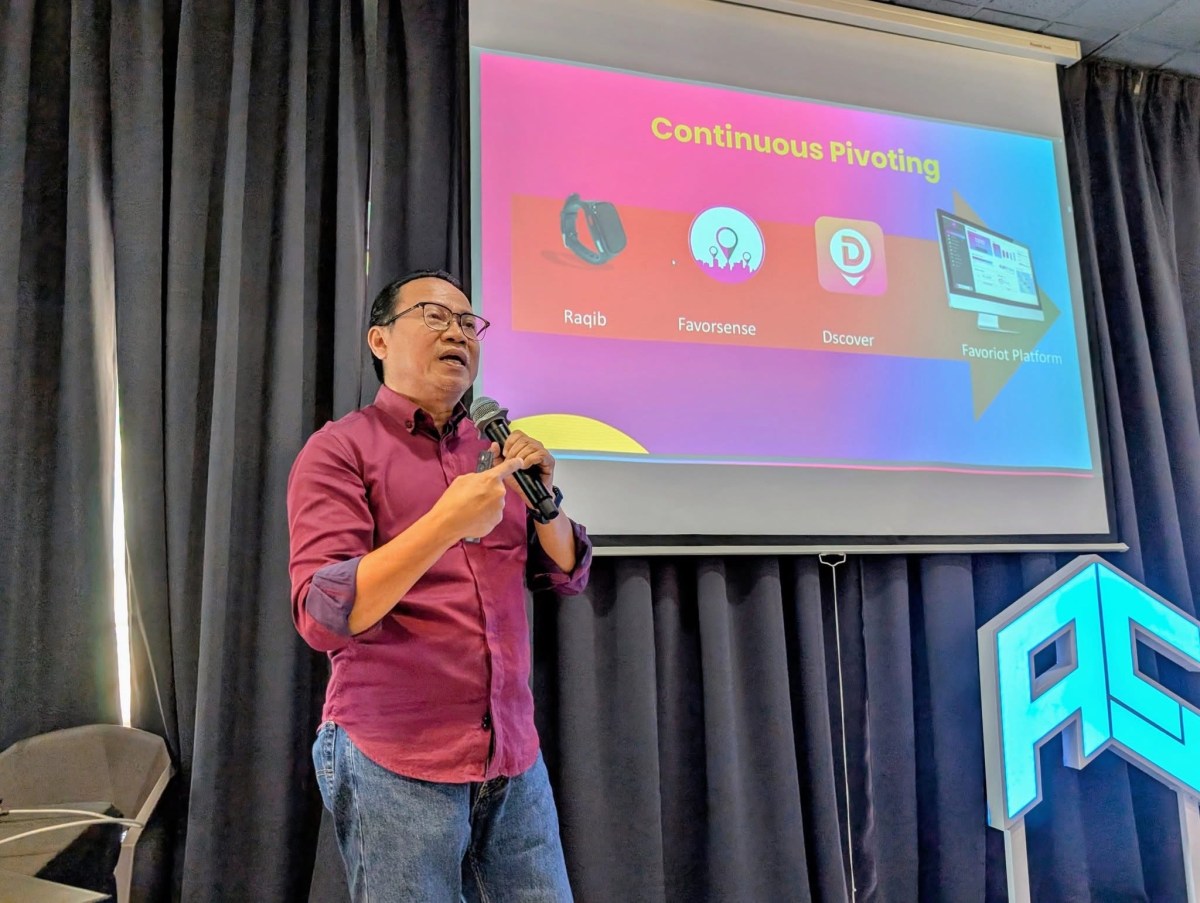
Techtamu Talk | 17 January 2026
On 17 January 2026, at around 10 in the morning, I stood before a room full of students, founders, and curious minds.
Before I spoke, I paused for a second.
“How do I explain a journey that never followed a straight line?”
Entrepreneurship, at least in my life, was never a planned destination. It was a series of connected experiences that only made sense much later.
That lecture was not about IoT.
It was not about startups.
It was about life, timing, courage, and knowing when to let go.
You Only Understand the Journey When You Look Back
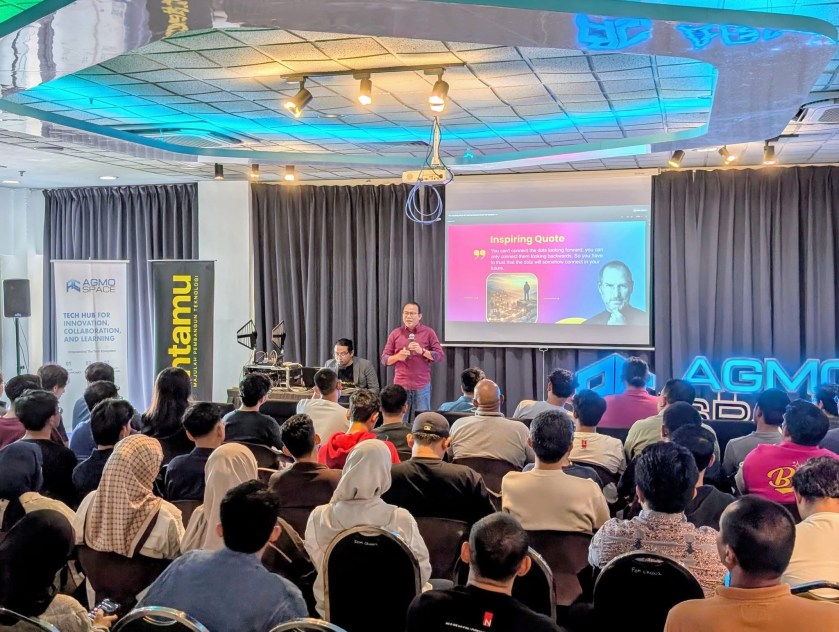
I opened the session with a quote from Steve Jobs that has stayed with me for years:
You can’t connect the dots looking forward. You can only connect them looking backward.
That sentence explains my life better than any resume ever could.
When you are young, you worry too much about choosing the “right” path. The right course. The right job. The right company.
What nobody tells you is this.
Every experience counts, even the ones that feel like detours.
You just won’t see it yet.
From a Curious Child to a Technology Lifelong Learner
My interest in technology did not start in a lab or a classroom.
It started at home.
My late father was a clerk. But in the evenings, he repaired televisions and radios. I would sit beside him, watching circuits come back to life.
“So this is how things work.”
Then came science fiction.
Cartoons like The Jetsons showed a future that felt impossible at the time. Video calls. Smart watches. Flying machines.
Today, many of those ideas sit quietly in our pockets.
That early exposure planted a question in my mind that never left me.
“What if we could actually build these things?”
Living in Four Different Worlds
I consider myself fortunate. Few people get to experience all four.
Academia.
Corporate.
Government.
Startup.
I began as a lecturer at Universiti Teknologi Malaysia, immersed in theory and research. Later, I joined the corporate world at Celcom, where reality hits hard and fast. Customers matter. Deadlines matter. Revenue matters.
At MIMOS, I worked on national-scale research, including wireless sensor networks, long before the term IoT became popular.
Then came REDtone, where I helped build IoT initiatives inside a corporate structure.
Each world taught me something different.
But they also gave me baggage.
Experience gives confidence.
It also gives fear.
Young founders often believe everything is possible.
Older founders carry doubt.
“What if this fails?”
“What if I lose my savings?”
That voice gets louder with age.
Silicon Valley Changed Everything
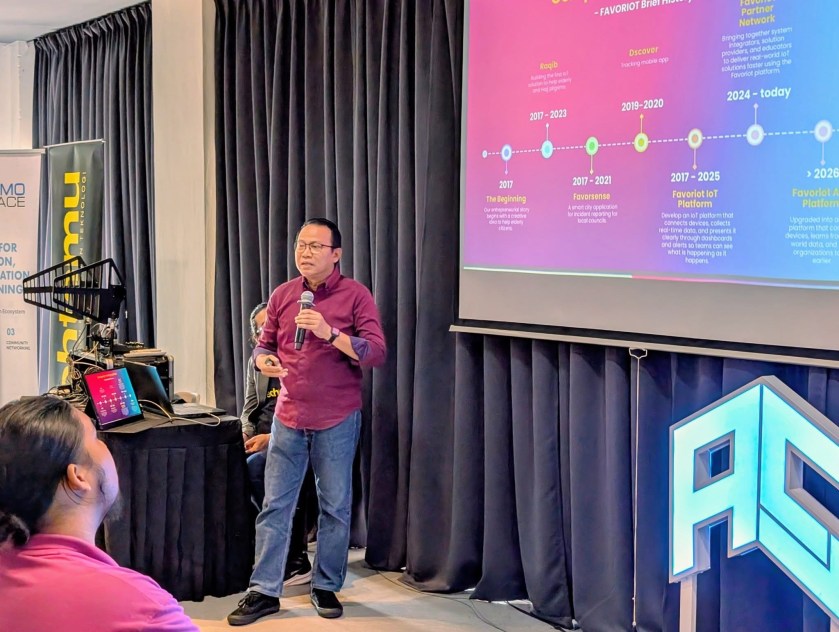
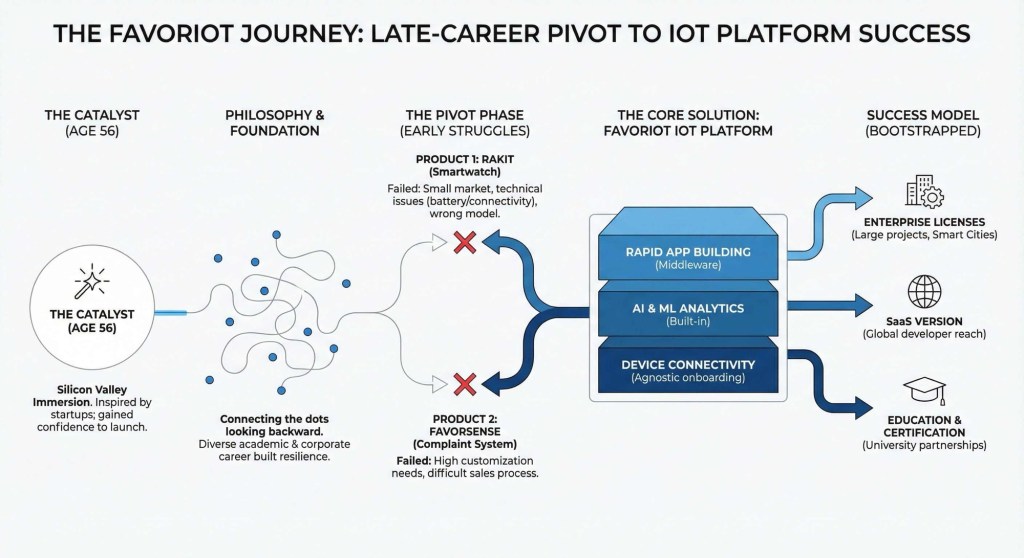
At 56, I joined an immersion trip to Silicon Valley.
That trip changed my identity.
I walked into Plug and Play Accelerator and saw cubicles, whiteboards, and founders who looked just like us. That was where companies like Dropbox began.
I remember thinking:
“If this guy can do it, why can’t we?”
That was the moment I stopped seeing myself as a CEO-in-waiting.
I started seeing myself as an entrepreneur.
Not someday.
Not after retirement.
Now.
Starting Late Comes With a Price
I started my startup using personal savings. No incubator. No startup playbook. No fancy terms like ‘MVP’ or ‘pitching decks’.
Just belief and experience.
Our first idea was a smartwatch for the elderly with fall detection and emergency alerts. It looked noble. It sounded meaningful.
It failed.
The market was too small.
Children did not want to pay.
The device did not suit care homes.
That was my first real startup lesson.
Good intentions do not build businesses.
Paying customers do.
Learning the Art of the Pivot
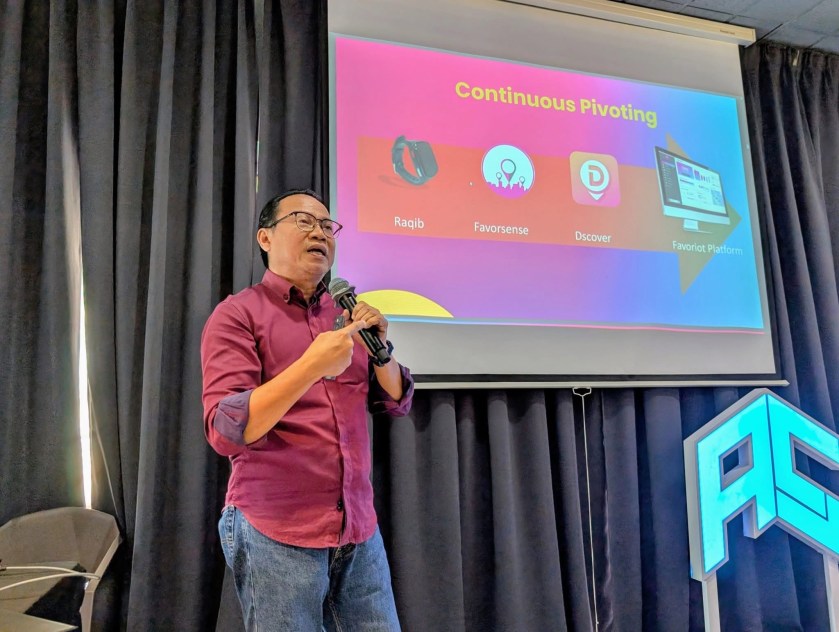
In the startup world, pivoting is survival.
We repurposed the watch for Hajj and Umrah pilgrims. New market. Same core idea.
New problems appeared.
Unrealistic pricing expectations.
Battery life demands that defy physics.
Hardware sourcing from China.
Network roaming issues.
Travel agencies are unwilling to add cost.
Then came COVID-19. We proposed quarantine monitoring. It went nowhere.
Eventually, I made one of the hardest decisions of my life.
Ending a product.
I shared this honestly during the lecture.
Ending a product feels like ending a child you raised with love.
But holding on too long can kill the company.
A CEO must choose growth over attachment.
When More Products Mean Less Identity
We built other solutions too.
A civic complaint app sounded promising. Until each client wanted heavy customization and complaint volumes exploded beyond what they could manage.
A consumer tracking app failed because people care deeply about privacy and free alternatives already exist.
At some point, I realized something painful.
When you build too many products, people no longer know who you are.
Neither do you.
The Shift That Saved the Company
That realization led to our biggest change.
We stopped building products for users.
We started building a platform for builders.
That platform became Favoriot.
An IoT platform that lets others connect devices, visualize data, and deploy solutions quickly. Over time, intelligence was added so data could speak, not just sit on dashboards.
This shift reduced risk.
Instead of betting on one product, we enabled hundreds of use cases.
Why One Revenue Stream Is Never Enough
Another hard truth I shared with the audience.
Pure SaaS subscriptions rarely pay the bills in emerging markets.
We survived by building multiple streams.
Enterprise licensing.
Project-based solutions.
Training and certification with universities.
The platform stayed at the core. Everything else wrapped around it.
That balance kept the company alive.
Partners Build What You Cannot
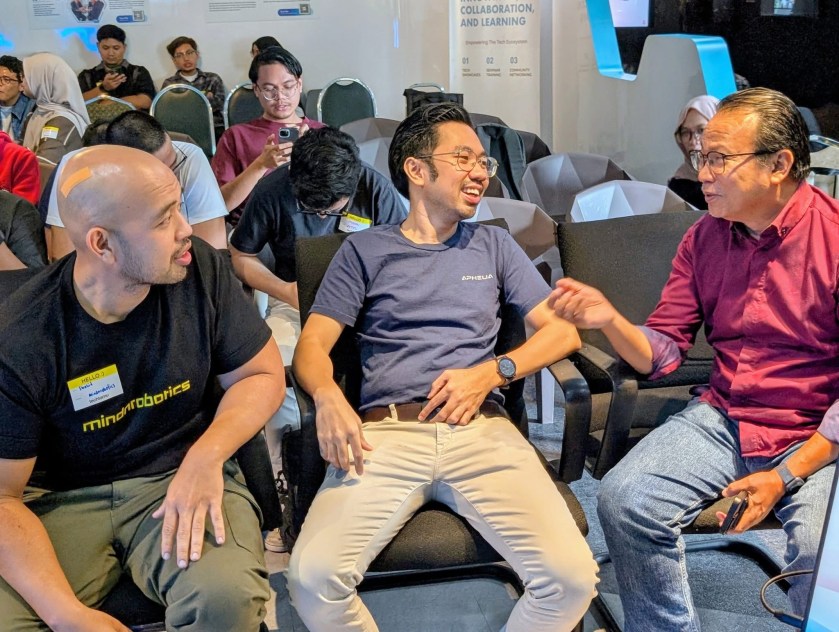
No startup wins alone.
We built a partner ecosystem covering hardware, software, AI, and system integration. Today, that network spans multiple countries.
Each partner brings strength we do not have.
That is how scale really happens.
Marketing Without Big Budgets
We never had large marketing budgets.
So we wrote.
We shared.
We taught.
Blogs.
Social media.
Free e-books.
Inbound marketing works when your story is honest and your knowledge is real.
People do not buy immediately.
But they remember.
The Lesson I Hope You Carry Forward
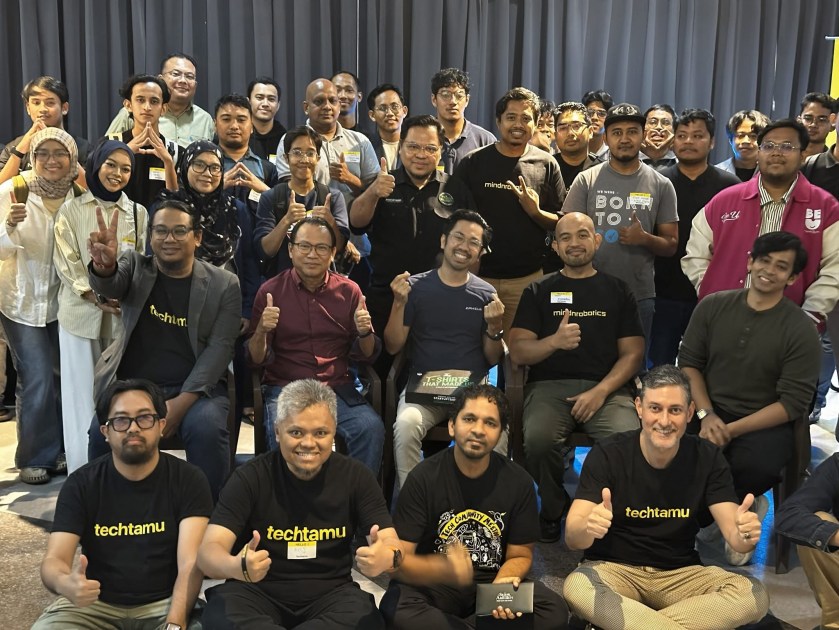
I ended the lecture with a simple reminder.
Whatever path you take, it is building something inside you. Even when it feels random.
Do not fall in love with your product. Fall in love with solving problems.
Do not trust praise until someone pays.
Do not depend on one revenue stream.
Do not fear pivoting. Fear standing still.
And most of all, do not believe it is too late.
I started my startup at 56.
If I could begin then, what is stopping you now?
I would love to hear your thoughts.
What dots in your life are starting to connect? Share them in the comments.
Discover more from Dr. Mazlan Abbas
Subscribe to get the latest posts sent to your email.

 Dr. Mazlan Abbas