A Usual Day in My Life: From Dawn to Dusk

I often reflect on what my usual day looks like—not one where everything is extraordinary, but one that feels fulfilling and balanced and leaves me content as I drift off to sleep. Here’s a glimpse into my day, from dawn to dusk.

5:00 AM – The Quiet Hour

My day starts before the sun peeks over the horizon. No alarm is needed—my internal clock knows when it’s time. There’s something special about these early hours. The house is still, the world outside is hushed, and it’s just me, my thoughts, and the gentle whisper of dawn.

I sit on the prayer mat at Surau nearby, grounding myself with Subuh. It’s a moment of reflection, gratitude, and connection. After prayers, I take a few quiet minutes, no phone or emails, just pure stillness.

6:00 AM – Morning Rituals

I ease into the morning with light stretches, sometimes a brisk walk if the weather allows, or simple exercises at home. It’s not about intensity but about shaking off sleep and clearly welcoming the day.

Breakfast follows—a simple, healthy meal. Maybe oats, eggs, and, of course, a cup of tea. That first sip feels like a handshake with the day, setting the tone for what’s ahead.

7:00 AM – Diving into Work

Before emails flood and meetings take over, I carve out sacred writing time. My mind feels sharpest now. I open my laptop, fingers poised over the keyboard, and let the words flow—whether it’s a blog on IoT or entrepreneurship.

Writing is more than sharing ideas; it’s a conversation with myself. Sometimes, I start with a question like, “Why do people give up on writing?” and soon find myself deep in thought, discovering new perspectives.

9:00 AM – The IoT Hustle Begins

Now, it’s full-throttle Favoriot mode. I have meetings with the team, brainstorming sessions, and partner calls—a mix of strategic discussions and problem-solving. Some days, I present IoT solutions to clients, explaining how we can transform smart agriculture or address energy challenges.

I enjoy watching ideas evolve into tangible impacts. Not every meeting is a revelation, but each is a step forward.

12:30 PM – The Midday Pause

Lunch is more than a meal; it’s a mental reset. Sometimes with the team, sharing stories beyond work, or alone with a plate of nasi campur, lost in thought or scrolling through Medium for inspiration.

A brief walk post-lunch helps shake off sluggishness and recharges my focus.

2:00 PM – The Afternoon Grind

Afternoons are for deep work. Strategic planning or preparing presentations —tasks that need full attention. I tackle emails too, managing the endless flow without letting it overwhelm me.

Inspiration can strike anytime. A quirky TikTok idea, an analogy for an article—I jot them down quickly because ideas are fleeting, like mischievous cats.

5:00 PM – Wrapping Up

I review my day before logging off. What did I achieve? What could’ve gone better? There is no formal checklist, just a mental debrief. Planning tomorrow’s priorities helps me mentally clock out, knowing everything’s noted.

A deep breath signals the day’s end, a small ritual before stepping away from work.

6:30 PM – Family & Personal Time

Evenings are for family. We share stories, laugh, watch shows, or simply enjoy each other’s company. These moments remind me of the bigger picture.

I remember the days when I might strum my guitar, revisit old Bee Gees tunes, and let the music reconnect me with simpler times. But unfortunately, there’s no more guitar with me.

9:00 PM – The Wind Down

Before bed, I read—an article, a book, or just a reflection on the day. I try to avoid screens, but curiosity sometimes wins, leading me down YouTube rabbit holes of obscure tech facts.

I jot down lingering thoughts—fragments, ideas, and reflections.

10:00 PM – Lights Out

Lying in bed, I flip through the day’s snapshots in my mind: the laughter, the challenges, the small victories. I whisper a prayer of gratitude, close my eyes, and let sleep take over, ready to greet another day.

And that’s my usual day—not perfect, but perfectly mine.

Why Writing Feels Like Running a Marathon

It all started with a simple comment from a friend: “Writing on a Blog is a marathon, not a sprint.” That line stuck with me. It echoed in my mind like the rhythmic pounding of footsteps on the pavement. It made me pause and think—he’s right. Writing isn’t a quick dash to the finish line. It’s an endurance game. A long race.

I often compare life to the activities we do. Maybe it’s my way of making sense of things. And the more I thought about it, the more it made perfect sense: writing on this Blog feels like running a marathon.

The Starting Line: Hesitation and Excitement

I remember the day I decided to write for this blog. There was no grand announcement or dramatic decision. It was more like an itch—a slight, persistent urge to share my thoughts on IoT and smart cities, which have consumed my professional life.

“Will anyone even read this?” I wondered. The same nervous question runners ask themselves as they stand at the starting line, surrounded by experienced athletes with years of effort etched into their confident postures.

That feeling? Overwhelming. But I started anyway.

Finding Your Rhythm: The First Few Kilometers

In the running, the first few kilometres are deceptive. The excitement tricks you into thinking you can sprint the whole way. But reality sets in quickly. The excitement fades, and you’re left with nothing but your breathing, the sound of your footsteps, and the mental battle against self-doubt.

Writing is the same. My first few articles barely got any views. I’d refresh the stats page often, hoping for a miracle.

“Why aren’t they reading?” Frustration bubbled up. But then I remembered: the first kilometres aren’t about speed; they’re about finding your rhythm.

Each article became a step forward, a chance to refine my voice. It wasn’t about the views. It was about showing up, day after day, word after word.

Small Wins: The First Checkpoint

One day, I posted an article about IoT applications in agriculture. I wasn’t expecting much, but then a comment appeared.

“This is exactly what I was looking for. Thank you!”

That small comment felt like crossing my first marathon checkpoint. Someone was reading, and someone found value in my words.

“Keep going,” I told myself.

That simple acknowledgement shifted everything. I stopped focusing on metrics and started writing because I enjoyed it.

Preparation: The Invisible Work

No marathoner wakes up and decides to run 42 kilometres without training. They prepare, practice, and test their limits.

Writing is no different.

“Do I really have to do this every day?” I’d groan, staring at a blank screen, especially when ideas were hard to find.

But I knew the truth: consistency beats talent. Skipping one day makes it easier to skip the next. So, I wrote. Even when the words felt forced. Even when the drafts were not my best.

Those drafts? They were my practice runs. Not pretty, but necessary.

Pacing: The Art of Sustainability

In a marathon, going too fast too early guarantees burnout. Writing has its version of this, too. At one point, I tried writing articles daily, thinking more output would lead to success.

Spoiler alert: it didn’t.

I learned to slow down, revisit drafts, and refine my ideas. Quality mattered more than quantity. It was like perfecting my stride, finding that balance where effort meets ease.

The Crowd: Finding Support

No marathoner runs alone. There are fellow runners, spectators, and coaches cheering you on.

For me, that support came from the Blog community—fellow writers, readers, even the occasional critic.

I’ll never forget the day I received a message from another writer: “Your story inspired me to start my own business. Thank you for sharing.”

That message? It was my crowd, cheering me on when I needed it most.

Hitting the Wall: The Toughest Part

Every marathon has “the wall”—that dreaded moment when exhaustion hits, and quitting feels like the only option.

For me, that wall was writer’s block. Days when ideas refused to come. When motivation disappeared, leaving only a nagging sense of failure.

“Why am I even doing this?” I’d mutter.

But then I’d remember: you don’t stop because you’re tired. You stop when you’re done.

The Finish Line: A New Beginning

Looking back, I realise writing and running a marathon are deeply personal activities. They test your limits, reveal your strengths, and force you to confront your weaknesses.

But they also offer immense rewards.

Today, as I continue to write, each article feels like another kilometer in the marathon. Some are effortless. Others are tough uphill battles.

But with each word, I grow stronger.

Someone once asked me, “Would you do it all over again?”

Without hesitation, I said, “Absolutely.”

Writing has given me resilience, discipline, and the joy of connection. It has reminded me that success isn’t in the destination—it’s in the process.

So here I am, still running this marathon, one article at a time.

And just like every marathoner knows, the finish line isn’t the end. It’s just the start of another challenge.

Writing a Blog and Building a Startup: Two Journeys, One Spirit

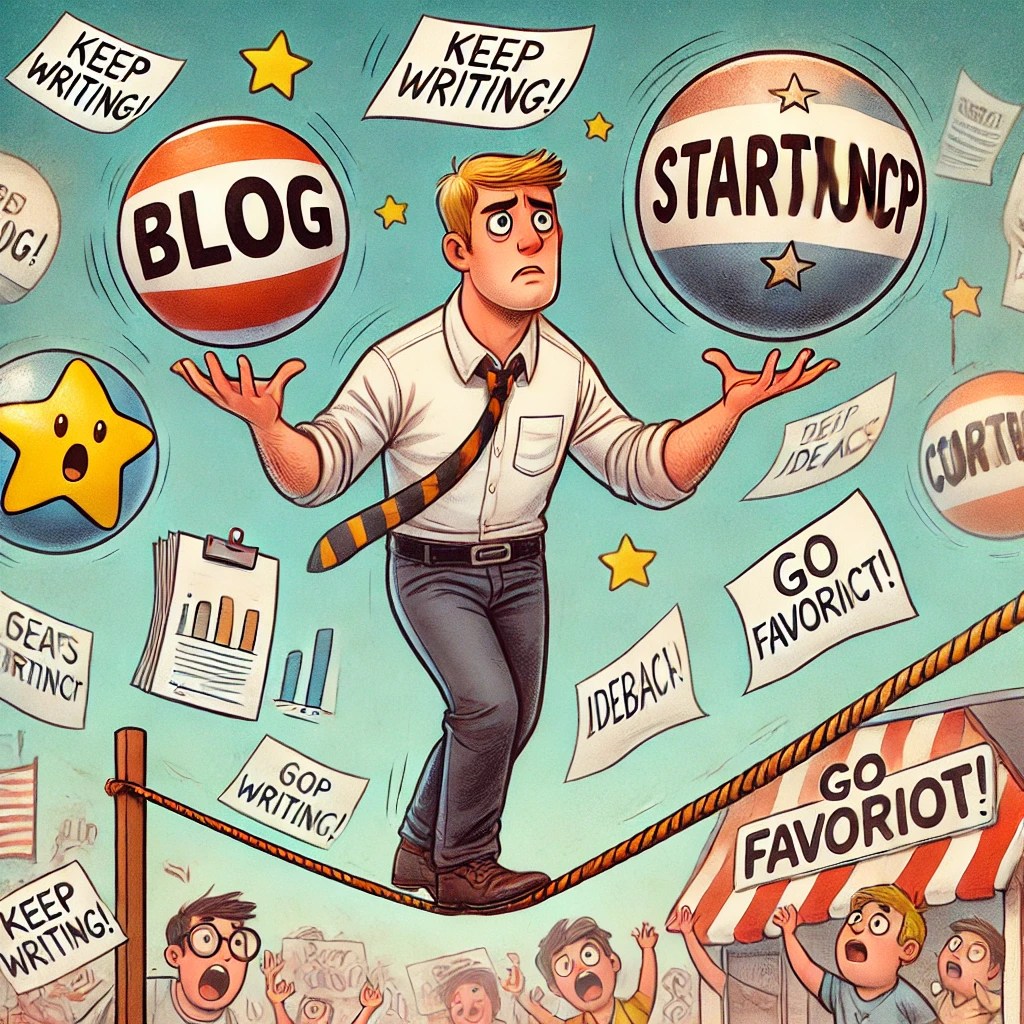
I never thought I’d say this, but here it goes: writing a blog—like mine—and building a startup—like FAVORIOT—feel like two sides of the same coin. Strange, isn’t it? At first glance, they seem worlds apart. One requires you to pour your thoughts onto a blank screen, while the other demands strategic planning, pitching ideas, managing teams, and scaling businesses.

But as I look back on both journeys, I see an uncanny resemblance. It’s like déjà vu but in different dimensions.

The Blank Page vs. The Blank Canvas

I remember when writing my first blog post. The blank page felt like it was mocking me—”So, what’s your big idea, Mazlan?” No audience, no followers, just me and my thoughts.

Now, compare that to the early days of FAVORIOT. We had a big dream: to simplify IoT adoption. But dreams are just dreams until you take that terrifying first step. No customers, no revenue, just a vision and an empty business plan.

Starting both felt like standing at the edge of a cliff. Do you jump? Or do you hesitate? I jumped. Twice.

Defining Your “Why”

Here’s the thing about starting anything meaningful—you need a “why.” Without it, you’ll burn out faster than a cheap lightbulb.

For FAVORIOT, my “why” was crystal clear: help businesses and cities leverage IoT for smarter operations. For my blog, it was about sharing my journey, my thoughts, my lessons—hoping they’d resonate with someone out there.

When challenges hit—and trust me, they did—my “why” kept me grounded. It’s like having an internal GPS when the road ahead gets foggy.

The MVP (Minimum Viable Product): Perfection Can Wait

Every startup guru talks about the MVP. It’s your rough draft—a version that works but isn’t perfect. FAVORIOT’s first platform wasn’t a masterpiece. It had bugs, limited features, and a UI that would make today’s designers cringe. But it solved a problem, and that’s what mattered.

Guess what? My early blog posts were my MVPs. Not polished, not viral-worthy, but raw and honest. Some articles were barely 500 words, rushed between meetings, but filled with genuine insights.

You don’t wait for perfection. You launch, you learn, you iterate.

Audience vs. Customers: The Art of Connection

In startups, they say, “If you build it, they will come.” Lies. They won’t come unless you hustle.

At FAVORIOT, we had to identify our target market, pitch relentlessly, and prove our value. Blogging? Same game, different players. I had to find my niche—IoT, smart cities, entrepreneurship—and consistently write content that mattered.

But it wasn’t just about publishing and hoping for the best. Engagement was key. Responding to comments, sharing posts on LinkedIn, having meaningful discussions—these were my “sales calls” in the blogging world.

Consistency: The Unsung Hero

Let me be brutally honest—there were days I felt like giving up. Some months, FAVORIOT saw zero growth. Some weeks, my blog had views I could count on one hand.

But here’s the secret sauce: consistency. Not motivation. Not talent. Just showing up, day after day.

At FAVORIOT, we kept refining our platform, talking to clients, and pivoting when needed. On my blog, I kept writing—even when no one was reading. Over time, both grew. Not overnight, but gradually. Like watering a plant, wondering if it’ll ever sprout. Then one day—it does.

Feedback: The Mirror You Didn’t Ask For

Feedback can sting. Whether it’s a customer pointing out a flaw in FAVORIOT’s platform or a reader criticizing my writing style, it’s tough.

But it’s gold.

At FAVORIOT, customer feedback shaped our roadmap. What to improve, what to drop, what to double down on. My blog? Comments, shares, even silent metrics like “read time”—they told me what resonated.

Criticism isn’t an attack; it’s a compass.

Scaling: Doing More of What Works

Once FAVORIOT found its footing, it was time to scale. New markets, more features, global partnerships. But scaling isn’t just about doing more. It’s about doing more of what works.

I learned that lesson the hard way with my blog. I tried writing about everything—tech trends, personal growth, productivity hacks. Some of it flopped. I realized I needed to double down on my strengths: IoT, entrepreneurship, storytelling.

Passion: The Invisible Fuel

No passion? No progress.

I’m obsessed with IoT—not just as a technology, but as a force that’s reshaping our world. That passion fuels FAVORIOT. It also bleeds into my writing.

You can’t fake passion. Readers sense it. Customers sense it. It’s what keeps you going when logic says, “Quit.”

The Payoff: Beyond Metrics

Today, FAVORIOT has global partners. My blog reaches thousands of readers. But the real payoff? It’s not the numbers.

It’s the email from a reader who says, “Your article inspired me to start my own business.” It’s the client who says, “FAVORIOT helped us transform our operations.”

Impact. That’s the real currency.

Final Thoughts: Start. Just Start.

Whether you’re building a startup or a blog, the rules are surprisingly similar:

  • Start before you’re ready.
  • Find your ‘why.’
  • Launch imperfectly.
  • Engage with your audience.
  • Stay consistent, even when it’s hard.
  • Embrace feedback.
  • Scale smartly.
  • Fuel it with passion.

Looking back, both journeys shaped me. They taught me resilience, humility, and the art of storytelling—whether through code or words.

So, if you’re hesitating to start that blog or launch that business, let me leave you with this:

The best time to start was yesterday. The second-best time? Today.

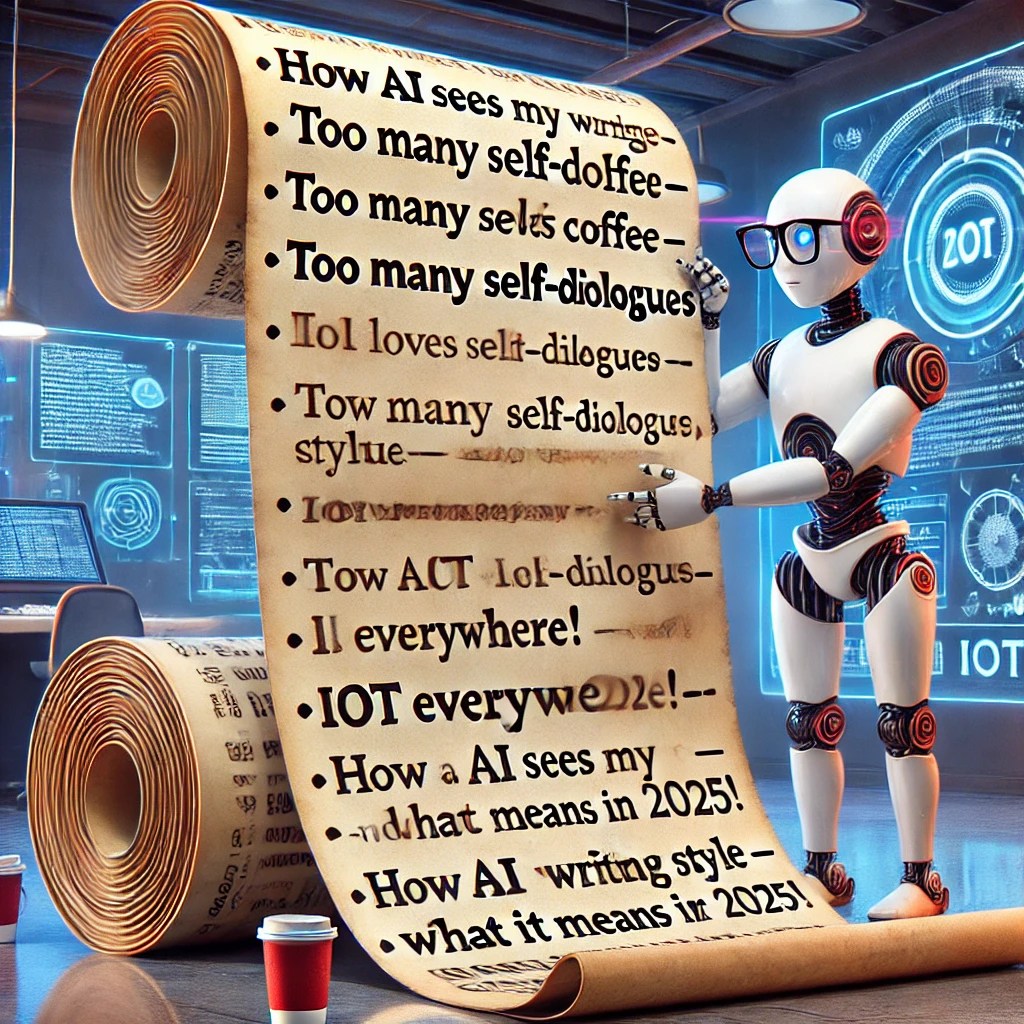
How AI Sees My Writing Style – And What It Means for 2025

“Do I really have a writing style?”

That question kept bouncing in my head as I stared at the AI analysis of my articles. I’ve always written instinctively—pouring out thoughts, reflecting on experiences, and hoping they resonate with someone out there. But now, with a year’s worth of writing analyzed, I can’t help but smile.

The verdict?

I’m a storyteller at heart. I thrive on conversations. Most importantly, I write for impact.

So, let’s break it down. What makes my writing style uniquely mine?

1. Storytelling is My Foundation

“You should start with a story.”

I remember hearing that advice long ago. At first, it felt unnecessary—why not just get straight to the point? But over time, I realized that stories bridge the gap between knowledge and understanding.

When I write about IoT, I don’t just list facts. I take readers on a journey, whether they’re entrepreneurs struggling to deploy smart city solutions or university students trying to commercialize an IoT project.

Take “Why Writing Is Like Running a Marathon” or “The Silent Struggles of Researchers”—I don’t just talk about endurance and challenges. I live through them in my writing.

Why it matters: Stories stick. They make abstract ideas tangible and personal.

2. Conversational and Relatable Tone

“Write as if you’re talking to a friend over coffee.”

That’s how I approach my articles. No stiff, robotic sentences. No excessive jargon. Just me, having a conversation with you.

Whether I’m sharing “How Medium Shaped My Voice” or “Why You Should Write From the Heart,” my goal is simple: I want you to feel like we’re just sitting together, chatting about life and ideas.

Why it matters: Readers don’t want to be lectured. They want a dialogue.

3. First-Person Perspective Brings Depth

“Why do you always write in first person?”

Because it’s real. Because it’s personal. Because I believe the best way to inspire is by showing—not just telling.

If I write about IoT projects in universities or my journey in the corporate world, I’m not giving a third-person analysis. I’m sharing my experiences, lessons, and mistakes.

Why it matters: It builds trust. Readers connect with people, not abstract ideas.

4. Structure Matters – A Lot

“Make it easy to read.”

Long, unbroken paragraphs? No thanks. My articles are structured with clear sections, subheadings, and logical flow.

If I’m explaining “5 Lessons I Learned About Writing” or “How Favoriot Empowers IoT System Integrators”, I want you to get value fast.

Why it matters: Clarity keeps people reading. A good article doesn’t feel like work—it flows effortlessly.

5. Motivation and Inspiration Are My Hidden Ingredients

“People don’t just read for information. They read for inspiration.”

When I wrote “Why Persistence in Writing Matters” or “Every Failure Was a Step Toward Success”, I wasn’t just telling stories. I was giving hope.

I know what it’s like to feel stuck. To feel like no one is listening. To wonder if your efforts are even worth it. But every challenge I’ve faced has led me somewhere better. That’s the message I want to leave behind.

Why it matters: Inspiration fuels action.

6. Versatility Without Losing Identity

“Do you only write about IoT?”

No. And I never will.

My interests are broad—entrepreneurship, technology, personal growth, writing—but my voice remains the same. Whether discussing IoT’s future or writing a letter to my future self, it still feels like me.

Why it matters: A consistent voice makes a writer memorable.

7. Emotion and Logic Go Hand in Hand

“Facts alone don’t convince people. Emotions do.”

When I wrote “How Responding to Comments Boosted My Writing Output,” I didn’t just provide statistics. I also shared how engaging with readers felt —the excitement, the connections, the motivation.

Then, I supported my argument with logic—why engagement matters, how it impacts visibility, and what writers can do to grow.

Why it matters: The best articles engage both heart and mind.

8. Analogies and Metaphors Make Everything Click

“Explain it like they’re five.”

If I say, “Writing is like running a marathon,” you immediately understand endurance is key. If I say, “A Medium writer is like a badminton player,” you get that consistency and technique matter.

I use analogies because they simplify complexity. IoT, AI, writing—whatever the topic, if I can compare it to something familiar, it becomes easier to grasp.

Why it matters: Analogies make learning fun and effortless.

9. Audience-Centric Writing

“Who am I writing for?”

Every article I write answers a question or solves a problem.

Whether it’s “Why You Should Not Give Up Writing” or “How Favoriot Empowers IoT System Integrators”, my focus is always: How can this help the reader?

Why it matters: Readers stay loyal when they feel seen and understood.

10. Learning and Growing Through Writing

“Writing is my best teacher.”

I reflect a lot in my articles.

From “Lessons Learned in My 13-Year Telco Career” to “My Journey of Writing 550 Articles on Medium”, I use my past as a learning tool. I talk about mistakes, breakthroughs, and the evolution of my thoughts.

Why it matters: Growth is relatable. Readers appreciate honesty.

What This Means for 2025

Seeing this breakdown made me realize one thing—I love writing.

And in 2025, I’ll write even more.

✔ More stories that resonate.
✔ More conversations that connect.
✔ More insights that inspire.

If AI says my writing has an impact, I owe it to myself (and my readers) to keep going.

Because at the end of the day, writing isn’t just about putting words on a page.

It’s about sharing experiences, shaping perspectives, and leaving a legacy.

Here’s to another year of storytelling.

Why I’m Leaving Medium: A Writer’s Journey to Rediscovering Joy

The Allure of Writing on Medium

I’ve always loved writing.

It’s been my escape, my way of sharing thoughts, ideas, and dreams with the world. And for a while, Medium was the perfect platform for that. It wasn’t just about the money – although, let’s be honest, the earnings did provide a nice boost of motivation.

But more than that, the sense of community drew me in.

The idea that my words could resonate with readers from all walks of life was exhilarating.

At its best, Medium felt like a writer’s haven, where effort and creativity were rewarded.

The Golden Days: When Writing Felt Rewarding

I was making a comfortable three-digit monthly income on Medium for a time. It wasn’t a fortune, but enough to validate the hours I spent crafting my pieces.

That three-digit figure felt like a pat from the universe, acknowledging that what I was doing mattered. I would eagerly check my earnings dashboard, and even when the numbers weren’t astronomical, they were steady.

They were enough to keep me going.

The Harsh Reality: Declining Earnings

But here we are in January 2025, and everything’s different now. My earnings have plummeted to a single digit. Yes, you read that correctly – single digit. I’ve earned just about a dollar with only five days left in the month.

A dollar! It feels almost laughable, doesn’t it?

I can’t buy a decent cup of coffee with my earnings any longer. And it’s not just me; this seems to be the collective frustration of countless writers on the platform.

Writers in Frustration: What Went Wrong?

Over the past year, conversations about declining earnings on Medium have surged across forums and social media.

Writers share their disappointment, confusion, and anger. Some blame the algorithm; others point fingers at changes in the Partner Program.

Whatever the root cause, one thing is certain: the joy of writing on Medium has been overshadowed by an air of disillusionment.

My Breaking Point: January 2025

For me, January 2025 has officially been the breaking point. It’s not just the earnings, though they have been a significant factor.

It’s the feeling of constantly being let down by a platform I once believed in.

Each time I check my dashboard this month, it reminds me how far things have fallen. And frankly, it’s exhausting.

The Decision to Move On

After much thought, I’ve decided that it’s time to move on.

I won’t be renewing my Medium subscription. Instead, I’ll be redirecting my custom domain to WordPress.

It feels like the right move for now – a fresh start on a platform where I can control my content completely.

On WordPress, I won’t have to worry about algorithms or earnings reports dictating my writing journey. I can write freely without the weight of disappointment looming over me.

A Bittersweet Goodbye to Medium

Saying goodbye to Medium isn’t easy.

There was a time when this platform felt like home, a space where my voice could thrive. But the frustration has peaked, and I refuse to let it drain my energy.

Life is too short to cling to something that no longer brings joy or fulfilment.

Rediscovering the Joy of Writing

As I enter this new chapter, I’m filled with sadness and hope.

I’m sad about what Medium once was and could have continued to be. I hope for what lies ahead, for the opportunities that come with a fresh start.

I’m ready to rediscover the joy of creating, to write without constraints, and to build something meaningful on my own terms.

A Message to Fellow Writers

If you’re reading this and feeling a similar frustration, know you’re not alone. Letting go isn’t easy, especially when something once meant so much.

But sometimes, a fresh start is precisely what we need to rediscover our passion.

Whether moving to a new platform, exploring a different medium, or simply taking a break, it’s okay to pivot. It’s okay to prioritize your happiness and your creative spirit.

Here’s to New Beginnings

So here’s to new beginnings—writing freely, passionately, and without the weight of algorithms or earnings reports—to rediscover the pure joy of storytelling, sharing ideas, and connecting with others.

Goodbye, Medium.

You’ll always be a part of my past, but you won’t define my future.

Here’s Why My Top 5 Articles in 2024 Earned the Most

YEAR 2024 STORIES

Analyse to get better results in 2025

I’ve always been curious about what makes some articles perform better than others.

So, when I looked at my top earners, a few patterns jumped out at me.

Let me walk you through what I noticed.

1. Relevant and Practical Topics

The first article on the list, “Five (5) Best Reasons Why I Chose Gumroad to Sell My eBooks,” wasn’t surprising. It speaks directly to content creators like me who want to sell digital products. It’s straightforward, helpful, and, most importantly, actionable. That’s a formula that works.

Similarly, “Avoid These 10 Mistakes and Become a Better Writer in 2024” was a hit because, let’s face it, who doesn’t want to improve their writing?

Tackling common mistakes is something almost every writer can relate to.

That relatability gave it an edge.


2. Timing is Everything

I realised that timing plays a huge role. Articles like “Avoid These 10 Mistakes…” and “Lessons Learned Before and After Joining Medium Partner” were published around the start of the year.

That’s when people are most motivated to learn, grow, and try new things.

It’s like catching a wave at just the right moment.


3. Actionable Tips Win Hearts

I’ve learned that people love actionable advice — stuff they can use right away.

Writing about practical steps, like optimising writing habits or selling eBooks, clicks with readers.

They see immediate value in it. Articles like “Five (5) Best Reasons Why I Chose Gumroad” stand out because they’re not just informative but useful.


4. Engagement Makes a Difference

This part surprised me.

Some articles didn’t just get views — they got a lot of reads. For example, the Gumroad article had 184 reads out of 349 views.

That’s over 50%! It tells me the people who clicked on it stuck around to read the whole thing.

Compare that to other articles that might have more views but fewer reads — it’s clear which ones connected with people.


5. Storytelling Works Wonders

I’ve always loved weaving personal stories into my writing, and readers seem to enjoy that, too. “A Letter to My Younger Self” is a great example.

It’s reflective and emotional; I think people appreciate that human touch.

It’s not just another “how-to” article — it’s a glimpse into my journey.


6. Short and Sweet Wins

Looking at the data, I noticed the sweet spot for article length is around 3–5 minutes.

These are long enough to deliver value but short enough to fit into a busy reader’s day. Articles like “Avoid These 10 Mistakes…” and “Lessons Learned…” are perfect examples.

They pack a punch without dragging on.


7. Niche Matters

Some articles do well because they speak directly to a specific group.

Take “Lessons Learned Before and After Joining Medium Partner,” for instance. It’s aimed at Medium writers, who are probably searching for that content.

I think finding the right niche is half the battle.


8. Eye-Catching Titles

I’ll admit that titles matter more than I used to think. Something like “Tripling My Medium December Earnings: When I Implement These Amazing Things” immediately grabs attention.

Words like “tripling” and “amazing” spark curiosity, and curiosity gets clicks.


Looking back, it’s clear that the combination of timing, practical value, personal voice, and targeting the right audience made these articles stand out.

And while I can’t always predict which ones will resonate the most, seeing these patterns emerge is fascinating.

Writing is as much about experimenting as it is about connecting with readers; I’m always learning.


Below are the top 5 highest earned articles in 2024.

View at Medium.comView at Medium.comView at Medium.comView at Medium.comView at Medium.com

Building a Startup and Writing on Medium: An Unlikely Analogy

Writing vs Startup

When I first started writing on Medium, I never imagined that it would remind me of the journey I embarked on when I co-founded FAVORIOT.

At first glance, writing and building a startup seem worlds apart.

One is solitary, often involving long hours in front of a screen, while the other demands collaboration, strategic planning, and execution. Y

et, the more I immersed myself in both, the more I realised how strikingly similar the two are.

Allow me to take you through this journey, using my personal experience as both a writer and an entrepreneur.

The Beginning: An Empty Page and a Blank Canvas

Starting a Medium blog is like looking at a blank page.

It’s intimidating.

You have no audience, no reputation, and no guarantee that your words will resonate with anyone. Similarly, building a startup begins with a blank canvas.

You have an idea – a vision – but no customers, no revenue, and no market presence.

I remember the early days of FAVORIOT.

We had a big dream: to help businesses and cities integrate IoT into their operations.

But dreams are just dreams without action.

Writing my first article on Medium felt the same.

I had thoughts swirling in my mind, but translating them into coherent words that others would find valuable was daunting.

Defining Your “Why”

One of the first lessons I learned was the importance of having a clear purpose.

Why was I building FAVORIOT? Why was I writing on Medium?

For FAVORIOT, the purpose was clear: to simplify IoT adoption and empower organisations with data-driven insights.

For Medium, my goal was to share knowledge, inspire others, and document my journey in IoT and entrepreneurship.

Both endeavours required me to articulate my “why” because this became the guiding light when things got tough.

And believe me, things did get tough.

The MVP (Minimum Viable Product)

Every startup begins with an MVP. It’s not perfect – it’s far from it – but it’s functional enough to solve a specific problem for early adopters.

My early articles on Medium were my MVPs.

They weren’t polished masterpieces.

Some were just 500 words, hastily written but filled with genuine insights.

I wrote about IoT trends, startup life, and even personal reflections.

Just as FAVORIOT’s first IoT platform had limited features but solved a critical problem for a niche audience, my initial articles aimed to deliver value to a small group of readers.

The goal wasn’t perfection but progression.

Building an Audience is Like Acquiring Customers

In the startup world, your product is nothing without customers.

Similarly, in writing, your articles mean little without an audience.

Both require a strategy to attract, engage, and retain people.

At FAVORIOT, we identified our target customers – companies and cities that needed IoT solutions – and worked relentlessly to reach them.

On Medium, I did the same. I identified my niche – IoT, smart cities, and entrepreneurship – and wrote consistently within those themes.

But the journey didn’t stop there. Just as a startup founder needs to pitch, network, and build relationships, I had to engage with my readers.

Responding to comments, sharing articles on social media, and participating in discussions were all crucial in growing my Medium audience.

The Grind: Consistency Over Time

Building a startup and writing regularly both demand one thing above all: consistency.

There were days when it felt like no one cared about what I was building at FAVORIOT.

Months would go by with no significant sales or partnerships.

Similarly, there were weeks when my articles on Medium received little to no views.

It’s disheartening.

But success doesn’t happen overnight. I learned to embrace the grind.

At FAVORIOT, we kept refining our platform, reaching out to potential clients, and showcasing our value proposition.

On Medium, I kept writing, experimenting with different formats and topics, and learning what resonated with my readers.

Consistency builds momentum. And momentum is what drives growth.

Feedback is Gold

In both ventures, feedback is invaluable.

For FAVORIOT, customer feedback shaped our product development.

It told us what features to add, what to fix, and what to prioritise.

For my Medium writing, reader feedback was equally crucial.

When readers left comments or shared my articles, it gave me insights into what worked and what didn’t.

Some feedback was critical, but I welcomed it. Just as a startup must listen to its customers, a writer must listen to their audience.

Scaling Up

Once you’ve found your footing, the next challenge is scaling.

For FAVORIOT, scaling meant expanding our platform’s capabilities, entering new markets, and forming global partnerships.

For my Medium writing, scaling meant increasing my output, diversifying my topics, and reaching a broader audience.

But scaling comes with its own challenges.

In a startup, you risk losing focus as you try to do too much too quickly. The same is true for writing.

At one point, I tried writing about topics outside my expertise, thinking it would attract more readers. It backfired.

I learned that scaling isn’t just about doing more; it’s about doing more of what you do best.

The Role of Passion

Both writing and building a startup require passion.

Without it, you’ll struggle to persevere through the inevitable challenges.

I’m deeply passionate about IoT and its potential to transform industries and improve lives.

This passion drives my work at FAVORIOT. It’s the same passion that fuels my writing on Medium.

When you’re passionate, it shows. Customers sense it. Readers sense it.

Passion isn’t something you can fake – it’s either there, or it isn’t.

The Payoff

After years of hard work, FAVORIOT is now recognised globally, with partners in multiple countries.

Similarly, my writing on Medium has garnered a loyal following, with some articles reaching thousands of readers.

The payoff isn’t just financial or numerical.

It’s the satisfaction of knowing you’ve built something meaningful.

For FAVORIOT, it’s the impact we’ve had on businesses and cities.

For my writing, it’s the messages I receive from readers who say my articles inspired them.

Final Thoughts

Writing on Medium and building a startup are both about creating value.

They require courage, resilience, and a willingness to learn.

If you’re considering starting a blog or launching a business, remember this: start small, be consistent, and never lose sight of your purpose.

The journey may be challenging, but the rewards are worth it.

Looking back, I’m grateful for both experiences.

They’ve taught me invaluable lessons, shaped my perspective, and allowed me to connect with amazing people.

And who knows?

Maybe your journey as a writer or entrepreneur will inspire others, just as mine has inspired me.

Why I Felt Writing is Like Running a Marathon

WRITER’S JOURNEY

My Journey on Medium

Photo by Pietro Rampazzo on Unsplash

I received a comment from Muhammad Ahtisham stating that writing on Medium is a marathon, not a sprint. This tempted me to write the analogy of writing on Medium and running a marathon.

I often find myself drawing analogies between life and the activities we undertake.

Writing on Medium, for instance, is much like running a marathon.

At first glance, the two may seem worlds apart, but the parallels become strikingly clear once you embark on the journey.

Photo by Mārtiņš Zemlickis on Unsplash

Both require endurance, consistency, and, most importantly, a deep-seated purpose. Let me take you through my experience, where these two seemingly different pursuits intertwine.

I remember the day I decided to write on Medium. It wasn’t a grand decision or a well-thought-out plan.

It started as an itch to share my thoughts on IoT and smart cities, which have consumed my professional life. “Will anyone even read this?” I asked myself.

Photo by Tong Su on Unsplash

It was a daunting thought, akin to standing at the starting line of a marathon, surrounded by seasoned runners. Their confidence and experience dwarfed my timid resolve.

Why am I doing this?” That was the question I often asked myself.

The same question nags at you around the fifth kilometre of a marathon. The initial adrenaline fades, and you’re left grappling with your commitment.

For me, the answer lay in a simple yet powerful truth: I wanted to inspire. I wanted to share not just knowledge but the stories behind that knowledge – the challenges, the triumphs, and the lessons learned.

Writing on Medium was never about instant success.

Just like a marathon, it’s a long game.

Photo by Miguel A Amutio on Unsplash

In the beginning, my articles barely got any views. I would refresh the stats page obsessively, hoping for a miracle. “Why aren’t they reading?” I’d wonder, the frustration bubbling up.

But then, I reminded myself of a lesson I’d learned from running: The first few kilometres are for finding your rhythm, not for speed.

Writing, like running, requires patience. Each article was a step forward, a chance to refine my voice and connect with the audience who truly needed my insights.

One day, after posting an article on IoT applications in agriculture, I received a comment: “This is exactly what I was looking for. Thank you!” It was a small win, but it felt like crossing the first checkpoint in a marathon.

Someone was reading. Someone found value in my words.

“Keep going,” I told myself.

That moment shifted my mindset. I stopped obsessing over views and started focusing on writing for the sake of writing.

Photo by Capstone Events on Unsplash

It was liberating.

Instead of sprinting towards elusive metrics, I settled into a comfortable pace, one that allowed me to enjoy the process.

There’s another parallel I discovered: preparation.

A marathon runner doesn’t just wake up and decide to run 42 kilometres. They train, plan their nutrition, and test their limits. Writing is no different. I had to build a routine, carving out daily time to write, read, and think.

Do I really have to do this every day?” I’d groan, especially on days when the words refused to flow.

But I knew skipping a day would make it easier to skip the next.

Consistency was the key, even if it meant writing subpar drafts. Those drafts were like training runs – they weren’t pretty, but they built endurance.

I also learned the importance of pacing.

Going too fast too early in a marathon can leave you exhausted before the finish line. Similarly, I realized that churning out articles daily wasn’t sustainable. Quality mattered more than quantity.

Take your time,” I’d remind myself as I stared at an article draft, unsure if it was good enough.

Instead of rushing to publish, I allowed myself to revisit and refine. Each edit felt like perfecting my stride, making the journey smoother.

Photo by Quino Al on Unsplash

Then there’s the matter of support. No marathoner runs alone.

There are fellow runners, spectators, and coaches cheering you on.

For me, that support came from the Medium community. Fellow writers, readers, and even the occasional critic all played a role in my growth.

One day, after publishing a piece on entrepreneurship, I received a direct message from another writer: “Your story inspired me to start my own business. Thank you for sharing.” That message was like the crowd at a marathon, their cheers pushing me forward.

See? This is why you write,” I told myself.

Of course, there were setbacks. Every marathon has its wall – when exhaustion hits, and you question everything.

For me, it came during a period of writer’s block: no ideas, no motivation, just a gnawing sense of failure.

Why am I even doing this?” I’d mutter, tempted to give up.

But then I remembered the finish line.

In a marathon, you don’t stop because you’re tired; you stop when you’ve crossed the line. Writing had its finish lines – completing an article, reaching a new reader, or simply expressing an idea I’d been mulling over.

Photo by Capstone Events on Unsplash

Looking back, I realise that writing and running a marathon are deeply personal journeys.

They test your limits, reveal your strengths, and force you to confront your weaknesses. But they also offer immense rewards.

Today, as I continue to write on Medium, I see each article as another kilometre in the marathon.

Some are smooth and effortless, while others are gruelling uphill battles. But with each step – or word – I grow stronger.

Would you do it all over again?” someone once asked me about my writing journey. Without hesitation, I said, “Absolutely.

Writing has given me more than just an outlet for my thoughts.

It has taught me resilience, discipline, and the joy of sharing.

It has connected me with people I would never have met otherwise.

Most importantly, it has reminded me that real victory lies not in the destination but in the journey itself.

So here I am, still running this marathon, one article at a time.

And just like every marathoner knows, the finish line isn’t the end – it’s just a new beginning.

5 Lessons I Learned About Writing (The Hard Way)

Photo by Angelina Litvin on Unsplash

When I started writing, I was excited but clueless.

I followed every advice I could find, thinking it would fast-track my growth.

Some of it helped, but a lot of it wasted my time.

Looking back, I realise many of my mistakes could’ve been avoided.

Here are five simple lessons I learned through trial and error.

1. Write Often, But Fix Your Mistakes

When I was new to writing, I kept hearing, “Just write as much as you can. It doesn’t matter if it’s bad.” So, I wrote and wrote, but I wasn’t getting better.

Why? Because I wasn’t learning from my mistakes.

One day, I took a step back and reread my older pieces. I cringed.

That’s when I realised that writing isn’t just about pouring out words — it’s about learning how to improve them.

Now, every time I write, I also edit and reflect. Mistakes are okay, but fixing them is what makes you improve.

2. Read What Interests You, Not Just to Impress Others

People kept telling me to read a lot to improve my writing.

So, I went overboard. I read anything and everything, but often, I wasn’t paying attention.

I skimmed articles, left a quick “great piece!” comment, and moved on. I thought that’s how you built connections.

But over time, I realised I was fooling myself.

Reading like that didn’t help me write better or connect with anyone.

Now, I only read what genuinely interests me. When I find something good, I take my time to understand it.

This way, I learn and respect the effort the writer put into their work.

3. Comment Like You Mean It

I used to think leaving lots of comments on people’s articles would get me noticed.

So, I’d quickly type things like, “Nice work!” or “Great read!” and move on.

It felt like I was doing something productive, but those comments were shallow.

Writers can tell when your comment is just filler.

They stop engaging with you because you didn’t read their work.

Now, I only comment when I have something meaningful to say.

If I like a piece, I’ll share what stood out or what I learned from it. A good comment goes a long way in building authentic connections.

4. Don’t Play the Follow-for-Follow Game

At first, I thought the secret to growing my audience was simple: follow everyone, and they’ll follow you back.

My follower count grew for a while, but it didn’t feel right.

Most of these “followers” weren’t interested in my writing, and I wasn’t interested in their work either. It felt empty.

Now, I follow people whose work I enjoy or can learn from.

Sure, my growth is slower, but it’s real.

The people who follow me now actually read and engage with my work, and that’s far more rewarding.

5. Write When You Have Something to Say

One piece of advice I used to follow was, “Just keep writing no matter what.” So, I wrote even when I had no ideas, energy, or passion for what I was doing.

The results? My writing felt forced, and I wasn’t proud of it.

Then I realised something: Writing isn’t just about putting words on a page.

It’s about having something to share, an idea, a story, or a lesson.

Now, I write when inspired or strongly about a topic. Writing this way makes the process enjoyable, and the results are much better.

Final Thoughts

Writing is a journey; like any journey, it’s easy to get lost if you follow the wrong map.

I made plenty of mistakes, but each one taught me something valuable.

If you’re starting, take your time to find what works for you.

Write, learn, and connect with people authentically.

It’s not about shortcuts — building something meaningful, one step at a time.

Songs of the Heart

POEM

Love from through a song

In a quiet town where whispers roam, 
Lived a man in a modest home. 
He wandered through each quiet day, 
Until he heard a voice that made him stay.

A melody drifted on the breeze, 
A song that brought him to his knees. 
Her voice, like honey, smooth and sweet, 
Called out to him, their souls to meet.

He followed notes through twilight’s glow, 
To find the source of this echo. 
There she stood, with grace and charm, 
Her singing was a soothing balm.

Her eyes met his, a spark ignites, 
Two hearts entwined in love’s delight. 
They sang together, side by side, 
Their voices blending, love their guide.

Each morning brought a new refrain, 
A symphony to ease their pain. 
Their harmonies a pure embrace, 
A testament to love’s sweet grace.

In fields of green, beneath the skies, 
Their songs would rise, their spirits high. 
They sang of dreams and whispered fears, 
Their melodies washed away their tears.

Through winter’s chill and summer’s heat, 
Their love, a song, was always sweet. 
Each note a promise, strong and true, 
Their hearts composed a love anew.

They danced through life, a joyous waltz, 
With every verse, their hearts exalts. 
A duet in life’s grand serenade, 
Their love, a timeless, sweet cascade.

Years rolled by, yet still they sang, 
In perfect harmony, their love rang. 
A bond unbroken, through time’s embrace, 
Their love songs left a tender trace.

And as the twilight years drew near, 
Their voices still rang pure and clear. 
In every note, their love would flow, 
A beautiful song, forever to grow.

So in that town, where whispers roam, 
Lived a man in a loving home. 
He found his heart through her sweet song, 
And together, their love was ever strong.