Why Quiet Years Often Matter More Than Busy Ones

Some years shout.

They announce themselves with launches, awards, headlines, travel photos, packed calendars, and endless updates. They feel loud even before they are over.

Then some years barely whisper.

No fireworks. No dramatic milestones to post about. No big celebration dinners. Just long days, repetitive work, silent thinking, and a calendar that looks strangely empty from the outside.

For a long time, I feared those quiet years.

Am I falling behind?
Why does it feel like everyone else is moving faster?
Did I miss something important?

Only later did I realise something that changed how I look at time, work, and progress.

Quiet years often matter more than busy ones.

Not in obvious ways. Not in ways that attract applause. But in ways that shape everything that comes after.

Let me explain.

The Illusion of Busy Years

Busy years are addictive.

They make you feel relevant. Needed. In demand. Every week is filled with meetings, events, decisions, and quick wins. You move from one task to another with momentum. There is little time to question direction because speed itself feels like purpose.

I have lived through those years.

There were times when my calendar looked impressive. Meetings stacked back-to-back. Travel plans every month. Panels, talks, deadlines, emails at midnight. From the outside, it looked like progress.

Inside, something else was happening.

Thinking time disappeared.

Reflection became a luxury. Decisions were made reactively. You respond more than you choose. You move fast, but you are not always sure where you are heading.

This feels productive, I used to tell myself.
At least things are happening.

Busy years reward motion. Quiet years demand clarity.

What Quiet Years Feel Like

Quiet years feel uncomfortable at first.

Fewer external signals are telling you that you are doing well. Fewer invitations. Fewer people are checking in. Less validation. Your work becomes less visible and more internal.

Most of the effort goes into things that do not translate into instant results.

Reading.
Thinking.
Fixing fundamentals.
Rewriting plans.
Building systems that nobody sees yet.

You spend more time alone with your thoughts than with applause.

I remember sitting in the office late one evening during one of those quiet stretches. No urgent calls. No deadlines screaming for attention. Just me, a notebook, and an uneasy feeling.

Is this stagnation? I asked myself.
Or is this preparation?

That question stayed with me.

Quiet Years Are When Foundations Are Rebuilt

When everything is loud, you rarely touch the foundations. You are too busy adding floors.

Quiet years force you to look down instead of up.

You start noticing cracks you ignored before. Processes that no longer make sense. Assumptions that worked five years ago but feel wrong today. Goals that were inherited rather than chosen.

During quiet periods, I found myself revisiting basic questions:

Why are we building this?
Who are we really serving?
What should we stop doing?
What must work even when attention disappears?

These are not questions you answer in between meetings. They need space.

Quiet years give you that space.

They allow you to rebuild without pressure to perform for an audience. You can redesign systems, rethink direction, and strengthen weak links while nobody is watching.

By the time noise returns, the structure is already stronger.

The Invisible Compounding Effect

One of the hardest things about quiet years is that progress becomes invisible.

There is effort, but little evidence. Work is happening, but outcomes lag behind. You plant seeds without knowing which ones will grow.

This is where many people quit.

They mistake silence for failure. They assume that if nothing is visible, nothing is working.

I have learned that quiet years often hide compounding effects.

Writing without immediate readers.
Building products before the market is ready.
Training people who will only show results years later.
Documenting processes that will save time long after you forget writing them.

None of these produces instant feedback.

Yet, when momentum finally arrives, it feels sudden to outsiders.

Overnight success, they call it.

You and I know better.

Busy Years Consume Energy, Quiet Years Restore Direction

Busy years strangely drain energy.

Even when things go well, you feel stretched. Decisions pile up. Context switches exhaust the mind. There is constant urgency, even when nothing is truly urgent.

Quiet years slow things down.

Energy flows differently. Instead of being pulled in ten directions, it focuses on fewer priorities. You stop chasing everything and start choosing deliberately.

I noticed this shift clearly.

In busy years, my thinking stayed tactical. Solve this problem. Respond to that request. Fix today’s issue.

In quieter years, thinking became strategic again. Long arcs. Five-year questions. Structural changes.

If we continue like this, where will we end up?
What must be true for the next phase to work?

These questions do not scream for attention. They wait patiently.

Quiet Years Test Your Relationship With Ego

This might be the most uncomfortable part.

Busy years feed ego. Quiet years starve it.

When external recognition fades, you are left with one question.

Do you still believe in the work when nobody is watching?

I had to confront that question honestly.

There were moments when I missed the noise. The feedback. The sense of being visible. Quiet years strip away performance, leaving only intention.

If this never gets applause, would I still do it?
If progress takes longer than expected, do I still commit?

These questions reshape you.

They make motivation cleaner. Less dependent on reactions. More grounded in purpose.

The Trap of Measuring Life in Short Bursts

We live in a culture that celebrates bursts.

Quarterly results.
Monthly growth.
Weekly metrics.

Busy years fit perfectly into this worldview. They produce frequent updates and visible milestones.

Quiet years refuse to cooperate.

They stretch across time. They do not fit neatly into slides or social posts. They demand patience in a world that rewards speed.

I have come to see life less as a series of sprints and more as a series of seasons.

Some seasons are for harvesting.
Some are for planting.
Some are for repairing tools.
Some are for letting the soil rest.

Quiet years are not empty seasons. They are preparation seasons.

Why Many Breakthroughs Are Born in Silence

Look closely at most meaningful breakthroughs, and you will notice something.

They rarely happen during the noisiest periods.

They emerge after long stretches of thinking, trial, error, and refinement that nobody paid attention to at the time.

The idea matures quietly.
The skill sharpens privately.
The system stabilises out of sight.

Then one day, the world notices.

It looks sudden. It never is.

Quiet years create the conditions for breakthroughs. Busy years often only showcase them.

Learning to Trust Quiet Progress

Trust is hard when evidence is scarce.

During quiet years, you learn to measure progress differently.

Not by likes or invitations, but by questions such as:

Are decisions getting clearer?
Are mistakes repeating less often?
Is the team thinking more independently?
Do systems break less under pressure?

These signals are subtle. They require attention.

I started keeping private markers of progress. Notes to myself. Minor improvements that only I could see. They became reminders that something real was happening, even if it was not visible yet.

Stay with the process, I would tell myself.
Noise will come later.

When Quiet Years End

Quiet years do not last forever.

They give way to movement, visibility, and activity again. When that happens, the difference becomes obvious.

Decisions feel calmer.
Growth feels steadier.
Pressure feels manageable.

You are not scrambling to catch up. You are responding from a more substantial base.

People often ask what changed.

Nothing obvious.
Everything fundamental.

A Different Way to Look at Your Current Year

If this year feels quiet for you, pause before labelling it as wasted.

Ask yourself different questions.

What am I rebuilding right now?
What foundations am I strengthening?
What clarity am I gaining that I did not have before?

You might be in a year that will never make headlines but will quietly decide the next decade of your life.

Those years deserve respect.

Closing Thoughts

Busy years are visible. Quiet years are essential.

One without the other creates an imbalance. Noise without preparation leads to collapse. Preparation without patience leads to frustration.

I have stopped fearing quiet years.

I treat them as a sign that deeper work is happening. Work that does not ask for attention but shapes outcomes in lasting ways.

If you are in one now, stay with it.

Something important is forming, even if it has not yet learned to speak.

I would love to hear your thoughts.

Are you in a busy year or a quiet one right now?
What has it been teaching you?

Share in the comments.

Reflecting on a Grounded 2025: Lessons from Favoriot’s Journey

I am writing this ten days before 2025 comes to an end.

When I look back at the year, it does not feel loud. It does not feel dramatic. It feels focused. Demanding. Grounded. A year where most of my time, energy, and thinking revolved around one thing only: Favoriot.

If I am being honest, 2025 was not a year of balance. It was a year of commitment.

Most of my days were spent at the office. And when I was not physically there, my mind was still working on Favoriot. Nights. Weekends. Quiet moments that could have been rest often turned into planning or problem-solving. I did not spend much time on myself personally. There were no real holidays. The only breaks I had were during overseas business trips, and even then, work followed me closely.

I told myself more than once, This is not a sacrifice. This is a choice.

And I am at peace with that choice.

Fewer Invitations and a Shift in How We Connect

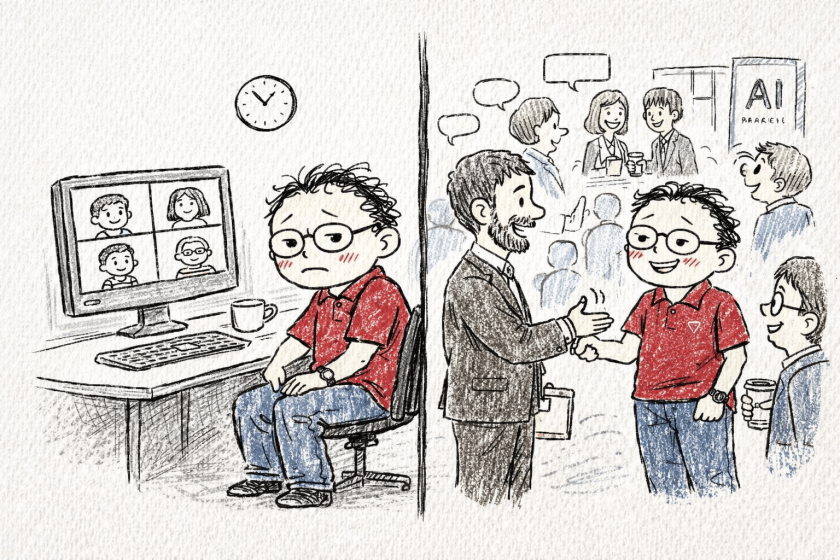
One noticeable change in 2025 was the drop in invitations from universities and public conferences. Many engagements that used to be physical moved online. Meetings became links. Conversations became scheduled time slots on screens.

I realised something about myself quite clearly this year.

I do not enjoy online meetings anymore.

They are convenient, but they remove the human layer. The casual chats before meetings start. The spontaneous conversations after sessions end. The subtle signals that build trust faster than formal presentations ever can.

I still prefer face-to-face meetings. They feel more honest. Better for networking. Better for understanding people beyond their titles.

Public conferences were fewer as well. Part of it could be the current spotlight on AI. IoT felt quieter this year, almost like it had stepped back from centre stage. I was not bothered by it. I was observant.

Trends move quickly. Real work moves steadily.

Why Panel Sessions Still Matter to Me

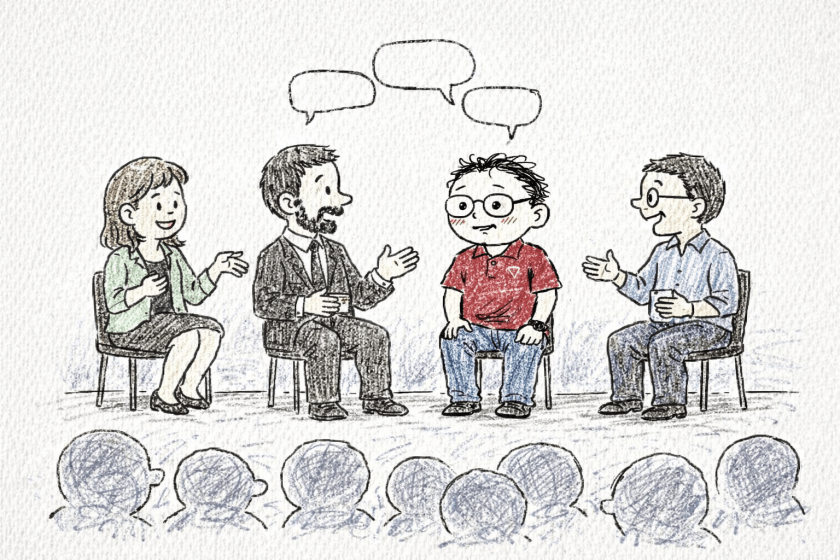
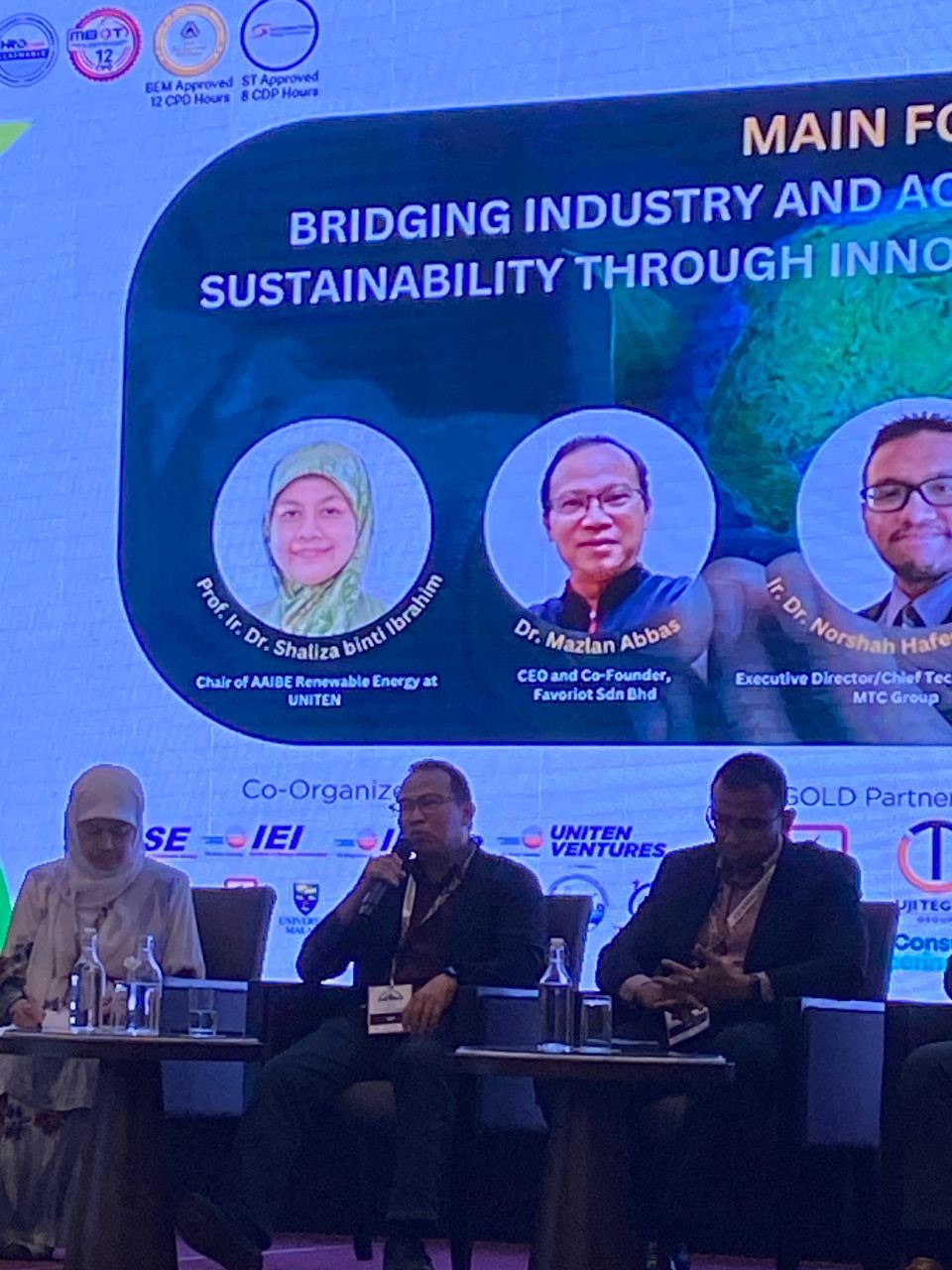
While formal speaking invitations slowed, one format still felt right to me: panel sessions.

No slides. No heavy preparation. Just conversations.

Sitting on stage, exchanging views, listening, responding, sometimes disagreeing politely. That feels closer to how decisions are made in real life.

I often think that insight shows up better in dialogue than in bullet points.

That belief stayed strong in 2025.

A Year Focused on Partnerships

Behind the scenes, 2025 was anything but quiet.

We spent a significant amount of time building partnerships. By the end of the year, we had signed MOUs with more than 40 partners across 15 countries. Our original target was 25 countries, so on paper, we fell short geographically.

But numbers do not tell the whole story.

I have learned that more partners do not automatically mean more revenue or more projects. Partnerships only matter when they are actively engaged, aligned, and nurtured.

Signing is easy. Building trust takes time.

Some partnerships moved faster. Some are still warming up. Some will likely take longer to show results. That is the nature of building across borders.

This year reminded me that ecosystems are built patiently, not collected quickly.

When People Find You on Their Own

One encouraging pattern this year was how people and companies started approaching us unexpectedly.

Each time, I asked the same question. “How did you find us?”

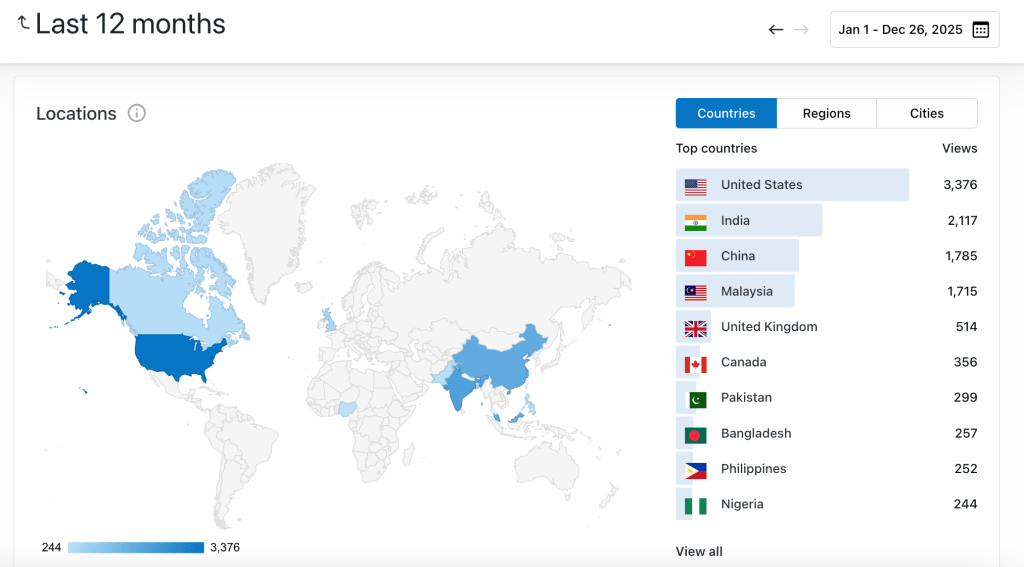
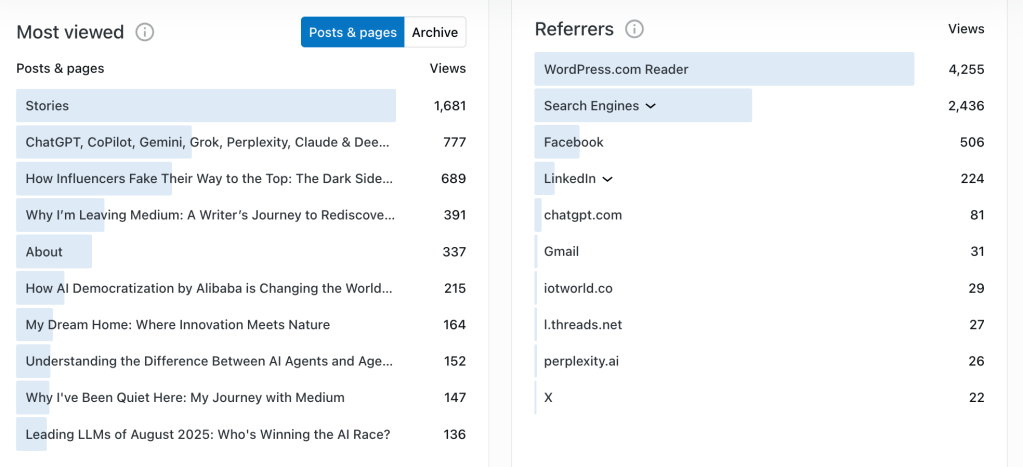
The answer was often simple. They searched online. They did their own research. They were surprised to discover an IoT platform company operating from this region.

That always made me pause.

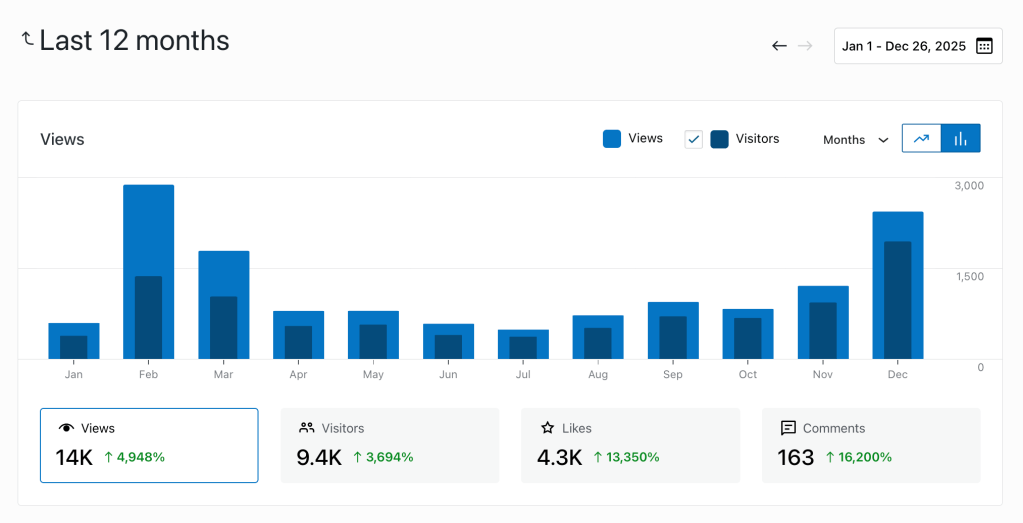
Years of writing, sharing, and building quietly compound over time. Visibility does not always arrive with announcements. Sometimes it comes as an unexpected email or message.

That is when you realise the work has travelled further than you thought.

Fewer Projects, Fewer Trainings, a Cautious Market

Not everything grew this year.

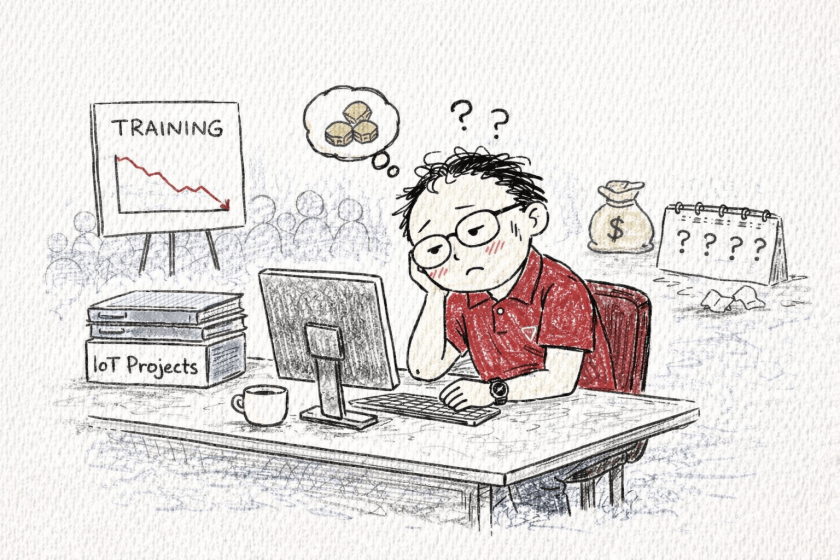
Real IoT projects were fewer compared to previous years. IoT training numbers dropped as well. In-house training, which used to scale better, became harder to secure. We relied more on public training sessions, which are always challenging when it comes to attendance.

The market felt cautious.

Budgets were tighter. Decisions took longer. Interest was still there, but commitment required more patience.

There were moments when I questioned the pace. Is this a temporary slowdown, or is the market resetting itself?

Perhaps it is both.

Shifting My Focus Between Industry Associations

This year, I was less active in the Malaysia Smart City Alliance Association.

At the same time, I became more involved with the Malaysia IoT Association, partly due to my role as Vice-Chairman.

More importantly, MyIoTA’s Smart City Nexus activities align closely with the reasons I joined the association. The Nexus focuses on bringing members’ solutions directly to local councils. It creates a practical space for business matching, not just discussion.

That matters to me, and I plan to be more active there moving into 2026.

Favoriot Sembang Santai Podcast: Keeping Conversations Human

Another meaningful chapter in 2025 was the start of the Favoriot Sembang Santai.

We started the podcast in February 2025, and by December, we had reached Episode 38.

The reason was simple. I wanted a space for honest conversations. No scripts. No slides. No pressure to sound formal. Just honest discussions about Favoriot’s journey and what we were seeing in the IoT space.

The primary host is Zura Huzali, and I serve as the primary guest and speaker. The chemistry works because it feels natural. Curious questions. Straight answers. Occasional debates. Plenty of laughter.

The topics evolved naturally from Favoriot’s story into broader themes such as AI, robotics, satellite IoT, and Ambient IoT. Not as buzzwords, but as technologies we were trying to make practical sense of.

Anyone who misses the live sessions can catch the recordings on YouTube, Spotify, and Amazon Music.

The podcast will continue throughout 2026. For me, it is a long conversation, not a series.

TikTok Live on IoT Man: Ask Me Anything

Alongside the podcast, we also started doing casual TikTok Live sessions on the IoT Man channel.

The central theme is simple. “Ask Me Anything.”

No agenda. No slides. Just live questions and real-time answers. What excites me about these sessions is that they capture a different segment of listeners. Shorter attention spans. Younger audiences. People who may not sit through a long podcast but are curious enough to drop in and ask.

It feels raw. Immediate. Human.

Sometimes the most honest questions come without preparation.

Working With AI to Prepare for 2026

As 2025 draws to a close, one personal highlight has been working with my AI companion.

Not to replace thinking, but to sharpen it.

I spent many late nights shaping 2026 playbooks. How we approach the market. How we engage customers. How we manage partners. New business models. New IoT solution ideas.

The picture ahead feels clearer now.

Looking Forward

2025 was not flashy. It did not come with loud milestones.

But it mattered.

It tested focus. It strengthened conviction. It prepared the ground.

I am genuinely excited about 2026. The plans are clearer. The energy feels different. I hope the long-standing plans around IoT certifications with universities will finally become a reality.

Here is to a better, steadier, and more rewarding year ahead.

I would love to hear how your 2025 has been. Share your reflections in the comments.

The Courage to Create: Answering Life’s Questions

One sentence.

“Is this all?”

That question did not come from failure.
It came from success that felt… incomplete.

On paper, things looked fine.
Titles. Meetings. Progress updates.
Calendars full. Slides polished.

But something kept pulling at me.

A desire to build.
Not just oversee.

A desire to leave something behind.
Not just pass things along.

A desire to create.
Not manage people who manage people who manage processes.

That question followed me home.
Into quiet moments.
Into long drives.
Into conversations with myself.

“Is this all?”

Not because the work was bad.
But because my hands were no longer shaping anything real.

That question was not dissatisfaction.
It was a signal.

Some questions do not ask for answers.
They ask for courage.

And once you hear it clearly…
you cannot unhear it.

Start Before You Feel Ready

Some people wait for the perfect moment.
I learned that the moment never comes.

Most goals fail not because they are impossible, but because we whisper to ourselves, “When I’m ready, I’ll start.”

I used to wait too.

Wait for the right timing.
Wait for the right support.
Wait for fear to disappear.

But fear never disappears.
It only shrinks when you walk toward it.

One small step at a time.

Write the first paragraph even if it feels awkward.
Record the first video even if your voice shakes.
Launch the project even if you are still figuring things out.

Progress grows when you stop negotiating with doubt.

The world rewards people who start before they feel ready.
The world remembers the ones who dared to begin.

So if your heart keeps pulling you toward something, listen.

Move.
Try.
Begin.

Your future self is waiting for you on the other side of courage.

New Book Release – The Favoriot Way: A Life Built on Curiosity and Courage

I never intended to write a book about my life. For the longest time, I believed my story was ordinary. A boy who loved robots. A student who worked hard. A man who moved from academia to corporate, from research labs to startup chaos. Nothing spectacular. Nothing worth documenting.

But as the years passed, people began asking me the same question.
How did you do it?”

Not in a way that demanded formulas or secret tricks, but in a way that revealed genuine curiosity.

“How did you keep going?”
“How did you reinvent yourself so many times?”
“What kept you believing when others doubted you?”
“What pushed you to start Favoriot so late in life?”

I realised then that this story was not really about me. It was about the lessons hidden between the chapters. Lessons about resilience, curiosity, courage and purpose. Lessons shaped by struggles most people never saw. Lessons carved not by success, but by the quiet decisions to keep moving forward.

This book is not a list of achievements. It is not a formula for success. It is not a polished story told from a pedestal. It is a reflection of a life shaped by small sparks, broken radios, unexpected losses, second chances, relentless learning, surprising turns and a belief that Malaysia can build technology that matters.

I wrote this for the young engineer who doubts his potential.

For the student who feels invisible in a big system.
For the entrepreneur who fears starting too late.
For the dreamer who keeps ideas hidden because of what others might say.
For the person standing at the edge of a decision, whispering, Can I really do this?

If my journey teaches anything, let it be this:

You do not need the perfect moment to begin.
You do not need the loudest voice to make an impact.
You do not need to be young to chase a dream.
You just need the courage to take the first step and the purpose to keep going.

The chapters ahead are pieces of my life told honestly, sometimes painfully, sometimes joyfully, but always with the hope that they help someone see their own path more clearly.

Thank you for reading this.

Thank you for letting me share my story.

And thank you for believing, even in small ways, that our country can build a future filled with possibilities.

The journey continues.

I am grateful to walk part of it with you.

[Download the eBook for FREE – The Favoriot Way: A Life Built on Curiosity and Courage]

My Journey Through Academia, Telco, and Startup Mayhem — And Why I’d Do It Again

From Signals to Sensing: The Early Spark

Every time I look back at where this whole adventure began, I’m reminded of how simple the starting point was. I was just a young engineer obsessed with how things connected. My academic path shaped the first chapter — electrical engineering, telematics, and finally a doctoral dive into telecommunications.

Those years were filled with long nights, dense textbooks, and moments where I quietly wondered, “Is this really the road I want to stay on?” But something about networks — the way invisible signals could connect lives — kept pulling me forward.

My early years in academia gave me a grounding that I still rely on today. Teaching forced me to explain ideas clearly, question assumptions, and stay curious. It was the first real test of whether I understood the world of connectivity or was just reciting formulas.

Into the Telco Trenches

Eventually, the classroom walls felt too small. I wanted to see how these theories behaved under real pressure. That shift took me deep into the telecommunications industry.

Those years were intense: real customers, real failures, real deadlines. It wasn’t just about making a system work; it was about keeping it alive when the world depended on it.

Later, I moved to a national research agency, where I led teams working on early broadband, wireless sensor networks, and technologies that today fall neatly under the label of IoT. Back then, it felt like tinkering with the future. Testing prototypes in rural villages, deploying sensors in unfamiliar places, experimenting with wireless technologies that many considered too early or too ambitious.

Yet I couldn’t shake the thought: “What if this tech leaves the labs and enters daily life?” That question lingered for years.

The Entrepreneurial Leap

Eventually, that question grew too loud to ignore. I left the comfort of corporate structures and returned to the raw, unknown world of startup life.

First came a role in shaping a national IoT initiative. Then came the big leap: building a company from scratch.

That company was REDtone IoT. Running it taught me one of the toughest lessons — great tech means nothing if people can’t use it easily. Every client wanted IoT, but most didn’t know where to start. They struggled with device integration, cloud setups, dashboards, maintenance, and the countless hidden complexities that IoT quietly hides behind its shiny promise.

That frustration became the seed for something bigger.

The Birth of FAVORIOT

By 2017, the vision crystallised: create a platform that removes the chaos and gives everyone — students, SMEs, city councils, engineers — a simple way to bring IoT ideas to life.

FAVORIOT wasn’t built to be fancy. It was built to be practical.

I wanted a platform where a lecturer could run a complete IoT project without having to manage 10 different systems. Where a hardware company didn’t need to customise dashboards endlessly. Where a city council could monitor sensors without drowning in integration nightmares.

FAVORIOT was designed for inclusion. For accessibility. For the everyday builder, not just the big spender.

And every year since, that vision has deepened.

Wearing Many Hats

Even as FAVORIOT was growing, I continued teaching and speaking. These weren’t side gigs. They kept me grounded. They reminded me why I started.

Standing in front of students made me rethink complexity. Speaking to industry leaders challenged my ideas. Engaging with smart city stakeholders, founders, and device makers kept me aware of the real obstacles people face.

Sometimes I’d walk out of a lecture hall thinking, “This feedback is better than any consultancy report.”

Sometimes a conversation with a frustrated engineer made me go back and tweak the platform design.

Those experiences shaped FAVORIOT as much as any technology roadmap ever did.

Recognition and Reality Checks

Over time, things began to click. FAVORIOT earned recognition. My own work in IoT and smart cities gained global visibility. Industry groups listed me among the top influencers. Conferences kept inviting me to speak.

But none of that ever felt like a trophy finish. If anything, it reminded me that the journey had only just reached a new checkpoint.

“Alright, Mazlan, now don’t get comfortable,” I’d quietly tell myself.

The pressure increased. Expectations rose. The work became heavier… but also more meaningful.

Why the Story Still Matters

When I piece the chapters together, it becomes clear that every phase — the student, the professor, the telco engineer, the researcher, the entrepreneur — served a purpose.

  • Academia taught discipline.
  • Telco taught scale.
  • Research taught imagination.
  • Entrepreneurship taught resilience.
  • Teaching and speaking taught clarity.

FAVORIOT stands today as more than a platform. It’s a symbol of what happens when technology is shaped around people — their pains, their limitations, their hopes.

I’ve always believed IoT should be accessible. Not something locked behind expensive teams or giant corporations. Not something only “experts” can touch.

If we can empower everyday builders, we’re doing something right.

A Note to My Younger Self

If I could sit with the younger version of me — the one carrying textbooks thicker than his arm — I’d probably smile and say:

“Every jump you make will make sense one day. Every detour, every frustration, every late night… you’re collecting tools. Don’t rush the process.”

And maybe I’d add:

“When you build for people, not systems, that’s when the real magic happens.”

If you’ve read this far, I’m curious — which part of this journey speaks to you the most? Drop your thoughts. Let’s connect through stories.

Hi. I’m the Guy Behind FAVORIOT

And this isn’t another tech pitch.
It’s a confession… and a promise.

FAVORIOT didn’t appear out of thin air.
It was born from years of watching brilliant Malaysians fight battles they shouldn’t have to fight.

I’ve been in telco rooms where engineers looked exhausted after stitching ten different systems together.
I’ve sat with lecturers who said their students had the passion but no real platform to grow on.
I’ve listened to system integrators torn between pleasing clients and staying sane.
I’ve seen founders pour their hearts into pilots that never scaled because every new project felt like starting from scratch.

I saw all of it up close.
I asked questions.
I listened carefully.
I heard the frustration that people rarely say out loud.

One lecturer confided, “My students can build anything… but we have no common place to make it real.”

A hardware partner admitted, “We’re drowning in dashboard customisations. It’s slowing us down.”

A founder whispered what many felt, “Every pilot feels like a science experiment that no one wants to repeat.”

The pattern was unmistakable.
The problem wasn’t talent.
It wasn’t ideas.
It wasn’t ambition.

It was the weight of chaos…
devices speaking ten different languages, dashboards built for every new customer, integrations that kept breaking, and projects that died because the foundations were never steady.

Everyone was building islands.
No bridges.
No unity.
No momentum.

And it hurt to see so many capable Malaysians struggling not because of skill… but because the ecosystem never gave them a proper foundation.

So I decided to build one.

Not a platform for show.
Not a platform for slides.
But a platform shaped by every frustration I witnessed.

A platform that starts you at 60 percent instead of zero.
A platform that speaks to every device, every protocol, every idea.
A platform that lets students learn without drowning.
A platform that lets partners grow without rebuilding the same thing endlessly.
A platform that lets enterprises keep their data close and their confidence intact.

FAVORIOT wasn’t built to impress you.
It was built to lighten your load.

Because I’ve seen the late nights.
The soldering iron on the table at 2am.
The dashboards rebuilt for the fifteenth time.
The excitement in students fading because nothing works the way it should.
The startups who gave up not because their idea was bad, but because everything around their idea was too messy.

I built FAVORIOT so that your talent doesn’t get buried under problems that shouldn’t exist.

I’m not saying it will fix bureaucracy.
I’m not saying it will make everyone tech-ready overnight.
And I’m not saying it will solve every problem under the Malaysian sun.

But I am saying this:

The struggles that slow you down the most are solvable.

The confusion.
The repeated work.
The endless customisation.
The feeling of always starting over.
The platforms that fight you instead of helping you.

Those problems shouldn’t be your burden anymore.

You were meant to build solutions.
To teach.
To innovate.
To create impact.
To push Malaysia forward.

Your tools should support that… not get in the way.

So try it.
Connect a single sensor.
Send one stream of data.
Build one dashboard.

And see if something inside you says…
“This is how it should have been all along.”

My belief?
You’ll finally feel the freedom to build without fighting the foundations.

FAVORIOT exists because Malaysia deserves that freedom.
Innovators deserve that clarity.
And you deserve a platform that works with you.

No hype.
No fireworks.
Just the foundation you’ve been asking for… quietly waiting for you to take the next step.

— The guy who built Favoriot because too many Malaysians were struggling in silence.

Why Writing in a Storytelling Manner Resonates with Most People: A Personal Reflection

Have you ever noticed how your eyes light up and your ears perk when someone begins a sentence with, “Let me tell you a story…”? I’ve seen this countless times — in conferences, casual chats over coffee, and even in my blog’s comment section. There’s something magical about stories. And over the years, I’ve discovered that writing in a storytelling manner doesn’t just make my articles more enjoyable to write — it makes them more impactful, relatable, and memorable to readers.

But why? I asked myself this question many times, especially when I first started blogging. I thought, Isn’t it enough to just present the facts? Why bother weaving them into stories? What I’ve learned might surprise you — and it might just change the way you approach your own writing.

Let me share my journey with you.

The Human Brain is Wired for Stories

I remember reading somewhere that long before we had books, slides, or YouTube videos, we had storytellers sitting around fires. Storytelling wasn’t a hobby; it was a way to pass down knowledge, warn about dangers, and preserve culture. It’s deeply embedded in us.

When I began writing technical articles — especially about IoT, smart cities, or AI — I noticed that readers often skimmed through data-heavy sections. But when I shared a personal anecdote, like the time our prototype failed during a big demo, and how we scrambled to fix it before the client noticed, people paid attention. They messaged me. They shared the post.

Ah, I thought, it’s not the technology that draws them in. It’s the people behind the technology. It’s the struggle, the triumph, the humor, the heart.

Stories give context. Facts tell you what’s happening, but stories help you feel why it matters.

People Remember Feelings, Not Just Facts

I can’t count how many times I’ve given talks where I presented both data and a simple story. Months later, people would come up to me and say, “I still remember that story you told about building Favoriot in your small apartment!” But they rarely remembered the numbers or charts.

Why? Because stories tap into emotion. And emotion is the glue that helps information stick in our minds.

When you tell a story about a challenge you overcame, or a moment that changed your perspective, people see themselves in it. They feel the fear, the hope, the relief. And when they feel, they remember.

I often picture writing like planting seeds. If you scatter plain facts, they might sprout here and there. But if you wrap those facts in a story, it’s like planting seeds in rich, fertile soil — they’re far more likely to grow in the reader’s mind.

Storytelling Builds Trust and Connection

Okay Mazlan, I asked myself one day, why do I enjoy reading certain writers more than others? The answer came quickly: I feel like I know them.

When we write in a storytelling manner, we let readers into our world. We share a piece of ourselves — our doubts, our failures, our little victories. It humanizes us. And in this noisy digital world, where everyone is trying to shout louder, what people crave most is authenticity.

I’ve noticed that when I tell stories — whether about my early days juggling work and family, or about navigating the uncertain waters of startup life — readers open up too. They share their own stories in return. Suddenly, it’s not just a one-way broadcast. It’s a conversation.

Isn’t that what we really want? To connect, to feel heard, to know we’re not alone?

Stories Make Complex Ideas Simple

One of the biggest challenges I face in writing about IoT or AI is explaining complex ideas in ways that people can understand. I could talk about protocols, sensors, cloud architecture… or I could say:

“Imagine you’re a farmer with a chili plantation. You wake up, check your phone, and see that your soil sensors say the land’s too dry. Before the sun’s up, you’ve turned on the irrigation — no guesswork, no wasted water.”

Which one would you rather read?

Stories create mental pictures. And mental pictures help us grasp ideas faster and deeper. Whenever I see a puzzled face in the audience during a talk, I know it’s time to switch from facts to story mode. And almost always, I see that Aha! moment light up their eyes.

Storytelling Gives Your Writing Rhythm

I’ve read many articles that feel like chewing on dry crackers — all facts, no flavor. But storytelling adds rhythm. You can slow down at the emotional parts, speed up during the action, pause for effect, or even surprise your reader with an unexpected twist.

When I write, I sometimes imagine I’m telling the story aloud — like I’m sitting with a friend at a kopitiam, sipping teh tarik. Would I really say it like this? Or would I add a little humor, a dramatic pause, a knowing smile?

This rhythm keeps readers hooked. They want to know what happens next.

But What If I’m Not a “Natural” Storyteller?

I used to think that too. Mazlan, you’re an engineer, not a novelist! I’d tell myself. But storytelling isn’t about fancy language or perfect plots. It’s about honesty. It’s about sharing what you saw, what you felt, what you learned.

Start small. Instead of just stating, “Our project was delayed by two weeks,” tell what happened: “We thought we had it all figured out, until the sensor shipments got stuck at the port. I remember standing in the warehouse, staring at the empty shelves, wondering how I’d explain this to the client.”

See? Same fact — but now it’s alive.

My Final Reflection: Stories Are What Make Us Human

In my journey as a writer, technologist, and entrepreneur, I’ve come to see storytelling as not just a tool, but a responsibility. If I can make my readers feel, imagine, and connect — even for a few minutes — then I’ve done more than just write. I’ve reached across the digital void and touched a fellow human.

So, the next time you write — whether it’s a blog, an email, or even a product description — pause and ask yourself: What’s the story here?

Because in the end, we don’t just read to gather facts. We read to find ourselves in someone else’s tale. And that, my friend, is the power of writing in a storytelling manner.

I thought to myself as I finished this piece, “If even one reader smiles, nods, or feels inspired to tell their own story, then this was worth writing.”

Let’s keep telling stories — the world needs them more than ever.

What Is the Legacy You Want to Leave Behind?

“Mazlan, if one day you’re gone… what do you want people to remember you for?”

That question hit me harder than I expected.

Not because I didn’t have an answer — but because I never sat down to ask myself that question. Not seriously. Not honestly.

I’ve chased titles. Built startups. Stood on stages. Collected lanyards from conferences like souvenirs from a battlefield. But when the applause fades, the lights dim, and the LinkedIn likes stop rolling in… what remains?

That’s where the legacy lies.

Legacy Isn’t a Resume. It’s a Ripple.

Most people think legacy is about achievements — the things we list proudly on our CVs, or etch on tombstones.

“Inventor of X.”

“CEO of Y.”

“First person to Z.”

But that’s not legacy. That’s history.

Legacy is the echo. The ripple. The silent change you trigger in someone else’s life — often without even knowing.

For me, legacy isn’t the IoT platform I built. It’s the student who emailed me last week saying, “Dr. Mazlan, because of your workshop, I now believe I can create something valuable.”

That.

That right there — is the real legacy.

You Don’t Have to Be Famous to Leave a Legacy

There’s this myth that legacy is reserved for the Elons, Steves, or Obamas of the world.

Nonsense.

Your legacy could be the way you raise your children to be kind in a world that often isn’t.

It could be the junior colleague you mentored, who now leads a team of 20.

It could be the way you made people feel seen, heard, respected.

The problem is, most people live on autopilot. Wake up. Work. Sleep. Repeat.

“I’ll think about legacy when I retire,” they say.

But legacy isn’t built when you’re 65. It’s built today. With every decision. Every interaction. Every “I believe in you” when someone needed to hear it most.

My Legacy? Favoriot Was Just the Beginning

I didn’t build FAVORIOT because I wanted to be known as the “IoT guy.”

I built it because I saw a future where Malaysia — and other developing nations — could own their digital destiny. Where our innovations weren’t just consumers of Western tech, but creators of solutions.

I wanted a child in Kelantan to learn IoT in their school lab… and dream of solving real problems, not just passing exams.

I wanted local councils to embrace smart cities not because it’s trendy — but because it reduces flooding, saves energy, and improves lives.

And yes — I wanted retirees like me to know it’s never too late to start your final and most meaningful career.

FAVORIOT, to me, was the vehicle. The platform. The megaphone.

But the legacy?

That’s the mindset shift. The empowerment. The belief that we — Malaysians, Southeast Asians, anyone in the so-called “developing” world — can innovate for our own and not just import from others.

What Will You Leave Behind?

If your name disappeared from your company website tomorrow, would the company feel your absence?

If social media vanished, would your voice still resonate somewhere?

If your children, students, friends, or community were asked, “What did this person stand for?” — would they know?

And if you don’t like the answer… maybe it’s time to change the story.

The 3-Legged Stool of Legacy: Impact, Influence, Intention

Here’s how I think about it now:

Impact – What tangible changes have I made? Did I build something useful? Did I fix something broken? Influence – Who have I inspired? Encouraged? Mentored? Intention – Why did I do it? Was it for ego… or for evolution?

You don’t need to tick all three boxes every day. But over a lifetime? They should start to align.

Final Thoughts (But Not the Final Chapter)

When I’m gone, I don’t want people to remember my job titles. I don’t need statues or awards.

I just want someone, somewhere — maybe a young engineer, maybe an entrepreneur on the edge of quitting — to say:

“Because of what he shared, I kept going.”

“Because of what he built, I believed it was possible.”

“Because of how he lived, I dared to do the same.”

That’s enough.

So, I’ll ask you now what I finally asked myself:

What legacy do you want to leave behind?

And more importantly…

Are you building it today?

Why “Pick My Brain” Isn’t Free Anymore — And That’s OK

You’ve probably heard it before — or maybe you’ve said it yourself.

“Can I pick your brain?”

It sounds innocent. Harmless. Even flattering, right?

But if you’ve ever been on the receiving end of that phrase more times than you can count — especially after years of hard-earned experience, long nights, and lessons learned the hard way — you start to notice a pattern.

Let me guess…

They want your expertise.
They want your contacts.
They want your strategy.
They want your playbook.

But they don’t want to pay for it.

Wait, when did my brain become a free buffet?

There was a time when I said yes to every coffee meeting, every DMs asking for “advice,” every student request to “chat for 15 minutes.” I thought, why not? It’s good karma. I’m helping someone.

But over time, something shifted.

I began to feel drained. Not just mentally — emotionally too.

People would show up with notebooks, ask 100 questions, take furious notes… and disappear. No follow-up. No thank you. Just silence — until the next person showed up asking the same thing.

It wasn’t a conversation. It was extraction.

Here’s the brutal truth: Free advice isn’t free.

Behind every answer I give, there are:

  • 10+ years of doing the work
  • Thousands of dollars in mistakes
  • Countless hours learning what NOT to do
  • Relationships I spent decades building

That doesn’t mean I’m unwilling to help. Not at all.

It just means I now value my time — and I hope you do too.

So when someone says “Can I pick your brain?” — here’s what I really hear:

“Can I get the shortcuts, distilled wisdom, and customized advice that you earned through blood, sweat, and tears… for the price of a latte?”

And that’s just not sustainable.

But what if you genuinely want help?

Great! There’s a better way to ask.

Try this instead:

  • “Do you offer consulting? I’d love to book a session.”
  • “Is there a paid way I can access your insights?”
  • “Can I attend your workshop or buy your guide?”

That tells me you respect the value of what I bring to the table — and you’re serious about acting on it.

Because let’s be honest: People who pay, pay attention. When you invest in something, you show up differently. You listen harder. You apply faster. You get results.

Free advice, more often than not, just collects dust in someone’s Google Drive.

It’s not personal — it’s professional.

This boundary isn’t about being arrogant. It’s about being aligned.

My time is now reserved for:

  • People who are ready to commit
  • Clients who want transformation, not just information
  • Collaborations that are mutually respectful and energizing

The rest? Well… they’ll be okay. Google exists. YouTube is full of free content. Libraries are still around.

But if you want my brain — the years, the insights, the customized roadmap?

That’s called consulting. And yes, it comes with a price tag.

I still want to give back — just differently.

I still write free blog posts. I still create podcast episodes. I still share value-packed content online. That’s me giving back at scale — to everyone.

But my one-on-one time?

That’s sacred now.

Because here’s what I’ve learned the hard way:

“If you don’t put a price on your time, someone else will — and it’ll be far lower than it’s worth.”

So, if you’re someone who’s ever wanted to ask “Can I pick your brain?” — pause for a second. Ask yourself:

  • Do I value this person’s time?
  • Am I ready to act on what I learn?
  • Am I willing to invest in the outcome I want?

If the answer is yes — fantastic.

Let’s talk. But let’s do it the right way.

Because your brain isn’t a buffet either.

And it’s time we all started acting like it.