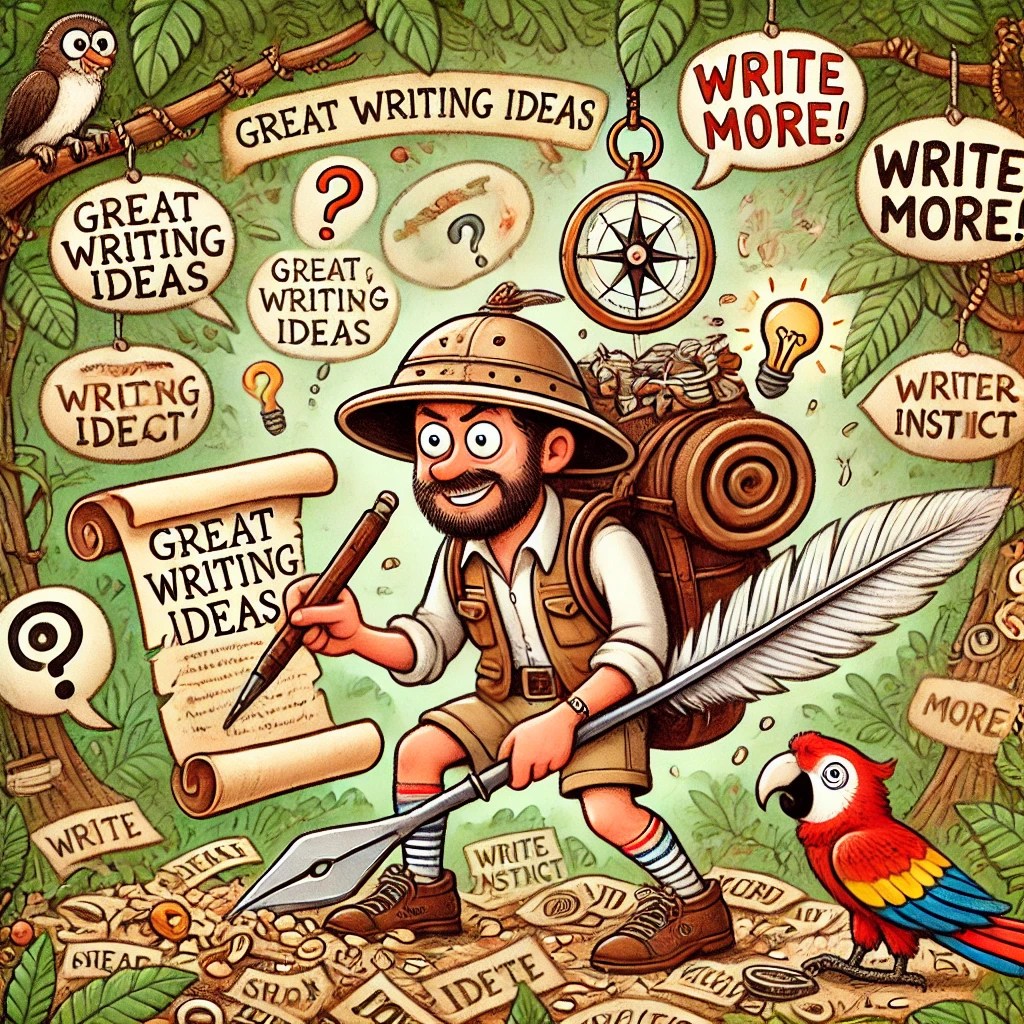
Why I Felt That Writing is an Adventure

WRITER’S STORIES

The Call to Adventure

Photo by Holly Mandarich on Unsplash

I’ve always been fascinated by the idea of being an adventurer, exploring uncharted territories and uncovering hidden treasures.

While I don’t carry a compass or a backpack, I’ve realised that my journey as a writer on Medium mirrors the life of an explorer.

Every article I write feels like stepping into the unknown, like embarking on a new expedition.

The journey began with a single question: What should I write about? It was as if I stood at the edge of a dense forest, staring at countless paths ahead. The possibilities felt thrilling yet intimidating.

Should I write about IoT? Entrepreneurship? Or something completely different?” I wondered. It was like being a novice explorer, equipped with no map and only a vague sense of direction.

But I knew one thing: staying put was not an option.

The First Step

Photo by Andrew Neel on Unsplash

Taking that first step was the hardest.

I decided to write about something close to my heart — IoT.

The words felt clunky as I typed, like trudging through a thick jungle. Doubts crept in: Is this good enough? Will anyone read this?

It’s not about perfection,” I reminded myself, echoing a lesson I’d read about explorers. “It’s about taking the journey.

When I published my first article, it felt like finding a small clearing in the forest. It wasn’t groundbreaking, but it was progress. “You did it,” I told myself. “What’s next?

Navigating New Terrain

Photo by NEOM on Unsplash

With each article, I ventured deeper into the unknown.

Some topics were like familiar trails that were easy to navigate. Others felt like steep mountains, daunting and full of uncertainty.

The first time I attempted to write about a personal experience, stepping outside my usual IoT expertise.

Will anyone care about this story?” I hesitated, staring at the screen.

It felt like standing at the base of a towering peak.

But as I wrote, I discovered something powerful: authenticity and vulnerability were like ropes and harnesses, helping me climb those intimidating heights.

When readers commented, “This resonated with me,” it felt like reaching the summit.

The view from the top was worth every moment of doubt.

Facing Setbacks

Photo by NEOM on Unsplash

Not every journey went as planned.

I remember pouring my energy into an article about smart cities, only to see it receive minimal views.

What went wrong?” I asked myself, frustrated.

It felt like wandering through a desert, searching for water but finding none. But even in those moments, I learned valuable lessons.

Like an adventurer adapting to the terrain, I realised I needed to experiment with different topics and perspectives.

Every setback became an opportunity to recalibrate my compass.

Discovering Hidden Treasures

Photo by Scott Goodwill on Unsplash

One of the most rewarding aspects of being an adventurer is stumbling upon hidden treasures, and writing offers plenty.

Sometimes, it was an unexpected idea that turned into a well-received article.

Other times, it was a connection with a reader who shared how my words impacted them.

I recall writing about how IoT could revolutionise agriculture, thinking the topic was too niche.

To my surprise, it became one of my most-read pieces. “This is your treasure,” I told myself. “Even the smallest ideas can hold immense value.

Finding Fellow Travellers

Photo by krakenimages on Unsplash

Every adventurer needs a tribe, and the Medium community became mine. Fellow writers shared tips, encouragement, and camaraderie.

I remember a comment on one of my articles: “Your story gave me the courage to share my own.

It felt like meeting another traveller at a campfire, exchanging stories that inspire and uplift. “Keep going,” they said. “You’re on the right path.

Embracing Risks

Photo by NEOM on Unsplash

What’s an adventure without risks?

Sometimes I stepped far outside my comfort zone, tackling controversial topics or experimenting with new styles.

It felt like crossing a rickety bridge over a canyon.

What if this fails?” I often asked myself. However, I knew that growth required pushing boundaries. Even when I stumbled, the experience taught me resilience and courage.

The Journey, Not the Destination

Photo by Danka & Peter on Unsplash

Over time, I realised that writing, like adventuring, isn’t about reaching a final destination.

It’s about the discoveries, challenges, and growth along the way. Each article became a chapter in my story, marking where I’d been and how far I’d come.

One day, someone asked, “Why do you keep writing?

I smiled and replied, “Because I’m not done exploring.

Looking Ahead

Photo by NEOM on Unsplash

Writing has shown me that the world of ideas is vast and limitless.

There’s always another path to take, another treasure to find, another story to tell.

Each article is a new expedition filled with twists, turns, and surprises.

As an adventurer of words, I’ve learned this: the journey is far from over.

The horizon stretches endlessly, and I can’t wait to see what lies beyond.

The Top 5 Types of Articles I Wrote in 2024

ASPIRING WRITER’S STORIES

Reflecting on my Medium Writings in 2024

Photo by Joanna Kosinska on Unsplash

Reflecting on my journey as a Medium writer in 2024, I noticed recurring themes and categories in my published pieces.

These patterns reveal what I focused on, what resonated with my readers, and how I evolved as a writer.

Below is a breakdown of the five main types of articles I wrote and insights into why they mattered to me and my audience.

1. The Aspiring Writer’s Journey

stARPhoto by Jack Anstey on Unsplash

This category captures my reflections on writing as an art and a discipline. Articles like Why I Felt That Writing is an Adventure and Why Writing on Medium is Similar to Mountain Hiking explore how writing mirrors life’s challenges, requiring persistence, creativity, and self-discovery.

I also delved into practical advice for writers, such as How New Writers Can Attract More Readers and The Art of Consistency for an Entrepreneur,” offering insights gained from my struggles and triumphs. Through these articles, I aimed to inspire budding writers to embrace their unique voices, overcome self-doubt, and find joy in the process rather than just the outcome.

Why It Matters:
Writing is a deeply personal journey, and sharing my experiences helps others realise they’re not alone. Whether tackling writer’s block or celebrating small wins, these stories resonate with those seeking encouragement and guidance.

2. Startup Survival Stories

iPhoto by Marvin Meyer on Unsplash

As the CEO of Favoriot, I’ve faced numerous challenges in building a startup from scratch. Writing about these experiences helped me document and share key lessons with aspiring entrepreneurs. Articles like Favoriot and PT Lima Dua Satu Indonesia Join Forces to Boost Indonesia’s 100 Smart Cities Movement showcased real-world applications of Favoriot’s work. At the same time, About Favoriot — Part 12: The Dream of M&A Exit highlighted strategic growth milestones.

Additionally, pieces like How Favoriot Became the Top IoT Platform in Malaysia provided a behind-the-scenes look at the grit and strategy of scaling a tech business. My accounts, such as The Day I Overcame the Fear of Public Speaking and Became a Keynote Speaker,” blended entrepreneurial lessons with personal growth narratives.

Why It Matters:
These stories offer a transparent look at the highs and lows of entrepreneurship. They resonate with readers building their businesses or navigating professional challenges.

3. IoT and Technology Insights

Photo by Clint Patterson on Unsplash

As an IoT enthusiast and thought leader, I wrote extensively about the Internet of Things and its transformative potential. Articles like Understanding Industry 4.0 and Industrial Revolution 4.0 and The Crucial Role of IoT in Environmental Measurement aimed to simplify complex topics for a broader audience.

In addition to educational content, I shared practical applications of IoT, such as How IoT Projects in Universities Can Become a Commercial Success and How Favoriot Caters to Different IoT Developer Needs.” These pieces catered to both tech professionals and curious readers looking to understand the role of IoT in everyday life.

Why It Matters:
Technology can seem intimidating, but breaking it into relatable concepts makes it accessible. These articles helped bridge the gap between innovation and application, inspiring readers to explore IoT’s possibilities.

4. Influencer’s Journey

Photo by Alexander Shatov on Unsplash

As someone who actively engages on social media and other digital platforms, I explored the challenges and opportunities of being an influencer in the tech and writing spheres. Articles like The Art of Growing on X and How My Medium Followers Are 3X Lower but Earned 200X Than My TikTok reflected my efforts to balance authenticity with growth strategies.

In this category, I also touched on broader topics like the ethical dilemmas of social media (How Influencers Fake Their Way to the Top) and personal struggles, such as managing online fatigue (How to Overcome Social Media Fatigue).

Why It Matters:
Navigating the digital world is a universal challenge. By sharing my experiences, I provided readers with relatable insights into building an online presence while staying true to their values.

5. Personal Reflections and Motivational Pieces

Photo by Drew Beamer on Unsplash

Some of my most heartfelt articles were rooted in personal stories and life lessons. Pieces like The Silent Struggles of Researchers and The Power of Personal Stories captured moments of vulnerability and growth.

I also wrote motivational articles like Why You Should Write From the Heart and Every Failure Was a Step Towards Your Success. These were intended to uplift readers and encourage them to persevere through their challenges.

Why It Matters:
Personal reflections have a universal appeal. They allow readers to connect with the writer on a deeper level, finding comfort and inspiration in shared human experiences.

Key Takeaways from My Writing Themes

  1. Diverse Interests Drive Engagement:
    My articles covered various topics, from writing and IoT to entrepreneurship and personal growth. This diversity kept my content fresh and appealing to different audience segments.
  2. Authenticity Resonates:
    Authenticity was at the heart of my writing, whether sharing technical knowledge or personal anecdotes. Readers appreciate honesty and relatability, which I strived to bring to every piece.
  3. Consistency is Crucial:
    Publishing regularly helped me maintain a steady presence on Medium. This consistency improved my writing skills and strengthened my connection with readers.
  4. Storytelling Enhances Impact:
    Weaving narratives into my articles, whether about Favoriot’s journey or my struggles, made them more engaging. Stories create emotional connections that facts alone cannot.
  5. Reflection Fuels Growth:
    Writing about my experiences forced me to reflect on my journey, learn from mistakes, and celebrate progress. This process was as rewarding for me as it was valuable to my readers.

Conclusion

Writing on Medium in 2024 was more than just a creative outlet; it was a journey of self-discovery, connection, and growth.

By exploring themes of writing, entrepreneurship, technology, influence, and personal reflection, I enriched my understanding and touched the lives of readers worldwide.

Looking ahead, I aim to deepen these connections and continue sharing stories that inform, inspire, and ignite change.

After all, every word written is a step forward in an endless adventure.

Lessons Learned in 2024: A Writer’s Perspective

YEAR-END 2024 ROUNDUP

The results encourage me to write more in 2025!

Photo by Andrea De Santis on Unsplash

Your writing style reflects a unique blend of authenticity, thoughtfulness, and versatility, making it relatable and impactful.

It’s full of personal experiences, professional insights, and motivational undertones that connect deeply with a diverse audience.

Below, I’ll break down the key aspects of your writing style:


1. Storytelling as the Core

  • How You Use It:
    Storytelling is the foundation of your writing. You often begin with a personal anecdote, a relatable scenario, or a reflective question that draws readers into your world. These stories serve as a gateway to broader lessons or insights.
  • Example:
    In articles like “Why Writing Is Like Running a Marathon” or “The Silent Struggles of Researchers,” you use your journey to frame more significant concepts, making complex or abstract ideas tangible.
  • Impact on Readers:
    Storytelling helps readers see themselves in your words. It evokes emotions, making your writing not just informational but also memorable.

2. Conversational and Relatable Tone

  • How You Use It:
    Your tone is conversational, almost as if speaking directly to the reader. This makes your articles accessible to a broad audience, from seasoned professionals to aspiring beginners.
  • Example:
    In pieces like “How Medium Shaped My Voice” or “Why You Should Write From the Heart,” you employ a direct, friendly tone that invites readers into a dialogue rather than a monologue.
  • Impact on Readers:
    The conversational tone breaks down barriers, making even technical or complex topics approachable. It fosters a sense of connection and trust.

3. Use of First-Person Perspective

  • How You Use It:
    Writing in the first person is a hallmark of your style. It allows you to infuse articles with personal reflections, experiences, and insights, adding depth and credibility.
  • Example:
    Articles like “About Me — Part XII: The Dream of M&A Exit” or “How IoT Projects in Universities Can Become a Commercial Success” showcase your lived experiences and lessons learned.
  • Impact on Readers:
    This perspective personalizes your writing, creating an intimate connection with the reader. It also establishes you as a trustworthy and relatable figure.

4. Structured and Organised Approach

  • How You Use It:
    Your articles are well-structured, with clear sections, subheadings, and logical progression. This organisation helps readers easily follow your arguments or narratives.
  • Example:
    In “5 Lessons I Learned About Writing” or “How Favoriot Empowers IoT System Integrators,” you break down key points into digestible sections, ensuring clarity.
  • Impact on Readers:
    This structured approach appeals to readers who value efficiency and clarity. It allows them to quickly grasp your main ideas without feeling overwhelmed.

5. Motivational and Inspirational Undertones

  • How You Use It:
    Many of your articles aim to inspire or motivate. You often include uplifting messages or practical advice encouraging readers to overcome challenges and achieve their goals.
  • Example:
    In pieces like “Why Persistence in Writing Matters” or “Every Failure Was a Step Toward Success,” you share personal stories of resilience and perseverance.
  • Impact on Readers:
    These undertones resonate with readers on an emotional level, providing not just knowledge but also encouragement and hope.

6. Versatility Across Themes

  • How You Use It:
    Your writing spans diverse topics, including IoT, writing, entrepreneurship, and personal growth. Despite this variety, you maintain a consistent voice and style.
  • Example:
    Articles like “Components of IoT” contrast with reflective pieces such as “A Letter to My Future Self,” yet both feel authentically yours.
  • Impact on Readers:
    This versatility allows you to reach different audiences while showcasing your interests and expertise.

7. Blend of Emotion and Logic

  • How You Use It:
    Your writing balances emotional resonance with logical reasoning. You often begin with a story or feeling and then back it up with facts, examples, or practical steps.
  • Example:
    In “How Responding to Comments Boosted My Writing Output,” you share a personal anecdote about engagement, followed by actionable advice on fostering connections with readers.
  • Impact on Readers:
    This blend appeals to the heart and the mind, making your articles engaging and informative.

8. Use of Analogies and Metaphors

  • How You Use It:
    Analogies and metaphors are tools you frequently employ to simplify complex ideas or add depth to your narratives.
  • Example:
    In “Why Writing Is Like Running a Marathon” or “A Medium Writer Is Like a Badminton Player,” you use relatable comparisons to make your points more vivid and understandable.
  • Impact on Readers:
    These literary devices make your writing more engaging and help readers grasp abstract or technical concepts effortlessly.

9. Audience-Centric Approach

  • How You Use It:
    You write with your readers in mind, often addressing their pain points, questions, or aspirations. Your articles aim to provide value, whether through insights, advice, or inspiration.
  • Example:
    In “Why You Should Not Give Up Writing When No One Is Reading Your Articles” or “How Favoriot Empowers IoT System Integrators,” you speak directly to your audience’s needs and challenges.
  • Impact on Readers:
    This approach builds loyalty and engagement, as readers feel understood and valued.

10. Iterative Reflection and Learning

  • How You Use It:
    Your writing often reflects a process of continuous learning and self-improvement. You openly discuss past mistakes, lessons learned, and how you’ve grown as a writer, entrepreneur, or individual.
  • Example:
    Articles like “Lessons Learned During My 13-Year Stint at One of the Biggest Telcos in Malaysia” or “My Journey of Writing 550 Articles on Medium” highlight this reflective quality.
  • Impact on Readers:
    This transparency makes your journey relatable and inspiring, encouraging readers to embrace their learning curves.

Summary

Your writing style is a harmonious blend of authenticity, storytelling, and structured thought. It’s designed to inform, inspire, and connect, resonating with a broad audience.

Whether sharing entrepreneurial lessons, IoT insights, or personal reflections, your articles reflect a genuine desire to uplift and educate.

This unique combination of emotional depth and intellectual rigour makes your voice compelling and memorable.

Why I’m Leaving Medium: A Writer’s Journey to Rediscovering Joy

The Allure of Writing on Medium

I’ve always loved writing.

It’s been my escape, my way of sharing thoughts, ideas, and dreams with the world. And for a while, Medium was the perfect platform for that. It wasn’t just about the money – although, let’s be honest, the earnings did provide a nice boost of motivation.

But more than that, the sense of community drew me in.

The idea that my words could resonate with readers from all walks of life was exhilarating.

At its best, Medium felt like a writer’s haven, where effort and creativity were rewarded.

The Golden Days: When Writing Felt Rewarding

I was making a comfortable three-digit monthly income on Medium for a time. It wasn’t a fortune, but enough to validate the hours I spent crafting my pieces.

That three-digit figure felt like a pat from the universe, acknowledging that what I was doing mattered. I would eagerly check my earnings dashboard, and even when the numbers weren’t astronomical, they were steady.

They were enough to keep me going.

The Harsh Reality: Declining Earnings

But here we are in January 2025, and everything’s different now. My earnings have plummeted to a single digit. Yes, you read that correctly – single digit. I’ve earned just about a dollar with only five days left in the month.

A dollar! It feels almost laughable, doesn’t it?

I can’t buy a decent cup of coffee with my earnings any longer. And it’s not just me; this seems to be the collective frustration of countless writers on the platform.

Writers in Frustration: What Went Wrong?

Over the past year, conversations about declining earnings on Medium have surged across forums and social media.

Writers share their disappointment, confusion, and anger. Some blame the algorithm; others point fingers at changes in the Partner Program.

Whatever the root cause, one thing is certain: the joy of writing on Medium has been overshadowed by an air of disillusionment.

My Breaking Point: January 2025

For me, January 2025 has officially been the breaking point. It’s not just the earnings, though they have been a significant factor.

It’s the feeling of constantly being let down by a platform I once believed in.

Each time I check my dashboard this month, it reminds me how far things have fallen. And frankly, it’s exhausting.

The Decision to Move On

After much thought, I’ve decided that it’s time to move on.

I won’t be renewing my Medium subscription. Instead, I’ll be redirecting my custom domain to WordPress.

It feels like the right move for now – a fresh start on a platform where I can control my content completely.

On WordPress, I won’t have to worry about algorithms or earnings reports dictating my writing journey. I can write freely without the weight of disappointment looming over me.

A Bittersweet Goodbye to Medium

Saying goodbye to Medium isn’t easy.

There was a time when this platform felt like home, a space where my voice could thrive. But the frustration has peaked, and I refuse to let it drain my energy.

Life is too short to cling to something that no longer brings joy or fulfilment.

Rediscovering the Joy of Writing

As I enter this new chapter, I’m filled with sadness and hope.

I’m sad about what Medium once was and could have continued to be. I hope for what lies ahead, for the opportunities that come with a fresh start.

I’m ready to rediscover the joy of creating, to write without constraints, and to build something meaningful on my own terms.

A Message to Fellow Writers

If you’re reading this and feeling a similar frustration, know you’re not alone. Letting go isn’t easy, especially when something once meant so much.

But sometimes, a fresh start is precisely what we need to rediscover our passion.

Whether moving to a new platform, exploring a different medium, or simply taking a break, it’s okay to pivot. It’s okay to prioritize your happiness and your creative spirit.

Here’s to New Beginnings

So here’s to new beginnings—writing freely, passionately, and without the weight of algorithms or earnings reports—to rediscover the pure joy of storytelling, sharing ideas, and connecting with others.

Goodbye, Medium.

You’ll always be a part of my past, but you won’t define my future.

Why I Felt Writing is Like Running a Marathon

WRITER’S JOURNEY

My Journey on Medium

Photo by Pietro Rampazzo on Unsplash

I received a comment from Muhammad Ahtisham stating that writing on Medium is a marathon, not a sprint. This tempted me to write the analogy of writing on Medium and running a marathon.

I often find myself drawing analogies between life and the activities we undertake.

Writing on Medium, for instance, is much like running a marathon.

At first glance, the two may seem worlds apart, but the parallels become strikingly clear once you embark on the journey.

Photo by Mārtiņš Zemlickis on Unsplash

Both require endurance, consistency, and, most importantly, a deep-seated purpose. Let me take you through my experience, where these two seemingly different pursuits intertwine.

I remember the day I decided to write on Medium. It wasn’t a grand decision or a well-thought-out plan.

It started as an itch to share my thoughts on IoT and smart cities, which have consumed my professional life. “Will anyone even read this?” I asked myself.

Photo by Tong Su on Unsplash

It was a daunting thought, akin to standing at the starting line of a marathon, surrounded by seasoned runners. Their confidence and experience dwarfed my timid resolve.

Why am I doing this?” That was the question I often asked myself.

The same question nags at you around the fifth kilometre of a marathon. The initial adrenaline fades, and you’re left grappling with your commitment.

For me, the answer lay in a simple yet powerful truth: I wanted to inspire. I wanted to share not just knowledge but the stories behind that knowledge – the challenges, the triumphs, and the lessons learned.

Writing on Medium was never about instant success.

Just like a marathon, it’s a long game.

Photo by Miguel A Amutio on Unsplash

In the beginning, my articles barely got any views. I would refresh the stats page obsessively, hoping for a miracle. “Why aren’t they reading?” I’d wonder, the frustration bubbling up.

But then, I reminded myself of a lesson I’d learned from running: The first few kilometres are for finding your rhythm, not for speed.

Writing, like running, requires patience. Each article was a step forward, a chance to refine my voice and connect with the audience who truly needed my insights.

One day, after posting an article on IoT applications in agriculture, I received a comment: “This is exactly what I was looking for. Thank you!” It was a small win, but it felt like crossing the first checkpoint in a marathon.

Someone was reading. Someone found value in my words.

“Keep going,” I told myself.

That moment shifted my mindset. I stopped obsessing over views and started focusing on writing for the sake of writing.

Photo by Capstone Events on Unsplash

It was liberating.

Instead of sprinting towards elusive metrics, I settled into a comfortable pace, one that allowed me to enjoy the process.

There’s another parallel I discovered: preparation.

A marathon runner doesn’t just wake up and decide to run 42 kilometres. They train, plan their nutrition, and test their limits. Writing is no different. I had to build a routine, carving out daily time to write, read, and think.

Do I really have to do this every day?” I’d groan, especially on days when the words refused to flow.

But I knew skipping a day would make it easier to skip the next.

Consistency was the key, even if it meant writing subpar drafts. Those drafts were like training runs – they weren’t pretty, but they built endurance.

I also learned the importance of pacing.

Going too fast too early in a marathon can leave you exhausted before the finish line. Similarly, I realized that churning out articles daily wasn’t sustainable. Quality mattered more than quantity.

Take your time,” I’d remind myself as I stared at an article draft, unsure if it was good enough.

Instead of rushing to publish, I allowed myself to revisit and refine. Each edit felt like perfecting my stride, making the journey smoother.

Photo by Quino Al on Unsplash

Then there’s the matter of support. No marathoner runs alone.

There are fellow runners, spectators, and coaches cheering you on.

For me, that support came from the Medium community. Fellow writers, readers, and even the occasional critic all played a role in my growth.

One day, after publishing a piece on entrepreneurship, I received a direct message from another writer: “Your story inspired me to start my own business. Thank you for sharing.” That message was like the crowd at a marathon, their cheers pushing me forward.

See? This is why you write,” I told myself.

Of course, there were setbacks. Every marathon has its wall – when exhaustion hits, and you question everything.

For me, it came during a period of writer’s block: no ideas, no motivation, just a gnawing sense of failure.

Why am I even doing this?” I’d mutter, tempted to give up.

But then I remembered the finish line.

In a marathon, you don’t stop because you’re tired; you stop when you’ve crossed the line. Writing had its finish lines – completing an article, reaching a new reader, or simply expressing an idea I’d been mulling over.

Photo by Capstone Events on Unsplash

Looking back, I realise that writing and running a marathon are deeply personal journeys.

They test your limits, reveal your strengths, and force you to confront your weaknesses. But they also offer immense rewards.

Today, as I continue to write on Medium, I see each article as another kilometre in the marathon.

Some are smooth and effortless, while others are gruelling uphill battles. But with each step – or word – I grow stronger.

Would you do it all over again?” someone once asked me about my writing journey. Without hesitation, I said, “Absolutely.

Writing has given me more than just an outlet for my thoughts.

It has taught me resilience, discipline, and the joy of sharing.

It has connected me with people I would never have met otherwise.

Most importantly, it has reminded me that real victory lies not in the destination but in the journey itself.

So here I am, still running this marathon, one article at a time.

And just like every marathoner knows, the finish line isn’t the end – it’s just a new beginning.

The Frustration of Watching My Medium Earnings Plummet

WRITER’S DILEMMA

I discovered this ONE big issue.

Photo by m. on Unsplash

I logged into my Medium account last month, expecting to see the usual earnings notification that would put a smile on my face.

Writing has always been more about passion than profit, but seeing my words turn into something tangible – a deposit in my bank account – was undeniably satisfying.

But this time, the number staring back at me was shockingly low so low that it didn’t even hit USD 10.

That meant no payout for the month.

My earnings would roll over into the next cycle. A wave of frustration hit me, and I asked myself, “What went wrong?

The Drop in Numbers: What Happened?

It wasn’t long before I pinpointed the stark difference between my previous months of success and this dismal performance.

Photo by Walls.io on Unsplash

I had been actively engaging in a Facebook group tailored for Medium writers for a few months.

The concept was simple: reciprocal engagement. You read my article, I’ll read yours. You clap for my work, I’ll return the favour. It was a well-oiled machine of give-and-take.

And, for a while, it worked.

My stats soared – views, reads, claps, and comments flooded in.

My writing was reaching more people, and the monthly payouts reflected that. But deep down, something didn’t sit right with me.

Why I Stopped Reciprocal Engagement

Photo by Anna Louise on Unsplash

The truth is, I hated it.

I hated the transactional nature of it all.

Writing is deeply personal for me. It is a way to share my thoughts, experiences, and ideas with others who genuinely connect with them.

But this system of engagement felt like cheating the process.

Why should I clap for articles I had no interest in reading? Why should I leave comments that weren’t authentic to play along?

Eventually, the dissonance became too much.

I stepped back from the group and chose to focus on reading and writing based on my interests and instincts.

No more forced claps. No more insincere comments.

I felt liberated, but it came at a cost.

The moment I stopped participating in reciprocal engagement, the numbers on my Medium dashboard plummeted.

Views dried up. Reads were scarce. Claps and comments? A rare sight.

And, of course, the earnings followed suit.

Wrestling with the Frustration

Photo by ahmad gunnaivi on Unsplash

Seeing my earnings nosedive was disheartening.

It wasn’t just about the money – it was the validation that came with it.

When your writing generates income, it feels like a stamp of approval, a sign that your work matters.

Watching that income drop feels like rejection, even if you know its real reason.

I couldn’t help but wonder: Was my writing not good enough? Did I depend too much on these artificial boosts?

My rational side knew the answers, but the emotional side still stung.

Returning to Authenticity

Photo by Kelly Tokas on Unsplash

Despite the frustration, I’m standing by my decision.

Writing has to feel real. It has to come from a place of honesty, not obligation.

I’ve decided to stick to my natural rhythm – writing when inspiration strikes and engaging with articles that interest me.

Will my earnings recover? I don’t know.

But I’d rather have a smaller, more genuine audience than inflate my stats through insincere tactics.

I want readers who connect with my stories, not readers who feel obligated to clap because I clapped for theirs.

Looking Ahead

Photo by Matt Howard on Unsplash

This month feels like a fresh start.

I’m curious to see what happens when I leave behind the shortcuts and focus solely on authentic engagement.

Will the numbers bounce back, or will they stay low?

Either way, I’m ready to embrace the journey – writing isn’t just about the destination or the paycheck at the end of the month.

It’s about staying true to yourself and your voice.

Let’s see where this path takes me.

The Future of Writing: Can AGI Rival Today’s Writers?

AI REVOLUTION

What if AGI takes over the role of a writer?

Image created by ChatGPT based on this story.

What if AGI becomes as good as me at writing?” I muttered, half amused and half concerned. The thought lingered, almost taunting me.

Could a machine, no matter how intelligent, truly replicate the art of storytelling?

Writing has always been a deeply personal journey for me.

It’s not just about the words; it’s about weaving experiences, emotions, and lessons into a narrative that connects with readers.

But what if AGI learns to do that too?” I challenged myself. The question refused to go away.

The Essence of Writing

I often remind myself why I write.

It’s about more than sharing knowledge; it’s about creating connections.

I poured my soul into every word when I wrote about my journey of building FAVORIOT.

Those articles weren’t just facts — my triumphs, frustrations, and dreams in black and white.

Could AGI ever capture that?” I asked myself aloud.

It could replicate the structure, even the tone, but would it feel the pride I felt when describing our successes?

Would it understand the weight of the sleepless nights behind those stories?

Writing is as much about the process as it is about the product. “Machines don’t have sleepless nights,” I chuckled, though the thought didn’t comfort me.

What Would AGI Need to Learn?

I thought as I sipped my coffee that if AGI wanted to rival human writers, it would have to overcome three major challenges.

First,” I said, leaning back in my chair, “context and nuance.” Writing isn’t just about stringing words together; it’s about understanding the world in all its complexity.

When I write about IoT, I’m not just describing technology — I’m addressing real-world problems, cultural challenges, and user needs. “Can AGI grasp that kind of complexity?” I wondered.

Second, empathy,” I continued, almost as if I were explaining it to an invisible audience. Readers connect with stories because they resonate emotionally.

When I write about entrepreneurship, I think about the struggles of young dreamers reading my words.

Would AGI know how to address their hopes and fears, or would it just give generic advice?

And third,” I paused for effect, “failure.” Every writer knows the pain of scrapping drafts, rewriting paragraphs, and starting over.

Those failures teach us what works and what doesn’t. “Can a machine learn the value of failure? Can it be self-critique like I do?” I mused.

Where AGI Might Excel

I reminded myself that it’s not all doom and gloom. AGI could bring remarkable strengths to the table.

I imagined it working tirelessly, synthesising vast amounts of information in seconds, and crafting perfectly structured articles. “It would be like having a research assistant who never sleeps,” I thought, smiling at the idea.

AGI could adapt its style to suit any audience.

It could shift gears effortlessly, whether writing for IoT experts, poetry lovers, or aspiring entrepreneurs. “Imagine the possibilities,” I said, almost excited now.

But the excitement was tempered by a nagging thought: “Would it feel like cheating to rely on AGI for something so personal?

Human and Machine: A Collaborative Future

Maybe we don’t have to compete,” I said, voicing the thought brewing. “Maybe AGI can be a collaborator, not a rival.

I imagined using AGI to handle the technical aspects of my articles, freeing me to focus on storytelling and emotional resonance.

It could help me write faster, but the heart of the article would still be mine,” I reasoned.

I’d already seen glimpses of this collaboration.

Tools like Grammarly refine my writing, while AI-driven platforms assist with research and brainstorming. “It’s not replacing me; it’s enhancing me,” I concluded, feeling more optimistic.

The Ethical Dilemma

But then,” I hesitated, “what happens when AGI starts writing independently?

If it writes an article that’s indistinguishable from mine, who owns the content? And how do we ensure transparency? “Would readers still value the writer or only care about the content?” I asked, troubled by the implications.

Writing, at its core, is a personal act.

It’s an extension of one’s thoughts, experiences, and beliefs.

If AGI mimics that perfectly, does it diminish the value of human expression? “Or,” I wondered, “does it make human stories even more precious?

A Hopeful Outlook

I glanced at the clock.

I’d spent over an hour lost in this internal debate, yet I felt no closer to an answer. “Maybe it’s not about finding answers,” I admitted. “Maybe it’s about asking the right questions.

As I typed these final words, I reminded myself why I write.

It’s not for perfection or applause. It’s for connection.

It’s for the moments when a reader says, “This resonates with me.

AGI might one-day master writing mechanics, but it will never have my journey—my struggles, triumphs, and voice.

And that,” I said to myself, a small smile creeping across my face, “is what makes every story I write, including this one, uniquely mine.

How I Used the Law of Attraction to Become a Better Writer

WRITER’S STORY

How to Get Inspired

Image created by ChatGPT

There are many instances that I will be waiting for inspiration to strike.

It didn’t happen often, and the words felt forced when it did.

Writing was reserved for the gifted few who had mastered the art of storytelling.

But that belief changed when I discovered the power of the law of attraction.

This wasn’t just some mystical concept; it was a mindset shift that turned writing from a struggle into a passion.

Believing in Myself as a Writer

The first step in my journey was believing I could be a great writer.

It sounds simple. But I had my doubts.

Could I, someone who hadn’t considered writing a serious skill, honestly write something resonating with others?

To overcome this, I started using positive affirmations.

Every morning, I would say, “I am a writer. My words inspire and connect with others.”

I wrote these affirmations on sticky notes and placed them around my workspace.

At first, it felt awkward.

But over time, these affirmations became my truth. I began to see myself as a writer, not just someone trying to write.

Visualising My Ideal Writing Life

One of the most powerful techniques I used was visualisation.

I imagined myself a successful writer — my articles being widely shared, my books on shelves, and my words impacting lives.

I would close my eyes and picture myself typing effortlessly, the ideas flowing freely. I imagined the emails and comments from readers thanking me for sharing insights that helped them.

This mental exercise wasn’t just a daydream.

It became a blueprint for my actions.

If I wanted to live that vision, I needed to write every day.

Visualisation motivated me to show up at my desk, even when writing felt like an uphill battle.

Focusing on Gratitude

One of the critical elements of the law of attraction is gratitude.

Instead of lamenting writer’s block or low readership, I started to appreciate the small victories.

When a single reader commented on my post, I celebrated it.

When I wrote 500 words daily, I felt grateful for the progress.

I kept a journal listing three things I was grateful for in my writing journey each day.

This practice shifted my focus from what I lacked to what I had.

It reminded me that every step was part of the journey, no matter how small.

Surrounding Myself with Inspiration

Another technique I embraced was surrounding myself with inspiration. I followed writers on social media who shared their journeys and struggles. Their stories made me realise that even the best writers face challenges. I read books and articles that resonated with me, paying attention to the style, tone, and structure.

I also curated an environment that sparked creativity.

I added plants to my workspace, played soft instrumental music, and lit scented candles during writing sessions.

These small changes made the act of writing something I looked forward to.

Taking Inspired Action

The law of attraction doesn’t mean sitting back and waiting for the universe to deliver your dreams.

It requires action.

I started taking inspired action once I had the mindset, visualisation, and gratitude.

For me, this meant writing consistently.

I set a goal to write 500 words daily, whether for my blog, Medium, or personal journaling.

Some days, the words flowed effortlessly; others were a struggle.

But I showed up. The more I wrote, the easier it became.

I was writing transformed from a chore into a habit.

Attracting Opportunities

As I continued my writing journey, I noticed opportunities began to appear.

My blog posts started gaining traction, and readers shared my work.

Invitations to speak and collaborate with others in the industry came in.

My belief in myself and consistent efforts were aligned with the opportunities I had visualised.

I also embraced feedback as part of this journey. Instead of feeling disheartened by criticism, I saw it as a chance to grow.

The law of attraction doesn’t guarantee perfection but teaches you to see every experience as a stepping stone toward your goals.

Trusting the Process

The most important lesson I learned was to trust the process.

Writing is a journey, and every writer’s path is unique.

I stopped comparing myself to others and focused on my progress.

The law of attraction helped me develop patience.

I realised that the seeds I planted would grow in their own time.

Now, as I look back, I can see how far I’ve come.

Writing has become a joy, not just a task.

I’ve connected with readers, shared my thoughts, and found my voice.

And all of this started with a simple belief: I am a writer.

Your Journey Begins Now

If you’ve ever felt stuck as a writer, try applying the law of attraction.

Start by believing in yourself and visualising your success.

Embrace gratitude and take consistent action.

Surround yourself with inspiration and trust the process.

Writing isn’t about being perfect; it’s about showing up, expressing yourself, and connecting with others.

Every time I write, I remind myself of the power of this mindset.

It has made me a better writer and a more fulfilled individual.

And if it worked for me, it can work for you, too.

What 90% of Successful Medium Writers Do Differently

WRITER’S JOURNEY

3 Tips for New Authors

Photo by Santa Barbara on Unsplash

While reviewing some of the most successful articles on Medium the other day, I stumbled upon an intriguing piece titled “What 90% of the Successful Medium Writers Do Differently.

It made me think about my journey and what has worked for me. I want to share my experiences and insights, especially for new authors.

When I first started writing, I didn’t know what to expect. The world of Medium was vast, and I was just another voice among millions. But over time, I found my footing.

Three essential tips can make a significant difference in your writing journey.


1 — Find Your Niche and Stick to It

Photo by Liam Read on Unsplash

“Mazlan, you need to focus,” I often told myself.

In the early days, I wrote about everything under the sun—technology, personal development, business, you name it. But then something clicked. I realized that my true passion was IoT and smart cities. This was my niche.

Finding a niche doesn’t mean you can’t write about other topics, but having a primary focus helps establish your authority in a particular area. For me, it was IoT. I started to share my insights, experiences, and knowledge about IoT, and gradually, people began to notice.

“Stick to what you know best, Mazlan,” I reminded myself.

Consistency is key.

By consistently writing about IoT, I built a following of readers who were genuinely interested in the topic.

They knew what to expect from me, and that’s crucial in building a loyal audience.

2 — Engage with Your Readers

Photo by freestocks on Unsplash

I still remember the first comment I received on my article. It was a simple question about a concept I had explained, and that interaction was a turning point for me.

“Engage with your readers, Mazlan,” I told myself. “They’re your community.”

Responding to comments, answering questions, and acknowledging criticisms helped me connect with my audience more deeply.

It showed them that I valued their opinions and was open to discussions.

Engagement goes beyond just replying to comments.

It’s about creating a dialogue.

I started asking questions at the end of my articles, encouraging readers to share their thoughts. This boosted engagement and gave me new perspectives and ideas for future articles.

“Every reader is a potential friend,” I reminded myself.

Building relationships with your readers fosters a sense of community.

It makes them feel valued and more likely to return to your future writings.

3 — Be Authentic and Vulnerable

Photo by Brett Jordan on Unsplash

Writing isn’t just about sharing information; it’s about sharing yourself. Some of my most successful articles were the ones where I was open about my struggles and failures.

“Be real, Mazlan. Share your story,” I often reminded myself.

I wrote about my challenges while building FAVORIOT, my mistakes, and the lessons I learned.

These personal stories resonated with readers because they were relatable. People appreciate authenticity. They want to know that the person behind the words is natural and human.

Vulnerability is a strength in writing.

It allows you to connect with your readers on an emotional level.

When I shared my journey, including the setbacks and triumphs, readers could see themselves in my stories, making my articles more impactful and memorable.

“Your experiences are your greatest asset,” I told myself.


Reflecting on my journey, these three tips have been instrumental in my success on Medium.

They helped me grow as a writer and build a dedicated readership.

But more importantly, they reminded me why I started writing in the first place — to share my passion and connect with others.

Writing is a journey, and every writer’s path is unique.

But by finding your niche, engaging with your readers, and being authentic, you can create a meaningful and impactful presence on Medium.

About Me (Part-9) — Mazlan Abbas

ABOUT ME SERIES

Why I Changed the Style of My Writing

The author’s photo was converted to Anime using the “Glam” mobile app.

A familiar doubt crept into my mind as I sat at my desk, staring at the windows beside my room. “Mazlan, who are you kidding? Do you think anyone cares about what you have to say?” I shook my head, trying to dismiss the negative voice, but it lingered, casting a shadow over my thoughts.

This wasn’t the first time I had faced this inner critic, and it certainly wouldn’t be the last.

I’ve always believed in the power of storytelling.

From my early days of reading science fiction novels and DC comics to my recent blogging and public speaking endeavors, I’ve seen how stories can inspire, educate, and transform.

Yet, despite my passion for writing, I often grappled with self-doubt.

I remember vividly the day this all began to change.

It was a rainy afternoon, and I was scrolling through Medium, searching for inspiration.

My eyes landed on an article titled “Once I Stopped Believing This Lie, My Writing Improved 100x.

Intrigued, I clicked on it, not knowing that the words I was about to read would resonate deeply with me.

The author discussed a common lie many writers believe: “You need to be perfect to be successful.

As I read those words, I felt a sense of familiarity wash over me.

Mazlan, isn’t this exactly what you’ve been struggling with?” I thought to myself.

For years, I had been caught in the perfectionism trap, believing every piece of writing had to be flawless before sharing it with the world.

This mindset paralyzed me, preventing me from expressing my true voice and connecting with my audience.

The article explained how this belief in perfectionism was holding writers back.

It encouraged embracing imperfection and viewing writing as a journey rather than a destination.

Why don’t you try this, Mazlan?” I pondered. “What if you allowed yourself to be vulnerable, to make mistakes, and to grow from them?

Determined to break free from the chains of perfectionism, I decided to take a leap of faith.

I began writing with a new mindset, focusing on progress rather than perfection. At first, it was challenging.

The inner critic would often rear its head, whispering, “This isn’t good enough. You should start over.” But I persisted, reminding myself that growth comes from pushing through discomfort.

I started sharing my drafts with a small group of trusted friends and colleagues, seeking their feedback and support.

Their responses were encouraging and constructive, helping me see my writing from different perspectives.

Mazlan, this is a great idea, but maybe you could elaborate more on this point,” one friend suggested. Another added, “I love your storytelling, but try to connect it more with your main argument.

With each piece of feedback, I felt my confidence grow.

I realized that my fear of imperfection had been unfounded.

People appreciated my authentic voice and the insights I shared, even if they weren’t perfectly polished.

My imperfections made my writing more relatable and human.

One of the most significant breakthroughs came when I wrote an article about my journey in the IoT industry.

I shared my successes, but more importantly, I opened up about my struggles and failures.

Mazlan, are you sure you want to share this?” I questioned myself. “What if people judge you?” But I pushed through the doubt and published the article.

To my surprise, the response was overwhelmingly positive.

Readers reached out to me, thanking me for my honesty and sharing their own experiences.

Mazlan, your story resonated with me. I’ve faced similar challenges, and it’s comforting to know I’m not alone,” one reader commented. Another wrote, “Your article inspired me to keep going, even when things get tough.

This experience taught me a valuable lesson: authenticity and vulnerability are potent tools in writing.

We create deeper connections with our audience when we allow ourselves to be seen as imperfect.

Our stories become more relatable, and our messages resonate more profoundly.

As I continued to embrace this new approach to writing, I noticed a significant improvement in my work.

I felt more liberated, creative, and confident.

The words flowed more easily, and I found joy in the writing process again.

Mazlan, this is what writing should feel like,” I reminded myself. “It’s about expressing your truth and connecting with others, not about achieving perfection.

I also began to apply this mindset to other areas of my life.

In my role as the CEO of FAVORIOT, I encouraged my team to embrace imperfection and view challenges as opportunities for growth.

Let’s focus on progress, not perfection,” I often reminded them during our meetings. “Innovation comes from taking risks, learning from our mistakes, and constantly improving.

This shift in mindset had a positive ripple effect throughout the organization.

We became more agile, open to experimentation, and willing to take bold steps toward our vision.

Our projects flourished, and we built stronger relationships with our clients and partners.

Reflecting on my journey, I realize how crucial it is to challenge the lies we tell ourselves.

The belief in perfectionism had held me back for so long, but I unlocked my true potential once I let go of that lie.

Mazlan, if you could go back in time, what would you tell your younger self?” I often ponder. “I would tell him to embrace imperfection, be courageous, and believe in his voice’s power.

Writing is not just about putting words on a page; it’s about sharing a part of ourselves with the world.

It’s about being vulnerable, authentic, and human.

Allowing ourselves to be imperfect opens the door to growth, creativity, and connection.

So, to all the aspiring writers and storytellers, I offer this advice:

Stop believing the lie that you need to be perfect.

Embrace your imperfections, share your unique voice, and trust that your story matters.

Your journey is valuable, and your experiences can inspire and transform others.

As I continue my writing journey, I carry these lessons with me.

Every word I write and every story I share is an opportunity to connect with others and make a positive impact.

Mazlan, keep pushing forward. Your voice is needed in this world,” I tell myself. And with each piece I write, I strive to inspire others to believe in their potential and embrace the beauty of imperfection.


My journey of overcoming the lie of perfectionism has been transformative.

It has allowed me to grow as a writer, a leader, and an individual. By embracing imperfection,

I’ve discovered the true power of storytelling and the profound connections it can create.

I encourage you to embark on this journey with me, to let go of the need for perfection, and to embrace the joy of authentic expression.

Together, we can inspire, connect, and make a difference.


This article captures the essence of my journey as Mazlan Abbas, blending personal anecdotes, self-dialogues, and reflections to convey the transformative power of embracing imperfection in writing and beyond.


About Me — Mazlan Abbas

About Me (Part-2) — Mazlan Abbas

About Me (Part-3) — Mazlan Abbas

About Me (Part-4) — Mazlan Abbas

About Me (Part-5) — Mazlan Abbas

About Me (Part-6) — Mazlan Abbas

About Me (Part-7) — Mazan Abbas

About Me (Part-8) — Mazlan Abbas