Why Favoriot’s Vision to Democratize IoT Matters

What if the future of technology wasn’t just controlled by a handful of giants, but built by thousands of creators everywhere?

That’s the vision we carry at Favoriot. Not a future where IoT is locked away in labs, hidden behind paywalls, or restricted to enterprises with deep pockets. But a world where every student, every startup, every dreamer with an idea can create, test, and scale their own IoT solutions.

I often ask myself, why should the power of IoT belong to only a few?

The truth is that IoT has the potential to transform every aspect of our lives, from smart cities that breathe with data, to farms that thrive with precision, to factories that learn and improve with every machine cycle. However, the doors to building IoT are often closed by complexity, cost, and exclusivity.

That’s why Favoriot exists.

IoT Shouldn’t Be an Exclusive Club

I’ve been in the tech industry long enough to know this: many brilliant ideas die before they even take their first breath. Why? Because the entry barrier is too high.

I’ve seen students with incredible IoT project ideas get stuck because they couldn’t afford expensive platforms. I’ve watched startups burn months trying to stitch together incompatible systems, only to give up before their product reached the market.

I thought to myself, what if we could change that narrative? What if we could open the gate wider?

Favoriot’s vision is simple yet powerful — to democratize IoT. To build a platform that doesn’t intimidate but empowers. One that invites creators instead of scaring them off.

Building More Creators, Not Just More Users

Most platforms are designed to create more users. But Favoriot is designed to generate more creators.

That difference matters.

Being a user means consuming what someone else has built. Being a creator means shaping the future, solving your own problems, and building solutions that matter to your community.

At Favoriot, we want a high school student in Johor to build a smart agriculture project that could feed her village. We want a startup in Manila to prototype a healthcare monitoring device without relying on investors for funding. We want universities in Africa to launch IoT labs that not only teach theory but also create real projects that positively impact lives.

This is not about numbers. This is about empowerment.

The Favoriot Platform: More Than Just Tech

Yes, Favoriot is a platform. It’s a cloud-based IoT engine that connects devices, collects data, and helps you make sense of it. But to me, it’s more than that.

It’s a bridge.

A bridge between ideas and reality. Between imagination and execution. Between a world where IoT is for the privileged few and a future where IoT belongs to everyone.

When we built Favoriot, we made a conscious choice: simplicity, openness, and accessibility. No vendor lock-ins. No hidden traps. Just a space where your IoT journey can grow from blinking an LED to managing a smart city.

I smiled when one of our users once told me, “Favoriot is like training wheels for IoT — it helps us ride until we’re ready to pedal on our own.”

That’s exactly how I see it.

A Vision Rooted in Humanity

For me, democratising IoT is not just about technology; it’s also about empowering people. It’s about humanity.

Imagine if every farmer could monitor their crops in real time. Imagine if every doctor in rural areas had access to patient data at their fingertips. Imagine if every student, regardless of their location, could create something that addresses real-world problems.

That’s the kind of future I want to see.

I know it won’t be easy. Change never is. There will always be resistance from those who benefit from keeping technology closed, complicated, and expensive. But I also know this — the world has always moved forward when ordinary people were given extraordinary tools.

Why Now?

Because the world cannot wait.

IoT is no longer a buzzword; it’s the nervous system of modern life. From the cars we drive to the homes we live in, from the energy grids that power us to the health systems that save us, IoT is everywhere.

But here’s the catch: if only a few can create, then only a few will shape that future. And that, to me, is unacceptable.

We need diversity. We need creativity. We need more voices, more perspectives, more hands building solutions. And that only happens when IoT is democratized.

Closing the Gap Between Dream and Reality

Every time I see a young innovator upload their first data stream into Favoriot, I feel a surge of hope. It’s not just data flowing into the cloud — it’s dreams taking shape.

Every time a small business uses Favoriot to track their machines and reduce downtime, I see a glimpse of the future economy.

Every time a teacher tells me their students used Favoriot to complete a project that once felt impossible, I’m reminded of why we started this journey.

The gap between dream and reality doesn’t have to be wide. Favoriot is here to close it.

The Future We Want to Build

I don’t just want to build a successful company. I want to create an ecosystem. A movement. A community of creators who believe that IoT is not just for the rich, the powerful, or the technically elite.

I want Favoriot to be remembered not just as a platform, but as a turning point. The moment when IoT stopped being a privilege and began to become a right.

I thought to myself, maybe the true legacy of Favoriot isn’t the platform we built — but the creators we inspired.

And that’s a future worth fighting for.

The Story of Favoriot and the Chinese Bamboo Tree: A Lesson in Patience and Growth

“Why is this taking so long?”

That thought echoed in my mind many times during the early days of Favoriot. When we first launched our IoT platform, the excitement was immense. We envisioned businesses lining up to integrate IoT solutions into their operations. We saw a future where smart cities would flourish with our technology.

But reality?

Reality hit us like a storm.

For years, it felt like we were speaking to an audience that wasn’t ready to listen. Meetings after meetings, presentations after presentations, yet the market response was lukewarm. Are we doing something wrong? Is the world just not ready for IoT? Should we pivot?

Then, I stumbled upon the story of the Chinese bamboo tree.

And everything made sense.

The Chinese Bamboo Tree and Favoriot’s Journey

The Chinese bamboo tree is an extraordinary plant. When the seed is planted, nothing happens for the first year. Nothing.

The second year? Still nothing.

Third year? No growth.

By the fourth year, frustration sets in. Is the seed even alive? But the farmer keeps watering and nurturing it.

Then, in the fifth year, something incredible happens.

Within just six weeks, the bamboo tree grows nearly 90 feet!

From seemingly invisible growth to towering above the rest. But did it really grow in just six weeks? No. It was growing beneath the surface, building a strong root system that would support its rapid ascent.

Favoriot’s journey was precisely like that bamboo seed.

The First Few Years: Watering the Seed

When we started Favoriot, we knew IoT was the future. However, the industry in Malaysia and many other regions was still catching up.

Our first challenge? Convincing businesses why they needed IoT.

The problem wasn’t our technology. The problem was market readiness. Companies had legacy systems, decision-makers were sceptical, and budgets were tight. We were trying to sell a future that many couldn’t yet envision.

We knocked on doors, spoke at conferences, and educated the market, but it often felt like we were talking to an empty room. Was all this effort going to waste?

But just like the bamboo tree, we kept nurturing our roots.

  • We kept building the Favoriot platform, refining it, and making it more user-friendly.
  • We engaged with universities because we knew students would become the future IoT leaders.
  • We formed partnerships, even if immediate returns were unclear.

For the longest time, we saw no “visible” growth. But under the surface, Favoriot was taking root.

The Year of Growth: The Bamboo Shoots Appear

Then, suddenly, things started shifting.

Companies that ignored IoT years ago began calling us. Universities started incorporating Favoriot into their courses. The ecosystem matured, and governments began pushing for digital transformation.

After all those years of patience and groundwork, we finally saw the results.

When people saw Favoriot’s success, many thought it happened “overnight.”

They saw the bamboo tree but not the years spent watering an empty patch of soil.

Lessons from the Bamboo Tree for Entrepreneurs

Looking back, the parallels between the Chinese bamboo tree and Favoriot’s journey are undeniable. And if you’re an entrepreneur, a startup founder, or someone chasing a vision, here’s what this story teaches us:

1. Growth Happens Beneath the Surface

Just because you don’t see immediate results doesn’t mean progress isn’t happening. The most crucial work—building systems, forming relationships, learning—happens before success becomes visible.

Favoriot didn’t become an IoT leader overnight. It took years of unseen work.

2. Patience and Consistency Are Everything

Imagine if the farmer gave up watering the bamboo tree in year four. The seed would never grow.

How many startups give up just before their breakthrough?

We were tempted to quit many times. The market was slow to respond, funding was challenging, and doubts crept in. But patience and consistency kept us going.

3. Build the Right Foundation

A bamboo tree grows 90 feet fast, but only because it developed strong roots first.

Startups must do the same. Too many rush into scaling before they are ready. Favoriot spent years refining our platform, understanding the market, and nurturing relationships before our exponential growth phase.

4. Trust the Process

Success isn’t always logical or linear. It doesn’t happen step by step in predictable ways. Sometimes, you work for years with little to show—until suddenly, everything aligns.

If you believe in your vision, keep going.

Favoriot’s Future: Reaching New Heights

Now that Favoriot’s bamboo tree has sprouted, does that mean the work is over?

Not at all.

If anything, this is just the beginning.

A 90-foot-tall bamboo tree also faces strong winds and storms. Our challenge now is to sustain our growth, expand internationally, and continue innovating.

But one thing is sure—our roots are strong.

We’ve weathered the most challenging years. We’ve proven our resilience. And just like the bamboo tree, Favoriot will keep rising, stronger than ever.

Final Thoughts: Water Your Own Bamboo Tree

Whatever you’re building—whether it’s a business, a career, or a dream—remember the Chinese bamboo tree.

Growth takes time. Patience is a must.

Water your vision every day. Even when you see no results. Even when doubts creep in.

Because one day, when the time is right, your bamboo tree will rise. And the world will wonder how you grew so fast.

They won’t see the years of struggle.

But you will know.

And you will know it was worth it.

My Dream Home: Where Innovation Meets Nature

I often dream about my perfect home. It’s more than just four walls and a roof. For someone like me who has always been passionate about technology and smart cities, my dream home isn’t just a physical structure; it reflects my lifelong experiences, love for science fiction, and continuous pursuit of innovation. My dream home is a seamless blend of futuristic technology, smart living, and peaceful nature. In this sanctuary, IoT, AI, and sustainability combine to create the perfect balance between modernity and tranquillity.

I wonder how it would feel to wake up in this house… Maybe it’s time I walk you through it.

A Home That Blends with Nature

Imagine a home on a hillside, surrounded by lush greenery, with large glass walls overlooking the horizon. The house doesn’t fight with nature but coexists with it. Solar panels cover the roof, blending into the design seamlessly. A small stream flows nearby, adding a soothing soundtrack of trickling water throughout the day. This home is self-sustainable, harvesting rainwater and solar energy while being designed to reduce its environmental footprint—a true embodiment of the circular economy I often talk about.

Every room is filled with natural light. The living spaces open to nature through sliding glass doors leading to a large deck. I imagine myself sitting on the deck in the early mornings, sipping my coffee while the birds chirp in the background.

But nature isn’t just about the view; it’s part of the home itself. The walls are lined with vertical gardens—living, breathing walls that regulate the air quality and create a serene environment. There’s also a small indoor garden where I can grow herbs and vegetables, reminding me that technology and nature can coexist harmoniously.

The IoT-Powered Core

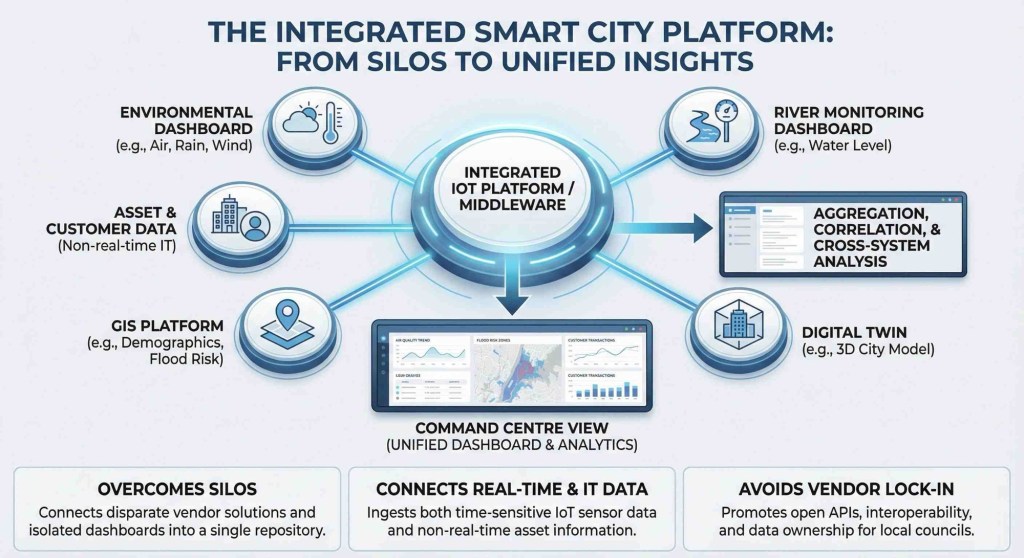
Being deeply involved in the IoT industry, separating my dream home from smart technology is impossible. My home would be powered by a central IoT platform, much like FAVORIOT, designed to integrate every system—from security and lighting to climate control and appliances. The house is essentially alive, learning and adapting to my habits.

How cool would it be if the house could predict my mood?

If I’ve had a long day, the house will know. The lights dim to a warm, relaxing hue, the temperature adjusts to my preference, and soft, calming music fills the room. My personal AI assistant would greet me at the door, summarise my schedule, read the latest IoT news, and ask if I wanted to listen to one of my favourite podcasts.

Every room is equipped with sensors that adjust based on who’s inside. If I move to the study, the lighting changes to a focus mode, and the desk automatically adjusts to the right height. The smart fridge keeps track of the kitchen’s inventory, suggesting recipes based on what’s available and even ordering groceries when supplies run low.

A Connected Workspace

I’ve always believed that a house should inspire you, and my dream home would have a dedicated space for creativity and innovation. This is not just a typical home office but a futuristic command centre—a space filled with interactive screens, real-time data dashboards, and digital whiteboards. This is where ideas flow. It’s where I would record my podcasts and create TikTok content about IoT, write my articles, and even connect with global partners.

The workspace is also connected to my home’s IoT system, allowing me to monitor and control every aspect of the house from a single dashboard. I can check energy consumption, air quality, and even the health of my indoor garden at a glance.

Spaces for Family and Friends

Of course, my dream home isn’t just for me. It’s a space where family and friends can gather, share meals, and create lasting memories. The living area is designed for comfort and warmth, with a large fireplace as the focal point. I imagine a cosy reading corner filled with my favourite science fiction books—some DC comics, too, just for nostalgia.

There’s a home theatre where I can watch my favourite movies with my family—“The Jetsons” would be a must-watch on lazy Sunday afternoons. Outside, there’s a small badminton court where we can play together, a reminder of my younger days when sports were an essential part of my life.

A Space for Music and Reflection

Music has always been close to my heart. A dedicated music room in one corner of the house—a place to unwind and get lost in melodies. It’s where my guitar rests, waiting for me to strum Bee Gees classics. I envision this room as a space for creativity and relaxation, where music fills the air, bringing calmness after a hectic day.

The house also includes a meditation room—a quiet retreat for reflection. It’s a simple space with minimal design, facing the morning sun. Here, I can practice mindfulness and regain focus, a necessary escape from my fast-paced world.

Sustainability at Its Core

Sustainability is not just an afterthought in this home; it’s a guiding principle. The house uses green building materials and is designed to be energy-efficient. Solar panels generate power, and a battery storage system ensures the home can operate off-grid when needed.

Water conservation is another key aspect. Rainwater is harvested and filtered for use, while greywater is recycled for irrigation. Waste is minimized through smart waste management systems—recyclable materials are sorted and composted automatically.

The Future at My Doorstep

The future doesn’t just live inside my home; it extends to the surrounding area. Autonomous vehicles pull up to the driveway, and drones deliver packages directly to my doorstep. The neighbourhood is a smart community where homes communicate with each other, sharing energy resources and optimizing consumption.

Even the security system is futuristic—facial recognition for entry, AI-driven monitoring for unusual activity, and a virtual assistant that alerts me when something needs attention.

It’s funny how much this home reflects my personality. Everything is connected, always learning and improving.

Why This Dream Home Matters

For me, this home is more than just a physical space. It’s a manifestation of everything I’ve worked for—a culmination of my journey in technology, my passion for sustainability, and my belief that technology can enhance our lives without compromising nature.

It’s a home that inspires innovation and creativity, a place to share with loved ones, and a sanctuary for personal growth.

Of course, dreams evolve. As technology advances, so will the vision of my dream home. But one thing will always remain constant—it will be a place where the past, present, and future come together.

Who knows? Maybe one day I’ll build it. Until then, I’ll keep dreaming.

The Story Behind Favoriot – Part 11: The Rocky Road of Smart Cities

The Allure of Smart Cities

When I first entered the world of Smart Cities in 2015, I was brimming with excitement. The concept was mesmerizing — technology could transform urban living, making cities more efficient, sustainable, and responsive to the needs of their citizens.

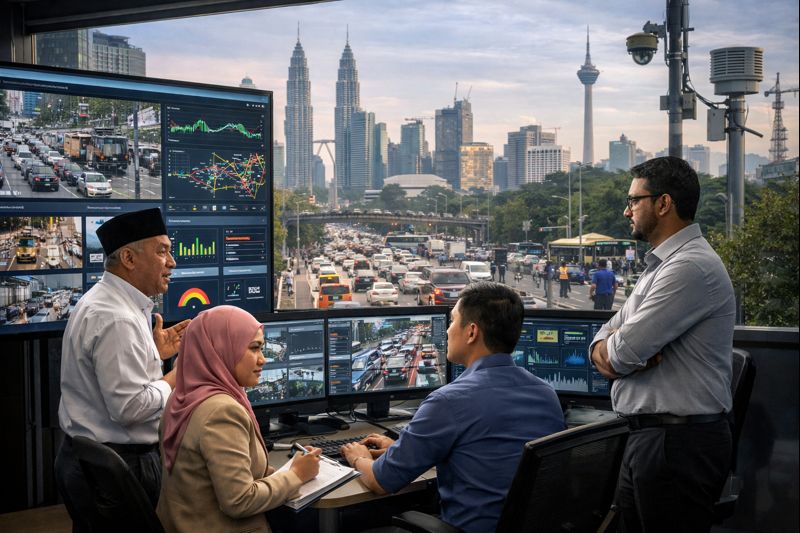
Imagine a city where traffic jams are minimized through intelligent transportation systems, waste collection is optimized, and city services are seamlessly integrated into residents’ lives. It was hard not to get excited about being part of this transformation.

However, what seemed like an adventure full of promise quickly became a reality check. I soon realized that the road from idealism to realism was filled with unforeseen challenges, complex processes, and harsh lessons. The idea of Smart Cities was perfect on paper but far more complicated in practice.

The Birth of an Idea: A Reporting App for Citizens

It all began with a simple yet ambitious idea — a citizen reporting app called Favorsense. This app would allow people to report issues like potholes, broken streetlights, and uncollected trash directly to local councils.

Not only that, but users could also track the progress of their complaints, bringing a new level of transparency and accountability to local governance. We believed we had created the perfect solution for improving city management. Our plan was to roll it out to all local councils across Malaysia through a cloud-based system. It felt like a game-changer.

Initial Optimism: “How Hard Can It Be?”

I remember thinking, “Surely, local councils will embrace this innovation!” After all, who wouldn’t want to improve city services and engage better with citizens? The app could streamline operations and boost efficiency overnight.

But my optimism didn’t last long. The first few meetings with local councils were eye-opening, and the challenges were more significant than I had anticipated.

The Harsh Reality: An Open Can of Worms

The first major hurdle was convincing local councils to adopt and pay for the system. It wasn’t that they didn’t see the value; it was more about what the app would reveal.

The app was like an open can of worms. It exposed inefficiencies and shortcomings in city services that many preferred to keep hidden. Some council representatives resisted, saying, “We can build this ourselves.” Others attempted to create their own versions, only to end up with poorly developed solutions that didn’t work.

The Sobering Realization: “Why Isn’t Anyone Using It?”

Once the app was launched, another issue arose: nobody seemed to use it. Despite its simplicity and functionality, citizens remained unaware of its existence.

The question haunted us: “Why isn’t anyone using it?” We had assumed that just building a great app would be enough to drive adoption. Unfortunately, we learned that even the best ideas need proper promotion and education to succeed.

Copycats and Tough Decisions

As if things weren’t challenging enough, we soon saw copycat apps emerge. Competitors replicated our idea, flooding the market with similar solutions.

It was disheartening. After some time, we made the difficult decision to stop supporting the app. This was a painful lesson in the realities of the Smart Cities market—not every great idea translates into success.

Nine Years of Persistence

Fast forward nearly nine years, and my company, FAVORIOT, is still trying to penetrate the Smart Cities segment. It’s been a long and challenging road. We even joined the Malaysia Smart City Alliance Association (MSCA), hoping it would provide easier market access.

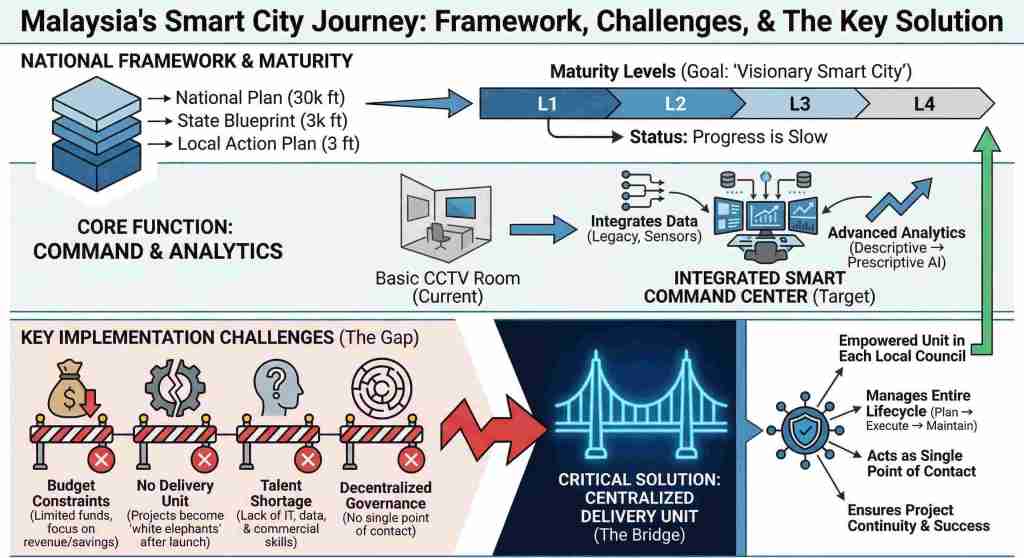
Being part of the alliance did offer new perspectives, but the reality was still complicated. Building Smart Cities in Malaysia is a long and tedious process, fraught with uncertainties and obstacles.

The Complexity of Building Smart Cities in Malaysia

One of the most common questions I hear from local councils is, “Where do we even start?”

Without clear Smart City Indicators to guide them, many cities don’t know how to begin their transformation. There is a lack of a unified vision, confusion about priorities, and an overwhelming sense of inertia.

Talent Gap and Slow Decision-Making

Another significant challenge is the talent gap. Many local councils lack professionals with the expertise to manage Smart City initiatives.

Decision-making is painfully slow, with proposals often stuck in layers of bureaucracy.

And then there’s politics. Decision-making in public projects often involves political interests, making things even more complicated.

The Funding Dilemma

Perhaps the biggest challenge of all is funding. Most local councils don’t have the budget to implement Smart City solutions. When they seek financing, they often turn to private companies with a risky proposition:

“We want you to fund everything upfront. Maybe you’ll see a return on your investment later.”

It’s a tough sell because most local council services don’t generate revenue. Their true value lies in cost savings, operational efficiency, and improved quality of life for citizens — concepts that don’t always resonate with decision-makers seeking immediate financial returns.

Greenfield vs. Brownfield Cities

Not all cities are created equal. Greenfield cities — built from scratch — have different challenges than brownfield cities, which are older and more developed.

Each type of city presents unique obstacles, making it difficult to scale solutions across multiple locations. What works in one city may fail in another, adding to the complexity of Smart City projects.

The Frustration of Endless Trials

I’ve also encountered the frustrating trend of endless trials. “Let’s start with a proof of concept,” they often say.

However, many of these trials never progress beyond the testing phase. They fizzle out, leaving everyone involved feeling disillusioned.

The Reality of Smart Cities in Malaysia

Whenever I hear someone proudly mention the number of Smart Cities launched in Malaysia, I approach it cautiously. Many so-called Smart Cities are proof-of-concept projects that never complete full-scale implementation.

A Strategic Shift: Diversifying Beyond Smart Cities

Given the challenges, we had to make some tough decisions at FAVORIOT. While we remain involved in Smart Cities, we’ve diversified our focus. We started taking on other IoT projects in industries like manufacturing and agriculture.

We couldn’t afford to put all our eggs in the Smart Cities basket. It was a matter of survival.

Balancing Ambition with Practicality

I’m still passionate about the potential of Smart Cities, but I’ve learned to balance ambition with practicality. Not every solution will become a commercial success, and that’s okay.

Smart Cities are an exciting concept, but they’re also highly complex. We must be smart about where we invest our time and resources.

Reflecting on the Journey

Looking back, the journey has been both humbling and enlightening. The Smart Cities market wasn’t the easy win I had imagined. Still, the experience taught me valuable lessons about persistence, adaptability, and the realities of innovation.

Who knows? The next big breakthrough may be just around the corner.

Until then, we keep moving forward — wiser, more resilient, and ready for whatever comes next.

More Favoriot Entrepreneurship Stories

  1. The Story Behind Favoriot – Part 11: The Rocky Road of Smart Cities
  2. The Story Behind Favoriot — Part 10: Age Does Not Matter in Business
  3. The Story Behind Favoriot — Part 9: Leaving the Comfort Zone
  4. The Story Behind Favoriot – Part 8: The Frustration of Unanswered Emails and Missed Opportunities
  5. The Story Behind Favoriot – Part 7: The Task of Finding Favoriot’s First 10 Customers
  6. The Story Behind Favoriot – Part 6: Expanding The Business Models
  7. The Story Behind Favoriot – Part 5: Finding the Right Fit
  8. The Story Behind Favoriot – Part 4: How Favoriot Became More Than Just an IoT Platform
  9. The Story Behind Favoriot – Part 3: Why No One Wanted Our IoT Platform—And How We Turned It Around
  10. The Story Behind Favoriot – Part 2: Turning Failures into Milestones
  11. The Story Behind Favoriot – Part I: The Humble Beginnings of Favoriot