I Started a Startup at 56. This Is What the Journey Really Taught Me.

Techtamu Talk | 17 January 2026

On 17 January 2026, at around 10 in the morning, I stood before a room full of students, founders, and curious minds.

Before I spoke, I paused for a second.

“How do I explain a journey that never followed a straight line?”

Entrepreneurship, at least in my life, was never a planned destination. It was a series of connected experiences that only made sense much later.

That lecture was not about IoT.
It was not about startups.
It was about life, timing, courage, and knowing when to let go.

You Only Understand the Journey When You Look Back
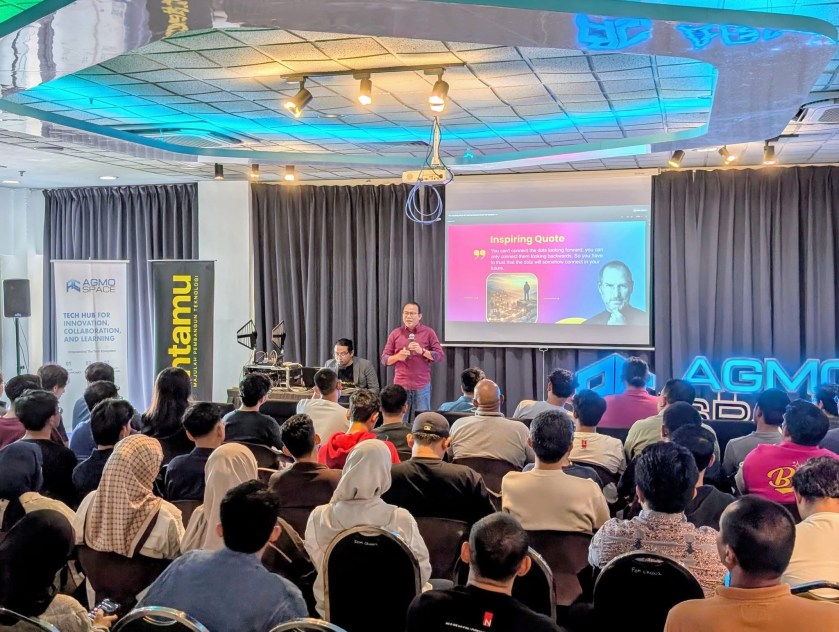
I opened the session with a quote from Steve Jobs that has stayed with me for years:

You can’t connect the dots looking forward. You can only connect them looking backward.

That sentence explains my life better than any resume ever could.

When you are young, you worry too much about choosing the “right” path. The right course. The right job. The right company.

What nobody tells you is this.
Every experience counts, even the ones that feel like detours.

You just won’t see it yet.

From a Curious Child to a Technology Lifelong Learner

My interest in technology did not start in a lab or a classroom.

It started at home.

My late father was a clerk. But in the evenings, he repaired televisions and radios. I would sit beside him, watching circuits come back to life.

“So this is how things work.”

Then came science fiction.

Cartoons like The Jetsons showed a future that felt impossible at the time. Video calls. Smart watches. Flying machines.

Today, many of those ideas sit quietly in our pockets.

That early exposure planted a question in my mind that never left me.

“What if we could actually build these things?”

Living in Four Different Worlds

I consider myself fortunate. Few people get to experience all four.

Academia.
Corporate.
Government.
Startup.

I began as a lecturer at Universiti Teknologi Malaysia, immersed in theory and research. Later, I joined the corporate world at Celcom, where reality hits hard and fast. Customers matter. Deadlines matter. Revenue matters.

At MIMOS, I worked on national-scale research, including wireless sensor networks, long before the term IoT became popular.

Then came REDtone, where I helped build IoT initiatives inside a corporate structure.

Each world taught me something different.

But they also gave me baggage.

Experience gives confidence.
It also gives fear.

Young founders often believe everything is possible.
Older founders carry doubt.

“What if this fails?”
“What if I lose my savings?”

That voice gets louder with age.

Silicon Valley Changed Everything
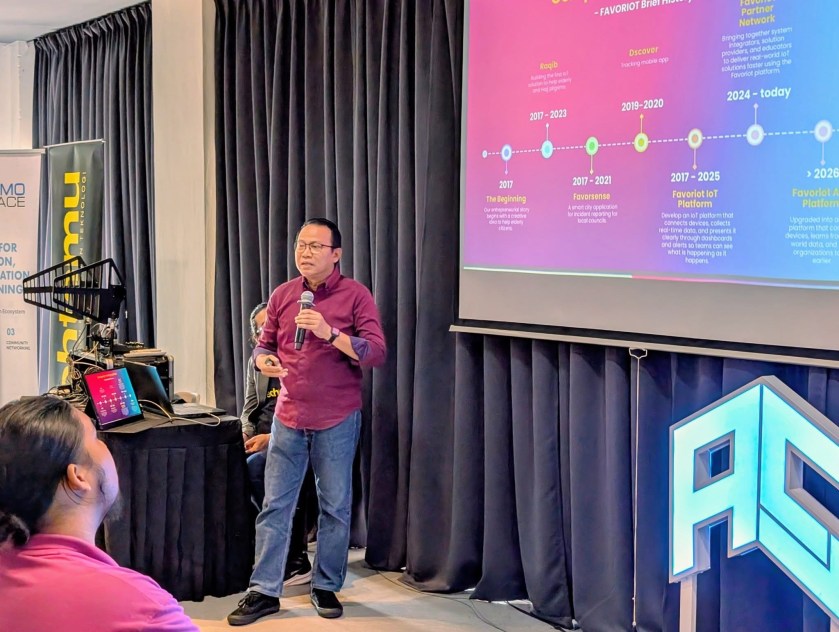
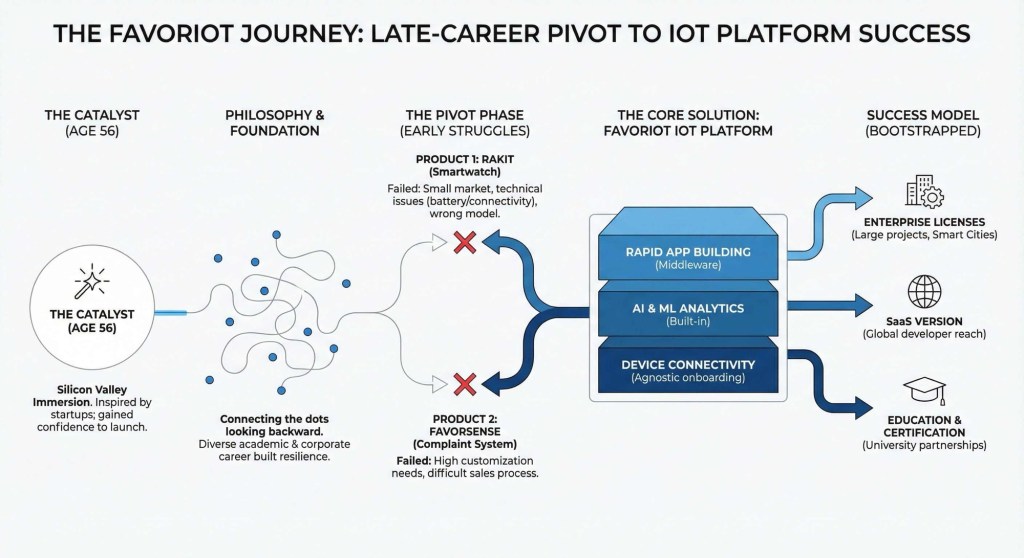
At 56, I joined an immersion trip to Silicon Valley.

That trip changed my identity.

I walked into Plug and Play Accelerator and saw cubicles, whiteboards, and founders who looked just like us. That was where companies like Dropbox began.

I remember thinking:

“If this guy can do it, why can’t we?”

That was the moment I stopped seeing myself as a CEO-in-waiting.

I started seeing myself as an entrepreneur.

Not someday.
Not after retirement.
Now.

Starting Late Comes With a Price

I started my startup using personal savings. No incubator. No startup playbook. No fancy terms like ‘MVP’ or ‘pitching decks’.

Just belief and experience.

Our first idea was a smartwatch for the elderly with fall detection and emergency alerts. It looked noble. It sounded meaningful.

It failed.

The market was too small.
Children did not want to pay.
The device did not suit care homes.

That was my first real startup lesson.

Good intentions do not build businesses.
Paying customers do.

Learning the Art of the Pivot
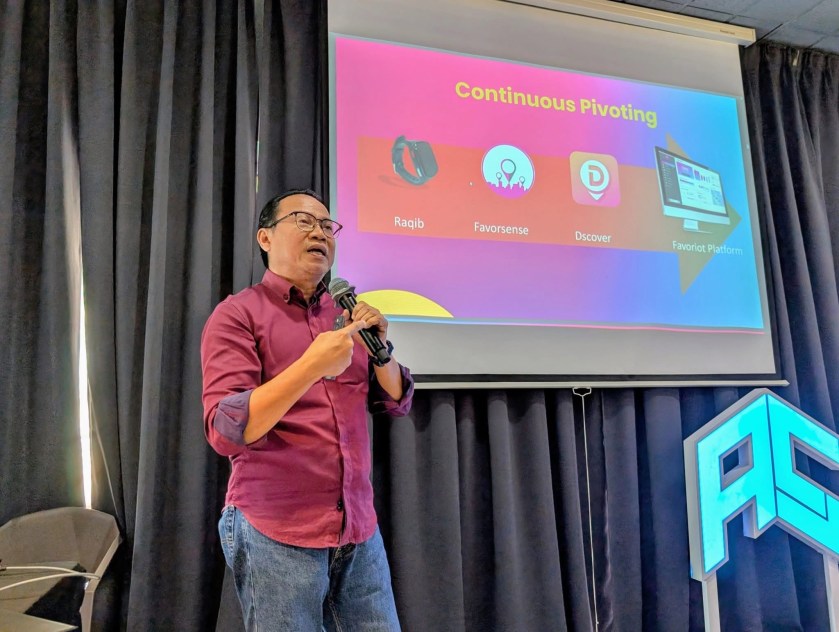
In the startup world, pivoting is survival.

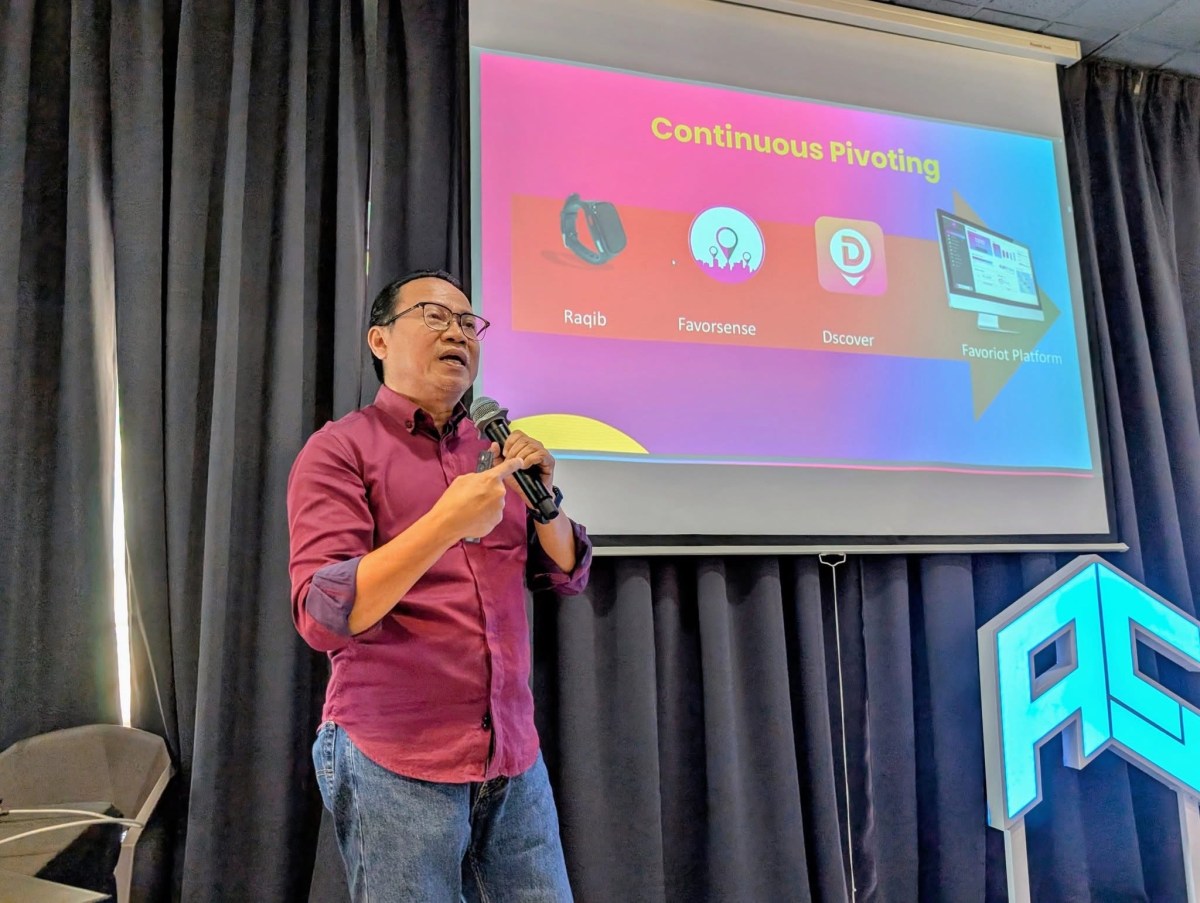
We repurposed the watch for Hajj and Umrah pilgrims. New market. Same core idea.

New problems appeared.

Unrealistic pricing expectations.
Battery life demands that defy physics.
Hardware sourcing from China.
Network roaming issues.
Travel agencies are unwilling to add cost.

Then came COVID-19. We proposed quarantine monitoring. It went nowhere.

Eventually, I made one of the hardest decisions of my life.

Ending a product.

I shared this honestly during the lecture.

Ending a product feels like ending a child you raised with love.
But holding on too long can kill the company.

A CEO must choose growth over attachment.

When More Products Mean Less Identity

We built other solutions too.

A civic complaint app sounded promising. Until each client wanted heavy customization and complaint volumes exploded beyond what they could manage.

A consumer tracking app failed because people care deeply about privacy and free alternatives already exist.

At some point, I realized something painful.

When you build too many products, people no longer know who you are.

Neither do you.

The Shift That Saved the Company

That realization led to our biggest change.

We stopped building products for users.

We started building a platform for builders.

That platform became Favoriot.

An IoT platform that lets others connect devices, visualize data, and deploy solutions quickly. Over time, intelligence was added so data could speak, not just sit on dashboards.

This shift reduced risk.

Instead of betting on one product, we enabled hundreds of use cases.

Why One Revenue Stream Is Never Enough

Another hard truth I shared with the audience.

Pure SaaS subscriptions rarely pay the bills in emerging markets.

We survived by building multiple streams.

Enterprise licensing.
Project-based solutions.
Training and certification with universities.

The platform stayed at the core. Everything else wrapped around it.

That balance kept the company alive.

Partners Build What You Cannot
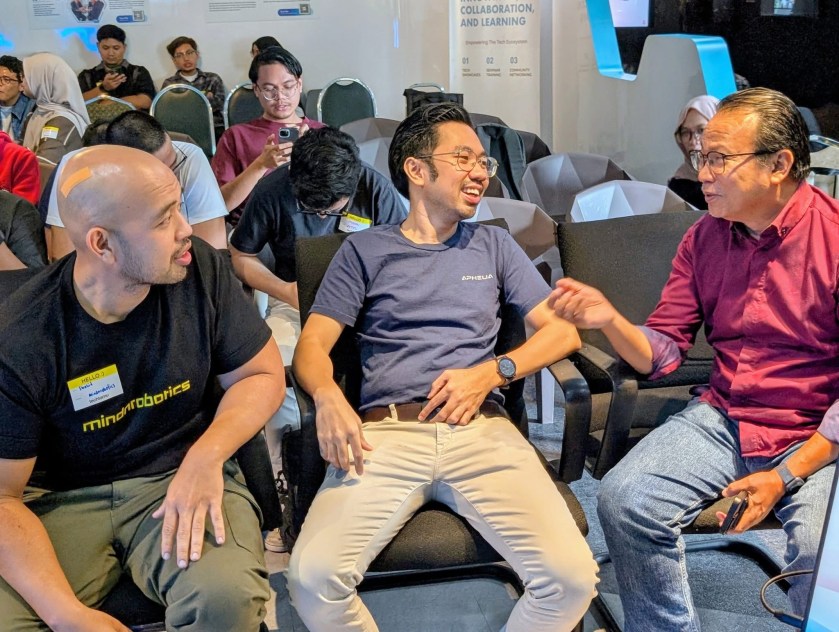
No startup wins alone.

We built a partner ecosystem covering hardware, software, AI, and system integration. Today, that network spans multiple countries.

Each partner brings strength we do not have.

That is how scale really happens.

Marketing Without Big Budgets

We never had large marketing budgets.

So we wrote.
We shared.
We taught.

Blogs.
Social media.
Free e-books.

Inbound marketing works when your story is honest and your knowledge is real.

People do not buy immediately.
But they remember.

The Lesson I Hope You Carry Forward
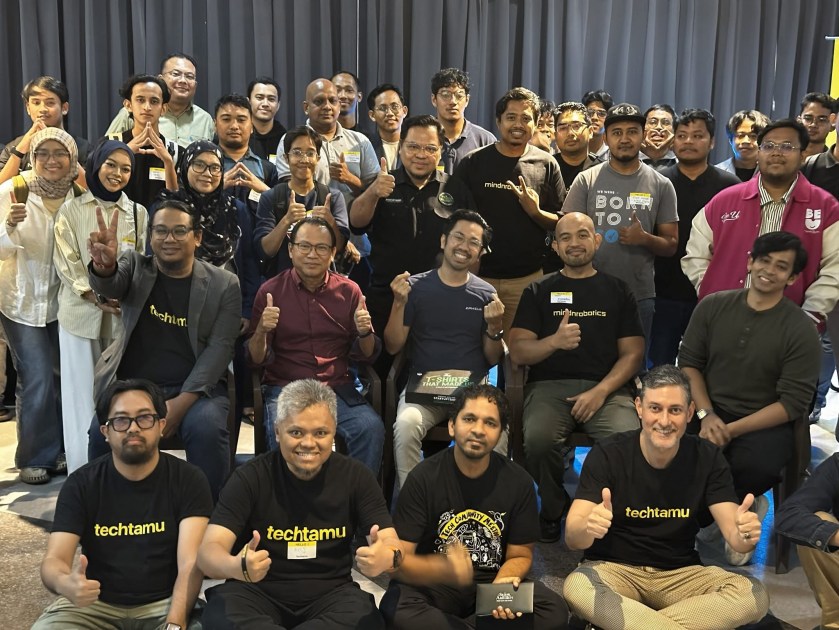
I ended the lecture with a simple reminder.

Whatever path you take, it is building something inside you. Even when it feels random.

Do not fall in love with your product. Fall in love with solving problems.
Do not trust praise until someone pays.
Do not depend on one revenue stream.
Do not fear pivoting. Fear standing still.

And most of all, do not believe it is too late.

I started my startup at 56.

If I could begin then, what is stopping you now?

I would love to hear your thoughts.
What dots in your life are starting to connect? Share them in the comments.
The Secret Skill That Helped Me Build FAVORIOT

I have often been asked about my entrepreneurial journey—how I transitioned from corporate life to building FAVORIOT from scratch. People assume that technical knowledge and business acumen are the key ingredients, but there’s something else—something that I rarely talk about but has been my secret weapon all along.

What’s this secret skill?

Adaptability.

It’s not flashy, and people don’t usually admire adaptability in the same way they admire confidence or leadership. But let me tell you, adaptability is the difference between thriving and fading into obscurity.

The Shift from Corporate to Startup Life

When I left the structured corporate job environment to venture into entrepreneurship, I was stepping into unknown territory. For years, I had worked in environments where resources were plentiful, teams were in place, and projects had budgets and timelines that made sense.

Now, I had none of that.

I had to build everything from scratch. There was no IT team to help me set up emails, no HR to handle hiring, and no marketing department to promote the company.

I became all of those things overnight.

I had to learn to wear multiple hats and switch between them at a moment’s notice. One day, I was designing IoT solutions; the next, I negotiated with clients or handled company registration paperwork.

That’s when I realized—my ability to adapt was my biggest strength.

Learning to Navigate the Startup Chaos

Unlike corporate life, where things follow a set rhythm, startup life is unpredictable. Some days, I feel on top of the world because we closed a big deal. Other days, I wonder if FAVORIOT can survive another month.

This is where adaptability became crucial.

I had to quickly analyze problems, adjust my approach, and keep moving forward. Here are some of the ways adaptability helped me:

1. Pivoting When Necessary

I initially thought that smart city solutions would be FAVORIOT’s main market. But after months of trying to gain traction, I realized that local councils weren’t ready for IoT adoption at scale.

Should I have waited for the market to be ready?

No. I adapted.

I shifted my focus to IoT training and education—something universities and professionals were eager to explore. This move helped us generate revenue and positioned FAVORIOT as an authority in the IoT space.

If I had been rigid, FAVORIOT might not have survived.

2. Embracing Digital Marketing

Before starting FAVORIOT, I had never focused on social media marketing or personal branding. But as a startup founder, I quickly realized that visibility is everything.

I began writing blog posts, creating LinkedIn content, and engaging with the IoT community online. I even started making educational TikTok videos—something I would have never imagined doing in my corporate days.

Was it uncomfortable at first? Absolutely.

But again, adaptability helped me push through that discomfort and build a strong online presence that drives business to FAVORIOT.

3. Listening and Adjusting

I thought I knew what the market wanted, given my decades of experience in the industry. But the reality was different.

Many times, my assumptions were proven wrong.

Instead of resisting, I adapted by listening more—talking to customers, understanding their real problems, and refining our solutions. This ability to adjust based on feedback greatly impacted how we positioned our products and services.

4. Surviving Financial Uncertainty

Running a startup means facing financial ups and downs. There were months when revenue was strong and months when it felt like we were running on fumes.

In a corporate job, salaries are stable. In a startup, nothing is guaranteed.

I had to constantly adapt our financial strategy—cutting unnecessary costs, finding alternative revenue streams, and making tough decisions to keep the company afloat.

Adaptability is a Survival Skill

Looking back, I realize that adaptability is not just a skill; it’s a survival mechanism. In entrepreneurship, things will go wrong, plans will fail, and markets will shift.

But those who adapt don’t just survive—they thrive.

Many people get stuck because they expect success to come in a straight line. They refuse to change course even when things aren’t working, which is why so many businesses fail.

I have always believed in my vision for FAVORIOT but have never been too proud to adjust my approach when needed. That’s the secret skill that has kept me going.

Final Thoughts

People often ask me what skills are necessary to succeed in entrepreneurship. They expect me to say technical expertise, business knowledge, or leadership. But the truth is, adaptability is the real superpower.

The ability to embrace change, learn new things, and shift strategies when needed can make or break a startup.

If you’re on your own entrepreneurial journey, ask yourself—how adaptable are you?

In the world of business, it’s not the strongest who survive but those who can adapt the fastest.

Building a Stronger Ecosystem: Entrepreneurs Supporting Entrepreneurs

“Why look elsewhere when we have everything we need right here?” This thought often crosses my mind when I see local entrepreneurs opting for foreign solutions instead of tapping into the innovation happening in their own backyard.

Entrepreneurship isn’t just about building a business—it’s about contributing to a thriving ecosystem where companies grow together. Shouldn’t we start by supporting each other if we expect others to help our ventures?

1. The Foundation of a Thriving Ecosystem

Entrepreneurship education should teach students not just how to start businesses but also how to sustain them within a supportive ecosystem. Every successful startup is part of a larger network—whether they realise it or not.

If we continue to rely on foreign products and solutions while expecting our businesses to thrive, we are working against ourselves. We need to shift the mindset from competition to collaboration.

2. Why Not Build on Local Strengths?

If we build a local product, why not use supporting tools or technology developed by our innovators? The biggest irony is when a startup seeks government funding to create a product but then spends that money on foreign services.

Take IoT projects, for example—why use a foreign IoT platform when Favoriot offers a local alternative? Whenever we choose a local solution, we strengthen the foundation for future entrepreneurs, creating more opportunities within our ecosystem.

3. Overcoming Challenges Together

Starting a business is tough. Every entrepreneur struggles to find the right tools, market, and funding. But these challenges become easier when we work together.

Universities, startups, and industry leaders must collaborate to create an environment where new businesses can succeed. Education should go beyond just theories—it should teach students how to leverage local resources and networks. No entrepreneur succeeds alone.

4. Choosing Local: More Than Just Patriotism

Supporting local businesses isn’t just about national pride but sustainability. If we don’t create demand for our own products, who will? Entrepreneurs need customers to survive, and the best place to start is within our ecosystem.

The tech industry, in particular, is an area where local startups can and should work together. From software to hardware, we have the talent and expertise—what we need is trust in our own capabilities.

5. Building for the Future

An ecosystem doesn’t thrive by accident. It requires conscious effort, continuous collaboration, and a willingness to support one another. Universities need to instil this mindset early—teaching students to be entrepreneurs and ecosystem builders.

When startups work together, share resources, and choose local solutions, they create a self-sustaining environment that benefits everyone.

Final Thoughts

We must start by supporting our own ecosystem to see our startups succeed. That means choosing local technology, forming partnerships with local businesses, and believing in our capabilities.

A thriving ecosystem doesn’t just help today’s entrepreneurs—it lays the groundwork for future generations. So the next time you build something, ask yourself: “Am I helping the ecosystem grow, or am I just taking from it?”

Life as a CEO: A Small Startup vs. a Big Conglomerate

The journey of a CEO is rarely a straight road. It’s a rollercoaster of challenges, decisions, and balancing acts. But there’s a world of difference between being the CEO of a small startup and leading a massive conglomerate. I’ve been on the startup side, and I’ve also witnessed how corporate giants operate. It’s like comparing running a speedboat to steering a cruise ship.

In this article, I’ll share how their daily lives differ and why their challenges are unique. Let’s start with the morning routines — that’s where everything begins.

The Morning Hustle

The Startup CEO:

5:30 AM — The alarm buzzes, but there’s no such thing as a leisurely morning. My head is already filled with thoughts about the next product release, an upcoming investor pitch, or the latest software update bug that refuses to go away.

I brew coffee while reading emails and scrolling through the latest tech news. There’s no PR team to summarize market trends for me, so I gather my intel. I quickly jot down a to-do list:

  • Prepare the investor deck
  • Follow up with our developer on the IoT dashboard issue
  • Post something on social media to keep our followers engaged

It’s a constant juggle of priorities. No two mornings are the same.

The Conglomerate CEO:

6:00 AM — The morning is calm, well-orchestrated, and efficient. A team has already prepared a briefing report summarizing key developments in the business world.

After a healthy breakfast, I glance through the latest business updates and reports while my assistant texts reminders for the day’s meetings:

  • 9:00 AM — Meeting with the board of directors
  • 11:00 AM — Media interview about the company’s latest sustainability initiative
  • 2:00 PM — Conference call with the regional heads

Unlike a startup CEO, my mornings are predictable, structured, and focused on high-level decision-making. There’s no need to check social media metrics or worry about customer support issues — those are already handled by various departments.

The Office Experience

The Startup CEO:

By 8:00 AM, I’m already in the office — a shared co-working space or a modest office with mismatched furniture. The vibe is casual, even chaotic at times. I greet the small team, and we immediately jump into problem-solving mode.

Every day feels like a battlefield. One moment, I’m reviewing code with the tech team, and the next, I’m on the phone with a potential client, trying to convince them why they should trust our tiny company over bigger competitors.

We work shoulder to shoulder, and no one is exempt from menial tasks. Need to arrange chairs for a meeting? I’ll do it. Startup life is hands-on, personal, and fast-paced. I wear multiple hats—CEO, marketer, fundraiser, and sometimes even janitor.

The Conglomerate CEO:

By 9:00 AM, I walk into a towering glass building with my name on the parking spot. The elevator ride to the top floor feels almost symbolic. My day begins with a briefing from key department heads. Each report is polished and filled with data and recommendations.

The office is sleek and well-organized. The energy is different — it’s calm but intense. Every decision I make here affects thousands of employees and shareholders. I’m not worried about cash flow daily — my focus is on strategy, acquisitions, and global market expansion.

The scale is massive, and my role is to steer the ship, ensuring we stay on course while navigating corporate politics and external pressures.

The Decision-Making Process

The Startup CEO:

Decisions are made quickly, often on the fly. There’s no time for endless meetings or layers of approval. I do it within hours, not weeks when I need to pivot.

But that speed comes with risks. There’s always a chance that a decision might backfire. Should we focus on product development or marketing this month? Should we take on that new project even though we’re already stretched thin? These are tough calls. Every decision feels personal because the company’s survival depends on it.

Sometimes, I make decisions based on instinct, especially when data is limited. It’s scary but also exhilarating.

The Conglomerate CEO:

In contrast, decisions here take time. There’s a process — meetings, discussions, and risk assessments. We have teams to analyze data, provide forecasts, and anticipate outcomes.

It’s less about survival and more about sustainability. I rarely make decisions alone; I rely on advisors, consultants, and senior managers to offer different perspectives. The stakes are higher, but the impact is spread out.

While a startup CEO’s decision could sink the company in weeks, a conglomerate CEO’s wrong move might take years to show its full effect.

Financial Worries

The Startup CEO:

Cash flow is king. Every cent matters. I constantly think about runway, burn rate, and when we’ll need to raise our next round of funding. Sleepless nights are worrying about whether we can pay our team next month.

Fundraising feels like a full-time job. Every meeting with an investor can be a turning point for the company. Rejection is part of the game—I’ve learned not to take it personally, though it’s hard sometimes.

The Conglomerate CEO:

Financial concerns are on a different scale. I’m not worried about payroll; I’m more concerned about quarterly earnings and how they’ll be perceived by investors and analysts.

I spend time with the CFO discussing mergers, acquisitions, and new market opportunities. We deal with billion-dollar decisions, not just survival tactics. The pressure is immense, but it’s more about growth than survival.

Personal Life and Work-Life Balance

The Startup CEO:

What is work-life balance?
My work is my life. There’s no clear boundary between the two. I’m constantly on call, responding to emails at midnight or brainstorming new ideas during dinner.

Weekends? Forget it. If I’m not at a networking event or reading the latest tech trends, I’m troubleshooting problems. It’s exhausting but deeply fulfilling. Every milestone, no matter how small, feels like a victory.

The Conglomerate CEO:

It’s easier to draw a line between work and personal life. I have a strong support system—assistants, advisors, and teams—that allows me to take a step back when needed.

That doesn’t mean there’s no stress. The pressure is constant, and the stakes are higher. But I’ve learned to delegate effectively, something a startup CEO often struggles with.

Vacations are possible, though they come with a phone full of notifications. Still, it’s a different stress — more about reputation and legacy than immediate survival.

Final Thoughts

Being a CEO, whether of a startup or a conglomerate, is a unique experience with challenges and rewards.

A startup CEO is like a gladiator in the arena, fighting daily for survival and growth. Meanwhile, a conglomerate CEO is a general commanding an army, focusing on strategy, long-term vision, and sustainable success.

If you ask me which life is better? Well, it depends on what excites you. Do you love the adrenaline rush of building something from nothing? Or do you prefer the thrill of leading a global giant toward its next significant conquest?

In the end, both paths are challenging. But one thing’s certain — neither is easy and requires resilience, adaptability, and a strong sense of purpose.

And who knows, maybe one day that small startup CEO will be the conglomerate CEO — but they’ll never forget where they started.

The Story Behind Favoriot – Part 12: The Dream of M&A Exit

I had this ultimate dream that many of us have when we start a company: that grand exit.

Why Startups Opt for This Path

The idea of an IPO—the pinnacle where our company becomes publicly listed, and the rewards are far beyond what we’ve ever imagined—can feel like the ultimate destination.

The dream is intoxicating.

But the reality is far more complex. The path to an IPO isn’t a straight highway; it’s a winding trail filled with unexpected challenges, tough decisions, and occasional compromises.

When I started, the vision seemed crystal clear—build something valuable, scale it, and eventually take it public.

Sounds simple, right? Well, that was naïve Mazlan talking.

I remember those early days vividly. The excitement was palpable.

We had endless discussions about Pre-Seed, Seed, Series A funding rounds. The belief was strong: If we just worked hard enough and stayed smart, we’d be among the chosen few to make it to an IPO.

But as time passed, reality caught up with me. That dream, while not impossible, was far from guaranteed.

The Harsh Reality of IPOs

Achieving an IPO isn’t just about having a good idea or even a great product. It’s about building a business with substantial revenue, stable income, and scalable global operations.

And that’s not something you accomplish overnight—or even in a few years.

It requires relentless innovation and flawless execution over a long period, often under the unforgiving scrutiny of investors and competitors.

Even then, the odds remain slim. Many founders, myself included, have faced the tough decision: Do we keep pushing toward the elusive IPO, or do we consider an alternative exit like a merger or acquisition (M&A)?

The Case for M&A: When the Alternative Makes Sense

Selling the company—especially to a larger corporate entity—can seem attractive when scaling becomes overwhelming. But here’s the thing: selling is not just about cashing out.

It’s about finding the right buyer who sees the real value in what you’ve built. Sometimes, that value lies in your technology, team, or even your foothold in a specific market.

When I started exploring M&A options, I quickly learned that companies acquire startups for various reasons. Let’s break it down.

1. Technology Acquisition

One of the most common reasons large corporations acquire startups is to gain access to cutting-edge technology. Developing something innovative in-house takes time, resources, and risk. Bureaucratic layers in big companies make it hard to iterate quickly or pivot when things go wrong.

Acquiring a startup that has already proven its worth is often the fastest route to innovation.

I’ve seen firsthand how some startups became prime targets because they had unique technology that a larger company couldn’t replicate. It’s faster—and often cheaper—for the big players to buy a startup than to build it from scratch.

2. Talent Acquisition or “Acqui-Hiring”

Talent is the lifeblood of innovation. However, finding skilled people with a startup mindset is incredibly difficult in today’s market, and large corporations know this all too well.

Sometimes, the quickest way to bring fresh talent into the organization is to acquire a startup outright.

I’ve seen startups being acquired just for their talent. This process, known as “acqui-hiring,” may not be the dream exit for every founder, but it can be a viable and profitable option. It also allows team members to take on more prominent roles within the acquiring company, often with more resources at their disposal.

3. Market Access

Startups are nimble. We can pivot quickly, explore niche markets, and enter spaces that larger corporations might overlook or deem too risky.

Larger companies often want in once a startup proves that a market is viable. Acquiring the startup becomes their fastest way to capture that market without starting from scratch.

I’ve experienced this scenario personally. Big companies aren’t constantly chasing technology alone; sometimes, they’re after the customer base and market positioning that the startup has painstakingly built.

4. Killing the Competition

Here’s the darker side of M&A.

In highly competitive industries, some companies acquire startups just to shut them down. It sounds counterintuitive, right?

But it happens. A large corporation might see a startup as a potential threat—not because it’s taking market share now, but because it could in the future. By acquiring and dismantling the startup, they eliminate a competitor before it becomes a problem.

Reflecting on Personal Experiences

I was once approached by a large corporation interested in acquiring my startup. They were impressed with our technology and saw it as a perfect fit for their portfolio. I remember sitting down and thinking, “Is this the right move? “Would selling mean giving up control of something I’ve poured my heart and soul into? “

These decisions aren’t easy. You start questioning everything:

  • Am I ready to let go?
  • Will my team thrive in a corporate environment?
  • What happens to my vision once I step away?

Looking back, I realize that exits—whether through an IPO or an acquisition—are just milestones, not the end goal. The real value lies in the experiences, lessons learned, and impact you make.

Advice to Founders Contemplating an Exit

If I had to offer advice to fellow founders considering their exit strategy, it would be this:

  • Don’t rush the decision. Take your time to evaluate all your options.
  • Think beyond the financials. Consider what’s best for your personal and professional growth.
  • Stay true to your vision and values. The right exit will come when the timing is right.

Ultimately, whether you exit through an IPO, an acquisition, or by moving on to your next venture, what matters most is that you’ve built something meaningful. Something that made a difference.

And that’s a legacy no exit strategy can ever take away.

Final Thoughts: Building for the Journey, Not Just the Exit

The dream of a grand exit might be what fuels many of us in the early days, but as the journey unfolds, you realize it’s about much more than that.

It’s about the people you meet, the obstacles you overcome, and the solutions you bring to life. It’s about the lives you touch and the legacy you leave behind.

If you’re building a startup, remember this:

Don’t just build for the exit. Build for the journey.

The exit will take care of itself when the time is right.

More Favoriot Entrepreneurship Stories

  1. The Story Behind Favoriot – Part 11: The Rocky Road of Smart Cities
  2. The Story Behind Favoriot — Part 10: Age Does Not Matter in Business
  3. The Story Behind Favoriot — Part 9: Leaving the Comfort Zone
  4. The Story Behind Favoriot – Part 8: The Frustration of Unanswered Emails and Missed Opportunities
  5. The Story Behind Favoriot – Part 7: The Task of Finding Favoriot’s First 10 Customers
  6. The Story Behind Favoriot – Part 6: Expanding The Business Models
  7. The Story Behind Favoriot – Part 5: Finding the Right Fit
  8. The Story Behind Favoriot – Part 4: How Favoriot Became More Than Just an IoT Platform
  9. The Story Behind Favoriot – Part 3: Why No One Wanted Our IoT Platform—And How We Turned It Around
  10. The Story Behind Favoriot – Part 2: Turning Failures into Milestones
  11. The Story Behind Favoriot – Part I: The Humble Beginnings of Favoriot

The Story Behind Favoriot — Part 9: Leaving the Comfort Zone

Stepping Away from Comfort

I never imagined the day would come when I’d step away from the security of a stable paycheck and a corporate career spanning over three decades. For over 30 years, I climbed the corporate ladder, navigating the structured world of management, cushioned by the perks that came with it.

How Leaving a 30-Year Career to Build FAVORIOT Taught Me the True Meaning of Resilience, Adaptability, and Personal Growth

It was a good life.

Business-class flights, luxury hotel stays, and the comforting rhythm of a regular, substantial income. Yet, despite the success, something kept gnawing at me.

“Is this it? Is this all there is to my journey?” I’d often wonder.

For years, I nurtured a vision—an idea to revolutionize industries with the Internet of Things (IoT). FAVORIOT was the manifestation of that dream. But dreams, as it turns out, come with their own set of sacrifices, ones I hadn’t fully anticipated.

And boy, there were plenty.

The Financial Rollercoaster

The first punch in the gut? The financial shock. Trading a consistent income for the erratic, unpredictable rollercoaster of startup finances was like jumping off a cliff without knowing if there was water below.

One month, we had cash flow. The next? Empty accounts staring back at me.

No salary. No safety net. Just uncertainty.

“What have I done?” I’d mutter, glaring at spreadsheets that refused to make sense.

There were days I questioned my sanity, wondering if I’d miscalculated the risks. But turning back wasn’t an option. FAVORIOT wasn’t just a company; it had become my mission.

I was no longer just Mazlan Abbas, the corporate executive. I was now Mazlan Abbas, the entrepreneur responsible for a team and a vision.

Adjusting to New Realities

With financial uncertainty came a drastic shift in lifestyle. Gone were the days of business-class flights and luxury hotels. My new reality? Budgeting down to the last ringgit, stretching every expense, and redefining what “essential” meant.

I vividly remember standing in a store, eyeing a sleek new laptop. In the past, I’d have bought it without a second thought.

“Do I really need this?” I asked myself.

The answer was no.

My old laptop would do just fine. Every ringgit saved was a lifeline for the business.

Vacations? A distant memory. Overseas trips were replaced with local getaways, if any. Each sacrifice was a reminder: this was temporary, all part of a bigger picture.

But knowing that didn’t make it any easier.

Cutting Back on Personal Luxuries

Starting a business from scratch demands ruthless prioritization. Gadgets, spontaneous upgrades, and luxury splurges became relics of the past.

I missed the freedom to indulge. But scaling back taught me discipline. It forced me to focus on what truly mattered: growing FAVORIOT.

“Why am I doing this?” I’d sigh during moments of frustration.

But deep down, I knew the answer. I believed in FAVORIOT—its mission, its potential, and the impact it could create.

And that belief kept me going.

Navigating Uncertainty and Isolation

The sacrifices weren’t just financial. The emotional toll of entrepreneurship is a beast of its own.

Every day felt like walking a tightrope, balancing decisions with no safety net below. The uncertainty was suffocating.

And then there was the loneliness.

Sure, I had a team, but what was the ultimate responsibility? That was mine to bear.

“Is this really what I want?” I’d wonder during sleepless nights, staring at the ceiling.

But those moments of doubt? They were the crucible where resilience was forged.

I discovered strength I didn’t know I had, learning that this journey wasn’t just about building a business. It was about building myself.

Perseverance and Growth

Over time, I stopped seeing challenges as obstacles. Instead, they became growth opportunities.

Each setback taught me to adapt, persevere, and trust the process.

I remember a deal that could have been a game-changer for FAVORIOT. We chased it for weeks, only to face rejection.

Frustrated, I vented to a colleague.

“Mazlan, every ‘no’ gets us closer to the right ‘yes,'” they said.

That shifted my mindset.

Failures weren’t dead ends. They were lessons in disguise, pushing me to refine our approach and grow as a leader.

Reflecting on the Sacrifices

So, was it worth it?

The financial strain, lifestyle changes, and emotional rollercoaster?

Yes.

Because in losing the comforts I once knew, I gained something far more valuable: resilience, adaptability, and personal growth.

I’ve had the privilege of building FAVORIOT from the ground up, watching an idea evolve into reality.

But more importantly, I realized that entrepreneurship isn’t just about financial success. It’s about impact, purpose, and creating a legacy.

FAVORIOT isn’t just a business to me.

It’s a testament to what’s possible when you dare to step out of your comfort zone.

The Entrepreneur’s Mindset

One of the greatest lessons I’ve learned? Embracing uncertainty.

Entrepreneurship is a leap into the unknown. Success isn’t guaranteed, and failure is always a possibility.

But that’s what makes it thrilling.

Every day brings new challenges and opportunities to grow.

And if there’s one thing I know for sure, it’s this: resilience is the backbone of entrepreneurship.

The Power of Community and Support

Entrepreneurship may feel lonely, but it doesn’t have to be.

Surrounding yourself with mentors, peers, and a support system is crucial.

I’ve been blessed with a network that believed in my vision, celebrated my wins, and stood by me during the tough times.

Because while the entrepreneurial journey feels personal, it’s never a solo act.

The Entrepreneurial Journey is Yours to Define

As I reflect on my journey with FAVORIOT, I see the sacrifices and growth etched into every milestone.

It’s been a rollercoaster. But I wouldn’t change a thing.

The challenges shaped me. The sacrifices strengthened me.

For anyone considering this path, know this: it’s not easy. The sacrifices are real. The uncertainty is daunting.

But if you embrace the journey, learn from every stumble, and keep moving forward, the rewards—both personal and professional—are beyond worth it.

Entrepreneurship isn’t just a career.

It’s a mindset.

A way of life.

And for me, despite all the sacrifices, it’s been the most fulfilling experience of my life.

Favoriot Entrepreneurship Stories

  1. The Story Behind Favoriot – Part 8: The Frustration of Unanswered Emails and Missed Opportunities
  2. The Story Behind Favoriot – Part 7: The Task of Finding Favoriot’s First 10 Customers
  3. The Story Behind Favoriot – Part 6: Expanding The Business Models
  4. The Story Behind Favoriot – Part 5: Finding the Right Fit
  5. The Story Behind Favoriot – Part 4: How Favoriot Became More Than Just an IoT Platform
  6. The Story Behind Favoriot – Part 3: Why No One Wanted Our IoT Platform—And How We Turned It Around
  7. The Story Behind Favoriot – Part 2: Turning Failures into Milestones
  8. The Story Behind Favoriot – Part I: The Humble Beginnings of Favoriot
  9. Building My Personal Brand: The Stepping Stone to Favoriot’s Success
  10. From Research Lab Critiques to Startup Pitches: My Slide Story
  11. The Illusion of RFPs in the IoT World: Managing Expectations as a Startup
  12. Favoriot’s Odyssey: Navigating the Rough Waters of Early Revenue
  13. From Early Days to VC Pursuit: A Startup Founder’s Odyssey
  14. Blogging My Way Through Entrepreneurship: A Habit I Cherish
  15. Beyond Accolades: The Real Impact on Our Entrepreneurial Journey
  16. Embracing the Diverse Entrepreneurial Journey: Why Success Takes Different Roads
  17. The Subtle Art of Hiring: A Peek Into My Experience
  18. The Entrepreneur’s Balancing Act: A Deep Dive into the Complexities of Startup Product Pricing
  19. The Timing Trap: Our Venture with an IoT Solution and a Global Pandemic
  20. Navigating Product Failure: A Tale of Three Missteps and Lessons Learned
  21. Networking in Startup: An Introvert’s Tale of Growth and Connection
  22. The Startup Burnout: A Founder’s Tale of Striving, Stress, and Solace
  23. The Entrepreneur’s Challenge: Navigating the Pitfalls of Lack of Focus
  24. The Crucial Importance of Product-Market Fit: Lessons from My Entrepreneurship Journey
  25. Embracing Change: Lessons Learned from Clinging to Three Products without Pivoting
  26. Learning on the Go: The Power of Podcasts in My Daily Commute
  27. Learning from Mistakes: Building the Fourth Product – Favoriot IoT Platform
  28. Building the Right Team: My Journey of Managing a Startup
  29. Navigating The Storm: Managing Cash Flow in a Bootstrapped Startup
  30. Outpacing the Startup Race: Lessons Learned from Building a Citizen Engagement App
  31. Finding Harmony in Chaos: My Journey of Building 4 Products
  32. Embracing Life’s Adventure: My Journey From an Academician to an Entrepreneur
  33. How To Increase Your Paid Users From Free Users
  34. 7 Tips How to Get Your Startup Acquired
  35. Advice From ChatGPT as The Investor
  36. When No New Ideas Are Generated
  37. Dateline for the Next eBook
  38. Academia, Industry & Government
  39. Starting The Next IoT Ebook
  40. An Entrepreneur – The Last Career
  41. IoT eBooks by Mazlan Abbas
  42. Navigating the Entrepreneurial Journey with Limited Funds
  43. Navigating the IoT Wave: Secrets to Capturing the IoT Platform Market
  44. Audience Personas for Favoriot IoT Platform
  45. Social Media Strategy for Favoriot IoT Platform
  46. Innovate or Die: Embracing Steve Jobs’ Principles to Catapult Favoriot to IoT Stardom
  47. How We Define the “Why” of FAVORIOT
  48. FAVORIOT 6th Anniversary – The Journey Continues!
  49. IoT Projects from Education to Commercialisation
  50. 8 Top Challenges Building a Citizen Engagement App
  51. 6 Great Challenges Building an IoT Solution for Hajj
  52. How We Build Our Fourth IoT Product
  53. On a Journey of IoTising Business
  54. How We Build Our Third IoT Product
  55. How We Build Our Second IoT Product
  56. How We Build Our First IoT Product
  57. How Silicon Valley Changed My View on the World of Startups