If They Don’t Trust You, They’ll Never Buy From You

Why Trust is the Real Product You’re Selling (and How Marketing Builds I

Let’s cut straight to it.

You could have the best solution on the planet. The smartest AI. The most beautiful dashboard. A deal they’d be crazy to ignore.

But if they don’t trust you?

Game over.

That’s the truth most salespeople and founders don’t want to hear. You don’t lose sales because your product lacks features. You lose because your buyer doesn’t feel safe saying “yes.”

Let that sink in.

You’re Not Selling a Product — You’re Selling Trust

Every time someone signs on the dotted line, they’re taking a leap of faith. Into the unknown. Into the hands of your promises.

And that leap?

It only happens when trust is strong.

If you’re struggling to close deals, here’s your wake-up call — it might not be your price. It’s your credibility.

So how do you fix it?

Let’s start by understanding how trust works across the entire sales cycle.

1. Trust Speeds Everything Up

Without trust, every step in your sales process feels like a slow crawl. Every email takes longer to reply to. Every objection drags on. Every meeting ends with “We’ll think about it.”

But with trust?

Things move fast.

Buyers stop nitpicking. They start nodding. They say “yes” before you finish the pitch. Why? Because they’re not just buying what you do — they’re buying who you are.

You’re not just another vendor anymore. You’re the one they believe in.

2. Trust Makes You the Safe Bet

Let’s be real — nobody understands your tech as much as you do. Most buyers don’t get how your backend system works or what your AI algorithm is doing behind the scenes.

They’re not buying your code. They’re buying confidence.

“I don’t fully get what this does… but I trust you’ll make it work for us.”

That right there? That’s the golden ticket.

If you can be the trusted guide — the one who explains things clearly, sets real expectations, and never overpromises — you become the safest decision they’ve ever made.

3. Trust Wins the Long Game

Deals don’t end at the sale.

What happens after is what builds your reputation.

When things go sideways — and they will — your response matters more than your roadmap. When customers trust you, they stay even when things get tough. They refer others. They become evangelists.

And that kind of loyalty?

It’s not bought with discounts. It’s earned with integrity.

So, Where Does Trust Begin?

It doesn’t start in the pitch deck.

It starts way earlier — with your marketing.

Yes, marketing builds trust before sales even says hello.

Here’s how.

4. Marketing Sets the Tone Before You Even Enter the Room

Think about the last time you Googled a company. What made you stay? A clean website? Great reviews? A few helpful blogs?

Or did you bounce the second you saw a clunky layout and an outdated logo?

Exactly.

Your prospects are doing the same.

Marketing is your first handshake — your first “hello.” And it better say:
“We know what we’re doing. We’ve done this before. You’re in good hands.”

That’s not just branding. That’s trust-building.

5. Content Builds Trust at Scale

You don’t need to be everywhere. But you do need to show up where it counts.

Every blog post. Every case study. Every video tutorial. Every helpful LinkedIn post.

They all add bricks to your trust wall.

Even if someone’s not ready to buy today, they’re watching. And when the time comes? They’ll remember you as the one who actually cared to educate them, not just sell to them.

6. Your Personal Brand is a Trust Magnet

People don’t trust logos.

They trust people.

You showing up as a thought leader — on LinkedIn, podcasts, panels — makes all the difference. Share your journey. Your failures. Your honest thoughts about the industry.

Don’t try to be a polished robot.

Be human.

When you do, people will say:
“I don’t just want the product — I want to work with YOU.”

That’s when you’ve won.

7. Great Marketing Shows, Not Tells

Stop saying, “We care about our customers.”

Start proving it.

Give value before you ask for anything:

  • Share insights your competitors gate behind forms
  • Run webinars that teach, not just pitch
  • Respond to DMs with care and speed
  • Celebrate your customers’ success more than your own

Because when your marketing is rooted in generosity, trust becomes your default currency.

Sales and Marketing: One Team, One Mission

If your sales team is hustling but the leads are cold, there’s a disconnect.

Marketing should be paving the road before sales even shows up.

That means:

  • Sharing real customer success stories
  • Addressing objections through blog posts and videos
  • Keeping your message consistent across every touchpoint
  • Making sure your promises match your delivery

When both teams work together to build trust, magic happens.

Your Competitive Advantage? Trust.

At the end of the day, buyers will always ask themselves:

“Can I trust this person with my time, money, and reputation?”

If the answer’s no — they walk.

If the answer’s yes — they buy.

So don’t just optimise your sales funnel.
Don’t just build a smarter chatbot or a flashier website.

Build trust.

And do it in every word you say, every promise you make, every story you share.

Because trust isn’t just part of the sales cycle.

It is the sales cycle.

Now go earn it.

The Last Thing I Learned

What is the last thing you learned?

I often wonder, “Mazlan, at your age, can you still learn something genuinely new?” Well, let me assure you—I absolutely can. Life, especially one intertwined with technology, has a delightful way of keeping even the most seasoned among us humble and curious.

The last thing I learned was about storytelling, not just any kind of storytelling, but storytelling through short-form video, specifically on TikTok. Now, you might be thinking, “TikTok? Mazlan, aren’t you a bit seasoned for that? Isn’t TikTok just dancing teenagers and trendy challenges?” Trust me, I had those exact thoughts myself.

Initially, TikTok felt like uncharted territory, almost alien. As someone who spent decades deeply entrenched in the corporate and academic worlds, making concise yet impactful short-form content was not exactly in my DNA. I was used to elaborate presentations, detailed explanations, and nuanced discussions. But one thing entrepreneurship has repeatedly taught me is adaptability—often the hard way.

It all started when I realised Favoriot needed a fresh, younger audience. We needed to explain IoT in simpler, more digestible chunks, without losing the essence. I asked myself, “Mazlan, how can you explain IoT to someone who might never have heard of it before—and do it in less than 60 seconds?”

At first, the process was a comedy of errors. I recorded my first TikTok in my home office, trying to cram every detail about IoT into a minute. The result? An awkward 59 seconds of rushed speech, complicated jargon, and an expression that clearly said, “I have no idea what I’m doing here.” After rewatching it, even I felt overwhelmed and confused.

“Okay, Mazlan, breathe,” I told myself. “This is just another learning curve—remember when you first encountered blogging? You stumbled, learned, and eventually thrived.” So, back to basics. I studied successful TikTok creators—not the viral dancers, but those who managed to educate effectively and authentically.

What stood out was their storytelling approach—short, focused messages packed with value and personal insight. So, I began scripting my content differently, focusing on just one clear, compelling message per video. Each clip became more straightforward, and I found myself developing a rhythm. I was no longer lecturing; instead, it felt like chatting casually with a curious friend.

And guess what? People started to respond. Comments like “Thank you, Dr. Mazlan, I finally understand IoT!” and “Never thought IoT could be so easy to grasp!” began trickling in. It was astonishing, and incredibly motivating.

The greatest lesson, however, wasn’t just about content creation. It was about humility and openness—recognising that regardless of your past achievements or age, stepping out of your comfort zone remains an essential part of growth. Learning TikTok reminded me that humility, adaptability, and persistence are vital companions in life.

Today, I’m regularly creating content on TikTok, and it genuinely brings me joy to simplify complex IoT concepts for wider audiences. Every new follower, every insightful comment reaffirms this lesson:

You’re never too experienced to learn something new, and the greatest innovations often come when we step into the unknown and embrace being beginners again. So, if you ever find yourself hesitating about exploring unfamiliar ground, remind yourself—”If Mazlan can do TikTok, surely you can take on anything!”

The Story Behind Favoriot – Part 6: Expanding The Business Models

The Birth of an Idea: Favoriot’s B2C Beginning

When I first launched the Favoriot IoT platform, I had a simple vision: to create a platform that anyone could use—students, hobbyists, tinkerers—you name it. The idea was to make IoT accessible to the masses, a B2C service that would ignite curiosity and inspire innovation.

I thought, “If we can get people talking about Favoriot, the rest will follow.” That belief fueled our early strategy. We dove headfirst into social media, the digital town square where everyone seemed to gather. Facebook was buzzing, YouTube was the tutorial hub and TikTok? Well, that was the wild frontier—so, of course, I gave it a shot.

The Social Media Experiment

I became the face of our promotions, posting updates on Facebook, creating YouTube videos, writing blog articles, and yes, even attempting TikTok. It was thrilling at first—seeing those likes, shares, and comments roll in. People were curious, intrigued by what Favoriot could do.

But soon, a nagging question crept in: “Why isn’t this translating into actual platform usage?” The buzz was there, but the conversions weren’t. It hit me—generating interest is one thing, but sustaining it requires more than social media posts.

The eBook Revelation

That’s when an old passion of mine resurfaced: writing. “What if I wrote an eBook?” I wondered. It would not be just any technical manual but something that painted the bigger picture—how IoT could transform industries and shape the future, and yes, how Favoriot fits into all of this.

I poured my heart into that eBook. It wasn’t just about IoT protocols or sensor networks; it was a narrative about the power of connected technologies. Subtly, I wove Favoriot into the storyline, highlighting its features and potential. Once it was done, we decided to offer it for free.

The Breakthrough: Global Reach

And guess what? It worked. The eBook spread like wildfire. I remember staring at the download stats, thinking, “This is it. This is the breakthrough.”

But success has a way of revealing new challenges. With global interest came diverse expectations. Users wanted more—advanced features, scalability, and enterprise-grade security. It became clear: our B2C model had hit a ceiling.

Pivoting to B2B: A Bold Decision

Cue the sleepless nights. “Should we pivot to B2B? What if it doesn’t work out?” The questions were relentless. But growth demands evolution. After countless discussions with my team, we made the leap.

We transitioned Favoriot into a B2B platform, offering on-premise and private cloud installations. This shift opened doors to system integrators and organizations who handled complex IoT projects with high data demands. We even introduced a game-changing perpetual license—a one-time purchase granting lifetime access. “This could be a game-changer,” I thought. And it was.

The Impact of the B2B Model

The B2B model didn’t just diversify our revenue; it solidified our market position. We provided a ready-made, scalable IoT solution, eliminating the need for companies to build platforms from scratch.

Since 2017, Favoriot has evolved dramatically from a humble B2C platform to a versatile solution serving both individual developers and large enterprises. A defining moment? MOSTI officially recognized Favoriot as a Malaysian local product by awarding it the MySTI certification. It was more than a certification—it was validation.

Reflecting on the Journey

Looking back, I see a journey marked by resilience, adaptability, and an unwavering belief in our vision. But this isn’t the end. In Part VII, I’ll delve into the challenges we face as we aim to deepen our footprint in Malaysia.

The road ahead is long, but with the lessons we’ve learned and the incredible team by my side, I’m confident Favoriot will continue to thrive.

Stay tuned. Favoriot’s journey is far from over.

More Stories About Entrepreneurship

  1. The Story Behind Favoriot – Part 6: Expanding The Business Models
  2. The Story Behind Favoriot – Part 5: Finding the Right Fit
  3. The Story Behind Favoriot – Part 4: How Favoriot Became More Than Just an IoT Platform
  4. The Story Behind Favoriot – Part 3: Why No One Wanted Our IoT Platform—And How We Turned It Around
  5. The Story Behind Favoriot – Part 2: Turning Failures into Milestones
  6. The Story Behind Favoriot – Part I: The Humble Beginnings of Favoriot
  7. Building My Personal Brand: The Stepping Stone to Favoriot’s Success
  8. From Research Lab Critiques to Startup Pitches: My Slide Story
  9. The Illusion of RFPs in the IoT World: Managing Expectations as a Startup
  10. Favoriot’s Odyssey: Navigating the Rough Waters of Early Revenue

The Art of Growing on X

INFLUENCER’S STORIES

My Journey

Image created by ChatGPT

When I began navigating the world of X (formerly known as Twitter), I was captivated by its potential.

A platform with millions of active users, all engaged in conversations about ideas, technology, and everything in between, was the perfect space for someone like me, passionate about IoT, smart cities, and entrepreneurship.

But let me be honest: figuring out how to grow my presence wasn’t a straightforward journey.

It required persistence, experimentation, and, most importantly, understanding what my audience valued.

Let me take you through my journey of discovering the best practices for growing on X, peppered with a bit of self-dialogue.

Step 1: Crafting a Magnetic Profile

Photo by Ben Sweet on Unsplash

Why should anyone follow me?” I remember asking myself this question while staring at my barren X profile years ago.

The first step to drawing people in was to communicate my value.

I began with my profile banner. It needed to tell a story – my story.

A simple image highlighting my work with FAVORIOT and my role as an IoT advocate made an immediate impact.

Next, the bio. “What do I stand for? What can I offer?

To attract the right audience, I crafted a concise description of my expertise, including key terms like IoT, smart cities, and entrepreneurship.

The final touch? A pinned post.

This became my digital billboard.

Whenever I had a significant announcement – whether about a new IoT project, an insightful article, or even a speaking engagement – it went there.

Step 2: Engaging with the Giants

Photo by Andrea Huls Pareja on Unsplash

Why waste time commenting on posts by big names? They won’t notice me,” I thought initially.

But I was wrong.

I decided to step out of my comfort zone.

I began following influential figures in IoT and technology. Whenever they posted, I didn’t just ‘like’ or retweet; I added value.

If someone tweeted about IoT’s role in agriculture, I’d share my perspective or a relevant case study.

To my surprise, my comments started gaining traction.

Other followers noticed my contributions, and occasionally, the original poster replied.

I learned a simple truth: the more visible you are in meaningful conversations, the more likely you attract followers who resonate with your insights.

Step 3: Creating Value-Driven Content

Photo by Carl Heyerdahl on Unsplash

What do people want to see from me?” This question guided my content creation.

I realised that my audience wasn’t just interested in IoT – they wanted to learn, be inspired, and sometimes entertained.

I started experimenting with different content formats:

How-To Guides: People loved practical advice. I shared tips like “How to Start Your IoT Journey” or “Three Ways IoT Can Transform Small Businesses.

Personal Stories: Sharing my struggles and triumphs – like the challenges of penetrating the smart cities market – resonated deeply.

Lists: I posted quick, digestible tips, such as “5 Tools Every IoT Developer Needs.

Contrarian Takes: Occasionally, I’d challenge popular narratives, sparking thought-provoking discussions.

Case Studies: Breaking down real-world examples of IoT applications showcased my expertise while providing value.

Every post was an opportunity to build trust and credibility.

I reminded myself that consistency was key.

Some posts didn’t perform well, but others exceeded expectations.

It was a learning process, and I embraced it.

Step 4: Embracing Video Content

Photo by KAL VISUALS on Unsplash

Do I need to be on camera?” I asked myself.

However, I realised that videos were becoming the future of content consumption. People wanted to see faces, hear voices, and connect more deeply.

I began creating short videos – sharing IoT tips, discussing trends, and answering common questions.

My initial attempts were far from perfect, but the engagement was undeniable.

Videos kept people on my posts longer, which boosted their reach.

Step 5: Riding the Wave of Trends

Photo by Silas Baisch on Unsplash

Why should I care about trends? My niche is IoT,” I initially thought.

But then it hit me – trending topics were an opportunity to align my expertise with what people were already discussing.

For example, when a conversation about AI’s impact on the environment was trending, I joined in with my insights on how IoT complements green initiatives.

The result? More engagement and new followers who shared my interests.

Step 6: Leveraging Templates That Work

Photo by Daria Nepriakhina 🇺🇦 on Unsplash

Over time, I noticed specific post structures performed better than others. These weren’t just random observations; they were patterns worth replicating:

Predictions: Forecasting trends like the future of smart cities got people talking.

Challenges: Asking my audience to share their IoT success stories increased interaction.

Each format served a purpose, keeping my content fresh and engaging.

The Takeaway

Photo by Clem Onojeghuo on Unsplash

Growing on X isn’t about chasing followers.

It’s about building a community of like-minded individuals who share your passion and value your insights.

My journey on X has taught me that authenticity, consistency, and adaptability are the keys to success.

I often remind myself of a question I initially asked: “Why should anyone follow me?

Every piece of content I create, every interaction I engage in, and every trend I ride is guided by the answer to that question.

And as long as I stay true to my purpose, I know the journey will continue to be rewarding.

The Struggle Between TikTok and Medium

INFLUENCER’S STRUGGLE

The choice between TikTok or Medium — Which one?

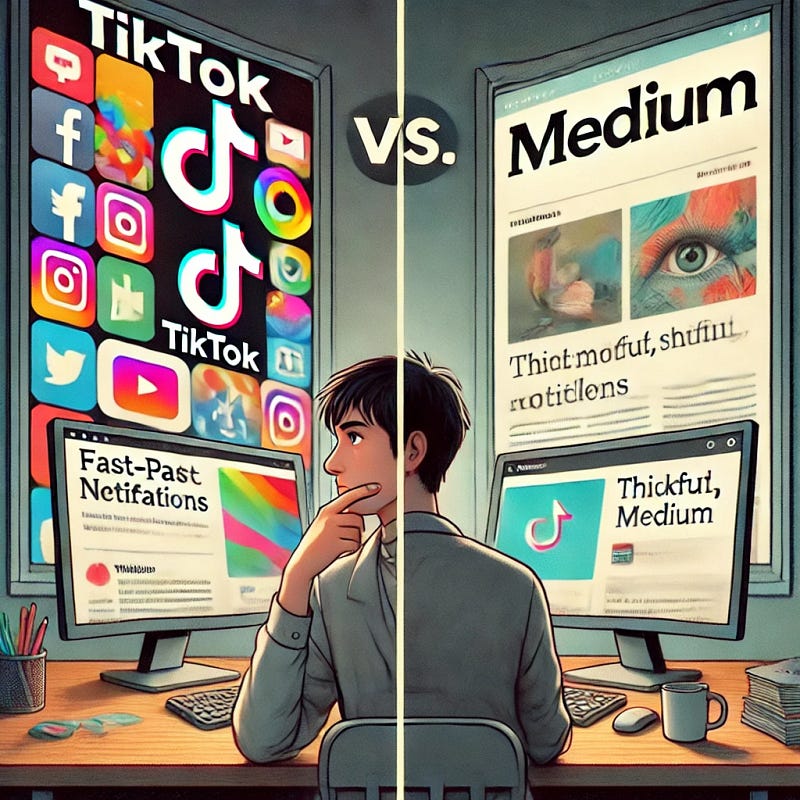
This question kept nagging: why am I splitting my time between TikTok and Medium?

Image created using ChatGPT

The platforms couldn’t be more different, yet both significantly shaped my voice online. This duality, balancing TikTok’s fast-paced allure with Medium’s more reflective, thoughtful environment, has been an exciting challenge.

It’s a constant juggle, but each brings out a different side of my creativity, and I’m starting to embrace both worlds in ways I hadn’t anticipated.

The Allure of TikTok: Fast-Paced and Instant Feedback

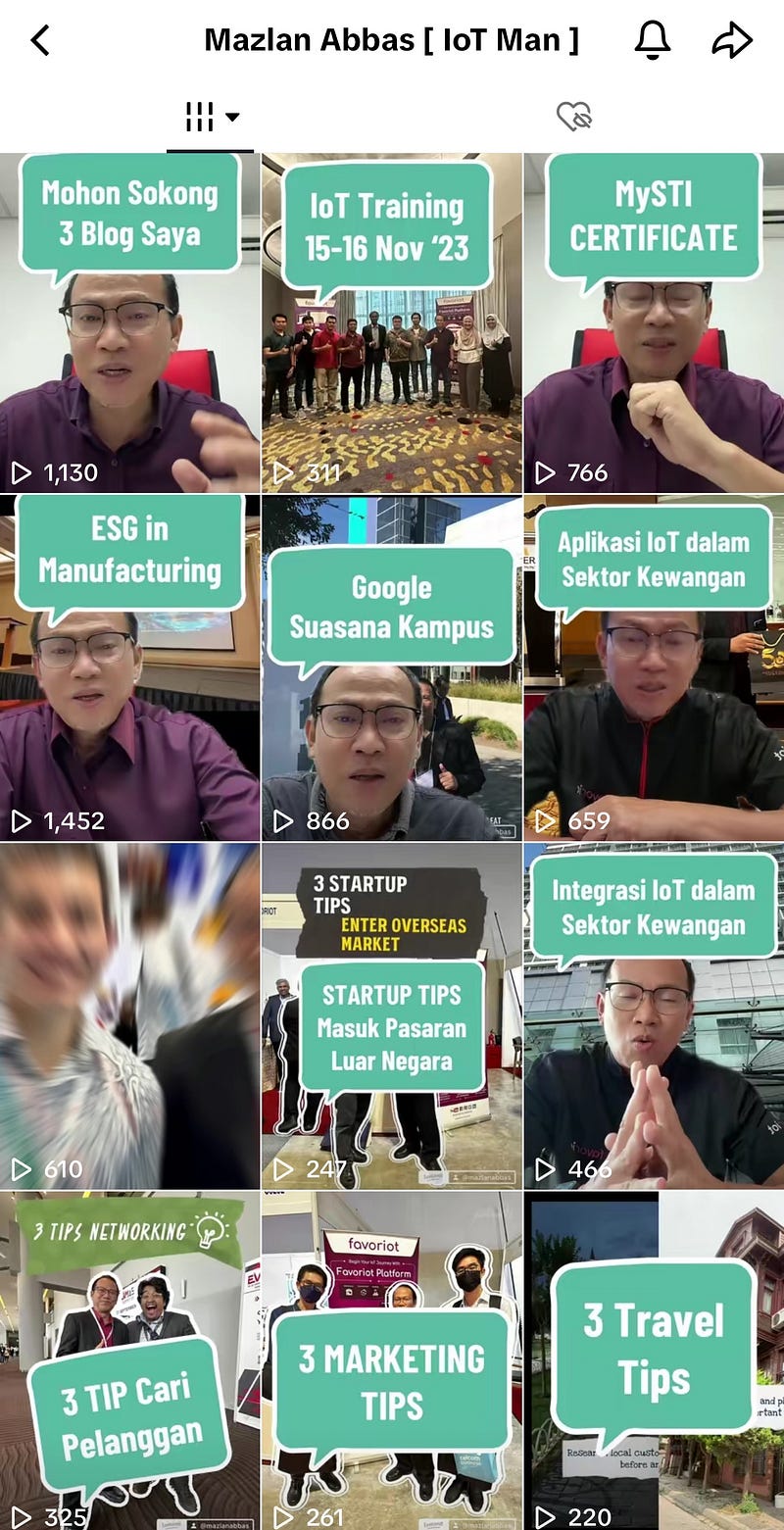
It all started when I ventured into TikTok as @iotman2030, exploring short, snappy videos about the Internet of Things (IoT). I didn’t expect much at first — after all, I’m not strictly part of the younger generation that dominates the platform.

But to my surprise, TikTok has been an exhilarating ride, rapidly growing to 6,729 followers. My videos get hundreds, sometimes thousands, of views in hours. It’s instant feedback, and something is thrilling about seeing the numbers climb in real time.

TikTok is a platform that thrives on speed and spectacle. Often, I can craft a video in under a minute. It’s about capturing attention quickly, keeping it visually engaging, and riding the wave of trends.

Every like and every view comes almost instantly, which can be addictive, to be honest. But there’s a catch — monetizing that success isn’t as straightforward as you’d expect. While TikTok offers a burst of engagement, it doesn’t always translate into financial rewards as easily as Medium does.

The Depth of Medium: Slower but More Meaningful

Despite TikTok’s fast success, something keeps pulling me back to Medium. On Medium, things are quieter. My audience is smaller — around 2,531 followers — and my articles rarely pull in big numbers.

At most, I’m seeing about ten reads a day. But here’s the thing: I’m okay with that. I’ve started to appreciate the slower, more thoughtful pace that Medium demands.

Writing on Medium feels like a slow burn. Sometimes, I’ll spend hours, even days, drafting and refining an article. It’s more than just putting words on a page — it’s about crafting something that resonates on a deeper level.

Medium readers are different.

They’re not there for quick entertainment; they want depth, insight, and value. These readers appreciate the time and effort that goes into creating a meaningful article, and in turn, they engage with me in a much more thoughtful way.

Different Audiences, Different Expectations

It’s fascinating to see how the audiences on TikTok and Medium are polar opposites. TikTok is fast, fun, and full of energy.

Most of my viewers are younger and drawn to the edutainment-style content I produce. They come for quick, digestible clips that deliver information playfully and engagingly. It’s a rush to see their reactions within minutes of posting.

Medium, however, attracts a more mature crowd. These readers are looking for depth — they enjoy sinking their teeth into well-researched articles.

My audience on Medium appreciates thoughtful pieces that go beyond surface-level insights, and they expect a higher level of engagement from me as a writer.

My discussions in the comments section often dive deeper into the topics, leading to rich, meaningful exchanges. Knowing I’m connecting with people on a more intellectual level gives me a different kind of satisfaction.

Why Not Both? Embracing the Balance

After reflecting on these differences, I asked myself: Why should I choose between TikTok and Medium? Why not embrace both?

It’s like catering to two different creative appetites—TikTok satisfies my need for instant engagement and creativity, while Medium allows me to connect on a deeper level. Each platform offers something unique, and together, they help me grow as a content creator.

By embracing both platforms, I’ve found a balance that works for me.

On TikTok, I get to experiment with fast-paced, visually engaging content, which fuels my creative energy. Meanwhile, Medium allows me to slow down, reflect, and dive deep into the topics I’m passionate about.

It’s not about choosing one over the other; it’s about leveraging the strengths to reach different audiences and explore different sides of my creativity.

Beyond TikTok and Medium

But my content creation journey doesn’t stop there.

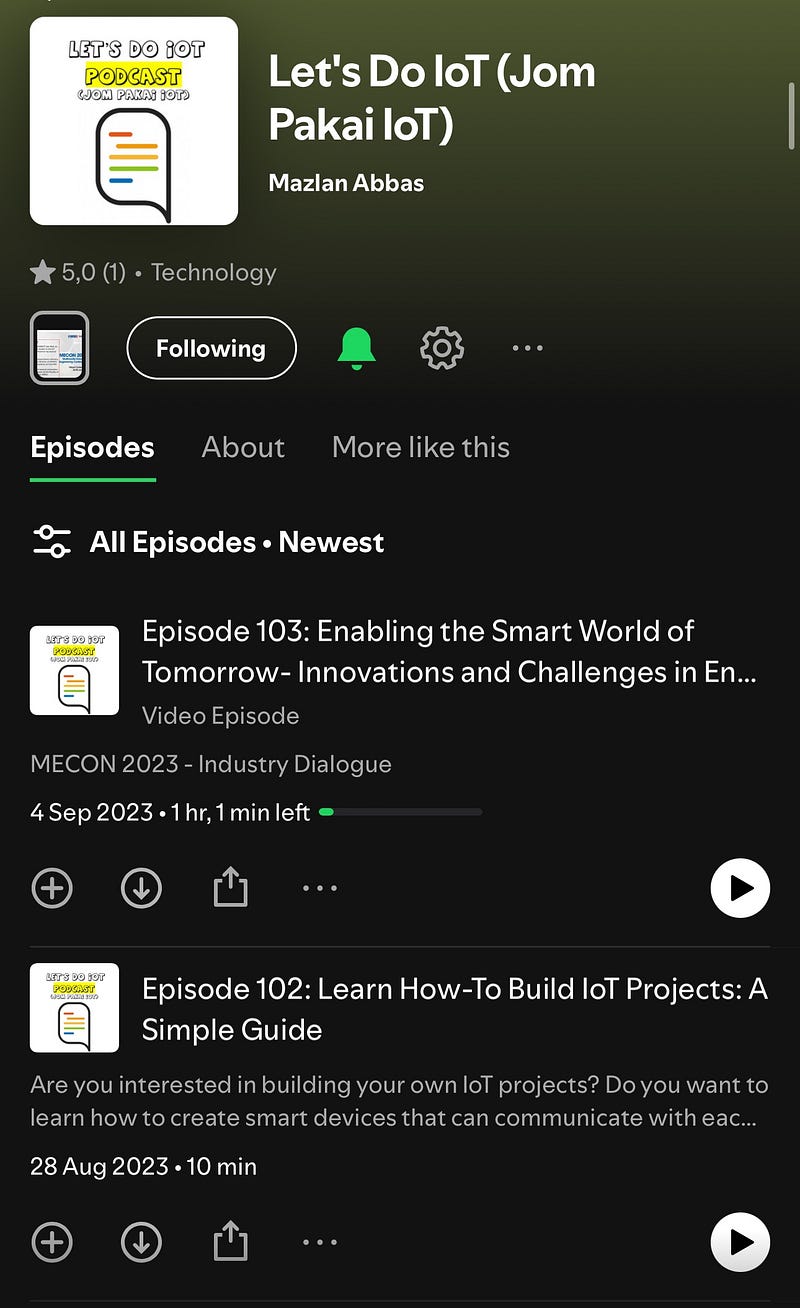
I’ve also dipped my toes into other formats like podcasting and YouTube. Podcasting has been an exciting adventure, allowing me to explore long-form discussions that wouldn’t fit into a TikTok or Medium post.

I can dive into complex topics in a more relaxed, conversational format. In a way, YouTube combines the visual appeal of TikTok with the substance of Medium. It’s another experiment where I’m still figuring out what works best.

But that’s the beauty of content creation; it’s constantly evolving, and I get to try new things, see what sticks, and adjust along the way.

Lessons for Budding Medium Writers

For anyone thinking of jumping into Medium, I have a few takeaways from my experience so far:

  • Know Your Audience: Medium readers aren’t looking for fluff. They crave well-thought-out, insightful content. Take your time to craft pieces that offer value.
  • Engage with Your Readers: Medium thrives on interaction, and the conversations you start in the comments section can be as meaningful as the article.
  • Be Patient: Building a following on Medium takes time. It’s a marathon, not a sprint, but if you stick with it, the personal and financial rewards are worth it.
  • Create Meaningful Content: Unlike TikTok’s quick-hit content, Medium is about depth. Focus on creating articles that stand out and resonate with your audience.
  • Diversify Your Platforms: Don’t limit yourself to one platform. Like I juggle TikTok, Medium, podcasting, and YouTube, explore different formats and reach out to varied audiences.

The Art of Juggling Platforms

Ultimately, I’ve seen my presence across TikTok, Medium, podcasting, and YouTube as a diversified portfolio.

Each channel brings something different to the table, allowing me to connect with various kinds of audiences uniquely.

As I continue this journey, I’m learning that content creation is not about chasing numbers but finding the right balance between speed, depth, and authenticity.

This journey is far from over, but I’m enjoying the ride, juggling different platforms, and discovering more about myself as a creator.

Different strokes for different folks, as they say, and I’m learning to embrace that fully.

10 Contents Tips to Create Viral Posts

INFLUENCER MARKETING

I asked ChatGPT for answers — for self-improvement.

Here are ten (10) ideas for social media content that can help create viral posts while portraying a positive image for you and Favoriot:

  1. “Day in the Life of a CEO” Series — Show behind-the-scenes moments of your daily activities as CEO of Favoriot. This can include meetings, decision-making processes, or brainstorming sessions to humanize leadership.
  2. Success Stories of Favoriot Clients — Share real-life success stories of businesses that have benefited from Favoriot’s IoT solutions. Add engaging visuals or short video testimonials from clients.
  3. Quick Tips on IoT and Smart Cities — Short educational videos where you explain complex IoT concepts and engagingly. Use analogies that people from various industries can relate to.
  4. Interactive Polls/Quizzes on IoT Trends — Engage followers by creating polls or quizzes about smart cities, technology, and future trends. This will encourage interaction and help you understand your audience.
  5. Inspirational Quotes with a Personal Touch — Create posts that combine inspirational quotes from you or famous figures with your perspective on leadership, innovation, and challenges in the IoT space.
  6. Employee Spotlights — Showcase the diversity and expertise within the Favoriot team. Short videos or images highlighting their contributions can create a sense of community and loyalty.
  7. “Then and Now” Comparisons — Create visually compelling posts showing how technology has evolved over the years, with a focus on IoT and smart city advancements. This creates a narrative of progress and future innovation.
  8. Sustainability and IoT Impact Stories — Share how Favoriot’s IoT solutions contribute to environmental sustainability, such as reducing waste or optimizing energy consumption in smart cities.
  9. “Ask Me Anything” (AMA) Sessions — Host live or recorded AMA sessions on your social media platforms where you answer questions about IoT, smart cities, or entrepreneurship, allowing followers to engage directly.
  10. Motivational Content for Young Entrepreneurs — Share your journey as an entrepreneur, the challenges you’ve overcome, and advice for young people looking to innovate and create their tech solutions.

These posts will engage your audience and enhance Favoriot’s reputation as a forward-thinking, socially responsible brand.

My Life Before TikTok

MY SOCIAL MEDIA JOURNEY

An Unexpected Journey

Photo by Solen Feyissa on Unsplash

It’s been a long road as a content creator, beginning long before the rise of TikTok. Allow me to take you on a journey through my life before TikTok, when YouTube was my primary platform, and creativity was my guiding light.

The Early Days of Content Creation

My journey as a content creator started on YouTube, a platform that allowed me to express my creativity and share my passions with the world.

It all began with a simple idea: to create content that informs, entertains, and inspires others. With that goal in mind, I launched several YouTube channels, each linked to a unique Gmail account and dedicated to a specific theme.

It was like painting with vibrant colors on a vast canvas, each channel representing a different facet of my interests.

The Diverse World of YouTube

My channels covered various topics, from the latest tech gadgets to travel adventures, personal vlogs, and deep dives into entrepreneurship and technology.

This variety allowed me to connect with a diverse audience, each with their unique tastes and preferences.

Looking back, it’s remarkable how most of these channels continue to thrive.

They are monuments to their continued relevance and my dedication to keeping them alive.

My Gadget Channel: A Labor of Love

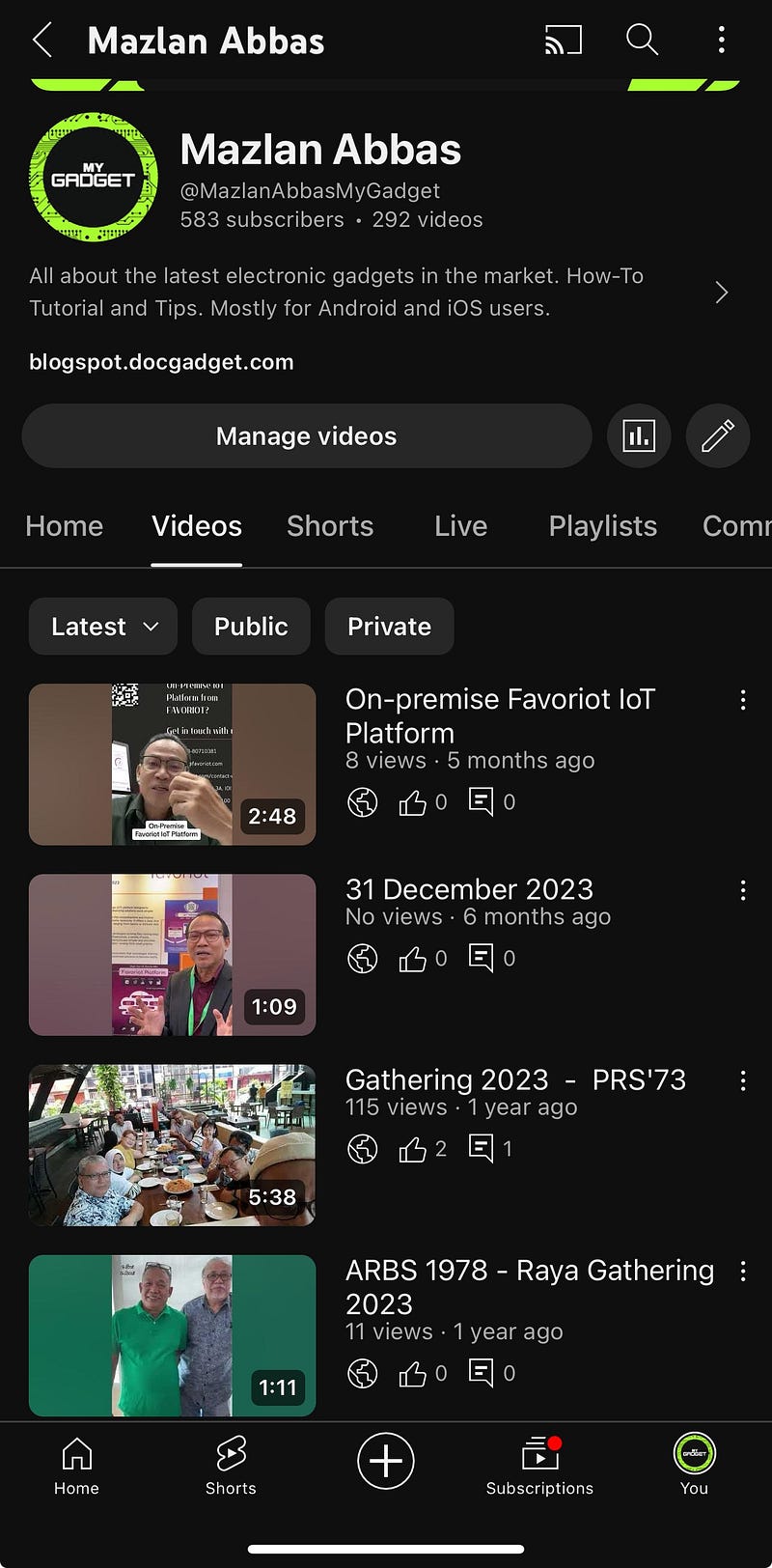
One channel with a special place in my heart is ‘My Gadget.’

Launched 14 years ago, it became a beacon in the tech world, offering the latest news, how-to guides, and insights for Android and iOS users.

It was an exciting time, coinciding with significant technological breakthroughs in smartphones and tablets.

As the world welcomed iPhones and Android devices, I immersed myself in this new world and shared every discovery and insight with my audience.

A Journey Beyond Reviews

My engagement with the tech community went beyond mere reviews.

I delved into the heart of these devices, exploring their capabilities and sharing my findings with a tech-hungry audience.

Jailbreaking iPhones to explore new apps became a staple on my channel, captivating my viewers and offering them a glimpse into their devices’ limitless possibilities.

Expanding Horizons

As my journey expanded, so did the scope of my content.

Travel soon wove into my narrative, allowing me to share the world’s beauty through my lens.

This added a rich, vibrant layer to my digital collection and gave my audience a window into my adventures.

The Birth of Favoriot

The birth of my startup, Favoriot, marked a new era in my life and, consequently, in my content journey.

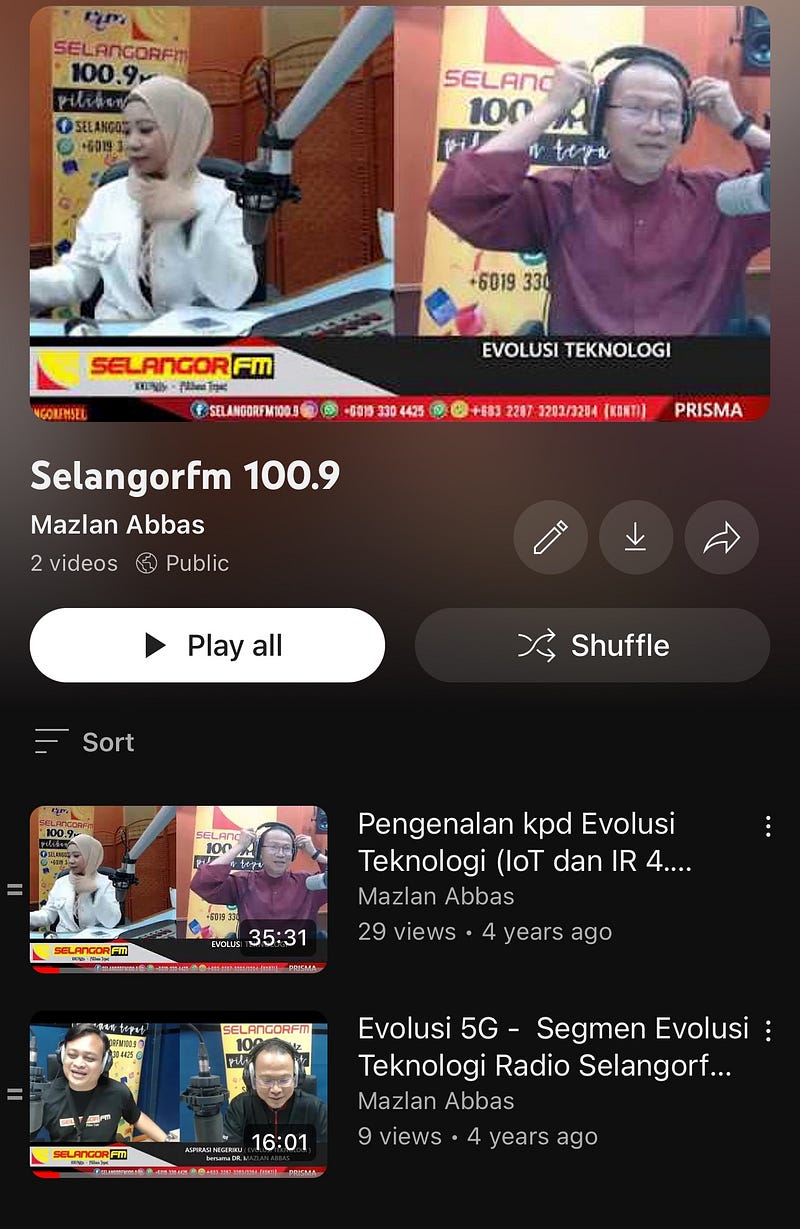
This venture opened doors to opportunities like interviews and TV and radio appearances, enriching my content with tech talks and adding a new depth to my digital storytelling.

The Challenges of Content Creation

Juggling content creation across various platforms was a colossal task.

It demanded time, meticulous editing, and a never-ending flow of creative ideas.

Eventually, I embraced a more natural, spontaneous approach to video posting.

This approach lightened the editing burden and brought my work a genuine, relatable touch.

The Rise of TikTok

Then came TikTok, a platform that redefined how we create and consume content.

It was an unexpectedly different form of creativity.

I remember my first TikTok video, which quickly garnered attention.

The format was perfect for my spontaneous style, allowing me to share snippets of my life and insights more casually and engagingly.

Discovering the Power of TikTok

As I embraced TikTok, I discovered its power to reach a new audience.

The platform’s algorithm and user-friendly interface made it easy for my content to go viral.

I shared tech tips, travel adventures, and glimpses into my daily life, all within the constraints of a 60-second video.

The response was overwhelming, and I soon found myself with a growing following of engaged viewers.

The Shift to Spontaneity

TikTok encouraged me to be more spontaneous and authentic in my content.

I no longer had to spend hours editing videos; instead, I could capture moments as they happened and share them with my audience.

This shift brought a new level of authenticity to my content, allowing my viewers to connect with me more personally.

The Emergence of Podcasting

As the digital landscape continued to transform, so did my methods of connecting with my audience.

Podcasting emerged as the new frontier, and I set sail in this exciting direction.

With podcasts, I could delve deeper into topics, share stories, and engage in meaningful conversations with my audience.

A Digital Journey

Reflecting on this digital journey, I’m awed by the incredible transformation of technology and social media.

They’ve reshaped our ways of creating, consuming, and sharing content.

From the early days of YouTube to the dynamic world of TikTok and the emerging realm of podcasting, my journey has been a testament to learning, adaptability, and a relentless pursuit of passion.


Feel free to check out my TikTok content at IoTMan2030 for more insights into my life and journey as a content creator.

Additionally, you can explore my YouTube channels for a deeper dive into tech, travel, and entrepreneurship.

Thank you for being a part of this incredible journey.

Your support and engagement mean the world to me.

Here’s to more adventures and the endless possibilities of digital content creation.


If you enjoyed this article, don’t forget to check out my books and blog for more content on technology, entrepreneurship, and life as a content creator.

How To Create Educational TikTok Videos That Are More Engaging

INFLUENCER’S STORIES

Tips that you can steal, too.

TikTok Channel @iotman2030

Creating educational content on TikTok has been an exciting and transformative journey for me.

As someone deeply invested in the Internet of Things (IoT), smart cities, and telecommunications, I’ve found TikTok to be a surprisingly effective platform for sharing knowledge and engaging with a broader audience.

Leveraging my extensive experience and insights in these fields, I’ve embraced this modern medium to reach not only tech enthusiasts and professionals but also the younger generation, who are the future innovators and leaders in technology.

Embracing the Power of TikTok for Education

TikTok, with its massive and diverse user base, offers a unique opportunity to disseminate educational content in a way that is both engaging and accessible.

The platform’s format prioritizes short, visually engaging videos, forcing content creators to distill complex ideas into concise, digestible segments.

This has been particularly challenging yet rewarding for someone like me, accustomed to the more traditional and extensive modes of academic and professional communication.

When I first considered creating educational content on TikTok, I had to overcome a few biases.

Like many, I initially viewed TikTok as a platform primarily for entertainment – filled with dance challenges, comedic skits, and viral trends. “Is this really the place for educational content?” I wondered.

However, I quickly realized that this environment, brimming with creativity and energy, could be harnessed to make learning fun and engaging.

The potential to reach millions with a single video, inspire curiosity, and stimulate interest in IoT and smart cities was a compelling reason to enter this space.

Crafting Engaging and Informative Content

Balancing engagement with information is the key to successful educational content on TikTok.

How do I capture attention quickly and deliver value concisely?” I asked myself.

Each video must capture attention quickly, usually within the first few seconds, and then deliver value clearly and concisely.

TikTok channel @iotman2030

To achieve this, I focused on a few core strategies:

  1. Visual Appeal and Hook: TikTok’s visual nature means that the first few seconds of a video are critical. “What can I use to grab viewers’ attention immediately?” I thought. I use eye-catching visuals, whether it’s through dynamic text overlays, exciting graphics, or real-world footage of innovative city applications.
  2. Simplifying Complex Concepts: IoT, smart cities, or telecommunications can be quite technical. “How can I break these complex ideas into simpler concepts without losing the essence?” I wondered. For instance, when discussing IoT, I might start with a relatable example, like smart home devices, before diving into more technical aspects.
  3. Storytelling: People are naturally drawn to stories. “How can I frame my educational content within a narrative?” I asked myself. Whether it’s a day in the life of a smart city, the evolution of telecommunications, or the future possibilities with IoT, storytelling makes the content more relatable and memorable.
  4. Interactivity and Engagement: TikTok thrives on interaction. “How do I encourage viewers to engage with my content?” I pondered. I encourage viewers to ask questions, leave comments, and suggest topics for future videos. Responding to these interactions builds a sense of community and helps me understand what the audience is most interested in.

Examples of Successful Educational TikToks

One of the most successful TikTok series I created was “The Basics of IoT”.

How do I introduce complex topics in an approachable way?” I asked. In this series, I started with simple definitions and everyday examples, gradually introducing more complex topics like IoT architecture, security concerns, and future trends.

Each video was short, usually around 60 seconds, and ended with a call-to-action encouraging viewers to ask questions or share their thoughts.

Another popular series was “Smart Cities in Action”.

How can I showcase real-world examples of smart city technologies?” I thought.

Here, I showcased real-world examples, from intelligent traffic management systems to smart waste management solutions.

Using actual footage and data, I could visually demonstrate the impact of these technologies, making the content more tangible and impactful.

Overcoming Challenges

Creating educational content on TikTok has its challenges.

How do I condense a 30-minute lecture into a 60-second video?” I often ask myself.

The primary challenge is the platform’s time constraint.

Condensing a topic I usually discuss in a 30-minute lecture into a 60-second video requires meticulous planning and clarity of thought.

Every second counts, and there’s no room for fluff.

Another challenge is maintaining a consistent posting schedule.

I wondered, “How do I balance regular content creation with my professional commitments?” TikTok’s algorithm favors regular content creation, which can be demanding.

To address this, I plan my content in batches, scripting and recording multiple videos in one session and then scheduling their release over time.

Leveraging TikTok’s Features

TikTok offers several features that can enhance educational content.

How can I use TikTok’s features to make my content more engaging?” I pondered.

Duets, for instance, allow users to create content alongside existing videos.

I’ve used this feature to respond to other tech educators, create collaborative content, and even debunk common myths in the tech world.

The “Stitch” feature is another powerful tool. “How can I highlight significant moments from tech conferences and provide commentary?” I thought.

It allows users to clip and integrate parts of other videos into their own.

I’ve used this to highlight significant moments from tech conferences, share interview snippets with other experts, and provide commentary on current tech news.

Hashtags are essential for reaching a broader audience.

I often ask, “Which hashtags should I use to get my content discovered by users interested in these topics?

Using relevant and trending hashtags helps my content get discovered by users interested in those topics.

I often use hashtags like #IoT, #SmartCity, #TechEducation, and #FutureTech.

Measuring Impact and Feedback

One of the rewarding aspects of creating educational content on TikTok is the immediate feedback and interaction.

How can I gauge the impact of each video?” I wondered.

The platform’s analytics provide valuable insights into which videos are performing well, who is watching them, and how they are being received.

Metrics like view count, likes, shares, and comments help gauge the impact of each video.

Engaging with the audience through comments and direct messages also provides qualitative feedback.

How can I use feedback to improve my content?” I thought.

I’ve received numerous messages from viewers who expressed how a particular video helped them understand a concept better or sparked their interest in pursuing a career in technology.

This kind of feedback is invaluable and serves as a powerful motivator.

The Broader Vision

My foray into TikTok is part of a broader vision to make technology education more accessible and engaging.

How can TikTok help bridge the gap in traditional education?” I pondered.

While effective, traditional modes of education often fail to reach a wider audience due to various barriers, such as cost, accessibility, and engagement.

Platforms like TikTok can bridge this gap, providing high-quality educational content for free and in a format that resonates with today’s digital-native generation.

Furthermore, by creating content on TikTok, I aim to demystify technology and inspire the next generation of tech enthusiasts.

How can I spark curiosity and provide foundational knowledge in IoT and smart cities?” I wondered.

IoT, smart cities, and telecommunications are evolving rapidly, and building a knowledgeable and skilled workforce to drive this evolution is crucial.

I hope to contribute to this goal by sparking curiosity and providing foundational knowledge.

Future Plans

I plan to expand my TikTok content to cover more advanced topics and to incorporate more interactive elements.

What new topics and interactive elements can I introduce?” I thought.

Live sessions are one area I’m particularly excited about.

They offer a real-time platform for deeper engagement, allowing immediate Q&A and more in-depth discussions.

Collaborations with other educators and industry experts are also on the horizon.

How can I enrich my content by bringing in diverse perspectives?” I wondered.

By bringing in diverse perspectives and expertise, the content can be enriched further, providing more value to the audience.

Conclusion

Creating educational content on TikTok has been an enriching journey.

It has challenged me to adapt my communication style, think creatively, and engage with a diverse audience.

How can I continue to make a meaningful impact through TikTok?” I often ask myself.

The feedback and impact have been overwhelmingly positive, reaffirming the potential of this platform as a powerful educational tool.

As I continue to explore and innovate in this space, my goal remains clear: to make learning about technology accessible, engaging, and fun.

How can I inspire and educate the next generation of tech enthusiasts?” I wondered.

Whether it’s a high school student curious about smart cities or a professional looking to deepen their understanding of IoT, I hope my TikTok videos inspire and educate, paving the way for a more technologically savvy future.

In this digital age, where information is abundant and attention spans are short, platforms like TikTok offer a unique opportunity to make a meaningful impact.

How can I foster a community of learners and innovators through this medium?” I thought.

By embracing this medium, I’m not just sharing knowledge; I’m fostering a community of learners and innovators who will shape the future of technology.

And that, to me, is the true power of education.

How X (Twitter) Can Transformed an Introvert To A Thought Leader

SOCIAL MEDIA INFLUENCER’S SERIES

Ten (10) lessons learned to become a Thought Leader

Let’s connect on X (Mazlan Abbas)

Not a paid member? Click here to read the full story for free.

In 2014, one of my staff sent an email with startling news he had gathered from the Internet. I was unexpectedly named the №20th Thought Leader in IoT by the 2014 Onalytics Report — “The Internet of Things — Top 100 Thought Leaders”.

This accolade was a surprise and a moment of pride and revelation. The recognition stemmed mainly from my engagement on X (formerly known as Twitter), where I had been actively sharing insights and knowledge about IoT.

From then onwards, I received several accolades from different organizations and websites (Take note: this is different from the paid version that most people receive nowadays).

Photo by Alexander Shatov on Unsplash

Some of the notable ones are:

  • Top 50 B2B Thought Leaders, Analysts & Influencers You Should Work With In 2024 (APAC)
    – Top 50 Global Thought Leaders on the Internet of Things (February 2019) and Digital Disruption (October 2019) by Thinkers360, 
    – Top 50 Most Impactful Smart Cities Leaders by World CSR Congress 2017
    – Top 10 in IoT Top 100 Influencers by Postscapes 2017 & 2018

However, not all accolades are based on X alone; for example, Thinkers360 uses a unique patent-pending algorithm, as mentioned on their website:

Our differentiation from the various influencer leaderboards on social media, and other randomly-compiled lists on the web, is that our patent-pending algorithm takes a holistic view of thought leaders and experts, beyond their social media activity, and looks across all the hats they may wear — such as academic, author, consultant, entrepreneur, influencer, and speaker — and all the types of thought leadership content they produce. — Thinkers360

Thus, it’s important as a thought leader that we need to have our blog, too.


This experience not only underscored the influence of social media in professional branding but also highlighted ten (10) lessons about the power of digital platforms in establishing thought leadership.

1. Consistency is Key

My journey on X began with a simple desire to share what I knew and believed about IoT. Over time, this consistent sharing of articles, insights, and personal commentary helped me build a dedicated following. Consistency in posting keeps your audience engaged and helps you build an online persona that reflects expertise and reliability.

2. Quality Over Quantity

While consistent activity is crucial, the quality of the content shared is paramount. Each tweet, retweet, or shared article was selected or crafted to add value to discussions around IoT. This focus on quality ensures that your audience finds your contributions worthwhile, encouraging deeper engagement and broader sharing.

3. Engage with Your Audience

Engagement goes beyond posting content. Responding to comments, participating in discussions, and acknowledging others’ content helped me build a community around my social media presence. This interaction is about spreading knowledge and learning from others, a hallmark of authentic thought leadership.

4. Leverage Networking Graphs

The Onalytics report highlighted the importance of how individuals influence various audiences through network graphs. Understanding and leveraging these connections can amplify your reach and impact. I could extend my influence beyond my immediate followers by engaging with key influencers within the IoT space and participating in broader discussions.

5. Recognize the Power of Niches

IoT is a vast field, but my focus was often on specific niches within this domain that were less saturated but had significant potential for impact. This strategy helped set me apart, giving me a unique voice that could offer fresh perspectives and specialized knowledge.

6. Adapt and Evolve

Technology constantly changes. We must adapt to new trends, platforms, and technologies. IoT has expanded, leading to discussions on technical aspects, ethics, and policies.

7. Share Your Journey

Authenticity resonates with people. Sharing successes, challenges, and learnings from my journey as an IoT professional has helped humanize my online presence. This openness fosters trust and encourages others to share their experiences, creating a rich, interactive community.

8. Commit to Continuous Learning

Thought leadership is not a static achievement but a dynamic process. Continual learning and updating one’s knowledge base are critical. Engaging with the latest research, industry reports, and innovative practices has kept my content relevant and insightful.

9. Give Back to the Community

Throughout my journey, giving back has been a cornerstone — whether through mentoring, webinars, speaking engagements, or collaborative projects. These contributions enrich the community and establish your role as a knowledgeable leader committed to the field’s growth.

10. Stay Humble

Recognition as a thought leader should not be an end in itself but a platform for further growth and contribution. Staying humble and approachable ensures you remain open to new ideas and connections, vital for sustained relevance and influence in a rapidly changing field.


The recognition Onalytics bestowed upon me was a powerful reminder of the impact I can make through my contributions. It emphasized the transformative potential of social media to shape my professional identity and enhance my brand.

Most importantly, it underscored our crucial role as thought leaders to drive meaningful change and progress in our respective fields.

Photo by Jehyun Sung on Unsplash

More stories about my Social Media “adventures”:

View at Medium.comView at Medium.comView at Medium.comView at Medium.com


Remember to Subscribe to receive email updates on every post I publish.

The Day I Gave Up My Instagram

SOCIAL INFLUENCER’S SERIES

After 4,670 posts… I decided to pull the plug.

Photo by Souvik Banerjee on Unsplash

Not a paid member? Click here to read the full story for free.

This is my second IG account.

The first IG account was “hijacked” by someone else using photos. I tried to complain to IG support, but instead of blocking that person’s account, IG blocked my original account.

That account was very active, and I had real friends, but I lost all of them. Later, I decided to create a new one in 2021.

As much as I tried to get back my old friends, but not many came back.

I tried to post various content, including everyday activities, photos of my travel, republished videos from TikTok, and more.

Weirdly, the followers of my IG aren’t the same as my TikTok. I can get many views and followers from TikTok but not from IG. They seem to be in a different world altogether.

I have tried using Stories and Reels with all the possible Internet tips, but nothing works. Only a handful like my posts—most of the time, it will be 1–3 likes—and there are almost no comments.

Author’s IG — I tried many kinds of posts, but none have good traction.

Today, I decided to pull the plug. As someone who has been trying different social media channels, here’s what I have learned (the hard way):

  1. Platform Specialization: Focus on your strengths on specific platforms rather than spreading yourself too thin. Identify where your content resonates the most and concentrate your efforts there.
  2. Diverse Audience Dynamics: Social media platforms have distinct audiences with varying preferences, leading to different impacts for influencers across platforms.
  3. Content Adaptability: Social media content success depends on the platform. Strategies that work on TikTok may not work on Instagram. Tailored content strategies are necessary.
  4. Engagement and Feedback: Engagement metrics (likes, comments) can serve as vital feedback, indicating how well content resonates with the audience. A lack of engagement might signal the need for a strategic pivot or content reassessment.
  5. Strategic Patience and Pivot: Patience is vital in building a presence on any platform, but recognizing when efforts are futile and when to pivot is equally essential. A time-bound approach to evaluating and shifting strategies can prevent wasted efforts.
  6. Content Authenticity vs. Platform Trends: Don’t compromise on authenticity while following platform trends like IG’s Stories and Reels. Authentic content resonates more with audiences.
  7. Exploration of Alternative Platforms: If one platform isn’t working, try switching to a different one. For example, switch from image/video platforms to writing-focused ones.
  8. Resilience in Adversity: Account hijacking is discouraging, but bouncing back shows determination.
  9. Acknowledgment of Unique Influencer Paths: No two influencer journeys are the same. Recognizing that one’s path might differ from others, even within the same niche, can help maintain focus and authenticity.

Remember to Subscribe to receive email updates on every post I publish.