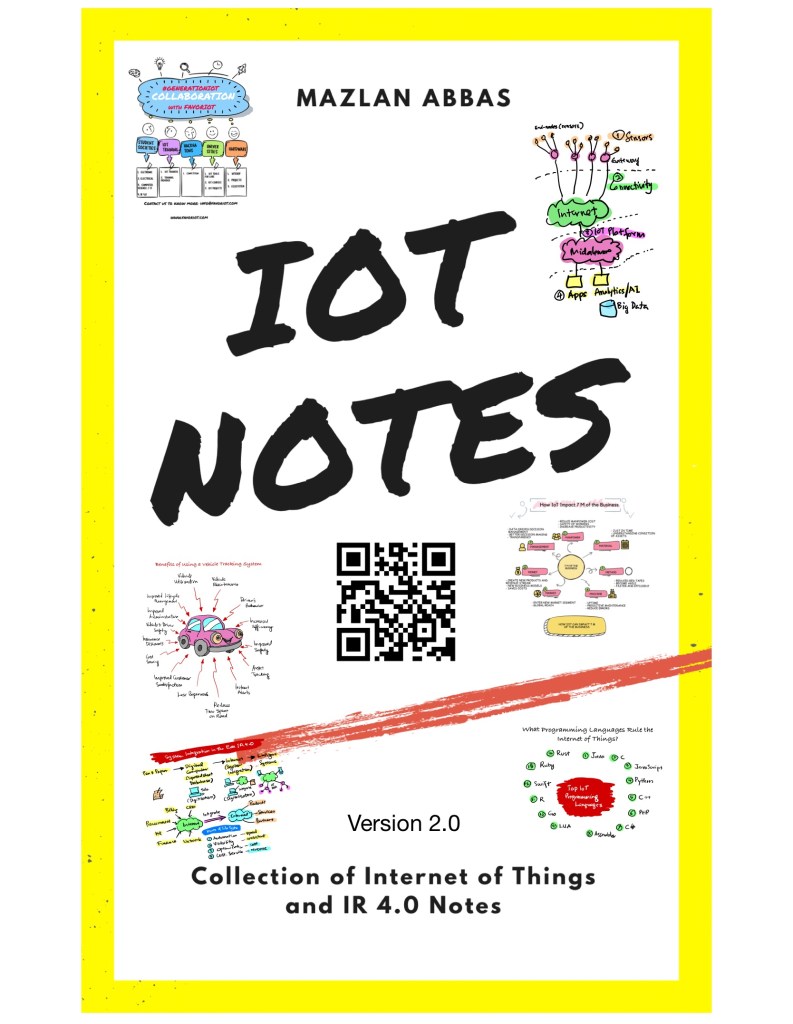
For the past many years, I have received similar questions again and again. Finally, I decided to write simple notes (hand-drawn and with the help of some multimedia tool) regarding IoT.
This can be used for lecture notes or as a simple way to understand IoT. Initially, I made this a paid version, but finally, I decided to make it free for all.
Note: Don’t forget to download the second eBook entitled “Your IoT Journey” which is also available for free.
And I am in the process of writing the third eBook called “IoT Adventure”. Soon to be published if I have enough energy or encouragement to complete. Thanks, guys, for the support!
The fifth session of the World Digital Economy and Technology Summit 2022 (28-29 June 2022) was centered on creating smart nations, smart cities, and smart industries with an eye on sustainability.
Panelists:
Goh Seok Mei, Executive Director, United Cities, Malaysia
The IoT Adventure Book by Dr. Mazlan Abbas is a comprehensive guide to the Internet of Things (IoT) world and how it can transform various industries. The book covers the latest IoT applications and shares Dr. Abbas’s experience as an IoT entrepreneur.
The book is divided into sections covering various topics, from IoT applications to IoT challenges and tips. The IoT applications section discusses the potential benefits of IoT in multiple industries, such as supply chains, smart agriculture, smart buildings, and smart mobility. It also explores IoT solutions for flood forecasting, warning, fleet management, and garbage collection.
One attractive section of the book is on Smart Cities, which delves into the opportunities and challenges of using IoT to build more efficient and sustainable cities. It covers citizen engagement, budget allocation, and data monetization.
The book also includes tips and tutorials on developing IoT solutions, selecting the best IoT platform, and creating IoT talents. It provides insights into IoT middleware, IoT ecosystems, and IoT business models, as well as discusses the impact of IoT on the Fourth Industrial Revolution (IR 4.0).
Dr. Abbas’s book is handy for those interested in building IoT solutions, as it offers practical advice on developing IoT projects efficiently and avoiding common pitfalls. It provides insights into the skills required for IoT talent, how to solve IoT project issues in universities, and how to monetize IoT data.
The IoT Adventure Book also covers Generation-IoT, a new generation of young people driving the IoT revolution. It discusses how Generation-IoT can build its own IoT ecosystem and offers expert advice on becoming a successful IoT player.
The book is well-organized and easy to read, with each section covering a specific topic. It is suitable for beginners and advanced readers, providing a comprehensive overview of the IoT industry while diving deeper into particular issues.
One of the book’s strengths is Dr. Abbas’s personal experience as an IoT entrepreneur. He shares his insights and provides practical advice based on his successes and failures. This makes the book more relatable and valuable, especially for those new to the IoT industry.
Overall, The IoT Adventure Book (Sign Up HERE) is a must-read for anyone interested in the Internet of Things. It offers a comprehensive guide to IoT applications, challenges, and tips, while also providing insights into the impact of IoT on various industries. Dr. Abbas’s personal experience as an IoT entrepreneur makes the book more engaging and practical, making it an excellent resource for beginners and advanced readers. IoT Applications
Download other FREE IoT eBooks from Dr. Mazlan Abbas:
IoT Adventure Book will delve deeper into the business of IoT. It will also share the experience of being an IoT entrepreneur. Some of the topics have been written in the IoT World Blog. Check out the contents below:
How do we gain traction and what do we learn from our early mistakes?
When I was with MIMOS, an R&D Agency under MOSTI, my role was developing wireless technologies, one of which was the Internet of Things, especially in developing new 6LoWPAN standards.
Later, we created new IoT applications but did not think about selling the applications. What are the business models, and who will be the paying customers?
However, when I left the organization and ventured into the telco world, the IoT business became challenging. We cannot apply all theories to the real world.
7 Mistakes That We Did Not Realize
In the early days of Favoriot, we were very optimistic about the IoT market, and we thought customers were ready to jump into this as soon as they got the opportunity. But nothing is as easy as we thought! We were mesmerized by the number of IoT devices by 2020 and how the organizations will adopt Iot applications.
Here’re our 7 early mistakes and things that we overlooked:
There is not enough talent in the industry to develop IoT solutions. When we launched our IoT platform in 2017, we thought people would subscribe to it and use it in the IoT deployment. Unfortunately, the take-up is very slow. People are not aware of how to use them or connect any sensors.
Talent is still the Universities. If the industry doesn’t have enough talent, most likely they should still be in the Colleges or Universities. But even in 2017, IoT is still very new to many educational institutions. Not many of their current courses embed with complete elements of IoT, which means learning IoT applications and their benefits, but the ability to have hands-on IoT projects and learn all the four aspects of IoT such as Sensors, Connectivity, Middleware, and Analytics.
Not enough knowledge to train Favoriot platform. Letting users learn using the IoT middleware via YouTube videos is also a big mistake because many still prefer a formal course rather than self-training. Proper training is mandatory, and YouTube resources should be supplementary resources.
Customers don’t know how to start their IoT journey. Many are still trying to grasp how IoT impacts their business. And what it takes to start transforming their organizations with intelligent solutions.
IoT Budget was not in place. Too many stakeholders make the decision process slower, and they are late in justifying their ioT budget. Organizations can’t comprehend how much it cost to deploy an IoT solution. Where should it start, and who should manage this?
There is no catalyst to create their IoT projects. Before Covid-19 happened in 2020, the digital transformation process in many businesses was prolonged.
We did not take the IoT training opportunity. Many opportunities arise, but we neglect that opportunity simply because we thought we should focus on building our IoT platform and marketing them.
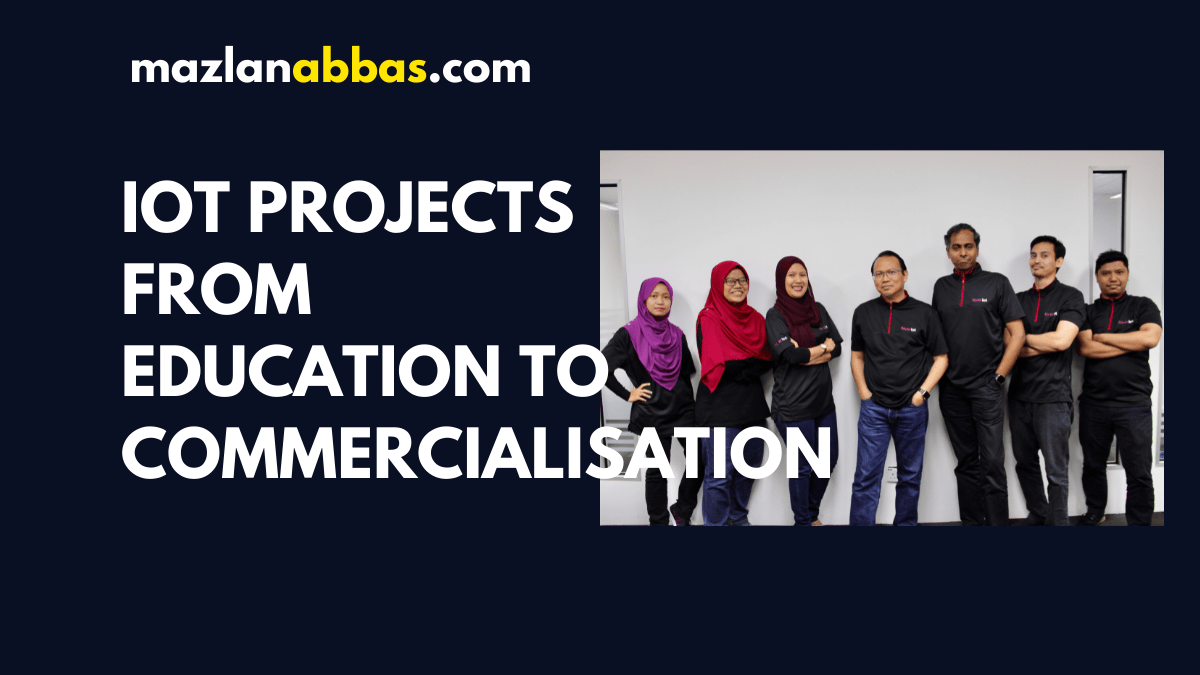
Favoriot Team in 2019
Building IoT Community for Commercialisation
It has been very challenging to promote the usage of our Favoriot IoT because we are new to the market, and most people are aware of other alternatives.
Thus, we set up a strategy to create awareness by promoting the Generation-IoT community to quickly help users start their IoT journey. We take this opportunity to create IoT training courses using the Favoriot IoT platform and bundling with an IoT ecosystem package to the educational institutions.
We went back to the Universities, Colleges, and Polytechnics and help them to refresh their IoT syllabus which suits the industry needs.
Since then, we have managed to groom many trainers, lecturers, and individuals with IoT knowledge and hands-on using Favoriot IoT platform.
It has become the beginning of our traction from education to the platform’s commercialization. The platform proves to become a better alternative to the existing IoT platforms in the market. We have gained the trust of the industry to become one of the IoT platforms of choice.
The local support and expertise give us a massive advantage to enter into IoT projects. We also teach them how to select the best IoT platform without evaluating hundreds of products in the market.
We regret not taking the education path 3 to 4 years earlier. Otherwise, the IoT landscape would be very different today.
But then, no one expects to connect the dots this way without learning the mistakes we are going through.
Dr. Mazlan Abbas
“Mistakes have the power to turn you into something better than you were before.”
Anonymous
This is part of the real stories about IoT entrepreneurship. Subscribe to IoT Adventure book when it’s available in the future. Read the archive here.
If you’re passionate about your field and know how to stand out, then you can quickly become a thought leader.
You’re passionate about your field, and you know how to stand out. You’ve built a portfolio of work in that area that you’re proud of. Now, you have the chance to show the world how awesome you are. With a little bit of dedication and focus, you can quickly become a thought leader—a person who people look up to and trust for advice.
[bctt tweet=”3 Ways to Become a Thought Leader”]
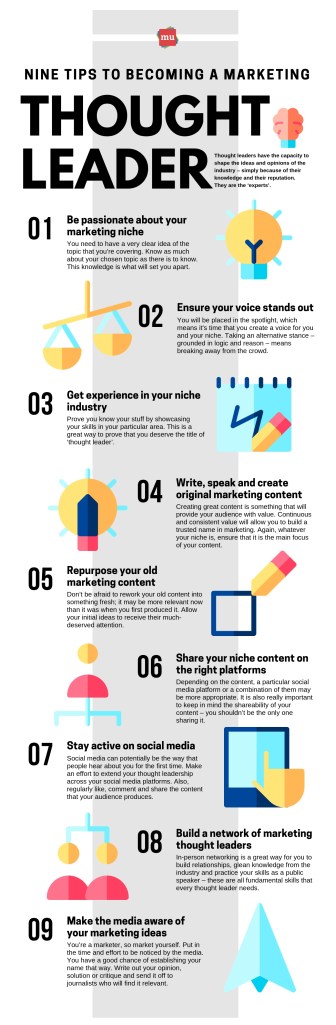
Here are three (3) ways to become a thought leader:
(1) Build a Strong Following
If you want to become a thought leader on social media, the first thing to do is build a strong following.
There are many ways of doing this, but the most effective ones are:
Make sure your followers are interested in what you have to say. If they aren’t, they won’t be interested in following you.
Be active.
Respond to comments and questions and encourage people to follow you.
Get involved with other people’s content and respond to it as well. You can also build your community. Create a group that shares similar interests and join others’ groups. Build relationships – your followers will become your friends, and your friends will become your followers. The more you interact with them, the more likely they will follow you. You may think that you are not good at building relationships, but that is a mistake.
The best way to do this is to have a blog that focuses on the same subject as your podcast. For example, if your podcast is about technology, create a blog about technology-related topics. Then, you can link your podcast to your blog and vice versa. If people read your blog and listen to your podcast, they’re likely to click through and visit your website. I’ve been asked by many newbie bloggers what the difference is between their blogs and my podcasts. And honestly, there isn’t much of a difference.
(2) Content Marketing
The third thing to do is to share quality content regularly. To stay consistent and build credibility, you should make sure that the majority of the content you share falls within one category or theme.
If your blog is a mix of many categories, you’re probably going to end up being just another “generic” blog that nobody will read. That said, I suggest that you focus on only one category in your content sharing. You might even want to limit it to two or three. The more categories you add, the less effective your content sharing will be.
(3) Brand voice
The next step is to develop your brand voice, which will be unique to you.
This is a combination of your logo and how you speak about yourself. If you’re a business coach, your brand voice will be different from an entrepreneur’s. The same goes for the voice of your employees. Brand voice can include:
Your company logo
The tone and language of your marketing material
The way you speak on social media
Your business mission statement
Your tone and style of communication
The tone of voice used in your emails
The voice of your website
Social media tools allow you to share your content across multiple platforms easily. They can help you create a brand and a reputation that people will trust. This is why it’s so crucial that you have a unique voice and can connect with people. Be authentic to build a reputation for yourself.
This means that you should be willing to share your life experiences, as well as your opinions. You should also be open about your struggles, fears, failures, and successes. You should never make excuses, but you should always be willing to talk about the things that you’ve been through. This is because these things will help you to connect with other people. When people can relate to your experiences, they will be more likely to read your blog and other social media channels.
The first way to become a thought leader is to understand that people will follow you if they believe you know something they don’t. The second way to become a thought leader is to use content marketing to spread your thoughts, ideas, and expertise to others. Third, it’s essential to have a voice. Your opinion matters and your voice counts. You may not be able to persuade others to agree with you. However, you can influence them by influencing your audience. People are always listening to their customers, and they’re always looking for new insights into their industry. Be part of the conversation, and people will follow you.
A couple of weeks earlier, I was very depressed and frustrated when my boss did not approve my application to attend IoT Asia 2014. I applied for the trip with two of my staff to attend the first IoT event in the region, yet only two of my staff applications were approved but not mine.
Our organization started the work on IoT almost two years earlier, and I thought this would be my best opportunity to hear from the industry leaders.
But the news that my staff brought to me was very unexpected. I wondered – how do I get to be selected by a prestigious organization like Onalytica?
The news spread very fast in the organization, with many people congratulating me. And one of them is the HR Vice President; she congratulated, “Dr. Mazlan, you are now a Thought Leader. That’s an amazing achievement!“
But since I have never bothered to know what a “Thought Leader is,” I began to wonder what I did to gain that recognition? And what exactly is a Thought Leader?
How Onalytica Picked the Top 100 IoT Thought Leaders
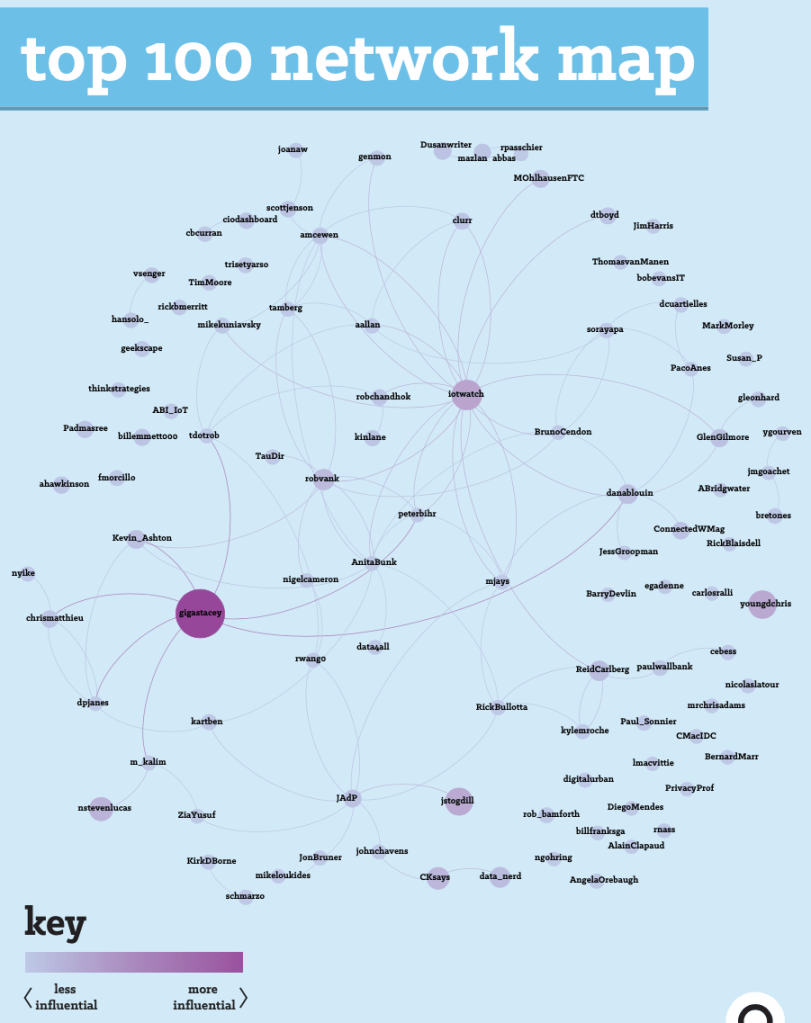
Onalytica took in all Twitter conversations using the hashtags #IoT and #InternetOfThings and created a network of the top stakeholders discussing the subject. The network diagram of the top 100 is shown below.
I was thrilled to be ranked No. 20th on the list with Kevin Ashton (Father of IoT ranked 11th). And, of course, very proud to be the only Malaysian (or probably Asian) on the list!
But really, how do I reach that stage? Is it by accident? In a way, most probably the answer is yes, but I didn’t realize that the things I did were actually how a Thought Leader should do – by influencing others.
It started probably 1 or 2 years earlier when my team was working on a research area called Wireless Sensor Network, 6LoWPAN (IPv6 Low Powered Area Network), and Internet of Things (IoT).
And during 2012 to 2014, I was a frequent social media user on LinkedIn and Twitter. Whatever I read on IoT topics, I will share this on Twitter and LinkedIn and use that hashtag #IoT. This includes sharing my thoughts about the industry in IoT.
This was when my circle of influence widened with more Twitter users following my Tweets. That’s how these Tweets are captured and analyzed by Onalytica.
The Start of an IoT Thought Leadership
Two years later, in 2016, I was the first Malaysian IoT Speaker in IoT Asia 2016 (“Issues and Challenges of Deploying a Smart Citizen Engagement Solution,” IoT Asia 2016, Singapore Expo, 30-31 March 201). The same event was when my boss rejected my application to attend in 2014. This time, the host invited me to speak with all expenses paid.
That was the beginning of the Thought Leadership journey, whereby I was invited to many speaking engagements as Keynote Speaker, Invited Speaker, TEDx Speaker, and many others. I created an IoT Blog called “IoT World” which became my official channel to share my thoughts and knowledge.
Other than the recognition from Onalytica (Onalytica Report can be downloaded here), I was ranked among Top 50 Global Thought Leaders on the Internet of Things (February 2019) and Digital Disruption (October 2019) by Thinkers360, Top 50 Most Impactful Smart Cities Leaders by World CSR Congress 2017, ranked Top 10 in IoT Top 100 Influencers by Postscapes 2017 & 2018,
It all started with a rejection….. From Zero to an IoT Thought Leader
Lifelogging is the act of recording and analyzing your daily activities as a way of finding out more about yourself and your life. By doing this, you can discover hidden patterns in your behavior and life; you can identify your strengths and weaknesses, gain valuable insights into your goals, dreams, and aspirations, and much more. This process has increased your quality of life in many different ways.
There are many benefits to lifelogging. This is one of the most exciting times in the history of humankind. With today’s technology (digital camera and smartphone), you can live forever. The only limit to your health and happiness now is your own imagination! Lifelogging helps you keep a record of your life for you and your family after you are gone.
Lifelogging via Gyroscope App
I have been using Gyroscope as my Lifelogging app, and it has recorded my daily activities since 2018. Gyroscope helps you manage the many aspects of your life by giving you an easy-to-use interface to track everything that matters to you. It tracks your days, weeks, months, and years in precise detail. And depending on the apps you integrate with, Gyroscope can bring together your sleep patterns, productivity, fitness activities, and Apple Health data.
One particularly tracking pattern that’s worth looking at is the Number of hours online and whether its productive or not. We can easily observed that pre-Covid (2019), the average online hours is about 1,000 hours as compared during the travelling restrictions and work from home activities. The online activity has increased by 50% !
2021 – Places2020 – Places2019 – Places
And if we see how the app tracked the number of places in 2020 and 2021, it was cut down by more than 60%. The physical meetings has now been compensated by the online meetings.
Steps Report
If we subscribed to it’s Premium subscription (Mine is RM 294.90 for Track Pro. There are many types of Subscription options), we have access to much more reports which are beautifully displayed. Although a great number of reports that can be shared in the form of Cards from its mobile app, lot more charts and analysis can be seen from the web portal.
Health Score (Seems I need to take care of my Health in 2022!)
When you are a thought leader, you can influence others in your industry. If you can influence other people, then this means that you can get their attention and even persuade them to adopt your ideas.
Who is a thought leader? A thought leader has significant influence and credibility in their field of expertise. They are often well known and admired by the people they influence. They may be the subject of books and articles, but more importantly, they impact other people’s lives. Think of people like Gary Vaynerchuk, Simon Sinek, or Tony Robbins. They are all thought leaders.
How to become a thought leader?
It’s simple. All you have to do is spend your time and effort reading the best thinkers in your field. As you read, you’ll notice that most of them have the same basic things in common. They are all well-educated, they’ve thought deeply about their subject matter, and they’re usually knowledgeable.
In addition, you’ll find that they’ve created an intellectual community around their ideas. They share their thoughts, which helps them understand themselves, their ideas, and their impact on others. Finally, they’re constantly pushing the boundaries of their thinking.
Why is it essential to be a thought leader?
In business, being a thought leader can be a potent tool. If you want to succeed in your business, you need to become one. You need to think out of the box and develop new ideas that others may not have considered. It is essential to become a thought leader because it will give you a competitive edge over others.
When you are a thought leader, you can influence others in your industry. If you can influence other people, then this means that you can get their attention and even persuade them to adopt your ideas. For this reason, being a thought leader can be a potent tool. But how do you become a thought leader? There are many ways to go about doing this, but there are also certain traits that you need to possess.
What makes a good thought leader?
I have been doing a lot of thinking lately about what makes a good thought leader. And I came up with some thoughts that are worth sharing in my humble opinion.
Here’s the list:
Know your audience and be yourself. This is so obvious. But I don’t know how many people take it seriously. The more you know your audience, the better you tailor your message to their needs.
And if you are not who you are, you might as well not exist. This is one of the reasons why I like to say that you should write your own book and be your own publisher.
If you want to get a book published, you need to have something valuable to share. So, be yourself. That is the only way to get it right. Know your audience and be yourself. Be the best at what you do. Have a clear vision for what you want to accomplish.
But don’t ever stop learning. And if you can’t find your niche, create one. One of my favorite quotes is, “You must be the change you wish to see in the world.” This means that you must first be the change you wish to see in yourself. So, be the change you want to see in yourself.
[bctt tweet=”How Can I Be a Thought Leader in My Niche Area?”]
How can I be a thought leader in my niche area?
As a writer, there are many ways you can develop your thought leadership. Here’s a simple guide:
Find the most influential people in your niche. These people are often leaders in their industry. They write books, articles, and they’re active on social media. Find the most influential marketers in your niche if you’re a marketer.
Follow them on social media. Most of these people have a blog or a Twitter account to share great content. They’ll probably follow you back.
Read what they publish. The more time you spend reading their content, the more you’ll be able to incorporate it into your own.
Write something unique. Don’t just copy and paste what they write.
Write something that makes your audience think, “I need to read this.”
Get the attention of these influencers. You can do this by writing a guest post on their blog or sharing their social media content.
Once they start following you, ask them to review your book or article. The more people you get to review your work, the better.
Finally, ask them for some feedback. They’ll appreciate the opportunity to help a writer improve their craft.
How can I achieve being a thought leader?
Here are some tips to get started:
Be the person others want to follow. This might seem like a cop-out, but you have to think about this from the other person’s perspective. You want to be the person they look up to and admire.
It’s tough to be someone else’s role model.
Focus on the positive There are so many things in your life that are great, but you just need to focus on those. When I first started looking at my life this way, I was amazed by how better I felt.
Don’t be afraid to ask for help.
Focus on what you can control.
Have a plan of action and stick to it. If you set yourself up to fail, you’ll fail.
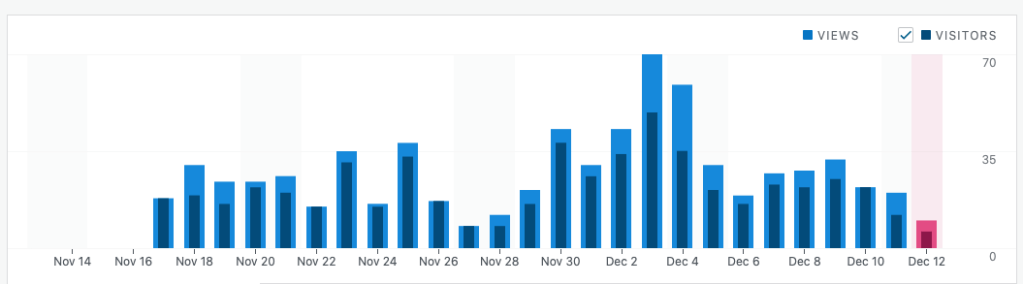
One of the main reasons people stopped to Blog is because they are easily discourage with the low numbers of views and visitors to their Blog.
I have to confess – I love to see the number of views and number of visitors to my Blog. It gives me some encouragement whenever I see activity on my Blog, although I am aware it is still very new.
I started to write my first two articles on November 17, 2021, i.e., when I officially published the Blog for the public. It is very new, and I am struggling to make the look and feel of the Blog easy to navigate with some content such as my background, books, speaking experience, Blog, YouTube, Podcasts, Projects, and Press Info.
[bctt tweet=”How the Amount of Views Encourage Me to Blog More”]
The Blog Traffic Stats After Four (4) Weeks
One of the frustrating parts is when I Google the name “Mazlan Abbas Blog,” the website does not even appear in the Google Ranking!
Here’s where many Bloggers would start to get very frustrated and abandon their Blogging activities. In reality (as described by many professional bloggers), it’s very typical, that we will only see the impact after several months!
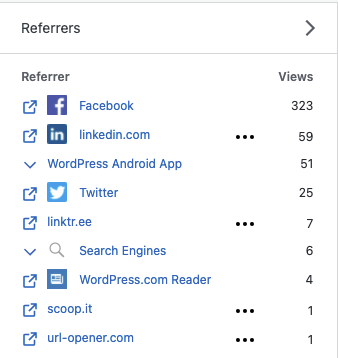
Below is my traffic stats that showed the ups and downs. The “ups” is because I mainly promoted the posts on my Facebook, LinkedIn, and Twitter – and Facebook seems to be the highest referrals.
Mazlan Abbas Blog – Views and VisitorsSource of Referrals
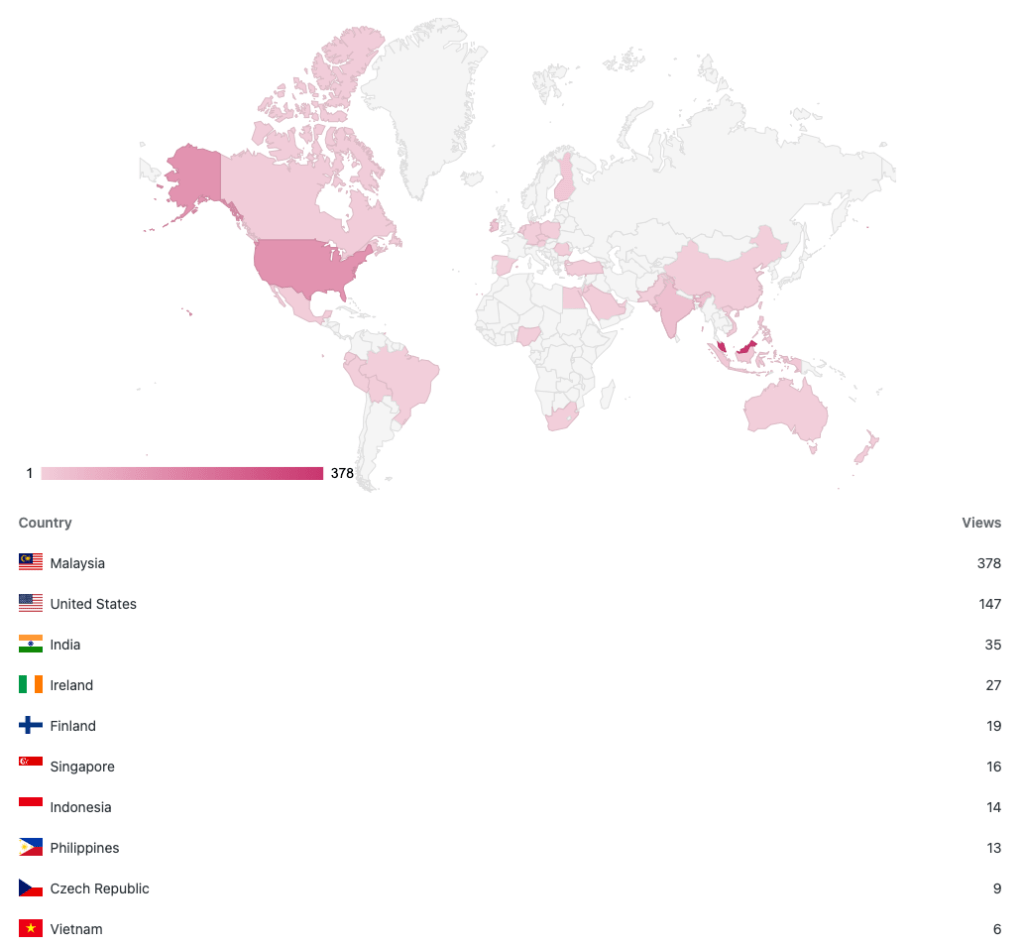
Surprisingly my top 3 countries (other than my home country Malaysia) are the United States, India, and Ireland.
Mazlan Abbas Blog – Countries of Readers
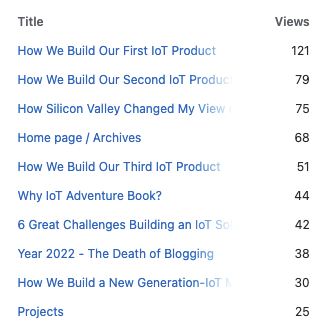
Types of Blog Posts
The idea of my Blog is for Personal Blogging – sharing my journey into the world of Entrepreneurship, which mainly referred back to my business Blog called IoT World.
By monitoring the article’s number of views, I will understand what content attracted the readers.
Top be fair, the Blog is still at its infancy stage. It requires constant update with high-quality contents. I will be revisiting this statistics monthly and monitor the progress.
I am now using All-In-One SEO (AISEO) plug-in to help increase the SEO. And I have also followed many tips given by many other veteran Bloggers.
Kindly leave your comments and share your thoughts. I love to hear them.











 Dr. Mazlan Abbas