Why Quiet Years Often Matter More Than Busy Ones

Some years shout.

They announce themselves with launches, awards, headlines, travel photos, packed calendars, and endless updates. They feel loud even before they are over.

Then some years barely whisper.

No fireworks. No dramatic milestones to post about. No big celebration dinners. Just long days, repetitive work, silent thinking, and a calendar that looks strangely empty from the outside.

For a long time, I feared those quiet years.

Am I falling behind?
Why does it feel like everyone else is moving faster?
Did I miss something important?

Only later did I realise something that changed how I look at time, work, and progress.

Quiet years often matter more than busy ones.

Not in obvious ways. Not in ways that attract applause. But in ways that shape everything that comes after.

Let me explain.

The Illusion of Busy Years

Busy years are addictive.

They make you feel relevant. Needed. In demand. Every week is filled with meetings, events, decisions, and quick wins. You move from one task to another with momentum. There is little time to question direction because speed itself feels like purpose.

I have lived through those years.

There were times when my calendar looked impressive. Meetings stacked back-to-back. Travel plans every month. Panels, talks, deadlines, emails at midnight. From the outside, it looked like progress.

Inside, something else was happening.

Thinking time disappeared.

Reflection became a luxury. Decisions were made reactively. You respond more than you choose. You move fast, but you are not always sure where you are heading.

This feels productive, I used to tell myself.
At least things are happening.

Busy years reward motion. Quiet years demand clarity.

What Quiet Years Feel Like

Quiet years feel uncomfortable at first.

Fewer external signals are telling you that you are doing well. Fewer invitations. Fewer people are checking in. Less validation. Your work becomes less visible and more internal.

Most of the effort goes into things that do not translate into instant results.

Reading.
Thinking.
Fixing fundamentals.
Rewriting plans.
Building systems that nobody sees yet.

You spend more time alone with your thoughts than with applause.

I remember sitting in the office late one evening during one of those quiet stretches. No urgent calls. No deadlines screaming for attention. Just me, a notebook, and an uneasy feeling.

Is this stagnation? I asked myself.
Or is this preparation?

That question stayed with me.

Quiet Years Are When Foundations Are Rebuilt

When everything is loud, you rarely touch the foundations. You are too busy adding floors.

Quiet years force you to look down instead of up.

You start noticing cracks you ignored before. Processes that no longer make sense. Assumptions that worked five years ago but feel wrong today. Goals that were inherited rather than chosen.

During quiet periods, I found myself revisiting basic questions:

Why are we building this?
Who are we really serving?
What should we stop doing?
What must work even when attention disappears?

These are not questions you answer in between meetings. They need space.

Quiet years give you that space.

They allow you to rebuild without pressure to perform for an audience. You can redesign systems, rethink direction, and strengthen weak links while nobody is watching.

By the time noise returns, the structure is already stronger.

The Invisible Compounding Effect

One of the hardest things about quiet years is that progress becomes invisible.

There is effort, but little evidence. Work is happening, but outcomes lag behind. You plant seeds without knowing which ones will grow.

This is where many people quit.

They mistake silence for failure. They assume that if nothing is visible, nothing is working.

I have learned that quiet years often hide compounding effects.

Writing without immediate readers.
Building products before the market is ready.
Training people who will only show results years later.
Documenting processes that will save time long after you forget writing them.

None of these produces instant feedback.

Yet, when momentum finally arrives, it feels sudden to outsiders.

Overnight success, they call it.

You and I know better.

Busy Years Consume Energy, Quiet Years Restore Direction

Busy years strangely drain energy.

Even when things go well, you feel stretched. Decisions pile up. Context switches exhaust the mind. There is constant urgency, even when nothing is truly urgent.

Quiet years slow things down.

Energy flows differently. Instead of being pulled in ten directions, it focuses on fewer priorities. You stop chasing everything and start choosing deliberately.

I noticed this shift clearly.

In busy years, my thinking stayed tactical. Solve this problem. Respond to that request. Fix today’s issue.

In quieter years, thinking became strategic again. Long arcs. Five-year questions. Structural changes.

If we continue like this, where will we end up?
What must be true for the next phase to work?

These questions do not scream for attention. They wait patiently.

Quiet Years Test Your Relationship With Ego

This might be the most uncomfortable part.

Busy years feed ego. Quiet years starve it.

When external recognition fades, you are left with one question.

Do you still believe in the work when nobody is watching?

I had to confront that question honestly.

There were moments when I missed the noise. The feedback. The sense of being visible. Quiet years strip away performance, leaving only intention.

If this never gets applause, would I still do it?
If progress takes longer than expected, do I still commit?

These questions reshape you.

They make motivation cleaner. Less dependent on reactions. More grounded in purpose.

The Trap of Measuring Life in Short Bursts

We live in a culture that celebrates bursts.

Quarterly results.
Monthly growth.
Weekly metrics.

Busy years fit perfectly into this worldview. They produce frequent updates and visible milestones.

Quiet years refuse to cooperate.

They stretch across time. They do not fit neatly into slides or social posts. They demand patience in a world that rewards speed.

I have come to see life less as a series of sprints and more as a series of seasons.

Some seasons are for harvesting.
Some are for planting.
Some are for repairing tools.
Some are for letting the soil rest.

Quiet years are not empty seasons. They are preparation seasons.

Why Many Breakthroughs Are Born in Silence

Look closely at most meaningful breakthroughs, and you will notice something.

They rarely happen during the noisiest periods.

They emerge after long stretches of thinking, trial, error, and refinement that nobody paid attention to at the time.

The idea matures quietly.
The skill sharpens privately.
The system stabilises out of sight.

Then one day, the world notices.

It looks sudden. It never is.

Quiet years create the conditions for breakthroughs. Busy years often only showcase them.

Learning to Trust Quiet Progress

Trust is hard when evidence is scarce.

During quiet years, you learn to measure progress differently.

Not by likes or invitations, but by questions such as:

Are decisions getting clearer?
Are mistakes repeating less often?
Is the team thinking more independently?
Do systems break less under pressure?

These signals are subtle. They require attention.

I started keeping private markers of progress. Notes to myself. Minor improvements that only I could see. They became reminders that something real was happening, even if it was not visible yet.

Stay with the process, I would tell myself.
Noise will come later.

When Quiet Years End

Quiet years do not last forever.

They give way to movement, visibility, and activity again. When that happens, the difference becomes obvious.

Decisions feel calmer.
Growth feels steadier.
Pressure feels manageable.

You are not scrambling to catch up. You are responding from a more substantial base.

People often ask what changed.

Nothing obvious.
Everything fundamental.

A Different Way to Look at Your Current Year

If this year feels quiet for you, pause before labelling it as wasted.

Ask yourself different questions.

What am I rebuilding right now?
What foundations am I strengthening?
What clarity am I gaining that I did not have before?

You might be in a year that will never make headlines but will quietly decide the next decade of your life.

Those years deserve respect.

Closing Thoughts

Busy years are visible. Quiet years are essential.

One without the other creates an imbalance. Noise without preparation leads to collapse. Preparation without patience leads to frustration.

I have stopped fearing quiet years.

I treat them as a sign that deeper work is happening. Work that does not ask for attention but shapes outcomes in lasting ways.

If you are in one now, stay with it.

Something important is forming, even if it has not yet learned to speak.

I would love to hear your thoughts.

Are you in a busy year or a quiet one right now?
What has it been teaching you?

Share in the comments.

Reflecting on a Grounded 2025: Lessons from Favoriot’s Journey

I am writing this ten days before 2025 comes to an end.

When I look back at the year, it does not feel loud. It does not feel dramatic. It feels focused. Demanding. Grounded. A year where most of my time, energy, and thinking revolved around one thing only: Favoriot.

If I am being honest, 2025 was not a year of balance. It was a year of commitment.

Most of my days were spent at the office. And when I was not physically there, my mind was still working on Favoriot. Nights. Weekends. Quiet moments that could have been rest often turned into planning or problem-solving. I did not spend much time on myself personally. There were no real holidays. The only breaks I had were during overseas business trips, and even then, work followed me closely.

I told myself more than once, This is not a sacrifice. This is a choice.

And I am at peace with that choice.

Fewer Invitations and a Shift in How We Connect

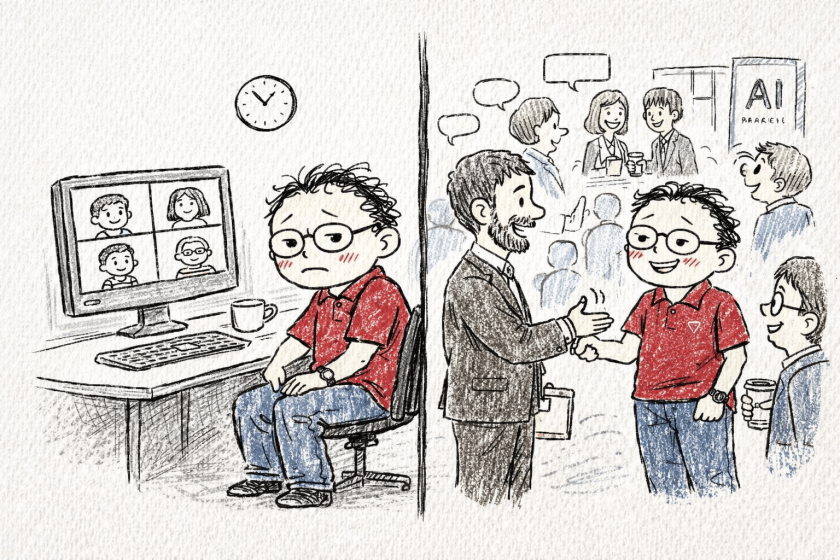
One noticeable change in 2025 was the drop in invitations from universities and public conferences. Many engagements that used to be physical moved online. Meetings became links. Conversations became scheduled time slots on screens.

I realised something about myself quite clearly this year.

I do not enjoy online meetings anymore.

They are convenient, but they remove the human layer. The casual chats before meetings start. The spontaneous conversations after sessions end. The subtle signals that build trust faster than formal presentations ever can.

I still prefer face-to-face meetings. They feel more honest. Better for networking. Better for understanding people beyond their titles.

Public conferences were fewer as well. Part of it could be the current spotlight on AI. IoT felt quieter this year, almost like it had stepped back from centre stage. I was not bothered by it. I was observant.

Trends move quickly. Real work moves steadily.

Why Panel Sessions Still Matter to Me

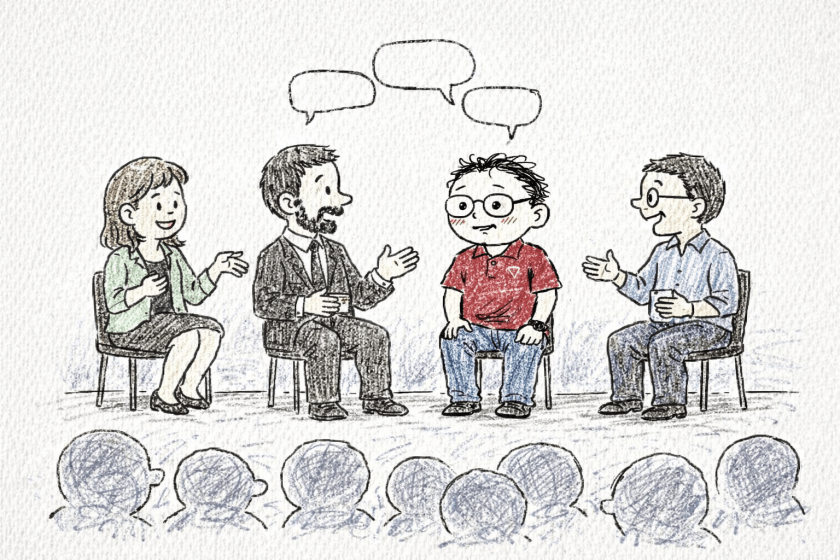
While formal speaking invitations slowed, one format still felt right to me: panel sessions.

No slides. No heavy preparation. Just conversations.

Sitting on stage, exchanging views, listening, responding, sometimes disagreeing politely. That feels closer to how decisions are made in real life.

I often think that insight shows up better in dialogue than in bullet points.

That belief stayed strong in 2025.

A Year Focused on Partnerships

Behind the scenes, 2025 was anything but quiet.

We spent a significant amount of time building partnerships. By the end of the year, we had signed MOUs with more than 40 partners across 15 countries. Our original target was 25 countries, so on paper, we fell short geographically.

But numbers do not tell the whole story.

I have learned that more partners do not automatically mean more revenue or more projects. Partnerships only matter when they are actively engaged, aligned, and nurtured.

Signing is easy. Building trust takes time.

Some partnerships moved faster. Some are still warming up. Some will likely take longer to show results. That is the nature of building across borders.

This year reminded me that ecosystems are built patiently, not collected quickly.

When People Find You on Their Own

One encouraging pattern this year was how people and companies started approaching us unexpectedly.

Each time, I asked the same question. “How did you find us?”

The answer was often simple. They searched online. They did their own research. They were surprised to discover an IoT platform company operating from this region.

That always made me pause.

Years of writing, sharing, and building quietly compound over time. Visibility does not always arrive with announcements. Sometimes it comes as an unexpected email or message.

That is when you realise the work has travelled further than you thought.

Fewer Projects, Fewer Trainings, a Cautious Market

Not everything grew this year.

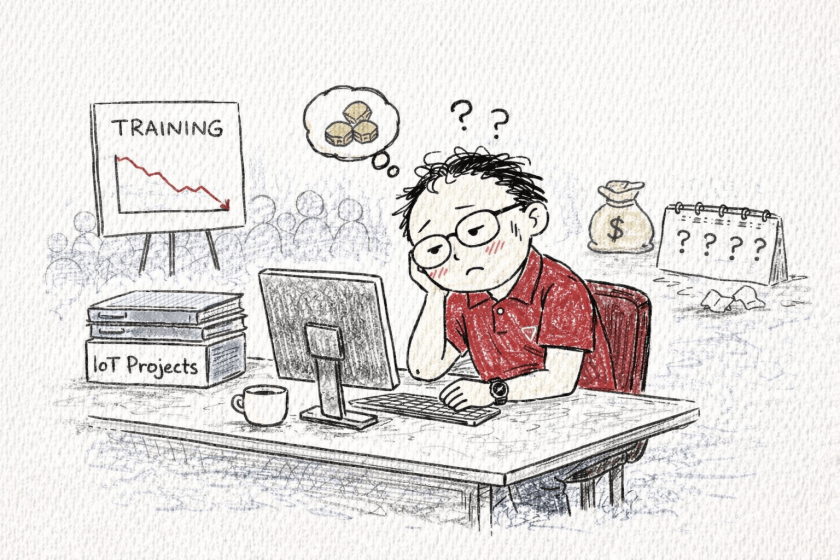
Real IoT projects were fewer compared to previous years. IoT training numbers dropped as well. In-house training, which used to scale better, became harder to secure. We relied more on public training sessions, which are always challenging when it comes to attendance.

The market felt cautious.

Budgets were tighter. Decisions took longer. Interest was still there, but commitment required more patience.

There were moments when I questioned the pace. Is this a temporary slowdown, or is the market resetting itself?

Perhaps it is both.

Shifting My Focus Between Industry Associations

This year, I was less active in the Malaysia Smart City Alliance Association.

At the same time, I became more involved with the Malaysia IoT Association, partly due to my role as Vice-Chairman.

More importantly, MyIoTA’s Smart City Nexus activities align closely with the reasons I joined the association. The Nexus focuses on bringing members’ solutions directly to local councils. It creates a practical space for business matching, not just discussion.

That matters to me, and I plan to be more active there moving into 2026.

Favoriot Sembang Santai Podcast: Keeping Conversations Human

Another meaningful chapter in 2025 was the start of the Favoriot Sembang Santai.

We started the podcast in February 2025, and by December, we had reached Episode 38.

The reason was simple. I wanted a space for honest conversations. No scripts. No slides. No pressure to sound formal. Just honest discussions about Favoriot’s journey and what we were seeing in the IoT space.

The primary host is Zura Huzali, and I serve as the primary guest and speaker. The chemistry works because it feels natural. Curious questions. Straight answers. Occasional debates. Plenty of laughter.

The topics evolved naturally from Favoriot’s story into broader themes such as AI, robotics, satellite IoT, and Ambient IoT. Not as buzzwords, but as technologies we were trying to make practical sense of.

Anyone who misses the live sessions can catch the recordings on YouTube, Spotify, and Amazon Music.

The podcast will continue throughout 2026. For me, it is a long conversation, not a series.

TikTok Live on IoT Man: Ask Me Anything

Alongside the podcast, we also started doing casual TikTok Live sessions on the IoT Man channel.

The central theme is simple. “Ask Me Anything.”

No agenda. No slides. Just live questions and real-time answers. What excites me about these sessions is that they capture a different segment of listeners. Shorter attention spans. Younger audiences. People who may not sit through a long podcast but are curious enough to drop in and ask.

It feels raw. Immediate. Human.

Sometimes the most honest questions come without preparation.

Working With AI to Prepare for 2026

As 2025 draws to a close, one personal highlight has been working with my AI companion.

Not to replace thinking, but to sharpen it.

I spent many late nights shaping 2026 playbooks. How we approach the market. How we engage customers. How we manage partners. New business models. New IoT solution ideas.

The picture ahead feels clearer now.

Looking Forward

2025 was not flashy. It did not come with loud milestones.

But it mattered.

It tested focus. It strengthened conviction. It prepared the ground.

I am genuinely excited about 2026. The plans are clearer. The energy feels different. I hope the long-standing plans around IoT certifications with universities will finally become a reality.

Here is to a better, steadier, and more rewarding year ahead.

I would love to hear how your 2025 has been. Share your reflections in the comments.

The Courage to Create: Answering Life’s Questions

One sentence.

“Is this all?”

That question did not come from failure.
It came from success that felt… incomplete.

On paper, things looked fine.
Titles. Meetings. Progress updates.
Calendars full. Slides polished.

But something kept pulling at me.

A desire to build.
Not just oversee.

A desire to leave something behind.
Not just pass things along.

A desire to create.
Not manage people who manage people who manage processes.

That question followed me home.
Into quiet moments.
Into long drives.
Into conversations with myself.

“Is this all?”

Not because the work was bad.
But because my hands were no longer shaping anything real.

That question was not dissatisfaction.
It was a signal.

Some questions do not ask for answers.
They ask for courage.

And once you hear it clearly…
you cannot unhear it.

My Writing Dilemma: Balancing Authenticity with AI Assistance

Today, AI-driven content creation is on the rise, writers like me are grappling with a fundamental question: Can artificial intelligence coexist with the authentic voice of a human writer?

This question has become particularly pertinent in my journey as a writer, especially in my attempts to gain visibility on platforms like Medium.

The AI Conundrum in Writing

I’ve always been fascinated by the potential of AI to enhance my writing.

Like many others, I envisioned AI as a tool to refine my ideas and craft them into eloquent essays or engaging blog posts.

This led me to experiment with ChatGPT, hoping it would help me expand my main points into full-fledged articles.

However, this approach, I realized, was flawed.

Despite my efforts, my articles weren’t gaining the traction I hoped for on Medium.

They received some views, reads, and claps, but never made it to the coveted “For You” tab.

I couldn’t help but notice that certain authors seemed to have their work promoted almost daily. This discrepancy led me to question: What was I missing?

Intrigued, I began scouring the internet for answers and stumbled upon a revealing article titled “Medium Says Writers Can Use AI — Under One Condition.

The insights I gained were eye-opening, to say the least. It was a moment of reckoning, prompting me to reevaluate my approach to writing.

Avoiding the Pitfalls of AI in Writing

The realization hit hard.

Was I too dependent on AI? Was my voice getting lost in the algorithmically generated content?

I needed to find a balance where AI could assist without overshadowing my personal touch. Here’s how I decided to pivot:

Embracing Simplicity and Authenticity

The key, I realized, was to write as naturally as I would chat with friends on WhatsApp or social media.

Embracing simplicity meant opting for shorter, more digestible sentences over complex, long-winded ones.

Short paragraphs became my new norm, often consisting of just one sentence.

This approach not only made my writing more accessible but also lent it a conversational tone, resonating more with readers.

Overcoming Language Barriers

English is not my first language, which added another layer of complexity to my writing process.

To tackle this, I turned to tools like Grammarly, which helped me navigate grammatical nuances and refine the tone of my writing.

This was a game-changer, allowing me to express myself more confidently and clearly.

AI as a Complementary Tool

I began to view AI not as a crutch but as a complementary tool.

It was there to suggest ideas, help with structure, and offer guidance on grammar and style.

However, the core of the content—the soul of the writing—had to come from me.

A New Beginning

Armed with these insights, I embarked on a new journey.

I wrote an article without AI assistance, focusing solely on expressing my thoughts in their most authentic form.

This experiment was not just about testing a different writing method; it was about rediscovering my voice as a writer.

The results were more encouraging than I had anticipated.

There was a noticeable difference in how readers engaged with my content.

The personal touch, the human element in my writing, seemed to resonate more profoundly.

The Road Ahead

As I continue on this path, I’m keenly aware that the world of content creation is constantly changing.

AI will undoubtedly play a significant role in shaping this landscape.

However, it’s crucial to remember that the heart of great writing lies in the human experience—the emotions, perspectives, and insights that only a human can provide.

My journey has taught me that while AI can be a valuable asset, it should never overshadow the authenticity and personal touch that define truly impactful writing.

So, to my fellow writers grappling with this modern dilemma, I say: Embrace AI, but let your unique voice lead the way.

Happy writing, and good luck to us all!

Check out my Startup Survival latest book.