
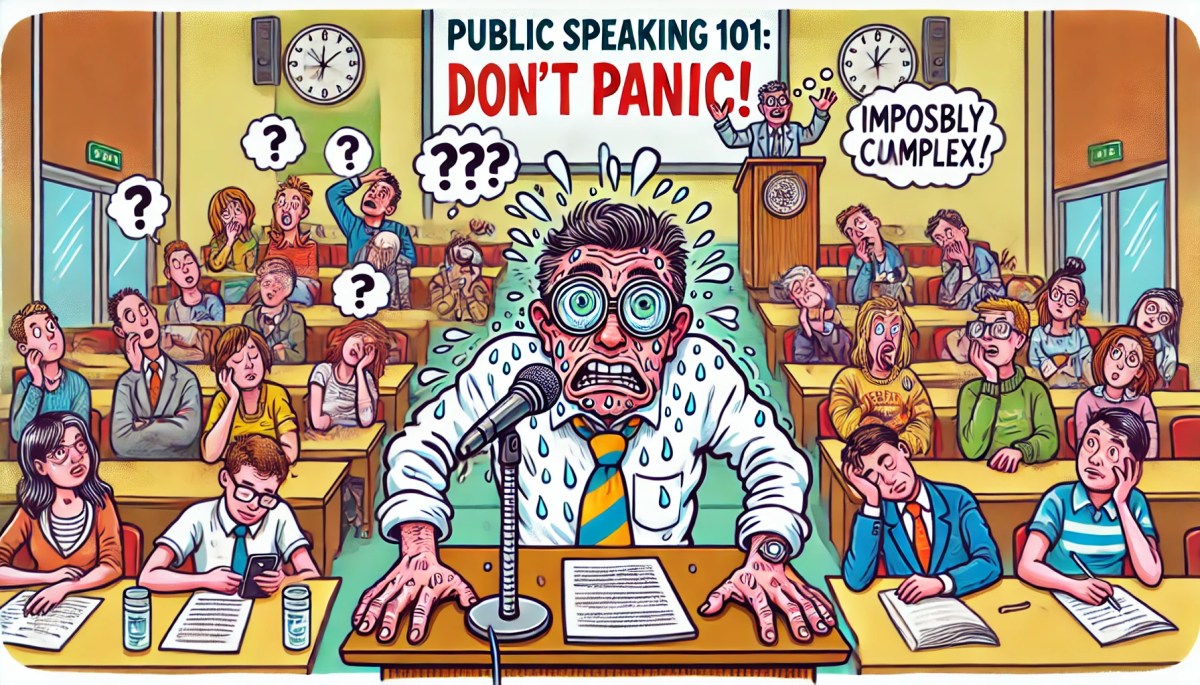
I never imagined public speaking would become such a big part of my life. Yet, I stand before audiences—students, industry experts, corporate executives, and even investors—sharing ideas, teaching, and sometimes convincing people to believe in what I say.
Public speaking was never something I actively sought out. It was more of an expectation that grew into a skill and eventually became a passion. But it wasn’t always smooth sailing. There were moments of doubt, nervousness, and even outright fear.
Let me take you on this journey—from my early days as a nervous lecturer to confidently pitching my company’s vision to investors.
The Classroom as My First Stage
My journey into public speaking began in the most unexpected place—a classroom. As a lecturer, I stood before students daily, speaking for an hour or two.
What if they don’t understand what I’m saying? What if they get bored? These thoughts constantly ran through my mind.
At first, I took the traditional approach—delivering information and expecting students to absorb it like sponges. But I quickly realized that wasn’t how learning worked. Students needed engagement, real-world examples, and, most importantly, a connection with their lecturer.
I started tweaking my delivery and experimenting with storytelling, analogies, and humour. Some things worked; some didn’t, but each lecture became a lesson for me as much as it was for them.
I realized that a good speaker doesn’t just present facts; they make the audience feel the knowledge.
From Lecture Halls to Global Stages
After years of teaching, I received invitations to speak at conferences and seminars. This was an entirely different ball game. Instead of students, my audience now consisted of professionals—industry experts, business leaders, and even government officials.
Unlike in a classroom, where I had hours to explain a concept, I was given at most 15 to 40 minutes.
How do I compress years of knowledge into a short presentation, and how do I keep a diverse audience engaged?
I discovered that the opening of a speech is everything. You’ve lost them if you don’t capture attention in the first minute. I began experimenting with provocative questions, compelling anecdotes, or surprising facts. And it worked. The engagement level skyrocketed.
One of my favorite moments was being invited to speak about IoT at an international conference. Instead of diving straight into technical jargon, I started with a simple yet relatable question: “Have you ever lost your keys?”
That one question had the audience hooked. From there, I smoothly transitioned into how IoT can solve everyday problems. The feedback was overwhelming.
That’s when I learned an important lesson: It’s not about how much you know but how well you can make others understand.
The Marathon of Workshops
Then came the next challenge—workshops. Unlike seminars, which last under an hour, workshops stretched for a full day or even two days.
How do I keep people engaged for that long?
A one-way lecture wouldn’t work. No one wants to sit through hours of someone talking non-stop. I had to make workshops interactive. I incorporated discussions, real-life problem-solving, and case studies. I encouraged participants to share their thoughts and experiences.
And something magical happened—I started learning from my audience.
Workshops became two-way learning sessions. I realized that every room I entered was filled with people who had valuable insights. The key was to tap into that collective knowledge.
Selling a Vision: From Knowledge Sharing to Persuasion
As I transitioned into the corporate and technology world, my role in public speaking shifted. It was no longer just about teaching; it was about persuasion.
This is where Product Talks came in—presentations where I had to sell the vision and benefits of our products.
How do I convince people without sounding like a salesperson?
I quickly learned that the secret wasn’t selling but solving. People don’t want to hear about product features; they want to know how a product can solve their problems. So, I stopped listing specifications and started telling stories—stories of businesses that faced struggles and how our solutions helped them overcome challenges.
One time, during a client meeting, instead of presenting slides full of technical details, I told the story of a small business that lost thousands of dollars due to equipment failures and how our IoT solution helped prevent future losses.
The result? The client was more engaged and convinced than they would have been with any technical presentation.
That’s when I realized that people remember stories, not bullet points.
The Ultimate Test: Pitching to Investors
The biggest challenge of all? Investor pitches.
Unlike lectures or product talks, where I had at least 15 minutes, investor pitches often had a brutal time limit—sometimes as short as three to five minutes.
Imagine summarising an entire business, its potential, market opportunity, and financial projections in just a few minutes. It felt impossible.
How do I say everything that matters in such a short time?
I learned three crucial lessons:
- Clarity is everything. Investors don’t have time for fluff. Every sentence must add value.
- Confidence matters more than words. If you don’t believe in your own vision, why should they?
- The slides must be minimalist but powerful. Too much text? They’ll stop listening. Too few details? They won’t take you seriously. Every slide must serve a clear purpose.
I remember one particular pitch where I had only five minutes. Instead of panicking, I focused on three key points: the problem, the solution, and the impact.
That day, at least, we secured interest from investors. That’s when I understood that investors don’t just invest in businesses but in people who clearly communicate a vision.
The Lessons from a Life of Speaking
After years of standing in front of audiences, I’ve come to realize a few things:
- Public speaking isn’t about what you say but how you make people feel. If they feel connected, they will remember your message.
- Engagement is everything. Whether it’s a lecture, a workshop, or a pitch, if people aren’t engaged, they aren’t listening.
- Every speech is a chance to improve. Even after all these years, I still analyze every talk I give, asking myself, What could I have done better?
Now, every time I step onto a stage, whether in a lecture hall, a corporate boardroom, or an investor pitch, I remind myself of one thing:
Speaking is not about impressing people with knowledge; it’s about making them care about what you’re saying.
And if you can do that—you’ve already won.
What About You?
Are you afraid of public speaking? Have you ever struggled to communicate an idea effectively? Or maybe you’re already an experienced speaker looking to improve?
Whatever stage you’re at, just remember: public speaking is a skill that can be mastered. The more you do it, the better you’ll get.
And who knows? Maybe one day, you’ll be the one standing on a stage, inspiring others with your words.
 Dr. Mazlan Abbas