The Story Behind Favoriot – Part 6: Expanding The Business Models

The Birth of an Idea: Favoriot’s B2C Beginning

When I first launched the Favoriot IoT platform, I had a simple vision: to create a platform that anyone could use—students, hobbyists, tinkerers—you name it. The idea was to make IoT accessible to the masses, a B2C service that would ignite curiosity and inspire innovation.

I thought, “If we can get people talking about Favoriot, the rest will follow.” That belief fueled our early strategy. We dove headfirst into social media, the digital town square where everyone seemed to gather. Facebook was buzzing, YouTube was the tutorial hub and TikTok? Well, that was the wild frontier—so, of course, I gave it a shot.

The Social Media Experiment

I became the face of our promotions, posting updates on Facebook, creating YouTube videos, writing blog articles, and yes, even attempting TikTok. It was thrilling at first—seeing those likes, shares, and comments roll in. People were curious, intrigued by what Favoriot could do.

But soon, a nagging question crept in: “Why isn’t this translating into actual platform usage?” The buzz was there, but the conversions weren’t. It hit me—generating interest is one thing, but sustaining it requires more than social media posts.

The eBook Revelation

That’s when an old passion of mine resurfaced: writing. “What if I wrote an eBook?” I wondered. It would not be just any technical manual but something that painted the bigger picture—how IoT could transform industries and shape the future, and yes, how Favoriot fits into all of this.

I poured my heart into that eBook. It wasn’t just about IoT protocols or sensor networks; it was a narrative about the power of connected technologies. Subtly, I wove Favoriot into the storyline, highlighting its features and potential. Once it was done, we decided to offer it for free.

The Breakthrough: Global Reach

And guess what? It worked. The eBook spread like wildfire. I remember staring at the download stats, thinking, “This is it. This is the breakthrough.”

But success has a way of revealing new challenges. With global interest came diverse expectations. Users wanted more—advanced features, scalability, and enterprise-grade security. It became clear: our B2C model had hit a ceiling.

Pivoting to B2B: A Bold Decision

Cue the sleepless nights. “Should we pivot to B2B? What if it doesn’t work out?” The questions were relentless. But growth demands evolution. After countless discussions with my team, we made the leap.

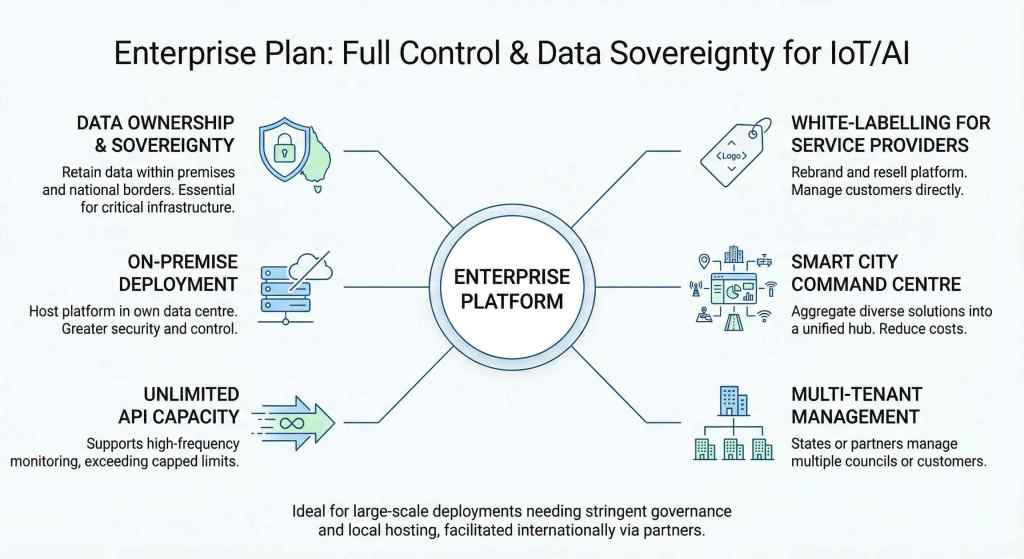
We transitioned Favoriot into a B2B platform, offering on-premise and private cloud installations. This shift opened doors to system integrators and organizations who handled complex IoT projects with high data demands. We even introduced a game-changing perpetual license—a one-time purchase granting lifetime access. “This could be a game-changer,” I thought. And it was.

The Impact of the B2B Model

The B2B model didn’t just diversify our revenue; it solidified our market position. We provided a ready-made, scalable IoT solution, eliminating the need for companies to build platforms from scratch.

Since 2017, Favoriot has evolved dramatically from a humble B2C platform to a versatile solution serving both individual developers and large enterprises. A defining moment? MOSTI officially recognized Favoriot as a Malaysian local product by awarding it the MySTI certification. It was more than a certification—it was validation.

Reflecting on the Journey

Looking back, I see a journey marked by resilience, adaptability, and an unwavering belief in our vision. But this isn’t the end. In Part VII, I’ll delve into the challenges we face as we aim to deepen our footprint in Malaysia.

The road ahead is long, but with the lessons we’ve learned and the incredible team by my side, I’m confident Favoriot will continue to thrive.

Stay tuned. Favoriot’s journey is far from over.

More Stories About Entrepreneurship

  1. The Story Behind Favoriot – Part 6: Expanding The Business Models
  2. The Story Behind Favoriot – Part 5: Finding the Right Fit
  3. The Story Behind Favoriot – Part 4: How Favoriot Became More Than Just an IoT Platform
  4. The Story Behind Favoriot – Part 3: Why No One Wanted Our IoT Platform—And How We Turned It Around
  5. The Story Behind Favoriot – Part 2: Turning Failures into Milestones
  6. The Story Behind Favoriot – Part I: The Humble Beginnings of Favoriot
  7. Building My Personal Brand: The Stepping Stone to Favoriot’s Success
  8. From Research Lab Critiques to Startup Pitches: My Slide Story
  9. The Illusion of RFPs in the IoT World: Managing Expectations as a Startup
  10. Favoriot’s Odyssey: Navigating the Rough Waters of Early Revenue

The Story Behind Favoriot – Part 5: Finding the Right Product Market Fit (PMF)

The Struggles No One Sees

I still remember how challenging it was to secure our first ten customers. Ironically, even though we initially offered the Favoriot Platform for free, it wasn’t easy to attract interest. Free should be irresistible, right? But it wasn’t.

I often sat at my desk, staring at my laptop late into the night, asking myself questions that gnawed at my confidence:

“Is all this effort going to be in vain?”
“What if the market doesn’t embrace the product we’ve poured our hearts into?”

These thoughts weren’t fleeting. They lingered, casting shadows over my team’s tireless days and nights dedicated to building Favoriot. I knew I couldn’t let them down. Their belief in this mission was unwavering, and as their leader, failure felt personal.

The Search for Traction

Market traction — a simple phrase with monumental weight. For startups, it’s the lifeline. Without it, even the most brilliant products fade into obscurity.

Our first strategy was to target individuals—university students, freelancers, and tech enthusiasts. I thought, “Surely, they’d be eager to experiment with our platform.” But reality hit hard. The response was underwhelming, to say the least.

So, we pivoted. “Maybe university lecturers will see the value,” I thought. They supervise students working on IoT projects; surely, Favoriot could be an asset in their toolkit.

Again, disappointment. The traction we hoped for didn’t materialize. That nagging anxiety crept back in. “What else can we do?” I kept asking myself.

Shifting Focus: From Individuals to Enterprises

Determined not to give up, we shifted our strategy. Instead of individuals, we approached companies and organizations directly. Businesses must see the potential, right?

Wrong.

Another hurdle emerged — most companies didn’t know how to utilize the platform effectively. It was as if we were speaking a language they hadn’t learned yet. “Are we too early to the market?” I wondered. Maybe the IoT landscape wasn’t mature enough in Malaysia at that time.

In the startup world, there’s a term: Product-Market Fit (PMF). It’s the sweet spot where your product perfectly aligns with market needs. Without PMF, even the best ideas crumble.

I knew this. And the pressure was immense.

The Breakthrough: Finding Our True Customers

But giving up wasn’t an option. We kept refining our approach, learning from every failed pitch and cold response.

Eventually, the breakthrough came.

We discovered that IoT System Integrators were our ideal customers. These were companies and individuals already offering IoT solutions to their clients. They didn’t just understand the value of our platform; they needed it to build scalable, customized IoT applications.

It felt like finding the missing piece of a puzzle. Suddenly, the conversations flowed more naturally, the demonstrations clicked, and the value proposition was crystal clear.

Tailoring the Offering: Cloud vs. Enterprise Models

With clarity came strategy. We introduced two models for the Favoriot Platform:

  1. Cloud-Based Model
    • Perfect for customers seeking flexibility and remote accessibility.
  2. Enterprise-Based Model
    • Designed for System Integrators wanting full control over their platforms, this model comes with a perpetual license and unlimited API access, eliminating the worry of high API costs that platforms like AWS or Azure often impose.

This dual approach worked. Favoriot finally carved out its space in the IoT ecosystem.

A Glimpse of Relief, A Promise to Evolve

I’d be lying if I said I didn’t feel relieved. But this wasn’t the finish line — far from it. The tech landscape evolves rapidly, and staying relevant requires continuous innovation.

Yet, this breakthrough gave me something invaluable: confidence. I felt confident that Favoriot had a future and that our journey, filled with detours and lessons, was leading somewhere meaningful.

What’s Next?

This isn’t the end of the story. Not even close.

In the next part, I’ll share how we expanded our customer base, the unexpected sectors that embraced Favoriot, and the strategies we used to win their hearts.

So, stay with me on this journey. Every step we take has a story—a story that might inspire those who are walking the challenging path of building something from nothing.

See you in the next chapter.

More Stories About Entrepreneurship

  1. The Story Behind Favoriot – Part 6: Expanding The Business Models
  2. The Story Behind Favoriot – Part 5: Finding the Right Fit
  3. The Story Behind Favoriot – Part 4: How Favoriot Became More Than Just an IoT Platform
  4. The Story Behind Favoriot – Part 3: Why No One Wanted Our IoT Platform—And How We Turned It Around
  5. The Story Behind Favoriot – Part 2: Turning Failures into Milestones
  6. The Story Behind Favoriot – Part I: The Humble Beginnings of Favoriot
  7. Building My Personal Brand: The Stepping Stone to Favoriot’s Success
  8. From Research Lab Critiques to Startup Pitches: My Slide Story
  9. The Illusion of RFPs in the IoT World: Managing Expectations as a Startup
  10. Favoriot’s Odyssey: Navigating the Rough Waters of Early Revenue

How AI Sees My Writing Style – And What It Means for 2025

“Do I really have a writing style?”

That question kept bouncing in my head as I stared at the AI analysis of my articles. I’ve always written instinctively—pouring out thoughts, reflecting on experiences, and hoping they resonate with someone out there. But now, with a year’s worth of writing analyzed, I can’t help but smile.

The verdict?

I’m a storyteller at heart. I thrive on conversations. Most importantly, I write for impact.

So, let’s break it down. What makes my writing style uniquely mine?

1. Storytelling is My Foundation

“You should start with a story.”

I remember hearing that advice long ago. At first, it felt unnecessary—why not just get straight to the point? But over time, I realized that stories bridge the gap between knowledge and understanding.

When I write about IoT, I don’t just list facts. I take readers on a journey, whether they’re entrepreneurs struggling to deploy smart city solutions or university students trying to commercialize an IoT project.

Take “Why Writing Is Like Running a Marathon” or “The Silent Struggles of Researchers”—I don’t just talk about endurance and challenges. I live through them in my writing.

Why it matters: Stories stick. They make abstract ideas tangible and personal.

2. Conversational and Relatable Tone

“Write as if you’re talking to a friend over coffee.”

That’s how I approach my articles. No stiff, robotic sentences. No excessive jargon. Just me, having a conversation with you.

Whether I’m sharing “How Medium Shaped My Voice” or “Why You Should Write From the Heart,” my goal is simple: I want you to feel like we’re just sitting together, chatting about life and ideas.

Why it matters: Readers don’t want to be lectured. They want a dialogue.

3. First-Person Perspective Brings Depth

“Why do you always write in first person?”

Because it’s real. Because it’s personal. Because I believe the best way to inspire is by showing—not just telling.

If I write about IoT projects in universities or my journey in the corporate world, I’m not giving a third-person analysis. I’m sharing my experiences, lessons, and mistakes.

Why it matters: It builds trust. Readers connect with people, not abstract ideas.

4. Structure Matters – A Lot

“Make it easy to read.”

Long, unbroken paragraphs? No thanks. My articles are structured with clear sections, subheadings, and logical flow.

If I’m explaining “5 Lessons I Learned About Writing” or “How Favoriot Empowers IoT System Integrators”, I want you to get value fast.

Why it matters: Clarity keeps people reading. A good article doesn’t feel like work—it flows effortlessly.

5. Motivation and Inspiration Are My Hidden Ingredients

“People don’t just read for information. They read for inspiration.”

When I wrote “Why Persistence in Writing Matters” or “Every Failure Was a Step Toward Success”, I wasn’t just telling stories. I was giving hope.

I know what it’s like to feel stuck. To feel like no one is listening. To wonder if your efforts are even worth it. But every challenge I’ve faced has led me somewhere better. That’s the message I want to leave behind.

Why it matters: Inspiration fuels action.

6. Versatility Without Losing Identity

“Do you only write about IoT?”

No. And I never will.

My interests are broad—entrepreneurship, technology, personal growth, writing—but my voice remains the same. Whether discussing IoT’s future or writing a letter to my future self, it still feels like me.

Why it matters: A consistent voice makes a writer memorable.

7. Emotion and Logic Go Hand in Hand

“Facts alone don’t convince people. Emotions do.”

When I wrote “How Responding to Comments Boosted My Writing Output,” I didn’t just provide statistics. I also shared how engaging with readers felt —the excitement, the connections, the motivation.

Then, I supported my argument with logic—why engagement matters, how it impacts visibility, and what writers can do to grow.

Why it matters: The best articles engage both heart and mind.

8. Analogies and Metaphors Make Everything Click

“Explain it like they’re five.”

If I say, “Writing is like running a marathon,” you immediately understand endurance is key. If I say, “A Medium writer is like a badminton player,” you get that consistency and technique matter.

I use analogies because they simplify complexity. IoT, AI, writing—whatever the topic, if I can compare it to something familiar, it becomes easier to grasp.

Why it matters: Analogies make learning fun and effortless.

9. Audience-Centric Writing

“Who am I writing for?”

Every article I write answers a question or solves a problem.

Whether it’s “Why You Should Not Give Up Writing” or “How Favoriot Empowers IoT System Integrators”, my focus is always: How can this help the reader?

Why it matters: Readers stay loyal when they feel seen and understood.

10. Learning and Growing Through Writing

“Writing is my best teacher.”

I reflect a lot in my articles.

From “Lessons Learned in My 13-Year Telco Career” to “My Journey of Writing 550 Articles on Medium”, I use my past as a learning tool. I talk about mistakes, breakthroughs, and the evolution of my thoughts.

Why it matters: Growth is relatable. Readers appreciate honesty.

What This Means for 2025

Seeing this breakdown made me realize one thing—I love writing.

And in 2025, I’ll write even more.

✔ More stories that resonate.
✔ More conversations that connect.
✔ More insights that inspire.

If AI says my writing has an impact, I owe it to myself (and my readers) to keep going.

Because at the end of the day, writing isn’t just about putting words on a page.

It’s about sharing experiences, shaping perspectives, and leaving a legacy.

Here’s to another year of storytelling.

How AI Democratization by Alibaba is Changing the World—And Why It Matters to You

Artificial intelligence felt like it belonged only to big tech companies for years—something out of reach for the average developer, startup, or business. If you didn’t have millions in funding, good luck getting access to advanced AI models. But that’s starting to change, and one of the most significant moves in AI democratization is coming from an unexpected player: Alibaba.

AI for Everyone, Not Just the Tech Giants

Recently, Alibaba’s Qwen 2.5-Max has been making waves. This AI model has been outperforming DeepSeek-V3, which was once seen as one of the strongest players in the field. While DeepSeek is struggling with issues like cost-cutting and sustainability, Alibaba is doubling down on AI, and investors are taking notice.

But the real story here isn’t just about market competition—it’s about who gets access to AI. Instead of keeping Qwen locked up behind a paywall, Alibaba did something bold: they made it open-source. That means anyone—from solo developers to small businesses—can use, modify, and build on top of Qwen’s technology for free.

This is a big deal.

Why Open AI Matters to You

Imagine trying to build a house, but the best tools and materials are only available to a few rich contractors. That’s what AI has felt like for a long time—unless you were Google, Microsoft, or OpenAI, you were stuck using whatever basic tools were available.

Alibaba is changing that. They’ve released over 100 models from the Qwen 2.5 family, allowing people all over the world to build AI-powered applications. Whether you’re working on a smart farming system, a chatbot for customer service, or an AI-driven medical assistant, you now have access to tools that were once only available to billion-dollar companies.

AI That Speaks Your Language

Here’s something even more impressive: Qwen supports 29 languages.

Most AI models are designed with English speakers in mind. If your native language is Malay, Tamil, Arabic, or Swahili, you often have to struggle with AI that doesn’t understand cultural nuances or local dialects.

Alibaba is breaking down that barrier by ensuring AI works for more people, in more parts of the world. This is especially important for businesses and communities that have been left behind in the AI boom. Now, a small startup in Malaysia or a research team in Nigeria can build AI-powered solutions tailored to their own markets—without being forced to work in English.

The Real Meaning of AI Democratization

So, what does AI democratization actually mean? It means leveling the playing field. It means that AI isn’t just a tool for the rich and powerful—it’s something everyone can use.

Alibaba’s move with Qwen is a clear sign that we’re entering a new era. No longer is AI something that’s locked away in Silicon Valley. Instead, it’s becoming a tool that developers, businesses, and creators from all over the world can use to solve real problems.

What’s Next?

The question now is: Will other big tech companies follow Alibaba’s lead?

Will they keep their AI models behind closed doors, available only to those who can afford them? Or will they embrace the idea that AI should be accessible to all?

Whatever happens next, one thing is clear: AI is no longer just for the elite. It’s for you, me, and everyone who dares to dream big and build something new.

And that’s a future worth getting excited.

More AI Stories

  1. Who Will Lead the AI Race? Alibaba, DeepSeek, or OpenAI?
  2. How AI Democratization by Alibaba is Changing the World—And Why It Matters to You
  3. ChatGPT, CoPilot, Gemini, Grok, Perplexity, Claude & DeepSeek: Which One Should You Choose?
  4. Why Building AI and IoT Products Locally Can Save a Country
  5. Why IoT and AI Are the Backbone of a Nation’s Technological Sovereignty
  6. Top AI Tools for 2025: Boosting Efficiency Across Various Domains
  7. DeepSeek vs NVDIA: How China Build Their AI Sovereignty