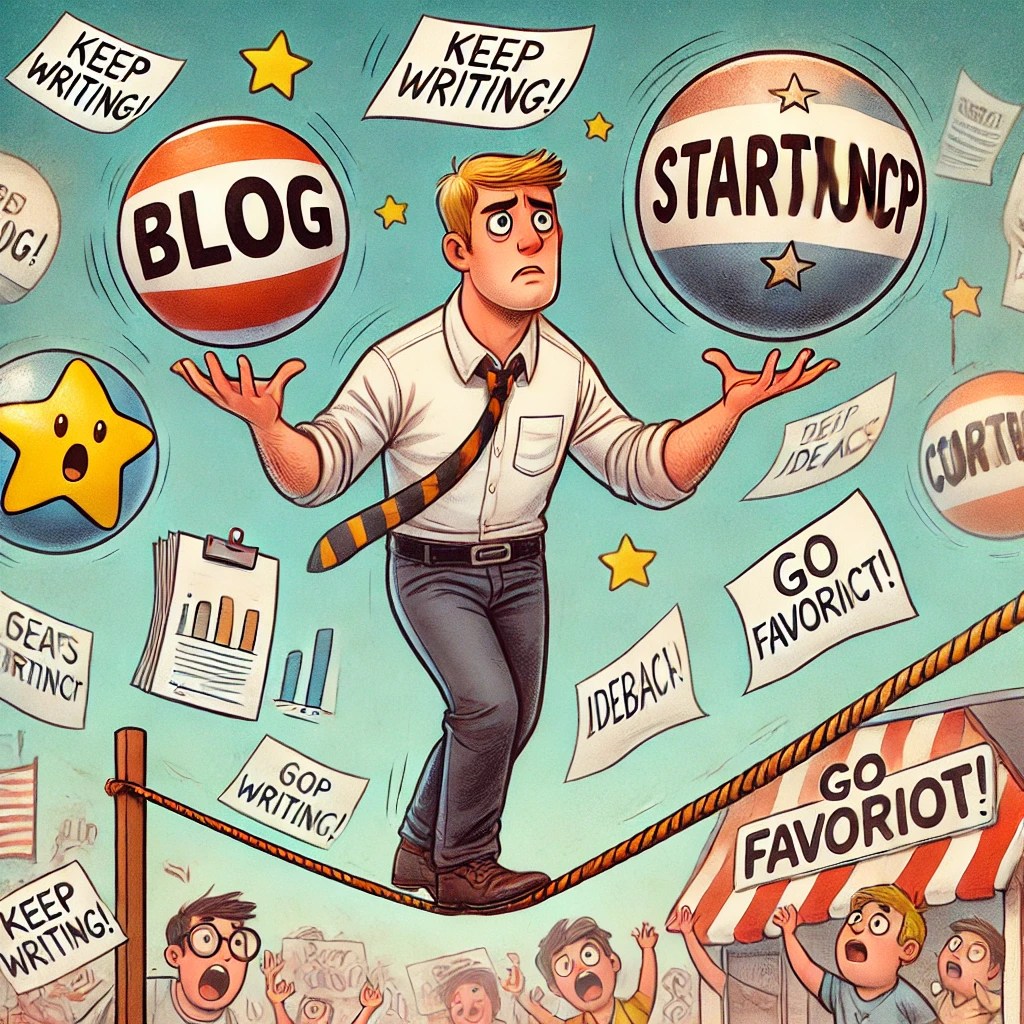
The Activities That Make Me Lose Track of Time

Have you ever been so deeply immersed in something that time slips away? One moment, it’s morning, and the next, the sun has set, and you wonder where the hours have gone. That happens to me a lot. It’s both fascinating and dangerous because it shows how much I love what I do, and it’s dangerous because I often forget to eat or even take a break. But that’s the beauty of passion, isn’t it?

Writing – My Deepest Escape

If there’s one thing that consistently makes me lose track of time, it’s writing. Not just any kind of writing, but the kind where I pour my thoughts, experiences, and reflections onto the page. The kind where I engage in self-dialogue, asking myself questions, debating perspectives, and exploring ideas in a way that feels as natural as breathing.

When I sit down to write, I enter a different world. The cursor blinks, waiting for my thoughts to flow, and I’m suddenly conversing with myself. Does this make sense? Will people relate to this? Should I add more storytelling? The words come in waves—sometimes a flood, sometimes a trickle—but it’s hard to stop once I start.

It’s in these moments that I feel the most alive. Writing isn’t just about putting words on a page; it’s about expression, connection, and discovery. I often write about IoT, smart cities, and technology, but sometimes, I delve into entrepreneurship, personal development, and even poetry. The topic doesn’t matter—as long as I’m writing, I’m in my element.

IoT and Smart Cities – The Intellectual Adventure

Another realm where I lose myself completely is in discussions about IoT and smart cities. This isn’t just a job for me—it’s a mission, a vision, and an endless source of curiosity.

I can spend hours analyzing the latest trends, researching new use cases, and discussing the future of connected technology. Whether I’m preparing for a keynote speech, mentoring startups, or brainstorming ideas for the FAVORIOT platform, I get absorbed in the possibilities.

The more I think about it, the more I realize IoT is an ever-expanding puzzle. Every city, every business, and every individual has different needs, and IoT provides the tools to create smarter, more efficient solutions. The challenge of making technology work for real-world problems is what keeps me hooked.

How can we make smart cities more inclusive? What’s stopping IoT adoption in developing nations? How do we ensure data security while enabling innovation? These questions excite me, and before I know it, I’ve spent an entire day buried in research, discussions, and problem-solving.

Reading – A Gateway to New Worlds

Reading is another activity where I lose myself, often without realizing how much time has passed. Reading opens doors to new perspectives, whether it’s articles on Medium, books on entrepreneurship, or science fiction novels.

There’s something magical about immersing yourself in a well-written piece. It could be a thought-provoking article that challenges my assumptions or a book that takes me through time and space. The written word has the power to transport me, to make me feel as if I’m living a hundred different lives all at once.

I remember reading about the early pioneers of technology—the visionaries who built the foundations of the digital age. Their stories inspire me because they remind me that innovation isn’t just about having a great idea; it’s about persistence, resilience, and an unshakable belief in the future.

Deep Conversations – The Art of Meaningful Exchange

I love conversations that challenge me and make me pause and rethink my assumptions. Whether it’s discussing the impact of AI on society, debating business strategies, or exploring philosophical ideas, I can get completely lost in the dialogue.

Some of the best discussions happen over coffee with like-minded individuals—entrepreneurs, researchers, students, or anyone with a curiosity for the world. I find that talking about ideas, sharing experiences, and learning from others keeps my mind sharp and my perspectives fresh.

One of my favorite aspects of mentoring young entrepreneurs is seeing the spark in their eyes when they realize a new possibility. It reminds me of my own journey, of the moments when someone’s advice changed my trajectory. These interactions fuel my passion and make me forget about time.

Creating and Building – Turning Ideas into Reality

There’s nothing quite like the thrill of creating something new. Whether it’s developing a new feature for the FAVORIOT platform, designing a training module, or working on a business strategy, I get completely absorbed in the process.

It’s one thing to talk about ideas but another to bring them to life. I truly excites myself when I see the process of building—from concept to execution—go from an abstract thought to a tangible reality.

Some nights, I self-brainstorm solutions long after the workday has ended. The challenge of problem-solving and figuring out how to improve something keeps me engaged. It’s in these moments that I realize this isn’t just work for me—it’s a passion.

Final Thoughts

It’s interesting to reflect on what makes us lose track of time. They reveal what truly matters to us, what excites us, and what gives us a sense of purpose.

For me, it’s writing, IoT, reading, deep conversations, and building new things. These aren’t just activities; they’re the fabric of my life, which keeps me energized and driven.

What about you? What activities make you forget the world around you?

How I’m Improving My Blog Writing in 2025

Lessons from My 2024 Mistakes

As I sit back and reflect on my blogging journey throughout 2024, I realize it’s been a mixed bag. There were moments of triumph where I felt proud of my work and other times where I couldn’t shake off the feeling that I could’ve done better. Isn’t that how it always is with personal projects? You start with high hopes and grand plans, only to learn some hard lessons along the way.

2024 has been a year full of such lessons for me. After analyzing my blog posts and feedback, I’ve identified five key mistakes that held me back. In 2025, I’m determined to turn things around. It’s time for a fresh start and a more thoughtful strategy. Here’s my plan to improve my writing and connect more meaningfully with my readers.

1. Cutting Out the Complicated Stuff

Where I Went Wrong in 2024

I have a confession: I fell into the trap of using too much jargon in my blog. Being in the IoT industry for so long, getting carried away with technical terms and buzzwords is easy. In my head, it sounded impressive, but I probably ended up confusing—or worse—boring my readers. Words like “data ingestion” and “end-to-end connectivity” may roll off my tongue effortlessly, but they can feel like stumbling blocks for someone outside my field.

What I’m Doing Differently in 2025

This year, I’m embracing simplicity. If I don’t say a term in a casual conversation, it won’t show up in my blog. Instead of “data ingestion,” I’ll simply say “how data is processed.” It’s all about being reader-friendly. Before hitting publish, I’ll ask myself: Would this make sense to someone who knows nothing about IoT? If not, I’ll rewrite it.
My new mantra: Every post should feel like a friendly chat over coffee, not a technical lecture.

2. Giving My Articles a Clear Path

Where I Went Wrong in 2024

Some of my blog posts felt like wandering through a maze without a map. I’d start with a big idea, but somewhere along the way, I’d get sidetracked. Before I knew it, the article would lose focus, and the conclusion didn’t even tie back to the opening idea.

What I’m Doing Differently in 2025

This year, outlines will be my best friends. Before writing, I’ll map out the structure of each post. A solid introduction to hook the reader, clear subheadings to guide them through the article, and a concise conclusion to tie everything together. No more messy articles that feel like a random stream of thoughts.

I’ll also check if someone can skim my article and understand the main points. If it feels confusing or jumps around too much, it’s time to rework it. A well-structured article should feel effortless, like a story unfolding naturally.

3. Putting Readers First

Where I Went Wrong in 2024

I love sharing personal stories—it’s one of the reasons I started blogging. But last year, I got too focused on my experiences without always connecting them back to something useful for my readers. Storytelling is powerful, but without a takeaway, it can feel self-indulgent.

What I’m Doing Differently in 2025

This year, I’ll make sure every personal story is tied to a lesson or takeaway for the reader. If I’m writing about my IoT journey, I’ll include tips for others—like how they can start their own IoT project or solve a real-life problem with technology. It’s all about balance.


I also plan to engage more with my audience. Responding to comments and understanding what my readers want will help me create content that matters to them. Writing isn’t just about what I want to say—it’s about what they want to read.

4. Nailing Headlines and Adding Visual Appeal

Where I Went Wrong in 2024

I’ll admit—some of my headlines were dull. They didn’t grab attention or give a clear idea of what the article was about. Worse, a few posts lacked visuals altogether. A wall of text without any visual relief? Even I wouldn’t want to read that!

What I’m Doing Differently in 2025

I will focus on headlines this year. Instead of vague titles, I’ll aim for clear, intriguing ones. For example, “How IoT Can Help Businesses” will become “5 Practical Ways IoT Can Transform Your Business in 2025.” It’s more specific and promises real value.

Visuals will also play a more significant role. Whether it’s a chart, an infographic, or a relevant photo, every post will have something to break up the text and make it more engaging. I’ll use tools like Canva to create custom graphics that complement my content.

5. Engaging with Readers More

Where I Went Wrong in 2024

One of my biggest regrets from last year is not engaging enough with my readers. I didn’t spend enough time replying to comments or interacting with the people who read my work. It felt like a missed opportunity to build connections and learn from their feedback.

What I’m Doing Differently in 2025

Engagement is a top priority this year. If someone leaves a comment, I’ll reply thoughtfully. I want my blog to feel like a conversation, not a monologue.

I also plan to write more based on readers’ questions or suggestions. For example, if someone asks how IoT can be applied in agriculture, I’ll turn that into a complete article. The more interactive my blog feels, the more valuable it will be for everyone involved.

Looking Ahead

2025 is going to be the year I write with purpose. I’m leaving behind the jargon, messy structures, and one-sided stories. Instead, I’ll create clear, engaging, and reader-centric content.

The beauty of blogging is that it’s a continuous journey. There’s always something new to learn and room to grow. By reflecting on my mistakes in 2024, I’m excited to see how far I can take my writing in 2025.

Will it be perfect? No. But it’ll be better. And that’s what matters.

Let’s make 2025 a great year for writing!

5 Lessons I Learned About Writing (The Hard Way)

When I started writing, I was like an overexcited kid given the keys to a candy store—brimming with enthusiasm but absolutely clueless about what I was doing. I devoured every piece of writing advice I could find, hoping to fast-track my journey to becoming a better writer.

Some tips helped, sure, but a lot of it? Pure noise.

Looking back, I realize I could’ve saved myself from much frustration if I had learned these lessons sooner. But that’s the beauty of growth—you stumble, fall, and eventually figure things out.

I discovered five hard-earned lessons through trial and error and a fair share of facepalms.

1. Write Often, But Fix Your Mistakes

When I first dipped my toes into the writing world, I kept hearing this mantra: “Just write as much as you can. Quantity over quality.” So, I did precisely that. I wrote. A lot. Blog posts, social media updates, random thoughts jotted in the middle of the night—you name it.

But here’s the catch: I wasn’t getting any better.

“Why isn’t this working? I’m writing so much, but nothing feels right.”

One day, curiosity (or maybe self-torture) made me reread my older pieces. I cringed. I mean, really cringed. My sentences felt awkward, and my ideas scattered like puzzle pieces from different boxes. That’s when the lightbulb flickered on. Writing isn’t just about pouring words onto a page; it’s about learning from those words.

Now, I treat writing like a conversation with my past self. I write, but I also pause, reread, and reflect. I ask, “What was I trying to say here? Could I say it better?” Mistakes? Oh, they’re inevitable. But fixing them? That’s where growth lives.

2. Read What Interests You, Not Just to Impress Others

There was a phase when I believed that I needed to read everything under the sun to be a great writer. Self-help books I didn’t care for? Check. Academic articles that felt like decoding alien scripts? Double-check.

But guess what? None of it stuck.

“Am I even absorbing any of this? Or just pretending to?”

I was reading to tick boxes, not to learn. I’d skim through articles, drop a “Great piece!” comment, and move on—thinking I was building connections. Spoiler alert: I wasn’t.

Eventually, I realized that meaningful reading comes from genuine curiosity. Now, I read what sparks my interest. Whether it’s a thought-provoking essay, an IoT case study, or even a quirky poem, I take my time. I underline sentences, jot down notes, and let the words marinate.

Reading this way doesn’t just fill my brain; it fuels my writing.

3. Comment Like You Mean It

Ah, the “comment-for-engagement” strategy. Been there, done that.

In the early days, I thought leaving many comments would make me visible. So, I plastered generic lines like, “Nice post!” or “Interesting thoughts!” across articles.

But here’s the thing—writers can smell insincerity from a mile away.

“Why isn’t anyone responding to my comments? Aren’t I engaging enough?”

One day, I received a heartfelt comment on one of my posts. It wasn’t long, but it was thoughtful. The reader shared how my words resonated with their experience. That comment? It stayed with me.

I realized genuine connections aren’t built on autopilot responses. Now, when I comment, I pause. “Did something in the article make me think differently? Did it remind me of a personal story?” I share that. Authenticity might not flood your notifications, but it builds lasting bridges.

4. Don’t Play the Follow-for-Follow Game

Ah, the seductive trap of the “follow-for-follow” game. In my eagerness to grow my audience, I followed anyone and everyone, thinking they’d return the favour. For a while, it worked. My follower count climbed, but my engagement? Crickets.

“Why do I have so many followers but no real interactions?”

I had an audience, but not a community.

One day, it hit me: “Why am I following people whose work doesn’t inspire me? Why am I chasing numbers instead of connections?”

So, I hit the reset button. I started following writers whose words I genuinely enjoyed and whose thoughts challenged me. The growth became slower, but it felt real. When someone follows me today, I know it’s because they value my voice, not because of an unspoken social contract.

5. Write When You Have Something to Say

“Write every day, no matter what.”

I took that advice to heart. Even on days when inspiration was as dry as the Sahara, I forced myself to write. The result? Words that felt forced, soulless, and frankly, forgettable.

“Why does my writing feel empty even though I’m consistent?”

Then I had an epiphany: Writing isn’t just about writing. It’s about sharing—sharing an idea, a lesson, or a story that matters—even if it’s just for you.

Now, I write when something stirs within me. It could be a fleeting thought, a conversation, or an article that sparked an idea. Writing from that place? It flows. It feels alive. And more often than not, it resonates with readers.

Final Thoughts

Writing isn’t a race. It’s a journey filled with detours, pit stops, and occasional breakdowns.

I’ve stumbled, cringed at my past mistakes, and learned lessons the hard way, but each misstep has shaped my growth.

If you’re starting your writing journey, here’s my two cents: Don’t chase perfection. “Chase authenticity.” Write, reflect, connect genuinely, and let your voice evolve.

After all, the most powerful stories aren’t the ones polished to perfection—they’re the ones that come from the heart.

Writing a Blog and Building a Startup: Two Journeys, One Spirit

I never thought I’d say this, but here it goes: writing a blog—like mine—and building a startup—like FAVORIOT—feel like two sides of the same coin. Strange, isn’t it? At first glance, they seem worlds apart. One requires you to pour your thoughts onto a blank screen, while the other demands strategic planning, pitching ideas, managing teams, and scaling businesses.

But as I look back on both journeys, I see an uncanny resemblance. It’s like déjà vu but in different dimensions.

The Blank Page vs. The Blank Canvas

I remember when writing my first blog post. The blank page felt like it was mocking me—”So, what’s your big idea, Mazlan?” No audience, no followers, just me and my thoughts.

Now, compare that to the early days of FAVORIOT. We had a big dream: to simplify IoT adoption. But dreams are just dreams until you take that terrifying first step. No customers, no revenue, just a vision and an empty business plan.

Starting both felt like standing at the edge of a cliff. Do you jump? Or do you hesitate? I jumped. Twice.

Defining Your “Why”

Here’s the thing about starting anything meaningful—you need a “why.” Without it, you’ll burn out faster than a cheap lightbulb.

For FAVORIOT, my “why” was crystal clear: help businesses and cities leverage IoT for smarter operations. For my blog, it was about sharing my journey, my thoughts, my lessons—hoping they’d resonate with someone out there.

When challenges hit—and trust me, they did—my “why” kept me grounded. It’s like having an internal GPS when the road ahead gets foggy.

The MVP (Minimum Viable Product): Perfection Can Wait

Every startup guru talks about the MVP. It’s your rough draft—a version that works but isn’t perfect. FAVORIOT’s first platform wasn’t a masterpiece. It had bugs, limited features, and a UI that would make today’s designers cringe. But it solved a problem, and that’s what mattered.

Guess what? My early blog posts were my MVPs. Not polished, not viral-worthy, but raw and honest. Some articles were barely 500 words, rushed between meetings, but filled with genuine insights.

You don’t wait for perfection. You launch, you learn, you iterate.

Audience vs. Customers: The Art of Connection

In startups, they say, “If you build it, they will come.” Lies. They won’t come unless you hustle.

At FAVORIOT, we had to identify our target market, pitch relentlessly, and prove our value. Blogging? Same game, different players. I had to find my niche—IoT, smart cities, entrepreneurship—and consistently write content that mattered.

But it wasn’t just about publishing and hoping for the best. Engagement was key. Responding to comments, sharing posts on LinkedIn, having meaningful discussions—these were my “sales calls” in the blogging world.

Consistency: The Unsung Hero

Let me be brutally honest—there were days I felt like giving up. Some months, FAVORIOT saw zero growth. Some weeks, my blog had views I could count on one hand.

But here’s the secret sauce: consistency. Not motivation. Not talent. Just showing up, day after day.

At FAVORIOT, we kept refining our platform, talking to clients, and pivoting when needed. On my blog, I kept writing—even when no one was reading. Over time, both grew. Not overnight, but gradually. Like watering a plant, wondering if it’ll ever sprout. Then one day—it does.

Feedback: The Mirror You Didn’t Ask For

Feedback can sting. Whether it’s a customer pointing out a flaw in FAVORIOT’s platform or a reader criticizing my writing style, it’s tough.

But it’s gold.

At FAVORIOT, customer feedback shaped our roadmap. What to improve, what to drop, what to double down on. My blog? Comments, shares, even silent metrics like “read time”—they told me what resonated.

Criticism isn’t an attack; it’s a compass.

Scaling: Doing More of What Works

Once FAVORIOT found its footing, it was time to scale. New markets, more features, global partnerships. But scaling isn’t just about doing more. It’s about doing more of what works.

I learned that lesson the hard way with my blog. I tried writing about everything—tech trends, personal growth, productivity hacks. Some of it flopped. I realized I needed to double down on my strengths: IoT, entrepreneurship, storytelling.

Passion: The Invisible Fuel

No passion? No progress.

I’m obsessed with IoT—not just as a technology, but as a force that’s reshaping our world. That passion fuels FAVORIOT. It also bleeds into my writing.

You can’t fake passion. Readers sense it. Customers sense it. It’s what keeps you going when logic says, “Quit.”

The Payoff: Beyond Metrics

Today, FAVORIOT has global partners. My blog reaches thousands of readers. But the real payoff? It’s not the numbers.

It’s the email from a reader who says, “Your article inspired me to start my own business.” It’s the client who says, “FAVORIOT helped us transform our operations.”

Impact. That’s the real currency.

Final Thoughts: Start. Just Start.

Whether you’re building a startup or a blog, the rules are surprisingly similar:

  • Start before you’re ready.
  • Find your ‘why.’
  • Launch imperfectly.
  • Engage with your audience.
  • Stay consistent, even when it’s hard.
  • Embrace feedback.
  • Scale smartly.
  • Fuel it with passion.

Looking back, both journeys shaped me. They taught me resilience, humility, and the art of storytelling—whether through code or words.

So, if you’re hesitating to start that blog or launch that business, let me leave you with this:

The best time to start was yesterday. The second-best time? Today.

How AI Sees My Writing Style – And What It Means for 2025

“Do I really have a writing style?”

That question kept bouncing in my head as I stared at the AI analysis of my articles. I’ve always written instinctively—pouring out thoughts, reflecting on experiences, and hoping they resonate with someone out there. But now, with a year’s worth of writing analyzed, I can’t help but smile.

The verdict?

I’m a storyteller at heart. I thrive on conversations. Most importantly, I write for impact.

So, let’s break it down. What makes my writing style uniquely mine?

1. Storytelling is My Foundation

“You should start with a story.”

I remember hearing that advice long ago. At first, it felt unnecessary—why not just get straight to the point? But over time, I realized that stories bridge the gap between knowledge and understanding.

When I write about IoT, I don’t just list facts. I take readers on a journey, whether they’re entrepreneurs struggling to deploy smart city solutions or university students trying to commercialize an IoT project.

Take “Why Writing Is Like Running a Marathon” or “The Silent Struggles of Researchers”—I don’t just talk about endurance and challenges. I live through them in my writing.

Why it matters: Stories stick. They make abstract ideas tangible and personal.

2. Conversational and Relatable Tone

“Write as if you’re talking to a friend over coffee.”

That’s how I approach my articles. No stiff, robotic sentences. No excessive jargon. Just me, having a conversation with you.

Whether I’m sharing “How Medium Shaped My Voice” or “Why You Should Write From the Heart,” my goal is simple: I want you to feel like we’re just sitting together, chatting about life and ideas.

Why it matters: Readers don’t want to be lectured. They want a dialogue.

3. First-Person Perspective Brings Depth

“Why do you always write in first person?”

Because it’s real. Because it’s personal. Because I believe the best way to inspire is by showing—not just telling.

If I write about IoT projects in universities or my journey in the corporate world, I’m not giving a third-person analysis. I’m sharing my experiences, lessons, and mistakes.

Why it matters: It builds trust. Readers connect with people, not abstract ideas.

4. Structure Matters – A Lot

“Make it easy to read.”

Long, unbroken paragraphs? No thanks. My articles are structured with clear sections, subheadings, and logical flow.

If I’m explaining “5 Lessons I Learned About Writing” or “How Favoriot Empowers IoT System Integrators”, I want you to get value fast.

Why it matters: Clarity keeps people reading. A good article doesn’t feel like work—it flows effortlessly.

5. Motivation and Inspiration Are My Hidden Ingredients

“People don’t just read for information. They read for inspiration.”

When I wrote “Why Persistence in Writing Matters” or “Every Failure Was a Step Toward Success”, I wasn’t just telling stories. I was giving hope.

I know what it’s like to feel stuck. To feel like no one is listening. To wonder if your efforts are even worth it. But every challenge I’ve faced has led me somewhere better. That’s the message I want to leave behind.

Why it matters: Inspiration fuels action.

6. Versatility Without Losing Identity

“Do you only write about IoT?”

No. And I never will.

My interests are broad—entrepreneurship, technology, personal growth, writing—but my voice remains the same. Whether discussing IoT’s future or writing a letter to my future self, it still feels like me.

Why it matters: A consistent voice makes a writer memorable.

7. Emotion and Logic Go Hand in Hand

“Facts alone don’t convince people. Emotions do.”

When I wrote “How Responding to Comments Boosted My Writing Output,” I didn’t just provide statistics. I also shared how engaging with readers felt —the excitement, the connections, the motivation.

Then, I supported my argument with logic—why engagement matters, how it impacts visibility, and what writers can do to grow.

Why it matters: The best articles engage both heart and mind.

8. Analogies and Metaphors Make Everything Click

“Explain it like they’re five.”

If I say, “Writing is like running a marathon,” you immediately understand endurance is key. If I say, “A Medium writer is like a badminton player,” you get that consistency and technique matter.

I use analogies because they simplify complexity. IoT, AI, writing—whatever the topic, if I can compare it to something familiar, it becomes easier to grasp.

Why it matters: Analogies make learning fun and effortless.

9. Audience-Centric Writing

“Who am I writing for?”

Every article I write answers a question or solves a problem.

Whether it’s “Why You Should Not Give Up Writing” or “How Favoriot Empowers IoT System Integrators”, my focus is always: How can this help the reader?

Why it matters: Readers stay loyal when they feel seen and understood.

10. Learning and Growing Through Writing

“Writing is my best teacher.”

I reflect a lot in my articles.

From “Lessons Learned in My 13-Year Telco Career” to “My Journey of Writing 550 Articles on Medium”, I use my past as a learning tool. I talk about mistakes, breakthroughs, and the evolution of my thoughts.

Why it matters: Growth is relatable. Readers appreciate honesty.

What This Means for 2025

Seeing this breakdown made me realize one thing—I love writing.

And in 2025, I’ll write even more.

✔ More stories that resonate.
✔ More conversations that connect.
✔ More insights that inspire.

If AI says my writing has an impact, I owe it to myself (and my readers) to keep going.

Because at the end of the day, writing isn’t just about putting words on a page.

It’s about sharing experiences, shaping perspectives, and leaving a legacy.

Here’s to another year of storytelling.

Why I’m Leaving Medium: A Writer’s Journey to Rediscovering Joy

The Allure of Writing on Medium

I’ve always loved writing.

It’s been my escape, my way of sharing thoughts, ideas, and dreams with the world. And for a while, Medium was the perfect platform for that. It wasn’t just about the money – although, let’s be honest, the earnings did provide a nice boost of motivation.

But more than that, the sense of community drew me in.

The idea that my words could resonate with readers from all walks of life was exhilarating.

At its best, Medium felt like a writer’s haven, where effort and creativity were rewarded.

The Golden Days: When Writing Felt Rewarding

I was making a comfortable three-digit monthly income on Medium for a time. It wasn’t a fortune, but enough to validate the hours I spent crafting my pieces.

That three-digit figure felt like a pat from the universe, acknowledging that what I was doing mattered. I would eagerly check my earnings dashboard, and even when the numbers weren’t astronomical, they were steady.

They were enough to keep me going.

The Harsh Reality: Declining Earnings

But here we are in January 2025, and everything’s different now. My earnings have plummeted to a single digit. Yes, you read that correctly – single digit. I’ve earned just about a dollar with only five days left in the month.

A dollar! It feels almost laughable, doesn’t it?

I can’t buy a decent cup of coffee with my earnings any longer. And it’s not just me; this seems to be the collective frustration of countless writers on the platform.

Writers in Frustration: What Went Wrong?

Over the past year, conversations about declining earnings on Medium have surged across forums and social media.

Writers share their disappointment, confusion, and anger. Some blame the algorithm; others point fingers at changes in the Partner Program.

Whatever the root cause, one thing is certain: the joy of writing on Medium has been overshadowed by an air of disillusionment.

My Breaking Point: January 2025

For me, January 2025 has officially been the breaking point. It’s not just the earnings, though they have been a significant factor.

It’s the feeling of constantly being let down by a platform I once believed in.

Each time I check my dashboard this month, it reminds me how far things have fallen. And frankly, it’s exhausting.

The Decision to Move On

After much thought, I’ve decided that it’s time to move on.

I won’t be renewing my Medium subscription. Instead, I’ll be redirecting my custom domain to WordPress.

It feels like the right move for now – a fresh start on a platform where I can control my content completely.

On WordPress, I won’t have to worry about algorithms or earnings reports dictating my writing journey. I can write freely without the weight of disappointment looming over me.

A Bittersweet Goodbye to Medium

Saying goodbye to Medium isn’t easy.

There was a time when this platform felt like home, a space where my voice could thrive. But the frustration has peaked, and I refuse to let it drain my energy.

Life is too short to cling to something that no longer brings joy or fulfilment.

Rediscovering the Joy of Writing

As I enter this new chapter, I’m filled with sadness and hope.

I’m sad about what Medium once was and could have continued to be. I hope for what lies ahead, for the opportunities that come with a fresh start.

I’m ready to rediscover the joy of creating, to write without constraints, and to build something meaningful on my own terms.

A Message to Fellow Writers

If you’re reading this and feeling a similar frustration, know you’re not alone. Letting go isn’t easy, especially when something once meant so much.

But sometimes, a fresh start is precisely what we need to rediscover our passion.

Whether moving to a new platform, exploring a different medium, or simply taking a break, it’s okay to pivot. It’s okay to prioritize your happiness and your creative spirit.

Here’s to New Beginnings

So here’s to new beginnings—writing freely, passionately, and without the weight of algorithms or earnings reports—to rediscover the pure joy of storytelling, sharing ideas, and connecting with others.

Goodbye, Medium.

You’ll always be a part of my past, but you won’t define my future.

How Responding to Comments Boosted My Writing Output

WRITER’S STORIES

Four (4) Practical Steps to Engagement

Photo by Jon Tyson on Unsplash

Why does it feel so hard to keep up with my writing?” I muttered to myself. It was a question that had been nagging me for years.

As a writer and IoT thought leader, I knew the value of consistency in writing.

Yet, I found myself needing help maintaining a steady output.

I tried various strategies—setting strict schedules, finding quiet places, and changing my writing medium—but nothing seemed to work.

During one of these frustrating moments, I stumbled upon an unexpected solution: responding to comments on my articles.

The Turning Point

Photo by Roger Bradshaw on Unsplash

One evening, after posting an article on IoT innovations, I received a notification that a reader had left a thoughtful comment asking about the practical applications of IoT in developing countries.

I had a choice: I could ignore the comment, as I had done many times before, or engage. “Why not give it a try?” I thought.

I typed a detailed response, sharing insights and linking to relevant resources.

The reader replied almost immediately, expressing gratitude and asking more questions. This interaction sparked something within me.

This feels… invigorating,” I realized.

It wasn’t just about sharing knowledge but about connecting with my audience on a deeper level.

Engagement Equals Inspiration

Photo by Muhammad Haikal Sjukri on Unsplash

From that day forward, I made it a point to respond to comments on my articles.

Each interaction provided new perspectives and ideas.

Why didn’t I do this sooner?” I often asked myself. The feedback and questions from readers became a wellspring of inspiration.

When someone asked about the future of smart cities, it prompted me to write a detailed piece on urban IoT trends.

Another comment about the challenges of IoT implementation in small businesses led to a series of articles on practical IoT solutions for entrepreneurs.

Every comment was a potential article topic, a seed waiting to be nurtured.

It’s like brainstorming with my readers,” I smiled. The more I engaged, the more ideas flowed.

Writing no longer felt like a solitary endeavor; it was a collaborative effort with my audience.

Building a Community

Photo by Kylie Lugo on Unsplash

Responding to comments did more than increase my writing output; it helped build a community.

My readers felt valued and heard, which encouraged more interaction.

Thank you for taking the time to respond,” one reader wrote. “I look forward to your next article.” These words were more than just feedback; they fueled my writing journey.

I began recognizing familiar names in the comment sections and regular readers who engaged with my content consistently.

This is more than just writing; this is building relationships,” I realized.

These interactions transformed my perception of writing from a one-way broadcast to a two-way conversation.

Practical Steps to Engagement

Photo by Jake Hills on Unsplash

As I immersed myself in this new approach, I developed a few practical steps to maximize the benefits of responding to comments:

  1. Be Prompt and Consistent: I made it a habit to check comments regularly and respond promptly. This showed my readers that I valued their time and input.
  2. Be Genuine and Thoughtful: A simple “Thank you” might suffice for a compliment, but detailed and thoughtful responses to questions or critiques demonstrated my commitment to the topic and my readers.
  3. Ask Questions: Engaging with my readers wasn’t just about answering their questions but also sparking further dialogue. “What do you think about this?” became a common question in my responses.
  4. Use Feedback as Fuel: I kept a notebook of reader comments and ideas. Whenever I felt stuck, I would refer to this list for inspiration.

Overcoming Challenges

Photo by Towfiqu barbhuiya on Unsplash

Of course, this approach wasn’t without its challenges.

There were times when negative comments or criticism could have quickly dampened my spirits.

How should I handle this?” I often wondered. I decided to view every comment, positive or negative, as an opportunity for growth.

When faced with criticism, I took a deep breath and approached it with an open mind.

What can I learn from this?” I would ask myself. Constructive criticism became a tool for refining my ideas and improving my writing.

I turned critical comments into opportunities for deeper exploration in subsequent articles on several occasions.

The Ripple Effect

Photo by Izzy Gibson on Unsplash

The impact of responding to comments went beyond just increasing my writing output. It enhanced my overall writing quality and broadened my perspective.

This is more than just writing,” I reflected. “This is a continuous learning process.” Engaging with my readers exposed me to diverse viewpoints and new information that enriched my understanding of various topics.

Moreover, this practice had a ripple effect on my other endeavors.

The insights gained from reader interactions informed my conference talks, my discussions with industry peers, and my approach to business at FAVORIOT.

It was as if engaging with my readers created a feedback loop that amplified my knowledge and influence.


Reflecting on this journey, I am grateful for that initial decision to respond to a reader’s comment.

It transformed my writing practice and opened up new avenues for growth and connection. “Who knew that something as simple as engaging with readers could have such a profound impact?” I wondered.

To my fellow writers, I offer this advice: Embrace the dialogue.

Responding to comments isn’t just about increasing your writing output and enriching your writing experience.

It’s about building a community, gaining new insights, and growing as a writer.

So, the next time you receive a comment on your article, take a moment to respond. You never know where that conversation might lead.

Ultimately, writing is not just about putting words on paper; it’s about connecting with people.

And sometimes, the best ideas come from the simplest interactions.

Writing vs Blogging — Two Different Worlds

WRITER’S STORIES

Blogger in the Tech-Infused World of IoT

Photo by Afif Ramdhasuma on Unsplash

Not a member? Click here to read the full story for free.

Despite my long-held aversion to writing—rooted deeply in my belief that I was a “terrible writer” — I couldn’t ignore the blogosphere’s magnetic pull.

Could someone like me, riddled with self-doubt, carve a niche in this ever-expanding universe?” I pondered.

When this question crossed my mind, I felt an uncontainable curiosity growing, pushing me to delve deeper into the blogging world.

This curiosity led me on a transformative journey, especially within my niche of interest, the Internet of Things (IoT).

The more I explored, the more I realized the vast potential that blogging held for me to share my ideas, insights, and experiences with the world.

The Spark of Curiosity

It all started with a simple yet daring thought: “If everyone else can blog, why can’t I?

With that, I ventured into what would become an eye-opening adventure. Soon enough, I realized blogging was a different beast, unlike any traditional form of writing I had previously shied away from.

Photo by Ben White on Unsplash

The Craft of Blogging vs. Traditional Writing

Initially, I was confident that my modest writing abilities would be enough to become a successful blogger.

I believed that blogging was merely about expressing my thoughts through words, which I was already good at.

However, when I started blogging about the Internet of Things (IoT), I soon realized this was not the case.

I had to create content that was not only well-written but also engaging, accessible, and, most importantly, easily discoverable.

In other words, I needed to sculpt my writing to be easily found by search engines, interesting to readers, and relevant to the topic.

It was a unique challenge that required me to develop new skills and approaches to writing.

Understanding the Audience

When I started writing about IoT, I quickly realized I needed to adjust my writing style to reach a broader audience.

Unlike academic or literary writing, which is often targeted toward specialized audiences, blogging about IoT demanded a conversational tone that could explain complex technologies in a way that everyday users, hobbyists, and tech enthusiasts could easily understand.

To achieve this, I used informative and inclusive language, converting complicated concepts into engaging, easy-to-follow stories that would keep my readers’ attention.

This required me to be creative in simplifying complex ideas into easily digestible narratives that would appeal to many readers.

Photo by Joel Muniz on Unsplash

The SEO Learning Curve

When I encountered the Search Engine Optimization (SEO) challenge, I was overwhelmed by the thought of how people could even discover my blog amongst the millions of blogs out there.

Until then, my focus had mainly been on the narrative, but now I realized the importance of using keywords, meta descriptions, and mobile-friendly formats to ensure that my content reached the right audience.

These tools bridged the gap between crafting compelling content and making sure it was discoverable by the people who would benefit most.

The Relentless Pace

One of the biggest obstacles I faced when transitioning to blogging was adjusting to the fast pace of the medium.

I was astonished at how frequently bloggers had to publish new content to keep their readers engaged. In contrast to traditional writing, where writers might spend weeks refining a piece, bloggers need to produce new and timely content regularly.

This demand was both thrilling and challenging, as it pushed me to continuously generate fresh ideas and translate them into engaging articles that would capture my audience’s attention.

Photo by Yuri Efremov on Unsplash

Networking and Visibility

I soon learned that blogging was not just about writing but about engaging. “Am I ready to step into the spotlight?” Unlike traditional publishing, successful blogging requires active self-promotion and networking.

Engaging with readers, collaborating with other bloggers, and participating in IoT communities became part of my routine.

Each post wasn’t just a publication but an invitation to explore deeper into the smart, interconnected world.

Authenticity and Vulnerability

As I delved further into blogging, I discovered it was more than just writing words on a page.

It required a certain level of openness and vulnerability that I hadn’t anticipated.

I questioned whether I would share more about my journey and whether I was comfortable discussing my innermost thoughts and feelings.

However, I realized that sharing personal insights and experiences, both the good and the bad, was essential to creating a more meaningful and authentic blog.

By exploring my doubts and sharing my successes and failures, I created a unique voice and perspective that set my blog apart from the multitude of sterile and information-driven tech blogs.

Photo by Aaron Burden on Unsplash

A Continuous Learning Experience

Reflecting on this journey, I realized the essence of continuous learning in technology.

What’s next for me and my readers?” As I navigate the complex interplay of writing and blogging, I invite you to join me.

Whether you’re a tech enthusiast, a fellow blogger, or simply curious about digital transformation through IoT, your perspectives and experiences enrich this journey.

This narrative is not just about blogging or IoT; it’s about overcoming fears, embracing change, and pursuing relentless growth.

In the world of IoT and beyond, let’s continue to learn, share, and connect.

The stories and experiences we share help us understand how technology and human interaction intersect in today’s interconnected world.

By sharing perspectives, we gain a deeper insight into how technology affects our lives and those around us.

Our stories can help us navigate the complex landscape of modern technology and create a more empathetic and connected society.

My Domain Hosted on Medium Performed 200X Better Compared to WordPress

MEDIUM VS WORDPRESS

This is what I learned…

Photo by Campaign Creators on Unsplash

Not a paid member? Click here to read the full story for free.

I first created my blog using mazlanabbas.com to capture my journey as a Startup founder, Thought Leader, and Social Media Influencer.

Little did I realize how hard it was to make this website known to others. I found it very difficult to get traffic to my blog.

I struggled for nearly two years until I decided to do something drastic.

When I moved my domain from WordPress to Medium, I wanted to reduce the time and effort I spent managing multiple blogs. I have been active on Medium, and the topics I posted there are almost the same as those on my old blog on WordPress.

It was a bold move, but since hosting a domain on Medium is considered “free” because I already subscribe to the Medium Partner Program, I don’t have to pay for a separate host subscription.

Photo by Bench Accounting on Unsplash

Let me share why it’s good to host on WordPress:

  • There are many themes, plugins, and widgets that you can customize.
  • There are great tools to manage and view our traffic stats.
  • We can customize our website to our liking.
  • We can generate income via Google Ads (only if you have tons of traffic)

And let me share why Medium is a great host for personal domains:

  • If we are writers, it’s easy for us to write our stories. The UI/UX is meant for writers.
  • The community of writers is very supportive and engaging.
  • The possibility of earning with every article that we published.

But why do I say Medium is 200X better than WordPress?

I earned zero cents from all the articles I published, but I earned more than $200 for the last six months on Medium. That’s compared to the last two years hosted on WordPress, which didn’t earn me anything.

On WordPress, I only managed to get less than 200 followers, compared to 1.93K followers on Medium. WordPress has a community on the Jetpack mobile app, but the people are diverse and have different interests.

In Medium, we engaged much more in conversations and support with claps, highlights, and comments.

Photo by David Iskander on Unsplash

From my experience transitioning my domain hosting from WordPress to Medium, I’ve learned several key lessons and insights:

  1. Platform Ease-of-Use Matters: Medium’s user-friendly UI/UX, explicitly designed for writers, made creating and publishing content simpler for me. This starkly contrasts WordPress, which, although flexible, requires more time and effort to manage.
  2. Community Engagement is Crucial: Medium’s built-in community of writers and readers fostered more interaction through features like claps, highlights, and comments. This level of engagement significantly increased my visibility and follower count compared to platforms where the community is less integrated.
  3. Cost-Effectiveness: Hosting my domain on Medium was more cost-effective, especially since I was already subscribed to the Medium Partner Program. Conversely, maintaining a site on WordPress would have incurred additional costs for hosting, themes, and plugins.
  4. Monetization Opportunities: I found Medium’s monetization opportunities far more favorable. While I didn’t earn anything from my articles on WordPress, I managed to earn a significant amount on Medium, demonstrating its potential for revenue generation for dedicated content creators.
  5. Platform-Specific Audience: Medium’s audience is more aligned with content creators, particularly writers and thought leaders, resulting in a more engaged and supportive follower base. WordPress caters to a more diverse audience, which might resonate less strongly with specific content types.
  6. Focus on Core Competencies: By shifting to Medium, I could concentrate more on my writing and thought leader strengths instead of getting bogged down with website management and technical issues on WordPress.
  7. Strategic Platform Choice: Medium and WordPress depended heavily on my goals and preferences. Medium’s alignment with my content creation style and objectives made it the better choice, highlighting the importance of selecting a platform that supports one’s goals and workflow.

I invite you to follow my publications — Aspiring Writer’s Journey and Influencer’s Journey.

Photo by Aaron Burden on Unsplash

About my blogging journey:

1 — You Will No Longer Look at Personal Blogging the Same Way

View at Medium.com

2 — How I Created Online Money Making Machines

View at Medium.com

3–10 Tips in Creating a Successful Blog: Simple Steps and Key Insights

View at Medium.com

4 — Lifechanging Benefits of Lifeblogging

View at Medium.com

5 — From Medium Reader to Earner — If I Can, You Can Too!

View at Medium.com

6 — Monetizing Your Way Via Blogging — Simple Tips

View at Medium.com

7–10 Killer Topics That Makes a Blog Go Viral

View at Medium.com

8 — My Most Important Milestone in Medium — How I Planned to Earn $100K with My First Dollar

View at Medium.com

You Will No Longer Look at Personal Blogging the Same Way

How Personal Blogging Changed the Way I Look at Life Challenges

Image created using Canva by Author

“In the landscape of entrepreneurship, personal blogging is not just a pen stroke, but a bridge connecting the depths of personal growth to the heights of professional achievement.”

[Note: Click this if you are not a Medium Partner Program member. It will give full access to this article.]

In the chaotic world of entrepreneurship, we, as founders, often face a wide range of experiences, from the thrill of breakthroughs to the stress of setbacks.

Amid this storm, it’s too easy for me to become absorbed in the day-to-day demands of decision-making and troubleshooting.

However, I’ve discovered a potent, often overlooked tool that has brought me clarity, perspective, and a profound sense of achievement: personal blogging.

Through my journey, I’ve seen how keeping a personal blog can provide insight for entrepreneurs like me, helping us steer our ventures with more wisdom and purpose.

The Hidden Gems of Personal Blogging

“Through the lens of a personal blog, every entrepreneur becomes a storyteller, transforming daily trials into a tapestry of triumphs and teachings.”

At a glance, blogging is just an online journal or a way to express oneself.

But for entrepreneurs, myself included, it goes far beyond that, evolving into a valued routine that enriches my personal life and business endeavors.

My path led me from managing two blogs — one for business insights and another for personal musings — to an unexpected revelation.

My blog, where I candidly shared the ups and downs of my entrepreneurial journey, began to connect with a broader audience in ways I hadn’t anticipated.

This burst of engagement highlighted the power of authenticity and vulnerability in forging connections with others.

The Healing Power of Writing

“Writing is the soul’s therapy, and personal blogging is its sanctuary, offering clarity amidst chaos and transforming thoughts into tangible paths forward.”

For an entrepreneur, writing is inherently healing.

Blogging about my daily experiences, the hurdles I’ve faced, and the milestones I’ve achieved acts as a form of reflection.

It allows me to step back from the relentless pace of business and introspect, giving voice to my thoughts and feelings. This isn’t just about recording what happens; it’s about making sense of the journey.

Documenting the highs and lows, the errors, and the successes offers a structured approach to dissecting and comprehending these moments.

It’s a way for me to externalize the inner monologue that can often become convoluted and overwhelming if left unchecked.

Gaining Clarity Through Reflection

“Reflection through blogging is not merely looking back; it’s charting a course forward, turning lessons into stepping stones for tomorrow’s successes.”

Reflection is a vital part of learning and evolving.

Personal blogging aids in this by enabling me to look back on past decisions, results, and thought processes.

Writing down the stories behind each event helps me and entrepreneurs like me to identify patterns, acknowledge recurring challenges, and recognize progress that might otherwise be overlooked.

This reflective practice deepens my understanding of my entrepreneurial journey, spotlighting the lessons learned and pinpointing areas for growth.

The clarity this provides is priceless, offering a navigational tool for future choices and plans.

The Strength of Community Engagement

“A personal blog is more than a diary; it’s a dialogue with the world, inviting connection, empathy, and shared journeys toward common horizons.”

My experience has highlighted the unexpected benefits of engaging with a community through blogging.

The interaction from readers — through views, comments, and shares — becomes a source of encouragement and affirmation.

It is gratifying to realize that my personal story resonates with others and could offer them insight, motivation, or comfort.

This connection with a broader audience enriches the blogging experience, transforming it from an individual activity into a collective voyage.

Cultivating Resilience and Wisdom

“Every blog post is a beacon of resilience, illuminating the path for others while casting light on the wisdom earned through the entrepreneur’s voyage.”

Each blog post covering the obstacles I’ve encountered and overcome marks a significant point in my entrepreneurial journey.

These recorded experiences build up a wealth of knowledge, equipping me with the insights and resilience needed for upcoming challenges.

Sharing these stories benefits not just me as the writer but also supports readers who may find themselves in similar predicaments.

It fosters a cycle of mutual support and growth, reinforcing that every story has its place in entrepreneurship.

An Invitation to Personal Blogging

“The act of blogging is an act of bravery, where sharing one’s vulnerabilities becomes the strength that binds a community of like-minded souls.”

Personal blogging stands out as a powerful instrument for entrepreneurs, serving multiple purposes: a medium for introspection, a beacon of clarity, a link to connect with others, and a treasure trove of learned lessons.

My journey vividly illustrates how incorporating personal blogging into our entrepreneurial practices can provide far more than a historical account.

It opens doors to personal development, community engagement, and clearer thinking.

Adopting personal blogging can be a game-changer for those of us navigating the complexities of our startups and entrepreneurial ventures.

It’s an offer to pause, reflect, and connect — essential steps for maintaining our drive, resilience, and focused vision.

I often remind myself, “Keep dreaming and hustling, and never forget to share your story.”

In the vast, unpredictable sea of entrepreneurship, our blogs can serve as lighthouses, guiding not just ourselves but others, reminding us that amid the chaos, every story matters, and yours might be the beacon someone else is searching for.


Five (5) Lessons Learned via Personal Blogging

1 — Blogging Transcends Simple Journaling to Enrich Entrepreneurship:

Unlike a diary, personal blogging offers a more profound, multifaceted platform that intertwines personal growth with professional development.

The practice of sharing the entrepreneurial journey authentically and vulnerably not only fosters personal reflection but also strengthens business understanding by connecting with a broader audience.

2 — Writing as a Therapeutic Tool for Clarity and Reflection:

Writing about daily experiences, challenges, and achievements is a powerful form of self-reflection and therapy.

It provides a structured way to process the entrepreneurial journey, helping to externalize thoughts and feelings that, if left internalized, can become overwhelming.

This reflective writing helps in distilling complex experiences into actionable insights.

3 — Reflection Aids in Learning and Growth:

Personal blogging enables entrepreneurs to revisit past decisions and outcomes, offering a chance to learn from mistakes and celebrate successes.

This continuous cycle of reflection is crucial for identifying patterns and recurring challenges, deepening understanding, and fostering personal and professional growth.

It turns experiences into a compass for future navigation.

4 — Community Engagement Enhances Motivation and Support:

Sharing one’s journey through blogging creates a feedback loop of engagement that can offer encouragement, validation, and a sense of belonging.

Knowing that your story resonates with others and could help them navigate their challenges is immensely rewarding.

This enriches the individual blogging experience and contributes to building a supportive community around shared struggles and triumphs.

5 — Documenting the Journey Builds Resilience and Wisdom:

Each blog post that recounts the hurdles overcome and the lessons learned serves as a milestone in the entrepreneurial path.

These documented experiences become a reservoir of wisdom, equipping the entrepreneur with the resilience to face future challenges.

Moreover, sharing these insights fosters a supportive ecosystem where the writer and the readers can learn from each other, promoting a culture of mutual growth and resilience.

Image created using Midjourney by Author

Remember to Subscribe to receive email updates on every post I publish.