Why I Felt That Writing is an Adventure

WRITER’S STORIES

The Call to Adventure

Photo by Holly Mandarich on Unsplash

I’ve always been fascinated by the idea of being an adventurer, exploring uncharted territories and uncovering hidden treasures.

While I don’t carry a compass or a backpack, I’ve realised that my journey as a writer on Medium mirrors the life of an explorer.

Every article I write feels like stepping into the unknown, like embarking on a new expedition.

The journey began with a single question: What should I write about? It was as if I stood at the edge of a dense forest, staring at countless paths ahead. The possibilities felt thrilling yet intimidating.

Should I write about IoT? Entrepreneurship? Or something completely different?” I wondered. It was like being a novice explorer, equipped with no map and only a vague sense of direction.

But I knew one thing: staying put was not an option.

The First Step

Photo by Andrew Neel on Unsplash

Taking that first step was the hardest.

I decided to write about something close to my heart — IoT.

The words felt clunky as I typed, like trudging through a thick jungle. Doubts crept in: Is this good enough? Will anyone read this?

It’s not about perfection,” I reminded myself, echoing a lesson I’d read about explorers. “It’s about taking the journey.

When I published my first article, it felt like finding a small clearing in the forest. It wasn’t groundbreaking, but it was progress. “You did it,” I told myself. “What’s next?

Navigating New Terrain

Photo by NEOM on Unsplash

With each article, I ventured deeper into the unknown.

Some topics were like familiar trails that were easy to navigate. Others felt like steep mountains, daunting and full of uncertainty.

The first time I attempted to write about a personal experience, stepping outside my usual IoT expertise.

Will anyone care about this story?” I hesitated, staring at the screen.

It felt like standing at the base of a towering peak.

But as I wrote, I discovered something powerful: authenticity and vulnerability were like ropes and harnesses, helping me climb those intimidating heights.

When readers commented, “This resonated with me,” it felt like reaching the summit.

The view from the top was worth every moment of doubt.

Facing Setbacks

Photo by NEOM on Unsplash

Not every journey went as planned.

I remember pouring my energy into an article about smart cities, only to see it receive minimal views.

What went wrong?” I asked myself, frustrated.

It felt like wandering through a desert, searching for water but finding none. But even in those moments, I learned valuable lessons.

Like an adventurer adapting to the terrain, I realised I needed to experiment with different topics and perspectives.

Every setback became an opportunity to recalibrate my compass.

Discovering Hidden Treasures

Photo by Scott Goodwill on Unsplash

One of the most rewarding aspects of being an adventurer is stumbling upon hidden treasures, and writing offers plenty.

Sometimes, it was an unexpected idea that turned into a well-received article.

Other times, it was a connection with a reader who shared how my words impacted them.

I recall writing about how IoT could revolutionise agriculture, thinking the topic was too niche.

To my surprise, it became one of my most-read pieces. “This is your treasure,” I told myself. “Even the smallest ideas can hold immense value.

Finding Fellow Travellers

Photo by krakenimages on Unsplash

Every adventurer needs a tribe, and the Medium community became mine. Fellow writers shared tips, encouragement, and camaraderie.

I remember a comment on one of my articles: “Your story gave me the courage to share my own.

It felt like meeting another traveller at a campfire, exchanging stories that inspire and uplift. “Keep going,” they said. “You’re on the right path.

Embracing Risks

Photo by NEOM on Unsplash

What’s an adventure without risks?

Sometimes I stepped far outside my comfort zone, tackling controversial topics or experimenting with new styles.

It felt like crossing a rickety bridge over a canyon.

What if this fails?” I often asked myself. However, I knew that growth required pushing boundaries. Even when I stumbled, the experience taught me resilience and courage.

The Journey, Not the Destination

Photo by Danka & Peter on Unsplash

Over time, I realised that writing, like adventuring, isn’t about reaching a final destination.

It’s about the discoveries, challenges, and growth along the way. Each article became a chapter in my story, marking where I’d been and how far I’d come.

One day, someone asked, “Why do you keep writing?

I smiled and replied, “Because I’m not done exploring.

Looking Ahead

Photo by NEOM on Unsplash

Writing has shown me that the world of ideas is vast and limitless.

There’s always another path to take, another treasure to find, another story to tell.

Each article is a new expedition filled with twists, turns, and surprises.

As an adventurer of words, I’ve learned this: the journey is far from over.

The horizon stretches endlessly, and I can’t wait to see what lies beyond.

Building a Loyal Newsletter Subscriber Base

Image created using Picsart

I still picture the days when I was just getting started with writing.

I poured hours into crafting articles that I thought were insightful, valuable, and even entertaining.

But when I hit publish, it often felt like shouting into a void. The engagement was minimal, and the metrics barely moved.

I used to wonder, What am I doing wrong?

“Maybe people don’t care about what I have to say,” I thought to myself. It’s disheartening to invest so much effort and get little in return.

But here’s the thing: I learned that this phase is natural.

Every writer, every creator starts here. The audience won’t magically appear overnight.

It’s part of the process.

This phase taught me resilience, patience, and the value of consistently showing up.

I told myself, Keep writing, Mazlan. There’s something to learn in every step of the way.

The Mindset Shift

It wasn’t until much later that I realised something fundamental needed to change: my mindset.

I was so focused on being “impressive” that I forgot the most important thing — being real.

I remember one night staring at a blank screen, frustrated, thinking, Why am I trying so hard to sound perfect?

That’s when it hit me.

I needed to let go of this facade and write as the real Mazlan Abbas.

The next time I sat down to write, I approached it differently.

Instead of trying to impress or win approval, I decided to be honest. I shared the struggles I’d faced, the doubts I’d wrestled with, and the lessons I’d learned.

It felt vulnerable at first, but it also felt right.

“Just be yourself,” I told myself, “That’s what people connect with.”

And guess what? It worked.

The more authentic I was, the more people started to engage.

Authenticity Resonates

One of the biggest lessons I’ve learned is that authenticity resonates.

People don’t want to hear about how great you are. They want to hear about your journey, your challenges, and your transformations.

When I started sharing my real-life experiences, I noticed something incredible happening.

Readers began commenting, sharing their own stories, and even thanking me for being open.

I realised that people relate to humanity, not perfection.

They connect with the messy, chaotic parts of life because that’s what we all experience.

When you write from a place of authenticity, you build trust.

And trust is the foundation of any loyal community.

Your Stories Are Their Stories

Your stories are not just about you,” I remind myself every time I write.

They’re also about the reader.

When you share a personal struggle or a lesson learned, you’re giving the reader a mirror to see their own life.

For instance, when I wrote about my initial struggles with building FAVORIOT, people resonated.

They saw themselves in my position, facing their own challenges of starting something new.

It wasn’t about me being an expert; it was about me being relatable.

This is the power of storytelling.

It creates a bridge between you and your audience.

When readers see that you’ve faced similar challenges and come out stronger, they’re inspired. They feel connected.

And they want to be part of your journey.

Building Community Through Authenticity

There’s a myth that you need to be highly charismatic or entertaining to build a loyal audience.

I’m here to tell you that’s not true. What you really need is authenticity.

When I stopped trying to impress and started being honest, writing became therapeutic.

It stopped feeling like a chore and started feeling like a conversation. I began to look forward to it because it allowed me to express myself fully.

Mazlan,” I often remind myself, “just write as if you’re talking to a friend.” And it’s amazing how much more engaging my writing became.

People can sense when you’re being real. It draws them in.

Growing Your Audience with Purpose

Once I found my authentic voice, the next step was to write with purpose.

I started asking myself, What value can I provide? How can I make this article helpful or inspiring for my readers?

Instead of aiming for perfection, I focused on consistency and connection.

Each piece of content became an opportunity to share a story, a lesson, or an insight.

And with each post, I could feel my audience growing — not just in numbers but in loyalty.

It’s not about writing for everyone,” I reminded myself. “It’s about writing for the right people.

That’s how you attract your ideal audience — by being clear about who you are and what you stand for.

Actionable Takeaways

So, what can you do to build a loyal subscriber base? Here are the key takeaways from my journey:

  1. Be Honest and Vulnerable: Share your real experiences, even the struggles. This builds trust and relatability.
  2. Focus on Connection, Not Perfection: People don’t want perfect; they want real. Show them your humanity.
  3. Tell Stories with Depth: Use your challenges and growth as the foundation for your stories.
  4. Write Consistently: It’s not about writing a masterpiece every time. It’s about showing up and sharing your voice regularly.
  5. Have a Clear Purpose: Always ask yourself how your content can serve your readers.

Final Thoughts

Building a loyal newsletter subscriber base isn’t about being the best writer or having the flashiest content.

It’s about being authentic, consistent, and purposeful.

When you write with honesty and vulnerability, you create a space where people feel seen, heard, and connected.

For me, this journey has been as much about personal growth as it has been about building a community.

And that’s what makes it so rewarding.

So, if you’re ready to start your own newsletter or blog, remember: your voice matters, and your stories can make a difference.

Just be yourself,” I remind myself every day. “That’s all it takes.

Why I Felt Writing is Like Running a Marathon

WRITER’S JOURNEY

My Journey on Medium

Photo by Pietro Rampazzo on Unsplash

I received a comment from Muhammad Ahtisham stating that writing on Medium is a marathon, not a sprint. This tempted me to write the analogy of writing on Medium and running a marathon.

I often find myself drawing analogies between life and the activities we undertake.

Writing on Medium, for instance, is much like running a marathon.

At first glance, the two may seem worlds apart, but the parallels become strikingly clear once you embark on the journey.

Photo by Mārtiņš Zemlickis on Unsplash

Both require endurance, consistency, and, most importantly, a deep-seated purpose. Let me take you through my experience, where these two seemingly different pursuits intertwine.

I remember the day I decided to write on Medium. It wasn’t a grand decision or a well-thought-out plan.

It started as an itch to share my thoughts on IoT and smart cities, which have consumed my professional life. “Will anyone even read this?” I asked myself.

Photo by Tong Su on Unsplash

It was a daunting thought, akin to standing at the starting line of a marathon, surrounded by seasoned runners. Their confidence and experience dwarfed my timid resolve.

Why am I doing this?” That was the question I often asked myself.

The same question nags at you around the fifth kilometre of a marathon. The initial adrenaline fades, and you’re left grappling with your commitment.

For me, the answer lay in a simple yet powerful truth: I wanted to inspire. I wanted to share not just knowledge but the stories behind that knowledge – the challenges, the triumphs, and the lessons learned.

Writing on Medium was never about instant success.

Just like a marathon, it’s a long game.

Photo by Miguel A Amutio on Unsplash

In the beginning, my articles barely got any views. I would refresh the stats page obsessively, hoping for a miracle. “Why aren’t they reading?” I’d wonder, the frustration bubbling up.

But then, I reminded myself of a lesson I’d learned from running: The first few kilometres are for finding your rhythm, not for speed.

Writing, like running, requires patience. Each article was a step forward, a chance to refine my voice and connect with the audience who truly needed my insights.

One day, after posting an article on IoT applications in agriculture, I received a comment: “This is exactly what I was looking for. Thank you!” It was a small win, but it felt like crossing the first checkpoint in a marathon.

Someone was reading. Someone found value in my words.

“Keep going,” I told myself.

That moment shifted my mindset. I stopped obsessing over views and started focusing on writing for the sake of writing.

Photo by Capstone Events on Unsplash

It was liberating.

Instead of sprinting towards elusive metrics, I settled into a comfortable pace, one that allowed me to enjoy the process.

There’s another parallel I discovered: preparation.

A marathon runner doesn’t just wake up and decide to run 42 kilometres. They train, plan their nutrition, and test their limits. Writing is no different. I had to build a routine, carving out daily time to write, read, and think.

Do I really have to do this every day?” I’d groan, especially on days when the words refused to flow.

But I knew skipping a day would make it easier to skip the next.

Consistency was the key, even if it meant writing subpar drafts. Those drafts were like training runs – they weren’t pretty, but they built endurance.

I also learned the importance of pacing.

Going too fast too early in a marathon can leave you exhausted before the finish line. Similarly, I realized that churning out articles daily wasn’t sustainable. Quality mattered more than quantity.

Take your time,” I’d remind myself as I stared at an article draft, unsure if it was good enough.

Instead of rushing to publish, I allowed myself to revisit and refine. Each edit felt like perfecting my stride, making the journey smoother.

Photo by Quino Al on Unsplash

Then there’s the matter of support. No marathoner runs alone.

There are fellow runners, spectators, and coaches cheering you on.

For me, that support came from the Medium community. Fellow writers, readers, and even the occasional critic all played a role in my growth.

One day, after publishing a piece on entrepreneurship, I received a direct message from another writer: “Your story inspired me to start my own business. Thank you for sharing.” That message was like the crowd at a marathon, their cheers pushing me forward.

See? This is why you write,” I told myself.

Of course, there were setbacks. Every marathon has its wall – when exhaustion hits, and you question everything.

For me, it came during a period of writer’s block: no ideas, no motivation, just a gnawing sense of failure.

Why am I even doing this?” I’d mutter, tempted to give up.

But then I remembered the finish line.

In a marathon, you don’t stop because you’re tired; you stop when you’ve crossed the line. Writing had its finish lines – completing an article, reaching a new reader, or simply expressing an idea I’d been mulling over.

Photo by Capstone Events on Unsplash

Looking back, I realise that writing and running a marathon are deeply personal journeys.

They test your limits, reveal your strengths, and force you to confront your weaknesses. But they also offer immense rewards.

Today, as I continue to write on Medium, I see each article as another kilometre in the marathon.

Some are smooth and effortless, while others are gruelling uphill battles. But with each step – or word – I grow stronger.

Would you do it all over again?” someone once asked me about my writing journey. Without hesitation, I said, “Absolutely.

Writing has given me more than just an outlet for my thoughts.

It has taught me resilience, discipline, and the joy of sharing.

It has connected me with people I would never have met otherwise.

Most importantly, it has reminded me that real victory lies not in the destination but in the journey itself.

So here I am, still running this marathon, one article at a time.

And just like every marathoner knows, the finish line isn’t the end – it’s just a new beginning.

What 90% of Successful Medium Writers Do Differently

WRITER’S JOURNEY

3 Tips for New Authors

Photo by Santa Barbara on Unsplash

While reviewing some of the most successful articles on Medium the other day, I stumbled upon an intriguing piece titled “What 90% of the Successful Medium Writers Do Differently.

It made me think about my journey and what has worked for me. I want to share my experiences and insights, especially for new authors.

When I first started writing, I didn’t know what to expect. The world of Medium was vast, and I was just another voice among millions. But over time, I found my footing.

Three essential tips can make a significant difference in your writing journey.


1 — Find Your Niche and Stick to It

Photo by Liam Read on Unsplash

“Mazlan, you need to focus,” I often told myself.

In the early days, I wrote about everything under the sun—technology, personal development, business, you name it. But then something clicked. I realized that my true passion was IoT and smart cities. This was my niche.

Finding a niche doesn’t mean you can’t write about other topics, but having a primary focus helps establish your authority in a particular area. For me, it was IoT. I started to share my insights, experiences, and knowledge about IoT, and gradually, people began to notice.

“Stick to what you know best, Mazlan,” I reminded myself.

Consistency is key.

By consistently writing about IoT, I built a following of readers who were genuinely interested in the topic.

They knew what to expect from me, and that’s crucial in building a loyal audience.

2 — Engage with Your Readers

Photo by freestocks on Unsplash

I still remember the first comment I received on my article. It was a simple question about a concept I had explained, and that interaction was a turning point for me.

“Engage with your readers, Mazlan,” I told myself. “They’re your community.”

Responding to comments, answering questions, and acknowledging criticisms helped me connect with my audience more deeply.

It showed them that I valued their opinions and was open to discussions.

Engagement goes beyond just replying to comments.

It’s about creating a dialogue.

I started asking questions at the end of my articles, encouraging readers to share their thoughts. This boosted engagement and gave me new perspectives and ideas for future articles.

“Every reader is a potential friend,” I reminded myself.

Building relationships with your readers fosters a sense of community.

It makes them feel valued and more likely to return to your future writings.

3 — Be Authentic and Vulnerable

Photo by Brett Jordan on Unsplash

Writing isn’t just about sharing information; it’s about sharing yourself. Some of my most successful articles were the ones where I was open about my struggles and failures.

“Be real, Mazlan. Share your story,” I often reminded myself.

I wrote about my challenges while building FAVORIOT, my mistakes, and the lessons I learned.

These personal stories resonated with readers because they were relatable. People appreciate authenticity. They want to know that the person behind the words is natural and human.

Vulnerability is a strength in writing.

It allows you to connect with your readers on an emotional level.

When I shared my journey, including the setbacks and triumphs, readers could see themselves in my stories, making my articles more impactful and memorable.

“Your experiences are your greatest asset,” I told myself.


Reflecting on my journey, these three tips have been instrumental in my success on Medium.

They helped me grow as a writer and build a dedicated readership.

But more importantly, they reminded me why I started writing in the first place — to share my passion and connect with others.

Writing is a journey, and every writer’s path is unique.

But by finding your niche, engaging with your readers, and being authentic, you can create a meaningful and impactful presence on Medium.

How to Keep Readers Engaged on Your Medium Stories for Over 30 Seconds

WRITER’S STORIES

The core principles of engagement remain the same: deliver value, invoke curiosity, and foster interaction.

Photo by Manish Upadhyay on Unsplash

As someone deeply involved in the intersection of technology and communication, I’ve dedicated a significant portion of my career to understanding how digital platforms can enhance interaction and engagement.

My journey as an academic and now a CEO specializing in IoT has taught me the nuances of capturing and maintaining an audience’s attention.

Today, I want to share my insights tailored explicitly to writers on Medium, focusing on how you can get readers to not just click on your articles but stay engaged beyond the crucial 30-second mark.

Understanding the Medium Landscape

Photo by Mark Harpur on Unsplash

Medium is a platform rich with diverse content and an equally varied audience.

To capture the attention of these readers, it’s essential to understand the platform’s core mechanics.

Medium measures engagement through ‘reads,’ not just clicks, which means a reader has to stay on your page for a significant amount of time, usually over 30 seconds, for a visit to count as a read.

Achieving this isn’t just about improving your earnings; it’s about making a meaningful impact with your content.

Selecting a Topic

Photo by Dare Artworks on Unsplash

Choosing the right topic is your first critical decision.

It must resonate with a broad audience unless you target a specific niche.

As Mazlan Abbas, I often draw from my experiences in IoT and smart city innovations.

However, when I write, I aim to find a universal angle – perhaps focusing on how technology can improve everyday life, which appeals to a broader audience.

The goal is to find a topic that interests you and will spark curiosity among your readers.

Crafting the Headline

Photo by AbsolutVision on Unsplash

Your headline is your first impression.

Make it count.

It should be intriguing enough to draw readers in and reflective of the content they’re about to read.

Avoid clickbait.

Today’s readers are savvy and can feel betrayed by headlines that don’t deliver, leading them to bounce quickly off the page.

Engaging Introductions

Photo by Ozgu Ozden on Unsplash

The opening of your article should immediately engage the reader.

I like to start with a personal anecdote or an insightful observation that sets the tone for the discussion.

This approach humanizes the content and establishes a connection with the reader.

Here’s how I might begin an article on IoT:

Last week, as I walked along the bustling streets of Kuala Lumpur, I was struck by the seamless interaction between diverse IoT applications and urban life. Integrating technology and daily activities is no longer futuristic – it’s our reality.

Delivering Value Through Content

Photo by Alexander Grey on Unsplash

Once you’ve hooked your readers, the challenge is to keep them.

This is where the quality of your content plays a vital role.

It should be informative, well-researched, and, most importantly, offer a new perspective.

Even in fields as complex as telecommunications or IoT, the key is simplifying concepts without dumbing them down.

Ask yourself, “What new information or perspective am I offering?” This is what will keep your readers engaged.

Personal Opinions and Authentic Voice

Photo by Jason Rosewell on Unsplash

People connect with people, not just words on a screen.

Sharing your personal opinions can make your articles more relatable.

However, remember to use facts and experiences to maintain credibility.

Encouraging dialogue by addressing potential counterpoints can also increase engagement, as readers may stick around to ponder their views or craft a response.

Interactive Conclusions

Photo by Fab Lentz on Unsplash

Ending your article with a question or a call to action can be effective.

It invites readers to reflect on the topic and engage directly by leaving comments.

This increases the time they spend on your article and builds a community around your work.

For example, after discussing the impact of IoT on urban living, I might conclude with, “How do you see IoT technology playing a role in your city? Are there areas in your daily life where it could be beneficial?

Continual Learning and Adaptation

Photo by Conny Schneider on Unsplash

Lastly, engaging readers is an ongoing learning experience.

Use the analytics tools provided by Medium to see what works and what doesn’t.

Which articles have higher engagement?

What topics resonate most with your audience?

Based on this feedback, adapt and refine your strategies.


By following these strategies, you can significantly increase the time readers spend on your articles on Medium.

Remember, the goal is not just to get readers but to make an impact, to share knowledge, and to initiate conversations that matter.

As a technologist and an academic, I’ve learned that whether it’s through IoT or interactive articles, the core principles of engagement remain the same: deliver value, invoke curiosity, and foster interaction.

How I Finally Earned My First $100 After Six Months on Medium

WRITER’S STORIES

Seven (7) tips that you can follow.

Photo by Omid Armin on Unsplash

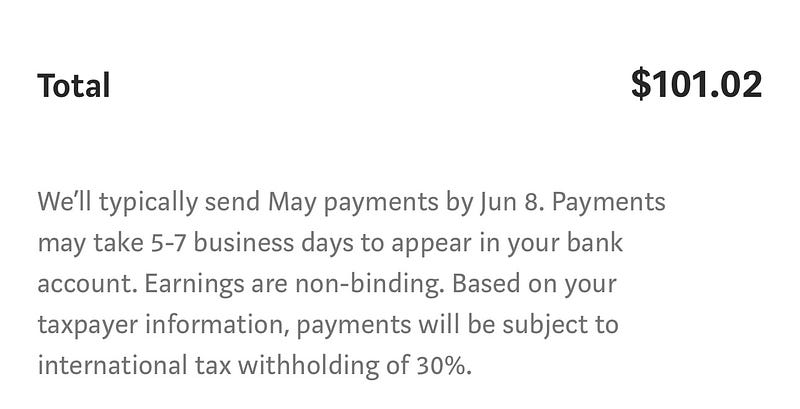
When I first joined Medium, I remember reading somewhere that only about 5% of writers make $100 or more monthly. This statistic stuck with me and became a personal milestone. “Can I be part of that 5%?” I often wondered.

After several months on the platform, my stories started gaining traction, but I hadn’t earned more than $65 in any given month. My initial goal was relatively modest — to earn around $100 per month.

Now that I’ve finally achieved this goal, I’m setting my sights higher, aiming for $200 next. It feels similar to my journey with followers; my goal started at 500, then 1000, 1500, and now 2000.

This journey has taught me persistence pays off,” I reminded myself.

If you stay on Medium long enough and continue to write, you will eventually meet your goals.

This has certainly been my experience. Reflecting on my recent success, I realize I did a few things differently this past month that contributed significantly to my earnings surpassing $100.

I want to share these strategies with you in the hope that they will also help you increase your earnings.

1 — Increasing Article Output

Photo by rivage on Unsplash

One of the most significant changes I made was increasing the number of articles I wrote each week.

Previously, I wrote one or two articles per week, but I noticed a remarkable shift when I started writing four to five articles weekly.

Writing every day seemed too ambitious and unsustainable, but four to five weekly articles struck the right balance.

There’s something transformative about writing more frequently on Medium,” I thought.

Some days, the words flow effortlessly; on others, it’s a struggle.

On days when inspiration strikes, I write as much as possible without worrying too much about editing.

I focus on getting the ideas out of my head and onto the page.

Later, when I’m not feeling as creative or have less time, I go back and edit these articles, refining and polishing them for publication.

This approach has increased my output and improved my consistency, keeping my readers engaged with regular content.

2 — Writing Longer, Engaging Content

Photo by Patrick Tomasso on Unsplash

Another pivotal change was making my articles longer.

I learned that the longer someone reads your story, the more you earn. However, writing longer content alone isn’t enough; it must be engaging.

If your article is lengthy but fails to hold the reader’s attention, they’ll likely leave before finishing, which won’t help your earnings or reader retention.

Initially, I resisted writing longer articles because I personally prefer shorter reads,” I admitted.

However, observing successful Medium writers who often write lengthy articles inspired me to experiment with longer content.

The key is ensuring every part of your article is engaging and adds value to the reader.

3 — Growing Your Follower Base

Photo by Free Walking Tour Salzburg on Unsplash

Followers play a crucial role in your success on Medium. “When I started actively following other writers, many followed me back,” I noted, which helped increase my visibility on the platform.

Having a larger follower base doesn’t guarantee they will read all your stories, but it does put you on their radar.

I’ve noticed that writers with a substantial following often have more credibility,” I reflected.

They’ve either been on Medium for a long time or have consistently produced quality content.

This credibility can attract more readers to your stories, increasing your chances of higher earnings.

4 — Repurposing Old Articles

Photo by Sergiu Vălenaș on Unsplash

After being on Medium for a while, you’ll notice that some of your older articles aren’t performing well.

Instead of deleting these underperforming stories, I considered repurposing them.

Change the title, restructure the content, and tweak anything that could use improvement,” I reminded myself.

Sometimes, a simple title change can bring new life into an article.

Recently, I learned how to embed links in my stories,” I said excitedly.

I revisited some of my older articles and added links to related content.

This strategy revived those articles and encouraged readers to explore more of my work, increasing overall engagement.

5 — Utilizing Popular Keywords

Photo by NisonCo PR and SEO on Unsplash

Writing frequently within a niche and using relevant keywords is another effective strategy.

For instance, I write a lot about IoT and entrepreneurship — these are my keywords, and they have a substantial following.

Incorporate these keywords in your titles and headings within the articles,” I advised myself.

Keywords help your stories get found on Medium and through search engines like Google.

They tell search engines what your story is about, which is crucial for getting more views.

6 — Writing for Your Audience

Photo by Nicholas Green on Unsplash

Understanding and writing for your audience is paramount. “Consider who your readers are and what they are looking for,” I constantly reminded myself.

Are you teaching them something new or sharing a personal story?

Tailoring your content to meet your audience’s expectations and needs will help you connect with them better and keep them coming back for more.

7 — Writing Because You Love It

Photo by Belinda Fewings on Unsplash

Today, I can confidently say that I have become a much better writer thanks to the practice and feedback I’ve received on this platform.

Writing frequently has improved my skills and solidified my identity as a writer.

Reaching the $100 mark is a significant milestone,” I thought with satisfaction, but the love for writing will keep you going in the long run.

By focusing on your passion and continuously honing your craft, the financial rewards and recognition will follow.


My journey to earning $100 monthly on Medium has been one of persistence, strategic adjustments, and much learning.

By increasing my output, writing longer and more engaging articles, growing my follower base, repurposing old content, using popular keywords, and writing with my audience in mind, I’ve been able to achieve this milestone.

And above all, writing because I love it has made the journey worthwhile.

If you’re on a similar path, I hope these insights will help you reach and surpass your goals on Medium.

This experience has reaffirmed my belief in perseverance and adaptability,” I concluded.

As I look forward to new goals and challenges, I remain committed to sharing my journey and insights with fellow writers and readers on Medium.

Together, we can continue to grow, learn, and succeed.


My Top Three (3) Stories in May 2024 — You Should Read This!

View at Medium.comView at Medium.comView at Medium.com

How Medium Shaped My Voice

WRITER’S JOURNEY

I’ve found not just my way but also my heart and my resonance.

Photo by Giu Vicente on Unsplash

The Novice on a Vast Stage

I must confessed, I was a novice, standing timidly at the edge of an immense, unexplored stage. “English isn’t my first language,” I would often mutter to myself, seeing it as a formidable barrier. Despite this, I had an intense yearning to express my burgeoning passion for writing. Initially, my words stumbled and fell flat, unrefined and tentative as the steps of a child learning to walk.

Will anyone even notice?” I often wondered. My early articles were brief and shallow, lacking the depth and flair I admired in the works of others. They felt like echoes in an empty square, hardly noticed, quickly forgotten.

Photo by Soundtrap on Unsplash

A Lone Voice in the Digital Wind

In those early days, my digital presence was akin to a lone voice caught in the wind—no readers lingered on my page, and no followers eagerly awaited my next post. “Is anyone out there?” The silence was disheartening. The much-coveted signs of engagement, such as comments and claps, were conspicuously absent. I was an invisible entity in Medium’s vast writers’ world, yet to spark any noticeable interest or impact.

But I must keep going,” I told myself. Within me, a resilient spark refused to be extinguished. I was determined not to let my initial failures define my capabilities. Thus began my arduous journey against the currents of doubt and linguistic challenges.

Chipping Away Doubts

I noticed a gradual improvement with each new article and every line I penned. “This is getting better,” I’d think, feeling a small surge of pride. It was as if I was sculpting my statue from a rough block of marble, chipping away the excess until my true potential emerged.

The community of writers on Medium, with their open arms and open minds, played a crucial role in this transformative journey. “Welcome, we’re glad you’re here!” they said. They welcomed me into their fold, generously sharing their knowledge, art, and souls.

From them, I learned not just the mechanics of writing but also its artistry. I knew the importance of crafting captivating headlines, the skill of weaving words that could engage readers, and the ability to purify my voice to resonate clearly through my prose.

Photo by Soundtrap on Unsplash

Embracing Shakespeare’s Language

I immersed myself in “Shakespeare’s language,” which was both a challenge and a revelation. “To be or not to be,” I would joke during moments of frustration with my grammar, which strengthened over time, as did my vocabulary.

Slowly but surely, my followers began to increase, and claps—the Medium community’s show of appreciation—started to rain upon my work. “They like it!” I realized one day that my writing was no longer a vain pursuit; I was finally making my mark.

From Timidity to Confidence

This newfound confidence and recognition were exhilarating. With each new piece, my spirit roared louder, and my voice grew more assertive. I had moved from being a timid, uncertain writer to one who could claim his space confidently within the community. Medium had become more than just a platform; it was a nurturing ground where I could grow and contribute.

Look how far you’ve come,” I often reflect, amazed at my journey. It is a testament to perseverance and the transformative power of community support and self-belief. My narrative is no longer just about overcoming the language barrier; it’s about embracing it as a powerful tool for expression and connection.

Photo by Kenny Eliason on Unsplash

A Home Among Words

I have found my place in this vibrant crowd of writers and readers. “I belong here,” I say with certainty, in this community that values every voice, including those that start as mere whispers in the wind. Each word I write now paints part of my dream, a vivid splash on the vast canvas of Medium.

I write not just to express but to connect and to resonate with others across this digital expanse. Let this account of my journey be my song of gratitude, a tribute to every stumble that taught me to rise and every fellow writer who helped me find my footing.

Here to Stay

In the heart of Medium, amidst its diverse voices and stories, I have found more than just my footing – I have discovered a home. In this confluence of ideas and inspirations, I continue to write, share, and dream.

Here, on this vast and endless stage, I have learned that my voice, once unsure and faltering, can now sing clearly and firmly. “This is where I was meant to be,” I often think, filled with a sense of belonging and purpose.

And here, I will stay, for in this space, I’ve found not just my way, but also my heart and my resonance.


Remember to Subscribe to receive email updates on every post I publish.

Why Writing on Medium is Similar to Mountain Hiking

WRITER’S STORIES

Each journey challenges me, changes me, and ultimately rewards me in ways I could not have anticipated.
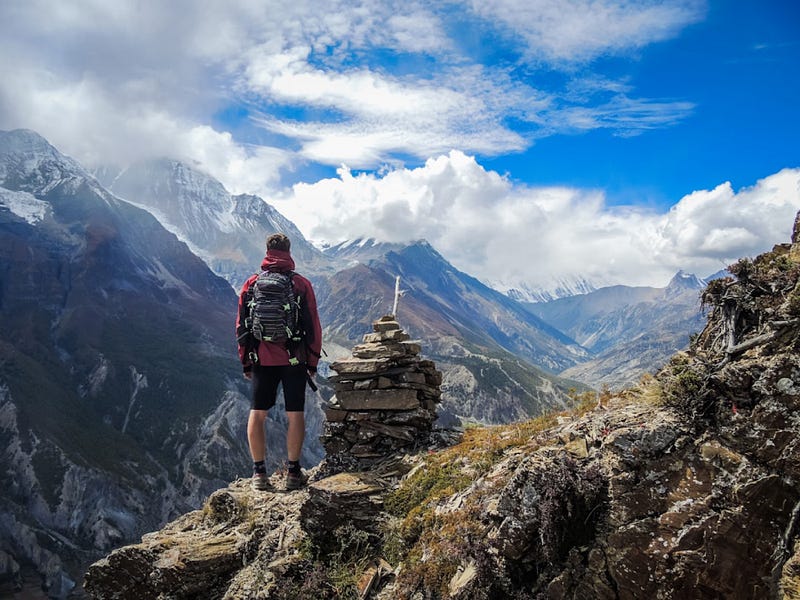
“Hiking boots” – Photo by Wes Hicks on Unsplash

Every time I lace up my hiking boots and set out for the mountains, I feel a surge of anticipation, much like when I open a new document on Medium. There’s something about standing at the base of a towering mountain or facing a blank page that fills me with a mixture of excitement and apprehension.
Each journey, whether it be on rocky paths or through lines of text, begins with a simple step forward accompanied by a simple thought: “Let’s see where this takes me.”

As I begin my hike, the path before me is often shrouded in mist, the peak nowhere in sight – similar to the initial stages of writing, where my ideas are muddled and my end goal unclear. “Is this really a good idea?” I ask myself as I face the steep inclines and the daunting task of organizing my thoughts into a coherent narrative.

Photo by Brad Barmore on Unsplash

“What if I don’t find anything new to say?” The self-doubt is as real as the rugged terrain under my feet.

However, as I persist, the path gradually becomes clearer. With each step uphill, I find my rhythm, and similarly, each sentence crafted brings me closer to clarity in my writing.

“Just focus on the next line, the next step,” I tell myself, pushing through the initial resistance.

This mantra helps me overcome the toughest parts of both my hike and my drafts. It’s all about momentum, about pushing forward even when the peak seems unreachable.

The solitude of hiking allows me to delve deeper into my thoughts, much like the solitary nature of writing.

As I ascend, surrounded by nothing but the sound of my breath and the rustle of leaves, I enter into a dialogue with myself. “Why am I here? What am I hoping to discover?” These questions echo in my mind, guiding my hiking and writing journeys. In both scenarios, it’s a quest for discovery – of the self and of the world around me.

“Catching a breath” – Photo by Simon English on Unsplash

Occasionally, I stop to catch my breath and look back at how far I’ve come, taking in the view. In writing, these moments occur when I pause to read over what I’ve written. I assess the structure, refine the flow, and ensure that each paragraph leads logically to the next.

“Does this piece convey what I feel? Is the emotion palpable?” Just as I gauge the stability of the trail behind me, I ensure the stability of my narrative structure.

Nature’s unpredictability is another element that hiking and writing share. Just as a sudden change in weather can force me to alter my hiking route, unexpected insights or feedback can shift the direction of my article.

“This isn’t working. Maybe I should approach this from a different angle,” I think when a particular section feels as insurmountable as a steep, slick rock face.

Flexibility and adaptability are key in both arenas; they are the skills that help me navigate through unexpected challenges.

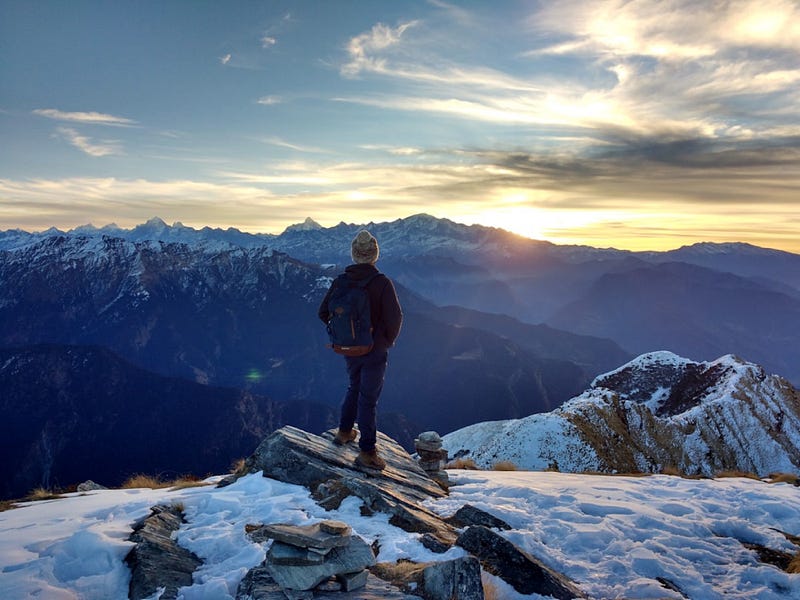
“Mountain summit” – Photo by Gaurav K on Unsplash

The summit of the hike is not unlike the conclusion of an article. There’s a profound sense of accomplishment in reaching the top of a mountain, just as there is in concluding a piece of writing.

The journey’s end provides a moment of reflection. “What have I learned? How have I changed?” These reflective questions are crucial.

In writing, they help me understand the deeper significance of my narrative, while in hiking, they connect me to the larger journey of life.

Yet, reaching the summit or the end of an article isn’t the end of the journey – it’s preparation for the next.

Each hike and each piece written sharpens my skills, making me more prepared for the next challenge.

“Next time, I’ll start stronger,” or, “I’ll take a different path,” are thoughts that propel me forward, eager for new adventures.

Moreover, sharing the experience is part of both journeys. Just as I might share tales of my hike with friends, publishing on Medium allows me to share my stories with a wider audience.

The feedback, whether it comes in the form of comments from fellow hikers about a hidden trail or readers discussing a point I made, enriches the experience.

It’s about community, learning from each other, and growing together.

In retrospect, both hiking and writing are about exploration and expression. They are about setting out with a goal, facing difficulties, adapting to them, and emerging stronger and more insightful. They demand resilience, perseverance, and a constant curiosity about what lies around the next bend or in the next paragraph.

“Mountain hiking” – Photo by KAL VISUALS on Unsplash

So, why is writing on Medium like mountain hiking?

Because each is a journey of discovery that challenges me, changes me, and ultimately rewards me in ways I could not have anticipated.

Both are journeys I undertake with a deep breath and a bold step forward, knowing that the path will be anything but straight, the views will be worth the climb, and the stories I bring back will be worth every step.

Each word I write, like each step I take, brings me closer to understanding the landscapes of the world and of my own inner mind.

It’s an ongoing process of mapping uncharted territory, where every finished piece or conquered trail marks a point on my personal map, but also a starting point for new explorations.

The parallels between hiking and writing extend into the experiences themselves.

In both, there are moments of sheer joy, like finding a breathtaking vista or the perfect metaphor, alongside periods of struggle, like battling through a difficult climb or a complex argument.

Each element contributes equally to the richness of the experience.

On the trail, the environment constantly shifts – a serene forest path opens up to a rugged, rocky ascent. Similarly, in writing, the tone and style can shift from reflective and introspective to critical and analytical.

Photo by Ansgar Scheffold on Unsplash

“Adapt and overcome,” I remind myself when the terrain or the topic gets tough.

This flexibility is not just a skill but a necessity, allowing me to navigate through varied landscapes and literary challenges.

Companionship is another aspect that brings both experiences closer.

Just as a hiking buddy can offer support, share the load, or boost morale, fellow writers and readers on Medium provide similar companionship.

They offer encouragement, share insights, and challenge my perspectives, enriching my journey.

“Look at this view! Have you seen this angle before?” Whether discussing a physical landscape or an ideological viewpoint, the exchange is invaluable.

Moreover, both hiking and writing are forms of personal expression that connect me to others who share similar passions.

They are ways to communicate not just ideas, but emotions and experiences, bridging gaps between people of different backgrounds and cultures.

Through sharing my hikes and my writings, I invite others into my world, just as I step into theirs through their shared stories and trails.

Each hike ends with a descent, a return to the familiar, yet I am not the same person who started the climb.

Similarly, each article I publish marks a return to the beginning, to another blank page, but I am richer for what I have written, changed by what I have expressed and learned through the process.

“What’s next?” isn’t just a question but a call to action, an invitation to begin again, to explore anew.

“Mountain summit” – Photo by Alessandro Erbetta on Unsplash

The satisfaction derived from both writing and hiking does not just stem from reaching a physical or metaphorical peak, but from the journey itself.

The act of moving forward, of creating and expressing, is as fulfilling as the achievements that punctuate these efforts. It is a continuous cycle of striving, achieving, reflecting, and striving again.

And so, as I unlace my boots or hit the ‘publish’ button, I feel a sense of completion coupled with anticipation for the next adventure.

The trails I’ve hiked and the articles I’ve written are part of a larger journey – one that stretches out invitingly, filled with unknown challenges and untold stories.

In the end, whether I am tying my hiking boots or sitting down to write, I am embarking on a quest not just to explore the physical and intellectual landscapes but also to understand and articulate my place within them.

Each step, each word, is a testament to the journey – a journey of constant learning, discovery, and expression.

And just like the mountain trails, the paths of words are infinite; there are always higher peaks to scale and deeper truths to uncover.

This parallel journey of hiking and writing on Medium is a profound reminder of the endless potential for growth and the enduring joy of exploration.

You’re a Verified Book Author on Medium!

The Blue Badge.

Join the thousands of Verified Book Authors on Medium.

Photo by Fallon Michael on Unsplash

Not a member? Click here to read the full story for free.

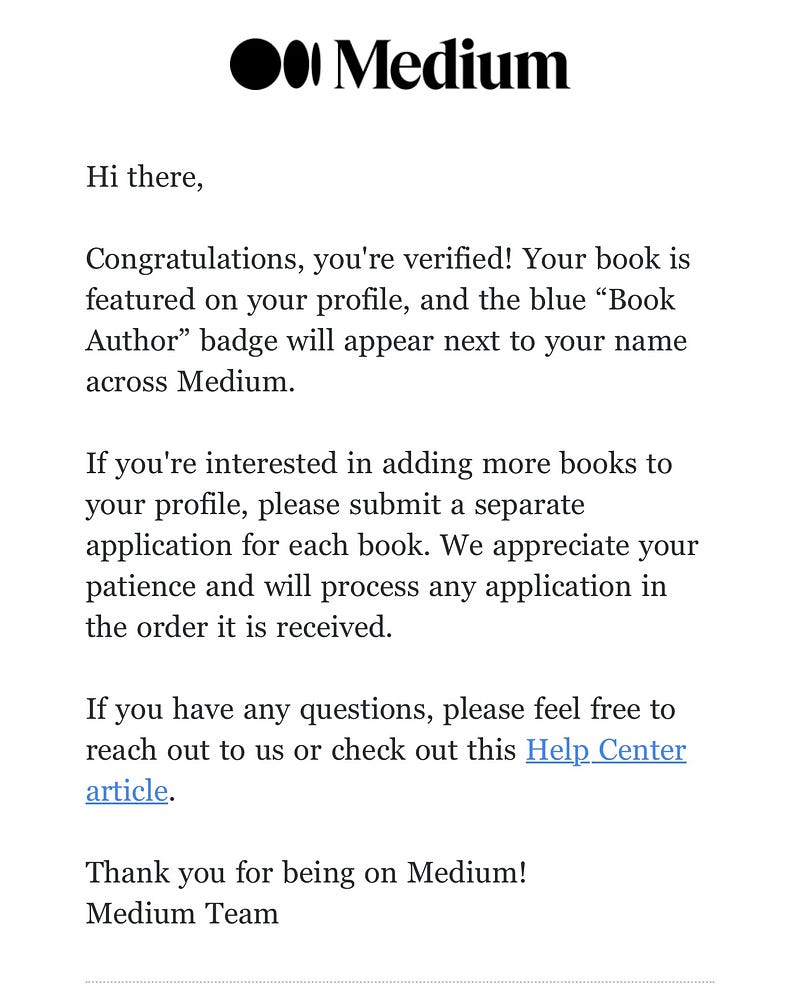
When I received the email notification and the blue badge on my profile, I felt I was on top of the world!

I always wondered what the blue badge was about until I learned it was meant for a verified book author with an ISBN number.

Then, yesterday I decided to submit my application and voila! A day later, Medium emailed the approval!

This is not my latest book; it was an old book that a colleague and I translated into Malay during my academic days in 1997.

Other than writing my Degree, Master’s, and Ph.D. thesis, I wrote several journal papers.

Later, I only focused on building presentation slides due to the nature of my work as an entrepreneur.

Then, I began to blog and write many articles about technology and entrepreneurship.

Only recently, I decided to compile my blog articles and publish them in eBooks below:


Join more than 8,100 subscribers and receive email notifications whenever I publish.

https://mazlanabbas.com/subscribe

The Reasons My Medium Stats Are Like a Yo-Yo

New Posting Strategies

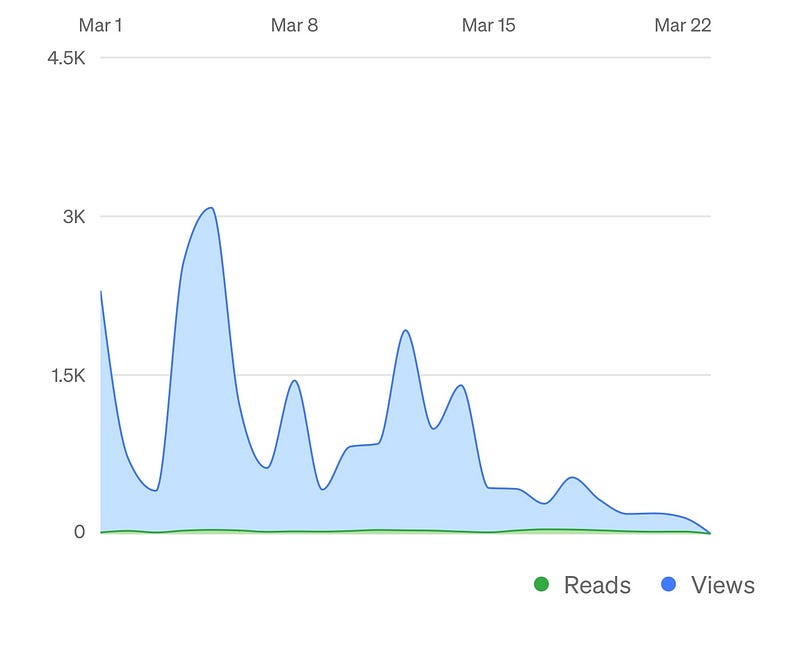
Author’s March 2024 stats

It was not always like this (as above).

As you can see, most views can reach more than 1K daily.

Sometimes, it dipped down to a couple of hundred.

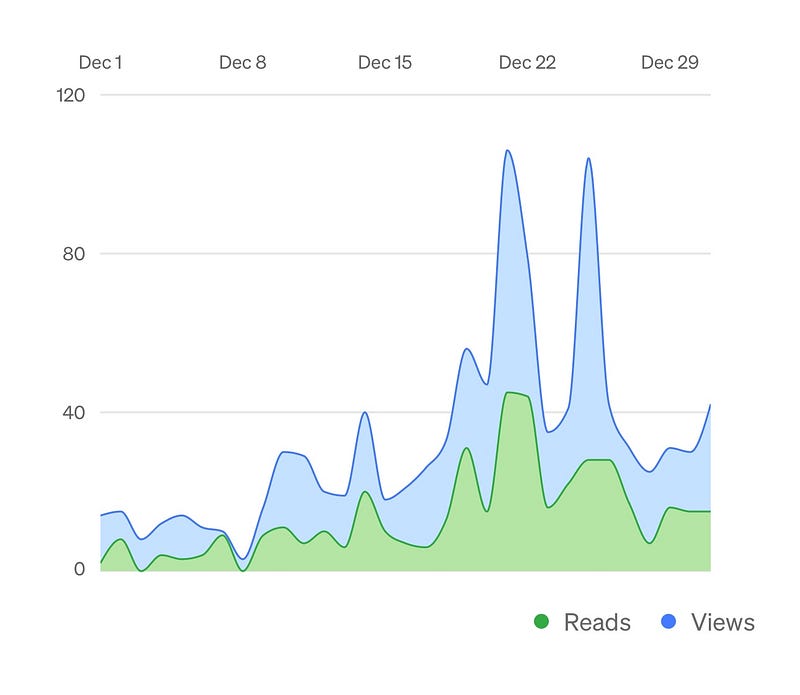
Author’s December Stats

My old December stats look something like this. All the views are less than 100.

And my average reads about 20 daily.

I can easily see the number of reads in my December stats, but it was “drowned” in my March stats. I couldn’t figure out the numbers until I hovered my finger over the stats. The reason because of the huge difference in Views and Reads.

This happened mainly because I have a mailing list that receives email notifications, and the articles are non-paywall.

However, the number of views suddenly dropped whenever I posted a paywall article.

My initial intention was to allow non-member readers to read the full article directly from the email received.

However, I felt I might lose the opportunity to monetize if some MPP members also decided to read from their email rather than go to the Medium platform.

Finally I changed my email notification strategy:

  • Post non-paywall only when I want to allow non-members to read full article easily without going to Medium. After posting, I will change the article to paywall.
  • Post paywall article but with a note in the article – “for non-member, they can click the link to have free access.”
  • Post paywall articles without enabling email notifications.

From now on, I will be using the strategy above.

I am beginning to understand the flow of writing and posting on Medium.

-mazlan-