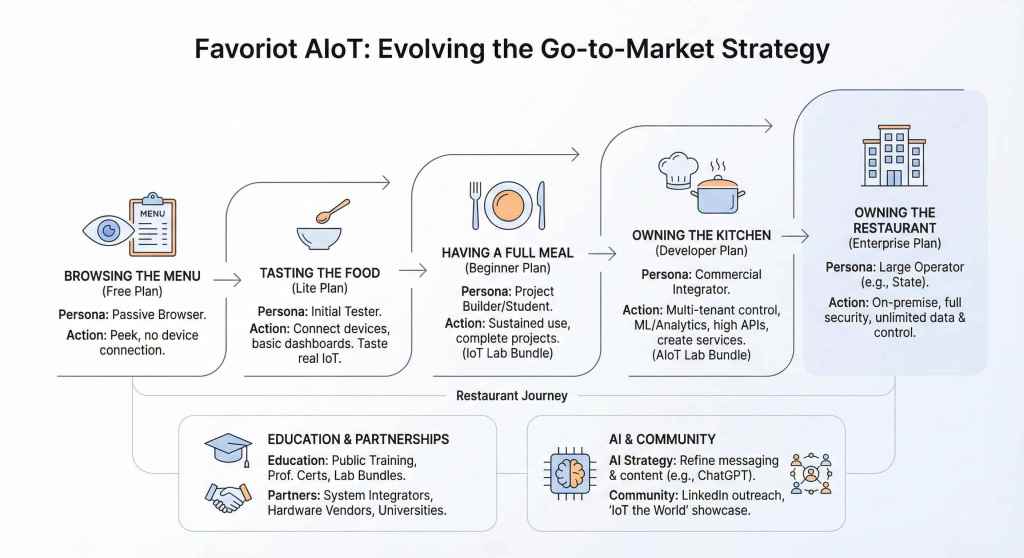
Lessons Learned in Building FAVORIOT’s IoT Ecosystem

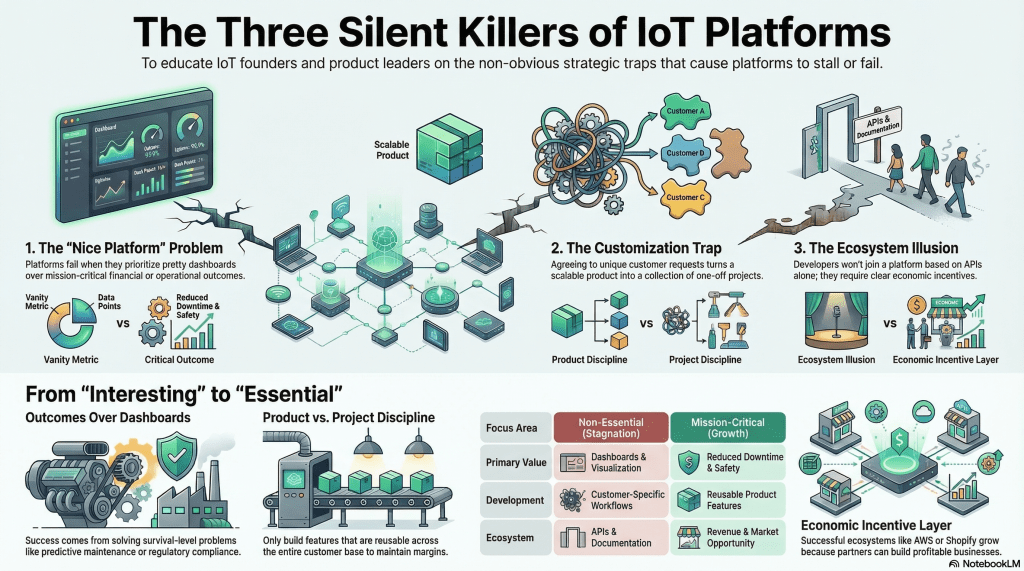
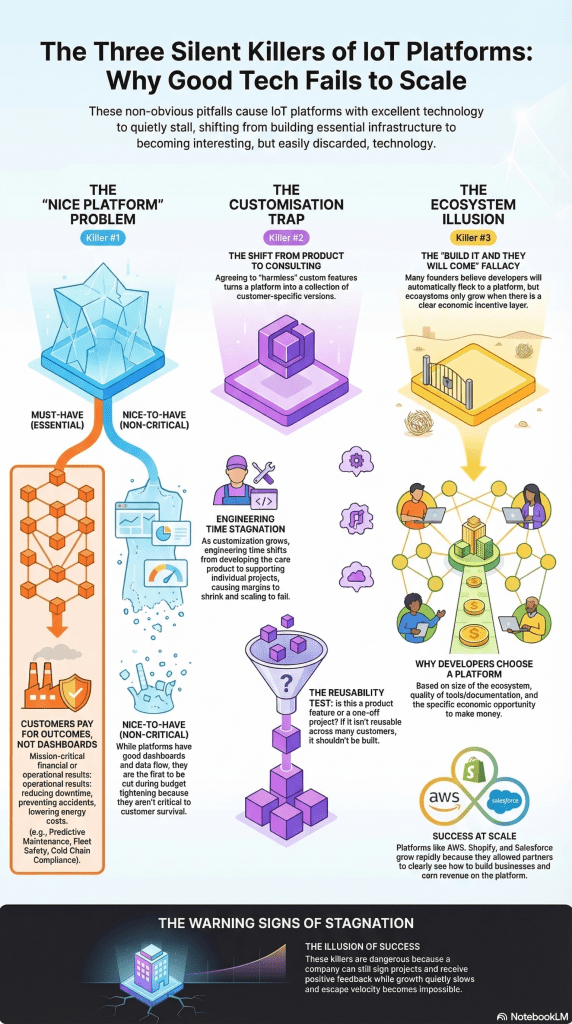
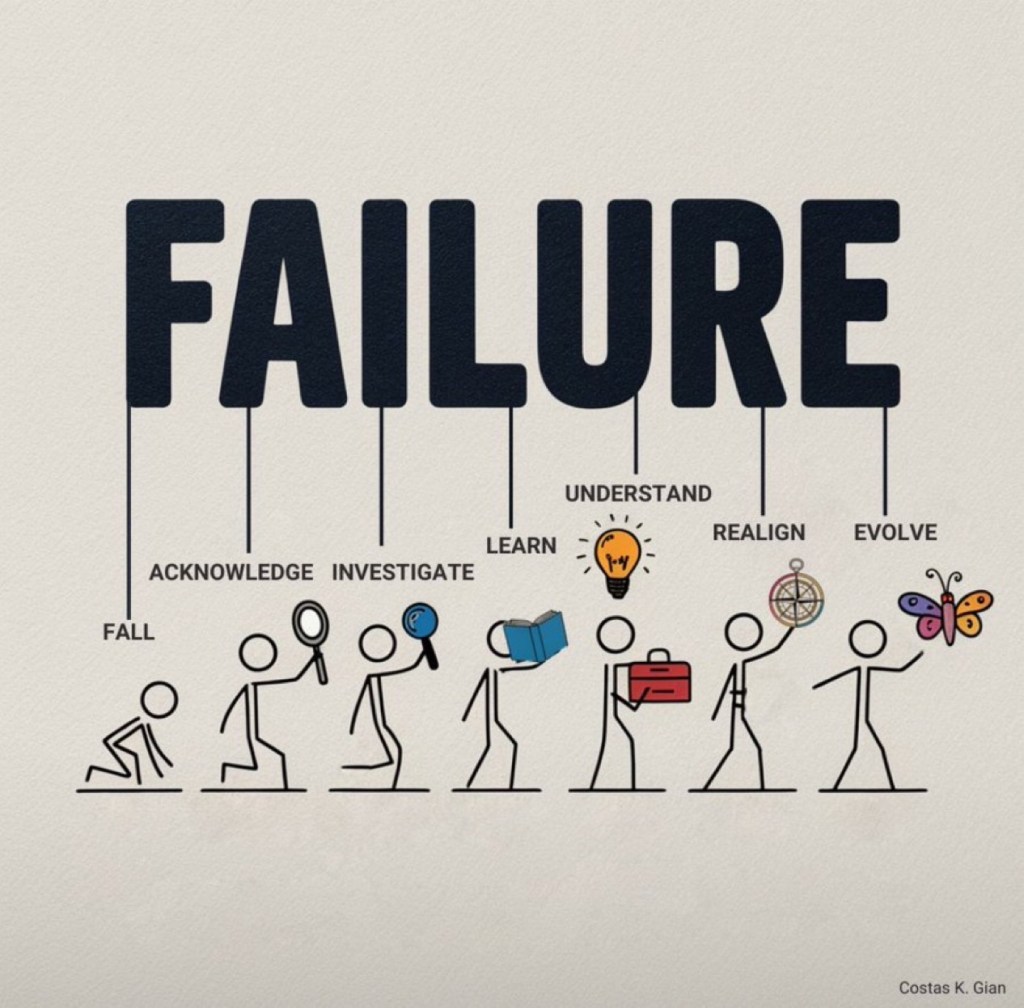
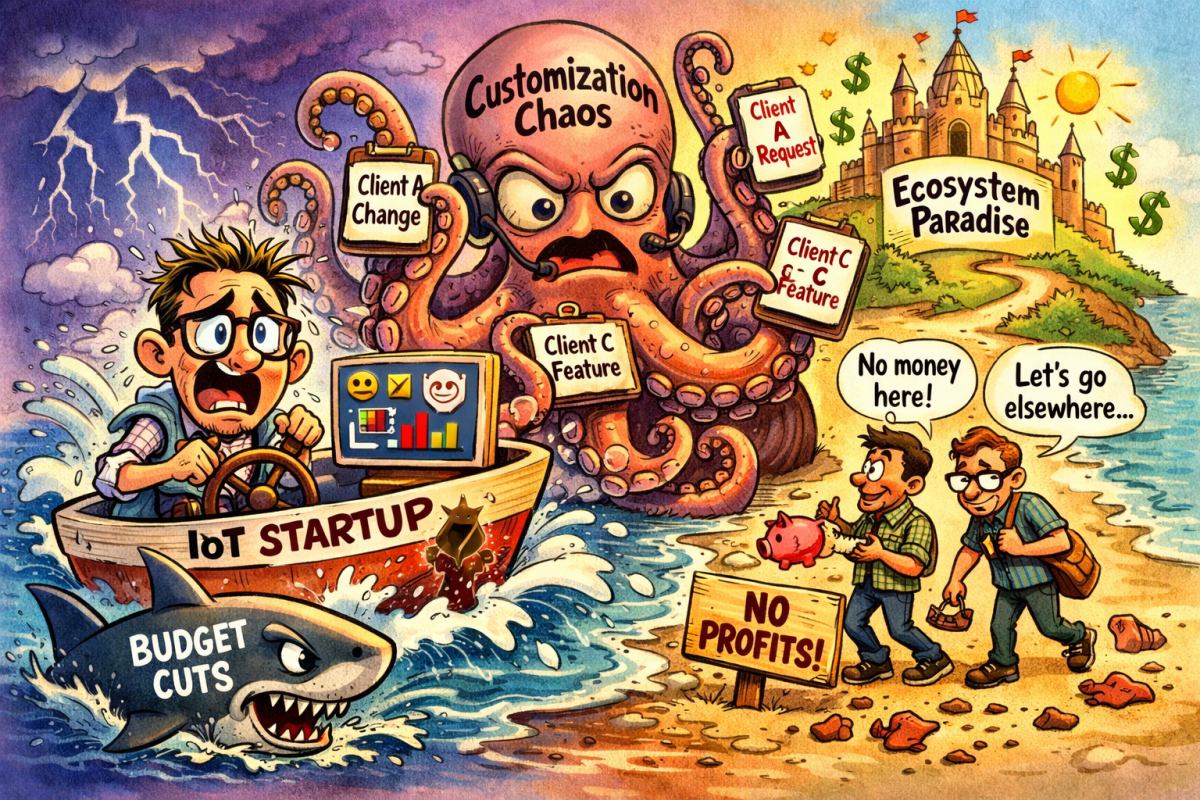
The story of FAVORIOT mirrors the word in that image, FAILURE, not as an end but as a teacher.

It began with a fall.
When FAVORIOT was first founded, the dream was bold — to make Malaysia a producer of IoT technology, not just a consumer. But reality was harsh. Funding was scarce, and few believed that a local IoT platform could compete with global giants like AWS or Azure. There were moments when the lights almost went out.

Then came acknowledgement.
The team looked in the mirror and admitted that building a platform alone was not enough. They needed to build an ecosystem. An IoT movement. Training, community, developers, partners, the entire value chain. It was not about selling software anymore. It was about empowering people.

Next was investigation.
What went wrong in those early pilots? Why were customers hesitant? FAVORIOT analysed every feedback, every failed proof of concept, and every lost deal. They realised the issue was not the technology but trust, awareness, and readiness.

So they began to learn.
They turned lessons into playbooks, products, and courses. They trained universities, upskilled engineers, and worked hand in hand with students and enterprises to show that IoT was not rocket science. Every workshop, every certification, every hands-on project became a step towards mastery.

Then came understanding.
The mission became clearer. Build Malaysia’s own IoT backbone for data sovereignty and local innovation. FAVORIOT was not just a platform; it was a bridge between learning and real-world application, between local talent and global opportunity.

With clarity, they began to realign.
FAVORIOT expanded globally, partnering with system integrators from Indonesia, the Philippines, India, and Canada. The vision grew into “25 countries by 2025.” They built the Fayverse, a galaxy of innovators orbiting the same belief that local technology can shine on the world stage.

And finally, they evolved.
FAVORIOT became more than a company. It became a story of resilience. A proof that falling is not failure. Staying down is. Every setback became a stepping stone. Every obstacle, a teacher.

From falling to flying, that is the real story of FAVORIOT.

Overview of FAVORIOT C0mplete Brand

💡 Brand Strategy

Brand Substance

Purpose:
To empower nations, universities, and innovators to build their own IoT ecosystems — achieving technological sovereignty and nurturing the next generation of IoT creators.

Vision:
To make FAVORIOT the world’s most trusted IoT platform that helps nations become producers, not just consumers, of technology.

Mission:
To simplify IoT adoption through education, local partnerships, and accessible platforms — enabling anyone, from students to enterprises, to build impactful smart solutions.

Values:

  • Empowerment: We lift others to build.
  • Collaboration: We grow together through partnerships.
  • Integrity: We stand for transparency and trust in every connection.
  • Curiosity: We explore, learn, and innovate with heart.
  • Resilience: We pivot, persevere, and keep moving forward.

Positioning Strategy

Audience:
Universities, startups, system integrators, and governments seeking IoT independence and real-world learning platforms.

Competition:
Global IoT hyperscalers (AWS IoT, Azure IoT, ThingsBoard) — but FAVORIOT differentiates by offering a local, sovereign, and education-driven ecosystem that’s made by Malaysians, for the world.

Difference:
FAVORIOT bridges education and enterprise — combining IoT training, certification, and deployment in one platform. It’s not just about data; it’s about developing people, institutions, and nations.

Brand Expression

Brand Persona

Brand Voice:
Warm, insightful, humble yet confident. Speaks like a mentor or friend who believes in your potential to create something great.

Brand Communication

Core Messaging:
“Let’s build the IoT world together.”
(Reflects collaboration, empowerment, and shared growth.)

Storytelling Framework:
Stories center around:

  • Empowering students and educators.
  • Real IoT impact on communities and industries.
  • Favoriot’s journey — from survival to global partnerships.
  • The vision of a Producer Nation and the rise of the Fayverse.

Brand Taglines:

  • “Empowering Nations to Build Their Own IoT Ecosystem.”
  • “Let’s Build the IoT World Together.”
  • “From Learners to Leaders in IoT.”

Visual Expression

Brand Identity:

  • Logo: Stylized “F” circuit path on magenta circle
  • Color: Official magenta #B90083 (symbolizing creativity, boldness, and human warmth)
  • Typography: Rounded sans-serif — modern yet approachable
  • Mascot: Faybee (symbol of teamwork and energy)
  • Personas: IoT Man and IoT Queen

Brand Presence:

  • Platforms: favoriot.com, Medium, LinkedIn, YouTube, Spotify podcasts
  • Ecosystem: Universities, startups, and global partners in 10+ countries
  • Tone: Storytelling-driven, people-first, optimistic, and visionary

❤️ Summary

FAVORIOT is more than an IoT platform — it’s a movement.
A story about how local innovation can grow into a global ecosystem.
It represents Malaysia’s dream of becoming a Producer Nation, built on collaboration, purpose, and belief in our own capabilities.

Why Favoriot’s Vision to Democratize IoT Matters

What if the future of technology wasn’t just controlled by a handful of giants, but built by thousands of creators everywhere?

That’s the vision we carry at Favoriot. Not a future where IoT is locked away in labs, hidden behind paywalls, or restricted to enterprises with deep pockets. But a world where every student, every startup, every dreamer with an idea can create, test, and scale their own IoT solutions.

I often ask myself, why should the power of IoT belong to only a few?

The truth is that IoT has the potential to transform every aspect of our lives, from smart cities that breathe with data, to farms that thrive with precision, to factories that learn and improve with every machine cycle. However, the doors to building IoT are often closed by complexity, cost, and exclusivity.

That’s why Favoriot exists.

IoT Shouldn’t Be an Exclusive Club

I’ve been in the tech industry long enough to know this: many brilliant ideas die before they even take their first breath. Why? Because the entry barrier is too high.

I’ve seen students with incredible IoT project ideas get stuck because they couldn’t afford expensive platforms. I’ve watched startups burn months trying to stitch together incompatible systems, only to give up before their product reached the market.

I thought to myself, what if we could change that narrative? What if we could open the gate wider?

Favoriot’s vision is simple yet powerful — to democratize IoT. To build a platform that doesn’t intimidate but empowers. One that invites creators instead of scaring them off.

Building More Creators, Not Just More Users

Most platforms are designed to create more users. But Favoriot is designed to generate more creators.

That difference matters.

Being a user means consuming what someone else has built. Being a creator means shaping the future, solving your own problems, and building solutions that matter to your community.

At Favoriot, we want a high school student in Johor to build a smart agriculture project that could feed her village. We want a startup in Manila to prototype a healthcare monitoring device without relying on investors for funding. We want universities in Africa to launch IoT labs that not only teach theory but also create real projects that positively impact lives.

This is not about numbers. This is about empowerment.

The Favoriot Platform: More Than Just Tech

Yes, Favoriot is a platform. It’s a cloud-based IoT engine that connects devices, collects data, and helps you make sense of it. But to me, it’s more than that.

It’s a bridge.

A bridge between ideas and reality. Between imagination and execution. Between a world where IoT is for the privileged few and a future where IoT belongs to everyone.

When we built Favoriot, we made a conscious choice: simplicity, openness, and accessibility. No vendor lock-ins. No hidden traps. Just a space where your IoT journey can grow from blinking an LED to managing a smart city.

I smiled when one of our users once told me, “Favoriot is like training wheels for IoT — it helps us ride until we’re ready to pedal on our own.”

That’s exactly how I see it.

A Vision Rooted in Humanity

For me, democratising IoT is not just about technology; it’s also about empowering people. It’s about humanity.

Imagine if every farmer could monitor their crops in real time. Imagine if every doctor in rural areas had access to patient data at their fingertips. Imagine if every student, regardless of their location, could create something that addresses real-world problems.

That’s the kind of future I want to see.

I know it won’t be easy. Change never is. There will always be resistance from those who benefit from keeping technology closed, complicated, and expensive. But I also know this — the world has always moved forward when ordinary people were given extraordinary tools.

Why Now?

Because the world cannot wait.

IoT is no longer a buzzword; it’s the nervous system of modern life. From the cars we drive to the homes we live in, from the energy grids that power us to the health systems that save us, IoT is everywhere.

But here’s the catch: if only a few can create, then only a few will shape that future. And that, to me, is unacceptable.

We need diversity. We need creativity. We need more voices, more perspectives, more hands building solutions. And that only happens when IoT is democratized.

Closing the Gap Between Dream and Reality

Every time I see a young innovator upload their first data stream into Favoriot, I feel a surge of hope. It’s not just data flowing into the cloud — it’s dreams taking shape.

Every time a small business uses Favoriot to track their machines and reduce downtime, I see a glimpse of the future economy.

Every time a teacher tells me their students used Favoriot to complete a project that once felt impossible, I’m reminded of why we started this journey.

The gap between dream and reality doesn’t have to be wide. Favoriot is here to close it.

The Future We Want to Build

I don’t just want to build a successful company. I want to create an ecosystem. A movement. A community of creators who believe that IoT is not just for the rich, the powerful, or the technically elite.

I want Favoriot to be remembered not just as a platform, but as a turning point. The moment when IoT stopped being a privilege and began to become a right.

I thought to myself, maybe the true legacy of Favoriot isn’t the platform we built — but the creators we inspired.

And that’s a future worth fighting for.

Leading LLMs of August 2025: Who’s Winning the AI Race?

If AI progress felt like a sprint in 2023, by 2025, it looks more like a rocket launch. Models aren’t just improving year by year—they’re leaping ahead month by month. What we thought was “cutting edge” last quarter is already yesterday’s news.

Here’s the reality: the global LLM market is surging toward $105.5 billion in North America by 2030. That’s not a forecast—it’s a signal. AI is no longer a novelty; it’s infrastructure.

But with so many options, which models actually matter right now? Which ones are shaping the way businesses, developers, and researchers use AI today?

I’ve rounded up the 10 large language models making the most significant impact in August 2025. Each one has its own unique personality, strengths, and trade-offs.

1. OpenAI – GPT-5

ChatGPT 5 is the next step in OpenAI’s journey, moving beyond GPT-4.5’s strengths to deliver a model that feels sharper, more adaptive, and more transparent in its reasoning. Where GPT-4.5 leaned heavily on pattern recognition, ChatGPT 5 combines that fluency with stronger deliberate reasoning, giving it the ability to break down problems with more structure and clarity.

It is also built to integrate more smoothly into real workflows. From handling long-form context with greater accuracy to providing clearer explanations of its answers, ChatGPT 5 is less about simply generating text and more about acting as a reliable partner. The model handles multimodal input—text, images, audio, and video—with greater fluidity, making it useful across industries from education to enterprise automation.

Like its predecessor, ChatGPT 5 remains proprietary, available through subscriptions or enterprise licensing. But for teams that want both conversational polish and deeper reasoning ability in one package, ChatGPT 5 has quickly become the new reference point.

2. DeepSeek – The Open-Source Challenger

China’s DeepSeek R1 took the AI world by storm with 671B parameters in a Mixture-of-Experts setup. By May 2025, their DeepSeek-V3 was leading the open-source leaderboard, proving that open models can compete head-to-head with proprietary giants.

The magic? 30 times cheaper than OpenAI’s o1 and 5 times faster. It thrives in reasoning-heavy tasks like math, coding, and scientific simulations. And with RAG integration, enterprises can plug it into sensitive datasets while maintaining control.

If you want open-source power with enterprise-level results, DeepSeek is redefining the game.

3. Qwen – Alibaba’s Efficiency Master

Alibaba’s Qwen 3 family is quietly powering industries across Asia. Their standout, QwQ-32B, rivals GPT-4o and DeepSeek in reasoning and coding while requiring far less compute.

With 32K context windows, Apache 2.0 licensing, and a parameter range from 1.8B to 72B, Qwen has become one of the most accessible and widely adopted LLM ecosystems. Already, over 90,000 businesses use it for gaming, consumer electronics, and enterprise workflows.

Qwen proves you don’t need hyperscale resources to compete at the highest level.

4. Grok – Elon Musk’s Conversational Rebel

Built by xAI and integrated into the X platform, Grok 3 feels different. It’s witty, fast, and plugged into real-time information.

With Think, Big Brain, and DeepSearch modes, it breaks down problems and pulls fresh data directly from the web and social feeds. Trained with 10x the compute of Grok 2, it’s designed for speed and trend awareness.

If your world demands live analysis, news tracking, or instant customer interaction, Grok brings something truly unique.

5. Llama – Meta’s Open-Weight Titan

Meta’s Llama 4 arrived in April with two flagship versions: Scout and Maverick. Both are natively multimodal, handling text, images, and short video, and they boast 256K token context windows.

The openness of Llama remains its secret weapon. Businesses and researchers can run it on their own terms, tune it to specific workflows, and avoid vendor lock-in.

If freedom and flexibility matter most, Llama is the open-source heavyweight to trust.

6. Claude – Anthropic’s Reflective Thinker

Anthropic’s Claude 4 Sonnet is like the careful colleague who always double-checks their work. Its extended thinking mode allows the model to pause, reflect, and refine outputs before committing.

With a 200K-token context window, it handles long documents with ease, making it a natural fit for legal analysis, compliance-heavy industries, and coding projects that need extra accuracy.

If reliability is more important than speed, Claude delivers consistency and thoughtfulness.

7. Mistral – Small but Mighty

Sometimes you don’t need a massive model—you need one that’s fast and affordable. Enter Mistral Small 3.

With 24B parameters, Apache 2.0 licensing, and speeds up to 150 tokens per second, it’s optimised for low-latency applications. The kicker? You can run it on a single GPU or even a MacBook.

For startups and lean businesses, Mistral proves that small models can pack a punch.

8. Gemini – Google’s Reasoning Powerhouse

Google’s Gemini 2.5 is pushing boundaries with a 1M-token context window. That means it can process entire books or databases in one shot.

It’s multimodal, handling text, images, and code, and comes with self-fact-checking to reduce hallucinations.

It’s proprietary, so data compliance matters, but if you want enterprise-grade multimodality and serious reasoning, Gemini is one of the most advanced options on the market.

For those preferring open weights, Google’s Gemma 3 (1B–27B) brings much of the same reasoning strength in a lighter package.

9. Command R – Cohere’s Enterprise Specialist

Cohere isn’t trying to win the hype war—it’s focused on enterprise workflows. Their Command R+ offers 128K context windows, built-in citations, multilingual coverage, and retrieval-augmented generation.

It excels at policy manuals, compliance-heavy industries, and multilingual customer service. And for companies needing control, Command A is open-sourced at 111B parameters with 256K context support.

For enterprises where accuracy and compliance come first, Cohere is a trusted partner.

10. Falcon – The Middle Eastern Power Play

From the Technology Innovation Institute (TII) in Abu Dhabi, Falcon has emerged as one of the strongest open-weight LLMs outside the US, China, or Europe.

The latest version, Falcon 2, boasts multilingual capabilities, optimised efficiency, and open-access licensing. It’s trained on a diverse dataset with an emphasis on global inclusivity, making it particularly strong in Arabic and other underrepresented languages.

What makes Falcon stand out is its mission: bringing AI sovereignty to regions that often depend on Western or Chinese tech. By providing a robust open-source model, Falcon gives governments, universities, and enterprises across the Middle East a homegrown alternative.

If AI diversity and regional sovereignty are important to you, Falcon is an LLM worth watching closely.

Closing Thoughts

Ten models. Ten different approaches to the future of AI.

  • OpenAI and Gemini lead with polished, proprietary power.
  • DeepSeek, Qwen, Llama, and Falcon prove open-source can compete and even outpace.
  • Claude and Cohere focus on reliability and compliance.
  • Mistral and Grok carve out niches in speed, agility, and personality.

The bigger question isn’t “Which is the best?” but “Which one is the best fit for you?”

AI in 2025 is not a single path—it’s a crossroads with ten directions. And whichever road you choose, the destination is changing how we work, build, and think.

Now I’d love to hear from you. Which of these ten models do you think will dominate the AI race by 2030—and why? Share your thoughts in the comments.

Why FAVORIOT Exists: The Deeper Purpose Behind Our IoT Mission

“Why do you do what you do?”

It’s a simple question — but one that hit me like a lightning bolt the first time I heard it posed by Simon Sinek in his book “Start With Why.” I thought I had the answer years ago when we founded FAVORIOT. We wanted to build an IoT platform. We wanted to be part of the Fourth Industrial Revolution. We wanted to make Malaysia proud.

But after reading Find Your Why, I realized I had only scratched the surface.

So I decided to go deeper. To strip away the features, the dashboards, the data streams — and ask myself, what is our true reason for being?

The Early Sparks: Frustration as Fuel

I spent decades in various ecosystems — from academia to government, corporates to startups. In every world, I saw the same problem repeat like a broken record: brilliant people with smart ideas were stuck because the technology was either too expensive, too complicated, or too foreign.

“Why are we importing tech for things we can build locally?”

“Why can’t our students graduate with real IoT skills, not just theories?”

“Why does every ‘Smart City’ pilot end with a press release but no long-term sustainability?”

Each “why” turned into fuel.

And that’s how FAVORIOT was born. Not from a business plan, but from frustration. From the belief that things should be simpler. That IoT shouldn’t be reserved for tech giants. That a kampung farmer, a Form 5 student, and a municipal engineer all deserve access to the same tools of transformation.

Understanding Our WHY

According to Find Your Why, every organization must uncover its purpose through reflection, story, and the impact it wants to make. It isn’t about what you do — it’s about why you do it.

And the format is simple yet powerful:

TO [your contribution] SO THAT [your impact].

So I asked myself:

  • What do we do when we’re at our best?
  • What makes us proud?
  • What kind of future do we want to build — not just for us, but for others?

Our WHY Statement

To empower people and organizations with accessible IoT technology, so that they can build smarter, connected futures on their own terms.

Let me unpack that for you.

“To Empower People and Organizations…”

We don’t just provide a dashboard.

We empower students to build their final year projects with confidence. We empower lecturers to teach IoT without needing an AWS certification. We empower entrepreneurs to launch sensor-based services. We empower city councils to detect flood risks, monitor waste bins, and receive alerts directly on Telegram — without vendor lock-ins or complex coding.

This empowerment comes in the form of:

  • A local, developer-friendly IoT platform (FAVORIOT Cloud)
  • Training and certifications via FAVORIOT Academy
  • Partnerships that build ecosystems, not just transactions

We’ve seen it firsthand — the moment someone realizes “Hey, I can build this myself” — that’s where our real work begins.

“…with Accessible IoT Technology…”

IoT is often wrapped in buzzwords: LPWAN, edge computing, mesh networks. But in truth, most users don’t need to know all that.

What they need is:

  • A clean dashboard
  • A reliable API
  • A simple setup guide
  • Local support, not just chatbot replies from time zones away

We built FAVORIOT with accessibility in mind. Not “dumbed down,” but demystified. So that even if you’re a high school student or a small-town official, you can say, “Yes, I understand this.”

We’re proudly Made in Malaysia, but we’re built for global adoption — especially in regions where digital transformation is often a PowerPoint slide, not a daily tool.

“…So That They Can Build Smarter, Connected Futures…”

This is the impact. The soul of our mission.

It’s not about selling more subscriptions or deploying more gateways. It’s about helping others take control of their own digital transformation.

A university that trains 500 certified IoT graduates per year?
That’s a smarter future.

A logistics company that reduces vehicle downtime with sensor data?
That’s a smarter future.

A kampung that uses IoT to monitor river levels and avoid flooding?
That’s not a Silicon Valley fantasy. That’s reality. And it’s happening.

Because we gave them the tools — and more importantly, the confidence — to build it on their own terms.

What Favoriot Is Not

We’re not trying to compete with AWS or Azure on scale.

We’re not just another smart city vendor with flashy mockups and no follow-through.

And we’re definitely not in it for vanity metrics.

What we are building is a platform that:

  • Trains the next generation of engineers and technologists
  • Supports local system integrators with ready-to-deploy tools
  • Strengthens national resilience by owning our tech stack
  • Connects the dots between ambition and execution

Why This Matters — Especially Now

Everyone’s talking about AI. And yes, AI is exciting.

But here’s the truth: AI needs data. And data comes from IoT.

Without sensors, there are no predictions. Without real-time input, there’s no intelligent decision-making. IoT is the nervous system — AI is the brain. You can’t build a smarter future with just one.

Yet IoT is often the unsung hero.

FAVORIOT exists to make that hero visible — to give it a platform, a purpose, and most importantly, a presence in our communities.

Closing Thoughts: Why I’m Still Here

People sometimes ask me, “After all these years, what keeps you going?”

And honestly, it’s not the tech.

It’s the message I got from a student who said, “Dr., because of the Favoriot certification, I got hired immediately after graduation.”

It’s the local council officer who said, “We prevented a flood this year — because of your alerts.”

It’s the partner in Indonesia who said, “We never thought we could build our own IoT solution — until Favoriot.”

That is our WHY.

That is why we exist.

And that is why we’ll keep building.

Your Turn

If you’re a student, a policymaker, a developer, or an entrepreneur — and you’ve ever thought “IoT is too complex” — I invite you to rethink that.

Because with the right platform, the right support, and the right purpose — you’re closer to a smarter future than you think.

And we, at Favoriot, are here to help you build it.

Let’s democratize IoT. Together.

Let’s Make IoT Great Again — The Malaysian Comeback We’ve Been Waiting For

“Malaysia’s not ready yet…”

You’ve heard that line, haven’t you?
I’ve heard it in government meetings, corporate pitches, startup huddles, even in university halls.

“Let’s wait for the right timing.”
“Let’s see if the budget gets approved.”
“Let’s hold until the talent pool matures.”

Enough waiting. Seriously.

Because if we keep hitting pause, someone else is going to press play — and leave us behind in the dust.

South Korea Didn’t Wait. China Didn’t Either.

In the 1980s, South Korea was still recovering and rebuilding.
In the 1990s, China was just finding its footing on the world stage.

They weren’t “ready” either.

But they moved.
They dared.
They started.

And now? The world watches them. Learns from them. Competes with them.

Malaysia, it’s our turn. But only if we dare to move — even if it’s messy.

Whatever Happened to IoT?

I still remember when IoT was the darling of tech conferences.

Smart cities.
Smart farming.
Smart industries.
Smart everything.

IoT was the buzzword. The future.

But slowly, it faded. AI came in with a bang — and now even school kids are doing AI projects. Meanwhile, IoT became the forgotten tech. The backup dancer.

But guess what? IoT never went away. It just stopped trending.

And that’s not fair — because IoT is the foundation.
No IoT, no data.
No data, no AI.
No AI, no “smart” anything.

We’ve been cheering for AI, but forgot where AI gets its brain food — real-world data from IoT devices.

So let’s bring IoT back to the main stage.

Waiting for a Masterplan? Here’s the Truth.

Malaysia loves blueprints. Loves roadmaps. Loves waiting for official green lights.

But progress rarely comes from the top. It starts in the cracks.
In university labs.
In garage workshops.
In kopitiam brainstorms.
In “I-don’t-know-coding-but-I’ll-try” kinda attitude.

You don’t need to be a coding wizard.
You don’t need RM100,000.
You just need the guts to start.

Platforms like FAVORIOT make it ridiculously easy to test, build, and learn. Plug and play. Create a dashboard. Get alerts. It’s not rocket science anymore.

And you don’t need permission to innovate.

Here’s My Challenge to You

I’m not asking you to build Malaysia’s next unicorn startup tomorrow.

I’m asking you to:

  • Build a small IoT project with your kids.
  • Monitor your home’s electricity using sensors.
  • Start a DIY smart farm with friends.
  • Teach students how to send data to the cloud.
  • Connect a temperature sensor to a dashboard just because you can.

Each small project creates momentum.
Each momentum builds confidence.
Each confidence turns into a movement.

Imagine hundreds — no, thousands — of these projects happening across Malaysia. That’s not hype. That’s ecosystem-building.

Start Small. Start Messy. But Please—Start Now.

Let’s stop worrying if it’ll fail. Let’s stop doubting ourselves.

Failure is part of the story.

Every successful nation, every great tech innovation — it all started with people trying, failing, adjusting, and trying again.

If we want Malaysia to lead in IoT, we need to stop talking and start doing.

Because:

  • The technology is already here.
  • The talent is growing.
  • The platforms are local and ready.
  • The excuses are tired.

The Revival Starts Here — and With Us

I’m writing this not just as someone in the IoT industry, but as a Malaysian who’s tired of hearing “We’re not ready.”

What if we stopped asking for permission?
What if we trusted ourselves to build something great from the ground up?
What if our “small” becomes the next big thing in Southeast Asia?

This isn’t a government-only mission. This isn’t a corporate-only opportunity.

This is everyone’s movement.

If we wait for perfect conditions, we’ll never move.

So let’s stop waiting. Let’s start building.

Malaysia, This Is Your IoT Moment

It’s not about who’s ahead now. It’s about who dares to start — and keeps going.

We’ve got what it takes.

Let’s build the sensors.
Let’s write the code.
Let’s run the dashboards.
Let’s fix the bugs.
Let’s train the students.
Let’s test the ideas.
Let’s MAKE MISTAKES.

And let’s make IoT great again — in our own Malaysian way.

Not by following others, but by leading with bold, messy action.

Are you in?

The Fourth Industrial Revolution: The Future is Already Here!

“Are we ready for this transformation?”

I still remember the first time I heard the term “Fourth Industrial Revolution” or more commonly known as Industry 4.0. It sounded futuristic, like something straight out of a sci-fi movie—where robots rule the world, artificial intelligence (AI) makes all decisions, and automation is everywhere.

But the reality? We are already living in that era!

Before we panic and imagine ourselves being chased by rogue robots, let’s take a step back and understand how industrial revolutions have shaped the world.

From the First to the Fourth: The Evolution That Changed the World

History has witnessed four major industrial revolutions, each transforming human life in unimaginable ways:

  1. First Industrial Revolution (18th – 19th Century)
    • The invention of the steam engine changed everything. Factories replaced manual labor, and transportation improved dramatically. It was the birth of modern industry.
  2. Second Industrial Revolution (Late 19th – Early 20th Century)
    • Electricity became the new king. Assembly lines and mass production made goods cheaper and more accessible. Henry Ford’s automobile factories were the poster children of this era.
  3. Third Industrial Revolution (Mid-20th Century – Early 21st Century)
    • Computers, automation, and the internet revolutionized the workplace. Suddenly, information was just a click away, and digital transformation began.
  4. Fourth Industrial Revolution (Now!)
    • AI, the Internet of Things (IoT), 5G, blockchain, quantum computing—you name it. Machines are getting smarter, and decision-making is shifting from humans to algorithms.

Wait… Does This Mean Robots Will Take Over My Job?

This is the million-dollar question. The short answer: Yes and No.

Yes, because many repetitive manual tasks will be automated. If a machine can do it faster and better, why pay a human to do it?

No, because new jobs will emerge—roles we never imagined before. Who would have thought that “TikTok Content Strategist” or “Metaverse Architect” would be actual job titles?

The key here is adaptability. Those who embrace technology will thrive, while those who resist will struggle. It’s like complaining that smartphones are ruining society while using one to rant on social media.

How Industry 4.0 Affects Our Daily Lives

If you think Industry 4.0 only affects tech companies, think again. It’s already changing our everyday lives:

  • Smart Homes: Your fridge tells you when you’re out of milk, and your lights turn on when you enter the room. It’s like living in a sci-fi movie!
  • Healthcare – AI can detect diseases earlier than doctors, and robotic surgeries are becoming more common. Imagine getting medical advice from a chatbot instead of waiting hours in a clinic.
  • Education – Online learning, AI tutors, and personalized lessons replace traditional classrooms. No more boring lectures (hopefully).
  • Shopping—AI-driven recommendations make your online shopping ads feel creepily accurate. “How does it know I was thinking about buying a new phone?!

The Funny Side of Industry 4.0

Despite all the advancements, some things about Industry 4.0 are just plain hilarious.

  1. The Smart Home Fiasco
    • Me: “Hey Alexa, turn off the lights.”
    • Alexa: “Turning off all the lights.”
    • Me: “Wait, not the WiFi—” (Everything shuts down, including my will to live.)
  2. AI Assistants That Are Not So Smart
    • Me: “Siri, what’s the weather like today?”
    • Siri: “I found some information about dinosaurs.”
    • Me: “…”

Are We Ready for This Future?

Industry 4.0 is not coming—it’s already here. The question is, how do we prepare for it?

  1. Learn New Skills – Coding, AI, data analytics, cybersecurity. The more you know, the better.
  2. Embrace Change – Don’t resist technology. Learn how to use it to your advantage.
  3. Be Creative – Machines can replace repetitive jobs but can’t replace human creativity.

Remember, the future belongs to those willing to adapt and evolve. So, are you ready?

Or are you still waiting for your smart fridge to stop judging your midnight snacks?

Elon Musk’s xAI Unveils Grok-3: A Leap in AI Capabilities

February 2025 – Elon Musk’s artificial intelligence venture, xAI, has launched Grok-3, a significant upgrade to its predecessor, Grok-2. The latest iteration promises improved reasoning abilities, expanded processing power, and advanced search functionalities, positioning it as a formidable competitor in the AI industry.

Major Advancements in Grok-3

Grok-3 substantially increases computational efficiency, processing capabilities, and feature enhancements. Key differences between Grok-2 and Grok-3 include:

FeatureGrok-2Grok-3
Computational PowerStandard AI processing.10–15x more powerful, trained on xAI’s Memphis supercomputer with 200,000 Nvidia H100 GPUs.
Context WindowUp to 128,000 tokens.Extended to 1,000,000 tokens for improved comprehension.
Reasoning AbilitiesBasic reasoning capabilities.Advanced reasoning, self-correction, and complex problem-solving.
DeepSearch FeatureNot available.Allows AI to analyze multiple sources and articulate reasoning in real-time.
Big Brain ModeNot available.Allocates additional processing resources for intricate tasks, improving accuracy.
Supported ModalitiesText processing.Expanded support for both text and video.
Release DateAugust 2024.February 2025.
Open SourceNo.No.
Knowledge Cut-off DateUnknown.February 2025.

What Makes Grok-3 Stand Out?

One of Grok-3’s most significant features is its DeepSearch capability, which enables it to analyze vast amounts of real-time information, including sources across the Internet and social media platforms such as X (formerly Twitter). This feature makes it particularly effective for summarizing breaking news, analyzing trends, and responding to queries with up-to-date insights.

Another notable upgrade is Big Brain Mode, which allows the AI to dedicate additional processing resources for more complex computations, resulting in more precise and insightful responses.

Grok-2 Goes Open Source

While Grok-3 is being positioned as xAI’s flagship model, Musk has confirmed that Grok-2 will be made open-source, allowing developers and researchers worldwide to access and modify the code. This move is expected to drive innovation and foster community-driven enhancements in AI development.

The Future of xAI’s Grok Models

The introduction of Grok-3 signals xAI’s ambition to challenge industry leaders like OpenAI’s GPT-4o. With its increased computational power, deeper reasoning capabilities, and real-time search functionalities, Grok-3 is shaping up to be a major player in AI-driven business automation, data analysis, and research.

As AI continues to evolve, xAI’s latest release highlights the rapid advancements in machine learning and natural language processing, raising the bar for future developments in the industry.

Get Your FREE IoT eBook Now – Limited Time Offer!

Want to start an IoT project but don’t know where to begin?

I get it. IoT is exciting yet overwhelming—so many components, protocols, architectures, and business models. You’ve probably asked yourself:

“Where do I even start?”
“Which IoT platform should I use?”
“How do I build a scalable solution?”

That’s precisely why I wrote “IoT Notes”—a simple, structured, and no-nonsense guide to help you kickstart your IoT journey without confusion.

Why This eBook is Essential for IoT Beginners & Professionals

The Internet of Things is not the future—it’s NOW. Businesses, industries, and even everyday life are being revolutionized by IoT. If you don’t learn about it today, you risk falling behind.

📖 “IoT Notes” covers everything you need to understand, plan, and implement IoT solutions:

What is IoT? (Explained simply, without the tech jargon)
How IoT helps fight COVID-19 (Real-world case studies)
IoT & the Fourth Industrial Revolution – Why now is the best time to get involved
How IoT impacts businesses – Key success factors and challenges
7 IoT Business Models – How to monetize IoT solutions
Comparing IoT protocols – MQTT vs HTTP, LPWAN, and network choices
IoT architecture & system integration – How everything connects
Top 10 skills to become an IoT Engineer
Favoriot IoT Platform – How to get started for free!
And much more! (Subscribers get free future updates!)

📥 Download “IoT Notes” for FREE – Limited Time Only!

Yes, you read that right. It’s FREE! But if you find it valuable, you can choose to support future content with a small contribution.

🔗 Click here to grab your free copy now!

IoT is shaping the world—don’t get left behind. Download the eBook now and take your first step into the IoT revolution! 🚀

See you inside!

Dr. Mazlan Abbas
IoT Evangelist | Favoriot Co-Founder

The Story Behind Favoriot – Part 19: How the Law of Attraction Shapes Favoriot’s Future

The Imagination That Built Favoriot

Imagination is often dismissed as a whimsical exercise, yet it’s the spark that ignites progress. The world we live in today was once imagined by someone who dared to think beyond what was possible. Reflecting on Favoriot’s journey, I realize how important it is to dream about the future we want to create.

I believe in the Law of Attraction—the idea that what we think and visualize with intent can manifest into reality. When we first started Favoriot, we imagined a future where our platform would power smart cities, empower students, and become a global name in IoT. Some might have called it wishful thinking. But imagination, when combined with action and persistence, can shape reality.

Let me take you on a journey through an imagined future where Favoriot’s influence has transcended borders, industries, and expectations. This is not just a daydream. It’s a vision we are working tirelessly to turn into reality.

A Vision of Favoriot’s Future

I close my eyes and transport myself into the future. I enter a massive IoT trade exhibition akin to CES or the World Smart City Expo. The atmosphere is electric with innovation. Companies from around the world have gathered to showcase their latest technologies. As I navigate the exhibition hall, one thing becomes apparent: the Favoriot logo is everywhere.

Booth after booth, exhibitors proudly display their demos powered by the Favoriot IoT platform. Startups with groundbreaking hardware solutions, companies showcasing futuristic smart city concepts, and AI-driven IoT applications are all seamlessly connected through Favoriot.

But why? Why did they choose Favoriot? It’s not just a platform. It has become the trusted backbone for innovation, synonymous with reliability and scalability. I feel an overwhelming sense of pride in seeing this unfold in real time. This is the world we imagined when we first built Favoriot: a world where our platform is the silent enabler of extraordinary solutions.

The Power of Favoriot in Education

My next stop in this imagined world is a university. Favoriot has become a standard name here—not just a tool but a core part of the curriculum.

In lecture halls, professors discuss real-world IoT case studies, and students dive deep into hands-on learning, exploring the potential of IoT using the Favoriot platform. I peek into a lab where students are working on their final-year projects. A team is developing a smart agriculture solution, leveraging Favoriot to monitor soil conditions and automate irrigation. Another group is focused on smart health, creating wearable devices for chronic disease management and using Favoriot’s analytics features to visualize patient data.

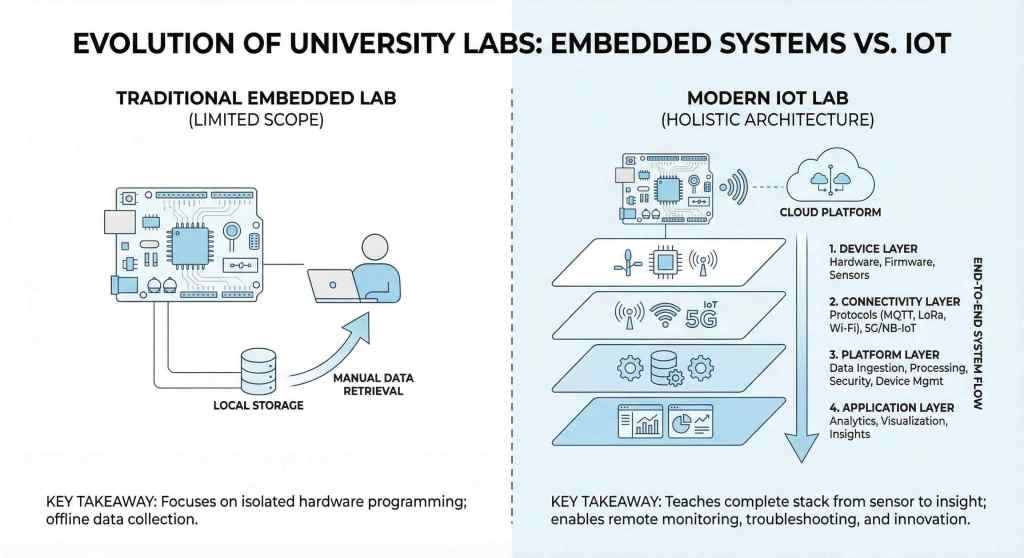
It’s exhilarating to see how a tool we created has become the foundation for nurturing the next generation of IoT innovators. Universities nationwide and internationally now teach IoT through Favoriot. Their labs are equipped with pre-configured dashboards, APIs, and datasets, making it easy for students to start building. What was once a platform we envisioned for businesses has become an educational cornerstone. Students graduate not only with degrees but as skilled Favoriot-certified IoT professionals.

This didn’t happen by accident. It was imagined, desired, and, through our efforts, made a reality.

Transforming Cities with IoT

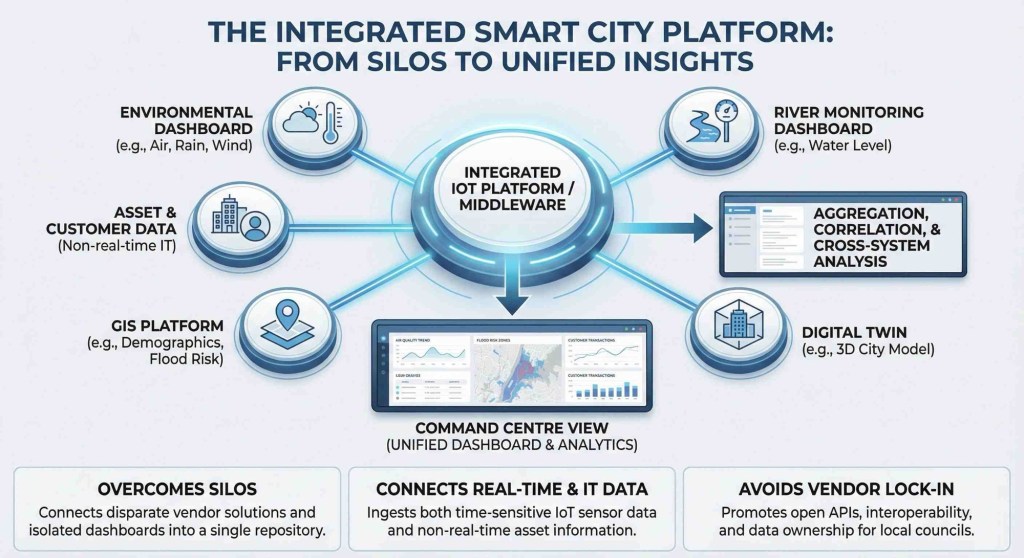
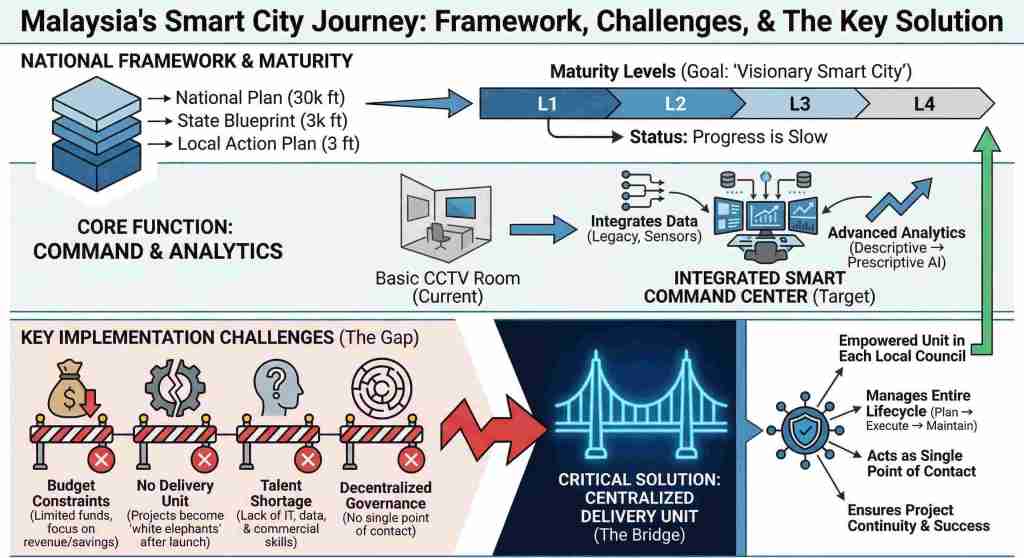
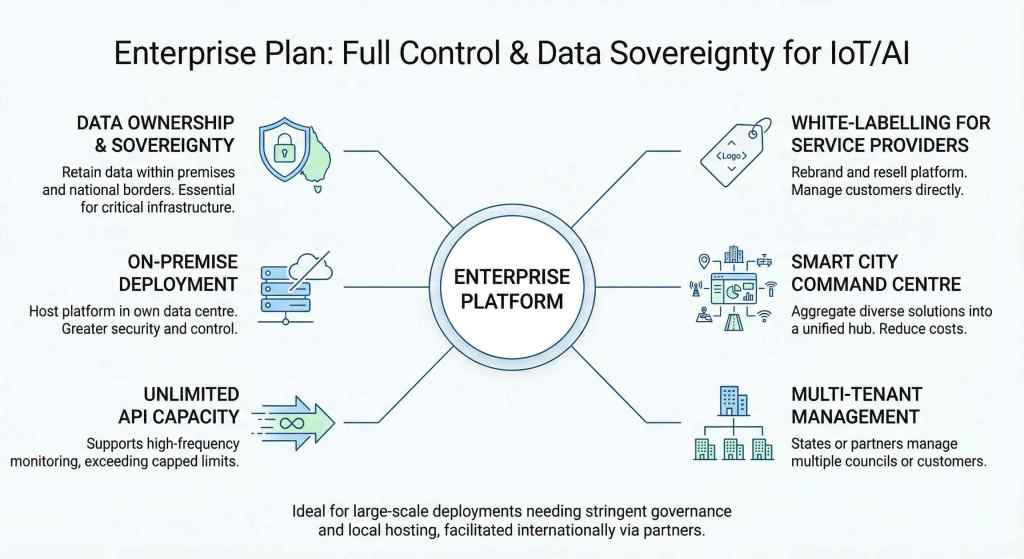
As I step into a local council’s command centre, I see a vibrant dashboard powered by Favoriot. The screen displays real-time data from various IoT solutions deployed throughout the city: smart streetlights, waste management sensors, flood detection systems, and air quality monitors.

This isn’t just a collection of disconnected systems—it’s an integrated platform that combines everything under one roof.

The mayor stands beside me, explaining how this has revolutionized the council’s operations.

“Favoriot has helped us move from reactive to proactive,” she says. “We no longer wait for complaints; we solve problems before they arise.”

I imagined this when we spoke about smart cities years ago—a city where data drives decision-making, not just to improve efficiency but to genuinely enhance the quality of life for its citizens.

Favoriot isn’t just another vendor in this ecosystem—it’s the platform that local councils trust to aggregate and analyze IoT data, bridging the gap between diverse solutions and actionable insights.

Again, this was once a dream, an idea that many doubted. But here it is, functioning as imagined, because we believed in its possibility.

The Future of IoT Businesses

IoT product companies no longer struggle to create end-to-end solutions. Instead, they focus on what they do best—building world-class hardware or cutting-edge AI applications. Favoriot fills the gap by providing a robust platform to manage data collection and analysis.

Imagine a company specializing in healthcare sensors. Instead of spending years developing its own platform, it uses Favoriot to connect its devices. This shortens its time-to-market, and its customers benefit from a complete solution that’s both scalable and user-friendly.

The same goes for system integrators who rely on Favoriot to simplify IoT deployments for their clients. Some have taken this even further by offering managed IoT services. With Favoriot, they provide their clients with dashboards, analytics, and customized solutions without the technical headache of building everything from scratch.

It’s a win-win: the integrators expand their business offerings, and Favoriot becomes the go-to platform for IoT scalability.

Expanding Globally Through the Law of Attraction

The most exciting part of this imagined future is Favoriot’s global footprint. We have partnered with system integrators and distributors across continents, allowing us to enter new markets quickly.

In Indonesia, a partner uses Favoriot to enable advanced agriculture systems. In Europe, we’re powering smart transportation initiatives. In Africa, Favoriot is the backbone of rural healthcare IoT solutions.

These partnerships aren’t just transactional; they’re built on a shared vision of what IoT can achieve. By empowering local players in each market, Favoriot has become a global name synonymous with IoT excellence.

How did we reach this level? By first believing in it. The Law of Attraction teaches that whatever we focus on grows. We visualized this expansion, worked towards it, and attracted the right people and opportunities to make it happen.

A Dream Becoming Reality

I close my eyes and imagine standing on a stage at a significant IoT event. The lights dim, and a video showcases real-world success stories of Favoriot-powered solutions. The impact is tangible, from smart cities to healthcare and agriculture to education.

As I speak, I’m reminded of how far we’ve come—as a company and as a community of dreamers and doers. Favoriot’s success wasn’t just about technology but about believing in the power of imagination.

We imagined a world where IoT could truly transform lives when we started. Today, in this envisioned future, that world has come alive.

So, is it wrong to imagine? Absolutely not.

Imagination is where dreams take shape, and the seeds of innovation are planted. As I look at Favoriot’s journey—from a small startup to a global IoT leader—I know that it all started with a simple yet powerful idea: to imagine the impossible and make it real.

Will this vision come true? I believe it will. Because imagination, when paired with hard work, resilience, and the right team, can achieve wonders.

So, let’s keep imagining, dreaming, and building the future—one step at a time.