I almost gave up writing on Medium when virtually all my posts had no views or responses.
Not a single comment or clap.
As much as I tried posting daily and cracking my head, what topics should I write?
I focused on my passion — writing topics about my entrepreneurship journey. It’s easier to write because it’s based on my personal experience.
I even posted more than once daily. Although many have advised me to continue posting daily for 30 days, I still need something else. Why?
As I scratched my head, I tried to be more engaging with the rest of the writers on Medium — leaving comments and giving a lot of claps.
Although it works… slowly gaining more audience and followers, it still has not reached my expectations.
I wonder why others can immediately get 100s of followers within a short period.
Why is Medium boosting some of the articles but not mine?
Why is there only a trickling audience reading my articles?
What have I done wrong?
As I got more frustrated, checking the traffic statistics almost every hour and finding out that there was not much change — I began to feel very tired and hopeless.
I began to wonder whether my writing needed more quality or whether the topics I wrote about had no niche.
But again, the topics of entrepreneurship are popular with other writers, but why not mine?
Many times, I began to have the feeling of giving up.
But before giving up, I decided to take a short break from writing and focus more on analysis.
I began to read other people’s articles and analyze why they could get boosted and more engaged.
I returned to writing with a few more suggestions and improved my weaknesses.
This is what I did, and it has given me a lot of improvement in my articles and engagement:
Writing with emotion: Instead of writing endlessly, I write based on my emotions. Writing down my feelings throughout my journey. In this way, the writing will resonate with like-minded entrepreneurs, too.
Focused on other niches: I started to mix my topics besides entrepreneurship. One reason is to see the reaction from my followers or medium readers. For example, I began to write topics about my experience, reporting on Medium and journaling my progress. The statistics immediately have a big jump when I write these other topics.
Creating better headlines: I must admit that I am weak in making catchy headlines, but as I looked at other author’s examples, I began to mimic their way of creating headlines. Voila! It works!
Short bite articles: People prefer to read shorter sentences. I also want to use short sentences. It’s easier to read, and it’s full of emotion. Changing this strategy indeed has given better engagement. Some readers don’t prefer heavy stuff with so many facts. Sometimes, they like easy reading materials.
Engage with readers: When the articles involve the readers and even give them something to comment on, such as asking for their feedback or asking a question, it will provide an opportunity for better engagement.
Longer than 3-minute articles: This is important if you want to monetize your articles. I will have a better chance for the reading time to be beyond the standard 30-second rule. Take note: even though you have written a 3-minute article, the reader will typically skip most of the writing and focus more on particular portions. You must find ways to ensure the reader stops and reads for at least 30 seconds.
With the above improvements, I noticed a big jump in my views, follower counts, and engagements.
Thus, I decided to return to my Medium writing and not give up.
Success doesn’t come easy — it requires true grit and persistence.
Here is a compilation of the top 5 Startup Tips articles, which I considered my November month favorite:
(1) How much should you pay yourself?
Christoph Janz’s article in “Point Nine Land,” titled “How much should you pay yourself? Introducing the Founder Salary Calculator 2023,” offers an insightful update to his previous model on founder compensation.
Having partnered with Figures, a leading compensation benchmarking platform in Europe, Janz enriches his model with data from over 1000 startups and tech companies. Using 728 data points, this updated calculator provides a nuanced view of founder salaries across stages and locations in Europe, factoring in aspects like cost of living and market costs.
Additionally, it addresses the gender pay gap, albeit with limited data for female founders. The article stands out for its practical approach and data-driven insights, making it a valuable resource for founders seeking guidance on compensation.
(2) Apparently, Most Entrepreneurs Don’t Understand the Real Purpose of Venture Capital
Aaron Dinin’s article in “The Startup,” titled “Apparently, Most Entrepreneurs Don’t Understand the Real Purpose of Venture Capital,” offers a profound insight into entrepreneurs’ misconceptions about fundraising.
Dinin, through a conversation with a founder, illustrates the critical difference between linear and exponential growth, emphasizing that venture capitalists seek exponential (‘hockey stick’) growth due to its higher returns on investment.
He elucidates that venture capital is not a one-size-fits-all solution and should be sought only when necessary. The article is a stark reminder that venture capital is a means to an end, not the end itself, and should be approached with a clear understanding of its purpose and implications.
(3) What I Look for in Founders and Startups as an Angel Investor
Paul Zhao’s article in “The Startup,” titled “What I Look for in Founders and Startups as an Angel Investor,” provides a rich, insightful look into the mind of an experienced investor.
Drawing from his own entrepreneurial journey and extensive experience in evaluating startups, Zhao emphasizes the importance of clear, concise communication from founders, the necessity of defining what a startup will not do, the value of showing the practical movement of ideas, and the importance of learning from what didn’t work.
His approach is pragmatic and deeply rooted in the real-world demands of startup success. Zhao’s perspective is precious for founders in the B2B space, offering them a detailed guide on how to impress potential investors and secure funding.
His advice underscores the importance of strategic planning, efficient communication, and the ability to adapt based on feedback, making it a must-read for any aspiring entrepreneur.
(4) The Real Reason Why Starting a Company is Harder Than You Think
Aaron Dinin’s “Entrepreneur’s Handbook” article titled “The Real Reason Why Starting a Company is Harder Than You Think” delves into the complexities and mental barriers budding entrepreneurs face. Through a conversation with a young founder, Dinin explores the dichotomy of naivety in entrepreneurship — how being too naive can propel and hinder a startup’s journey.
He argues that naivety can be a driving force, allowing entrepreneurs to pursue ventures that more experienced individuals might overlook. However, this naivety diminishes with experience, leading to more calculated decisions in future ventures.
Dinin’s perspective offers a nuanced understanding of the entrepreneurial mindset, emphasizing the importance of embracing naivety and recognizing its eventual decline. This article is insightful for aspiring entrepreneurs, highlighting the psychological challenges of starting a company and the evolution of entrepreneurial thinking.
(5) The pitch deck template is dead. Introducing — The Pitch Cycle.
In “The Pitch Cycle,” Moti Elkaim challenges the conventional wisdom of using a standard pitch deck template for startups seeking investment. Elkaim argues that a more dynamic approach is necessary to capture and maintain investor interest in a market where assets are scarcer.
He introduces the four-part pitch cycle, emphasizing the importance of storytelling and creating a personal connection with investors. This cycle includes capturing the imagination, raising the opportunity, driving the business argument, and tactfully asking for investment.
Elkaim’s approach prioritizes engaging the investor’s attention and interest over traditional presentation methods. His insights are particularly relevant in today’s competitive and uncertain investment landscape, making this a valuable read for entrepreneurs looking to stand out in their fundraising efforts.
As a writer and IoT enthusiast, my journey has been filled with constant learning and evolving ideas. In November 2021, I found myself at a crossroads with a burning desire to write another e-book on the Internet of Things (IoT).
My earlier works, “Your IoT Journey” and “IoT Notes,” had seen considerable success with 815 and 1445 downloads, respectively. They started as paid content but soon became freely available to share knowledge widely.
The plan was to write “IoT Adventure,” a deep dive into the business side of IoT, drawing from my own experiences in IoT entrepreneurship. This e-book was envisioned to cover numerous aspects – from finding the right business niche in IoT to marketing strategies and growth models.
I was excited to share my lessons and successes, aiming to guide new entrepreneurs in navigating the vast IoT landscape.
However, as I delved deeper into the writing process, I realized that my perspective and narrative shifted.
My experiences and insights were not just about the business of IoT but also about the broader implications and innovations in this field, particularly in Malaysia and beyond. This realization led to a significant change in my plan.
This new book is a narration of my entrepreneurial journey and a comprehensive exploration of the IoT landscape, including groundbreaking innovations, emerging trends, and unique insights specific to Malaysia and the global context.
“IoT Frontier” is more than a guide; it’s a testament to the ever-evolving nature of IoT and its impact on our world.
It delves into critical questions, explores emerging technologies, and examines the role of IoT in driving innovation and solving real-world problems.
This book is a culmination of my experiences, learnings, and a vision for the future of IoT.
I invite you, my readers, to embark on this new journey with me. Your thoughts, experiences, and insights are invaluable, and I hope “IoT Frontier” will inform and inspire a collaborative dialogue that can propel the IoT ecosystem forward.
Together, let’s explore the frontiers of IoT and discover what lies beyond the horizon.
Experiencing a significant jump in Medium followers, I’ve seen a growth of over 6,000%, from 1 to 68 followers. This change, though numerically small, is encouraging for someone who previously saw no gain for years, likely due to a lack of engagement.
My recent strategy includes posting almost daily, sometimes repurposing content from my other blogs, and actively engaging with others’ posts through comments and ‘claps.’
This interaction has led to increased visibility and more followers. While my goal is to gain ten followers daily, currently averaging about five, this progress, albeit slow, validates the effectiveness of my efforts.
Seeking guidance from ChatGPT and inspired by Steve Jobs, here’s a condensed strategy for Favoriot’s IoT success: Embrace simplicity in design, creating intuitive and minimalist IoT solutions.
Build a seamless ecosystem by ensuring compatibility and forming industry partnerships. Champion innovation, encouraging out-of-the-box thinking and prioritizing R&D. Focus on delivering exceptional customer experiences, constantly improving based on feedback.
Develop a distinctive brand identity, communicating Favoriot’s value through various marketing channels. Prioritize security and privacy in product design. Commit to continuous product improvement and integration of new features.
Embrace vertical integration for quality control and innovation speed. Attract and retain top talent, fostering a collaborative and growth-oriented culture.
Lastly, dare to take calculated risks, challenge conventional wisdom, adapt to change, and keep a long-term vision for sustained growth and success in the IoT field.
Starting a mailing list early is a widely recommended strategy for authors. I employed this by writing two eBooks on the Internet of Things (IoT), offering them as free downloads.
This approach significantly boosted my subscriber base, attracting over 3,000 email subscribers. The first eBook, “IoT Notes,” provides a comprehensive understanding of IoT, its applications, business models, protocols, and tools, enhancing proficiency in IoT engineering.
The second, “Your IoT Journey,” delves into IoT challenges, market segmentation, cloud services, monetization strategies, and implications for smart cities and the job market. These eBooks provide valuable insights into IoT and its role in the Fourth Industrial Revolution, tailored for those eager to navigate this evolving domain.
Starting my entrepreneurial journey in 2017, I quickly learned the critical role of team building in a startup’s success. Initially, we had professionals from corporate backgrounds; some adapted well to the startup’s fluid environment, while others struggled, leading to necessary departures.
This experience taught me the importance of aligning team members with the startup’s ethos. We discovered that agility is critical in a startup, challenging those used to rigid processes.
For product development, both technical skill and passion are essential. Evident, transparent communication became vital, allowing us to effectively leverage each member’s strengths.
Acknowledging achievements and providing constructive feedback kept our team motivated. Building a successful team is like orchestrating a symphony, with each unique talent contributing to the overall harmony.
This journey of team dynamics in a startup is ongoing, marked by resilience, adaptability, and the power of unity, guiding us toward realizing our ambitions.
In blogging, specific topics consistently draw more readers and engagement. Practical how-to guides on various subjects are always popular for their actionable advice.
Blogs about making money online, such as freelancing or e-commerce, attract considerable interest in today’s digital era. Posts offering social media growth hacks are in demand, as are articles on monetizing content on platforms like Medium.
Insightful pieces on pitching to investors, startup success stories, and avoiding common entrepreneurial mistakes engage aspiring entrepreneurs.
Marketing strategies remain a hot topic, alongside blogs on fast-tracking wealth and personal development. While trending topics can enhance readership, authentic writing aligned with one’s passion is vital to genuinely connecting with an audience.
While online engagement is crucial in the digital age, Favoriot’s experience shows that traditional face-to-face interactions at events like expos are invaluable.
Personal interactions at these events foster trust and understanding, offering real-time questions and demonstrations.
Speaking at conferences establishes authority, but the expo floor allows more spontaneous interactions with a diverse audience. Demonstrating products in person at an expo stand can sway prospective clients’ decisions. Expos also concentrate on potential clients, turning every conversation into a business opportunity.
Partnering with MDEC at the Smart Nation Expo 2023 amplified Favoriot’s visibility. The post-expo period often results in valuable collaborations and client relationships, underscoring the enduring power of in-person connections in complementing digital strategies.
Earning $6.35 on Medium in October 2023 felt like winning the lottery, marking a significant milestone from my first dollar. I joined the Medium Partner Program in September 2023, transitioning from casual technology write-ups to serious writing.
This was a significant change from my routine since joining Medium in December 2015. The surge in Generative AI articles in early 2023, mainly about ChatGPT and Midjourney, sparked my curiosity, leading me to join the paid Partner Program.
My goal was to make my subscription self-sustaining through my writing. Success came in just a month, earning enough to cover the cost. This achievement, driven by consistent writing, engaging with readers, catchy titles, and growing my subscriber list, has been a learning curve, guiding me to focus on longer articles for better monetization. This journey is a testament to the potential of persistence and adaptation in content creation.
ChatGPT, a rapidly growing AI chatbot, reached 100 million users within two months, making it one of the fastest-growing consumer apps ever.
Developed by OpenAI and based on the GPT-3 language model, ChatGPT is adept at producing human-like text responses. Trained on a vast corpus of internet text, it can generate intelligent, friendly replies.
Despite its popularity, ChatGPT has limitations, including potential inaccuracies and misleading information, prompting caution in its use for critical matters. OpenAI offers a paid subscription, ChatGPT Plus, for enhanced features like faster responses and priority access while maintaining a free version.
Colonel Harland Sanders’ journey to founding KFC at 62 challenges the belief that success must come early. This narrative overlooks his decades of experience in the food industry, highlighting that his success wasn’t overnight but the result of lifelong perseverance and skill development.
Unlike many who started from scratch, Sanders had a renowned secret recipe and solid foundation. His story, while unique, shares common entrepreneurial themes of resilience, determination, and adaptability.
For aspiring entrepreneurs, Sanders exemplifies that it’s never too late to pursue dreams, underscoring that the essence of entrepreneurship lies in the journey, learning, and passion rather than just the destination.
Our startup’s journey through three IoT products taught us the importance of adaptability in entrepreneurship. The first, a smartwatch for seniors, became obsolete due to the COVID-19 pandemic.
Our second attempt at smart city solutions struggled with slow customer adoption. Similarly, our fourth product, Dscover, a consumer app, could have engaged enterprise clients more effectively. These experiences highlighted the need for agility and responding to market dynamics.
The critical lesson is aligning products with customer needs and market trends, emphasizing resilience and a customer-centric approach as essential for navigating the competitive startup ecosystem.
Since I have subscribed as a Premium X user, I aimed to monetize the tweets via ads, but I need to have had at least 5 million views for the last three months.
The 5 Million views was a challenging target, but I finally managed to get it last month, and eventually, I can monetize my Tweets.
Startup Survival: The Journey of a Tech Entrepreneur is one of my latest ebooks about my journey in entrepreneurship and the failures and successes I faced during the six years. A lot of Startup tips can be found here.
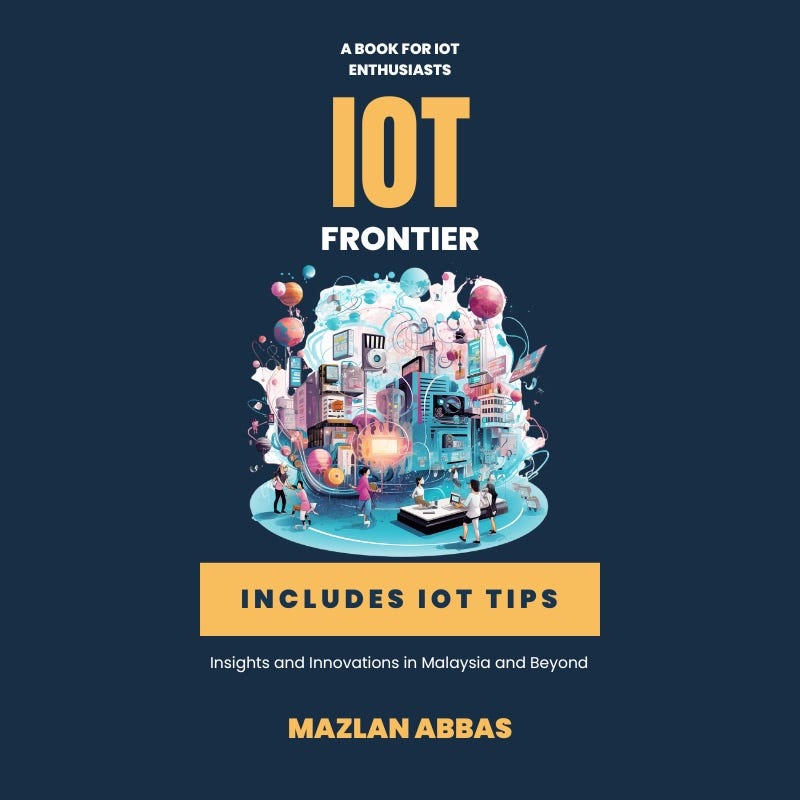
This eBook entitled IoT Frontier was released yesterday. It covers the aspects of IoT, especially in Malaysia and beyond, with examples of different applications and the tools that you need to develop an IoT project.
I have been procrastinating on launching my digital product for nearly a year.
I have targeted to launch a book on IoT, but somehow, things have changed – I published a Startup journey instead.
What encouraged me to publish this is when I read so many articles from Medium about their digital products.
If they can, why not me?
The book is destined to launch on Jan 1, 2024 however, I decided to do it much earlier (Dec. 3, 2023).
Check the below preface if you are interested in getting one.
Book Preface
In this preface, I invite you on a journey that began with a single step into the unknown realm of Silicon Valley and expanded into a voyage across the vast ocean of the Internet of Things (IoT). It is a tale not just of technology and innovation but of personal growth, perseverance, and the relentless pursuit of a vision.
Part 1: The Awakening unveils the transition from a techie to an entrepreneur. It chronicles the birth of our first IoT product designed to enhance the lives of senior citizens and delves into the struggles and successes of monetizing cutting-edge technology. This section is a candid exposition of the thrills and tribulations accompanying the early stages of a Startup’s life.
Part 2: The Evolution details the maturation of our venture, Favorsense, amidst the fiercely competitive market. It is a story of navigating through the turbulent waters of the IoT industry, marked by early missteps, eventual milestones, and the philosophical underpinnings that propelled our venture forward.
Part 3: Expansion and Growth reflect on scaling our enterprise with limited resources. Here, I share our exploration of diverse sectors – academia, industry, and government – and the invaluable insights they offered. This part also touches on the creative lulls and the investment of faith and funds into our dreams.
Part 4: Navigating Success chronicles the strategic moves towards the acquisition and the harmonious blend of academic rigor with entrepreneurial zeal. It is a testament to the hard-earned lessons in building products and the joys of witnessing a startup blossom.
Part 5: The Mastery explores the nuances of team dynamics, revealing how my fourth IoT product was a pivotal turning point. It stresses the importance of adaptability and the critical role of product-market fit in the survival and success of a startup.
Part 6: Perseverance and Innovation is a homage to the grit required to overcome a startup’s myriad challenges. It uncovers the stories behind product failures and the resilience needed to navigate a global crisis while fine-tuning the pricing of our products.
Part 7: Personal Growth and Strategy delves into every entrepreneur’s self-discovery journey. It discusses the individuality of the entrepreneurial experience, the quest for recognition, and the relentless pursuit of the perfect investor pitch.
Part 8: Branding and Marketing highlights the lessons learned in branding and marketing with a lean budget. It shares insights into the personal branding intertwined with the company’s image and the real-world lessons from business dealings.
Part 9: Reflection and Insights offers a retrospective look at why some entrepreneurs reach the pinnacle of success while others falter. It brings forward the collective wisdom gained from both the startup community and the giants of the industry.
Part 10: Building Foundations closes the narrative by emphasizing the importance of community support, the strategic use of mailing lists, brand building on a shoestring budget, and the diversification of revenue streams.
This book is more than a compilation of entrepreneurial lessons; it is a mosaic of experiences, a beacon for aspiring innovators, and a testament to the power of a shared dream. It is dedicated to the team at Favoriot, whose dedication and innovation have shaped not just the company but also the very future of IoT. Welcome to our story.
Did you rake the opportunity to establish your personal brand or turn into business opportunities?
Well… I didn’t start that way.
In the early days, I focused on establishing myself as a knowledgeable voice in the IoT sector.
This meant engaging in public speaking at tech conferences, seminars, and workshops without directly promoting Favoriot.
My goal was to share insights on IoT trends, challenges, and future potential. This approach helped in gaining credibility and trust with a wider audience.
However, while these efforts enhanced my reputation, they didn’t translate into immediate business growth for Favoriot.
Changing Tactics: Talking About Favoriot
Photo by Matthew Osborn on Unsplash
Recognizing the need to align my expertise with business growth, I adjusted my approach.
During my talks, I began weaving in how Favoriot’s solutions addressed real-world challenges in IoT.
This wasn’t about a sales pitch; it was about demonstrating the practicality and effectiveness of our products through real use cases and customer stories.
This shift in approach helped the audience connect the dots between the theoretical knowledge I shared and the practical solutions Favoriot offered.
Seeing Results: More Business
This strategic change in content delivery began to pay off.
Audiences started associating my expertise with Favoriot’s innovative solutions.
This recognition led to increased interest in our offerings, resulting in more business queries and collaborations.
Over time, this approach not only solidified Favoriot’s position in the market but also turned many of those initial inquiries into loyal clients.
Conclusion: Public Speaking is Valuable
This journey reaffirmed that public speaking is a potent tool for business growth.
It’s more than just sharing knowledge; it’s about strategically showcasing your company’s strengths and solutions.
For startups and entrepreneurs, effectively combining your personal expertise with your business offerings in your talks can significantly boost your brand and business growth.
Photo by Priscilla Du Preez 🇨🇦 on Unsplash
Summary of Lessons Learned for Aspiring Entrepreneurs:
Build Credibility First: Start by establishing yourself as a knowledgeable expert in your field without immediately focusing on your product or service.
Share Industry Insights: Use public speaking to share insights on current trends, challenges, and the future of your industry.
Align Expertise with Business Goals: Gradually incorporate your business solutions into your talks to show how they address real-world problems.
Showcase Practical Applications: Demonstrate the effectiveness of your products through real use cases and customer stories.
Foster Brand Association: Use public speaking to link your expertise and your company’s offerings strongly.
Be Patient for Results: Understand that this strategy is a long-term approach, and converting interest into an actual business takes time.
Utilise Public Speaking as a Strategic Tool: Recognize the power of public speaking as a knowledge-sharing platform and as a vital tool for showcasing your company’s strengths and solutions.
To learn more about startup tips, check out my latest eBook, “Startup Survival.”
Branding is the process of creating a unique identity for your company or product.
It encompasses the process of identifying your brand’s core values, mission, and market positioning, followed by effectively conveying these elements to your intended audience.
This communication is executed across multiple platforms, including your website, promotional materials, and social media channels,
The Importance of a Comprehensive Brand Ecosystem
Photo by Joao Tzanno on Unsplash
A brand ecosystem encompasses more than just visual identity; it includes every aspect of how your audience interacts with your brand.
This means integrating your online presence, offline activities, and personal interactions to create a cohesive experience.
Developing a Strong Customer Experience
At the heart of a brand ecosystem is customer experience.
This includes having a user-friendly and aesthetically pleasing website, producing engaging content, and responding promptly and professionally to customer interactions.
Small gestures of appreciation can also enhance customer loyalty.
Utilizing Micro-Moments Effectively
Micro-moments refer to the brief periods when customers use their devices to find quick answers.
Brands should be present during these moments with relevant and mobile-friendly content to engage effectively with their customers.
Incorporating Data into Storytelling
Photo by Jon Tyson on Unsplash
Using data in storytelling can add depth to your brand’s narrative.
This approach involves telling stories about your brand’s progress, customer achievements, or environmental initiatives, supported by data to enhance credibility and emotional connection.
The Role of Employee Branding
Employees can significantly contribute to a brand’s image.
A positive work environment and encouraging employees to share their experiences can help in building a strong brand reputation.
Building a Community Around Your Brand
Creating a brand community involves more than just selling products or services; it’s about developing lasting relationships.
This can be achieved through various platforms, including events, forums, and face-to-face interactions.
Strategies to Enhance Your Brand Ecosystem
Begin with Self-Discovery: Identify your unique attributes and values that define your brand.
Maintain Consistency: Ensure that your brand’s message remains consistent across all channels.
Foster Authenticity: Authentic interactions are crucial for building genuine connections with your audience.
Engage with Your Audience: Regular communication and feedback from your audience are essential for brand growth.
Exercise Patience: Building a strong brand ecosystem is a gradual process that requires ongoing effort.
By implementing these strategies, you’re not just creating a brand, but an ecosystem where every element collaborates to narrate your unique story.
Begin by understanding your core values, align your messaging across different platforms, engage with your audience, and maintain authenticity.
Embark on this journey with dedication, and over time, you will see your brand ecosystem grow and succeed.
I am a Chronic Procrastinator when it comes to writing my next eBook.
Today, I’m stepping out of my comfort zone to share a very personal journey with you.
It’s about my battle with procrastination and how I finally decided to convert my 50 short stories into an eBook.
Yes, you heard it right! After months of hesitation, I’m diving into the world of digital products, specifically eBooks.
The Tug-of-War with Procrastination
Photo by Anna Samoylova on Unsplash
For months, I’ve been toying with the idea of creating an eBook. The thought was both exhilarating and terrifying.
You see, I’m no stranger to writing; my entrepreneurial journey has been chronicled through more than 50 short stories, each a testament to the ups and downs of my path.
However, the idea of compiling them into a digital product was a hurdle I just couldn’t seem to jump over.
Why the Hesitation?
Photo by Nicolas Hoizey on Unsplash
The hesitation to start can be paralyzing.
It’s like standing at the edge of a cliff, knowing you need to jump but not being able to move your feet.
For me, the reasons were manifold: fear of the unknown, self-doubt, and the big one – “What if it’s not good enough?” But then, I realized something crucial – I wasn’t alone.
Inspiration from Fellow Writers
Photo by Katrina Wright on Unsplash
I’ve seen many writers turn their articles and experiences into eBooks.
Their journeys inspired me. They showed me that my stories, just like theirs, deserved to be heard on a larger platform.
Why not take advantage of the digital age where sharing your voice is just a few clicks away?
The Platforms: Payhip and Gumroad
I’m fortunate to have not one but two marketplaces at my disposal – Payhip and Gumroad.
Both platforms are fantastic for budding authors like myself, offering ease of access and a direct way to reach readers.
The presence of these platforms was a reminder that I already had the tools needed to share my work with the world.
The Decision to Dive In
Photo by Alexandros Giannakakis on Unsplash
So, here I am, taking the plunge.
The decision didn’t come easy, but it’s made.
My stories, my journey, and my lessons will soon be encapsulated in an eBook.
It’s a step towards not only sharing my journey but also conquering my fears and breaking the chains of procrastination.
To My Fellow Procrastinators
If you’re like me, sitting on a treasure trove of content, unsure if you should take the leap into eBook creation – my advice is simple: Just do it.
Your voice, your experiences, and your stories deserve to be shared. Don’t let hesitation hold you back from sharing your wisdom with the world.
The Journey Begins
Photo by Clemens van Lay on Unsplash
As I embark on this new adventure, I invite you to join me.
Follow along as I transform my stories into an eBook, navigate the digital landscape, and learn along the way.
Who knows?
Maybe my journey can inspire you to take your own leap of faith.
Here’s to new beginnings and conquering our fears, one page at a time!
As the founder of Favoriot, my journey in the Internet of Things (IoT) entrepreneurship journey has been nothing short of an odyssey.
We take our first step with an ideal vision.
Thinking everyone will quickly start to use our IoT platform.
But that’s not the case.
Later, we set our sights on pioneering IoT training, a decision that unfolded amidst the challenges of introducing an IoT platform-as-a-service.
Here’s my story.
Confronting the Reality of an Unused Platform
Photo by Jorge Ramirez on Unsplash
A stark realization marked our early days.
We had developed a platform brimming with potential, yet it could have been more used.
Launching our IoT service, we faced tepid responses.
The crux of the issue? Favoriot was an unfamiliar name, a new entity in a realm ruled by established players like ThingSpeak and Azure.
The reluctance of tech enthusiasts and students to dive into this new venture was palpable.
Uncovering a Crucial Market Gap
Surveying the Malaysian market, a critical pattern emerged.
The landscape was teeming with resellers of IoT products, yet there needed to be more original product creation.
For Malaysia, aspiring to shift from a consumer to a producer nation, this represented a barrier and a deadlock.
The chasm between importing and producing technology was vast, and bridging it required nurturing homegrown IoT innovators.
Pivoting Towards Educational Empowerment
Photo by Campaign Creators on Unsplash
Recognizing this void, we made a strategic pivot towards IoT training.
We meticulously crafted a curriculum encompassing the essentials, the complexities, and the advanced facets of IoT data analytics.
The launch of Professional Certificates marked a turning point, enhancing the professional standing of our trainees.
Today, over 15 Malaysian universities have integrated our IoT platform into their curriculum, a testament to its relevance and impact.
Thus began the slow but impactful way to create awareness and prepare the necessary skills in hands-on IoT development for future graduates.
Furthermore, I have been personally invited to educational and industry IoT talks, which have given me better opportunities to introduce Favoriot to the public.
Beyond Training: Spreading the IoT Wave
But our vision extended beyond training.
This phase was merely a catalyst, igniting a broader adoption of IoT across Malaysia.
Our platform has become integral in diverse sectors, including manufacturing, agriculture, and smart city development.
Photo by Conny Schneider on Unsplash
In Conclusion: Lessons from the Journey
Reflecting on Favoriot’s trajectory, several vital lessons emerge:
Adaptability is Crucial: The ability to pivot and adapt strategies in response to market needs is vital.
Identifying Market Needs: Understanding and addressing specific market gaps can drive significant change.
The Power of Education: Empowering through education can catalyze broader technological adoption.
Beyond Immediate Goals: Long-term vision should extend beyond immediate objectives.
Collaboration and Influence: Collaborating with educational institutions can amplify impact and relevance.
As we continue on this path, our dedication to empowering Malaysia with innovative IoT solutions and robust training remains unwavering, fueling the flames of progress and innovation.
Photo by Izuddin Helmi Adnan on Unsplash
About Author:
Remember to Subscribe to receive email updates on every post I publish.




























 Dr. Mazlan Abbas