Things a Little Bird Told Me: Confessions of the Creative Mind — Book Review

BOOK REVIEWS BY MAZLAN ABBAS

The Rise of Twitter

Things a Little Bird Told Me

Not a member? Click here to read the whole story for free.

Biz Stone’s book Things a Little Bird Told Me captivated me.

It promised to give me insights into the mindset of a revolutionary entrepreneur who played a pivotal role in shaping modern communication.

Biz Stone, co-founder of Twitter, offers an autobiography and a treasure trove of lessons on creativity, resilience, and innovation, framed within the compelling narrative of his life and career.

Stone’s account is far from a conventional success story; it’s an intimate exploration of a creative mind navigating the tumultuous waters of the tech industry.

Through his experiences, we understand how a blend of curiosity, empathy, and audacity can drive monumental change.

This book isn’t merely a recount of Twitter’s rise; it’s a reflection on the personal qualities and philosophies that fuel enduring success.

One of the most striking aspects of Stone’s narrative is his unwavering optimism.

Despite setbacks and skepticism, Stone’s positivity is a powerful catalyst for transformation and growth.

This infectious attitude reminds us that our perspective on challenges can significantly influence their outcomes.

Things a Little Bird Told Me

Stone’s emphasis on creativity and rejecting linear thinking resonates deeply with me.

As someone who thrives on innovation, his approach is validating and inspiring.

The notion that “creativity never runs out” is a powerful antidote to the fear of stagnation and a call to explore and expand our creative horizons continually.

As Stone discussed, Opportunity creation is another cornerstone of entrepreneurial success.

His ability to see and seize potential where others don’t is a testament to his visionary outlook.

This proactive approach to opportunity is particularly relevant in today’s fast-paced world, where adaptability and foresight are key to staying ahead.

Empathy, a central theme in Stone’s book, is a critical ingredient for personal and global success.

Stone’s emphasis on understanding and connecting with others is a refreshing perspective in the tech world, where the focus is often on products and profits.

It underscores the importance of building products and companies that genuinely resonate with people and address their needs and aspirations.

Stone’s candid discussions on failure and vulnerability are both comforting and enlightening.

In an era where success stories are often sanitized and polished, Stone’s openness about his struggles and missteps is a powerful reminder of the messy, nonlinear path to achievement.

His resilience and ability to learn from failure are crucial lessons for anyone aiming to make their mark.

The book also delves into the nuances of ambition and corporate culture, offering valuable insights for aspiring entrepreneurs and established leaders.

Stone’s reflections on fostering environments that encourage innovation and respect individuality are particularly impactful.

They highlight the significance of cultivating spaces where creativity and collaboration can flourish.

Reading “Things a Little Bird Told Me” has been an enriching experience. Biz Stone’s journey offers a unique lens to view the intersection of technology, business, and human values.

His stories and insights provide a robust framework for understanding what drives entrepreneurial success and how to cultivate the qualities that underpin it.

In conclusion, Biz Stone’s book is more than an autobiography or a business manual; it’s an invitation to think deeply about the values, attitudes, and approaches that shape our endeavors.

Whether you’re an entrepreneur, a creative professional, or simply someone interested in the workings of an incredible entrepreneurial mind, this book offers valuable lessons and perspectives.

It’s a testament to the power of creativity, empathy, and perseverance in crafting a meaningful and impactful career and life.


Get this book “Things a Little Bird Told Me,” from Amazon (Note: Affiliate links apply)


More Book Reviews by Mazlan Abbas:

1 — Ninja Innovation — Book Review

https://mazlanabbas.com/ninja-innovation-book-review-3f2125e02a84

2 — Starting a Tech Business — Book Review

https://mazlanabbas.com/ninja-innovation-book-review-3f2125e02a84

3 — The Science of Growth — A Book Review

https://mazlanabbas.com/ninja-innovation-book-review-3f2125e02a84

4 — Internet of Things from Scratch — Book Review

https://mazlanabbas.com/ninja-innovation-book-review-3f2125e02a84
The Microsoft Way — Book Review

BOOK REVIEWS BY MAZLAN ABBAS

The philosophical underpinnings that have driven Microsoft’s ascension.

Not a member? Click here to read the whole story for free.

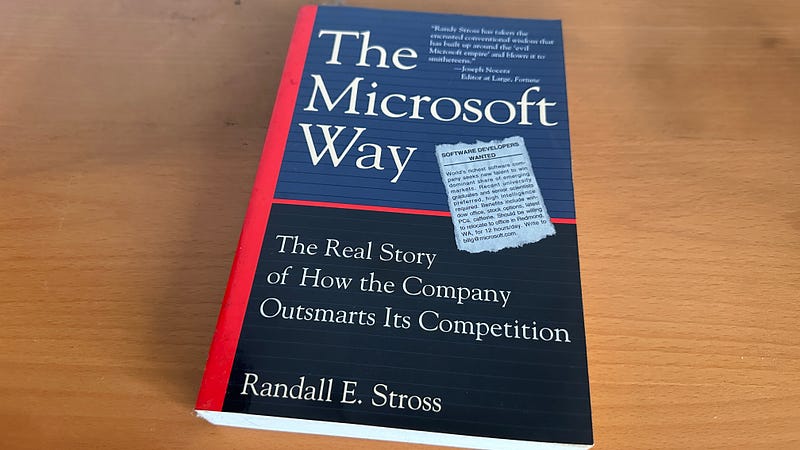
Reflecting on “The Microsoft Way” by Randall E. Stross evokes a sense of nostalgia and enlightenment in me as it meticulously unravels the ethos and practices that propelled Microsoft into the pantheon of tech giants.

I’m currently reading Stross’s thorough research and insights into Microsoft’s journey.

I can’t help but see parallels between their experiences in the tech industry and my own experiences during my time at various high-tech and educational institutions.

Photo by Lumière Rezaie on Unsplash

The Microsoft Way” does not merely recount the success story of a corporation; it delves deep into the philosophical underpinnings that have driven Microsoft’s ascension.

The book underscores Microsoft’s penchant for recruiting exceptionally bright minds — a principle I resonated with deeply, given my commitment to fostering intellectual rigor and innovation in the organizations I’ve been part of.

Stross highlights Microsoft’s culture of nurturing intelligence and creativity, something I’ve always endeavored to cultivate within my teams at REDtone IOT and MIMOS Berhad, as well as as an educator.

The emphasis on hiring not just skilled individuals but the brightest in the field echoes my belief in the transformative power of exceptional talent.

Moreover, the narrative around Microsoft’s approach to staying agile and responsive to market dynamics aligns with the strategic pivots I’ve witnessed and orchestrated in IoT and smart cities.

As Microsoft did in embracing the internet and multimedia, the ability to adapt and evolve mirrors the ethos I’ve championed in steering companies and academic departments toward innovation and relevance in a rapidly changing tech landscape.

The book also illuminates Microsoft’s commitment to empowering and promoting equality within its workforce, cultivating an environment where ideas thrive, and innovation abounds.

This resonates with my leadership philosophy, which has been to strive to create environments that champion collaboration, equity, and intellectual curiosity, whether in corporate settings or academia.

Photo by Tim van der Kuip on Unsplash

Stross’s portrayal of Microsoft’s response to competitive challenges and regulatory scrutiny offers invaluable lessons in resilience and strategic foresight.

As someone who has navigated the complex interplay of technological advancements, market forces, and regulatory environments, these insights are particularly pertinent and instructive.

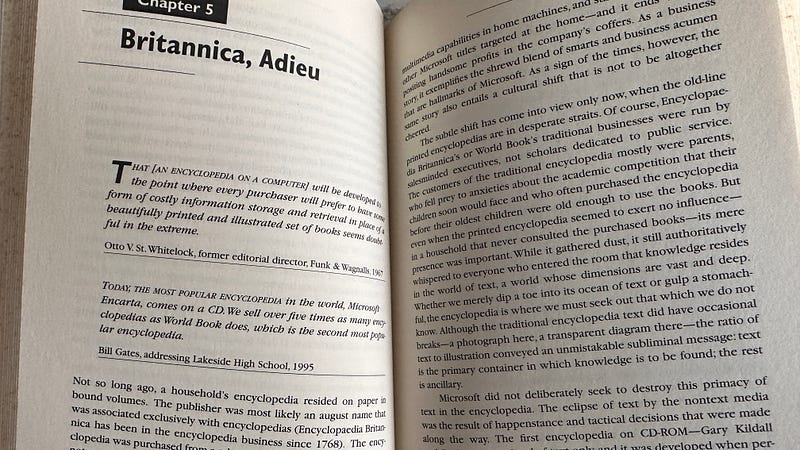
The discussions around Microsoft’s Encarta and its forays into multimedia and the internet provide a compelling study of how vision, perseverance, and adaptability can drive success even in uncharted territories.

Photo by Surface on Unsplash

These narratives echo my experiences in pioneering IoT and smart city initiatives, where embracing innovation and venturing into new domains were imperative for impact and growth.

Moreover, juxtaposed with its achievements and contributions, the book’s examination of public perceptions and criticisms of Microsoft prompts reflection on the broader societal impacts of technological advancements.

Whether as a CEO, an academic, or a speaker, I’ve contended with similar paradigms of scrutiny, misperception, and the responsibility accompanying influence and success.

Photo by ThisisEngineering RAEng on Unsplash

In essence, “The Microsoft Way” offers a profound and multifaceted exploration of a tech titan’s ethos and strategies, resonating with my experiences and the dynamics of the larger tech landscape.

It chronicles Microsoft’s journey and guides those interested in the intricate interplay of innovation, leadership, and societal impact within the tech industry.

The principles and insights gleaned from the book continue to inform and inspire my approach to leadership, strategy, and innovation.

The enduring significance of Microsoft’s evolution within the dynamic interplay of technology and society is truly remarkable.


Grab the book “The Microsoft Way” from Amazon.


More Book Reviews by Mazlan Abbas:

1 — Ninja Innovation — Book Review

2 — Starting a Tech Business — Book Review

3 — The Science of Growth — A Book Review

4 — Internet of Things from Scratch — Book Review

The First Quarter of 2024 Medium Earnings Report — This is What I Found Out

EARNINGS REPORT

Learning how the Medium algorithm works.

Photo by Myriam Jessier on Unsplash

Not a member? Click here to read the whole story for free.

This is the time to check out the earnings stats.

You will be reading more from others to understand how the writing performs and how the Medium algorithm works.

I have always said that Medium works in very mysterious ways.

Some expected stories earned a lot more than the rest, while some that you expected to be of higher quality — flopped.

I tried to gather data from the first quarter of 2024 and see if there was any conclusion I could draw from these statistics.

January 2024
– Views = 37K
– Reads = 724
– Total Earnings = $68.55
– Earnings per Read = $0.095
– Highest Earning Article = Lessons Learned Before and After Joining Medium Partner ($12.62)

February 2024
– Views = 52K
– Reads = 828
– Total Earnings = $30.87
– Earnings per Read = $0.037
– Highest Earning Article = Utilising AI Assistance to Analyze My Medium Articles (Discover My Findings) ($5.13)

March 2024 (Updated till the end of March 31st)
– Views = 24K
– Reads = 803
– Total Earnings = $40.49
– Earnings per read = $0.05
– Highest Earning Article = Why the Success of Smart City Projects Depends on People and Talent ($4.69)

Note: Many writers, including Lea Bardot, tried to understand Medium’s algorithm, including the earnings per read ratio. But I guess, referring to my last three months’ stats, the earning per-read ratio can’t be used as a reference.

I still believe Medium gave very simple tips on gaining more earnings but will not give the exact formula. It all depends on the number of clappers, highlighters, commenters, and followers after reading the article.

Photo by Austin Distel on Unsplash

High views vs Low Reads — Do not correlate.

You might wonder why my views reached thousands, yet my reads are less than 1,000.

It does not correlate, right?

It boils down to how I share my stories with my mailing list (more than 8,000).

Imported Mailing List

Please note that most are email subscribers, which I imported from another mailing list, not a Medium member.

The reason is that I have collected emails from different blogs, but finally, I decided to use only a single blog to share any of my posts. I have migrated and hosted this blog on Medium.

Since most of the mailing list subscribers are non-Medium members, I decided to make the story non-paywall.

Whenever I published and enabled the email notifications, thousands of them probably received them instantly and might not click the link to Medium. However, Medium still counts them as “views”.

The actual number of “reads” is from Medium members.

Change of Posting Strategy — Paywall Stories with Friend’s Link

However, in the middle of March, I decided to change my strategy.

I decided to enable all the articles as a paywall (only Members can view them). However, non-members can view it by clicking “friend’s link,” which bypasses the paywall. However, I will not be able to earn anything from them.

In this way, I will be able to observe whether the people who receive the email notifications really want to read the story by clicking that link.

Thus, the impact of the stats for the number of views will be more realistic in figures.

Photo by Mufid Majnun on Unsplash

This is What I Found Out

  • Make all your stories behind a paywall and let non-members click the friend’s link. This will show how effective or attractive your article is.
  • Since my mailing list combines information from various sources, some will start to unsubscribe because the content might not be related to their interests, and some will find the email notifications “too much” for them.
  • However, combining into a single mailing list reduces my work posting different content. Now, I can reach 25,000 email subscribers for free instead of paying more for Mailchimp or any other Email Service Provider.
  • I will only enable the mail notifications if stories are worth sharing with the 8,000 email subscribers. I will only enable them sometimes. This way, they might feel free of different topics that might not be of interest to them.

I would like to hear your strategy for using paywall or non-paywall features, including when you enable email notifications. Kindly share in the comments section.


Join more than 8,000 email subscribers to receive notifications whenever I publish.

https://mazlanabbas.com/subscribe

Enchantment — Book Review

BOOK REVIEWS BY MAZLAN ABBAS

Understand how enchantment can be pivotal in business, shaping perceptions, fostering loyalty, and catalyzing success.

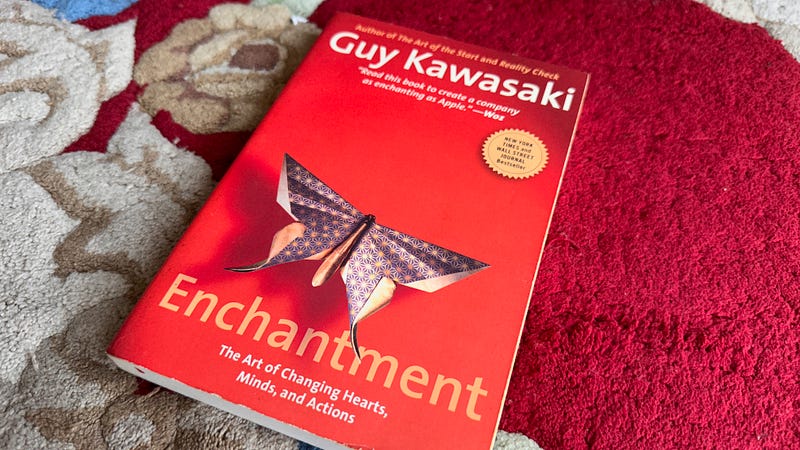
Enchantment: The Art of Changing Hearts, Minds, and Actions

Not a member? Click here to read the whole story.

Business competition is fierce, and stakeholders’ attention is constantly fragmented. Enchanting, an art as well as a strategic necessity, is crucial.

Guy Kawasaki’s “Enchantment: The Art of Changing Hearts, Minds, and Actions” presents this notion not as a mere option but as an imperative, an elemental force that transcends conventional persuasion or marketing.

Reading this book, I tried to understand how enchantment can be a pivotal lever in business, shaping perceptions, fostering loyalty, and catalyzing success.

Kawasaki’s thesis is beguiling in its simplicity and profundity: enchantment is about transforming relationships and circumstances in a manner that is voluntary, enduring, and delightful.

It’s a far cry from manipulation; it is about engendering genuine rapport and commitment.

In my own professional experiences, I have witnessed the temporary impact of conventional persuasion and the fleeting allegiance it garners.

Kawasaki’s articulation of enchantment resonated with me, offering a blueprint for cultivating deeper, more meaningful connections with colleagues, clients, and customers.

The book explains the mechanics of enchantment clearly and accessiblely, breaking down its components into actionable strategies.

Kawasaki emphasizes likability, trustworthiness, and a compelling cause as the cornerstones of enchantment.

These are not abstract qualities but tangible attributes that can be methodically nurtured.

For instance, likability stems from genuine warmth and relatability, while trustworthiness is cultivated through consistency, transparency, and integrity.

Enchantment: The Art of Changing Hearts, Minds, and Actions

The cause, meanwhile, must be larger than oneself, inviting others to be part of a shared mission that transcends individual interests.

Kawasaki buttresses his framework with diverse case studies that illustrate enchantment in action, from a Peace Corps volunteer defusing a tense standoff with guerrillas to a niche company like Vibram FiveFingers building a devoted customer base against all odds.

These narratives are not just compelling; they provide a textured understanding of how enchantment operates across varied contexts, from grassroots initiatives to corporate enterprises.

The author also delves into the tactical aspects of enchantment, offering guidance on leveraging both push and pull technologies, engaging through storytelling, and employing social proof and reciprocation.

These tactics are not manipulative ploys but methods to amplify the sincerity and appeal of one’s cause, making it more resonant and infectious.

However, “Enchantment” goes beyond mere tactics; it is a philosophical treatise on influence.

Kawasaki posits that the true measure of enchantment lies in its ability to foster enduring commitment, transforming transient interactions into lasting bonds.

This is particularly pertinent in today’s volatile business landscape, where loyalty is scarce, and cynicism is rampant.

Enchantment, as Kawasaki portrays it, is the antithesis of cynicism: it is about inspiring, uplifting, and galvanizing others toward positive action.

From a personal standpoint, Kawasaki’s insights have been revelatory, providing a lens through which I view my interactions and strategies.

In reflecting on my business endeavors, I recognize now that true success hinges not just on what we achieve but on how we influence and uplift others in the process.

Enchantment is the catalyst for this transformation, a strategic imperative that can distinguish the merely effective from the truly extraordinary.

In conclusion, “Enchantment: The Art of Changing Hearts, Minds, and Actions” is more than a business book; it is a manifesto for a more humane and impactful approach to influence.

Kawasaki not only provides strategies but also a vision for navigating the business world with grace, integrity, and a sense of purpose that goes beyond immediate objectives.

Whether you are an entrepreneur, a corporate executive, or a burgeoning leader, this book holds the key to unlocking not just the hearts and minds of others but also a deeper sense of fulfillment in your professional journey.

In a world often marred by transactional relationships and fleeting engagements, “Enchantment” invites us to aspire to something greater: lasting impact, profound connections, and a legacy of positive change.


Get this book, “Enchantment,” from Amazon. (Note: Affiliate links applicable here)


More Book Reviews from Mazlan Abbas

1 — The Art of the Start 2.0 — Book Review

View at Medium.com

2 — Startup Way — Book Review

View at Medium.com

3 — Arduino IoT Cloud for Developers — Book Review

View at Medium.com

4 — Pivot: The Art and Science of Reinventing Your Career and Life — Book Review

View at Medium.com

Shaping The Future IoT Talents — The Need to Empower IoT Educators

IOT EDUCATORS

Who are these IoT Educators? Why are they vital in shaping our nation?

Photo by Kenny Eliason on Unsplash

Not a member? Click here to read the whole story for free.

IoT’s omnipresence is undeniable.

However, the key to harnessing this technological marvel lies in nurturing the right talent, which begins with the educators themselves.

My journey, which has encompassed diverse roles from academia to industry leadership, has provided profound insights into the critical aspects of IoT education.

The Vital Role of IoT Educators

Photo by Kenny Eliason on Unsplash

IoT educators are the linchpins in the ecosystem of IoT learning and development.

Their role transcends beyond mere transmission of theoretical knowledge; they are the catalysts that ignite curiosity and innovation among students.

But to kindle this spark effectively, educators themselves need to be adept with not just the theories but the very fabric of IoT technology — its tools, applications, and real-world implications.

Bridging the Practical Knowledge Gap

Photo by Product School on Unsplash

The disparity between theory and practice is one glaring void in the current educational framework.

While theoretical knowledge lays the foundation, true mastery of IoT necessitates hands-on experience with cutting-edge hardware and software tools.

Therefore, educators must first be practitioners, immersing themselves in the nuances of these tools.

Only then can they impart meaningful knowledge to their students.

They are responsible for updating the syllabus dynamically, integrating contemporary tools employed by the industry, and thereby ensuring that students are industry-ready.

Syllabus Evolution — Keeping Pace with Industry

Photo by Patrick Tomasso on Unsplash

The IoT curriculum needs to be a living entity, evolving with the field’s rapid advancements.

This evolution is imperative to equip students with relevant and current skills.

Educators should collaborate closely with industry experts to curate a curriculum that mirrors real-world applications and challenges, fostering a learning environment that bridges the gap between academia and industry.

Understanding Industry’s Challenges and Realities

Photo by Rob Lambert on Unsplash

Another critical aspect that often needs to be addressed is comprehending industry-specific problems.

Theoretical learning often showcases IoT applications at a high level, glossing over the intricate web of challenges that professionals face in the real world.

Educators must delve deeper, understanding, and conveying the multifaceted nature of these challenges to their students.

This involves not just a theoretical grasp but an empirical understanding, necessitating educators to engage directly with the industry, gain insights into actual problem scenarios, and integrate this knowledge into their teaching.

Cultivating a Practical and Business-Oriented Mindset

Photo by christopher lemercier on Unsplash

The ultimate test of IoT solutions lies in their viability and acceptance in the market.

Despite their innovative edge, many projects falter because they do not align with practical constraints or fail to address genuine market needs.

Educators need to instill a mindset that looks beyond the technicalities and understands the economic and business dimensions of IoT solutions.

This perspective is crucial for students to develop solutions that are not just technologically advanced but are also pragmatic and market-driven.

My Journey — From Academia to Industry

Photo by Heidi Fin on Unsplash

My career trajectory, spanning academia and industry, highlights the importance of this integrated approach to IoT education.

From my tenure as an academic to leading roles in the industry and now as an Adjunct Professor, the constant learning and interaction with the dynamic field of IoT have been pivotal.

These experiences have enriched my perspective, allowing me to contribute more effectively to educating the next generation of IoT professionals.


Conclusion

The journey of nurturing IoT talents is complex yet rewarding, with educators playing a pivotal role.

By embracing a holistic approach that blends theoretical knowledge with practical insights and industry engagement, educators can unlock the true potential of their students, paving the way for innovative solutions that resonate with real-world needs.

As we continue to navigate the IoT landscape, we must focus on empowering educators, for they are the architects who will shape the future of IoT talents.


Favoriot offers an IoT platform that has become an indispensable tool for learning and teaching IoT in academia. Contact Favoriot to learn how we can help you with your IoT education.


More stories about IoT in Universities:

1 — The Best Universities in Malaysia That Offers IoT Courses or Programmes

View at Medium.com

2 — IoT Education in Universities: The Favoriot Solution

View at Medium.com

3 — How an On-Premise IoT Platform for Universities Can Propel Your IoT Education

View at Medium.com

4 — Malaysian Higher Education Institutions Using Favoriot IoT Platform

View at Medium.com

5 — The Impact of IoT Platforms on Student Innovation

View at Medium.com

How Google Works — Book Review

BOOK REVIEWS BY MAZLAN ABBAS

What drives one of the world’s most influential companies?

How Google Works

Not a member? Click here if you need to read the whole story.

As someone deeply fascinated by technology and business innovation, I eagerly dove into “How Google Works” by Eric Schmidt and Jonathan Rosenberg, hoping to glimpse the core machinery driving one of the world’s most influential companies.

This book, narrated by seasoned Google executives, extends beyond a corporate chronicle.

It is an excellent reference for aspiring entrepreneurs and established business leaders alike, illuminating the path to innovation and organizational success through the lens of Google’s remarkable journey.

The backdrop of this book is Google itself, a company that transformed from a fledgling startup into a global behemoth synonymous with innovation and disruptive technology.

Schmidt and Rosenberg, with their firsthand experiences, guide us through Google’s evolutionary trek, emphasizing the revolutionary management principles and business strategies that underpinned its growth.

How Google Works

Their narrative is not just informative but inspirational, demonstrating how a company can thrive by fostering a culture of creativity and innovation.

Central to the book’s thesis is the concept of the “smart creative” — a breed of employees who are not just adept at their tasks but are true innovators capable of driving monumental change.

This notion resonates with me as it echoes the environment I strive to cultivate in my ventures.

By valuing intelligence, creativity, and initiative above all, Google has succeeded in staying at the forefront of technological advancement, and I believe this model is worth emulating.

The insights into Google’s decision-making processes, talent acquisition strategies, and the nurturing of a dynamic corporate culture are particularly striking.

These elements are pivotal in understanding how Google consistently innovates and adapts in an industry where change is the only constant.

The book elucidates these aspects with practical examples and anecdotes, making the advice tangible and relatable.

Moreover, the authors address the challenge of scaling a business while maintaining a culture of innovation.

This is particularly pertinent for entrepreneurs like myself, who aim to grow their businesses without losing their innovative edge.

The principles of fostering open communication, encouraging dissenting opinions to reach consensus, and maintaining a focus on ambitious, long-term goals (“Think 10X, not 10%”) are potent reminders of how to sustain growth and innovation simultaneously.

How Google Works” also delves into the strategic aspects of Google’s success, such as its product development and market disruption approach.

The authors’ accounts of how Google navigated these fields provide invaluable strategic thinking and agility lessons, emphasizing the need to anticipate market shifts and adapt swiftly.

Schmidt and Rosenberg’s narrative style, enriched with personal experiences and insider anecdotes, makes the book not just an educational read but an engaging one.

It offers a rare peek behind the curtains of one of the most successful companies of our time, presented in a manner that is both accessible and compelling.

Essentially, “How Google Works” is more than a business book; it’s a manifesto for innovation and success in the modern digital era.

It has not only provided me with a deeper understanding of Google’s ethos and operational tactics but also inspired me to incorporate these insights into my business practices.

This book is an indispensable resource for anyone keen on understanding the intricacies of building and sustaining a successful, innovative company in today’s fast-paced world.

It reiterates the belief that at the heart of any successful venture lies the unyielding pursuit of innovation, a culture that cherishes bold ideas, and the relentless quest for improvement.


Get this book, “How Google Works,” from Amazon (Note: Affiliate links applicable.


More Book Reviews by Mazlan Abbas

1 — Building the Internet of Things — A Book Review

View at Medium.com

2 — Get Backed — Book Review

View at Medium.com

3 — Business Model You — Book Review

View at Medium.com

4 — The Samsung Way — A Book Review

View at Medium.com

The Everything Store: Jeff Bezos and the Age of Amazon — Book Review

Book Reviews by Mazlan Abbas

Business Book of the Year

The Everything Store: Jeff Bezos and the Age of Amazon

Not a member yet? Click here to read the full story for free.

Brad Stone’s “The Everything Store: Jeff Bezos and the Age of Amazon” comprehensively examines one of the most influential companies of the digital era and its enigmatic founder, Jeff Bezos.

In this meticulously researched narrative, Stone unveils the evolution of Amazon from a modest online bookstore into a global conglomerate that has redefined numerous industries, including retail, technology, and publishing.

Prologue to Amazon’s Genesis

The book sets the stage with an insightful look into Amazon’s humble beginnings, detailing how Jeff Bezos’s vision of creating an “everything store” morphed into a relentless pursuit of market domination.

Stone delves into the early strategic decisions, including focusing on customer satisfaction and long-term growth over short-term profits, which have become hallmarks of Amazon’s business philosophy.

The Architect of Innovation: Jeff Bezos

A significant portion of the book is dedicated to exploring Jeff Bezos’s persona and contrasting him with other tech luminaries like Steve Jobs, Bill Gates, and Mark Zuckerberg.

Bezos’s intense focus, unyielding drive for innovation, and willingness to venture into uncharted territories are depicted as critical factors in Amazon’s ascendancy.

Stone’s portrayal is nuanced, capturing Bezos’s brilliance and reputedly demanding leadership style.

Corporate Culture and Expansion

Stone provides a deep dive into Amazon’s distinctive corporate culture, which is characterized by its high standards, customer obsession, and frugality principle.

The narrative also covers Amazon’s expansion into various domains, from the Kindle and AWS to its foray into brick-and-mortar retail with the acquisition of Whole Foods.

Each venture is depicted as a testament to Amazon’s willingness to disrupt established industries and redefine consumer expectations.

Inside Stories and Anecdotes

One of the book’s strengths lies in its compilation of anecdotes and inside stories from Stone’s extensive access to former and current Amazon employees and Bezos family members.

These accounts offer a rare glimpse into Amazon’s operational workings and the decision-making processes behind its key initiatives.

The Kindle Revolution

A dedicated section on the development and impact of the Kindle highlights Amazon’s influence on the publishing industry.

The device is presented as a technological innovation and a strategic tool that solidified Amazon’s dominance in book retail and altered how we consume literature.

The Everything Store: Jeff Bezos and the Age of Amazon

Cloud Computing and Beyond

The narrative extends into Amazon’s pioneering role in cloud computing with AWS, underscoring how this venture has become a cornerstone of the internet infrastructure.

Stone articulates Amazon’s strategic foresight in capitalizing on cloud technology, delineating how AWS has grown into a formidable entity that supports a wide array of businesses globally.

Critical Perspectives

While the book predominantly celebrates Amazon’s achievements, Stone does not hesitate to critique its practices, particularly the repercussions of its relentless expansion on competitors and the broader retail sector.

The discussion on Amazon’s labor practices and its impact on local businesses presents a more balanced view, acknowledging the complexities and controversies surrounding the tech giant.

Legacy and Influence

In conclusion, “The Everything Store” positions Amazon — and, by extension, Jeff Bezos — as pivotal in shaping the digital landscape.

The company’s influence is portrayed as extending far beyond retail, impacting everything from data storage and computing to AI and space exploration.

Conclusion

Brad Stone’s “The Everything Store” is a compelling, meticulously researched account that explores Amazon’s journey and its profound impact on various sectors.

It offers invaluable insights into the company’s strategies and innovations and the visionary behind it all, Jeff Bezos.

While the narrative celebrates Amazon’s successes, it also critically examines its practices, making it an essential read for anyone interested in understanding the forces that shape our digital age.

This book gives readers a company chronicle and a lens through which to view the evolution of global commerce and technology in the 21st century.


Get the book “The Everything Store: Jeff Bezos and the Age of Amazon” by Brad Stone from Amazon (Note: This article contained Affiliate links).

https://amzn.to/3PWyQKr


Join more than 8,000 subscribers to receive email notifications whenever Mazlan Abbas publishes.

https://amzn.to/3PWyQKr

Why the Success of Smart City Projects Depends on People and Talent

The missing link

Executing the blueprint of a Smart City is like conducting an orchestra.

Photo by Patrick Langwallner on Unsplash

Not a member yet? Click here to read the full story for free.

The buzz around smart cities often highlights groundbreaking technologies, substantial funding, and strategic plans.

Yet, through my experiences and observations in this field, I’ve come to understand a profound truth — the people and their talent truly drive the success of smart cities.

Despite the pivotal roles of funding and strategic planning, without the right individuals at the helm, the most meticulously crafted blueprints for smart cities remain inert ideas on paper.

Let me share why I firmly believe that people and talent stand at the core of transforming any city into a smart one.

The Illusion of Funding as the Panacea

In the initial phases of conceptualizing a smart city, it’s easy to be trapped by the notion that if only we had enough funds, any vision could be realized.

Funding is indeed crucial — it buys the technology, pays the workforce, and builds the infrastructure.

Yet, money alone cannot innovate, adapt, or envision.

It’s a facilitator, not an executor.

Photo by Kaleidico on Unsplash

The Blueprint Without the Architect

Similarly, having a vision and action plan is imperative.

They set the direction and milestones.

But who charts the course to these milestones?

Who interprets these visions into tangible actions and technologies that resonate with the citizens’ needs and the city’s unique character?

It’s the people — engineers, planners, policymakers, and many others whose expertise and commitment breathe life into these plans.

The Architects of Reality: People and Talent

In every meeting I’ve attended, every project I’ve led, and every challenge I’ve navigated, the defining factor for success was always the quality and dedication of the team involved.

These individuals are the problem-solvers, the visionaries, and the doers.

Without them, the most advanced technologies are just tools lying idle.

When we talk about leading the vision and developing action plans, it’s the people who strategize and contextualize, ensuring that goals align with the city’s ethos and future.

It is their foresight that anticipates challenges and weaves resilience into the fabric of urban design.

Concerning funding mechanisms and business models, again, it’s the human intellect and creativity that discern the most viable and sustainable pathways.

Financial strategies are not conjured from thin air; they are meticulously crafted through expertise, experience, and understanding of the market and societal needs.

Executing the blueprint of a smart city is akin to conducting an orchestra — each player, each instrument, holds intrinsic value, but it is the conductor, understanding each nuance, who creates harmony.

In the realm of smart cities, project managers, engineers, IT specialists, and many others work in concert, guided by leaders who ensure that every action aligns with the overarching vision.

Choosing the right technology is not merely a matter of preference or trend but a critical decision that requires deep understanding and foresight.

The individuals responsible for this selection must navigate a landscape full of options, identifying what best serves their city’s specific needs, now and in the future.

Governance in smart cities is not just about rules and regulations; it’s about making informed decisions that affect millions.

It demands leaders and teams who not only understand the intricate mechanics of urban systems but also grasp the broader implications of their decisions on society and the environment.

When it comes to executing and managing projects, the need for skilled individuals becomes even more apparent.

These are the people who turn concepts into reality, overcoming obstacles and adapting to unforeseen challenges along the way.

Developing the architecture, design, and specifications of a smart city requires not only technical skill but also a vision that integrates functionality with sustainability and livability.

It’s a task for creators and innovators who can envisage the interplay between diverse elements of the urban landscape.

Lastly, managing the operations of a smart city is a colossal and continuous endeavor.

It demands a dedicated team adept in handling sophisticated technologies, analyzing data, and responding proactively to the evolving needs of the city.

Photo by Ismael Bashiri on Unsplash

Reflections

In my reflections and engagements with smart city initiatives, I’ve witnessed firsthand the transformative power of human talent and dedication.

Technologies evolve, funding fluctuates, and plans adapt, but the constant that underpins all progress is the people.

Without the right team — individuals who are not only skilled but also passionate and visionary — any smart city project is destined to remain grounded, an unrealized potential.

Thus, as we venture further into the era of smart cities, let us not lose sight of the human element.

It is the creativity, ingenuity, and perseverance of people that turn the dream of smart cities into a vibrant reality.

For this reason, I steadfastly advocate that when we invest in smart cities, we must invest equally in nurturing and valuing the people and talent behind them, for they are the true architects of our urban future.

Photo by Mohd Jon Ramlan on Unsplash

More stories about Smart Cities:

1 — How Smart City Tech Can Boost Your City’s Finances
2 — Why Many Smart Cities Failed? Here’s How to Avoid.
3 — Why do Smart Cities Require an IoT Platform?
4 — Why Managing a Smart City Command Centre is a Headache and How to Overcome This.
5 — How Smart City Solutions Elevate Living and Cut Costs
6 — How Chief Smart City Officers Transform Urban Landscapes
7 — What Slows Down the Smart Cities Implementations in Malaysia?
8 — MSCA — The Answer to Smart Cities in Malaysia?


Contact Favoriot to schedule an appointment to learn how the Favoriot IoT platform can expedite the data collection for smart city solutions.

Where are the IoT Talents in Malaysia?

Challenges to Become a Producer Nation

What talents do we need to be at the forefront of IoT?

Building new Generation-IoT

Not a member yet? Click here to read the full story for free.

Are we ready to propel forward in IoT?

What do we need to achieve this?

As we know, the Internet of Things (IoT) is not just a technological revolution; it’s an economic and industrial transformation reshaping how businesses operate and how consumers interact with the physical world.

As IoT continues gaining traction, the need for skilled engineers and technical professionals with a deep understanding of IoT technologies and a firm grasp of business theory becomes increasingly critical.

This article examines why the industry needs more such professionals, particularly emphasizing Malaysia’s ambition to become a nation that not only consumes but also produces locally made IoT products.

Bridging the Gap between Demand and Supply

The IoT market is burgeoning.

By interconnecting devices and systems, IoT offers efficiencies, insights, and control that were unimaginable just a decade ago.

However, the supply of skilled professionals who can navigate the complexities of IoT needs to catch up with demand.

Addressing this talent gap is essential for countries like Malaysia that aspire to be at the forefront of this revolution.

Producing homegrown IoT solutions requires a workforce that understands not only the technical aspects of IoT but also the business implications and opportunities it presents.

The Five Crucial Technology Layers of IoT

  1. Hardware and Sensors: IoT begins with the hardware—the sensors and devices that collect data. Engineers must understand the myriad of sensors available and their applications in various industries. This requires knowledge of electronics and embedded systems and integrating hardware into physical environments.
  2. Connectivity: IoT devices must communicate, meaning professionals must be versed in networking. They need to know the best connectivity options—whether Wi-Fi, Bluetooth, LTE, or emerging technologies like 5G—and understand their implications for bandwidth, latency, and power consumption.
  3. Middleware or IoT Platforms: This is where data is aggregated and managed. A robust understanding of choosing and utilizing an IoT platform — be it cloud-based or on-premises — is crucial. This includes making decisions based on scalability, reliability, and cost.
  4. Applications: The value of IoT is realized through applications that turn raw data into insights and actions. Engineers must be skilled in software development and user interface design and have experience developing applications that meet customer needs.
  5. AI and Security: As IoT systems generate massive amounts of data, using AI for analysis and machine learning becomes critical. Securing IoT systems against cyber threats is also non-negotiable. Professionals must be well-versed in cybersecurity strategies specific to IoT.

The Business Acumen in IoT

Understanding IoT technology is only half the battle.

The other half is grasping the ‘why’ behind IoT.

What problems does IoT solve? How can it drive business value?

Technical professionals must understand the business or industry they’re developing solutions for.

This includes market analysis, business case development, and articulating the return on investment for IoT initiatives.

Professionals should also be adept at designing and architecting IoT solutions that align with business goals.

They must understand how to leverage IoT data for strategic decisions, which requires a thorough understanding of data analytics, big data technologies, and how IoT can provide a competitive edge.

IoT in the Malaysian Context

For Malaysia to transition from a consumer to a producer nation in IoT, there must be an emphasis on education and training that equips future generations with the right skill sets.

Malaysian industries require professionals who can develop local IoT products that cater to the region’s unique needs, understand the local market, and navigate the intricacies of domestic and international business landscapes.

Training and Development

Recognizing this need, companies like Favoriot are stepping up to offer comprehensive IoT training programs.

These programs are tiered to cater to varying levels of expertise — from business professionals who need a foundational understanding of IoT to engineers seeking advanced training in AI and IoT security.

Such training modules are vital for industry engineers, business professionals, and academics who will eventually be responsible for disseminating IoT knowledge.

Conclusion

The demand for engineers and technical professionals with a comprehensive understanding of IoT and its technology layers, coupled with solid business theory, is not just a sector-specific necessity; it’s a national imperative for countries like Malaysia.

Investing in specialized IoT training, fostering a culture of continuous learning, and encouraging innovation is crucial to achieving the vision of becoming a producer nation.

By doing so, Malaysia can ensure that its future generation of talented professionals is capable of entering the industry and pioneering it, thereby securing a place for the nation at the forefront of the IoT revolution.


Favoriot offers four (4) IoT Training Courses, from business to AI. Contact us for the latest information about Favoriot IoT training.

IoT Training


Favoriot Testimonial Videos. Listen to what they have to say about the IoT Trainings.

About Me (Part-3) — Mazlan Abbas

I asked ChatGPT — Who is Mazlan Abbas

This is what ChatGPT discovers about me.

Mazlan Abbas

Not a member? Click here to read the full story for free.

Dr. Mazlan Abbas is an esteemed figure in the fields of Internet of Things (IoT), smart cities, and telecommunications, recognized for his contributions as an innovator, educator, and industry leader.

His career spans several decades, during which he has held prominent roles in academia, industry, and advisory capacities.

Early Academic and Professional Background

Dr. Mazlan Abbas began his academic journey at Universiti Teknologi Malaysia (UTM), where he earned his Bachelor of Electrical Engineering (BEE) in 1984.

He furthered his education at the University of Essex in the United Kingdom, obtaining a Master of Science in Telematics in 1986.

He returned to UTM to complete his Ph.D. in Telecommunications in 1993.

Industry Experience

After his stint in academia, Dr. Abbas ventured into the telecommunications industry.

He spent 13 years at CELCOM, a major Malaysian mobile operator, holding various senior management positions.

During his tenure, he contributed to expanding the company’s mobile services and deploying innovative technologies.

Academia and Research

His academic career was marked by a strong focus on research and development in wireless communications.

He has been an adjunct professor at multiple universities in Malaysia, including UTM, UTHM, Universiti Teknologi Petronas, Universiti Sultan Zainal Abidin (UniSZA), and Universiti Malaysia (UniMY).

Leading Roles in IoT and Smart Cities

Dr. Abbas took a pivotal turn in his career when he joined MIMOS Berhad, a Malaysian government-owned research and development organization. As the Senior Director of the Wireless Communications Cluster, he spearheaded numerous projects that set the foundation for IoT and smart cities in Malaysia.

Following his time at MIMOS, Dr. Abbas served as the CEO of REDtone IOT, further enhancing his expertise and influence in the IoT sector.

His work involved developing IoT solutions and platforms integral to building smarter, more connected cities.

Entrepreneurship and Thought Leadership

Dr. Mazlan Abbas co-founded FAVORIOT Sdn Bhd, where he is the CEO. Under his leadership, FAVORIOT has become known for its IoT solutions, catering to various industries and contributing to the smart city ecosystem.

Dr. Abbas is a globally recognized thought leader in IoT and smart cities.

He has been featured in numerous rankings, including being named among the Top 50 Global Thought Leaders on IoT and Digital Disruption by Thinkers360 and recognized by the World CSR Congress as one of the Top 50 Most Impactful Smart Cities Leaders.

Contributions to Education and Advisory Roles

In addition to his professional achievements, Dr. Abbas has continued to influence the academic world.

He has been an Adjunct Professor for several universities, contributing to developing curricula and imparting his industry knowledge to students.

He also sits on the Industry Advisory Panel (IAP) for several universities, helping shape the future of technology education and ensuring that academic programs remain relevant to industry needs.

Recognition and Awards

Dr. Abbas has been honored with various awards throughout his career, including an Honorary Doctorate in Electrical Engineering from UTHM and being named UTM Alumni Industry Personality.

His influence and expertise have made him a sought-after speaker at international conferences on IoT, IR 4.0, smart cities, and telecommunications.

Vision for the Future

Dr. Abbas continues to advocate for adopting smart technologies to improve urban living.

His vision encompasses cities that are not only technologically advanced but also sustainable, inclusive, and responsive to their inhabitants’ needs.

Conclusion

Dr. Mazlan Abbas is well-known for his pioneering work in IoT, its impact on smart city development, and its leadership in telecommunications.

His contributions to industry and academia have positioned him as a key influencer in shaping the digital landscape of modern cities.

As a TEDx speaker, his ideas have reached a global audience, further solidifying his position as a thought leader.


View at Medium.comView at Medium.com