Stop being too hard on yourself; your startup journey is on the right track!
Photo by Mario Gogh on Unsplash
This article is a chance to pause and reflect. Take a deep breath and allow yourself a moment to appreciate your progress and what you’ve achieved in your startup so far.
Here are 19 indicators, some clear and others more subtle, that suggest you’re doing better than you might think:
You frequently second-guess decisions. Doubt isn’t a sign of weakness; it indicates you’re open to growth and self-improvement. Reevaluating decisions means you’re thoughtful and forward-thinking.
You’ve secured some funding. Whether it’s from savings, angel investors, or a venture capital round, securing funding means someone believes in your vision. Celebrate that vote of confidence.
Your team is growing. Even if it’s just hiring your first employee or a co-founder joining you, growth in your team is a sure sign of startup success.
You’ve evolved from your original idea. Pivoting doesn’t mean failure; it shows you’re learning from interactions with the market and adjusting accordingly. That’s innovation at work.
You’ve experienced failure. Each failure is a lesson that refines your business model. If you’ve failed but kept going, you’re in the resilient minority.
You don’t worry about immediate shutdown. Having enough runway to plan beyond the next few months is a small luxury in the startup world. If you’re not in survival mode every day, you’re doing something right.
You have loyal customers. Even if it’s just a handful of loyal customers who love what you do, their continued support is a sign you’re adding real value.
You’ve received unsolicited customer feedback. Whether it’s praise or constructive criticism, feedback means customers care about your product enough to want to see it improve.
You’ve declined opportunities. Saying no to wrong fits, whether potential clients, hires, or partnerships, means you’re focusing on what truly aligns with your mission.
Your product has iterated several times. Each iteration means you’re closer to finding the best market fit. Continuous improvement is a cornerstone of successful startups.
You understand your market better than when you started Insight into your market is invaluable. If you know your customer well, you’re leaps ahead of many startups.
You’ve survived more than one “make-or-break” scenario. Getting through tough challenges means your startup has the resilience to face the ups and downs of the business world.
You have a dedicated workspace. Having a specific place where your team can focus and collaborate is a sign of establishing a solid foundation.
You’ve let go of what doesn’t work. Knowing when to cut losses is as important as knowing when to push forward. This ability to adapt is crucial for long-term success.
You’re excited by challenges. Seeing challenges as opportunities rather than obstacles is a sign of a positive mindset, crucial for entrepreneurial success.
You know how to manage stress Balancing the high pressures of startup life is no small feat. If you’ve developed coping mechanisms, you’re setting yourself up for sustained effort.
You’re thinking about scaling. Planning for growth, even if it’s just preliminary, means looking towards the future with optimism.
You’ve established a brand identity. Having a clear brand identity helps in making your startup memorable and recognizable. This is key in crowded markets.
You’re still passionate. Continuing to have passion for your venture is perhaps the most telling sign that you’re on the right path. Many lose this spark, but if you’ve still got it, you’re more than on track.
You’re laying down the tracks for future success, so keep pushing forward and stay grounded in your own progress, not someone else’s.
Your journey is unique, and you’re doing better than you think!
A Journey Through Dreams: From Childhood Fantasies to Technological Innovations
My childhood ambition — To become a scientist
Ever since childhood, I’ve harbored a dream almost as whimsical as the fictional stories I loved to lose myself in.
Growing up, I wanted nothing more than to become a scientist, one who could possibly invent robots.
This dream was fueled by my voracious reading habits — my days were often spent buried in science fiction novels and DC comics, all of which opened up worlds of possibilities in my young mind.
Childhood Cartoons
As a child, one of my favorite pastimes was watching cartoons.
I was particularly fond of “The Jetsons,” a show depicting a family living in a futuristic society where daily life was made easy through various robots and gadgets. I remember thinking how wonderful it would be if our real world were as innovative and technologically advanced as the Jetsons’ world.
Shows like “Land of the Giants” further captivated my imagination, presenting scenarios where everyday characters faced extraordinary situations. These narratives sparked endless hours of self-dialogue, where I imagined myself inventing something that could change the world.
Entrepreneurship Spirit
In those early years, I even took a stab at entrepreneurship.
After reading my comics, I set up a small table in front of my house, hoping to sell them to other neighborhood kids.
Unfortunately, no one bought them. It’s funny now to think about it — I didn’t know the first thing about marketing back then!
I can still hear my youthful voice, filled with naive confidence, telling myself, “Next time, it will be better.
Maybe I just need a better sign or a catchier sales pitch!”
Aside from my dreams of science and fleeting business ventures, I had other hobbies too.
A Hobby Long Lost
A guitarist and singer — Hobby no longer exists.
I loved playing the guitar and singing.
Although I never won any competitions, I took great joy in singing along to the Bee Gees, especially their song “Words.” Those melodious sessions, though just for my own pleasure, were moments where I felt completely free and joyful.
Sports were another area where I shone, particularly badminton.
I proudly represented my school, Sekolah Menengah Seri Ampang, and even played for the Ampang Jaya Group 2 team.
We were unbeatable against other local groups.
I even had the chance to play against Razif Sidek in a tournament once. The score? 0–15, 0–15.
Yes, I lost spectacularly, but the thrill of playing against a renowned athlete was exhilarating. It’s moments like these that often lead me down memory lane, chuckling to myself about the audacity and the sheer joy of those experiences.
Childhood Education
Born in Johor Bahru, I briefly attended Sekolah Kebangsaan Ngee Heng before moving to Sekolah Jalan Raja Muda in Kg Baru, Kuala Lumpur.
It’s interesting to think about the history of the places and institutions we’ve been a part of.
Did you know that Ngee Heng was once attended by many notable figures such as the late Sultan Iskandar of Johor and Malaysia’s third Prime Minister, Tun Hussein Onn? It makes one ponder the legacy of the educational paths we walk and the silent, inspiring stories the walls of our schools could tell.
The Growing Pains
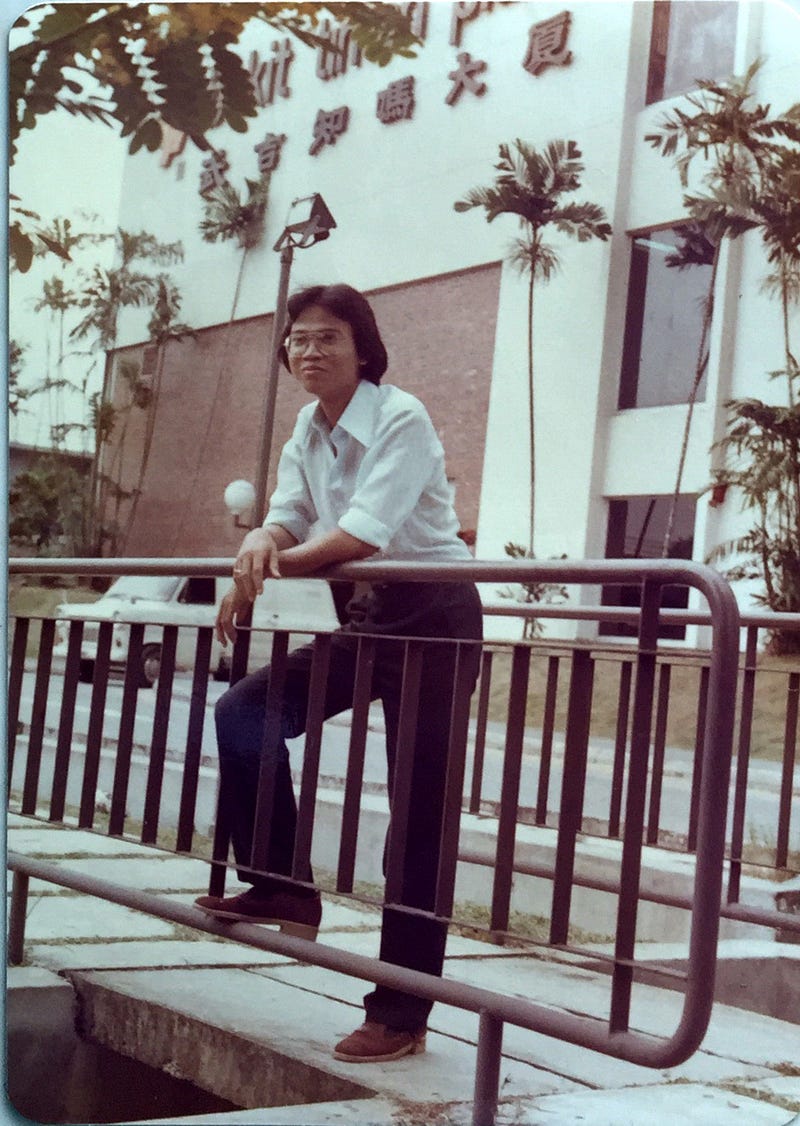
Teenager days.
Despite these vibrant and joyful aspects of my childhood, not all memories are without pain.
After finishing Form 5, I was devastated when I didn’t get the opportunity to study abroad. It was one of those moments where the future I had envisioned for myself seemed to crumble.
Alone in my room, I remember shedding tears over the rejection letter, feeling as though all my plans had come to a sudden halt.
Yet, looking back, I find myself engaging in a quiet dialogue, reminding myself that every disappointment also led to a new direction, a new opportunity that perhaps was better suited for me.
Life, as I’ve learned, is a meticulous blend of highs and lows, and it’s beautifully orchestrated by a higher power.
Each moment of sweetness and every bitter disappointment has its own significance and teaches us valuable lessons.
Childhood Reflections
Reflecting on my journey, I often converse with my younger self, encouraging him to see the wisdom in those seemingly random twists and turns.
As I grew older, I realized that perhaps the prayers of my parents, wife, children, or friends had shaped the course of my life in ways I couldn’t immediately understand.
Each step, whether filled with joy or soaked in tears, was a part of a grander plan meant for my ultimate good.
This journey of introspection and self-dialogue reminds me always to remain grateful and aware that our placement in life serves a specific purpose.
It is these reflections that have guided me through life, continually inspiring me to dream big, just like when I envisioned myself as a young scientist creating robots.
Who knows? Maybe those childhood dreams were not just flights of fancy but a preview of the path I was meant to explore.
Follow the six (6) steps to become a better writer.
Photo by Chase Clark on Unsplash
As a writer who has penned hundreds of articles through blogging and writing technical journals, I’ve had my fair share of learning curves when crafting engaging content.
The journey from a novice scribbler to an adept wordsmith has been both challenging and rewarding. Through it, I’ve gathered some insights that I believe can benefit any aspiring writer.
Today, I’d like to share my personal experience and the tips I’ve developed for writing more focused and engaging articles.
When I first started writing, I was overwhelmed by the desire to say everything at once.
My drafts were often a jumble of thoughts, anecdotes, and data that, while individually interesting, did not cohesively support a single point. This lack of focus not only diluted the impact of my writing but also confused my readers.
Photo by Stephen Kraakmo on Unsplash
I remember one particular instance where an editor told me, “You’ve lost track of what you’re saying. This could be two or three articles.”
That feedback was a turning point for me. It made me realize the importance of narrowing my focus and sticking to one subject at a time to avoid turning my articles into mazes filled with dead ends.
Here’s how I started refining my approach:
Step 1: Structuring My Writing
Initially, revisiting the basic structure of essays and articles felt like a step backward.
But I quickly realized that even a casual piece needs a skeleton to support it. Each article starts with an introduction, in which I introduce the topic and explain why it matters.
This is followed by the body, where I delve into the details, using subheadings and paragraphs to organize my thoughts and make the content digestible.
Finally, I conclude by tying all my points together, referring back to the introduction, and leaving the reader with a final thought. This structure organizes my writing and helps the reader follow along easily.
Step 2: Knowing My Audience
One of the key lessons I learned early on was the importance of understanding my audience.
Who are they? What do they care about? How can my article add value to their lives?
Answering these questions before I start writing helps me tailor my content to the people most likely to read it.
Step 3: Paring Down My Ideas
Having too many ideas is more problematic than having too few.
I learned to be ruthless in cutting out or setting aside ideas that don’t directly support my main topic.
This streamlines the article and saves those “extra” ideas for future pieces, effectively building up a stockpile of content to draw from.
Step 4: Adding Personal Touches
While structure and focus are crucial, injecting personal anecdotes and emotions into my writing makes it resonate on a human level.
Whether it’s a touching moment shared with a grandchild or a frustrating day trying to master verb conjugations, these snippets bring my narrative to life and engage readers on a deeper level.
Step 5: Research and Validation
As much as personal stories enrich an article, facts, data, and expert opinions bolster credibility. I always take the time to research my topics thoroughly, ensuring that every claim I make can be backed up.
This is particularly important when writing about topics like health, finance, or technology, where misinformation can have real-world consequences.
Step 6: Editing with Precision
Finally, no article is ready for publication without a thorough edit.
This process involves proofreading for grammar and spelling and revising sentences and paragraphs for clarity and impact. I read my drafts aloud to catch awkward phrasings and ensure natural flow.
After consistently implementing these steps, I noticed a significant improvement in the engagement and clarity of my articles.
Seeing readers respond positively is gratifying, especially when an editor sends a piece through with few or no revisions.
Photo by Slim Emcee on Unsplash
To encapsulate, here are the essential tips for writing focused and engaging articles that I’ve shared:
Structure Your Writing: Use a clear introduction, body, and conclusion.
Understand Your Audience: Tailor your content to their interests and needs.
Focus Your Topic: Limit your scope to maintain clarity and depth.
Inject Personal Stories: Make your writing resonate more deeply with readers.
Back-Up Claims: Use research and data to lend credibility to your article.
Edit Thoroughly: Never underestimate the power of revision for enhancing readability and impact.
Writing is more than a mechanical task; it’s a form of communication that requires empathy, clarity, and, most importantly, a connection with your reader.
As writers, our goal is to share information and invite our audience into an enriching and enlightening conversation.
By continually honing our craft and focusing on these principles, we improve our skills and enhance the reader’s experience.
While the process can sometimes feel daunting, creating a well-received article is immensely rewarding.
Each piece is a learning experience, an opportunity to connect with others and share a part of ourselves.
This iterative process of writing and feedback makes a writer’s journey so uniquely fulfilling.
Remember, the art of writing is not just about adhering to techniques; it’s about evolving and adapting.
The more we write, the more we learn about ourselves and our audience, and the better we communicate our thoughts and ideas effectively. This beautiful growth cycle fuels personal and professional development.
I encourage you to embrace the process, cherish your unique voice, and continue to share your insights with the world.
The path may be lined with challenges but also rich with rewards.
Keep writing, keep learning, and most importantly, keep engaging your readers with every word you write.
What a year it has been! From the highs of success to the lows of unexpected hurdles, the journey of my earnings on Medium in April 2024 has been nothing short of a rollercoaster ride — 107 times more exhilarating than last April, to be precise!
So, grab your favorite cup of coffee and settle in as I describe the twists and turns of this incredible story from my personal perspective.
Let’s start with a bit of background.
Last year, I remember staring at my earnings report in disbelief. The numbers were dismal, barely a blip on the financial radar.
April 2023 — Only 52 cents!
I pondered, “How can this be? I’ve been pouring my heart and soul into every post!”
It was frustrating, to say the least.
But then, as I often remind myself in moments of doubt, necessity really is the mother of invention.
I needed a game changer, and I needed it fast.
Here’s where the magic began.
I revamped my entire approach.
No stone was left unturned — strategy, engagement, content.
You name it, I tweaked it.
But more than anything, it was about connecting on a deeper level with my readers and fellow writers.
1 — Building a Vibrant Network
First up, I decided to build a more vibrant network.
It wasn’t just about increasing numbers, but about fostering meaningful interactions.
I targeted active Medium writers who were not just contributors but engaged community members.
I liken it to joining a buzzing hive of activity and positioning myself right at the center.
The energy was contagious, and it paid off in spades.
2 — Engaging on a Deeper Level
Then, I took engagement up a notch.
Instead of generic comments, I initiated genuine conversations.
Imagine this: you comment on a post and the author dives deep into a discussion with you.
It’s thrilling, right?
That’s what I aimed for — real connections that went beyond the surface.
This wasn’t just about increasing my visibility; it was about building a community, a place where everyone felt heard and valued.
I often found myself deep in thought, pondering, “What makes an interaction truly meaningful?”
It’s the personal touch, the effort to engage on a human level, not just as a writer but as a fellow enthusiast of life’s myriad stories.
3 — A Gesture of Appreciation: Clapping for Comments
Appreciation goes a long way.
On Medium, claps are more than just applause — they’re a show of gratitude.
I made it a point to clap for comments, acknowledging each person’s contribution.
This small gesture helped transform casual readers into loyal followers. It felt like every clap sent a ripple of positivity across my network.
4 — Continuous Improvement and Crafting Catchy Headlines
But let’s not forget the backbone of any writing endeavor — content.
I experimented with styles, explored different genres, and sharpened my voice.
Each article was a new journey.
And headlines? They were my secret weapon.
Crafting an irresistible headline became an art form in itself, one that could captivate and intrigue with just a few words.
So, what was the result of all these efforts?
My Medium profile didn’t just grow; it soared.
107 times more in April 2024
Followers multiplied, views skyrocketed, and, yes, earnings increased — a whopping 107 times the previous April! It felt like striking digital gold.
Now, you might wonder, “Is there a secret recipe to this success?” Honestly, it’s about more than just strategies and techniques.
It’s about connecting authentically, engaging sincerely, and never stopping the quest for improvement.
As I wrap up this tale of transformation, I can’t help but reflect on the broader implications.
It’s not just about boosting numbers or earning more — it’s about the journey, the connections made, and the growth experienced along the way.
If you’re looking to amplify your presence on any platform, not just Medium, why not try these strategies?
Dive into the deep end of engagement, cherish every interaction, and always, always keep your content dynamic.
You never know — you might find yourself penning your own success story.
Remember, in the world of content creation, it’s not just the destination that counts — it’s the vibrant, sometimes challenging, but always enriching journey.
So, embrace it fully, with all its ups and downs, because that’s where the real magic happens.
Happy writing, and here’s to a journey filled with discovery and success!
My recent trip to Dubai, from April 17 to 19, 2024, was an adventure I’ll never forget. It was supposed to be a straightforward business trip for a conference and MOU signing, but it quickly turned into a saga defined by an unusual wardrobe malfunction.
As I stood at the Kuala Lumpur International Airport, the attendant at the check-in counter informed me of our flight’s delay due to severe weather and flooding in Dubai.
Little did I know, this was just the beginning of an unexpected journey that would test my adaptability and sense of humor.
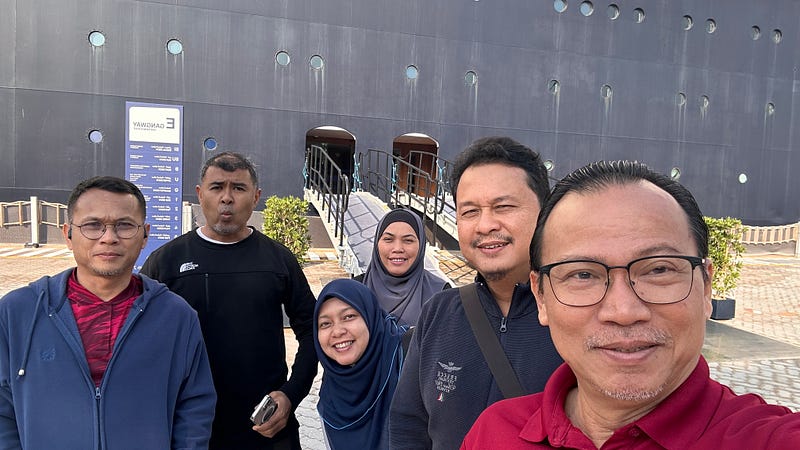
Upon arriving in Dubai, my first hint that this trip would be out of the ordinary came when our baggage failed to appear on the carousel. “We’ll just head to the hotel and pick it up tomorrow,” I reassured my fellow delegates from Cybersecurity Malaysia, Malaysia Airports Holdings, and a journalist from Bernama.
We were optimistic, not yet realizing the full extent of the chaos caused by the flood’s aftermath at Dubai International Airport.
The true challenge began the next morning.
making an attempt the next day to pick our bags.
When we returned to the airport, the scene at the Lost and Found was chaotic, to say the least. Despite assurances that our luggage would be available shortly, the minutes turned into hours with no resolution in sight.
The delay meant I had no choice but to attend the conference in the same clothes I had worn since leaving Malaysia — a bright red shirt that made me stand out starkly against a backdrop of white robes and formal business attire.
Signing an MOU but wearing the same shirt.
Standing there in my red shirt, I couldn’t help but feel a mix of embarrassment and amusement. “Of all the days to be a walking fashion emergency,” I mused to myself, trying to inject some humor into the situation.
As I walked into the conference room, feeling every eye on me, I found myself grappling with a whirlwind of emotions — self-consciousness, frustration, but also a reluctant acceptance of my predicament.
As I prepared to speak, I took a moment to gather my thoughts. “Here goes nothing,” I whispered under my breath, stepping up to the podium. The room was filled with dignitaries and professionals, all impeccably dressed.
I couldn’t help but feel like a sore thumb, glaringly out of place.
Remember the colour.
However, their warmth eased my anxiety, and I found myself relaxing into the talk, my initial discomfort slowly ebbing away.
What followed was a surprising twist; my bright red shirt, initially a source of embarrassment, became a talking point.
Post-event discussions weren’t just about cybersecurity and collaborations; they included light-hearted banter about the resilience needed not just in our professional tasks but in handling life’s unpredictable challenges.
“You’ve certainly made this event memorable,” chuckled a friend of mine, a comment that sparked a series of friendly exchanges that might not have occurred had I blended in seamlessly.
Returning to the airport that night, and after another long wait and a battle through a disorganized system, we finally managed to retrieve our bags.
The relief of being reunited with my luggage was profound, yet the ordeal had left an indelible mark on my experience.
It was a relief to be able to change our clothes before returning to Malaysia on April 19, 2024.
Reflecting on the events, I realized that this trip was more than just a business engagement; it was a testament to the human spirit’s adaptability.
The discomfort of wearing the same, uncharacteristically casual attire in a formal setting forced me to confront and overcome my insecurities about appearance and professionalism.
The ordeal taught me that while clothes might contribute to a first impression, it’s resilience and the ability to maintain composure under pressure that truly define one’s character.
This trip, with its unexpected trials, highlighted the importance of embracing the unexpected with grace and humor, making it a truly unforgettable experience.
Actually I regretted one thing — I should have bought a pair of clothes just before the event but then, it would not be any exciting story to tell, eh?
I’ve identified nine critical mistakes that were holding me back from becoming the writer I aspire to be.
Photo by krakenimages on Unsplash
Writing has always been a part of who I am. Reflecting on the past year, I realize that I penned over 100 articles in 2023, yet astonishingly, more than 80% of those garnered a mere ten views or fewer.
This statistic isn’t just a number – it’s a stark reminder of the disconnect between my efforts and the impact I hoped to achieve.
As writers, our primary aim is to disseminate our ideas and knowledge, to reach an audience that finds value in our words.
The realization that I wasn’t reaching my readers as effectively as I wanted was both saddening and exhausting.
In confronting this reality, I aimed to refine my craft and better connect with my audience.
Through this process, I’ve identified nine critical mistakes that were holding me back from becoming the writer I aspire to be.
As I share these insights, I hope you’ll join me in transforming our writing endeavors.
Photo by Santa Barbara on Unsplash
Mistake 1: Ignoring the Audience
One of the fundamental errors I realised was writing without a clear understanding of who my audience is. “Who am I writing for?” I often asked myself during my reflections.
Without knowing who the readers are, what they like, or what information they seek, my articles often missed the mark.
Moving forward, I’ve learned the importance of tailoring my content to the interests, needs, and preferences of my target audience, ensuring that each piece resonates and engages.
Mistake 2: Skimping on Research
Initially, I prided myself on speed – how quickly I could churn out an article.
However, this often came at the expense of depth and accuracy. “Am I providing real value?” I would wonder, as I hastily wrapped up another piece.
I’ve come to realize that thorough research not only enhances the quality of the content but also builds credibility with my readers.
Investing time in research is non-negotiable for producing informative and reliable content.
Mistake 3: Overlooking SEO
In today’s digital age, understanding and implementing Search Engine Optimization (SEO) is crucial.
I used to write purely from a creative perspective, neglecting how search engines understand and prioritize content. “Why aren’t people finding my articles?” I frequently pondered, unaware that I was invisible to search engines.
Learning about keywords, meta descriptions, and how to structure content for SEO has become a cornerstone of my writing process, helping my articles gain the visibility they deserve.
Mistake 4: Neglecting the Power of Editing
I confess, I was often so eager to hit ‘publish’ that I bypassed rigorous editing. “Is this really my best work?” I’d reluctantly think, knowing deep down I could improve it.
Editing is not just about correcting grammar or spelling; it’s about refining thoughts, strengthening arguments, and enhancing clarity.
Now, I dedicate ample time to revise and polish each article, recognizing that great writing is as much about revision as it is about creation.
Mistake 5: Failing to Engage with the Community
Writing is not a one-way street.
Initially, I neglected the social aspect of writing online – engaging with readers and other writers. “Why am I feeling so isolated?” I often lamented, not realizing that I wasn’t participating in the community.
Engaging in conversations, responding to comments, and connecting with others in the field are practices I now embrace enthusiastically.
These interactions enrich my understanding and expand my reach.
Mistake 6: Inconsistent Publishing
My publishing schedule was erratic at best.
There were bursts of activity followed by periods of silence. “How can I expect to build a following?” I questioned, seeing the effects of my inconsistency.
Establishing and sticking to a regular publishing schedule ensures that readers know when to expect new content, fostering a loyal and engaged audience.
Mistake 7: Not Diversifying Content Formats
I stuck rigidly to traditional article formats, missing out on the diverse ways people consume content. “Could I be more creative in my presentation?” I wondered, exploring different content types.
Now, I experiment with videos, infographics, and images, adapting my message to suit various preferences and platforms, thus reaching a broader audience.
Mistake 8: Underestimating the Title’s Impact
The importance of an article’s title cannot be overstated.
Initially, my titles were often vague or uninspiring. “Why isn’t this attracting more attention?” I would brood, not realizing the title’s potential to pull readers in.
Crafting compelling, clear, and curiosity-provoking titles is now a priority for me, as it significantly influences whether someone decides to read the piece.
Mistake 9: Ignoring Feedback
Earlier on, I viewed feedback as a personal critique rather than an opportunity to improve.
“Are they just being critical?” I defensively pondered, missing the constructive elements.
Now, I actively seek out and embrace feedback, understanding that it is vital for growth and improvement.
Moving Forward
Avoiding these 9 mistakes have improved the quality of my writing multiple times.
I managed to get better engagement, audience and certainly the earnings.
Thanks to the continuous encouragement and tips I learned from this Medium community.
What if you can create and manage your closed user group of IoT users and accounts?
The FAVORIOT IoT Ecosystem represents a new way of managing IoT developers and projects by offering a robust platform for research and development, educational enrichment, and user account management.
Do you know why institutions, faculties, and IoT enthusiasts should consider subscribing to FAVORIOT’s IoT Ecosystem?
Innovative Features of the FAVORIOT IoT Ecosystem
FAVORIOT’s new IoT ecosystem is a cloud-based platform designed to bring simplicity, control, and affordability to the hands of its users. It is equipped with features that make it a compelling choice for institutions and organizations:
Simple & Affordable Cloud-based Subscription: The subscription model is designed to be budget-friendly, offering a range of services without the need for expensive hardware investments. This cloud-based service ensures that users can access their IoT environment anytime, anywhere, making it an ideal solution for continuous learning and development.
Control Over User Accounts: The platform allows meticulous control over user accounts, enabling administrators to manage and oversee multiple users’ activities easily. This is particularly beneficial for educational institutions that must provide IoT platform services to many students or researchers. It allows the administrator to continue saving the data for future students to analyze and expand.
Ideal for IoT Labs: The platform emphasizes R&D, faculty, and university usage and provides an excellent base for IoT labs. It facilitates the exploration and development of IoT projects, from simple educational exercises to complex research endeavors.
The Edge in Educational Institutions
As educational institutions are pivotal in shaping the future workforce, integrating FAVORIOT’s IoT ecosystem into their programs ensures that students are adept in cutting-edge technologies:
Hands-On Learning: The IoT ecosystem provides students hands-on experience in real-world IoT applications, an indispensable part of technology education today.
Curriculum Development: With FAVORIOT’s platform, educators can seamlessly incorporate IoT projects into their curriculum, enhancing the learning experience and keeping the curriculum updated with the latest tech trends.
Collaborative Projects: The platform encourages cooperative learning, allowing students and faculty to work together on IoT projects and fostering community and teamwork.
Research and Development: FAVORIOT’s IoT Ecosystem is great for R&D. It provides tools and analytics essential for advancing IoT research and contributing to the academic and industrial fields.
Conclusion
FAVORIOT’s IoT Ecosystem Plan is a gateway to technological advancement and innovation for educational institutions, research labs, and developers. Its new features and subscription offer make it an essential tool for those looking to dive into the world of IoT, with a focus on practical, hands-on learning and development.
By subscribing to this platform, users gain more than just a service; they join a movement towards a smarter, more connected world driven by IoT technology.
Whether for enhancing the educational journey, conducting groundbreaking research, or managing many user accounts, FAVORIOT’s new IoT Ecosystem is the solution for tomorrow’s challenges today.
It’s a commitment to education, innovation, and the future of connectivity.
Each IoT product development journey is an odyssey filled with insights, challenges, and evolution. Today, I share the narrative of our fourth IoT venture, Dscover, and how it became a transformative segment of our IoT suite.
The Genesis of Dscover
The seeds for Dscover were sown amid the successful launch of our first IoT product, Raqib, in 2018. At this crossroads, feedback was not just a guide but a compass that pointed us toward innovation.
While Raqib was making strides, and as we progressed with Favorsense and the Favoriot IoT platform, there was a budding notion that it was time to chart a new path.
That’s when Dscover started to take shape.
Photo by Pathum Danthanarayana on Unsplash
Understanding the Underlying Need
With Raqib, we ventured into tracking solutions beyond the Bluetooth smartwatch and smartphone. Yet, it became clear that our users’ interests lay elsewhere.
They needed a different kind of tracking — one that provided safety and connectivity, especially while traveling. The market demanded a solution that prioritized security without compromising the freedom of the individual or group.
This was the crux that led to the ideation of Dscover.
Embracing Market Realities
Initially, our eyes were set on the bustling Travel and Tourism market. However, the onset of the pandemic in 2020 drastically altered the landscape and our strategies.
We had to pivot quickly, transforming Dscover into a tool for families and friends to stay connected despite global travel restrictions.
Photo by Felix Rostig on Unsplash
The Decision for an App-Centric Approach
Selecting a mobile application as the vessel for Dscover was strategic.
It was a nod to cost-effectiveness, leveraging existing smartphone technology, and aligning with the ease of deployment through app stores.
The aim was to create an unobtrusive yet powerful tool that users could integrate into their daily lives.
Tackling Go-to-Market Hurdles
The B2C model presented unique challenges, particularly in understanding and targeting user demographics through social media.
One stumbling block we encountered was the app’s initial name, “D’scover.” It proved problematic for searchability, leading us to the pivotal decision to rename it “Dscover.” (Note: Later, we observed that the spelling “Dscover” and how we pronounce it as “Discover” became a big misunderstanding in searching in the App store)
The initial B2B strategy targeted travel agencies and governments, but we widened our scope as the pandemic reshaped the world.
We even considered using Dscover for monitoring quarantined patients, an idea that, despite its potential, did not gain official traction.
Photo by Joan Gamell on Unsplash
Introspective Moments
This juncture compelled us to reflect — did we invest enough in marketing and sales for our existing products before venturing into another? It was a solemn reminder of the complexities inherent in product development within the IoT space.
Gleaning Lessons Along the Way
Adaptability Emerged as Key
The development of Dscover underscored the significance of market adaptability. The global changes of 2020 necessitated a shift from a travel-centric application to one that served families and friends, illustrating our ability to respond to macro-environmental shifts.
Valuing User Feedback
The feedback from our users was paramount. Their insights directly influenced the trajectory of Dscover, underscoring the need to align our product closely with the user’s desires and expectations.
Photo by Jay-Pee Peña 🇵🇭 on Unsplash
The Art of Naming
A name is more than a label; it’s the first touchpoint with the user. The transition to “Dscover” was a calculated move to facilitate ease of search and foster brand recall. It was a lesson in the subtleties of product naming and its impact on visibility and accessibility.
The Need for Continuous Evaluation
Before plunging into new product waters, a thorough assessment of our existing products’ presence in the market became an evident necessity. Such evaluations and robust marketing and sales strategies are the bedrock of successful product evolution.
Carrying Forward the Insights
These lessons from Dscover are part of our collective wisdom as we forge ahead. They act as a direction that guides our product development, ensuring that our creations resonate with the market’s pulse and enrich our users’ lives.
Reflecting on this journey, I am reminded that each step, whether forward or backward, is a learning opportunity.
Through these experiences, we chart a course for success, navigating the intricate waters of IoT development with a keener sense of direction and a more refined vision for the future.
The story of Dscover is more than a chapter in our history; it’s a catalyst that propels us towards innovative horizons, ever ready to adapt, grow, and excel.























 Dr. Mazlan Abbas