Why These Three (3) IoT Platform Companies Are Successful

SUCCESS STORIES

Learn their success factors.

Image created from ChatGPT 4o

In this article, we listed three IoT platform companies, ThingSpeak, Blynk, and Favoriot, and why they are successful in their business.

ThingSpeak

ThingSpeak has achieved significant success as an Internet of Things (IoT) platform due to several key factors:

  1. Ease of Use: ThingSpeak allows users to quickly and easily set up channels to collect and visualize data from various IoT devices. The platform’s intuitive interface and comprehensive documentation make it accessible for beginners and experienced developers​ (ThingSpeak)​​ (The Engineering Projects)​.
  2. Integration with MATLAB: One of ThingSpeak’s standout features is its integration with MATLAB. This allows users to perform advanced data analysis and visualization directly within the platform. MATLAB’s powerful analytical tools enable users to create custom algorithms and automate processes, making it ideal for complex IoT projects​ (ThingSpeak)​​ (Instructables)​.
  3. Flexibility and Customization: ThingSpeak supports multiple data sources and IoT protocols, including RESTful and MQTT APIs. This flexibility allows it to be used with various devices, from simple sensors to complex systems. Additionally, users can create private or public channels, customize data visualizations, and set up triggers and alerts based on real-time data​ (ThingSpeak)​​ (The Engineering Projects)​.
  4. Community and Support: The platform benefits from a strong community of users who share tutorials, projects, and solutions. This community support, combined with extensive official documentation and examples, helps users troubleshoot issues and expand their knowledge​ (ThingSpeak)​​ (Instructables)​.
  5. Prototyping and Proof of Concept: ThingSpeak is particularly popular for prototyping and proof-of-concept projects. Its ability to quickly aggregate, visualize, and analyze data without requiring extensive setup or development of custom web software makes it an attractive option for innovators and researchers looking to test new ideas​ (Instructables)​.

Overall, ThingSpeak’s user-friendly design, powerful analytical capabilities, flexibility, and robust community support contribute to its success as a leading IoT platform.


Blynk

Blynk has become a highly successful IoT platform for several reasons:

  1. Ease of Use: Blynk’s user-friendly interface allows even beginners to create and manage IoT projects without extensive programming knowledge. The drag-and-drop feature makes it easy to build customized interfaces for controlling and monitoring devices​ (TrustRadius)​.
  2. Broad Device Support: Blynk supports many devices and connectivity options, including Wi-Fi, Bluetooth, and Ethernet. This flexibility allows developers to use popular microcontrollers like ESP8266 and ESP32, which are pre-configured to work seamlessly with the Blynk platform​ (Instructables)​​ (Blynk).
  3. No-Code and Low-Code Solutions: Blynk offers no-code development options, enabling users to build IoT applications quickly without writing code. This is particularly advantageous for businesses and hobbyists looking to rapidly prototype and deploy IoT solutions (TrustRadius)​.
  4. Customizable and Scalable: Blynk provides extensive customization options, allowing users to design interfaces that meet their needs. It also offers scalability from small projects to large commercial deployments, with features like private servers, energy management, and role-based user permissions​ (Tech Explorations)​​ (TrustRadius)​.
  5. Powerful Features and Integration: Blynk includes powerful features such as real-time data monitoring, remote control, over-the-air (OTA) firmware updates, and integration with other systems like Node-Red. These features help streamline the development process and enhance the functionality of IoT projects​ (Blynk)​​ (TrustRadius)​.
  6. Community and Support: Blynk has a strong community of developers and extensive documentation, tutorials, and support resources, making it easier for users to find solutions and share their projects​ (Instructables)​​ (Tech Explorations)​.

These factors combined make Blynk an attractive and effective platform for IoT development, helping users efficiently create, manage, and scale their IoT projects.


FAVORIOT has become highly successful for several key reasons:

  1. Innovation and Flexibility: FAVORIOT offers flexible and innovative IoT solutions tailored to various industries. This adaptability allows it to serve multiple applications, from healthcare to smart cities, making it a versatile platform for different use cases ​.
  2. Strong Leadership: Under Dr. Mazlan Abbas, a recognized global thought leader in IoT and smart cities, FAVORIOT benefits from visionary guidance. Dr. Mazlan’s extensive experience and strategic insights have played a crucial role in positioning FAVORIOT as a leader in the IoT space.
  3. User-Centric Platform: FAVORIOT’s platform is designed to be user-friendly and accessible, enabling developers and businesses to integrate IoT solutions easily. This ease of use helps in quick adoption and implementation, which is critical for businesses looking to leverage IoT technologies without extensive technical overhead.
  4. Community and Ecosystem: FAVORIOT has built a robust ecosystem and community around its platform, providing extensive support and resources to its users. This includes comprehensive documentation, tutorials, and a supportive community facilitating learning and troubleshooting​.
  5. Focus on Education and Empowerment: FAVORIOT actively engages in educational initiatives and partnerships with academic institutions. This helps foster the next generation of IoT innovators and expands its influence within the industry and academia.

These factors collectively contribute to the ongoing success and growth of FAVORIOT in the competitive IoT market.

How to Keep Readers Engaged on Your Medium Stories for Over 30 Seconds

WRITER’S STORIES

The core principles of engagement remain the same: deliver value, invoke curiosity, and foster interaction.

Photo by Manish Upadhyay on Unsplash

As someone deeply involved in the intersection of technology and communication, I’ve dedicated a significant portion of my career to understanding how digital platforms can enhance interaction and engagement.

My journey as an academic and now a CEO specializing in IoT has taught me the nuances of capturing and maintaining an audience’s attention.

Today, I want to share my insights tailored explicitly to writers on Medium, focusing on how you can get readers to not just click on your articles but stay engaged beyond the crucial 30-second mark.

Understanding the Medium Landscape

Photo by Mark Harpur on Unsplash

Medium is a platform rich with diverse content and an equally varied audience.

To capture the attention of these readers, it’s essential to understand the platform’s core mechanics.

Medium measures engagement through ‘reads,’ not just clicks, which means a reader has to stay on your page for a significant amount of time, usually over 30 seconds, for a visit to count as a read.

Achieving this isn’t just about improving your earnings; it’s about making a meaningful impact with your content.

Selecting a Topic

Photo by Dare Artworks on Unsplash

Choosing the right topic is your first critical decision.

It must resonate with a broad audience unless you target a specific niche.

As Mazlan Abbas, I often draw from my experiences in IoT and smart city innovations.

However, when I write, I aim to find a universal angle – perhaps focusing on how technology can improve everyday life, which appeals to a broader audience.

The goal is to find a topic that interests you and will spark curiosity among your readers.

Crafting the Headline

Photo by AbsolutVision on Unsplash

Your headline is your first impression.

Make it count.

It should be intriguing enough to draw readers in and reflective of the content they’re about to read.

Avoid clickbait.

Today’s readers are savvy and can feel betrayed by headlines that don’t deliver, leading them to bounce quickly off the page.

Engaging Introductions

Photo by Ozgu Ozden on Unsplash

The opening of your article should immediately engage the reader.

I like to start with a personal anecdote or an insightful observation that sets the tone for the discussion.

This approach humanizes the content and establishes a connection with the reader.

Here’s how I might begin an article on IoT:

Last week, as I walked along the bustling streets of Kuala Lumpur, I was struck by the seamless interaction between diverse IoT applications and urban life. Integrating technology and daily activities is no longer futuristic – it’s our reality.

Delivering Value Through Content

Photo by Alexander Grey on Unsplash

Once you’ve hooked your readers, the challenge is to keep them.

This is where the quality of your content plays a vital role.

It should be informative, well-researched, and, most importantly, offer a new perspective.

Even in fields as complex as telecommunications or IoT, the key is simplifying concepts without dumbing them down.

Ask yourself, “What new information or perspective am I offering?” This is what will keep your readers engaged.

Personal Opinions and Authentic Voice

Photo by Jason Rosewell on Unsplash

People connect with people, not just words on a screen.

Sharing your personal opinions can make your articles more relatable.

However, remember to use facts and experiences to maintain credibility.

Encouraging dialogue by addressing potential counterpoints can also increase engagement, as readers may stick around to ponder their views or craft a response.

Interactive Conclusions

Photo by Fab Lentz on Unsplash

Ending your article with a question or a call to action can be effective.

It invites readers to reflect on the topic and engage directly by leaving comments.

This increases the time they spend on your article and builds a community around your work.

For example, after discussing the impact of IoT on urban living, I might conclude with, “How do you see IoT technology playing a role in your city? Are there areas in your daily life where it could be beneficial?

Continual Learning and Adaptation

Photo by Conny Schneider on Unsplash

Lastly, engaging readers is an ongoing learning experience.

Use the analytics tools provided by Medium to see what works and what doesn’t.

Which articles have higher engagement?

What topics resonate most with your audience?

Based on this feedback, adapt and refine your strategies.


By following these strategies, you can significantly increase the time readers spend on your articles on Medium.

Remember, the goal is not just to get readers but to make an impact, to share knowledge, and to initiate conversations that matter.

As a technologist and an academic, I’ve learned that whether it’s through IoT or interactive articles, the core principles of engagement remain the same: deliver value, invoke curiosity, and foster interaction.

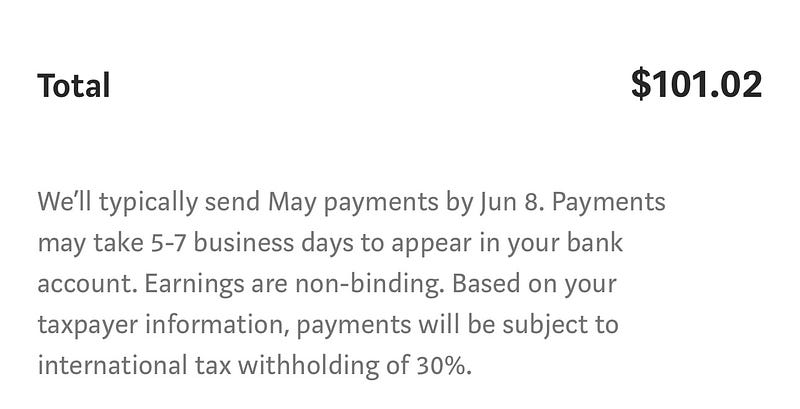
How I Finally Earned My First $100 After Six Months on Medium

WRITER’S STORIES

Seven (7) tips that you can follow.

Photo by Omid Armin on Unsplash

When I first joined Medium, I remember reading somewhere that only about 5% of writers make $100 or more monthly. This statistic stuck with me and became a personal milestone. “Can I be part of that 5%?” I often wondered.

After several months on the platform, my stories started gaining traction, but I hadn’t earned more than $65 in any given month. My initial goal was relatively modest — to earn around $100 per month.

Now that I’ve finally achieved this goal, I’m setting my sights higher, aiming for $200 next. It feels similar to my journey with followers; my goal started at 500, then 1000, 1500, and now 2000.

This journey has taught me persistence pays off,” I reminded myself.

If you stay on Medium long enough and continue to write, you will eventually meet your goals.

This has certainly been my experience. Reflecting on my recent success, I realize I did a few things differently this past month that contributed significantly to my earnings surpassing $100.

I want to share these strategies with you in the hope that they will also help you increase your earnings.

1 — Increasing Article Output

Photo by rivage on Unsplash

One of the most significant changes I made was increasing the number of articles I wrote each week.

Previously, I wrote one or two articles per week, but I noticed a remarkable shift when I started writing four to five articles weekly.

Writing every day seemed too ambitious and unsustainable, but four to five weekly articles struck the right balance.

There’s something transformative about writing more frequently on Medium,” I thought.

Some days, the words flow effortlessly; on others, it’s a struggle.

On days when inspiration strikes, I write as much as possible without worrying too much about editing.

I focus on getting the ideas out of my head and onto the page.

Later, when I’m not feeling as creative or have less time, I go back and edit these articles, refining and polishing them for publication.

This approach has increased my output and improved my consistency, keeping my readers engaged with regular content.

2 — Writing Longer, Engaging Content

Photo by Patrick Tomasso on Unsplash

Another pivotal change was making my articles longer.

I learned that the longer someone reads your story, the more you earn. However, writing longer content alone isn’t enough; it must be engaging.

If your article is lengthy but fails to hold the reader’s attention, they’ll likely leave before finishing, which won’t help your earnings or reader retention.

Initially, I resisted writing longer articles because I personally prefer shorter reads,” I admitted.

However, observing successful Medium writers who often write lengthy articles inspired me to experiment with longer content.

The key is ensuring every part of your article is engaging and adds value to the reader.

3 — Growing Your Follower Base

Photo by Free Walking Tour Salzburg on Unsplash

Followers play a crucial role in your success on Medium. “When I started actively following other writers, many followed me back,” I noted, which helped increase my visibility on the platform.

Having a larger follower base doesn’t guarantee they will read all your stories, but it does put you on their radar.

I’ve noticed that writers with a substantial following often have more credibility,” I reflected.

They’ve either been on Medium for a long time or have consistently produced quality content.

This credibility can attract more readers to your stories, increasing your chances of higher earnings.

4 — Repurposing Old Articles

Photo by Sergiu Vălenaș on Unsplash

After being on Medium for a while, you’ll notice that some of your older articles aren’t performing well.

Instead of deleting these underperforming stories, I considered repurposing them.

Change the title, restructure the content, and tweak anything that could use improvement,” I reminded myself.

Sometimes, a simple title change can bring new life into an article.

Recently, I learned how to embed links in my stories,” I said excitedly.

I revisited some of my older articles and added links to related content.

This strategy revived those articles and encouraged readers to explore more of my work, increasing overall engagement.

5 — Utilizing Popular Keywords

Photo by NisonCo PR and SEO on Unsplash

Writing frequently within a niche and using relevant keywords is another effective strategy.

For instance, I write a lot about IoT and entrepreneurship — these are my keywords, and they have a substantial following.

Incorporate these keywords in your titles and headings within the articles,” I advised myself.

Keywords help your stories get found on Medium and through search engines like Google.

They tell search engines what your story is about, which is crucial for getting more views.

6 — Writing for Your Audience

Photo by Nicholas Green on Unsplash

Understanding and writing for your audience is paramount. “Consider who your readers are and what they are looking for,” I constantly reminded myself.

Are you teaching them something new or sharing a personal story?

Tailoring your content to meet your audience’s expectations and needs will help you connect with them better and keep them coming back for more.

7 — Writing Because You Love It

Photo by Belinda Fewings on Unsplash

Today, I can confidently say that I have become a much better writer thanks to the practice and feedback I’ve received on this platform.

Writing frequently has improved my skills and solidified my identity as a writer.

Reaching the $100 mark is a significant milestone,” I thought with satisfaction, but the love for writing will keep you going in the long run.

By focusing on your passion and continuously honing your craft, the financial rewards and recognition will follow.


My journey to earning $100 monthly on Medium has been one of persistence, strategic adjustments, and much learning.

By increasing my output, writing longer and more engaging articles, growing my follower base, repurposing old content, using popular keywords, and writing with my audience in mind, I’ve been able to achieve this milestone.

And above all, writing because I love it has made the journey worthwhile.

If you’re on a similar path, I hope these insights will help you reach and surpass your goals on Medium.

This experience has reaffirmed my belief in perseverance and adaptability,” I concluded.

As I look forward to new goals and challenges, I remain committed to sharing my journey and insights with fellow writers and readers on Medium.

Together, we can continue to grow, learn, and succeed.


My Top Three (3) Stories in May 2024 — You Should Read This!

View at Medium.comView at Medium.comView at Medium.com

In Business, It’s Better to Say “No” Than a Long Silence

BUSINESS STORIES

How do you tackle this situation differently?

Photo by Nick Fewings on Unsplash

In the early days of founding FAVORIOT, my excitement was palpable. I recall waking up each morning, brimming with anticipation for what the day might bring. I envisioned countless opportunities, partnerships, and groundbreaking projects to revolutionize industries with the Internet of Things (IoT).

My mind was a whirlwind of possibilities, and I was eager to bring these visions to life.

However, as any seasoned entrepreneur will tell you, the path to success is often fraught with challenges and frustrations that test your resolve.

One of the most frustrating experiences I encountered was the initial enthusiasm of potential customers and partners, only to be met with a deafening silence after our first meetings. I remember vividly the thrill of presenting our IoT solutions to a room full of attentive faces, each nodding in agreement and expressing keen interest. Their excitement mirrored mine, and I left those meetings with accomplishment and optimism.

Finally,” I would think, “they see the potential just as I do. This is going to be the start of something great.

However, days would turn weeks and weeks into months, with no follow-up from the very people who seemed so eager to collaborate. I repeatedly checked my email, hoping for a response that never came. The silence was not just disheartening; it was infuriating.

Photo by Kristina Flour on Unsplash

Why can’t they just say no?” I would vent in the privacy of my office. “A clear rejection is far better than this uncertainty.

It wasn’t just the absence of a reply that was frustrating, but the wasted effort in following up, hoping to reignite the interest we once shared. Each follow-up email or phone call felt like a stab in the dark, a desperate attempt to keep the dialogue alive.

More often than not, these efforts were met with continued silence. The optimism that had once fueled my days began to wane, replaced by a growing sense of futility.

Then, there were the times when the silence was broken by news that stung even more.

I would discover that the same potential partners or customers who had once expressed interest in FAVORIOT had partnered with someone else. It wasn’t just a professional setback; it felt personal.

How could they?” I’d mutter, shaking my head in disbelief. “We had something good here. Why didn’t they give us a chance?

This cycle of initial excitement, followed by prolonged silence and eventual rejection, was a bitter pill to swallow. Each instance was a reminder of the unpredictable nature of business and the often-unspoken dynamics that influence decisions.

Photo by Towfiqu barbhuiya on Unsplash

Amid these frustrations, I sought solace and advice from fellow entrepreneurs. I remember one particular conversation with a seasoned business owner who had faced similar challenges.

Mazlan,” he said, “this is part of the game. You’ll face many who won’t have the courtesy to say no outright. It’s not about you or your product; sometimes, they’re just not ready, or they’ve found something that fits their immediate needs better.

His words offered some comfort, but they didn’t ease the sting of each rejection.

Nevertheless, they reinforced an important lesson: resilience. Bouncing back from setbacks and pushing forward is crucial in the entrepreneurial journey.

Reflecting on those early days, I realize how much I’ve grown since then. The frustrations that once seemed impossible are now seen in a different light.

Each rejection, each moment of silence, was a lesson in patience and perseverance. It was during these quiet times that I learned to refine our offerings, improve our pitch, and, most importantly, to never take rejections personally.

Photo by Danie Franco on Unsplash

I began to adopt a new approach.

Instead of waiting passively for responses, I proactively sought feedback during the initial meetings.

What are your primary concerns?” I’d ask. “How can we better meet your needs?

This proactive stance not only helped gauge genuine interest but also provided valuable insights into potential customers’ minds. I learned to identify the signals of genuine interest versus polite engagement, allowing me to focus my efforts more effectively.

Moreover, I started to build a more robust network of reliable partners who understood and appreciated our vision.

These partnerships, while fewer in number, were far more fruitful and led to significant breakthroughs for FAVORIOT.

We began to collaborate on projects showcasing IoT’s real potential, gradually building our reputation and credibility in the industry.

One particularly memorable project was collaborating with a city council on a smart city initiative. It was a long shot, but our persistence paid off.

The project was a resounding success, as proof of concept for many who doubted us. It was a turning point, not just for FAVORIOT, but for me. It validated the sleepless nights, the endless follow-ups, and the resilience required to get us to that point.

Photo by Patrick Tomasso on Unsplash

Looking back, I realize that the early frustrations were a necessary part of the journey.

They tested my commitment to the vision of FAVORIOT and forced me to develop a thicker skin.

More importantly, they taught me the value of perseverance and the importance of learning from every positive or negative experience.

Today, as I stand on the other side of those challenges, I often share these lessons with budding entrepreneurs. I tell them that the path to success is rarely straightforward. It’s filled with unexpected twists and turns, moments of doubt, and frustration.

But each challenge is an opportunity to grow, learn, and improve.

If I could give you one piece of advice,” I often say, “it’s never to let silence discourage you. Use it to reflect, improve, and prepare for the next opportunity. Because, trust me, there will always be another opportunity.

Ultimately, the journey of building FAVORIOT has been as much about personal growth as it has been about professional achievement.

The early frustrations, the silent rejections, and the moments of doubt have all shaped me into the entrepreneur I am today.

And for that, I am grateful.

The road ahead remains challenging, but with each step, I carry the lessons of the past, ready to face whatever comes next.

Fake Online Gurus

LIFE STORIES

Why They Still Frustrate Me

Photo by Sander Sammy on Unsplash

In the Internet world, the rise of self-proclaimed “online gurus” has been both a blessing and a curse. They provide valuable insights and actionable advice, but their proliferation has also led to an overload of misleading, superficial, and sometimes harmful content. This duality frustrates many, including myself, as I am continually searching for genuine, high-quality information.

The Evolution of Online Gurus

I remember when I first encountered the term “guru.

It carried a sense of reverence, a mark of deep knowledge and experience.

Historically, a guru was a master or a teacher, particularly in spiritual and philosophical contexts.

But now, in the digital age, anyone with a platform and a bit of charisma can claim the title.

I often ask myself, “What happened to the essence of being a true guru?” The allure of becoming an online guru is understandable: it offers authority, influence, and financial gain.

But at what cost?

The Problem with Modern-Day Gurus

Photo by Austin Distel on Unsplash

One of the most significant issues with today’s online gurus is the commodification of expertise.

Many resort to oversimplification and sensationalism in their race to build personal brands and monetize content.

I often wonder, “Do they realize the damage they’re doing by reducing complex topics to catchy soundbites?

This approach not only undermines the depth of the subject matter but also misleads audiences into believing that meaningful change can be achieved with minimal effort.

Social media exacerbates this problem.

Platforms like Instagram, YouTube, and TikTok reward high engagement, often favoring style over substance.

Why does style always seem to win over substance?” I find myself pondering this as I scroll through my feeds.

The curated perfection these gurus present creates unrealistic expectations and fosters a sense of inadequacy among followers.

The Ethical Implications

Photo by Brett Jordan on Unsplash

The ethical implications of the online guru phenomenon are significant.

Promising quick success and effortless transformation can be particularly harmful, especially in areas like health and wellness.

I’ve seen gurus advocating unproven diets, supplements, and fitness routines that could negatively impact their followers’ health.

In business and finance, following the advice of an unqualified guru can lead to substantial financial loss.

I ask myself, “Do these gurus understand the weight of their words?

Another ethical concern is the exploitation of vulnerable populations.

Many online gurus target individuals desperate for change – losing weight, finding financial freedom, or achieving personal growth.

These audiences are often more susceptible to marketing tactics that promise miraculous results.

It’s a harsh reality, and I frequently think, “Isn’t there a way to protect these individuals from being exploited?

The Role of Critical Thinking

Photo by Kenny Eliason on Unsplash

In an environment saturated with self-proclaimed experts, critical thinking is essential.

We must approach online content skeptically and evaluate the source’s credibility.

Here are a few strategies to help discern the value of information provided by online gurus:

  1. Check Credentials: Investigate the guru’s background. “Do they have formal education, training, or experience in the field they’re discussing?” Are they recognized by reputable organizations or peers in their industry?
  2. Seek Evidence: Look for evidence-based information. Gurus who make bold claims should back them up with data, research, and real-world examples. “Is there solid evidence behind their words?
  3. Cross-Reference: Compare the information with other reliable sources. “If multiple credible sources corroborate the guru’s claims, it’s more likely to be accurate.” Conversely, approach cautiously if their advice is at odds with established knowledge.
  4. Evaluate the Motivation: Consider the guru’s motivation. “Are they genuinely interested in helping others, or are they primarily focused on selling a product or service?” Be wary of those whose primary goal is financial gain rather than sharing valuable knowledge.
  5. Engage in Dialogue: Participate in discussions and forums where you can ask questions and engage with the guru and their followers. “What do their followers have to say?” This interaction can provide additional insights into their credibility and depth of knowledge.

The Potential for Positive Impact

Despite the challenges posed by the proliferation of online gurus, it’s essential to acknowledge that many genuinely contribute positively to their fields.

These individuals possess expertise, experience, and a genuine desire to educate and inspire.

When approached with integrity and a commitment to quality, online gurus can provide valuable guidance and support to their audiences.

I remind myself, “Not all gurus are bad – some are true gems.

In personal development, for example, many credible gurus offer evidence-based strategies for improving mental health, productivity, and overall well-being.

In business, experienced entrepreneurs share practical insights and lessons from their journeys, helping others navigate the complexities of entrepreneurship.

The key is to differentiate between those who are truly knowledgeable and those who are simply capitalizing on the trend.

A Call for Authenticity

Photo by Brett Jordan on Unsplash

As consumers of online content, we have a role in shaping the landscape of digital expertise.

By demanding authenticity and holding gurus accountable for the information they disseminate, we can encourage a higher standard of content creation.

Here’s how we can contribute to this positive change:

  1. Support Authentic Creators: Follow and engage with gurus who demonstrate expertise, integrity, and a commitment to quality. “Let’s amplify the voices that deserve to be heard.
  2. Promote Media Literacy: Encourage critical thinking and media literacy among your peers. “Share resources and strategies for evaluating online information and recognizing credible sources.
  3. Hold Gurus Accountable: Call it out respectfully when encountering misleading or harmful content. “Engage in constructive dialogue and provide evidence-based counterarguments.” Encourage gurus to acknowledge their mistakes and make corrections when necessary.
  4. Foster Community: Create and participate in communities that value critical thinking and evidence-based knowledge. “Let’s build spaces where reliable information is shared and valued.
  5. Be Mindful of Your Influence: If you are in a position of influence, be mindful of the information you share and promote. “Strive to be a credible source yourself, adhering to principles of accuracy, integrity, and authenticity.

The rise of online gurus is a complex phenomenon with both positive and negative implications.

While the democratization of knowledge has allowed many to share valuable insights, it has also led to the proliferation of misleading and superficial content.

By approaching online information critically, supporting authentic creators, and fostering a culture of accountability, we can ensure that the voices of true experts are heard and valued.

Ultimately, I remind myself, “It’s not about silencing voices but elevating the right ones.

As we move forward, let’s strive for a digital space where expertise is respected, authenticity is valued, and meaningful connections are made.

How about you? Have you encountered fake gurus?

Every Failure Was a Step Towards Your Success

STARTUP FOUNDER’S STORIES

You’ve come this far. Keep going.

Author and team members (converted to anime using the Glam app)

The past seven years of my entrepreneurial journey have been a rollercoaster, filled with more failures and wrong decisions than my entire 20-year career in academia and corporate leadership combined.

Reflecting on these years, I often find myself engaged in deep self-dialogue, questioning my choices and pondering the worth of my dreams.

This story is not just a recollection of my setbacks but an attempt to inspire myself — and hopefully others — by embracing these challenges as stepping stones to eventual success.


Reality sets in

I remember the day we founded FAVORIOT, brimming with enthusiasm and confidence.

This is it, Mazlan,” I told myself, “This is the moment you’ve been preparing for your whole life.

Little did I know, the path ahead was not a straight line but a labyrinth of trials and tribulations.

In the early days, my optimism was unshakeable. I believe in our product, vision, and ability to revolutionize the IoT landscape.

However, reality quickly set in.

The first product we launched didn’t resonate with the market. “How could this happen?” I questioned myself. We had poured countless hours into development, convinced of its potential.

Yet, the market had other ideas.

I had made a fundamental error in understanding our market segment.

I realized too late that we were targeting the wrong audience.

This mistake cost us precious time and resources.

It was a humbling experience, and I couldn’t help but feel a pang of self-doubt. “Am I cut out for this? Can I lead this company to success?

Despite this setback, I pressed on. I gathered my team and redirected our focus.

Photo by Chase Clark on Unsplash

Refining and pivoting – a non-stop process

We refined our product, pivoting towards a different market segment. I was determined to learn from my mistakes.

Failure is not the end, Mazlan. It’s a lesson. Get back up and try again.

As we pushed forward, the rejections started piling up.

Customers turned us down, proposals were dismissed, and sales were hard to come by.

Each “no” felt like a personal affront. “Why can’t they see the value in what we’re offering?” I often wondered aloud.

It was disheartening, but giving up was never an option.

Investor meetings became a test of resilience.

Time and again, we faced rejection.

Investors questioned our projections, market strategy, and even our execution capability.

What am I missing?” I would ask myself after each meeting.

It was a stark reminder that belief in our vision was insufficient; we needed to prove it with solid results.

One particularly tough rejection stands out.

We had been in discussions with a potential investor for months, confident that we had a deal.

When they finally declined, it felt like a punch to the gut. “What now, Mazlan? How do we move forward from this?

I found myself at a crossroads, questioning the viability of our dream.

Photo by Mike Enerio on Unsplash

When you get that self-doubt

In these moments of doubt, I turned to my inner dialogue for strength.

Remember why you started this journey,” I would remind myself.

It’s not about the immediate success or the approval of others. It’s about your vision for a connected world and the impact you want to make with IoT.

The entrepreneurial journey is often romanticized, but the reality is far from glamorous.

It’s a test of endurance, patience, and relentless pursuit.

I’ve made countless wrong decisions — about the product, the market segment, the customers, and the forecast.

Each misstep has been a painful but necessary part of the learning process.

One significant mistake was our initial customer forecast.

I had overestimated the market readiness and underestimated the competition.

Our projections were wildly optimistic, leading to a cash flow crisis.

How could I have been so wrong?” I chastised myself.

Photo by Josh Appel on Unsplash

Lessons from failures

It was a harsh lesson in the importance of thorough market research and realistic projections.

However, each failure also brought clarity.

We learned to adapt and be agile in our approach.

When one strategy failed, we devised another.

I realized resilience is not about never falling but always getting back up.

Mazlan, you are stronger than your failures. Each ‘no’ brings you closer to a ‘yes’. Keep pushing forward.

The entrepreneurial journey has also been a test of belief—in myself, my team, and our vision.

There were times when the weight of doubt threatened to crush my spirit.

Is it worth it? Should I give up and return to the safety of a regular job?” These thoughts plagued me during the darkest hours.

Yet, in those moments, I found solace in my past.

My entire career has been a series of unexpected turns and challenges.

From academia to corporate leadership, I have faced and overcome numerous obstacles.

You didn’t come this far only to come this far,” I reminded myself. No matter how difficult, each step was part of a larger journey towards a greater goal.

I began to see failures not as endpoints but as valuable feedback.

Each rejection, each wrong decision, was a lesson in disguise.

What can I learn from this? How can I improve?” These questions became my mantra, guiding me through the maze of entrepreneurship.

Photo by Nik on Unsplash

Where do I get that strength to move on

Building FAVORIOT has been more than just a business venture; it’s been a personal adventure.

I’ve discovered strengths I never knew I had and weaknesses that needed addressing.

The journey has forged a resilience I didn’t know existed. “Mazlan, you are capable of more than you realize. Keep going.

My team’s support has been invaluable.

Together, we’ve weathered the storms of doubt and disappointment.

Their belief in our vision has been a constant source of motivation.

We are in this together,” I often tell them. “Our success and failure will be shared. We learn and grow as a team.

As I look back on the past seven years, I see a collection of experiences — each one representing a lesson learned, a challenge overcome, a dream pursued.

The failures and wrong decisions are not scars but badges of honor, marking the journey of an entrepreneur who dared to dream.

There is no guaranteed path to success in entrepreneurship.

The road is fraught with obstacles and uncertainties.

But it is also a journey of discovery, of pushing the boundaries of what is possible.

Mazlan, this is your story. Own it, embrace it, and let it propel you forward.

To anyone in a similar position, questioning the worth of their dreams amid countless failures, I say this: Do not give up.

Photo by Brett Jordan on Unsplash

The road towards the final goal

The road may be long and arduous, but each step brings you closer to your goal.

Embrace the challenges, learn from the setbacks, and let your resilience shine.

Success is not a destination; it is a journey.

Every failure, every wrong decision, is a step towards growth and improvement.

“Keep moving forward, Mazlan. Your dreams are worth fighting for.”

So, I continue on this path with a renewed sense of purpose and determination.

The entrepreneurship journey is far from over, and I am ready to face whatever comes next.

With each challenge, I grow stronger, more resilient, and ever closer to achieving the vision that started it all.

Mazlan, you’ve come this far. Keep going. One day, you will look back and see that every failure was a step towards your success.

About Me (Part-9) — Mazlan Abbas

ABOUT ME SERIES

Why I Changed the Style of My Writing

The author’s photo was converted to Anime using the “Glam” mobile app.

A familiar doubt crept into my mind as I sat at my desk, staring at the windows beside my room. “Mazlan, who are you kidding? Do you think anyone cares about what you have to say?” I shook my head, trying to dismiss the negative voice, but it lingered, casting a shadow over my thoughts.

This wasn’t the first time I had faced this inner critic, and it certainly wouldn’t be the last.

I’ve always believed in the power of storytelling.

From my early days of reading science fiction novels and DC comics to my recent blogging and public speaking endeavors, I’ve seen how stories can inspire, educate, and transform.

Yet, despite my passion for writing, I often grappled with self-doubt.

I remember vividly the day this all began to change.

It was a rainy afternoon, and I was scrolling through Medium, searching for inspiration.

My eyes landed on an article titled “Once I Stopped Believing This Lie, My Writing Improved 100x.

Intrigued, I clicked on it, not knowing that the words I was about to read would resonate deeply with me.

The author discussed a common lie many writers believe: “You need to be perfect to be successful.

As I read those words, I felt a sense of familiarity wash over me.

Mazlan, isn’t this exactly what you’ve been struggling with?” I thought to myself.

For years, I had been caught in the perfectionism trap, believing every piece of writing had to be flawless before sharing it with the world.

This mindset paralyzed me, preventing me from expressing my true voice and connecting with my audience.

The article explained how this belief in perfectionism was holding writers back.

It encouraged embracing imperfection and viewing writing as a journey rather than a destination.

Why don’t you try this, Mazlan?” I pondered. “What if you allowed yourself to be vulnerable, to make mistakes, and to grow from them?

Determined to break free from the chains of perfectionism, I decided to take a leap of faith.

I began writing with a new mindset, focusing on progress rather than perfection. At first, it was challenging.

The inner critic would often rear its head, whispering, “This isn’t good enough. You should start over.” But I persisted, reminding myself that growth comes from pushing through discomfort.

I started sharing my drafts with a small group of trusted friends and colleagues, seeking their feedback and support.

Their responses were encouraging and constructive, helping me see my writing from different perspectives.

Mazlan, this is a great idea, but maybe you could elaborate more on this point,” one friend suggested. Another added, “I love your storytelling, but try to connect it more with your main argument.

With each piece of feedback, I felt my confidence grow.

I realized that my fear of imperfection had been unfounded.

People appreciated my authentic voice and the insights I shared, even if they weren’t perfectly polished.

My imperfections made my writing more relatable and human.

One of the most significant breakthroughs came when I wrote an article about my journey in the IoT industry.

I shared my successes, but more importantly, I opened up about my struggles and failures.

Mazlan, are you sure you want to share this?” I questioned myself. “What if people judge you?” But I pushed through the doubt and published the article.

To my surprise, the response was overwhelmingly positive.

Readers reached out to me, thanking me for my honesty and sharing their own experiences.

Mazlan, your story resonated with me. I’ve faced similar challenges, and it’s comforting to know I’m not alone,” one reader commented. Another wrote, “Your article inspired me to keep going, even when things get tough.

This experience taught me a valuable lesson: authenticity and vulnerability are potent tools in writing.

We create deeper connections with our audience when we allow ourselves to be seen as imperfect.

Our stories become more relatable, and our messages resonate more profoundly.

As I continued to embrace this new approach to writing, I noticed a significant improvement in my work.

I felt more liberated, creative, and confident.

The words flowed more easily, and I found joy in the writing process again.

Mazlan, this is what writing should feel like,” I reminded myself. “It’s about expressing your truth and connecting with others, not about achieving perfection.

I also began to apply this mindset to other areas of my life.

In my role as the CEO of FAVORIOT, I encouraged my team to embrace imperfection and view challenges as opportunities for growth.

Let’s focus on progress, not perfection,” I often reminded them during our meetings. “Innovation comes from taking risks, learning from our mistakes, and constantly improving.

This shift in mindset had a positive ripple effect throughout the organization.

We became more agile, open to experimentation, and willing to take bold steps toward our vision.

Our projects flourished, and we built stronger relationships with our clients and partners.

Reflecting on my journey, I realize how crucial it is to challenge the lies we tell ourselves.

The belief in perfectionism had held me back for so long, but I unlocked my true potential once I let go of that lie.

Mazlan, if you could go back in time, what would you tell your younger self?” I often ponder. “I would tell him to embrace imperfection, be courageous, and believe in his voice’s power.

Writing is not just about putting words on a page; it’s about sharing a part of ourselves with the world.

It’s about being vulnerable, authentic, and human.

Allowing ourselves to be imperfect opens the door to growth, creativity, and connection.

So, to all the aspiring writers and storytellers, I offer this advice:

Stop believing the lie that you need to be perfect.

Embrace your imperfections, share your unique voice, and trust that your story matters.

Your journey is valuable, and your experiences can inspire and transform others.

As I continue my writing journey, I carry these lessons with me.

Every word I write and every story I share is an opportunity to connect with others and make a positive impact.

Mazlan, keep pushing forward. Your voice is needed in this world,” I tell myself. And with each piece I write, I strive to inspire others to believe in their potential and embrace the beauty of imperfection.


My journey of overcoming the lie of perfectionism has been transformative.

It has allowed me to grow as a writer, a leader, and an individual. By embracing imperfection,

I’ve discovered the true power of storytelling and the profound connections it can create.

I encourage you to embark on this journey with me, to let go of the need for perfection, and to embrace the joy of authentic expression.

Together, we can inspire, connect, and make a difference.


This article captures the essence of my journey as Mazlan Abbas, blending personal anecdotes, self-dialogues, and reflections to convey the transformative power of embracing imperfection in writing and beyond.


About Me — Mazlan Abbas

About Me (Part-2) — Mazlan Abbas

About Me (Part-3) — Mazlan Abbas

About Me (Part-4) — Mazlan Abbas

About Me (Part-5) — Mazlan Abbas

About Me (Part-6) — Mazlan Abbas

About Me (Part-7) — Mazan Abbas

About Me (Part-8) — Mazlan Abbas

The Thought of Giving Up as an Entrepreneur

A poem

Photo by Gift Habeshaw on Unsplash

In the quiet dawn, dreams softly arise,

Underneath the veil of the morning skies.

Whispers of hope in the early light,

An entrepreneur’s journey, through day and night.

Challenges loom like shadows on the ground,

Yet in every heart, courage can be found.

Dreams may falter, and paths may bend,

But the spirit of resolve will never end.

Through sleepless nights and tireless days,

We forge ahead in countless ways.

Failures teach us, refine our art,

Building resilience, strengthening our heart.

Each setback a lesson, each hurdle a test,

Fuel for the fire that burns in our chest.

When doubt creeps in and spirits sag,

Remember, every summit started as a crag.

Innovation is born from a restless mind,

In the face of adversity, solutions we find.

With every “no” and every door closed,

New opportunities are always exposed.

The weight of the world may press us down,

But we wear determination like a crown.

In the forge of trials, our resolve is tempered,

Our vision clearer, our mission remembered.

For every storm that darkens the sky,

A rainbow awaits when the clouds pass by.

Persistence is the key, patience the lock,

Together, they open the doors we knock.

The road is long, the journey steep,

But in our hearts, our dreams we keep.

Success is not a distant star,

But the courage to keep going, no matter how far.

So when the night is dark and hope seems small,

Stand tall and firm, give it your all.

For in the depths of struggle, greatness grows,

And the seed of success in perseverance sows.

Keep climbing, keep striving, through joy and tears,

Overcoming doubts, conquering fears.

The path of the entrepreneur is never straight,

But every twist and turn shapes our fate.

With every step, no matter how slight,

We inch closer to our guiding light.

So let the challenges come, let the doubts appear,

For we are entrepreneurs, and we persevere.

How To Create Educational TikTok Videos That Are More Engaging

INFLUENCER’S STORIES

Tips that you can steal, too.

TikTok Channel @iotman2030

Creating educational content on TikTok has been an exciting and transformative journey for me.

As someone deeply invested in the Internet of Things (IoT), smart cities, and telecommunications, I’ve found TikTok to be a surprisingly effective platform for sharing knowledge and engaging with a broader audience.

Leveraging my extensive experience and insights in these fields, I’ve embraced this modern medium to reach not only tech enthusiasts and professionals but also the younger generation, who are the future innovators and leaders in technology.

Embracing the Power of TikTok for Education

TikTok, with its massive and diverse user base, offers a unique opportunity to disseminate educational content in a way that is both engaging and accessible.

The platform’s format prioritizes short, visually engaging videos, forcing content creators to distill complex ideas into concise, digestible segments.

This has been particularly challenging yet rewarding for someone like me, accustomed to the more traditional and extensive modes of academic and professional communication.

When I first considered creating educational content on TikTok, I had to overcome a few biases.

Like many, I initially viewed TikTok as a platform primarily for entertainment – filled with dance challenges, comedic skits, and viral trends. “Is this really the place for educational content?” I wondered.

However, I quickly realized that this environment, brimming with creativity and energy, could be harnessed to make learning fun and engaging.

The potential to reach millions with a single video, inspire curiosity, and stimulate interest in IoT and smart cities was a compelling reason to enter this space.

Crafting Engaging and Informative Content

Balancing engagement with information is the key to successful educational content on TikTok.

How do I capture attention quickly and deliver value concisely?” I asked myself.

Each video must capture attention quickly, usually within the first few seconds, and then deliver value clearly and concisely.

TikTok channel @iotman2030

To achieve this, I focused on a few core strategies:

  1. Visual Appeal and Hook: TikTok’s visual nature means that the first few seconds of a video are critical. “What can I use to grab viewers’ attention immediately?” I thought. I use eye-catching visuals, whether it’s through dynamic text overlays, exciting graphics, or real-world footage of innovative city applications.
  2. Simplifying Complex Concepts: IoT, smart cities, or telecommunications can be quite technical. “How can I break these complex ideas into simpler concepts without losing the essence?” I wondered. For instance, when discussing IoT, I might start with a relatable example, like smart home devices, before diving into more technical aspects.
  3. Storytelling: People are naturally drawn to stories. “How can I frame my educational content within a narrative?” I asked myself. Whether it’s a day in the life of a smart city, the evolution of telecommunications, or the future possibilities with IoT, storytelling makes the content more relatable and memorable.
  4. Interactivity and Engagement: TikTok thrives on interaction. “How do I encourage viewers to engage with my content?” I pondered. I encourage viewers to ask questions, leave comments, and suggest topics for future videos. Responding to these interactions builds a sense of community and helps me understand what the audience is most interested in.

Examples of Successful Educational TikToks

One of the most successful TikTok series I created was “The Basics of IoT”.

How do I introduce complex topics in an approachable way?” I asked. In this series, I started with simple definitions and everyday examples, gradually introducing more complex topics like IoT architecture, security concerns, and future trends.

Each video was short, usually around 60 seconds, and ended with a call-to-action encouraging viewers to ask questions or share their thoughts.

Another popular series was “Smart Cities in Action”.

How can I showcase real-world examples of smart city technologies?” I thought.

Here, I showcased real-world examples, from intelligent traffic management systems to smart waste management solutions.

Using actual footage and data, I could visually demonstrate the impact of these technologies, making the content more tangible and impactful.

Overcoming Challenges

Creating educational content on TikTok has its challenges.

How do I condense a 30-minute lecture into a 60-second video?” I often ask myself.

The primary challenge is the platform’s time constraint.

Condensing a topic I usually discuss in a 30-minute lecture into a 60-second video requires meticulous planning and clarity of thought.

Every second counts, and there’s no room for fluff.

Another challenge is maintaining a consistent posting schedule.

I wondered, “How do I balance regular content creation with my professional commitments?” TikTok’s algorithm favors regular content creation, which can be demanding.

To address this, I plan my content in batches, scripting and recording multiple videos in one session and then scheduling their release over time.

Leveraging TikTok’s Features

TikTok offers several features that can enhance educational content.

How can I use TikTok’s features to make my content more engaging?” I pondered.

Duets, for instance, allow users to create content alongside existing videos.

I’ve used this feature to respond to other tech educators, create collaborative content, and even debunk common myths in the tech world.

The “Stitch” feature is another powerful tool. “How can I highlight significant moments from tech conferences and provide commentary?” I thought.

It allows users to clip and integrate parts of other videos into their own.

I’ve used this to highlight significant moments from tech conferences, share interview snippets with other experts, and provide commentary on current tech news.

Hashtags are essential for reaching a broader audience.

I often ask, “Which hashtags should I use to get my content discovered by users interested in these topics?

Using relevant and trending hashtags helps my content get discovered by users interested in those topics.

I often use hashtags like #IoT, #SmartCity, #TechEducation, and #FutureTech.

Measuring Impact and Feedback

One of the rewarding aspects of creating educational content on TikTok is the immediate feedback and interaction.

How can I gauge the impact of each video?” I wondered.

The platform’s analytics provide valuable insights into which videos are performing well, who is watching them, and how they are being received.

Metrics like view count, likes, shares, and comments help gauge the impact of each video.

Engaging with the audience through comments and direct messages also provides qualitative feedback.

How can I use feedback to improve my content?” I thought.

I’ve received numerous messages from viewers who expressed how a particular video helped them understand a concept better or sparked their interest in pursuing a career in technology.

This kind of feedback is invaluable and serves as a powerful motivator.

The Broader Vision

My foray into TikTok is part of a broader vision to make technology education more accessible and engaging.

How can TikTok help bridge the gap in traditional education?” I pondered.

While effective, traditional modes of education often fail to reach a wider audience due to various barriers, such as cost, accessibility, and engagement.

Platforms like TikTok can bridge this gap, providing high-quality educational content for free and in a format that resonates with today’s digital-native generation.

Furthermore, by creating content on TikTok, I aim to demystify technology and inspire the next generation of tech enthusiasts.

How can I spark curiosity and provide foundational knowledge in IoT and smart cities?” I wondered.

IoT, smart cities, and telecommunications are evolving rapidly, and building a knowledgeable and skilled workforce to drive this evolution is crucial.

I hope to contribute to this goal by sparking curiosity and providing foundational knowledge.

Future Plans

I plan to expand my TikTok content to cover more advanced topics and to incorporate more interactive elements.

What new topics and interactive elements can I introduce?” I thought.

Live sessions are one area I’m particularly excited about.

They offer a real-time platform for deeper engagement, allowing immediate Q&A and more in-depth discussions.

Collaborations with other educators and industry experts are also on the horizon.

How can I enrich my content by bringing in diverse perspectives?” I wondered.

By bringing in diverse perspectives and expertise, the content can be enriched further, providing more value to the audience.

Conclusion

Creating educational content on TikTok has been an enriching journey.

It has challenged me to adapt my communication style, think creatively, and engage with a diverse audience.

How can I continue to make a meaningful impact through TikTok?” I often ask myself.

The feedback and impact have been overwhelmingly positive, reaffirming the potential of this platform as a powerful educational tool.

As I continue to explore and innovate in this space, my goal remains clear: to make learning about technology accessible, engaging, and fun.

How can I inspire and educate the next generation of tech enthusiasts?” I wondered.

Whether it’s a high school student curious about smart cities or a professional looking to deepen their understanding of IoT, I hope my TikTok videos inspire and educate, paving the way for a more technologically savvy future.

In this digital age, where information is abundant and attention spans are short, platforms like TikTok offer a unique opportunity to make a meaningful impact.

How can I foster a community of learners and innovators through this medium?” I thought.

By embracing this medium, I’m not just sharing knowledge; I’m fostering a community of learners and innovators who will shape the future of technology.

And that, to me, is the true power of education.

About Me (Part-8) — Mazlan Abbas

STARTUP STORIES — ABOUT ME

How did I come up with the idea of building Favoriot?

Dr. Mazlan Abbas — The Author

Dr. Mazlan Abbas co-founded FAVORIOT Sdn Bhd, driven by his extensive experience in the telecommunications and IoT industries and his vision for the future of technology. Here’s a detailed account of how he came up with the idea to build the FAVORIOT:

Inspiration and Background

  1. Telecommunications and IoT Expertise: Dr. Mazlan’s career spanned various leadership roles in the telecom sector, including his time at CELCOM Axiata and MIMOS Berhad, where he led the Wireless Communications Cluster. His deep-rooted experience in the telecom industry gave him a solid foundation in understanding the potential of IoT.
  2. REDtone IoT Experience: As the CEO of REDtone IoT, he established a subsidiary focused on IoT solutions. This role allowed him to explore the IoT landscape more thoroughly, identifying gaps and opportunities in the market.

  3. Global Recognition and Thought Leadership: His recognition as a global thought leader in IoT, evident from accolades like Onalytica’s “Who’s Who in IoT” and the “Most Impactful Smart Cities Leaders” award, fueled his ambition to leverage his knowledge and network to create impactful IoT solutions.

The Genesis of FAVORIOT

  1. Identifying Market Needs: Through his engagements and observations, Dr. Mazlan noticed that many businesses struggled with digital transformation and needed more tools to leverage IoT effectively. This gap in the market presented an opportunity.
  2. Vision for Digital Transformation: Driven by the vision of enabling digital transformation through IoT, Dr. Mazlan wanted to create a platform that could simplify IoT adoption for businesses, allowing them to harness the technology to improve operations and innovate.
  3. Collaborative Effort: Teaming up with like-minded colleagues who shared his vision, they embarked on this entrepreneurial journey. Their combined expertise and shared goals were pivotal in laying the foundation for FAVORIOT.
  4. Entrepreneurial Drive: Despite never envisioning himself as a CEO or an entrepreneur, Dr. Mazlan’s career journey taught him the value of embracing challenges and evolving aspirations. This entrepreneurial drive and his passion for IoT led him to co-found FAVORIOT.

Establishing FAVORIOT

  1. Focus on IoT Solutions: FAVORIOT was established to offer comprehensive IoT solutions, focusing on enabling businesses to undergo digital transformation smoothly. The startup aimed to provide easy-to-use platforms, tools, and services for various industries.
  2. Continuous Learning and Innovation: Dr. Mazlan’s commitment to lifelong learning and staying abreast of technological advancements ensured that FAVORIOT remained at the forefront of innovation in the IoT space.
  3. Community and Industry Engagement: His active involvement in industry advisory panels and as an adjunct professor allowed him to blend academic insights with practical applications, ensuring that FAVORIOT’s offerings were both cutting-edge and relevant to real-world needs.

Reflecting on the Journey

Dr. Mazlan often reflects on how each step in his career, from academia to corporate leadership, contributed to the birth of FAVORIOT.

The challenges he faced and the support from family, friends, and colleagues played crucial roles in shaping his entrepreneurial path.

Through FAVORIOT, Dr. Mazlan continues to pursue his passion for technology and innovation, striving to make a meaningful impact on businesses and society by leveraging the power of IoT.


View at Medium.comView at Medium.comView at Medium.comView at Medium.comView at Medium.comView at Medium.com