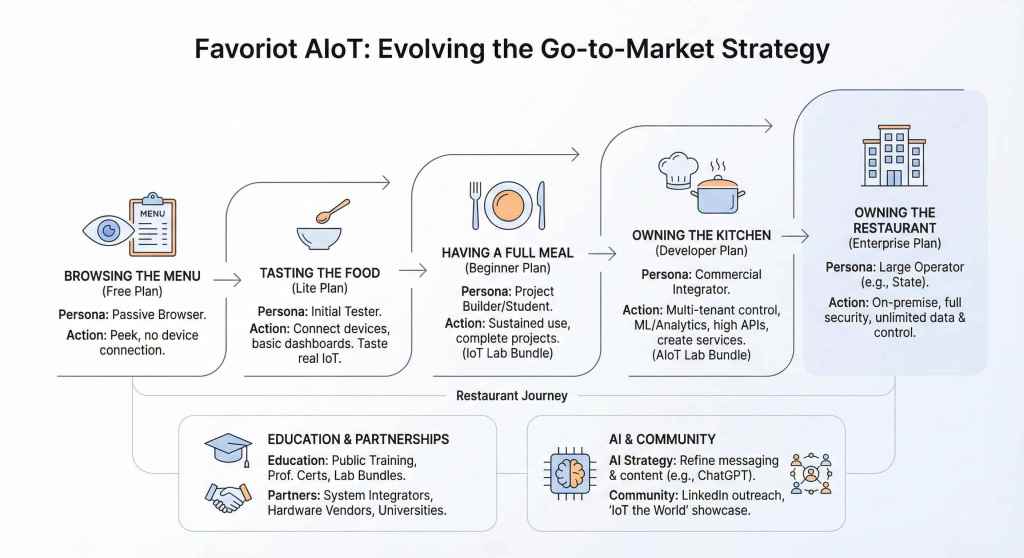
How Lecturer Feedback Inspired the Favoriot Lite Plan

Why a University Lecturer’s Feedback Changed Everything and Led to the Favoriot Lite Plan

This story did not start in a boardroom.

It did not start with pricing spreadsheets or growth charts.

It started with a simple, honest conversation with a university lecturer.

A conversation that stayed with me longer than expected.

“Dr. Mazlan, the Beginner plan is good. But for teaching and students, it feels a bit too expensive. And honestly, we do not need all the features. We just need a few dashboards that work well.”

I remember pausing for a moment.

Not because I disagreed.
But because I knew they were right.

That Moment of Realisation

I have spent years working closely with universities. I have seen how students learn best. I have stood in labs where excitement fades the moment tools feel heavy or out of reach.

When that lecturer shared their concern, I did not hear a complaint.

I heard care.

Care for students.
Care for learning.
Care for making sure curiosity does not die because of cost or complexity.

I thought to myself…

If a lecturer is already trying to stretch budgets just to give students real exposure, are we truly helping if we keep things as they are?

That question would not leave me alone.

The Truth About Teaching IoT

Teaching IoT is not about showing everything.

It is about showing enough.

Students do not need ten dashboards.
They need one or two that make sense.

They do not need advanced workflows on day one.
They need to see data move from a device to the cloud and onto a screen they understand.

Most importantly, they need confidence.

And confidence comes from simplicity.

The lecturer was clear.
Less features.
Lower cost.
Focused dashboards.
Real experience.

That feedback mattered.

Why the Lite Plan Had to Be Created

The Favoriot Lite Plan exists because of that conversation.

It exists because education should not feel like a compromise.

The goal was never to strip things down until nothing meaningful remained. The goal was focus.

Lite uses the same core platform that powers real projects on the Favoriot platform.

What we changed was intent.

Lite focuses on a small number of dashboards that matter for teaching and learning. Clean. Clear. Purposeful.

No unnecessary features.
No distractions.
No pressure on budgets.

Just what students and lecturers actually asked for.

Designing Lite With Students in Mind

I kept picturing a classroom.

A lecturer standing in front.
Students are opening their laptops.
Devices blinking on the table.

What do they really need at that moment?

They need to connect.
They need to see data.
They need to understand what just happened.

Lite delivers exactly that.

Students can focus on learning instead of navigating menus. Lecturers can focus on teaching instead of explaining why certain features will not be used this semester.

That was the win.

Why Fewer Dashboards Can Mean Better Learning

This might sound counterintuitive to some.

More features do not always mean more value.

In teaching, fewer dashboards often lead to deeper understanding. When students can concentrate on one or two views, patterns become clearer. Questions become sharper.

Why is the data changing?
What caused that spike?
How does the sensor behave over time?

Those questions matter more than fancy configurations.

Lite gives room for those conversations.

About Cost and Respect

I want to say this clearly.

Lowering the entry cost was not about discounts or promotions. It was about respect.

Respect for students who are still learning.
Respect for lecturers who fight for better tools within tight budgets.
Respect for institutions that want real exposure without overcommitting.

Education should never feel excluded from real platforms.

Lite is our way of saying, you are welcome here.

Not a Step Back, Just a Better First Step

Lite is not a lesser plan.

It is a thoughtful one.

When students finish their projects and want more, moving up feels natural. When lecturers want to expand labs or pilots, the path is clear.

Nothing is lost.
Nothing needs to be rebuilt.

You simply grow from where you started.

What This Means to Me Personally

That lecturer probably does not realise how much their feedback meant.

But it reminded me why Favoriot exists.

Not just to build technology.
But to remove barriers.

I asked myself…

If our platform cannot support learning at its earliest stage, what are we really building?

The Lite Plan is my answer to that question.

An Invitation to Lecturers, Students, and Builders

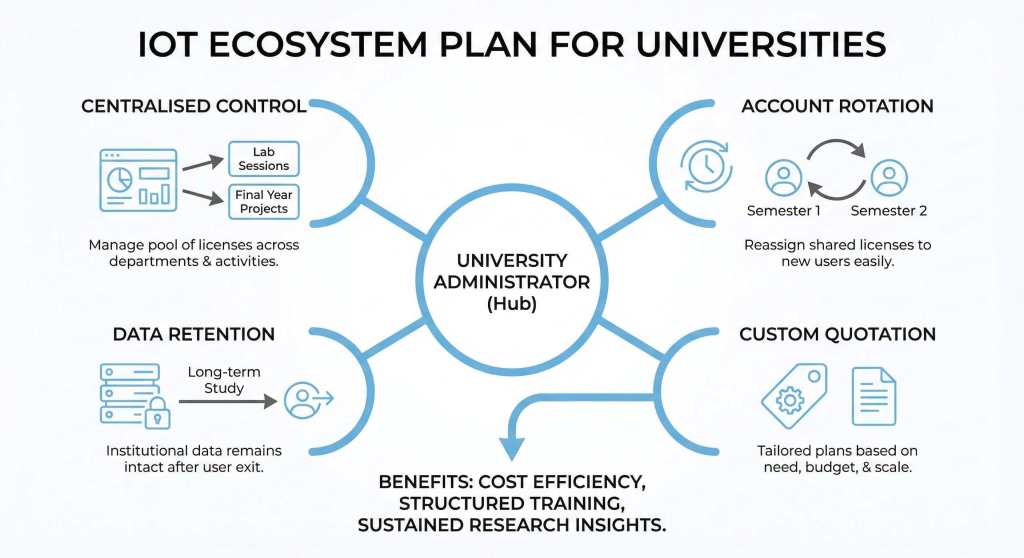
If you are a lecturer looking for a practical way to teach IoT without overwhelming students, Lite was built with you in mind.

If you are a student who wants hands-on experience without worrying about cost or complexity, this is your starting point.

If you are building something small and want clarity before commitment, Lite is enough.

You can explore the plans here
https://www.favoriot.com/iotplatform/pricing/

I would genuinely love to hear your thoughts.

What do you need in the classroom?
What feels too much today?
What would make learning easier?

Leave a comment. Share your experience. Start a conversation.

Sometimes, the most meaningful changes come from one honest piece of feedback.

I Started a Startup at 56. This Is What the Journey Really Taught Me.

Techtamu Talk | 17 January 2026

On 17 January 2026, at around 10 in the morning, I stood before a room full of students, founders, and curious minds.

Before I spoke, I paused for a second.

“How do I explain a journey that never followed a straight line?”

Entrepreneurship, at least in my life, was never a planned destination. It was a series of connected experiences that only made sense much later.

That lecture was not about IoT.
It was not about startups.
It was about life, timing, courage, and knowing when to let go.

You Only Understand the Journey When You Look Back

I opened the session with a quote from Steve Jobs that has stayed with me for years:

You can’t connect the dots looking forward. You can only connect them looking backward.

That sentence explains my life better than any resume ever could.

When you are young, you worry too much about choosing the “right” path. The right course. The right job. The right company.

What nobody tells you is this.
Every experience counts, even the ones that feel like detours.

You just won’t see it yet.

From a Curious Child to a Technology Lifelong Learner

My interest in technology did not start in a lab or a classroom.

It started at home.

My late father was a clerk. But in the evenings, he repaired televisions and radios. I would sit beside him, watching circuits come back to life.

“So this is how things work.”

Then came science fiction.

Cartoons like The Jetsons showed a future that felt impossible at the time. Video calls. Smart watches. Flying machines.

Today, many of those ideas sit quietly in our pockets.

That early exposure planted a question in my mind that never left me.

“What if we could actually build these things?”

Living in Four Different Worlds

I consider myself fortunate. Few people get to experience all four.

Academia.
Corporate.
Government.
Startup.

I began as a lecturer at Universiti Teknologi Malaysia, immersed in theory and research. Later, I joined the corporate world at Celcom, where reality hits hard and fast. Customers matter. Deadlines matter. Revenue matters.

At MIMOS, I worked on national-scale research, including wireless sensor networks, long before the term IoT became popular.

Then came REDtone, where I helped build IoT initiatives inside a corporate structure.

Each world taught me something different.

But they also gave me baggage.

Experience gives confidence.
It also gives fear.

Young founders often believe everything is possible.
Older founders carry doubt.

“What if this fails?”
“What if I lose my savings?”

That voice gets louder with age.

Silicon Valley Changed Everything

At 56, I joined an immersion trip to Silicon Valley.

That trip changed my identity.

I walked into Plug and Play Accelerator and saw cubicles, whiteboards, and founders who looked just like us. That was where companies like Dropbox began.

I remember thinking:

“If this guy can do it, why can’t we?”

That was the moment I stopped seeing myself as a CEO-in-waiting.

I started seeing myself as an entrepreneur.

Not someday.
Not after retirement.
Now.

Starting Late Comes With a Price

I started my startup using personal savings. No incubator. No startup playbook. No fancy terms like ‘MVP’ or ‘pitching decks’.

Just belief and experience.

Our first idea was a smartwatch for the elderly with fall detection and emergency alerts. It looked noble. It sounded meaningful.

It failed.

The market was too small.
Children did not want to pay.
The device did not suit care homes.

That was my first real startup lesson.

Good intentions do not build businesses.
Paying customers do.

Learning the Art of the Pivot

In the startup world, pivoting is survival.

We repurposed the watch for Hajj and Umrah pilgrims. New market. Same core idea.

New problems appeared.

Unrealistic pricing expectations.
Battery life demands that defy physics.
Hardware sourcing from China.
Network roaming issues.
Travel agencies are unwilling to add cost.

Then came COVID-19. We proposed quarantine monitoring. It went nowhere.

Eventually, I made one of the hardest decisions of my life.

Ending a product.

I shared this honestly during the lecture.

Ending a product feels like ending a child you raised with love.
But holding on too long can kill the company.

A CEO must choose growth over attachment.

When More Products Mean Less Identity

We built other solutions too.

A civic complaint app sounded promising. Until each client wanted heavy customization and complaint volumes exploded beyond what they could manage.

A consumer tracking app failed because people care deeply about privacy and free alternatives already exist.

At some point, I realized something painful.

When you build too many products, people no longer know who you are.

Neither do you.

The Shift That Saved the Company

That realization led to our biggest change.

We stopped building products for users.

We started building a platform for builders.

That platform became Favoriot.

An IoT platform that lets others connect devices, visualize data, and deploy solutions quickly. Over time, intelligence was added so data could speak, not just sit on dashboards.

This shift reduced risk.

Instead of betting on one product, we enabled hundreds of use cases.

Why One Revenue Stream Is Never Enough

Another hard truth I shared with the audience.

Pure SaaS subscriptions rarely pay the bills in emerging markets.

We survived by building multiple streams.

Enterprise licensing.
Project-based solutions.
Training and certification with universities.

The platform stayed at the core. Everything else wrapped around it.

That balance kept the company alive.

Partners Build What You Cannot

No startup wins alone.

We built a partner ecosystem covering hardware, software, AI, and system integration. Today, that network spans multiple countries.

Each partner brings strength we do not have.

That is how scale really happens.

Marketing Without Big Budgets

We never had large marketing budgets.

So we wrote.
We shared.
We taught.

Blogs.
Social media.
Free e-books.

Inbound marketing works when your story is honest and your knowledge is real.

People do not buy immediately.
But they remember.

The Lesson I Hope You Carry Forward

I ended the lecture with a simple reminder.

Whatever path you take, it is building something inside you. Even when it feels random.

Do not fall in love with your product. Fall in love with solving problems.
Do not trust praise until someone pays.
Do not depend on one revenue stream.
Do not fear pivoting. Fear standing still.

And most of all, do not believe it is too late.

I started my startup at 56.

If I could begin then, what is stopping you now?

I would love to hear your thoughts.
What dots in your life are starting to connect? Share them in the comments.

Why Experience Rarely Shouts but Often Whispers

Experience does not interrupt you.

It nudges.
It hints.
It quietly warns.

You learn to listen differently. To pause before reacting. To notice unease before excitement.

Wisdom waits for attention. It does not demand it.

What Staying Power Looks Like When No One Is Watching

Staying power is unglamorous.

It looks like repetition.
Routine.
Patience.

It rarely trends online.

Yet this is where meaningful work happens. When motivation fades and only discipline remains. When results are slow and faith carries the effort.

Consistency builds what intensity cannot sustain.

How My Definition of Progress Changed Over the Years

Progress once meant expansion.

More projects.
More exposure.
More growth.

Today, progress looks different.

Fewer distractions.
Better systems.
Stronger fundamentals.

Stability with purpose has become more valuable than constant motion.

Progress feels quieter now. And more real.

Why Some Partnerships Age Well and Others Don’t

Partnerships do not survive on excitement.

They survive on trust, alignment, and shared expectations.

When conditions change, weak foundations surface quickly. Strong ones adapt quietly.

Some partnerships end not because of failure, but because growth pulls people in different directions.

Learning to let go without resentment is part of maturity.

What Years of Meetings Taught Me About Human Behaviour

Meetings are one of the best places to study people.

Who listens and who waits to speak.
Who takes responsibility and who deflects it.
Who seeks clarity and who hides behind complexity.

After years of meetings across universities, corporations, government agencies, and startups, patterns become obvious.

People rarely change styles. They repeat them.

Understanding this helps you choose collaborators wisely and avoid unnecessary friction.

The Cost of Moving Fast Without Understanding Timing

Speed can be expensive.

Launching too early.
Pushing before readiness.
Forcing alignment.

Timing is invisible until it is missed.

The doodle character hesitates here. Not fearful. Just aware.

Momentum without timing creates friction.

Why I Prefer Small Signals Over Big Promises

Big promises are easy to make.

Small signals are harder to fake.

Who shows up repeatedly.
Who follows through quietly.
Who remains steady when things slow down.

The doodle character notices footprints rather than banners.

Signals age well.
Promises don’t always.

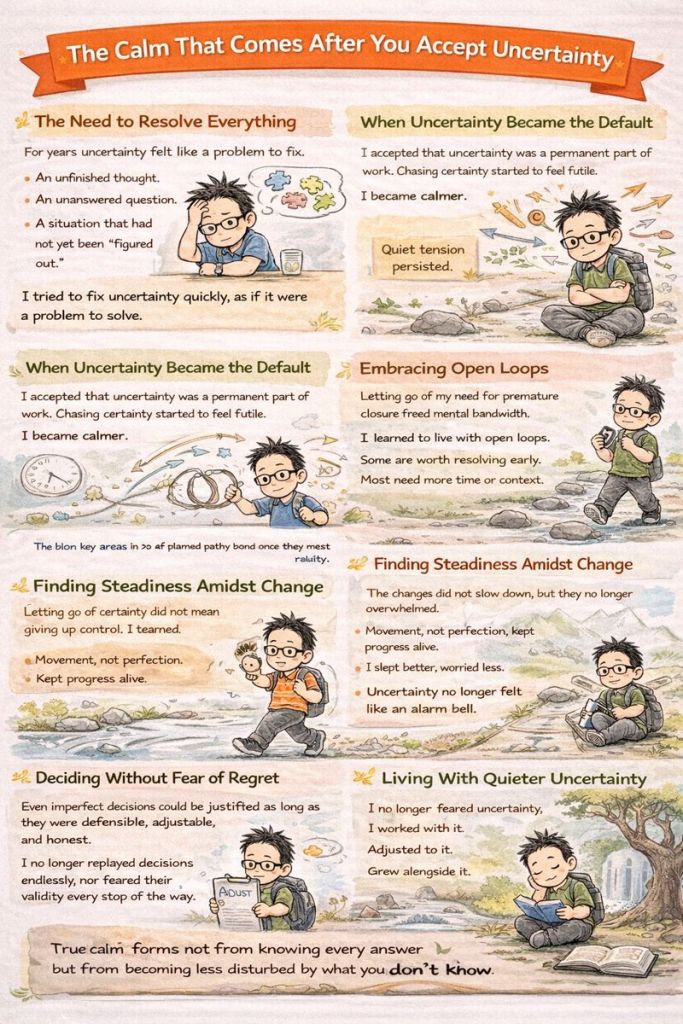
The Calm That Comes After You Accept Uncertainty

At some point, you stop trying to predict everything.

Not because you stopped caring.
But because you understood the limits of control.

Uncertainty stops feeling like a threat.
It becomes a condition of the work.

The doodle character walks calmly here. Shoulders relaxed.

Acceptance brings calm.
Calm improves decisions.