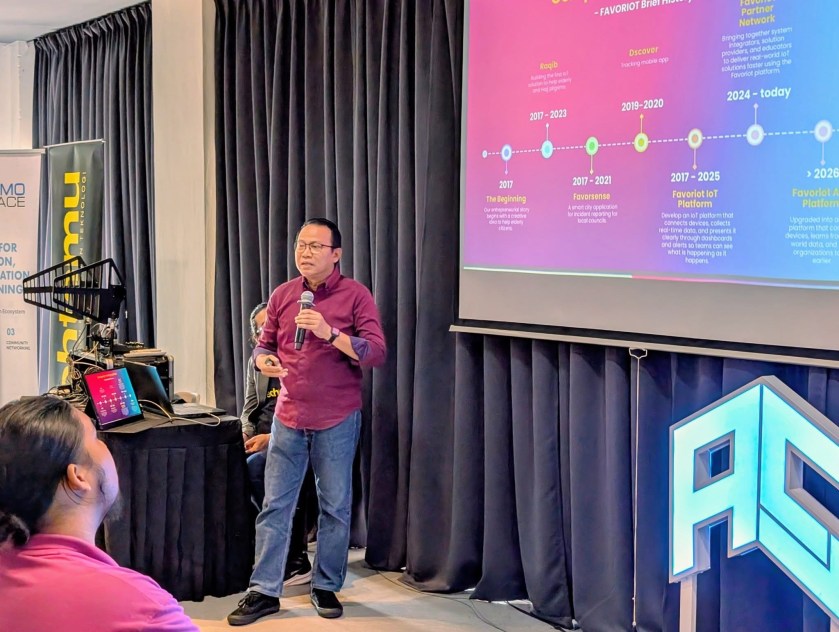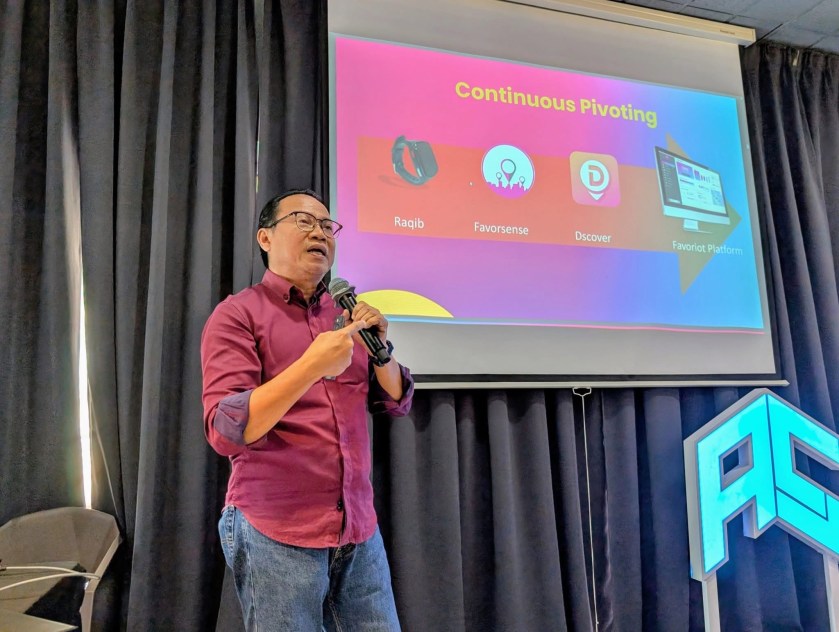
The Story Behind Favoriot – Part 19: How the Law of Attraction Shapes Favoriot’s Future

The Imagination That Built Favoriot

Imagination is often dismissed as a whimsical exercise, yet it’s the spark that ignites progress. The world we live in today was once imagined by someone who dared to think beyond what was possible. Reflecting on Favoriot’s journey, I realize how important it is to dream about the future we want to create.

I believe in the Law of Attraction—the idea that what we think and visualize with intent can manifest into reality. When we first started Favoriot, we imagined a future where our platform would power smart cities, empower students, and become a global name in IoT. Some might have called it wishful thinking. But imagination, when combined with action and persistence, can shape reality.

Let me take you on a journey through an imagined future where Favoriot’s influence has transcended borders, industries, and expectations. This is not just a daydream. It’s a vision we are working tirelessly to turn into reality.

A Vision of Favoriot’s Future

I close my eyes and transport myself into the future. I enter a massive IoT trade exhibition akin to CES or the World Smart City Expo. The atmosphere is electric with innovation. Companies from around the world have gathered to showcase their latest technologies. As I navigate the exhibition hall, one thing becomes apparent: the Favoriot logo is everywhere.

Booth after booth, exhibitors proudly display their demos powered by the Favoriot IoT platform. Startups with groundbreaking hardware solutions, companies showcasing futuristic smart city concepts, and AI-driven IoT applications are all seamlessly connected through Favoriot.

But why? Why did they choose Favoriot? It’s not just a platform. It has become the trusted backbone for innovation, synonymous with reliability and scalability. I feel an overwhelming sense of pride in seeing this unfold in real time. This is the world we imagined when we first built Favoriot: a world where our platform is the silent enabler of extraordinary solutions.

The Power of Favoriot in Education

My next stop in this imagined world is a university. Favoriot has become a standard name here—not just a tool but a core part of the curriculum.

In lecture halls, professors discuss real-world IoT case studies, and students dive deep into hands-on learning, exploring the potential of IoT using the Favoriot platform. I peek into a lab where students are working on their final-year projects. A team is developing a smart agriculture solution, leveraging Favoriot to monitor soil conditions and automate irrigation. Another group is focused on smart health, creating wearable devices for chronic disease management and using Favoriot’s analytics features to visualize patient data.

It’s exhilarating to see how a tool we created has become the foundation for nurturing the next generation of IoT innovators. Universities nationwide and internationally now teach IoT through Favoriot. Their labs are equipped with pre-configured dashboards, APIs, and datasets, making it easy for students to start building. What was once a platform we envisioned for businesses has become an educational cornerstone. Students graduate not only with degrees but as skilled Favoriot-certified IoT professionals.

This didn’t happen by accident. It was imagined, desired, and, through our efforts, made a reality.

Transforming Cities with IoT

As I step into a local council’s command centre, I see a vibrant dashboard powered by Favoriot. The screen displays real-time data from various IoT solutions deployed throughout the city: smart streetlights, waste management sensors, flood detection systems, and air quality monitors.

This isn’t just a collection of disconnected systems—it’s an integrated platform that combines everything under one roof.

The mayor stands beside me, explaining how this has revolutionized the council’s operations.

“Favoriot has helped us move from reactive to proactive,” she says. “We no longer wait for complaints; we solve problems before they arise.”

I imagined this when we spoke about smart cities years ago—a city where data drives decision-making, not just to improve efficiency but to genuinely enhance the quality of life for its citizens.

Favoriot isn’t just another vendor in this ecosystem—it’s the platform that local councils trust to aggregate and analyze IoT data, bridging the gap between diverse solutions and actionable insights.

Again, this was once a dream, an idea that many doubted. But here it is, functioning as imagined, because we believed in its possibility.

The Future of IoT Businesses

IoT product companies no longer struggle to create end-to-end solutions. Instead, they focus on what they do best—building world-class hardware or cutting-edge AI applications. Favoriot fills the gap by providing a robust platform to manage data collection and analysis.

Imagine a company specializing in healthcare sensors. Instead of spending years developing its own platform, it uses Favoriot to connect its devices. This shortens its time-to-market, and its customers benefit from a complete solution that’s both scalable and user-friendly.

The same goes for system integrators who rely on Favoriot to simplify IoT deployments for their clients. Some have taken this even further by offering managed IoT services. With Favoriot, they provide their clients with dashboards, analytics, and customized solutions without the technical headache of building everything from scratch.

It’s a win-win: the integrators expand their business offerings, and Favoriot becomes the go-to platform for IoT scalability.

Expanding Globally Through the Law of Attraction

The most exciting part of this imagined future is Favoriot’s global footprint. We have partnered with system integrators and distributors across continents, allowing us to enter new markets quickly.

In Indonesia, a partner uses Favoriot to enable advanced agriculture systems. In Europe, we’re powering smart transportation initiatives. In Africa, Favoriot is the backbone of rural healthcare IoT solutions.

These partnerships aren’t just transactional; they’re built on a shared vision of what IoT can achieve. By empowering local players in each market, Favoriot has become a global name synonymous with IoT excellence.

How did we reach this level? By first believing in it. The Law of Attraction teaches that whatever we focus on grows. We visualized this expansion, worked towards it, and attracted the right people and opportunities to make it happen.

A Dream Becoming Reality

I close my eyes and imagine standing on a stage at a significant IoT event. The lights dim, and a video showcases real-world success stories of Favoriot-powered solutions. The impact is tangible, from smart cities to healthcare and agriculture to education.

As I speak, I’m reminded of how far we’ve come—as a company and as a community of dreamers and doers. Favoriot’s success wasn’t just about technology but about believing in the power of imagination.

We imagined a world where IoT could truly transform lives when we started. Today, in this envisioned future, that world has come alive.

So, is it wrong to imagine? Absolutely not.

Imagination is where dreams take shape, and the seeds of innovation are planted. As I look at Favoriot’s journey—from a small startup to a global IoT leader—I know that it all started with a simple yet powerful idea: to imagine the impossible and make it real.

Will this vision come true? I believe it will. Because imagination, when paired with hard work, resilience, and the right team, can achieve wonders.

So, let’s keep imagining, dreaming, and building the future—one step at a time.

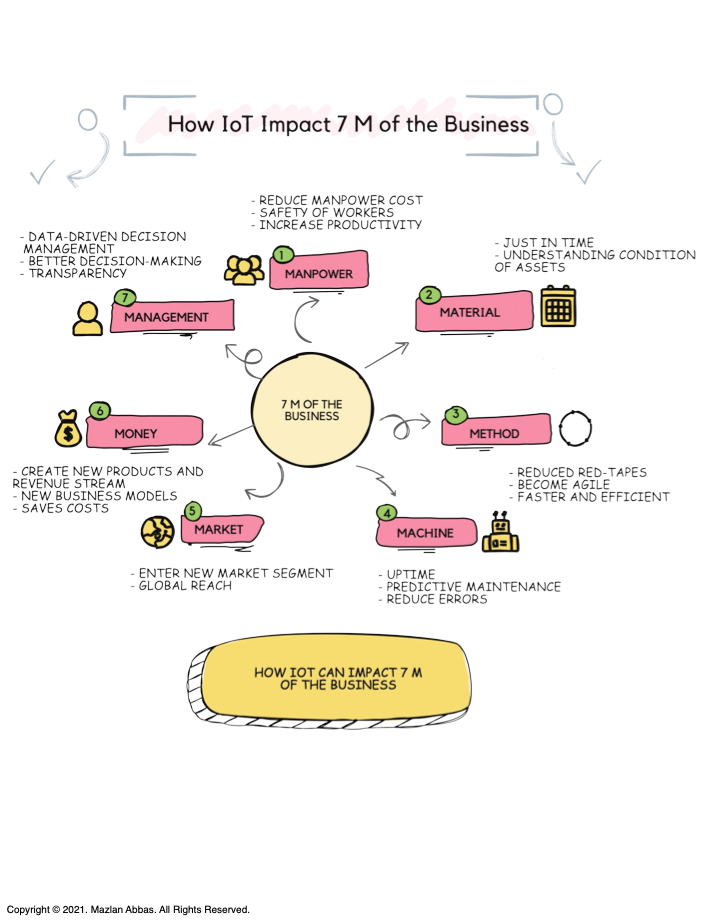
How IoT Impacts the 7 M’s of Business

Today, we’ll explore how the Internet of Things (IoT) transforms the 7 M’s of business — key elements that drive an organisation’s operations and strategy.

These 7 M’s are Manpower, Material, Method, Machine, Market, Money, and Management. Let’s break down each one and see how IoT impacts them.

Based on the eBook — IoT Notes by Mazlan Abbas

1. Manpower

IoT helps businesses optimise human resources by reducing costs, improving safety, and increasing productivity.

Impact of IoT:

  • Cost Reduction: Automating repetitive tasks reduces the need for manual labour.
  • Worker Safety: IoT devices, such as wearables, can monitor health and alert workers to potential hazards.
  • Productivity: By enabling remote work and real-time communication, IoT allows employees to focus on high-value tasks.

Example: A construction company using wearables to monitor worker fatigue and ensure safety.

2. Material

IoT ensures better management of materials, improving supply chain efficiency and reducing waste.

Impact of IoT:

  • Just-In-Time Delivery: Sensors track inventory levels and automatically reorder materials when needed.
  • Asset Condition Monitoring: IoT devices monitor the condition of materials, ensuring quality and preventing spoilage.

Example: A warehouse using IoT sensors to track stock levels and ensure optimal storage conditions.

3. Method

IoT makes business processes more agile and efficient by simplifying methods.

Impact of IoT:

  • Reduce Red Tape: Automating workflows eliminates unnecessary administrative steps.
  • Agility: IoT enables businesses to respond quickly to changing conditions.
  • Efficiency: Processes become faster and more streamlined with IoT integration.

Example: A manufacturing plant automating quality checks with IoT sensors to speed up production.

4. Machine

IoT maximises the performance of machines, ensuring reliability and reducing downtime.

Impact of IoT:

  • Uptime: Predictive maintenance ensures machines are operational when needed.
  • Predictive Maintenance: IoT sensors detect issues before they become critical, preventing failures.
  • Error Reduction: Machines can self-correct or alert operators when errors occur.

Example: A factory using IoT-enabled machinery to monitor performance and schedule maintenance.

5. Market

IoT helps businesses expand into new markets and improve their customer reach.

Impact of IoT:

  • New Market Segments: IoT enables innovative products and services, opening new revenue streams.
  • Global Reach: Businesses can monitor and manage operations worldwide through IoT platforms.

Example: An IoT-enabled home security company entering international markets with smart security systems.

6. Money

IoT creates new revenue opportunities and reduces costs.

Impact of IoT:

  • New Revenue Streams: IoT drives innovation, leading to new services and products.
  • Cost Savings: Automating processes and improving efficiency reduces expenses.

Example: A logistics company saving fuel costs by using IoT to optimise delivery routes.

7. Management

IoT improves decision-making through data-driven insights.

  • Impact of IoT:
  • Data-Driven Decisions: Real-time data helps managers make informed choices.
  • Transparency: IoT provides visibility into all areas of the business.
  • Better Decision-Making: Analytics from IoT systems offer actionable insights.

Example: A retail chain using IoT to monitor sales trends and optimise inventory.

Key Takeaways

IoT has a transformative impact on the 7 M’s of business:

  1. Manpower: Reduces costs and improves safety.
  2. Material: Ensures quality and efficiency.
  3. Method: Simplifies workflows and increases agility.
  4. Machine: Enhances reliability and performance.
  5. Market: Expands opportunities globally.
  6. Money: Generates new revenue and reduces costs.
  7. Management: Improves decisions with real-time insights.

Discussion Question: Which of the 7 M’s most benefits from IoT in your industry? Let’s share ideas and examples!

{You can download the FREE eBook IoT Notes by Mazlan Abbas]

Curb Ticket Scalping by Limiting Purchases, Block IPs, DelayTicket Sales, Suggest experts

[Article originally published at Sinar Daily – “Curb ticket scalping by limiting purchases, block IPs, delay ticket sales, suggest experts” on May 23, 2023]

SHAH ALAM – Ticket scalpers reselling tickets for the upcoming Coldplay concert in Malaysia at inflated prices has sparked widespread discussion and concern in recent weeks.

The reselling of tickets at double the original price has garnered significant attention from both the public and authorities as scalpers use automated bots to purchase tickets in large quantities from authorised sources, only to resell them at a higher price, resulting in unfair pricing practices.

According to Imperva, a cyber security software company, it said almost 40 per cent of all ticket purchases online are estimated to be by scalper bots.

Ticket scalping is one of the key threats faced by the ticketing industry, resulting in lost revenue to secondary marketplaces, as well as reputational damage and even, potentially, loss of partnerships with organisers and other stakeholders.

Chief Executive Officer Dr Mazlan Abbas said it is challenging to stop scalping due to several reasons.

“Changing strategies. Scalpers consistently modify their approaches to evade security measures, resulting in an ongoing challenge to stay ahead of their tactics.

“Next is the problem with technology constraints. Ticketing systems often face difficulties in finding a balance between security requirements and user convenience,” he said to Sinar Daily.

However, Mazlan said there are several defence strategies that can be employed to combat ticket bots.

Mazlan said the implementation of advanced Captchas and puzzles can be an effective measure to differentiate between human users and bots.

He further said to prevent mass purchases driven by bots, rate limiting and IP blocking can be employed.

These measures involve imposing restrictions on the number of tickets an individual or IP address can purchase, thereby mitigating the impact of bot-driven activities, he added.

Commenting further, Windows Server Engineer Lakmidran Sasedaran said selling tickets two hours before the showtime could reduce ticket scalping issues.

“Stop early bird ticket selling. The event planner could start selling tickets at least two hours before the show time.

“This will cut down ticket scalpers,” he added.

Lakmidran further said the lack of initiative to implement appropriate technologies to curb ticket scalping has made it increasingly challenging to prevent such practices.

“Technology to curb ticket scalping would need huge amount of money to build the software and to block scalpers to resale the ticket.

“Also not many will implement this technology since it’s not a big a deal for anyone except the clients or customers who are unable to attend the event or show,” he further said.

The existence of accounts on various platforms reselling Coldplay concert tickets at excessively high prices, reaching up to RM43,200 has sparked widespread criticism from the public.

The exorbitant pricing practices of these ticket resellers have attracted significant attention on social media, further fueling public outrage.

The highly anticipated Music of the Spheres World Tour by Coldplay is set to take place on November 22 at the Bukit Jalil National Stadium, marking the band’s inaugural concert in Malaysia.

6 AI Tools You Can Start Using for Free

7 Free AI Tools to Start Making Money Online.

Get this for free. Work hard enough to earn money using free tools.

Courtesy of @syaryph

AI Tools for Students, at Any Level

50 Copywriting Frameworks You Should Know When Using ChatGPT

📌 50 Copywriting Frameworks That You Should Know When Using ChatGPT :

✅ AIDA: Attention, Interest, Desire, Action
✅ PAS: Problem, Agitation, Solution
✅ 4Ps: Promise, Picture, Proof, Push
✅ Features and Benefits
✅ Before-After-Bridge
✅ Problem-Agitate-Solve
✅ FAB: Features, Advantages, Benefits
✅ Problem-Solution
✅ The 5Ws and 1H: Who, What, Where, When, Why, How
✅ The Power of Three
✅ The Rule of Seven
✅ Attention-Interest-Desire-Conviction-Action
✅ 4U: Urgent, Unique, Useful, Ultra-specific
✅ The Storytelling Framework
✅ The OATH Framework: Offer, Aspiration, Transformation, Hook
✅ SCAMPER: Substitute, Combine, Adapt, Modify, Put to another use, Eliminate, Reverse
✅ The Inverted Pyramid
✅ The Before-During-After Framework
✅ The CUBA Formula: Curiosity, Understanding, Benefits, Action
✅ The Problem-Agitation-Claim Framework
✅ The PSR Framework: Problem, Solution, Result
✅ The Reverse Testimonial Framework
✅ The FOMO (Fear of Missing Out) Framework
✅ The So-What Framework
✅ The APP Framework: Attention, Problem, Proposition
✅ The RACI Framework: Responsible, Accountable, Consulted, Informed
✅ The 3C Framework: Clear, Concise, Compelling
✅ The MECLABS Framework: Motivation, Expectation, Clarity, Likelihood, Value
✅ The PPPP Framework: Picture, Promise, Prove, Push
✅ The 4U2 Framework: Urgent, Unique, Useful, Ultra-specific
✅ The 5Cs Framework: Clear, Concise, Compelling, Credible, Customer-centric
✅ The PASTOR Framework: Problem, Amplify, Story, Testimonials, Offer, Response
✅ The SPIN Framework: Situation, Problem, Implication, Need-Payoff
✅ The FUD Framework: Fear, Uncertainty, Doubt
✅ The DCO Framework: Define, Categorize, Optimize
✅ The PESO Framework: Paid, Earned, Shared, Owned
✅ The 5S Framework: Short, Simple, Specific, Surprising, Storytelling
✅ The PPP Framework: Picture, Promise, Proof
✅ The PEPP Framework: Promise, Explanation, Proof, Push
✅ The 5Ps Framework: Promise, Picture, Proof, Persuasion, Push
✅ The S3 Framework: Surprise, Story, Significance
✅ The 5P Framework: Promise, Picture, Proof, Push, Postscript
✅ The VALUE Framework: Verify, Amplify, Link, Understand, Evaluate
✅ The ABT Framework: And, But, Therefore
✅ The 3M Framework: Meaningful, Memorable, Motivating
✅ The 4C Framework: Clear, Concise, Compelling, CTA
✅ The EIE Framework: Engage, Inform, Entertain
✅ The 4Fs Framework: Feel, Felt, Found, Future
✅ The SPAM Framework: Story, Problem, Amplify, Make them care
✅ The PAPA Framework: Promise, Attention, Proof, Action

Credit: Thanks to Khairul for posting this in his Facebook.

How Bard Beats ChatGPT-4

AI has emerged as a groundbreaking technology with the potential to impact billions of lives significantly. To fulfill its mission of organizing the world’s information and making it universally accessible and helpful, Google has focused on AI for the past six years. Their investments have led to advancements in the field through Google AI and DeepMind.

The introduction of Bard, an experimental conversational AI service powered by LaMDA, aims to merge the world’s knowledge with the intelligence and creativity of large language models. Bard offers users a platform for creativity and curiosity, simplifying complex topics and enhancing knowledge. Google conducts thorough internal and external testing to ensure quality, safety, and groundedness.

AI technologies such as LaMDA, PaLM, Imagen, and MusicLM enable new ways to engage with information, and Google aims to integrate these advancements into their products, beginning with Search. AI-powered features will soon distill complex information and multiple perspectives into easily digestible formats, allowing users to grasp the big picture quickly.

Google is also committed to assisting developers in harnessing the power of AI. By providing access to their Generative Language API and creating a suite of tools and APIs, Google aims to facilitate the development of innovative AI applications. Partnerships with Cohere, C3.ai, and Anthropic ensure startups have the necessary compute power to build reliable AI systems.

As Google continues to innovate with AI, they remain dedicated to developing AI responsibly. Their AI Principles, published in 2018, demonstrate this commitment, as do their collaborations with governments, external organizations, and communities to establish standards and best practices for safe and useful AI applications.