
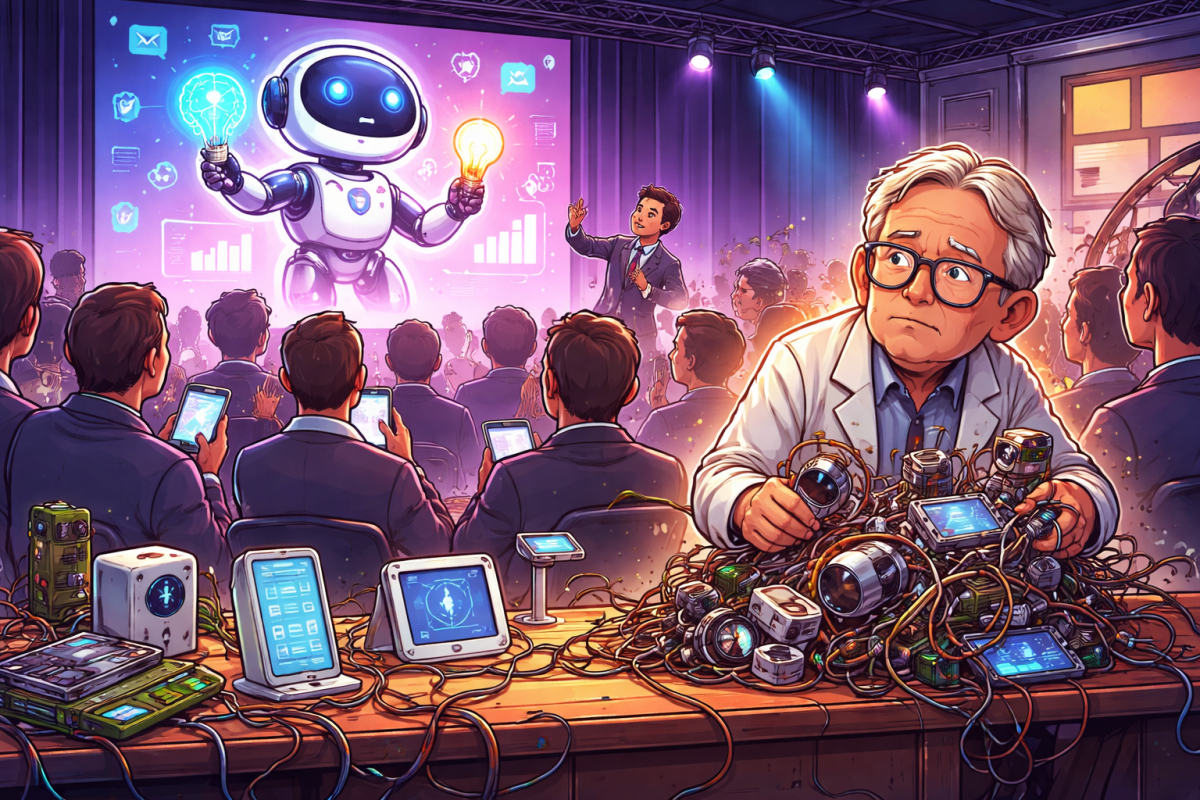
There are moments when I sit back after a lecture, pack my bag, and feel a strange mix of pride and worry.
Pride because I have seen how far technology has come.
Worry because I know how easily we forget the foundations.
That Friday lecture on the relevance of IoT and the rise of AI stayed with me long after I left the room. Not because the topic was new. I have lived with IoT for more than a decade. It stayed with me because of the silence that follows whenever I ask a simple question.
Where does your data actually come from?
Everyone lights up when we talk about AI. Eyes widen. Phones come out. Someone mentions ChatGPT. Someone else talks about image generation, voice cloning, videos that look real enough to fool our parents and sometimes ourselves.
Then I bring up sensors.
And the room goes quiet.
I Have Seen This Story Before
I thought to myself, This feels familiar.
Back in 2014, when we published the national IoT roadmap, the words “Internet of Things” sounded foreign to many. We talked about low-powered networks, sensors, connected devices, and data that flows quietly in the background. At that time, most people were still trying to understand what IoT even meant.
Later came the Fourth Industrial Revolution hype. AI, blockchain, cloud, analytics. Big words. Big slides. Big expectations.
Then COVID arrived and forced everyone online. Suddenly, digitising forms was no longer optional. Meetings went virtual. Systems moved to the cloud. People realised something uncomfortable.
We were talking about advanced technologies, but many organisations were still doing basics by hand.
We wanted intelligence without instrumentation.
The Quiet Truth About AI
Here is the uncomfortable truth that does not trend well on social media.
AI without data is just hope.
AI without sensor data is mostly guessing.
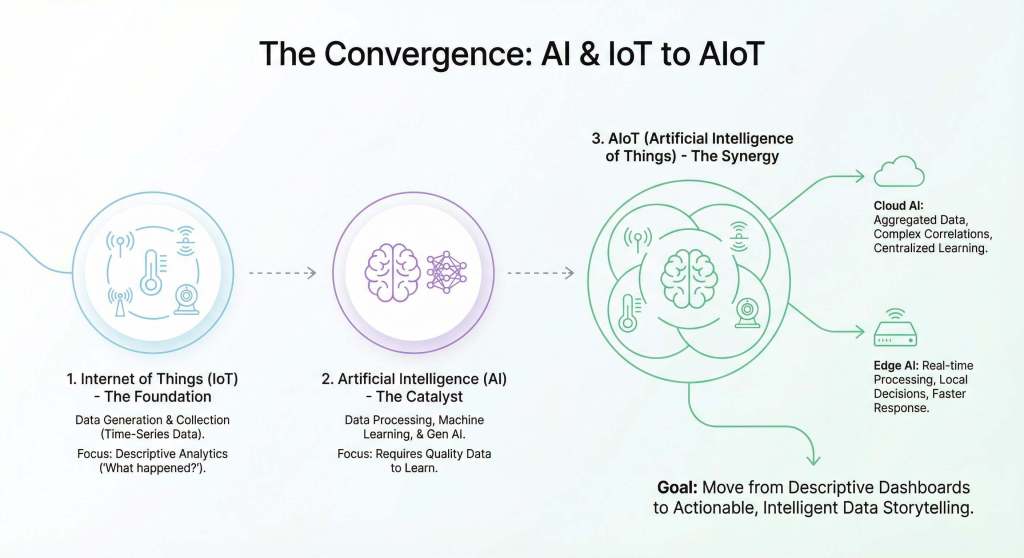
Most of the “intelligent” things people want today depend on time-based data from the physical world. Energy usage. Temperature. Vibration. Traffic flow. Air quality. Machine health. Human movement.
All of these begin with IoT.
When someone says they want predictive insights, I gently ask, How long have you been collecting data?
When they say they want anomaly detection, I ask, Do you know what normal looks like for your system?
These are not trick questions. They are reminders.
AI does not magically appear. It grows from data that has been quietly collected, cleaned, and understood over time.
Dashboards Make Us Feel Safe
I have seen countless dashboards.
Beautiful charts. Moving lines. Big screens in control rooms. Red, amber, green indicators blinking politely.
And yet, I always ask myself, What decision changed because of this screen?
Dashboards tell us what has already happened. That is useful, but limited. It is like driving while looking only in the rearview mirror.
What people really want is to know why something is happening. Or what might happen next. Or what they should do about it.
That is where analytics, machine learning, and edge intelligence come in.
But none of that works if the data is poor, sparse, or misunderstood.
The Rise of Edge Thinking
One part of the lecture that excited me was the discussion of edge intelligence.
I remember thinking, This is where things finally feel grounded.
Not every decision needs to travel to the cloud and back. Cameras detecting unusual behaviour. Machines sense abnormal vibration. Safety systems reacting in milliseconds.
These decisions must happen close to where the data is created.
That requires discipline in how we design systems. What runs on the device. What runs centrally. What gets escalated to humans.
Technology is not just about speed. It is about trust.
Why IoT Feels Invisible Now
IoT has become so normal that people barely talk about it anymore. It works quietly. Sensors sit on walls, poles, machines, and vehicles. Data flows without fanfare.
AI, on the other hand, talks loudly. It writes. It draws. It speaks. It performs.
So attention shifts.
But I keep reminding myself, and my students, that the loudest technology is not always the most important one.
AI sits atop IoT, not beside it.
Universities Are Catching Up, and That Gives Me Hope
One of the most encouraging things I see today is how universities are changing.
Students are no longer just learning theory. They are building devices. Choosing protocols. Sending data into platforms. Visualising it. Asking questions. Experimenting with machine learning.
When students understand the full journey of data, from sensor to insight, something clicks.
They stop chasing shiny features.
They start thinking like builders.
A Subtle Lesson From the Field
Over the years, working closely with real deployments, I have learned something simple.
Systems fail not because of a lack of intelligence, but because of a lack of patience.
AI needs time. IoT needs consistency. Data needs care.
Platforms that respect this reality are the ones that last. I have always believed that an IoT platform should quietly support learning, experimentation, and growth without demanding attention. It should help teams move from visibility to understanding, and later to confidence.
That philosophy has shaped how we build things at Favoriot. Not chasing headlines, but supporting people who want to do the hard work properly.
Advice I Keep Repeating to Myself
As I reflect on that lecture, I find myself repeating a few reminders.
Do not rush AI before you understand your data.
Do not replace thinking with automation too early.
Do not trust dashboards that cannot explain themselves.
Do not ignore sensors just because they are quiet.
Most importantly, do not forget that technology exists to help humans make better decisions, not to impress them.
Progress is not about who adopts AI first.
It is about who builds understanding that lasts.
If this reflection resonates with you, share your thoughts. I would love to hear how you are balancing IoT and AI in your own work, and what lessons you are learning along the way.
Discover more from Dr. Mazlan Abbas
Subscribe to get the latest posts sent to your email.

 Dr. Mazlan Abbas