What Drives Your Passion for Change?

THOUGHT LEADER’S STORIES

I share 15 tips on how strategic and diverse thinking can lead to groundbreaking achievements.

Photo by Ross Findon on Unsplash

Reflecting on my transition from academia to spearheading entrepreneurial ventures in IoT and smart cities, I often asked myself, “What drives my passion for change?

Throughout my tenure as co-founder of FAVORIOT, I’ve been driven by a relentless pursuit of innovation and excellence.

This journey is peppered with self-dialogues that have shaped my leadership philosophy and business approach.

Here, I share insights into how strategic and diverse thinking can lead to groundbreaking achievements.

1 — Think Innovatively, Lead Change

I often asked myself, “How can we transform interaction with our environments?

This vision was not just about introducing new technologies but about reshaping perceptions and setting new paradigms.

I would remind myself, “Innovation is about foreseeing needs and crafting solutions that are not only advanced but accessible and impactful.”

2 — Think Strategically, Overcome Challenges

Strategic thinking became my compass in navigating the complexities of a startup in an emerging industry.

How can we turn this obstacle into an opportunity?” I would ponder.

Each challenge — securing funding to navigating regulatory hurdles — was a chance to refine our business model and strengthen our foothold.

3 — Think Persistently, Achieve Goals

The path could have been smoother, laden with setbacks that tested our resolve.

I’d reassure myself in those moments, “Stay focused on the long-term goals. Don’t get swayed by short-term hurdles.

This persistent mindset was crucial in building a platform supporting thousands of IoT applications.

4 — Think Boldly, Disrupt Markets

Are we bold enough?” I would challenge my team and myself as we aimed to democratize technology access.

Our bold entry into the IoT space disrupted traditional models, providing unprecedented technology access to businesses of all sizes.

5 — Think Creatively, Find Solutions

Photo by Skye Studios on Unsplash

Is there a unique solution here?” was a constant question during product development and strategy tweaks.

Creative thinking was essential in finding unique solutions that set us apart from competitors and addressed customer needs.

6 — Think Analytically, Make Informed Decisions

In a technology-driven industry, I often reminded myself, “Let’s base our decisions on data.

This analytical approach was pivotal in reducing risks and optimizing operations, ensuring our strategies were both practical and adaptable.

7 — Think Adaptively, Navigate Trends

The rapid evolution of technological landscapes necessitated quick adaptation.

How can we stay relevant and lead?” I would contemplate.

This adaptability was crucial in maintaining our competitive edge and driving growth.

8 — Think Collaboratively, Build Networks

Photo by Nastya Dulhiier on Unsplash

No one succeeds alone,” I frequently reflected.

Building networks and fostering collaborations have been fundamental.

These partnerships provided diverse insights and resources essential for scaling our business and enhancing technological capabilities.

9 — Think Globally, Act Locally

Balancing global aspirations with local strategies, I would think, “How can we understand global trends and apply them locally?

This approach helped us expand our reach while responding to local market needs.

10 — Think Ahead, Stay Ahead

Anticipating the future has always been integral to our strategy. “Are we ahead of the curve?

I’d often assess, whether in technology adoption, market expansion, or talent acquisition.

This foresight ensured we were not merely reacting to changes but actively shaping them.

11 — Think Resiliently, Bounce Back Stronger

Photo by JOSHUA COLEMAN on Unsplash

“Every setback is a setup for a comeback” became a mantra during tough times.

Building resilience was vital to overcoming challenges and instilling a strong sense of determination across our team.

12 — Think Purposefully, Create Impact

Our purpose — to enhance connectivity and intelligence in urban settings — guided every project.

Are we creating meaningful impact?” I would question whether we ensured our efforts were both commercially successful and socially beneficial.

13 — Think Ambitiously, Set New Standards

Are we pushing the boundaries enough?” I would again ask myself.

This ambition drove us to continually innovate, set new benchmarks for business growth, and contribute to a smarter, more connected world.

14 — Think Efficiently, Maximize Resources

In our lean startup environment, I often contemplated, “Are we using our resources efficiently?

Maximizing resource utilization allowed us to achieve more with less, enhancing our operational agility.

15 — Think Passionately, Inspire Teams

Lastly, my passion for technology and innovation has been contagious, inspiring our team to pursue excellence.

How can we keep the fire of innovation burning?” I’d questioned myself, ensuring our workplace was driven by curiosity and enthusiasm.


These experiences have shaped our business and my approach to leadership in the high-tech industry.

As we continue to innovate and expand, these principles remain my guiding light, paving the way for further innovations and success.


What drives your passion for change? Kindly share.

How X (Twitter) Can Transformed an Introvert To A Thought Leader

SOCIAL MEDIA INFLUENCER’S SERIES

Ten (10) lessons learned to become a Thought Leader

Let’s connect on X (Mazlan Abbas)

Not a paid member? Click here to read the full story for free.

In 2014, one of my staff sent an email with startling news he had gathered from the Internet. I was unexpectedly named the №20th Thought Leader in IoT by the 2014 Onalytics Report — “The Internet of Things — Top 100 Thought Leaders”.

This accolade was a surprise and a moment of pride and revelation. The recognition stemmed mainly from my engagement on X (formerly known as Twitter), where I had been actively sharing insights and knowledge about IoT.

From then onwards, I received several accolades from different organizations and websites (Take note: this is different from the paid version that most people receive nowadays).

Photo by Alexander Shatov on Unsplash

Some of the notable ones are:

  • Top 50 B2B Thought Leaders, Analysts & Influencers You Should Work With In 2024 (APAC)
    – Top 50 Global Thought Leaders on the Internet of Things (February 2019) and Digital Disruption (October 2019) by Thinkers360, 
    – Top 50 Most Impactful Smart Cities Leaders by World CSR Congress 2017
    – Top 10 in IoT Top 100 Influencers by Postscapes 2017 & 2018

However, not all accolades are based on X alone; for example, Thinkers360 uses a unique patent-pending algorithm, as mentioned on their website:

Our differentiation from the various influencer leaderboards on social media, and other randomly-compiled lists on the web, is that our patent-pending algorithm takes a holistic view of thought leaders and experts, beyond their social media activity, and looks across all the hats they may wear — such as academic, author, consultant, entrepreneur, influencer, and speaker — and all the types of thought leadership content they produce. — Thinkers360

Thus, it’s important as a thought leader that we need to have our blog, too.


This experience not only underscored the influence of social media in professional branding but also highlighted ten (10) lessons about the power of digital platforms in establishing thought leadership.

1. Consistency is Key

My journey on X began with a simple desire to share what I knew and believed about IoT. Over time, this consistent sharing of articles, insights, and personal commentary helped me build a dedicated following. Consistency in posting keeps your audience engaged and helps you build an online persona that reflects expertise and reliability.

2. Quality Over Quantity

While consistent activity is crucial, the quality of the content shared is paramount. Each tweet, retweet, or shared article was selected or crafted to add value to discussions around IoT. This focus on quality ensures that your audience finds your contributions worthwhile, encouraging deeper engagement and broader sharing.

3. Engage with Your Audience

Engagement goes beyond posting content. Responding to comments, participating in discussions, and acknowledging others’ content helped me build a community around my social media presence. This interaction is about spreading knowledge and learning from others, a hallmark of authentic thought leadership.

4. Leverage Networking Graphs

The Onalytics report highlighted the importance of how individuals influence various audiences through network graphs. Understanding and leveraging these connections can amplify your reach and impact. I could extend my influence beyond my immediate followers by engaging with key influencers within the IoT space and participating in broader discussions.

5. Recognize the Power of Niches

IoT is a vast field, but my focus was often on specific niches within this domain that were less saturated but had significant potential for impact. This strategy helped set me apart, giving me a unique voice that could offer fresh perspectives and specialized knowledge.

6. Adapt and Evolve

Technology constantly changes. We must adapt to new trends, platforms, and technologies. IoT has expanded, leading to discussions on technical aspects, ethics, and policies.

7. Share Your Journey

Authenticity resonates with people. Sharing successes, challenges, and learnings from my journey as an IoT professional has helped humanize my online presence. This openness fosters trust and encourages others to share their experiences, creating a rich, interactive community.

8. Commit to Continuous Learning

Thought leadership is not a static achievement but a dynamic process. Continual learning and updating one’s knowledge base are critical. Engaging with the latest research, industry reports, and innovative practices has kept my content relevant and insightful.

9. Give Back to the Community

Throughout my journey, giving back has been a cornerstone — whether through mentoring, webinars, speaking engagements, or collaborative projects. These contributions enrich the community and establish your role as a knowledgeable leader committed to the field’s growth.

10. Stay Humble

Recognition as a thought leader should not be an end in itself but a platform for further growth and contribution. Staying humble and approachable ensures you remain open to new ideas and connections, vital for sustained relevance and influence in a rapidly changing field.


The recognition Onalytics bestowed upon me was a powerful reminder of the impact I can make through my contributions. It emphasized the transformative potential of social media to shape my professional identity and enhance my brand.

Most importantly, it underscored our crucial role as thought leaders to drive meaningful change and progress in our respective fields.

Photo by Jehyun Sung on Unsplash

More stories about my Social Media “adventures”:

View at Medium.comView at Medium.comView at Medium.comView at Medium.com


Remember to Subscribe to receive email updates on every post I publish.

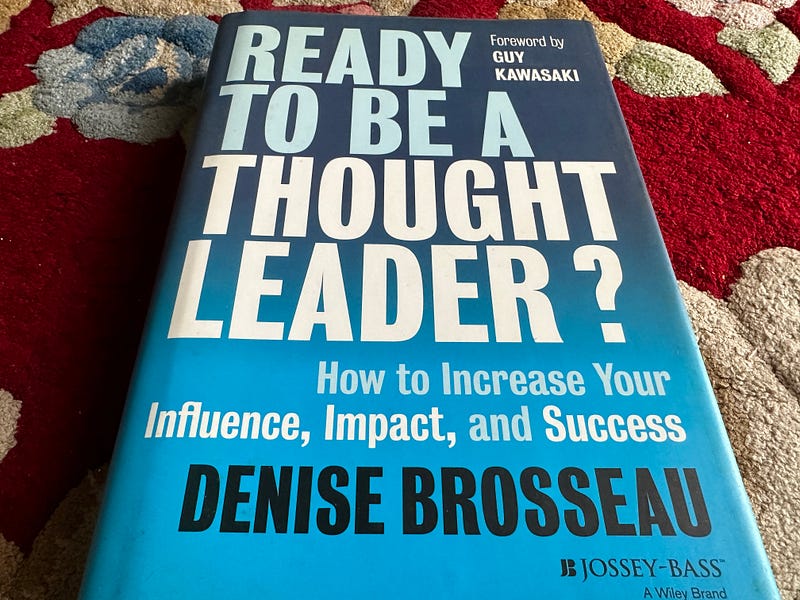
Ready to Be a Thought Leader? — A Book Review

Thought Leadership — Book Review by Mazlan Abbas

This is the book where I started my thought leadership process.

[Note: Click here to have FREE access to this member-only story]

Oh boy, where do I even start with “Ready to Be a Thought Leader?” by Denise Brosseau?

This book popped onto my radar at just the right time. You know, one of those moments when you’re scrolling endlessly, looking for that spark of inspiration to hit?

Well, hit it did, and let me tell you, it was more like a lightning bolt. I’ve been toying with the idea of dipping my toes into the thought leadership waters, but honestly, I didn’t have a clue where to start.

Enter Denise Brosseau and her book, which might as well have been titled “Ready to Be a Thought Leader? : How to Increase Your Influence, Impact, and Success,” because it’s accessible and enlightening.

First off, Denise doesn’t just talk the talk; she’s walked the walk. With a resume that’ll make your head spin, she’s the real deal, and she’s generous with her insights.

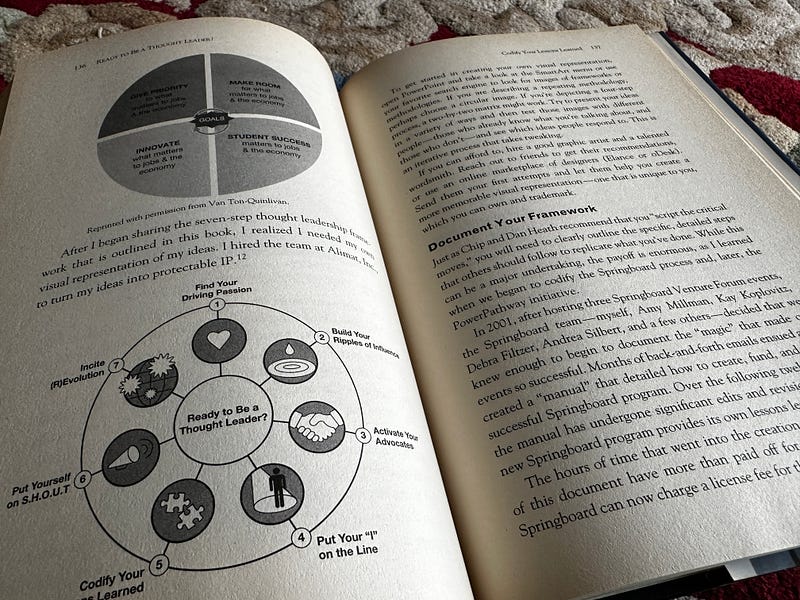
The book lays out a seven-step process that’s like a treasure map to becoming a thought leader.

And the best part?

You can start this journey from wherever you are in your career. No need to be the CEO of a Fortune 500 company or a Silicon Valley wiz kid.

If you’ve got expertise and a network, Denise shows you how to harness them to make waves in your field.

What really got me were the real-world examples. Reading about folks like Robin Chase of Zipcar and Chip Conley felt like having mentors whispering in my ear, telling me, “Hey, you can do this too!” It’s one thing to read a how-to guide; it’s another to see that guide brought to life through stories of people who’ve actually been there, done that.

But let’s get down to brass tacks — this book isn’t just a feel-good read.

It’s a workbook, a planner, and a mentor all rolled into one.

Denise doesn’t let you off easy. She’s got this knack for making you want to roll up your sleeves and get to work. And work you will.

With tips, strategies, and what feels like a personal success coach by your side, you start to see how even 15 minutes a day can set you on a path to making a real impact.

Ready to Be a Thought Leader?” is more than a book; it’s a call to action.

It’s for anyone ready to take their career beyond the conventional success metrics and venture into the realm of lasting influence and legacy.

Denise Brosseau has crafted not just a guide but a companion for this journey, one that I’ll be keeping within arm’s reach as I take my first steps toward thought leadership.

If you’re sitting there, wondering if this book is for you, let me save you some time: it is.

Whether you’re looking to spark sustainable change, create a movement, or simply have a deeper impact in your field, this book holds the keys to the kingdom.

It’s a gem, and I’m just grateful to have stumbled upon it. Time to stop dreaming and start doing, folks.

Let’s get thought-leading.

Get this book from Amazon — “Ready to Be a Thought Leader? : How to Increase Your Influence, Impact, and Success” (Note: This is an affiliate link)

Try Audible Premium Plus and Get Up to Two Free Audiobooks

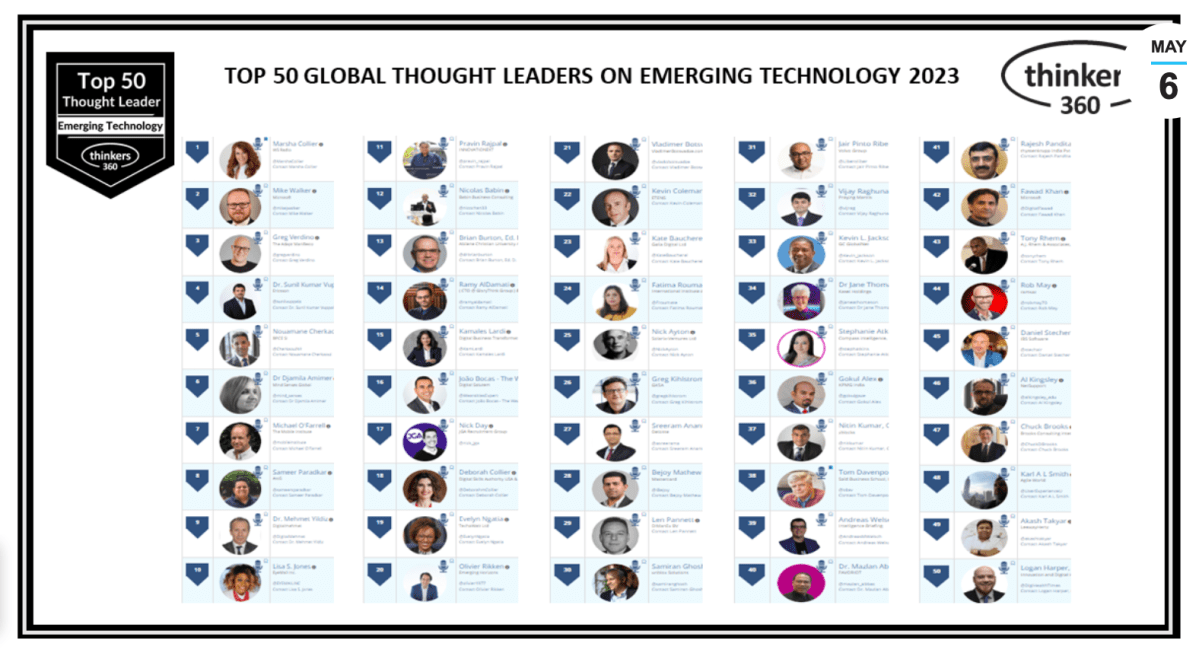
Top 50 Global Thought Leaders on Emerging Technology 2023

Here’s the Thinkers360 annual leaderboard for our top 50 global thought leaders and influencers on Emerging Technology for 2023.

Published Date: May 6, 2023

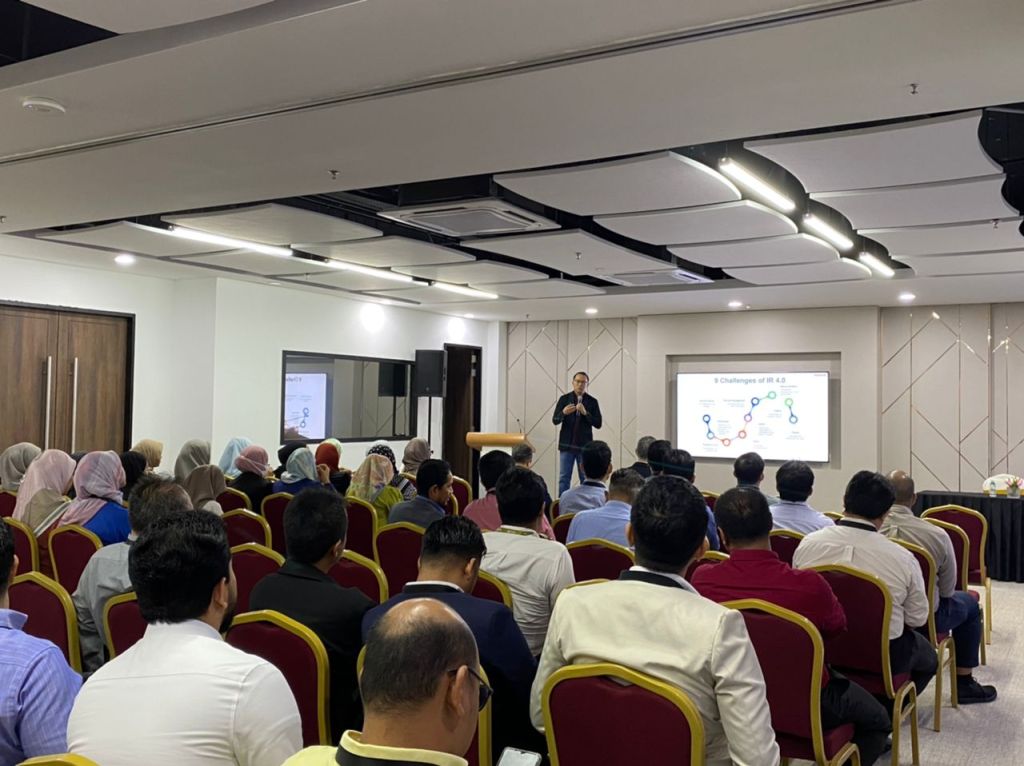
Personal Branding and Reputation Building: The Role of Conference Speaking

Speaking at a technical conference is often daunting for many speakers as they invest their time and resources without any monetary compensation. However, the benefits of presenting at such an event are numerous and go beyond financial gain. Here are some of the benefits:

  1. Establishing Personal Brand: One of the most significant benefits of speaking at a conference is the opportunity to showcase one’s skills and expertise, which can help to build and solidify a personal brand.
  2. Public Relations: Speaking at a tech conference is a great public relations opportunity that can help promote your brand and bring new business opportunities.
  3. Networking: These events provide an excellent opportunity to network with peers, establish new connections, and build lasting relationships that can be valuable in the long run.
  4. Promotion and Recognition: Speaking at a conference can help you gain exposure and recognition within your industry and provide a platform to promote your services or products.
  5. Engaging with a Diverse Group of People: Engaging with a diverse group is one of the most valuable aspects of speaking at conferences. It allows you to meet and learn from individuals from different backgrounds and cultures, expanding your perspective and knowledge.
  6. Giving Back to the Community: Finally, speaking at a conference is a chance to share your knowledge and expertise with others, contributing to the community and leaving a lasting impact.

Speaking at a technical conference provides many benefits beyond financial gain. It can help establish a personal brand, provide public relations opportunities, network with peers, gain recognition and exposure, engage with a diverse group, and give back to the community.

How to Become a Thought Leader (And Win)

When you are a thought leader, you can influence others in your industry. If you can influence other people, then this means that you can get their attention and even persuade them to adopt your ideas.

Who is a thought leader? A thought leader has significant influence and credibility in their field of expertise. They are often well known and admired by the people they influence. They may be the subject of books and articles, but more importantly, they impact other people’s lives. Think of people like Gary Vaynerchuk, Simon Sinek, or Tony Robbins. They are all thought leaders.

How to become a thought leader?

It’s simple. All you have to do is spend your time and effort reading the best thinkers in your field. As you read, you’ll notice that most of them have the same basic things in common. They are all well-educated, they’ve thought deeply about their subject matter, and they’re usually knowledgeable.

In addition, you’ll find that they’ve created an intellectual community around their ideas. They share their thoughts, which helps them understand themselves, their ideas, and their impact on others. Finally, they’re constantly pushing the boundaries of their thinking. 

Why is it essential to be a thought leader?

In business, being a thought leader can be a potent tool. If you want to succeed in your business, you need to become one. You need to think out of the box and develop new ideas that others may not have considered. It is essential to become a thought leader because it will give you a competitive edge over others.

When you are a thought leader, you can influence others in your industry. If you can influence other people, then this means that you can get their attention and even persuade them to adopt your ideas. For this reason, being a thought leader can be a potent tool. But how do you become a thought leader? There are many ways to go about doing this, but there are also certain traits that you need to possess.

What makes a good thought leader?

I have been doing a lot of thinking lately about what makes a good thought leader. And I came up with some thoughts that are worth sharing in my humble opinion. 

Here’s the list: 

Know your audience and be yourself. This is so obvious. But I don’t know how many people take it seriously. The more you know your audience, the better you tailor your message to their needs.

And if you are not who you are, you might as well not exist. This is one of the reasons why I like to say that you should write your own book and be your own publisher. 

If you want to get a book published, you need to have something valuable to share. So, be yourself. That is the only way to get it right. Know your audience and be yourself. Be the best at what you do. Have a clear vision for what you want to accomplish.

But don’t ever stop learning. And if you can’t find your niche, create one. One of my favorite quotes is, “You must be the change you wish to see in the world.” This means that you must first be the change you wish to see in yourself. So, be the change you want to see in yourself. 

[bctt tweet=”How Can I Be a Thought Leader in My Niche Area?”]  

How can I be a thought leader in my niche area?

As a writer, there are many ways you can develop your thought leadership. Here’s a simple guide:

Find the most influential people in your niche. These people are often leaders in their industry. They write books, articles, and they’re active on social media. Find the most influential marketers in your niche if you’re a marketer.

  1. Follow them on social media. Most of these people have a blog or a Twitter account to share great content. They’ll probably follow you back.
  2. Read what they publish. The more time you spend reading their content, the more you’ll be able to incorporate it into your own.
  3. Write something unique. Don’t just copy and paste what they write.
  4. Write something that makes your audience think, “I need to read this.”
  5. Get the attention of these influencers. You can do this by writing a guest post on their blog or sharing their social media content.
  6. Once they start following you, ask them to review your book or article. The more people you get to review your work, the better.
  7. Finally, ask them for some feedback. They’ll appreciate the opportunity to help a writer improve their craft. 

How can I achieve being a thought leader?

Here are some tips to get started:

  1. Be the person others want to follow. This might seem like a cop-out, but you have to think about this from the other person’s perspective. You want to be the person they look up to and admire.
  2. It’s tough to be someone else’s role model.
  3. Focus on the positive There are so many things in your life that are great, but you just need to focus on those. When I first started looking at my life this way, I was amazed by how better I felt.
  4. Don’t be afraid to ask for help.
  5. Focus on what you can control.
  6. Have a plan of action and stick to it. If you set yourself up to fail, you’ll fail.
  7. Think about the best version of yourself.
  8. Know your strengths and weaknesses.
  9. Understand that everyone has their own journey.
  10. Don’t be too hard on yourself.
  11. Believe in yourself and know that you are enough.
  12. Take time for yourself.
  13. Get out there and do something that you love.

I used most of the tips mentioned above, and that’s how I achieved from zero to an Internet of Things (IoT) influencer within less than a year. I wrote two eBooks regarding IoT – IoT Notes and Your IoT Journey.

Ups and Downs of an IoT Entrepreneur

I love to hear your thoughts and comments about Thought Leadership. Kindly leave your comments below. Thanks!