Your Dreams Are Waiting for You to Align with Them
I often reflect on the early days of my journey, back when I was just a curious boy fascinated by science fiction, cartoons like The Jetsons, and stacks of DC comics.
Those stories of futuristic worlds, innovative gadgets, and unthinkable possibilities weren’t just entertainment — they planted wonder in my mind.
I dreamt of creating something that could change the world.
But dreams, as I’ve learned, don’t come to life alone. They wait for us to align with them and rise to their call.
The quote, “Your dreams are not far; they are waiting for you to align with them,” resonates deeply with me. It’s not about chasing dreams; it’s about becoming capable of realising them.
In my career, I’ve navigated vastly different environments — a university, a government agency, a corporate world, and a startup. Each phase felt like stepping into a new dimension of time and challenges. Yet, those experiences were essential.
They moulded my perspective, sharpened my skills, and tested my patience. I had to learn to adapt, to fail, and most importantly, to persevere.
When we founded FAVORIOT, it wasn’t just another tech company for me. It embodied a vision — an IoT platform that could simplify complex solutions and improve lives.
But the path wasn’t as smooth as I had envisioned. The hurdles were plenty: convincing stakeholders, educating a market that wasn’t ready, and navigating financial constraints.
There were days when the vision felt like a distant star, almost unreachable.
But here’s the truth: dreams don’t drift away; we do. And to bring them closer, I had to realign my mindset and actions.
It meant going back to the drawing board, simplifying our goals, and surrounding myself with a team that believed in the vision as much as I did.
It wasn’t just about building a company; it was about building resilience, trust, and a relentless spirit.
I also realised the power of small steps.
Often, we think of dreams as giant leaps, but they are built on the foundation of consistent effort.
Writing one article at a time, connecting with one potential client, and sharing one innovative idea — each moment contributed to making FAVORIOT what it is today.
To anyone reading this, I want you to know that your dreams are closer than you think. They are patiently waiting for you to take that first step, embrace the discomfort of growth, and push through moments of doubt.
Looking back, I see that everything I’ve achieved wasn’t because I chased my dreams. It was because I became aligned with them. I became the scientist, the innovator, and the entrepreneur I always envisioned.
So, take a moment today to ask yourself: Are you aligned with your dreams?
Because they are waiting — not far away, not out of reach, but within you, waiting for you to rise to the occasion.
What You Think You Become, What You Feel You Attract, What You Imagine You Create
I remember vividly a quote that has shaped my journey: What you think you become, what you feel you attract, what you imagine you create. It’s a mantra that resonates deeply with me, not just in theory but in practice. Looking back on my life and the creation of Favoriot, this quote feels like a summary of how everything unfolded.
When I first embarked on this entrepreneurial journey, Favoriot was just an idea — a seed planted in my mind. At the time, I had already spent decades in the tech industry, working in various roles from academia to government agencies and corporate giants. Each of these experiences brought its own lessons, but they all felt disconnected somehow.
It was as though I had learned the language of innovation and technology, but I had yet to write my own story with it.
I didn’t always see myself as an entrepreneur. If you had asked me years ago, I might have told you I was content being part of large organizations where decisions were slow, processes were rigid, and innovation often took a backseat. But something within me started to shift. I began to realize that the bureaucracy of larger institutions wasn’t just stifling me — it was stifling the potential of the technology I was so passionate about.
I began to think about how things could be different, how technology like the Internet of Things (IoT) could be more accessible and transformative if it were in the hands of more people and businesses.
And that’s where the first part of the quote comes in: What you think, you become. I started to think of myself not just as an employee but as someone who could build something. I imagined myself as the founder of a company that would make IoT accessible, help smart cities flourish, and empower businesses with the right tools. It was just a thought, but thoughts are powerful.
The more I thought about it, the more it felt real.
Something is interesting that happens when you start thinking differently. Your emotions follow. What you feel, you attract. I began to feel a strong pull towards entrepreneurship. The fear of leaving the comfort of a steady paycheck was there, but it was overshadowed by an excitement I hadn’t felt in years. It was the excitement of possibility, of creation.
I began to attract opportunities, people, and ideas that aligned with this new vision I had for myself. Conversations I had never imagined started happening. People began approaching me with ideas, potential collaborations, and support offers. It was as though the universe had been waiting for me to make this mental and emotional shift.
Of course, it wasn’t all smooth sailing. I faced setbacks — plenty of them. From funding issues to technical challenges, there were days when the dream of Favoriot felt far-fetched. But I held on to that quote. What you imagine, you create. I had imagined Favoriot as a platform that would simplify IoT implementation for businesses of all sizes. I had imagined it as a critical player in the future of smart cities in Malaysia and beyond. And every time I faced a challenge, I reminded myself that creation is never easy.
It requires patience, resilience, and, most importantly, belief.
One of the pivotal moments for Favoriot was when we started collaborating with universities and local councils. Initially, it was challenging to convince people of the importance of IoT, primarily when many had never even heard of it. But I had imagined a world where IoT was commonplace, where cities used it to manage traffic, utilities, and public safety more efficiently. I knew that the demand would follow once people could see the value of what we were offering.
Slowly but surely, that vision started to take shape.
We developed a platform that could be integrated into various industries — healthcare, agriculture, and smart cities. We attracted clients from different sectors, each looking to improve their operations through IoT. During this time, I truly began to understand the power of imagination. When you imagine something enough, it’s as though you can see the path forward even when others can’t. And as long as you keep moving forward, step by step, the creation process unfolds.
Sometimes, I doubted myself when the road ahead seemed impossible to navigate, but I always returned to that quote. It was like an anchor that kept me grounded.
I started to understand that thoughts, feelings, and imagination aren’t just abstract concepts — they are the building blocks of everything we do. They shape our reality in ways we don’t always see immediately.
In the years since Favoriot’s inception, we’ve seen significant growth. We’ve been able to help businesses and governments alike implement IoT solutions that improve efficiency, reduce costs, and contribute to sustainability. But perhaps the most fulfilling part of this journey has been watching something I once only imagined become a reality. The idea that started as a mere thought has now impacted many lives. And that’s the beauty of creation — it doesn’t just stop with you.
What you create has a ripple effect, reaching people and places you may never have imagined.
Today, as I reflect on how far we’ve come, I’m reminded of the importance of staying true to your vision, even when the odds seem stacked against you. I’ve learned that what you think, feel, and imagine are not just passive states of being but active forces in shaping your reality. Every challenge I faced along the way only strengthened my resolve, making the eventual successes that much sweeter.
As we move forward with Favoriot, my imagination continues to expand. I see new possibilities for how IoT can transform industries and contribute to solving some of the world’s most pressing challenges, like climate change and urbanization.
I believe that as long as I continue to think positively, feel deeply, and imagine boldly, those possibilities will become realities.
For anyone reading this who might be standing at the crossroads of a big decision — whether it’s starting a business, pursuing a new career path, or embarking on a personal project — I encourage you to remember that quote: What you think, you become. What you feel, you attract. What you imagine, you create. It’s a simple truth, but it can change your life if you let it.
In the end, Favoriot wasn’t just about building a company; it was about building a mindset—a mindset that believes in the power of thoughts, feelings, and imagination, a mindset that understands that creation is an ongoing process, one that requires persistence, passion, and purpose.
As I continue on this journey, I carry that mindset with me, knowing there is always more to create, imagine, and become.
Starting a business is both exhilarating and intimidating. When we began with FAVORIOT, the energy was contagious. We were laser-focused on developing our product, pushing hard to get it to market, and dreaming about the wave of interest we expected.
The energy in those early days was intense. We believed the world would notice as soon as we released the product, and the orders would come flooding in.
But reality, as I quickly learned, doesn’t quite work that way.
The silence after launching the product was deafening. There was no fanfare, buzz, or, most disheartening, customers. We were shouting into a void, and nobody was listening.
I couldn’t help but ask myself, “Did we make the right decision? Is there even a market for what we’ve built?” This question haunted many entrepreneurs early on, but I knew we had to keep pushing.
Giving up wasn’t an option, and the only way forward was through persistence.
In those moments, it became clear that having a great product wasn’t enough. We needed people to know about it. Marketing, awareness, and promotion were no longer side tasks; they became the lifeblood of our survival.
I constantly thought, “How do we get the word out? How do we make people care?”
I had to become not just a product developer but a marketer, a salesman, and, at times, a storyteller.
Soon, we started getting requests for demos and presentations. It was a small but significant win. At least someone was interested.
I would go into those meetings with excitement and nerves, presenting our product like it was the best thing since sliced bread. People were polite, nodded in agreement, and seemed impressed—but no one pulled out their chequebook.
Then came the first request for a quotation. I thought to myself, “Finally! This is it; we’re on the verge of making a sale.”
But again, silence followed. The quotation was sent, and the waiting game began.
It was a rollercoaster of emotions. You would think that a purchase order (PO) would soon follow after a quotation, but it didn’t always work that way.
When the first purchase order eventually came through, it was like a massive weight had been lifted off my shoulders. I can still vividly recall that moment. “We did it! Someone believes in us enough to buy our product!”
It wasn’t just about the money; it was validation that we were on the right track. With that first PO, we gained a renewed sense of confidence in the product and ourselves. We began to believe in scaling.
If one customer believed in us, surely more would follow.
As more purchase orders trickled in, our focus shifted from development and marketing to invoicing and — perhaps the least glamorous part of the process — chasing payments.
It became part of the daily grind, issuing invoices, following up, and sometimes even begging for payment. It’s one of those realities of running a business that no one tells you about.
You assume that once a customer buys your product, the hardest part is over, but getting paid can sometimes be just as challenging.
Along the way, I learned a few hard lessons.
One of the most valuable things was not believing in empty promises. Early on, you meet many potential clients who love your product. They’ll tell you it’s exactly what they’ve been looking for, that it will be a huge success, and that they have big plans for it. They’ll dangle the carrot of future projects and massive scaling opportunities, and in return, they’ll ask for a discount or even a free proof of concept (PoC).
In the beginning, it’s tempting to agree. After all, who doesn’t want to believe that their product is about to hit the big time? But more often than not, those promises never materialise.
I learned to ask myself, “Where’s the purchase order? Until I see that PO, it’s all just talk.”
Another pitfall I encountered was dealing with self-proclaimed “brokers.” These people didn’t represent any company but claimed to have the “big cable,” as we say in Malaysia — the connections to get us into significant tenders and projects.
They spoke of million-ringgit deals and massive opportunities if only we’d trust them. It was all so enticing.
But over time, I realised that a valid business deal doesn’t rely on middlemen or promises. An actual transaction happens when you convince a customer of the value of your product, earn their trust, and buy with their own money.
Looking back, these experiences shaped me as an entrepreneur. I learned that building a startup isn’t just about creating a product; it’s about building relationships, earning trust, and navigating the complexities of the business world with a healthy dose of scepticism.
It’s easy to get caught up in the excitement of what could be, but real success comes when you can turn those possibilities into tangible results.
And at the end of the day, the only thing that truly matters is that your customers see the value in what you’re offering and are willing to pay for it.
As I reflect on the journey of growing FAVORIOT, one question has always been at the forefront of my mind: Should we share the stories behind our successes or remain quiet and let the results speak for themselves?
I’ve often pondered this tricky balance.
Some believe in working silently, revealing success only once it becomes undeniable. On the other hand, people are curious; they want to see progress, witness small victories, and learn from their journey.
So, how do we balance being open and relatable without seeming boastful?
The Early Days: A Team Fueled by Passion
When we first started FAVORIOT, the energy was undeniable. We were a small team united by the vision of transforming how IoT could revolutionise businesses and daily life.
The excitement was palpable, but so was the uncertainty. I often asked myself, “Should we share our journey with the world? Should we discuss our vision, milestones, and progress?” I wrestled with the idea of staying silent. “No, Mazlan, keep it quiet. Let the work speak for itself,” a voice in my head said.
But at the same time, I knew that trust is built through openness and sharing the journey, not just the destination.
The Power of Storytelling
I’ve always believed that stories are what connect us. They bring people into your mission, making them feel like they’re not just buying a product but becoming part of something larger.
“So why not share?” I asked myself.
“Wouldn’t sharing our small wins show others that we’re genuine and making real progress?” Startups thrive on building momentum, after all.
A few people even encouraged me, saying, “Mazlan, people want to see how a company grows. They want to learn from your journey, the ups and the downs. Sharing those stories can inspire others and create a positive vibe around your business.”
The Doubts: Criticism and Envy
But with the excitement of sharing also came the inevitable doubts. I realised that sharing too much could open us up to criticism.
People might misinterpret what we say. A small victory could easily be seen as bragging. Worse, some might become envious and even hope for our downfall. “Do I want to attract that kind of negative energy?” I asked myself.
The fear of inviting unwanted attention was real.
There’s also the risk of setting expectations too high. “What if we don’t meet them? What if people start doubting the authenticity of our story?” I thought. “Mazlan, if you keep showing every little success, people might think you’re exaggerating,” a close friend told me.
That struck a chord. I didn’t want FAVORIOT to be seen as all talk with no substance.
Finding the Balance
In the end, I realized that the answer wasn’t about choosing one extreme—silence or constant sharing—but about finding a balance.
The stories we tell need to be authentic.
They need to show the human side of the business, not just the successes but the challenges, struggles, sleepless nights, and small wins that keep us moving forward.
It’s about being honest.
People can tell when a story is genuine. They can sense when you’re sharing because it’s meaningful, not because you’re seeking attention. And when you’re authentic, they relate to you more deeply.
Trust is built through those authentic connections, which is crucial in business.
Emotion vs. Success Stories: The Right Mix
So, how do we balance emotion with success stories? Here’s how I see it: we share enough to let people know the heart of our company, the struggles we face, and the small victories we achieve.
We don’t paint a too glossy picture, but we don’t focus solely on the challenges.
There’s a delicate balance between being open about your journey and avoiding oversharing.
We must show people the progress, the hurdles we’ve overcome, and the small wins that push us forward. But we do it with honesty. We’re transparent, but don’t overwhelm people with too much noise.
Navigating Criticism: Staying True to Our Mission
Of course, there will always be those who view any success as bragging. That’s unavoidable.
But I remind myself that not everyone will root for you. That doesn’t mean you should stay silent. The key is how you share your story.
It’s not about boasting; it’s about connecting with people. It’s about showing them that success isn’t a straight line upward but a journey filled with twists and turns.
Looking Back: Lessons Learned from Sharing the FAVORIOT Journey
Looking back, I’m glad we shared parts of the FAVORIOT journey. It helped us build a community, create trust, and inspire others walking similar paths.
But we also learned to be mindful of how much we share and when. We don’t need to broadcast every detail, but we also don’t need to keep everything under wraps.
It’s all about balance—giving people enough to understand our mission and feel the emotion behind our work without overwhelming them with too much.
The Importance of Authenticity in Business
At the end of the day, it’s about staying true to who we are as a company and being thoughtful about how we tell our story.
We’re not just building a business; we’re building relationships.
Those relationships are strengthened through genuine, heartfelt stories—not just of success but of the journey to get there.
FAVORIOT’s growth is a testament to the power of finding that balance. By being open and honest and sharing our victories and lessons we’ve learned along the way, we’ve connected with people on a deeper level.
That connection is what continues to drive us forward.
Reflecting on Favoriot’s journey, I can’t help but feel a deep sense of frustration. It’s not that we haven’t done the work. We’ve built a robust Internet of Things (IoT) platform, and our solutions are ready to make a real impact.
But are we getting the buy-in from our domestic market? That’s an entirely different battle.
I remember meeting potential Malaysian clients and pitching the benefits of Favoriot’s IoT platform, which we have crafted meticulously to meet the specific needs of our local industries.
The pitch was solid, but the response was indifference, hesitation, and, more often than not, an inclination toward foreign products.
What’s the problem? I’ve asked myself this countless times. Why do these potential clients prefer foreign-made solutions, even when the local option is just as good, if not better, for their needs?
Lack of Confidence in Local Products
It became clear that there was an underlying issue—a lack of confidence in local products. There’s a perception in the Malaysian market that foreign products are inherently better. Whether it’s a smartphone, a software platform, or an IoT solution, many seem to believe that if made overseas, it must be superior.
It’s not just an isolated incident. This sentiment echoes across various industries. I’ve spoken to other Malaysian entrepreneurs, and they share similar frustrations. We have world-class solutions, but local buyers hesitate.
Why? Because in their eyes, if a big foreign brand does not back it, it’s not good enough.
I understand this mindset to some degree. We’ve grown up seeing foreign brands dominate our market. These global giants, from cars to consumer electronics, have conditioned us to trust familiar names from abroad.
But the world has changed. Malaysian companies like Favoriot are now capable of competing on the global stage. Yet, this old habit of looking overseas remains ingrained.
Branding: A Constant Challenge
Another realization struck me: our brand isn’t as strong as some international players. I’ve spent years building Favoriot, but branding is an area where we struggle, like many other local businesses.
When approaching potential clients, we often face an uphill battle because Favoriot doesn’t have the same brand recognition as some established international companies.
Building a brand takes time, and in a world where first impressions matter, having a well-known logo and a familiar brand name can often make or break a deal. But it’s not that our technology isn’t up to the mark; it’s quite the opposite. Our solutions are ideally suited to local needs and designed specifically for the unique challenges we face here in Malaysia. But when our brand is lesser-known, it sometimes feels like our solutions aren’t given the consideration they deserve.
I hate to admit it, but some of this might be on us. Perhaps our marketing materials aren’t as polished or impressive as they should be, or maybe how we present Favoriot in English isn’t as compelling as it could be.
I’ve always been more comfortable speaking in Malay, but for the global market—and even when pitching to local companies that expect presentations in English—having that fluency and flair in communication is crucial.
I’ve had to learn the hard way that even if the product is good, the delivery of that message must be even better.
The Perception Problem
Interestingly, I’ve noticed that this mindset isn’t unique to Malaysia. When we’ve pitched Favoriot in other countries (where their Nationalism is very high), we often encounter the same skepticism, just in reverse.
I’ve had meetings with potential customers overseas where they preferred local solutions, viewing Favoriot as “foreign” and, therefore, somehow less trustworthy.
It’s a strange irony. Here in Malaysia, people look to overseas solutions as more impressive, while in those countries, people prefer homegrown products. It’s clear that many people, regardless of where they are, tend to believe that something “local” can’t possibly be world-class.
The Struggle for Support
Another factor that makes breaking into the domestic market difficult is the need for solid support systems for local startups. We talk a lot about innovation in Malaysia, but the reality is that support for tech startups, particularly in the IoT space, isn’t as robust as it needs to be.
Sure, there are initiatives and grants, but corporate clients and the government should be more committed to adopting local tech solutions.
When I attend conferences or government forums, there’s always talk about “supporting local businesses.” However, many are still drawn to foreign companies when it comes to actual purchases and long-term partnerships. It’s disheartening because it creates an environment where local businesses struggle to get off the ground.
Should Favoriot Look Beyond Malaysian Shores?
So, where does this leave us? Over the years, I’ve concluded that while Malaysia remains an essential market for Favoriot, we cannot afford to limit ourselves to our domestic borders. The global market beckons; many of the most significant opportunities lie.
I’ve had more success pitching Favoriot to overseas clients than I have in my backyard. These clients are often more open to exploring new solutions and less influenced by brand recognition. If the technology meets their needs, they will take a chance on a company like Favoriot.
Moreover, going international allows us to position Favoriot as a global player, not just a local one. We can return to Malaysia with greater credibility by proving ourselves in other markets.
It’s unfortunate that sometimes, being recognized globally makes you more attractive locally. When local clients see that international companies trust your product, they think, “Maybe we should too.”
Overcoming Domestic Challenges
Several factors contribute to the lack of support for local products in Malaysia:
Bias Toward Foreign Brands: As I’ve mentioned, many local clients believe foreign products are inherently better, even when local solutions are just as good or better suited to their needs.
Brand Recognition: Building a solid brand takes time, and Favoriot is still working on achieving the level of recognition that foreign companies enjoy.
Marketing and Presentation: Our marketing materials and pitch presentations must be as compelling as the product. We continue to improve in this area.
Lack of Government and Corporate Support: While there are initiatives to support local businesses, the actual adoption of local tech solutions by the government and corporate clients still needs to be improved.
Despite these challenges, I remain optimistic. Favoriot has already made headway in international markets. By expanding our global reach, I believe we can eventually overcome the biases and hurdles we face at home.
But for now, the path is clear. Favoriot must look beyond Malaysian shores.
We need to position ourselves as global players because the world is waiting, and if we don’t seize these opportunities, someone else will.
As frustrating as facing these domestic challenges is, they strengthen my resolve to push forward and prove that Malaysian-made solutions can compete on the world stage.
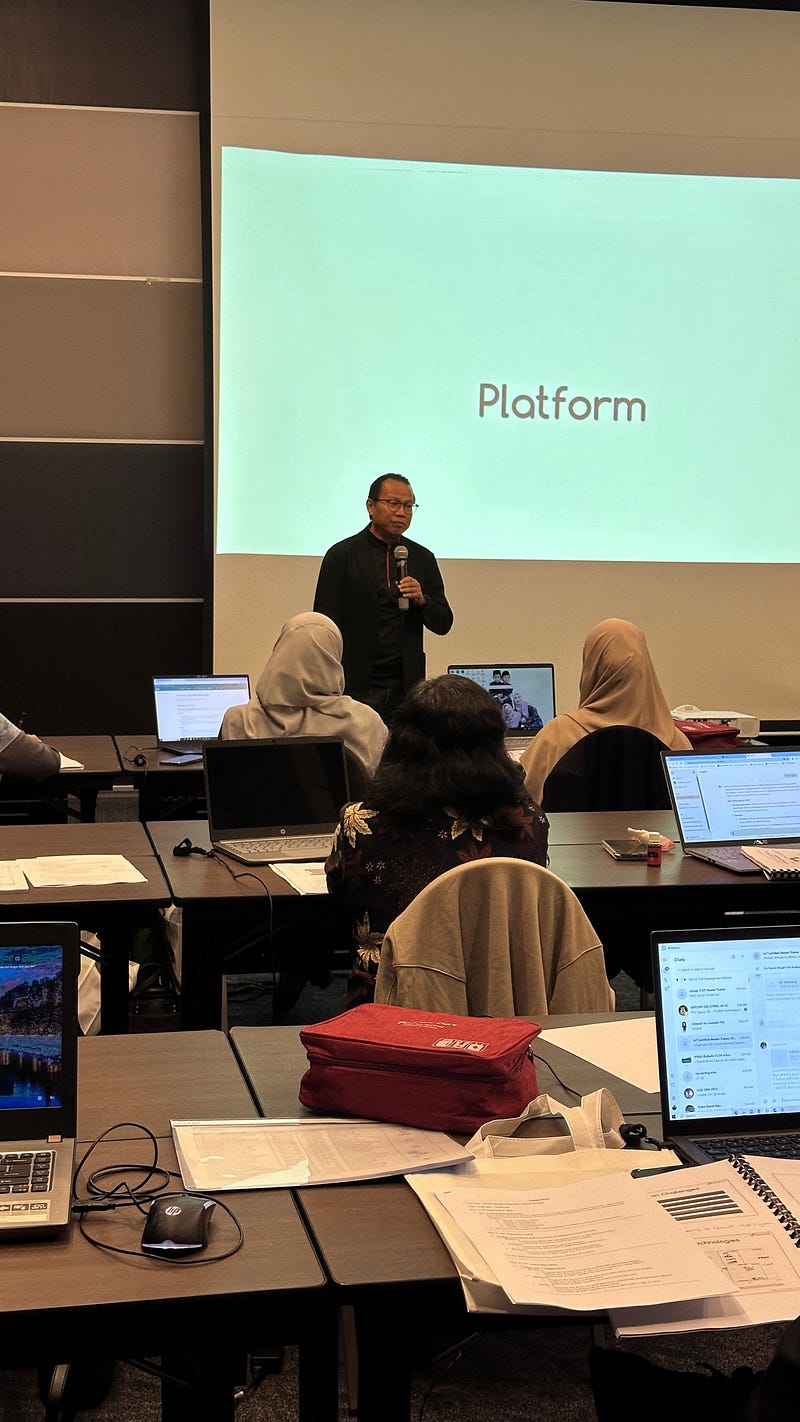
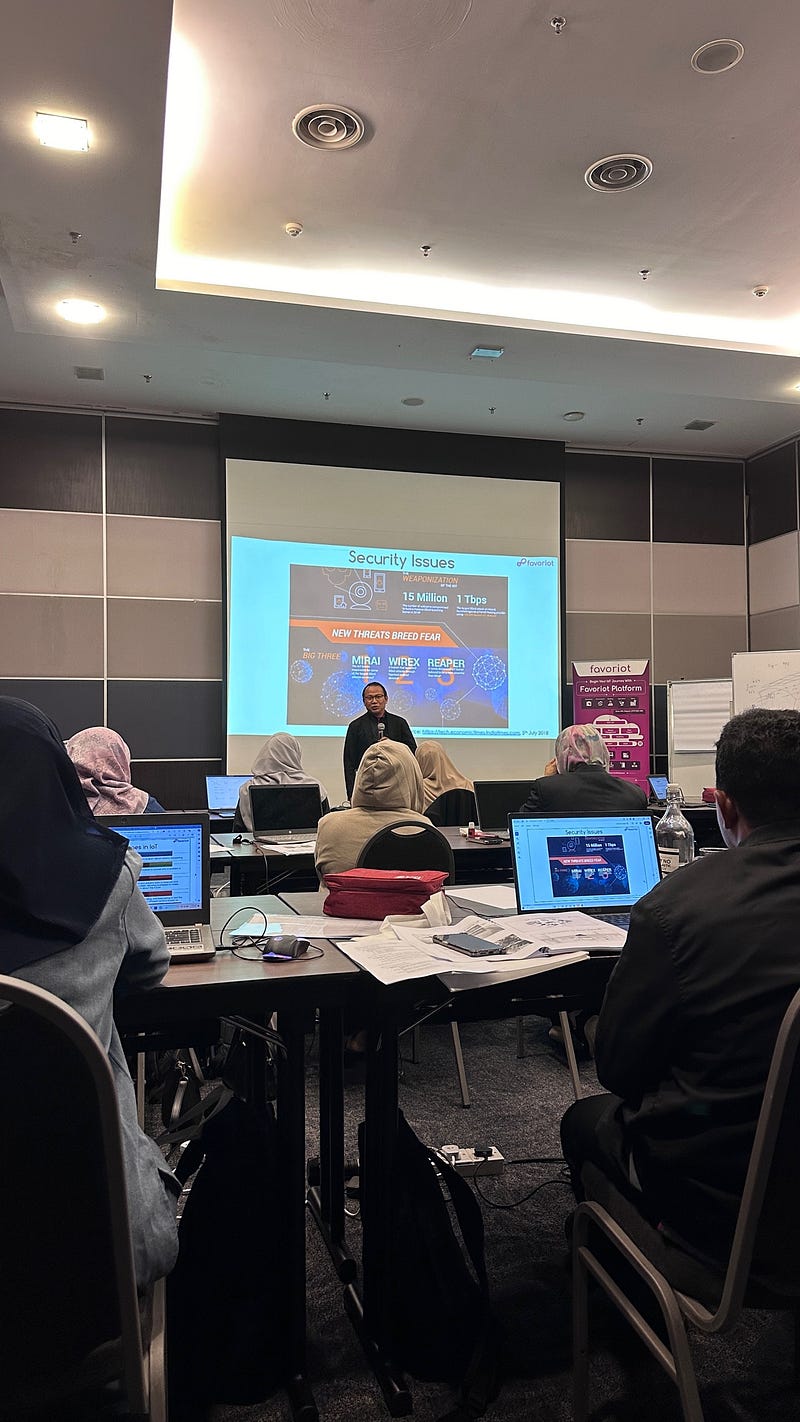
Public speaking has become a career for me throughout my life. Since I started working, I’ve often stood in front of an audience, speaking and sharing knowledge or ideas.
However, I realize that not everyone is comfortable with this. Many people view it as a nightmare—standing in front of a large group, delivering something they might already know or, more dauntingly, something new that requires their acceptance.
My journey into public speaking began when I became a lecturer. Every day, I had to stand before students, delivering lectures between one and two hours.
At first, I was pretty nervous. “What if the students don’t understand what I’m saying?” I often asked myself.
But over time, lecturing became a routine. I started learning to understand my students, grasping their learning styles, and adjusting how I delivered information to make it more effective.
Being a lecturer taught me a lot about communication.
I needed to ensure that students didn’t just listen but also understood and applied what they learned. I found that how I presented information was crucial in keeping the students engaged. “Am I too serious? Or should I be more relaxed?” I would often ask myself after each class.
After many years in academia, I received invitations to speak at conferences and seminars. This was a new level for me. Unlike in the classroom, where I was facing students familiar with me, conferences and seminars introduced me to a diverse audience – from industry experts to beginners who were just getting acquainted with my field.
Every time I was invited, I was given different amounts of time, sometimes up to 40 minutes, sometimes just 15 minutes. I had to learn to adapt quickly.
“How can I convey important information in this short amount of time?” I often thought before each session.
This was challenging, but it also taught me to be more focused and concise in my delivery.
I learned that in conferences, starting with something that grabs the audience’s attention is crucial. An anecdote, a provocative question, or even a surprising fact can be a good opener.
This made me realize that how we start a speech can determine how the audience will pay attention throughout the session.
However, one of the biggest challenges in public speaking came when I began receiving invitations to speak at workshops.
Here, the time allocated for me to speak was much longer—sometimes up to one or two days—and I spoke alone. Imagine, I had to ensure the audience stayed interested the entire time.
“How can I keep their attention?” This question often swirled in my mind.
I found that interaction is key in workshops. Unlike lectures or seminars, where the delivery is more one-way, workshops require more two-way discussions.
I started involving the audience in discussions, allowing them to share their opinions and experiences. This helped maintain their focus and gave me new perspectives on the issues being discussed.
“Every workshop is an opportunity for me to learn something new,” I often reminded myself.
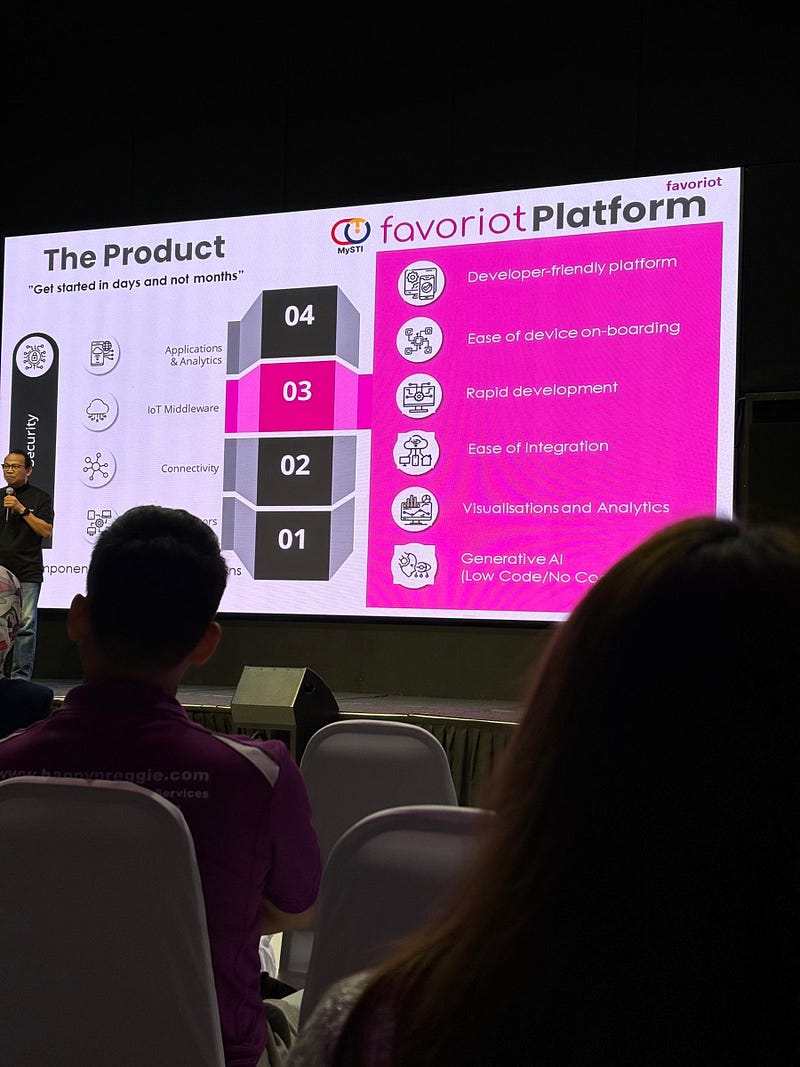
After transitioning into the corporate and technology world, my role in public speaking also changed. I was no longer just sharing knowledge but also selling products and ideas. “Product Talk” became a routine in our marketing efforts at Favoriot.
Here, I had to present the benefits of our products in a convincing but moderate manner.
Another big challenge was, “How can I make the audience believe in our products without making it feel like I’m just trying to sell them? “
I learned that in Product Talks, it’s essential to focus on how our products can solve the problems faced by the audience. I didn’t just talk about the product’s features but more about the benefits they could gain.
I also started using success stories as examples because I found them more accessible and convincing.
Recently, I’ve started transitioning to pitching to investors, which is an even more challenging level.
Unlike lectures, seminars, or Product Talks, pitching requires me to present all the important information in a very limited time—sometimes only three to five minutes.
“How can I include all the important points in such a short time?” I often ask myself before each pitching session.
I found that clarity and confidence are key in pitching.
I needed to ensure that the investors understood what I was trying to convey, and I had to do it confidently.
I also learned that the slides must be simple but packed with information. There’s no room for unimportant details. “Every slide needs to have a clear purpose,” this is the principle I hold onto.
My experience in various types of public speaking has taught me that each situation requires a different approach.
The duration, type of audience, purpose of the speech, and method of delivery all play a role in determining its effectiveness. I also realized that we often criticize seminar presenters or those giving a pitch—their confusing style, boring slides, or unengaging delivery.
But when it’s our turn to stand in front, sometimes we make the same mistakes.
I learned that the most important things in public speaking are to speak confidently, convey information in a way that’s easy to understand, use an approach that engages the audience, and ensure that the slides used are not boring.
I also learned that we must constantly strive to improve because every public speaking session allows us to learn and grow.
“What about you?” I often ask myself after each session.
Public speaking is a skill that can always be improved. The more we do it, the more confident we become.
Ultimately, I realize that public speaking isn’t just about what we say but how we make the audience feel it.
If we can deliver our message in a way that makes the audience feel connected, then we have succeeded in public speaking.
Creating Synergy: How Startups Can Prepare for the Perfect Acquisition
As a startup founder, one of the most intriguing questions that constantly lurks in my mind is: “Should we exit through an acquisition?” This question carries with it not just the weight of financial considerations but also the emotional and strategic implications for the company’s future.
As the CEO of Favoriot, I’ve been through this mental tug-of-war many times. I often find myself contemplating our embarked journey and where it might lead.
Guess what? As a startup founder, you either expand your business through investors, or you might want to find a strategic merger or acquisition. And trust me, the decision isn’t as straightforward as it might seem.
When I co-founded Favoriot, our primary goal was to create an IoT platform that could help businesses and communities integrate IoT solutions seamlessly. We were passionate about the possibilities, potential impact, and innovation that we could bring to the market.
But as we grew, so did the challenges, and the question of whether to exit through an acquisition became more pertinent.
Understanding the Potential Acquirers
One of the first steps in considering an acquisition is to understand who your potential acquirers might be. This isn’t just about identifying companies with the financial capability to buy you out. It’s about understanding their business models, strategies, and focus areas.
I remember a time when a large telecommunications company showed interest in Favoriot. Our platform seemed perfect because they were looking to expand their IoT services. However, as I dug deeper, I realized their primary focus was consumer IoT solutions, while we were more geared towards industrial applications.
“Does this align with our vision?” I asked myself.
Ensuring that the acquiring company’s strategy aligns with yours is crucial. Although the financial offer was tempting, the strategic misalignment was too significant to ignore. We decided to walk away, knowing that while it might have been a lucrative exit, it wasn’t suitable for us.
Aligning Your Product/Service
Aligning your products or services with their needs is essential to making your startup attractive to potential acquirers. This doesn’t mean you should change your core offerings; rather, develop them to complement the potential acquirer’s portfolio.
At Favoriot, we started focusing on creating modular solutions within our platform that could be easily integrated with other systems.
This approach made our platform more versatile and appealing to larger companies looking for quick and seamless integration.
“What if our platform could fill a gap in their product line?” I pondered during one of our strategy sessions.
This led to a shift in our development strategy. We began focusing on compatibility and complementarity rather than just innovating for the sake of innovation.
Targeting the Same Customer Base
Another critical consideration is whether your startup serves the same customer base as a potential acquirer. This can significantly increase your strategic fit, allowing the acquiring company to cross-sell or upsell their services to your customers and vice versa.
For us, this meant expanding our market reach into sectors that were already being served by potential acquirers.
We examined the industries that were most active in adopting IoT solutions and tailored our marketing efforts to those sectors.
“Could our customers benefit from the additional services a larger company offers?” I often wondered.
By targeting the same customer base, we increased our value proposition and made ourselves more attractive to companies looking to expand their market share.
Adapting to Their Technology
In today’s tech-driven world, ensuring your technology is compatible with potential acquirers is crucial. This can significantly reduce the cost and complexity of integration post-acquisition, making your startup a more attractive proposition.
At Favoriot, we invested heavily in ensuring that our platform was built on open standards, making it easier for other systems to integrate with ours.
This wasn’t just about making our platform more versatile but about positioning ourselves as a strategic acquisition target.
“What if we could make the integration process as smooth as possible?” This thought guided many of our technical decisions, from the choice of programming languages to the design of our APIs.
Focusing on Shared Values and Culture
One aspect of acquisitions that is often overlooked is cultural fit.
I’ve seen acquisitions fail not because the financials didn’t add up but because the merging companies had fundamentally different values and corporate cultures.
At Favoriot, we prided ourselves on our innovative and collaborative culture. We knew that any potential acquirer would need to share these values for the acquisition to be successful.
“Can we thrive in a different corporate culture?” I asked myself during one particularly challenging negotiation.
The answer was no, and we walked away from the deal.
It’s important to remember that being acquired shouldn’t mean losing your identity as a company. Instead, it should be about aligning your unique strengths with the needs and strategy of a potential acquirer.
Addressing Market Gaps
One of the most effective ways to position your startup for acquisition is to address a market gap that a potential acquirer cannot currently fill. This could be anything from a specific technology to a niche market segment.
For Favoriot, this meant focusing on the industrial IoT sector, where we saw a significant gap in the market.
By developing solutions that specifically addressed the needs of this sector, we made ourselves an attractive target for companies looking to expand into this space.
“What if we could offer something that no one else could?” This question drove much of our product development and market strategy.
Providing Strategic Advantages
Finally, to make your startup a strategic fit for acquisition, you need to offer something that gives the acquiring company a strategic advantage.
This could be unique intellectual property, a strong market presence, key partnerships, or anything else that could give them a competitive edge.
At Favoriot, we focused on building solid partnerships with key players in the IoT ecosystem.
These partnerships helped us grow our business and made us more attractive to potential acquirers.
“How can we position ourselves as a must-have in their portfolio?” I kept asking myself this question as we expanded our network of partners and collaborators.
The Transformative Possibilities of Acquisition
In the end, the actual value of an acquisition lies not in the transaction itself but in the transformative possibilities it creates.
A great acquisition isn’t just about combining businesses but about igniting new possibilities and empowering both companies to reach their full potential.
“Can we create something bigger than ourselves?” This is the ultimate question that every startup founder should ask when considering an acquisition.
It’s not just about the financials or immediate benefits but about the long-term vision and the combined entity’s impact on the market.
For Favoriot, the journey is still ongoing.
We’ve had our fair share of offers, and while none have been the right fit so far, I know that the day will come when the stars align and we find a partner who shares our vision and values.
Until then, we continue to build, innovate, and position ourselves for that perfect opportunity.
In the end, being a strategic fit isn’t about losing your identity as a business but instead aligning your unique strengths with the needs and strategy of a potential acquirer.
Acquiring a startup isn’t about taking over another company; it’s about empowering it to reach its full potential.
And that, to me, is the ultimate goal of any acquisition.
Since Favoriot’s inception, we’ve won numerous awards. One notable example is being named Malaysia’s Best IoT Startup in 2019. I remember the excitement and pride that came with that achievement.
It felt like a validation of all the hard work and sleepless nights we had put into building the company. “This is it,” I thought. “We’re finally being recognized.”
The Surge in Exposure
After winning that award, we received invitations to appear on podcasts, TV shows, and radio interviews.
The exposure was immense.
This kind of publicity was gold for a startup like ours, where getting the word out is half the battle. “Maybe this is what we needed to push us to the next level,” I mused as I prepared for another interview.
The Tough Questions Begin
But as the excitement of the award began to settle, I asked some tough questions. “Is this making a difference? Is this award going to translate into tangible results for Favoriot?” The reality, as I soon discovered, was more sobering.
Customers: The Missing Link
Did the award bring in customers? No, not really.
Despite all the exposure, we didn’t see a significant uptick in clients knocking on our door. “Surely, people have heard of us by now,” I would tell myself.
But recognition doesn’t always equate to sales.
The truth is, getting your name out there is just one piece of the puzzle. It’s not enough to be known; you must be trusted, which takes more than an award.
Investors: The Harsh Reality
What about investors? Did the award make them come running? Again, the answer was no.
“How can they not see the potential in us?” I wondered, frustrated.
But investors are looking for more than just accolades.
They want a solid business model, a clear path to profitability, and, most importantly, evidence that your startup can scale.
No matter how prestigious, an award isn’t going to convince them on its own.
Big Projects: The Elusive Prize
And then there’s the question of projects.
Did we land any big contracts because of the award?
Unfortunately, no.
“What’s the point of all this recognition if it doesn’t lead to real opportunities?” I found myself asking. It was a tough pill to swallow, but the fact remained: while awards are nice, they don’t necessarily open doors to significant deals.
The Importance of Merit
At Favoriot, we’ve always believed that if you’re going to give out awards, they should be based on merit.
Too often, I’ve seen awards handed out to those who can afford to pay for a fancy dinner or an editorial spot.
“What’s the value of an award if it’s just bought and paid for?” I questioned. We’ve never been interested in that kind of recognition.
If we’re going to win something, we want it to be because we’ve earned it, not because we’ve paid for it.
Shifting Focus: Beyond Awards
So, where does that leave us now?
The truth is, we’re no longer chasing awards. They’ve lost their luster for us.
“What’s more important,” I remind myself, “is attracting customers who believe in our product and are willing to pay for it.” That’s the real measure of success for a startup – not the trophies on the shelf but the customers who keep returning.
Aiming for Global Impact
We’ve shifted our focus to the international market.
“Let the world see what we can do,” I often think. Our aim now is to be recognized globally, not just for the awards we’ve won but for our impact in the IoT space. We want the world to see the value we bring, not because we’ve won an award but because we’ve delivered real results.
The Road Ahead: Challenges and Hopes
Of course, this journey isn’t easy.
It’s filled with challenges, setbacks, and moments of doubt. But it’s also filled with hope, determination, and a belief that what we’re doing matters.
“May our journey be made easier with the prayers of our friends,” I often reflect. And for those who have supported us, I can only say thank you.
Your belief in us means more than any award ever could.
The True Measure of Success
In the end, I’ve come to realize that awards are just that – awards.
They’re a nice pat on the back, but they don’t define success.
What matters more is the work we do daily, the relationships we build, and our impact on the world.
That’s the legacy I want Favoriot to leave behind, and that’s what we’re working towards, one step at a time.
Understanding why many startups opt for an M&A exit and what factors drive this decision.
I’ve often found myself reflecting on the ultimate goal many of us have when we start a company: the dream of a grand exit, perhaps through an IPO, where our company becomes publicly listed and the rewards are beyond anything we’ve imagined.
The reality, though, is much more complex, and for most of us, reaching that point requires navigating a winding path filled with challenges, decisions, and often, compromises.
When I first started out, the vision was clear – build something valuable, scale it, and eventually take it public.
I remember the excitement of those early days, the endless discussions about Series A, B, C funding rounds, and the belief that if we just worked hard enough, smart enough, we’d be among the fortunate few to make it to an IPO.
But as time passed, I realised that this dream, while achievable, was far from guaranteed.
Many companies don’t make it to that stage, and instead, find themselves considering other options, like mergers and acquisitions (M&A).
The reality is, getting to an IPO isn’t just about having a good idea or even a great product. It’s about building a company that generates substantial revenue, has a stable income, and has operations that can scale globally.
This requires not just innovation, but consistent execution over many years, often under immense pressure from investors and competitors. And even then, the odds are still slim.
I’ve seen many founders, myself included, face the tough decision of whether to continue pushing toward an IPO or to consider selling the company.
Selling, especially to a larger corporate entity, can be a very attractive option, particularly when the pressures of scaling become overwhelming. But selling is not just about cashing out; it’s about finding the right buyer who sees value in what you’ve built – whether that’s your technology, your team, or your market presence.
One of the first things you learn when you start exploring M&A options is that the reasons companies acquire startups are varied.
Often, they’re interested in your technology because it’s something they don’t have the resources or expertise to develop in-house. Building new products, especially in cutting-edge fields, is incredibly challenging.
It requires not just technical knowledge, but the ability to iterate quickly, learn from failures, and pivot when necessary.
Large corporations, with their layers of bureaucracy, often struggle with this, and for them, acquiring a startup that’s already proven itself can be a much easier path to innovation.
I’ve also seen companies acquire startups primarily for their talent. In today’s world, finding skilled people – those who not only have the technical chops but also the startup mindset – is incredibly difficult.
Big companies know this, and sometimes the quickest way to bring in fresh talent is to acquire a startup where that talent already exists. This is often referred to as “acqui-hiring,” and while it might not be the dream exit every founder imagines, it can be a viable and profitable option.
Another reason companies might acquire a startup is to gain access to a market they’re not currently serving. Startups, by nature, are nimble. We can pivot quickly, explore niche markets, and move into spaces that larger corporations might overlook or deem too risky.
But once a startup proves that a market is viable, larger companies often want in, and buying a startup can be their fastest route.
On the darker side, there’s also the possibility that a company might acquire a startup simply to shut it down. This might sound counterintuitive, but in highly competitive industries, it’s not uncommon.
A large corporation might see a startup as a potential threat, not because it’s currently taking market share, but because it could do so in the future. By acquiring the startup and then closing it, they eliminate the competition before it becomes a real problem.
Reflecting on these possibilities, I find myself asking, “What would I do if I were in that position again? Would I hold out for the IPO, or would I sell to the highest bidder?” The answer isn’t straightforward.
It depends on so many factors – the state of the market, the strength of the company, the offers on the table, and personal circumstances.
There’s no one-size-fits-all answer, and each founder must make that decision based on their unique situation.
I remember a time when I was approached by a large corporation interested in acquiring my startup.
They were impressed by our technology and saw it as a perfect fit for their portfolio.
Was this really the right move? Would selling mean giving up control over something I had poured my heart and soul into? And would I be happy working within a large corporation, where decisions might be made by people who didn’t share my vision?
Looking back, I realise that exits, whether through an IPO or an acquisition, are just one part of the startup journey.
They’re milestones, not the end goal.
The real value lies in the experiences, the lessons learned, and the impact you make along the way.
If I had to give advice to other founders contemplating their own exit strategies, I’d say this: don’t rush the decision.
Consider all your options carefully, think about what you want not just in terms of financial rewards, but in terms of your personal and professional growth.
And most importantly, be true to your vision and your values.
The right exit will come when the time is right, and when it does, you’ll know it.
In the end, whether you exit through an IPO, an acquisition, or simply by moving on to your next venture, what matters most is that you’ve built something meaningful, something that made a difference.
And that’s something no exit strategy can ever take away from you.
The Rocky Road of Smart Cities: My Journey from Idealism to Realism.
The Allure of Smart Cities
In 2015, I embarked on a journey into the world of Smart Cities.
The idea was electrifying — technology had the potential to revolutionize urban living, making cities more efficient, sustainable, and responsive to the needs of their citizens. The possibilities seemed endless, and I was eager to participate in this transformation.
However, the reality I encountered was far from the idealistic vision I had in mind. Breaking into the Smart Cities market was a monumental challenge, fraught with unforeseen obstacles and harsh lessons.
The Birth of an Idea: A Reporting App for Citizens
It started with a simple yet powerful concept: a reporting app that allows citizens to easily file complaints about city infrastructure.
The app would let people report issues like potholes, broken streetlights, or uncollected trash directly to local councils. We believed we had a killer app on our hands. The system also allows citizens to track the progress of their complaints, bringing transparency and accountability to local governance.
We planned to roll out the service via the cloud to all local councils across Malaysia, transforming city management.
Initial Optimism: “How Hard Can It Be?”
As we prepared for the launch, I was optimistic. “Surely, local councils would jump at the chance to improve their services and engage with citizens more effectively,” I thought.
After all, who wouldn’t want to streamline their operations and make their cities more responsive to the needs of their residents? But as it turns out, the road to innovation is often paved with unexpected obstacles.
The Harsh Reality: An Open Can of Worms
The first major hurdle was getting local councils to pay for the service. It wasn’t that they didn’t see the value in it; the problem was more complex.
For one, the app was like an open can of worms.
It exposed the inefficiencies and shortcomings of local government, and not everyone was eager to highlight those issues. Additionally, some councils expressed a sense of pride—or perhaps stubbornness.
“We can build this ourselves,” they’d say, and some of them did try. But more often than not, these homegrown solutions fell short.
A Sobering Realisation: “Why Isn’t Anyone Using It?”
After the launch, they were left scratching their heads. “Why isn’t anyone using it?” This question haunted us.
Despite their efforts, nobody seemed to realize that their city had such an app. It was a frustrating experience. They had assumed that the ease of filing complaints and tracking progress would be enough to drive adoption.
But it wasn’t. The app was met with a collective shrug, and the uptake was dismal.
Copycats and a Tough Decision
To add insult to injury, we soon noticed copycat apps popping up. Others had taken our idea and run with it, often with the same lukewarm results.
It was disheartening.
After some time, we made the tough decision to ditch the application. It was a painful lesson in the harsh realities of the Smart Cities market and a sobering reminder that not every good idea translates into success.
The Long Haul: Nine Years of Persistence
Fast forward nearly nine years, and my company, Favoriot, is still trying to penetrate the Smart Cities segment. It’s been a tough nut to crack, and the challenges haven’t gotten any easier.
We even joined the Malaysia Smart City Alliance Association (MSCA) to gain easier market access. I thought being part of this collective would open doors, but the reality was more complicated.
The Complexity of Building Smart Cities in Malaysia
I’ve understood that building smart cities in Malaysia is a tedious and complex process fraught with challenges.
“Where do you even start?” I’ve heard this question countless times from city planners and local councils. Without clear Smart City Indicators to guide them, many cities simply don’t know how to begin their Smart City journey.
There’s a lot of confusion, a lack of vision, and an overwhelming sense of inertia.
Talent Gap and Slow Decision-Making
One of the biggest challenges is the talent gap. There aren’t enough skilled professionals in local councils who understand the nuances of Smart Cities.
Vision is blurred, and decision-making is painfully slow — like a snail inching its way forward.
And then there’s the politics, which adds another layer of complexity to an already complicated process.
The Funding Dilemma: A Major Roadblock
But perhaps the biggest killer of all is funding — or rather, the lack thereof. “How can we afford this?”. The reality is that many local councils don’t have the budget to implement Smart City solutions.
And when they do seek funding, they often turn to solutions providers with an unreasonable expectation: a 100% Private Finance Initiative (PFI). “We need you to front all the costs,” they say, “and maybe, just maybe, you’ll see some return on your investment down the line.”
The Reality of Local Council Services
However, not all local council services are meant to generate money. Most of them aren’t.
The real value of these services lies in cost savings, operational efficiency, and improved quality of life for citizens.
But try explaining that to someone holding the purse strings and looking for immediate financial returns.
It’s a tough sell.
Greenfield vs. Brownfield Cities: Different Challenges
I’ve also learned that not all cities are equal regarding Smart Cities.
Greenfield cities — newly built from the ground up — have different challenges than brownfield cities, which are older and already developed. The pain points are different, and so is the decision-making process.
What works for one city might not work for another, making scaling Smart City solutions daunting.
The Frustration of Trials
And then there’s the issue of trials.
“Let’s start with a proof of concept,” they say.
But all too often, these trials go nowhere. They don’t lead to commercial agreements or full-scale deployments.
Instead, they fizzle out, leaving everyone involved feeling frustrated and disillusioned.
The Reality of Smart Cities in Malaysia
So the next time you hear someone touting the number of Smart Cities launched in Malaysia, take it with a grain of salt.
Many of these so-called Smart Cities are little more than proof-of-concept projects — limited trials that never see the light of day beyond the initial launch.
A Strategic Shift: Diversifying Beyond Smart Cities
Given this challenging landscape, we at Favoriot have made some tough decisions.
While we’re still involved in Smart Cities, we’re no longer putting all our eggs in that basket.
We’ve diversified our focus, taking on other IoT projects unrelated to Smart Cities.
It’s a matter of survival.
As much as I believe in the potential of Smart Cities, I’ve realized that it’s not a silver bullet.
It’s a sexy concept, sure, but it can also be a business killer if you’re not careful.
Balancing Ambition with Practicality
It’s all about balancing ambition with practicality.
Yes, I’m still passionate about Smart Cities, and I’ll continue to support the development of smarter, more sustainable urban environments.
But I’m also realistic about the challenges.
We need to be smart about where we invest our time, energy, and resources. After all, there’s a lot more to IoT than just Smart Cities, and exploring all the possibilities is crucial if we want to stay in the game.
Conclusion: Reflecting on the Journey
As I reflect on this journey, I can’t help but think about how far we’ve come and how much we’ve learned.
The Smart Cities market may have been more complex than I initially imagined.
Still, it’s been an invaluable experience that has shaped how I approach business and innovation.
And who knows?
The next big breakthrough may be around the corner.























 Dr. Mazlan Abbas