From Monologue to Dialogue: Transitioning to Engaging Panel Discussions

FROM STAGE FRIGHT TO SPOTLIGHT

My Journey as a Conference Panelist
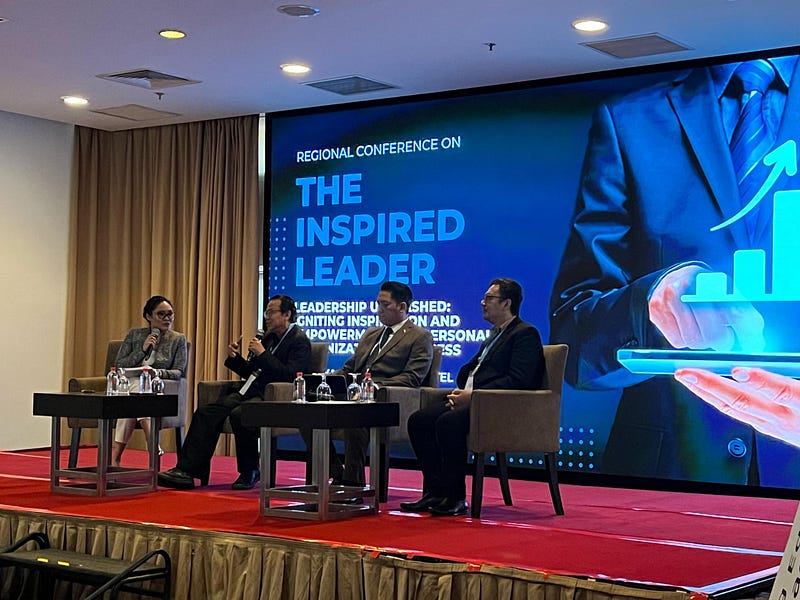
Why I Now Prefer Panel Discussions Over Solo Presentations

Throughout my career, I’ve had the privilege of being invited to speak at various conferences, a role I initially cherished for the autonomy and control it afforded me.

As a speaker, I could meticulously plan my presentation, control the flow of my talk, and ensure that every slide was a perfect reflection of the points I wanted to convey.

This level of preparation provided me a comfort zone, a safe harbor in the sometimes unpredictable sea of public speaking.

Transitioning from Speaker to Panelist

However, my experiences took an interesting turn when I began receiving invitations not as a sole speaker but as a panelist.

The dynamics of panel discussions are inherently different: instead of a monologue, it’s a dialogue – not just between the panelists but with the audience as well.

Suddenly, I found myself on stage with two or three other experts, each with their unique perspectives and areas of expertise, all under the guidance of a moderator whose job was to weave our individual narratives into a cohesive, engaging session.

Initially, this new role was a source of anxiety.

Sitting on stage, not knowing exactly what question would come next, I worried about whether I would be able to respond with the right mix of fact, insight, and eloquence.

Would I be able to hold the audience’s attention? Could I contribute meaningfully to the discussion and hold my own alongside my fellow panelists?

Over time, however, I discovered that most panels are less daunting than they seem.

Panelists often receive a set of questions in advance, allowing us to prepare our thoughts and consider our responses.

Some organizers even allow panelists to suggest questions, providing an opportunity to steer the conversation toward areas of our expertise or interest.
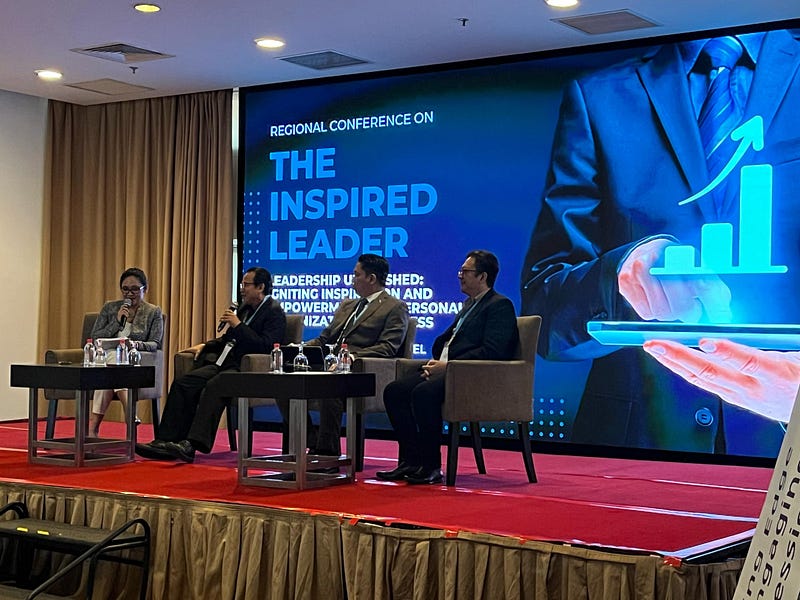
Facing Uncertainty on Stage

But even the best preparations can’t cover everything, and there are always moments when the moderator goes off-script or delves deeper into a topic than the prepared questions had anticipated.

In these situations, I learned the value of active listening, staying fully engaged not just when it was my turn to speak but throughout the entire session.

This attentiveness helped me respond more thoughtfully and dynamically, weaving my responses into the ongoing narrative of the discussion rather than delivering pre-packaged answers.

Preparation Meets Improvisation

In my early days as a panelist, I considered bringing notes on stage, a safety net of bullet points and facts. Yet, this approach soon felt contrived, more like a performance than a genuine conversation.

I realized that true professionalism in this context meant showing up authentically, ready to engage with the topic and the audience without the crutch of scripted responses.

To navigate these live, unscripted moments, I developed a technique akin to a mental mind map.

When listening to a question or another panelist’s response, I’d quickly organize my thoughts, connecting the dots between the discussion points and my own knowledge and experiences.

This mental mapping allowed me to respond more fluidly, adding depth and context to the conversation.

The Power of Humor and Storytelling

Humor became another tool in my arsenal, a way to lighten the mood and connect more personally with the audience.

Even in serious discussions, a well-placed joke or anecdote can humanize the panelists, breaking down barriers and fostering a more engaging, relatable session.

Building on Collective Insights

I also learned the value of building on my fellow panelists’ points, weaving their insights into my responses to create a richer, more interconnected dialogue.

This collaborative approach not only enriched the content of the discussion but also highlighted the collective expertise of the panel, creating a more compelling and informative experience for the audience.

Over time, my perspective on panel discussions has transformed.

What once felt like a daunting challenge has become a preferred format, offering a dynamic and interactive forum that forgoes the rigidity of prepared slides for the spontaneity of real conversation.

Today, I embrace these opportunities, confident in my ability to contribute thoughtfully and authentically, no matter where the discussion may lead.

10 Tips to Turn an Introvert Into a Public Speaker — My Experience

The image was created using Midjourney by the Author of Startup Journey

Are you an introvert?

Many missed sharing their thoughts and knowledge when given the chance to talk on stage.

Embarking from an introverted individual to a confident public speaker can be challenging and exhilarating.

My experiences across various career paths have honed my speaking skills and led to profound personal development.

Let me share ten key insights that facilitated my transformation and could guide others needing more clarification about public speaking.

1. Know Your Audience

Understanding your audience is the cornerstone of effective communication.

Determine if your listeners are students, educators, professionals, or businesspeople.

It is crucial to tailor your content, language, and presentation style to suit their background, knowledge, and interests.

This tailored approach ensures that your message resonates and is valued by your audience.

2. Plan Your Structure

A well-organized presentation is essential.

Adopting a clear structure with an introduction, main body, and conclusion lets your audience quickly follow and remember your points.

Think of it as guiding them on an enlightening journey, ensuring they stay engaged.

3. Keep it Simple and Clear

Embrace simplicity.

Overloading slides with excessive information can overwhelm your audience.

Use straightforward language, bullet points, and clear visuals.

Also, avoid distracting animations which can detract from your message.

This streamlined approach makes your content more accessible and impactful.

4. Engage With Your Audience

Engagement transforms a presentation.

Involve your audience with questions, encourage participation, and use interactive tools to maintain their interest.

Direct eye contact, like engaging with them, allows you to gauge their reactions and adjust accordingly.

Avoid fixating on your slides or hiding behind a podium; confidently move around the stage to create a dynamic and approachable presence.

5. Use Visual Aids Wisely

Visual aids, when used judiciously, can significantly bolster your message.

Ensure that charts, graphs, and infographics are relevant, clear, and visually appealing.

They should complement, not overshadow, your verbal communication.

6. Practice, Practice, Practice

Regular practice builds confidence and smoothens your delivery.

The more you rehearse, the more natural and fluent your presentation will become.

This preparation reduces anxiety and enhances your overall performance.

7. Be Authentic

Authenticity creates a genuine connection.

Showing your true personality and passion for the subject can strengthen your bond with the audience.

People are drawn to authenticity, so let your unique traits and enthusiasm shine through.

8. Manage Your Time

Effective time management is crucial.

Arrive early to interact casually with other speakers or audience members.

Keeping your presentation within the allotted time shows respect for your audience and ensures you cover all critical points without rushing.

9. Tell a Story

Storytelling is a powerful tool.

Incorporating relevant anecdotes or examples makes your points more engaging and memorable.

Stories evoke emotions and transform your presentation into an enjoyable and enlightening experience.

10. Handle Questions Professionally

Conclude with strength.

Encourage and address questions confidently and respectfully.

If uncertain about an answer, acknowledge it honestly and offer to find out.

This approach demonstrates your commitment to accuracy and builds trust.

Conclusion

Transforming from an introvert into a public speaker involves more than just learning to speak effectively; it’s a journey of self-discovery and growth.

Every step offers valuable lessons about yourself and equips you with skills that extend beyond the podium.

Remember that it’s an attainable skill for those intimidated by public speaking.

Embrace this journey with openness, and you’ll be surprised at the progress you can make.

The Ups and Downs of Presenting at Conferences That All of Us Have Experienced

The image was created using Midjourney by the Author of Startup Journey

The world of conferences and seminars has shaped my professional life.

It’s been thrilling, filled with memorable moments and valuable lessons.

There are days full of excitement and engagement, but there are also times when the audience is lukewarm and bland.

The Electric Atmosphere of the Stage

Imagine stepping onto a stage, the spotlight hitting you, and a sea of eager faces awaiting your words.

That’s the world I’ve lived in.

There’s something indescribably electrifying about presenting your research, a project that’s consumed years of your life.

As a regular speaker and moderator at technical conferences, including those by IEEE, I’ve experienced this rush firsthand.

Each time I present, I feel a potent mix of excitement and responsibility. It’s not just about sharing my work; it’s about contributing to a more extensive conversation in my field.

There’s a unique adrenaline in engaging with an audience, fielding questions, and sparking discussions.

The Curious Case of the Disappearing Audience

However, it’s not always a bed of roses.

I’ve observed a curious phenomenon, particularly at international conferences.

Many fellow speakers, after their sessions, seem to vanish. Drawn, perhaps, by the allure of a new city, they skip other sessions for sightseeing or shopping.

This trend hits hard when you’re scheduled to present on the last day.

You’ve poured everything into your research, only to be greeted by a half-empty room.

It’s a disheartening sight and can take the wind out of the sails of even the most passionate speakers.

The Digital Revolution in Conferencing

Then came COVID-19, a game-changer for the conference world. Suddenly, we were thrust into the era of virtual meetings.

Initially, it seemed like a blessing — no travel hassles, lower costs, and the chance to connect with a global audience from our living rooms.

But the cracks soon appeared.

Presenting to a screen full of tiny icons feels vastly different.

How do you gauge engagement or read the room when all you see are muted profiles?

The lack of immediate feedback, the absence of those non-verbal cues we rely on, leaves a void.

A significant casualty of this digital shift has been networking.

The spontaneous conversations over coffee, the exchange of ideas over lunch, and those serendipitous encounters that lead to collaborations are all lost in the transition to online formats.

Embracing the New Normal

Despite these challenges, virtual conferences have been a lifeline.

They’ve kept the spirit of knowledge exchange alive in these unprecedented times.

But as we edge out of the pandemic’s shadow, there’s a collective longing to return to in-person interactions.

The online world offers convenience and reach but can’t replicate the experience of physically sharing a space with like-minded individuals.

However, the energy and the dynamics of face-to-face interactions are irreplaceable.

Reflecting on the Journey

Reflecting on my journey through various conferences and seminars, I realize how much these experiences have enriched me.

Yes, the landscape has changed dramatically, but the essence remains the same — exchanging knowledge and creating connections.

Whether online or offline, the world of conferences continues to be a vibrant, dynamic space.

It’s where ideas are shared, relationships are forged, and innovations are sparked. As we adapt to new modes and overcome challenges, this spirit of exploration and excellence continues to drive us.

In Conclusion

We’ve seen the highs, navigated the lows, and adapted to the digital transformation.

But through it all, the core purpose remains unchanged.

It’s about sharing knowledge, connecting with others, and continuously pushing the boundaries of our fields.

With all its twists and turns, this journey continues to be an exhilarating and enriching part of my professional life.


You can also check out my personal Blog here or the latest eBooks I have recently published — here.