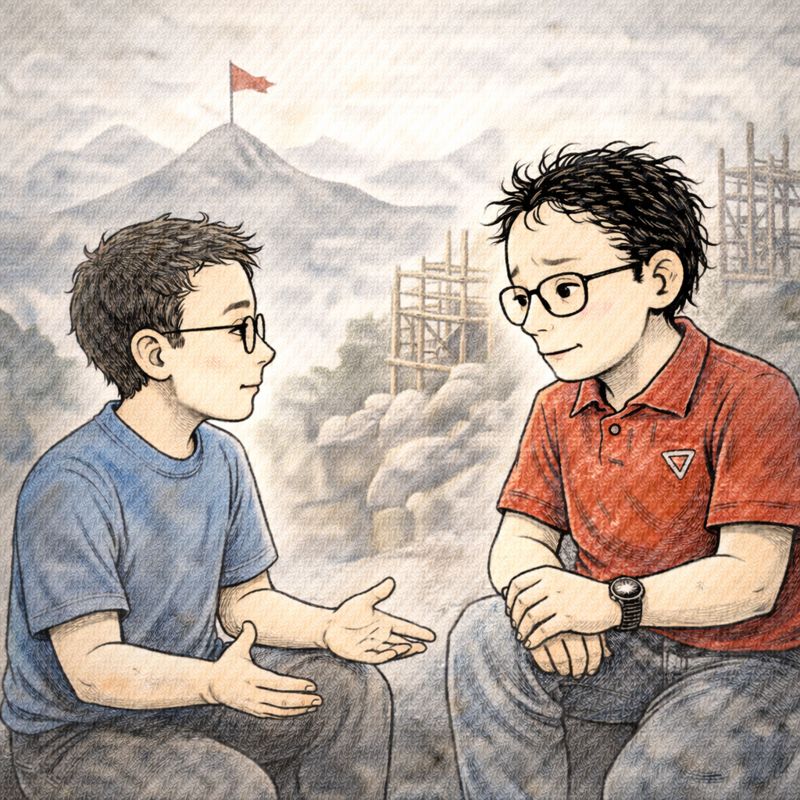
When “Buy Local” Wasn’t Enough

I used to believe that supporting local products and technologies through MySTI would open the doors to the government procurement market.

It made sense. National pride. National sentiment. Building trust in our own capabilities.

But reality hit me hard.

We lost a tender bid to a non-MySTI product. Despite playing by the rules. Despite believing the policy was our shield.

That moment shook my trust.

Because sales don’t work on sentiment alone. Customers don’t always buy what’s local, or what’s logical. They buy what they want.

And wants are complicated.

Wants are psychological.
Wants are about prestige.
Wants are about safety.
Wants are about trust in who else is using it.

It’s rarely just about being “local.”

So I’ve decided to stop building my strategy on that emotion alone.

At Favoriot, we will no longer knock on doors saying “choose us because we’re local.”

We will knock with a different force.

Choose us because we solve your problems faster.
Choose us because our solutions reduce your risks.
Choose us because we innovate with you, not just for you.
Choose us because we deliver real outcomes, not just promises.

That’s the new foundation of our “wants.”

Not sympathy. Not sentiment.
But strength. Value. Impact.

And maybe, just maybe, when local technology wins on those grounds, it will mean even more than a label.

Because true pride comes not from being chosen out of obligation.
But from being chosen because we are the best choice.

Founders, Ideas Won’t Save You. Execution Will.

When I started my journey as a founder, I thought the breakthrough would come from the idea.

That magical spark.

That billion-dollar concept.

But I quickly learned something humbling.

Ideas are everywhere.

Execution is rare.

Look around.

There are endless voices ready to criticize.

Crowds procrastinating.

Groups endlessly brainstorming.

Teams stuck in planning mode.

And then—there are the very few who dare to execute.

Founders, this is where you live.

Not in the comfort of whiteboards.

Not in the echo of pitches.

But in the messy, unpredictable, exhausting grind of building.

Your first version will likely fail.

Your product may look ugly.

Your pitch may flop.

Your team may shrink.

But every stumble you recover from moves you closer to impact.

The truth is this:

The market doesn’t care if your idea sounds brilliant in theory.

Investors don’t fund dreams—they fund traction.

Customers don’t buy potential—they buy results.

What separates a founder who survives from one who fades?

The courage to act.

The resilience to keep going.

The discipline to execute when it’s easier to wait.

So if you’re a founder reading this—stop waiting for perfection.

Ship the MVP.

Make the call.

Knock on the door.

Take the uncomfortable first step.

Because one day, someone will say, “That founder was lucky.”

And you’ll smile knowing it wasn’t luck.

It was execution.

Do you want me to make this one even sharper—shorter one-liner style paragraphs for maximum punch and scroll-stopping effect on LinkedIn?

Every New Chapter Demands a Different You

The hardest truth I’ve learned is this:

Growth doesn’t come without transformation.

Every time life hands you a new chapter, it quietly demands that you rewrite yourself.

The student version of you won’t survive in the workplace.

The young executive version of you won’t succeed as a founder.

The founder version of you won’t thrive as a leader of teams.

At first, I resisted.

I thought I could hold on to the same habits, the same mindset, the same playbook.

But then reality hit me.

What carried me here… won’t carry me forward.

To step into the next level, I had to let go.

Let go of old fears.

Let go of outdated skills.

Let go of the identity that once made me feel safe.

And that’s the paradox of progress.

We want change, but we fear losing the version of ourselves we’ve already mastered.

But the truth is, mastery is temporary.

Life keeps testing whether you’re ready to evolve.

If you’re entering a new season right now, don’t ask, “How do I hold on?”

Ask instead, “Who must I become to win here?”

Every challenge you face is not just about solving the problem.

It’s about shaping the person who solves it.

The next chapter won’t wait for the old you.

It’s already calling for the new one.

So here’s the question for you:

Which version of yourself are you willing to shed so you can step into the one you’re meant to be?

The Silent Test of Friendship

Some truths hurt more than lies.

Most of your friends aren’t really your friends.

They show up when it’s fun.

When you’re winning.

When you’re useful.

But when the music stops, and the room goes quiet, you suddenly see how empty it really is.

Real friends are not measured by convenience.

They’re measured by sacrifice.

By the calls they make when you’ve gone silent.

By the seat they pull up when everyone else has walked away.

I’ve learned this the hard way.

You can lose status, money, health, or direction—and watch the crowd scatter.

But the few who remain, those are your people.

Find them.

Hold onto them.

Be that kind of friend to someone else.

Because in a world full of masks, true friendship is the rarest kind of wealth.

What’s the hardest lesson you’ve learned about friendship?

The Founder Truth No One Tells You

When I co-founded FAVORIOT, I thought the most significant milestones would define me.
The first product launch.
The first government pitch.
The first international partnership.

But what I didn’t expect was how much the mistakes would shape me.

We once lost a tender even though our platform was MySTI certified.
We thought the badge would speak for itself.
It didn’t.
That mistake taught me that credibility means nothing without persistence.

We built features no one used.
We learned that listening to customers is more valuable than perfecting technology in isolation.

We expanded too fast into areas we weren’t ready for.
It humbled us to narrow focus, to build depth before breadth.

Every scar carried a lesson.
Every stumble forced me to shed arrogance and grow resilience.

Achievements bring applause.
But mistakes bring wisdom.
And in the long run, wisdom is what keeps a startup alive.

FAVORIOT isn’t standing today because of my victories.
It’s standing because the mistakes taught me how to rebuild stronger.

A mistake that humbles a founder will always be worth more than an achievement that blinds him with arrogance.

That’s the truth I carry as IoT Man.

What was the one mistake that humbled you but transformed your journey?

Builders Talk Ideas, Not People

Some tables are not worth sitting at.

If the main dish is gossip, you will eventually be served too.

I’ve learned this the hard way.
The moment you join conversations built on tearing others down, you’ve already handed people permission to do the same to you.

Today they whisper about someone else.
Tomorrow, when you leave, it will be your name on their lips.

The truth is, people who thrive on gossip are not builders.
They don’t lift others.
They don’t create value.
They survive by dragging others down to their level.

And here’s the danger.
If you spend long enough at that table, you start to become one of them.
You start confusing cynicism for wisdom.
You start thinking that mocking others makes you smarter.

But leadership is not about joining the noise.
It’s about rising above it.

The best leaders I’ve met don’t waste energy dissecting people.
They invest energy in developing people.
They don’t talk behind backs.
They speak face-to-face with honesty.

So choose your tables wisely.
Sit with those who challenge you to grow.
Sit with those who speak of ideas, of visions, of solutions.
Sit with those who make you leave the table feeling bigger, not smaller.

Because who you surround yourself with will either shape your future
or slowly poison it.

My advice is simple.
Walk away from the gossip table.
Find the builders.

That’s where the real conversations are.

If They Don’t Trust You, They’ll Never Buy From You

Why Trust is the Real Product You’re Selling (and How Marketing Builds I

Let’s cut straight to it.

You could have the best solution on the planet. The smartest AI. The most beautiful dashboard. A deal they’d be crazy to ignore.

But if they don’t trust you?

Game over.

That’s the truth most salespeople and founders don’t want to hear. You don’t lose sales because your product lacks features. You lose because your buyer doesn’t feel safe saying “yes.”

Let that sink in.

You’re Not Selling a Product — You’re Selling Trust

Every time someone signs on the dotted line, they’re taking a leap of faith. Into the unknown. Into the hands of your promises.

And that leap?

It only happens when trust is strong.

If you’re struggling to close deals, here’s your wake-up call — it might not be your price. It’s your credibility.

So how do you fix it?

Let’s start by understanding how trust works across the entire sales cycle.

1. Trust Speeds Everything Up

Without trust, every step in your sales process feels like a slow crawl. Every email takes longer to reply to. Every objection drags on. Every meeting ends with “We’ll think about it.”

But with trust?

Things move fast.

Buyers stop nitpicking. They start nodding. They say “yes” before you finish the pitch. Why? Because they’re not just buying what you do — they’re buying who you are.

You’re not just another vendor anymore. You’re the one they believe in.

2. Trust Makes You the Safe Bet

Let’s be real — nobody understands your tech as much as you do. Most buyers don’t get how your backend system works or what your AI algorithm is doing behind the scenes.

They’re not buying your code. They’re buying confidence.

“I don’t fully get what this does… but I trust you’ll make it work for us.”

That right there? That’s the golden ticket.

If you can be the trusted guide — the one who explains things clearly, sets real expectations, and never overpromises — you become the safest decision they’ve ever made.

3. Trust Wins the Long Game

Deals don’t end at the sale.

What happens after is what builds your reputation.

When things go sideways — and they will — your response matters more than your roadmap. When customers trust you, they stay even when things get tough. They refer others. They become evangelists.

And that kind of loyalty?

It’s not bought with discounts. It’s earned with integrity.

So, Where Does Trust Begin?

It doesn’t start in the pitch deck.

It starts way earlier — with your marketing.

Yes, marketing builds trust before sales even says hello.

Here’s how.

4. Marketing Sets the Tone Before You Even Enter the Room

Think about the last time you Googled a company. What made you stay? A clean website? Great reviews? A few helpful blogs?

Or did you bounce the second you saw a clunky layout and an outdated logo?

Exactly.

Your prospects are doing the same.

Marketing is your first handshake — your first “hello.” And it better say:
“We know what we’re doing. We’ve done this before. You’re in good hands.”

That’s not just branding. That’s trust-building.

5. Content Builds Trust at Scale

You don’t need to be everywhere. But you do need to show up where it counts.

Every blog post. Every case study. Every video tutorial. Every helpful LinkedIn post.

They all add bricks to your trust wall.

Even if someone’s not ready to buy today, they’re watching. And when the time comes? They’ll remember you as the one who actually cared to educate them, not just sell to them.

6. Your Personal Brand is a Trust Magnet

People don’t trust logos.

They trust people.

You showing up as a thought leader — on LinkedIn, podcasts, panels — makes all the difference. Share your journey. Your failures. Your honest thoughts about the industry.

Don’t try to be a polished robot.

Be human.

When you do, people will say:
“I don’t just want the product — I want to work with YOU.”

That’s when you’ve won.

7. Great Marketing Shows, Not Tells

Stop saying, “We care about our customers.”

Start proving it.

Give value before you ask for anything:

  • Share insights your competitors gate behind forms
  • Run webinars that teach, not just pitch
  • Respond to DMs with care and speed
  • Celebrate your customers’ success more than your own

Because when your marketing is rooted in generosity, trust becomes your default currency.

Sales and Marketing: One Team, One Mission

If your sales team is hustling but the leads are cold, there’s a disconnect.

Marketing should be paving the road before sales even shows up.

That means:

  • Sharing real customer success stories
  • Addressing objections through blog posts and videos
  • Keeping your message consistent across every touchpoint
  • Making sure your promises match your delivery

When both teams work together to build trust, magic happens.

Your Competitive Advantage? Trust.

At the end of the day, buyers will always ask themselves:

“Can I trust this person with my time, money, and reputation?”

If the answer’s no — they walk.

If the answer’s yes — they buy.

So don’t just optimise your sales funnel.
Don’t just build a smarter chatbot or a flashier website.

Build trust.

And do it in every word you say, every promise you make, every story you share.

Because trust isn’t just part of the sales cycle.

It is the sales cycle.

Now go earn it.

Why Writing in a Storytelling Manner Resonates with Most People: A Personal Reflection

Have you ever noticed how your eyes light up and your ears perk when someone begins a sentence with, “Let me tell you a story…”? I’ve seen this countless times — in conferences, casual chats over coffee, and even in my blog’s comment section. There’s something magical about stories. And over the years, I’ve discovered that writing in a storytelling manner doesn’t just make my articles more enjoyable to write — it makes them more impactful, relatable, and memorable to readers.

But why? I asked myself this question many times, especially when I first started blogging. I thought, Isn’t it enough to just present the facts? Why bother weaving them into stories? What I’ve learned might surprise you — and it might just change the way you approach your own writing.

Let me share my journey with you.

The Human Brain is Wired for Stories

I remember reading somewhere that long before we had books, slides, or YouTube videos, we had storytellers sitting around fires. Storytelling wasn’t a hobby; it was a way to pass down knowledge, warn about dangers, and preserve culture. It’s deeply embedded in us.

When I began writing technical articles — especially about IoT, smart cities, or AI — I noticed that readers often skimmed through data-heavy sections. But when I shared a personal anecdote, like the time our prototype failed during a big demo, and how we scrambled to fix it before the client noticed, people paid attention. They messaged me. They shared the post.

Ah, I thought, it’s not the technology that draws them in. It’s the people behind the technology. It’s the struggle, the triumph, the humor, the heart.

Stories give context. Facts tell you what’s happening, but stories help you feel why it matters.

People Remember Feelings, Not Just Facts

I can’t count how many times I’ve given talks where I presented both data and a simple story. Months later, people would come up to me and say, “I still remember that story you told about building Favoriot in your small apartment!” But they rarely remembered the numbers or charts.

Why? Because stories tap into emotion. And emotion is the glue that helps information stick in our minds.

When you tell a story about a challenge you overcame, or a moment that changed your perspective, people see themselves in it. They feel the fear, the hope, the relief. And when they feel, they remember.

I often picture writing like planting seeds. If you scatter plain facts, they might sprout here and there. But if you wrap those facts in a story, it’s like planting seeds in rich, fertile soil — they’re far more likely to grow in the reader’s mind.

Storytelling Builds Trust and Connection

Okay Mazlan, I asked myself one day, why do I enjoy reading certain writers more than others? The answer came quickly: I feel like I know them.

When we write in a storytelling manner, we let readers into our world. We share a piece of ourselves — our doubts, our failures, our little victories. It humanizes us. And in this noisy digital world, where everyone is trying to shout louder, what people crave most is authenticity.

I’ve noticed that when I tell stories — whether about my early days juggling work and family, or about navigating the uncertain waters of startup life — readers open up too. They share their own stories in return. Suddenly, it’s not just a one-way broadcast. It’s a conversation.

Isn’t that what we really want? To connect, to feel heard, to know we’re not alone?

Stories Make Complex Ideas Simple

One of the biggest challenges I face in writing about IoT or AI is explaining complex ideas in ways that people can understand. I could talk about protocols, sensors, cloud architecture… or I could say:

“Imagine you’re a farmer with a chili plantation. You wake up, check your phone, and see that your soil sensors say the land’s too dry. Before the sun’s up, you’ve turned on the irrigation — no guesswork, no wasted water.”

Which one would you rather read?

Stories create mental pictures. And mental pictures help us grasp ideas faster and deeper. Whenever I see a puzzled face in the audience during a talk, I know it’s time to switch from facts to story mode. And almost always, I see that Aha! moment light up their eyes.

Storytelling Gives Your Writing Rhythm

I’ve read many articles that feel like chewing on dry crackers — all facts, no flavor. But storytelling adds rhythm. You can slow down at the emotional parts, speed up during the action, pause for effect, or even surprise your reader with an unexpected twist.

When I write, I sometimes imagine I’m telling the story aloud — like I’m sitting with a friend at a kopitiam, sipping teh tarik. Would I really say it like this? Or would I add a little humor, a dramatic pause, a knowing smile?

This rhythm keeps readers hooked. They want to know what happens next.

But What If I’m Not a “Natural” Storyteller?

I used to think that too. Mazlan, you’re an engineer, not a novelist! I’d tell myself. But storytelling isn’t about fancy language or perfect plots. It’s about honesty. It’s about sharing what you saw, what you felt, what you learned.

Start small. Instead of just stating, “Our project was delayed by two weeks,” tell what happened: “We thought we had it all figured out, until the sensor shipments got stuck at the port. I remember standing in the warehouse, staring at the empty shelves, wondering how I’d explain this to the client.”

See? Same fact — but now it’s alive.

My Final Reflection: Stories Are What Make Us Human

In my journey as a writer, technologist, and entrepreneur, I’ve come to see storytelling as not just a tool, but a responsibility. If I can make my readers feel, imagine, and connect — even for a few minutes — then I’ve done more than just write. I’ve reached across the digital void and touched a fellow human.

So, the next time you write — whether it’s a blog, an email, or even a product description — pause and ask yourself: What’s the story here?

Because in the end, we don’t just read to gather facts. We read to find ourselves in someone else’s tale. And that, my friend, is the power of writing in a storytelling manner.

I thought to myself as I finished this piece, “If even one reader smiles, nods, or feels inspired to tell their own story, then this was worth writing.”

Let’s keep telling stories — the world needs them more than ever.

We’re Not Just a Startup Anymore

Sometimes, people still introduce us like this:

“Oh, Favoriot? That IoT startup from Malaysia, right?”

And I pause for a second.

Yes, we were.

But are we still?

Let me rewind a bit.

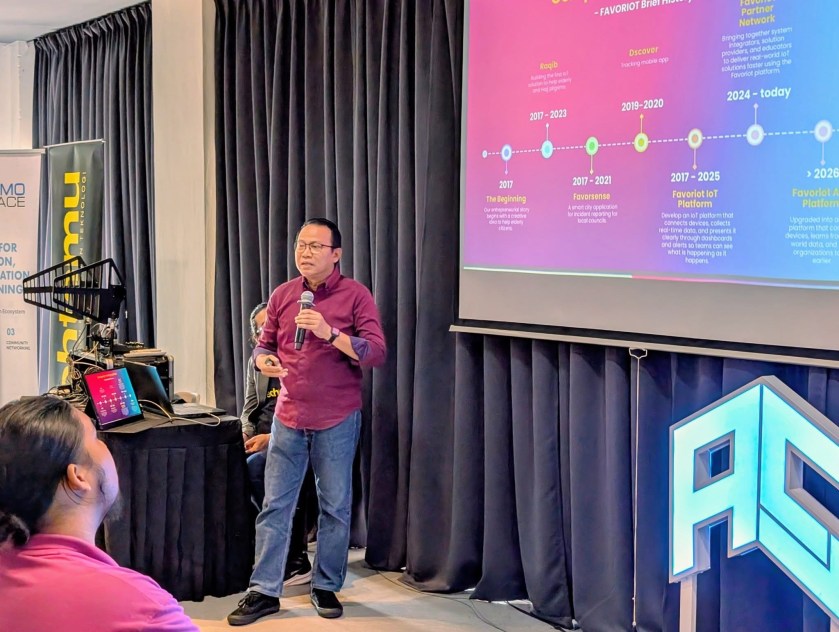
Back in 2017, when we launched Favoriot, it was exactly that — a startup.

A handful of us.

One platform.

A dream to make IoT more accessible, especially for Southeast Asia.

Everything was lean, experimental, unpredictable.

Sometimes the server was more fragile than our optimism.

We pitched, we demoed, we chased leads — and celebrated every small win like it was a moon landing.

But today?

We’re in a different phase.

What Changed?

We’ve got paying customers.

Real ones.

Not just POCs or demos — but full deployments across smart cities, smart agriculture, education, and industry.

We’ve entered partnerships in Indonesia, the Philippines, Canada, India — and we’re not stopping there.

Our platform?

It’s no longer a prototype we hope works when someone opens their laptop.

It’s stable, scalable, and trusted by universities, enterprises, and city councils.

We even built Favoriot Academy — an education arm training hundreds (soon, thousands) of IoT-ready talents.

So, here’s the honest question I asked myself:

“Are we still a startup if we’re already delivering impact at scale?”

What We’ve Outgrown

The “startup” label carries a certain image.

You’re small. You’re scrappy. You’re still figuring things out.

But some things at Favoriot are no longer up for debate:

We know what we do best. We know who we serve. We know what pain points we solve.

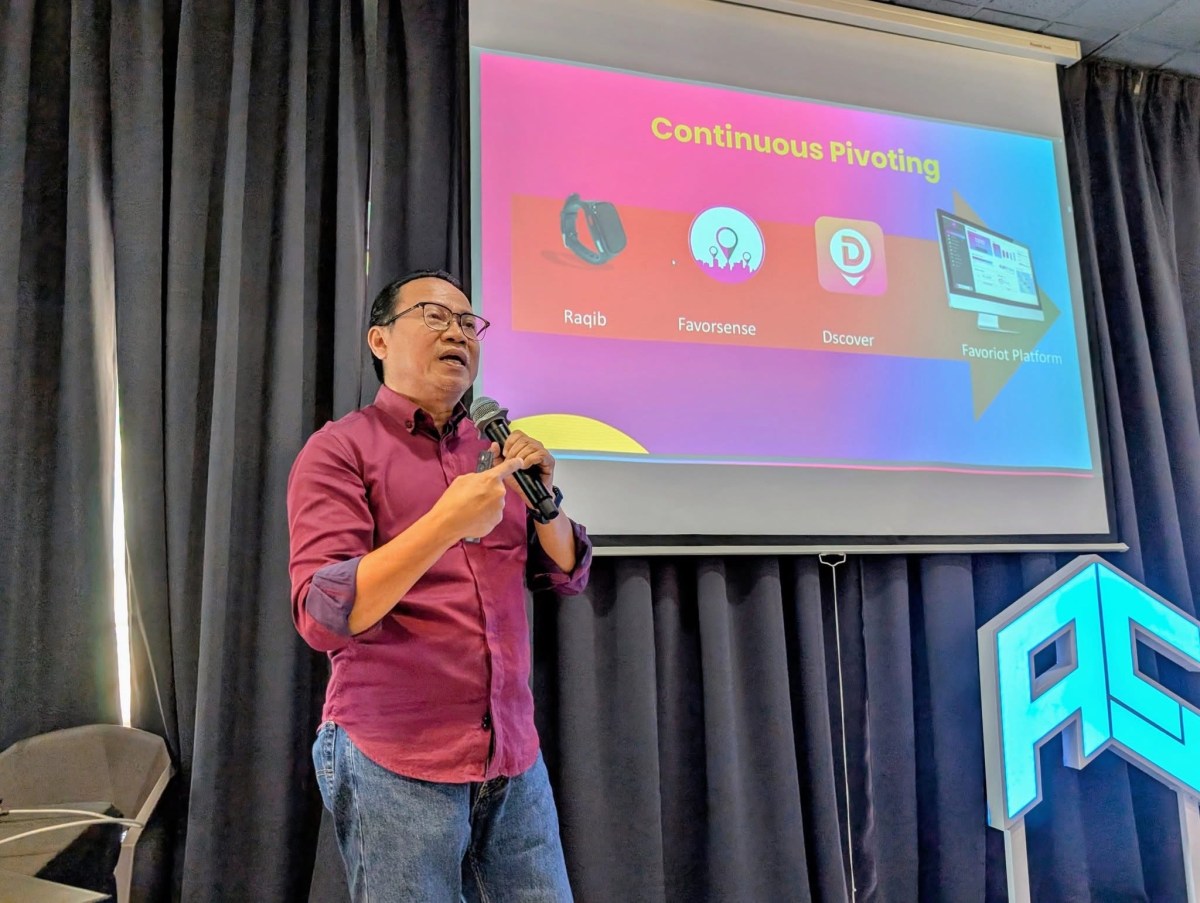
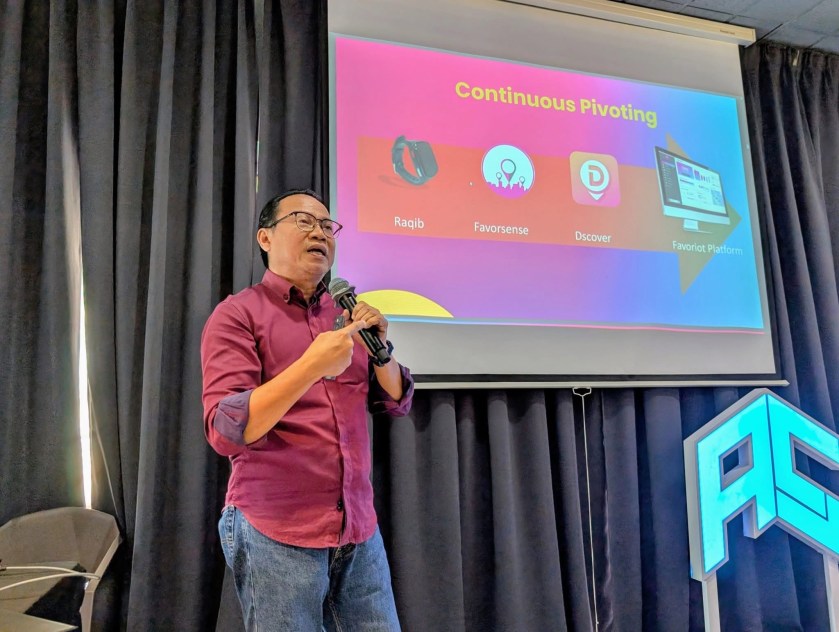
We’re not constantly pivoting.

We’re focused on scaling what already works.

What We Still Keep

That said — we haven’t gone corporate.

We’re still fast.

We’re still experimenting.

We still believe in bold ideas and building things that matter.

We don’t have a long chain of decision-making.

You’ll still find me answering messages at odd hours, jumping into customer calls, and reviewing platform feedback with the team.

And we still have that fire — the same one we had when we first started.

So maybe we’re not a startup anymore…

But we’re not slowing down either.

So What Are We Now?

Some call this stage a scale-up.

Some say we’re an emerging tech company.

Others might call us a maturing platform player.

Me?

I say we’re still building.

Still growing.

Still proving that a Malaysian-born IoT platform can stand tall — and go global.

If you’re looking to partner with a company that’s lean enough to care but strong enough to deliver — we might be the right fit.

Not a startup.

Not a giant.

Just real people building real tech — one IoT solution at a time.

Let’s build the future together.

Why FAVORIOT Exists: The Deeper Purpose Behind Our IoT Mission

“Why do you do what you do?”

It’s a simple question — but one that hit me like a lightning bolt the first time I heard it posed by Simon Sinek in his book “Start With Why.” I thought I had the answer years ago when we founded FAVORIOT. We wanted to build an IoT platform. We wanted to be part of the Fourth Industrial Revolution. We wanted to make Malaysia proud.

But after reading Find Your Why, I realized I had only scratched the surface.

So I decided to go deeper. To strip away the features, the dashboards, the data streams — and ask myself, what is our true reason for being?

The Early Sparks: Frustration as Fuel

I spent decades in various ecosystems — from academia to government, corporates to startups. In every world, I saw the same problem repeat like a broken record: brilliant people with smart ideas were stuck because the technology was either too expensive, too complicated, or too foreign.

“Why are we importing tech for things we can build locally?”

“Why can’t our students graduate with real IoT skills, not just theories?”

“Why does every ‘Smart City’ pilot end with a press release but no long-term sustainability?”

Each “why” turned into fuel.

And that’s how FAVORIOT was born. Not from a business plan, but from frustration. From the belief that things should be simpler. That IoT shouldn’t be reserved for tech giants. That a kampung farmer, a Form 5 student, and a municipal engineer all deserve access to the same tools of transformation.

Understanding Our WHY

According to Find Your Why, every organization must uncover its purpose through reflection, story, and the impact it wants to make. It isn’t about what you do — it’s about why you do it.

And the format is simple yet powerful:

TO [your contribution] SO THAT [your impact].

So I asked myself:

  • What do we do when we’re at our best?
  • What makes us proud?
  • What kind of future do we want to build — not just for us, but for others?

Our WHY Statement

To empower people and organizations with accessible IoT technology, so that they can build smarter, connected futures on their own terms.

Let me unpack that for you.

“To Empower People and Organizations…”

We don’t just provide a dashboard.

We empower students to build their final year projects with confidence. We empower lecturers to teach IoT without needing an AWS certification. We empower entrepreneurs to launch sensor-based services. We empower city councils to detect flood risks, monitor waste bins, and receive alerts directly on Telegram — without vendor lock-ins or complex coding.

This empowerment comes in the form of:

  • A local, developer-friendly IoT platform (FAVORIOT Cloud)
  • Training and certifications via FAVORIOT Academy
  • Partnerships that build ecosystems, not just transactions

We’ve seen it firsthand — the moment someone realizes “Hey, I can build this myself” — that’s where our real work begins.

“…with Accessible IoT Technology…”

IoT is often wrapped in buzzwords: LPWAN, edge computing, mesh networks. But in truth, most users don’t need to know all that.

What they need is:

  • A clean dashboard
  • A reliable API
  • A simple setup guide
  • Local support, not just chatbot replies from time zones away

We built FAVORIOT with accessibility in mind. Not “dumbed down,” but demystified. So that even if you’re a high school student or a small-town official, you can say, “Yes, I understand this.”

We’re proudly Made in Malaysia, but we’re built for global adoption — especially in regions where digital transformation is often a PowerPoint slide, not a daily tool.

“…So That They Can Build Smarter, Connected Futures…”

This is the impact. The soul of our mission.

It’s not about selling more subscriptions or deploying more gateways. It’s about helping others take control of their own digital transformation.

A university that trains 500 certified IoT graduates per year?
That’s a smarter future.

A logistics company that reduces vehicle downtime with sensor data?
That’s a smarter future.

A kampung that uses IoT to monitor river levels and avoid flooding?
That’s not a Silicon Valley fantasy. That’s reality. And it’s happening.

Because we gave them the tools — and more importantly, the confidence — to build it on their own terms.

What Favoriot Is Not

We’re not trying to compete with AWS or Azure on scale.

We’re not just another smart city vendor with flashy mockups and no follow-through.

And we’re definitely not in it for vanity metrics.

What we are building is a platform that:

  • Trains the next generation of engineers and technologists
  • Supports local system integrators with ready-to-deploy tools
  • Strengthens national resilience by owning our tech stack
  • Connects the dots between ambition and execution

Why This Matters — Especially Now

Everyone’s talking about AI. And yes, AI is exciting.

But here’s the truth: AI needs data. And data comes from IoT.

Without sensors, there are no predictions. Without real-time input, there’s no intelligent decision-making. IoT is the nervous system — AI is the brain. You can’t build a smarter future with just one.

Yet IoT is often the unsung hero.

FAVORIOT exists to make that hero visible — to give it a platform, a purpose, and most importantly, a presence in our communities.

Closing Thoughts: Why I’m Still Here

People sometimes ask me, “After all these years, what keeps you going?”

And honestly, it’s not the tech.

It’s the message I got from a student who said, “Dr., because of the Favoriot certification, I got hired immediately after graduation.”

It’s the local council officer who said, “We prevented a flood this year — because of your alerts.”

It’s the partner in Indonesia who said, “We never thought we could build our own IoT solution — until Favoriot.”

That is our WHY.

That is why we exist.

And that is why we’ll keep building.

Your Turn

If you’re a student, a policymaker, a developer, or an entrepreneur — and you’ve ever thought “IoT is too complex” — I invite you to rethink that.

Because with the right platform, the right support, and the right purpose — you’re closer to a smarter future than you think.

And we, at Favoriot, are here to help you build it.

Let’s democratize IoT. Together.