From Monologue to Dialogue: Transitioning to Engaging Panel Discussions

FROM STAGE FRIGHT TO SPOTLIGHT

My Journey as a Conference Panelist

Why I Now Prefer Panel Discussions Over Solo Presentations

Throughout my career, I’ve had the privilege of being invited to speak at various conferences, a role I initially cherished for the autonomy and control it afforded me.

As a speaker, I could meticulously plan my presentation, control the flow of my talk, and ensure that every slide was a perfect reflection of the points I wanted to convey.

This level of preparation provided me a comfort zone, a safe harbor in the sometimes unpredictable sea of public speaking.

Transitioning from Speaker to Panelist

However, my experiences took an interesting turn when I began receiving invitations not as a sole speaker but as a panelist.

The dynamics of panel discussions are inherently different: instead of a monologue, it’s a dialogue – not just between the panelists but with the audience as well.

Suddenly, I found myself on stage with two or three other experts, each with their unique perspectives and areas of expertise, all under the guidance of a moderator whose job was to weave our individual narratives into a cohesive, engaging session.

Initially, this new role was a source of anxiety.

Sitting on stage, not knowing exactly what question would come next, I worried about whether I would be able to respond with the right mix of fact, insight, and eloquence.

Would I be able to hold the audience’s attention? Could I contribute meaningfully to the discussion and hold my own alongside my fellow panelists?

Over time, however, I discovered that most panels are less daunting than they seem.

Panelists often receive a set of questions in advance, allowing us to prepare our thoughts and consider our responses.

Some organizers even allow panelists to suggest questions, providing an opportunity to steer the conversation toward areas of our expertise or interest.

Facing Uncertainty on Stage

But even the best preparations can’t cover everything, and there are always moments when the moderator goes off-script or delves deeper into a topic than the prepared questions had anticipated.

In these situations, I learned the value of active listening, staying fully engaged not just when it was my turn to speak but throughout the entire session.

This attentiveness helped me respond more thoughtfully and dynamically, weaving my responses into the ongoing narrative of the discussion rather than delivering pre-packaged answers.

Preparation Meets Improvisation

In my early days as a panelist, I considered bringing notes on stage, a safety net of bullet points and facts. Yet, this approach soon felt contrived, more like a performance than a genuine conversation.

I realized that true professionalism in this context meant showing up authentically, ready to engage with the topic and the audience without the crutch of scripted responses.

To navigate these live, unscripted moments, I developed a technique akin to a mental mind map.

When listening to a question or another panelist’s response, I’d quickly organize my thoughts, connecting the dots between the discussion points and my own knowledge and experiences.

This mental mapping allowed me to respond more fluidly, adding depth and context to the conversation.

The Power of Humor and Storytelling

Humor became another tool in my arsenal, a way to lighten the mood and connect more personally with the audience.

Even in serious discussions, a well-placed joke or anecdote can humanize the panelists, breaking down barriers and fostering a more engaging, relatable session.

Building on Collective Insights

I also learned the value of building on my fellow panelists’ points, weaving their insights into my responses to create a richer, more interconnected dialogue.

This collaborative approach not only enriched the content of the discussion but also highlighted the collective expertise of the panel, creating a more compelling and informative experience for the audience.

Over time, my perspective on panel discussions has transformed.

What once felt like a daunting challenge has become a preferred format, offering a dynamic and interactive forum that forgoes the rigidity of prepared slides for the spontaneity of real conversation.

Today, I embrace these opportunities, confident in my ability to contribute thoughtfully and authentically, no matter where the discussion may lead.

TED Talks – The Official TED Guide to Public Speaking – A Book Review

Thought Leadership — Book Review by Mazlan Abbas

Be a Great Speaker

It was like finding a treasure trove just when I needed it the most.

You see, the thought of doing my first TED Talk was exhilarating but, let’s be honest, equally terrifying.

I needed guidance, something or someone to hold my hand through this nerve-wracking process, and that’s exactly what this book “TED Talks” did for me.

First off, the insider perspective is just gold.

It’s not everyday you get a backstage pass into the minds of some of the most impactful speakers around the world.

Chris Anderson doesn’t just share tips; he shares a vision, a philosophy of what makes a talk not just good, but great, unforgettable even.

What struck me was this idea that there isn’t a one-size-fits-all formula for a successful talk.

It’s about authenticity, about bringing your unique perspective and experience to the table, which was incredibly reassuring.

The book demystifies the process of crafting a compelling talk, breaking it down into tangible steps that felt doable, even for a newbie like me.

Reading about the journeys of renowned speakers like Sir Ken Robinson and Amy Cuddy was not just inspiring; it was enlightening.

It made me realize that even the best were once beginners. And the practical tips – oh, they were a lifesaver!

From structuring your content to delivering it with confidence, the book covers it all.

But here’s the real kicker: it made me understand the power of a well-delivered talk.

The potential to ignite change, to connect deeply with an audience, to share something meaningful – it’s all there in the art of public speaking, and this book is your roadmap to harnessing that power.

By the time I closed the last page, I felt like I had been through an intensive workshop.

I wasn’t just more knowledgeable; I was more confident, ready to take the stage and share my ideas with the world.

So, to anyone standing at the precipice of their first TED Talk, or any public speaking opportunity for that matter, this isn’t just a recommendation – it’s a must-read. Trust me, it’s a game-changer.

Get this “TED Talks” book from Amazon. (Note: This is an affiliate link)

Try Audible Premium Plus and Get Up to Two Free Audiobooks

10 Tips to Turn an Introvert Into a Public Speaker — My Experience

The image was created using Midjourney by the Author of Startup Journey

Are you an introvert?

Many missed sharing their thoughts and knowledge when given the chance to talk on stage.

Embarking from an introverted individual to a confident public speaker can be challenging and exhilarating.

My experiences across various career paths have honed my speaking skills and led to profound personal development.

Let me share ten key insights that facilitated my transformation and could guide others needing more clarification about public speaking.

1. Know Your Audience

Understanding your audience is the cornerstone of effective communication.

Determine if your listeners are students, educators, professionals, or businesspeople.

It is crucial to tailor your content, language, and presentation style to suit their background, knowledge, and interests.

This tailored approach ensures that your message resonates and is valued by your audience.

2. Plan Your Structure

A well-organized presentation is essential.

Adopting a clear structure with an introduction, main body, and conclusion lets your audience quickly follow and remember your points.

Think of it as guiding them on an enlightening journey, ensuring they stay engaged.

3. Keep it Simple and Clear

Embrace simplicity.

Overloading slides with excessive information can overwhelm your audience.

Use straightforward language, bullet points, and clear visuals.

Also, avoid distracting animations which can detract from your message.

This streamlined approach makes your content more accessible and impactful.

4. Engage With Your Audience

Engagement transforms a presentation.

Involve your audience with questions, encourage participation, and use interactive tools to maintain their interest.

Direct eye contact, like engaging with them, allows you to gauge their reactions and adjust accordingly.

Avoid fixating on your slides or hiding behind a podium; confidently move around the stage to create a dynamic and approachable presence.

5. Use Visual Aids Wisely

Visual aids, when used judiciously, can significantly bolster your message.

Ensure that charts, graphs, and infographics are relevant, clear, and visually appealing.

They should complement, not overshadow, your verbal communication.

6. Practice, Practice, Practice

Regular practice builds confidence and smoothens your delivery.

The more you rehearse, the more natural and fluent your presentation will become.

This preparation reduces anxiety and enhances your overall performance.

7. Be Authentic

Authenticity creates a genuine connection.

Showing your true personality and passion for the subject can strengthen your bond with the audience.

People are drawn to authenticity, so let your unique traits and enthusiasm shine through.

8. Manage Your Time

Effective time management is crucial.

Arrive early to interact casually with other speakers or audience members.

Keeping your presentation within the allotted time shows respect for your audience and ensures you cover all critical points without rushing.

9. Tell a Story

Storytelling is a powerful tool.

Incorporating relevant anecdotes or examples makes your points more engaging and memorable.

Stories evoke emotions and transform your presentation into an enjoyable and enlightening experience.

10. Handle Questions Professionally

Conclude with strength.

Encourage and address questions confidently and respectfully.

If uncertain about an answer, acknowledge it honestly and offer to find out.

This approach demonstrates your commitment to accuracy and builds trust.

Conclusion

Transforming from an introvert into a public speaker involves more than just learning to speak effectively; it’s a journey of self-discovery and growth.

Every step offers valuable lessons about yourself and equips you with skills that extend beyond the podium.

Remember that it’s an attainable skill for those intimidated by public speaking.

Embrace this journey with openness, and you’ll be surprised at the progress you can make.

My Public Speaking Was Very Boring Until I Use These 10 Tips

Throughout my journey of delivering hundreds of presentations, I’ve developed a deep understanding of what makes a presentation memorable versus what renders it forgettable.

In this blog, I’ll share my top tips and personal experiences to help you transform your presentations from mundane to magnificent.

1. A Strong Opening: The Gateway to Engagement

In my early days, I realized the importance of an impactful start.

Once, I opened with a surprising fact related to my topic, and the immediate attention from the audience was palpable.

It taught me that a thought-provoking question or an unexpected statistic can be powerful tools to hook your audience from the outset.

2. The Magic of Visual Aids

Visual aids are not just embellishments; they’re the essence of a great presentation.

I learned to use images and charts not as slide-fillers but as narrative enhancers.

For instance, a well-placed infographic can explain complex data more effectively than paragraphs of text.

3. Humor: The Universal Language

Humor has been my secret weapon.

It’s not about cracking jokes but about bringing a light-hearted touch to the presentation.

Once, a humorous anecdote related to my topic had the audience both laughing and thinking, striking the perfect balance.

4. Interactive Elements: A Two-Way Street

Audience interaction can transform a monologue into a dialogue.

I’ve used live polls and Q&A sessions to make my audience feel involved, turning passive listeners into active participants.

5. Storytelling: The Heart of Connection

People connect with stories, not just facts.

I’ve interspersed personal anecdotes and relevant stories throughout my presentations, which has helped in making complex ideas more relatable and memorable.

6. Mixing Media: A Symphony of Engagement

Diversifying the types of media in a presentation can cater to different learning styles.

I’ve successfully used a mix of videos, graphics, and text, making each presentation a rich, multi-sensory experience.

7. Simplicity: The Ultimate Sophistication

One of my key learnings has been the power of simplicity.

I avoid jargon and complex terminology, opting for clear, concise language.

This approach ensures that my message is accessible to all audience members, regardless of their background.

8. Clean Slides: Less is More

Early in my career, I overloaded slides with information.

Over time, I learned that less is more.

A minimalistic slide with a powerful image and a few key words often has more impact than a crowded, text-heavy slide.

9. Storytelling (Revisited): Crafting a Narrative

I’ve found that embedding a central story in my presentation creates a narrative that audiences follow with interest.

This approach not only makes the presentation more engaging but also helps in reinforcing the key message.

10. The Art of Practice

Finally, practice is non-negotiable.

I rehearse rigorously, sometimes in front of a small audience, to refine my delivery and iron out any issues.

This preparation builds confidence and ensures a smooth, professional presentation.


Transforming presentations from boring to captivating is an art and a skill honed over time.

These tips, derived from my personal experiences, can be your toolkit to create engaging, impactful presentations that resonate with your audience.

Remember, every presentation is an opportunity to connect, inspire, and inform.


You can also check out my personal Blog here or the latest eBooks I have recently published — here.

How My Presentation Survived When My Powerpoint Slides Get Corrupted

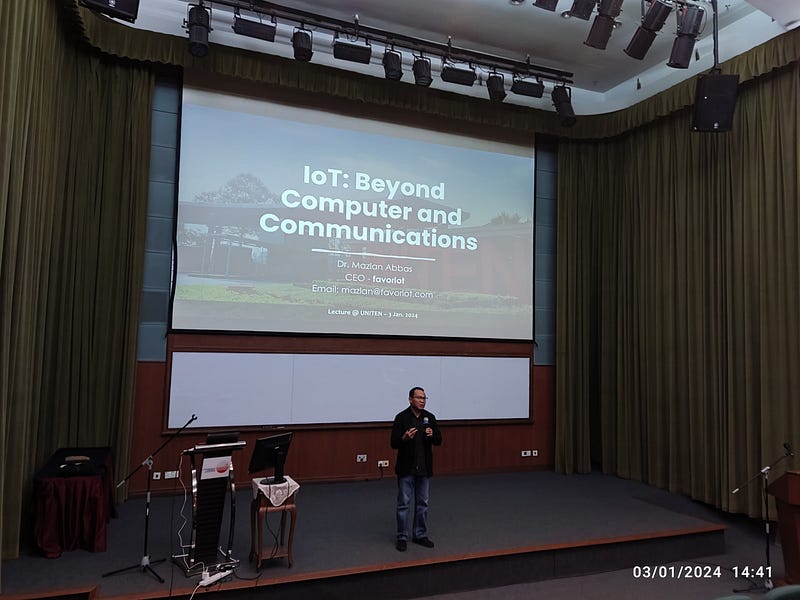
The Author was standing in front of the lecture theatre.

Imagine spending days meticulously crafting a presentation, only to face a presenter’s worst nightmare: corrupted slides.

This was the scenario I encountered before a recent lecture at a local University (UNITEN).

The Discovery

The chaos unfolded just as I was setting up for the big day.

It was the third day of 2024!

My laptop was hooked up, the projector was ready, and I was about to dazzle the audience with my well-prepared slides.

But fate had other plans.

To my horror, I discovered several of my slides were blank, devoid of the crucial information I had painstakingly compiled.

The timing couldn’t have been worse!

The Warning Ignored

Reflecting on this mishap, I recalled a critical moment from the previous day.

As I was packing up, my computer, running PowerPoint, flashed a warning about a problem with the file’s save process.

In my haste, I dismissed this. The issue stemmed from my decision to rename the slides folder.

Unaware of the impending disaster, I saved the file under a different name and thought nothing more of it.

My fault!

This is the lesson for being too complacent and overconfident!

I have previously made hundreds of presentations, and everything ran smoothly… until that day!

The Improvised Solution

There I was, in front of an eager audience, grappling with the reality of my situation.

Time was ticking, and I needed a quick fix. Scrambling through my digital archives, I found old slides from past presentations.

It wasn’t ideal, but it was a start.

The process was cumbersome, having to merge and present two separate files.

The seamless flow I had envisioned was now a patchwork of old and new, with some of the freshly prepared slides tragically lost to corruption.

The Silver Lining

Despite these unexpected events, the lecture was a partial disaster.

I navigated through the improvised presentation, covering as much material as possible.

Admittedly, key points needed to be addressed due to the missing slides.

However, the experience became an impromptu lesson in adaptability and problem-solving – valuable skills in any professional setting.

Reflections and Lessons Learned

As I reflect on this incident, backing up work and heeding software warnings stands out starkly.

In the world of digital presentations, such mishaps are not uncommon.

The key takeaway for me, and one I hope to impart to others, is the significance of being prepared for the unexpected. Always have a backup plan, and maybe a backup for the backup!

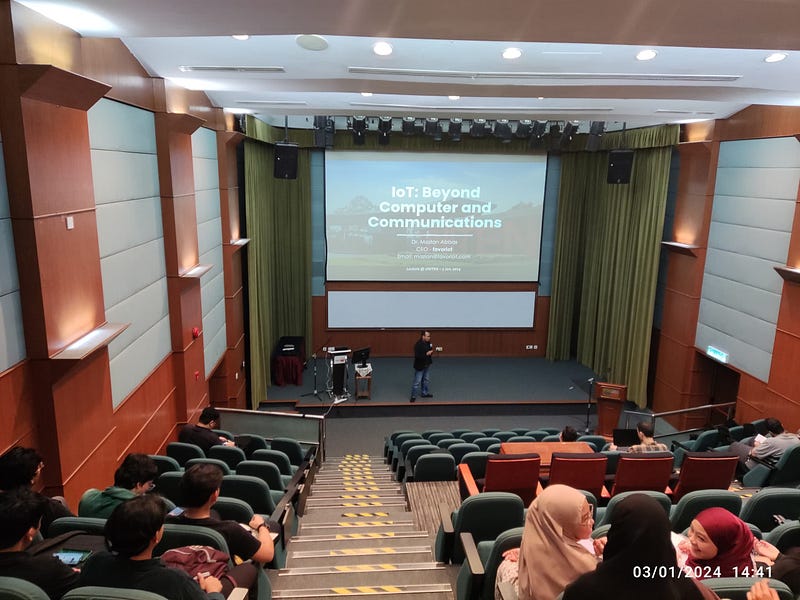
The Author managed to recover back the old slides and continue with the presentation.

This experience, though fraught with challenges, was a memorable start to my lecturing endeavors in 2024.

It served as a reminder that the best lessons are sometimes learned outside the confines of meticulously prepared slides.

I must not be complacent and overconfident.


You can also check out my personal Blog here or the latest eBooks I have recently published — here.

From Research Lab Critiques to Startup Triumphs: The Power of Learning the Presentation Skills

Photo by Peter Forster on Unsplash

Sometimes, you don’t realize that the things you hate become what you love.

And things that you are bad initially made you a better person years later.

Critiques can kill your motivation but can also be your greatest teacher.

This is what I learned during my R&D days.

The Genesis of a Dream

Embarking on an entrepreneurial journey is a dream harbored by many, but few anticipate how seemingly unrelated experiences can shape this path.

My venture into the world of startups was surprisingly influenced by my tenure at a government R&D agency and the catalyst?

Surprise! Surprise!

It’s the Presentation slides!

The Early Struggles with Slides

Picture this: a room brimming with seasoned scientists and officials, and there I was, a passionate researcher, ready to unveil weeks of hard work.

Yet, almost invariably, I’d face a stumbling block by the second slide.

My superiors, with furrowed brows, would interject with a barrage of questions, often about points I was poised to address in upcoming slides.

Feedback, while invaluable, often felt like a tightrope walk.

The critiques ranged from aesthetic choices like color schemes to more structural issues like text overload or overly simplistic graphics.

The worst part is that they don’t question the research results much!

These sessions, although challenging, were molding my future skills unknowingly.

The Slide Revolution in Startup Land

As I transitioned into the entrepreneurial arena, presenting ideas became my forte.

Whether pitching to potential investors, engaging customers, or speaking at seminars, my slide deck evolved into my most reliable ally.

The relentless critiques of my R&D days morphed into an unexpected treasure trove of wisdom.

The meticulous balance between graphics and text, the narrative flow, the strategic choice of colors – all these elements began to resonate with clarity and purpose.

My past experiences had unknowingly prepared me for these crucial moments.

Today, I find a unique joy in designing my slides, as they represent information, my story, and my vision.

I’ve become the narrator of my entrepreneurial tale thanks to the lessons from my past.

Photo by Slidebean on Unsplash

Embracing the Journey: Conclusion and Lessons Learned

Reflecting on my journey, I now view the once-frustrating critiques as invaluable lessons.

They sculpted a more resilient, adept version of myself, crucial for the unpredictable world of startups.


For aspiring entrepreneurs, here are the key lessons from my journey:

  1. Value Every Piece of Feedback: Every critique can be a building block for your future skills, no matter how trivial.
  2. The Art of Balance in Presentation: Mastering the balance between visuals and text can make your ideas more compelling.
  3. Embrace the Learning Curve: Challenges and interruptions are not roadblocks but stepping stones to greater resilience.
  4. Tell Your Story: Your presentation is a reflection of your vision. Own it, craft it, and tell it with conviction.
  5. Look Back to Connect the Dots: Like Steve Jobs said, hindsight often reveals the value of experiences we once overlooked.

In conclusion, my slides, my story.

A journey that began in a research lab, leading to the entrepreneurial stage, taught me invaluable lessons, turning obstacles into opportunities for growth.


Remember to Subscribe to receive email updates on every post I publish.

You can also follow my Medium Publications:

I have also published several eBooks, such as:

Or, if you prefer, check my bookstore at Gumroad — https://mazlanabbas.gumroad.com

The Endless Quest for the Perfect Investor Pitch – Failures and Tips

Photo by Campaign Creators on Unsplash

As a startup founder, I’ve pitched to investors many times.

Each pitch is a challenge – creating the perfect one is tricky.

I try to make my pitch better each time, but there’s always something that doesn’t quite work for someone in the audience.

The Challenge with Pitch Decks

Every time I make a pitch, it feels like I’m repeating myself, but there’s always something new to fix.

The slides I make to show my business idea can sometimes confuse people. Even if I fix things, someone always has different advice.

Some people don’t get it when I talk about the problem my business solves.

They might think my idea isn’t unclear or don’t see how big the opportunity is.

And when it comes to money, everyone has a different opinion on whether my goals are realistic.

Choosing the right colors and graphics for the slides is tricky, too.

If I use too many pictures, people can’t understand my message.

If I put too much information, they can’t read it all in time.

The Rush of the Pitch

When I pitch, I only have five minutes.

That’s like the time it takes to drink a cup of coffee.

In those five minutes, I have to share everything about my business. It’s tough because every detail matters, and I have to move fast.

Seeing Both Sides

I’ve also been a judge for other people’s pitches.

I’ve seen that nobody’s pitch is perfect. Being a judge has taught me that what one person likes, another might not.

So, I’ve learned that a pitch has to change depending on who’s listening.

Learning from Each Pitch

Every time someone gives me feedback on my pitch, I learn something.

I take their advice and make my pitch more straightforward and more powerful.

Even when the feedback is tough, it helps me get better.

My pitch changes with each presentation, and that’s a good thing. It shows that I’m working hard to improve.

The Road Ahead

I’m ready for more pitches and more changes.

Every time I pitch, I get to make my business look better to investors.

The comments and different opinions aren’t just problems; they help me learn and grow.

I’m excited to keep on pitching.

With each pitch, I’m telling the story of my business, and one day, that story will be about success and never giving up on finding the perfect way to share my dream.


Photo by Matthew Osborn on Unsplash

Lessons Learned

Through all these pitches, here’s what I’ve learned:

  1. Flexibility is critical: A pitch deck is never finished. It changes based on who you’re talking to.
  2. Feedback is a gift: Even when it’s tough to hear, feedback strengthens you and your pitch.
  3. Time is precious: In a short pitch, every second and every word has to count.
  4. Understanding your audience matters: What works for one person might not work for another.
  5. Perseverance pays off: Even if the perfect pitch is a myth, striving for it will lead you to greatness.

Every pitch is a step on the journey of a startup.

It’s not just about convincing investors; it’s about refining your vision and learning how to share it with the world.

The best way to learn about entrepreneurship is by learning about the failures. Check out my latest eBook, “Startup Survival”.

https://mazlanabbas.gumroad.com/l/startupsurvival


Remember to Subscribe to receive email updates on every post I publish.