Why Are Malaysians Not Creating IoT Content on YouTube?

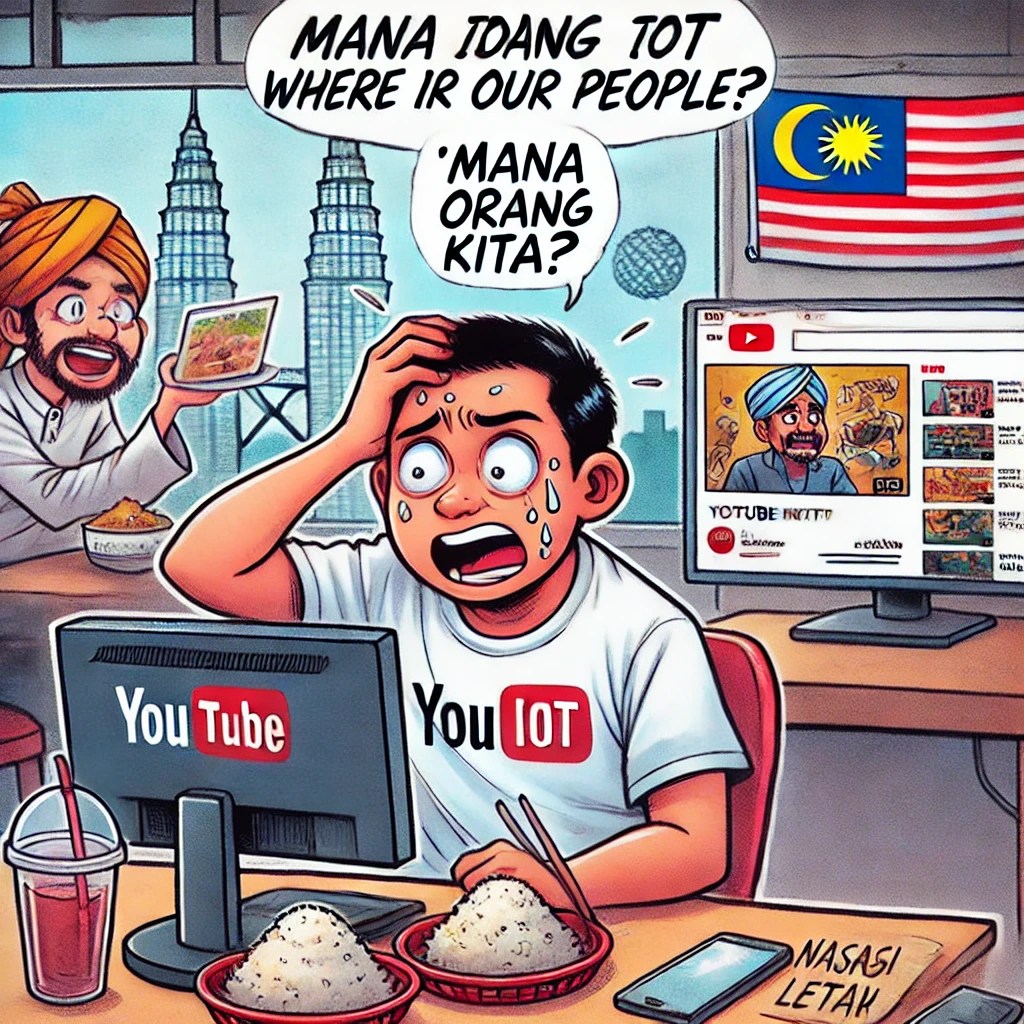
I was scrolling through my social media and came across an interesting observation—very few Malaysians create IoT tutorial content on YouTube. The majority of these tutorials come from India. Why is that?

So, I threw the question out there, hoping to spark some discussion. And wow, did people have opinions!

“Malaysia is Small Compared to India.”

One of the first responses I got was, “Malaysia is much smaller compared to India. If you compare us with our ASEAN neighbours, maybe it makes more sense.”

Okay, I get it. India has a massive population and a thriving tech ecosystem. But does that mean we just accept that we aren’t producing enough content? Shouldn’t our ambition go beyond just comparing ourselves with our neighbours?

“Sharing Knowledge Isn’t Our Culture.”

Another comment caught my attention: “India suka sharing knowledge kali.

That hit me hard. Is it true that we don’t have a strong culture of sharing technical knowledge? I know plenty of Malaysian engineers and tech enthusiasts who are brilliant at what they do, but why aren’t they making educational content? Are we too protective of what we know? Are we afraid that sharing our expertise might somehow put us at a disadvantage?

One person even admitted, “Source code aku, aku yang susah-susah buat, aku punya, tak nak share dengan orang lain. Kongsi je lah.” That made me chuckle, but deep down, I felt a little sad. If we all think this way, how do we expect to build a community of learning?

“People Prefer Entertainment Over Education.”

Another perspective: “Expertise tak ramai compared to India + audience sukakan content hiburan compared to education.

This one stings. It’s no secret that entertainment content dominates YouTube in Malaysia. Food reviews, travel vlogs, comedy skits—they all get millions of views. But educational content, such as IoT tutorials, barely gets any traction.

Does this mean Malaysians aren’t interested in learning tech? Or is it because no one is making content that makes tech exciting? Maybe we need to find a way to blend education with entertainment. After all, if a cooking channel can get millions of views, surely a well-presented IoT tutorial can capture some attention, right?

“Technology Isn’t in Our DNA.”

Then came a comment that really made me pause: “Sembang technology bukan budaya dalam masyarakat kita. Tengok industri filem saja lah. Teknologi dalam filem kita hanyalah fiksyen sains yang entah apa-apa. Cuma bezakan dengan filem Bollywood macam Three Idiots… Bapa kat kampung pun nak anaknya jadi engineer dan kerja di multinational kat Silicon Valley.

Ouch.

I don’t want to believe this, but there’s some truth to it. In India, engineering and technology are deeply embedded in their aspirations. Parents push their kids towards STEM careers. In Malaysia, how many parents encourage their children to be engineers, developers, or IoT experts? Not many. And if we don’t nurture this mindset early, how can we expect a surge of local content creators in technical fields?

“Go Where the Grass is Greener.”

Then someone simply commented: “Go for greener grass.

Is that the answer? Just abandon hope and move to a place where IoT content is more appreciated? I refuse to believe that. There’s potential here. There’s talent here. The problem is that we haven’t created a culture where sharing knowledge is normal, where technical education is valued, and where engineers feel motivated to teach others.

What’s the Solution?

I don’t want to just sit here and complain. I want to do something about it. So, here’s my plan:

  1. Start Creating More IoT Content – If no one else is doing it, I’ll do it. I’ll make IoT tutorials, I’ll share what I know, and I’ll make it accessible to everyone.
  2. Encourage More People to Share – If you’re an engineer, a tech enthusiast, or anyone with IoT knowledge, start sharing. Even if it’s a short video, a blog post, or a simple explainer—put it out there!
  3. Make IoT Fun and Engaging – If entertainment dominates, let’s make IoT entertaining. Let’s present it in a way that captures attention and excites people.
  4. Build a Community – Let’s create a space where Malaysians who are passionate about IoT can exchange ideas, support each other, and grow together.

I refuse to accept that Malaysia can’t be a hub for IoT education.

It starts with us, with sharing, and it starts today.

The Internet: The Greatest Invention of My Lifetime

Looking back at how life used to be, it’s astonishing how much the internet has transformed the world.

The connection was slow, unreliable, and expensive when I first encountered it in the early 1990s. A dial-up modem would make its signature screeching sound as it struggled to connect, often cutting off if someone picked up the landline.

At the time, it felt like a luxury, but little did I know that it would soon become the backbone of modern civilization.

Before the Internet, access to information was tedious. If I needed references for research, I had to manually search through library card catalogues, flipping through hundreds of index cards just to locate a book or journal.

If the resource wasn’t available, I had to wait days—sometimes weeks—for an interlibrary loan. Once I finally got my hands on a journal article, the only way to keep a copy was to photocopy every page, hoping I didn’t miss a critical section.

Researchers were also challenging to reach. Since they didn’t have personal email addresses, the only way to contact them was through their university’s administration office, which meant waiting indefinitely for a response. I

nternational communication was equally challenging—long-distance calls were expensive, often requiring careful planning to avoid excessive charges.

Then the internet arrived, and the world we knew it changed forever.

1. The Digital Transformation of Knowledge

One of the internet’s most remarkable impacts is its revolutionized access to information. Instead of relying on physical books, libraries, or printed journals, knowledge is now just a few keystrokes away.

Search engines have replaced card catalogues, offering instant access to research papers, academic articles, and books. Online databases like Google Scholar and IEEE Xplore have made high-quality research available in seconds. What used to take weeks to obtain can now be accessed in mere moments.

Education has also evolved. Online courses, video tutorials, and digital textbooks have made learning more accessible. Whether university students attend virtual lectures or self-learners take free courses from top institutions, knowledge is no longer limited by geography or financial constraints.

Had the internet existed when I was a student, I imagine how much easier research and learning would have been. The barriers that once made education exclusive have now been dismantled, making knowledge a universal asset.

2. The Evolution of Communication

The way we connect with others has undergone a drastic transformation. In the past, international communication was slow and costly. Writing letters meant waiting weeks for a reply, and long-distance calls were prohibitively expensive.

Today, messaging apps and video conferencing tools have made global communication instant and nearly free. Emails replaced traditional mail, while WhatsApp, Zoom, and other platforms made real-time conversations possible across continents. What once required careful budgeting is now an everyday convenience.

Even within professional and academic circles, networking has become effortless. Researchers and experts are now accessible via email, LinkedIn, and social media, fostering faster collaborations and knowledge sharing. We no longer have to rely on university administrators to forward our inquiries.

It’s fascinating to think about how disconnected the world once was compared to today. Borders have blurred, and communication is no longer a privilege but an expectation.

3. The Rise of a Digital Economy

The internet improved communication, but it also reshaped business and work. Entire industries have been transformed, with traditional models giving way to digital platforms.

  • E-commerce has replaced physical stores, making shopping a seamless online experience.
  • Streaming services have overtaken CDs and DVDs, shifting entertainment into the digital realm.
  • Remote work and freelancing have allowed people to earn a living from anywhere, breaking the dependency on physical office spaces.

Even my own company, FAVORIOT, thrives because of the internet. Our IoT solutions depend on cloud-based platforms that enable real-time monitoring and automation. Smart cities, connected industries, and digital transformation would remain a distant dream without the Internet.

The shift from traditional to digital business models has created new job opportunities and redefined how work is done. The internet has empowered entrepreneurship, enabling individuals to launch businesses with minimal resources and a global reach.


4. The Internet of Things: From SMS to Smart Connectivity

Before widespread internet adoption, early machine-to-machine (M2M) communication relied on SMS. Utilities like electricity and water meters sent data via text messages—a slow and costly method.

With the advent of the internet, IoT has evolved dramatically. Devices now communicate through cloud platforms, enabling seamless automation and real-time analytics. IoT has unlocked once unimaginable capabilities, from smart homes that adjust to user preferences to industrial systems that optimize efficiency.

This transformation isn’t just about convenience—it has real-world applications in agriculture, healthcare, transportation, and urban planning. By integrating IoT with artificial intelligence, industries can optimize processes, reduce costs, and improve decision-making like never before.

The internet didn’t just connect people and machines, paving the way for a future where data-driven automation is the norm.

5. Challenges and Responsibilities in the Digital Age

Despite its many advantages, the internet has introduced new challenges. The rise of cybercrime, misinformation, and privacy concerns has raised questions about security and ethical responsibility.

  • Cybersecurity threats continue to grow, with hackers exploiting vulnerabilities in digital systems.
  • Misinformation spreads rapidly, making it harder to distinguish fact from fiction.
  • Data privacy concerns are more prominent than ever as companies collect vast amounts of personal information.

While the internet has democratized access to information and communication, it has also created a landscape where digital literacy and security awareness are essential. As technology evolves, society must adapt to ensure the internet remains a tool for progress rather than exploitation.

6. The Future of the Internet

What lies ahead for the internet? Connectivity continues to evolve, with advancements that promise to further reshape the digital landscape:

  • 5G and beyond will make internet speeds faster and more reliable.
  • AI-driven personalization will make digital interactions more intuitive and efficient.
  • Quantum computing may redefine encryption and security standards.
  • Decentralized systems (Web3) could shift power back to users, promoting greater data ownership.

As we move forward, the internet’s influence will only expand. The possibilities are endless, and its role in shaping future innovations is undeniable.

The Invention That Defined an Era

Reflecting on the past few decades, imagining life without the internet is hard. It has shaped my career, business, and daily interactions. The transformation is extraordinary from struggling with library catalogues to having unlimited knowledge at my fingertips, from expensive phone calls to instant global communication.

Had the internet never existed, we might still be waiting weeks for letters, manually searching for references, and relying on costly international calls. The convenience, accessibility, and opportunities it has created are immeasurable.

The internet didn’t just change how we live—it redefined the very fabric of society.

And for that reason, I firmly believe it is the greatest invention of my lifetime.

The Story Behind Favoriot — Part 10: Age Does Not Matter in Business

What is the Best Age to Become an Entrepreneur?

“Is there a perfect age to start? Or is it just an illusion we create to delay our dreams?” These questions echoed when I embarked on my entrepreneurial journey with Favoriot.

As someone deeply rooted in the tech industry for decades, I often wrestled with the idea—does age truly matter in business? Let me share my reflections, not just as an entrepreneur but someone who dared to start when many might think it’s “too late.”

The Myth of the Perfect Age

Is There an Ideal Age?

People love to romanticize the idea of youth being synonymous with entrepreneurship. Fresh ideas, boundless energy, fearless risk-taking—it all sounds convincing, right? But here’s the catch: youth might give you the fire but not always the compass.

On the flip side, with age comes wisdom, battle scars from past failures, and a more strategic mindset. But do we lose the spark to take risks as we grow older? Not necessarily. The truth lies somewhere in between.

The Misconception of Youthful Success

Why Do We Glorify Young Entrepreneurs?

It’s hard to escape the headlines celebrating young tech prodigies turning startups into billion-dollar empires. But success doesn’t come with an age tag. Look at Colonel Harland Sanders, the iconic founder of KFC. He didn’t franchise his first restaurant until he was 62.

Think about it: while many consider retirement at that age, Sanders was just getting started. His story isn’t just about late success—it’s about resilience. “Overnight success”? Far from it. His journey was marinated in years of hardship, trial, and rejection before the world tasted his secret recipe.

My Own Entrepreneurial Awakening

Starting Favoriot “Late” in Life

When I launched Favoriot, some might have whispered, “Isn’t he too old to be a startup founder?” But here’s the thing—I wasn’t starting from scratch. I was building on decades of experience in telecommunications and IoT.

My career in the corporate and government sectors wasn’t a detour; it was the foundation. Every meeting, project, and failure shaped my understanding of technology and business. “Experience isn’t baggage; it’s your arsenal.” That arsenal gave me the confidence to take the leap.

The Blank Canvas of Entrepreneurship

Building From Scratch Without a Safety Net

Colonel Sanders had a secret recipe people already loved. I, however, started Favoriot with no customers and no brand recognition—just a vision. It was terrifying and exhilarating.

I remember cold calls that ended with polite rejections, presentations where only three people showed up, and proposals that gathered more dust than signatures. But every “no” brought us closer to the “yes” that mattered.

“Resilience isn’t about never falling; it’s about standing up one more time than you fall.” That mantra kept me going.

The Courage to Start

Age is Just a Number; Courage is Timeless

What truly matters isn’t the year on your birth certificate. It’s the courage to begin. Whether you’re 25 or 55, the entrepreneurial path demands boldness.

Colonel Sanders’ story still fuels my motivation. If he could start a global empire at 62, what’s stopping me? Or you, for that matter?

The Importance of Resilience

Lessons From Rejection

Failure is not the opposite of success; it’s part of the process. I’ve faced projects that flopped, deals that fell through, and moments when quitting seemed easier than continuing. But every stumble taught me something new.

“Resilience isn’t a trait you’re born with; it’s a muscle you build.” And the older you get, the stronger that muscle becomes.

Age is No Barrier

The Real Ingredients of Success

Experience, resilience, and an undying spirit are the real ingredients of entrepreneurial success—not age. Colonel Sanders proved it, and my journey with Favoriot reaffirms it.

Your entrepreneurial clock doesn’t tick based on age. It starts the moment you decide to act.

Key Takeaways for Aspiring Entrepreneurs

  1. Age is Just a Number: Don’t let societal timelines dictate your dreams.
  2. Experience is Your Superpower: Every job, success, and failure adds to your toolkit.
  3. Resilience is Non-Negotiable: The road will be rough. Get used to it. Embrace it.
  4. Adaptability Wins: The business landscape changes fast. Stay flexible.
  5. Believe in Yourself: Doubt will creep in. Acknowledge it, but don’t let it drive.

Final Thoughts: Entrepreneurship is a Lifelong Lesson

Starting a business isn’t about chasing quick wins but lifelong learning. Success isn’t age-dependent. It’s resilience-dependent.

So, if you’re wondering, “Am I too old to start?” 

Let me answer that for you: 

No, you’re not. Yesterday was the best time to start, and today is the next best time.

The Story Behind Favoriot — Part 9: Leaving the Comfort Zone

Stepping Away from Comfort

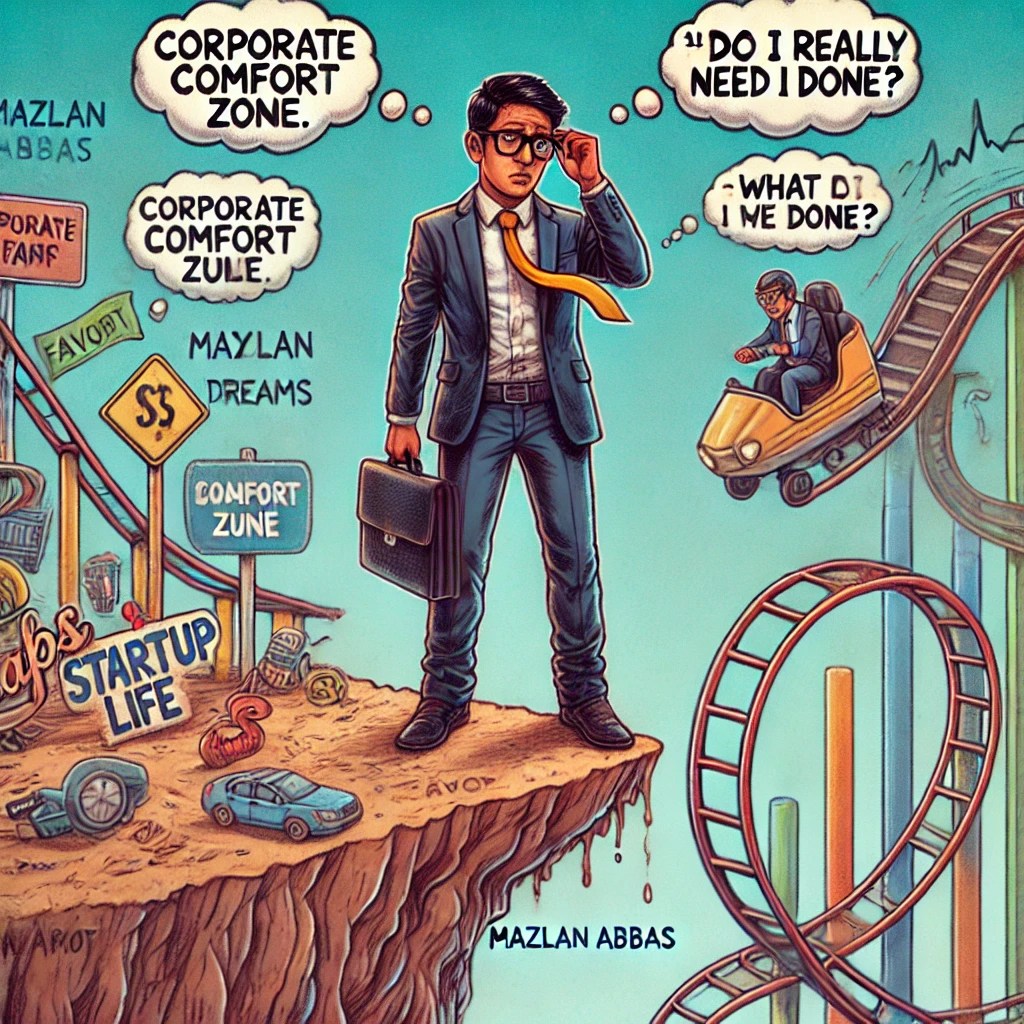
I never imagined the day would come when I’d step away from the security of a stable paycheck and a corporate career spanning over three decades. For over 30 years, I climbed the corporate ladder, navigating the structured world of management, cushioned by the perks that came with it.

How Leaving a 30-Year Career to Build FAVORIOT Taught Me the True Meaning of Resilience, Adaptability, and Personal Growth

It was a good life.

Business-class flights, luxury hotel stays, and the comforting rhythm of a regular, substantial income. Yet, despite the success, something kept gnawing at me.

“Is this it? Is this all there is to my journey?” I’d often wonder.

For years, I nurtured a vision—an idea to revolutionize industries with the Internet of Things (IoT). FAVORIOT was the manifestation of that dream. But dreams, as it turns out, come with their own set of sacrifices, ones I hadn’t fully anticipated.

And boy, there were plenty.

The Financial Rollercoaster

The first punch in the gut? The financial shock. Trading a consistent income for the erratic, unpredictable rollercoaster of startup finances was like jumping off a cliff without knowing if there was water below.

One month, we had cash flow. The next? Empty accounts staring back at me.

No salary. No safety net. Just uncertainty.

“What have I done?” I’d mutter, glaring at spreadsheets that refused to make sense.

There were days I questioned my sanity, wondering if I’d miscalculated the risks. But turning back wasn’t an option. FAVORIOT wasn’t just a company; it had become my mission.

I was no longer just Mazlan Abbas, the corporate executive. I was now Mazlan Abbas, the entrepreneur responsible for a team and a vision.

Adjusting to New Realities

With financial uncertainty came a drastic shift in lifestyle. Gone were the days of business-class flights and luxury hotels. My new reality? Budgeting down to the last ringgit, stretching every expense, and redefining what “essential” meant.

I vividly remember standing in a store, eyeing a sleek new laptop. In the past, I’d have bought it without a second thought.

“Do I really need this?” I asked myself.

The answer was no.

My old laptop would do just fine. Every ringgit saved was a lifeline for the business.

Vacations? A distant memory. Overseas trips were replaced with local getaways, if any. Each sacrifice was a reminder: this was temporary, all part of a bigger picture.

But knowing that didn’t make it any easier.

Cutting Back on Personal Luxuries

Starting a business from scratch demands ruthless prioritization. Gadgets, spontaneous upgrades, and luxury splurges became relics of the past.

I missed the freedom to indulge. But scaling back taught me discipline. It forced me to focus on what truly mattered: growing FAVORIOT.

“Why am I doing this?” I’d sigh during moments of frustration.

But deep down, I knew the answer. I believed in FAVORIOT—its mission, its potential, and the impact it could create.

And that belief kept me going.

Navigating Uncertainty and Isolation

The sacrifices weren’t just financial. The emotional toll of entrepreneurship is a beast of its own.

Every day felt like walking a tightrope, balancing decisions with no safety net below. The uncertainty was suffocating.

And then there was the loneliness.

Sure, I had a team, but what was the ultimate responsibility? That was mine to bear.

“Is this really what I want?” I’d wonder during sleepless nights, staring at the ceiling.

But those moments of doubt? They were the crucible where resilience was forged.

I discovered strength I didn’t know I had, learning that this journey wasn’t just about building a business. It was about building myself.

Perseverance and Growth

Over time, I stopped seeing challenges as obstacles. Instead, they became growth opportunities.

Each setback taught me to adapt, persevere, and trust the process.

I remember a deal that could have been a game-changer for FAVORIOT. We chased it for weeks, only to face rejection.

Frustrated, I vented to a colleague.

“Mazlan, every ‘no’ gets us closer to the right ‘yes,'” they said.

That shifted my mindset.

Failures weren’t dead ends. They were lessons in disguise, pushing me to refine our approach and grow as a leader.

Reflecting on the Sacrifices

So, was it worth it?

The financial strain, lifestyle changes, and emotional rollercoaster?

Yes.

Because in losing the comforts I once knew, I gained something far more valuable: resilience, adaptability, and personal growth.

I’ve had the privilege of building FAVORIOT from the ground up, watching an idea evolve into reality.

But more importantly, I realized that entrepreneurship isn’t just about financial success. It’s about impact, purpose, and creating a legacy.

FAVORIOT isn’t just a business to me.

It’s a testament to what’s possible when you dare to step out of your comfort zone.

The Entrepreneur’s Mindset

One of the greatest lessons I’ve learned? Embracing uncertainty.

Entrepreneurship is a leap into the unknown. Success isn’t guaranteed, and failure is always a possibility.

But that’s what makes it thrilling.

Every day brings new challenges and opportunities to grow.

And if there’s one thing I know for sure, it’s this: resilience is the backbone of entrepreneurship.

The Power of Community and Support

Entrepreneurship may feel lonely, but it doesn’t have to be.

Surrounding yourself with mentors, peers, and a support system is crucial.

I’ve been blessed with a network that believed in my vision, celebrated my wins, and stood by me during the tough times.

Because while the entrepreneurial journey feels personal, it’s never a solo act.

The Entrepreneurial Journey is Yours to Define

As I reflect on my journey with FAVORIOT, I see the sacrifices and growth etched into every milestone.

It’s been a rollercoaster. But I wouldn’t change a thing.

The challenges shaped me. The sacrifices strengthened me.

For anyone considering this path, know this: it’s not easy. The sacrifices are real. The uncertainty is daunting.

But if you embrace the journey, learn from every stumble, and keep moving forward, the rewards—both personal and professional—are beyond worth it.

Entrepreneurship isn’t just a career.

It’s a mindset.

A way of life.

And for me, despite all the sacrifices, it’s been the most fulfilling experience of my life.

Favoriot Entrepreneurship Stories

  1. The Story Behind Favoriot – Part 8: The Frustration of Unanswered Emails and Missed Opportunities
  2. The Story Behind Favoriot – Part 7: The Task of Finding Favoriot’s First 10 Customers
  3. The Story Behind Favoriot – Part 6: Expanding The Business Models
  4. The Story Behind Favoriot – Part 5: Finding the Right Fit
  5. The Story Behind Favoriot – Part 4: How Favoriot Became More Than Just an IoT Platform
  6. The Story Behind Favoriot – Part 3: Why No One Wanted Our IoT Platform—And How We Turned It Around
  7. The Story Behind Favoriot – Part 2: Turning Failures into Milestones
  8. The Story Behind Favoriot – Part I: The Humble Beginnings of Favoriot
  9. Building My Personal Brand: The Stepping Stone to Favoriot’s Success
  10. From Research Lab Critiques to Startup Pitches: My Slide Story
  11. The Illusion of RFPs in the IoT World: Managing Expectations as a Startup
  12. Favoriot’s Odyssey: Navigating the Rough Waters of Early Revenue
  13. From Early Days to VC Pursuit: A Startup Founder’s Odyssey
  14. Blogging My Way Through Entrepreneurship: A Habit I Cherish
  15. Beyond Accolades: The Real Impact on Our Entrepreneurial Journey
  16. Embracing the Diverse Entrepreneurial Journey: Why Success Takes Different Roads
  17. The Subtle Art of Hiring: A Peek Into My Experience
  18. The Entrepreneur’s Balancing Act: A Deep Dive into the Complexities of Startup Product Pricing
  19. The Timing Trap: Our Venture with an IoT Solution and a Global Pandemic
  20. Navigating Product Failure: A Tale of Three Missteps and Lessons Learned
  21. Networking in Startup: An Introvert’s Tale of Growth and Connection
  22. The Startup Burnout: A Founder’s Tale of Striving, Stress, and Solace
  23. The Entrepreneur’s Challenge: Navigating the Pitfalls of Lack of Focus
  24. The Crucial Importance of Product-Market Fit: Lessons from My Entrepreneurship Journey
  25. Embracing Change: Lessons Learned from Clinging to Three Products without Pivoting
  26. Learning on the Go: The Power of Podcasts in My Daily Commute
  27. Learning from Mistakes: Building the Fourth Product – Favoriot IoT Platform
  28. Building the Right Team: My Journey of Managing a Startup
  29. Navigating The Storm: Managing Cash Flow in a Bootstrapped Startup
  30. Outpacing the Startup Race: Lessons Learned from Building a Citizen Engagement App
  31. Finding Harmony in Chaos: My Journey of Building 4 Products
  32. Embracing Life’s Adventure: My Journey From an Academician to an Entrepreneur
  33. How To Increase Your Paid Users From Free Users
  34. 7 Tips How to Get Your Startup Acquired
  35. Advice From ChatGPT as The Investor
  36. When No New Ideas Are Generated
  37. Dateline for the Next eBook
  38. Academia, Industry & Government
  39. Starting The Next IoT Ebook
  40. An Entrepreneur – The Last Career
  41. IoT eBooks by Mazlan Abbas
  42. Navigating the Entrepreneurial Journey with Limited Funds
  43. Navigating the IoT Wave: Secrets to Capturing the IoT Platform Market
  44. Audience Personas for Favoriot IoT Platform
  45. Social Media Strategy for Favoriot IoT Platform
  46. Innovate or Die: Embracing Steve Jobs’ Principles to Catapult Favoriot to IoT Stardom
  47. How We Define the “Why” of FAVORIOT
  48. FAVORIOT 6th Anniversary – The Journey Continues!
  49. IoT Projects from Education to Commercialisation
  50. 8 Top Challenges Building a Citizen Engagement App
  51. 6 Great Challenges Building an IoT Solution for Hajj
  52. How We Build Our Fourth IoT Product
  53. On a Journey of IoTising Business
  54. How We Build Our Third IoT Product
  55. How We Build Our Second IoT Product
  56. How We Build Our First IoT Product
  57. How Silicon Valley Changed My View on the World of Startups

The Story Behind Favoriot – Part 7: The Task of Finding Favoriot’s First 10 Customers

They say the first real breakthrough for any startup is securing ten paying customers. It sounds simple, doesn’t it? Just ten. But the journey to reach that number felt like climbing Mount Everest—without oxygen.

I still remember the day we got our first paid Favoriot subscription. The notification popped up, and I felt a rush of disbelief. “We did it!” I shouted loud enough to startle a few birds outside the window. My team and I were ecstatic, high-fiving like we’d just won a championship. For a moment, it felt like the floodgates had opened.

But reality had other plans.

Why Is It So Difficult?

Late at night, I found myself lost in thought, asking the universe, “Why is it so hard?” Was our product not good enough? Did it fail to solve real problems? Was our pricing scaring people off? My brain became a broken record, playing these questions on a loop.

We tweaked the product, experimented with pricing models, and added new features. “This has to work,” I thought after every adjustment. But the results? Meh. Crickets.

Then, I started comparing Favoriot with other platforms like ThingSpeak and Blynk. “Why do they have so many users?” We even offered free subscriptions, thinking it would open the floodgates. However, only about 5% of free users converted to paid plans. While that conversion rate wasn’t terrible, it wouldn’t pay the bills either.

A New Strategy

“Maybe we’re looking at this all wrong,” I wondered during our team meetings. That’s when it hit me—what if we bundled Favoriot with something people already wanted?

So, we paired the Favoriot platform with our IoT courses. “Let’s give them value beyond just the platform,” I suggested. And guess what? It worked. Slowly but surely, interest grew. We weren’t just selling software anymore; we offered a learning journey.

But we didn’t stop there. We introduced the Enterprise Favoriot IoT platform with a perpetual license. This was a game-changer. System Integrators loved owning the platform outright without worrying about subscription renewals.

“This feels right,” I thought, cautiously optimistic. And for once, my optimism paid off.

Lessons Learned

This rollercoaster taught me a few things:

  1. Getting the first 10 customers is brutal. It’s like trying to push a car uphill with flat tyres. But every small win counts. “Celebrate the little victories,” I always tell my team.
  2. A great product isn’t enough. You can build the most advanced platform in the world, but if it doesn’t solve a real problem, it’s just digital clutter. “Understand your customers’ pain points,” I remind myself daily.
  3. Pricing is tricky. Too high, and you scare people off. Too low, and you undervalue your product. It’s a balancing act—like seasoning a dish just right.

Moving Forward

With the new Enterprise Favoriot IoT package, our confidence grew. “This is just the beginning,” I told my team. We’d faced countless challenges, but each one taught us something valuable.

Success doesn’t show up overnight with a bow on top. It demands persistence, creativity, and a healthy dose of stubbornness. We’ll keep refining, learning, and evolving. Because that’s what startups do—we adapt.

Hopes for the Future

When I reflect on our journey, pride wells up. “We didn’t give up,” I whisper to myself during quiet moments. Our story is far from over. In fact, it’s just getting interesting.

I dream of Favoriot becoming a leading IoT platform in Malaysia and globally. And I believe we’ll get there—not through luck, but through relentless effort and the unwavering support of people who believe in us.

To everyone who’s been part of our journey—thank you. “Without your support, we wouldn’t be here,” I say from the bottom of my heart.

Favoriot’s story is one of grit, growth, and endless possibilities.

More Entrepreneurship Stories

  1. The Story Behind Favoriot – Part 6: Expanding The Business Models
  2. The Story Behind Favoriot – Part 5: Finding the Right Fit
  3. The Story Behind Favoriot – Part 4: How Favoriot Became More Than Just an IoT Platform
  4. The Story Behind Favoriot – Part 3: Why No One Wanted Our IoT Platform—And How We Turned It Around
  5. The Story Behind Favoriot – Part 2: Turning Failures into Milestones
  6. The Story Behind Favoriot – Part I: The Humble Beginnings of Favoriot
  7. Building My Personal Brand: The Stepping Stone to Favoriot’s Success
  8. From Research Lab Critiques to Startup Pitches: My Slide Story
  9. The Illusion of RFPs in the IoT World: Managing Expectations as a Startup
  10. Favoriot’s Odyssey: Navigating the Rough Waters of Early Revenue

The Story Behind Favoriot – Part 5: Finding the Right Product Market Fit (PMF)

The Struggles No One Sees

I still remember how challenging it was to secure our first ten customers. Ironically, even though we initially offered the Favoriot Platform for free, it wasn’t easy to attract interest. Free should be irresistible, right? But it wasn’t.

I often sat at my desk, staring at my laptop late into the night, asking myself questions that gnawed at my confidence:

“Is all this effort going to be in vain?”
“What if the market doesn’t embrace the product we’ve poured our hearts into?”

These thoughts weren’t fleeting. They lingered, casting shadows over my team’s tireless days and nights dedicated to building Favoriot. I knew I couldn’t let them down. Their belief in this mission was unwavering, and as their leader, failure felt personal.

The Search for Traction

Market traction — a simple phrase with monumental weight. For startups, it’s the lifeline. Without it, even the most brilliant products fade into obscurity.

Our first strategy was to target individuals—university students, freelancers, and tech enthusiasts. I thought, “Surely, they’d be eager to experiment with our platform.” But reality hit hard. The response was underwhelming, to say the least.

So, we pivoted. “Maybe university lecturers will see the value,” I thought. They supervise students working on IoT projects; surely, Favoriot could be an asset in their toolkit.

Again, disappointment. The traction we hoped for didn’t materialize. That nagging anxiety crept back in. “What else can we do?” I kept asking myself.

Shifting Focus: From Individuals to Enterprises

Determined not to give up, we shifted our strategy. Instead of individuals, we approached companies and organizations directly. Businesses must see the potential, right?

Wrong.

Another hurdle emerged — most companies didn’t know how to utilize the platform effectively. It was as if we were speaking a language they hadn’t learned yet. “Are we too early to the market?” I wondered. Maybe the IoT landscape wasn’t mature enough in Malaysia at that time.

In the startup world, there’s a term: Product-Market Fit (PMF). It’s the sweet spot where your product perfectly aligns with market needs. Without PMF, even the best ideas crumble.

I knew this. And the pressure was immense.

The Breakthrough: Finding Our True Customers

But giving up wasn’t an option. We kept refining our approach, learning from every failed pitch and cold response.

Eventually, the breakthrough came.

We discovered that IoT System Integrators were our ideal customers. These were companies and individuals already offering IoT solutions to their clients. They didn’t just understand the value of our platform; they needed it to build scalable, customized IoT applications.

It felt like finding the missing piece of a puzzle. Suddenly, the conversations flowed more naturally, the demonstrations clicked, and the value proposition was crystal clear.

Tailoring the Offering: Cloud vs. Enterprise Models

With clarity came strategy. We introduced two models for the Favoriot Platform:

  1. Cloud-Based Model
    • Perfect for customers seeking flexibility and remote accessibility.
  2. Enterprise-Based Model
    • Designed for System Integrators wanting full control over their platforms, this model comes with a perpetual license and unlimited API access, eliminating the worry of high API costs that platforms like AWS or Azure often impose.

This dual approach worked. Favoriot finally carved out its space in the IoT ecosystem.

A Glimpse of Relief, A Promise to Evolve

I’d be lying if I said I didn’t feel relieved. But this wasn’t the finish line — far from it. The tech landscape evolves rapidly, and staying relevant requires continuous innovation.

Yet, this breakthrough gave me something invaluable: confidence. I felt confident that Favoriot had a future and that our journey, filled with detours and lessons, was leading somewhere meaningful.

What’s Next?

This isn’t the end of the story. Not even close.

In the next part, I’ll share how we expanded our customer base, the unexpected sectors that embraced Favoriot, and the strategies we used to win their hearts.

So, stay with me on this journey. Every step we take has a story—a story that might inspire those who are walking the challenging path of building something from nothing.

See you in the next chapter.

More Stories About Entrepreneurship

  1. The Story Behind Favoriot – Part 6: Expanding The Business Models
  2. The Story Behind Favoriot – Part 5: Finding the Right Fit
  3. The Story Behind Favoriot – Part 4: How Favoriot Became More Than Just an IoT Platform
  4. The Story Behind Favoriot – Part 3: Why No One Wanted Our IoT Platform—And How We Turned It Around
  5. The Story Behind Favoriot – Part 2: Turning Failures into Milestones
  6. The Story Behind Favoriot – Part I: The Humble Beginnings of Favoriot
  7. Building My Personal Brand: The Stepping Stone to Favoriot’s Success
  8. From Research Lab Critiques to Startup Pitches: My Slide Story
  9. The Illusion of RFPs in the IoT World: Managing Expectations as a Startup
  10. Favoriot’s Odyssey: Navigating the Rough Waters of Early Revenue

Why Building AI and IoT Products Locally Can Save a Country

The appearance of DeepSeek, which shook the world, taught us an important lesson — technology sovereignty.

Have you ever wondered why some countries have more control over their technology and future? It’s not magic.

They’ve invested time and effort in developing their technologies, especially in Artificial Intelligence (AI) and the Internet of Things (IoT).

These two areas are no longer just fancy buzzwords – they are the backbone of modern nations.

Let me explain why building these technologies locally is essential and could be a real game-changer for any country.

Keeping Our Data Safe

Think about how much data is collected daily – from your smartwatches, smartphones, traffic cameras, and building sensors. All of this data tells a story about us, about our country.

If this data goes to foreign companies, they control it, not us. That’s scary, right?

When we build AI and IoT products locally, we keep our data within our borders. We don’t have to rely on someone else to store or protect it.

This means we reduce the chances of our information falling into the wrong hands. It’s like having your valuables locked in your safe rather than someone else’s.

Protecting Our Security

Imagine if someone could hack into your country’s power grid or water supply.

What happens then? Chaos.

That’s why it’s essential to have secure technologies. When we depend on foreign-made systems, we give our critical infrastructure to them.

Local AI and IoT solutions can protect public transportation, hospitals, and defence systems. It’s like building a strong fortress – we control who gets in and out.

Creating Jobs and Boosting the Economy

Here’s the fun part – when we make our own AI and IoT products, we create jobs.

Think about all the engineers, researchers, factory workers, and even marketers involved in these projects.

Big companies like Google invest billions in countries like Malaysia to help build these technologies locally.

Google’s recent investment is expected to create over 26,000 jobs in Malaysia alone. Imagine what we can do if we take the lead ourselves!

Making Technology That Fits Us

Sometimes imported technology doesn’t work well for us because it wasn’t designed with our needs in mind.

For example, an IoT system designed for a cold country might not work perfectly in Malaysia’s tropical climate, or an AI chatbot might not understand our local languages or culture.

When we create our products, we can ensure they are right for us. We can design innovative farming tools for our crops, smart city systems for our traffic, and AI systems that understand Malay and other local languages.

Staying Strong During Global Tensions

Let’s be honest – the world is full of political tensions. Trade wars and sanctions can disrupt access to foreign technologies. I

f we rely too much on others, what happens when they suddenly pull the plug?

By building our own AI and IoT, we ensure that our systems continue running no matter what happens in the rest of the world. It’s like growing your food instead of relying on someone else’s farm.

Saving Money in the Long Run

When we use foreign technologies, we often have to pay licensing fees or deal with high costs.

Local solutions cut out the middleman, making things cheaper for businesses and citizens.

Plus, the money stays in the country, helping our economy grow further.

Empowering Our People

One of the most inspiring parts of building local technologies is how they empower our people. It gives our youth opportunities to work on cutting-edge projects without having to leave the country.

It also encourages entrepreneurship, where anyone with a good idea can start their own business.

We’ve seen how tech-savvy countries like China and India are building their systems and becoming global leaders.

Why can’t we do the same? We have the talent; we need the vision and support.

Keeping Control Over Our Culture

AI and IoT shape how we live, work, and even think. If these technologies come from other countries, they might not reflect our values and culture.

Building our systems means ensuring they align with what’s important to us as a nation.

For example, we can develop AI systems that promote our local heritage, preserve our languages, and respect our cultural norms.

It’s about staying true to who we are while moving forward.

A Future We Control

Building AI and IoT products locally is about one thing – control. It’s about taking charge of our future rather than leaving it in someone else’s hands. It’s about ensuring that our technology serves us and not vice versa.

Countries like Malaysia are already taking steps in this direction with investments in AI parks and national AI offices. But this is just the beginning. With the right mindset, resources, and determination, we can become leaders in this space.

So, the next time someone asks why local AI and IoT matter, remember – it’s not just about technology.

It’s about independence, security, and building a future we can be proud of.

Why IoT and AI Are the Backbone of a Nation’s Technological Sovereignty

I often wonder what truly defines a nation’s strength in today’s digital world. Is it the size of its economy, its military prowess, or the natural resources it possesses? While all these play a role, I believe that a country’s real power lies in its ability to control and innovate its own technology. At the heart of this technological sovereignty are two game-changing forces: the Internet of Things (IoT) and Artificial Intelligence (AI).

We are entering an era where data is the new oil and intelligence is the new currency. Nations that fail to embrace AI and IoT risk becoming mere consumers rather than leaders in the global tech race. The question is: Will we take charge of our technological destiny, or will we remain dependent on foreign players for our critical infrastructure? Let’s explore why IoT and AI are not just smart devices and automation but also securing our future.

1. The Battle for Data Control and National Security

Technology is no longer just about convenience; it’s about sovereignty. The more we rely on foreign AI models and IoT infrastructures, the more we expose our data, businesses, and government operations to external threats.

Owning Our Data: The First Step to Sovereignty

I’ve always believed that data is a nation’s most valuable resource. Just like oil fueled the Industrial Revolution, data is fueling the digital revolution. But imagine if a country had to depend on foreign companies to extract, refine, and distribute its oil. It would be at the mercy of external forces. The same applies to data.

With AI and IoT, we can take charge of our data. Local data centres, secure cloud computing infrastructures, and homegrown AI models ensure that our national data stays within our borders and is protected from cyber threats and foreign surveillance.

Preventing Foreign Surveillance and Cyber Threats

Cybersecurity threats are real. We risk exposing sensitive information to external parties whenever we use a foreign AI-powered application or cloud-based IoT system. Governments, businesses, and even individuals can become targets of cyber espionage. Malaysia’s Cyber Security Act 2024 is a step in the right direction, ensuring our digital assets remain protected. But laws alone are insufficient—we need the technological infrastructure to support these policies.

Investing in sovereign AI and IoT solutions ensures that our government, military, and critical industries are shielded from external interference.

2. Economic Growth and Global Competitiveness

Technological sovereignty is not just about security—it’s about economic independence. The nations that control their AI and IoT ecosystems will shape the future of global industries.

Job Creation and Economic Empowerment

One of the most inspiring developments in Malaysia has been the influx of tech investments to build local AI and IoT capabilities. Companies like Google and Oracle are pumping billions into Malaysia’s digital economy. Google’s $2 billion investment in a new cloud and AI region will create over 26,500 jobs and contribute $3.2 billion to the country’s GDP by 2030. On the other hand, Oracle is investing $6.5 billion to establish its cloud region in Malaysia.

These aren’t just numbers. They represent real opportunities—high-paying jobs for our youth, local innovation hubs, and a digital economy that doesn’t rely on foreign tech dominance.

Building Our Own Technology Ecosystem

Relying on foreign technologies means giving control of our economic future to external entities. But when we develop our AI-powered IoT systems, we create an ecosystem that is resilient, self-sustaining, and globally competitive.

Take the example of Malaysia’s AI Park—a $1 billion investment by India’s Eros Investments. It’s not just about developing AI models; it’s about setting up an entire industry that will support local entrepreneurs, researchers, and businesses in the AI and IoT space.

3. AI-Driven National Decision-Making

AI isn’t just about robots and automation—it’s about making intelligent decisions at a national level. From predicting economic trends to managing city infrastructures, AI allows governments to plan with precision.

Smart Governance and Public Services

Imagine a government where AI can predict and manage traffic congestion, optimize public transport, and even analyze healthcare trends to prevent disease outbreaks before they happen. With IoT sensors collecting real-time data and AI models processing it, governments can make data-driven, efficient, and responsive policies.

Malaysia’s National AI Office is a significant step in this direction. By creating an AI-first policy framework, we are moving towards an intelligent, proactive, and future-ready governance model.

4. Strategic Autonomy in Emerging Technologies

AI and IoT in Smart Cities and Agriculture

One of the most exciting applications of IoT and AI is in smart cities and agriculture. A self-reliant nation must feed itself, sustain itself, and protect itself. IoT-driven precision farming can help Malaysia ensure food security by monitoring soil quality, automating irrigation, and predicting weather patterns to maximize crop yields.

Smart city projects powered by AI can reduce energy consumption, improve waste management, and even prevent crime through intelligent surveillance systems. The less we depend on foreign companies to build these infrastructures, the more control we have over our cities and resources.

5. Resilience Against Geopolitical Risks

Avoiding Foreign Tech Restrictions

What happens when a country suddenly loses access to a critical technology because of geopolitical tensions? We’ve seen how trade restrictions can cripple industries overnight. Countries that are overly dependent on foreign technologies risk sudden disruptions in essential services and infrastructure.

Take AI chips, for example. The US-China tech war has shown us how a simple export restriction can paralyze entire industries. If Malaysia or any other country wants to future-proof its technological capabilities, it must invest in developing its own AI chips, cloud services, and IoT ecosystems.

A Self-Reliant Digital Economy

A nation’s strength is measured by its ability to stand independently. AI and IoT empower countries to build a self-reliant digital economy not easily shaken by external forces. By controlling our own cloud platforms, AI models, and IoT networks, we reduce our vulnerability to external trade wars and policy shifts.

Final Thoughts: The Road to True Digital Independence

The future belongs to those who control their own technology. AI and IoT are not just tools but the foundation of a nation’s economic, security, and governance infrastructure.

If Malaysia continues on this path—investing in local AI research, securing its IoT infrastructure, and building sovereign digital policies—we will not only compete in the global tech race but also lead it.

We are at a crossroads. Should we take charge of our future or allow others to dictate our technological destiny? The choice is ours.

The Story Behind Favoriot – Part 2: Turning Failures into Milestones

The Journey Before Favoriot

If you’ve been following my journey, you already know that the Favoriot IoT Platform wasn’t our first attempt in the IoT world. Before we arrived at this point, my team and I worked tirelessly on two earlier products: Raqib and Favorsense. Despite our best intentions and efforts, neither venture has gained traction in the market.

The Launch of Raqib

I still vividly remember the day we launched Raqib. I looked at my team and said, “This is going to be a game-changer!” The enthusiasm in the room was electric. But reality had its own plans. We faced unexpected technical challenges, and our marketing efforts fell short. It was a tough pill to swallow, but we kept pushing forward.

Lessons from Favorsense

Then came Favorsense, a product built on a promising idea. This time, I thought, “Surely, we’ve learned from our mistakes.” And while the concept was strong, it struggled to capture user interest. I’d often sit at my desk late at night, reflecting on what went wrong. “Where did we falter? What could we have done differently?” I asked myself over and over again. Two products, two failures—it was a sobering experience.

A Silver Lining

But even amidst these setbacks, there was a silver lining. One element stood firm throughout the ups and downs: the Favoriot IoT Platform. I began to realize its potential. “This could be a tool for anyone wanting to build their own IoT solutions,” I told my team. With renewed determination, we made a bold decision—to pivot. We offered the Favoriot IoT Platform for free, hoping this move would attract a broader audience.

The Challenges of Adoption

However, even that wasn’t the end of our challenges. Offering the platform at no cost didn’t automatically translate into widespread adoption. I often asked, “Why aren’t people using it?” Despite creating tutorials and sharing resources, the uptake remained slow. It was frustrating and disheartening.

Bridging the Gap

But giving up wasn’t an option. I knew we had to dig deeper to address the gap. “We need to guide them more effectively,” I told my team. That’s when the idea of offering IoT courses took shape. These courses weren’t just about teaching theory; they were designed to provide hands-on experience with the Favoriot IoT Platform.

A Breakthrough in Education

And it worked. Today, over 16 universities and polytechnics in Malaysia use the Favoriot IoT Platform for their students’ final-year projects. I still remember the pride I felt when we hit that milestone. “This is a significant achievement for us,” I said to my team, filled with gratitude. Seeing students learning about IoT and applying it to real-world projects has been incredibly fulfilling.

Inspiring the Next Generation

I’m blown away by the students’ creativity whenever I visit these universities. I’ll ask them, “How are you integrating Favoriot into your project?” Their passion and excitement remind me why we started this journey in the first place. These moments make all the struggles worth it.

Expanding Beyond Malaysia

Looking ahead, our vision is to take the Favoriot IoT Platform beyond Malaysia. “The global stage is where we’re heading next,” I shared with my team. We’re already in talks with international institutions, and I’m hopeful that students worldwide will soon have access to our platform.

Innovating for the Future

Of course, the path forward won’t be without its challenges. I often ask myself, “How can we continue to innovate and improve?” In the fast-paced world of technology, standing still is not an option. Every evening, as I reflect on the day’s work, I remind myself, “We’ve come this far because of the lessons we learned from failure.”

Turning Failure into Success

Those early failures with Raqib and Favorsense weren’t the end of our story—they were the beginning of something greater. The Favoriot IoT Platform has become the cornerstone of IoT education in Malaysia, and it’s all thanks to the unwavering dedication of my team. I always make it a point to say, “Thank you,” because this success is as much theirs as it is mine.

The Journey Ahead

This journey is far from over. “This is just the beginning,” I tell my team. We’ll keep pushing boundaries, overcoming challenges, and reaching new heights together. Our story proves that failure isn’t the end—it’s an opportunity to rise stronger.

The Favoriot IoT Platform stands as a testament to perseverance and the belief that with hard work, even the most challenging setbacks can lead to incredible success.

More Stories

My Startup Journey

The Story Behind Favoriot – Part I: The Humble Beginnings of Favoriot

When I look back to 2017, I vividly recall the early days of building the Favoriot IoT Platform. We started small, working in a modest room with only a few dedicated staff members. It was a humble beginning, but our vision was anything but small.

The Idea Behind the Platform

The idea for the platform arose from a simple but pressing need—to support our first IoT product, Raqib. At the time, we realised there was a significant gap in the market for an IoT platform that could cater to businesses and developers in a user-friendly and accessible way. But as the idea began to take shape, doubts crept in.

Can we really compete with giants like AWS and Azure?” I often asked myself. The thought was daunting. Competing against well-established platforms felt like an insurmountable challenge. We knew that many people didn’t know who we were, and there were plenty who doubted the capabilities of a small team attempting something so ambitious. But despite the naysayers, we pressed on. Deep down, we were confident in our technology’s potential and our ability to deliver something meaningful.

A Bold Move: Offering the Platform for Free

By 2019, we decided to take a bold step—offering the Favoriot IoT Platform to the public for free. “Maybe this will be the best way to attract attention and build an early user base,” I thought. It seemed like a logical approach. But the reality didn’t match our expectations. The response was underwhelming, to say the least. Only a handful of people showed interest, and our efforts didn’t yield the results we hoped for.

Finding a New Strategy: Education

Sitting down with the team, I voiced my concerns. “We need to do more. This isn’t enough. We must find a better way to introduce our platform.” The team brainstormed tirelessly, and that’s when the idea of offering IoT courses emerged. It was a lightbulb moment. We realised that one of the best ways to attract users was through education—teaching people about IoT while simultaneously showcasing the capabilities of our platform.

But what if no one registers for the courses?” The doubt lingered. Investing time and resources into something that might not succeed was nerve-wracking. Still, we decided to take the plunge. We structured the courses so that participants could learn the fundamentals of IoT and get hands-on experience with the Favoriot IoT Platform.

Success Through IoT Education

Alhamdulillah, the effort paid off. The response to the courses was beyond encouraging. Participants appreciated the knowledge they gained and began to explore our platform in more significant numbers. It was a turning point for us. From those early courses, word began to spread, and the Favoriot IoT Platform started gaining traction. The numbers grew steadily; today, I’m proud to say that we have over 9,343 users from 111 countries. Seeing the global reach of something we built from scratch fills me with immense pride.

I can’t believe we’ve come this far,” I shared with the team during our discussions. “But this is just the beginning. We still have so much more to achieve.

Expanding to New Horizons

With the foundation now solid, we set our sights on the future. Our next goal is to expand our presence to neighbouring countries. The team and I are confident that the Favoriot IoT Platform can achieve even greater success beyond Malaysia. This journey has taught us that with effort and dedication, even the boldest dreams are within reach.

Ready for the next phase?” I asked the team one day, knowing full well that the challenges ahead would be just as demanding as the ones we’ve overcome. Their answer was clear and resolute. We are ready to take on the IoT world.

Reflecting on the Journey

Looking back, I see how every step we took was filled with challenges and uncertainties, but it was also marked by resilience and an unrelenting drive to succeed. No matter how small, each decision was crucial in shaping where we are today. The journey has been extraordinary, from a tiny room with a handful of staff to a global platform with thousands of users.

A Glimpse of What’s Next

This is only part of the story behind the development of the Favoriot IoT Platform. There’s much more to share—the challenges we faced, the lessons we learned, and the milestones we celebrated. Stay tuned for Part II, where I’ll delve deeper into the obstacles we’ve encountered and how we’ve navigated them to reach where we are now.

This journey is a testament to what can be achieved with a clear vision, unwavering determination, and a great team by your side. I hope our story inspires others to pursue their big or small dreams. After all, every outstanding achievement starts with a single step and the willingness to take it.

More Stories

My Startup Journey